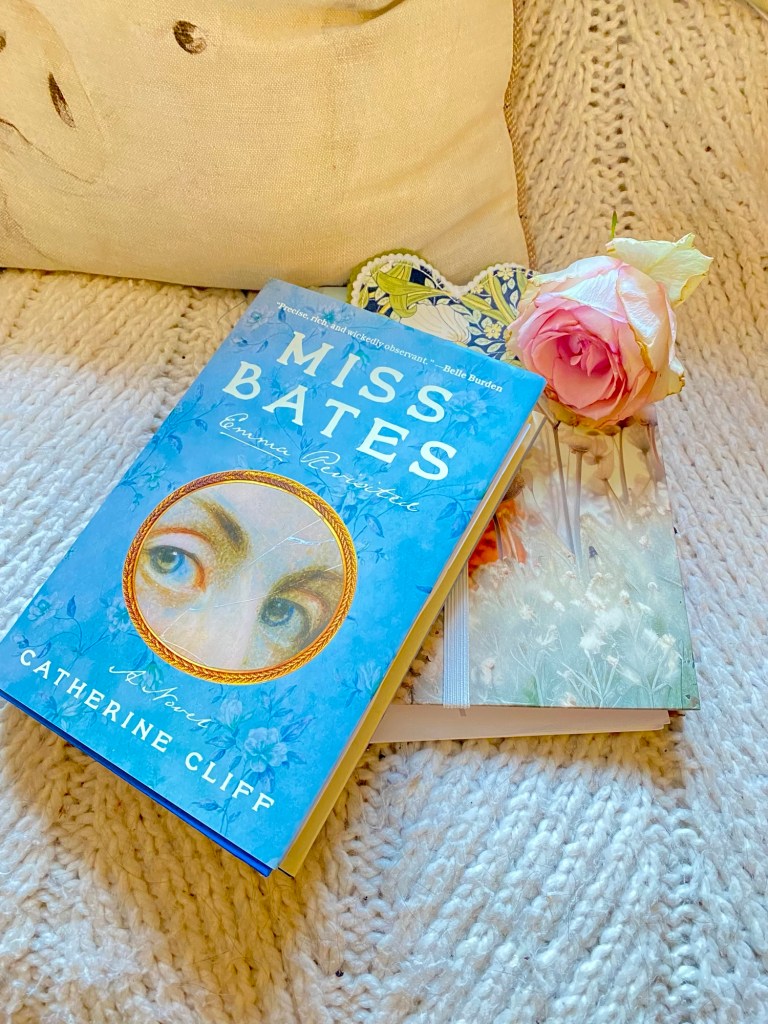
A daring re-imagining of an Austen classic from the unflinching viewpoint of the misunderstood Miss Bates.
Henrietta Bates, the iconic bore of Austen’s Emma, is the opposite of handsome, clever, and rich Emma: she is plain, ill-educated, and impoverished. An unmarried woman of quite a different order from that novel’s proudly single heroine, she is an object of scorn and pity, whose survival depends upon the generosity of her neighbors which she barters for with an unrelenting shower of banal and grateful chatter. But what if the woman we see in Emma were actually deliberately assuming a role, donning a mask, as a means of managing an untenable situation? What if there was a world of difference between her inward and outward voice? What would the Woodhouses’s Highbury look like from her perspective?
Miss Bates by Catherine Cliff imagines answers to these questions as it chronicles Henrietta Bates’s unexpected and, at times, violent life, navigating a world with no ready-made opportunities, where the stakes are of the highest order. In a debut that is by turns comedic, tragic, startling, and altogether brilliant, Miss Bates turns Austen’s poignant and ridiculous side character into a feminist force who understands innately the life she has been dealt and how to slyly play it to her advantage.
This is no marriage plot; it is a spinster plot. Or maybe, the spinster’s plot.
There are some things that Miss Bates realises from a young age, one of them being that Miss Emma Woodhouse is intolerable and I agree wholeheartedly. She also wonders about the efficacy of prayer and whether God even listens, because her life is profoundly unfair. She is aware of the roles in society, but I don’t think she knowingly plays hers from a young age. There’s a very complex psychology behind this character and her behaviour is slowly learned and adapted as her family’s fortunes slide backwards in respectable Highbury society. Born as a vicar’s daughter, the Bates family occupy one of those strange liminal positions in a social set, rather like governesses. While her father serves the church and by extension his community, he is not a servant. He isn’t wealthy, yet his respectable position means he has a standing within society and will be courted by the finer families or perhaps have a wealthy patron, as Mr Collins does in Pride and Prejudice. As we see in Emma, the Reverend and Mrs Elton are definitely part of this society, invited to all social events and activities, despite not being wealthy or aristocratic or even pleasant company. This status as the vicar’s family takes them into the homes of the Woodhouses and the Churchills, the only person in a similar position to Miss Bates and her sister Jeanette is Miss Taylor, Emma Woodhouse’s governess. Emma is keen to remind every one of her matchmaking between Miss Taylor and their neighbour Mr Churchill, a match that is seen as very advantageous for her. Miss Bates witnesses the moment their family fortunes turn when her father is left to look after her little brother Henry who is a toddler. Unfortunately, Mr Bates has become distracted and when Miss Bates and her mother return, he has no idea where Henry has got to. He’s found face down in the garden pond. Her parent’s grief is terrible and her father depends more on drink. Her mother feels largely absent, despite being present for most of the book showing how the loss of her child has hollowed her out. Thankfully, her sister Jeanette makes a good marriage to a military man and she moves with him abroad. Sadly their happiness is short lived as he is killed and Jeanette contracts TB and dies abroad, leaving her small daughter Jane in the care of her in-laws the Fairfaxes. This feels like the moment that Miss Bates realises she will always have to look out for her mother and we have a scene where she deliberately dons the mob cap and shortened hair of a spinster. She knows she will never be a wife or a mother, particularly as her father dies and leaves them with only a tiny annuity to live on and they can only afford a small upstairs cottage to live in. It is here that we join up with the characters and story we know from Austen’s novel.
Miss Bates is depicted by Austen as a chatterbox, full of inane wittering and constant thanks for anything that is given to them, whether it be a visit or a basket of food. The Bates are the people who have to be invited rather than the host enjoying their company. This Miss Bates is the same from the outside looking in, but the author has created a radically different inner voice that I loved spending time with. Here she becomes a three dimensional person rather than a caricature and I thought about how lonely she must be. She’s intelligent, courageous and angry but knows that’s not what people want to hear from a charity case. She knows that only the deserving poor receive charity and to be deserving they must be subservient and ever so grateful, “to appreciate it before they deserve it.” Emma’s thoughtful baskets of food in the original novel are nothing of the sort because she brings things that won’t keep, not even considering they might not have a way of keeping them fresh. Even the mysterious gift of a piano made to her niece Jane Fairfax, is a hindrance – too big for their living space but with nowhere else to go it must be dismantled to go up the stairs and the three women must somehow live around it and the embarrassment of having no money to tip the delivery men. Miss Bates is deeply aware of how far they’ve fallen and having grown up in a poorer household I could feel her shame when she can’t afford a penny to collect her sister’s letter and has to return something in the shop.
Appearances are everything. However, her demeanour is much more complex than a choice she’s made, it is driven by shame and a knowledge things could get worse. We can see as her parents negotiate the first days of grief that she finds the silences disconcerting. Her only way of coping is to fill the time when the three of them are at the table by chattering away, rarely receiving a reply. Her speeches become like monologues rather than conversation because there are no pauses, which tells us something about how little her parents interrupted or acknowledged her. This is not a conscious choice, but a subconscious one as they never come to terms with this loss and she feels invisible. There are also violent incidents in her childhood that she tells no one for fear they will think she’s to blame:
‘She used chatter so often as a disguise that now it felt uncomfortable, unnatural, unseemly, to pull back the veil and use words of revelation.”
Once she’s lost most of her family and lives with a largely silent mother her voice becomes impossible to switch off, but it’s often the only one she hears. She’s narrating her life simply to know she exists. Her ability to see the comings and goings of Highbury are simply down to living on the first floor and having a view of the street below, rather than her being nosy. If nothing is going on in the two rooms you live in, it would be natural to look outside and try to feel part of their neighbour’s lives again.
If you think all these terrible events would make that inner voice dull and boring you’d be very mistaken. Her voice is strong and compelling and so witty, with a deliciously wicked sense of humour. I loved her dark prayers; ‘May you arrive home to find your wife in a state of undress with your brother” was a real favourite. Through this voice we have no doubt of the strength of this woman’s emotions and how much more she knows about life than the Emma Woodhouses of the world. She also refers to old Mr Woodhouse as ‘like a grasshopper who had fallen on hard times.’ She’s equally scathing about one of Highbury’s sought after bachelors Mr Knightly, pointing out the receding hair and paunch, giving away that he’s older than his intended bride. We also see a rising anger and loss of faith, as she imagines hitting one character with a pot across their cheek. She is intrigued and clearly identifies with two other women who have chosen lives outside the rules of society. Miss Twycroft is described as ungrateful with hints of witch about her, she doesn’t get the same attentions or gifts that Miss Bates and her mother do, but there’s an urge within Miss Bates to feel that sort of freedom. To be a spinster but somehow able to support herself. Mrs Goddard is also an interesting character, a midwife and care giver she is paid directly for her services and lives alone. When Miss Bates asks after her husband she’s clear there isn’t one, it’s just that a Mrs Goddard has advantages that a Miss Leslie would. Miss Bates remembers her own wish to be called Henrie rather than other diminutives of Henrietta when she was a child, she admires that not only does Mrs Goddard name herself, she has made herself too. This is the drawback of class, if Miss Bates’s father hadn’t been a clergyman she might have done a job like this and been of the lower social orders, but she will always be the late Reverend Bates daughter and it leaves her paralysed with nothing and marriage as the only way out.
Narrating the novel through Miss Bates expands the complex world of Highbury, merely hinted at in Austen’s novel. A further liminal figure is Harriet Smith, who is elevated slightly by her attendance at a well-regarded school for orphans but mainly in the hands of Emma who discourages her from accepting the proposal of Mr Martin, a young farmer. Only Knightly is brave enough to say that this was foolhardy, not only does Harriet seem to like Mr Martin, he is far above her in station as a tenant farmer. Indeed Mrs Elton complains loudly about the strange group who are socialising on Box Hill, as it ranges from men of wealth like Knightly through those in respectable professions to orphans and a poor widow and her spinster daughter. Without Emma’s machinations would these people really socialise together? I felt like the author had dipped inside my mind and seen the monster I suspected Emma might really be. In the book she’s educated and somewhat cured of her meddling by Knightly who sees something good in her misguided ways. Here is a girl indulged by her neurotic father, allowed to order about the servants and her own governess who she rides like a donkey. The young Jane Fairfax does not want to go and play with Emma at Hartfield because she is a bully. She’s still beautiful and high-spirited but here we get to se the pain caused by her mischief with Frank Churchill, who is even more of a cad through Miss Bates’s eyes. I always found his behaviour towards Jane very strange indeed and he risks Emma’s reputation too, making fun and games with other people’s feelings and even touching Emma’s neck in company. Miss Bates clearly sees who he is and doesn’t trust him, even when he finally announces his engagement to her niece.
I thought the theme of motherhood really interesting, especially as Miss Bates is so good with children, something we see even more towards the end of the novel. I think this because she waits and truly listens to them, rather than having set expectations of how they should behave. I then realised that she is a mother, to younger sister Jeanette and to her niece Jane. She has a knack for caring, nursing both her mother and Jane, and somehow always knowing when Mr Woodhouse would like an extra blanket or a screen to stop drafts. This is the embodiment of his grief for his wife, constantly worrying he is ill or that some tragedy will befall his daughter. He and Mrs Bates have a lot in common. As her anger about her life and Emma is roused further after Emma’s marriage to Mr Knightly, she imagines cutting a silhouette of her feelings and finding it is the image of Emma Woodhouse. I have always wanted to slap Emma and I hoped this was on the cards, but didn’t want anything bad to happen to this character who had lost so much and who I was rooting for. I have to say I didn’t see the ending coming and it is worth every minute of your attention to this book. This is clearly written with a love of Austen, but also a sense of social justice and a desire to see Miss Bates as so much more than a caricature or figure of fun. She is tragic, but is also clever, loving, resourceful and knows how she must play the game to survive.
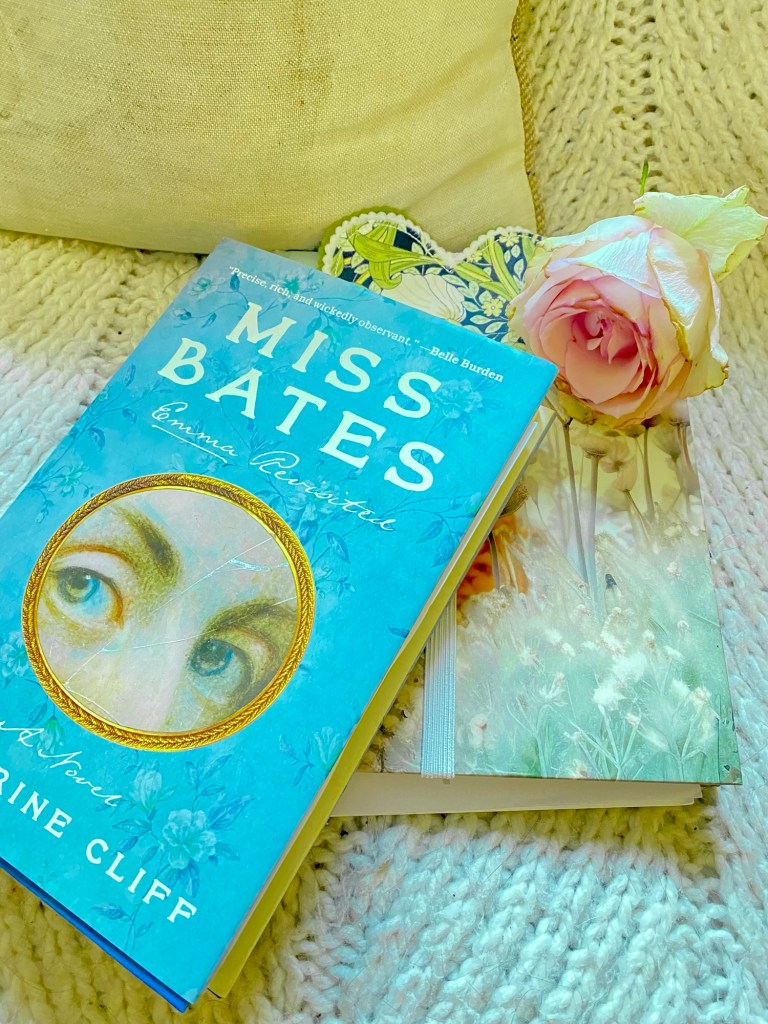
Out now from Pegasus Books
Meet the Author
Catherine Cliff grew up in New York City. She has a BA in Classics and English from Harvard and a doctorate in English literature from Yale, specializing in English Renaissance poetry. She lived in London and Basel for many years and is now settled in western Massachusetts. This is her first novel.


