Posted in Netgalley

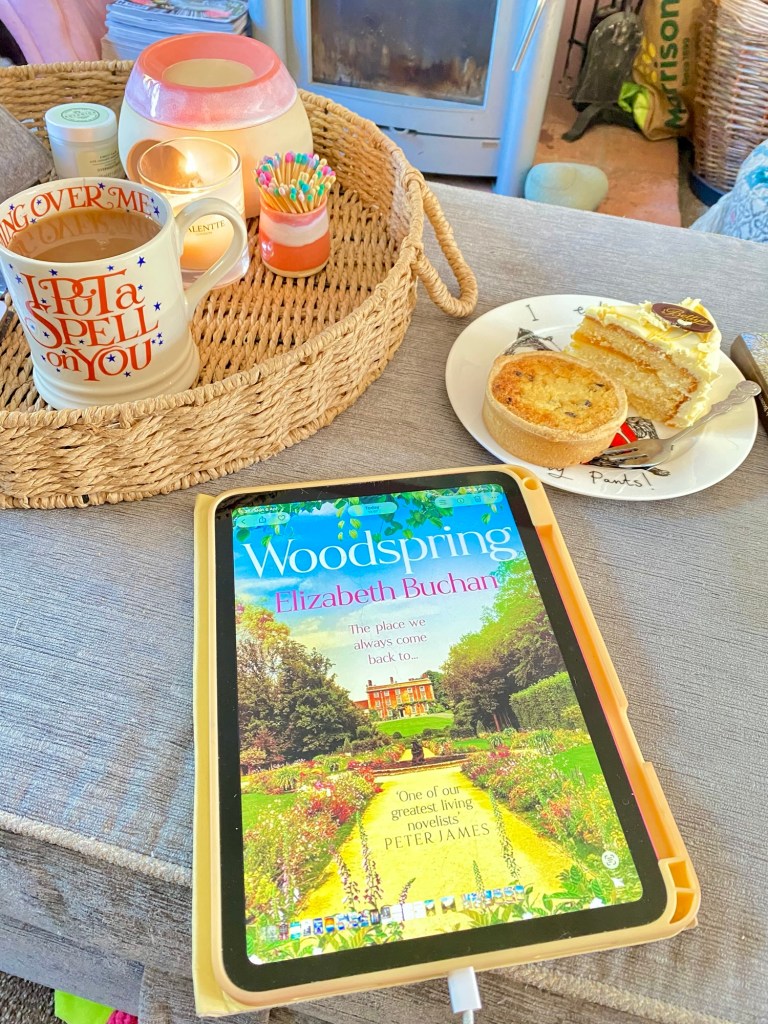
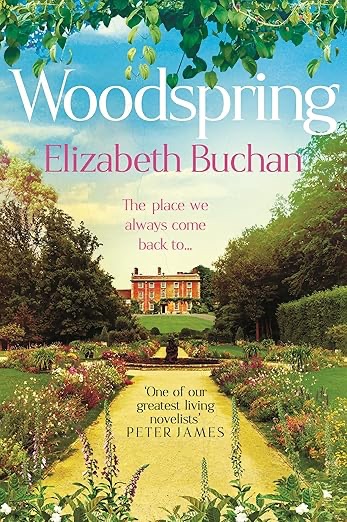
Woodspring by Elizabeth Buchan

It was the place they all knew best – the elegant light-filled rooms in the house, plus its niches and nooks in which they took refuge, the wood which sheltered the wildlife, the fields over which they walked. Whatever happened at Woodspring, and whether they lived there or not, the notion of it remained constant. Since the house was built in 1810, the Danes have always lived at Woodspring. Over the generations it has given them shelter, solace and joy.

War brings change, and the next three generations of the family will lead very different lives. Peace is shattered, pain is unavoidable, loves are found and lost, but Woodspring is constant, and will always draw them back….

A tender novel of love, refuge and the question of where we call home when life takes us on unexpected paths, Woodspring is a beautiful ode to the countryside, to family, and to our timeless connection to place.

This novel is told through three chronological sections, each covering a generation of the Dane family who own Woodspring, a small but grand country house. Built at the turn of the century, it’s a house that never seems to change substantially while the world races forward. We see those changes through the people who live there: Harry is the owner of the house in the 1930s in the lead up to WW2; Nell becomes the owner in the latter part of the 20th Century; Joey owns the house and estate in the present. Through them we see massive changes in class, affluence, and women’s rights but also the far reaching consequences of the Second World War. Each section feels like a vignette of that time, but in the second and third sections we can see how the choices Harry made affect future generations. All the while, Woodspring sits as a sort of haven and seems steadfast while our character’s lives feel transitory and fragile.

I was deeply drawn in by Harry and Faith’s story in the first section, made more powerful by the backdrop of war and the risks taken by both of them. Harry is married as the book begins, the perfect match in his parent’s eyes for the duty of looking after the estate. They have a daughter called Nell who is just a toddler. Their relationship was never a grand passion and a rather old fashioned marriage in terms of her being the right sort, but her family connections are in the USA. If the truth is told she has never taken to Woodspring, finding it a bit quiet and gloomy. There’s also very little to do in such a small village. As war approaches and Harry puts himself forward for active duty, Wendy wonders whether she and Nell would be safer returning to family in the USA. No promises are made from either of them, not even an assumption that their lives will resume as normal afterwards. No one knows what afterwards will look like. Harry departs for the Highlands and training for the Commandoes. It’s in the midst of this tough training period that his wife writes that she would like a divorce. She has met a man who is wealthy and can keep her and Nell provided for. I was amazed at the lack of shame in her openness about marrying this man for his money, but she’s also seemingly oblivious about Harry’s feelings for his daughter. However, when Harry meets Faith he knows deep within and for the first time, that he is in love. They make no promises, but give themselves wholly over to each other in an incredibly tender meeting at a secluded bothy. Each knows the other might not survive this war, but in case they lose track of each other he gives her a name in London. Suggesting that if her employment finishes in Scotland, she can contact them for lodgings and work. Would they ever find each other again? Meanwhile, as Harry’s younger brother also joins the same regiment, Woodspring waits patiently for their return.

Our second section follows Nell, Harry’s daughter, who has lived her early life in America, but now works in Geneva in a very high stress job for an NGO. She implements the response to humanitarian crises around the globe and lives alone. It’s a total shock when she receives news that she has inherited Woodspring from her largely absent father, Harry. Nell negotiates a few weeks away from work to travel to England and decide what she must do with the house and land. She’s shocked to find a largely unchanged house, complete with a couple who work as housekeeper and all round maintenance man. It’s weird for this very modern woman to be treated as the mistress of the house, who eats at certain times and always in the dining room. The housekeeper explains that although her father died years ago, he had made provision for her Uncle Robert to live there until his death. He had sustained a brain injury in the war and was often very childlike, keeping a strict routine helped and the time he spent with his huge model railway in the attic. It’s when she goes up to investigate the attic that she meets Joey and falls in love, but not in the way you might expect. Her feelings start to change as she sees what this house represents – home, stability, a memorial to her family and a huge project to work on. Will she sell and move back to Geneva or will her heart keep her here?

Finally we come to the present and meet a girl called Mia who works for MI5. Independent and determined, she is utterly focused on her career when Joey walks into her life. Joey is a vet, working in London and living in a small apartment. However he tells Mia about a family home and land he owns, left by his mother. One weekend they drive to Woodspring and for the first time Mia sees the huge responsibility Joey has been carrying. The main house is now a nursing home, while Joey lives in the flat over the stables that used to be home to the housekeeper and her husband. It’s the land he has to come to some decisions about, with offers from developers on the table, Joey doesn’t know whether to sell the whole estate and commit to life in London, but there’s something about being on this land. It’s a sense of security and connection with the land that I understood. I have lived most of my life next to the River Trent, literally having the bank in our back garden as a child to my first flat where the bank was only a field away and to my last home, a little barn conversion on the Lincs/Notts border where a short lane took me to the bank in ten minutes. The first thing I did was walk down there, take off my shoes and stand at the top of the bank. Whenever I want to feel that security and connection I do the same thing, grounding myself.

I felt that the last section suffered a little in comparison to the first two, perhaps because of their more dramatic events or circumstances. WW2 tears people apart, forcing them to live an alien existence, often alone and in very different parts of the world. We see the hardship of Harry’s training and his incredible resilience in being able to survive when it’s put to the test at Dunkirk. The war definitely heightens those tender feelings between Harry and Faith, so when he’s is back in London and goes to look for her my heart was racing. The dramatic events of that night are written so vividly that I knew the outcome would determine the rest of their lives. The horrors of the Blitz are depicted so well a I felt like I was there. Nell’s story shows her work is once removed from her father’s but still vital, organising a response to terrible events around the world means she doesn’t get to be there in person to see the devastation. We can also see the impact of her mother’s choice to remarry in the USA and having a mostly absent father. Nell’s mother is as self absorbed as a I suspected, pursuing the preservation of her looks with plastic surgery and pushing Nell to accept a job with her stepfather and come home – an offer that Nell rejects with so much vigour I sensed some tension around their relationship. Joey changes everything for her and she has to face her own childhood demons, her decision not to have children and a growing love she never expected. Her instinct to shelter and protect Joey is almost instinctual and I felt like the time she spends at Woodspring brings her closer to understanding the man her father was.

As for the final part I was expecting it to come from Joey’s perspective so I was a bit surprised to meet a completely new character. Mia is an interesting woman, in some ways like Nell in her independence and determination to do well in what is still a bit of a man’s world. We are taken into a case she’s working and the complexities of that job and meeting someone who she could build a life with. Joey is a calm, solid and patient presence in her life which tells us a lot about his background. If they’re to build a life together they also have to factor in the ownership of the Woodspring estate, which overwhelms Mia when she first sees it. They are left with land, including a wood, and Mia can see potential in it but how will they make it work. I felt sad to imagine it broken up into parts, but it may be the only way to keep some of it. What’s never in doubt through, is Joey’s connection with this land that’s exactly the same as my connection to the River Trent. I was desperate for him to retain some part of it because he belongs there and we can see it in the way he’s replenished after going back to visit. It’s his connection to Nell, to her father and mostly Robert who he came here to play trains with when he was a little boy. Woodspring is his constant in a world that is often frightening and overwhelming: each generation’s touchstone. This is a touching and gentle novel, exploring our connections to each other but also the places we call home.

Out Now from Atlantic Books

Posted in Monthly Wrap Up, Uncategorized

Best Reads March 2026

So it turns out that March is the month of mysteries and thrillers, suspense, plot twists and secrets aplenty! These are my favourites from the month and although I haven’t managed full reviews for some of them, these are my favourites. Wishing you all a Happy Easter weekend, hope you get some good reading and relaxation time with some treats. ❤️📚 🐇

St Monans, Fife, Scotland 1790. Two women are forced to publicly repent in church, one for adultery the other for breaching the sabbath. Wealthy housewife, Florrie, and salt serf, Eliza, form a quick and unusual bond over their mutual humiliation. So when Florrie’s husband decides she must accompany him on a trade venture to Iceland, she insists Eliza comes as her maid.

Far from home, isolated and fearful, the two women grow ever closer. Then Florrie’s husband reveals his sinister plan: he will leave her in Iceland, banished for the shame she has cast upon him. Florrie must escape, but when she turns to Eliza for help she realizes nothing is quite as it seems . . .

Based on the true story of the British Empire trying to annex Iceland as a penal colony, this books tells us about subjugation and control of women by husbands, serf owners, and ministers. Kate Foster always has strong female characters and Florrie, Eliza and Hallgerd are no exception. This was a historical thriller, full of suspense and with a few plot twists too. It’s about what happens when women reject the shame men and society say they should feel and embrace their transgressions, using them as a stepping stone to true freedom. My full review is coming up soon.

Twelve years ago, Carrie married Johan on a beach in Thailand. But as the sun set on their perfect day, armed men swarmed the island and her husband was taken, never to be seen again.

Carrie is now happily remarried; a mother of two. The past is firmly behind her – until she stumbles across Johan by accident online. He is alive and well.

As the memories of their passionate relationship flood back, Carrie is compelled to find out what happened on that beach, and why Johan never got in contact.

The man who promised her a lifetime of love is now a mystery she must solve. But are the answers worth risking her marriage, her family, and the life she fought so hard to rebuild?

The truth, it turns out, is more shocking than any lie . . .

I read this novel on my weekend away and became absolutely absorbed in the story, a love story that’s also a mystery. It’s heartbreaking, romantic but also sinister and unsettling. Our main character, Carrie Cole, has been a brilliant surgeon but gave up when she had very premature twins and felt the need to be at home with them. She lives with her husband Robin in an old cottage with a holiday let in the old piggery next door that they let through the Roof app. It’s there that she sees Johan again for the first time since his arrest in Thailand. Her urge to see him is part emotional but also a desperate need to know what happened and how he ended up back home in Sweden when he should still be in prison. I loved how the author played with our expectations of who to trust and whether Carrie should think with her heart or head. She’s safe, she’s happily married, she’s a mother about to return to work so we know the right choice to make. Right? Full review coming later in the month.

Famed children’s author Dame Eleanor Kingman has summoned her family and friends to her exquisite manor house on the cliffs. They’re celebrating her birthday – and her latest number one bestseller in her series of books based on a mother fox and her cubs.

But the night before the party, Eleanor receives an email: an email that threatens to expose the lie she’s kept up for over half a century.

Someone knows her secret. Is it her estranged literary agent? Is it her ex-husband, to whom she no longer speaks? Is it the nanny she fired all those years ago, who always did have a knack for storytelling? Or is it one of her three daughters, all of whom have a stake in the publishing empire she has built…

With a TV crew arriving to film a documentary of her life, Eleanor needs to find out who sent the email – and preserve her multimillion-pound career.

But when push comes to shove, and it’s time to tell the truth – will anyone actually believe her?

This was a brilliant thriller from Sarah Vaughan, based around a wealthy and respected children’s author and her birthday party. There’s enough tension in the air already with an event so big, but Eleanor’s three daughters each have secrets, her illustrator has turned up early for a confrontation about her percentage, there’s an odd man hanging around the grounds who approached her grandchildren and dog, plus an old couple who have apparently lost their way from their caravan park into the gardens. Told in the tense two days before the celebrations, we also get flashbacks to key moments in Eleanor’s past that might give us the answers. You’ll absolutely devour this book like I did.

When 18-year-old Christian Shaw is found dead in an Edinburgh park, the city reels – and the shock only deepens when police charge her best friends, Eliza Lawson and Isobel Smyth, with her murder.

As their trial begins and headlines scream for justice, rumours of bullying spiral into something darker: whispers of rituals, obsession, and a teenage pact gone wrong.

But then the girls take the stand – revealing a chilling defence no one saw coming – and the jury must question everything: the motives, the evidence, even their own judgement.

Who’s telling the truth? Who can be trusted?
And what really happened to Christian Shaw?

Let the Witch Trial begin . . .

Harriet Tyce’s brain works differently to other people’s! We follow the trial of two teenage girls through the eyes of a juror called Matthew who is a surgeon. He’s everything a good juror should be – reliable, intelligent, rational, objective, pillar of the community – but he seems strangely excited about this trial, having been told several times he could have been excused because of his job. As the trial moves on he seems to deteriorate: he stops wearing a shirt and tie, has a rash that spreads and irritates him, starts to drink and eat junk food. The story of witchcraft and teenage girls is intriguing, but does it constitute murder? Who is the blonde woman that catches Matthew’s eye and seems to follow him to the flat? There are so many layers to this story that your mind will be blown in the final chapters!

Ten years ago, Hope left Somerset with a fatal secret and a broken heart. She has spent a decade in the shadows, living a quiet life of penance to protect the man she once loved – the world-famous author Ambrose Glencourt.

YOUR LIFE IS NOT YOUR OWN.

Then, she opens his latest bestseller. To the world, it’s a brilliant work of fiction. To Hope, it’s a betrayal. Every private moment, every dark truth, and every ‘fatal disaster’ from that summer is laid bare on the page.

YOUR TRUTH IS A LIE.

But Ambrose has changed the ending. In his version of the story, Hope isn’t the victim. She’s the villain.

Now, Hope must step out of the shadows to reclaim her narrative. But in a world of glamorous elites and whispered secrets, who will believe the word of an unreliable woman against the word of a literary icon?

Two narrators. One truth. And a secret worth killing for.

This novel is another triumph for this incredible writer, with so many layers and very timely themes around rich white men and their assumption of their own genius and their right to exploit those around them. Hope is a compelling character whose one summer with Ambrose and his wife Delia sets her life on a different course. To find the events of that summer in a book, prompts her to go to the police and tell her story to detective Nat. Is this the ramblings of a mad, middle aged woman or is something very wrong at Shadowlands, the Glencourt’s mansion. Hall beautifully shows us young love and how a girl who loves books can be manipulated by someone who believes young, naive lower class girls who worship writers are theirs for the taking. I love how Hall weaves in the concept of playing with reality, how we construct stories and who has the right to tell them.

There’s something out there in the darkness.
By morning, bones lie in the snow, picked clean.

Zach knows the moods of the mountains – his mother taught him before she was gone. His father and the other men on the ski weekend think they know better though.

Drinking and boasting, they laugh in the face of the icy conditions.

But Zach understands what danger looks like. Can he survive the wilderness, and all the monsters within it?

This is a stunning new novel from Tracy Sierra, whose debut novel NightWatching was one of my favourite books of 2024. This is just as good as that thrilling debut, if not better. Set in one weekend in the mountains, this is no ordinary trip or boy’s own adventure. Everyone who is coming is there to be impressed by Zach’s dad and his latest business venture. Everything has to go right. Everything is told through Zach’s eyes and we can see him slowly lose his innocence as he notices that his dad doesn’t have half the knowledge about the outdoors that his mother had, everyone else can see that all his gear is new, flash and not what a regular skier or hiker would use. Zach can also see they dislike him. Russ is the only other kid on the trip and he knows that these men are going to lead them into danger, simply because they’re selfish and full of bravado. They must get to do exactly what they want and damn the consequences. Tracy Sierra gets inside this little boy’s mind perfectly and I was desperate for him to survive, but with a strange monster on the prowl outside and the terrible weather it’s hard to know what he can do to escape. Unless the real danger is on the inside. This author shows shades of Stephen King and The Shining in this brilliant story, bristling with menace and childhood fears.

Here are a few of next months reads:

Posted in Blogger Life

The Last Ten Books I Bought

I thought that today I’d share with you the last ten books I’ve bought. Sometimes people think that because I review books on my blog, I get given every book I review but that’s far from the case. I still buy an enormous amount of books every month. It’s my main indulgence, aside from Doc Marten boots and a weird fascination with animals in clothes (probably best left unexplored but I’m sure it has to do with Mr Tumnus). I’d do get proof copies but they are becoming more scarce these days so mainly they come from the reviewing I do through the Squad Pod Collective – a group of blogger friends who have come together to share the book love – or through blog tours. More often it’s digital copies that are available, either offered by the publisher or through NetGalley. There are many reasons I might buy a book, as discussed last week there are come authors who are must-buy and are usually pre-ordered for a discount. Another reason might be that I’ve loved a book on Netgalley or digital proof and I’d like a finished copy. Then there’s the bookshop purchases where I have a terrible love of spredges and beautiful book cover art as well as the story itself. Finally comes those I buy second-hand in charity shops, second hand bookshops like Barter Books in Alnwick or Vinted, which is a great hunting ground for special editions. I also collect various copies of old classics or my favourites – I have about six different copies of The Night Circus for example. Currently on my radar is the Folio Society copy of The Colour Purple which is stunning but will take up a whole month’s book budget! Here are my latest buys:

I love Will Dean’s Tuva Moodysson series and pre-order those always, but his stand-alone novels I tend to buy on Kindle. This has all the hallmarks of a heart-stopping thriller.

Three of them adrift on the narrowboat.
Mother, son, and wickedness.

Peggy Jenkins and her teenage son, Samson, live on a remote stretch of canal in the Midlands. She is a writer and he is a schoolboy. Together, they battle against the hardness and manipulation of the man they live with. To the outside world he is a husband and father. To them, he is a captor.

Their lives are tightly controlled; if any perceived threat appears, their mooring is moved further down the canal, further away from civilisation. Until the day when the power suddenly shifts, and nothing can be the same again.

I left the parking ticket bookmark in this one, because I bought this from my local bookshop on Saturday and then my other half went to Screwfix so I read five chapters in the car out of boredom. I wanted to read this before I watched the BBC series and as usual I’ve left it to the last minute. I recently thoroughly enjoyed Rachel Pariss’s novel about Charlotte Lucas and I’d forgotten how lovely it is to be in Austen’s worlds so I thought this would be light relief, both from other reading and the news.

In Jane Austen’s Pride and Prejudice, we know the fates of the five Bennet girls. But while her sisters are celebrated for their beauty or their wit, Mary is the “plain” middle sister, the introvert in a family of extroverts, and a constant disappointment to her mother.

Lonely and lacking connection, Mary turns to the only place she feels safe: her books. Determined to be “right” since she can never be “beautiful,” she prepares for a life of solitude at Longbourn.

One by one, the other sisters move on: Jane and Lizzy for love, and Lydia for respectability. Mary is destined to remain single, at least until her father dies and the house is bequeathed to the reviled Mr Collins.

But when that fateful day finally arrives, the life Mary expected is turned upside down. In the face of uncertainty, she slowly discovers that there is hope for the “plain” sister after all. . .

Experience the witty, life-affirming tale of a young woman finally finding her place in the world.

This book falls into the special edition category as it’s one I might normally have bought on Kindle, but couldn’t resist this beautiful signed edition complete with stunning spredges and endpapers.

It’s the summer of 1939. London is on the brink of catastrophic war. Iris Hawkins, an ambitious young woman in the stuffy world of City finance, has a chance encounter with Geoff, a technical whizz at the BBC’s nascent television unit.

What was supposed to be one night of abandon draws her instead into an adventure of otherworldly pursuit – into a reality where time bends, spirits can be summoned, and history hangs by a thread. Soon there are Nazi planes overhead. But Iris has more to contend with than the terrors of the Blitz. Over the rooftops of burning London, in the twisted passages between past and present, a fascist fanatic is travelling with a gun in her hand.

And only Iris can stop her from altering the course of history forever.

Just look at those beautiful spredges. I’m itching to dive into this but need to get my blog tour reading done first.

As you can see another ‘nostalgic’ purchase. Wuthering Heights is one of my favourite books of all time, despite the problematic middle bit where too many people die at once, so when I bought Essie Fox’s beautiful retelling through Catherine Earnshaw’s eyes I couldn’t resist this new edition of Wuthering Heights. The spredges are to die for!

With a nature as wild as the moors she loves to roam, Catherine Earnshaw grows up alongside Heathcliff, a foundling her father rescued from the streets of Liverpool. Their fierce, untamed bond deepens as they grow – until Mr Earnshaw’s death leaves Hindley, Catherine’s brutal brother, in control and Heathcliff reduced to servitude.

Desperate to protect him, Catherine turns to Edgar Linton, the handsome heir to Thrushcross Grange. She believes his wealth might free Heathcliff from cruelty – but her choice is fatally misunderstood, and their lives spiral into a storm of passion, jealousy and revenge.

Now, eighteen years later, Catherine rises from her grave to tell her story – and seek redemption.

Essie Fox’s Catherine reimagines Wuthering Heights with beauty and intensity – a haunting, atmospheric retelling that brings new life to a timeless classic and lays bare the dark heart of an immortal love.

As you will know I’ve been raving about this one after reading it last month and yes I do have a proof copy but I do like to support independent publishers, authors and bookshops so I went to Lindum Books for her signing a few weeks ago. Sadly, by the time I arrived they’d run out of copies so they were waiting for new stock and Rachel kindly supplied a signed bookplate for it.

Lincolnshire, 1914. As the First World War approaches, three women are living, trapped between the unforgiving marsh, the wide, relentless river, and the isolation of the fen.

Their lives are held fast by profound grief, haunted by the spectres of the past. Trapped by the looming presence and eerie stillness of a hospital that has never admitted a single patient.  

Eleanor longs to escape. To make a life with the man she loves, leaving her sister, and all her ghosts behind. Clara’s marriage is crumbling and violent and she yearns for peace and security for both herself and her innocent children. Meanwhile, Lily, a formidable force of will, stands resolute against the relentless tide of change. She will stop at nothing, no matter the devastating cost, to ensure that life, and her family, remain frozen in an unyielding embrace of the past.

The author, Rachel Canwell, grew up with the story of this forgotten hospital. Isolated, stocked weekly and cleaned daily but never admitting a single patient. The hospital was real, tended by her family for over sixty years and set against the ethereal beauty and loneliness of the Fens, is the inspiration for her novel.

This beauty is the independent bookshop copy of Almost Life that came from Lindum Books. I always love the artwork from Kiran’s books and this is a stunner.

One chance encounter can define a lifetime

Erica and Laure meet on the steps of the Sacré-Cœur in Paris, 1978. Erica is a student, relishing her first summer abroad before beginning university at home in England. Laure is studying for her Ph.D. at the Sorbonne, drinking and smoking far too much, and sleeping with a married woman.

The moment the two women meet the spark is undeniable. But their encounter turns into far more than a summer of love. It is the beginning of a relationship that will define their lives and every decision they have yet to make. Spanning cities, decades and heartbreaks, fate brings them within touching distance again and again.

But will they be brave enough to seize the life they truly want?

My next purchases are two for the Kindle and after recently reading and reviewing her third Cal Hooper novel The Keeper, I decided I need to catch up on the first two in the series. I’d previously read her Dublin Murders series so I know I enjoy her writing and I read The Keeper through Netgalley so these are a treat for when I have a gap ?!

The Searcher covers Cal Hooper’s move to Ireland and the fixer-upper he’s bought in a remote Irish village, thinking it would be the perfect escape. After twenty-five years in the Chicago police force, and a bruising divorce, he just wants to build a new life in a pretty spot with a good pub where nothing much happens.

But then a local kid comes looking for his help. His brother has gone missing, and no one, least of all the police, seems to care. Cal wants nothing to do with any kind of investigation, but somehow he can’t make himself walk away.

Soon Cal will discover that even in the most idyllic small town, secrets lie hidden, people aren’t always what they seem, and trouble can come calling at his door.

The Hunter takes us back to Ardnakelty and blazing summer, when two men arrive in the village they’re coming for gold. What they bring is trouble.

Two years have passed since retired Police Detective Cal Hooper moved from Chicago to the West of Ireland looking for peace. He’s found it, more or less – in his relationship with local woman Lena, and the bond he’s formed with half-wild teenager Trey. So when two men turn up with a money-making scheme to find gold in the townland, Cal gets ready to do whatever it takes to protect Trey. Because one of the men is no stranger: he’s Trey’s father.

But Trey doesn’t want protecting. What she wants is revenge.

My final book came from the indie Northodox Press and features a place I know very well indeed. The Adelphi Hotel in Liverpool is a famous landmark I’ve known all my life, with my mum being a Liverpool girl. A former grand hotel, designed to look like the interior of an ocean liner it still has spectacular bones although its more recent furnishing choices in the original tea room have made it look more like a nursing home. Every time I go past it we say someone could make a lot of money doing that place up, it could be gorgeous. I live in hope, but currently she’s a strange mishmash of styles from art deco to faux leather BarcaLoungers. It’s a great cheap place to stay in Liverpool and my dad particularly enjoyed the prostitute’s card that was slipped under his door in the middle of the night!

Where better to work than the famous Adelphi Hotel?

Alistair Monroe is keen to make his way in Nineteenth Century Liverpool. The Adelphi is a landmark known for its grandeur, drawing many visitors, including Clemency Martin, an American psychic.

She too needs to make her way. But Alistair discovers that power and darkness lie at the heart of the hotel, and he must finally take risks to bring the truth to light. Step into the atmospheric world of the Adelphi…

So that’s all my recent purchases and buying secrets, but I’m sure there’ll be more next month, if I can resist The Folio Society that is.

Posted in Netgalley

Getting Away by Kate Sawyer

Margaret Smith is at the beach.

It is a summer day unlike any other Margaret has ever known.

The Smith family have left the town where they live and work and go to school and come to a place where the sky is blue, the sand is white, and the sound of the sea surrounds them. An ordinary family discovering the joy of getting away for the first time.

Over the course of the coming decades, they will be transformed through their holiday experiences, each new destination a backdrop as the family grows and changes, love stories begin and end — and secrets are revealed.

Getting Away takes us into the lives and the secrets of four generations of the Smith family, through their holidays. From an east coast beach in the UK just after the war to the early 21st Century, Maggie is central to this, moving from childhood to old age. Through each character in the novel, the author creates snapshots of the century from Maggie’s father Jim and his war injuries to an renewed openness about individual sexuality and her brother Tommy having to police the first Pride in London. He’s worried about the lads at work and their response, he’s not keen either but change is the only constant. We can also see the huge changes in social mobility across the generations. We start with Jim and Betty and their daughter Maggie just affording a day at the beach with a picnic brought from home. Later, Maggie’s brother Tommy and his wife Debbie buy an apartment in Spain and then her granddaughter Melissa is the first in the family to go ‘travelling’ as a young woman as opposed to having a holiday. The shifts are seismic when seen together like this and it made me realise that my own grandchildren will look at me and my husband and realise we were born in the last century. Just like I did with my grandma who was born in 1913, they’ll probably imagine all the changes we’ve seen in that time. That’s what reading this felt like, as morals, finances and our ability to connect with others changes beyond recognition. When Robert takes a holiday with his friend Fitz while Susan is pregnant, they have to send a telegram to one of his destinations to get him to come home urgently. By the next generation, Melissa is island hopping around Asia and keeps them all updated via Instagram and her blog. What is amazing about Kate Sawyer is this doesn’t feel contrived and all these things in the background are just that, because the real drama is happening within this family and the secrets each generation keeps from the next. 

Maggie is at the centre though and hers is the most carefully guarded secret. I loved how she and her mother Betty slowly grew to understand each other, but also how one secret breeds another. Her husband Alec knows Maggie is vulnerable when he meets her on a break with her friends, but he’s looking for a wife who won’t make demands and will be happy to travel around the world for his job buying fabric. He is a protector and he remains that way throughout her life, although things do change within their marriage. Maggie has panic attacks near the sea, although her friends don’t know why. We know something happened on a day by the sea when the Americans from Jim’s work travelled with them, but she keeps the secret for decades. However, she isn’t the only one with a huge secret. Maggie’s brothers couldn’t be more different. Tommy comes across as very brash and often drunk, very proud of how well he’s doing at work and happy to splash the cash around. Robert is the baby of the three and a lot more sensitive than his brother. I rooted for him and his girlfriend Susan who he’s desperately in love with. As secrets start to come out their relationship suffers, but I was sure they’d never stopped loving each other. Their children are the final generation we get to know, but it felt like Robert was impacted most by decisions made about his life, even though it was a common choice in that situation. I love how this author writes about her character’s inner lives, she even makes me root for people when their behaviour isn’t great. Once I’m a few chapters in these are real people and I’m feeling every one of their emotions. 

Having once had a spectacularly bad holiday with my lovely family I was amazed that they all persevered over years. There are all those little details about each character and how they irritate each other. When they undertake a trip to Florence with Maggie, Betty is exhausted and the others are bored. Maggie likes to stride about the city while her husband Alec is working, sight-seeing and learning about art, architecture and the local food. With all good intentions she wants to make sure those she loves get the most out of being here, but everyone else wants some shade and a cold drink. Tommy is more of a drink by the pool and English food sort of person, it’s clear he has a drinking problem and it doesn’t help his temper. Bringing us into the 21st Century, I loved how Joe and his husband Piotr’s daughter Maja has travelled all over the world when she’s only a toddler. This family have gone from greenhouse tomatoes by the North Sea to being more like the Americans who visited Jim and Betty and scoffed at how backward the British seemed. They also go through every complicated situation a family can, with secrets, affairs, divorce, violence and the addition of those who become ‘found family” like Robert’s lifelong friend Fitz and his daughter. I loved that their friendship survived huge upheaval and betrayal, and that it happened on a holiday pilgrimage. I particularly enjoyed Maggie’s solo holiday after her divorce and her sexual adventure, beautifully written and much needed in order to heal from the past and claim her future as a desirable woman. Maggie’s favourite book is A Room With a View so she felt like a kindred spirit and the passion in that book obviously appealed to this woman who had to reach middle-age before desire was a priority. I loved that this family kept its in-laws close, even after divorce and we can see that as everyone comes together for Joe’s wedding. I became utterly absorbed by this family, so much so I felt like I’d seen one of them as a client. It emphasises the secret complexity of everyday lives and made we think about the fascinating narratives in both sides of my own families. The ending felt like the best one we can ever hope for, which is a family taking time and trying to heal together. 

Out now from Zaffre Books

Meet the Author

Kate was born in Bury St Edmunds, Suffolk, UK where she grew up in the countryside as the eldest of four siblings, after briefly living with her parents in Qatar and the Netherlands.

Kate Sawyer worked as an actor and producer before turning her hand to fiction. She has previously written for theatre and short-film.

Having lived in South London for the best part of two decades with brief stints in the Australia and the USA she recently returned to East Anglia to have her first child as a solo mother by choice.

Posted in Netgalley

Introducing Mrs Collins by Rachel Parris

Charlotte Lucas has never been a romantic. Practical to a fault, she accepted Mr Collins’s proposal with clear eyes and a steady heart, trading passion for security. Life at Hunsford Parsonage may be quiet and predictable, but it is hers to manage – and she’s determined to make the best of it, whatever Elizabeth Bennet may think. 

That is, until an unexpected guest at Rosings Park turns Charlotte’s careful world on its head. He sees her, challenges her – and a spark is lit. But true contentment is not only about who you choose to love, but who you choose to be. For the first time, she wonders: has playing by the rules kept her on the sidelines of her own life?

It is a truth, universally acknowledged that a sick woman in bad humour will be revived in the company of a witty novel…

This is the Pride and Prejudice inspired novel I’ve been waiting for and it came at the perfect time, when I’ve been feeling very unwell and was stuck in bed. I read for two days between sleeping and I swear it kept me sane. I always felt that Lizzie Bennett underestimated her friend Charlotte and I wondered what happened to her and Mr Collins in the future. It’s a great reminder that we only see a novel’s events through the gaze of our narrator and central character. The same events, viewed from a different perspective, bring a more balanced and multi-faceted view of what happened in the novel and its characters. The events of Parris’s novel take place during and after Pride and Prejudice, from the point that Lizzie rejects Mr Collins proposal. A decision that pleases her father but sends her mother into conniptions! Lizzie’s choice means that once Mr Bennett dies, Mrs Bennett and all of her daughters are at the mercy of Mr Collins, the male heir. Whoever he chooses to marry will become mistress of the Bennett’s home Longbourne. Charlotte Lucas is our focus, Lizzie’s best friend and now the recipient of Mr Collins’s attentions. The author has added inserts from the past, adding depth and insight to both Charlotte and Mr Collins’s characters as adults. We see events that we have only imagined, like the Darcy’s wedding at Pemberley and its ensuing drama. However we also see Charlotte settle into the everyday of married life, with all its strangeness and frustrations. I left Pride and Prejudice a little worried about Charlotte, even though the way she does talk about life at the parsonage with humour and optimism when Lizzie visits. So this story of her growing relationships, her new home and her dissatisfactions with her new life is so welcome. What she misses most is passion, but if it arose would she be able to resist it? 

Charlotte is viewed with pity by the Bennetts, apart from Mrs Bennett who is wailing that she will be the mistress of their beloved home. I felt like Charlotte knows her prospects are few. She’s witty and fun, but she knows she doesn’t have the charm and looks of Lizzie. She is someone who people get to know slowly and hasn’t reached her full potential yet. Mr Collins was always a pragmatic choice, but here I could also see it as a mature and confident choice. The Bennetts may see Mr Collins as ridiculous and in some ways he is, but Charlotte doesn’t see her worth as solely defined by the man she chooses to marry. He may be thought of as silly, but that doesn’t mean she is. Also, as Mrs Collins she has a beautiful home and garden, a steady income and a benefactor in Lady Catherine de Bourgh. As a married woman she has status and purpose, going out to visit sick parishioners and keeping the home running smoothly. While Mr Collins is busy Charlotte spends her hours in her library continuing to educate herself, she tends her garden and she practises her piano at Rosings. Charlotte is able to be happy and content in her own company, separate from Mr Collins’s anxieties and emotions. In this light we also see Lizzie differently, perhaps even as a little spoiled. As we see in this book, Mr and Mrs Bennett are the architects of their daughter’s misfortunes and their attitudes are clear in two crucial letters they send to the parsonage. Darcy’s assessment of the family, unwisely passed on to Lizzie during his first proposal, is absolutely correct. Mr and Mrs Bennett’s leniency with their younger daughter’s behaviour allows a window for Mr Wickham to connect with the foolish Lydia. It’s their behaviour that prompts both Darcy and Caroline Bingley to warn Mr Bingley away from his attachment to Jane. In letters to both Charlotte and Mrs Collins, the Bennett parents show they are both fierce in the defence of their daughters but spiteful towards the recipients. Mr Bennett calls Lydia unwise, but at least not judgmental – a criticism that Mr Collins perhaps deserves. However, in a letter to Charlotte Mrs Bennett shows awful spite in an unnecessary postscript: 

“I saw your Maria this week at church and she is become such a beauty! What a pleasant girl – always with a smile and a manner that puts one at ease. You would not think you were sisters.” 

However, I did come away with some forgiveness for Mrs Bennett’s view that Lizzie might have thought of her mother and sisters when she refused Mr Collins, because now they would surely lose their home. It’s clear that Mr Bennett has little respect for his wife and for good reason on some occasions. However, he does favour Lizzie and perhaps his treatment of her has led to Lizzie thinking she has better prospects than she does. Luckily fate brings her Darcy but I did understand Charlotte for thinking that luck just seems to fall into her friend’s lap. 

I felt like Charlotte blossomed in her new environment and that sometimes it is because of Mr Collins not despite him. If nothing else he shows kindness and understanding. The vignettes of his childhood show a sad history that goes some way to understanding his character better. However, it is a connection that she never expected that seems to bring out a new side to Charlotte. An unexpected visitor to Rosings Park brings her friendship and an affinity she never expected, not to mention a passionate spark. I loved the point in the novel when Mr Collins has both a revelation about his wife and is genuinely awe inspired by her. As she plays a piece on the piano for a gathering at Rosings, Mr Collins sees his wife anew: 

“This poised assertive woman was a vision, undaunted by entertaining a room of high-born people in a house such as this with the talent he had no idea she possessed […] she was splendid and her splendour shook the foundation of his peace of mind. Whereas another man might have felt only pride in his wife, for Collins, this feeling was mixed with something much more disquieting. She is beyond me: what he felt was I will not be able to keep her.” 

This is a worry born of never being enough for his father, who tried to change him by whatever means necessary. I felt the author didn’t excuse all of his failings, but explained what was behind them. The narrative voice is so incredibly good that this didn’t feel like a stranger telling me about these characters I knew very well. It felt like a continuation; a meeting with old friends. Of course the author does bring some of our modern thinking to the story, otherwise we wouldn’t be hearing about Mr Collins’s childhood – a psychological aspect to character we wouldn’t perhaps expect in a book pre-Freud. I won’t touch on Charlotte’s eventual fate but I will say that Mr Collins definitely has a part in it. Maybe not in the most romantic sense, but sometimes there’s a kind of love in duty and honour. I love Rachel Parris’s humour and there’s plenty of that here, with the tone and the wit feeling positively Austen-esque. I could tell by how well each character was drawn that the author loved her books and wanted to do them justice. I think she has.

Meet the Author

Rachel Parris is a BAFTA-nominated comedian, musician, actor and improvisor, best known for her viral segments on The Mash Report and Late Night Mash, which have garnered over 100 million views. Her TV appearances include Live at the ApolloWould I Lie to You?QI and Mock the Week, and she is a regular guest on Radio 4’s The Now Show and I’m Sorry I Haven’t a Clue. She co-hosts the popular podcast How Was It for You? with her husband Marcus Brigstocke. Rachel also wrote and presented a Jane Austen comedy programme, Austensibly Feminist, about how to view Jane Austen as modern feminists. Rachel is a founding member of the critically acclaimed improv comedy group Austentatious, in which the all-star cast invent a play based on a title suggestion from the audience. As a touring comedian she has performed her award-winning musical comedy to sell-out audiences across the UK.

Posted in Ten on Tuesday

Ten Books Inspired by Jane Eyre 

Like many English Literature students, Jane Eyre remains one of my favourite books and it has inspired writers ever since its publication in 1847. I first read it at ten years old and for me it was a romantic ghost story, read alongside the 1980s BBC series. As one of my first reads at university I could see how the novel contained aspects of everything I needed to learn on my 19th Century module: class, colonialism, morality, gender, work, women and much more. It also defies genre, with the potential to be classified as a mystery, romance, gothic fiction, Bildungsroman and historical fiction. I think this is what helps the novel endure. Its flexibility allows it to appeal to different generations for very different reasons. Each of this authors were inspired to use those multiple themes to shape a novel around Charlotte Brontẽ’s work.

My reading of the novel has definitely changed over the years. University opened up the novel for me as much more than the ghost story I’d enjoyed as a child. It brought colonialism into my mind for the first time, feminism and autonomy. It made me think more about the role of governess as a liminal figure in the household – she is an employee but doesn’t sleep or eat where the domestic staff do, she is unmarried and independent, earning her own money and making her own choices about it. I think it’s easy for a reader to identify with Jane, whether it’s the bullied and child trying to read behind the curtain or terrified by the Red Room. The girl scapegoated at school as ‘too passionate’ and a little bit defiant too. The young woman falling in love with an older man who isn’t what he seems, making decisions about whether to be in the role of mistress. All of these aspects are ripe for fictional updates and retellings. Bringing the book bang up to date there are aspects of manipulation and coercive control in Rochester’s use of Blanche Ingram and dressing up as a fortune teller to influence Jane’s thoughts. We can look at femininity through Bertha Mason, the madwoman in the attic and the comparison of Jane as everything she supposedly isn’t – modest, compliant, emotionally stable and moral. This is especially important in light of public figures like the Tate brothers who want to control how women behave and denigrate those who don’t fit their ideal. The nanny or governess has become a staple of modern thrillers because of their intimacy with the family they work for, often living in close quarters and becoming close emotionally. That is the book’s enduring appeal, that we can always look at it through the lens of today and find something new. One of my specific interests in the novel is mental health and who is in control of what constitutes instability. I’m also interested in the disability aspect of the novel and what it is about Rochester’s disabilities towards the end of the novel that brings some equality between him and Jane. Here I’ve gathered just a few of the novels that are inspired by the novel in very different ways.

Born into the oppressive, colonialist society of 1930s Jamaica, white Creole heiress Antoinette Cosway meets a young Englishman who is drawn to her innocent beauty and sensuality. After their marriage, however, disturbing rumours begin to circulate which poison her husband against her. Caught between his demands and her own precarious sense of belonging, Antoinette is inexorably driven towards madness, and her husband into the arms of another novel’s heroine. Rhys shows us why Antoinette isn’t just the antithesis of the quiet and composed Jane Eyre. Her work evokes thoughts around female sexuality and whether sexual enjoyment or the woman’s initiation of sexual activity is what Rochester rejects in his wife. Is it really the history of madness in her family or is it the ‘Creole’ aspect of Antoinette’s heritage? Is she insane or furious about his rejection, withdrawal from and later imprisonment of her that aroused violent tendencies? This is a classic study of betrayal, a seminal work of postcolonial literature and is Jean Rhys’s brief, but beautiful masterpiece.

Jean Rhys (1894-1979) was born in Dominica. Coming to England aged 16, she drifted into various jobs before moving to Paris, where she began writing and was ‘discovered’ by Ford Madox Ford. Her novels, often portraying women as underdogs out to exploit their sexualities, were ahead of their time and only modestly successful. From 1939 (when Good Morning, Midnight was written) onwards she lived reclusively, and was largely forgotten when she made a sensational comeback with her account of Jane Eyre’s Bertha Rochester, Wide Sargasso Sea, in 1966.

He did not belong to me at all, he belonged to Rebecca. . .

Everyone knows that Maxim de Winter was obsessed with his glamorous wife – and devastated by her tragic death. So when he proposes to a shy, anxious young woman after a whirlwind meeting in the South of France, no one is more surprised than the new bride herself. But when they reach Manderley, his beautiful, isolated Cornish mansion, the second Mrs de Winter begins to realise that every inch of her new home – and everyone in it – still belongs to Rebecca.

Daphne du Maurier’s thriller has Jane Eyre in it’s DNA, especially when it comes to it’s heroines: the dark and delicious vamp Rebecca who we never see and the quiet, awkward and compliant second wife who is never named. Here though, instead of a housekeeper, we get the gothic masterpiece that is Mrs Danvers, once Rebecca’s maid and now the housekeeper of Maxim de Winter’s stately home on the Cornish coast, Manderley. Maxim has chosen this new, much younger and adoring wife without any thought as to whether she has the knowledge or the qualities to run a great house. She doesn’t even have the confidence to ‘leave it all to Danny‘ as he tells her. He has the detachment of the upper classes who are so privileged they don’t care if they’re rude, ignorant or leave the staff to pick up after them. His new wife however can’t give orders and ends up trying to fit into the routine of her predecessor only to be reminded of her at every turn. Here, the madwoman is in the attic of the mind, ever present and even more intimidating in the imagination. There is also the creepy Mrs Danvers, slowly pressuring the new bride, showing her deficiencies as a mistress to Manderley and hinting at the sexual chemistry between Rebecca and Maxim. This is an incredible update of the classic, bringing in psychological aspects from the age of Freud and an addictive suspense that culminates in that bright glow of fire in the Cornish dawn.

It is 1957. As Daphne du Maurier wanders alone through her remote mansion on the Cornish coast, she is haunted by thoughts of her failing marriage and the legendary heroine of her most famous novel, Rebecca, who now seems close at hand.Seeking distraction, she becomes fascinated by Branwell, the reprobate brother of the Brontë sisters, and begins a correspondence with the enigmatic scholar Alex Symington in which truth and fiction combine.

Meanwhile, in present day London, a lonely young woman struggles with her thesis on du Maurier and the Brontës and finds herself retreating from her distant husband into a fifty-year-old literary mystery. This is a subtle update of the themes of Jane Eyre in a time when a second wife isn’t an unusual and dealing with issues like blended families and the presence of ex-wives is an everyday occurrence. However, we have the clear Jane Eyre figure still in our PhD student, quiet and unassuming but psychologically dependent on her husband who still holds a fascination for the more colourful and bohemian poetess who was his first wife. It also delves beautifully into the psychology of Daphne Du Maurier, who sealed her journals for fifty years after her death. We now know she suffered mental abuse from her father, an actor whose fascination with younger actresses derailed his marriage and perhaps provides the blueprint for the older romantic figure of Max de Winter, an updated version of Edward Rochester. There is an incredible amount of research in this book that even goes back to the Brontë’s and the psychological genesis of their writing. The more you know about them and Daphne du Maurier, the more you will enjoy this one.

1852. When Margaret Lennox, a young widow, is offered a position as governess at Hartwood Hall, she quickly accepts, hoping this isolated country house will allow her to leave the past behind. But she soon feels there’s something odd about Hartwood: strange figures in the dark, tensions between servants and a wing of the house no one uses.

Why do the locals eye her employer, widowed Mrs Evesham, with suspicion? What is hidden in the abandoned East Wing? Who are the strangers coming and going under darkness? Hartwood Hall conceals mysteries, perhaps even danger. Margaret is certain that everyone here has something to hide, and as her own past threatens to catch up with her, she must learn to trust her instincts before it’s too late?

This is a brilliant example of the ‘gothic governess’ novel as I like to call them and brings an elements of modern preoccupations like gender and sexuality to the 19th Century novel. It begins with a du Maurier style opening of a winding drive and a forbidding house that local people like to avoid. When her charge is ill, Margaret is disturbed that locals won’t come near the hall and is more puzzled by the sudden presence of Miss Davis, a nurse who turns up at the house after hearing a child was unwell at the hall. After experiencing lights in a forbidden part of the house and seeing the unease Mrs Evesham has about people knowing their business, Margaret knows there’s a mystery here but is unsure exactly what it is. Because it’s a mystery I can’t say more, but I loved how this story unfolds and what it means for the women involved.

1867. On a dark and chilling night Eliza Caine arrives in Norfolk to take up her position as governess at Gaudlin Hall. As she makes her way across the station platform, a pair of invisible hands push her from behind into the path of an approaching train. She is only saved by the vigilance of a passing doctor.

It is the start of a journey into a world of abandoned children, unexplained occurrences and terrifying experiences which Eliza will have to overcome if she is to survive the secrets that lie within Gaudlin’s walls. This is such a gothic novel that it could almost be a parody but what saves it is Eliza herself, arguably a rather more modern governess than we would expect in 1867. curiosity, her determination and her rational analysis of her situation. Eliza is no hysterical heroine of a sensitive disposition, and her self-awareness is not just important to her handling of the mystery that surrounds Gaudlin, but also entertaining. Her independence, dry wit and forward-thinking views on certain social issues, if not necessarily likely for a woman living in the 1860s, elevate her above the average Victorian Gothic female protagonist, and her innate kindness is also an endearing counterpoint to her impressive courage. The children are also much more than the standard creepy kids of many a horror story, and the different ways in which they each deal with the challenges of their situation are fascinating and credible.


In a modern and twisty retelling of Jane Eyre, a young woman must question everything she thinks she knows about love, loyalty, and murder.

Jane has lost everything: job, mother, relationship, even her home. A friend calls to offer an unusual deal―a cottage above the crashing surf of Big Sur on the estate of his employer, Evan Rochester. In return, Jane will tutor his teenage daughter. She accepts.

But nothing is quite as it seems at the Rochester estate. Though he’s been accused of murdering his glamorous and troubled wife, Evan Rochester insists she drowned herself. Jane is skeptical, but she still finds herself falling for the brilliant and secretive entrepreneur and growing close to his daughter.

And yet her deepening feelings for Evan can’t disguise dark suspicions aroused when a ghostly presence repeatedly appears in the night’s mist and fog. Jane embarks on an intense search for answers and uncovers evidence that soon puts Evan’s innocence into question. She’s determined to discover what really happened that fateful night, but what will the truth cost her?


Meet Thursday Next, literary detective without equal, fear or boyfriend.

There is another 1985, where London’s criminal gangs have moved into the lucrative literary market, and Thursday Next is on the trail of the new crime wave’s MR Big. Acheron Hades has been kidnapping certain characters from works of fiction and holding them to ransom. Jane Eyre is gone. Missing.

Thursday sets out to find a way into the book to repair the damage. But solving crimes against literature isn’t easy when you also have to find time to halt the Crimean War, persuade the man you love to marry you, and figure out who really wrote Shakespeare’s plays. Perhaps today just isn’t going to be Thursday’s day. Join her on a truly breathtaking adventure, and find out for yourself. Fiction will never be the same again. This is such an inventive novel, part sci-fi and part detective novel with all the post-modern intertextuality you could want. Thursday is such an appealing heroine, with a detective’s flair and a keen nose for the bad guy – possibly due to her criminal father. We slip into various different worlds before finding ourselves back on that flaming roof at Thornfield Hall. Whimsical and utterly brilliant.

Uncover the secrets of Edward Fairfax Rochester, the beloved, enigmatic hero of Jane Eyre, as he tells his story for the first time in Mr Rochester, Sarah Shoemaker’s gorgeous retelling of one of the most romantic stories in literature.

On his eighth birthday, Edward is banished from his beloved Thornfield Hall to learn his place in life. His journey eventually takes him to Jamaica where, as a young man, he becomes entangled with an enticing heiress and makes a choice that will haunt him. It is only when he finally returns home and encounters one stubborn, plain, young governess, that Edward can see any chance of redemption – and love. Rich and vibrant, Edward’s evolution from tender-hearted child to Charlotte Bronte’s passionately tormented hero will completely, deliciously, and forever change how we read and remember Jane Eyre. Sarah Shoemaker takes us back to a world before Jane Eyre, using a 19th Century style in keeping with its source material. Most of the book is Edward Rochester’s early life, giving us a background that makes sense of the moody and changeable man we see in the original novel. His background is dogged by loss, including the death of his mother at an early age. We see with each loss how isolated he feels so that when he is betrayed by family into a marriage with the unknown Bertha Mason she becomes all he has, but everything he didn’t want. When Jane finally appears the stage is set for events at Thornfield but through his eyes. The tragedy is that the angel he sees before him is out of reach. Given access to his inner voice we can see how much he agonises over his feelings and whether to act, making sense of his odd hot and cold behaviour towards her. This book shines a new light on this story and is a definite must read for lovers of Jane Eyre.

What the heart desires, the house destroys…

Andromeda is a debtera – an exorcist hired to cleanse households of the Evil Eye. She would be hired, that is, if her mentor hadn’t thrown her out before she could earn her license. Now her only hope is to find a Patron – a rich, well-connected individual who will vouch for her abilities.

When a handsome heir named Magnus reaches out to hire her, she takes the job without question. Never mind that he’s rude and eccentric, that the contract comes with outlandish rules, and that the many previous debteras had quit before her. If Andromeda wants to earn a living, she has no choice. But this is a job like no other, and Magnus is hiding far more than she has been trained for. Death is the likely outcome if she stays, the reason every debtera before her quit. But leaving Magnus to live out his curse isn’t an option because, heaven help her, she’s fallen for him.

This is an unexpectedly romantic debut from Lauren Blackwood that has been both an Oprah Winfrey and Reese Witherspoon book club choice. It has beautiful imagery and its Ethiopian setting gave me background on a country mainly known for famine (especially for this child of the 1980s). The mythology is fascinating and brings an even spookier aspect to the story. This is a very loose retelling of Jane Eyre, with the emphasis on the gothic elements and reminding us what a Beauty and the Beast story this is. The romance develops a little too quickly for me, but there’s a great banter between the central characters that feels true to the original pair. It also sticks quite firmly to the premise that he is the one being rescued. An interesting addition for the Jane Eyre fan, but not a faithful retelling.

A collection of short stories celebrating Charlotte Brontë, published in the year of her bicentenary and stemming from the now immortal words from her great work Jane Eyre.

The twenty-one stories in Reader, I Married Him – one of the most celebrated lines in fiction – are inspired by Jane Eyre and shaped by its perennially fascinating themes of love, compromise and self-determination. A bohemian wedding party takes an unexpected turn for the bride and her daughter; a family trip to a Texan waterpark prompts a life-changing decision; Grace Poole defends Bertha Mason and calls the general opinion of Jane Eyre into question. Mr Rochester reveals a long-kept secret in “Reader, She Married Me”, and “The Mirror” boldly imagines Jane’s married life after the novel ends. A new mother encounters an old lover after her daily swim and inexplicably lies to him, and a fitness instructor teaches teenage boys how to handle a pit bull terrier by telling them Jane Eyre’s story.

Edited by the fantastic Tracy Chevalier, this collection brings together some of the finest and most creative voices in fiction today, to celebrate and salute the strength and lasting relevance of Charlotte Brontë’s game-changing novel and its beloved narrator.

Posted in Squad Pod

The Future Saints by Ashley Winstead 

A band on the brink. A love worth playing for.

When record executive Theo meets the Future Saints, they’re bombing at a dive bar in their hometown. Since the tragic death of their manager, the band has been in a downward spiral and Theo has been dispatched to coax a new – and successful – album out of them, or else let them go.

Theo is struck right away by Hannah, the group’s impetuous lead singer, who has gone off script in debuting a new song-and, in fact, a whole new sound. Theo’s supposed to get the band back on track, but when their new music garners an even wider fan base than before, the plans begin to change-new tour, new record, new start.

But Hannah’s descent into grief has larger consequences for the group, and she’s not willing to let go yet. not for fame or love.

I wasn’t sure at first that I’d get into this novel about a rock band, but it soon grabbed hold of me and I was rooting for all of them and their new manager Theo. The book managed to be both sad and angry, but also romantic and full of hope. The Future Saints are reeling from the death of their manager Ginny who was the lead singer Hannah’s sister. The rest of the band are simply following Hannah’s lead at the moment and she’s gone off their usual track with a new sound that’s darker and more rock. Theo is known as ‘the fixer’ at Manifold Records, he is sent in when a band is struggling or going off the rails. He has one instruction from the CEO, bring in a Future Saints album, then let them go. However, fate intervenes at their first gig when Hannah debuts a deeply emotional new song and falls into the audience while being filmed. The clip goes viral and everyone is talking about the Future Saints new sound and their singer who appears to be having a meltdown. The telephone starts to ring with bookings for gigs and television, but are Hannah and the band in the best frame of mind for interviews and this kind of exposure? Theo has a difficult line to tread, between the instructions from Manifold and this whole new world opening up for a band he’s starting to care about. Perhaps he cares a little too much. 

It took me a while to connect with Hannah, she’s angry, defensive and you never quite know what she’s going to do next. Somehow the author conveys just how magnetic a presence she is on stage and the depths of emotion she has the ability to communicate. She constantly talks to Ginny, something I assumed was only happening internally but Hannah is very clear. Ginny is the only person she allows close to her, even more so since she became ‘the girl who haunts me, my own personal ghost.’ I could see she was so wrapped up in her grief, that she’s forgotten others are grieving too. Her bandmates and her parents have also lost Ginny, but Hannah can only cope with her own pain. Her bandmates are going along with the new sound and direction, especially as the album starts to take shape, and they’re committed to Hannah too but as she increasingly melts down she seems to have forgotten that her actions affect all three of them. They now affect Theo too, but where he might have come down hard on a musician in the past, when Hannah plays up he increasingly feels an urge to hug and protect her. She’s so unbelievably raw but even with therapy she struggles to articulate what she’s really feeling and why. She also hasn’t stopped to think whether her version of Ginny is accurate, or simply the Ginny she wants to see. Anyone who has lost someone will identify with Hannah’s loss and perhaps the catharsis of using her creativity to express those difficult emotions. After my husband’s death I wrote a book about my experience and it did help me process some of the trauma as well as the loss. Hannah wants to communicate what an incredible person Ginny was and everything she meant to her. This is understandable as sometimes I felt like screaming because of all the turmoil inside, especially in places where everyone else doesn’t know what happened and is just going about their everyday life. 

However, Hannah isn’t reserving this raw anger for the stage, her drinking is reaching worrying levels and she’s taking on stunts like shaving her own head at a party, egged on by Manifold Records’ CEO Roger. Through him we see the exploitative side of the music industry, because instead of looking after Hannah outside of working in the studio, he’s taking on bigger and bigger gigs and bookings from Jimmy Kimmell and SNL. He also makes sure she’s seen with the right people at parties – usually other Manifold signings he wants to promote – and encourages her destructive side. After all, a lead singer in meltdown is always going to be news, especially when they’re a woman. We learned this from Britney. Hannah isn’t strong enough to withstand this sort of pressure and Roger knows that. I didn’t trust him with the band or in his promise that he’ll make Theo director of management if the Saints deliver their album. We get a glimpse of the luxury that’s available when you’re a star in the ascendancy, but posh hotel rooms, infinity pools and champagne on private jets isn’t the way this band need looking after. Theo knows this and while I often find romantic prospects in novels rather boring, Theo is interesting and has his own conflicts that cause him to be a ‘rescuer’ of people. He longs to do well in his job, then perhaps when he meets his absent father he might be proud of him. There’s a conflict here though. He really starts to love the members of this band and desperately wants success for them, but he also wants them to be well and happy – something they’re a long way from when he finds them. If Roger comes good on his promise, could Theo walk away from the Saints and become the ‘Suit’ they tease him about? Also, realising the person you have feelings for needs help is hard, especially when you suspect the help they need will take them away from you. Can Theo prove his worth and wait?

We hear more from the rest of the band through articles and transcripts of interviews, but that doesn’t mean that Ripper and Kenny are one dimensional. Ripper is proudly one of the few South Asian guitarists on the scene and his move to lead guitar on some of their new tracks has really blown the audience away. He is interested in his Hindu roots and the philosophy around the religion, something that he also has to reconcile with coming out as bisexual. Kenny is the happy little heartbeat of the group, an incredibly skilled drummer who keeps the others on track. He is also surprising, he could have been a stereotypical flower child but he isn’t, having an interest in the philosophy of Heidegger and how it relates to music. I used Heidegger for my unfinished PHD on disability representation, because he was part of the phenomenological branch of thinking that values lived experience and being in the moment. It adds a dimension that I hadn’t expected when in one interview Kenny sums up exactly why human life is of such value and it’s because of time, our existence is finite and therefore becomes more precious. I was fascinated with the author’s depiction of therapy and the self insight Hannah has that allows her to engage with it fully and with commitment. The author pitched the novel well, flowing from the depths of grief to the terrible tension of Hannah’s eventual breakdown and Theo desperately trying to save her. What stops Hannah’s grief from being unbearable are the humorous moments of party antics, the band playing her old school and the stories of Ginny – one involving a tapir! I loved learning about Ginny through these people who loved her and had every hope that through their music the Saints would immortalise her. These moments lift the book and I did hope that the band would succeed, that Hannah would recover and laugh again, that Theo would find his path in life and perhaps that love might eventually find a way. As Kenny tells his interviewer, music is the perfect medium to express the experience of living because like life, a song is a finite thing. It’s why when the music builds and reaches a crescendo we feel euphoric and emotional, because we know it signals we’re nearing the end. 

“Her art is alive, searing, moving, brutal, honest. She represents us as we are in this moment; beleaguered by pain and exhaustion, unsure if we can save ourselves, but incapable of not trying, of not making art and meaning.” 

From a review of Hannah and the Future Saints’ performance that goes viral. 

Meet the Author

Ashley Winstead is an academic turned bestselling novelist with a Ph.D. in contemporary American literature. She lives in Houston with her husband, three cats, and beloved wine fridge.

Posted in Personal Purchase

Hamnet by Maggie O’Farrell

What an absolute privilege it was to read this incredible story a couple of years ago and it was my book of the year. It is truly the best book Maggie O’Farrell has ever written and I’m a huge fan. I’ve loved her previous novels, especially The Vanishing Act of Esme Lennox. The scary part was trying to do this incredible work justice in my review. Something that director Chloe Zhao must have thought before embarking on the film version, due out on the 9th January. The responsibility of taking something so precious and recreating it for the cinema must have weighed heavy on the cast too. I watched an interview with Jessie Buckley a few days ago where she divulged that at first she didn’t know how to be. Not how to capture Agnes but how to portray something she’d never had in real life – to embody the role of being a mum when she wasn’t one and to capture the enormity of losing a child. I think her reticence and how she searched for those emotions show that Agnes is in safe hands with Buckley. I’ve been a fan since her debut you on the BBC series I’d Do Anything and to see the wonderful Paul Mescal cast opposite her took away any concerns I might have had about the book being ruined. Here though I want to tell you about this beautiful book and encourage people to read Maggie O’Farrell’s masterpiece. 

Despite his place in literature as our most famous playwright, not a lot is known about Shakespeare’s life with his wife and children. Until reading this, and despite doing a module in Renaissance Literature at university, my only knowledge was of a wife called Anne Hathaway. Any other knowledge has rather embarrassingly and erroneously come from Upstart Crow, which depicts his eldest daughter Susannah as an intelligent, outspoken and boy crazy teenager. I also remember that many years ago I was shown the outside of a picture perfect cottage that belonged to Anne Hathaway. This was Hewlands where Anne was born, and after her marriage, the home of her brother Bartholomew. There has always been this hole in my knowledge, and when watching the totally inaccurate Shakespeare in Love I do remember wondering whatever happened to his wife. Did he love her and if so, how did he spend so much time away from her and their family? Also, with his success down in London, what did Anne do with her life? I wondered whether she was weighed down with the care of children, as well as her elderly in-laws with whom they lived.

For the author it was a different absence that became her way into the story. She had always wondered why the Black Death or ‘pestilence’ never featured in any of Shakespeare’s works. It’s absence seemed odd, considering that, in this time period, it killed large swathes of people. From 1575 in Venice over 50,000 people died as a result of plague over two years, thought to be caused by troop movements associated with The Thirty Years War. The beautiful cathedral Santa Maria Della Salute was built after a third of the population was wiped out in a return of the plague in 1630. The city still celebrates the Festival of the Redeemer today as a thank you that the city and some of its residents survived these pandemics. In England in 1563 the plague killed 20,000 people in London alone. Historical sources cite the plague as cause of death to extended members of Shakespeare’s family and possibly his sisters. His work was also affected, with all London playhouses closed down in 1593, 1603 and 1608. However, the biggest loss of all was his only son Hamnet, who is thought to have contracted the disease and died, aged 11, in 1596. O’Farrell takes these facts as the bare bones and fleshes out a more human story, weaving the life of a boy and his family with empathy, poetry and a touch of magic.

One of my favourite passages of the book focuses on the transmission of this horrific disease via some fleas and the beautiful millefiore glass beads crafted on the Venetian island of Murano. It takes accident, upon chance, and coincidence to carry the deadly disease all the way back to Stratford. A glassmaker burns his hand, so someone else packs his beads into some soft rags he finds lying around, instead of their usual packaging. A merchant ship bound for England has docked and a cabin boy searches Venice for cats to combat rats on board, when he is diverted by a monkey in a waistcoat. The keeper roughly pulls him away, but left behind are a few fleas, some of which make their way onto the cats an a crew member who tends to sleep with cats in his cabin. He doesn’t report for duty and has a fever plus the telltale ‘buboes’ or swelling of the lymph glands. These swellings turn black and the smell of the dead man is so repugnant that other crew members are relieved to heave him overboard for burial. He isn’t the last. Only five crew members remain as the ship docks in London and one box of beads from Murano makes its way to a Stratford dressmaker, where a customer is determined that only Murano glass beading would do for her new dress. The dressmakers assistant unpacks the beads from their ragged packaging and as she does a flea jumps from the fabric to its new host. The dressmaker’s assistant is Judith Shakespeare, Hamnet’s twin sister. This is typical of the author’s signature style of layering description to create depth and its effect is like an assault on the senses. I can smell the sweat of the glassmaker, feel the fur of the monkey, hear the creak of the boats in the canals and the shouts in the market, and feel the swell of the waves and ruts in the road as the package takes its journey, delivering both beauty and death at the same time.

In one timeline Judith and then Hamnet succumb to the plague, while unwittingly the family go about their usual day. There is a clever nod to the cross dressing in Shakespeare’s comedies here in the likeness of the twins, but this is anything but funny, it’s a disguise to cheat death. As the family slowly discover what fate has in store, our timeline jumps into the past following Agnes and Hamnet’s father. Although she is more widely known as Anne, she was recorded in official records as Agnes so the author chose to stick with that name. She always refers to him as the tutor, the husband or the father and never by name. The absence of his name creates a sense of two people; the London celebrity playwright and the family man. We start to see what an extraordinary woman Agnes is in her own right. The object of gossip in town, people say the daughter at Hewlands is a very singular character. She has a friend who is a priest, she has her own hawk and can charm bees. In truth she knows a lot of old country ways such as foraging, hawking and bee keeping as well as what plants to grow for household ailments. She often roams barefoot in the forest and her stepmother Joan despaired of her a long time ago and is jealous of the love her husband held for his late wife. When Agnes meets her brother’s Latin tutor, she uses her method of reading people and pinches the flesh between his thumb and forefinger. Here she sees depths and universes within, that his surface youth and inexperience don’t even hint at. It is this promise, these unseen layers, that she falls in love with. For his part, it is her difference he finds intoxicating. He realises that he will never see another woman who walks barefoot, with lose hair and a hawk on her arm. However much they accept each other, will their families accept their choice and will those untapped depths come between them?

I enjoyed the way these two timelines intersected, each informing the other and adding layers of understanding. How both families assimilated and worked together over time was really interesting. In each generation sibling relationships were particularly important, with their rivalries, but also their unspoken trusts and understandings. The idea of ‘doubling’ and disguise around siblings, especially where there are different genders such as Judith and Hamnet, makes us think again about a play like Twelfth Night. Disguise allows women to do things they would normally be excluded from and O’Farrell shows that in the industriousness of women in the novel. This isn’t just based around domestic matters but planning and running businesses. Agnes grows medicinal plants and creates cures, with people often knocking on the door to be seen. As a country girl I also liked the depiction of her relationship with the land. When I stand on the bank of the River Trent, I feel an urge to go barefoot and ground myself. I was born there, so when I moved next to the river recently grounding and feeling the earth felt so powerful. Agnes is the same with the land at Hewlands, particularly the woods, and she chooses to give birth there to Susannah. Agnes feels cradled by the earth, it protects, cures and grounds her. She also has great ‘countrycraft’ such as being able to control bees – something I’ve seen my own father do with a swarm – there’s a practicality but also a mysticism to these abilities.

Underpinning all of this, I am in love with Maggie O’Farrell’s flow. It’s a hard book to put down because it reads like one long poem to love, family, and home. Then there is the tension that comes when a member of this family follows their dream and is taken away from that unit. How does a father balance his roles as lover, son, father and still follow his dreams? Especially when those dreams are so big. When he gets that balance wrong will he be forgiven and will he be able to forgive himself? The book is full of contrasts, from passages so vibrant and full of life, to the devastating silence of Hamnet’s loss. From birth scenes to death scenes. Wild country lanes and the leafy woods compared with the noise and enclosure of town. The routine of daily family life as opposed to a chaotic life in the theatres of London. All of these contrasts exist within one family, and no matter what we know about our most famous and celebrated playwright, this is about family. Finally, the author’s depiction of grief is so moving. Whether quiet and contained, or expressed loudly, we never doubt its devastating power. We never overlook the boy-shaped hole in the life of this family. Whether our response to grief is to run from it, distract ourselves from it or deny it, eventually we do have to go through it. In the life of this couple, will their grief be expressed differently and if so, can they ever make their way back to each other? This is a simply stunning piece of work. Moving, haunting and ultimately unforgettable.

I’ll keep you posted for the film version but I know I’ll be taking lots of tissues.

Hamnet is in cinemas on January 9th.

Posted in Publisher Proof

Trespasses by Louise Kennedy 

One by one, she undid each event, each decision, each choice. 
If Davy had remembered to put on a coat.
If Seamie McGeown had not found himself alone on a dark street.
If Michael Agnew had not walked through the door of the pub on a quiet night in February in his white shirt.

I came late to this incredible story of love set in Ireland, a story that reaches across the barriers of age, religion and fidelity. I was first sent it in 2022 and read it once, then decided to read it again before watching the television series. On an ordinary day Michael Agnew walks into the pub belonging to Cushla’s family and a chain of events is set in motion that can’t be undone. Cushla teaches seven year olds who already know phrases like rubber bullet and petrol bomb, everything is upside down so why wouldn’t the married, Protestant barrister lock eyes on the Catholic schoolteacher half his age. As Cushla tries to help her pupils, particularly Davey McGeown, and deal with her alcoholic mother, she conducts a secret love affair, but there are forces moving beyond her control. As she desperately tries to keep all the disparate parts of her life under control and apart, they are on a collision course. I couldn’t stay away from this brilliant book, feeling so much for this young woman who simply falls in love in a place that’s far from simple. Her relationship with her mother is fascinating and as she moves in very different circles with Michael we feel her self-consciousness and doubt about herself. This is a place and time with very different rules to ours and their impact is utterly devastating.

We experience everything through Cushla, a young girl who works as a schoolteacher by day and struggles with boundaries. She goes above and beyond for Davey McGeown, with lifts home from school and loaning books to him and his teenage brother Tommy. When their father is severely beaten by paramilitaries she continues to help, at a potentially huge cost to her family’s safety. I loved her instincts to help but also understood her brother’s warning. Her home life can be a struggle, her mother Gina made me hugely angry with her drinking and self-pity. Sometimes she’s fit for nothing but bed, then on other occasions she can pull it together, especially if there’s a situation where she can be the centre of attention. It is this formative relationship that makes Cushla a ‘rescuer’ and leaves her open to being exploited. We see her relationship with Michael through her eyes only, the attraction is instant and mutual but only develops when he asks if she’ll teach him and his friends the Irish language. At first she feels a fool, taking her school books to people with advanced qualifications who are so much older than her. We never know Michael’s motivations, although he does seem to fall in love with Cushla we don’t know if the lessons are a manipulation. A means of spending time with her. I was watching to see if he was practised in adultery, is he a serial seducer of young women? No one mentions his wife in the small circle of friends she meets. There’s a huge power imbalance between them and Cushla never really thinks about his other life, until it’s right in front of her. 

Love of any sort seems gentle and tender when placed against the backdrop of the troubles. Beatings and bombs are a regular occurrence. Violence is never far away. Killing is mentioned with regret and reverence, but still more casually than you’d expect. However, it is devastating to those left behind. As Cushla’s love affair with Michael intensifies so do political tensions in the town. Cushla’s attention is drawn by dramatic events close to home, totally unaware of where the real danger lurks, with tragic results that left me heartbroken. I loved the naivety of Cushla and her wish to make other people’s lives better. She’s less good at looking after herself and the secrets she keeps mean that when tragedy does strike she cannot share it and is utterly alone. It is only with the backdrop of this tragedy that Cushla sees how fragile peace and love can be. Her life is like a hall of mirrors, with events looking different depending on which position they’re viewed from. If Michael hadn’t stopped by the bar that night. If she’d never helped Davey McGeown. A photograph she finds in the bar shows that night and to those people drinking in the bar this is as close as she and Michael are, only she knows different

“Michael standing at the counter […] Cushla’s hands were just in the frame, slipping a beer mat under his whiskey, his outstretched fingers almost touching her wrist.”

This is an incredible debut from Louise Kennedy that captures the naivety of youth while also exploring infidelity, betrayal and complicated raw grief. This may be a secret love but is no less powerful for that. 

Trespasses is available on C4 on demand.

Posted in Personal Purchase

The Boleyn Traitor by Philippa Gregory 

She survives four queens. Will she fall to a tyrant?

Philippa Gregory brings the Boleyn traitor into the light in an explosive story of one woman’s survival in the treacherous heart of the Tudor court.

It’s been a while since author and historian Philippa Gregory delved into the lives of the Tudors, but what a character to come back to. I’ve always been interested in those women who survived Henry VIII, not just Katherine Parr but Mary Boleyn, who was the subject of Phillipa’s first book and managed to spurn court and live in the countryside with her husband and children. There’s Anne of Cleeves who had the common sense to take an annulment and lived the rest of her life as a wealthy woman. Then there’s Jane Boleyn, one of those fascinating people who seems in the background and very unimportant. In fact when I first read about Anne Boleyn her sister-in-law was no more than a functionary, a lady-in-waiting with no bearing on the main story. However, the more I read, the more interesting little snippets occurred to me. She’s named as someone who betrayed their own husband in the trial Henry VIII held against Anne and three men who were close to her, including her brother and Jane’s husband, George Boleyn. I wondered why he wanted to prove incest against Anne, when her adultery was treason anyway. This was a claim that had anger and spite behind it, that wanted to taint and bury the name Boleyn and with Jane surviving the fall it seemed likely that she had provided this salacious claim, perhaps jealous of her husband’s close relationship with his sister. Maybe she was just lucky, but Jane survived four queens, serving as lady in waiting from Katherine of Aragon to Katheryn Howard. That shows she was accomplished at court and able to weather the changes under a very unpredictable king. She survived the change from Roman Catholicism to the Church of England and the huge change in Henry’s court when he became less dependent on the opinions of his dukes and more on the commoner Thomas Cromwell. So I was really looking forward to reading more about this woman and her perspective on a story we know very well. 

Of course there was a certain amount of repetition, but that’s my fault for having read everything there is to know about Henry’s court. Even though we’re firmly in Henry’s time, this book felt strangely contemporary in its themes. As it goes along we start to see Henry the tyrant emerge from the sought after and enlightened prince he once was, possibly due to the blow on the head he suffered while jousting. Now America is in the grip of a similar man, they’re both petty, vindictive, vengeful and willing to manipulate the truth to get the outcome they want. 

“Pity about the horse” my father says […] “the King had him beheaded”. 

By the time we reach Cromwell’s search for a new wife, after the death of Jane Seymour, Henry seems on the brink of insanity and no one can say no to his demands. A whole court revolves around his wishes, no matter how irrational they may be. 

“The King kills those closest to him […] he loves them at first, calling them to his side to make himself shine and then he cannot tolerate that they eclipse him.” 

Philippa writes a brilliant scene based on what we know of Anne of Cleeve’s arrival in the country. We know she spoke very little English or French, but she also had no experience of Henry. One of his foibles was dressing up and fooling people with his appearance. He failed to realise that his sheer size, not to mention his gait which was affected by the wound on his leg, meant he was likely to be identified whatever mask or disguise he wore. Used to the pandering of his courtiers who would pretend not to know him, he was horrified when he burst into Anne’s room dressed as a beggar and she failed to recognise him, even flinching at his touch. It’s was an appalling first impression and Philippa writes Jane as desperately trying to stop it from happening. Jane had spent time with the German bride and knew she wouldn’t get the King’s humour, pleading with Cromwell to stop him. However, it was too late and this woman’s reaction to him would have been a huge dent to his pride. This rejection doomed their relationship before it started, with Henry claiming she was overweight, her breasts were slack and she had a strange smell – a rather bold claim considering Henry’s persistently infected leg and his courtiers having to hold perfume to their noses to disguise the smell. The annulment was swift and Henry’s eye was drawn to a new girl at court, the fifteen year old Katheryn Howard. 

Of course, there is also a contemporary parallel between Katheryn Howard’s past at her aunt’s home and Epstein scandal. She was supposedly being trained as a lady-in-waiting but Gregory’s past novel about Katheryn’s short time as Queen reveals that this finishing school in Norfolk is a magnet for the men of the area who are allowed to visit the girls at night. Katheryn has always been portrayed as promiscuous and it is thought by more recent historians that she was sexually active from a very young age of about twelve to thirteen. We would now consider this grooming of a minor for sexual exploitation and it’s worth remembering that she was executed for treason due to her infidelity with Thomas Culpepper, who had been the King’s favourite, but also for adultery with young men she met before she’d ever come to court. Henry changed the law specifically to charge her with this when he had the evidence to sign her death warrant anyway. He’s not alone in his predilection for young women. His best friend Charles Brandon, Duke of Suffolk, has a young ‘ward’ who lives at Grimsthorpe Castle in my home county of Lincolnshire. As a middle aged man he thinks nothing of marrying her as soon as she’s of age and taking her property as his own. He’s also a lot less appealing when I’m not imagining Henry Cavill who played him in The Tudors. I found the scenes where Henry is brought to Katheryn’s bedchamber almost unbearable to read, but I can’t deny that they are well written. Henry is described as bloated, sweating and leaning upon his courtiers who have to heave him into bed with this young girl. We know he is likely to be impotent at this point in his life, but the fact that this tiny girl has to try and initiate sexual activity with him made me feel sick. I felt a tremendous pity for her and a hope that she found some moments of happiness and love in her short life. 

Gregory writes Jane as a woman who lost her husband, her status and her role as a mother to serve this tyrant King’s court. It’s so fascinating to read how she stays within the King’s good graces for such a length of time. Here the author writes an alliance that might explain that, but we can see she’s intelligent in her own right, speaks several languages, is good at reading people and has a shrewd ability to sense which way the King might drift next. I found myself admiring her quick thinking and felt she could have easily been a politician or spin doctor in modern times. Something that stood out strongly in this novel was the misogyny, which wasn’t surprising but still felt desperately unfair. After Henry suffers his jousting accident he is unconscious for anything from 45 minutes to a couple of hours, with Anne distraught and by his side. Later she miscarries and as awful as that experience is, having been there more than once, what struck me was the shame and guilt she was made to feel. The rush to clean her up and change the bed, making sure it’s all presentable and the Queen looks well enough to accept a visit from the King. Her brother George is the only man who goes to bring comfort, not caring what state she is in. This belief that women are unclean and should come to a marriage bed untouched, no matter how experienced her new husband may be, does breed a resentment and fury into those women. That can start to question in their own mind but it can’t be voiced yet. This is about little rebellions and pushing the boundaries of the powers they do have and Jane is very good at this, knowing which powerful men to trust and those to placate. I found the book gripping even though I knew the outcome would not change and I think that’s a great skill to have. Gregory takes people we know from school and history books and makes them into living breathing humans, with wants and needs that are no different from ours. I felt Jane’s loneliness and this was perhaps why she helped Katheryn in her love affairs. Both have had very little love in their lives and for Jane living this vicariously was so tempting, but very dangerous. This was an interesting look at the Tudor court from the viewpoint of a character whose position makes her almost invisible but also a very compelling witness. 

Meet the Author

Philippa Gregory is an internationally renowned historian and novelist. She holds a PhD in eighteenth-century literature at the University of Edinburgh and is a fellow of the Royal Historical Society and the Universities of Sussex and Cardiff, an honorary research fellow at Birkbeck University of London and she was awarded a CBE in the Queen’s Birthday Honours for her services to literature and to charity. Her novels have been adapted for stage and screen and in 2023 she published her groundbreaking history book, Normal Women – 900 Years of Making History, which was also released as a podcast, a teen edition and a series for young children.