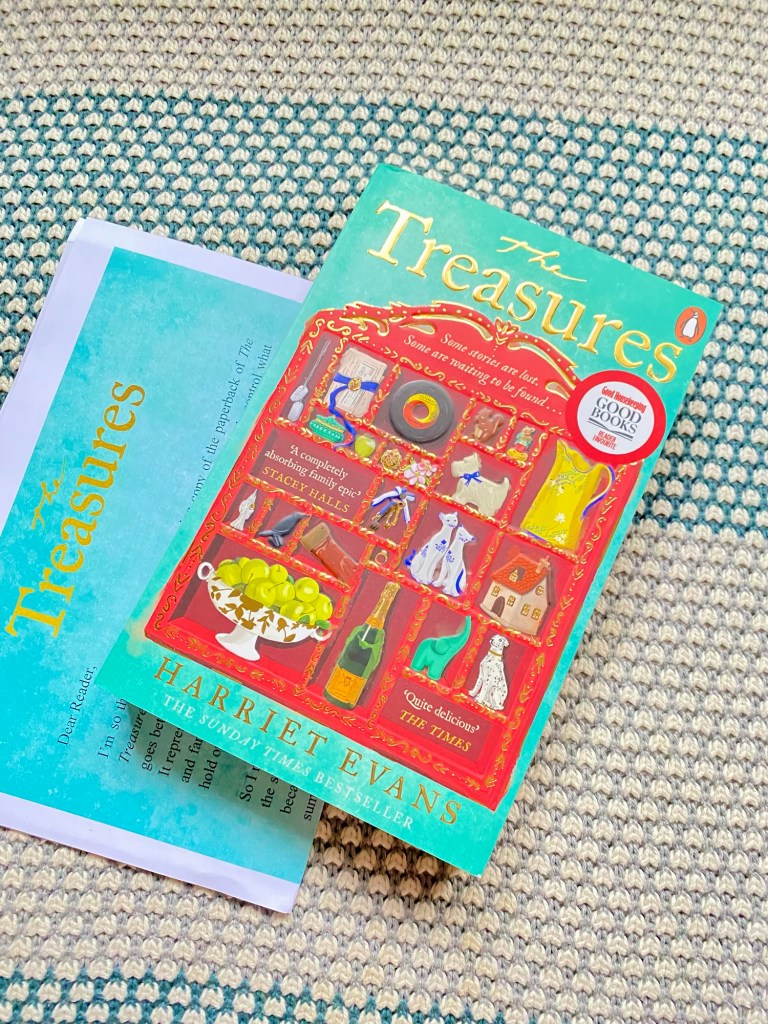
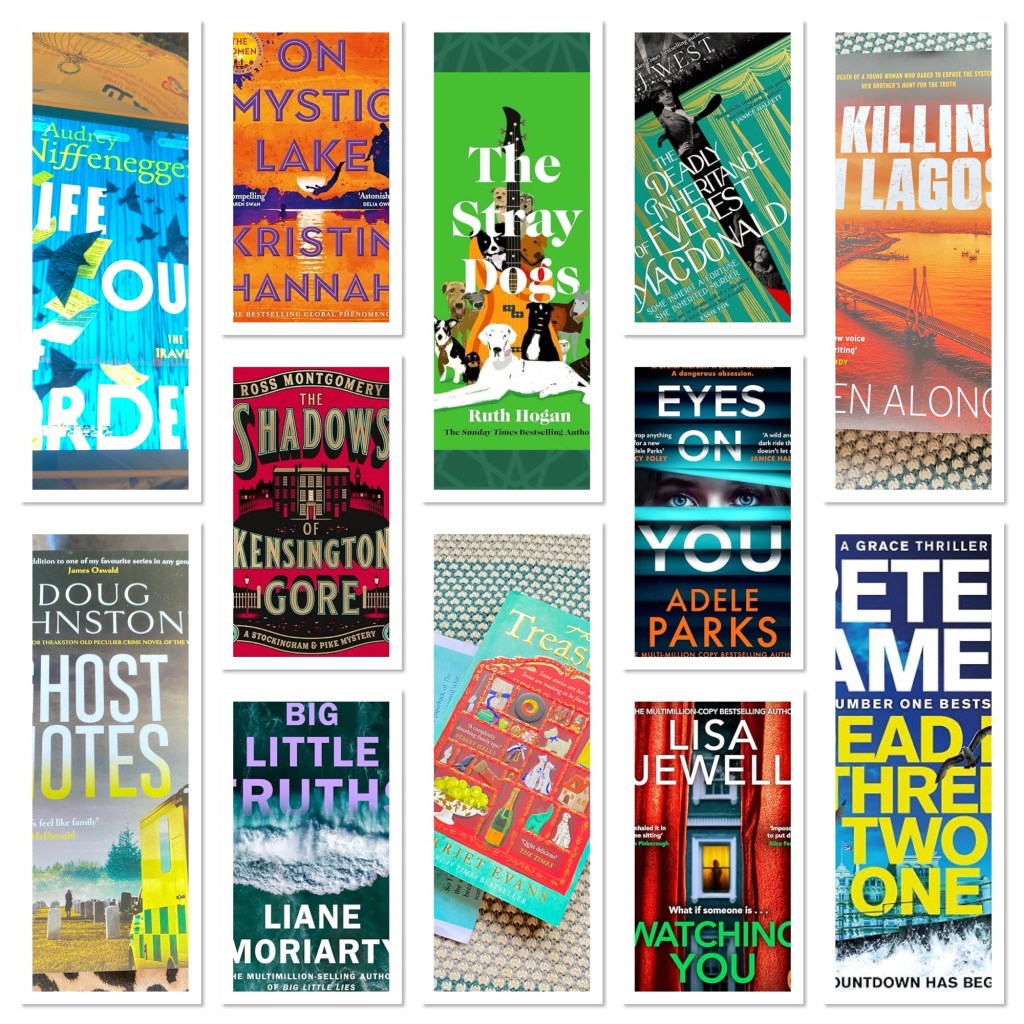
One golden summer. One missing treasure. And a secret that binds two lives together.
Every year, Alice’s father gives her a treasure. Then on the morning of her sixteenth birthday, her final gift vanishes – along with the fragile certainty of her world. Alice runs, towards New York City and away from the memories of that last summer at the orchard where she grew up.
Across the Atlantic, Tom has always felt that something is missing from his life. When he finds a long-forgotten letter, it leads him away from Sevenstones – the house at the heart of his family for generations – and towards a truth no one has ever fully told.
From post-war London to 1960s New York, Alice and Tom’s stories become entwined. But will the secrets of their past bring them together, or break them apart?
I always think that the good marker of a book is when you find yourself thinking about it days later and discussing it – or in my case boring someone who hasn’t even read it with my thoughts and feelings. This book brought up so many feelings! While we start with Alice’s devastating story of her early years, it was Tom’s narrative where the book came alive for me, with his early life in Dumfries and Galloway only a stone’s throw from my favourite yearly holiday destination. The descriptions are so vivid, from the hand to mouth existence of Tom and his father and their total connection with the seasons. The frozen sheep they find that keeps them going all winter and the beautiful hare at the gate signalling the oncoming summer. It’s a magical place and although life isn’t easy it’s familiar, with a strong connection between father and son since the death of his mother. To be torn from all of that and transported to post-war London by his mother’s family feels so unjust. His Aunt Jenny and Uncle Henry are eccentric and not as wealthy as they once were, evidenced by the ghosts of sold paintings on the wallpaper and their diet of tinned goods. As Tom deals with new expectations, the fractured feel of the city and its bomb sites, we start to sense a secret behind all of this, only hinted at and never made clear to Tom. A promise was made in wartime, one that couldn’t be broken and has it’s roots in a house called Sevenstones where ravens nest in the trees and a key was left under a stone at the door for anyone who needed an interlude from their wartime duties. It’s a secret that follows Tom throughout his years at school and eventually across the Atlantic.
Each section of this book is so evocative of its time and place. The captures the unrest in 1950s London and attitudes towards those who enlisted to fight in the war from Britain’s colonies, now returned to settle here as part of the Windrush generation. There are Teddy Boys rioting and children playing in bomb craters, the contrast of Westminster school and forays into Portobello Market. Meanwhile, Alice’s narrative takes her from a small town in upstate New York where minds and opportunities are equally small, into Manhattan during the unrest and change of the 1960s. Living in a squat in the East Village she is part of the hippy generation, with the backdrop of protests against segregation and the assassinations of Martin Luther King and Bobby Kennedy. Then comes the anti – Vietnam War demonstrations accompanied by the music of Joni Mitchell and Joan Baez. All seen through a haze of pot, LSD and The Beatles more psychedelic years. Alice’s generation is my mother’s too so the music, peace and love, the fashion and political beliefs are familiar and nostalgic. Tom travels to the USA to look for Alice, who he accidentally spoke to by phone briefly, for answers about his past and a woman called Teddy Kynaston who seems to be the key to the secrets he’s discovered.
Alice’s humming of Yesterday is so symbolic, with its twin refrains of the young girl running away early one morning and the parent’s lament that they sacrificed everything for her. Both young people are damaged by the generation before and there’s a definite sense of Phillip Larkin’s ‘This Be The Verse’ about the narrative – everyone always remembers the first line but forgets the second “they do not mean to, but they do’. The generation before us were messed up by their parents too, a theme that I imagine will run throughout the next novels in this series. Tom and Alice are failed by parents keeping secrets and making decisions to right the wrongs of the past that only make things worse. I felt something of Tom’s confused identity, having gone to a grammar school where many of my classmates were considerably better off than we were. I was taught to drop my accent and while I got a great education I didn’t feel like I belonged anywhere. For Tom the disparity is even greater and in his beautifully naive way he reminded me of Jay Gatsby, unaware of how ruthless the rich can be even when it comes to love. The parallel reaches across the Atlantic to Alice’s family and her dad’s employer, the oily and deeply unpleasant writer Wilder Kynaston. He’s wants to write from a young girl’s perspective, perhaps Daisy Buchanan’s but Alice is quite clear that no one cares about the Buchanans, they’re just as careless with feelings as Tom’s Westminster friends. Gatsby is great because of his loyalty and fierce love for a girl who doesn’t deserve his devotion, something Tom understands.
I felt so deeply angry with the Kynastons and the Caldicotts, especially as the truth of their wartime connection comes into the open. Their story made me understand why people of my grandparent’s age feel nostalgia about wartime – there was a freedom that disappeared into the 1950s and what felt like a concerted effort to force women back into their pre-war roles and behaviour. Women were flying planes up and down the country, joining the ambulance service in heavily bombed cities, working as land girls or taking on roles in the forces. They experienced a freedom in their social life they’d never had before and people took risks because they didn’t know if they’d live through the next day, never mind see the consequences. For women like Jenny, Teddy and Irene it allowed them to be fully themselves only to find themselves controlled and back in the domestic sphere and for some the consequences of being different are devastating. The author takes 20th Century events and shows their consequences in one generation of a family and I’m fascinated to see where these characters go next, something hinted at in the final chapters. As the book drew to a close I found myself hanging on through the final twists that bring us back to Sevenstones. I was so desperate for a specific outcome that when a previous character popped up unexpectedly in the final pages I swore out loud! The treasures in this story are not necessarily the trinkets that Alice carries with her or the carved house that Tom always carries in his pockets as a talisman. It’s the people they represent and the love that flows between them, even long after they’ve gone.
Out now from Penguin and part of the Sevenstones Trilogy
Meet the Author
Harriet is the author of an incredible fourteen novels, selling over a million copies and being a Top Ten bestseller as well as a Richard and Judy pick twice. Prior to that she worked in publishing, editing authors like Marian Keyes and Sue Townsend. She claims working on the reissue of the book LACE as a proud moment from her junior career.
The Treasures was released in 2025 and is the first book in a family saga featuring the Ravens over a fifty year stretch of the 20th and 21st centuries.
Last year she published her first murder mystery featuring detective Dora Wildwood, a character she hopes to continue into future novels.
She is on the management committee of the Society of Authors, fighting for better deals for authors, talking about the dangers of AI, ghostwriters, bad contracts, ghosting, royalties and other issues facing authors. She also volunteers with Inspiring the Future, aiming to widen aspiration for all children, and am an ambassador for the London Library.
Harriet lives in Bath with her family and a huge fluffy cat.
Harriet can be found on instagram as @harrietevansauthor.
What’s the most spontaneous thing you’ve ever done?
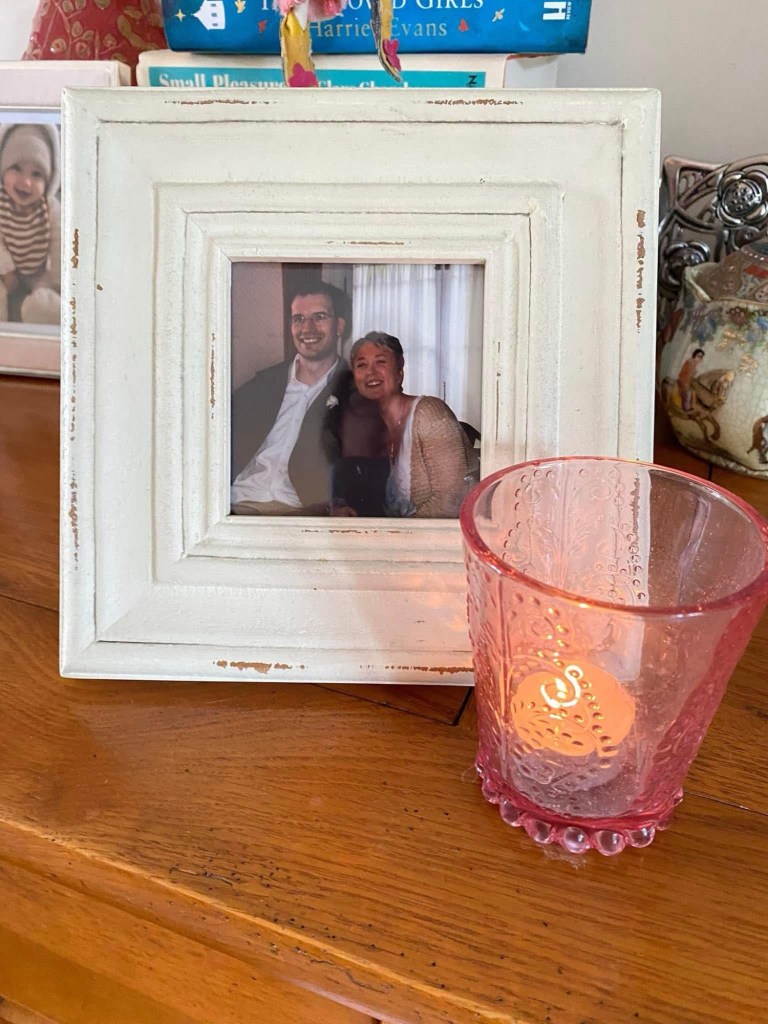
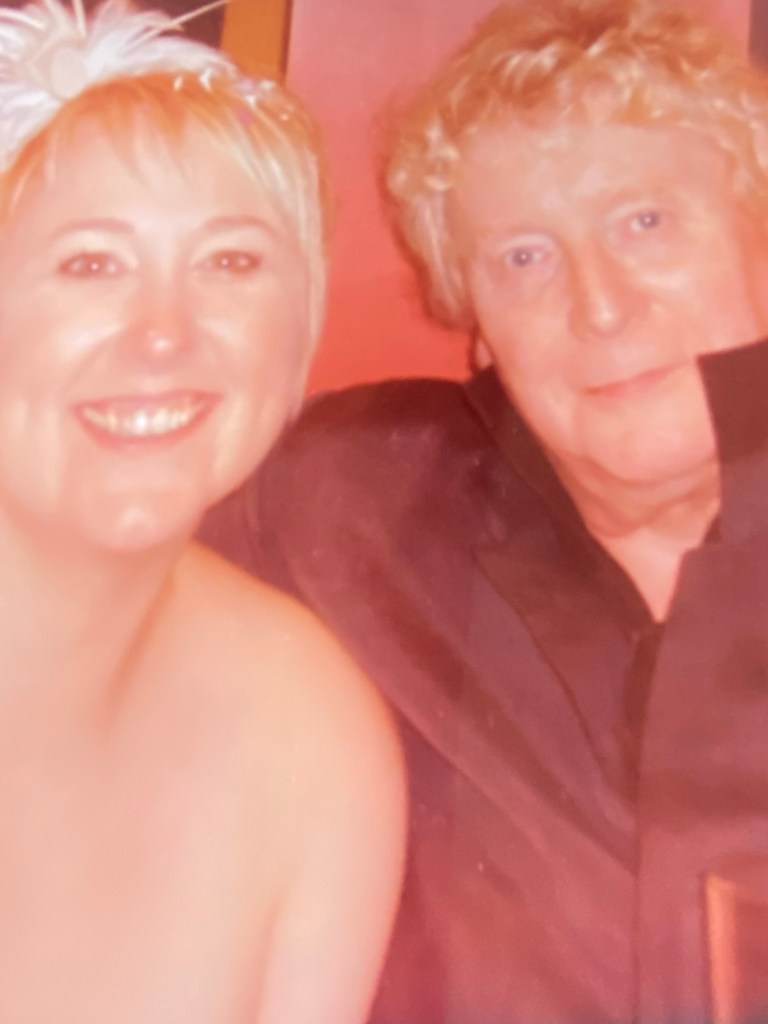
I met my late husband through a magazine article. I was working with my local MS Therapy Centre and we were sent a new magazine called Pathways and inside was an article from a really attractive man – my ideal, sort of hunky but with glasses. He was being winched into the rigging of a tall ship in a wheelchair! I was so impressed. He wrote about going scuba diving in the Florida Keys and having an adventure on the high seas and how it was all possible, you just had to find the right boat. It was such a difference in style from previous magazines I’d read that focused on a cure or making life safe, it was inspiring and I thought our members would love to hear about it. So I wrote to the magazine to ask permission to put a snippet in our own newsletter and added a note for Jerzy to ask if we could use his photo. Of course I added our email address just in case he’d like to write back. I just felt something when looking at his photo and thought ‘what the hell.’
Jerzy wrote back and I got a dial up internet connection so we could email each other. We messaged for three months and then graduated to a weekly phone call. Hearing his voice gave me goosebumps. After about two months of phone calls he asked if I’d go down to Milton Keynes and meet him in person. I wasn’t sure. He tackled that in the best way, instinctively. He told me we’d keep talking but the offer was always open. I was soon on my way to Milton Keynes. I felt so comfortable with him immediately. He was impressed with the way I handled a cab driver who nearly a had a heart attack as he clumsily transferred from the wheelchair and the aftermath of him knocking a full cup of coffee on the floor. I’m not phased by much. He asked me if I’d come down again in a fortnight to go to the ballet, the Northern Ballet Company’s interpretation of Romeo and Juliet. I was transfixed by it. I loved the dramatic black and red costumes and the freedom of a contemporary ballet. Late that night we were having a midnight breakfast – scrambled eggs, crispy bacon, coffee and Buck’s Fizz – and he commented on how natural it was to have me there. I agreed, we’d been comfortable from the first day. I knew. As simple as that. I knew I wanted this person to be in the rest of my life. He said ‘would marriage be out of the question?’
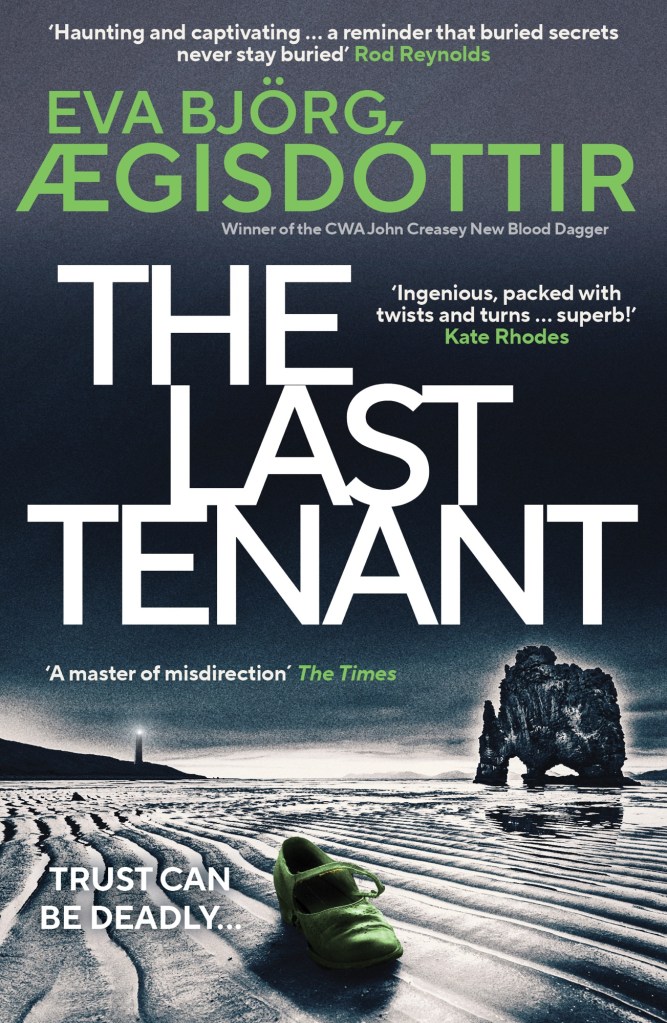
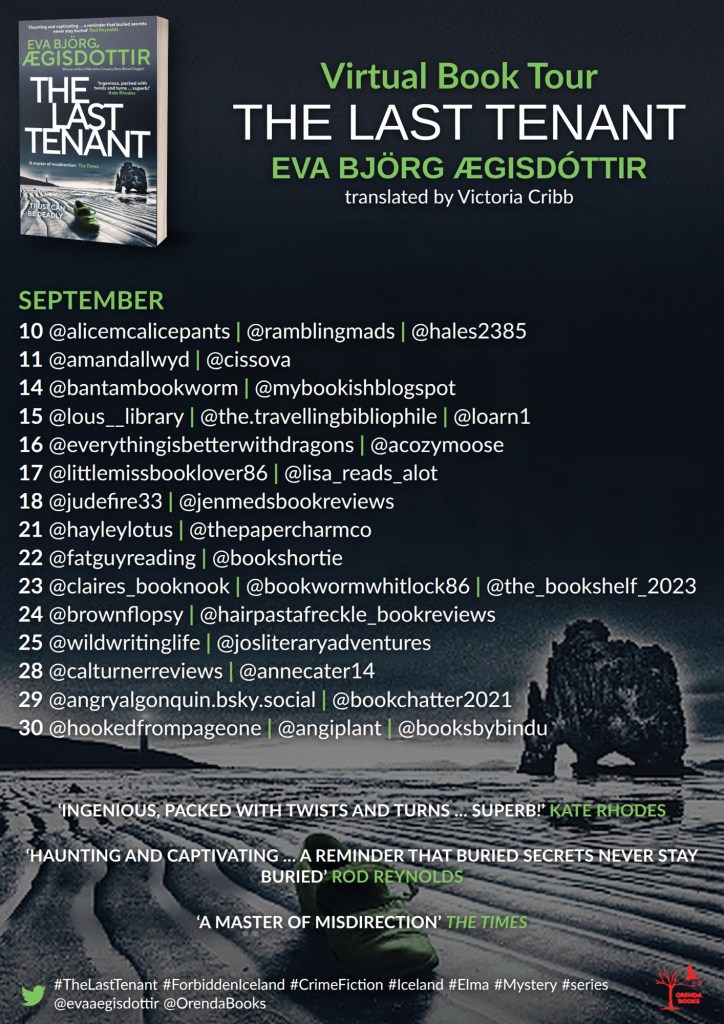
When the skeletons of a young woman and a baby are uncovered on a long-abandoned farm in Hvalfjörður, it is clear they were buried years apart. West Iceland CID begins to investigate the disturbing discovery, aware that someone has gone to great lengths to keep the past hidden.
In Akranes, Karitas, a young single mother seeking a new start, settles in with her four-year-old son and rents a basement flat from an eccentric landlord. A cautious sense of happiness returns when she meets the boy next door. But when news breaks that a local girl has been murdered, Karitas must decide who she can trust, knowing that one wrong choice could place her and her child in danger. Detective Elma is drawn into the case, forced to navigate long-hidden family secrets to understand a killer’s motive, while trying to hold together her increasingly troubled relationship with Sævar. Dark, atmospheric and rich with psychological suspense, The Last Tenant confirms Eva Björg Ægisdóttir as one of Iceland’s finest crime writers, as a meticulous investigation and a series of unsettling discoveries draw a close-knit community towards a reckoning no one can escape…
Wow! I love this series and at the sixth book in it just gets better and better. Elma’s case is a difficult and historic one as remains of a woman are found on a remote farm next to the long-buried bones of an infant. Elma will have to wait to find out whether the two are linked and how they’ve died, in the meantime she will have to trawl through missing person reports to find a likely candidate for the woman. She finds one in a young woman named Solrun, a medical student who had been dating a local boy when she went missing and both her car and clothes were found on a beach. Now Elma must delve into her past and reopen the scars for those she knew and loved because Solrun did not walk into the sea and drown. The baby’s DNA matches hair found buried with Solrun, but she hadn’t been pregnant and the baby’s remains predate hers by some years. Confused, Elma becomes engrossed in the case that is bound to cause a stir in her home town of Akranes as dark family secrets are uncovered. We see the case through Elma’s eyes but we’re also taken into the life of a young woman called Karitas who has recently moved into town with her young son Bessi. At first glance their basement flat is small but clean and her new landlord Baldvin seems odd but kind. There are also transcripts of a young man recording his troubled relationship with his father and the disappearance of his girlfriend on to his phone. Lyrical jornal entries from a young woman book end the novel. These different narratives are just one of the reasons I love this author’s writing. It reminds me of the Shetland novels by Anne Cleeves. In a remote small towns cases become complicated because everybody knows each other and their history family history. It brings home the emotional fallout of the crime committed and the toll it takes on the detectives like Elma who grew up here and have to picture their friends and neighbours as suspects. There are twists here you won’t see coming, but they’re not there for sensation but come about because people have secrets and tell lies. In the background runs the tension between retired police chief Otto and Elma, who blackmailed her on a previous case by claiming he knew a secret about Saever.
Elma throws herself into this case, mainly working alone but with Saever close by or at home to test her theories. Otto’s claims from the last book haven’t been addressed between them and along with having a lively toddler it has definitely sewn a bit of distance into their relationship. Her concerns grow when she sees he is distracted and receiving emails or messages from a woman that he isn’t sharing with her. I love the equity of their relationship, always equally responsible for chores, cooking and childcare, with none of the angst or guilt we often read with fictional female police officers. She’s a great mum but when she’s at work her mind is on the case, endlessly scrolling what she knows so far like a fruit machine in her head until something suddenly matches. She’s so absorbed that she’s not always checking her own well-being, with her mum intervening here and there to let the couple have some time and fun. On a night of wine with friends she’s horrified to have blurted out something about the case and mentally kicks herself for being unprofessional but she has discovered something she didn’t have before – other people’s impressions of someone she’s considering.
I enjoyed the character of Baldvin, the landlord of the basement flat where Karitas and Bessi live. He’s just the sort of the elderly gentleman I’d make friends with and I’ve had some eccentric friends over the years! He comes across as harmless and lonely with monologues that drift off at tangents and become philosophical. With a typical child’s innocence Bessi forms a bond with him, mainly fuelled by biscuits and ice-cream. He’s kind to them both so Karitas is surprised when neighbour Kristofer suggests she should be careful, insinuating he was creepy around his previous girlfriend. He does mention something about Karitas’s last name, its meaning and something about three suns that seems odd. She couldn’t be so wrong about him surely? She does sometimes come home and feel that someone has been in the flat and perhaps senses the whiff of his aftershave. When Elma asks around she finds that many people find him an odd character, almost like a child himself with a strange little giggle. A story about him did the rounds some years ago, that when working at the leisure centre he touched a young girl inappropriately, but one of her friends insists it wasn’t true. It shows that ‘apparently the truth doesn’t matter’ she says, something that seems more true today than ever before.
These cases are never tidy. There’s always something that doesn’t quite fit or can’t be explained. I imagine this is the norm in real life police work, but often detective fiction is way too cleanly tidied away. Here someone always knows more than they’re willing to say or are more involved than you imagined. Then there’s the burden of proof needed for a conviction. Elma knows Solrun was chasing down a clue before she disappeared, because one of her friends mentioned she’d asked for help about symptoms and medication. It wasn’t a personal enquiry but Elma can’t see where it might fit in her death, even when everything else is explained. Then there’s how everyone in Akranes is interlinked and having grown up in a small rural town I can see how it’s easy to think we know everything about another person. The truth is that we rarely see the full picture, just our part of it coloured by our own experience. Even within families there are things people know but no one talks about, there are different versions of the family history, things we’re open about and things we bury. Even so, how far would we go to protect those we love, especially our children? Throughout this series the people of Akranes are like a wider family, burying each other’s crimes and collectively forgetting the truth. The impact of one generation’s choices affecting the next. This the genius and the darkness at the heart of this series. The scariest truth about monsters is they don’t look like they do in storybooks; they can come out in daylight and ‘on the surface they’re just like ordinary people.’
Out Now from Orenda Books
Meet the Author
Born in Akranes, Eva Björg Ægisdóttir studied for an MSc in Globalisation in Norway before returning to Iceland and deciding to write a novel. Her debut, The Creak on the Stairs, was published in 2018, becoming a bestsellerin Iceland and going on to win the Blackbird Award and the Storytel Award for Best Crime Novel of the Year. It was published in English by Orenda Books in 2020, and became a number-one bestseller in ebook, shortlisting for Capital Crime’s Amazon Publishing Awards in two categories, and winning the CWA John Creasey New Blood Dagger. Girls Who Lie, Night Shadows, You Can’t See Me and Boys Who Hurt soon followed suit, shortlisting for the CWA Crime in Translation Dagger, the Capital Crime Awards, and the Petrona Award for Best Scandinavian Crime Novel. You Can’t See Me won the Storytel Award for Best Crime Novel of the Year in Iceland in 2023. In 2024, Eva won Iceland’s prestigious Crime Fiction Award, the Blood Drop, for Home before Dark and was shortlisted for the coveted Glass Key. The Forbidden Iceland series, due to hit streaming servicesin Autumn 2026 via GlassRiver, has established Eva as one of Iceland’s bestselling and most distinguished crime writers, and her books are published in twenty-nine languages with more than a million copies sold.
If you could pick any fictional animal to be your lifelong companion (like a Pokémon or fantasy pet), what would it be?
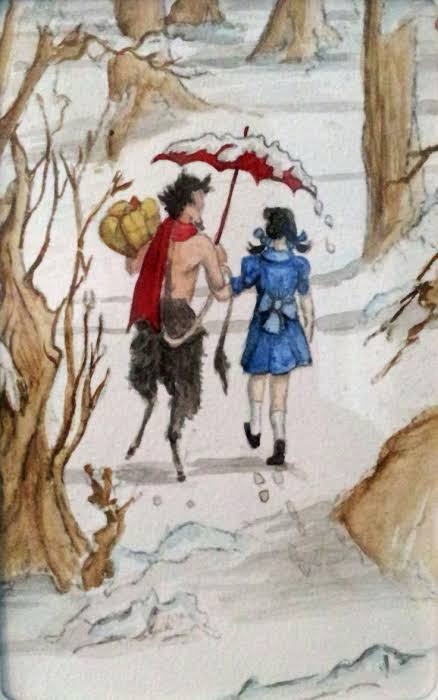
Many years ago I mentioned Mr Tumnus to my friend when we were talking about children’s books. She looked delighted.
“Ooh yes! James McAvoy Mr Tumnus?” She asked with a wink.
“Er no. I just want to go to his house for tea.”
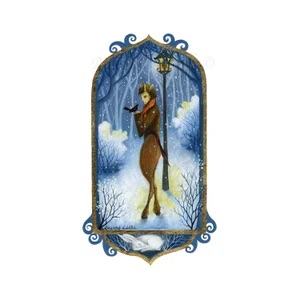
She looked mortified and I couldn’t stop laughing. I’ve never had sexual feelings for Mr Tumnus but he is the fictional creature I’d want to hang out with. In my copy of The Lion, The Witch and the Wardrobe the illustration of Mr Tumnus by the lamp is one of the most magical scenes in literature. In fact a couple of years ago a local stately home decorated one of their rooms with a fir tree forest. You walked through a door and into the smell of pine and sounds of a forest, snow on the ground and a lamp. Then at the back of the room was one lone tree with a star on top. It really did create that childish magic.
By Amanda Clarke link at the bottom of the page
My mum bought me a painting of Mr Tumnus for Christmas and he’s perfect. He’s wearing a velvet frock coat and his very long scarf, exactly as I imagine him. We share a love of cosy homes with roaring fires, afternoon tea and books. I could imagine whiling away many hours chatting and eating crumpets, reading in the quiet of the afternoon and having a little nap after tea. I thought about this a lot when I built a friendship with my lovely friend Nigel, now sadly gone. He made contact with my then husband as part of a disability network that wanted to expand. I didn’t expect to be part of the conversation because it was meant to be business, but we just clicked the minute he walked through the door.
Nigel was an older gentleman who had sustained a spinal injury and while able to walk on crutches he did struggle with pain and other symptoms. I loved his sprawling Victorian house with its tiled floors and amazing antique furniture. He was an antique dealer and the house was a treasure hoard of art and stunning glass pieces that were lit up on glass shelving throwing rainbows around the room. There was barely an inch of wall uncovered and with antique mirrors bathing everything in a soft light it was a beautiful place to relax. He wore smoking jackets adorned with brooches and had blond very curly hair that could have been hiding a faun’s antlers. Time passed differently with Nigel as he plied me with the ‘good’ coffee, cream cakes and gossipy stories of people in town. He was the GOAT in the gay community and an absolute magnet for young gay men in a town that seemed years behind the rest of the country in terms of diversity. I often found someone sat in the big wingback chair listening to his advice. There were clocks in the house too, everything from cuckoo clocks and grandfather clocks and everything in between. The ticking and soft chiming every half hour was so meditative I used to fall asleep, as cosy as if I was with Mr Tumnus having tea.
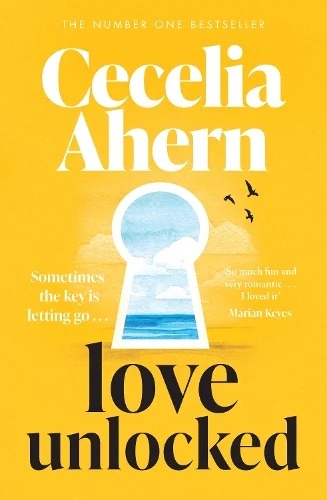
Melody has vowed never to fall in love again. Al is a hopeless romantic. So, when they quite literally bump into each other, there’s no reason sparks should fly. But the world seems a little upside down lately.
A few weeks ago, Al ordered the removal of all the lovers’ padlocks from one of Dublin’s beautiful bridges. Ever since then, couples across the world have started splitting up. And as Melody begins investigating this mysterious wave of breakups for her podcast, it seems there might be a bigger story to tell.
Together, they decide to uncover what’s unravelling so many love stories. And, in the middle of solving everyone else’s heartbreak, can they unlock theirown?
For her latest novel, Cecilia has brought us to Dublin and the marriage of Joseph Plunkett and Grace Gifford, a famous love story that ended with a candlelight marriage in Kilmainham Jail the night before his execution. This tragic story is immortalised in the 1985 song Grace and the Grace Plunkett bridge is a site of pilgrimage where people represent their love with initialled padlocks secured to the bridge railings. However, this proclamation of love is having its effect on the city’s bridges, that were never engineered for the extra weight of thousands of steel padlocks. For Al this is a problem, he works for the bridge authorities and he has been tasked with checking not only how much strain this adds to their bridges but how best to manage the problem. When the advice comes it’s not great for those of a romantic disposition, the locks will need to be removed in order to keep the bridge safe. So Al orders their removal as soon as possible, not in the best frame of mind romantically he isn’t fully prepared for the response. It’s not long before podcaster and DJ Melody is in touch with him regarding the love locks, she’s been inundated with stories of people who had a lock on the Grace Plunkett Bridge and since their removal have split with their other half. Some of them very close to home. She decides she must interview the man behind this phenomenon, but this isn’t the best time for Al since his own relationship has spectacularly imploded. Melody isn’t someone who takes no for an answer and soon the pair are investigating the stories and getting to know each other. Could the unlucky lovers clamouring for answers turn into something like luck for these two heartbroken people?
This is a story I’ve come across before with a lesser known author and found the whole subject fascinating. Could removing a love lock genuinely remove the love between two people, or was it a matter of psychological suggestion? They know they can’t rule out some opportunists using it as a reason to break up without taking the blame, but the sheer amount of coincidences is spooky. Neither Al or Melody are lucky in love. Melody split up with long term partner Sam after a very public proposal she wasn’t ready for. They still run a jacket potato van together and spend lots of time in each other’s company, despite Sam’s marriage and new baby. Melody knew that it wasn’t that she didn’t want to marry Sam but more that she knew she didn’t want to marry anyone, ever. Al’s relationship with Tara ended when he discovered a long term affair with their flatmate and Al’s best friend, Walter. Now Al has been forced to move out of a house he owns and Tara and Walter are living together. Not that he’s taking this lying down. There are some downright sneaky but hilarious ways of getting your own back. One of which backfires spectacularly leading to an office confrontation that had me in the same position as Al’s assistant Natasha – almost pissing myself. In fact Natasha was one of my favourite characters throughout. Both Al and Melody need to let go of the past and grow; could the misfortune of hundreds of couples actually bring them together?
I really loved Melody. She’s quirky, edgy, funny and a bit neurotic – but all the best people are… right? She’s beautiful in an offbeat way and knows exactly what she wants, her pizza ordering at Al’s flat is a great example:
“We are ordering two separate pizzas because we are two unique individuals who have different tastes, desires and goals and who know our own minds”.
Perhaps keeping their connection loose and undefined gives them both the space to properly get to know each other. Melody has relied on Sam (and still does if she’s honest) but that can’t continue. Even her mum isn’t available this time and needs space of her own. This means she gets to know Al with no expectations or barriers and actually opens up. She can’t sleep well at night without someone there but Al supports her to try. He’s there listening on the end of the phone while she does her bedtime routine and it’s strangely intimate despite the distance between them. He’s encouraging her to stand on her own two feet and she’s allowing herself to be vulnerable with someone she’s attracted to. She recognises that important ritual of going to bed with someone, not in the sexual sense, but seeing each other without a mask. It’s when we’re our most authentic self, trusting someone enough to fall asleep in their presence when we’re so vulnerable and sharing each other’s day, our worries and fears. My husband always says it’s the absolute favourite part of his day. Al on the other hand could do with learning to lean on someone, especially in this situation where he works with the man who’s betrayed him. I loved the scene with his fellow rowers, literally being part of something bigger than himself again and working as a team. It breaks the dam he’s built to hold his feelings and he finds himself both relieved and surprised by their reactions.
I found myself rooting for this couple and aside from their romantic potential I hoped for Melody’s podcast with unlikely friend Prunella to take off. Their shared visit to Joseph Plunkett’s jail cell was moving and gave a depth to the story they were telling. I could see them thinking about what Grace’s story could teach them. I could also see how Melody’s fear of being alone was linked to her absent father, something that can have a devastating impact on women’s later relationships. The space she gets from Sam and from her Mum allows her to make a connection between how she feels when alone and an incident from the past. Her chat with her mum’s partner Dave during their split really cements their own relationship. He leaves her his record player and the memories it evokes bring real revelations about how she thinks in a negative way and misses the positives in her life. This book left me feeling like no love is perfect, but it isn’t meant to be. It left me happy, hopeful and so privileged to have a man like my husband even if he does drive me up the wall at times.
I think blogging may have ruined my enjoyment of the bigger books. I used to love immersing myself in books that could double up as doorstops, but since I started blogging I’ve found it more difficult. Blog tours and commitments to blogger groups or book clubs have to take priority over my own reading. At first I did lots of blog tours, mainly to get to know other bloggers and organisers and I’ve made some lovely friends. It was also a good way of getting used to receiving proofs and to refresh my skills. Reading and reviewing to a deadline felt like something I hadn’t done since university and I still get so excited when bookmail arrives. I was so grateful, to Anne Cater particularly, who took a chance on an unknown and very green blogger right at the beginning. Mood reading had to take a back seat and even then it’s been shorter novels because of the short time I had between deadlines. It’s so easy to be influenced by the bookstagram treadmill and get caught up in followers, the latest proof or trend in book stacks or flat lays and forget why you started this in the first place – sharing the books you love.
Long novels take time. I need to set aside a few hours to really pick up the threads of a story and fully immerse myself in its world. I have tried to read longer novels by reading in short sessions between my other commitments but it’s too difficult. Either I don’t get long enough to really connect with the story and lose heart or I get confused between the two novels. It’s one novel at once for me these days. I have a pile of long novels waiting to go but they have to wait for holidays when I have no other distractions. Here are three long novels I’ve read more than once.
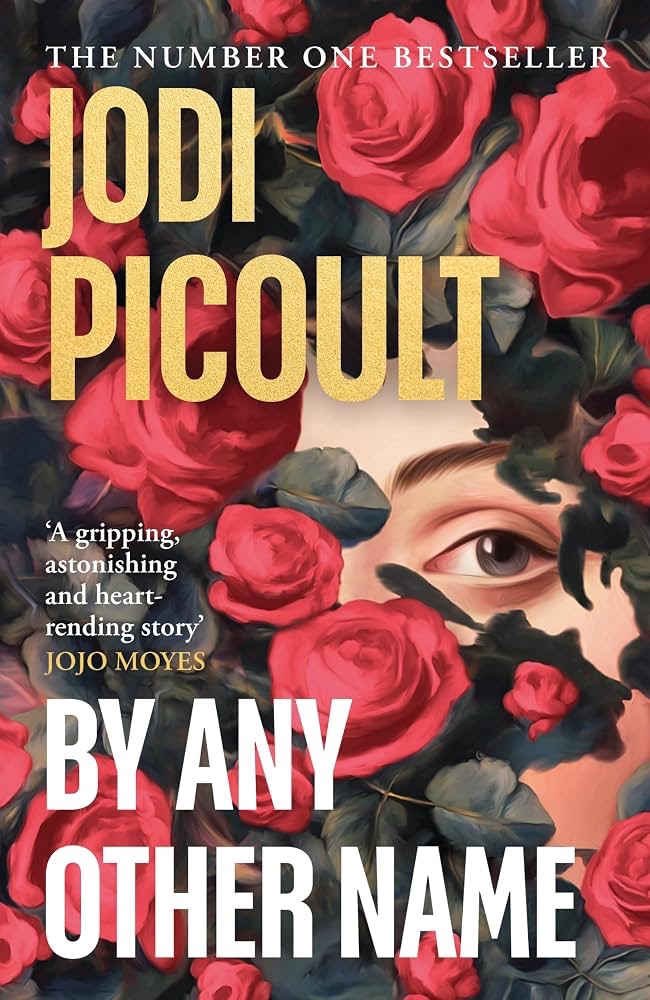
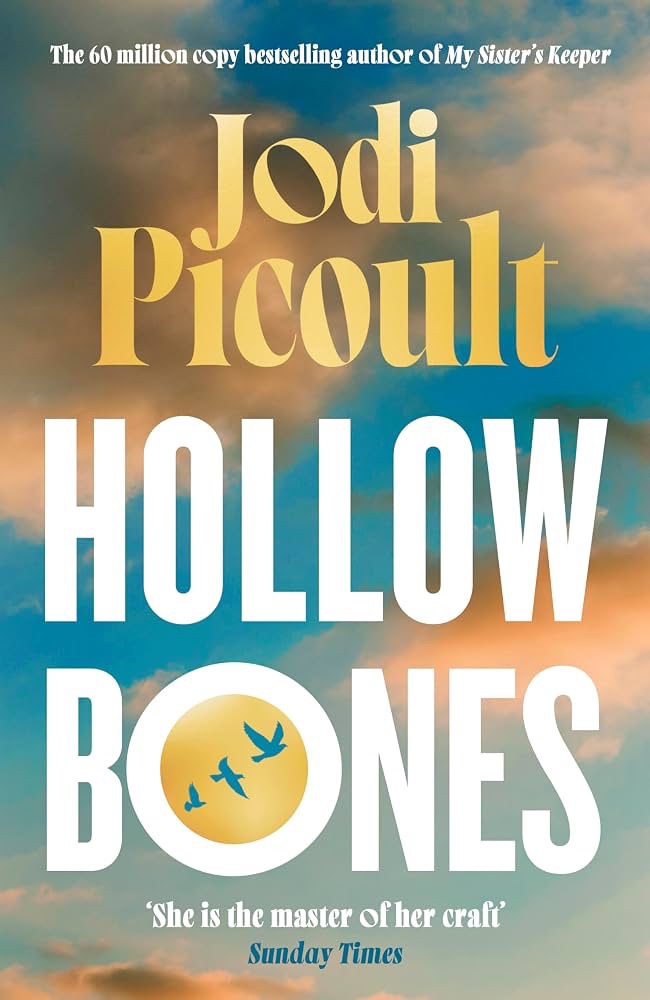
I LOVED this beautiful book by Jodi Picoult exploring the theory that Shakespeare’s plays were written by a woman, Emilia Bassano. At 540 pages it’s weighty but such an easy read that I was able to finish it on a birthday weekend away in Port Sunlight. Emilia struggles to be taken seriously as a playwright, instead she’s expected to marry and stay at home. Despite this she keeps writing, takes a lover and yearns to get her words on the stage – maybe if she finds a man willing to be the ‘face’ of her work she will finally hear her words on the stage.
In modern day New York, student playwright Melina Green finds that even in the 21st Century her words will struggle to make the stage, when the power is held by men. Inspired by the life of her ancestor Emilia Bassano, Melina takes a lesson from history, and submits a play to a competition under a male pseudonym . . .
As Melina discovers more of Emilia’s extraordinary life in Elizabethan England, she is determined to right the wrongs of the past – and finally tell her story.
Two women – centuries apart – are both forced to hide behind another name.
But can either make their voices heard?
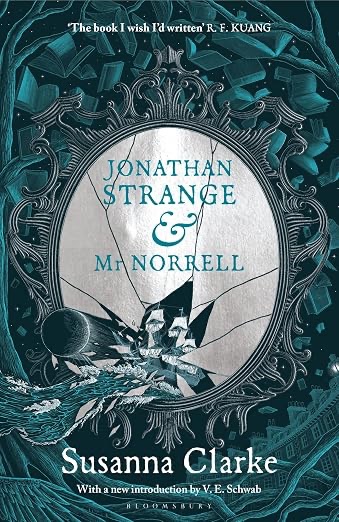
Depending on the edition, Jonathon Strange and Mr Norrell comes in at between 782 and 1024 pages so it’s a whopper! This book gave me the feeling of being a child again and luxuriating in the detail of this fantastical novel. With an incredible opening where the statues of York Minster come to life, it’s soon clear to the reader that lengthy description is the only way to bring magic to life. My favourite sections include the terrifying ball where the fairy gentleman takes Mr Norrell’s resurrected woman every night and the scene on the beach where a grounded ship is recovered by the incredible spectacle of sand horses summoned by Mr Strange. Amazingly it never feels like a slog.
The year is 1806. Centuries have passed since practical magicians faded into the nation’s past. But scholars of this glorious history discover that one remains: the reclusive Mr Norrell, whose displays of magic send a thrill through the country. Proceeding to London, he raises a beautiful woman from the dead and summons an army of ghostly ships to terrify the French. Yet the cautious, fussy Norrell is challenged by the emergence of another magician: the brilliant novice Jonathan Strange. Young, handsome and daring, Strange is the very antithesis of Norrell. So begins a dangerous battle between these two great men which overwhelms that between England and France. And their own obsessions and secret dabblings with the dark arts are going to cause more trouble than they can imagine.
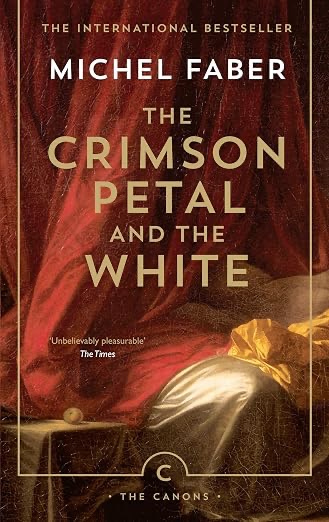
Coming in at 864 pages this is a brick of a novel and I adore every last page. It’s one of my all time favourites and its heroine, Sugar, may be one of my literary heroes.
Gripping from the first page, this immense novel is an intoxicating and deeply satisfying read. Faber’s most ambitious fictional creation yet, it is sure to affirm his position as one of the most talented and brilliant writers working in the UK. Sugar, an alluring, nineteen-year-old whore in the brothel of the terrifying Mrs Castaway, yearns for a better life. Her ascent through the strata of 1870’s London society offers us intimacy with a host of loveable, maddening and superbly realised characters. At the heart of this panoramic, multi-layered narrative is the compelling struggle of a young woman to lift her body and soul out of the gutter. The Crimson Petal and the White is a big, juicy, must-read of a novel that will delight, enthral, provoke and entertain young and old, male and female.
I reach up and unravel my braid. When my hair is loose and whipping around my face, I take the red ribbon I’ve woven through it and press it just beneath my mother’s etched name, underlining. She was here. She was mine.
When Molly Fitzgerald was two months old, her mother went to a morning appointment in downtown New York.
Like so many who left their homes on September 11th, 2001, Molly’s mother never came home. Now Molly saves lives for a living, running a department for when disasters strike.
Molly and her husband Jesse―a police polygraph expert with his own fractured family―have found a love that is a solace in a dangerous world.
But then Molly’s whole world is turned on its head. She’s spent her life preparing for catastrophe. But nothing could prepare her when a disaster strikes too close to home.
In this powerful novel, Jodi Picoult tells an epic story of the lies we tell ourselves, the plans we design to protect ourselves at the worst moments, and the ties that bind mothers and daughters.
A new Jodi Picoult novel is always cause for celebration in my house and this was devoured in just two days. She has a knack of drawing in the reader immediately with a casual conversational style. I went in with no blurb so I didn’t know which way the story was going and was surprised by the different direction. This is the story of a family caught up in events beyond their control as the world processed one of those events that splits history into a before and after. The shock of 9/11 was felt the world over and everyone has a story of where they were when the planes hit the World Trade Centre. I was in Milton Keynes and I’d been married to my late husband Jez for six weeks. A few days previously he’d flown out to Cape Cod to attend a family wedding, planned long before we met. I stayed home and started university, but I also had my mum staying with me. I’d dropped her in the town centre, came home for a brew and switched on the television to see the second plane hit the south tower and I was transfixed. Then it hit me. When was Jez’s internal flight from Boston to Washington? I didn’t know. I remember scrabbling through paperwork and even ringing his secretary to see if she had it, but nothing. By the time a jet hit the Pentagon I was sure I’d lost him. Between my mum and my sister-in-law Jenny in New Zealand we tried to keep calm, but no calls were going through to his hotel or their mobiles. I’d been so happy in our honeymoon period that I hadn’t thought to ask where he was and when. Finally at around 9 o’clock that night, his cousin Joanna rang me from her honeymoon to tell me they were ok. They left Dullas Airport in Boston twelve hours before the hijackers and had been eating breakfast at IHOP when the pentagon was hit close to their hotel. I was lucky.
The author has also written a flashback section that goes back and takes us through Eloise’s story. We meet her twin sister Adie who wears the white ribbon – a link to The Scarlet Letter perhaps? Eloise’s story isn’t an easy read but I identified with her upbringing in an evangelical church and the spiritual and emotional harm such environments can have on developing teenagers. Eloise had plenty of reasons to run away and she kept running. She’s an artist and uses her art to express her emotion. The significance of her chosen medium – mosaics- is clearly recovery, painstakingly placing broken pieces together to create a bigger, beautiful picture. At art college she creates a large heart with an anatomical heart placed within it using white grout to define its shape. Called ‘Love Thyself’ the piece seemed to signify romantic love but with the reality of love deep inside, a recognition that love isn’t easy but needs action not just pretty words. Despite having empathy for Eloise I did also feel for Evie, Eloise’s best friend at college who falls in love with Adam before she introduces him to Eloise, only to see them fit together as if meant for one another. Evie isn’t perfect, but she stepped in and held Adam and Molly in the aftermath of 9/11 and has been an incredible stepmum. Eloise might have been Adam’s great love but there’s no doubt that Evie’s great loves are Adam and Molly. There’s a huge twist within the book that I hadn’t expected at all, taking it in a completely different direction to what I was expecting. It was so unexpected I had to go back and read a few pages for it to make sense, but from that point on I was gripped. As always this is one of those books that made me think, about chance and destiny and whether there’s ever a right time for something. It made me think about the lives we don’t live – what if Jez had been on that earlier plane? What if I’d gone to the US with them?
Lastly I want to say how brave Jodi Picoult is. At a time when she is the most banned author in school libraries she continues to write about those hot topics that stir up interest and even anger. Here I felt she used her reputation to throw the reader a couple of curveballs – when I realised Molly was pregnant I wondered if she was going to revisit the controversial subject of abortion or babies with special needs, but she surprised me by going in a completely different direction. Taking on 9/11, a seismic event in everyone’s memory, is going to bring criticism her way but she doesn’t let it stop her. Taking on Evangelical Christianity is something that needs to be done a lot more because it should be treated as a cult. We can see the current effect it’s having on politics in the curbing of women’s rights and policies to end an equality people in minority groups have had for most of the 21st Century. Finally she uses Molly’s job in disaster preparation to criticise the current US administration! When I met Jodi Picoult over ten years ago now she told me that it’s the issues in her books that come first. If it stays in her mind a few days she knows it might be worth researching and then finally she hears the characters voices. Here she’s taken different criticisms of the Trump presidency and directly attacked his choices for important roles within government and cuts in spending. I love that she’s still speaking truth to power in her work. This is a timely novel about the world we live in since 9/11 but also how a family face personal loss inside such an international tragedy. It’s also a beautiful look at motherhood and how mums sacrifice themselves for their children in small everyday ways, but also in big life-changing ways too.
“I reach up and unravel my braid. When my hair is loose and whipping around my face, I take the red ribbon I’ve woven through it and press it just beneath my mother’s etched name, underlining. She was here. She was mine.”
Meet the Author
Jodi Picoult is the #1 New York Times bestselling author of twenty-nine novels, including Mad Honey, Wish You Were Here, The Book of Two Ways, A Spark of Light, Small Great Things, Leaving Time, and My Sister’s Keeper, and, with daughter Samantha van Leer, two young adult novels, Between the Lines and Off the Page. Picoult lives in New Hampshire.
Follow Jodi Picoult on Instagram, TikTok, Facebook, and Twitter: @jodipicoult
Hollow Bones is out in the UK on 5th November from Penguin
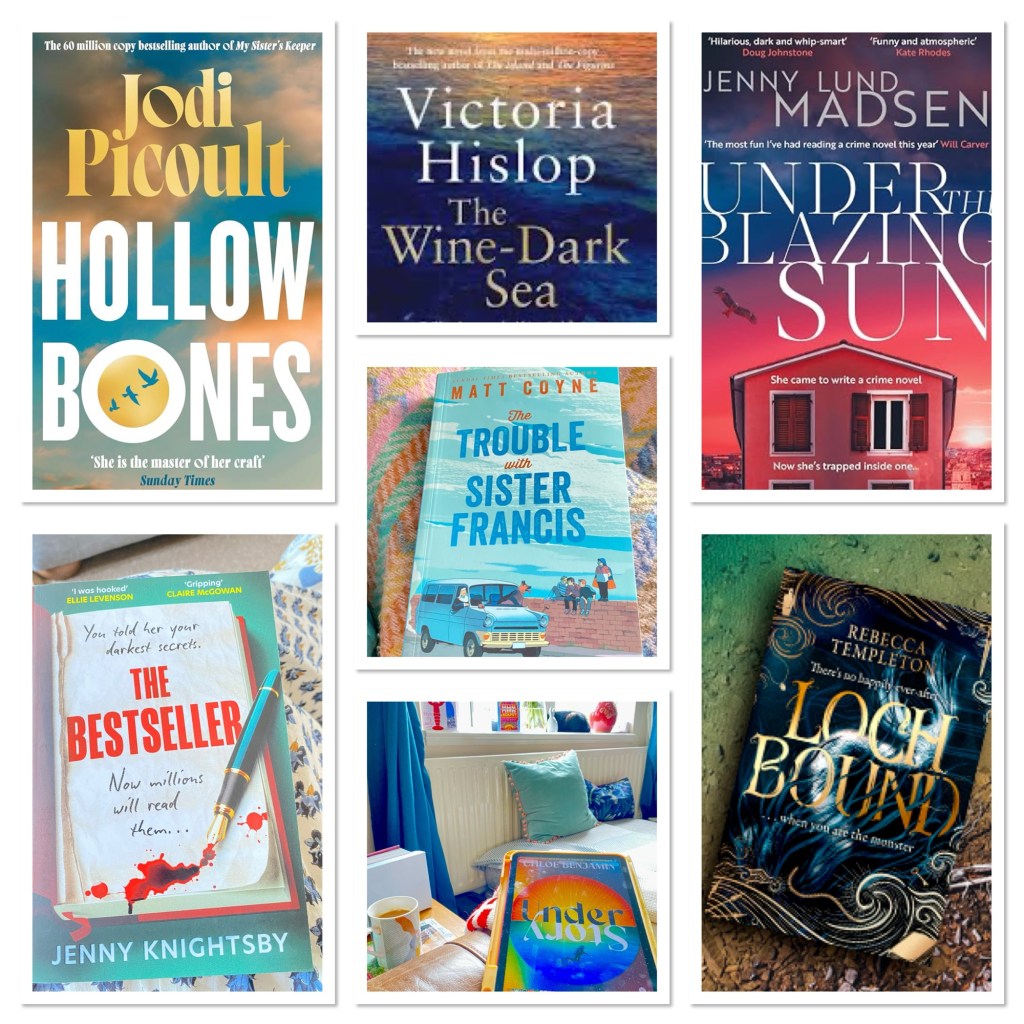
There have been some absolutely belting books this month and I loved telling you all about them. So I’ve been in the US, Italy, Greece Scotland and Sheffield. Oh I forgot about the ‘anti-verse’. It’s been a whirlwind of monstrous mermaids, a universe that goes backwards, the Greek civil war, a family dealing with the aftermath of 9/11, a crime writer who wakes up in a Sicilian villa with a dead body, a counsellor dealing with coercive control and a group of young boys trying to save their summer boy’s club. I’ve struggled to keep my mind on my reading to be honest it’s been a tough month. At the end of the last heatwave my cat returned home late one night and collapsed in the hall. I thought it was heatstroke and we tried to cool him but I could see he couldn’t put any weight on his back end. We rushed him to the vets where they diagnosed possible epilepsy. I knew this wasn’t right. She gave us some anti-convulsants but I wasn’t sure this was the right call. We kept him confined and on pain killers but he still couldn’t walk. I decided on a second opinion and went to a vet I used to see before moving house and he was brilliant. Poor Max had broken his pelvis in two places, his hip and damaged his lumbar spine. He also had a partially healed wound on his side. I can’t believe all that was missed. I could feel where his pelvis was pushed over, twisting his whole lower body. He’s had some surgery and lots of care at home. It’s going to take twelve weeks or more to fully settle. My husband has built him a three bedroom home under the stairs so he’s confined some of the time but can come out for exercise and fuss. My animals are my daily company now I don’t get out and about too well so they’re an important part of my life. I was so upset and I’ve really been focused on making him comfy and safe. So there’ll be lots of reading time in the upcoming weeks and I can’t wait be use it looks like an amazing autumn. I’ll share some recommendations for your tbr at the end. ❤️📚
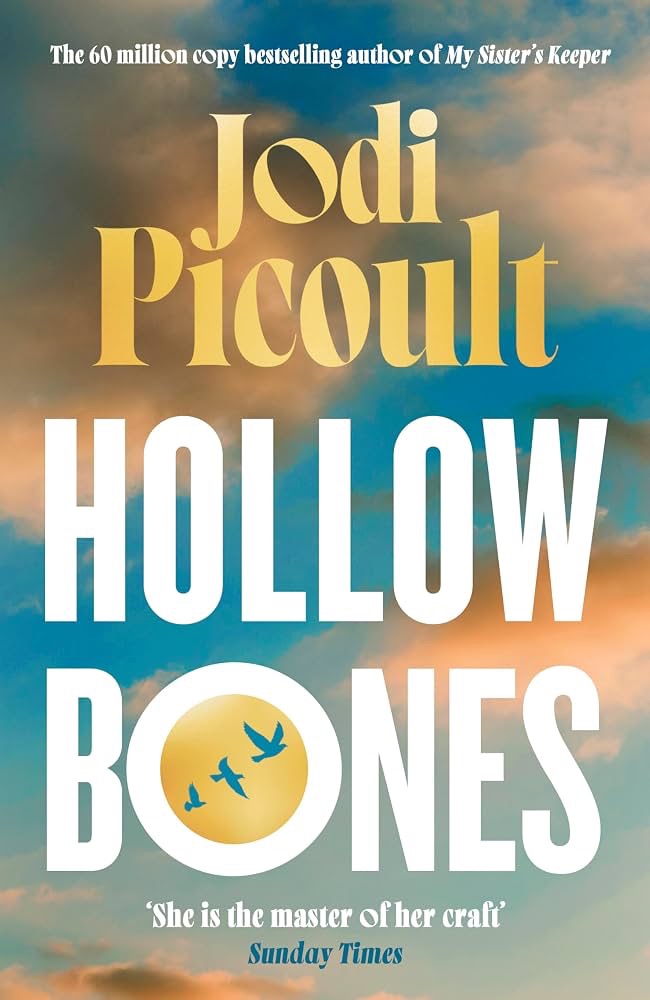
I’ve been looking forward to this new release from Jodi Picoult and I was lucky enough to get it on NetGalley. I dived in and read it very quickly over a couple of days. My full review will be later in the week, but this was a fascinating read, bravely taking on some of the most contentious and sacred subjects in modern day America. We follow Molly, a young woman in her twenties who is incredibly driven and has the difficult job of coordinating emergency response in her state. Her job is not medical, it’s to prevent incidents and plan for potential disaster situations based on the geographical features of the area, possible targets and population. Having just got through COVID, Molly is happily settled down with husband Jesse close to her dad and stepmum. It’s easy to see that it’s the loss of her mother that has influenced Molly’s choice of career. Eloise was lost on 9/11 when she attended a medical appointment in the South Tower. Every year Molly takes the trip to NYC for the memorial ceremony and tucks a red ribbon behind her mum’s name, representing the one she always wore in her French plait. What Molly doesn’t know is that her own life is about to blow up unexpectedly, changing everything she’s ever known and challenging what she knows about motherhood and risk prevention. I thought this was a classic Jodi Picoult novel with dilemmas, big emotions and using different narrative voices to give us all sides of an argument. We think we know Molly’s story, but a different narrator throws all of that up in the air so unexpectedly. Reading Molly’s narrative I kept thinking “ah this is going to be about x” but I was wrong. There are strong issues here – mental health, abuse, cult mentality – and they are shocking, because they should be. Jodi Picoult has such an easy, conversational style and it was great to be back in the hands of a fantastic storyteller.
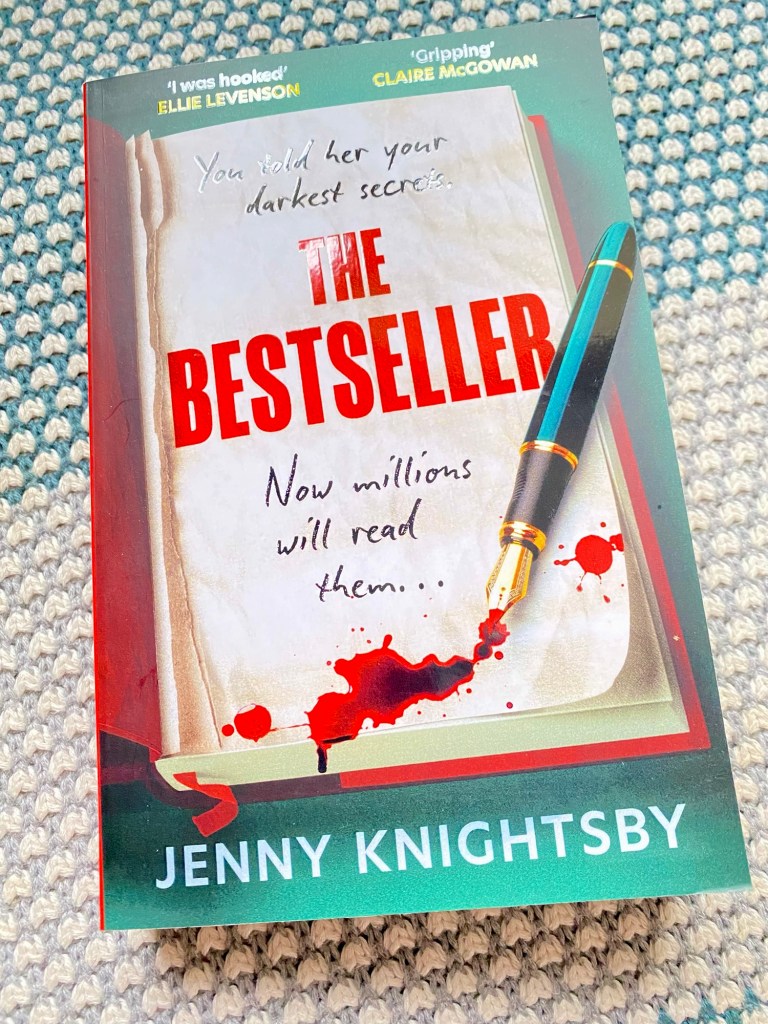
This is a great premise for a thriller and having been a therapist I’m always fascinated by books that are based on the therapeutic relationship. I think there’s a fascination in what therapist’s personal lives actually look like. Do they have it all sorted? The answer is invariably no and here there’s so much projection happening between Helena and her client Belle. Confidentiality is the bedrock of any therapeutic relationship, but that can get tricky when the therapist knows the client needs either specialist help or practical help. Helena is there to listen and guide Belle towards her own answers, but the constant disclosure of coercive control is uncomfortable to sit in. The urge to do rather than sit back and listen becomes difficult for Helena and it’s this discomfort that leads to her talking about it with best friend Tala. This is an issue for supervision, where Helena should disclose that she’s finding Belle’s passivity and indecision on leaving very difficult, but she doesn’t and now Tala is talking about how positive early responses have been to her new novel. Yet she doesn’t offer Helena a proof. When Helena stumbles across one at Tala’s flat she takes it and reads in horror as she realises Tala has fictionalised the problems of her client. This is going to be like a grenade in her personal and professional life.
The lives of Tala, Helena and her boyfriend Dylan and their paths into adulthood hinged on a single night. I thought the author managed these flashbacks well, placing them absolutely perfectly for maximum effect. It seems everyone has secrets but they are slowly revealed creating a very addictive read with short, pacy chapters that make you want to read just one more. The tension is almost unbearable as I worried about Helena overstepping with her client, the client finding out what’s in Tala’s book and somehow passing that on to her husband Julius. Would Helena be safe? As her well-ordered life starts to fall apart Helena starts to lose her belongings, forget her schedule and have terrible nightmares. She has no access to supervision and her relationship with Tala is broken. I wondered if she was heading for a breakdown. You may see the twist coming, but that doesn’t detract from the story. Eyes are opened, secrets past and present are revealed and I devoured the last few chapters late at night, unable to wait till the morning to find out what happened. This was an excellent thriller, full of psychological drama and really nailed the experience of being a counsellor with a problematic client. I also loved the ‘meta’ structure of reading a book about a book and just like Tala’s new novel this one should be a bestseller.
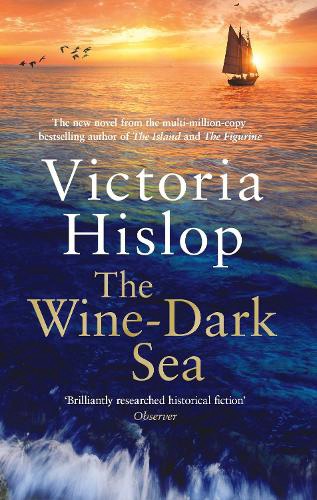
This epic story from Victoria Hislop really taught me a lot about a period of history I knew little about. The events happen after the end of WW2, a turbulent time that has already seen the punishment of Nazi collaborators and now many would like to see the end of their right wing government. The setting is a village called Kalopetra where Fotini’s husband has gone to fight for government forces against the communists, causing a schism in the family because Fotini’s brother-in-law fights for the communists. The sudden divide causes friction across the village, but the women must work together if they’re to survive. When government forces come to the village they capture all the women and Fotini is allowed to bring her baby son with her but older daughter Iliana is left behind with older children. How will they survive? That moment of Iliana chasing the truck, with her mother unable to do anything to reassure her, is burned into my memory. Although soon enough communist forces will round up the children and move them into camps where they are fed, clothed and then sent on to other countries like Yugoslavia. After having the entire burden of the other village children on her shoulders, Iliana is relieved to be fed and clothed by such kind people and so the process of brainwashing begins. All Fotini can think about is returning to her peaceful village and living the rustic existence that has survived for centuries, she doesn’t know that her way of life is already dead and nothing will be the same again.
I really enjoyed the later parts of the novel where we see Fotini piecing life back together in the city of Piraeus. It’s a massive change for this country girl but she can see the benefits of more job opportunities, entertainments like the cinema and eating good Greek food again at a lovely restaurant run by Demetrios. He’s such a kind man and gently reminds Fotini that she can’t spend the rest of her life wandering and looking for the children. The best thing she and Mitsos can do is stay in one place and hope the children find her, the place she was trying to get back to is gone. There was so much material to choose from in this book that it could have filled a trilogy. I had questions about all sorts of characters, such as Fotini’s relationship with her sister Stella. I also had questions about Nikos’s journey and his adoptive mother, there just seemed to be more about her that could have been explored. However, I loved Iliana’s growth and her life as an adult living under communism. The differences between Greece and Hungary were fascinating and as always the author captured the beauty of the Greek islands, their isolation and wildness and how this conflict disrupts a way of life that existed for centuries. The book symbolically ends with a circular dance that’s life affirming and perhaps a way of capturing, just for a few moments, that lost way of being.
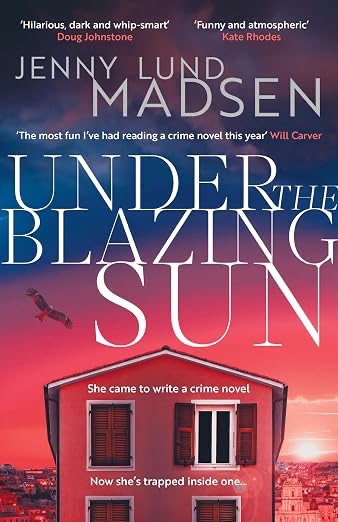
I loved the first book in this series and I devoured this one in a day. Hannah is once again fretting over writing her latest book, disgusted that copies of the romance novel she poured her heart into is being ignored, while the crime novel she wrote in one month for a bet is a bestseller. Hannah is a brilliantly flawed character full of writer’s neurosis, hating that she is forced to write what will sell rather than the books she aspires to write. Again she’s on a deadline and as a last resort her editor Bastian finds her a quiet villa in Sicily with its own swimming pool. No distractions and plenty of time to unwind and write the novel she’s had an advance to produce. I love this character because she says and does the things I’d love to, but my inhibitions keep it inside. She has no such restrictions, happily saying what she thinks when she thinks it. Her disgust with the crime genre and Jorn Jensen in particular is so funny. I wonder if she has ever had a thought or need she didn’t express? She also seems totally unregulated. I would have asked the elderly couple who caretake the villa for help but Hannah decides to walk to the village without thought about the heat, how far and which direction home is in. She has no idea which hill to take and ends up exhausted and on the verge of sunstroke on her way back. This is where she is found by Hans and Greta who take her to their incredible house to clean up and drink something. This turns into dinner, wine and a night spent in their house. It’s when she wakes up in a strange place that she and the housekeeper Lucette find a dead body. Greta has been murdered and Hans is nowhere to be found. Has he been kidnapped or could he be the murderer? Hannah seems to have an inability to weigh up a decision before taking action. There’s so much going on in her head that it’s very hard for her to remain in the present. I’m always wishing she’d slow down a minute and breathe, but the only times she seems to do this are in water.
The case is an absolute maze of connections and suspects showing up a tension between villagers and tourists, a misogynistic police force and possible Mafia interference. Despite Hannah’s aversion to crime as a genre, she’s just as caught up in the mystery of this murder as any reader would be. She’s utterly reckless, in a comical way and there’s a chase on a moped during the final chapters that is clumsy and hilarious to imagine. Sparks fly when Jorn Jensen appears, but she can’t deny he helps make things happen. His arrogance is brilliant and when he suggests they write a crime novel together I thought Hannah might hit him with something heavy. The creepy moment in the basement, including Jensen’s cardboard cut out made me laugh out loud. This is a dark humour that I love. Jorn’s statement that he has ‘enormous sex appeal’ and it’s that and not his wealth that attracts women shows what sort of brash and conceited character he is, but there’s no denying his bravery and quick thinking. They are quite the investigative team, despite her reticence about working with him. Hannah’s instincts are good. She won’t accept the police’s conclusion that Hans killed his wife, reasoning that he adored her and couldn’t have done it. Instead she follows the money, often blundering into compromising situations and dangerous people. If the conclusion teaches her anything it’s that people will murder for very unexpected reasons. This is a brilliant second instalment of Hannah’s adventures and I’m going to resolve to be a little more Hannah and say what I think here and there.
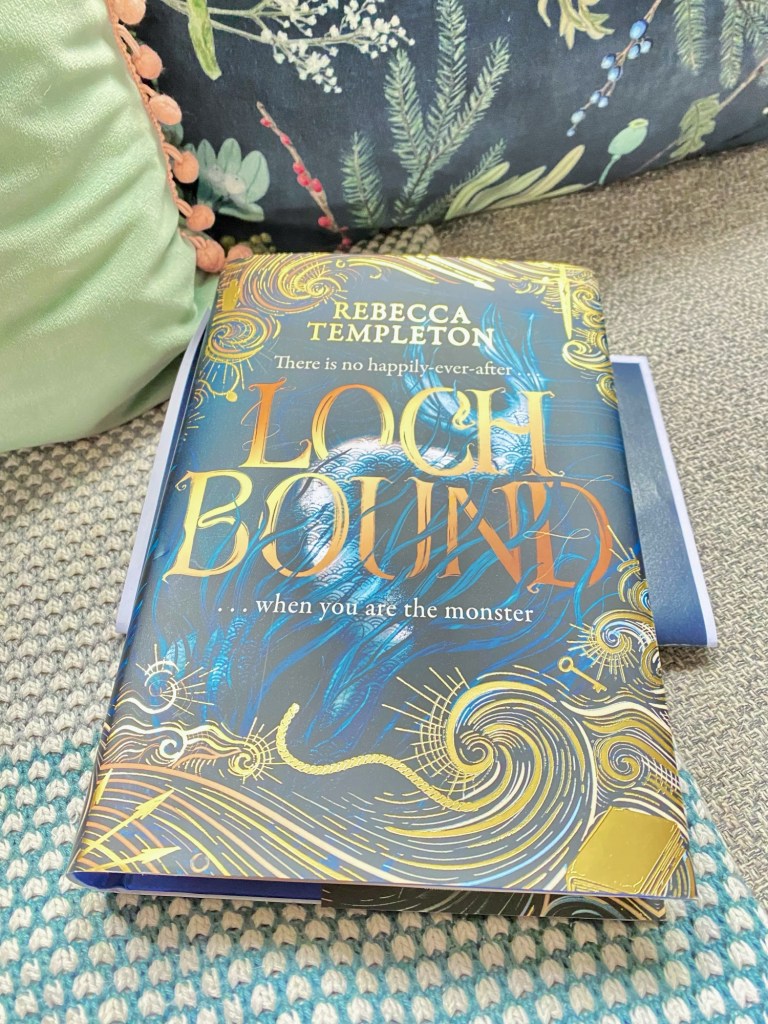
I love when monster stories are given a retelling and in this one it’s a mermaid living in a loch, but not the Disney-fixed Little Mermaid we might be used to. Here she is a truly fearsome creature named Moireach with yellow eyes, sharp teeth, shiny scales and the drive of a predator. She lives in the loch, only changing after dark when she reverts back to her human form – Iris. As a young girl Iris defied her father and fell in love with Thane. He forbade their relationship, as the daughter of a laird she must marry well and for the clan’s gain not her own. Devastated she visits a witch hoping to be free of her father’s obligations, but the witch cursed her and she became banished to the loch by day. Now, some fifty years later, when Iris emerges she is still the beautiful girl of her youth. Thane has never come for her and as dead men have been discovered around the loch with their hearts ripped out, the name of the monster is on everyone’s lips. Her childhood friend Duncan, now an old man, knows it cannot be Iris. She isn’t capable. He hides her with all the love and loyalty he had fifty years earlier, even though she chose someone else. The laird has made a big decision, he’s hired a hunter of monsters, a man called Henry Cartwright and he has never failed to catch his prey.
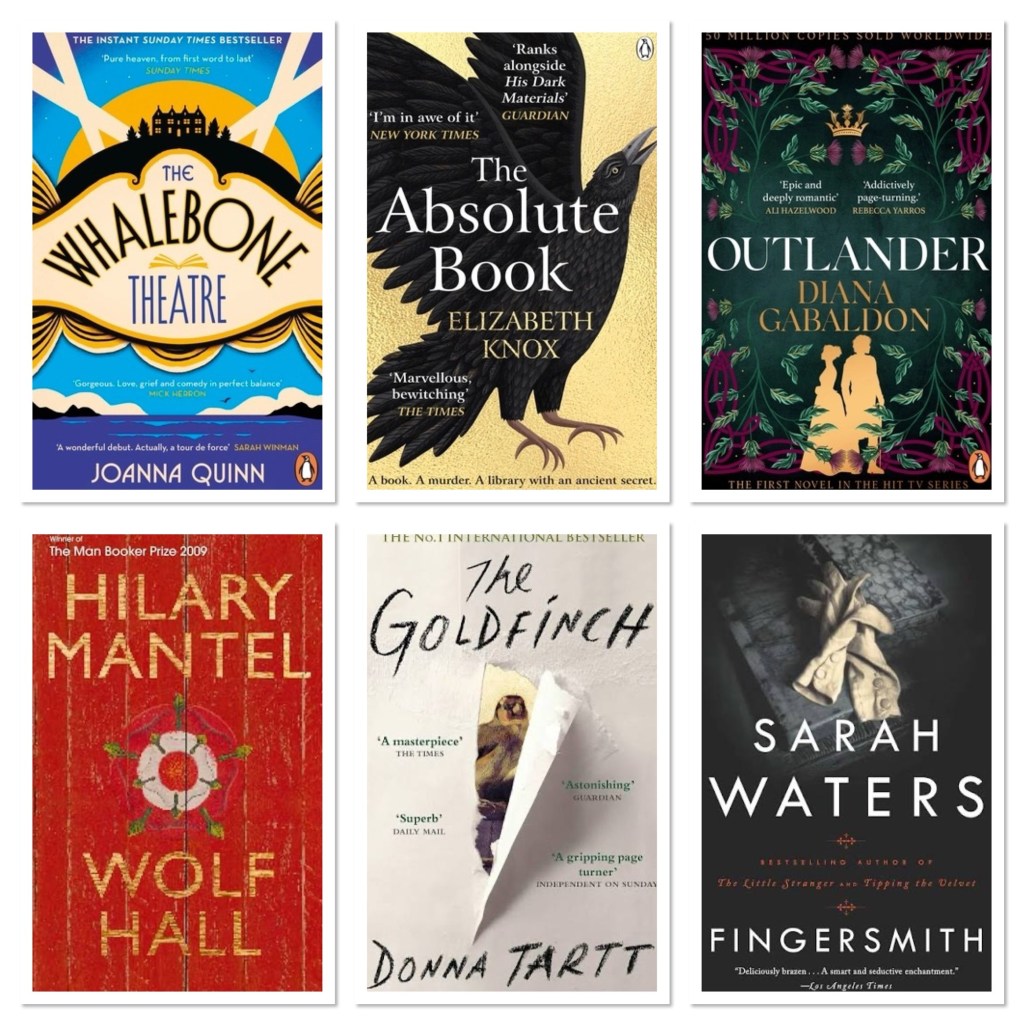
The backdrop of this story is perfect, using the mist, cold and breathtaking landscape to add to it’s mystery. There are parallels with Outlander here in the feel of this place, making good use of Scotland as a thin place where the paranormal, time travel and a history of monsters seems part of life. With the historical backdrop of the witch trials it’s also a dangerous place, particularly for a woman. Iris talks about the smell of the burnings and how women must be careful, but it’s no easier being a monster when men are turning up dead. The background of misogyny and brutal witch trials hangs over them all and shows a willingness to believe in magic, curses and female malevolence. It’s not just witches though, other fantastical creatures exist here like the seelies and selkies and there’s more one woman with powers a man would kill for. All of these things appear to be aligned with the nature that surrounds them and we can see that wildness as Iris changes to Moireach. It’s not just the yellow eyes and scales but the way her mind becomes that of a predator with only one goal. Reading this felt like being a child again and discovering a fairy tale rooted in darkness. Yes, some elements are fantastical, but it doesn’t read like fantasy. It’s more like a hybrid of historical fiction and fairy tales with aspects of a thriller. The pace speeds up as Iris begins to run out of time and we still don’t know why she was cursed, who cursed her and what will finally break it. There are those in the village who may seem kind, but could benefit from keeping Iris in her watery prison. As she takes us back to those fateful days in flashback, when her family were all together and her father didn’t yet know about Thane. I was engrossed with the tangled web of lies and betrayal but also by the question of what life Iris would choose if she could lift the curse. Would she pick the life she’d always wanted or had things changed? There are some unexpected revelations too, making for an exciting and absorbing conclusion. I thoroughly enjoyed this dark and feminist take on the mermaid stories we’re used to and I look forward to what the author writes next.
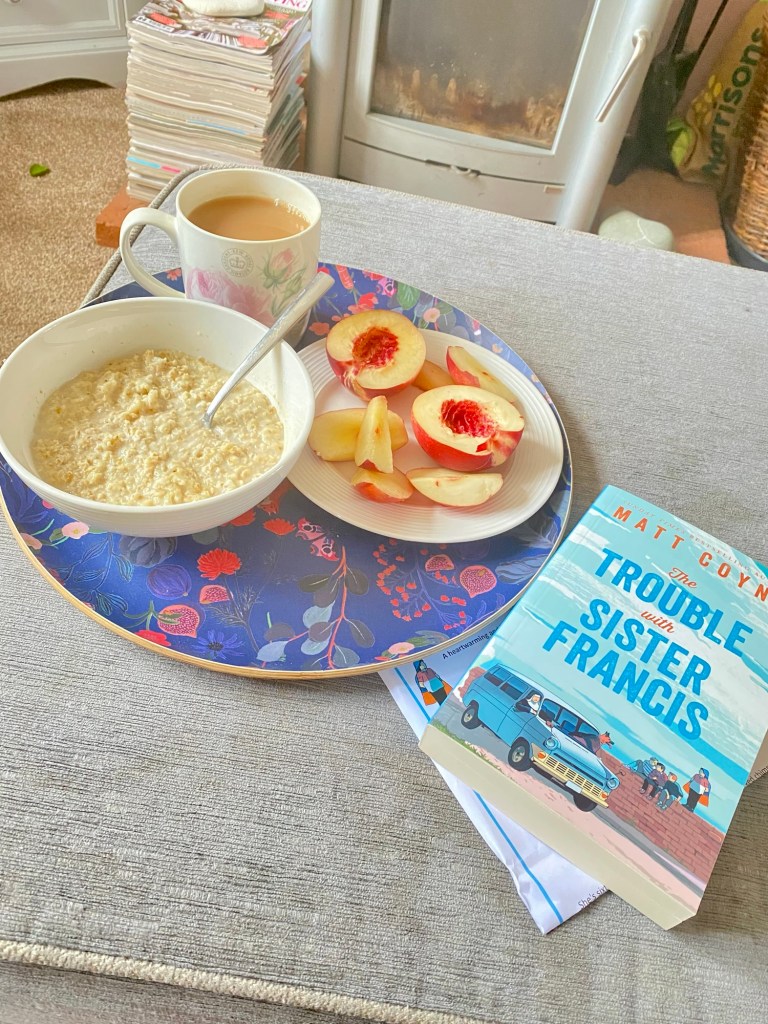
I feel like I’ve been living under a rock because I’m the only book blogger who hasn’t read Frank and Red, so this was my first introduction to Matt Coyne. I don’t even follow him on social media so went in completely blind. This book was a gem from start to finish. Matt Coyne’s ability to write a novel with the emotional intelligence to balance weighty subjects like war and loss against laugh out loud comedy is akin to Sue Townsend and her wonderful creation Adrian Mole. Sister Francis is like my rather formidable previous schoolteacher, Sister Joan. She had the sharpness and discipline of a military veteran, but underneath that there was a twinkle that made me think there was a sense of humour and quick wit underneath. Sister Francis drives an old van as if she’s in a rally, always has a cigarette on the go and reads the racing post. I have always found nuns to be singular and quirky individuals so I warmed to her immediately. Although she’s a comic character there’s so much more to her. She’s clearly keen on restarting a boy’s club she used to run years ago, with origins of supporting boys who had lost their father in WW2. She has a way of relating to boys from the area and our four friends can see she’s a formidable ally from the first day. When they roll up to the clapped out shed they’re accosted by one of the local priests, asking what they’re doing hanging around the presbytery and accusing them of looking for things to steal. When Sister Francis bursts out of the shed he’s taken aback and the boys notice she uses her sweetest voice and emphasises the holy intentions behind her club, but as soon as he’s gone she lights up and is her sweary self. Behind this exterior are buckets of empathy and determination to help the boys in her care, not that she’s easy on them. The four boys have a deal with her, if they come and help her clean the club house on the last Saturdays of term they can come to the club in the holidays and keep the entrance fee. It’s hard work but they stick at it and it’s not long before the Dead Dad’s Club is up and running.
I developed a soft spot for Rich’s Grandad Bob, who has a keen sense of humour and is a great role model for a young boy who has lost his father. I loved how he made Rich laugh with his assessment of Aunt Carole – she has a beard and looks like a pirate. He’s also there for the worse times too, after Rich’s dad died he has enough sense to simply sit with him as the loss hits him, no platitudes or promises, just sitting with him in his grief. Alongside Rich’s 1980s narrative is the journal of another boy who went to the Dead Dad’s Club after the upheaval of WW2. This narrative is evocative of a totally different era as Reginald is evacuated to a small village near Sheffield that’s something of a culture shock after growing up in London. Evacuees didn’t always have the best time and Reginald is coping with the boredom of the village – his observations on what passes as news worthy are so funny. He’s also navigating that rite of passage from primary to secondary school and the author really does conjure up those fears about the bigger school, getting lost and being without your usual friends. I wasn’t sure where his story fit with our four main characters and this is kept under wraps until exactly the right moment. This book has been a wonderful mood lifter just when I needed one, like a warm hug in book form. One line made me think about the friends who knew me in my small village at a similar age, one of whom I’ve tried to see regularly more recently. We try to get together at least once a month for cake and a catch up and I remember being taken aback at first by exactly how well she knew me. But of course she does. As Matt Coyne writes ‘real friendships are cast in the everyday’ and even though my friend and I often just walked her dog, cleaned out the rabbits and watched telly we grew up together and that counts for a lot. I heartily recommend this hilarious but heartfelt story that’s a ray of sunshine in book form.
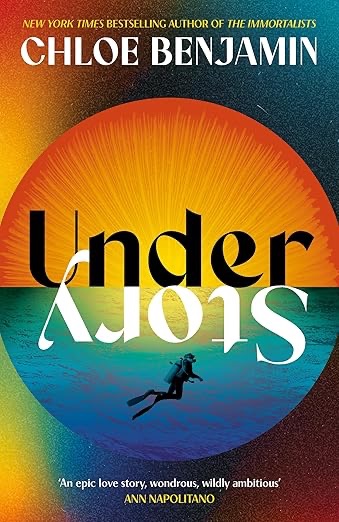
This book has to be my book of the year so far. I’ve been going on about it since May because it really is something special. I was quite simply blown away by this complex and beautiful story of science, loss and second chances. Our heroine Laurel is a scientist, studying fungus and how it grows but for some reason that isn’t clear at first, she’s on a research station in the Antarctic, away from her former husband Eli and without any fungus in sight. When she develops a fascination in the Arc that appears she thinks about its significance. When she becomes aware there is a matching basin underneath the water, her imagination is fired. Could this possibly be a portal? A gateway to a different world? She knows Eli won’t be far behind because she remembers his theory of the ‘duoverse’, the idea that at the moment of the big bang time and space was formed in two directions: our universe, the planets and the development of the world we know and in the other direction it’s complete opposite. I am not a scientist, in fact I barely have GCSE Biology, so I wasn’t aware of any background to this idea so could drift with it and enjoy two incredible minds exploring ideas. Our characters are fascinating, Eli and Laurel are a couple who were made for each other but their relationship is real and they face tough times, particularly when devastating events crash into their lives but I never doubted their love for each other. It’s fascinating to watch their characters face the concept of the duoverse, not just whether it is a portal, but if it is what will their relationship look like there and will going backwards fix whatever tore them apart? I felt both were analytical and might even appear cold at times, but in the moments of heightened emotion we really see who these characters are and the deep wells of love they hold.
I was on tenterhooks wondering about the duoverse under the ice and if Lauren is right whether they’ll ever be able to return? I found myself wondering how this world would look as time scrolled backwards. I was genuinely scared for them but also full of admiration for their bravery. The mirroring is so cleverly done, showing how life always comes full circle and we’re often helpless at the end and the beginning, if we’re lucky enough to lead a full life. As someone who worked in nursing homes in my twenties this really made me think of the role of nostalgia and how often elderly people hanker after experiences from their childhood. Laurel wants her mother’s blueberry pancakes, to watch a film she’s seen a million times and disappear into a favourite book because there’s comfort in it. It might seem like science has sent them on this potential journey, but it isn’t. The totally unscientific emotion of love is what pushes them on, but also guilt, hope and desperation. Loss is a huge theme in the novel, something that always hits me in the heart, and I was deeply moved by how the author dealt with loss and how the scientific concept of a duoverse changes this experience. This novel was moving, profound, invigorating, deeply intelligent and so full of life. I kept thinking about the symbols of the cover, the circle and the tree, the same under the ground as they are over it. As Laurel observes:
“A line implies before and after; a circle says And then, and then…”
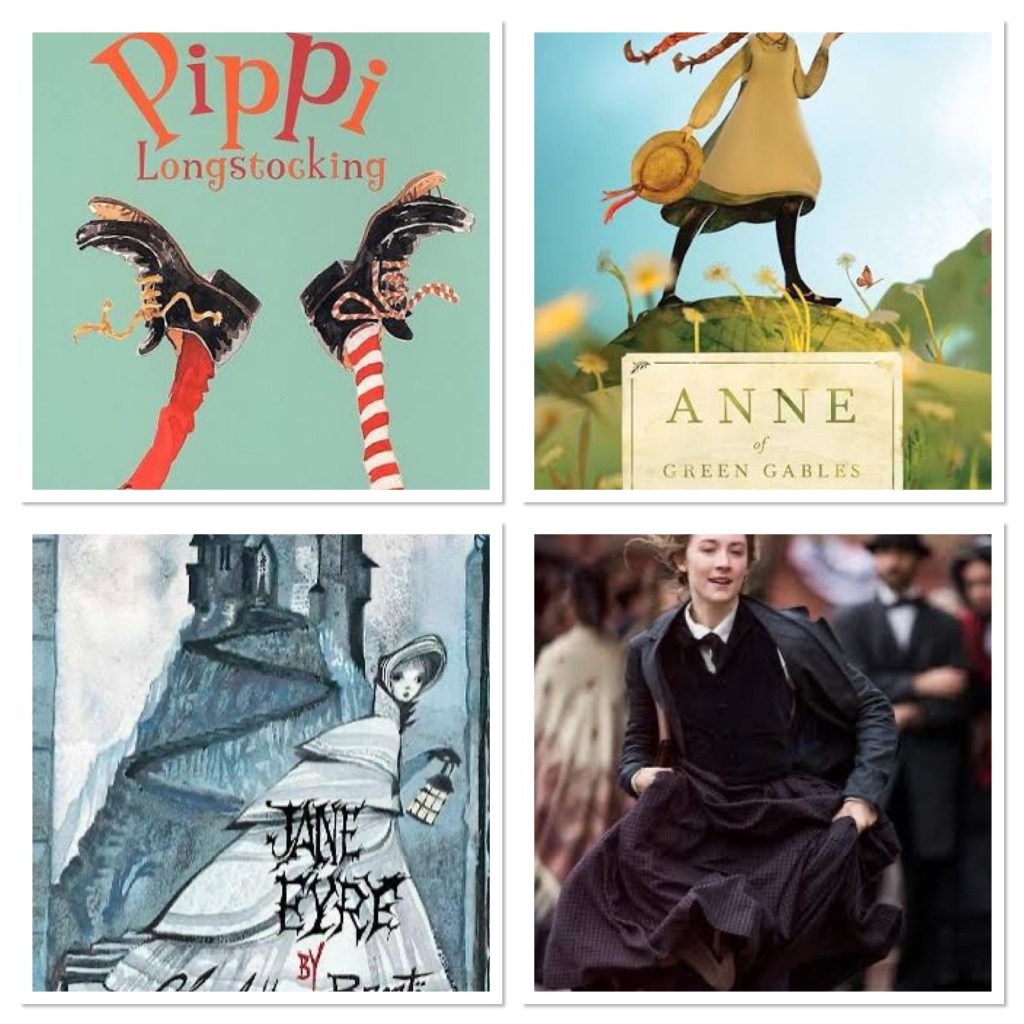
If you ask me why I’m always drawn to naughty girls and women who push the boundaries I’d have to look back to these four characters: Pippi Longstocking, Jo March, Jane Eyre and Anne of Green Gables. They might not seem particularly naughty at first glance but there’s definitely a streak of mischief, a need to push against what’s expected of young women, a blazing temper that’s hard to keep in check and with three of them, a yearning to do something more than the expected route of marriage and children. There’s an independence in each of them, three are orphans in fact, while the fourth is determined to play her father’s role while he’s away fighting in the civil war. Jo flouts the rules of dress, standing out amongst her sisters who are happy to adopt the corsets and heavy skirts of 19th Century American fashion. Jo feels like she can’t move in them, preferring to wear a plainer and more masculine form of dressing and avoiding all social occasions that involve dressing up. She also sells her long hair so that there’s money for Marmee to go to Washington to see their wounded father. Anne is a feminine girl but wants to outshine the boys at school with her mind, driven to be the best and go to university rather than staying home and marrying. She knows she needs something of her own to work towards whether it’s teaching or writing. Pippi is a dream of a character with her pigtails and an ahead of the curve tendency towards dopamine dressing. She lives with a horse and a monkey, something I’ve contemplated as a better option after my worst relationships! I think she is the genesis of my childhood dream to have a mansion with a separate room or outbuilding for each type of animal – dogs, cats, rabbits and of course hares, my spirit animal. Having a brother meant I was always climbing trees, making dens, reading while he fished and running through fields and woods with dogs. We had an immense amount of freedom, only going home at tea time or when I’d injured myself. Some of that care free nature left when I had a spinal injury and started secondary school in the same year.
Then there’s Jane Eyre, a moral character who shows incredible self-awareness around living within her own beliefs. She knew she couldn’t live with Rochester while he had a wife, not because of what others thought, but because of the type of woman she wanted to be. Similarly she refuses St. John Rivers’s proposal because she knows she can’t marry without love. When younger though, this sense of what was right got her into trouble as she stood up to her bullying cousin John, her Aunt Read and headmaster Mr Brocklehurst. She even tries to fight back against the servants when her Aunt asks them to lock her in the Red Room for a punishment. They want her to be less passionate and reactive, but although Jane learns to curb her temper there’s a lot going on under that quiet surface. The thing I shared most with Jo March and Anne of Green Gables was that I wanted to write. Jo scribbles in the garret, trying to sell her romances to the newspaper and writing plays for her sisters to perform. Anne is also influenced by romance, writing about handsome heroes and houses with gilded halls. Both are given advice about their writing that they don’t appreciate, in fact both have terrible tempers. Gilbert’s teasing of Anne infuriated her so much she smashed her slate over his head and made it quite clear his advice wasn’t appreciated when she first starts writing in adulthood. Jo and sister Amy had blazing rows and it was Amy’s ability to curb her irritability that won her a trip to Europe with Aunt March instead of Jo who couldn’t resist snapping back at the grumpy old woman. Instead she visits New York and meets Professor Bhaer who tells her to write about something she knows, leading to her book based around her sisters. Characters who move outside their social boundaries and expectations are so much more interesting and I think that’s why I’m drawn to books with women who are unexpected and live colourful lives. Here are some of the books I’ve loved that showcase women like this.
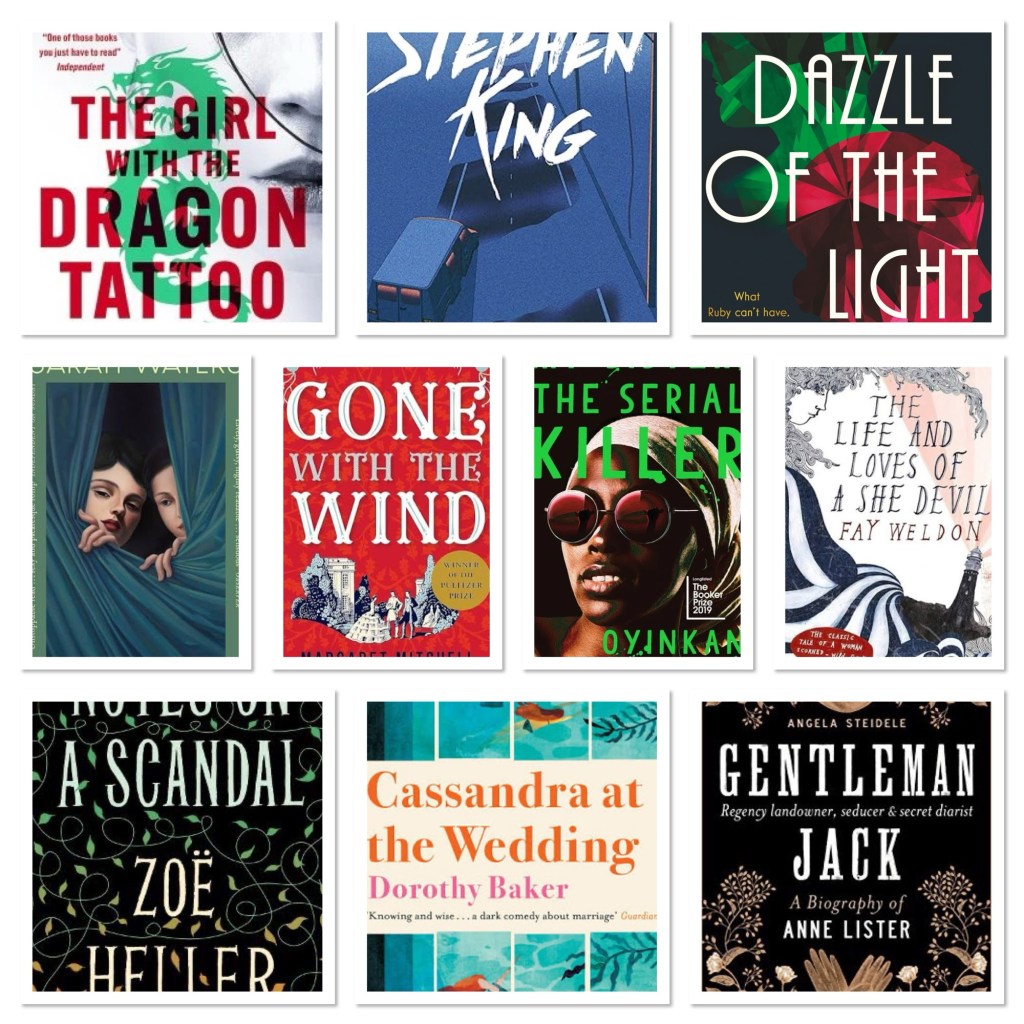
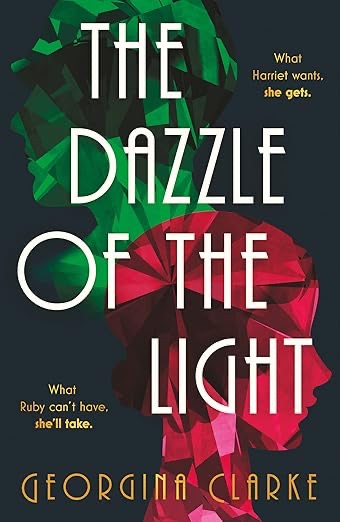
This brilliant historical novel, set in the 1920s, is inspired by the notorious all-female crime syndicate known as the Forty Elephants who operated out of the slums of south London.
Ruby Mills is ruthlessly ambitious, strikingly beautiful – and one of the Forty Thieves’ most talented members. The Forty Thieves were a real life band of pickpockets and thieves and Ruby has worked herself up to become one of the best, even working alongside male tricksters when their heists need a woman. Harriet Littlemore writes the women’s section in a local newspaper. She’s from a ‘good’ London family and engaged to an up-and-coming Member of Parliament – but she wants a successful career of her own. After witnessing Ruby fleeing the scene of a robbery, Harriet develops a fascination with the elusive young thief that extends beyond journalistic interest. As their personal aspirations bring them into closer contact than society’s rules usually allow, Ruby and Harriet’s stories become increasingly intertwined. Their magnetic dynamic, fraught with envy and desire, tells a compulsive, cinematic story about class, morality and the cost of being an independent woman in 1920s London. This book was absolutely fascinating and actually outshone another well known writer’s book set around the same time and in the same circles. It’s hard not to root for Ruby, even when she’s stealing.
Piercing the shadows of the naked stage was a single shaft of rosy limelight, and in the centre of this was a girl: the most marvellous girl – I knew it at once! – that I had ever seen.’
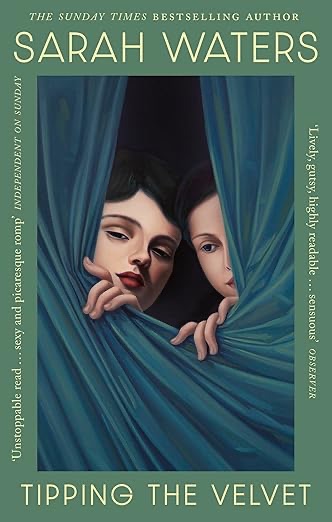
This saucy, sensuous and multi-layered historical romance follows the glittering career of Nan King – oyster girl turned music-hall star turned rent boy turned East End ‘tom’. Nan King, an oyster girl, is captivated by the music hall phenomenon Kitty Butler, a male impersonator extraordinaire treading the boards in Canterbury. Through a friend at the box office, Nan manages to visit all her shows and finally meet her heroine. Soon after, she becomes Kitty’s dresser and the two head for the bright lights of Leicester Square where they begin a glittering career as music-hall stars in an all-singing and dancing double act. At the same time, behind closed doors, they admit their attraction to each other and their affair begins. I love Sarah Waters’s characters because they show us a different side of the Victorians from the accepted narrative. They show us that Victorian society was just as multi-layered as ours and their infamous sexual prudery was only skin deep. This book and the BBC adaptation caused quite a stir at the time, mainly for the sexual content, but what’s truly groundbreaking was the authors desire to place these women into a history that didn’t include them.
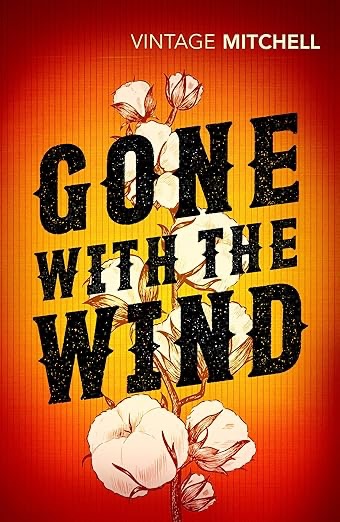
Margaret Mitchell’s page-turning, sweeping American epic has been a classic for over eighty years. Beloved and thought by many to be the greatest of the American novels, Gone with the Wind is a story of love, hope and loss set against the tense historical background of the American Civil War. The lovers at the novel’s centre – the selfish, privileged Scarlett O’Hara and rakish Rhett Butler – are magnetic: pulling readers into the tangled narrative of a struggle to survive that cannot be forgotten. This is a great example of a character who is stubborn, defiant, arrogant and a rule breaker, who turns out to be exactly what her family needs at a time of upheaval. Scarlett is a spoiled girl and doesn’t turn into the sweet, passive Southern Belle her mother and sisters would have wished for. She’s filled with a rebellious spirit that with experience becomes a core of steel. This is a woman who doesn’t even hesitate to get what she wants, whether that’s a new dress, the attentions of someone else’s suitor or the business deal that will make her rich. She speaks her mind, curses and does business like a man. She never apologises either, happy to tread on toes if it gets her closer to her goal. I love the scene where she flouts the mourning rules at the charity ball and Rhett Butler makes a donation to dance with her. She’s been behind a stall, in her widow’s dress with legs twitching under her somber skirts. She can’t wait to dance and practically vaults over a table to do so. Yet it’s her ability to think and act like a man that saves her life and gives her the constant assurance that even though she’s lost everything, tomorrow is another day.
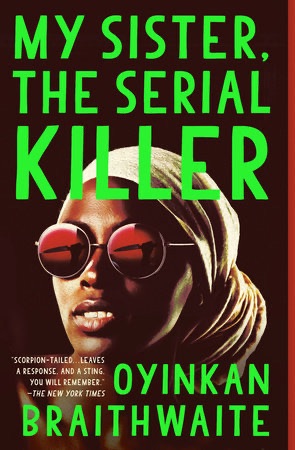
When Korede’s dinner is interrupted one night by a distress call from her sister, Ayoola, she knows what’s expected of her: bleach, rubber gloves, nerves of steel and a strong stomach. This’ll be the third boyfriend Ayoola’s dispatched in ‘self-defence’ and the third mess that her lethal little sibling has left Korede to clear away. She should probably go to the police for the good of the menfolk of Nigeria, but she loves her sister and, as they say, family always comes first. Until, that is, Ayoola starts dating the doctor where Korede works as a nurse. Korede’s long been in love with him, and isn’t prepared to see him wind up with a knife in his back: but to save one would mean sacrificing the other…
These two sisters are absolutely fascinating and challenge our perceptions of what women are capable of, as well as expectations around beauty. A female serial killer is rare in fiction and in life, but this challenges that expectation. Why can’t women be serial killers? Do they possess more empathy and restraint than men? There’s also a perception around beauty, something that goes beyond the bias that comes from desire. People who know the sisters make an assumption that Korede must be jealous of her sister and wish she had her beauty and charm. A difficult childhood and poor relationship with their father has brought them closer together and is the seed of their collusion now. It has given them the resilience and survival instinct that takes them across boundaries of what is morally and legally right. Their complex relationship and the dark humour of the novel made it a memorable story.
Ruth Patchett never thought of herself as particularly devilish.
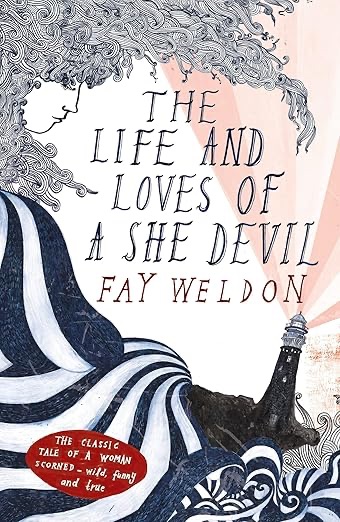
Rather the opposite in fact – simply a tall, not terribly attractive woman living a quiet life as a wife and mother in a respectable suburb. But when she discovers that her husband is having a passionate affair with the lovely romantic novelist Mary Fisher, she is so seized by envy that she becomes truly diabolic. Within weeks she has burnt down the family home, collected the insurance, made love to the local drunk and embarked on a course of destruction and revenge. A blackly comic satire of the war of the sexes, The Life and Loves of a She Devil is the fantasy of the wronged woman made real.
I utterly loved this book as a teenager and must have read it at least once a year since ( I have a very battered copy). Once transformed, Ruth has no boundaries and no mercy, her sole purpose in life is to gain revenge on her husband and his mistress Mary Fisher. She’s furious that they are having an illicit honeymoon in Mary’s coastal tower while she is big, clumsy and now saddled with two children and various unruly pets. Slowly she takes steps to right the wrongs she’s experienced, taking unexpected lovers, gaining money and even transforming herself on the outside through plastic surgery. She leaves her children at the tower for their father, plus an unruly dog. She even gets a job at the residential home where Mary’s mother is living. Using other people’s bedpans she fakes nightly incontinence so she loses her place and must be placed in a nursing facility or with Mary Fisher. There is something twisted but delicious about her revenge, especially that final description of the life she builds for herself on her own terms.
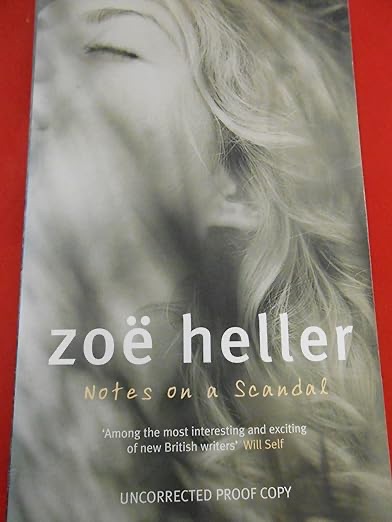
When the new teacher first arrives, Barbara immediately senses that this woman will be different from the rest of her staff-room colleagues. But Barbara is not the only one to feel that Sheba is special, and before too long Sheba is involved in an illicit affair with a pupil. Barbara finds the relationship abhorrent, of course, but she is the only adult in whom Sheba can properly confide. So when the liaison is found out and Sheba’s life falls apart, Barbara is there…
I think this might be a more controversial book now than it was when published. Here we have two deeply flawed female characters, one who is reckless and commits a crime, another who is obsessively jealous and frighteningly manipulative. Sheba starts working at a secondary school in London and meets Barbara, an older and strait-laced history teacher. When Sheba starts an affair with a pupil who is 15 years old, Barbara benefits from the fall out. Slowly becoming Sheba’s confidante and as gaining more and more control as the affair tears Sheba’s life apart. I didn’t like either of the women, but as a study of obsession this is hard to beat. Barbara is like a spider, awaiting her prey and spinning a web from the loneliness and longing she feels. This is a deeply unsettling page turner, I’ve read it several times now and it doesn’t lose its power. I’ve found it’s a more difficult watch than it is a read. Both Cate Blanchett and Judi Dench are excellent in the film adaptation but it’s the presence of the boy that disturbs. While reading we can convince ourselves that he is all the things Sheba tells us he is, the confident and experienced seducer. But when we see a boy who looks 15 playing the role it feels different, we can see that Sheba’s assessment of him could be her kidding herself and us that she’s not a predator.
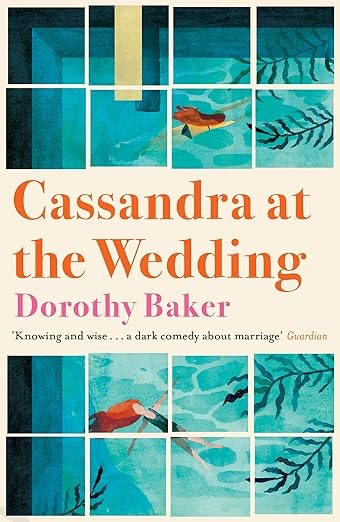
‘I am not, at heart, a jumper. I think I knew all the time I was sizing up the bridge that the strong possibility was I’d attend my sister’s wedding’
Cassandra Edwards is driving home to her family’s Californian ranch to attend the wedding of her beloved identical twin, Judith. A graduate student at Berkeley, Cassandra is gay, brilliant, nerve-racked, miserable – and hell-bent on making sure her sister’s wedding doesn’t happen. Around six months ago, Judith left the apartment they shared for Juilliard and ever since Cassandra has been having a long drawn out nervous breakdown. She’s been seeing a therapist called Dr. Mercer and had a clutch bag full of pills from her prescriptions of uppers and downers. She also seems to have an unquenchable thirst for brandy, but still arrives determined to make Judith see sense. With the twins alone for the first couple of days the truth of their co-dependency becomes clearer and Cassandra unravels. As her sister leaves to pick up her fiance at the airport Cassandra feels betrayed and isolated by her twin. Now she is alone with her thoughts and her pills. Maybe she can stop the wedding another way. This classic of twentieth-century American literature is a tragicomedy, offering witty conversation and a deep psychological study of two women finding it difficult to separate and make their own lives. Cassandra is hell bent on creating mischief but it’s more from her own loneliness and pain. This is stylish, witty and insightful and depicts a girl coming to terms with who she is and the only life she has.
Paul Sheldon used to write for a living. Now he’s writing to stay alive.
Misery Chastain is dead. Paul Sheldon has just killed her – with relief, with joy. Misery made him rich; she was the heroine of a string of bestsellers. And now he wants to get on to some real writing.
That’s when the car accident happens, and he wakes up splinted and in pain, in the remote mountain home of his rescuer, Annie Wilkes. The good news is that Annie was a nurse and has pain-killing drugs. The bad news is that she has long been Paul’s Number One Fan. And when she finds out what Paul has done to Misery, she doesn’t like it. She doesn’t like it at all . .
Annie Wilkes is one of the most feared villains in horror fiction, not only is she obsessive and dangerous – something we don’t expect in women – she’s a nurse, the epitome of the ‘caring’ female and often depicted as angelic. Annie is determined to do what’s in Paul’s best interests because only then can he write another Misery Chastain novel and undo the literary death he’s just given her. If Paul thought he’d had enough of Misery Chastain, he hadn’t met Annie Wilkes yet. Stephen King writes her so cleverly with little touches that make her seem repulsive: the smell of food constantly on her breath and her clothing, unexplained stains on her clothing and unwashed hair. She speaks to him in a kind of baby talk, using mispronounced or unlikely phrases that just sound odd. If Paul doesn’t turn out a new page or two each day she might fly into a rage and Paul has seen what Annie might do in a rage. Once when looking out the window after hearing voices he witnesses Annie run over a police officer with a lawnmower. Annie is horrifying, psychopathic and her mood swings are sudden. Yet every time we hear her shambling towards Paul’s bedroom door we’re glued to what she might do next!
I couldn’t list transgressive heroines without finishing on the iconic Lizbeth Salander, who started out in Stieg Larsson’s book The Girl With The Dragon Tattoo. This tattooed and pierced, leather clad, super intelligent young woman is an icon. Everything about her exterior is spiky but that’s a defense mechanism, if you look underneath there’s a pale, waif- like girl who’s had a lifetime of abandonment and abuse. Her struggle to fit into a society that puts us in boxes is actually a strength. She’s learned to cope alone, knowing that even where we’re supposed to belong – our family – doesn’t mean we’re safe. Even the very system that’s supposed to care and provide safety to children is corrupted. She trusts no one. She doesn’t even expect justice to come through for her and metes out her own punishment, with the same brutality she’s faced. She has learned when to fight and when to stay in the shadows. The only people she trusts are an online group of fellow hackers, who she never meets in person. Her relationship with journalist Blomkvist is not her usual pattern, but he doesn’t judge and slowly they develop enough trust to work together. She has reached a point through online security work and hacking criminals to be totally independent, leaving her dependent on no one. I find Lisbeth absolutely fascinating and will happily reread the first three books in this series again and again.
When I first found this book, before the television series, I was astounded that a woman had the bravery to live on her own terms as early as the Georgians. Anne Lister’s journals were so shocking that the first person to crack their secret code hid them behind a fake panel in his ancestral home. Anne Lister was a Regency landowner in Yorkshire, an intrepid world traveller … and an unabashed lover of other women. In this brilliant biography, author Angela Steidele uses Anne Lister’s diaries to create a portrait of a woman we had never seen before in fiction, never mind biography. The picture we usually have of Regency women is Jane Austen-esque, but this woman is both very much of her time in some ways and in others far ahead of it. Anne Lister recorded absolutely everything from the most intimate details of her numerous trysts, her plans to make her fortune by exploiting the coal seams under her family estate in Halifax and her reaction to the events of her time. Her love life had a labyrinthine complexity, but she was searching for a girlfriend to settle with. She wanted a woman could provide her with both financial security and true love, who also had the bravery to live in the unconventional and unapologetic way that Anne had chosen for herself.