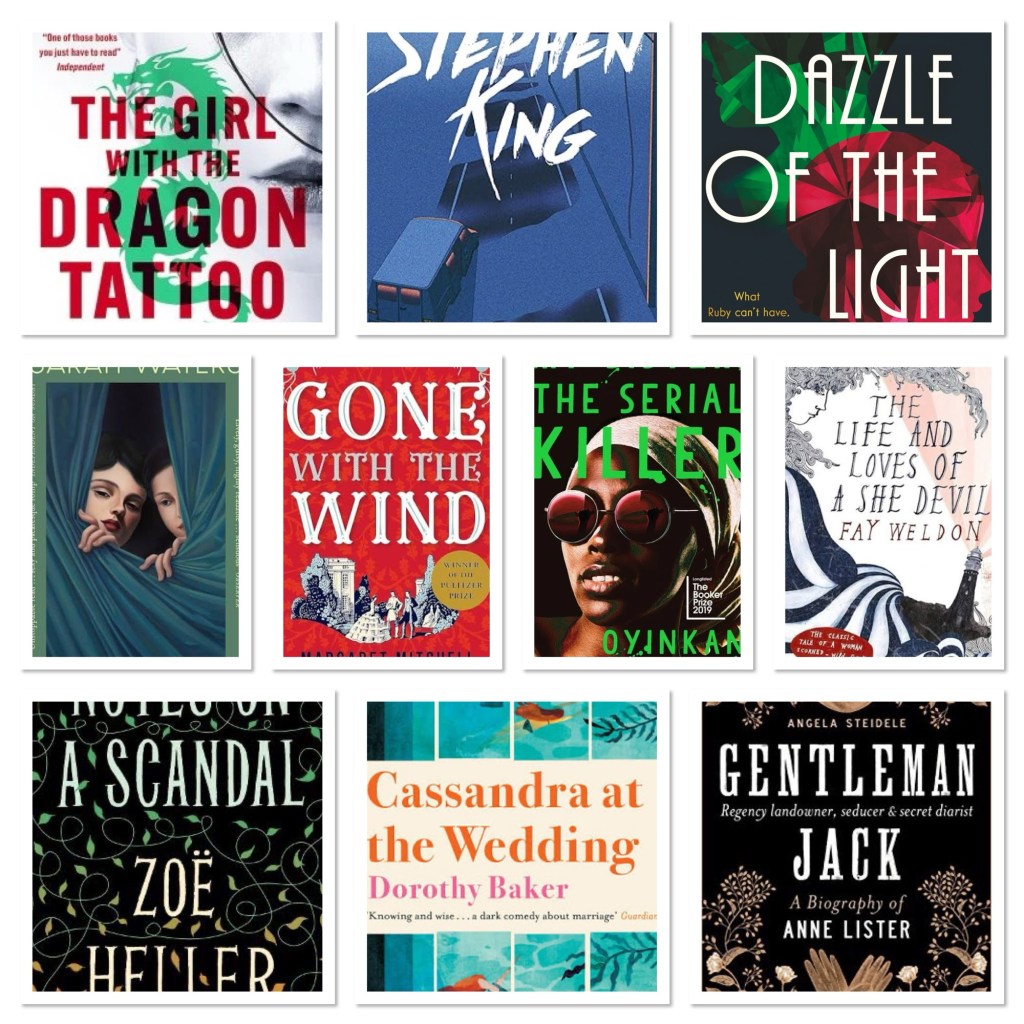
If you ask me why I’m always drawn to naughty girls and women who push the boundaries I’d have to look back to these four characters: Pippi Longstocking, Jo March, Jane Eyre and Anne of Green Gables. They might not seem particularly naughty at first glance but there’s definitely a streak of mischief, a need to push against what’s expected of young women, a blazing temper that’s hard to keep in check and with three of them, a yearning to do something more than the expected route of marriage and children. There’s an independence in each of them, three are orphans in fact, while the fourth is determined to play her father’s role while he’s away fighting in the civil war. Jo flouts the rules of dress, standing out amongst her sisters who are happy to adopt the corsets and heavy skirts of 19th Century American fashion. Jo feels like she can’t move in them, preferring to wear a plainer and more masculine form of dressing and avoiding all social occasions that involve dressing up. She also sells her long hair so that there’s money for Marmee to go to Washington to see their wounded father. Anne is a feminine girl but wants to outshine the boys at school with her mind, driven to be the best and go to university rather than staying home and marrying. She knows she needs something of her own to work towards whether it’s teaching or writing. Pippi is a dream of a character with her pigtails and an ahead of the curve tendency towards dopamine dressing. She lives with a horse and a monkey, something I’ve contemplated as a better option after my worst relationships! I think she is the genesis of my childhood dream to have a mansion with a separate room or outbuilding for each type of animal – dogs, cats, rabbits and of course hares, my spirit animal. Having a brother meant I was always climbing trees, making dens, reading while he fished and running through fields and woods with dogs. We had an immense amount of freedom, only going home at tea time or when I’d injured myself. Some of that care free nature left when I had a spinal injury and started secondary school in the same year.
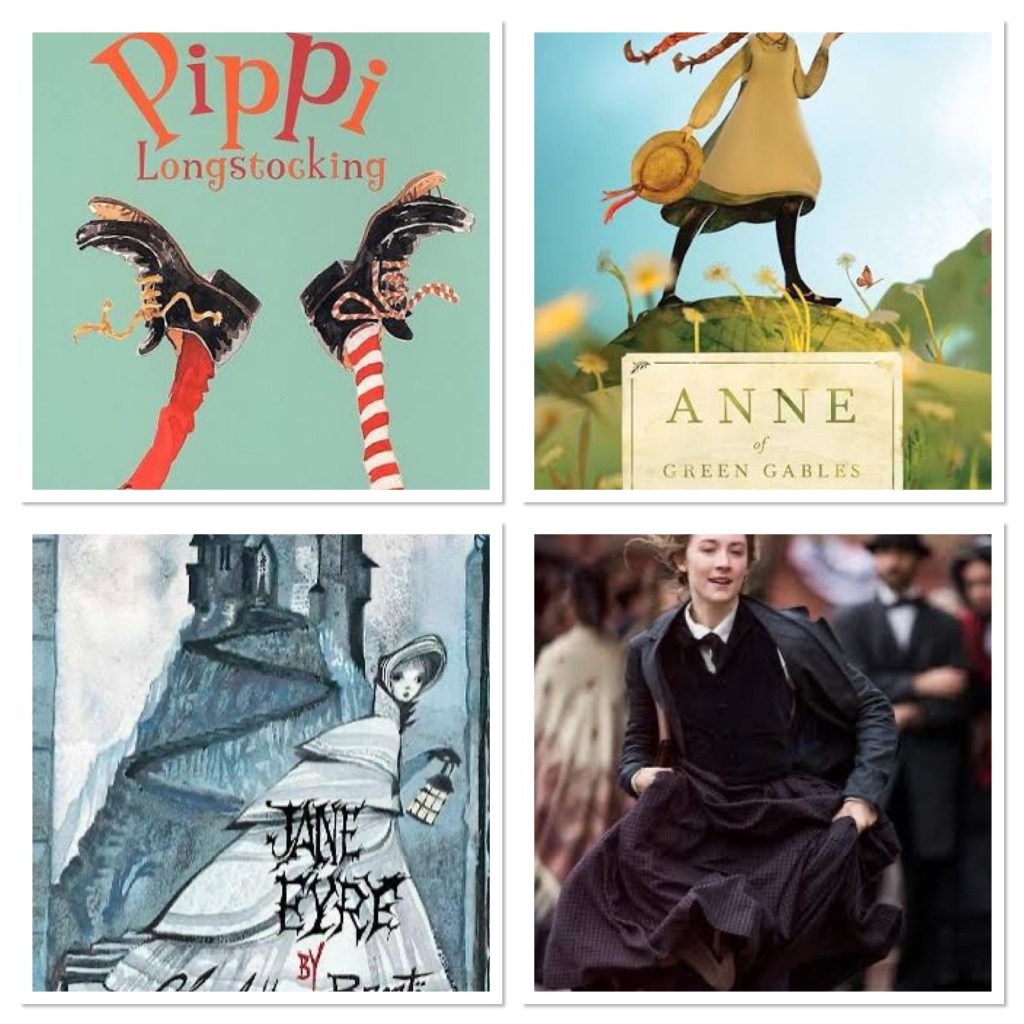
Then there’s Jane Eyre, a moral character who shows incredible self-awareness around living within her own beliefs. She knew she couldn’t live with Rochester while he had a wife, not because of what others thought, but because of the type of woman she wanted to be. Similarly she refuses St. John Rivers’s proposal because she knows she can’t marry without love. When younger though, this sense of what was right got her into trouble as she stood up to her bullying cousin John, her Aunt Read and headmaster Mr Brocklehurst. She even tries to fight back against the servants when her Aunt asks them to lock her in the Red Room for a punishment. They want her to be less passionate and reactive, but although Jane learns to curb her temper there’s a lot going on under that quiet surface. The thing I shared most with Jo March and Anne of Green Gables was that I wanted to write. Jo scribbles in the garret, trying to sell her romances to the newspaper and writing plays for her sisters to perform. Anne is also influenced by romance, writing about handsome heroes and houses with gilded halls. Both are given advice about their writing that they don’t appreciate, in fact both have terrible tempers. Gilbert’s teasing of Anne infuriated her so much she smashed her slate over his head and made it quite clear his advice wasn’t appreciated when she first starts writing in adulthood. Jo and sister Amy had blazing rows and it was Amy’s ability to curb her irritability that won her a trip to Europe with Aunt March instead of Jo who couldn’t resist snapping back at the grumpy old woman. Instead she visits New York and meets Professor Bhaer who tells her to write about something she knows, leading to her book based around her sisters. Characters who move outside their social boundaries and expectations are so much more interesting and I think that’s why I’m drawn to books with women who are unexpected and live colourful lives. Here are some of the books I’ve loved that showcase women like this.
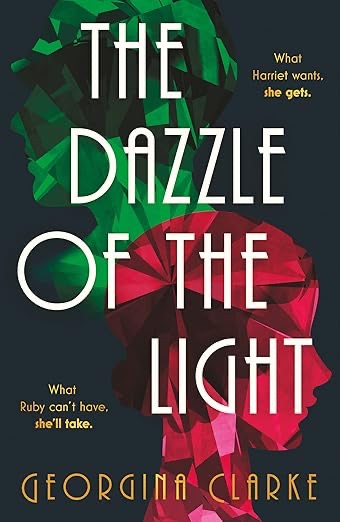
This brilliant historical novel, set in the 1920s, is inspired by the notorious all-female crime syndicate known as the Forty Elephants who operated out of the slums of south London.
Ruby Mills is ruthlessly ambitious, strikingly beautiful – and one of the Forty Thieves’ most talented members. The Forty Thieves were a real life band of pickpockets and thieves and Ruby has worked herself up to become one of the best, even working alongside male tricksters when their heists need a woman. Harriet Littlemore writes the women’s section in a local newspaper. She’s from a ‘good’ London family and engaged to an up-and-coming Member of Parliament – but she wants a successful career of her own. After witnessing Ruby fleeing the scene of a robbery, Harriet develops a fascination with the elusive young thief that extends beyond journalistic interest. As their personal aspirations bring them into closer contact than society’s rules usually allow, Ruby and Harriet’s stories become increasingly intertwined. Their magnetic dynamic, fraught with envy and desire, tells a compulsive, cinematic story about class, morality and the cost of being an independent woman in 1920s London. This book was absolutely fascinating and actually outshone another well known writer’s book set around the same time and in the same circles. It’s hard not to root for Ruby, even when she’s stealing.
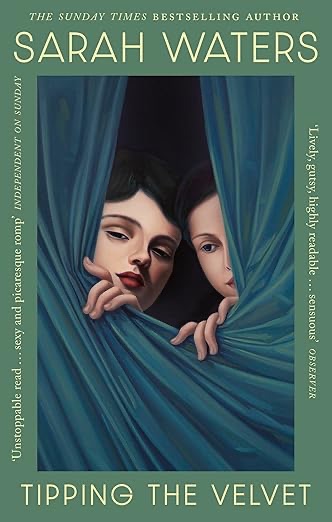
Piercing the shadows of the naked stage was a single shaft of rosy limelight, and in the centre of this was a girl: the most marvellous girl – I knew it at once! – that I had ever seen.’
This saucy, sensuous and multi-layered historical romance follows the glittering career of Nan King – oyster girl turned music-hall star turned rent boy turned East End ‘tom’. Nan King, an oyster girl, is captivated by the music hall phenomenon Kitty Butler, a male impersonator extraordinaire treading the boards in Canterbury. Through a friend at the box office, Nan manages to visit all her shows and finally meet her heroine. Soon after, she becomes Kitty’s dresser and the two head for the bright lights of Leicester Square where they begin a glittering career as music-hall stars in an all-singing and dancing double act. At the same time, behind closed doors, they admit their attraction to each other and their affair begins. I love Sarah Waters’s characters because they show us a different side of the Victorians from the accepted narrative. They show us that Victorian society was just as multi-layered as ours and their infamous sexual prudery was only skin deep. This book and the BBC adaptation caused quite a stir at the time, mainly for the sexual content, but what’s truly groundbreaking was the authors desire to place these women into a history that didn’t include them.
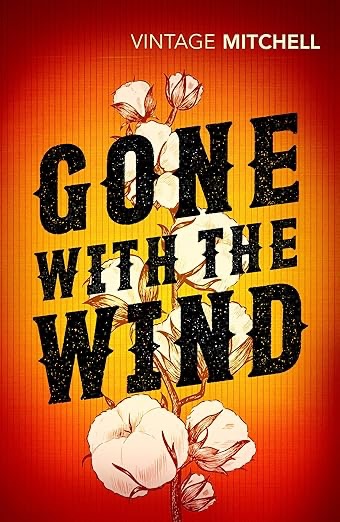
Margaret Mitchell’s page-turning, sweeping American epic has been a classic for over eighty years. Beloved and thought by many to be the greatest of the American novels, Gone with the Wind is a story of love, hope and loss set against the tense historical background of the American Civil War. The lovers at the novel’s centre – the selfish, privileged Scarlett O’Hara and rakish Rhett Butler – are magnetic: pulling readers into the tangled narrative of a struggle to survive that cannot be forgotten. This is a great example of a character who is stubborn, defiant, arrogant and a rule breaker, who turns out to be exactly what her family needs at a time of upheaval. Scarlett is a spoiled girl and doesn’t turn into the sweet, passive Southern Belle her mother and sisters would have wished for. She’s filled with a rebellious spirit that with experience becomes a core of steel. This is a woman who doesn’t even hesitate to get what she wants, whether that’s a new dress, the attentions of someone else’s suitor or the business deal that will make her rich. She speaks her mind, curses and does business like a man. She never apologises either, happy to tread on toes if it gets her closer to her goal. I love the scene where she flouts the mourning rules at the charity ball and Rhett Butler makes a donation to dance with her. She’s been behind a stall, in her widow’s dress with legs twitching under her somber skirts. She can’t wait to dance and practically vaults over a table to do so. Yet it’s her ability to think and act like a man that saves her life and gives her the constant assurance that even though she’s lost everything, tomorrow is another day.
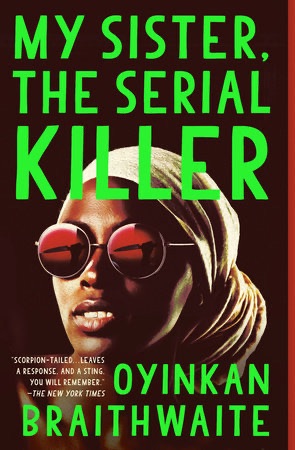
When Korede’s dinner is interrupted one night by a distress call from her sister, Ayoola, she knows what’s expected of her: bleach, rubber gloves, nerves of steel and a strong stomach. This’ll be the third boyfriend Ayoola’s dispatched in ‘self-defence’ and the third mess that her lethal little sibling has left Korede to clear away. She should probably go to the police for the good of the menfolk of Nigeria, but she loves her sister and, as they say, family always comes first. Until, that is, Ayoola starts dating the doctor where Korede works as a nurse. Korede’s long been in love with him, and isn’t prepared to see him wind up with a knife in his back: but to save one would mean sacrificing the other…
These two sisters are absolutely fascinating and challenge our perceptions of what women are capable of, as well as expectations around beauty. A female serial killer is rare in fiction and in life, but this challenges that expectation. Why can’t women be serial killers? Do they possess more empathy and restraint than men? There’s also a perception around beauty, something that goes beyond the bias that comes from desire. People who know the sisters make an assumption that Korede must be jealous of her sister and wish she had her beauty and charm. A difficult childhood and poor relationship with their father has brought them closer together and is the seed of their collusion now. It has given them the resilience and survival instinct that takes them across boundaries of what is morally and legally right. Their complex relationship and the dark humour of the novel made it a memorable story.
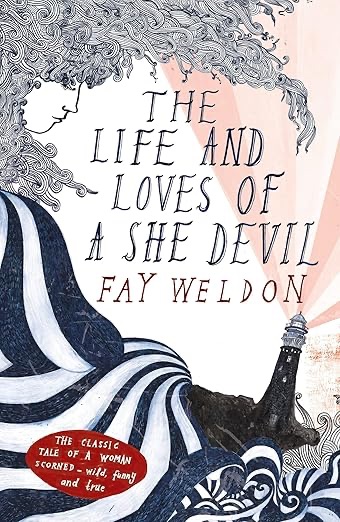
Ruth Patchett never thought of herself as particularly devilish.
Rather the opposite in fact – simply a tall, not terribly attractive woman living a quiet life as a wife and mother in a respectable suburb. But when she discovers that her husband is having a passionate affair with the lovely romantic novelist Mary Fisher, she is so seized by envy that she becomes truly diabolic. Within weeks she has burnt down the family home, collected the insurance, made love to the local drunk and embarked on a course of destruction and revenge. A blackly comic satire of the war of the sexes, The Life and Loves of a She Devil is the fantasy of the wronged woman made real.
I utterly loved this book as a teenager and must have read it at least once a year since ( I have a very battered copy). Once transformed, Ruth has no boundaries and no mercy, her sole purpose in life is to gain revenge on her husband and his mistress Mary Fisher. She’s furious that they are having an illicit honeymoon in Mary’s coastal tower while she is big, clumsy and now saddled with two children and various unruly pets. Slowly she takes steps to right the wrongs she’s experienced, taking unexpected lovers, gaining money and even transforming herself on the outside through plastic surgery. She leaves her children at the tower for their father, plus an unruly dog. She even gets a job at the residential home where Mary’s mother is living. Using other people’s bedpans she fakes nightly incontinence so she loses her place and must be placed in a nursing facility or with Mary Fisher. There is something twisted but delicious about her revenge, especially that final description of the life she builds for herself on her own terms.
When the new teacher first arrives, Barbara immediately senses that this woman will be different from the rest of her staff-room colleagues. But Barbara is not the only one to feel that Sheba is special, and before too long Sheba is involved in an illicit affair with a pupil. Barbara finds the relationship abhorrent, of course, but she is the only adult in whom Sheba can properly confide. So when the liaison is found out and Sheba’s life falls apart, Barbara is there…
I think this might be a more controversial book now than it was when published. Here we have two deeply flawed female characters, one who is reckless and commits a crime, another who is obsessively jealous and frighteningly manipulative. Sheba starts working at a secondary school in London and meets Barbara, an older and strait-laced history teacher. When Sheba starts an affair with a pupil who is 15 years old, Barbara benefits from the fall out. Slowly becoming Sheba’s confidante and as gaining more and more control as the affair tears Sheba’s life apart. I didn’t like either of the women, but as a study of obsession this is hard to beat. Barbara is like a spider, awaiting her prey and spinning a web from the loneliness and longing she feels. This is a deeply unsettling page turner, I’ve read it several times now and it doesn’t lose its power. I’ve found it’s a more difficult watch than it is a read. Both Cate Blanchett and Judi Dench are excellent in the film adaptation but it’s the presence of the boy that disturbs. While reading we can convince ourselves that he is all the things Sheba tells us he is, the confident and experienced seducer. But when we see a boy who looks 15 playing the role it feels different, we can see that Sheba’s assessment of him could be her kidding herself and us that she’s not a predator.
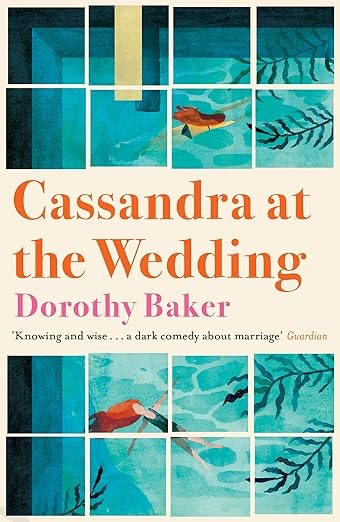
‘I am not, at heart, a jumper. I think I knew all the time I was sizing up the bridge that the strong possibility was I’d attend my sister’s wedding’
Cassandra Edwards is driving home to her family’s Californian ranch to attend the wedding of her beloved identical twin, Judith. A graduate student at Berkeley, Cassandra is gay, brilliant, nerve-racked, miserable – and hell-bent on making sure her sister’s wedding doesn’t happen. Around six months ago, Judith left the apartment they shared for Juilliard and ever since Cassandra has been having a long drawn out nervous breakdown. She’s been seeing a therapist called Dr. Mercer and had a clutch bag full of pills from her prescriptions of uppers and downers. She also seems to have an unquenchable thirst for brandy, but still arrives determined to make Judith see sense. With the twins alone for the first couple of days the truth of their co-dependency becomes clearer and Cassandra unravels. As her sister leaves to pick up her fiance at the airport Cassandra feels betrayed and isolated by her twin. Now she is alone with her thoughts and her pills. Maybe she can stop the wedding another way. This classic of twentieth-century American literature is a tragicomedy, offering witty conversation and a deep psychological study of two women finding it difficult to separate and make their own lives. Cassandra is hell bent on creating mischief but it’s more from her own loneliness and pain. This is stylish, witty and insightful and depicts a girl coming to terms with who she is and the only life she has.
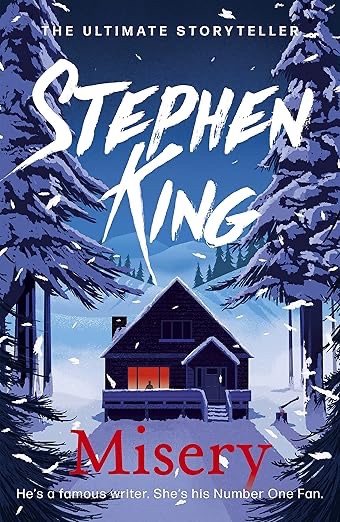
Paul Sheldon used to write for a living. Now he’s writing to stay alive.
Misery Chastain is dead. Paul Sheldon has just killed her – with relief, with joy. Misery made him rich; she was the heroine of a string of bestsellers. And now he wants to get on to some real writing.
That’s when the car accident happens, and he wakes up splinted and in pain, in the remote mountain home of his rescuer, Annie Wilkes. The good news is that Annie was a nurse and has pain-killing drugs. The bad news is that she has long been Paul’s Number One Fan. And when she finds out what Paul has done to Misery, she doesn’t like it. She doesn’t like it at all . .
Annie Wilkes is one of the most feared villains in horror fiction, not only is she obsessive and dangerous – something we don’t expect in women – she’s a nurse, the epitome of the ‘caring’ female and often depicted as angelic. Annie is determined to do what’s in Paul’s best interests because only then can he write another Misery Chastain novel and undo the literary death he’s just given her. If Paul thought he’d had enough of Misery Chastain, he hadn’t met Annie Wilkes yet. Stephen King writes her so cleverly with little touches that make her seem repulsive: the smell of food constantly on her breath and her clothing, unexplained stains on her clothing and unwashed hair. She speaks to him in a kind of baby talk, using mispronounced or unlikely phrases that just sound odd. If Paul doesn’t turn out a new page or two each day she might fly into a rage and Paul has seen what Annie might do in a rage. Once when looking out the window after hearing voices he witnesses Annie run over a police officer with a lawnmower. Annie is horrifying, psychopathic and her mood swings are sudden. Yet every time we hear her shambling towards Paul’s bedroom door we’re glued to what she might do next!
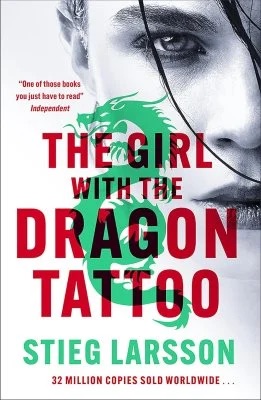
I couldn’t list transgressive heroines without finishing on the iconic Lizbeth Salander, who started out in Stieg Larsson’s book The Girl With The Dragon Tattoo. This tattooed and pierced, leather clad, super intelligent young woman is an icon. Everything about her exterior is spiky but that’s a defense mechanism, if you look underneath there’s a pale, waif- like girl who’s had a lifetime of abandonment and abuse. Her struggle to fit into a society that puts us in boxes is actually a strength. She’s learned to cope alone, knowing that even where we’re supposed to belong – our family – doesn’t mean we’re safe. Even the very system that’s supposed to care and provide safety to children is corrupted. She trusts no one. She doesn’t even expect justice to come through for her and metes out her own punishment, with the same brutality she’s faced. She has learned when to fight and when to stay in the shadows. The only people she trusts are an online group of fellow hackers, who she never meets in person. Her relationship with journalist Blomkvist is not her usual pattern, but he doesn’t judge and slowly they develop enough trust to work together. She has reached a point through online security work and hacking criminals to be totally independent, leaving her dependent on no one. I find Lisbeth absolutely fascinating and will happily reread the first three books in this series again and again.
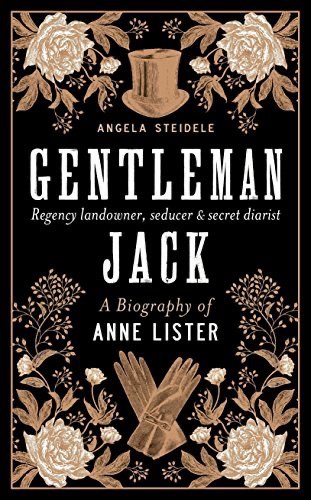
When I first found this book, before the television series, I was astounded that a woman had the bravery to live on her own terms as early as the Georgians. Anne Lister’s journals were so shocking that the first person to crack their secret code hid them behind a fake panel in his ancestral home. Anne Lister was a Regency landowner in Yorkshire, an intrepid world traveller … and an unabashed lover of other women. In this brilliant biography, author Angela Steidele uses Anne Lister’s diaries to create a portrait of a woman we had never seen before in fiction, never mind biography. The picture we usually have of Regency women is Jane Austen-esque, but this woman is both very much of her time in some ways and in others far ahead of it. Anne Lister recorded absolutely everything from the most intimate details of her numerous trysts, her plans to make her fortune by exploiting the coal seams under her family estate in Halifax and her reaction to the events of her time. Her love life had a labyrinthine complexity, but she was searching for a girlfriend to settle with. She wanted a woman could provide her with both financial security and true love, who also had the bravery to live in the unconventional and unapologetic way that Anne had chosen for herself.

 The Lotus Readers