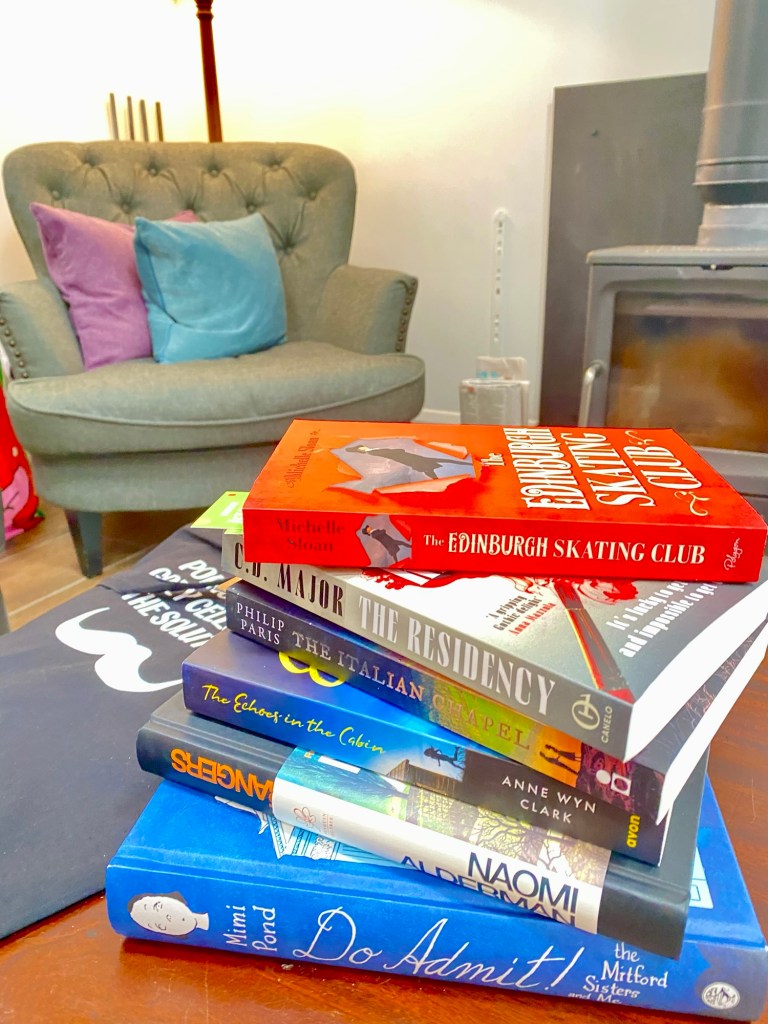
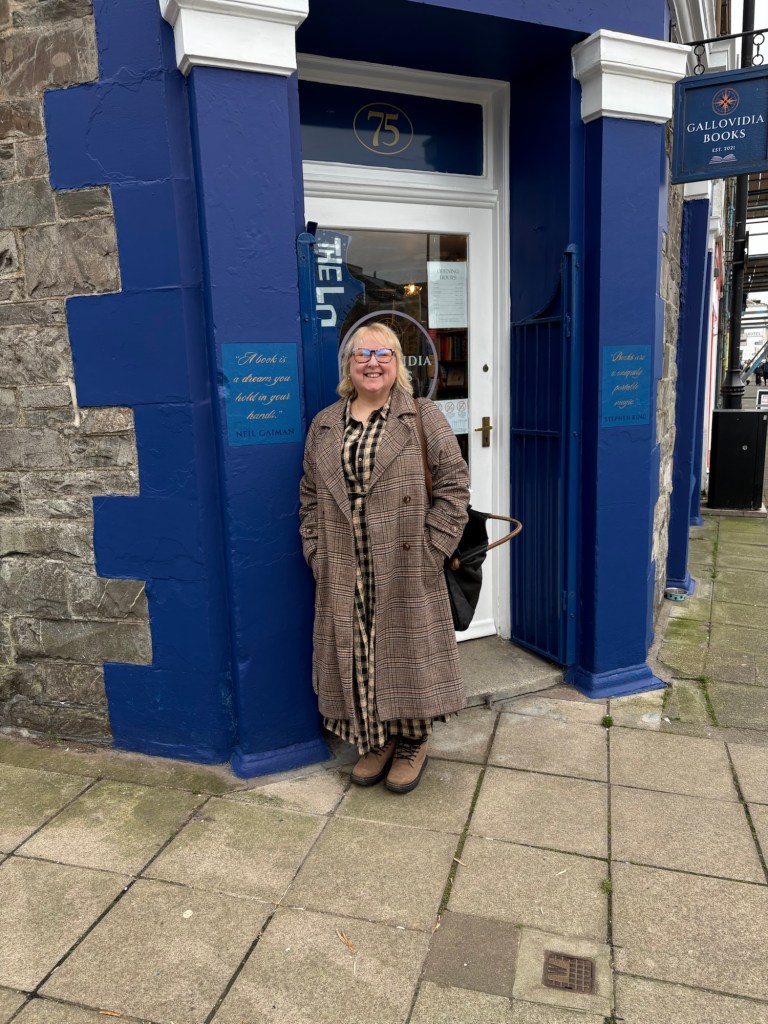
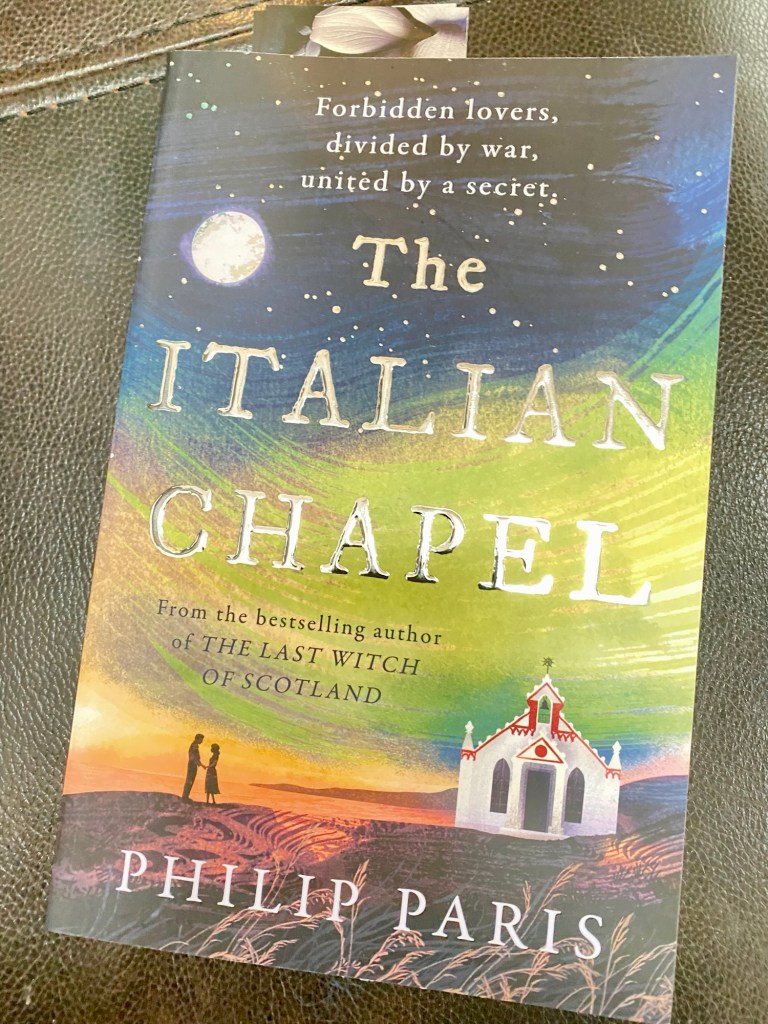
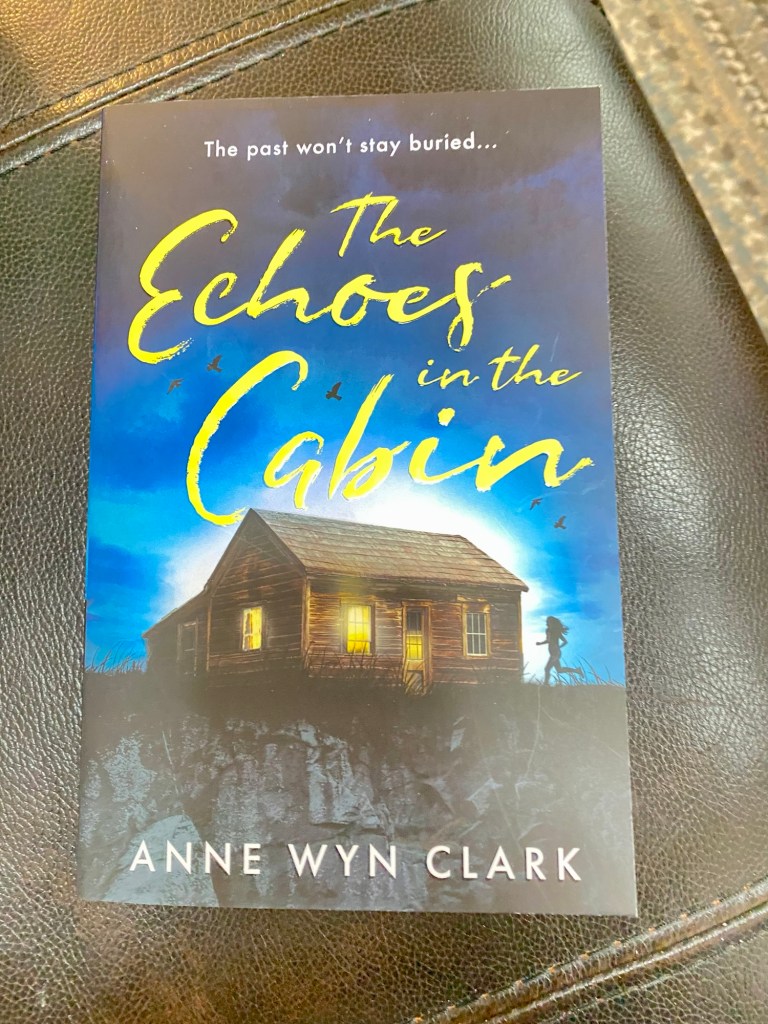
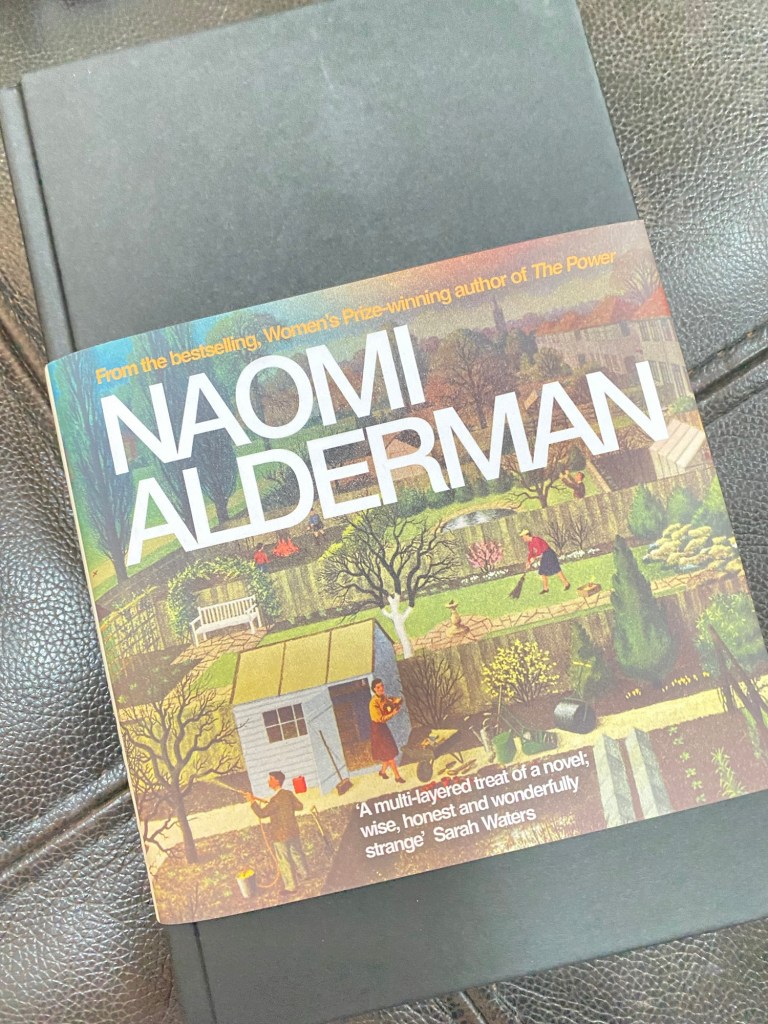
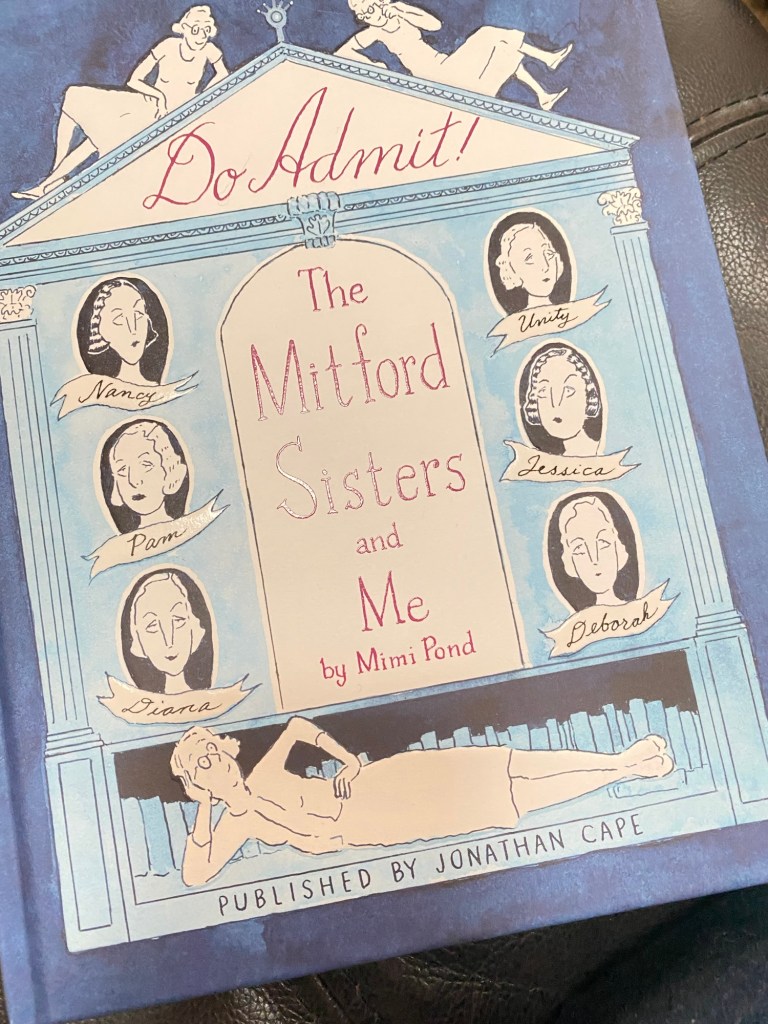
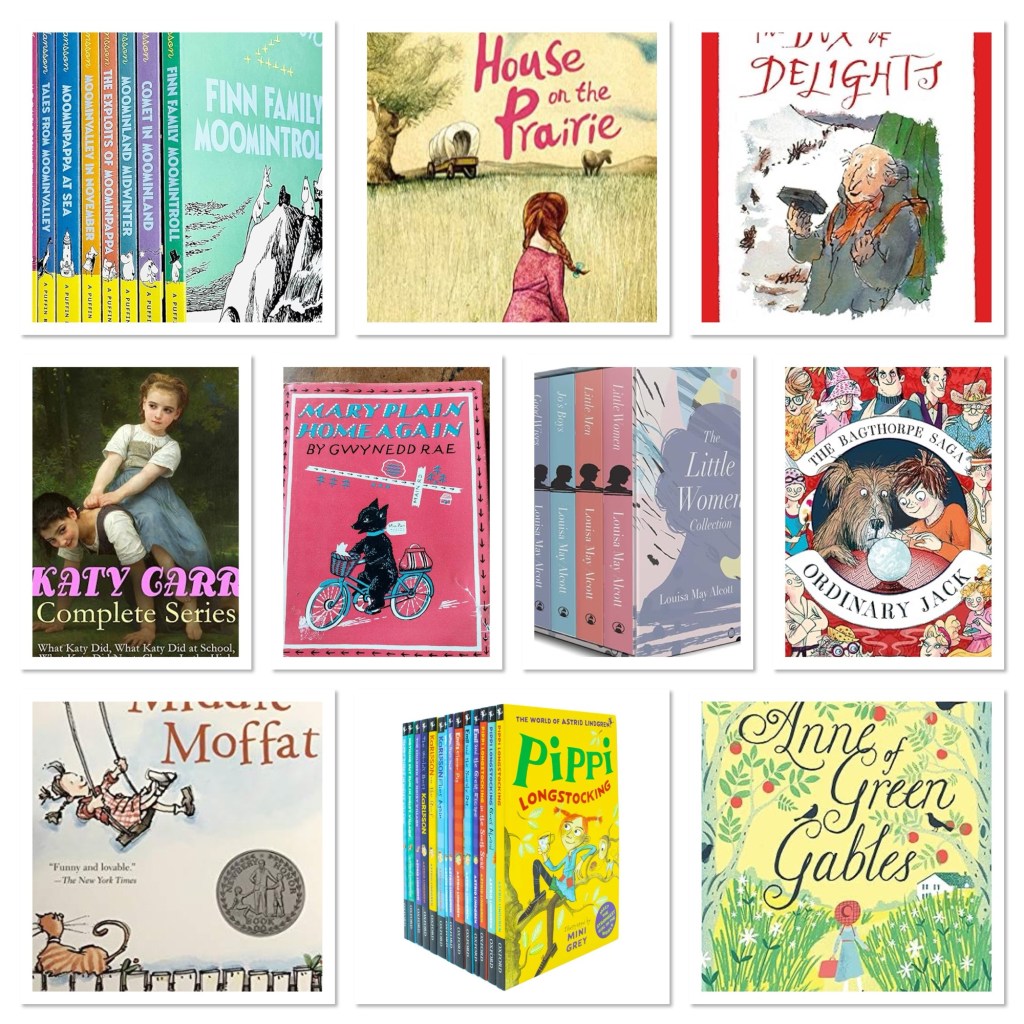
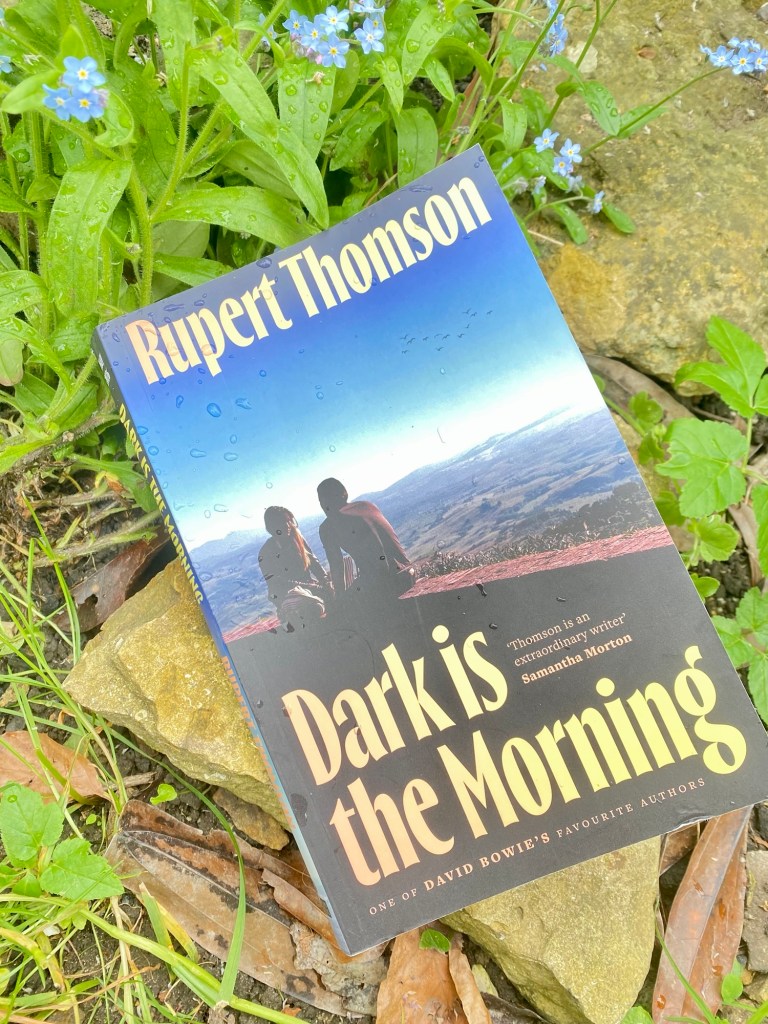
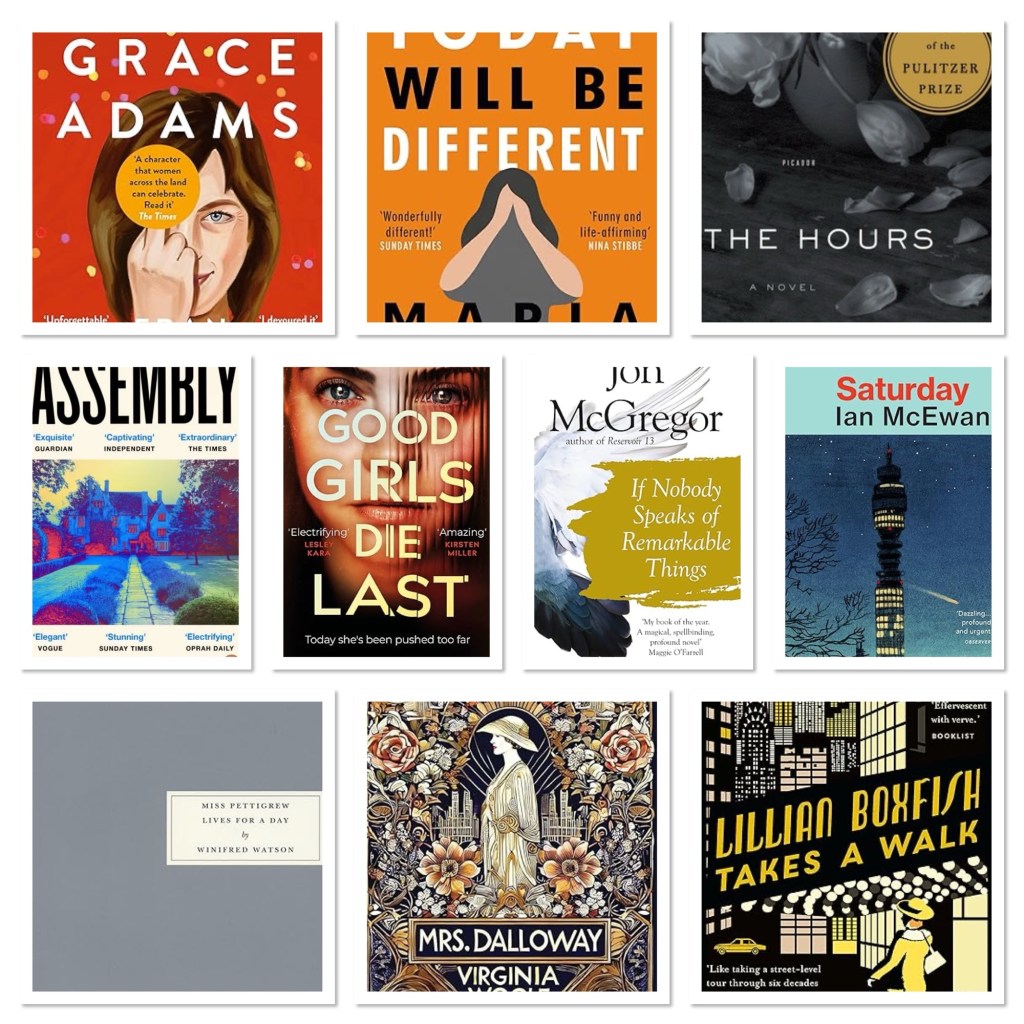
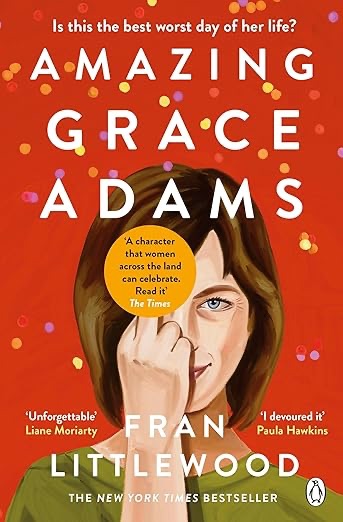
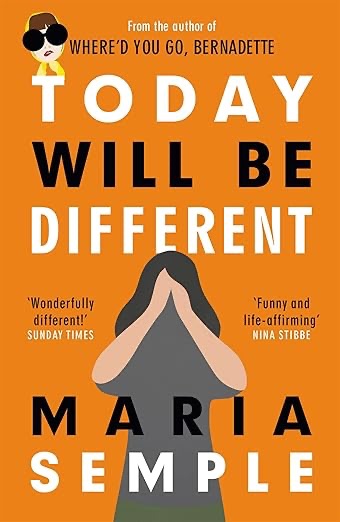
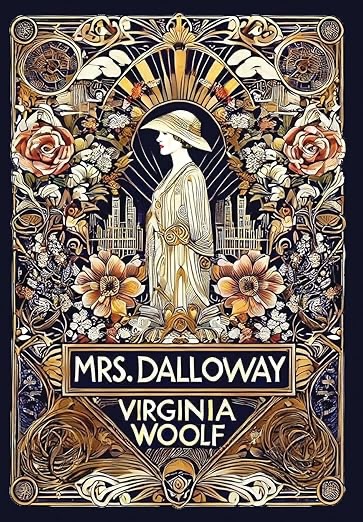
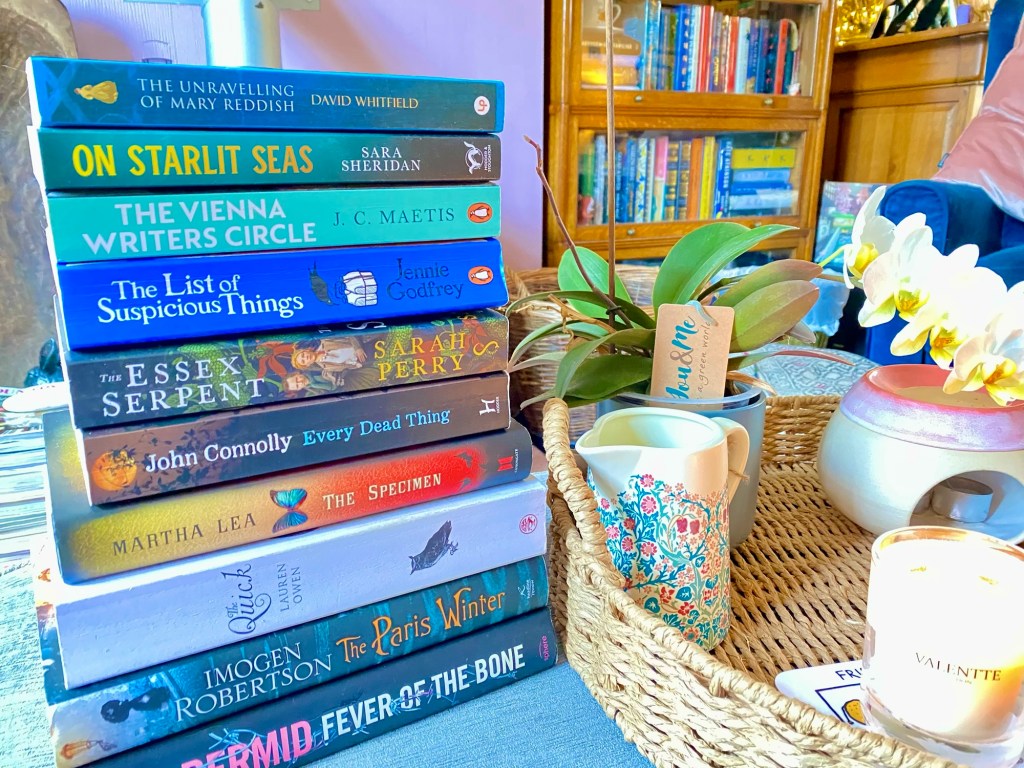
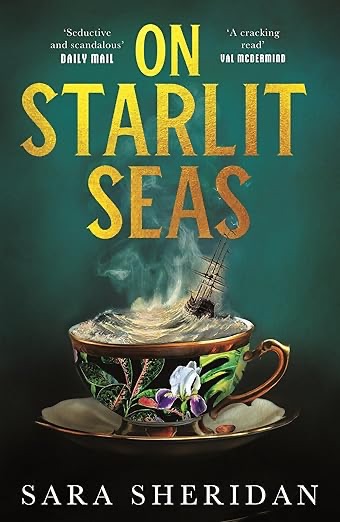
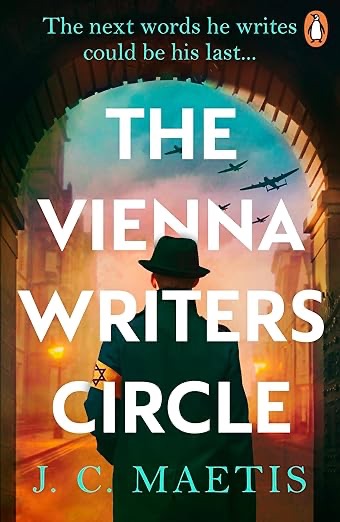
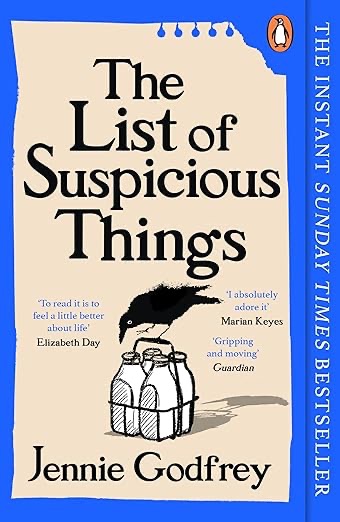
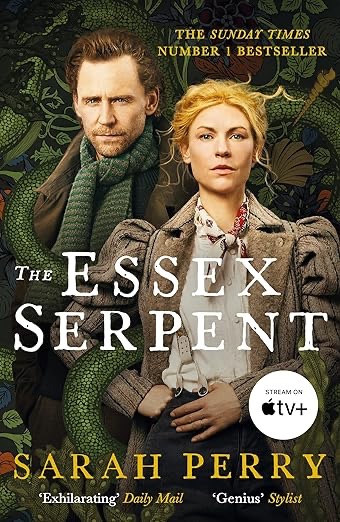
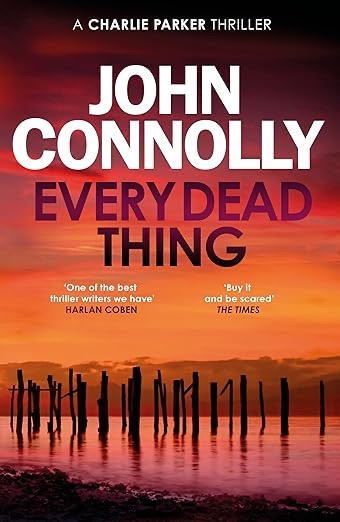
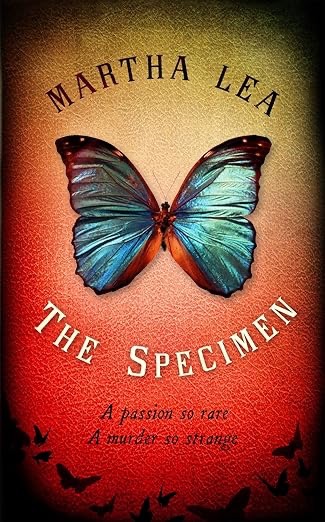
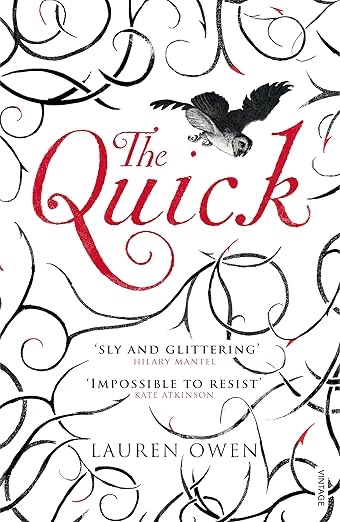
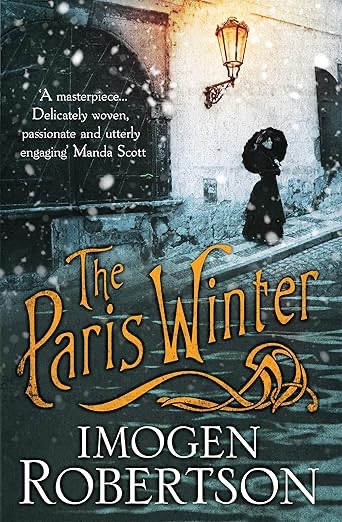
It was lovely to be back at Gallovidia Books in the Artist’s Town of Kircudbright. It’s one of my favourite places to visit because it’s easy to get around and it has a pop-up artists and makers shop which is brilliant for Christmas shopping – sorry, I have started – as well as an art gallery with great exhibits and a cafe where we always stop off for breakfast on our way home. Gallovidia Books is painted the beautiful blue of the bottom book of the stack and is absolutely crammed with books and bookish gifts. It’s a small shop but the selections are so well judged and the recommendations are great. The owners are so friendly, even remembering me from one visit last year, and their book knowledge is second to none. My choices have a very Scottish flavour this time, apart from the last two. All are books I picked on the spot from recommendation or simply from browsing. I can’t recommend this shop highly enough if you’re in Dumfries and Galloway, full of atmosphere and quirky decor.
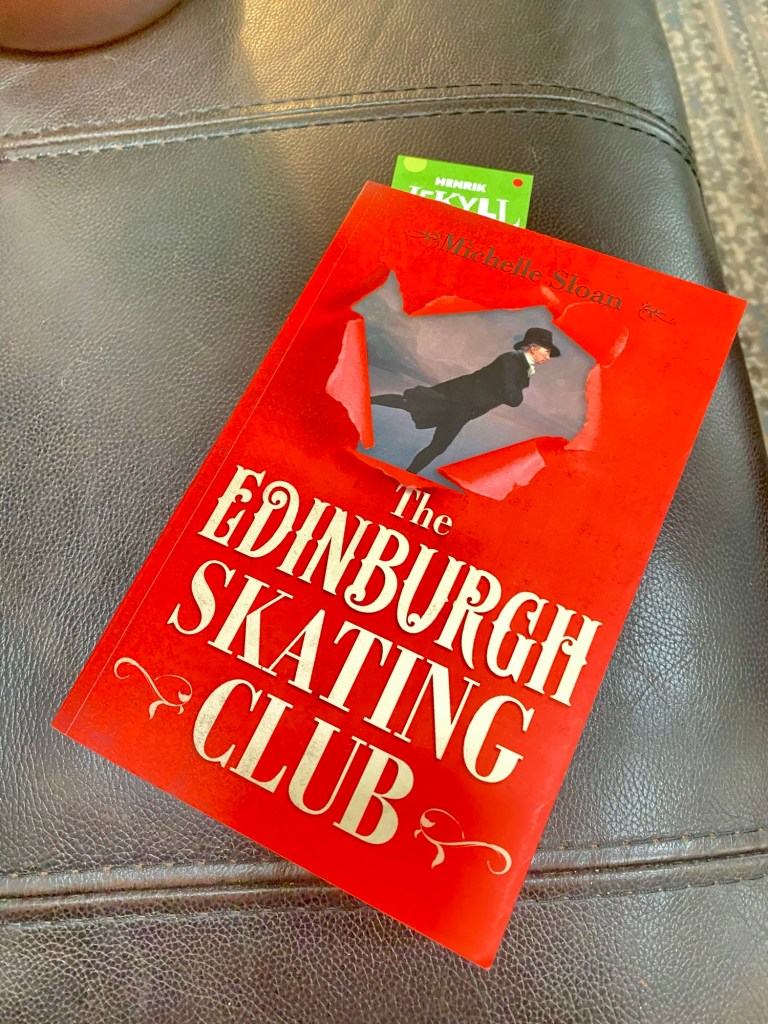
The Edinburgh Skating Club by Michelle Sloan
I picked this from the historical fiction section and it’s a story based on the painting The Skating Minister. An art historian called Claire Sharp is tasked to find the true provenance of the painting. While in the 18th Century a poet called Alison Cockburn accepts a challenge from her friend Katherine Hume, to infiltrate the all-male Edinburgh Skating Club. Alison will have to live as a man and neither of them could predict how it will affect their future. I love books that celebrate people overlooked by history and this sounds like it’s right up my street.
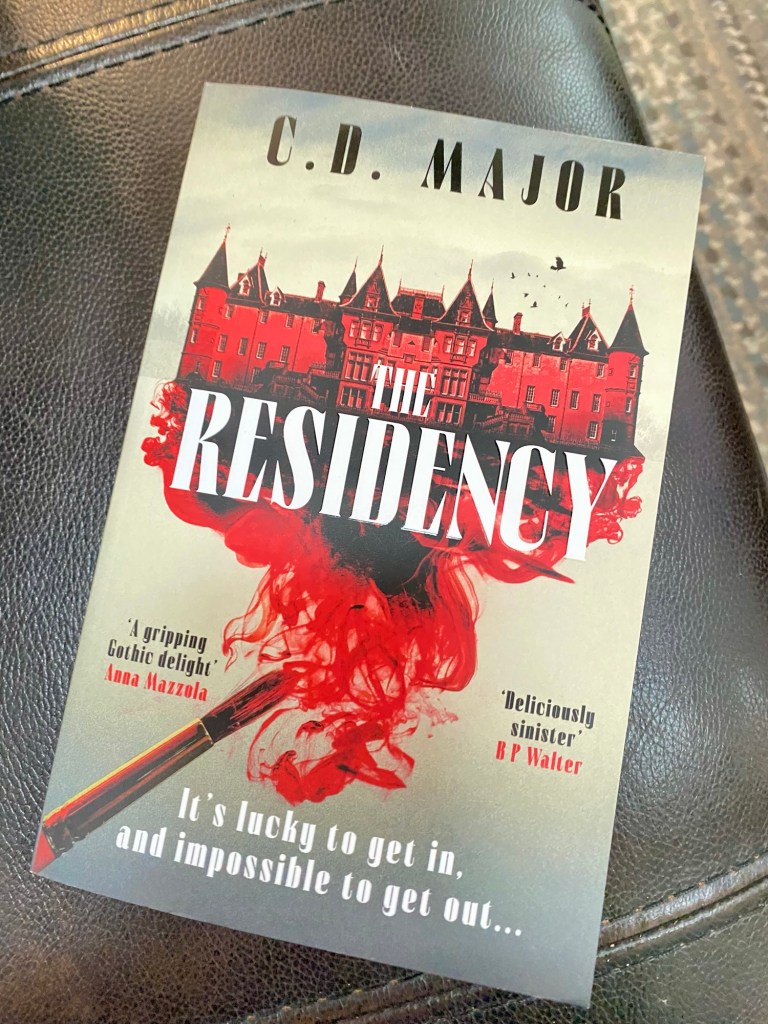
When on holiday we all have those dreams of upping sticks and moving to our favourite spot. Yesterday I was looking at property in Scotland!! So this was an obvious pick, being about someone also feeling like she needs a change. Ginny is a single mum living in London and has been trying to make it as an artist, despite a promising start she is now barely scraping by. On a whim she applies for an artists residency in Scotland with all expenses paid. She’s shocked to be accepted and is soon on a boat to a remote Scottish island with her daughter. She worries slightly that she’s been hasty in accepting and locals seem to be avoiding her questions about her benefactor. Is this just that they don’t like publicity or are they scared into silence? The place is eerie and she has questions about her contract which states she mustn’t go into the gallery part of the old property. She thinks she hears whispers and is sure that the people in the paintings change overnight. However, as soon as she realises that she’s made a grave mistake will it be too late to escape? I’m looking forward to this spooky read that’s perfect for autumn.
A few years ago I read Caroline Lea’s wonderful novel The Metal Heart which was about the Italian prisoner’s of war on Orkney and the tin chapel they built to worship. So I had to pick up this love story that’s set on the Orkney island of Lamb Holm and the prisoner’s camp 60. Among them is Domenico who is an artist and inspires his friends to create a symbol of peace, building an Italian chapel from scrap. The chapel soon lives up to its symbolism when POW Guiseppe falls in love with a local woman called Fiona. Inside the chapel he hides a token of love that is unveiled for the first time in this book. Based on an incredible true story I’m looking forward to learning more about this special place.
This book is set in another of my favourite haunts, North Wales. Elin returns home to Anglesey after a tragic accident, to the same bay where her mother was drowned ten years ago. I picked this up having just read Doug Johnstone’s latest instalment in his Skelf series that covered a similar subject of ‘grief bots’, an AI generated version of the person who died constructed by scraping all their data from social media and other digital sources. Here Elin agrees to try a grief hologram, but when the avatar says something that shocks Elin she realises that her current loss and the loss of her mother could be related. What if they weren’t an accident? Because if that’s the case she might be in danger…
My final choices are a little bit different and this one was highly recommended. It claims to be like nothing I’ve read before which is an excellent way to grab someone who reads a lot. Written while grieving her mother, it’s more like auto-fiction than a novel and follows what happens when she puts up a wildlife camera in the garden. It captures an image of a strange new animal, low to the ground like a badger but with a flat face and a long trunk like nose. Soon the animals, called mimmoths, are everywhere and no longer he knows where they’ve come from. As sightings spread across the world it seems they are common, harmless but following their own purpose. They won’t take human food and can’t be captured. They are intelligent. The author feels connected to them and becomes caught up in conspiracy theories and global power dynamics. Has grief made the world surreal or is reality changing? I’m intrigued..
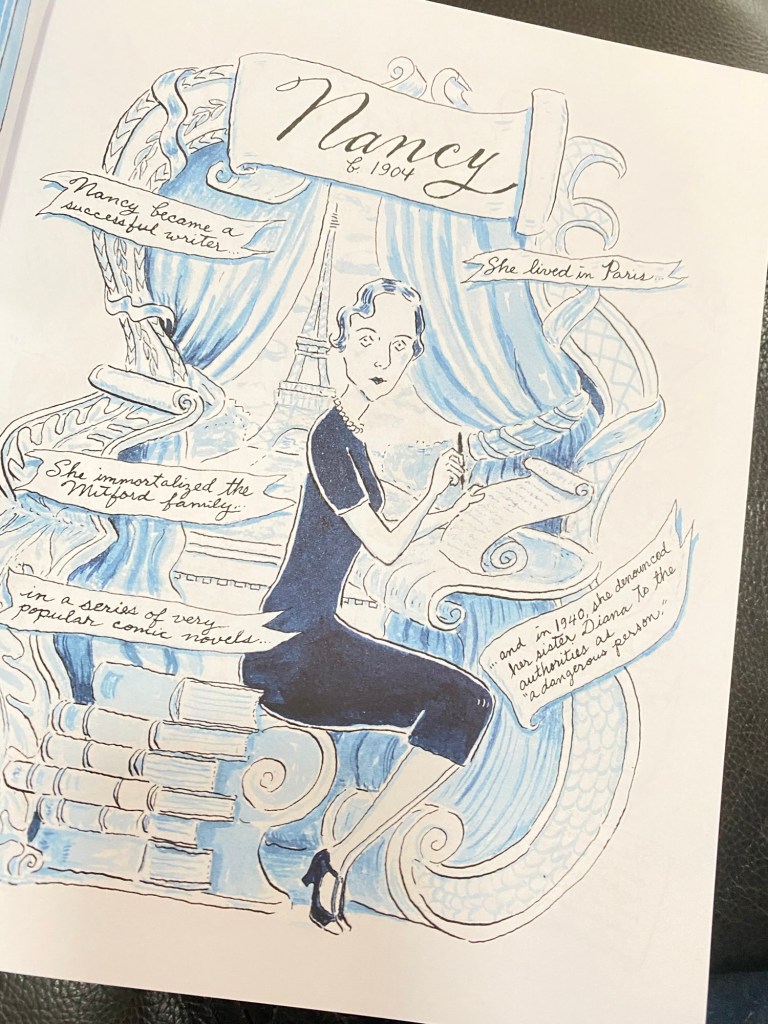
My final choice was unexpected but as soon as I saw it I knew it was for me. I have a lot of books by and about the Mitford sisters, even meeting Deborah, the dowager Duchess of Devonshire at one of her book events at Chatsworth. I find the Mitford sisters intriguing and this is a beautiful and unusual book about their complicated and varied lives.
It details each sisters particular history and is so well illustrated by Mimi Pond. As a young girl living in sun-bleached 1960s suburban California, Mimi Pond fell in love with the Mitford sisters. Nancy, Pamela, Diana, Unity, Jessica and Deborah Mitford brought society glitz, pageantry, scandal, and real (rainy) weather to her own prosaic life.
High society debutantes known for rubbing shoulders with some of history’s most infamous fascists and communists, the sisters were also, in turn, gifted writers, inveterate nicknamers, chicken-raising homebodies, scathing wits, and passionate adventurers in the maelstrom of the 20th century. Drawn with inimitable artistic flair and a mischievous affinity for the decadent and grandly declining aristocracy, Mimi Pond brings the Mitfords to life in this glittering and lovingly researched family biography. This is my first graphic book in years and will sit happily on my shelf next to my other Mitford acquisitions.
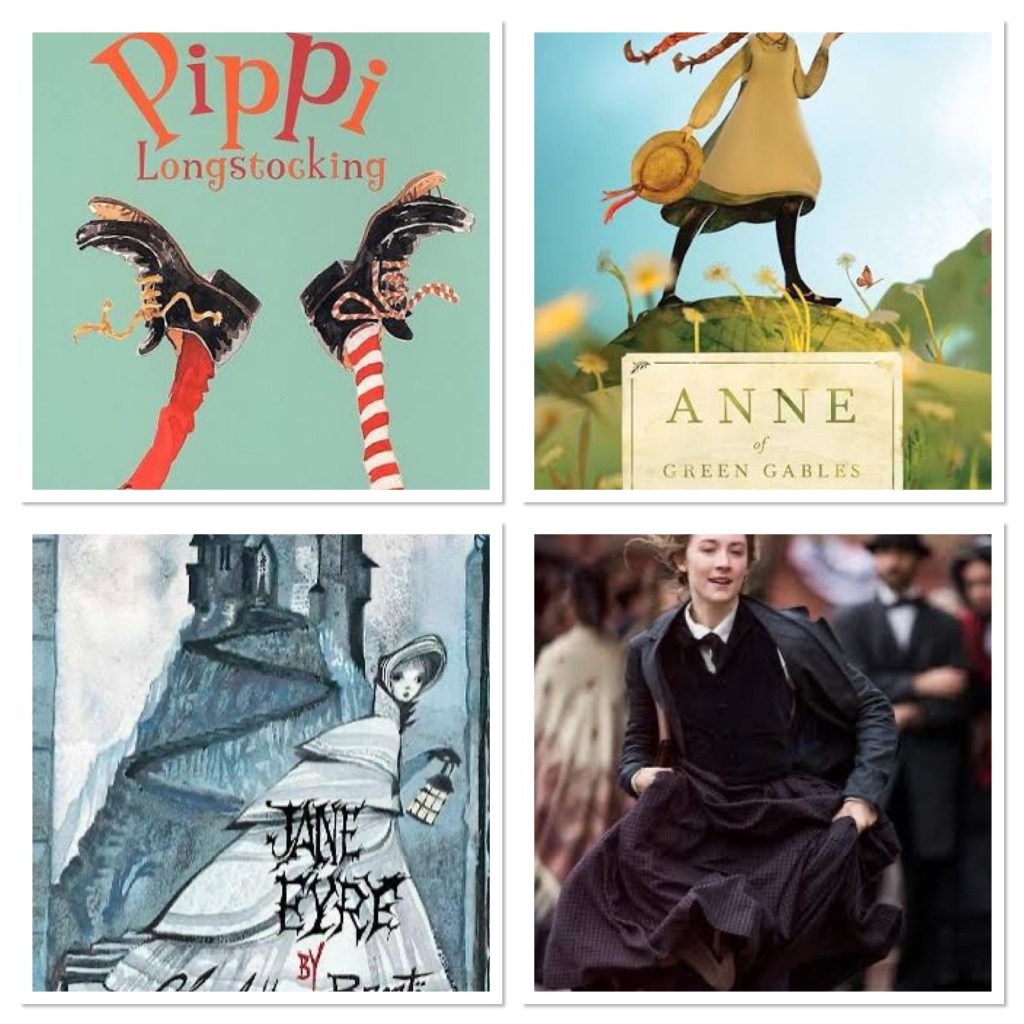
If you ask me why I’m always drawn to naughty girls and women who push the boundaries I’d have to look back to these four characters: Pippi Longstocking, Jo March, Jane Eyre and Anne of Green Gables. They might not seem particularly naughty at first glance but there’s definitely a streak of mischief, a need to push against what’s expected of young women, a blazing temper that’s hard to keep in check and with three of them, a yearning to do something more than the expected route of marriage and children. There’s an independence in each of them, three are orphans in fact, while the fourth is determined to play her father’s role while he’s away fighting in the civil war. Jo flouts the rules of dress, standing out amongst her sisters who are happy to adopt the corsets and heavy skirts of 19th Century American fashion. Jo feels like she can’t move in them, preferring to wear a plainer and more masculine form of dressing and avoiding all social occasions that involve dressing up. She also sells her long hair so that there’s money for Marmee to go to Washington to see their wounded father. Anne is a feminine girl but wants to outshine the boys at school with her mind, driven to be the best and go to university rather than staying home and marrying. She knows she needs something of her own to work towards whether it’s teaching or writing. Pippi is a dream of a character with her pigtails and an ahead of the curve tendency towards dopamine dressing. She lives with a horse and a monkey, something I’ve contemplated as a better option after my worst relationships! I think she is the genesis of my childhood dream to have a mansion with a separate room or outbuilding for each type of animal – dogs, cats, rabbits and of course hares, my spirit animal. Having a brother meant I was always climbing trees, making dens, reading while he fished and running through fields and woods with dogs. We had an immense amount of freedom, only going home at tea time or when I’d injured myself. Some of that care free nature left when I had a spinal injury and started secondary school in the same year.
Then there’s Jane Eyre, a moral character who shows incredible self-awareness around living within her own beliefs. She knew she couldn’t live with Rochester while he had a wife, not because of what others thought, but because of the type of woman she wanted to be. Similarly she refuses St. John Rivers’s proposal because she knows she can’t marry without love. When younger though, this sense of what was right got her into trouble as she stood up to her bullying cousin John, her Aunt Read and headmaster Mr Brocklehurst. She even tries to fight back against the servants when her Aunt asks them to lock her in the Red Room for a punishment. They want her to be less passionate and reactive, but although Jane learns to curb her temper there’s a lot going on under that quiet surface. The thing I shared most with Jo March and Anne of Green Gables was that I wanted to write. Jo scribbles in the garret, trying to sell her romances to the newspaper and writing plays for her sisters to perform. Anne is also influenced by romance, writing about handsome heroes and houses with gilded halls. Both are given advice about their writing that they don’t appreciate, in fact both have terrible tempers. Gilbert’s teasing of Anne infuriated her so much she smashed her slate over his head and made it quite clear his advice wasn’t appreciated when she first starts writing in adulthood. Jo and sister Amy had blazing rows and it was Amy’s ability to curb her irritability that won her a trip to Europe with Aunt March instead of Jo who couldn’t resist snapping back at the grumpy old woman. Instead she visits New York and meets Professor Bhaer who tells her to write about something she knows, leading to her book based around her sisters. Characters who move outside their social boundaries and expectations are so much more interesting and I think that’s why I’m drawn to books with women who are unexpected and live colourful lives. Here are some of the books I’ve loved that showcase women like this.
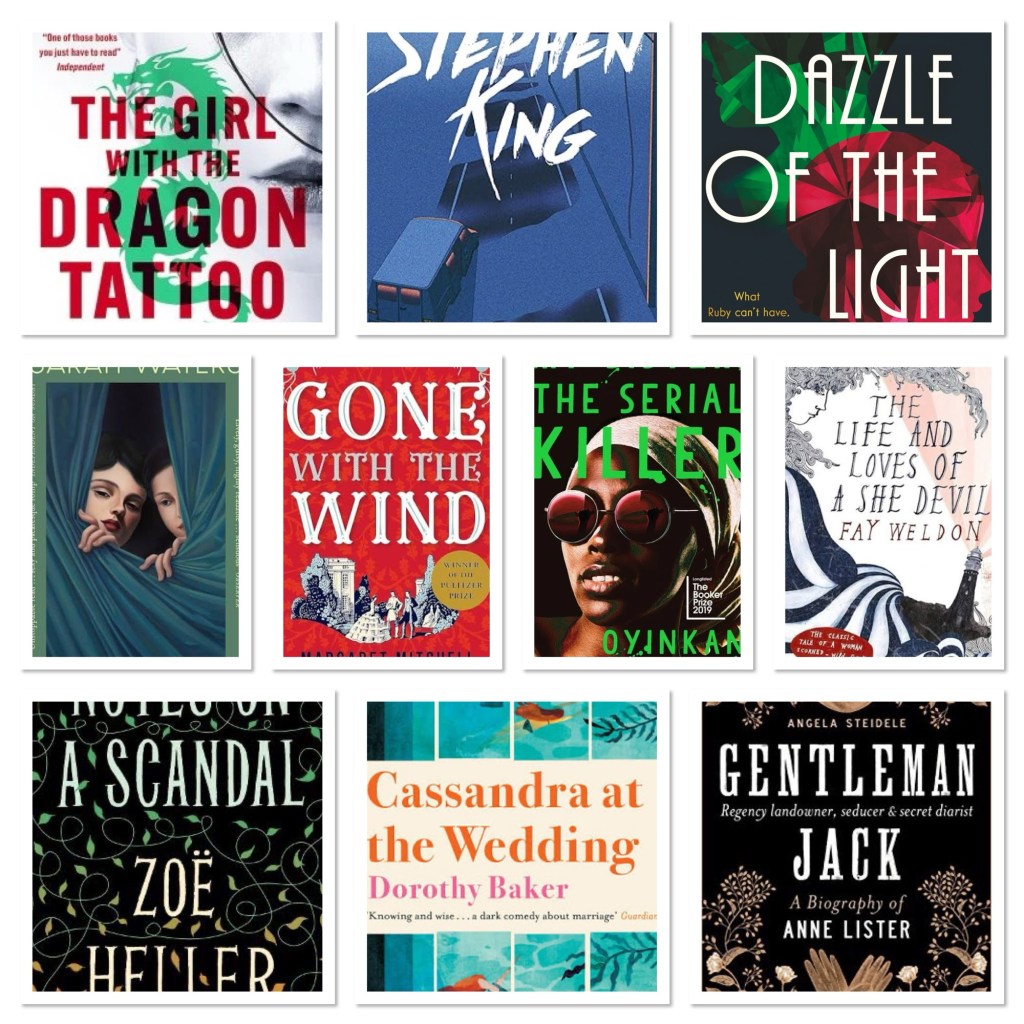
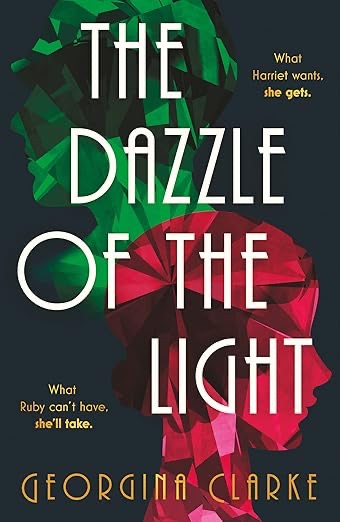
This brilliant historical novel, set in the 1920s, is inspired by the notorious all-female crime syndicate known as the Forty Elephants who operated out of the slums of south London.
Ruby Mills is ruthlessly ambitious, strikingly beautiful – and one of the Forty Thieves’ most talented members. The Forty Thieves were a real life band of pickpockets and thieves and Ruby has worked herself up to become one of the best, even working alongside male tricksters when their heists need a woman. Harriet Littlemore writes the women’s section in a local newspaper. She’s from a ‘good’ London family and engaged to an up-and-coming Member of Parliament – but she wants a successful career of her own. After witnessing Ruby fleeing the scene of a robbery, Harriet develops a fascination with the elusive young thief that extends beyond journalistic interest. As their personal aspirations bring them into closer contact than society’s rules usually allow, Ruby and Harriet’s stories become increasingly intertwined. Their magnetic dynamic, fraught with envy and desire, tells a compulsive, cinematic story about class, morality and the cost of being an independent woman in 1920s London. This book was absolutely fascinating and actually outshone another well known writer’s book set around the same time and in the same circles. It’s hard not to root for Ruby, even when she’s stealing.
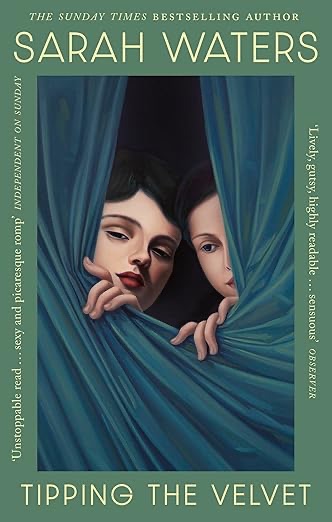
Piercing the shadows of the naked stage was a single shaft of rosy limelight, and in the centre of this was a girl: the most marvellous girl – I knew it at once! – that I had ever seen.’
This saucy, sensuous and multi-layered historical romance follows the glittering career of Nan King – oyster girl turned music-hall star turned rent boy turned East End ‘tom’. Nan King, an oyster girl, is captivated by the music hall phenomenon Kitty Butler, a male impersonator extraordinaire treading the boards in Canterbury. Through a friend at the box office, Nan manages to visit all her shows and finally meet her heroine. Soon after, she becomes Kitty’s dresser and the two head for the bright lights of Leicester Square where they begin a glittering career as music-hall stars in an all-singing and dancing double act. At the same time, behind closed doors, they admit their attraction to each other and their affair begins. I love Sarah Waters’s characters because they show us a different side of the Victorians from the accepted narrative. They show us that Victorian society was just as multi-layered as ours and their infamous sexual prudery was only skin deep. This book and the BBC adaptation caused quite a stir at the time, mainly for the sexual content, but what’s truly groundbreaking was the authors desire to place these women into a history that didn’t include them.
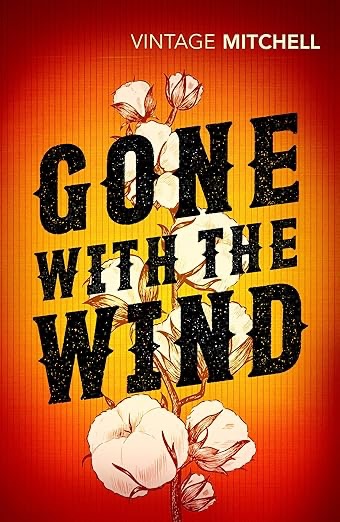
Margaret Mitchell’s page-turning, sweeping American epic has been a classic for over eighty years. Beloved and thought by many to be the greatest of the American novels, Gone with the Wind is a story of love, hope and loss set against the tense historical background of the American Civil War. The lovers at the novel’s centre – the selfish, privileged Scarlett O’Hara and rakish Rhett Butler – are magnetic: pulling readers into the tangled narrative of a struggle to survive that cannot be forgotten. This is a great example of a character who is stubborn, defiant, arrogant and a rule breaker, who turns out to be exactly what her family needs at a time of upheaval. Scarlett is a spoiled girl and doesn’t turn into the sweet, passive Southern Belle her mother and sisters would have wished for. She’s filled with a rebellious spirit that with experience becomes a core of steel. This is a woman who doesn’t even hesitate to get what she wants, whether that’s a new dress, the attentions of someone else’s suitor or the business deal that will make her rich. She speaks her mind, curses and does business like a man. She never apologises either, happy to tread on toes if it gets her closer to her goal. I love the scene where she flouts the mourning rules at the charity ball and Rhett Butler makes a donation to dance with her. She’s been behind a stall, in her widow’s dress with legs twitching under her somber skirts. She can’t wait to dance and practically vaults over a table to do so. Yet it’s her ability to think and act like a man that saves her life and gives her the constant assurance that even though she’s lost everything, tomorrow is another day.
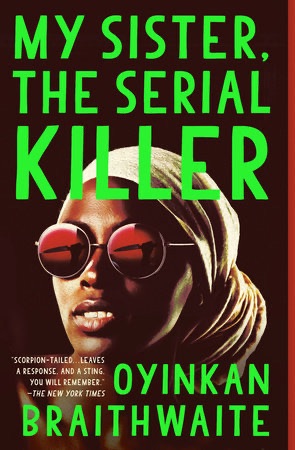
When Korede’s dinner is interrupted one night by a distress call from her sister, Ayoola, she knows what’s expected of her: bleach, rubber gloves, nerves of steel and a strong stomach. This’ll be the third boyfriend Ayoola’s dispatched in ‘self-defence’ and the third mess that her lethal little sibling has left Korede to clear away. She should probably go to the police for the good of the menfolk of Nigeria, but she loves her sister and, as they say, family always comes first. Until, that is, Ayoola starts dating the doctor where Korede works as a nurse. Korede’s long been in love with him, and isn’t prepared to see him wind up with a knife in his back: but to save one would mean sacrificing the other…
These two sisters are absolutely fascinating and challenge our perceptions of what women are capable of, as well as expectations around beauty. A female serial killer is rare in fiction and in life, but this challenges that expectation. Why can’t women be serial killers? Do they possess more empathy and restraint than men? There’s also a perception around beauty, something that goes beyond the bias that comes from desire. People who know the sisters make an assumption that Korede must be jealous of her sister and wish she had her beauty and charm. A difficult childhood and poor relationship with their father has brought them closer together and is the seed of their collusion now. It has given them the resilience and survival instinct that takes them across boundaries of what is morally and legally right. Their complex relationship and the dark humour of the novel made it a memorable story.
Ruth Patchett never thought of herself as particularly devilish.
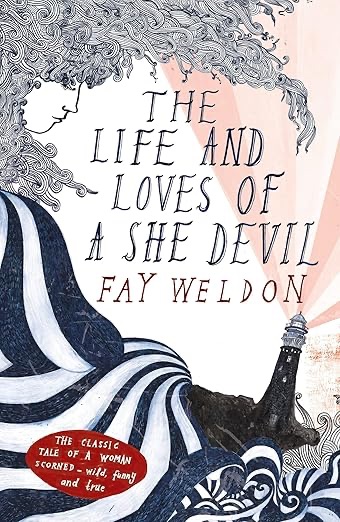
Rather the opposite in fact – simply a tall, not terribly attractive woman living a quiet life as a wife and mother in a respectable suburb. But when she discovers that her husband is having a passionate affair with the lovely romantic novelist Mary Fisher, she is so seized by envy that she becomes truly diabolic. Within weeks she has burnt down the family home, collected the insurance, made love to the local drunk and embarked on a course of destruction and revenge. A blackly comic satire of the war of the sexes, The Life and Loves of a She Devil is the fantasy of the wronged woman made real.
I utterly loved this book as a teenager and must have read it at least once a year since ( I have a very battered copy). Once transformed, Ruth has no boundaries and no mercy, her sole purpose in life is to gain revenge on her husband and his mistress Mary Fisher. She’s furious that they are having an illicit honeymoon in Mary’s coastal tower while she is big, clumsy and now saddled with two children and various unruly pets. Slowly she takes steps to right the wrongs she’s experienced, taking unexpected lovers, gaining money and even transforming herself on the outside through plastic surgery. She leaves her children at the tower for their father, plus an unruly dog. She even gets a job at the residential home where Mary’s mother is living. Using other people’s bedpans she fakes nightly incontinence so she loses her place and must be placed in a nursing facility or with Mary Fisher. There is something twisted but delicious about her revenge, especially that final description of the life she builds for herself on her own terms.
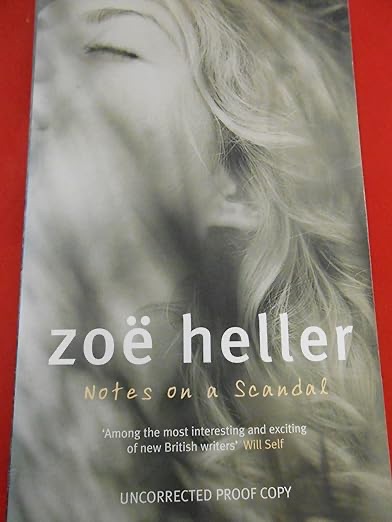
When the new teacher first arrives, Barbara immediately senses that this woman will be different from the rest of her staff-room colleagues. But Barbara is not the only one to feel that Sheba is special, and before too long Sheba is involved in an illicit affair with a pupil. Barbara finds the relationship abhorrent, of course, but she is the only adult in whom Sheba can properly confide. So when the liaison is found out and Sheba’s life falls apart, Barbara is there…
I think this might be a more controversial book now than it was when published. Here we have two deeply flawed female characters, one who is reckless and commits a crime, another who is obsessively jealous and frighteningly manipulative. Sheba starts working at a secondary school in London and meets Barbara, an older and strait-laced history teacher. When Sheba starts an affair with a pupil who is 15 years old, Barbara benefits from the fall out. Slowly becoming Sheba’s confidante and as gaining more and more control as the affair tears Sheba’s life apart. I didn’t like either of the women, but as a study of obsession this is hard to beat. Barbara is like a spider, awaiting her prey and spinning a web from the loneliness and longing she feels. This is a deeply unsettling page turner, I’ve read it several times now and it doesn’t lose its power. I’ve found it’s a more difficult watch than it is a read. Both Cate Blanchett and Judi Dench are excellent in the film adaptation but it’s the presence of the boy that disturbs. While reading we can convince ourselves that he is all the things Sheba tells us he is, the confident and experienced seducer. But when we see a boy who looks 15 playing the role it feels different, we can see that Sheba’s assessment of him could be her kidding herself and us that she’s not a predator.
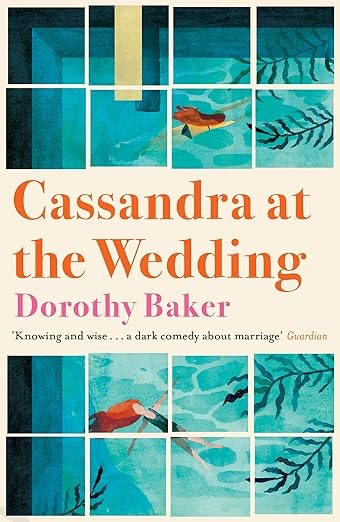
‘I am not, at heart, a jumper. I think I knew all the time I was sizing up the bridge that the strong possibility was I’d attend my sister’s wedding’
Cassandra Edwards is driving home to her family’s Californian ranch to attend the wedding of her beloved identical twin, Judith. A graduate student at Berkeley, Cassandra is gay, brilliant, nerve-racked, miserable – and hell-bent on making sure her sister’s wedding doesn’t happen. Around six months ago, Judith left the apartment they shared for Juilliard and ever since Cassandra has been having a long drawn out nervous breakdown. She’s been seeing a therapist called Dr. Mercer and had a clutch bag full of pills from her prescriptions of uppers and downers. She also seems to have an unquenchable thirst for brandy, but still arrives determined to make Judith see sense. With the twins alone for the first couple of days the truth of their co-dependency becomes clearer and Cassandra unravels. As her sister leaves to pick up her fiance at the airport Cassandra feels betrayed and isolated by her twin. Now she is alone with her thoughts and her pills. Maybe she can stop the wedding another way. This classic of twentieth-century American literature is a tragicomedy, offering witty conversation and a deep psychological study of two women finding it difficult to separate and make their own lives. Cassandra is hell bent on creating mischief but it’s more from her own loneliness and pain. This is stylish, witty and insightful and depicts a girl coming to terms with who she is and the only life she has.
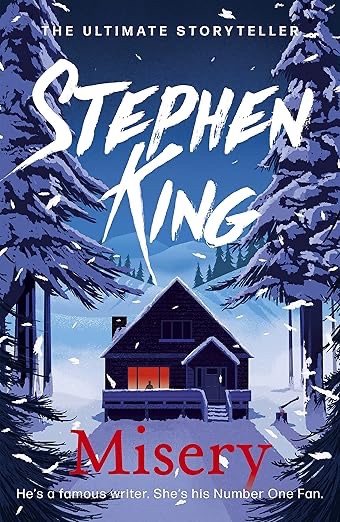
Paul Sheldon used to write for a living. Now he’s writing to stay alive.
Misery Chastain is dead. Paul Sheldon has just killed her – with relief, with joy. Misery made him rich; she was the heroine of a string of bestsellers. And now he wants to get on to some real writing.
That’s when the car accident happens, and he wakes up splinted and in pain, in the remote mountain home of his rescuer, Annie Wilkes. The good news is that Annie was a nurse and has pain-killing drugs. The bad news is that she has long been Paul’s Number One Fan. And when she finds out what Paul has done to Misery, she doesn’t like it. She doesn’t like it at all . .
Annie Wilkes is one of the most feared villains in horror fiction, not only is she obsessive and dangerous – something we don’t expect in women – she’s a nurse, the epitome of the ‘caring’ female and often depicted as angelic. Annie is determined to do what’s in Paul’s best interests because only then can he write another Misery Chastain novel and undo the literary death he’s just given her. If Paul thought he’d had enough of Misery Chastain, he hadn’t met Annie Wilkes yet. Stephen King writes her so cleverly with little touches that make her seem repulsive: the smell of food constantly on her breath and her clothing, unexplained stains on her clothing and unwashed hair. She speaks to him in a kind of baby talk, using mispronounced or unlikely phrases that just sound odd. If Paul doesn’t turn out a new page or two each day she might fly into a rage and Paul has seen what Annie might do in a rage. Once when looking out the window after hearing voices he witnesses Annie run over a police officer with a lawnmower. Annie is horrifying, psychopathic and her mood swings are sudden. Yet every time we hear her shambling towards Paul’s bedroom door we’re glued to what she might do next!
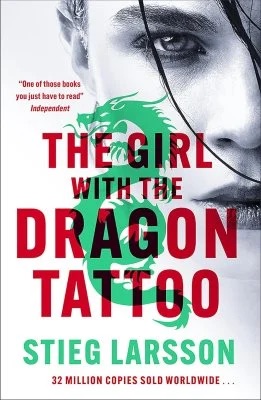
I couldn’t list transgressive heroines without finishing on the iconic Lizbeth Salander, who started out in Stieg Larsson’s book The Girl With The Dragon Tattoo. This tattooed and pierced, leather clad, super intelligent young woman is an icon. Everything about her exterior is spiky but that’s a defense mechanism, if you look underneath there’s a pale, waif- like girl who’s had a lifetime of abandonment and abuse. Her struggle to fit into a society that puts us in boxes is actually a strength. She’s learned to cope alone, knowing that even where we’re supposed to belong – our family – doesn’t mean we’re safe. Even the very system that’s supposed to care and provide safety to children is corrupted. She trusts no one. She doesn’t even expect justice to come through for her and metes out her own punishment, with the same brutality she’s faced. She has learned when to fight and when to stay in the shadows. The only people she trusts are an online group of fellow hackers, who she never meets in person. Her relationship with journalist Blomkvist is not her usual pattern, but he doesn’t judge and slowly they develop enough trust to work together. She has reached a point through online security work and hacking criminals to be totally independent, leaving her dependent on no one. I find Lisbeth absolutely fascinating and will happily reread the first three books in this series again and again.
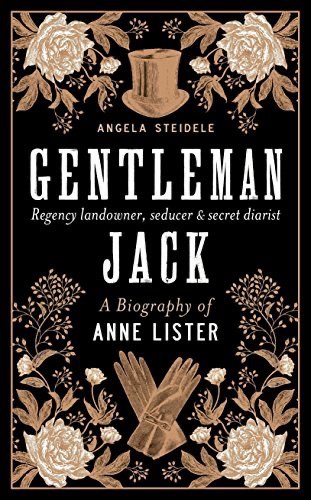
When I first found this book, before the television series, I was astounded that a woman had the bravery to live on her own terms as early as the Georgians. Anne Lister’s journals were so shocking that the first person to crack their secret code hid them behind a fake panel in his ancestral home. Anne Lister was a Regency landowner in Yorkshire, an intrepid world traveller … and an unabashed lover of other women. In this brilliant biography, author Angela Steidele uses Anne Lister’s diaries to create a portrait of a woman we had never seen before in fiction, never mind biography. The picture we usually have of Regency women is Jane Austen-esque, but this woman is both very much of her time in some ways and in others far ahead of it. Anne Lister recorded absolutely everything from the most intimate details of her numerous trysts, her plans to make her fortune by exploiting the coal seams under her family estate in Halifax and her reaction to the events of her time. Her love life had a labyrinthine complexity, but she was searching for a girlfriend to settle with. She wanted a woman could provide her with both financial security and true love, who also had the bravery to live in the unconventional and unapologetic way that Anne had chosen for herself.
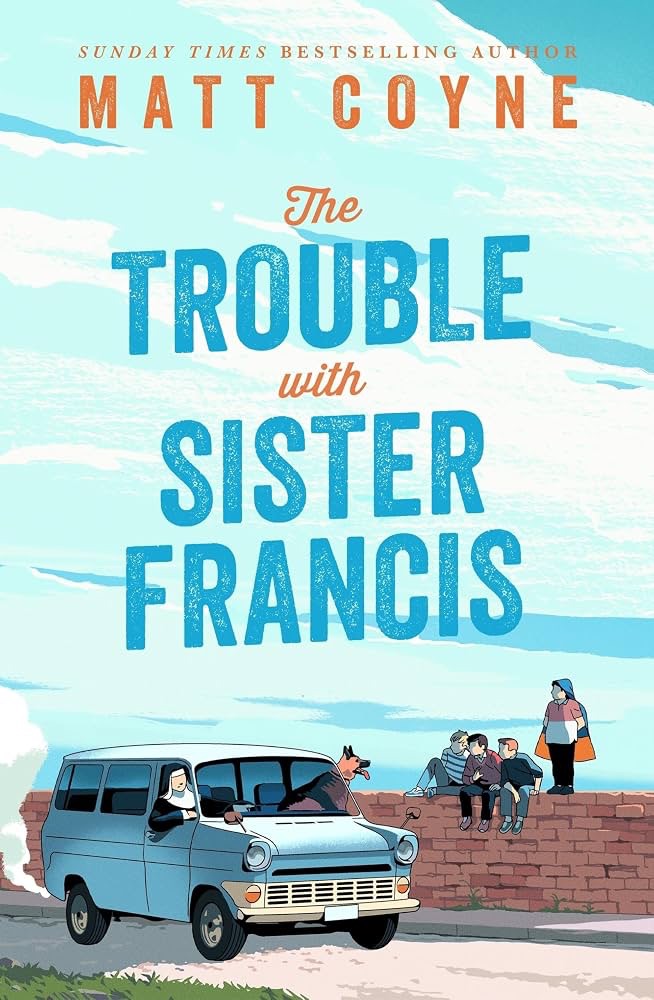
She’s sixty, sweary, drives like a lunatic and smokes like a stacked chimney . . . and she runs the Blessed Assumption Boys Club.
Richie, Bennett, Kenny and Stan are four best friends from the Whittle council estate with little to do but get up to no good. After a run-in with local bullies, they discover the crumbling, forgotten club and find themselves in the company of the most remarkable person they will ever meet.
Set against early 1980s Britain, THE TROUBLE WITH SISTER FRANCIS is a funny, heartwarming, and heartbreaking story of unlikely heroes, quiet rebellions, fierce loyalty and unexpected hope.
And at the centre of it all lies a long-forgotten journal that might just change everything.
I feel like I’ve been living under a rock because I seem to be the only book blogger who hasn’t read Matt Coyne’s Frank and Red, so this was my first introduction to his writing. I didn’t even follow him on social media before now so I went in completely blind. I can honestly say this book was a gem from start to finish. Matt Coyne’s ability to write a novel with the emotional intelligence to balance weighty subjects like war and loss against laugh out loud comedy is akin to Sue Townsend and her wonderful creation Adrian Mole. In fact it was Adrian I thought of when reading these four boys, Richie, Bennett, Kenny and Stan, all from the Whittle Council Estate in Sheffield in the early 1980s. Their dialogue is pitch perfect for a boy of that age, with their slang, swearing and prurient interest in Mrs Bolcheck’s ‘wibblies’. It brought back a memory of my brother and his friend Darren who would hang out together in our Lincolnshire village, hiding behind hedges to shout at a rather well endowed lady ‘show us your tits’. Thank goodness there were no formidable nuns nearby.
Nostalgia and charm are definitely are a huge factor in the enjoyment of this story, with exactly the right 1980s sweets, pop culture references and Northern humour. For me, it the presence of a nun that drew me in and having been brought up Roman Catholic nuns feature strongly in my memory. In 1980 as I was falling in love with Lady Di like the rest of the world and wondering whether to cut off my hair, I was also making my holy communion. I couldn’t get to Catholic school where we lived so I went to the convent every Monday evening for lessons with Sister Anne, a large, twinkly and very maternal nun who taught me my catechism. She also gave me homework every week, to write out a Bible story and illustrate it. I came across this folder when my mum and dad downsized a few years ago and found various crayon drawings of Jesus and his disciples but thanks to a seven year olds grasp of anatomy I’d placed their arms too low on their bodies. The result was various saints whose spidery hands looked like big throbbing knobs! How did she keep a straight face?
Sister Francis is more like my rather formidable previous schoolteacher, Sister Joan. She had the sharpness and discipline of a military veteran, but underneath that there was a twinkle that made me think there was a sense of humour and quick wit underneath. Sister Francis drives an old clapped out van as if she’s in a rally car. Smoke seems to billow from the exhaust and the a cigarette she always has on the go. She swears and is often reading the racing post. I have always found nuns to be singular and quirky individuals so I warmed to her immediately. Although she’s a comic character there’s so much more to her. She’s clearly keen on restarting a boy’s club she used to run years ago, with origins of supporting boys who had lost their father in WW2. She has a way of relating to boys from the area and our four friends can see she’s a formidable ally from the first day. When they roll up to the clapped out shed they’re accosted by one of the local priests, asking what they’re doing hanging around the presbytery and accusing them of looking for things to steal. When Sister Francis bursts out of the shed he’s taken aback and the boys notice she uses her sweetest voice and emphasises the holy intentions behind her club, but as soon as he’s gone she lights up and is her sweary self. Behind this exterior are buckets of empathy and determination to help the boys in her care, not that she’s easy on them. The four boys have a deal with her, if they come and help her clean the club house on the last Saturdays of term they can come to the club in the holidays and keep the entrance fee. It’s hard work but they stick at it and I found this so reminiscent of little dens me and my brother would build together in those long summer holidays where the sun seemed to shine endlessly.
I developed a soft spot for Rich’s Grandad Bob, who has a keen sense of humour and is a great role model for a young boy who has lost his father. I loved how he made Rich laugh with his assessment of Aunt Carole – she has a beard and looks like a pirate. He’s also there for the worse times too, after Rich’s dad died he has enough sense to simply sit with him as the loss hits him, no platitudes or promises, just sitting with him in his grief. Alongside Rich’s 1980s narrative is the journal of another boy who went to the Dead Dad’s Club after the upheaval of WW2. This narrative is evocative of a totally different era as Reginald is evacuated to a small village near Sheffield that’s something of a culture shock after growing up in London. It includes little documents he’s saved that really add to the historic significance of his experiences. Evacuees didn’t always have the best time and Reginald is coping with the boredom of the village and his observations on what passes as news worthy are so funny. He’s also navigating that rite of passage from primary to secondary school and the author really does conjure up those fears about the bigger school, getting lost and being without your usual friends. I wasn’t sure where his story fit with our four main characters and this is kept under wraps until exactly the right moment. This book has been a wonderful mood lifter just when I needed one, like a warm hug in book form. One line made me think about the friends who knew me in my small village at a similar age, one of whom I’ve tried to see regularly more recently. We try to get together at least once a month for cake and a catch up and I remember being taken aback at first by exactly how well she knew me. But of course she does. As Matt Coyne writes ‘real friendships are cast in the everyday’ and even though my friend and I often just walked her dog, cleaned out the rabbits and watched telly we grew up together and that counts for a lot. I heartily recommend this hilarious but heartfelt story that’s a ray of sunshine in book form.
Out Now from Wildfire Books
Meet the Author
Matt Coyne is from Sheffield, South Yorkshire. In September 2015, his life was turned upside down by the arrival of his son, Charlie. Three months into parenthood, he took to social media to write about his experience as a clueless first-time dad. Within days, his post about surviving the early months of parenthood was shared by millions around the world.
Following this, Matt created his popular blog Man vs Baby, which now has more than 500,000 followers. He is the author of two Sunday Timesbestselling books – Dummy and Man vs. Toddler – both based on Man vs Baby and has written for the Guardian, Telegraph, Private Eye and GQ.
The Trouble with Sister Francis is Matt’s second novel, following his acclaimed, award-winning debut Frank and Red.
Matt lives in Sheffield with his son Charlie, his partner Lyndsay and a Jack Russell terrier with ‘issues’ called Popcorn.
Do you remember your favorite book from childhood?
This was a serendipitous prompt because I have been putting a post together for my Ten on Tuesday series about this subject. I’ve gone with books from primary school age first and this gives you a preview of what I’ll be writing about for the next few days. Many of my favourites were series and I think that’s because they came from a library. On Saturdays my dad played football and I would be dropped off in Scunthorpe with mum to shop and visit the library, a strange modern building with a glass pyramid lobby, not a great choice for a square overrun with pigeons. Mum always left me to make my own choices while she went upstairs to choose hers – on one occasion it was a Barbara Woodhouse training manual for dogs that our spaniel proceeded to rip into pieces, very pleased with himself. I’d have loved to hear that conversation with the librarian. I would choose my books, get them stamped (oh how I wanted a stamp) and then sit on a bean bag and start to read. We would travel across town to my grandma’s house on the bus and once I’d talked everyone to death I went through to the telly room and sat with grandad, who would be boiling himself next to the gas fire and watching either football or old black and white films. I would lie on the couch and read my books quietly until he wanted to check the pools. We used to watch the football results come in, my grandad swearing under his breath and me copying all the unusual club names like Leyton Orient or Heart of Midlothian. I used to take out five books every other Saturday and I would often finish a series, then start all over again with book one.
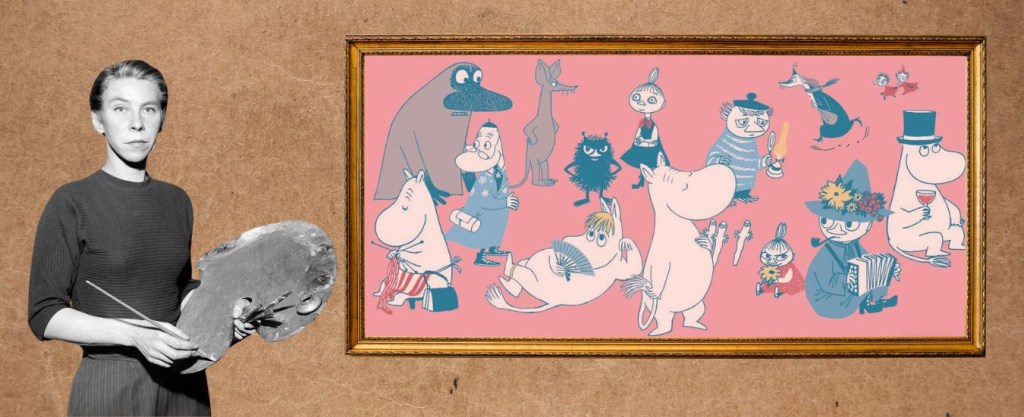
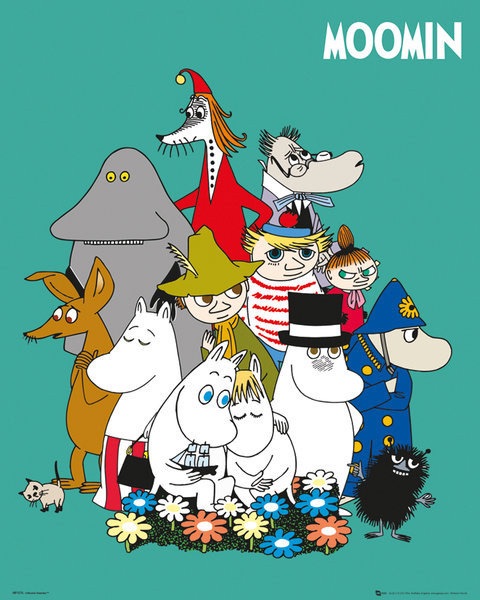
I think my favourite has to be Tove Jansson’s Moomin series and it is still something of an obsession. I collect Moomin crockery, particularly mugs and cake plates, but I also have Moomin jewellery, clothing and art around the house. I loved Moomin house and its magical Finnish surroundings. Moomintroll would always bring waifs and strays home, his parents always having enough to go round whether it was food, company or shelter that was needed. They also had buckets full of compassion and understanding for people. Little My was terribly bossy and bitey but there was room for her and her mother Mymble. Then there’s the Hemulen, a very learned gentleman who has a love of botany and can often be found shuffling around the gardens and beyond with his magnifying glass and notebook. For some reason he was always wearing a dress but nobody commented. The Snork Maiden is also a Moomin, but isn’t family. She comes and goes, mainly to see Moomintroll who she’s in love with, but she’s always worrying that she is too plump to be loved in return. Finally there’s Snufkin, Moonintroll’s best friend, who is a bit of a loner and loves to wander off and travel in the summer months. He shares a love of fishing with Moomintroll and although he doesn’t always understand Snufkin’s need to be alone he does respect it. All of these unusual people live under one roof and there’s always room. Moominmama and papa are wonderfully kind and never judgemental about their guests, they keep everyone fed and include them in their stories about various adventures. People talk about the personality types seen in Winnie the Pooh but the Moomins are it for me, I can easily fit anyone I know into one of these characters – my brother is a most definite Snufkin. They remain relevant today, particularly the Snork Maiden’s self-image and the Hemulen’s cross dressing. I only realised when I was older that I was lucky enough to have parents very like Moomintroll’s. I had a friend with a Mohican and very baggy Joe Blogg’s jeans who would stroll to my house with flowers he’d stolen from someone’s yard, or the graveyard, and announce to my mum that he’d come for tea and she always fed him. My brother and I constantly brought strays home, animals and people, and my parents were always there with food, a listening ear or some advice. I was living with Moominmamma and Pappa all along.
Reading the books over and over, certainly informed my own ways of dealing with people and might have a lot to do with my choice of career. In mental health, reserving judgment and accepting people as they are is vital in therapy. Now when I look at the books or buy something for my collection I get that feeling of nostalgia for my childhood and my family, whose way of being in the world meant we did live in Moomin House, it was just a bungalow in Lincolnshire rather than a blue tower next to a lake.
Look out for my childhood book blog in the next fortnight, or you can sign up and have every post sent to your inbox.
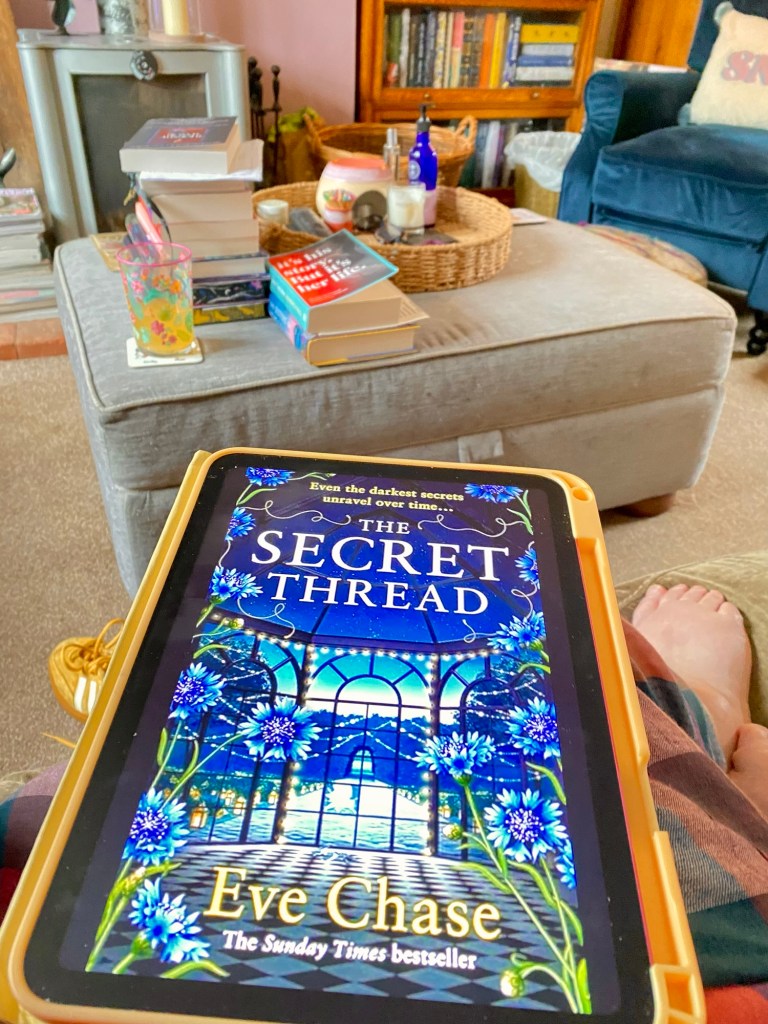
We know what we’re getting with Eve Chase, usually an ancestral home or a family with big secrets and here we get both. We’re introduced to Mimi Mott, interior designer and fashion icon who is in London preparing for an exhibition and auction of some of her oldest belongings. Jo is a journalist, desperate for a break and responds to an advert for an assistant to help Mimi with her exhibition artefacts. Once Mimi has chosen an object, Jo will talk to her about it and then write some copy for the exhibit. She and Jo click immediately and she’s set to work straight away. However, Jo had her reasons for wanting this job and if Mimi finds out what they are and who Jo is she could be in a lot of trouble. She would also be in trouble with her grandmother who has no idea what her new job entails or who it’s with. As she treads this tightrope we’re taken back into the 1960s and Mimi Mott’s past.
When Mimi picks an object for the auction, and she and Jo talk about it, it’s easy to see how much it affects Mimi and conjures up memories of the past. She has always known how much power there is in objects from the moment she picks up a piece of crystal from a chandelier at Rushwood and the interior designer, Whipple, encourages her to hold it up to the light and take it in. It holds all the colours of Rushwood within it. Each of Mimi’s fabric or wallpaper patterns has its genesis there, from the plants tended by her family to the objects inside Rushwood and even her trip to the seaside with Lawrence Caswell, heir to the estate. Mimi knows why we keep objects and I understood this so deeply because my house has the chesterfield leather chairs I used to sit in at my friend Nigel’s house, the first antique ginger jar my late husband and I bought to start a collection, a snow globe of New York from my 40th birthday trip and a little stone bird by my bed, part of a matching pair I shared with my friend Kathryn before she died. Mimi gets this human connection with the items we use to decorate our homes. Her auction will show the thread linking each piece to its place in her memory, though everyone thinks Mimi has forgotten her family, she didn’t forget what happened that summer, she has immortalised it through her life’s work. This is a great summer read, full of secrets, family rifts and a bit of romance too.
a mountain village in the Abruzzo region of Italy, Gino, a troubled young man, realises that his childhood sweetheart Franca can give his life the happiness and stability he needs. They seem made for each other, and move to a remote house in the countryside – but there is something in Franca’s past that haunts Gino. Descending into pathological jealousy and resentment towards a married man who had been Franca’s lover, Gino is unable to stop himself imagining the worst, and embarks on a violent path that has catastrophic consequences. This was compelling due to the complexity of Gino’s character. It couldn’t have been a better read for a counsellor and if I had a trainee who wanted to understand the Cognitive Behavioural Therapy concept of negative automatic thoughts I’d get them to read this book. Everything Gino experiences is filtered through a faulty lens. Whether this is innate or a result of constantly feeling like a disappointment is hard to tell. At the moment he has it all, but in his mind it’s already unravelling. The house needs a lot of work, but could be a secluded haven for a family. Gino hears that something strange happened to Franca’s aunt during the war and starts to wonder about it, could an event like that leave something in the house like a mood or a feeling? Is the house unlucky in some way? To be transparent about her past Franca tells him about an affair she had with one of her father’s friends. Although outwardly he seems to accept this confession, inwardly it becomes a nagging concern he can’t shake off. Everything about Gino screams of a paranoid personality disorder, his mistrust of others and ability to twist innocent encounters into personal slights and grudges are classic symptoms. It could stem from his experience growing up with a much loved local hero for a father, but he has stopped listening to others and his behaviours become more extreme, including hallucinating that his baby son is talking to him. This book has emotional depth and complexity, tension and action alongside some incredibly surreal moments too. I would definitely read this author again.
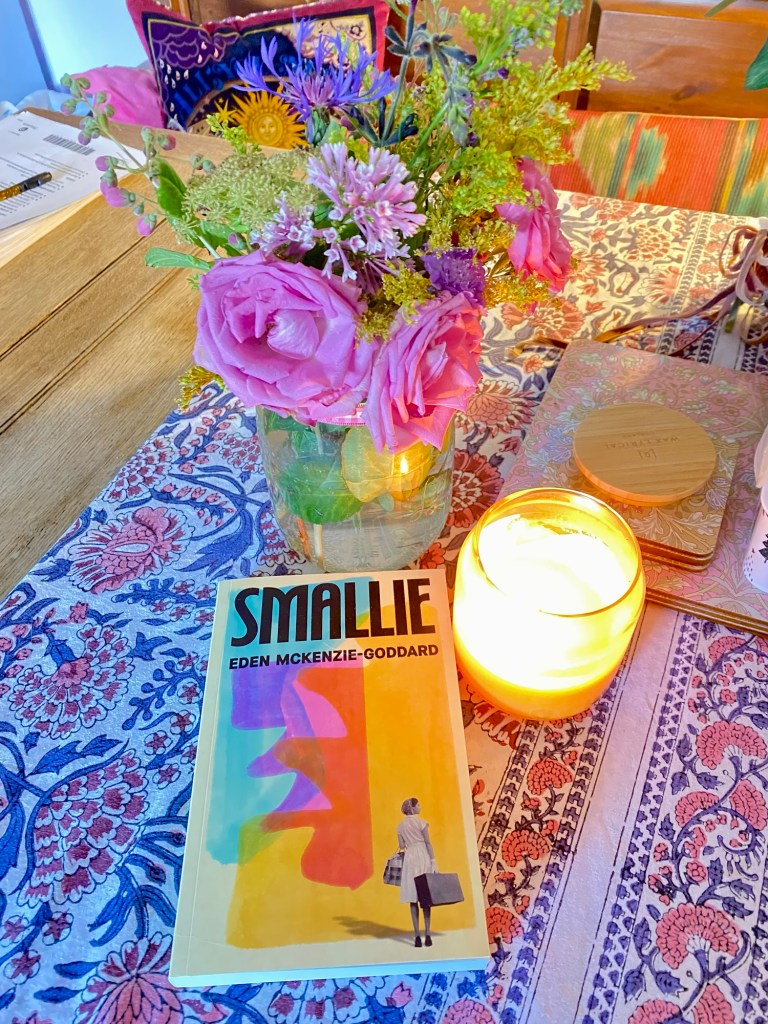
Smallie adj. |smal·lie| Definition: Caribbean (informal). Describing or relating a person from a small island; a small islander.
In 1961, nineteen-year-old Lucinda Brown travels to England in search of her son’s father, Clarence Braithwaite, who left Barbados to join the British army. But aboard the ship to Southampton she meets a man named Raldo who offers her a glimpse of a new life, a freer life. Bound by the memory of her son waiting at home, she chooses Clarence – realizing too late that war has made a stranger out of him.
Nearly fifty years later, Lucinda receives a letter from the Home Office that threatens to tear her world apart. Her children rally together to prove her legal arrival, and to do so they must track down an elusive man from her past, a man she wanted to love but instead lost, a man who now holds the key to her family’s future. Raldo . . . An exhilarating and expansive tale of a family thrown into collision with the Windrush scandal, Smallie shows just how easily the past can spill into our lives, even when – especially when – we think we’ve closed the door on it.
I’m not going to write too much about this because I haven’t written my full review yet, but I loved it. I couldn’t stop reading and I found the writing incredibly inspiring and unique. The dual timelines worked well and I loved the generation gap shown in Lucinda’s timeline and her children’s fifty years later, they haven’t known racism the way Lucinda has and the Home Office letter is their first sense of real powerlessness against the state. This is a must- buy novel.
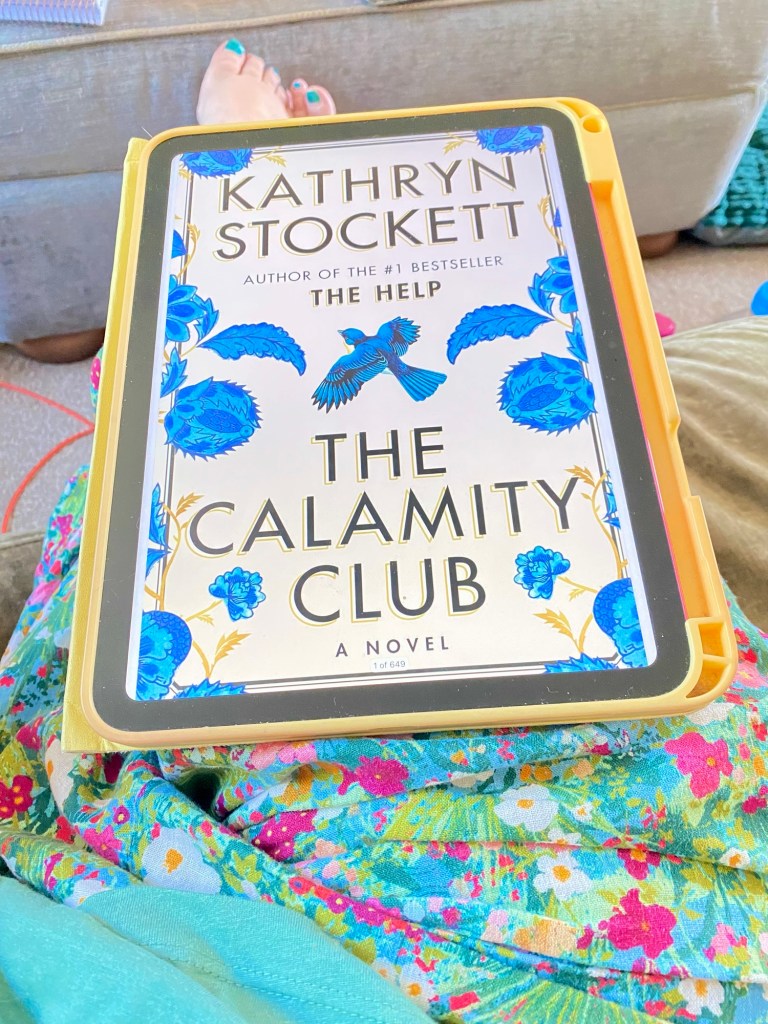
“You give a girl a taste of fresh air and then you take it away—she’ll grow fierce and wild to get it back.”
Oxford, Mississippi, 1933.
Eleven-year-old Meg Lefleur has learned the hard way to rely on no one. Ever since her beloved mother failed to come home last Christmas Eve, she’s been one of the ‘unadoptable’ girls at the town’s orphanage, where she fights each day to keep her wits sharp and her spirit unbowed.
When she meets Birdie, a young woman who has come to Oxford determined to remind her socialite sister of the impoverished family she left behind, for the first time in a long while it seems someone else might care about Meg’s future. But as the Depression tightens its grip, Birdie begins to suspect her sister’s charmed life may be founded on a tapestry of lies. Then, Birdie encounters Charlie, a woman haunted by loss who has been pushed to the brink with nothing left to lose. Drawn together by circumstance, they find unexpected kinship among a disreputable, determined band of women.
But in a town steeped in hypocrisy, even the smallest act of defiance can have dangerous consequences …
Again, I haven’t written my full review for this book, mainly because there’s so much I want to say! Kathryn Stockett has done it again. I can see this on the big screen and it will be brilliant. I fell in love with Meg and Birdie, but also the women who form a team to get Birdie’s in-laws out of the mess they’re in. This book has so much to say about female strength, friendship and adaptability in terrible circumstances. Every character is so well drawn I could see them. I know a lot about eugenics and its history in the US and this is an important book right now, going against where Christian Nationalist policy is taking the country. It shows the damage that can be done when someone lives the rigid rules of religion rather than the actual message of love given in the Bible. Often those who want the appearance of goodness, will do anything to keep it. Birdie finds that friendship and loyalty can be found in the most unusual circumstances and with people you never expected. There’s tragedy and brutality but also lightness, humour and so much love. Brilliant.
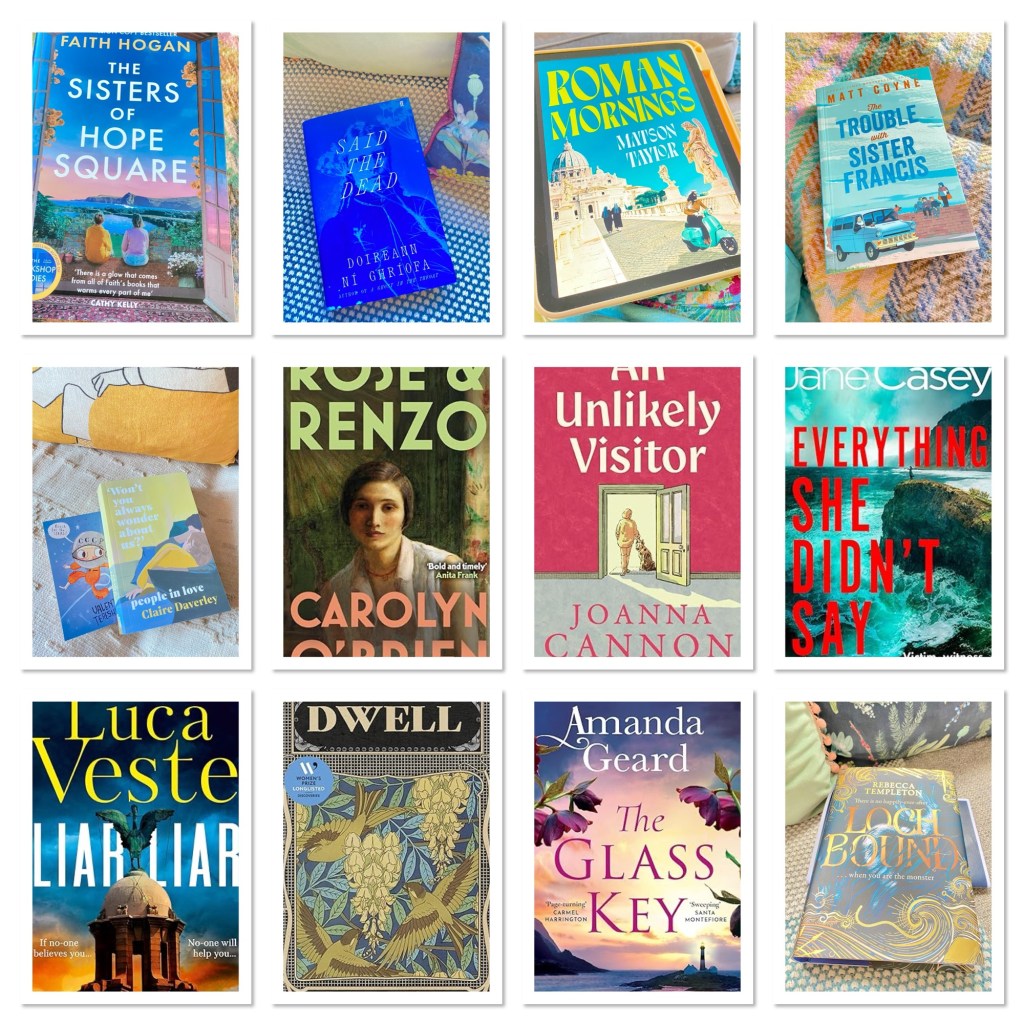
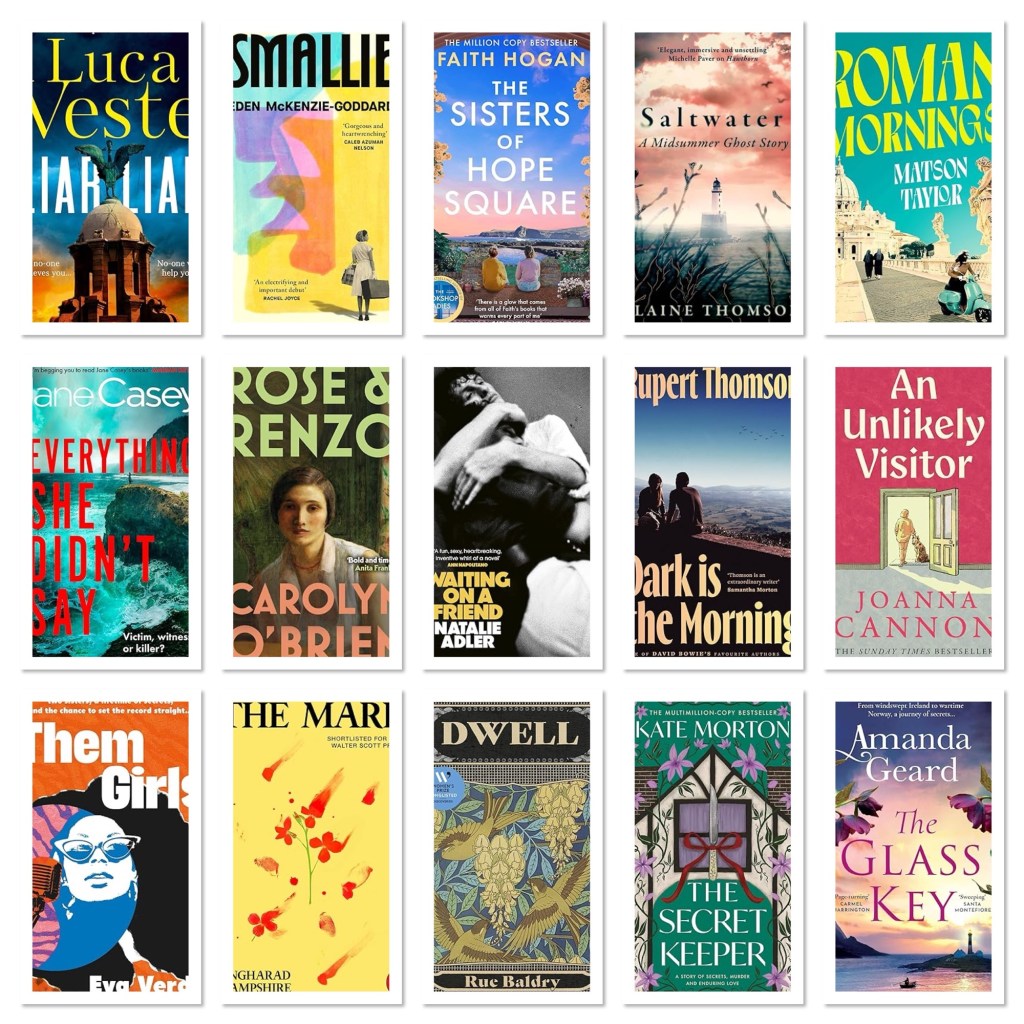
So those are my favourites this month and here are some hopefuls for June’s reading list. Happy Reading ❤️📚
It’s amazing what can happen in a single day and these books can certainly attest to that. The beauty of every one of them is how much they can tell us about the world of their narrators in only 24 hours. Whether it’s a mother close to emotional collapse or a young woman who finds out it only takes one thing to go wrong and the whole city is against her. From startling events that happen once in a lifetime to the everyday and humdrum, lives can be changed in an instant.
Is this the best worst day of her life? Once, Grace Adams was poised for great things. Now, she barely attracts a second glance as she strides down the street carrying her daughter’s sixteenth birthday cake. But behind the scenes, Grace’s life is in freefall. Her husband is divorcing her. Her daughter has banned her from her birthday party. And Grace has just abandoned her car in bumper-to-bumper traffic. Because Grace Adams has finally had enough. She’s sick of being overlooked and underappreciated, and she’s particularly tired of being polite. She’s about to set off on a journey to rediscover who she is, and confront the secret that has torn her family apart.What is that secret? You’re about to find out. ..
As Grace closes in on Lotte’s party, sweaty, dirty and brandishing her tiny squashed cake, it doesn’t seem enough to overturn everything that’s happened, but of course it isn’t about the cake. This is about everything Grace has done to be here, including the illegal bits. In a day that’s highlighted to Grace how much she has changed, physically and emotionally, her determination to get to Lotte has shown those who love her best that she is still the same kick-ass woman who threw caution to the wind and waded into the sea to save a man she didn’t know from drowning. That tiny glimpse of how amazing Grace Adams is, might just save everything.
Another book about a meltdown here – can you tell I’m peri-menopausal from my bookshelves?
Eleanor Flood knows she’s a mess. But today will be different. Today she will shower and put on real clothes. She will attend her yoga class after dropping her son, Timby, off at school. She’ll see an old friend for lunch. She won’t swear. She will initiate sex with her husband, Joe. But before she can put her modest plan into action – life happens. For today is the day Timby has decided to pretend to be ill to weasel his way into his mother’s company. It’s also the day surgeon Joe has chosen to tell his receptionist – but not Eleanor – that he’s on vacation. And just when it seems that things can’t go more awry, a former colleague produces a relic from the past – a graphic memoir with pages telling of family secrets long buried and a sister to whom Eleanor never speaks. This novel has bags full of empathy, humour and is just so smart too! It manages to tread the line of being entertaining, but also has something profound to say about life.
A landmark work of literary modernism, the novel is set in London and unfolds over the course of a single day as Clarissa Dalloway prepares to host an evening gathering. Through Woolf’s distinctive use of stream-of-consciousness narration, the story moves between the inner lives of multiple characters, including Clarissa and the troubled war veteran Septimus Warren Smith. Their experiences reveal themes of memory, identity, time, and the lingering effects of the First World War on British society. With its innovative narrative structure and psychological depth, Mrs. Dalloway remains a central work in twentieth-century literature. The novel continues to be widely studied for its exploration of consciousness, social life, and the rhythms of modern urban experience. I first read this book at university and I’m always astonished by how slight it seems, but it’s always stayed with me. In one day Woolf captures all the changes wrought by WW1, not just through Septimus but in the mix of people on the omnibus and the neurotic inner life of our main character.
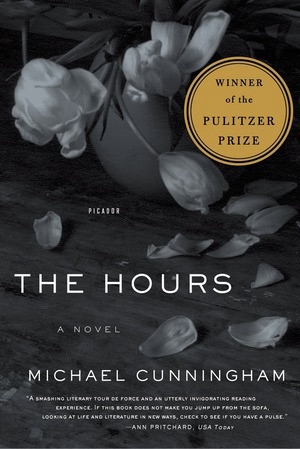
The existence of this book confirms the genius of Mrs Dalloway. Inspired by the novel and told in three sections to reveal each woman’s day, this book won a Pulitzer and was made into an Oscar-winning film. The Hours. In 1920s London, Virginia Woolf is fighting against her rebellious spirit as she attempts to make a start on her new novel. A young wife and mother, broiling in a suburb of 1940s Los Angeles, yearns to escape and read her precious copy of `Mrs Dalloway’. And Clarissa Vaughan steps out of her smart Greenwich village apartment in 1990s New York to buy flowers for a party she is hosting for a dying friend. Moving effortlessly across the decades and between England and America, this exquisite novel intertwines the stories of three unforgettable women. It has such atmosphere, deeply melancholic but also creating moments of beauty that can make life worth living.
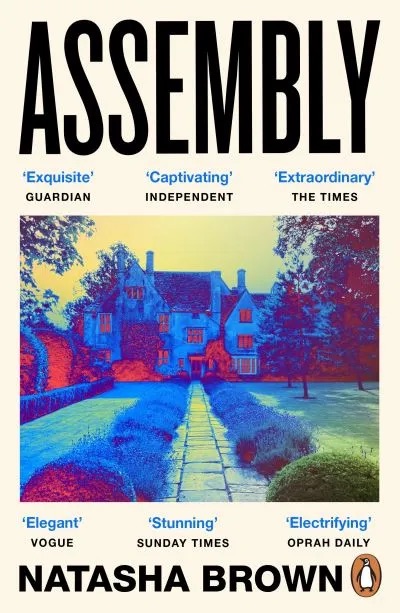
Come of age in the credit crunch. Be civil in a hostile environment. Step out into a world of Go Home vans. Go to Oxbridge, get an education, start a career. Do all the right things. Buy a flat. Buy art. Buy a sort of happiness. But above all, keep your head down. Keep quiet. And keep going. The narrator of Assembly is a Black British woman. She is preparing to attend a lavish garden party at her boyfriend’s family estate, set deep in the English countryside. At the same time, she is considering the carefully assembled pieces of herself. As the minutes tick down and the future beckons, she can’t escape the question: is it time to take it all apart? This novel is a brilliant debut and could be seen as an interesting companion piece to the last two novels, just in a post-modern world. The author shows us the micro-aggressions young, black women encounter every day and how averse to feminism our white male culture is years before Louis Theroux and the manosphere.
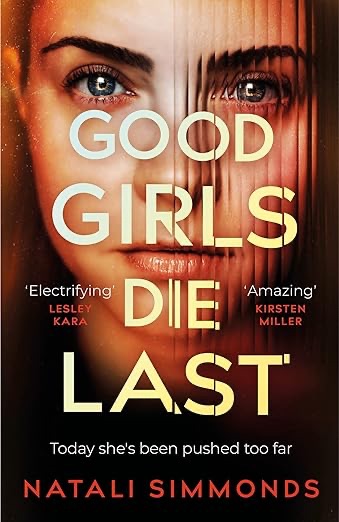
Wow! This is a searingly raw story, simmering with righteous anger and injustice, and I’ve never forgotten it. Set on a boiling hot summer’s day, you can almost smell the tarmac and diesel fumes. You can hear the traffic noise and feel the agitation and impatience of people trying to get to work without exchanging a word with anyone else. It’s too hot to breathe let alone exchange a friendly word. I had the unnerving experience of reading our heroine’s thoughts and hearing my own words. During the day from hell that Em was experiencing, it felt like some of my own thoughts and frustrations were running round her head. They just need awakening. My age is more in line with the Amazing Grace Adams – who had her own walk of rage, fuelled by love. However, Em’s voice is a millennial war cry that becomes a national phenomenon in the space of a day. As she leaves her landlord’s bed that morning she expects to look smart for work, especially since she has a HR meeting and expects to be offered a permanent role after completing three months maternity cover with great results. Finally she’s catching an evening flight back home to Spain for her little sister wedding. Her actual day is a complete clusterfuck!
I loved how the author wrote about the othering of women’s bodies and its natural bodily functions. There’s a disgust conveyed by men that women buy into and internalise. The shame of being caught out by a period in a public place must be a lot of women’s worst nightmare. When I read it I physically cringed on Em’s behalf. It was interesting that this was the point she meets Rose, who simply accepts this woman she’s just seen cleaning herself up and having to pee outdoors without judgement. Em is also trying to avoid – sweat, sore armpits and foot blisters – they’re all unladylike and shouldn’t be seen. It feels like society is keen to erase so much of us, it’s a wonder we don’t disappear. Rose is the furious feminist voice in the novel and she’s like a mentor to Em, listening and giving frank advice where needed plus the odd political rant here and there. She is her own woman and lives life on her terms. Could Em ever be like that? Brutally honest and horribly tense this is an incredible feminist thriller not to be missed.
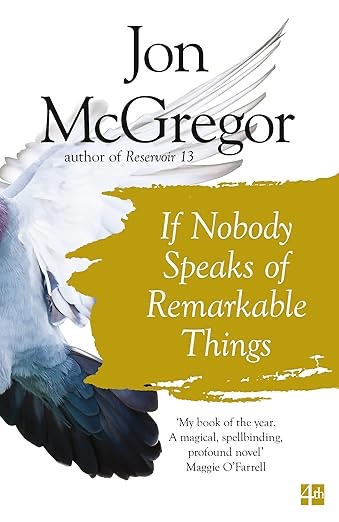
I read this when it was first released in the early 2000s and I couldn’t stop going back to the opening page because it’s a beautifully lyrical opening to a novel about the humdrum of everyday life on one street in the North of England. Ordinary people are going through the motions of their everyday existence – street cricket, barbecues, painting windows… A young man is in love with a neighbour who does not even know his name. An old couple make their way up to the nearby bus stop. But then a terrible event shatters the quiet of the early summer evening. That this remarkable and horrific event is only poignant to those who saw it, not even meriting a mention on the local news, means that those who witness it will be altered for ever. This is an incredible first novel that evokes the histories and lives of the people in the street to build up an unforgettable human panorama. It has such resonance and does something I absolutely love, recognising that the extraordinary is in the ordinary.
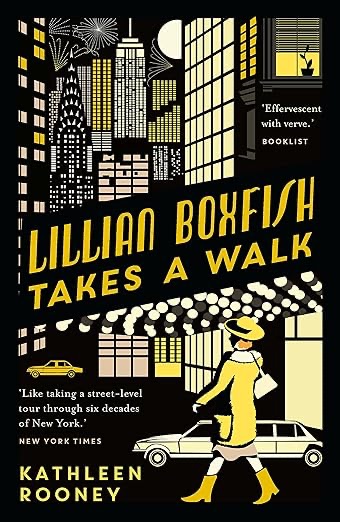
I love this character’s name so much it went in my little book of names. I give them to pets or the textile sculptures I collect, most of them are hares. So far there’s Irving Finkelstein – a very dapper owl, Razzle-Dazzle Rita who’s a hare, trapeze artist and burlesque performer alongside Sweet Suzie the squirrel. There’s Amish Jeffrey (strange beard), Hips McGee, Fern Fitzsimmons, Maud Buckle and more. My Lillian Boxfish hasn’t arrived yet.
Lillian Boxfish is no ordinary 85-year-old. On her arrival to New York in the 1930s she took the city by storm, working her way up from writing copy for Macy’s department store to become the world’s highest paid advertising woman. Now, alone on New Year’s Eve, her usual holiday ritual in ruins, Lillian decides to take a walk. After all, it might be her last chance. Armed with only her mink coat and quick-witted charm, Lillian walks, and begins to reveal the story of her remarkable life. On a walk that takes her over 10 miles around the city, Lillian meets bartenders, shopkeepers, children, and criminals, while recalling a life of excitement and adversity, passion and heartbreak. Based on a true story, Lillian Boxfish Takes a Walk paints a portrait of an extraordinary woman walking through the Jazz Age, the Great Depression, the Mad Men era, the AIDS epidemic and even further. It reinforces how much one life contains and the value of other people’s stories.
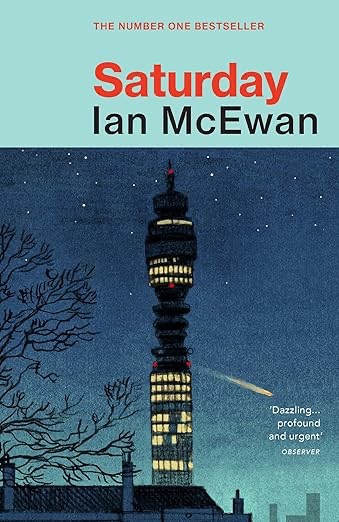
Saturday, February 15, 2003.
Henry Perowne, a successful neurosurgeon, stands at his bedroom window before dawn and watches a plane – ablaze with fire like a meteor – arcing across the London sky. Over the course of the following day, unease gathers about Perowne, as he moves amongst hundreds of thousands of anti-war protestors in the post-9/11 streets. A minor car accident brings him into confrontation with Baxter, a fidgety, aggressive man, who to Perowne’s professional eye appears to be profoundly unwell. But it is not until Baxter makes a sudden appearance at the Perowne family home that Henry’s earlier fears seem about to be realised…
This book held me in suspense till the very last page. Through each character’s narrative we come to know them and their place in this story as precisely as if they were cogs in a machine. Its portrayal of how we collide with each other in our daily lives shows what a small part of the world we are and conversely how important to each other.
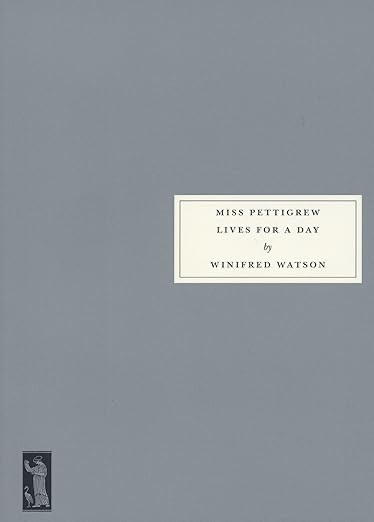
This is an utterly charming book from Persephone Press, dedicated to finding forgotten works by women writers and publishing with end papers of the era. In this whimsical story Miss Pettigrew a governess sent by an employment agency to the wrong address, where she encounters a glamorous night-club singer, Miss LaFosse who is the sort of woman Miss Pettigrew has only seen in Hollywood films. Over the course of 24 hours she is surprised to find that, when given the freedom to find her own opinion, she is as strait laced as her religious father would have hoped. This revelation will change her life.
‘The sheer fun, the light-heartedness’ in this wonderful 1938 book ‘feels closer to a Fred Astaire film than anything else’ comments the Preface-writer Henrietta Twycross-Martin, who found Miss Pettigrew for Persephone Books. The Guardian asked: ‘Why has it taken more than half a century for this wonderful flight of humour to be rediscovered?’ while the Daily Mail liked the book’s message – ‘that everyone, no matter how poor or prim or neglected, has a second chance to blossom in the world.’ Maureen Lipman wrote in ‘Books of the Year’ in the Guardian: ‘Perhaps the most pleasure has come from Persephone’s enchanting reprints, particularly Miss Pettigrew, a fairy story set in 1930s London’; and she herself entertained R4 listeners with her five-part reading. India Knight called Miss Pettigrew ‘the sweetest grown-up book in the world’. This is a delightful escape read of a woman blossoming through a chance encounter.
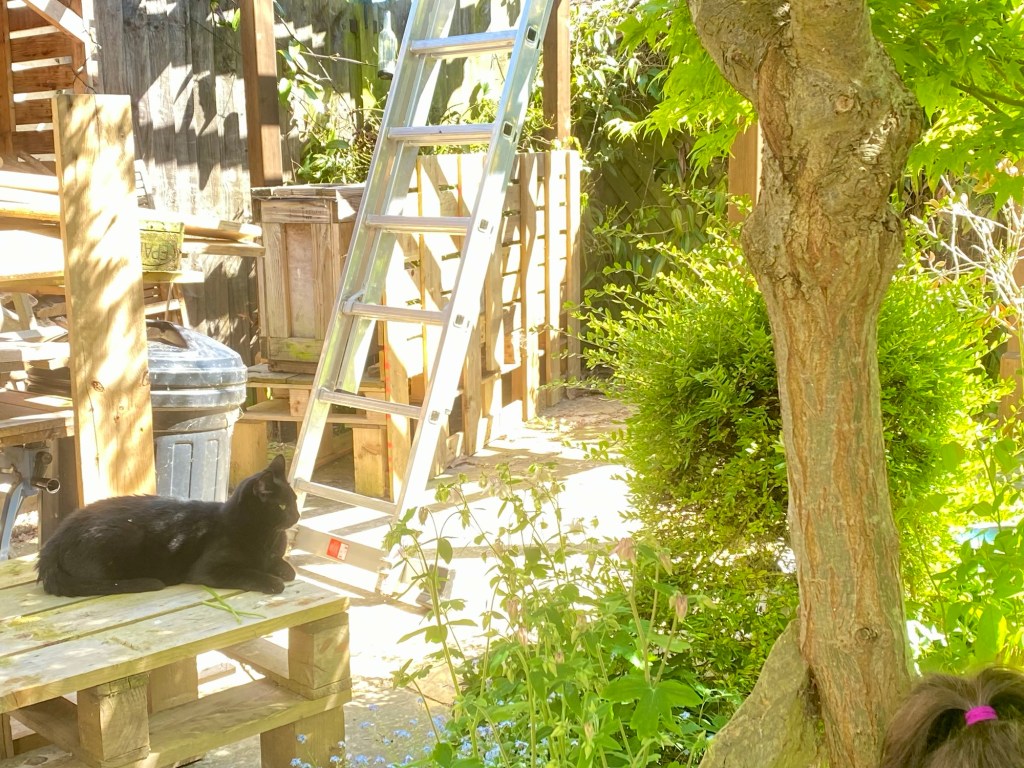
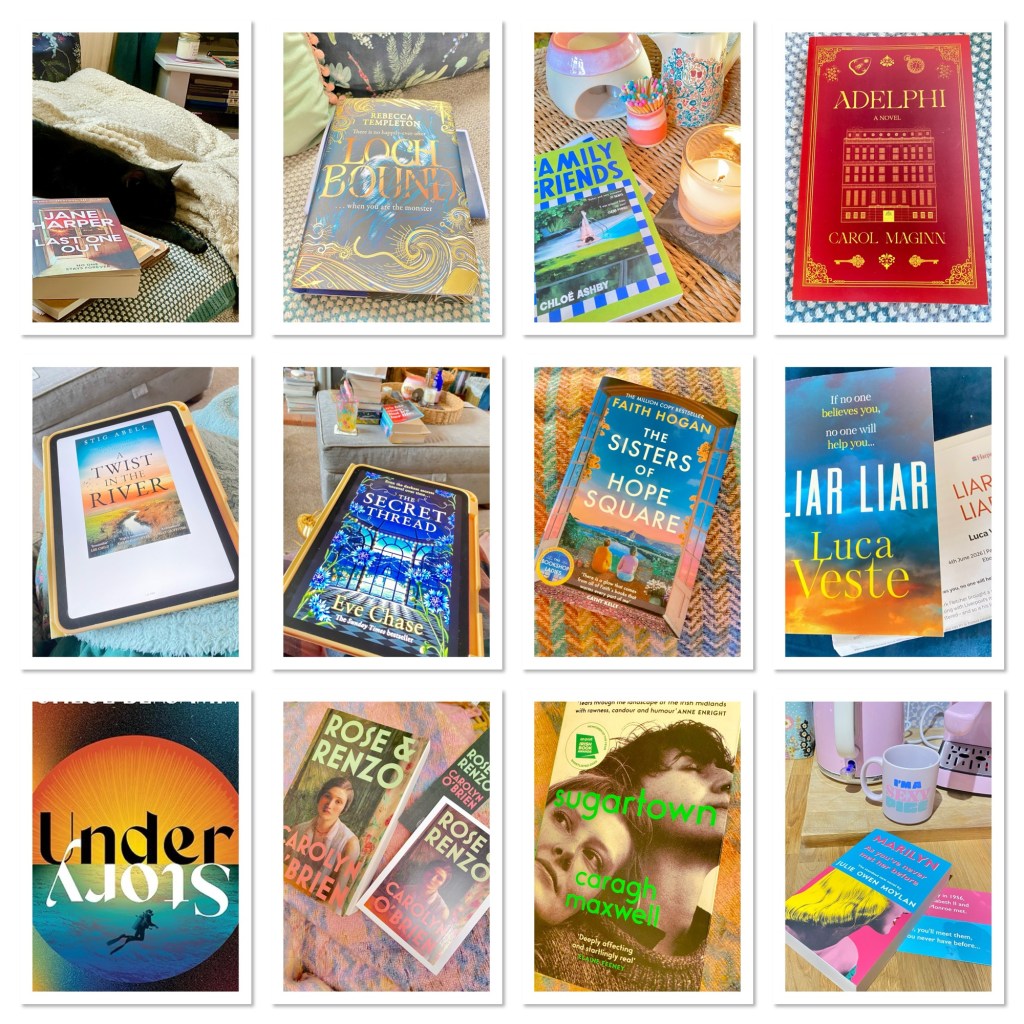
Hello all. This has been a bumper reading month but I’m horribly behind with reviews. I’ve been unwell with a relapse of my autoimmune disorder and a sinus infection so I’ve been exhausted, had neuralgia, all my arthritis flared and I’ve been wearing wrist supports so I’ve struggled to type. I’ve got so many reviews languishing in my book journal so this month you’re going to be inundated! This means some of my favourites this month don’t have full reviews out yet. I’ve had to be on the sofa resting so I’m burning through my TBR quickly. Hopefully I’ll get caught up this month. One other beautiful little addition to my recovery was the BBC series The Other Bennett Sister, which was based on the novel by Janice Hadlow. Mary Bennett, who is the insufferable and rather studious middle sister in Pride and Prejudice becomes the centre of attention in her own right. If you haven’t caught this series, or the book, both come highly recommended and really cheered up my fortnight of feeling grotty. In other news my lovely other half has been taking advantage of the better weather to build a pergola and seating in the garden out of reclaimed wood so I can read outside this summer in comfort. I’m really excited about this and below is our new rescue cat Minka inspecting the works. See you next month. ❤️📚
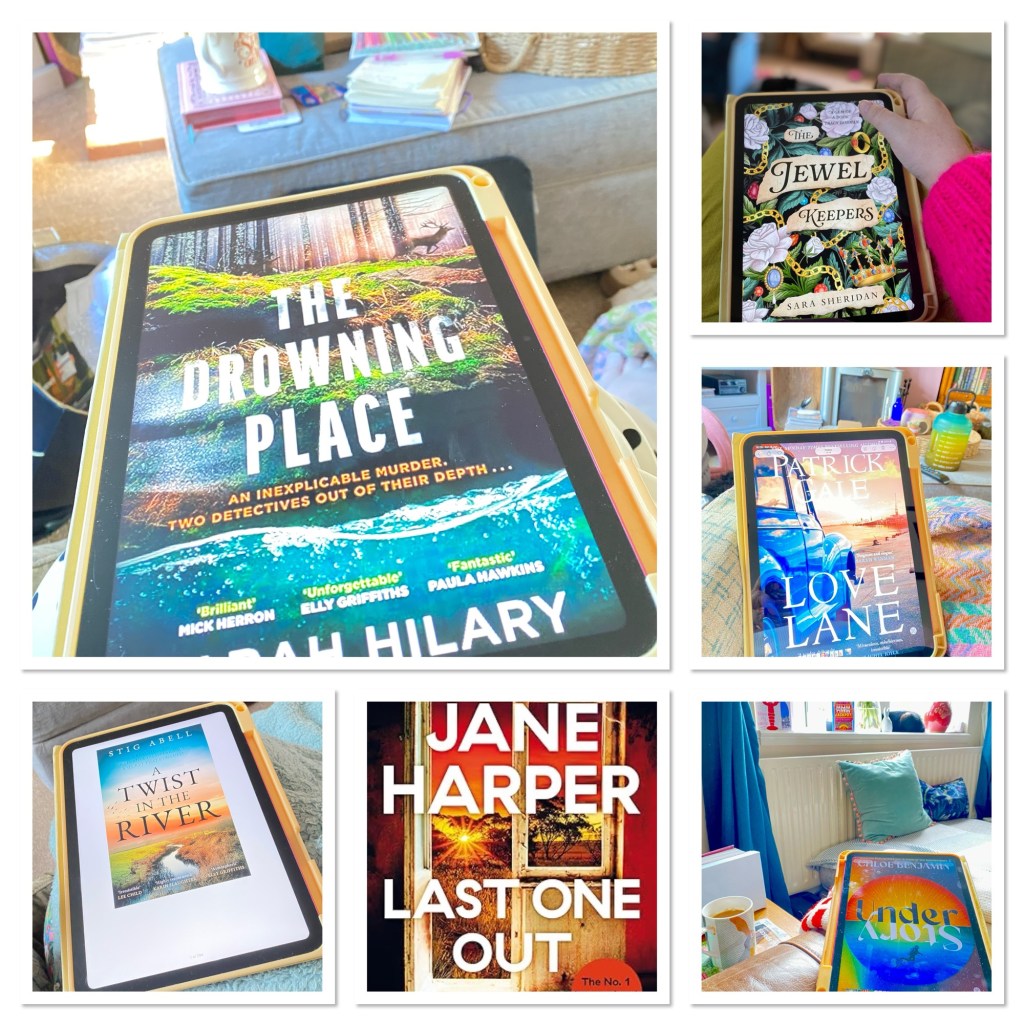
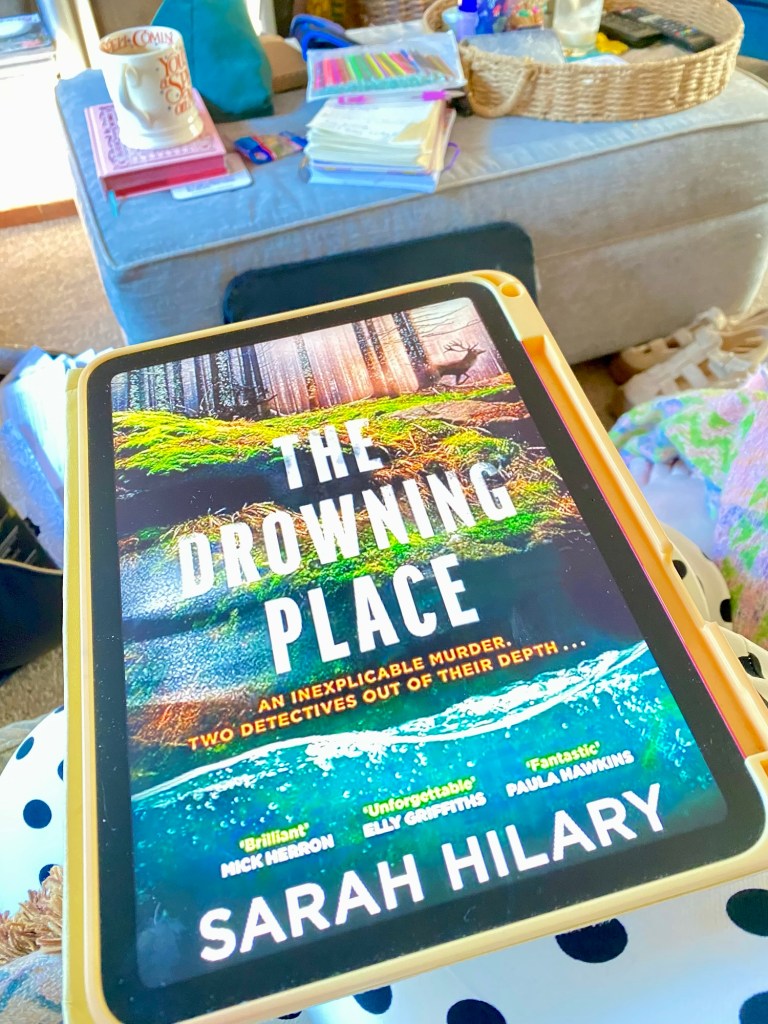
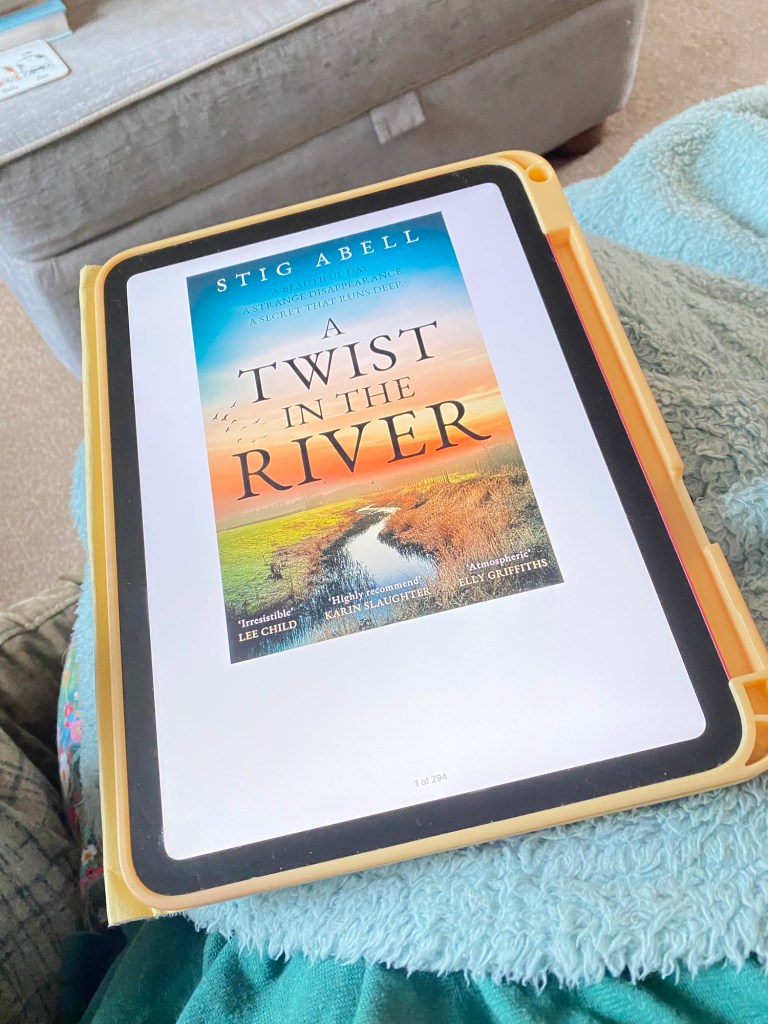
This first book in a new crime series from Sarah Hilary is an absolutely brilliant mix of murder case, collective trauma and moments of unsettling horror. Laurie has taken a job as DI in the Peak District area of Edenscar, living in her husband’s childhood home to support his dad who’s been diagnosed with dementia. Her sergeant is Joe Ashe, known throughout the area as the only survivor from his primary school class after a trip ended with their bus at the bottom of Ladybower Reservoir. Joe carries scars from that tragedy, the frequent dislocation of his shoulder joint and an ability to see every child lost that awful day. His constant companion is still his best friend Sammi, who gives Joe his reputation for spooky foresight. When Joe hears a shotgun discharge late on the Friday night he thinks nothing of it, but makes a note of a car lights making their way from the woods to the road towards Manchester. It’s not till Monday morning when they discover the bodies of a young couple shot in the kitchen of their partially renovated house, and their baby drowned in the bath upstairs. They will need all of their skills and experience to solve this while a close knit community is both highly charged and devastated at the same time. With dodgy businessmen, a tearaway for a witness, second home owners and developers with bully boy tactics this is a real labyrinth of a case. Full of dark atmosphere, emotional trauma and some real bone chilling moments, I’m looking forward to more.
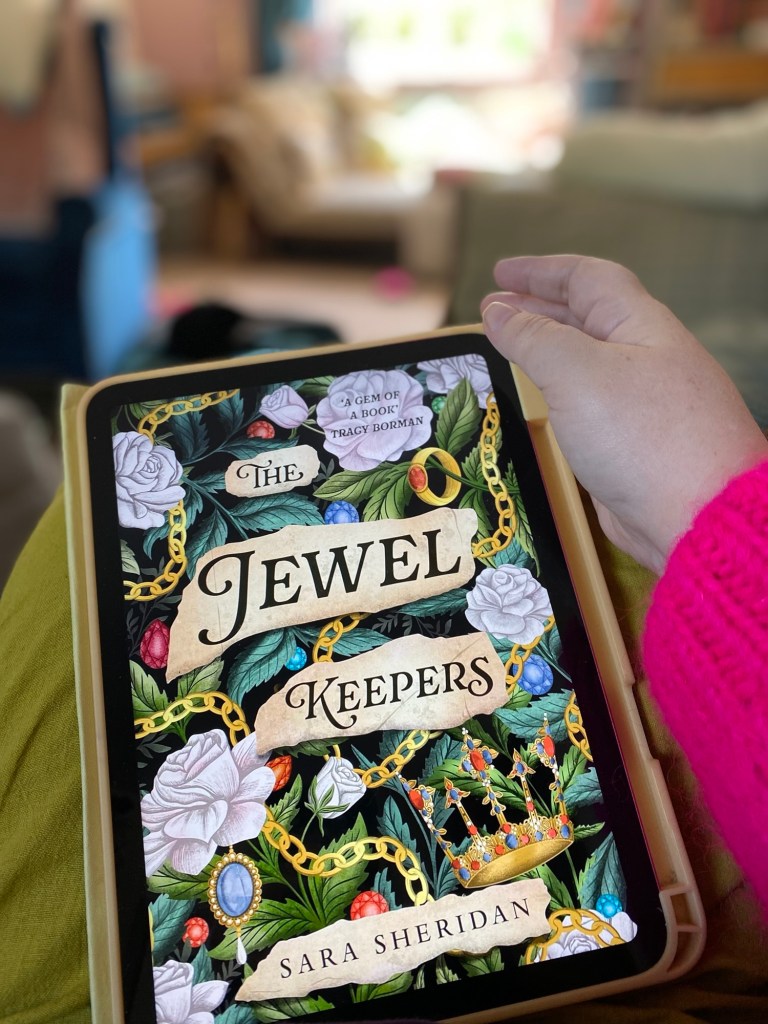
This fabulous historical novel from Sara Sheridan has a foundation in Scottish history, a kick- ass nun and a heroine who finds her place in a family she didn’t know she had. When newly married Araminta Moore is contacted about the death of her aunt in Scotland and a bequest, she doesn’t expect a beautiful Georgian house in Edinburgh or her place in an ancestral treasure hunt that goes all the way back to Mary Queen of Scots. I loved that Araminta really grows during the novel, during the quest for the Queen’s crown she starts to trust her own judgement and is incredibly resourceful, it’s noticed that when she escapes from her unlawful custody she uses a method no prisoner has thought of before. When she’s not dangling from rooftops or being pursued by a shadowy organisation called the Hermits, her powers of deduction are really put to the test. She also has to choose who she trusts, particularly the servants on whom she relies. Luckily for her, aunt Saiorse is definitely up to the task, despite being a nun and now called Sister Winifred. Sheridan brings in attitudes and themes that are still causing headlines today, such as the terrible misogyny that all women face. This is a tense, page turning historical mystery, with great characters and a few surprises towards the end. A great read.
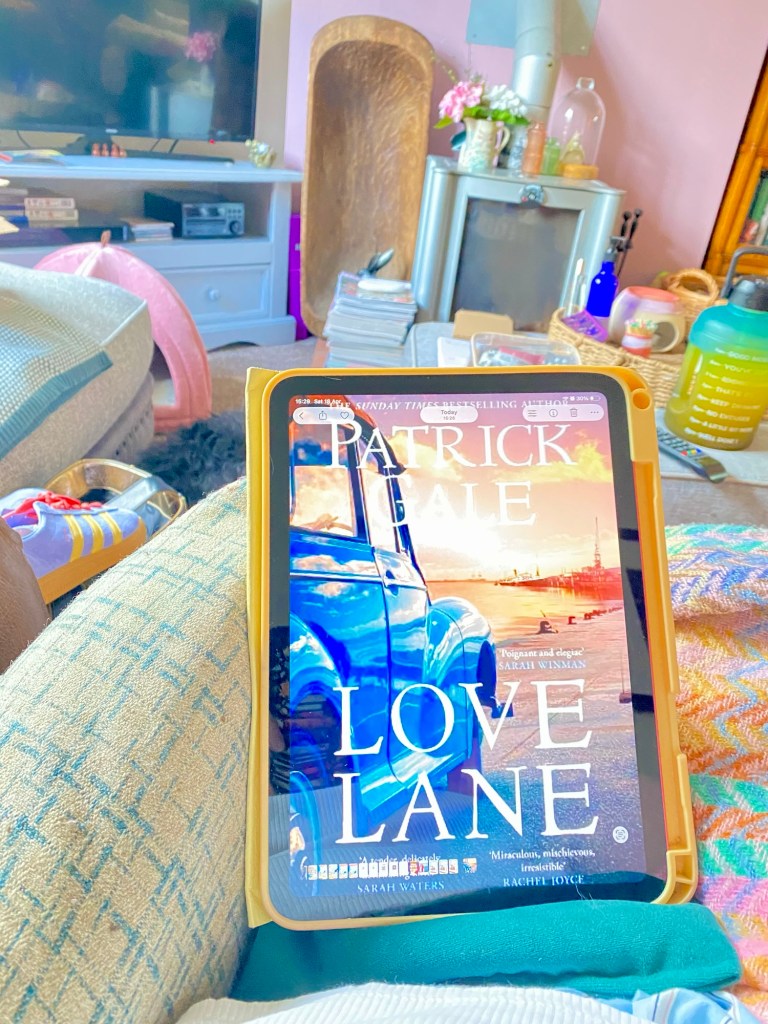
I was thrilled when I found out that Patrick Gale had written a sequel to his brilliant novel A Place Called Winter, a novel that’s up there with my favourites of all time. After many years pioneering in Canada, Harry Cane is left in a tough position, when a young woman and her son come looking for a work. He suggests that homestead of his friend and lover Paul, whose sister he once married. Soon the new pair are really at home in Paul’s cabin and it doesn’t take long for Paul to announce their engagement and even worse, Paul stops coming to Harry at night. Only a few years later, after Paul’s sudden death, Harry finds himself blackmailed by Paul’s stepson into selling the farm after he finds a letter Paul wrote to Harry where he’s candid about their feelings. Harry also receives a letter from the daughter he has never seen she was a toddler. She lets him know that she’s married, living in Liverpool with her prison governor husband Terry and they have two daughters, Pip and Whistle by nickname. Would he like to come and meet them? On this visit, for the first time, we will see other people’s reactions to Harry and through each family members narration we see what effect this long-lost member of the family has on each of them. In his usual perceptive way, Harry sees things others don’t and proves a great source of comfort for hyper-anxious granddaughter Whistle, especially when there’s the build up to an execution at the prison. As usual with Gale this is an intelligent, heartfelt and incredibly humane novel and a fitting companion to its prequel.
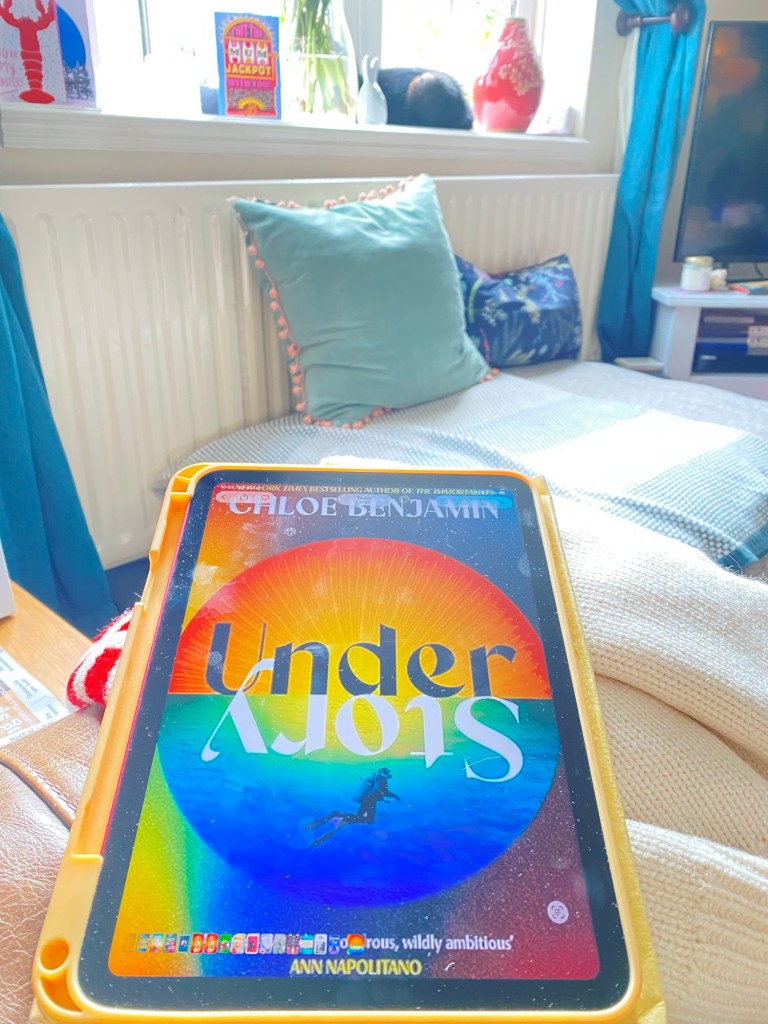
As this is publishing later in the year I don’t want to say too much this early. However, it is an astonishing, compassionate and empathic novel. This could be Chloe Benjamin’s masterpiece!
At an isolated research station in Antarctica, biologist Laurel Salter washes dishes for a living ten hours a day, six days a week. She tells no one why she left her career, or why her marriage ended. But even in this remote outpost, Laurel can’t outrun her past. When a strange light appears across the ice and draws a group of physicists to McMurdo, her former husband, Eli, won’t be far behind.
Laurel is captivated by the Arc: its surreal glow; the way it seems almost alive. And though Eli is reluctant to test her wildest theory, Laurel is convinced that the Arc leads down a rabbit hole, and into a world they can barely imagine. Can she persuade him to risk everything to fix the burden that hangs between them – to turn back the clock and live their story a second time?
And this time, live it differently.
It’s always great to be back in the company of Jake at his remote home Little Sky. However, it’s not long before murdered pays yet another visit to the area. This time a woman has gone missing after setting off for a jog by the river. Search parties are set up to look for her, but when a body is found in the river it turns out to be a different woman. When the jogger is also found in the river a few days later it starts a panic and what the police must determine is whether both deaths were freak accidents or whether there’s a killer in the area? It’s not longer before they’re calling on Jake’s team and he brings in Alethiea and Martha to try to determine cause of death. The author weaves in the online phenomenons of the manosphere and true crime podcasts into the story, along with a militant feminist potter. There’s so much tension here, possibly more so with his partner Livia being pregnant and very sensitive to issues of safety and a certain true crime influencer’s interest in Jake. Martha is my favourite and she’s her usual blunt speaking and weed smoking self. My only caveat for this one is there’s less of Little Sky which I love, although Jake does install an outdoor bath tub that I’m desperate to be trying out, probably alongside one of the novels from his library.
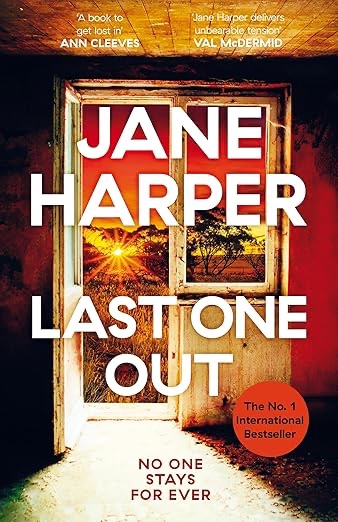
Finally this month, comes our Squad Pod read of Jane Harper’s Last One Out, a brilliant thriller set in the remote Aussie town of Carrolan Ridge. Carrolan is a dying town. Ever since the Lentzer mining company decided to expand here everything has changed. Some people fought to keep the community together but as offers went out for homes and land surrounding the area of the new quarries it was only a matter of time. At first they offered silly money and the people who took it were seen as traitors, then as the money dwindled more people took the hint. Now it’s a ghost town, only a few people left and a constant vibrating hum of mining activity. Ro left a while ago now but she’s back for a few days, staying with her estranged husband Griff who lives in the house they used to own while he is Lentzer’s fire officer. It’s the annual memorial for their son Sam, who disappeared five years ago at the three houses who held out as long as possible. The bungalow once belonged to his Uncle Warren, but Ro and Griff have no more idea why he was here than they did five years ago. Sam was researching the effect of the industry on the town he was born in, interviewing people who still lived here. He left his hire car half way up the drive and disappeared into thin air. It had been a tough time, Ro’s father was killed by a car and ten day’s later Warren committed suicide in the quarry. Ro only left when the medical centre closed. She was the GP for these people, now she’s an infrequent visitor, no longer able to stay in the place where they were a happy family. Griff can’t leave till he finds his son. When daughter Della arrives they’ll follow the same yearly ritual, but as ever Ro and Griff find their feet take them to where their son disappeared. Still looking for clues as to what went wrong.
This is a slow burn novel but it needs to be so the author can properly explore the complexities of the town’s relationships, the different perspectives between generations and who, if anyone, wanted to harm Sam. As the pressure built I was desperate for Sam’s family to find him, and for Ro and Griff to reach an understanding too. Clues start to appear and I couldn’t put the book down till I knew. The story didn’t end how I expected but it was so good to finally have a flashback and follow Sam on that day and discover what happened. It was a really satisfying ending and made absolute sense, even though I hadn’t expected it at all. This is an excellent slow burn thriller in an incredibly atmospheric setting, exactly what I’d expected from this brilliant author.
So that’s all for April. I hope you have a great reading May, here’s my reading list.
Openings are tricky things. They can make or break a book. As we browse bookshops and pick up unknown titles they have three chances to grab my attentions: the cover, the blurb and the opening lines. More often than not it’s the opener that grabs me, if I read a few lines and want to keep reading then I know it’s for me. It can be a showy first line, something that punches you in the gut or enticing, giving you a glimpse of what’s coming but not too much. Here I’ve gathered just a few of my favourites, old classics and up to date lines that simply won’t let go.
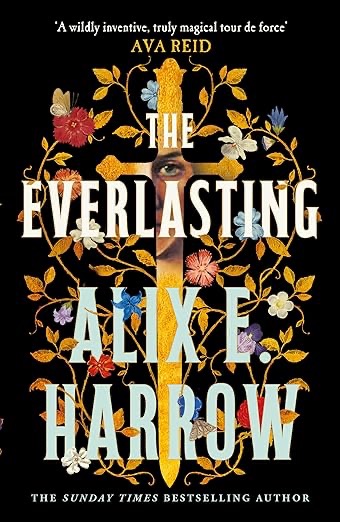
“Several years after the war, during the mid-afternoon hour I generally put aside to fantasize about setting fire to my manuscript and disappearing into the countryside to raise goats, I received a book in the post.”
I’ve enjoyed all Alix Harrow’s work since Ten Thousand Doors of January but I love this opener from her latest novel. She manages to summon up a feeling that’s perhaps common to all writers, but I’ve definitely felt it. She captures that self doubt we feel when the words just don’t come out right, or in my case when they come but aren’t perfect every time. We’ve all had human moments of wondering whether to just leave everything behind and start a smallholding in Wales. I have one every time I watch the news! This is a narrator of with a sense of humour and when I read this I was happy to join them in their journey.
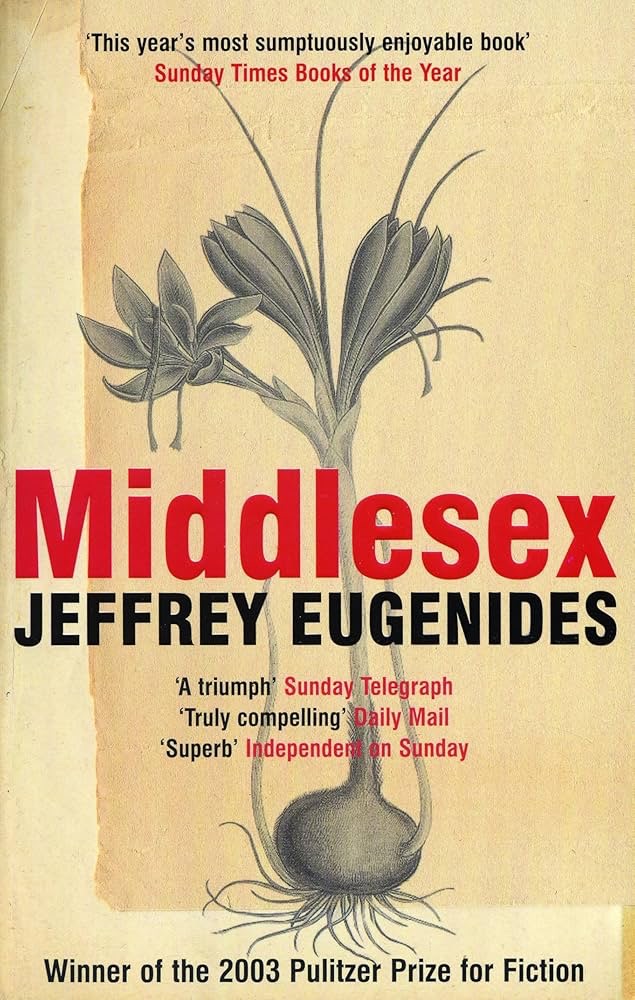
“I was born twice: first, as a baby girl, on a remarkably smogless Detroit day in January of 1960; and then again, as a teenage boy, in an emergency room near Petoskey, Michigan, in August of 1974.”
This is an incredible opening line. I read this while at university when my tutor recommended it, knowing I was interested in bodies that were ‘othered’. It had sat on the shelves for years, but this time I opened it and I was grabbed from the outset. This is a narrator who has gone through something life changing and I wanted to know their story. The way it’s written as a basic fact, with dates and places gives us the medical viewpoint but I knew there’d be much more beneath the surface. I wanted to read about how they’d come to this decision, what difference it made in their life and how it was received by family and friends. What we get is several generations of background history that moulds this family alongside the narrator’s journey.
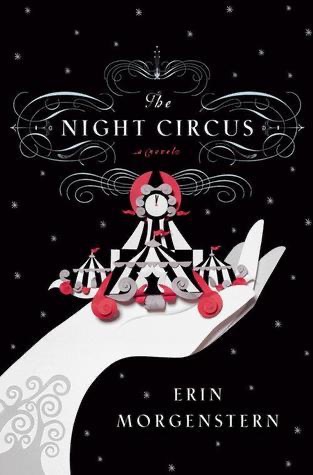
“The circus arrives without warning. No announcements precede it. It is simply there, when yesterday it was not.”
I love this opening. It has intrigue and magic and a sense that this circus isn’t for everyone, it’s for those who happen to find it. It’s ‘appearance’ suggests all sorts of possibilities – time travel, other dimensions, hallucinations.. There’s also a hint of danger and darkness. What happens when you enter? What if it disappears with you in it? The stage is set for adventure.
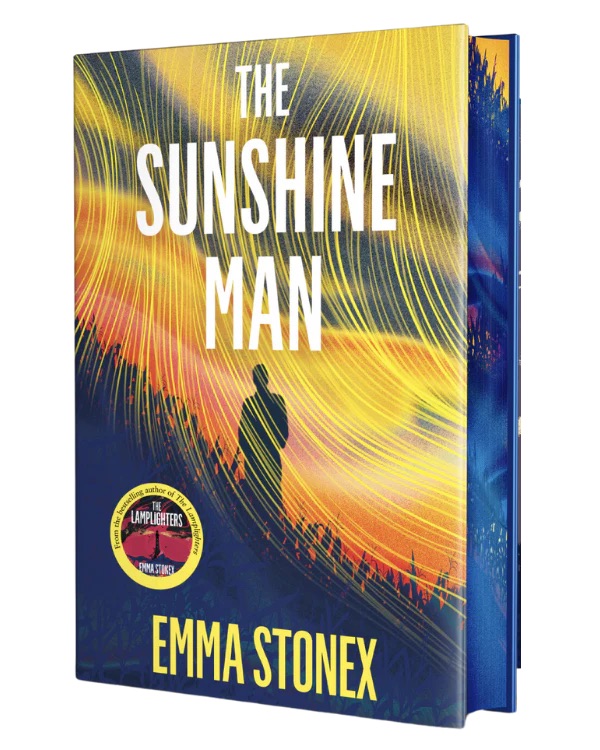
‘The week I shot a man clean through the head began like any other . . .’
Wow! This is quite the opening. Close the book and buy it immediately. My head is already full of questions – why and who is shot? What made the narrator pull the trigger? What’s a normal week for this person and what could have possibly happened in that week to get to this point? It also tells us something about the narrator, the way they state a violent act as if it’s almost incidental to the story – we’ll get to the shooting, but first let me tell you about my week. Brilliant.
“I write this sitting in the kitchen sink. That is my feet are in it; the rest of me is on the draining board, which I have padded with our dog’s blanket and the tea-cosy.”
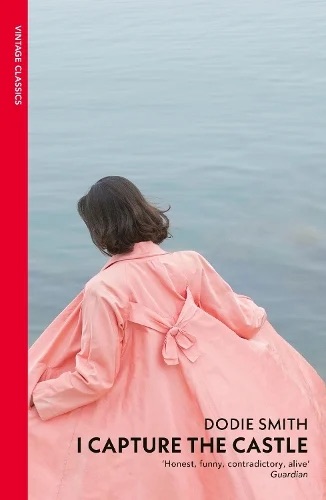
One of the most famous opening lines in literature and often quoted in articles like this but I just couldn’t leave this out. I love this so much I have it on a tote bag. I love its immediacy and charm. Cassandra Mortmain’s view of the world is captured in these few words. We know she loves to write and is doing this directly to us. It also tells us something about the chaos of the household if the only place to write is to sit on the draining board with your feet in the sink. She’s trying to create in the chaotic, bohemian and busy family household, something all women writers can identify with. I want to spend time with this narrator immediately.
“Watch your step. Keep your wits about you; you will need them. This city I am bringing you to is vast and intricate, and you have not been here before.”
This is one of my favourite novels of all time and this opening is both intriguing but tempered with a warning. In one sentence we know that this isn’t the London we think we know – in a literary or historical sense. It’s saying this book won’t tell the usual Victorian society story, you’re going to journey into those hidden areas rarely seen or written about. This is a place to be aware, it’s gritty, dangerous and you might easily get lost. Even though there’s danger, you still want to follow this narrator into their world. It also hints that our narrator is wise to the pitfalls of this place, this is their kingdom and there’s pride in their ability to survive there.
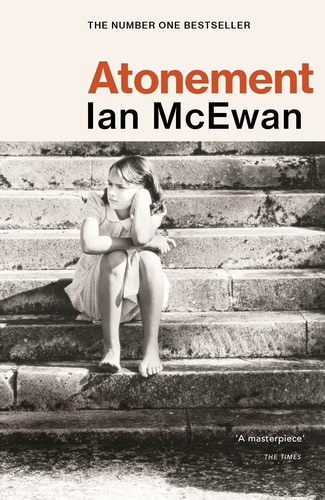
“The play—for which Briony had designed the posters, programs, and tickets, constructed the sales booth out of a folding screen tipped on its side, and lined the collection box in red crêpe paper—was written by her in a two-day tempest of composition, causing her to miss a breakfast and a lunch.”
This incredible opening from Ian McEwan tells us everything we need to know about Briony, the crux of this heartbreaking story. It tells us that Briony is clever and multi-talented – she hasn’t just written a play she has single handedly designed promotional material, a ticket office and the tickets. Then she sits down for two days and writes a whole play, becoming so engrossed in her project she forgets to eat. It tells us Briony is determined, obsessional and perhaps a little bossy. She likes to tell stories, but she also likes to control how they’re told.
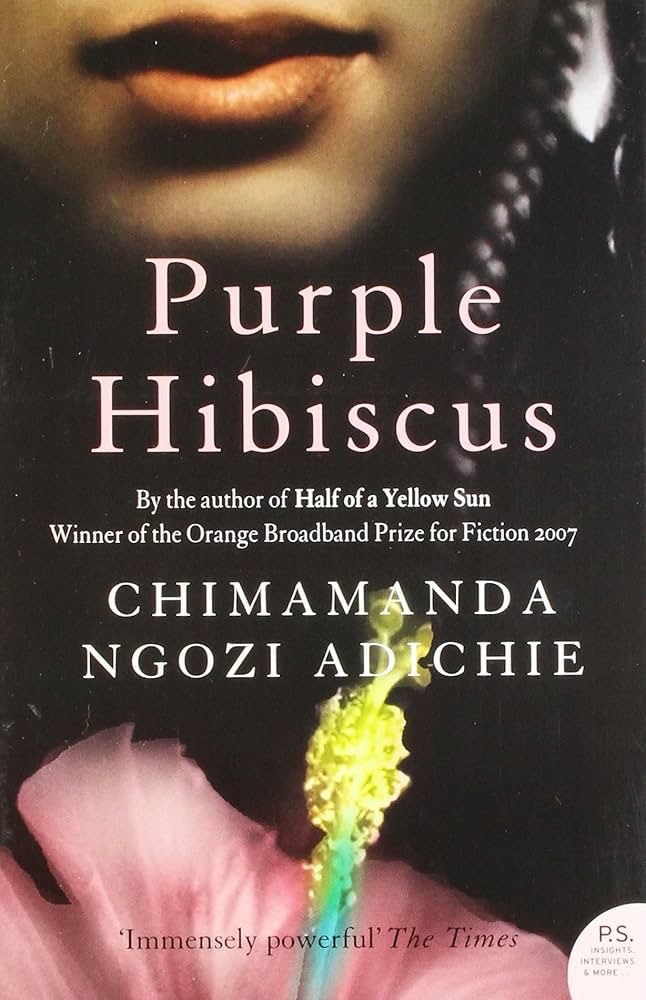
“Things started to fall apart at home when my brother, Jaja, did not go to communion and Papa flung his heavy missal across the room and broke the figurines on the étagère.”
In her debut novel, the super talented Chimimanda Ngozie Adichie references the novel Things Fall Apart by Chinua Achebe, firmly setting herself into the tradition of Nigerian literature. Achebe’s account of colonialism in a Nigerian community shows how white men used the Christian religion to destabilise a village, until eventually greed dismantled their home, their culture and their traditions. It’s an important comparison to this modern family in a 20th Century Nigeria, where our narrator’s father is determined to uphold Christian values in his family and remain head of the household. Jaja’s small act of rebellion shows that their father has a temper, but the breaking of the figurines foreshadows the destruction of their family unit. This is just the beginning act in their family’s breakdown and is the tip of the iceberg when it comes to their abusive father, but instead of showing his power it hints at how fragile his regime actually is.
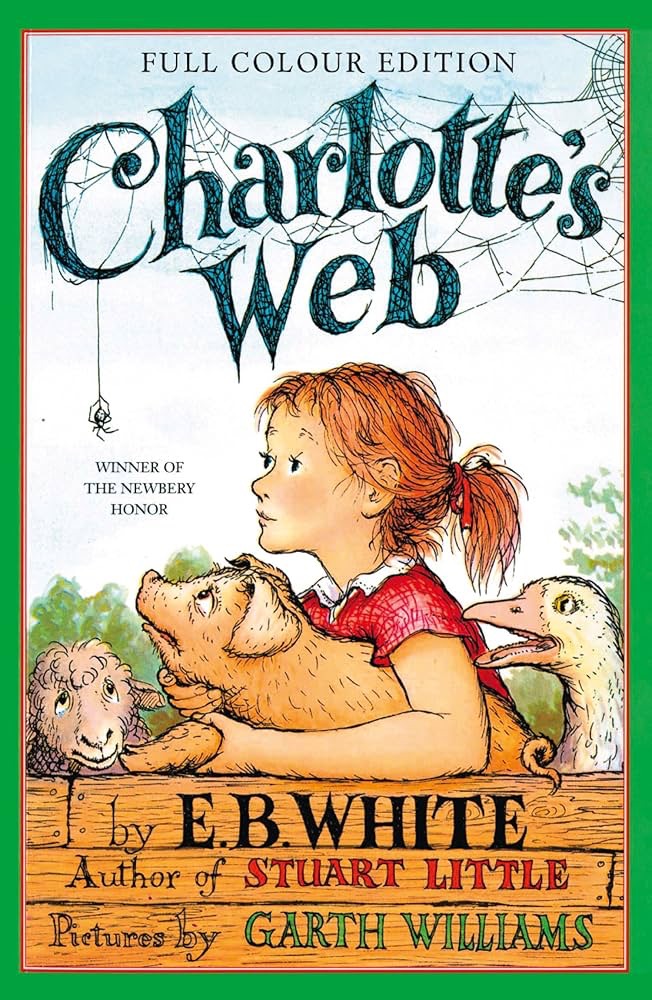
“Where’s Papa going with that ax?” said Fern to her mother as they were setting the table for breakfast.”
This was one of the first books I loaned from the public library and that first line set me up for a lifetime of twists and cliffhangers. I’m listening to the voice of a girl who was potentially my own age and from the cover I assumed she lived on a farm like I had. This opening question suggests Fern’s father was doing something outside his normal routine, something that didn’t make sense to her. It brings in a terrible sense of foreboding – having lived on a farm I was aware of eating animals, but you didn’t need an axe to kill a chicken or a goose. I was scared and a bit confused by it, but I had to know.
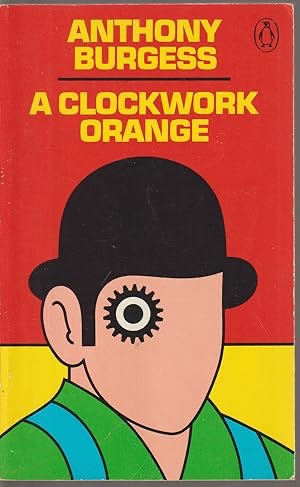
‘What’s it going to be then, eh?’
“That was me, that is Alex, and my three droogs, that is Pete, Georgie and Dim, Dim being really dim, and we sat in the Korova Milkbar making up our rassoodocks what to do with the evening, a flip dark chill winter bastard though dry.”
When my friend Elliot loaned me this book at secondary school these first lines blew me away. What language were they speaking? This was English but not as I knew it. The words were all in the wrong order and felt stilted. I wondered if I’d be able to understand what was going on. He advised me to just keep reading and let the language wash over me and he was right, in a few pages it simply clicked. These lines tell us we’re possibly somewhere in the future and Alex is merely setting the scene, introducing his friends and telling us about the weather. This is a typical introduction, done in a totally atypical way and it’s brilliant.
So it turns out that March is the month of mysteries and thrillers, suspense, plot twists and secrets aplenty! These are my favourites from the month and although I haven’t managed full reviews for some of them, these are my favourites. Wishing you all a Happy Easter weekend, hope you get some good reading and relaxation time with some treats. ❤️📚 🐇
St Monans, Fife, Scotland 1790. Two women are forced to publicly repent in church, one for adultery the other for breaching the sabbath. Wealthy housewife, Florrie, and salt serf, Eliza, form a quick and unusual bond over their mutual humiliation. So when Florrie’s husband decides she must accompany him on a trade venture to Iceland, she insists Eliza comes as her maid.
Far from home, isolated and fearful, the two women grow ever closer. Then Florrie’s husband reveals his sinister plan: he will leave her in Iceland, banished for the shame she has cast upon him. Florrie must escape, but when she turns to Eliza for help she realizes nothing is quite as it seems . . .
Based on the true story of the British Empire trying to annex Iceland as a penal colony, this books tells us about subjugation and control of women by husbands, serf owners, and ministers. Kate Foster always has strong female characters and Florrie, Eliza and Hallgerd are no exception. This was a historical thriller, full of suspense and with a few plot twists too. It’s about what happens when women reject the shame men and society say they should feel and embrace their transgressions, using them as a stepping stone to true freedom. My full review is coming up soon.
Twelve years ago, Carrie married Johan on a beach in Thailand. But as the sun set on their perfect day, armed men swarmed the island and her husband was taken, never to be seen again.
Carrie is now happily remarried; a mother of two. The past is firmly behind her – until she stumbles across Johan by accident online. He is alive and well.
As the memories of their passionate relationship flood back, Carrie is compelled to find out what happened on that beach, and why Johan never got in contact.
The man who promised her a lifetime of love is now a mystery she must solve. But are the answers worth risking her marriage, her family, and the life she fought so hard to rebuild?
The truth, it turns out, is more shocking than any lie . . .
I read this novel on my weekend away and became absolutely absorbed in the story, a love story that’s also a mystery. It’s heartbreaking, romantic but also sinister and unsettling. Our main character, Carrie Cole, has been a brilliant surgeon but gave up when she had very premature twins and felt the need to be at home with them. She lives with her husband Robin in an old cottage with a holiday let in the old piggery next door that they let through the Roof app. It’s there that she sees Johan again for the first time since his arrest in Thailand. Her urge to see him is part emotional but also a desperate need to know what happened and how he ended up back home in Sweden when he should still be in prison. I loved how the author played with our expectations of who to trust and whether Carrie should think with her heart or head. She’s safe, she’s happily married, she’s a mother about to return to work so we know the right choice to make. Right? Full review coming later in the month.
Famed children’s author Dame Eleanor Kingman has summoned her family and friends to her exquisite manor house on the cliffs. They’re celebrating her birthday – and her latest number one bestseller in her series of books based on a mother fox and her cubs.
But the night before the party, Eleanor receives an email: an email that threatens to expose the lie she’s kept up for over half a century.
Someone knows her secret. Is it her estranged literary agent? Is it her ex-husband, to whom she no longer speaks? Is it the nanny she fired all those years ago, who always did have a knack for storytelling? Or is it one of her three daughters, all of whom have a stake in the publishing empire she has built…
With a TV crew arriving to film a documentary of her life, Eleanor needs to find out who sent the email – and preserve her multimillion-pound career.
But when push comes to shove, and it’s time to tell the truth – will anyone actually believe her?
This was a brilliant thriller from Sarah Vaughan, based around a wealthy and respected children’s author and her birthday party. There’s enough tension in the air already with an event so big, but Eleanor’s three daughters each have secrets, her illustrator has turned up early for a confrontation about her percentage, there’s an odd man hanging around the grounds who approached her grandchildren and dog, plus an old couple who have apparently lost their way from their caravan park into the gardens. Told in the tense two days before the celebrations, we also get flashbacks to key moments in Eleanor’s past that might give us the answers. You’ll absolutely devour this book like I did.
When 18-year-old Christian Shaw is found dead in an Edinburgh park, the city reels – and the shock only deepens when police charge her best friends, Eliza Lawson and Isobel Smyth, with her murder.
As their trial begins and headlines scream for justice, rumours of bullying spiral into something darker: whispers of rituals, obsession, and a teenage pact gone wrong.
But then the girls take the stand – revealing a chilling defence no one saw coming – and the jury must question everything: the motives, the evidence, even their own judgement.
Who’s telling the truth? Who can be trusted? And what really happened to Christian Shaw?
Let the Witch Trial begin . . .
Harriet Tyce’s brain works differently to other people’s! We follow the trial of two teenage girls through the eyes of a juror called Matthew who is a surgeon. He’s everything a good juror should be – reliable, intelligent, rational, objective, pillar of the community – but he seems strangely excited about this trial, having been told several times he could have been excused because of his job. As the trial moves on he seems to deteriorate: he stops wearing a shirt and tie, has a rash that spreads and irritates him, starts to drink and eat junk food. The story of witchcraft and teenage girls is intriguing, but does it constitute murder? Who is the blonde woman that catches Matthew’s eye and seems to follow him to the flat? There are so many layers to this story that your mind will be blown in the final chapters!
Ten years ago, Hope left Somerset with a fatal secret and a broken heart. She has spent a decade in the shadows, living a quiet life of penance to protect the man she once loved – the world-famous author Ambrose Glencourt.
YOUR LIFE IS NOT YOUR OWN.
Then, she opens his latest bestseller. To the world, it’s a brilliant work of fiction. To Hope, it’s a betrayal. Every private moment, every dark truth, and every ‘fatal disaster’ from that summer is laid bare on the page.
YOUR TRUTH IS A LIE.
But Ambrose has changed the ending. In his version of the story, Hope isn’t the victim. She’s the villain.
Now, Hope must step out of the shadows to reclaim her narrative. But in a world of glamorous elites and whispered secrets, who will believe the word of an unreliable woman against the word of a literary icon?
Two narrators. One truth. And a secret worth killing for.
This novel is another triumph for this incredible writer, with so many layers and very timely themes around rich white men and their assumption of their own genius and their right to exploit those around them. Hope is a compelling character whose one summer with Ambrose and his wife Delia sets her life on a different course. To find the events of that summer in a book, prompts her to go to the police and tell her story to detective Nat. Is this the ramblings of a mad, middle aged woman or is something very wrong at Shadowlands, the Glencourt’s mansion. Hall beautifully shows us young love and how a girl who loves books can be manipulated by someone who believes young, naive lower class girls who worship writers are theirs for the taking. I love how Hall weaves in the concept of playing with reality, how we construct stories and who has the right to tell them.
There’s something out there in the darkness. By morning, bones lie in the snow, picked clean.
Zach knows the moods of the mountains – his mother taught him before she was gone. His father and the other men on the ski weekend think they know better though.
Drinking and boasting, they laugh in the face of the icy conditions.
But Zach understands what danger looks like. Can he survive the wilderness, and all the monsters within it?
This is a stunning new novel from Tracy Sierra, whose debut novel NightWatching was one of my favourite books of 2024. This is just as good as that thrilling debut, if not better. Set in one weekend in the mountains, this is no ordinary trip or boy’s own adventure. Everyone who is coming is there to be impressed by Zach’s dad and his latest business venture. Everything has to go right. Everything is told through Zach’s eyes and we can see him slowly lose his innocence as he notices that his dad doesn’t have half the knowledge about the outdoors that his mother had, everyone else can see that all his gear is new, flash and not what a regular skier or hiker would use. Zach can also see they dislike him. Russ is the only other kid on the trip and he knows that these men are going to lead them into danger, simply because they’re selfish and full of bravado. They must get to do exactly what they want and damn the consequences. Tracy Sierra gets inside this little boy’s mind perfectly and I was desperate for him to survive, but with a strange monster on the prowl outside and the terrible weather it’s hard to know what he can do to escape. Unless the real danger is on the inside. This author shows shades of Stephen King and The Shining in this brilliant story, bristling with menace and childhood fears.
So here’s a book blogger admission for you. I recently did an interview with another blogger on my reading habits and I admitted to having seven bookcases in the house, all organised according to genre: books for work, thrillers and crime, romance, my bought tbr, my biggest bookcase has historical fiction, horror and gothic, classics and contemporary literature and there are two glass display cases of special editions. I have a trolley with my main tbr from publicists and authors, but I also have a little pink trolley with my secondhand tbr (yes there are a few stacks on the floor here and there). So now you know my darkest book secrets I thought I’d share some of those second hand books.
Nottingham, 1827. Mary Reddish, a young housemaid unjustly committed after defying her employer’s advances, must navigate the brutal treatments of the county asylum while trying to prove her sanity. Meanwhile, Ann and Thomas Morris, the asylum’s matron and director, struggle to uphold humane practices against outdated medical methods that haunt the institution.
As Mary forms an unlikely alliance with a fellow patient, she finds herself at the centre of a battle between compassion and cruelty that will determine the course of her life – and the future of the asylum itself.
Inspired by real events that took place at England’s first publicly funded asylum in Nottingham, The Unravelling of Mary Reddish shines a light on the brutal reality of mental health care in Georgian Britain.
Celebrated writer and historian Maria Graham must make the treacherous voyage from Brazil to London to deliver her latest book to her publisher. Having come to terms with the loss of her beloved husband, Maria is now determined to live her life as she pleases, free from the smothering constraints of Georgian society.
For a woman travelling alone it’s a journey fraught with danger, and as civil war rages around her, the only ship prepared to take Maria belongs to roguish smuggler Captain James Henderson. Onboard, all is well until Maria makes two shocking discoveries – the first a deadly secret, the second an irresistible attraction to the enigmatic captain.
With Henderson on a journey of his own and determined to finally put his life of crime behind him, he and Maria grow ever closer. But can Henderson escape his illicit past or will the scandalous secret he’s hiding ruin them both?
THE NEXT WORDS HE WRITES COULD BE HIS LAST . . .
Austria, 1938: The Vienna Writers Circle meets at Café Mozart to share hopeful stories during a hopeless time.
But when the Nazis take over, everything changes. With their Jewish families’ now under threat, the writers hide using false identities, their stories becoming their only salvation.
Then a local policeman begins a dangerous mission to help them. But he faces conflicts of his own: having declared his love for a beautiful Romani-gypsy girl, Deya Reynes, he fears that she too will be sent to her death.
When all they have left is courage, will they survive?
Yorkshire, 1979
Maggie Thatcher is prime minister, drainpipe jeans are in, and Miv is convinced that her dad wants to move their family Down South.
Because of the murders.
Leaving Yorkshire and her best friend Sharon simply isn’t an option, no matter the dangers lurking round their way; or the strangeness at home that started the day Miv’s mum stopped talking. Perhaps if she could solve the case of the disappearing women, they could stay after all?
So, Miv and Sharon decide to make a list: a list of all the suspicious people and things down their street. People they know. People they don’t.
But their search for the truth reveals more secrets in their neighbourhood, within their families – and between each other – than they ever thought possible.
What if the real mystery Miv needs to solve is the one that lies much closer to home?
London, 1893. When Cora Seaborne’s controlling husband dies, she steps into her new life as a widow with as much relief as sadness. Along with her son Francis – a curious, obsessive boy – she leaves town for Essex, in the hope that fresh air and open space will provide refuge.
On arrival, rumours reach them that the mythical Essex Serpent, once said to roam the marshes claiming lives, has returned to the coastal parish of Aldwinter. Cora, a keen amateur naturalist with no patience for superstition, is enthralled, convinced that what the local people think is a magical beast may be a yet-undiscovered species.
As she sets out on its trail, she is introduced to William Ransome, Aldwinter’s vicar, who is also deeply suspicious of the rumours, but thinks they are a distraction from true faith.
As he tries to calm his parishioners, Will and Cora strike up an intense relationship, and although they agree on absolutely nothing, they find themselves at once drawn together and torn apart, affecting each other in ways that surprise them both. The Essex Serpent is a thrilling and unforgettable novel of intrigue, love, and the many forms it can take.
Cloaked in absence, the Travelling Man comes calling . . .
NYPD cop Charlie Parker returns home one evening to a brutal scene – his wife and daughter violently murdered, their faces removed and their bodies displayed in macabre poses: the work of the Travelling Man.
Numb from guilt and desperate for distraction, Parker becomes embroiled in the case of a missing woman. As the investigation spirals, Parker learns that this disappearance is merely the latest development in a tale of injustice and cruelty.
All the while, the Travelling Man haunts him . . .
1859. Edward Scales is a businessman, a butterfly collector, a respectable man. He is the man Gwen Carrick fell in love with. Seven years later he is dead and Gwen is on trial for his murder. Set in a world caught between the forces of Spiritualism and Darwinism, The Specimen explores the price one independent young woman might pay for wanting an unorthodox life.
You are about to discover the secrets of The Quick –
But first, reader, you must travel to Victorian England, and there, in the wilds of Yorkshire, meet a brother and sister alone in the world, a pair bound by tragedy. You will, in time, enter the rooms of London’s mysterious Aegolius Club – a society of the richest, most powerful men in England. And at some point – we cannot say when – these worlds will collide.
It is then, and only then, that a new world emerges, a world of romance, adventure and the most delicious of horrors – and the secrets of The Quick are revealed.
Maud Heighton came to Lafond’s famous Academy to paint, and to flee the constraints of her small English town. It took all her courage to escape, but Paris eats money. While her fellow students enjoy the dazzling joys of the Belle Époque, Maud slips into poverty. Quietly starving, and dreading another cold Paris winter, Maud takes a job as companion to young, beautiful Sylvie Morel. But Sylvie has a secret: an addiction to opium. As Maud is drawn into the Morels’ world of elegant luxury, their secrets become hers. Before the New Year arrives, a greater deception will plunge her into the darkness that waits beneath this glittering city of light.
‘You should have been a detective. If there’s one thing the last year has proved, it’s how good you are at finding things out. Things that are buried so deep nobody even thinks twice about them. The sort of things that turn people’s lives inside out once they’re exposed.’
Meet Tony Hill’s most twisted adversary – a killer with a shopping list of victims, a killer unmoved by youth and innocence, a killer driven by the most perverted of desires.
The murder and mutilation of teenager Jennifer Maidment is horrific enough on its own. But it’s not long before Tony realises it’s just the start of a brutal and ruthless campaign that’s targeting an apparently unconnected group of young people.
Struggling with the newly awakened ghosts of his own past and desperate for distraction in his work, Tony battles to find the answers that will give him personal and professional satisfaction in his most testing investigation yet . . .