Posted in Netgalley

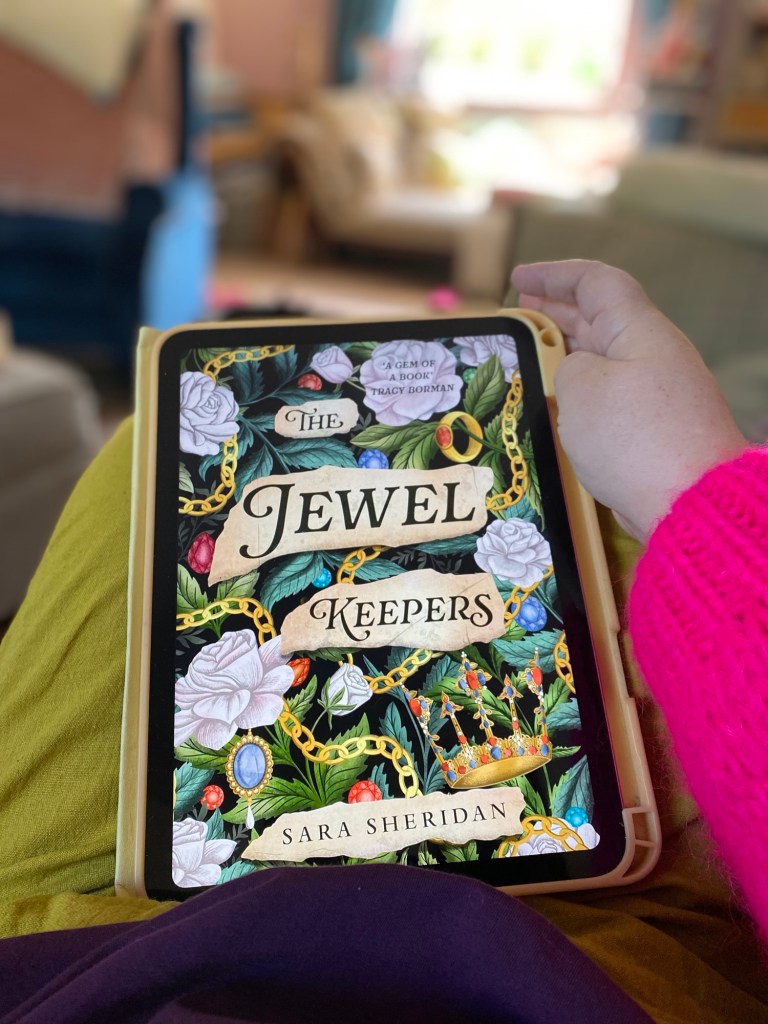
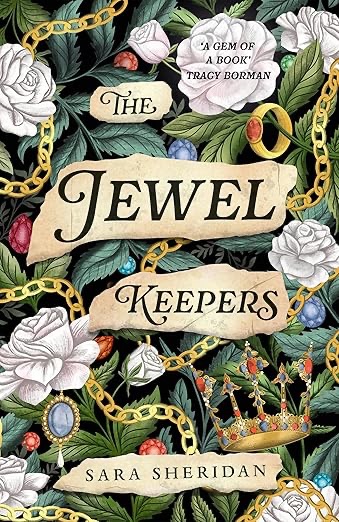
The Jewel Keepers by Sara Sheridan

Men would kill for this treasure.

The McKenzie women will guard it with their lives.

London, 1837. When 25-year-old Araminta McKenzie-Moore is summoned from Richmond to her great aunt’s deathbed in Edinburgh, it’s the first time she’s met her extended family. The McKenzie women, however, have been keeping a close eye on her. For they have a long, secret and dangerous history as Jewel Keepers to the Scottish Crown and they need Araminta to play her part to solve a puzzle which stretches back generations.

But the McKenzies are not alone in this high-stakes treasure hunt though history. They’re being pursued. The last of her line, if Araminta succeeds, she will uncover something more valuable than mere jewels – a secret that will change the lives of all women living on this, the cusp of the Queen Victoria’s rule.

The plot of this novel is extraordinary, taking historical facts and weaving in the story of a long line of McKenzie women who have fought for the Crown Jewels of the Scottish Royal family, most specifically the Stuart queens. The last Stuart queen was Queen Anne, who died without a direct heir in 1714, to be followed by the Hanoverians. If found, the jewels are meant to be kept safe until a ‘worthy Queen’ sits on the throne and they can be returned to her. The book is set just before the reign of Queen Victoria so this is an important time for their quest. Could she possibly be the worthy Queen they’ve been hoping for? Araminta has had no knowledge of the family history or her role in history until she’s summoned to Edinburgh by her aunt Eilidh McKenzie who lives in a beautiful Georgian house. In the course of one evening, Eilidh hints at the quest ahead, explaining Araminta’s ancestors were Jacobites and clearly also early feminists. A family tree shows that McKenzie women kept their own surname even when married, with a diamond marking out those chosen to safeguard the Queen’s Crown, down the maternal line. Unfortunately Aunt Eilidh dies before she can give Araminta any more clues meaning she faces a complicated task, solving the final clues in a strange city. Added to this quest are a shady male organisation called The Hermits, treacherous servants, dangerous missions and a very feisty nun. 

There are great female characters in this story, especially Araminta who blooms as the story progresses, achieving so much more than she thought possible. She grasps this challenge and runs with it, despite not knowing Scotland and meeting with violence, kidnap and false imprisonment – not to mention a very precarious church roof! It’s great to see that transition where she starts to think for herself: 

‘For years she’s been restrained by teachers, by her position, by other people’s expectations. Now, here, perhaps for the first time in her life she’s free to follow her own judgement.” 

It’s not surprising that she finds this freedom in Edinburgh where she’s informed that even the Bishop was a supporter of women becoming more than wives and mothers. Araminta finds that her powers of deduction are sound and starts to trust herself. She recognises this mission as her chance to grow and test out her capabilities, free from the burden of society’s rules. It’s not a surprise when we learn about her ancestors and especially when she meets with a feisty nun called Sister Winifred, a very intelligent woman who carries a ‘muff gun’ and is quite willing to fight. Even when imprisoned, Araminta finds an ingenious way of escaping her cell that even has a police officer surprised! Apparently no one else has ever thought to try it.

Brodie the butler (and so much more) captured my heart as well. He’s so noble and I loved how even with these smaller characters the author gives so much attention to detail. Brodie doesn’t just have a romantic back story, his night visits to a make shift boxing gym also give his character dimension. Our villain of the piece, Harry Thom, is a vile character. Today he’d be a fully paid up member of the manosphere for sure. He’s got issues with women, but particularly Catholics and the McKenzie women specifically. He’s violent, crafty and will stop at nothing to make sure he beats them in their quest. I loathed him and I was turning the pages desperate for him to have some sort of comeuppance. This is a pacy and tense novel with lots of action scenes and some moments of real danger where you’ll be biting your nails. It has great historical detail too and is bolstered by a fascinating afterword. The quest made me think of Queen Victoria in a different light, she may have been a powerful Queen but was she ever a feminist? Would she be the worthy Queen or was she too wrapped up in portraying the Victorian ‘Angel in the House’ ideal? It seems quite a tame way of ruling when we think back to the Tudor Queens or Mary Queen of Scots and possibly still influences the image cultivated by the Royal Family we have today. I thoroughly enjoyed every minute of this story and as Araminta raced towards the treasure with Thom in pursuit, I wondered whether it would be what either of them were expecting? 

Out on 14th May from Hodder and Stoughton

Meet the Author

“History is a treasure chest of stories. I love them.”

Sara Sheridan works in a wide range of media and genres but mostly historical and especially the stories of women. She loves exploring where our culture comes from. In 2018 she remapped Scotland according to women’s history. Tipped in Company and GQ magazines, she was nominated for a Young Achiever Award. She has received a Scottish Library Award and has been shortlisted for the Saltire Book Prize and the Wilbur Smith Prize. Her work was included in the David Hume Institute’s Summer Reading list 2019. She has sat on the committee for the Society of Authors in Scotland (where she lives) and on the board of ’26’ the campaign for the importance of words. She took part in 3 ’26 Treasures’ exhibitions at the V&A, London, The National Museum of Scotland and the Museum of Childhood in Bethnal Green. She occasionally blogs for the Guardian about her writing life, the Huffington Post about her activism as a writer and a feminist and puts her hand up to being a ‘twitter evangelist’. From time to time she appears on radio, and has reported for BBC Radio 4’s From Our Own Correspondent from both Tallin and Sharjah. Sara is a member of the Society of Authors and the Historical Writers Association. A self-confessed ‘word nerd’ her favourite book is ‘Water Music’ by TC Boyle. In 2016 she cofounded feminist perfume brand, REEK: artefacts from the project are now held at the National Museums of Scotland and the Glasgow Women’s Library.

Posted in Publisher Proof

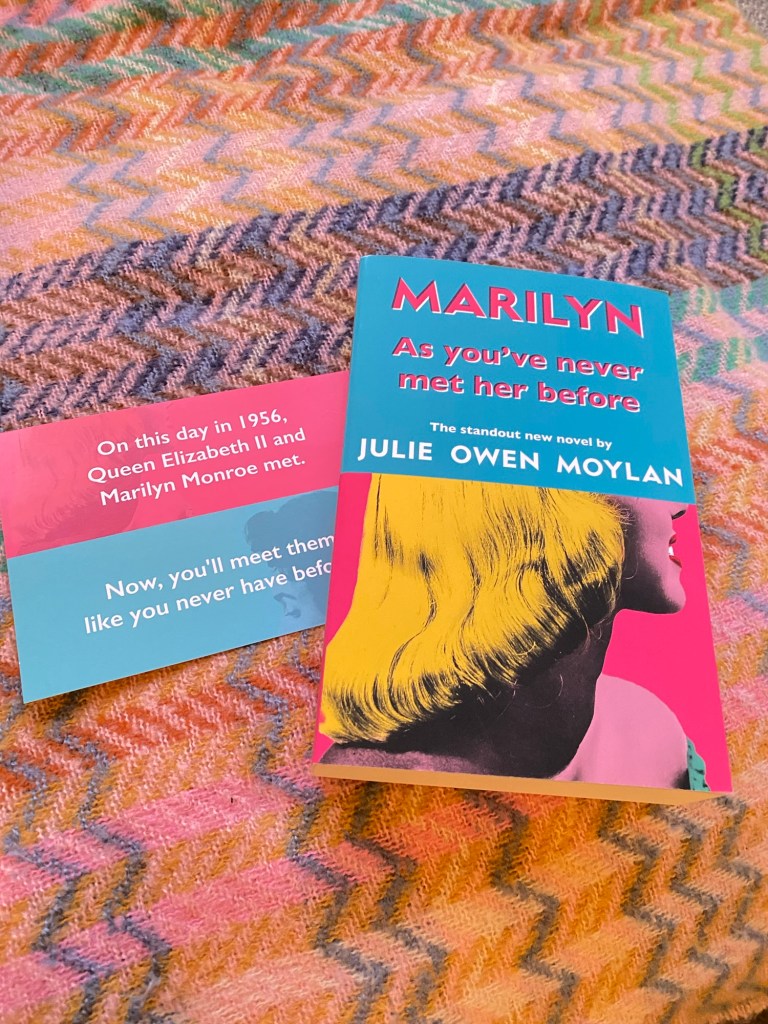
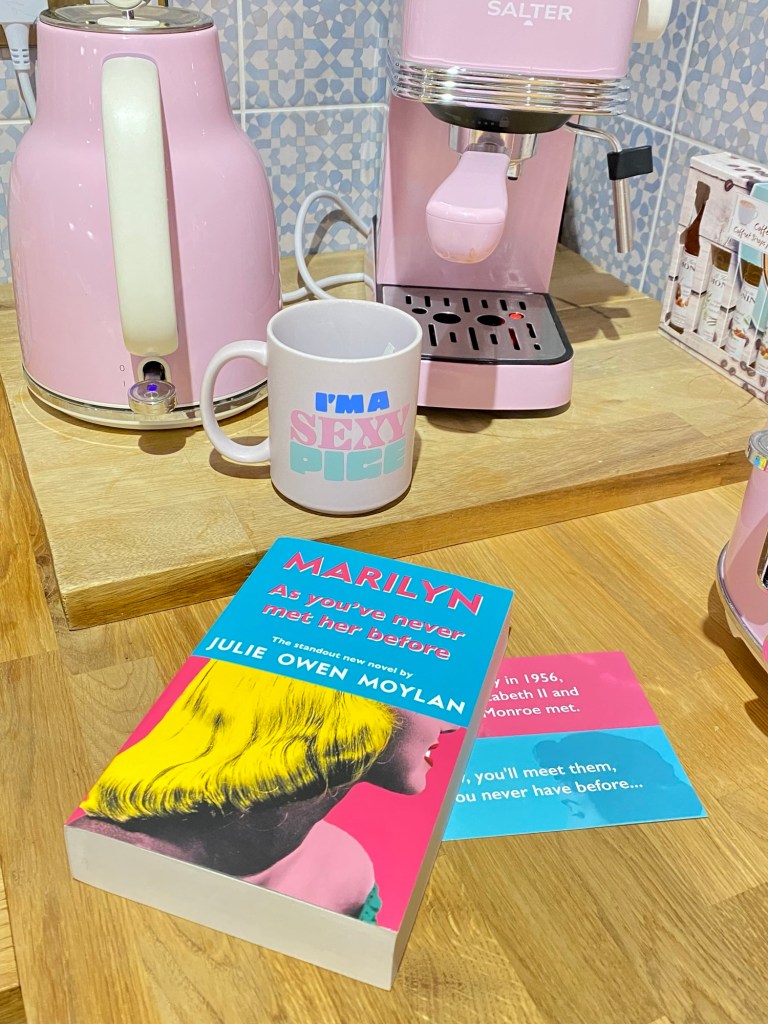
Elizabeth and Marilyn by Julie Owen Moylan

London, October, 1956. A glittering Royal Film Premiere. The whole world is watching . . . 

Tonight, Elizabeth II will formally greet an array of stars. Though she was not born to be Queen, this young mother and wife has embraced her patriotic duty and its unforgiving demands.

A limousine pulls up. Out steps a vision in dazzling gold: Marilyn Monroe. A money-making machine for Hollywood, with curves that drive men wild and a smile that lets women know she’s in on the joke. 

As the two most famous women in the world come face to face, they look to be worlds apart. Yet beneath the glamorous costumes, both are fighting to keep the men they love, while trying to do their work in a man’s world. And they have spent the summer of 1956 battling secret demons the public could never imagine. 

Now, Marilyn steps forward. These photographs will be on the front page of every newspaper in the morning. 

But this isn’t their first meeting. And the story behind the headlines is even more sensational . . .

As soon as I knew that Julie’s next novel was going to feature these two women I was intrigued, because until now the comparison between Hollywood stars and our royal family has been Marilyn and Diana, Princess of Wales. Both were globally famous, incredibly beautiful, hounded by the press and died far too young. This comparison was compounded when Elton John rewrote Candle in the Wind, formerly about Marilyn Monroe, for the late Princess of Wales and played it at her funeral. I was around eight years old when Diana came into public view and I was obsessed for a couple of years with her beautiful dresses and how glamorous it all was, but of course as I grew older her story became more complex and tragic. I think my initial intrigue was due to my age, because to me Queen Elizabeth had always seemed old. This was partly to do with her style I think, but she was in her early fifties (as I am now) when I was taken to the bridge that crosses the River Trent in Keadby, North Lincolnshire to see her car pass by in the silver jubilee year of 1977. I was three and being around for 50 years seemed a million miles away. However, this book focuses on 1956 when the Queen was still a young woman in her twenties and experiencing a very turbulent year. She hadn’t had time to fully settle into her role, she’d had to advise her own sister that she couldn’t marry the man she loved if she wished to remain a princess and her relationship with Prince Phillip had it’s problems. Marilyn was in London to film The Prince and the Showgirl opposite one of our most acclaimed actors, Laurence Olivier. She too was coming into a turbulent phase of her life, after spending some time living in Manhattan and studying the acting ‘method’ theorised by Stanislavski and taught by Strasberg. The idea was to act in a natural way, experiencing what the character is going through, to bring personal emotion and past trauma into the scene, or even stay in character between scenes to keep the intensity in your performance. This was going to prove entirely at odds with Olivier’s way of working. She was also recently married to playwright Arthur Miller, making headlines around the world as the ‘egghead and the hourglass’. The couple came to London in lieu of a honeymoon and were living in a house situated next to the Windsor Castle estate so for a while, the two women were neighbours. The author has taken this background and created a fascinating story about stratospheric levels of fame, how women are treated in the media, and the difficulty of negotiating the line between public and private. 

Each woman has their own narrative and we’re taken inside their deepest fears and emotions. This is incredibly difficult to do with such famous subjects because both women are so iconic and we all have an idea in our heads of what they were like and who they were. I found I couldn’t come to them as new characters straight away, but I did find each woman’s inner voice convincing and engaging. This approach means we get to experience each woman in three different ways: the public face; the private face; and their innermost thoughts. Each has an insecurity about their relationship. Marilyn feels that Arthur does see the real her underneath the persona but fears that he will find the press, the attention from other men and her role as Marilyn Monroe too taxing. Where they would have liked a cute little cottage away from it all to spend their honeymoon alone, they have a huge house with staff and constant requests for photo opportunities. Will Arthur always accept that his wife frequently has to switch Marilyn on? The Queen has had two children with Prince Phillip and now has a very busy public role, while his own is largely undefined. This has left him racketing around town with his Private Secretary Michael, attended a gentleman’s club which has a whiff of scandal about it. The Prince seems very aware of the duality of his wife, but being the Queen means playing that role even within her own family at times. There’s the recent unhappiness with Princess Margaret where Elizabeth the sister wanted to grant her wish to marry Group Captain Pete Townsend, but Elizabeth the Queen couldn’t. Prince Phillip refers to her “Queen Face” and she employs it as a shield so nobody knows what she’s thinking or for when she has to deliver news that family members might dislike. When scandal rears it’s head, the Queen has to think every carefully about how she handles her husband but first and foremost she must protect the crown. Will her relationship suffer because of this? 

Marilyn’s excitement about her new film is tempered by the tone as soon as she arrives to meet Laurence Olivier and his wife, Vivien Leigh. It seems Leigh has played this role on stage and perhaps hoped to be in the film? It’s hard to read how eager Marilyn is to be with these revered British actors who she sees as the real deal. There’s an incident with Dame Sybil Thorndike at the read through that really does reinforce Marilyn’s ability to switch her star power on and off. It’s a defence mechanism to cover her natural shyness, but also a response to her childhood experiences. It’s clear when she’s bullied on set, her response comes from trauma – the muteness, the stammering and getting her lines wrong. Her past experiences are devastating and we can see them playing out in her work and her relationship with Miller, who she calls ‘Pa’ in private. The author poses the dilemma of each woman being much more famous than their husband and worrying about how to negotiate that imbalance. Marilyn is constantly placed in the middle by the press and her commitments to the film, meaning she’s forced to switch Marilyn on even in private events like a party. Can Miller accept this duality and the constant demands on her time while still seeing the real her? If the Queen makes the decision to act in the way her courtiers advise will Phillip forgive her? If only these women could have known what the other was going through – how impossible it is to be a wife, or a sister and also be a global icon. It made me think of the Queen in a new light and I wondered whether she ever thought of her younger experiences when Diana was globally famous. This is a really interesting read, shedding light on a fascinating time and showing how impossible it is to please everyone, something most women find particularly hard. I was moved by something attributed to the Queen: 

“I want to be something constant to people – beaming out a little ray of light that provides a sort of normality. A kind of ‘if she’s still there doing her duty, then all will be well

I think she achieved this because her death felt seismic and I think as a country we’ve been all at sea since she died. While politics were in turmoil the Queen was a constant for every generation since my mum who was born in 1953 and also has pictures of Marilyn in her bedroom. Both women have a legacy but only one got to live out her life in full, both publicly and privately. This is a beautifully judged piece of modern historical fiction, getting underneath the skin of women we feel like we knew well but perhaps didn’t know at all. The book goes beyond the facts and lets us wonder how these women could have had insights into each other’s lives. With all the research and sensitivity I’ve come to expect from this author, she has once again captured the mid-20th Century perfectly while also showing us that our modern preoccupations with image and celebrity are perhaps not as new as we thought.

Out Now from Penguin

Meet the Author

Julie Owen Moylan is the author of three novels: That Green Eyed Girl, 73 Dove Street and Circus of Mirrors.

Her debut novel That Green Eyed Girl was a Waterstones’ Welsh Book of the Month and the official runner up for the prestigious Paul Torday Memorial Prize. It was also shortlisted for Best Debut at the Fingerprint Awards and featured at the Hay Festival as one of its TEN AT TEN debuts.

73 Dove Street was recently named as a Waterstones’ Book of the Year and Daily Mail Historical Fiction Book of the Year with the paperback a Waterstones Welsh Book of the month in 2024.

Her writing and short stories have appeared in a variety of publications including Sunday Express, The Independent, New Welsh Review and Good Housekeeping.

Elizabeth and Marilyn will be released in April 2026.

Posted in Netgalley

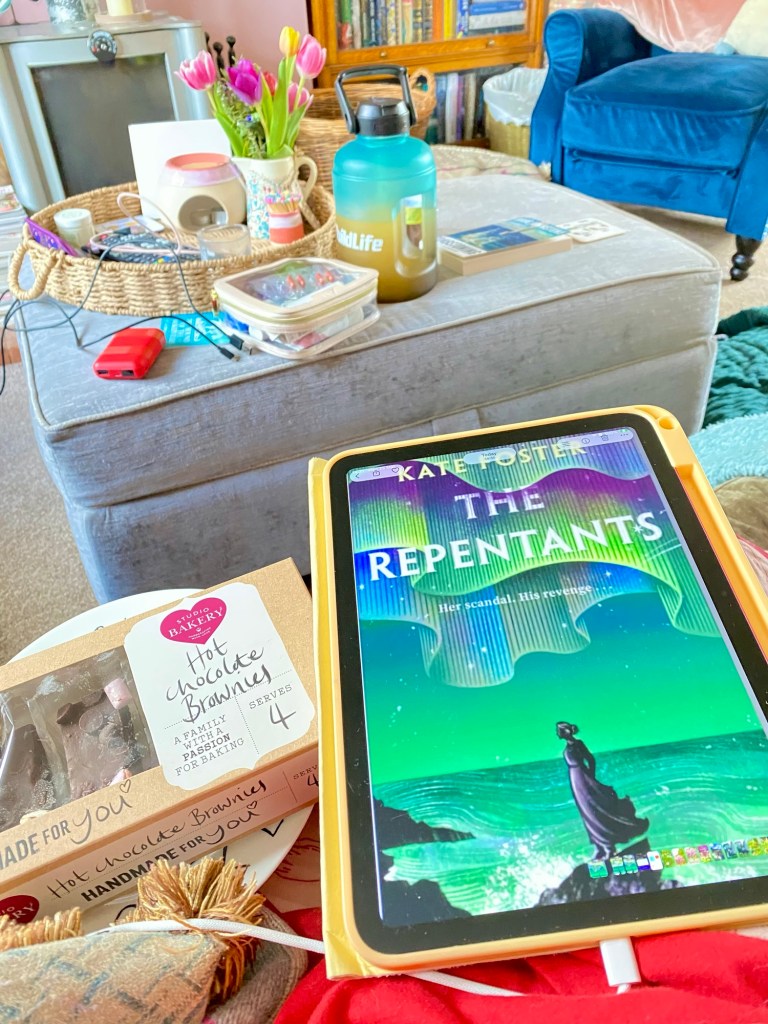
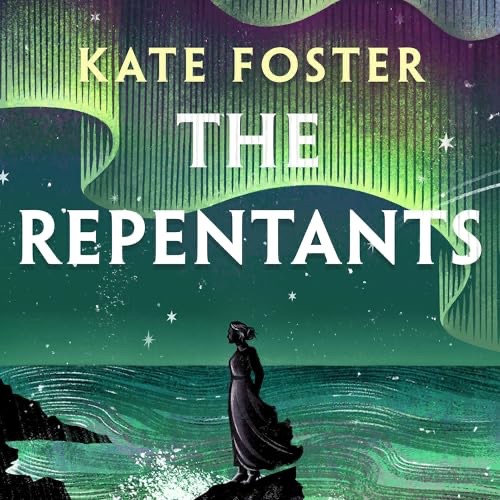
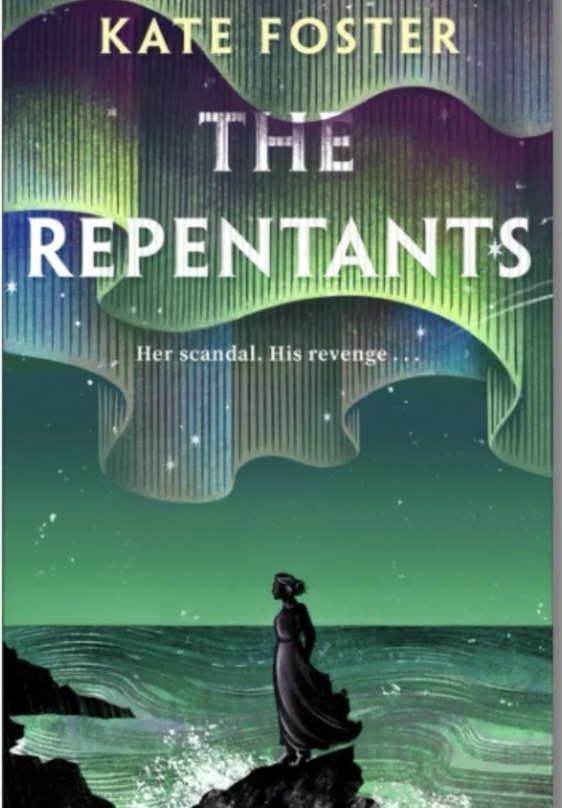
The Repentants by Kate Foster 

St Monans, Fife, Scotland 1790. Two women are forced to publicly repent in church, one for adultery the other for breaching the sabbath. Wealthy housewife, Florrie, and salt serf, Eliza, form a quick and unusual bond over their mutual humiliation. So when Florrie’s husband decides she must accompany him on a trade venture to Iceland, she insists Eliza comes as her maid.

Far from home, isolated and fearful, the two women grow ever closer. Then Florrie’s husband reveals his sinister plan: he will leave her in Iceland, banished for the shame she has cast upon him. Florrie must escape, but when she turns to Eliza for help she realizes nothing is quite as it seems . . .

Inspired by an attempt by Scottish merchants to annex Iceland as a remote prison for the British Empire, The Repentants is a chilling tale of betrayal, exile and survival

Florrie feels neglected. She has a lovely home, a husband who has inherited a salt works run by several generations of his family and an inheritance of her own as soon as she turns 21. Her husband Jonny has been struggling the burns he incurred by running into fire at work to make sure the building was clear. Florrie knows there is more to marriage than she and Jonny share even before the injury, particularly in the bedroom where he takes no care for her pleasure at all. This restlessness has drives her to back door of the Mermaid Inn in her most alluring dress. Inside and up the back stairs is a room where an Icelandic sailor is waiting for her. For a blissful moment Florrie is finally experiencing something, when the door is flung open and she is discovered. While there’s no criminal punishment for adultery, religion is important in this Scottish community and the minister at the kirk is keen on shaming his penitents. Florrie becomes one of the repentants, wearing sack cloth and standing in front of the congregation facing her neighbours and everything they think about her. It’s humiliating for her and for her husband, so when Jonny lets her know about his plan to spend some months in Iceland she sees it as an escape. With the Icelandic contacts he was introduced to at his gentleman’s club he plans to set up another salt works. However, instead of the serfs he owns in Scotland, the plan is for a ship full of local convicts to serve their hard labour sentences in the salt works. Florrie is determined to go and requests the company of a salt serf called Eliza who was a repentant on the same day. She asks Eliza to be her lady’s maid, but in truth Eliza has no choice since she was signed up as a serf to Jonny’s family as soon as she was born. Underneath the surface though she has spirit and is fiercely independent. With two restless women and a man determined to indenture others for monetary gain, this trip may bring more than any of them expect. 

The story is told from the perspective of three women: Florrie, Eliza and Hallgerd – a woman who is their neighbour in Iceland. Florrie’s narration comes from her journal and there are letters here and there too. What these women share is their experience of misogyny from men who think they have the right to control women through marriage, religion, slavery or just because they believe they have the right to do whatever they want, when they want. Eliza has largely avoided men back home, she lived alone and her repentance was for missing kirk two Sundays in a row. She doesn’t care much what the congregation think of her, because she’s well aware of the hypocrisy of church people. She can’t really be lower in their estimation anyway. As the story unfolds we realise what she’s been doing to survive and who is willing to exploit that knowledge. She was my favourite character because of her inner strength and determination to survive. At the kirk, when she’s asked if she’s scared of the devil she shows her defiance and understanding of her situation: “the devil does not frighten me minister. but men do”. Once she has a plan, she will never tolerate being manipulated, restricted or punished again. Florrie realises as soon as they reach Iceland that this is not going to be an easy way of life and definitely not the standard she had back home. In her journal she reminisces about that morning at the inn where for a brief time she felt desired: 

“The most vivid memory, the one where I am astride him and we are going at it for the second time, pure bliss, I was right.” 

However, her journal isn’t the safe space she thinks it is, her mother read it when she lived at home, Jonny reads it now and he makes sure that others do too. Florrie remembers that beautiful pink dress too, the one that the dressmaker’s assistant said was “whorish”, and its matching wrapper that got lost at the inn. The third repentant that Sunday was a lady called Auld Beatrice and she was there for being a nag. She recognises something in Florrie and warns her to develop her inner life and skills: 

“I hope you are not too reliant on those looks of yours. A woman needs to be resourceful. Or years from now, when you are my age and miserable at how your looks have slid, you will regret not having any other skills.” 

Between Eliza and Beatrice, Florrie gets the message to shrug off shame and realise that she’s only being treated like this because men like to assert their power over women. Deep down Florrie is furious with herself, she’s angry with Jonny for professing such love for her before their marriage then withdrawing it afterwards, but she’s angrier with herself for believing it. Now their home is a small cottage, the weather is bitter and there’s literally nothing – no shops, church, clubs for entertainment. Reykjavik is a busier place but still has only one two storey house that Jonny’s contacts have commandeered as the headquarters of their operation. It was originally the home of Hallgerd their neighbour. She has so many memories of her childhood in that home and hates seeing it used by a man who wants to show his power by having the best house in town. She is surviving alone, while her husband takes jobs on sailing ships and chooses where he sleeps. I loved the blunt and honest way these women talked to each other, fully aware they are the equal of men but having to find ways around their assumed power. It felt like the women and Iceland had many things in common. After stopping over in Copenhagen which is a bustling port, Iceland is a shock to the system. It feels vast and unknowable, but men still think they can use it, tame it and exploit it for profit. Hallgerd is part of the land, she knows it and the power it holds underneath the surface, she can even feel it in her body when a volcano is ready to erupt. The sailors align women with strange abilities, they are scared to have Eliza and Florrie on their ship and give them a bleeding cure in case their menstrual blood attracts sea serpents. It made my blood boil that it was the men who were terrified of a natural process, but it was the women who had to bear the responsibility for that fear. I was reminded so strongly of the Coventry Patmore poem The Angel in the House: 

“A woman is a foreign land

Of which though there he settle young, 

A man will ne’er quite understand 

The custom, politics and tongue.” 

It also reminded me of a recent conversation on X where a man said ‘ I don’t trust something that bleeds for seven days and doesn’t die’. Men still fear us and policy is being made on the basis of that fear and the urge to control us. I was hoping that all the women, especially Eliza, would see that the men’s suspicion and fear is the female superpower and she could use it to escape and flourish. Kate Foster has become a must-buy author for me over her four novels because her female characters are so layered and there’s a firm feminist stance as she writes these fascinating characters back into history. She doesn’t just concentrate on one class either, giving us both working and wealthy women and the difference that makes to their journey through life. Most of all her stories grab hold of the reader and are absolutely full of atmosphere. I’ve no doubt she has another hit on her hands with this novel. 

Out 28th May from Mantle Books

Posted in Ten on Tuesday

Ten on Tuesday: Ten Books About Mediums and Fortune Tellers

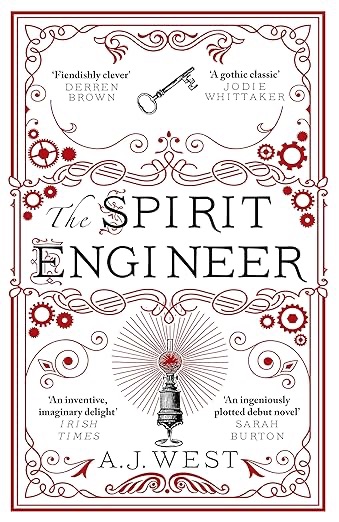
Belfast, 1914. Two years after the sinking of the Titanic, high society has become obsessed with spiritualism, attending séances in the hope they might reach their departed loved ones.

William Jackson Crawford is a man of science and a sceptic, but one night with everyone sitting around the circle, voices come to him – seemingly from beyond the veil – placing doubt in his heart and a seed of obsession in his mind. Could the spirits truly be communicating with him or is this one of Kathleen’s parlour tricks gone too far?

Based on the true story of Professor William Jackson Crawford and famed medium Kathleen Goligher, and with a cast of characters including Sir Arthur Conan Doyle and Harry Houdini, The Spirit Engineer conjures a haunted, twisted tale of power, paranoia and one ultimate, inescapable truth… I found this atmospheric, mysterious and completely fascinating.

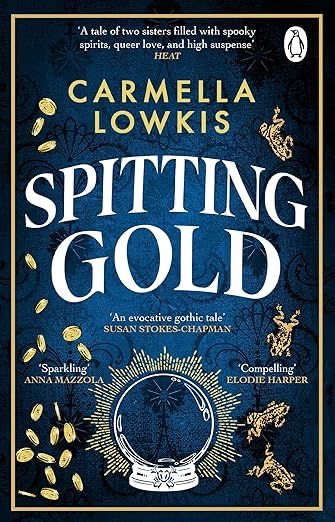
Paris, 1866. When Baroness Sylvie Devereux receives a house-call from Charlotte Mothe, the sister she disowned, she fears her shady past as a spirit medium has caught up with her. But with their father ill and Charlotte unable to pay his bills, Sylvie is persuaded into one last con.

Their marks are the de Jacquinots: dysfunctional aristocrats who believe they are haunted by their great aunt, brutally murdered during the French Revolution.

Sylvie and Charlotte will need to deploy every trick to terrify the family out of their gold – until they experience inexplicable horrors themselves.

The sisters start to question if they really are at the mercy of a vengeful spirit. And what other deep, dark secrets threaten to come to light…? I loved the genuinely scary scenes in this novel, the setting and the differences between these two sisters.

‘Now you know why you are drawn to me – why your flesh comes creeping to mine, and what it comes for. Let it creep.’ 

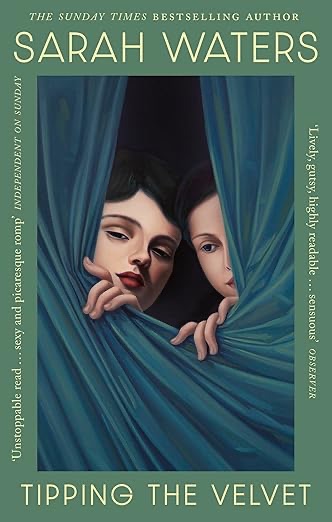
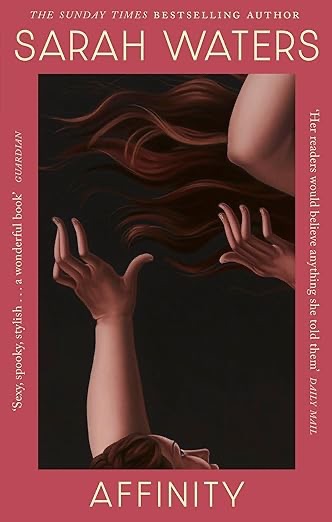
Visiting a grim London prison as part of rehabilitative charity work, upper-class suicide survivor Margaret Prior is drawn into the Victorian world of enigmatic spiritualist and inmate Selina Dawes and is persuaded to help her escape.

From the dark heart of a Victorian prison, disgraced spiritualist Selina Dawes weaves an enigmatic spell. Is she a fraud, or a prodigy? By the time it all begins to matter, you’ll find yourself desperately wanting to believe in magic. I love Sarah Waters and the way she writes LGBTQ+ characters back into history, this brought to life the reality of a women’s prison and how class determines women’s lives as much as gender. This was unsettling and like a great thriller you’re never quite sure who is being honest and who is manipulating the outcome.

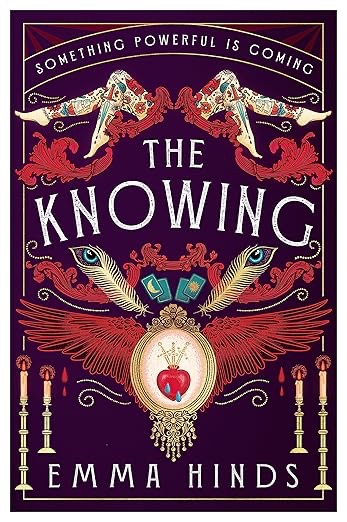
In the slums of 19th-century New York.

A tattooed mystic fights for her life.

Her survival hangs on the turn of a tarot card.

Powerful, intoxicating and full of suspense. *The Knowing* is a darkly
spellbinding novel about a girl fighting for her survival in the decaying
criminal underworlds.

Whilst working as a living canvas for an abusive tattoo artist, Flora meets Minnie, an enigmatic circus performer who offers her love and refuge in an opulent townhouse, home to the menacing Mr Chester Merton. Flora earns her keep reading tarot cards for his guests whilst struggling to harness her gift, the Knowing – an ability to summon the dead. Caught in a dark love triangle between Minnie and Chester, Flora begins to unravel the secrets inside their house. Then at her first public séance, Flora hears the spirit of a murdered boy prostitute and exposes his killer, setting off a train of events which put her life at risk. This is a fabulous debut novel full of colourful historical detail and showcasing an utterly alternative 19th Century existence.

Viola has an impossible talent. Searching for meaning in her grief, she uses her photography to feel closer to her late father, taking solace from the skills he taught her – and to keep her distance from her husband. But her pictures seem to capture things invisible to the eye . . .

Henriette is a celebrated spirit medium, carrying nothing but her secrets with her as she travels the country. When she meets Viola, a powerful connection is sparked between them – but Victorian society is no place for reckless women.

Meanwhile, on the other side of the world, invisible threads join Viola and Henriette to another woman who lives in secrecy, hiding her dangerous act of rebellion in plain sight. I was incredibly moved by this story of transgressive love and the fascinating world of spirit photography. Viola has all the naivety of a daughter brought up with religion and it takes Henriette’s boldness for her to try new experiences. I loved the author/‘s use of liminal spaces as places of freedom and how found family can allow that freedom to grow.

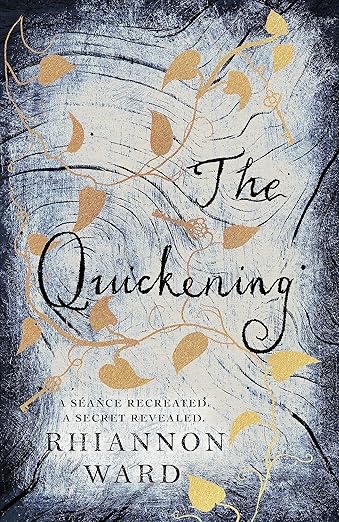
England, 1925. Louisa Drew lost her husband in the First World War and her six-year-old twin sons in the Spanish Flu epidemic of 1918. Newly re-married and seven months pregnant, Louisa is asked by her employer to travel to Clewer Hall in Sussex where she is to photograph the contents of the house for auction.

She learns Clewer Hall was host to an infamous séance in 1896, and that the lady of the house has asked those who gathered back then to come together once more to recreate the evening. 

When a mysterious child appears on the grounds, Louisa finds herself compelled to investigate and becomes embroiled in the strange happenings of the house. Gradually, she unravels the long-held secrets of the inhabitants and what really happened thirty years before… and discovers her own fate is entwined with that of Clewer Hall’s. This is the perfect book if you enjoy gothic mystery, historical detail and very spooky twists and turns.

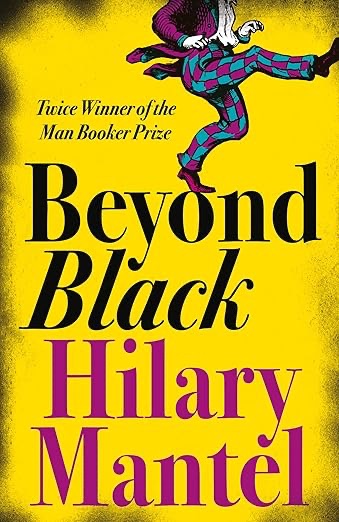
Alison Hart, a medium by trade, tours the dormitory towns of London’s orbital ring road with her flint-hearted sidekick, Colette, passing on messages from beloved dead ancestors. But behind her plump, smiling persona hides a desperate woman: she knows the terrors the next life holds but must conceal them from her wide-eyed clients. At the same time she is plagued by spirits from her own past, who infiltrate her body and home, becoming stronger and nastier the more she resists…

Shortlisted for the Orange Prize, Hilary Mantel’s supremely suspenseful novel is a masterpiece of dark humour and even darker secrets. This ghostly story is full of menace but also very dark humour. It’s endlessly inventive with all the atmosphere you’d expect from this incredible writer.

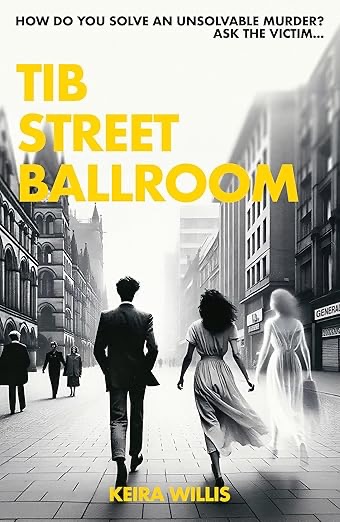
How do you solve an unsolvable murder? Ask the victim…

In January 1986, newly-engaged Marnie Driscoll is found dead in her parents’ kitchen. With no witnesses, it seems as though the circumstances of her death will remain a mystery.

Six months later, high-flying Detective Inspector Andrew Joyce’s career takes an unexpected detour when he finds himself unwillingly transferred to an obscure department within Greater Manchester Police, known as the Ballroom. The Ballroom team employs unorthodox methods to crack previously unsolved cases, and Joyce, a sceptic by nature, must find a way to work with Peggy Swan, a reclusive ex-socialite with a unique talent: she can communicate with the dead.

Joyce soon discovers that Marnie’s death, initially dismissed as an opportunistic act of violence, actually seems to be a carefully orchestrated murder. It will take both Joyce’s skill as an investigator and Peggy’s connection to her new ghostly charge to navigate the web of secrets surrounding the case and bring closure to Marnie’s tragic story before the killer can strike again. I love this series, with the author recently releasing the third in the series. This has Northern wit, gritty crime and an exceptional character in Marnie. Apart from Marnie these ghostly goings on are sinister and dark in places, so when added to a new DI with family secrets it really does compel you to read on.

When the women in the Sparrow family reach thirteen, they develop a unique ability. In young Stella’s case, the gift, which is both a blessing and a curse, is the ability to see a person’s probable future. Stella foresees a gruesome murder, and tells her charming, feckless father about it, but it is too late – the murder has already been committed and suspicion falls on him. 

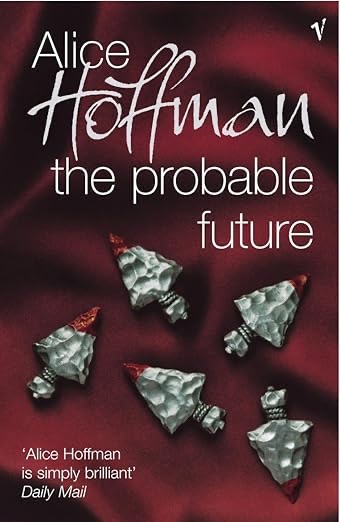
Hoffman unlocks the caskets of family life and the secret history of a community in this magical story about young love and old love, about making choices – usually the wrong ones – about foresight and consequences, all suffused with the haunting scent of roses and wisteria, and the hum of bees on a summer evening. I love the way Hoffman combines mundane every day life with magical events so skilfully you never question it. She draws you into these lives and her setting with all the enchantment of a fairy tale.

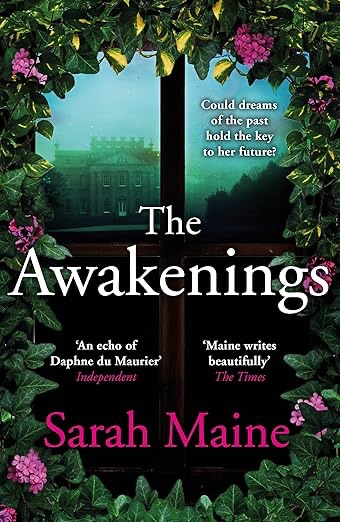
A grieving woman . . .
Yorkshire, 1890. Forced to exchange her childhood home for her uncle’s vicarage after a tragic loss, Olwen Malkon finds herself trapped between her aunt’s cruelty and the sinister advances of her cousin.

A troubled past . . .
When Olwen finds herself afflicted by strange dreams of a woman from a distant past, whose fate is overshadowed by menace and betrayal, those around her are determined to dismiss them as hysteria – except the local doctor, John, with whom she develops a connection.

A long-buried secret . . .
As the visions intensify, they begin to mirror reality, threatening to expose chilling secrets. What dangers lie ahead for Olwen, and does the past hold the key to her own future…?

This is the perfect mix of history and the supernatural as the character’s become connected through time. Olwen’s troubled present seems to change her into a conduit for an Anglo-Saxon woman, but her new power to see the past leads to concerns for her welfare in the present. This is really engaging and absorbed me completely.

Posted in Squad Pod Collective

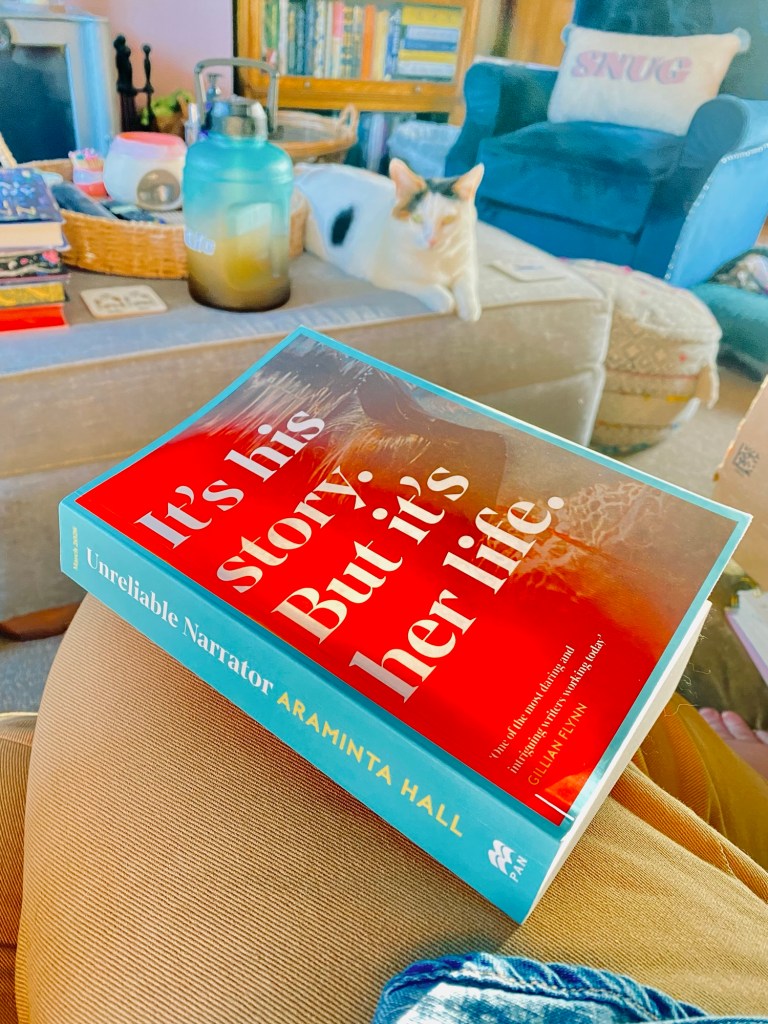
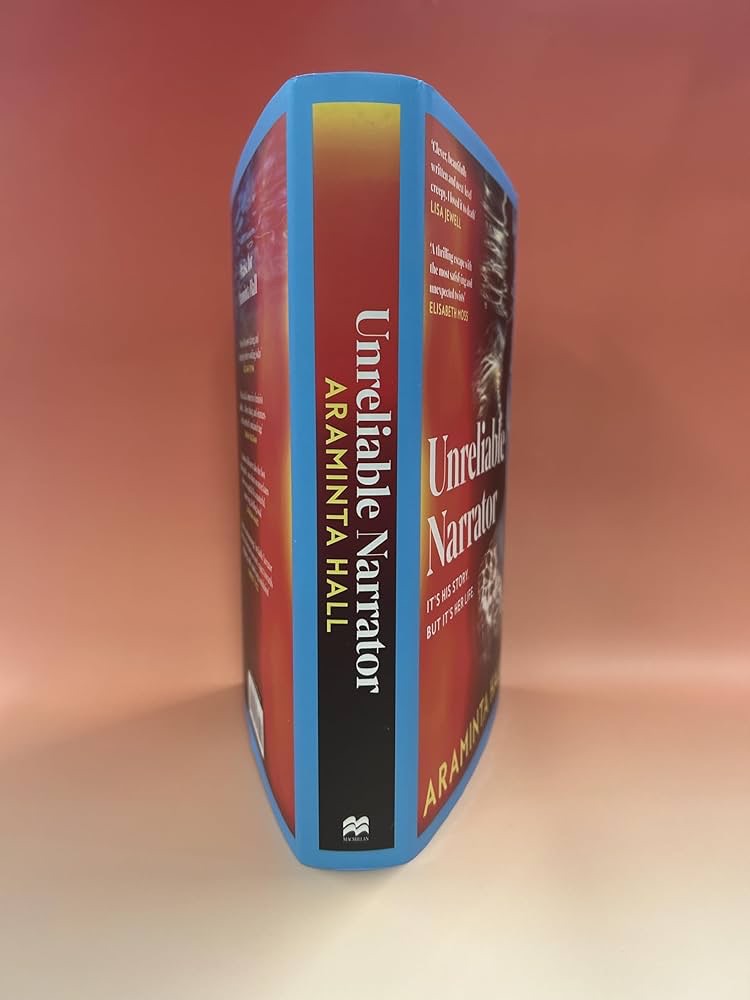
Unreliable Narrator by Araminta Hall 

YOUR SECRETS AREN’T SAFE.

Ten years ago, Hope left Somerset with a fatal secret and a broken heart. She has spent a decade in the shadows, living a quiet life of penance to protect the man she once loved – the world-famous author Ambrose Glencourt.

YOUR LIFE IS NOT YOUR OWN.

Then, she opens his latest bestseller. To the world, it’s a brilliant work of fiction. To Hope, it’s a betrayal. Every private moment, every dark truth, and every ‘fatal disaster’ from that summer is laid bare on the page.

YOUR TRUTH IS A LIE.

But Ambrose has changed the ending. In his version of the story, Hope isn’t the victim. She’s the villain.

Now, Hope must step out of the shadows to reclaim her narrative. But in a world of glamorous elites and whispered secrets, who will believe the word of an unreliable woman against the word of a literary icon?

Two narrators. One truth. And a secret worth killing for.

I was blown away by Araminta Hall’s last novel, because of how bold and timely it was. I wondered whether she could write something that would capture the world as it is now, crazier and more disturbing by the week. Well it turns out she can. Hope Jenkins takes a job with author Ambrose Glencourt as his personal assistant at his home, Shadowlands. Rosie, as he likes to be called, described the shadowlands as a place of imagination. However, its other meaning gave me a sense of foreboding – a thin place, the hinterland between life and the next, place filled with ghosts and spirits. It made me wonder, was this a place where the line between the real and the imaginary is blurred? The setting is the archetypal bohemian mansion, showing a lot of wear and tear, but still beautiful with idyllic grounds. The sort of place where books and art are piled everywhere, but the dishwasher is held closed with cord and a wooden spoon. Hope is stunned by her surroundings, it’s nothing like her mum’s flat and Rosie’s wife Delia is a fragile beauty who was a model for the artist Siegel when she was younger. Again though, little things stayed in the mind. The way that they call their staff by their Christian names in front of visitors, but Mrs A and B in private seemed odd. Delia seemed very keen to downplay her own artistic ambitions, always saying it’s just a hobby when she has her own studio and Hope can see she’s very talented. Then there’s a painting – in Rosie’s study, amongst the bookshelves he has a nude painting of a very young Delia with her legs wide open. It makes Hope uncomfortable and and she wondered whether that was why he kept it so public, or whether he liked to make other men desire his wife? 

I felt like Hope was dazzled by the Glencourts and the relationship seemed unequal. Whereas staff seemed to stay in the garden and kitchen, Hope and another guest at the house eat and socialise with the couple. Tom is introduced as someone who Delia has worked with when teaching pottery at an outreach for addicts. He and Hope have afternoons to spend together when Rosie has finished working for the day and it’s clear there’s chemistry. Yet I wondered why had Rosie and Delia taken Tom in and what exactly is the nature of their relationship? Is he as taken in as Hope is by this bohemian utopia? Perhaps not, as he discloses more secrets about the couple and explains: 

‘I’m not sure Rosie means everything he says, I think it’s more that he entertains himself by making people feel uncomfortable.” 

Little unexpected touches and comments made me uneasy about Rosie and there’s a very uncomfortable dinner scene that made me feel sick and awkward. Rosie’s dinner guests became horribly familiar, men who think their sex and status gives them licence to manipulate and bully others. We can feel the pressure of that summer building as the heat rises and I was utterly absorbed by it. 

Then we’re taken ten years later and Hope wants to make a statement to the police. We meet our narrator Nat, a young detective trying to get through her day and get home to her wife and kids on time. Nat is our narrator, coming into this ten year old world in our stead and trying to work out whether Hope is just a crank or a mad fan. However, there’s something about this Hope, a strange, sad lady and her journal, from a summer ten years before that catches her attention. This is an utterly different Hope, in fact she’s a woman transformed from that dreamy girl who fell in love with a lifestyle so far from her own. Now she’s working in a school office and doesn’t appear to be looking after herself. She returned home that summer in a state of delirium and shock and it looks like her life hasn’t recovered, although underneath the exterior there’s still a nurturing instinct and an ability to identify victims of abuse. She’s alerted by news of Ambrose Glencourt’s long awaited sequel to The Ruined Girl, his most famous and celebrated novel. Hope buys the first novel and as she reads she becomes more and more angry. This is Rosie’s version of that summer’s events written down for all the world to read and the character based on Hope is definitely the villain of the piece. He has taken the truth and twisted it. The only thing Hope has is her journal and as Nat reads Hope’s journal she does start to wonder whether there’s some truth in this? She’s experienced manipulation and abuse and something about this presses that trigger. She decides to visit Shadowlands for herself and meet the Glencourts, because even if Hope is mistaken about what ended her work with Rosie, something at Shadowlands feels wrong. 
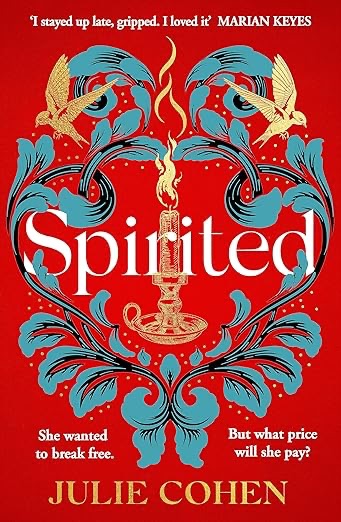
The structure is so complex, playing with stories and asking questions about how they’re told and who gets to tell them. Rosie made my flesh crawl a little, with the arrogant assumption that he can feast on anything to fuel his imagination and continue the important business of making literary art – there’s no downgrading his talent, unlike Delia’s. I really felt how much easier it is to work as a writer when you have money to support you and a mansion to live in. He discards all distractions, even those he’s created himself. I didn’t like his friends either and their little games, enjoying their ability to make someone much younger uncomfortable. Hope wants to be like him, to be able to “make language work that way as if it belonged to me”. What she didn’t realise back then was that there’s no one way to write, because each unique voice is just as valid. It just that certain voices are more likely to be heard because they follow the established narrative. Hopefully, we don’t have to sound like rich, middle aged white men any more. Hope has seen through the shiny exterior of Shadowlands and knows they’ll look down on Nat with her cheap suit and London accent. But could Rosie’s assumption of superiority be his downfall? This book sits perfectly alongside the #MeToo movement and the Epstein Files in that it’s a world operating on the assumption of silence. Hope isn’t silent any longer. Incredibly tense, twisty and timely, I was utterly under its spell from the first few pages. Ambrose Glencourt claims that in fiction “it’s much easier to blow a body apart than put it back together again.” For Hope’s sake I read this voraciously, full of rage and with everything crossed that Araminta Hall could do what Ambrose Glencourt couldn’t.

Out March 5th from MacMillan

Meet the Author

Araminta Hall has worked as a writer, journalist and teacher. Her first novel, Everything & Nothing, was published in 2011 and became a Richard & Judy read that year. Her second, Dot, was published in 2013.

She teaches creative writing at New Writing South in Brighton, where she lives with her husband and three children.

Araminta Hall’s novel Imperfect Women has been adapted for television by AppleTV starring Elizabeth Moss and Kerry Washington

Posted in Netgalley

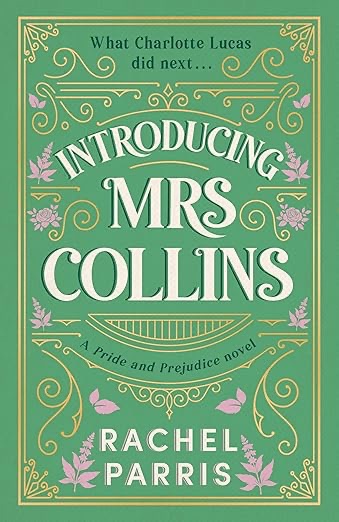
Introducing Mrs Collins by Rachel Parris

Charlotte Lucas has never been a romantic. Practical to a fault, she accepted Mr Collins’s proposal with clear eyes and a steady heart, trading passion for security. Life at Hunsford Parsonage may be quiet and predictable, but it is hers to manage – and she’s determined to make the best of it, whatever Elizabeth Bennet may think. 

That is, until an unexpected guest at Rosings Park turns Charlotte’s careful world on its head. He sees her, challenges her – and a spark is lit. But true contentment is not only about who you choose to love, but who you choose to be. For the first time, she wonders: has playing by the rules kept her on the sidelines of her own life?

It is a truth, universally acknowledged that a sick woman in bad humour will be revived in the company of a witty novel…

This is the Pride and Prejudice inspired novel I’ve been waiting for and it came at the perfect time, when I’ve been feeling very unwell and was stuck in bed. I read for two days between sleeping and I swear it kept me sane. I always felt that Lizzie Bennett underestimated her friend Charlotte and I wondered what happened to her and Mr Collins in the future. It’s a great reminder that we only see a novel’s events through the gaze of our narrator and central character. The same events, viewed from a different perspective, bring a more balanced and multi-faceted view of what happened in the novel and its characters. The events of Parris’s novel take place during and after Pride and Prejudice, from the point that Lizzie rejects Mr Collins proposal. A decision that pleases her father but sends her mother into conniptions! Lizzie’s choice means that once Mr Bennett dies, Mrs Bennett and all of her daughters are at the mercy of Mr Collins, the male heir. Whoever he chooses to marry will become mistress of the Bennett’s home Longbourne. Charlotte Lucas is our focus, Lizzie’s best friend and now the recipient of Mr Collins’s attentions. The author has added inserts from the past, adding depth and insight to both Charlotte and Mr Collins’s characters as adults. We see events that we have only imagined, like the Darcy’s wedding at Pemberley and its ensuing drama. However we also see Charlotte settle into the everyday of married life, with all its strangeness and frustrations. I left Pride and Prejudice a little worried about Charlotte, even though the way she does talk about life at the parsonage with humour and optimism when Lizzie visits. So this story of her growing relationships, her new home and her dissatisfactions with her new life is so welcome. What she misses most is passion, but if it arose would she be able to resist it? 

Charlotte is viewed with pity by the Bennetts, apart from Mrs Bennett who is wailing that she will be the mistress of their beloved home. I felt like Charlotte knows her prospects are few. She’s witty and fun, but she knows she doesn’t have the charm and looks of Lizzie. She is someone who people get to know slowly and hasn’t reached her full potential yet. Mr Collins was always a pragmatic choice, but here I could also see it as a mature and confident choice. The Bennetts may see Mr Collins as ridiculous and in some ways he is, but Charlotte doesn’t see her worth as solely defined by the man she chooses to marry. He may be thought of as silly, but that doesn’t mean she is. Also, as Mrs Collins she has a beautiful home and garden, a steady income and a benefactor in Lady Catherine de Bourgh. As a married woman she has status and purpose, going out to visit sick parishioners and keeping the home running smoothly. While Mr Collins is busy Charlotte spends her hours in her library continuing to educate herself, she tends her garden and she practises her piano at Rosings. Charlotte is able to be happy and content in her own company, separate from Mr Collins’s anxieties and emotions. In this light we also see Lizzie differently, perhaps even as a little spoiled. As we see in this book, Mr and Mrs Bennett are the architects of their daughter’s misfortunes and their attitudes are clear in two crucial letters they send to the parsonage. Darcy’s assessment of the family, unwisely passed on to Lizzie during his first proposal, is absolutely correct. Mr and Mrs Bennett’s leniency with their younger daughter’s behaviour allows a window for Mr Wickham to connect with the foolish Lydia. It’s their behaviour that prompts both Darcy and Caroline Bingley to warn Mr Bingley away from his attachment to Jane. In letters to both Charlotte and Mrs Collins, the Bennett parents show they are both fierce in the defence of their daughters but spiteful towards the recipients. Mr Bennett calls Lydia unwise, but at least not judgmental – a criticism that Mr Collins perhaps deserves. However, in a letter to Charlotte Mrs Bennett shows awful spite in an unnecessary postscript: 

“I saw your Maria this week at church and she is become such a beauty! What a pleasant girl – always with a smile and a manner that puts one at ease. You would not think you were sisters.” 

However, I did come away with some forgiveness for Mrs Bennett’s view that Lizzie might have thought of her mother and sisters when she refused Mr Collins, because now they would surely lose their home. It’s clear that Mr Bennett has little respect for his wife and for good reason on some occasions. However, he does favour Lizzie and perhaps his treatment of her has led to Lizzie thinking she has better prospects than she does. Luckily fate brings her Darcy but I did understand Charlotte for thinking that luck just seems to fall into her friend’s lap. 

I felt like Charlotte blossomed in her new environment and that sometimes it is because of Mr Collins not despite him. If nothing else he shows kindness and understanding. The vignettes of his childhood show a sad history that goes some way to understanding his character better. However, it is a connection that she never expected that seems to bring out a new side to Charlotte. An unexpected visitor to Rosings Park brings her friendship and an affinity she never expected, not to mention a passionate spark. I loved the point in the novel when Mr Collins has both a revelation about his wife and is genuinely awe inspired by her. As she plays a piece on the piano for a gathering at Rosings, Mr Collins sees his wife anew: 

“This poised assertive woman was a vision, undaunted by entertaining a room of high-born people in a house such as this with the talent he had no idea she possessed […] she was splendid and her splendour shook the foundation of his peace of mind. Whereas another man might have felt only pride in his wife, for Collins, this feeling was mixed with something much more disquieting. She is beyond me: what he felt was I will not be able to keep her.” 

This is a worry born of never being enough for his father, who tried to change him by whatever means necessary. I felt the author didn’t excuse all of his failings, but explained what was behind them. The narrative voice is so incredibly good that this didn’t feel like a stranger telling me about these characters I knew very well. It felt like a continuation; a meeting with old friends. Of course the author does bring some of our modern thinking to the story, otherwise we wouldn’t be hearing about Mr Collins’s childhood – a psychological aspect to character we wouldn’t perhaps expect in a book pre-Freud. I won’t touch on Charlotte’s eventual fate but I will say that Mr Collins definitely has a part in it. Maybe not in the most romantic sense, but sometimes there’s a kind of love in duty and honour. I love Rachel Parris’s humour and there’s plenty of that here, with the tone and the wit feeling positively Austen-esque. I could tell by how well each character was drawn that the author loved her books and wanted to do them justice. I think she has.

Meet the Author

Rachel Parris is a BAFTA-nominated comedian, musician, actor and improvisor, best known for her viral segments on The Mash Report and Late Night Mash, which have garnered over 100 million views. Her TV appearances include Live at the ApolloWould I Lie to You?QI and Mock the Week, and she is a regular guest on Radio 4’s The Now Show and I’m Sorry I Haven’t a Clue. She co-hosts the popular podcast How Was It for You? with her husband Marcus Brigstocke. Rachel also wrote and presented a Jane Austen comedy programme, Austensibly Feminist, about how to view Jane Austen as modern feminists. Rachel is a founding member of the critically acclaimed improv comedy group Austentatious, in which the all-star cast invent a play based on a title suggestion from the audience. As a touring comedian she has performed her award-winning musical comedy to sell-out audiences across the UK.

Posted in Netgalley

The Witch Finder by Tracy Whitwell

This is the fifth and final installment in the hilarious Accidental Medium series featuring Tanz, who with the help of the dead, has become an unwilling crime-solver.

When Tanz returns to her hometown in Newcastle, she comes face-to-face with dark, ancestral secrets lurking in its shadows. Haunted by chilling visions of the witch-trials, a voice from the past warns her, You’re the one. Burn it, chosen one. As a sinister figure threatens to ruin everything she’s built for herself, Tanz must embrace her connection to the dead to uncover her destiny.

With everything on the line, Tanz finds herself entangled in a web of folklore, mystery and imminent danger. Elements collide as the echoes of history demand intervention and new relationships entwine in her mystical journey. Tanz must wield courage against paranormal forces and listen to old and new allies in order to prevent ominous threats from consuming her world.

Will Tanz unravel the mysteries surrounding the witch pricker and her own lineage in time, or will she fall prey to the darkness that stalks her?

I love a good witch story and the Accidental Medium books have been a brilliant series from Tracy Whitwell. So much so that I’m really sad this is the last set of adventures for our titular accidental medium Tanzy. I love the combination of magical and ghostly goings on with our down to earth and sweary Geordie witch. This time the atmosphere is slightly different as we’re delving into the history of witches in Tanz’s home town of Newcastle. After returning from her exciting and romantic exploits in Iceland, she takes a worried call from her ‘little mam’ who has had strange and unsettling dreams about hangings. As usual Tanz tries not to alarm her mam because she isn’t comfortable with the family gift, but Tanz has also had similar dreams of feeling a bag over her head and a noose around her neck. She gets straight into the car and drives home and not a moment too soon since someone has thrown a dead hare over her parent’s garden wall warning them away, but from what? Newcastle is a lovely city and I enjoyed seeing Tanz in her own environment. She soon calls her friend Sheila to join her and tries to find out as much as she can about the city’s history with witches. As a contrast to the friendliness of people and the buzz of a lively city, Tanz starts to notice an atmosphere change heralding one of her visions. She notices storm clouds suddenly gathering and rain lashing down, especially when she’s confronted with the figure of the witchfinder, Matthew Hopkins. More disturbingly, he seems to be able to see Tanzy too and tries to attack her with his ‘pricker’ – the implement he uses to test whether marks on a witch’s skin bleed or not. In one terrifying scene he makes a swipe for the window of a tearoom leaving a scratch down the glass and down Tanzy’s cheek. As they research Hopkins in the library, Tanzy finds out that he identified several witches who were all hanged together on the common. She can hear Hopkins’s hatred of women and there were definite parallels with the current political situation around the Epstein files and Andrew Tate. 

“All of them are witches, these sly cows with their lies and their ‘ways’. Once they’ve bred we should hang ‘em all. More peace for us”. 

Tanzy feels more powerful than ever after her trip and her meeting with the Icelandic magical folk, there’s also the matter of Thor who it’s quite clear she’s fallen in love with. Her visions are so incredibly vivid and they seem to tire her more easily. In fact she collapses on the common at one point and ends up covered in mud. Tanz feels the emotions of the witches who’ve been imprisoned for a long time, broken down by lack of food and unsanitary conditions, not to mention the way they’ve been treated by the male guards. Hopkins was being paid ‘by the witch’ so it’s in his interest to find as many as possible. Tanz and Sheila soon realise that his pricker is false, with a needle that disappears inside the shaft when he uses it, leaving no marks on the woman and branded her a witch. In her usual frank language Tanz brands him ‘ a cunt and a shithouse’ which made me laugh out loud. When she’s not incensed, Tanzy is delightfully warm and open, making friends with a couple who own a small bar near the hotel and an Amazon woman called Lydia who definitely dresses like she enjoys taking up space! She is also connected to the mass hangings and has been researching her family tree and local witches at the library for years. There is also a new ghostly friend, a hooded lady called Mags who is an absolute mischief and brings some comic relief between the most serious scenes. In the bar, Mags terrorises a cocky young man who is manipulating his shy girlfriend by moving his drink and pulling his chair away. She proves very useful and doesn’t leave Tanz’s side until the spiritual warfare is over. 

I did really worry for Tanz this time, especially when Sheila is laid low by a cold and can’t accompany her. Tanz knows she needs to be on her guard, but the plight of these women have left her feeling furious constantly. There will be a final showdown and with this being our last adventure I was on tenterhooks wondering whether Tanzy would come through okay. While I love all the characters in the book she is the magic spell of this series. Her earthiness and Northern wit balance out the more ‘woowoo’ aspects of her life and I wondered if it was time for her to return home? Somehow, despite nothing being resolved between them, Tanz also seems quite settled in her feelings for Thor and the more settled she is the more powerful she seems. As she’s offered a completely unexpected opportunity I really hoped she would take it. I recommend this whole series to anyone who enjoys a touch of the supernatural with a side order of history and realism. I’m going to miss Tanzy hugely but I’m excited for what this author might do next too.

Out now from Pan MacMillan

Meet the Author

Tracy Whitwell was born, brought up and educated in the north-east of England. She wrote plays and short stories

from an early age, then moved to London where she became a busy actress on stage and screen. After having her son, she wound down the acting to concentrate on writing full time. Many projects followed until she finally found the courage to write the first in her Accidental Medium series, a work of fiction based on a whole heap of crazy truth​. Apart from the series, Tracy has written novels in several other genres and also writes mini self-help books as the Sweary Witch.

Tracy is nothing like her lead character Tanz in The Accidental Medium. (This is a lie.)

Posted in Random Things Tours

A Complicated Woman by Rebecca Lucy Taylor aka Self Esteem 

“I never could′ve told you anything I long for

While I was in the water swimming ‘gainst tides we′re taught to

Take it in our stride, laugh it off, take it on the chin just right

Don’t be too loud or too quiet, but I got all this fight

And now I see it clear with every passing of each year

I deserve to be here

And every time I fall, I crawl back like an animal

My focus is powerful.”

I knew I was going to love Self Esteem when I first caught her set at Glastonbury a few years ago, referencing 1990 Madonna with her black suit and corset. What made me stop and watch was that instead of the iconic John Paul Gaultier conical bra each breast was covered with the dome of Meadowhall Shopping Centre in Sheffield. At that point I didn’t know that Rebecca Lucy Taylor was born there but I could see she had a sense of humour, a sense of where she was from and had something very powerful to say as the above lyrics from her song Focus to Power show. In the intervening years Self Esteem has become a creative force with three solo albums, including A Complicated Woman this year. She had a Mercury Prize nomination for her album Prioritise Pleasure in 2022 and was the BBC Music Introducing act in 2021. She is not just a singer, she’s a multi-instrumentalist and has composed for theatre and became a West End lead in 2023/24 playing Sally Bowles in Cabaret. She’s been awarded an honorary doctorate in music from the University of Sheffield and a portrait of her hangs in the National Gallery. Now she has written a memoir, bringing together notes and lyrics, journal entries and observations on life as a woman in the 21st Century, referencing relationships, abuse, self-worth, creativity and living under the weight of the impossible expectations we impose on young women. The blurb refers to it as a ‘subversive anti-Bible’ and a ‘cathartic scream of a book’ and it is raw, emotional and so incredibly exposing. I will be buying it for my stepdaughters. 

The narrative is jagged and feels unfinished, a structure that underlines the theme of being the ‘finished’ article something that applies to both the professional and personal self. Creative work never feels fully done. I always imagined that when writing a book I would know when it was complete and I would feel satisfied that it was finished. A piece of writing is always open to change, but we have to let it go at some point and finishing is a collaborative process with mentors, agents, editors and might end up looking different to what you expected. Similarly as people we are never finished, the self is not one fixed thing and can be influenced by mood, something we watched, whether we slept well or not and interactions with others. I think we imagine as children that there’s a point where we become an adult and our self is a fixed thing, but the self is fluid and open to change until the last day we’re alive. The author writes that she wakes up knowing it’s going to be a day when her brain is against her. So out of all the options open she decides on the middle ground: 

‘Ultimately doing nothing garnished by a little of what I as a child imagined being an adult would be. A coffee in a cafe, walk to the cinema, watch an art house film alone, walk home.’ 

It’s almost a fake it till you make it idea. The self is just a raw block of clay but we still go out there, pretending to do what we think adults should.

Self Esteem at Glastonbury 2022

Toxic relationships are also a huge part of the book and it’s clear there was one in particular that was coercive and damaging. Tiny little snippets of information are dropped about him and I identified strongly with how she feels at these times. She addresses him remembering that: ‘ he made sure to take at least two pieces of jigsaw and hide them so it could finish it himself.’ It made me shiver with recognition. My heart broke for her in this paragraph: 

“I’ll never forget the first time it cracked and he became someone else. I spent that night trying to sleep on the floor and reaching back up to him in his single bed, sleeping soundly. Offering my hand over and over through the night. – And forever he held back. Each tendon in his fingers finally gracing me with tension. And in that moment the sickness in my stomach was gone and the addiction to his acceptance began.” 

She clearly spent years trying to please this person, to be enough but not too much. Enough in the right way that was acceptable to him. A rollercoaster of arguments followed by apologies to make things nice again, a blissful few weeks when he’s happy because she made herself smaller, then a withdrawal of affection, hurtful comments and arguments. It’s a place I’ve been and it only ended when I accepted I was enough, just as I was. I still feel sick to my stomach when something takes me back there and this really hit home. As she says, ‘tell me anyone who left when they should have.’ She also addresses the inevitable question of children, something women are always asked and I have noticed that I make a lot more sense to some friends now I have stepdaughters. The author wishes she could just have one, now, not because she wants one just because it would be done and people would stop asking. They ask as if you’ve forgotten to do it. There’s a point in the book though where change begins and it’s in a letter, because unsent letters have such power. It’s a letting go leaving the path clear to be whatever.

We get the sense of a person who has a huge and imaginative inner world, but is hampered by her own mind throwing out options, constantly questioning whether this or that is the right thing to do. There’s a very busy internal critic here and while the author may be an over-thinker and struggle with anxiety, I think this second-guessing herself is a habit many women have. It starts with parental pressures of what a girl should be, educational expectations influenced by gender, societal expectations of what an adult woman should want and how successful she should be. It’s as if feminism succeeded in giving women more choice, but also more expectations rather than equality. Yes of course we can have a career, but then you must go home and more than a fair share of housework, cooking, laundry and having the mental load of who eats what, which week a friend is coming to stay and an encyclopaedic knowledge of where every object belonging each family member might be found. On top of that are grooming standards, the endless opinions on whether women should age naturally or have surgery, when they should stop wearing short skirts and how to keep their sex lives spicy. No one asks a man when he’s going to fit in having a child or whether he should sacrifice his career for his family. This pressure is described beautifully here as it runs throughout the narrative alongside the extra pressures of being creative and a famous woman. Everyone talks about America Ferrarra’s speech in the Barbie film about what a woman is but I find the author’s words much more affecting as she writes a poem about herself as the woman she feels society wants her to be. A woman who eats the right things, who makes money but stays generous and humble, who is modern and desirable, but above all things maternal. It reads like a modern fairy tale.

‘I had one thousand friends and each and every one was happy with me, and felt I had given them enough time and attention’. 

It feels like slicing yourself into a thousand different pieces to be everything and keep everyone happy and they all think you’re amazing, but you’re still slicing yourself. It takes therapy, age and self-acceptance to throw off these expectations and doubts. In amongst this torrent of emotions there is a down to earth feel and a sense of humour that comes out a lot in lists – ‘things I should have said no to’ being one. There are also blunt truths that she clearly can’t say to the person but records in her diary – ‘I want to be fucked like that but not have to hear about your Edinburgh show.” I loved this directness, tempered with humour. It also shows how hard it can be for some women to say what they want and don’t want without judgement. 

She gives us an insight into how those judgements are magnified in the music industry, where you’re trying to get your creative work out there but are being told you’d sell better if you wrote a certain way or were a bit more attractive. If she’d compromised she’d have a record deal by now, she’s told, why is she so difficult? This is a tale we’ve heard again and again in the music industry but it has to keep being said till something changes. We’ve heard it from the incredible Raye who wrote for other people for years because her own stuff didn’t fit in a specific box, or Cat Burns who writes about how difficult it is to know how to be the human everyone expects. Paloma Faith is an incredible inspiration and I watched a clip of her speaking to students at the university graduation. She has delved into music, fashion, writing, broadcasting and art and she passed on an incredible bit of advice – she has always been brimming with ideas and would worry that she couldn’t fix on one way to get these thoughts and ideas out there. She remembered a conversation with one of the tutors who said she didn’t have to fit all of her ideas into one mould. One idea might be a brilliant book, rather than trying to condense it into a song but another might be better suited to fashion or art. She didn’t have to fit into one mould. I think Rebecca is the embodiment of that idea, brim full of ideas and happy to range across music gigs, theatre shows, dance, tv appearances and memoir writing. The point is the creativity, not the medium. 

I can think of so many women who can take something from this book and it will sit happily up on my shelf with writing from Caitlin Moran and Paloma Faith, hugely creative and intelligent women with a lot to say. It renewed something I’ve been wrestling with in my own head now I’m hitting menopause and middle age – it’s ok not to ‘grow up’ but take joy in every new incarnation of yourself and the changes it brings. It’s subversive in a world where we’re told we should be striving to stay young and relevant. to be unhappy getting older. I found so much inspiration in this memoir, both personal and creative, as well as a wonderful feeling of being seen. 

Posted in Monthly Wrap Up

Best Reads August 2025

It’s been a month of crime/thriller reads and historical fiction, plus a couple of crime and historical combinations which I really enjoy. It’s also been a month where I found it difficult to concentrate because finally, after five years of brown tiles, lime green walls and cupboards with no handles we have been able to afford to renovate the kitchen. So for two weeks we have had no ceiling, no floor and no hob. As of Monday, we will be cooking in the garden until everything is back together again. I am not good with chaos so if you can imagine me wedged into a corner on the sofa with the contents of every kitchen cupboard taking up the study and other end of the living room. Hopefully only two weeks left to go. It can’t come soon enough. The other half is building the seating area under the pergola at the bottom of the garden. It feels like a symphony of drills and hammers at times but it will be lovely to be able to go and sit outside and read with roses growing around me. So much to look forward to in September with some fantastic reads on the list too. ❤️ 📚

Unbelievably this is the third novel from Kate Foster and firmly puts her on my ‘must-buy’ authors list. They’ve all been worthy of a place on my best reads list but I think this is her best yet. Maggie is a young girl from Fisherrow whose father is a fisherman and her mother ons of the fishwives who help bring in the catch, clean it for market and then repair nets ready for the next day’s fishing. She, her parents and sister Joan live in a one bedroom cottage but Maggie dreams of a life so different to this, where there isn’t back breaking work and she’s not at the mercy of her father’s drunken temper. So when ambitious trader Patrick turns up at the door, looking for somewhere to keep goods for making perfume she senses a chance. She knows Joan is prettier but she would make a far better wife to help him in his business. Luckily he sees this in her and after a short courtship they become married and set up home in a cottage in the village. They are happy until suddenly Maggie gets the news that a press gang has been to the hotel and Patrick was one of the men taken for the navy. Somehow Maggie finds herself travelling to London, to build her new life. At a stopover in Kelso she takes a couple of weeks to stay and earn some money. She knows now she is pregnant and conceals it, to keep on working. So how does she come to be in Edinburgh a few months later, being sent to the gallows on charges of concealing a pregnancy and killing her baby. Yet miraculously she survives the hanging, how and what she chooses to do with her second chance at life are the main contents of this brilliant novel. I loved the history, the growing up that Maggie does on her journey and how brilliant an advocate Kate Foster is for these women she finds in historical documents, often in dire situations at that time for ‘crimes’ it’s hard to comprehend today. Most of all I loved the bold, feminist take on Maggie’s life and the links that could be made with modern day politics. Brilliant.

My second historical fiction read of the month was this mesmerising and clever thriller from Laura Shepherd-Robinson that’s jumped straight onto my books of the year list. The Art of A Lie begins in a confectioner’s shop called the Punchbowl and Pineapple, run by the newly widowed Hannah Cole. This is the late 18th Century and Hannah grew up in the shop that was started by her grandfather. Her husband Jonas had been her father’s apprentice and now she must keep their shop running for it to be handed to his cousin. Jonas was found down river, washed up by the Thames with head injuries and missing anything of value including a watch given to him by Hannah that used to belong to her grandfather. Novelist and magistrate Joseph Fielding visits Hannah to say he is investigating Jonah’s murder, for he doesn’t think it’s as cut and dried a case as it might seem. Thank goodness for the lovely William Devereux, a friend of Jonas’s who introduces himself ar the funeral. He calls on Hannah at the shop, hearing of Joseph Fielding’s interference in the case and hoping to be of help. He gives her his grandmother’s recipe for iced cream, thinking it may be a hit with her customers and could tied her over until the case is closed and Jonas’s estate is released. Laura tells this tale so cleverly, drifting between narrators and shocking us with an aspect of their characters or the case. Both are fascinating and not necessarily what they appear to be at first. With each revelation I became more and more intrigued with this cat and mouse game and the psychological make up of those involved. Hannah is an astute businesswoman, good at reading people quickly and usually accurately. It’s hard to tell at times who is scamming who and I was so utterly entranced I was still thinking about it a week later. Simply brilliant in its setting, historical background and the constant simmering tension.

A modern thriller this time from one of the Queens of the genre and this really was an up to the minute tale of secrets, lies and murder. Gwen is an older widow, living in a complex of smart apartments in a nice area. She has decent neighbours, some of whom she might call friends. When her nearest neighbour Alex is looking for a new lodger she meets one of the candidates, Pixie. They start chatting and she is pleased to hear when the Britpop one hit wonder decides to offer her the room. Pixie gets a job at the bakery and cafe that Gwen frequents and they get on very well, so Gwen is disturbed to hear what sound like arguments from across the hall. She also catches a phrase that sounds like ‘you knew the deal when you moved in. When she catches up with Pixie she’s disturbed to hear that the deal involves sex in lieu of rent. She confronts Alex and takes Pixie in, writing a complaint to the building’s governing board. Her neighbour Dee tells her that she talked to her daughter Stella about it and she’s been making a documentary news item about the growing ‘sex for rent’ scandal. Would Pixie like to be interviewed? Soon the story is out of control, Alex is angry and denying everything and Gwen is public enemy number one. I loved how ‘of the moment’ this was with Gwen at a loss when it comes to freelance investigative journalism, sex for rent, trad wives and influencers. As she starts to feel out of her depth, those around her continue to manoeuvre and manipulate until life will never be the same again. This was so tense and the eventual murders most unexpected indeed.

I had the luck to read two Mark Edwards novels in August. a throwback to last year and this, his brand new thriller. The Wasp Trap was the jokey name given to a side project. While trying to form an algorithm for one of the first ever online dating apps, a group of university students have another idea. Each one specifically chosen by their professor, Sebastian, they are the best in their fields and are spending their summer at his mansion in the country. Will tells our flashback story, the creative who is meant to be coming up with a name for their site he is also hopelessly un love with Sophie but too scared to make a move. Together they come up with ‘butterfly.net’ but it’s Lily who comes up with a side project – an algorithm that could identify psychopaths. Statistically one of them could be and since they’re serving as guinea pigs for the dating apps why not for this? Now decades later they are gathered again, this time at Theo and Georgina’s mansion – the couple got together that summer and are married with two daughters. Strangely, they announce that one of their daughters is missing so it seems an odd time to have a dinner party. They also have caterers which is unusual for them, so Will isn’t shocked when it turns out to be a cover. The fake chef is Callum and he gives them an ultimatum- he’s giving them an hour to think and when he returns he wants to know the secret from that summer. If the secret isn’t divulged then someone will die. The tension rises as the hour ticks down, who has a secret? How do they know which is the right one? As Callum comes back into the room they’re left in no doubt that he means business. The rising and falling of tension is pitch perfect and in between the action we get flashbacks to that summer where more than one person is holding a secret and we start to wonder who exactly was the psychopath that Lily was searching for.

My final recommendation for last month is this last novel in the historical fiction quartet about the agony aunt of the Women’s Friend, a magazine running during WW2. It was lovely to be back with the gang and particularly Emmy Lake as they enter the final and arguably most difficult stretch of WW2. After five years of war both the team and their readers are tired. As a way of boosting morale at the magazine Emmy suggests they all decamp to Bunty and Harold’s in the countryside. As Hitler’s V1 and V2 bombs start to hit, it will certainly be safer. Emmy strongly feels they all need a boost in order to keep supporting and inspiring the women who read their magazine. If they’re tired and the magazine suffers, how will their readership keep the fight going? Emmy throws herself into rural life and is soon organising games nights, competitive knitting and planning the very important wedding of their officer administrator Hester and her fiance Clarence. She also has a phone call from the ministry to travel abroad and report from the French field hospitals and even manages to mastermind a break into husband Charles’s barracks before they’re both deployed. Emmy has no idea how much she’s going to need those around her in the coming months as her hardest test is yet to come. On their return to London she receives a telegram to say that Charles is missing, presumed captured in enemy territory and she has the agonising wait for the confirmation letter. Then Hester receives a blow when Clarence calls to say he’s being deployed in three days, two days before their planned wedding. Hester is inconsolable and after catching Emmy in a moment of frustration, she disappears. However, Emmy isn’t one to dwell on her misfortunes for long and I wondered what schemes and plans she would hatch next. 

The author doesn’t let us forget the sacrifice and loss in people’s lives, but still manages to bring in humour and a defiantly upbeat, make do and mend attitude. This is the closest I’ve seen Emmy come to breaking point and it’s hard to when you’re the one whose role it is to buoy everybody else up. As she finds out though, those who she’s helped and supported are so happy to be able to return the favour and support her. This is a set of books I always recommend, to women of all ages, because it’s so easy to relate to one of the characters and absolutely root for them. The main impression I take away from them is that sense of female solidarity. The instinct we have to come together, share the load and make each other’s lives a little easier from taking on someone’s children all the way down to being there with a meal or a shoulder to cry on. Emmy uses her writing to do the same and triumphs in being exactly what the magazine promises – the Woman’s Friend. 

Here’s a hint of what I’ll be reading in September:

Posted in Netgalley

Dear Miss Lake by A.J. Pearce

It was lovely to be back with the gang at Woman’s Friend magazine and particularly with our narrator Emmy Lake as they enter the final and arguably most difficult stretch of WW2. After five years of war both the team and their readers are tired. As a way of boosting morale at the magazine Emmy suggests they all decamp to Bunty and Harold in the countryside. As Hitler’s V1 and V2 bombs start to hit, it will certainly be safer. Emmy strongly feels they all need a boost in order to keep supporting and inspiring the women who read their magazine. If they’re tired and the magazine suffers, how will their readership keep the fight going? Although they’ll still be working, the children, the animals and the beautiful countryside should have the desired effect. Plus, for Emmy, she’ll be closer to where her husband Charles is posted and she’ll be with her best friend Bunty. Emmy throws herself into rural life and is soon organising games nights, competitive knitting and planning the very important wedding of their officer administrator Hester and her fiance Clarence. She also has an important phone call from the ministry to travel abroad and report from the French field hospitals looking after the wounded. She even manages to mastermind a break into husband Charles’s barracks before they’re both deployed. Emmy has no idea how much she’s going to need those around her in the coming months as her hardest test is yet to come. On their return to London after the summer she receives a telegram to say that Charles is missing, presumed captured, in enemy territory and she has the agonising wait for the confirmation letter. Then Hester receives a blow when Clarence calls to say he’s being deployed in three days, two days before their planned wedding. Hester is inconsolable and after catching Emmy in a moment of frustration, she disappears. However, Emmy isn’t one to dwell on her misfortunes for long and I wondered what schemes and plans she would hatch next. 

This is a very fitting end to the Emmy Lake series, because it showed, no matter how Pollyanna our attitude is, it is okay to sometimes find we’ve run out of steam. It’s hard to imagine what five years of war must feel like when we take into consideration women having to work, look after children, support their husbands and face the fear of losing someone important to them or even their home if situated in London or other major cities. The nearest thing we have to such upheaval is the COVID pandemic and that meant two years of shielding for me. However, I still had tv to stream, books to read and could send myself little treats from Amazon or Betty’s tearooms. I can’t imagine how I’d have felt if I was exhausted from working, missing my husband, had the possibility of a bomb coming through the ceiling and had to find the tenth thing to do with a cabbage. Although the Lakes and friends are relatively okay financially, many were not and the author brings in these experiences through the magazine where some readers are infuriated with the magazine’s rather chirpy, optimistic tone or want to vent about the desperate situations they’re in. I loved the storylines about unexpected pregnancies as I could really understand getting carried away in the moment when someone you love is being deployed to fight, perhaps never to return. I could also imagine myself being swept off my feet by an American GI or one of the Polish airman posted only a few miles away from my village all those years ago. I could absolutely understand why some readers lost their faith in the magazine and whether it’s writers truly understood the predicaments some readers were in. I could also understand if Emmy did run out of patience, because sometimes the only answer is ‘talk to the people who love you’ no matter how angry or disappointed they might seem at first. It always gets easier.

 When news arrives that Charles’s secret mission was Arnhem and he’s been captured behind enemy lines, it takes a while for Emmy’s emotions to catch up with the news. She has all the information at her fingertips, having had years of finding out what to do for her readers. Practically she’s doing all she can, plus organising the Christmas Fair and making connections with other POW wives. She’s particularly proud of the piece she wrote for the ministry on the military hospitals so hopes for another mission. When she, the editor and publisher are pulled in for a chat the news isn’t good. It’s this that seems to bring her to a standstill. Returning to the magazine office she’s despondent and feels a deep sense of injustice, leading to a sudden and misdirected rant. Things go from bad to worse when the next morning, Hester has gone missing. Emmy knows she took her cancelled wedding plans hard, but surely that’s not the reason for her disappearance? Could it have been her own moment of anger and emotion that provoked this sudden reaction? Emmy realises how much of a lifeline they all are to each other and resolves to find her, whatever it may take. 

A.J. Pearce has written a triumph of a series in this quartet of books and in her main character too. We’ve experienced the ups and downs of different editors and publishers, the staff’s other responsibilities for their families and war jobs such as the fire service or driving ambulances, as well as terrible losses on the battlefield and in the Blitz. Through what seems on the surface to be a light-hearted and perhaps frivolous lens, I’ve learned so much about what it was like to be a young woman during WW2. It’s given me an insight into my grandparent’s generation – my Aunty Connie who was an unmarried mother and a subsequent marriage to my Uncle John who suffered from PTSD after his ship was attacked and his friend was blown up right next to him. My grandad went into the army just as war was ending and experienced the other side’s struggles – German cities destroyed by our bombardments and people living in the ruins of their homes. I don’t know if I’d have the strength and determination to contribute in the way people did, something brought into sharp focus when I had to discuss what the war in Ukraine could mean for those who’ve served in the forces but are still under reserve? Could I cope if he was called back in?

Strength is one of those things we find reserves of when the situation demands it of us and I have no doubt I could keep the ‘home fires burning” but I certainly don’t have the grit that some of the Ukrainian women are showing, having lost their husband then joining up to fight themselves. I feel the author doesn’t let us forget the sacrifice and loss in people’s lives at this time, but still manages to bring in humour and a defiantly upbeat make do and mend attitude. This is the closest I’ve seen Emmy come to breaking point and it’s hard to do when you’re the one whose role it is to buoy everybody else up. As she finds out though, those who she’s helped and supported are so happy to be able to return the favour and support her. This is a set of books I always recommend, to women of all ages, because it’s so easy to relate to one of the characters and absolutely root for them. The main impression I take away from them is that sense of female solidarity. The instinct we have to come together, share the load and make each other’s lives a little easier – from taking on someone’s children all the way down to being there with a meal or a shoulder to cry on. Emmy uses her writing to do the same and triumphs in being exactly what the magazine promises – the Woman’s Friend. 

Meet the Author

AJ Pearce was born in Hampshire, UK. Her favourite subjects at school were English and History, which now (finally!) makes sense.

Her debut novel Dear Mrs Bird was a Sunday Times Bestseller and Richard and Judy Bookclub Pick. It was shortlisted for Debut of the Year at The 2019 British Book Awards and has been published in the USA, Canada and Australia and in translation in over fifteen languages.

Dear Mrs Bird was the first in AJ’s series The Wartime Chronicles which now includes Yours Cheerfully and Mrs Porter Calling. Her books are funny, sometimes extremely sad, but always uplifting stories about a group of women standing together to face the challenges of World War II.

The fourth and final book in the series, Dear Miss Lake, will be published in the UK on 5 July 2025 (and on 3 August in the USA and Canada).

When not writing books, AJ enjoys being fairly rubbish at a variety of hobbies and has recently started to learn to paint, with so far messy although enthusiastic results.

Follow AJ on Instagram, Facebook and Threads: @ajpearcewrites.