Posted in Netgalley

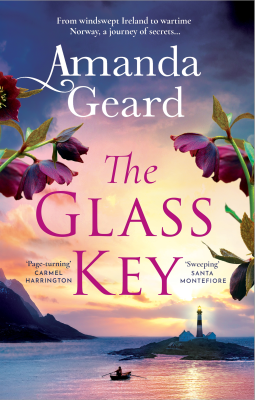
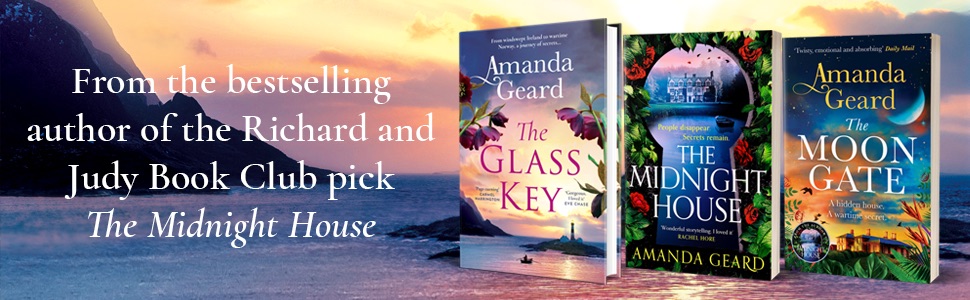
The Glass Key by Amanda Geard

“They do say secrets are revealed one funeral at a time.”

I absolutely adored Amanda’s previous novel The Moon Gate, set at the outbreak of WW2 and straddling Australia, Ireland and the UK. This time she starts her story in Ireland, where Maggie has grown up hearing her mother tell her the bedtime story of The Glass Key. It’s a Nordic fairytale passed down by Maggie’s grandmother Anna Swan, who mysteriously left her home one stormy night years ago, never to return. Now Maggie’s grandfather has died and going through his things, Maggie is shocked to discover a faded wartime letter, asking him to take in a baby. In that moment she realises that Anna Swan was a woman of many secrets.

Only by travelling to Norway and discovering the story of four brave young women whose lives were forever changed by the occupation of their tiny islands, can Maggie uncover the shocking truth about her family – and finally unlock the mystery of the glass key…

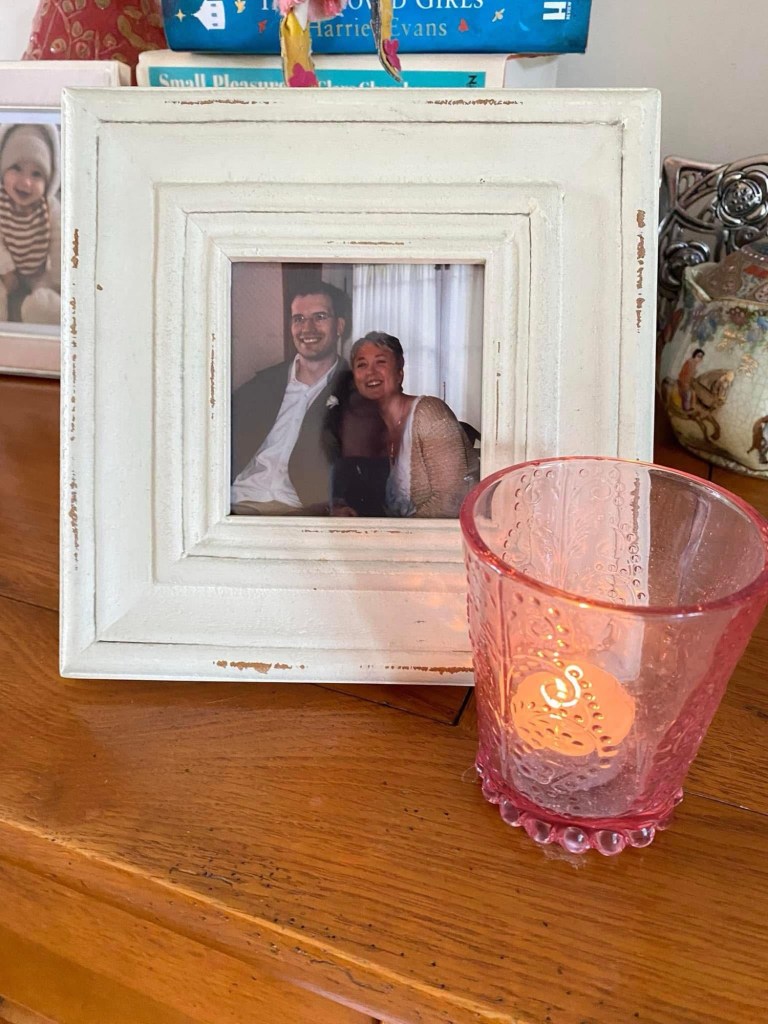
There are many historical fiction novels looking at women’s lives during WW2, but I hadn’t read any set on Norway’s many islands, so it brought a different perspective and an atmospheric setting to the story. People becoming displaced and lost during WW2 is close to my heart as my late husband was Polish and both of his parents were displaced during the war: Hannah escaped Warsaw as a small child in the sewers and ended up alone at a Scottish school for refugee children. Whereas Alek was taken to Siberia by the Russians, but somehow escaped and ended up living in the Siberian forests before making his way to England through the Middle East, North Africa and Europe. These individual family stories have huge impact through the generations. Hannah’s dad believed his family to be dead and made his way to America where he remarried. Hannah then had a half-sister in Washington who she only discovered decades later. Amanda shows the chaos of war, not just on the battlefield but in ordinary everyday lives and it brings home how impossible it was to escape the war’s grasp. Through Maggie’s family and four extraordinary women in the Norwegian islands we can see how far the war reached, in fact it’s only for one afternoon on an uninhabited island that the women could let go and clear their minds. Around these archipelagoe there are tiny bays and secret places that are impossible to police, especially when up against local knowledge. It’s no surprise that the allies would use it as the perfect spot for secret assignations. Small boats can be missed in fog and poor weather conditions and although Germany annexed Norway, they haven’t reached these remote places yet. But there’s no doubt they’re coming. 

The narrative is a dual timeline split between wartime Norway and modern day Ireland. In Ireland Maggie has had to come home after her grandfather’s death because his home at Hellebore House may have to be sold. Her grandfather Atticus lived there with his Norwegian wife Anna. Anna spent many years in the garden, cultivating Norwegian plants and flowers. She left when Maggie’s mother Freja was young, with no explanation. Maggie’s first instinct, now Atticus is gone, is to try and save the house but as she goes through his things letters from Freja’s mother are hidden away, sketches of Norwegian flowers and a painting of the island of Einevar that she’s never noticed before. The key is a photograph of three young women and a man lying in the grass surrounded by wild flowers. On the back are four names: Liv, Nina, Astrid and Lief and the place, Lyosa. How might these people be connected to her great-grandmother Anna? As Maggie becomes more curious about her family’s past, she also has to face her own past in the shape of first love Jack who has moved back to the area. She doesn’t need to complication as she’s still healing from her divorce and the knowledge that she’s infertile. The Norway narrative is told chronologically as we meet sisters Nina and Liv, their friend Gudrun and a new teacher called Astrid who’s been sent from the mainland to work alongside the formidable school mistress Froken Henrikson. Nina and Liv soon make friends with Astrid after they’re introduced by Gudrun. All the women know the Germans are getting closer and when they find a British man injured in a small boat they assume he is carrying out some secret mission. His appearance sets up a love triangle between him and the fisherman Lief who absolutely adores Liv, but are those feelings reciprocated? Meanwhile, Astrid and Nina are becoming much closer too. When the Germans do arrive, it’s two brothers called Grimm and a man called Bruno Schmitte who is an artist. The tiny population of Einevar can’t predict how the islanders will respond to a German presence. There are those who will resist and place themselves in danger and others who will fall in line, causing a fracture between young people who’ve known each other all their lives. Their last uncomplicated day was spent on Lyosa when, for one afternoon, the friends lie in the sun and don’t think about the war. 

There are brilliantly layered and complex characters here, particularly the women. Astrid is brave, very sure of who she is and her feelings. She’s loyal to those she loves and to her country, becoming very close to the sisters, especially Nina. Liv is young and headstrong, placing herself and others in dangerous situations. Lief has adored her for his whole life and will do anything for her, but will that loyalty place him in harm’s way? Liv shelters and nurses an allied agent who drifts onto Einevar having been attacked by German fighters, until he’s fit for the voyage back, knowing that if found out she and Nina would likely end up in prison. I loved how independent the Norwegian women seemed to be, able to sail, weather the elements and forage for themselves. It’s not an easy life, even before the war starts and they are determined to resist the Germans in any way they can. Not everybody on the island thinks this way though, with some becoming close to the German brothers despite it being an affront to family and friends. I did wonder if I could be so brave as to fend for myself without basic utilities and forced to fish or forage for food. These women are so in touch with the land, with its incredible night sky with endless stars and curious Northern Lights. Maggie gets a taste of their lives when she arrives at the cabin in Lyosa to do her family research. It’s like walking back in history with no electricity or running water and gives her an experience of what previous generations had to face just to survive. I also admired the bravery of those who continued to resist despite knowing their capture would mean death or imprisonment and torture. 

Motherhood is also a huge theme in the novel, starting with the shock of great-grandmother Anna leaving Freja behind with her father when she was just a child. What caused her to flee and why did Atticus never try to find her? There are many different representations of motherhood, from women who leave their babies, to infertility and being a mother to someone else’s child. If Maggie and Jack were to become close again she has the prospect of being a stepmother while not being able to have her own children, something that echoes through the generations.  These women are linked by those experiences but also their talents, such as Freja’s Nordic fairy tales for children once told to her by her mother Anna. Maggie’s creativity also links back to a previous generation, with Liv’s drawings and a book of botanical sketches uncovered to Hellebore House. I loved how the author showed the war’s reach and how one tiny uninhabited island gave the young women a chance to let go of it for just one afternoon. Maggie is the conduit for all the drama of WW2 and these sections of the book are nail-biting in parts. Maggie’s present is more gentle and flows beautifully, resolving the secrets kept for three generations and in a way I didn’t expect. Amanda’s novels are real favourites of mine and this had everything – family secrets, hidden letters, forbidden relationships, espionage and some incredibly brave women who sacrifice everything for the people they love. This is a fascinating read should be on every historical fiction fan’s summer list. 

Out now from Headline Review

Meet the Author

Hi, I’m Amanda, and I absolutely cannot WAIT to share my latest novel with you.

THE GLASS KEY is a tale very close to my heart and inspired by the Norwegian Arctic island my husband and I bought when we were 29. Evie Woods said it’s ‘a captivating story that unlocks an emotional doorway to the past’, and well, I love that.

If you’re new to my work, you might like to start with THE MIDNIGHT HOUSE, inspired by a message I found scratched into the rafters of our Irish home, a two-hundred-year-old stone building perched on the edge of the Atlantic. The book was a Richard & Judy book club pick and translated into 8 languages. 

THE MOON GATE uncovers the secret behind a mysterious legacy – Towerhurst, an old house crumbling in a rainforest. It takes place across three locations: Tasmania (my home state), London (where we rented a houseboat for many years) and County Kerry, Ireland (where I now live). THE MOON GATE is my most sweeping and beloved book.

I’m also a geologist who explores the world’s remote places. I’ve worked on five continents, and spend months at a time out in the wilds. Writing novels provides a similar sense of discovery, though the conditions rather more comfortable!

You’ll find me on my website, Instagram (@amandageard) and Facebook (@amandageardauthor). I love chatting with readers, so please come on by.

Posted in Wordpress Prompts, Writing Therapy

Again and again.

Do you think we’re shaped more by our experiences or by who we are?

Me aged 4

That depends on what you mean as ‘who we are’. The question suggests a character or personality that’s innate and set in stone, clearly distinguishable from our life experiences. My life is a series of chapters, each one informed by those defining moments where my path can be clearly divided into before and after. Does my character stay exactly the same through all of that? No. Experience changes us.

I broke my back when I was eleven years old, in the last few weeks of primary school in the early 1980s. Our cottage hospital was so basic that I had to lie still on the ward for the weekend, because there was no specialist to review the x-rays till Monday. I remember looking at the ceiling as I was wheeled from room to room, wondering if I would be able to walk. Every time the bed banged against a corner or skirting board a jolt of pain went through my shoulder blade. I didn’t even get a collar or blocks to protect my spine. I broke two vertebrae and crushed a disc, but was sent home with paracetamol and told to rest. There was no physio. No rehabilitation. No spinal unit.

I just got on with it and avoided things that were painful. A couple of years ago I had an MRI of my whole spine because I’ve been suffering pain for forty years. Where my back was broken there’s a lesion in the spinal column and something called a vertebral hemangioma, a benign vascular tumour that forms from clusters of blood vessels. Then there’s scar tissue formed around the injury, caused by the body trying to protect the site but causing stiffness and nerve impingement. Our emotions are like this. Something happens to us and we try to heal. The things we do to cope are like scar tissue, lying over what happened to protect us from the pain.

Each experience teaches us. Did what happened at 11 years old affect me?Yes. I was so scared and I was alone until my parents were called. The school secretary Mrs Boot was sat nearby so I wasn’t alone, but she was no comfort. I wanted someone to tell me it was going to be okay but all the adults seemed more scared than me.

Am I resilient because of what happened then? Or does some essential ‘Hayleyness’ mean I’m able to pick myself and dust myself off? An innate optimism. I think we assume our character is whole and fixed because the alternative is scary. When Princess Diana died the outpouring of grief was a surprise, but the conspiracy theories started very quickly. It’s easier to believe there’s a secret service plot or that the Royal Family had a hand in her death, rather than accept that such a dazzling woman, a princess, could die in a car accident at only 36. It’s too mundane and ordinary. It means she was mortal. Just flesh and blood like the rest of us. It means we have to accept how random life is. That it can end in a moment.

Similarly it’s scary to accept that who we are shifts according to each new season of life. Virginia Woolf probably best captured how fractured and complex our inner worlds are and how changeable. We shift and flow, open to new possibilities and ways of being. I think I’ve learned to enjoy that ebb and flow. To discover new parts of myself all the time. To take on each new challenge and embrace the change within me. Again and again and again.

Posted in Reading Life

You Can’t Read The Same Book Twice.

Which book have you read more than any other?

‘You cannot step into the same river twice, for it is not the same river and you are not the same man.’

The above quote, attributed to the philosopher Heraclitus, is also applicable to a favourite book. In the time you’ve been away and reading other books, the world has moved on, progressing with new ideas and opinions that bring a fresh focus to an old favourite. We also change as readers. With every new concept learned and each new experience, the filter we view the world through changes and we become open to different interpretations of a novel we know well. The book I’ve read more than any other is Jane Eyre, starting out as a childhood favourite I’ve been reading this book every few years since I was ten. My first read coincided with the BBC adaptation on Sunday evenings, starring Timothy Dalton as Mr Rochester. Back then, for me, it was a romance and a ghost story. I was spellbound by the creepy laugh in the night, the candle set to burn Rochester in his bed and the dark, vampiric ghoul that takes Jane’s wedding veil and tears it in two. Yes I was scandalised that Rochester is already married when he tries to marry Jane, but given the choice I’d rather have him than St. John Rivers who has none of the passion and feeling that Jane needs. At least she knew herself well enough to avoid that path, even before Rochester’s strange telepathic call during the fire. I remember also being horrified by the injustice of Jane’s treatment at the hands of her Aunt and then at Lowood. I also found the death of the incredibly pious Helen Burns being particularly traumatic too. In my teenage years I studied it for my English A’Levels and back then un my teenage angst I felt Jane was lacking in feeling. Why did she have to leave Rochester? I compared her with Wuthering Heights and Catherine Earnshaw, full of passion and running wild. Both characters wander the moors, but Jane is rescued from that wilderness by a man of God. I identified more with Catherine as I wandered the flat fields of Lincolnshire walking our dogs, because she was wandering with the alluring Heathcliff. They ran away from the prying eyes of Nelly and Cathy was also experiencing all those dramatic feelings we have as teenagers. I admired Cathy for never losing her feelings for Heathcliff, by comparison it felt like Jane had chosen the good and holy way, but denied herself happiness. I loved the angst of Wuthering Heights, the constant drama and passionate declarations of love, a love that couldn’t be separated by death. I didn’t understand someone who didn’t choose passion and with my church upbringing I didn’t know if Jane was being true to herself or following the religion of Lowood School and her missionary parents as I was expected to. Cathy was my rebellion and Jane felt too safe.

I next encountered the book in my late twenties at university, alongside a huge amount of context and literary theory. I was learning that I could view the book through so many different lenses and my views were changed even further. I learned so much about 19th Century history and the governess as a cultural figure, from a different perspective I studied post-colonial literature and how important it is to the understanding of Bertha Mason’s marriage with Rochester. It made me wonder about her ‘Creole’ roots and whether it was not so much her madness that was hidden but her mixed heritage. I could imagine how powerless and bewildered she must have felt to be torn from the Caribbean, declared mad and locked in the attic by her husband. I read Wide Sargasso Sea and considered how Bertha has been renamed by Rochester, much like masters would rename their slaves. She is Jane’s double – a cautionary tale of what Jane might have become if she’d stayed the little spitfire who had to be locked in the dreaded red room. Lowood’s founder Mr Brocklehurst had been determined to knock the passion out of Jane’s nature, her spirited way of answering back and lashing out to defend herself against her bullying cousin John as well as her inability to hold her tongue when criticised by her aunt. It’s a broader use of the word ‘passionate’ than we tend to use now. In feminist terms men wanted to break her spirit, to turn her into the model and saintly young woman that Helen Burns was trying to become, never daring to look up from the floor. It made me think about women who are deemed acceptable in society and those that aren’t – inconvenient women who won’t shut up, have educated themselves and want to live life on their own terms. Jane has a freedom as a governess she’s never had before, an ability to earn her own money and use her knowledge to teach. She’s without the pressure to find a husband and marry well, the main focus for an upper class woman like the visiting Blanche Ingram. Jane doesn’t have to socialise and meet men, she can choose to leave and work elsewhere if she’s unhappy. Governesses are liminal figures in fiction, not in a specific class, outside the confines of the marriage market and choosing how they spend their own money. She’s invisible and there is freedom in that invisibility.

Jane Eyre BBC Adaptation 1983

When I read the book again recently I had another insight that came from my personal experience. I’d been in an emotionally abusive relationship for a few years and found my way out. Living alone for the first time in ages, I picked up a lot of old books as comfort reads. This experience made me look at Rochester differently, especially in some scenes that had always made me uncomfortable without knowing why. Is the Jane that Rochester claims to love the true Jane? When Jane first meets Rochester, he does try to intimidate her in conversation and finds he can’t. He enjoys her intelligence and seems fascinated by her imagination, the inner world that informs her art work. However, just as young contemporary readers would red flag Heathcliff, Rochester is no stranger to manipulation. He doesn’t tell Jane who he is when they first meet on the lane, instead choosing to surprise her after dinner. He brings the awful Blanche Ingram to Thornfield Hall, just as he and Jane seem to reaching a friendship and instead of allowing Jane to retire gracefully to her room in the evening he insists she stay in the drawing room with his guests. Jane can only sit on the edge of proceedings, as someone of her status should, so why ask her to remain at all? She does hear Blanche’s opinions on governesses and the general expectation that she will become Rochester’s wife. All she wants to do is stay in her place, upstairs with Mrs Fairfax, Adele and Sophie, so his insistence on her presence when all the company ignore her seems cruel. Then there’s the strange incident of the visiting gypsy fortune teller who wishes to read the fortunes of the unmarried ladies at home. Jane is sought out by the woman who claims to know there is another single lady in the drawing room and she obliges the old woman even though she isn’t interested in seeking her fortune. To her surprise the gypsy turns out to be Rochester in disguise. This is far from normal behaviour and so outside of his usual character that the only purpose can be to solicit confessions or secrets from an unwary Jane. Although, judging by her mood he also takes the opportunity to torment Blanche Ingram too. Throughout Jane and Rochester’s interactions there is a definite hot and cold feel to their communications: he hints that she isn’t his friend so she will assert that she is; he tells her stay and leave in the same conversation; he holds her hand a fraction too long. Is the purpose to leave her unsure or unsettled? It leaves Jane unsure of his meaning and intentions, but in the position of his employee she doesn’t want to offend him. He holds all the privileges being an educated and well-travelled man of means and property, sought after in society and with the freedom to come and go as he pleases. Psychologically, the Madonna/Whore Complex is also at play here, because how Rochester describes his wife is very different from how he sees Jane. When discovered to be attempting bigamy he uses words like pure and innocent for Jane and when he thinks of his wife escaping the attic on the eve of his wedding he imagines her standing over the ‘dove’s nest’ Jane sleeps in, innocent and vulnerable. Surely, even as he asks it, he knows Jane won’t agree to be his mistress or take his promised gifts of furs and jewels?

Bringing my own experience to the book I saw that Jane leaving Thornfield was about her asserting her own boundaries. She doesn’t reject his offer of becoming his mistress just because it’s immoral and she fears other people’s opinion, it’s because she could never reconcile it with her own soul. Her wandering on the moors and almost dying of exposure is something of a rebirth, after a dark night of the soul where she wrestles with temptation she’s taken in by the Rivers family. Her subsequent friendship with St. John Rivers, who finds her on the moors, confirms her determination to be true to herself. She can see that an eligible young woman from the village has feelings for him and those feelings are reciprocated but rather than enjoy a marriage based on love, St. John needs to be sure that his future wife has the qualities he needs in a missionary’s wife. His future wife will need to share his mission, willing to suffer hardships, dangerous situations and live in poverty. He sees the qualities he needs in Jane and although he does not love her, he does make an offer of marriage because she has the moral qualities of a missionary and the ability to work hard. It’s here I could see the balanced character Jane has achieved through her life experiences. She rejects Rivers’s proposal on the basis that there’s no passion or love in their relationship. Yes, she would be a great missionary wife but she wants love too. These men are at opposite ends of the spectrum, Rochester is all passion and Rivers is all reason, Jane needs a middle ground and she won’t settle for anything less. After my reread I went to a talk about the book and I was really cross when a woman said that Jane’s return to Rochester is a betrayal of feminism. I argued it wasn’t. Jane makes the very best choice for her life and women making empowered choices is everything feminism is about. Jane is on a very different path when she returns to see Rochester after the fire, she is no longer his employee for a start and soon calls him Edward rather than Sir. She has also become an heiress in her own right, so while she was always his equal in intelligence, she is now his equal financially too. Rochester is also in a different position, with Thornfield burned to the ground he is a widow and trying to save his wife from the flames has left him blind and disfigured. Perhaps in Jane’s eyes this act of heroism redeems him slightly. His disability has left him reclusive, no longer in the highest society but that’s nothing to Jane. If they marry, it’s no longer a case of Rochester changing Jane’s position in society, she has already accomplished that on her own and he is no longer a dominant voice in the marriage. They finally come together as equals.

This is what rereading a book brings, that comfort and familiarity of a known story. Maybe there’s an element of nostalgia too. As I read the book again it’s a Russian doll experience; within this reading are all the other times I’ve read the book. Every discovery I’ve made within its pages informs me but my own changing experiences and societal changes give me a fresh eye every single time.

My favourite film adaptation of Jane Eyre from 2011

The Next Ten Books I Read Again and Again.

The Adrian Mole Series by Sue Townsend – touching, relatable, nostalgic and hilarious.

The Rutshire Chronicles by Jilly Cooper – glamorous, witty and sexy, with a rake we’d all like to reform.

All Creatures Great and Small by James Herriot – cosy and nostalgic animal stories, full of humour and warmth.

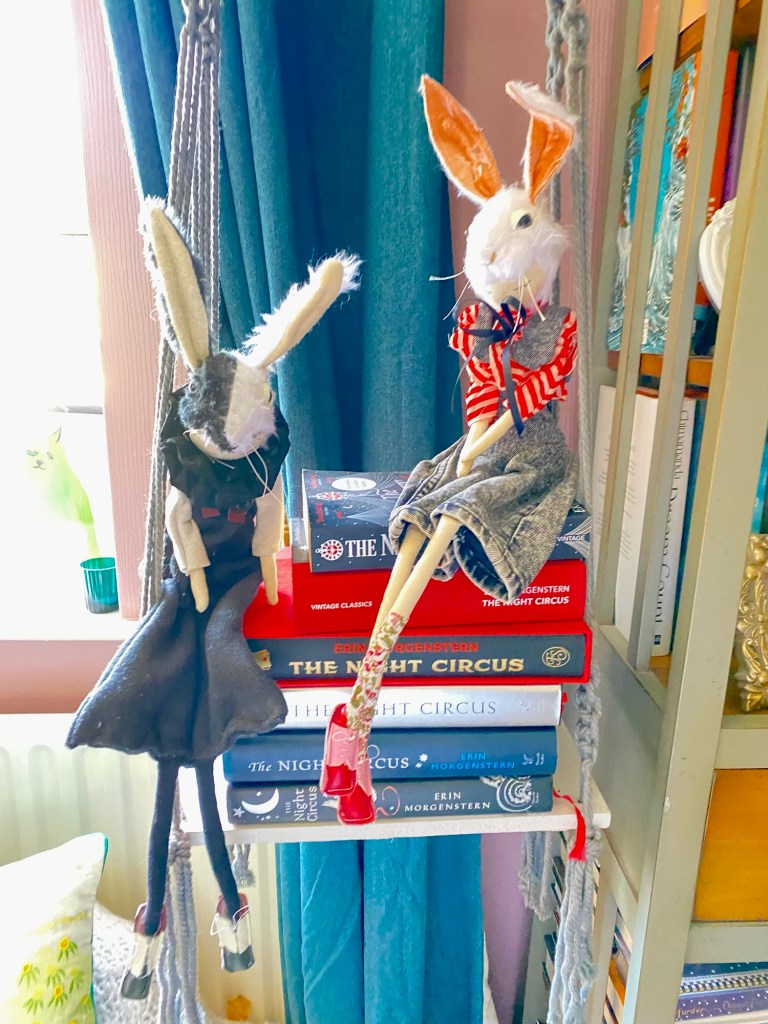
The Night Circus -, a love story with dark deeds set in a magical world that’s beautifully rendered.

Little Women by Louisa M. Alcott – the ultimate comfort book with an all time favourite heroine in Jo March.

Plain Truth by Jodi Picoult – a legal battle between the contemporary world and the closed off Amish Community with teenage girl in a heart-rending situation.

Life After Life by Kate Atkinson – a unique premise, Ursula meets the 20th Century again and again.

The Shining by Stephen King – a deserted hotel, hauntings, telepathy and the realisation that the things we fear can be much closer than we think.

The Final Testimony of Raphael Ignatius Phoenix – darkly humorous, deliciously wicked and incredibly clever.

Rebecca by Daphne Du Maurier – a brooding widower, a naive girl, a stately home on the Cornish cliffs and a wife who won’t stay dead.

Posted in Monthly Wrap Up

Best Reads June 2026

I’m writing this from a puddle of my own sweat and with a fan roaring in the background. Every animal has spread their body as far as possible across the wooden floor trying to keep cool. It’s been a stay at home month for sure as my neurological symptoms worsen when it’s hot, within a couple of days I had the texture of a wet noodle. So it’s been a month with lots of reading. I’m organised though, fans in both rooms I use a lot, ice cold water, lollies and ice chips, a neck fan and a handheld motorised fan that’s a god send. Nothing tells you that you’re middle aged more than a neck fan for Christmas. Especially when you’re pleased with it. I’ve been reading for the Squad POD Collective this month, then mainly NetGalley reads in between. There’s a huge range in these favourites as we go to Ireland, Liverpool, Norway, Italy and the US, from the aftermath of WW1 to the present day. There are family sagas, an incredible forbidden love story, a great start to a new crime series, the most talked about book on social media and finally a slice of whimsical joy from Matson Taylor. See you next month 📚

Look at that fantastic gothic cover! This is the dark and dangerous side to my favourite city as disgraced detective Mark Fletcher wakes up disoriented in the Castle Street Hotel. He’s horrified to find he’s in bed with a corpse, a man with a bullet hole in his head. How can he explain this when he has no memory of what happened last night? His finger prints and DNA will be everywhere, so will his disillusioned colleagues believe him if he calls it in? He can take his chances with his old team or he can run. This is the man who caught the Butcher of Bootle, only to watch his life rapidly fall apart nine months ago. Luca Veste takes us on a breathless chase through Liverpool while the crime team are playing catch up. We follow his old colleagues Kirkham and Abs as they investigate a body discovered in a garden in Kirby, making Brookside jokes along the way. Could these two deaths be linked? We’re also introduced to the Bonucci family, patriarch Salvatore and his second in command Gino and Frankie. Everyone knows the Bonucci family, they have legitimate business interests but underlying that is a criminal enterprise that’s seeped into every area of the city. They also blame Mark for the death of Salvatore’s youngest daughter Sofia, a huge lapse of judgement that went terribly wrong. Now Mark is trying to investigate who killed his bedfellow, Kirkham and Abs are 24 hours behind him, but could the Bonucci’s be closer? This is a nail-biting and action packed crime thriller that had me rooting for Mark from the moment he woke up. I loved the Scouse humour and the settings the author used as Mark jumps out of windows and even into the Mersey. The ending is such a shock and very clever indeed. I’m already waiting for the next book.

I’ve not written my full review on this but I can’t stop thinking about it and I’m dying to talk to other people for their opinion. We are introduced to Natalie, a trad wife influencer in the US with a hugely successful social media business and merchandising from their ranch Yesteryear. Natalie espouses the traditional life where the man is the head of the household and the woman looks after the home and their ever growing family. Her husband Caleb works the farm, while she runs the business with the help of two nannies and a producer. The monetisation paradox is clear to see, she’s making a living by preaching values that she doesn’t live by. Natalie wants her followers to embrace her trad view on family life, but has turned her ideology into a successful business run by a woman. Followers can watch her baking bread or collecting eggs from the chickens, but they don’t see her childcare or the producer who live on the isolated ranch with the family. Thanks to some clever remodelling of the house they also have all mod cons, but hidden from view with clever screening. Natalie tells women they should submit to their husbands, while agreeing privately that her own is an idiot. Without her this family would be lost. At university Natalie kept herself to herself, noting her roommate’s promiscuity and feminist viewpoint knowing she would become one of the ‘angry women’. Women who think they can have it all – the career, the marriage, the home, the children – end up doing it all and no wonder they’re angry. She still criticises the angry woman; seemingly never realising that’s exactly who she is and that her life is unsustainable. One morning she wakes up when it’s still dark, she can hear children having breakfast in the kitchen. Why hasn’t anyone put a light on? As she makes her way into the kitchen she realises that it’s very basic and her children are eating by candlelight. Except they’re not her children. The oldest girl is looking after them, but she doesn’t know her. Then she sees Caleb, but there’s nothing behind his eyes. They seem to living a real pioneer life, with everything done by hand, no hidden gadgets or shortcuts, no staff, no filming. Is this a nightmare? Has she been imprisoned here? Has she time travelled? You will ask all these questions alongside Natalie as the author takes you back and forth from the internet friendly lifestyle she created and the real thing. The author has managed to make an unlikeable character incredibly compelling, asks questions of this strange world where everyone has a real life and an Instagram ready life, and challenges ideals that current US politicians are advocating for women. The minute you finish this book you will want to find someone else who’s finished it so you can talk.

It was lovely to spend some time this month in one of Faith Hogan’s warm and welcoming worlds, this time on an isolated Irish island called Pin Hill. In this small community, sisters Blythe and Rae grew up with their grandparents at the family hotel in Hope Square after the death of their parents. Blythe’s ambition in life was to train in hospitality at university and follow her grandad into the family’s hotel business. Rae on the other hand was more of ‘go with the flow’ girl, spending her time with friends rather than learning the family trade. Yet, when we meet the grown up sisters, life hasn’t turned out as planned. Blythe lives in her own guest house at Still Water House with handyman husband Kip and daughter Siggy. Rae’s husband Marcus has died and she’s living alone in the Hope Street Hotel, where she’s run the family business with her husband for many years. What happened to place these sisters at odds with their expectations, especially Blythe who lived and breathed the hotel. As always Faith has created some great characters here in the rather strident and opinionated Blythe and her quieter, less confident sister. Blythe’s actually a bit much in parts and I found her very hard to like. We’re taken back and forth to the women’s teenage years where the explanations lie and uncover the secrets and events that set them on the wrong paths. While in the present day, Rae is struggling to maintain the hotel alone and has discovered financial problems her husband covered up. Unfortunately they aren’t the only secrets about her marriage. She has the help and support of niece Siggy and refugee Danial who’s just moved to the island with his grandmother. Blythe is suspicious of both of them and becomes obsessed with Rae’s potential plans for the hotel, setting herself on a path to disaster. This was a lovely, warm novel with great moments of humour in between the sister’s broken relationship. This is the perfect summer holiday read.

First of all I have to mention that gorgeous Art Nouveau cover on this novel, matching perfectly with the time period which is post WW1. This is one of my favourite periods for historical novels because I’m fascinated with the pace of societal change that ranged across class, gender and sexuality. It’s also a period where mental health issues and disability became much more prominent. Many men came home from the war with amputations and facial disfigurements, changing their lives forever. Of course many men didn’t return and every family was touched by loss either on the battlefield or in the waves of Spanish Flu that broke out after Armistice Day. Into this period of seismic change, Rue Baldry has written a beautiful story of forbidden love that touches the heart. Our two narrators are Albert and Edgar, who are both at a boarding school but for different reasons, despite being close in age. Albert was demobbed and needed a job, so is working at the school as a gardener. He has been through so much, yet is only 19 years old. Edgar is 18, a schoolboy from the middle classes who has just missed active service and longs to train as a doctor despite his dad’s wishes. When they meet there’s an instant affinity between them and we’re drawn into their fledgling love. This is a book that’s so evocative of the era whether it’s the old-fashioned British private school or in hell of the trenches. I thought the exploration of a class divide between the two men was very well done too and represented the societal changes in post-WW1 England. It’s impossible not to be drawn in by this love story, especially poignant considering these men were paved the way for the more permissive society we have today. There is no better representation of love is love,

In Ireland, Maggie has grown up hearing her mother tell her the bedtime story of The Glass Key. It’s a Nordic fairytale passed down by Maggie’s grandmother Anna Swan, who mysteriously left her home one stormy night years ago, never to return. Now Maggie’s grandfather has died and going through his things, Maggie is shocked to discover a faded wartime letter, asking him to take in a baby. In that moment she realises that Anna Swan was a woman of many secrets.

Only by travelling to Norway and discovering the story of four brave young women whose lives were forever changed by the occupation of their tiny islands, can Maggie uncover the shocking truth about her family – and finally unlock the mystery of the glass key…

I’ve still to write my review for this one, but I enjoyed it immensely particularly the WW2 timeline in the Norwegian islands that I knew nothing about. People displaced and lost during WW2 is close to my heart as my late husband was Polish and both of his parents were displaced during the war. I loved how the author showed how far the war reached and how it was only on one tiny uninhabited island that the young women could let go of it for just one afternoon. Amanda’s novels are real favourites of mine and this had everything – family secrets, hidden letters, forbidden relationships, espionage and some incredibly brave women. This should be on every historical fiction fan’s summer list.

Last, but definitely not least we come to Matson Taylor, not only a great writer but an all round good egg. His knowledge of art. architecture, and ancient Rome gives us a fabulous summer setting for this standalone novel about found family in the eternal city. A wobble on a new Vespa has Clemmie and Monty literally bumping into each other on a bridge flanked with angels as the novel opens. Monty’s injuries aren’t too severe but mean he can’t work on the renovation job he has in Rome. Now without a roof over his head and needing to recover from concussion (at least he hopes that’s why he can hear Octavian the cat talking to him) Clemmie and her friend Floss offer their palazzo. In their very unique home he finds the rest, relaxation and the care he has needed for a long time. You’ll fall in love with Monty who really is one of life’s innocents or what me and my mum call ‘new people’ who are on their first incarnation in the world. What he does have are secrets and a private grief that he’s never shared. Matson brings him together with the caring aspiring writer Clemmie and her friend, the flamboyant retired actress Floss. Add to these eccentrics a pair of food smuggling nuns, a man who lives in a converted ice cream van and a little twinkle of magic too. I never want Matson to stop writing because where else would I find scenes of nuns going to a gay disco? Set in the 1970s where the height of fashion is Floss’s new avocado en-suite, dazzling Rome is brought beautifully to life and as always there are deep emotions at its core. This is a wonderful comfort read for the summer, especially for those of us who are staycationing.

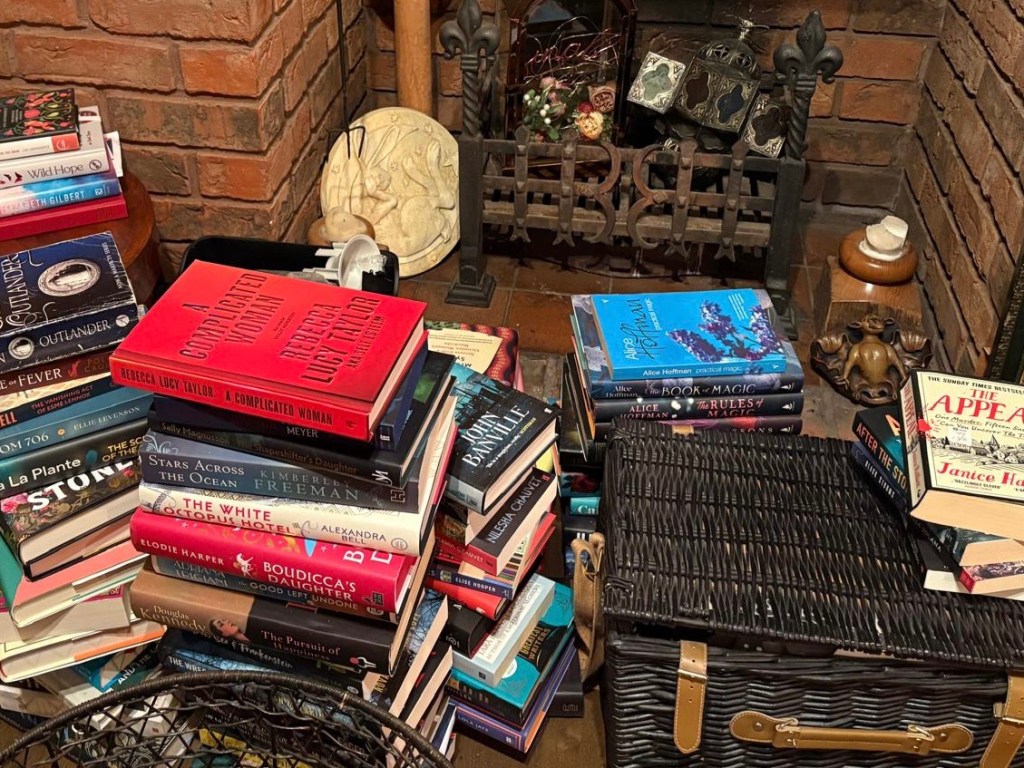
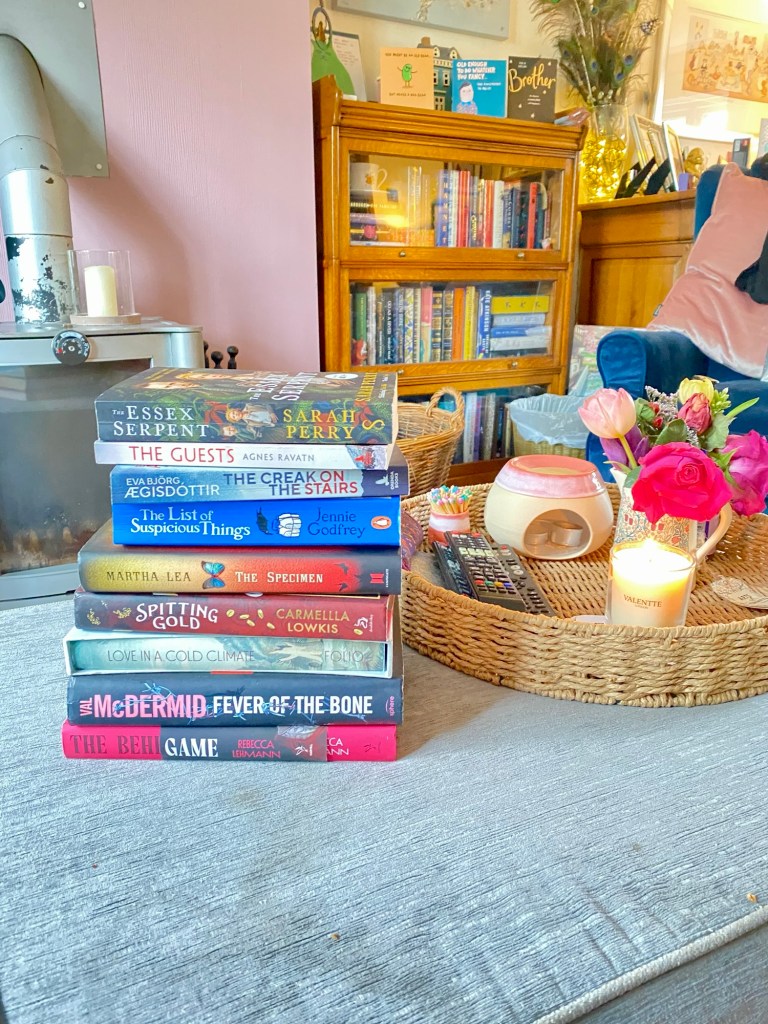
Here’s next months tbr, if I don’t get distracted of course!

Posted in Personal Purchase

Yesteryear by Caro Claire Burke 

I’d seen so many extremely varied viewpoints on this book that I couldn’t resist dipping in and it was definitely worth the hype it’s received. I read it voraciously over two days, so excited and so confused towards the end I realised I’d read it too fast. I had to go back and force myself to read it slowly. Read either way, this really is a delicious story that has hit at exactly the right time in history. With the US administration rolling back women’s rights and rumours about the implementation of Project 25 it feels like we’re watching Gilead formed in real life. One of the most controversial online figures in this huge political move to the far right is that of the ‘trad wife’, a woman who lives her life focused solely on the home, children and obeying her husband who is always head of the household. This might come from a religious conviction or a political one, but social media is awash with trad wife influencers like Hannah Neelham who shows life at the family farm and cooking from scratch or Estee Williams who proudly declares a return to 1950s values where motherhood and domesticity are the priority. To me this feels like the logical extension of the late 1990s dating book ‘The Rules’, much lauded by Charlotte in Sex and the City. Single women were advised to keep their distance and mystery on the dating scene – with men naturally being pursuers they are more responsive to women who play hard to get. It also advocated withholding sexual contact and focusing on the man’s wants and needs. It stands to reason that any eventual marriage would also involve the man’s needs coming first and feminists are concerned that the current trad wife trend appears like a pop culture phenomenon, but is born of patriarchal policies that will set back women’s autonomy and authority by decades. Of course the obvious paradox here is the influencer’s monetisation of the trad wife lifestyle, promoting the concept of the man as sole breadwinner while simultaneously operating successful and lucrative online content creation businesses, often with merchandising and multiple staff. These women are highly driven and ambitious and this is where our main character Natalie is situated; right at the centre of the monetisation paradox. 

The story is told through Natalie in a compelling inner monologue that had me absolutely gripped, despite disliking her quite intensely. The author takes us back to her college days, where she keeps herself separate from her roommate and other students often with a condescending and superior attitude. She firmly believes she has the answer to why feminism isn’t working, labelling her roommate the archetypal ‘angry woman’ who thinks they can have it all but will only end up exhausted and dissatisfied. She marries Caleb and is pregnant before graduation, not finishing her degree. She’s married into a political dynasty, with Cal’s father hoping to start a presidential campaign soon. Obviously they are republicans and Natalie’s father in law does point out that Caleb could be perfect for politics, being an ‘idiot’ who has no direction and is easily controlled. It’s Natalie who gets the idea to run a ranch, scouting for suitable properties and approaching her father-in-law for funding. He agrees to give them the five million they need, but Nat must keep her end of the bargain and keep producing beautiful grandbabies. She sets out to sell the great American Dream on social media, giving her ranch the tongue in cheek name ‘Yesteryear’. Despite having no farming experience, the plans for are to keep livestock, grow vegetables and become self-sufficient. She sets out to represent their lifestyle as pioneers, deliberately choosing her decor accordingly and instructing builders to hide all their modern appliances behind doors and false walls. She starts out posting nostalgic pictures, but then expands to videos where she and the children cook from scratch or make items for the house. Before long she has a business on her hands and now she isn’t just hiding the appliances, but two nannies and a producer, not to mention the merchandising. What could possibly go wrong?

This is a book with some huge reveals, you won’t always know what’s going on and you won’t be able to put it down – I was even reading while cooking the tea. I was so involved that when Natalie wakes up one morning to find her home isn’t as she knows it I was completely discombobulated – we ended up with gluey spaghetti that night! There’s no electricity and she finds children in her kitchen eating breakfast by candlelight, but they’re not her children. Caleb looks like her husband but there’s nothing behind his eyes. She’s now living pioneer life for real and when she opens the cupboards to look for her appliances, there aren’t any. There’s no help either. Her eldest daughter Mary cares for her with something close to a resigned exasperation, making sure that even if Natalie is only sitting, she can still do laundry and churn butter. Imagine a more realistic version of Little House on the Prairie where you can never escape to a power shower or flushing toilet. Natalie asks herself what’s going on: is this a punishment for something she’s done, has she lost her mind or is this some sort of sick reality TV situation? Is God punishing her. She’s now a trad wife for real, but she definitely isn’t happy, nor is she making any money.

This book is so well written, incredibly ambitious and captures the zeitgeist. I didn’t like Natalie but found her inner voice almost hypnotic. She’s deliberately hiding her intelligence and business brain on screen, but makes the comment that her eldest daughter takes after her because she holds “her intelligence like a knife behind her back.”However, once she becomes a traditional wife for real Caleb is the head of the household and she realises that whatever their home situation men can opt out of chores and childcare with no explanation, whereas she’s being forced out of bed while unwell. I was intrigued about where her belief system comes from, expecting generational religious beliefs and trauma but her mother and sister, while religious, have compassion and the ability to accept changes to their world view. They have understanding and compassion, something that Natalie seems to lack and it is utterly damning when her mother asks her why it’s so hard for her to be kind. I was so angry about the hypocrisy, pushing her ‘lifestyle’ to an online audience of women while keeping, not only her modern applicances, but the help hidden. She must know she’s making women feel inadequate, taking their money and lying to them. Once you become a tool of the patriarchy you’re an enemy of your fellow women, even though she gives them lip service by repeating the Christian Nationalist narrative that a trad wife is equal to her husband in the eyes of God – her work is different but of equal value. How can they be equal when only one of them has autonomy and the final say? In fact she openly fears aspects of the real pioneer life, especially giving birth. She is also aware of the paradox: 

‘To be a wealthy Christian woman and maintain good standing, you needed to publicly disavow your luxuries in order to maintain possession of them.’ 

It’s only by pretending they have nothing, that she becomes rich. I think I kept reading because I was so desperate to see her carefully planned, fake world fall apart. At a time where feminists are debating whether they’d rather be alone with a man or a bear (and regularly choosing the bear) she pedals a dangerous rhetoric and any woman selling it is colluding with the patriarchy. On a day where I’ve seen yet another group of white British men on trial for raping a woman drugged by her husband, I’m not inclined to give any man that sort of power over me. This week a pregnant woman on holiday in Florida had an incomplete miscarriage and was still, days later, unable to get the procedure she needed to prevent infection. This is because she wasn’t in her home state and doctors in Florida were unsure on the legal position of performing a D and C operation thanks to ‘pro-life’ policies. Another woman who’d been informed that her baby was too malformed to survive outside the womb, was bombarded with hate on Instagram for choosing to end her pregnancy early. Female influencers can’t post on social media without facing a barrage of abuse from trolls. Thanks to all this, men like Andrew Tate and Christian Nationalist men in positions of huge power, I have a permanent level of inner rage. There should be a special level of hell for women who take up this cause and use their religious beliefs to make life harder for their fellow women. I let go a bit of that rage while reading this because it helped me remember that what we see online is like any other representation of real life – heavily edited and stretching the truth, if not an outright lie. Not only is this book addictive and inventive, but through Natalie, the author blows apart the whole hypocritical and dangerous industry as well as the Christian Nationalist ideology that espouses trad wives and I absolutely loved that. 

Out Now from Fourth Estate.

Meet The Author

Caro Claire Burke received her Master’s in Fine Arts from the Bennington Writing Seminars. She is the co-host of Diabolical Lies, a politics and culture podcast. YESTERYEAR is her first novel.

Posted in Blogger Life, Uncategorized

How to Deal with Negative Thoughts

Why are you writing? No one wants to read this. You have nothing interesting to say. I do, my experiences are unique. No one cares what you have to say. They do, some people have really enjoyed my writing. They’re just telling you that to spare your feelings. No, this is from strangers. They message or comment they like it. They’re probably embarrassed for you, what if someone you know reads it. They might but if they’re friends they’re not going to be horrible about it. What about those who aren’t friends? The social media trolls. They are awful but it wouldn’t be the first time and I can ignore them. Can you though? What if they say something really hurtful? Well then I’ll be hurt but surely being slightly hurt is better than not writing? Even if you’re writing the most cliched rubbish, first writing class sort of rubbish. Well I can try again. You know you hate being criticised. I’m getting better at taking it. Sometimes it’s a positive thing. It scares you though doesn’t it? Yes, but if I don’t write I’ll never know. Know what? If I can write a book, something I’ve always wanted to do and now I’m 52 and I can’t keep putting it off because I’m listening to you. I’m saying what you really think. You can talk yourself into being confident but you and I know you’re not. I am. I’m getting better. Other writers must have thoughts like these and they still write. Even Virginia Woolf had self-doubt. Listen to you. Virginia Woolf? You’re not in the same league. I know that, but what if self-doubt is normal. What if I’ve not had the nerve to write for all this time when every writer feels this way? It hasn’t stopped me writing. I keep writing. I can’t not write, even if it’s about someone else’s work or my journal. It’s just a part of me, like you are, except this is a part I want to keep. Silence. The only failure is if I stop. Quiet. The sound of a keyboard…..