Posted in Reading Life

Books That Were Controversial at Book Club

Around ten years ago I used to run my own book club at home. It was just a group of my friends, a couple of my mum’s friends and a few people we knew a little who were really keen on reading more. We were a very close knit group after a while and a really diverse mix between the ages of 18 and 65. Some worked full time and others had been full time mums and housewives, a couple had disabilities and there were very varied educational backgrounds. Some had lived local to Lincolnshire all their lives, others had lived in Eastern Europe, Africa and Australia. I was expecting some controversy, but I was surprised by some of the books that caused the most discussion. Often late into the night. I always themed the cake to the book, on one occasion causing its own controversy when I teamed Kathryn Stockett’s The Help with chocolate cream pie. I thought I’d share with you those books that seemed to strike a chord with the group. Sadly, life got in the way as it often does. My relationship broke down and we sold the big house. I had to downsize and since some of our members were his friends it was difficult to keep it going while things were turbulent. I have great memories though and I thought I’d let you into a few of our (printable) discussions.
Her husband deserved it…

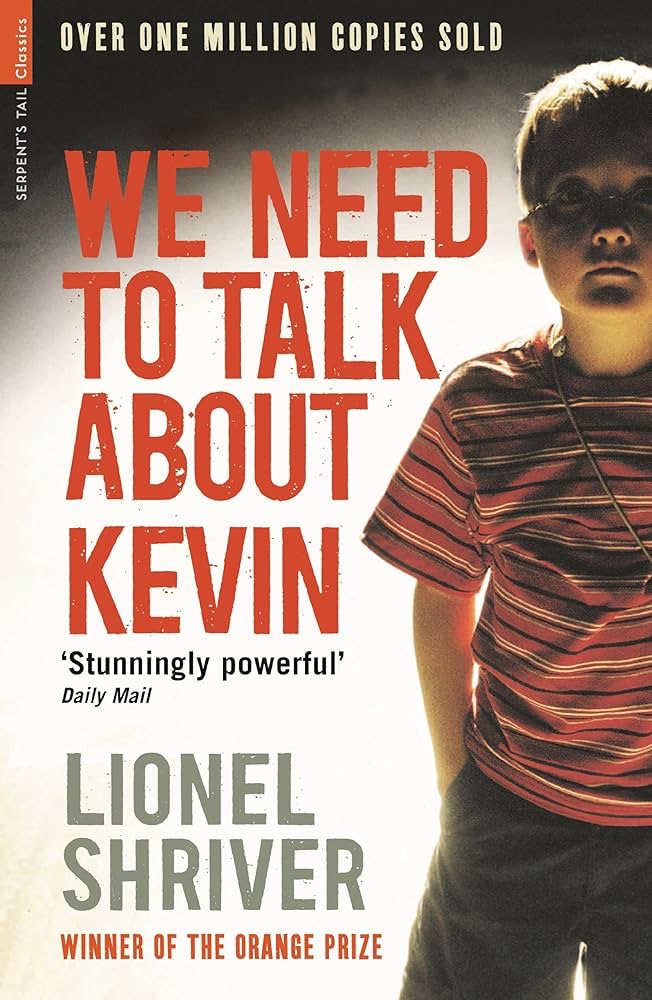
This one is an obvious one as it seemed to cause controversy across here and across the Atlantic. I know everyone found this book an incredible read and it was one that everybody in the group read. It inspired the nature/ nurture discussion first of all, was Kevin the way he was because his mother suffered post-natal depression and didn’t bond with him? Was her creeping sense that he was evil a self-fulfilling prophecy or had she detected something innate that predisposed him to evil? It’s easy to argue either case. What most readers found absolutely infuriating about the book was her husband – I think I remember the phrase ‘wilful stupidity’. Despite all signs to the contrary, he simply did not see a problem with his son and when he did seemed to think it would fix by itself. Some were so frustrated with him they thought he deserved what he got. For me the guinea pig incident was the absolute end! That would have been a call to social services to safeguard my daughter. It was obvious what would happen next. The part we found most intriguing was that she visited her son after he was jailed, would such a terrible mother do that? He had taken away her husband, but that was more of a plus for some readers, and her daughter but still she felt some responsibility to him. Even while neighbours were painting obscenities on her house she was still, trying to be his mother. We did talk about Kevin, long into the night.
She never stopped whining..

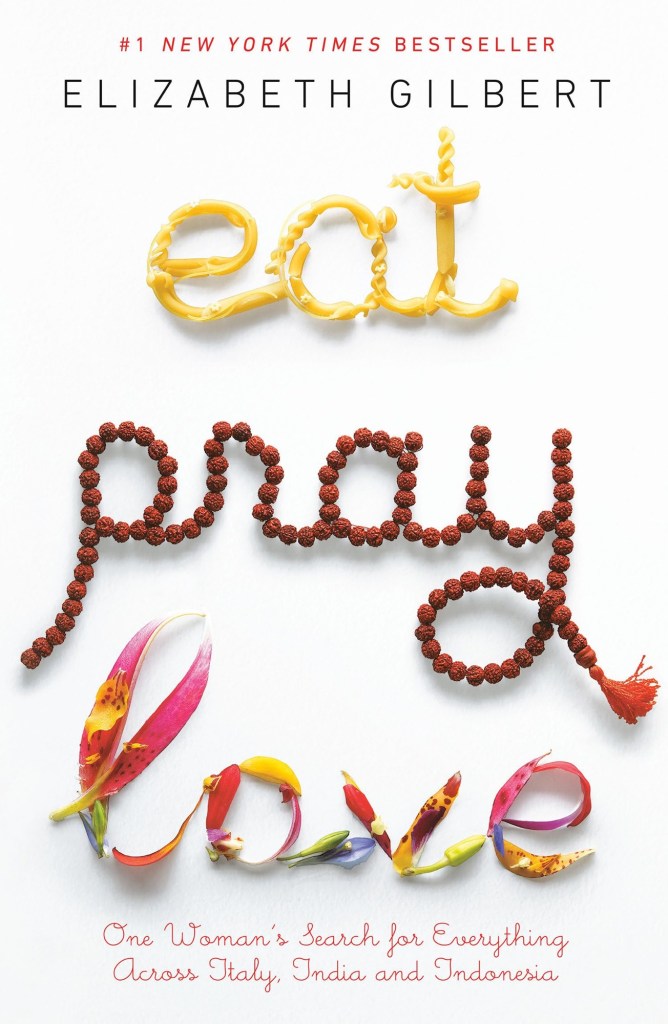
Well this was one I didn’t expect to cause any problems at all. A nice gentle read about finding yourself, while travelling through several different countries. I loved it. So it was a huge surprise when it was a DNF for some people. It wasn’t even that they were bored. They were furious! One of our readers was so cross that she left the book behind. She found the author entitled and very, very lucky to get a huge advance that enabled her to travel and write. This angle had never occurred to me. I thought the author was equally frustrated with herself for being dissatisfied with life, she felt spiritually sick and the ashram was a huge part of dealing with that. Another felt that most of us feel that way at some point but she should try being a single mum for twenty years while working full time to pay a mortgage. Some of us don’t get to leave. I guess a bit of perspective could be equally valuable and would have been a very different book. In the end we were so split on this one that we put the film on instead. It turns out Liz Gilbert isn’t for everyone.
Dad had a lot to answer for …

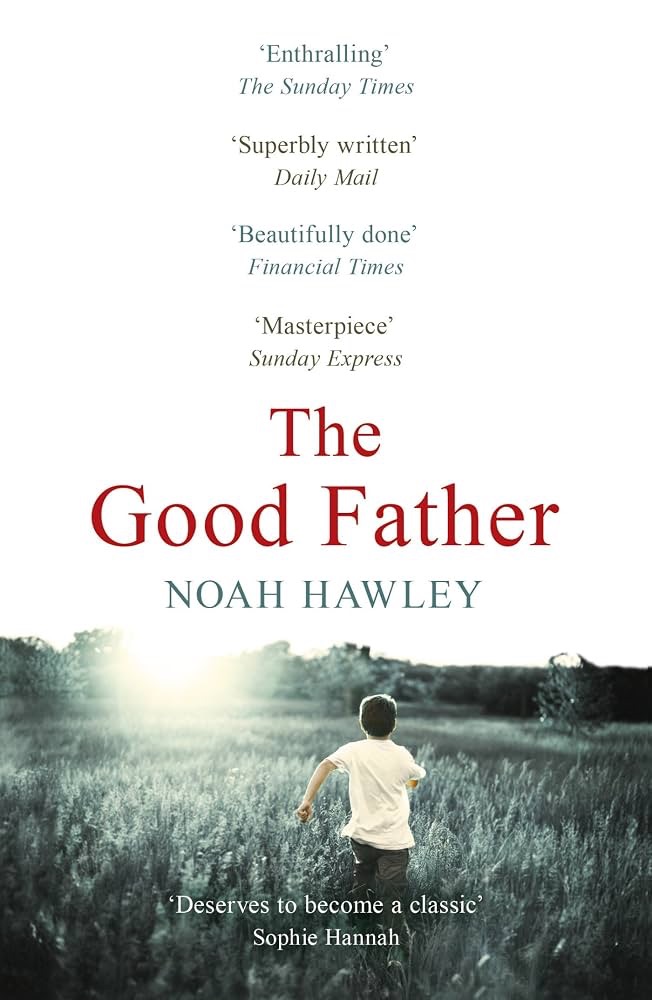
I thought after our discussions on motherhood it might be interesting to look at the role of fathers and this was a great place to start. In a similar situation to the mother in We Need To Talk About Kevin, the book follows the aftermath of a shooting. Dr Paul Allen, well regarded doctor with a wife and children, is shocked when he gets a call about the shooting of a presidential candidate. They are accusing Daniel, his son from his first failed marriage, of being the shooter. Paul can’t comprehend this, Daniel was always a good kid wasn’t he? With a few people in the group working within social services, teaching or healthcare there were those very keen to point out the damage that can be done by an absent father. Around two thirds of the group were shocked that after his marriage failed Paul chooses to take a job on the east coast of the US, a whole country away from his son. I couldn’t understand this choice, because in my mind kids have to be a priority. Also his ex-wife didn’t get any choice, they could have split the child care if he’d stayed and both had a career. Maybe he’d not be chasing top flight jobs or progressing as quickly, but I felt his child was more important. I was genuinely surprised when other women in the group felt his decision was justified, that he should go for the promotion because then he would be able to provide more for his family. He could afford to fly his son out to where he was in the school holidays, but would that be the same as being in the same city? Some felt that a primary age child having to fly across the continent alone to spend time with his dad was probably scary. Of course none of this is an excuse for shooting someone but this provoked a debate where there had to be an agreement to disagree.
The ‘push button clitoris’…

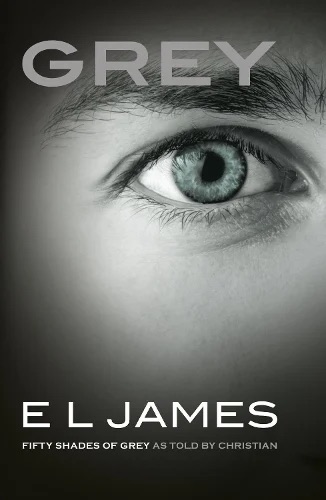
It’s really hard to state how much I dislike this book and I really didn’t want to read it at book club. Our usual way of choosing books was to drop suggestions into a little letter box I made and then draw one out at the end of the evening. Every so often though a book will come along that everyone is reading and talking about and so many in the club wanted to read it that we decided to give it a go. From my perspective the most controversial thing said in the discussion about this book was that it was romantic. I asked what Christian did that was romantic and most said that he whisked her off in a helicopter, bought her gifts and clothes. To me that is just throwing money around. I said that women’s rights were in an appalling state if this was seen as a romantic relationship. Some felt that they had an agreement and once Anastasia had agreed to be his ‘sub’ everything he did was consensual and agreed beforehand. Others thought that Anastasia slowly changed him and got some of her power back, disagreeing with some aspects of their agreement. Others felt like there wasn’t enough negotiation to make it truly equal and that he overstepped on more than one occasion. I described Christian as creepy and a borderline stalker. I think the older members were more angry about this book than younger ones. The consensus seemed to be that while sexual activity is different for all couples, it was Christian’s control outside of the bedroom that really offended – choosing her clothes, her contraception, ensuring she see his choice of gynaecologist and be waxed like a Barbie. There was also concern about the depiction of their sex life and my favourite quote comes from my mum who said Anastasia had a ‘push button clitoris’ that only needed one press for her to orgasm. This made me laugh so much but there’s also a serious side to what she said – would young girls reading this think there was something wrong with them if they don’t orgasm immediately? Similarly would they think control was sexy and desirable? Books like this one send feminism back decades and in my opinion the best place for it was the bin.

Other Opinions That Caused a Stir

The Colour Purple – wasn’t cheerful enough. Could we please read more upbeat books (we did and found nothing to talk about on the night)

The Time Travellers Wife – Henry was a child abuser. This wasn’t romantic. Henry was selfish. Once he realised he could travel back to Claire when she was a child he should have stopped. He was the adult and basically groomed her.

One Day – couldn’t have cared less. “I felt nothing for these characters.”

Life After Life – “what the hell was going on?” I had no idea what was real and what was make believe.

We Are All Completely Beside Ourselves – WTAF? 😱 Absolutely no one saw that coming!
Posted in Reading Life

You Can’t Read The Same Book Twice.

Which book have you read more than any other?

‘You cannot step into the same river twice, for it is not the same river and you are not the same man.’

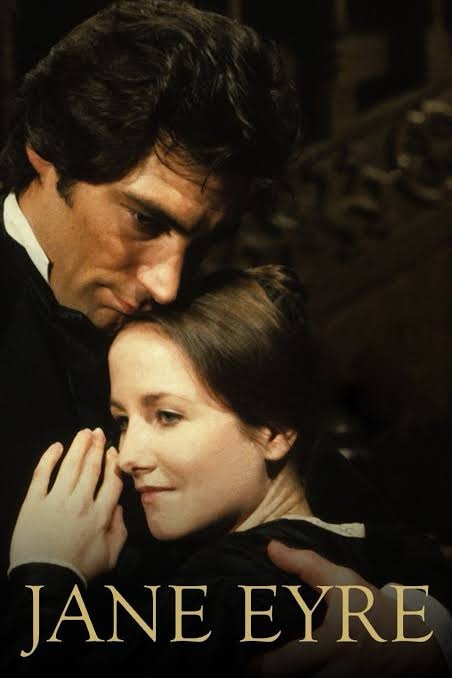
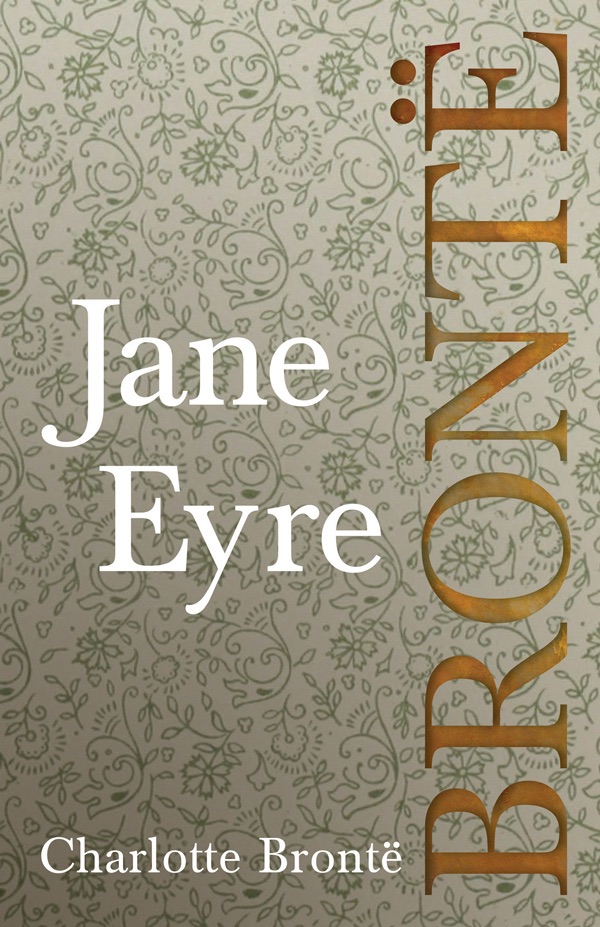
The above quote, attributed to the philosopher Heraclitus, is also applicable to a favourite book. In the time you’ve been away and reading other books, the world has moved on, progressing with new ideas and opinions that bring a fresh focus to an old favourite. We also change as readers. With every new concept learned and each new experience, the filter we view the world through changes and we become open to different interpretations of a novel we know well. The book I’ve read more than any other is Jane Eyre, starting out as a childhood favourite I’ve been reading this book every few years since I was ten. My first read coincided with the BBC adaptation on Sunday evenings, starring Timothy Dalton as Mr Rochester. Back then, for me, it was a romance and a ghost story. I was spellbound by the creepy laugh in the night, the candle set to burn Rochester in his bed and the dark, vampiric ghoul that takes Jane’s wedding veil and tears it in two. Yes I was scandalised that Rochester is already married when he tries to marry Jane, but given the choice I’d rather have him than St. John Rivers who has none of the passion and feeling that Jane needs. At least she knew herself well enough to avoid that path, even before Rochester’s strange telepathic call during the fire. I remember also being horrified by the injustice of Jane’s treatment at the hands of her Aunt and then at Lowood. I also found the death of the incredibly pious Helen Burns being particularly traumatic too. In my teenage years I studied it for my English A’Levels and back then un my teenage angst I felt Jane was lacking in feeling. Why did she have to leave Rochester? I compared her with Wuthering Heights and Catherine Earnshaw, full of passion and running wild. Both characters wander the moors, but Jane is rescued from that wilderness by a man of God. I identified more with Catherine as I wandered the flat fields of Lincolnshire walking our dogs, because she was wandering with the alluring Heathcliff. They ran away from the prying eyes of Nelly and Cathy was also experiencing all those dramatic feelings we have as teenagers. I admired Cathy for never losing her feelings for Heathcliff, by comparison it felt like Jane had chosen the good and holy way, but denied herself happiness. I loved the angst of Wuthering Heights, the constant drama and passionate declarations of love, a love that couldn’t be separated by death. I didn’t understand someone who didn’t choose passion and with my church upbringing I didn’t know if Jane was being true to herself or following the religion of Lowood School and her missionary parents as I was expected to. Cathy was my rebellion and Jane felt too safe.

I next encountered the book in my late twenties at university, alongside a huge amount of context and literary theory. I was learning that I could view the book through so many different lenses and my views were changed even further. I learned so much about 19th Century history and the governess as a cultural figure, from a different perspective I studied post-colonial literature and how important it is to the understanding of Bertha Mason’s marriage with Rochester. It made me wonder about her ‘Creole’ roots and whether it was not so much her madness that was hidden but her mixed heritage. I could imagine how powerless and bewildered she must have felt to be torn from the Caribbean, declared mad and locked in the attic by her husband. I read Wide Sargasso Sea and considered how Bertha has been renamed by Rochester, much like masters would rename their slaves. She is Jane’s double – a cautionary tale of what Jane might have become if she’d stayed the little spitfire who had to be locked in the dreaded red room. Lowood’s founder Mr Brocklehurst had been determined to knock the passion out of Jane’s nature, her spirited way of answering back and lashing out to defend herself against her bullying cousin John as well as her inability to hold her tongue when criticised by her aunt. It’s a broader use of the word ‘passionate’ than we tend to use now. In feminist terms men wanted to break her spirit, to turn her into the model and saintly young woman that Helen Burns was trying to become, never daring to look up from the floor. It made me think about women who are deemed acceptable in society and those that aren’t – inconvenient women who won’t shut up, have educated themselves and want to live life on their own terms. Jane has a freedom as a governess she’s never had before, an ability to earn her own money and use her knowledge to teach. She’s without the pressure to find a husband and marry well, the main focus for an upper class woman like the visiting Blanche Ingram. Jane doesn’t have to socialise and meet men, she can choose to leave and work elsewhere if she’s unhappy. Governesses are liminal figures in fiction, not in a specific class, outside the confines of the marriage market and choosing how they spend their own money. She’s invisible and there is freedom in that invisibility.

Jane Eyre BBC Adaptation 1983

When I read the book again recently I had another insight that came from my personal experience. I’d been in an emotionally abusive relationship for a few years and found my way out. Living alone for the first time in ages, I picked up a lot of old books as comfort reads. This experience made me look at Rochester differently, especially in some scenes that had always made me uncomfortable without knowing why. Is the Jane that Rochester claims to love the true Jane? When Jane first meets Rochester, he does try to intimidate her in conversation and finds he can’t. He enjoys her intelligence and seems fascinated by her imagination, the inner world that informs her art work. However, just as young contemporary readers would red flag Heathcliff, Rochester is no stranger to manipulation. He doesn’t tell Jane who he is when they first meet on the lane, instead choosing to surprise her after dinner. He brings the awful Blanche Ingram to Thornfield Hall, just as he and Jane seem to reaching a friendship and instead of allowing Jane to retire gracefully to her room in the evening he insists she stay in the drawing room with his guests. Jane can only sit on the edge of proceedings, as someone of her status should, so why ask her to remain at all? She does hear Blanche’s opinions on governesses and the general expectation that she will become Rochester’s wife. All she wants to do is stay in her place, upstairs with Mrs Fairfax, Adele and Sophie, so his insistence on her presence when all the company ignore her seems cruel. Then there’s the strange incident of the visiting gypsy fortune teller who wishes to read the fortunes of the unmarried ladies at home. Jane is sought out by the woman who claims to know there is another single lady in the drawing room and she obliges the old woman even though she isn’t interested in seeking her fortune. To her surprise the gypsy turns out to be Rochester in disguise. This is far from normal behaviour and so outside of his usual character that the only purpose can be to solicit confessions or secrets from an unwary Jane. Although, judging by her mood he also takes the opportunity to torment Blanche Ingram too. Throughout Jane and Rochester’s interactions there is a definite hot and cold feel to their communications: he hints that she isn’t his friend so she will assert that she is; he tells her stay and leave in the same conversation; he holds her hand a fraction too long. Is the purpose to leave her unsure or unsettled? It leaves Jane unsure of his meaning and intentions, but in the position of his employee she doesn’t want to offend him. He holds all the privileges being an educated and well-travelled man of means and property, sought after in society and with the freedom to come and go as he pleases. Psychologically, the Madonna/Whore Complex is also at play here, because how Rochester describes his wife is very different from how he sees Jane. When discovered to be attempting bigamy he uses words like pure and innocent for Jane and when he thinks of his wife escaping the attic on the eve of his wedding he imagines her standing over the ‘dove’s nest’ Jane sleeps in, innocent and vulnerable. Surely, even as he asks it, he knows Jane won’t agree to be his mistress or take his promised gifts of furs and jewels?

Bringing my own experience to the book I saw that Jane leaving Thornfield was about her asserting her own boundaries. She doesn’t reject his offer of becoming his mistress just because it’s immoral and she fears other people’s opinion, it’s because she could never reconcile it with her own soul. Her wandering on the moors and almost dying of exposure is something of a rebirth, after a dark night of the soul where she wrestles with temptation she’s taken in by the Rivers family. Her subsequent friendship with St. John Rivers, who finds her on the moors, confirms her determination to be true to herself. She can see that an eligible young woman from the village has feelings for him and those feelings are reciprocated but rather than enjoy a marriage based on love, St. John needs to be sure that his future wife has the qualities he needs in a missionary’s wife. His future wife will need to share his mission, willing to suffer hardships, dangerous situations and live in poverty. He sees the qualities he needs in Jane and although he does not love her, he does make an offer of marriage because she has the moral qualities of a missionary and the ability to work hard. It’s here I could see the balanced character Jane has achieved through her life experiences. She rejects Rivers’s proposal on the basis that there’s no passion or love in their relationship. Yes, she would be a great missionary wife but she wants love too. These men are at opposite ends of the spectrum, Rochester is all passion and Rivers is all reason, Jane needs a middle ground and she won’t settle for anything less. After my reread I went to a talk about the book and I was really cross when a woman said that Jane’s return to Rochester is a betrayal of feminism. I argued it wasn’t. Jane makes the very best choice for her life and women making empowered choices is everything feminism is about. Jane is on a very different path when she returns to see Rochester after the fire, she is no longer his employee for a start and soon calls him Edward rather than Sir. She has also become an heiress in her own right, so while she was always his equal in intelligence, she is now his equal financially too. Rochester is also in a different position, with Thornfield burned to the ground he is a widow and trying to save his wife from the flames has left him blind and disfigured. Perhaps in Jane’s eyes this act of heroism redeems him slightly. His disability has left him reclusive, no longer in the highest society but that’s nothing to Jane. If they marry, it’s no longer a case of Rochester changing Jane’s position in society, she has already accomplished that on her own and he is no longer a dominant voice in the marriage. They finally come together as equals.

This is what rereading a book brings, that comfort and familiarity of a known story. Maybe there’s an element of nostalgia too. As I read the book again it’s a Russian doll experience; within this reading are all the other times I’ve read the book. Every discovery I’ve made within its pages informs me but my own changing experiences and societal changes give me a fresh eye every single time.

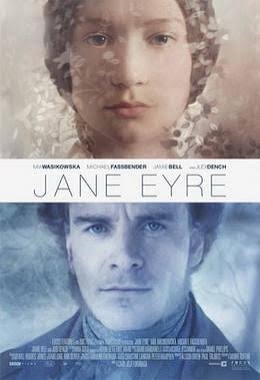
My favourite film adaptation of Jane Eyre from 2011

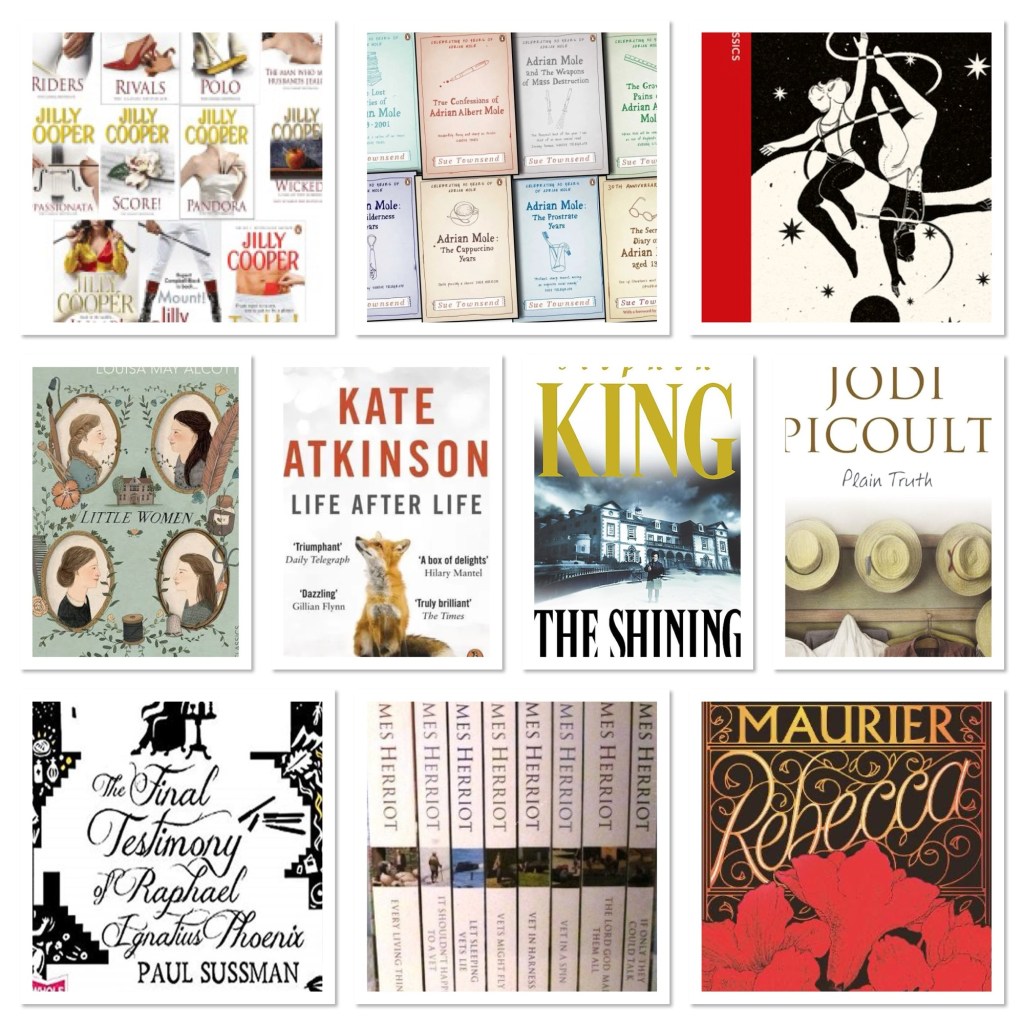
The Next Ten Books I Read Again and Again.

The Adrian Mole Series by Sue Townsend – touching, relatable, nostalgic and hilarious.

The Rutshire Chronicles by Jilly Cooper – glamorous, witty and sexy, with a rake we’d all like to reform.

All Creatures Great and Small by James Herriot – cosy and nostalgic animal stories, full of humour and warmth.

The Night Circus -, a love story with dark deeds set in a magical world that’s beautifully rendered.

Little Women by Louisa M. Alcott – the ultimate comfort book with an all time favourite heroine in Jo March.

Plain Truth by Jodi Picoult – a legal battle between the contemporary world and the closed off Amish Community with teenage girl in a heart-rending situation.

Life After Life by Kate Atkinson – a unique premise, Ursula meets the 20th Century again and again.

The Shining by Stephen King – a deserted hotel, hauntings, telepathy and the realisation that the things we fear can be much closer than we think.

The Final Testimony of Raphael Ignatius Phoenix – darkly humorous, deliciously wicked and incredibly clever.

Rebecca by Daphne Du Maurier – a brooding widower, a naive girl, a stately home on the Cornish cliffs and a wife who won’t stay dead.

Posted in Reading Life

Four Indie Bookshops I Visited This Year.

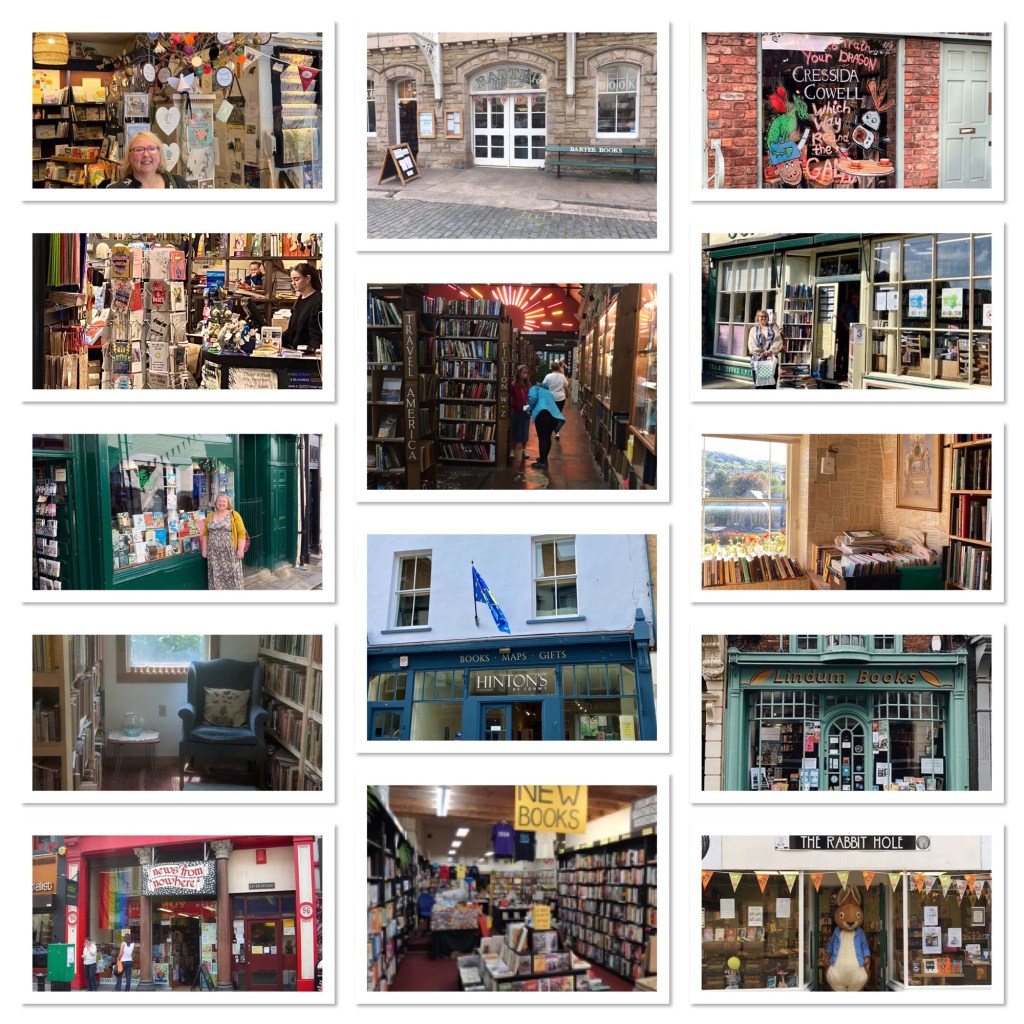
Since this week is Indie Bookshop week I thought I’d share a handful of my favourite bookshops that I’ve visited in the last year. I love all sorts of bookshops from little tiny local bookshops, to themed bookshops and second hand bookshops. There’s something a little bit special about all of these.

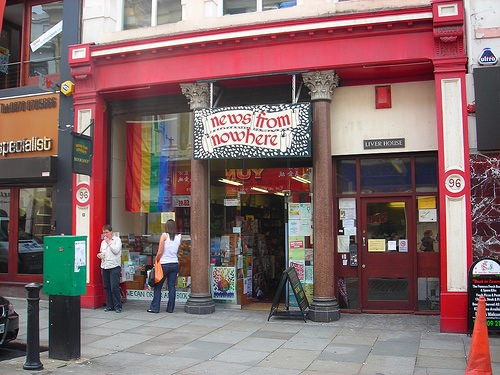
The News from Nowhere Bookshop has been a mainstay of Bold Street in Liverpool and was established in 1974 as a not-for-profit radical and community bookshop. So, there’s no boss and no owner. Everyone who works at the shop shares tasks, responsibilities and decision making. All profits stay in the business to cover stock buying and running costs and each worker is paid the same hourly rate.

Of course these principles also inform the stock choices and it is such an interesting and challenging place to buy books. I come out with things I never expected! Social justice weaves through everything they do so they focus on feminism, anti-racism, LGBT+, worker’s rights, disability rights, sustainability and environmental matters, anti-capitalism, animal rights and veganism. They also stock fiction and I’ve bought some incredible fiction there, as well as I Hate Maggie t-shirts for my father. Because there’s such an interesting range of books I can be lost in there for hours. It’s so important to support shops like this so I pop in whenever I’m in Liverpool and order for my stepdaughter from there, because she’s at university and lives round the corner.

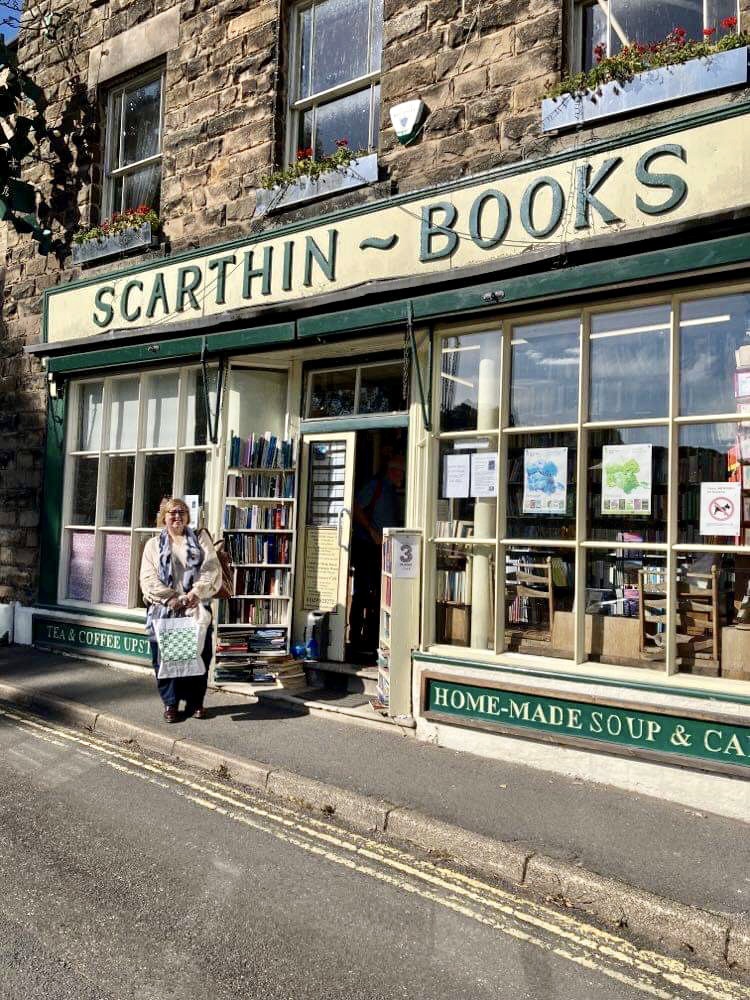
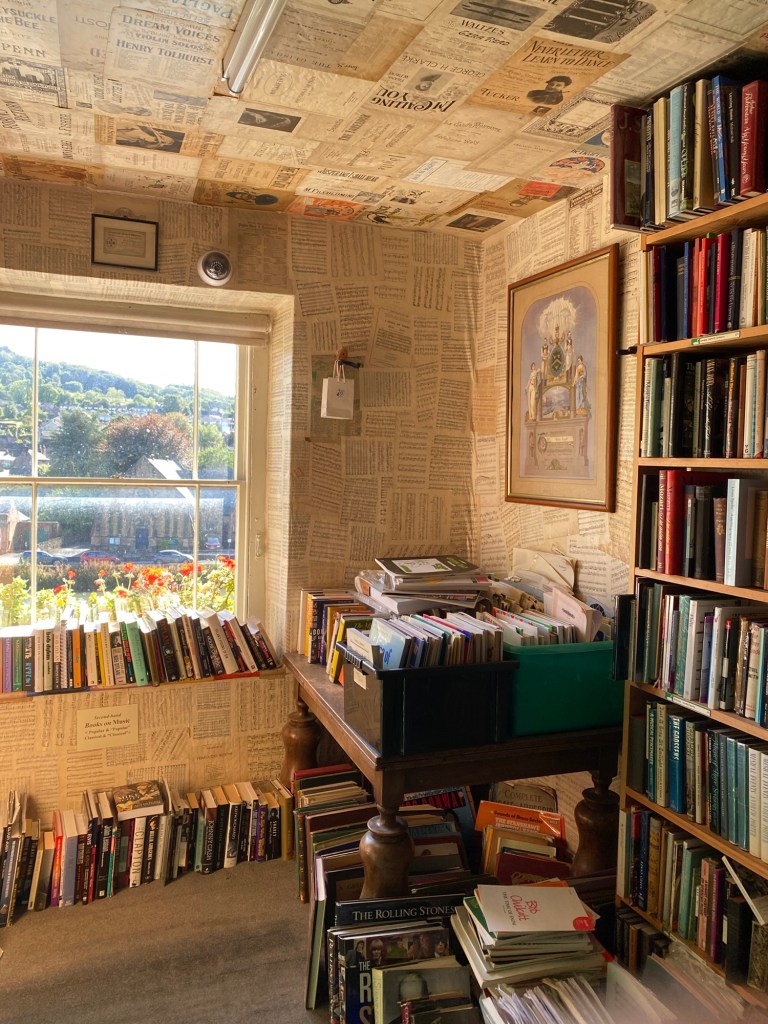
Scarthin Books has been a mainstay of my life since I was about 10 years old. It’s based in Cromford, Derbyshire since 1974 and I used to spend weekends at a static caravan site nearby where my Aunty and uncle had a caravan for several years. I would take pocket money and buy a book, or a notebook for my own poetry. This is such a higgledy piggledy little place I find it a little harder to get around now but downstairs has new fiction as well as second hand finds, upstairs has beautifully themed rooms for art books, music and travel as well as lots of other specialist categories. It’s cafe is great too.

https://www.scarthinbooks.com/

The music room at Scarthin Books

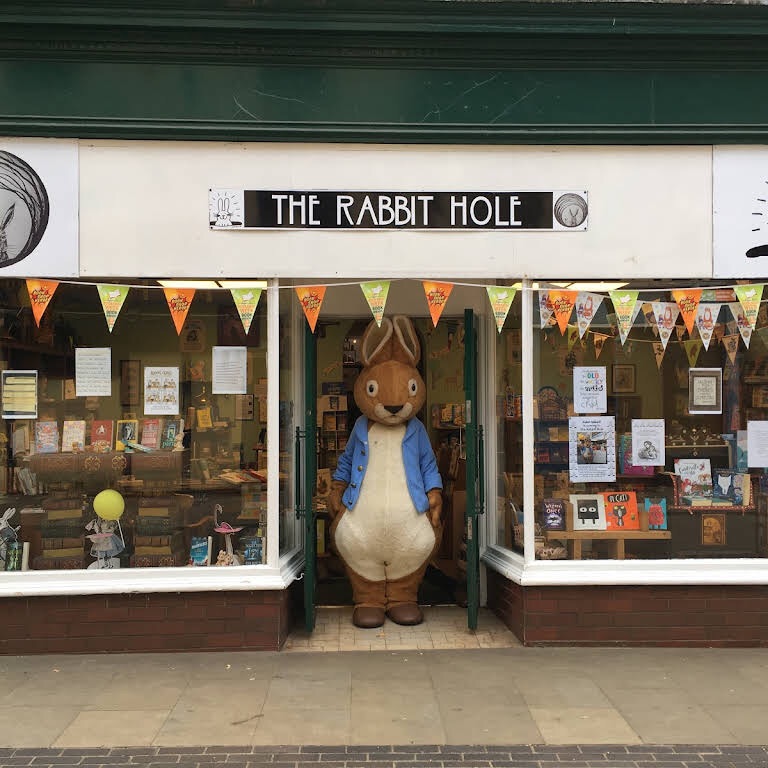
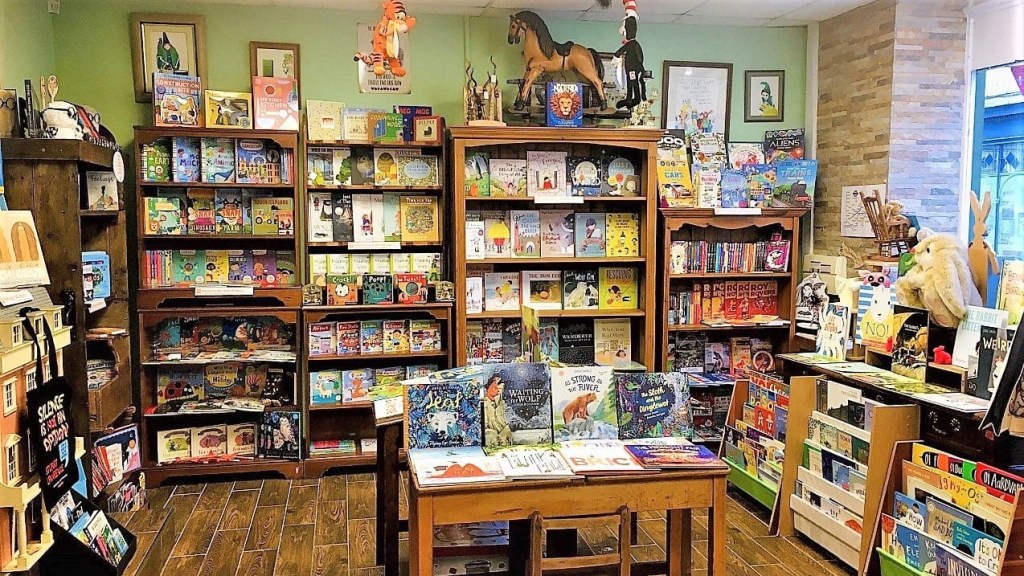
The Rabbit Hole is a brilliant local bookshop to me, in the market town of Brigg, near Scunthorpe. I found them through visiting the town for my Christmas Decorations a couple of years ago. They had a stall on the market and I realised they did adult fiction as well as children’s books. It’s a great place for children because there’s a huge selection but also a great play area,

If you make your way to the rear of the shop you’ll find fiction, including a great selection of indie special editions and signed copies. They pop any new editions on their Facebook page so you can reserve them and drop in to pick them up. They hold great author events too,

https://www.facebook.com/therabbitsbrigg/

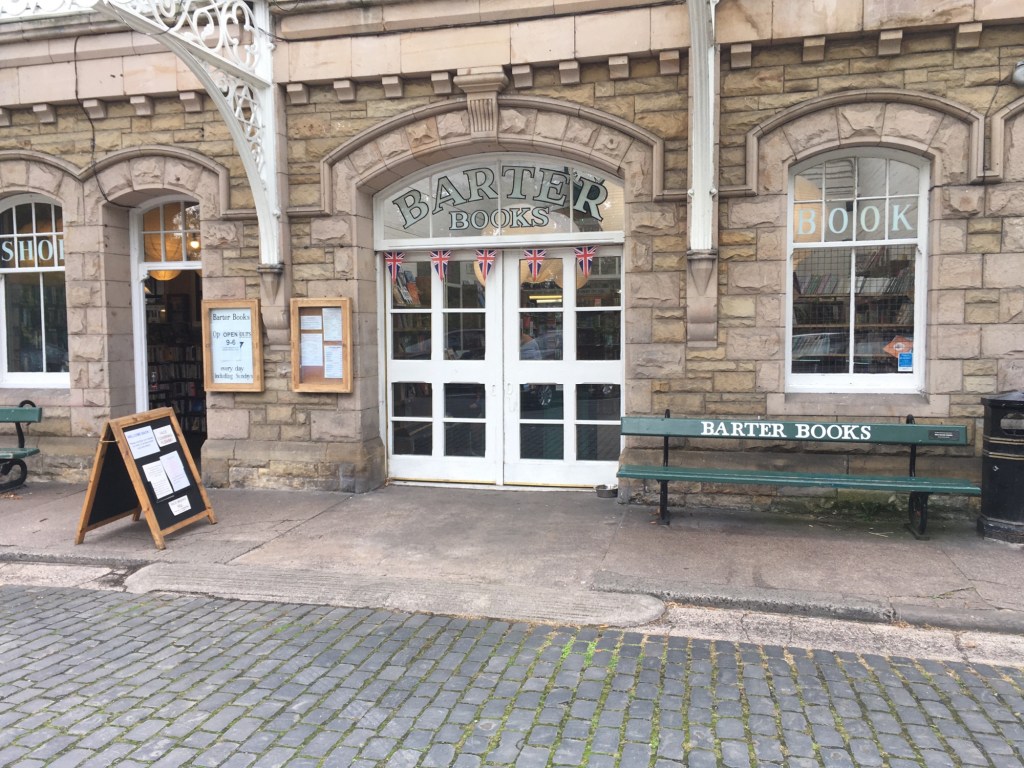
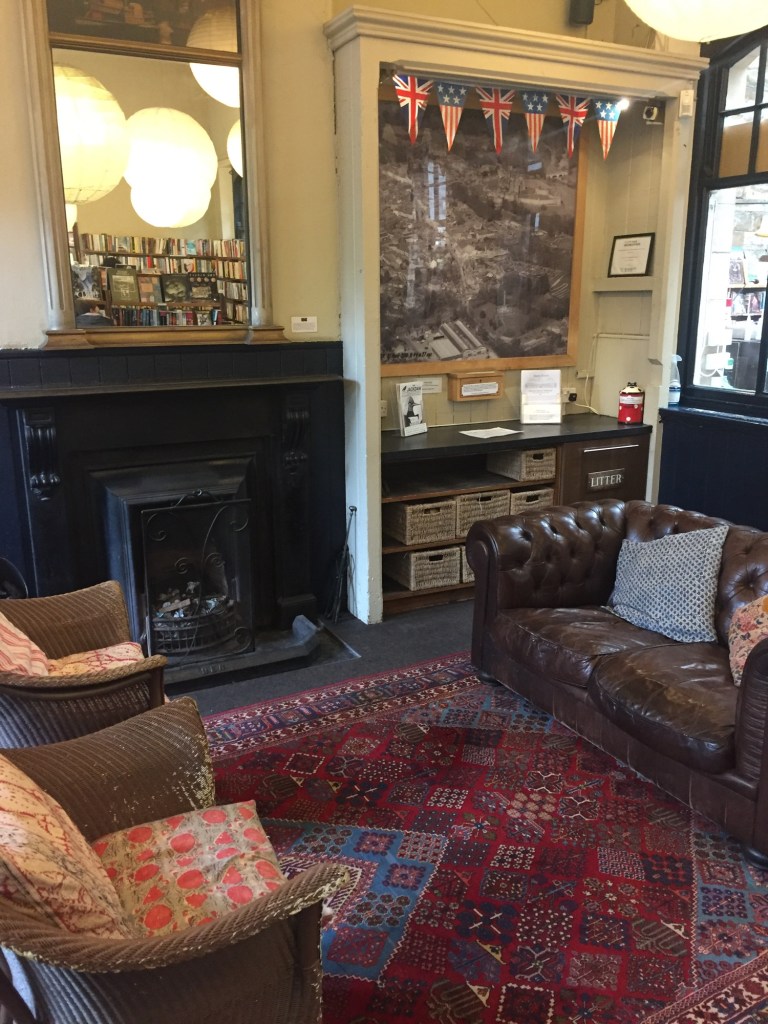
Barter Books in Alnwick is one of my favourite bookshops in the country. I’ve been visiting for over eighteen years and I never come out empty handed. Solely for second hand books, this old station house is huge and covers pretty much every subject you can think of. If we’ve popped up to Northumberland for the weekend, the day we pack up and go is my day at Barter Books. I drop off any books I’m selling then go have breakfast in the cafe. Then I pop back and find out how much I have to spend before browsing. Each section is clearly labelled and the whole place has so much character with all original features on display. There’s a wall mural of famous authors and a mini train set whizzing around above your head. In the paperback section there’s a cozy seating area with an open fire where I’ve met some of the loveliest people. Be warned, it’s very easy to lose hours in there.

https://www.barterbooks.co.uk/

Posted in Reading Life

A Different Look at Love

This year Valentine’s Day is going to be a little different. I keep hearing it everywhere, especially on adverts trying to sell us goodies for a ‘stay at home’ Valentine’s Day. I have a strange relationship with holidays that expect us to do certain things (I refer to New Years Eve as ‘enforced jollity’) and Valentine’s Day is no different. At the very least I like my loved one to have a card on the day, somewhere I can write how much I love my partner in my own words. Other than that I’d rather we bought each other something we love – a book will be much more appreciated than a cliched gift, or we try and get something that’s more about our relationship and the in-jokes we have. He’s always called me ‘Wonder Woman’ because of what I manage despite my MS, so I have some lovely Wonder Woman Converse trainers and he has a Lego Wonder Woman who sits on his bedside table. Often we wait for a cheaper week to buy flowers and I really don’t do red roses. This year will be stranger than most because it’s the week we’re moving house. This year he has a framed print for the new house – two bumble bees, with tiny suitcases moving into their new home. I’m getting flowers when we’ve moved in so I can really enjoy them.

This year, what’s on my mind is that many people might be spending the day alone. When social media is full of people showing their cards and flowers, how hard must it be for those living alone or those recently separated or bereaved. I think the message of Valentine’s Day-to love each other- needs broadening to include other relationships. Love between friends, family, even the bond we have with our pets, all are very important to appreciate and not just because we’re in lockdown. We should appreciate this love all of the time. It might be nice this year to drop a card in the postbox to an elderly grandparent, a friend whose shielding or an Aunty whose just been divorced – they all need it. My life has been quite motivated by love and I was surprised to find my reading is too. I checked my Goodreads for last year, and I was so surprised to see how many were categorised as romance. Today though, in line with my thinking about Valentine’s Day – I thought I’d feature some books that are a bit unusual and are less of a conventional romance.

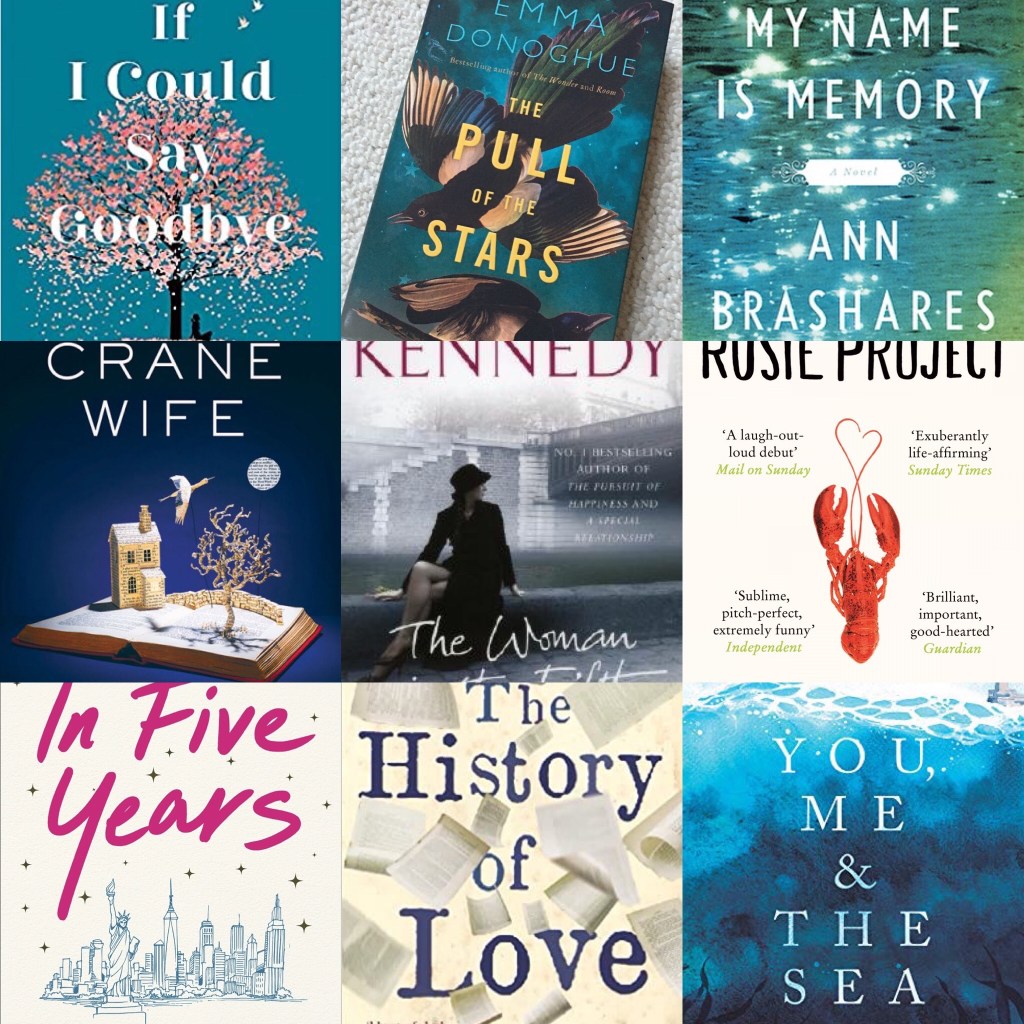
This book is the latest from a favourite writer of mine, Elizabeth Haynes. It’s probably the most conventional romance in my list, but it’s not just about two people. A love story between Rachel, who has run away from life, and Fraser who is hiding from his past. Yet, for me, the biggest character -that both people fall in love with-is the rugged landscape of the Isle of Must. At first Rachel wonders if she’s made a huge mistake, the island is bleak and rough. However, as the spring comes, it spreads its magic. Rachel falls in love with the island’s beauty; body and soul. I love that although this is a love story, it’s so much more than that. It’s a woman’s awakening into what her soul needs and who she really is at this point in her life. Fraser is an embodiment of the landscape, rugged and forbidding, until he too starts to reconcile with himself. Simply beautiful.

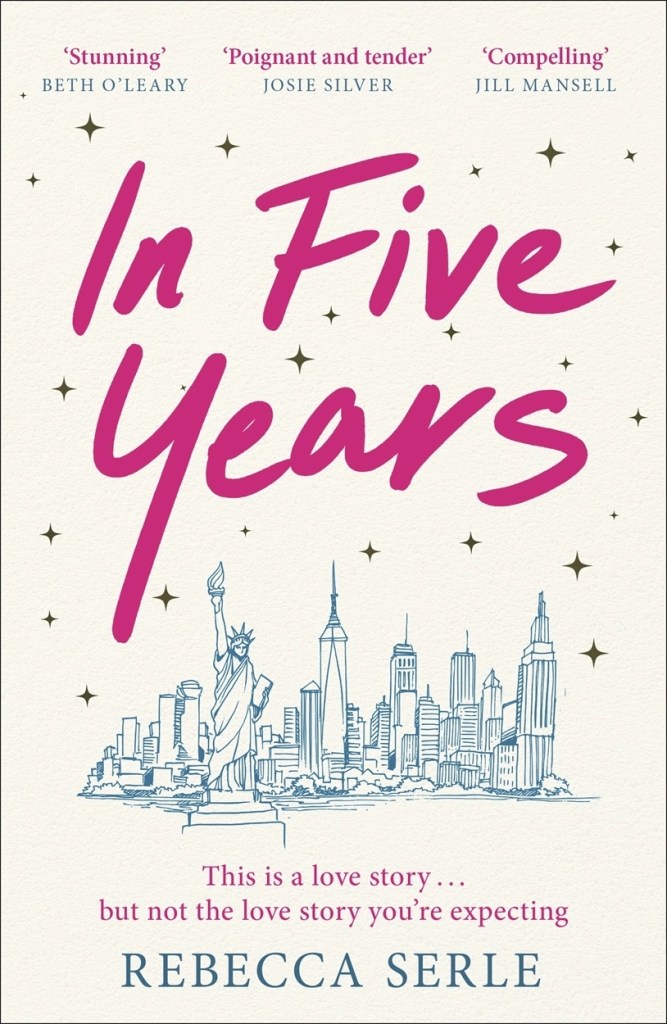
I absolutely loved this beautiful novel and I was totally wrong footed by it as well, because this is one book that really pushes the philosophy that there are many different types of love. Dannie has a very strict five year plan and goes after what she wants. With this focus she is now in the perfect apartment in the right part of Manhattan. She has secured the job she always wanted, and is engaged to the perfect man. So she’s shocked by a dream she has, that in five years time she is with a different man, in a loft apartment in a more ‘up and coming’ area. She’s also wearing a different engagement ring. She shakes off the dream, but it’s there in the back of her mind. Then, four and a half years later, she goes for a meal with her best friend Bella. Bella is Dannie’s polar opposite, but despite this they’ve been friends for a long time. Bella would never have a life plan. In fact Dannie has sometimes worried that she’s a bit flakey. She’s a bohemian, go with the flow, sort of girl and has been resolutely single for years. Now she’s bringing someone important to meet Dannie, but to Dannie’s horror Bella’s dinner guest is the man from her dream. How can she avoid the destiny that seems to have been planned out for her? I adored this book. It’s a beautiful love story, but was far from the one I was expecting as I read. It made me think about soul mates and how that doesn’t necessarily mean our romantic partner. Love comes from many different places and isn’t necessarily what or who we expect. Heart rending and beautiful.

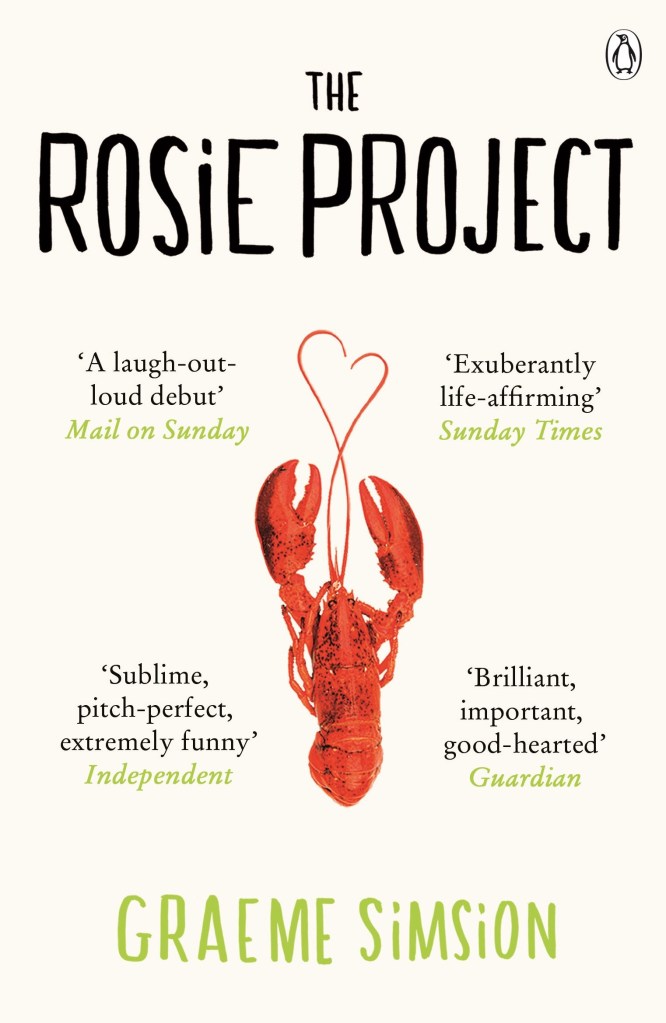
Don Tillman has decided it’s time for him to find a wife, and being a professor of genetics he decides to take a scientific approach. Surely if he comes up with a questionnaire, designed to eliminate women with the qualities he dislikes, he should find the one? However, one thing he knows for sure. It will definitely not be Rosie. Don believes Rosie is an applicant for his questionnaire, but she would fail on several counts. She smokes and drinks, is a vegetarian and can’t be punctual. Thankfully she’s there to ask for his help in finding her real father. To say Don is a bit socially challenged would be an understatement and this really is a laugh out loud funny book. Watching him struggle through meeting women is brilliant. He hasn’t realised that love has a language all of its own.

I do enjoy a bit of magic realism and that’s exactly what we get here from the incredible storyteller Patrick Ness. George Duncan is an honest, decent and good man. He lives by himself and could be said to have a lonely life. One night, he is disturbed by a noise outside and wakes up. When he looks outside there is a large crane in his garden, shot through the wing by an arrow. George is very moved by the bird’s plight and goes outside to help. When the bird flies away he feels a loss, not knowing that his life is about to be transformed. The next day, while working in his shop, he meets a customer he’s never seen before; mysterious, but kind woman, called Kumiko. A tentative friendship begins, then blossoms as Kumiko takes George on a journey through art and storytelling. They fall in love and together create beautiful pieces of art, stretching George’s ordinary life into something rare and fantastical. However, there’s a part of Kumiko he feels he hasn’t reached and he wonders whether this enigmatic woman has secrets. His need to know the the occasional secret side of her, may be his undoing. Can we love someone, knowing they are never just one set thing? Ness creates a beautiful fable here, but also a deep meditation on life itself.

“Love who you love while you have them. That’s all you can do. Let them go when you must. If you know how to love, you’ll never run out’.

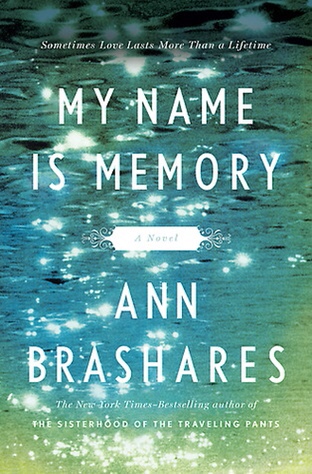
Daniel has ‘the memory’, an ability to recall past lives and loves. It is both a blessing and a curse. Daniel has spent many lifetimes falling in love with Sophia across continents, dynasties and centuries. Each time they find each other, despite different names and appearances, and Daniel remembers every lifetime. Yet it is a love that’s always too short. For every time they come together, they are painfully torn apart again. In the present day, under the guise of Lucy. Sophia is awakening to the lover’s shared past, but just as she understands their strong attraction and familiarity they may be torn apart again. How can they confront what always pulls them apart and finally change their ending?

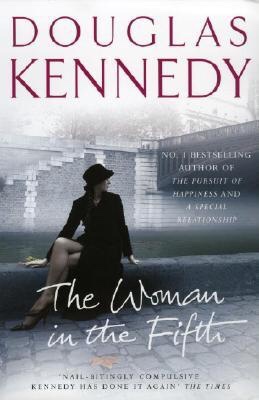
Douglas Kennedy has a real aptitude for writing about relationships and I’ve been a fan since his debut A Special Relationship. Here we meet Harry Ricks, down on his luck and running away from life. His career is in pieces after his boss slept with Harry’s wife then conspired to ruin him. He has a poor relationship with his daughter, who despises him. He takes a rash decision and flies off to Paris, where he books into a hotel and burns through any savings. He’s close to destitution when he gets a job as a night security guard. He’s guarding warehouses for a bunch of gangsters, but turns a blind eye to what happens inside. Just as life seems at its worst he meets Margit and is immediately enchanted by her. She’s a handsome woman rather than pretty, but incredible sensual and oozes sexual energy. She challenges his morals and the guilt he feels. Margit becomes his muse. He starts writing his novel in earnest – 1000 words a day – and he feels his masculinity being restored. She controls when he sees her, which only makes him want her all the more. People who have been looming over Harry’s life start to have nasty ‘accidents’. However, as with all seemingly perfectly arrangements, perhaps Margit isn’t all she seems to be. Atmospheric, addictive and an exceptional twist at the end.

Emma Donohue’s latest novel is an incredible piece of historical fiction, but is also a love story. Set in Ireland, just after WW1, Nurse Julia Powers works in a maternity unit. On the day in question she has been placed in charge of an isolation ward where expectant mums have ‘Spanish’ Flu. Julia is usually assisting a senior nurse, but today staff are so stretched that she’s in charge, with only volunteer helper Bridie Sweeney. Bridie says she’s had the flu and would be only too happy to help. What follows is a difficult, visceral and heart rending depiction of child birth in Ireland 100 years ago. So many bleak elements make up this story from the details of difficult births, to women from the Magdalene laundries, and exhausted women on their twelfth birth. This isn’t an easy read. Yet there is love: between the women supporting each other, the overwhelming love of a mother for a child (even where the child’s conception has been violent and traumatic) but there’s also romantic love too. The women work together and grow together, their feelings developing throughout the day towards a gloriously tender moment. These book shows us the consequences of love and the sacrifices women are prepared to make in love’s name.

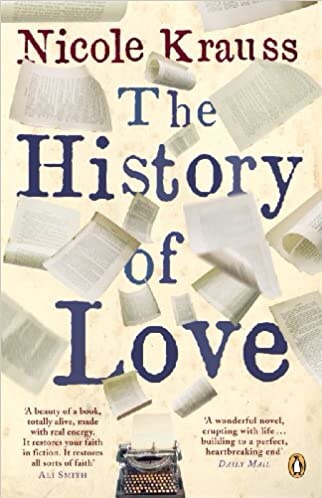
Set in New York, this is a story of people losing and finding each other. Fourteen-year-old Alma Singer is trying to find a cure for her mother’s loneliness. Believing she might discover it in an old book her mother is lovingly translating, she sets out in search of its author. Across New York an old man called Leo Gursky is trying to survive a little bit longer. He spends his days dreaming of the love lost that sixty years ago in Poland inspired him to write a book. And although he doesn’t know it yet, that book also survived: crossing oceans and generations, and changing lives. . . We have a brilliant depiction of old age in Leo, and his recollections of his boyhood in Poland are wonderful. There are several narrative strands woven together by the author, all based around the book ‘The History of Love’ but it is Leo’s story of his childhood love from the years before the Nazis came that stayed with me. Written beautifully, in such poetic prose, this is as much about the power of stories as it is about the power of love. It seems that it’s those who have lost so much in love, who value it most highly.

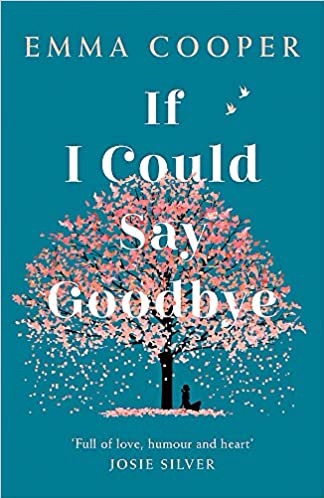
This novel is probably my most conventional choice and one of my favourites from last year. It quite literally broke me when I finished it in the middle of the night. Jennifer Jones’ life began when her little sister, Kerry, was born. So when her sister dies in a tragic accident, nothing seems to make sense any more. Despite the support of her husband, Ed, and their wonderful children, Jen can’t comprehend why she is still here, while bright, spirited Kerry is not.When Jen starts to lose herself in her memories of her sister, she doesn’t realise that the closer she feels to Kerry, the further she gets from her family. This is a wonderful depiction of married love, but also of familial love. Jennifer is torn between her love for her sister, her love for Ed and a mother’s love for her children. The way Ed supports Jen, and believes her when she says she can see Kerry, is a wonderful depiction of love and loyalty. I was so lost in this novel that I cried at the end.

Finally I want to give special mention to a book that spoke to me personally when I most needed it. It prompted me to do something that helped me through grief, when I lost the person I most loved in the world. I lost my husband in 2007, after a long illness, and I was utterly lost. Due to my caring role, I’d had no time for me or my own interests for a couple of years. I’d given up work and struggled to see friends. Jez couldn’t eat, drink, or even breathe without someone there 24/7. So after his funeral, I woke up one morning with all this time to fill and nothing to fill it with. I had lots of support but at the end of the day, when the door closed at night I was so alone. It wasn’t just me and Jez, but all the carers, Marie Curie nurses, and hospice staff who were with us all through the day – and four nights a week. I decided after a couple of months to get a dog and I found my cockapoo Rafferty a few weeks later. I collected him on New Years Eve and it was just in time. Suddenly that night I fell into a black pit of despair. I couldn’t bear entering a year where Jez didn’t exist. As the night wore on I felt so black that I had I not had my little bundle of fur next to me I might have taken drastic action. I started to write a memoir a couple of years later and that was when mum gave me this book.

This is powerful memoir which mixes honest, personal revelation with literature, history, and inspirational self-help, Bel Mooney tells the story of her rescue dog, Bonnie, who in turn rescued Bel when her world fell apart with the all-too public break-up of her 35-year marriage. It really is a story of survival, and also one of love. This is an account of six years in Bel’s life, from when she first acquired Bonnie from a rescue home, through Bel’s years of personal heartbreak and disappointment, and on to the happiness which she has now found in a new marriage and a new life, with the Maltese at her side all the way. This is a book about transformation and change, about picking yourself up and attacking life in the way that a small dog will go for the postman’s trousers – and about celebrating life, much as your canine companion will always celebrate your return, even from the shortest trip. This is engaging, entertaining, full of personal anecdotes and deeply It takes you on an inspirational walk with one very small but very remarkable dog – a dog who represents all that is best about dogs, and about we humans too. I know that the love I have for my dog is one of the strongest feelings I’ve had. I have thoroughly enjoyed watching my partner and my stepdaughters fall in love with him over the last couple of years. He’s now a family dog and he’s bonded us in a way that wouldn’t have happened otherwise. I hope whatever loving relationships you choose to celebrate tomorrow, you have a lovely day. Valentine’s Day isn’t just for romantic love and we need all the celebrations we can get.

Me and Rafferty