Posted in Personal Purchase

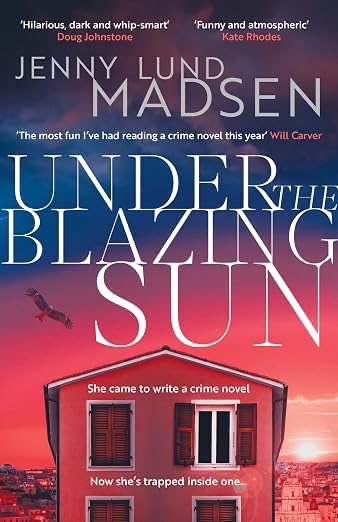
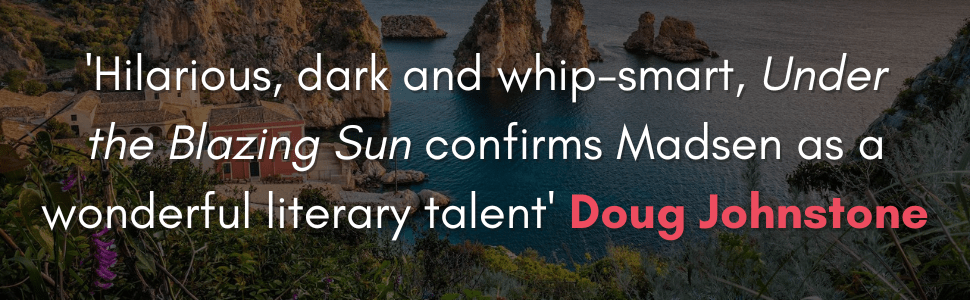
Under the Blazing Sun by Jenny Lund Madsen

Hannah is miserable. Her love life is in ruins, her contract demands a sequel to her bestselling crime debut – and she’s out of ideas. After a mortifying TV interview, her agent ships her off to a sun-drenched Sicilian villa with a simple order: finish the book. No distractions. No excuses.

But inspiration doesn’t strike – murder does. When a night out ends in murder, Hannah finds herself at the centre of a murder investigation … again. The police want her out of the way, and the only person who seems to believe her is a young but charming Italian police officer. That is, until she doesn’t.

Soon Hannah is chasing suspects, fleeing crime scenes, and doing whatever it takes to avoid becoming the next victim. She came to write a crime novel. Now she’s trapped inside one. Dark, sly and deliciously atmospheric, Under the Blazing Sun is the second novel in the award-winning series featuring accidental sleuth and disgruntled literary author Hannah, whose pursuit of plot twists keeps turning dangerously real.

I loved the author’s first book in this series and I devoured this one in a day. Hannah is once again fretting over writing her latest book, disgusted that copies of the romance novel she poured her heart into is being ignored, while the crime novel she wrote in one month for a bet is a bestseller. Hannah is a brilliantly flawed character full of writer’s neurosis, hating that she is forced to write what will sell rather than the books she aspires to write. Again she’s on a deadline and as a last resort her editor Bastian finds her a quiet villa in Sicily with its own swimming pool. No distractions and plenty of time to unwind and write the novel she’s had an advance to produce. I love this character because she says and does the things I want to, but my inhibitions keep it inside. She has no such restrictions, happily saying what she thinks when she thinks it. Her disgust with the crime genre and Jorn Jensen in particular is so funny. I wonder if she has ever had a thought or need she didn’t express? She’s also totally unregulated and this is what lands her in trouble every time. She decides to walk to the village without thought about the heat, how far it is and which direction she takes. So when it comes to going back to the villa she has no idea which hill to take and ends up exhausted and on the verge of sunstroke on her way back. This is where she is found by Hans and Greta who take her to their incredible house to clean up and drink something. This turns into dinner, wine and a night spent in their house. It’s when she wakes up in a strange place that she and the housekeeper Lucette find a dead body. Greta has been murdered and Hans is nowhere to be found. Has he been kidnapped or could he be the murderer? Hannah seems to have an inability to weigh up a decision before taking action. There’s so much going on in her head that it’s very hard for her to remain in the present. I’m always wishing she’d slow down a minute and breathe, but the only times she seems to do this are in the water. 

This hot Italian island couldn’t be further from Hannah’s Scandinavian home and is a great backdrop for a murder. Hannah is a fish out of water here and she notes the contrast between the cold and snow of her last case and the relentless heat and dryness of Sicily. The area throws up different obstacles too. There’s the rather sexist and misogynistic Sicilian police, aside from their one female recruit Carlotta. Hannah has to consider the local community and possible objections to people like Greta who are making money by bringing even more tourists into the area. There’s the possibility of corruption too with links between the Mafia, business and local government. We see the contrast of what the area is like for holiday makers and wealthy incomers, as opposed to the young people in the area who are struggling to find work and homes without moving away. The young police detective Carlotta wants to be the difference in the police force, banding together with Hannah on a couple of occasions and proving to be quite the distraction. Hannah is still in love with Margret and is dangling on an open ended waiting game. They’re not in a relationship until Margret can extricate herself from her marriage and make the best decisions for her children. Hannah isn’t always patient with this and doesn’t seem to realise that if Margret was in her life permanently so are her children. When she imagines them together I’m not sure the children feature in that picture. It was interesting to see her getting more than she bargained for and having the cheek to ask Margret’s police officer husband for help! He voices what many readers might be thinking when he tells her she’s the most annoying person he’s ever met. 

The case is an absolute maze of connections and suspects and despite her aversion to crime as a genre, she’s just as caught up in the mystery of this murder as any reader would be. She’s utterly reckless, in a comical way and there’s a chase on a moped during the final chapters that is clumsy and hilarious to imagine. Sparks fly when Jorn Jensen appears, but she can’t deny he helps make things happen. His arrogance is brilliant and when he suggests they write a crime novel together I thought Hannah might hit him with something heavy. The creepy moment in the basement, including Jensen’s cardboard cut out made me laugh and worry about her safety at the same time. This is a dark humour that I love. Jorn’s statement that he has ‘enormous sex appeal’ and it’s that and not his wealth that attracts women shows what sort of brash and conceited character he is, but there’s no denying his bravery and quick thinking. They are quite the investigative team, despite her reticence about working with him. Hannah’s instincts are good. She won’t accept the police’s conclusion that Hans killed his wife, reasoning that he adored her and couldn’t have done it. Instead she follows the money, often blundering into compromising situations and dangerous people. If the conclusion teaches her anything it’s that people will murder for very unexpected reasons. This is a brilliant second instalment of Hannah’s adventures and I’m going to resolve to be a little more Hannah and say what I think here and there. 

Out now from Orenda Books

Posted in Squad Pod

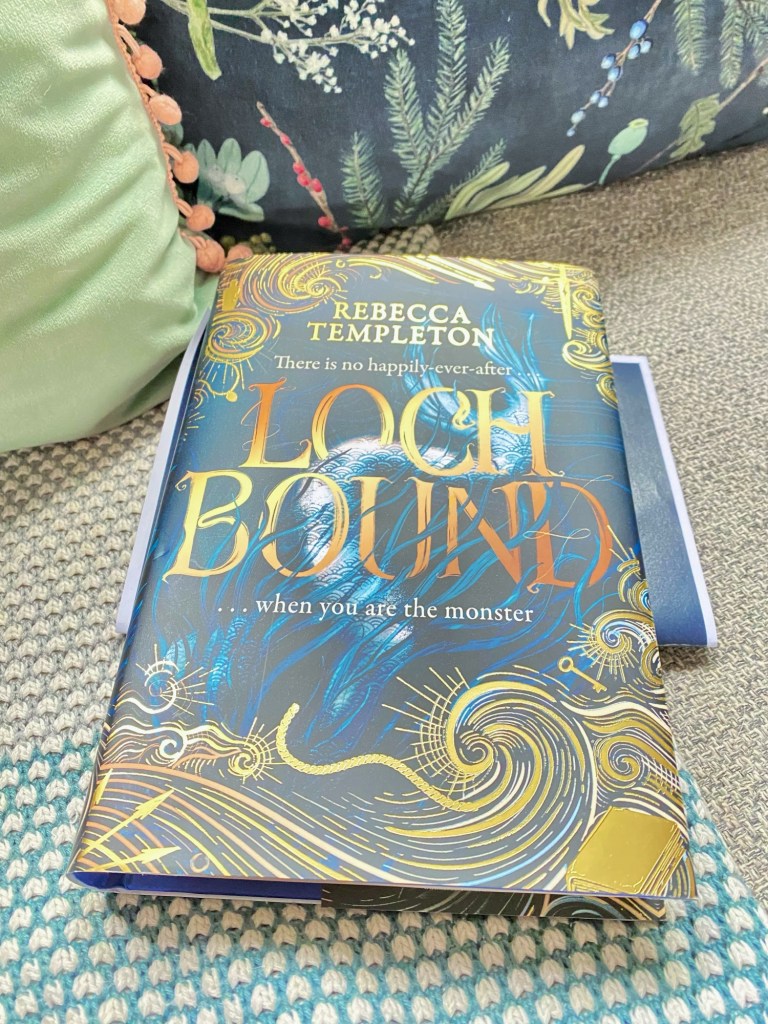
Loch Bound by Rebecca Templeton 

Mermaids. Monsters. Magic. But this story is no fairy tale . . . 

Kilmara, Scotland. 1725. For fifty years, Iris has accepted the curse that blighted her life. By night, she is a heartbroken woman, destined to walk the misty shores of Kilmara without growing older. By day, she is Moireach, a terrifying monster imprisoned in the murky depths of Loch Moine.

When bodies begin appearing on the shore, the villagers are convinced Moireach is responsible. So a hunter – the rugged, ruthless Henry Carver – is summoned to slay the monster of the loch. 

Iris must break her curse before she is killed for crimes she cannot believe she has committed. But as Kilmara’s hunt for the monster becomes ever more fevered, she and Henry are drawn together in a dangerous game of impossible attraction. 

And when a figure from Iris’s past suddenly reappears, she must choose what – or who – she is willing to sacrifice to win her freedom.

Because there is no happily-ever-after when you are the monster.

I love books where monsters are used in a clever way and I also love books set in Scotland and this brings the two together beautifully. I’ve recently been reading about mermaids and their dual narrative of being beautiful women with long hair, beautiful faces and glistening scales or terrifying sea monsters dragging sailors into the deep and eating them alive. It’s a long way from the Little Mermaid. However, what is common is the misogyny of the narrative – an early Syrian goddess was said to have had an illicit relationship with a youth, ashamed of her actions she then drowned herself in a lake. She was forgiven by the gods but from then on had the upper body of a woman and the lower body of a fish, thus remaining celibate for life as punishment. I’ve never liked the tale of The Little Mermaid who falls in love with a man and wishes to live on land. She can have her wish granted and have human legs, but is doomed to having pain like knives in them. The wish to be and live like a human has to have a penance attached. The fashion for taxidermy, curiosities and freak shows in Victorian Britain meant that many women were performing as mermaids but also strange mixes of animals were being sewn together and shown as mermaids, such as the strange example at the Horniman Museum in London. In this story she’s a truly fearsome creature named Moireach with yellow eyes, sharp teeth, shiny scales and the drive of a predator. She lives in the loch, only changing after dark when she reverts back to her human form – Iris. As a young girl Iris defied her father and fell in love with Thane. He forbade their relationship, as the daughter of a laird she had to marry well and for the clan’s gain not her own. Devastated she visited a witch hoping to be free of her father’s obligations, but the witch cursed her and she became banished to the loch by day. Now even fifty years later, when Iris emerges she is still the beautiful girl of her youth. Thane has never come for her and now when dead men are being found around the loch with their hearts ripped out the name of the monster is on everyone’s lips. Her childhood friend Duncan, now an old man, knows it cannot be Iris. She isn’t capable. He hides her with all the love and loyalty he had fifty years earlier, even though she chose someone else. The current laird has made a big decision, he’s hired a hunter of monsters, a man called Henry Carver and he has never failed to catch his prey. 

The backdrop of this story is perfect, using the mist, cold and breathtaking landscape to add to its mystery. There are parallels with Outlander here in the feel of this place, making good use of Scotland as a thin place where the paranormal, time travel and a history of monsters seems part of life. With the historical backdrop of the witch trials it’s also a dangerous place, particularly for a woman. Iris talks about the smell of the burnings and how women must be careful, but it’s no easier being a monster when men are turning up dead. The background of misogyny and brutal witch trials hangs over them all and shows a willingness to believe in magic, curses and female malevolence. It’s not just witches though, other fantastical creatures exist here like the seelies and selkies and there’s more one woman with powers a man would kill for. All of these things appear to be aligned with the nature that surrounds them and we can see that wildness as Iris changes to Moireach. It’s not just the yellow eyes and scales but the way she becomes a predator with only one goal. However she has only killed things in the loch, never on land before. She has always been able to keep her dual personalities separate before, never feeling Moireach at night when she leaves the lake. Now that separation is becoming harder. Is that because of the presence of the hunter or is the curse changing? Will Iris will be lost forever? 

The hunter is an interesting character, made solitary by loss and preferring to keep moving from place to place. His opinions on grief are based on hard experience, when his wife died he didn’t just lose her, but also that part of himself. The part that loved her. He knows that grief doesn’t go away, he’s had to learn to live with that dead part. When he sees Iris in her human form something awakens in him, even though he notices that she seems like a wild creature. She’s always around at night, wearing men’s clothing and runs away if he tries to get too close, with her flaming red hair trailing behind her. There is something between them and it could be love, or it could be his hunter’s instinct kicking in. Iris can feel it too, even though her aim has always been to break the curse and find Thane, the man she was in love with and wanted to marry. I felt like Iris grew up in the course of the story. It’s as if Duncan’s protection of her has kept her a young girl in mind as well as looks. Maybe she needed to break out a little in order to gain some wisdom and perspective. If she does break the curse, will Thane come for her? She would need to decide whether she wants the life she expected when she was cursed or if the time she’s spent as Moireach has changed her outlook? I also started to wonder if Duncan had a vested interest in keeping her under control. 

Reading this felt like being a child again and discovering a fairy tale. One that’s rooted in darkness. Yes, some elements are fantastical, but it doesn’t read like fantasy. It’s more like a hybrid of historical fiction and fairy tales with aspects of a thriller. The pace speeds up as Iris begins to run out of time and we still don’t know why she was cursed, who cursed her and what will finally break it. There are those in the village who may seem kind, but could benefit from keeping Iris in her watery prison. As she takes us back to those fateful days in flashback, when her family were all together and her father didn’t yet know about Thane. I was engrossed with the tangled web of lies and betrayal but also by the question of what life Iris would choose if she could lift the curse. Would she pick the life she’d always wanted or had things changed? She has memorialised her relationship with Thane but he has let her down by not coming for her as she’d expected. Maybe she would want a different life, rooted in her present reality instead of the fantasy she has held all this time. There are some unexpected revelations too, making for an exciting and absorbing conclusion. I thoroughly enjoyed this dark and feminist take on the mermaid stories we’re used to and I look forward to what the author writes next. 

Meet the Author

Rebecca Templeton has had a love of books from a very early age and had lofty childhood aspirations of being a writer, though she ended up joining the legal profession instead. When her husband encouraged her to start writing again, she rediscovered her creative outlet and hasn’t looked back since.

When not writing or working, Rebecca can usually be found crocheting giant blankets, baking or watching Gilmore Girls. She is also owned by a couple of very energetic children.

Posted in Personal Purchase

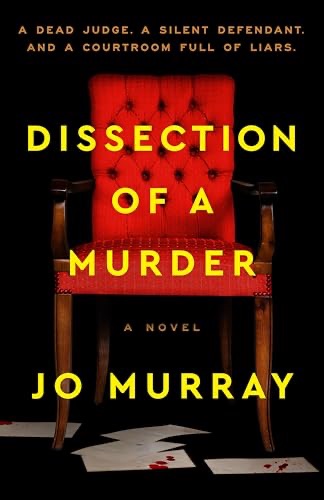
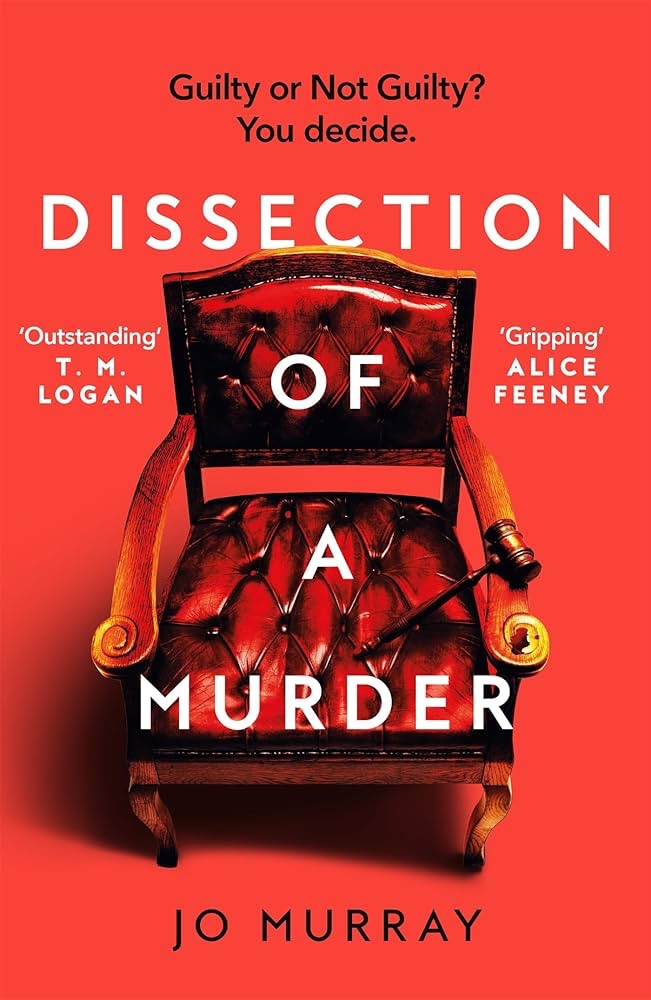
Dissection of A Murder by Jo Murray

A dead judge. A silent defendant. And a courtroom full of liars.

When Leila Reynolds is handed her first murder case, she’s shocked at how high-profile it is: the murder of a well-respected, well-known judge. This shouldn’t be the kind of case she’s leading; it’s way beyond her expertise. But the defendant, Jack Millman, is clear. He wants her, and only her.

To make things worse, he’s refusing to talk. How is she supposed to prove herself on what appears to be an unwinnable case?

Losing is not an option. She must find the most persuasive argument. Trials aren’t won by convincing judges or fellow barristers – they’re all about convincing a jury.

Suddenly, Leila finds herself fighting not only to keep Jack out of prison, but also to keep her own secrets buried.

It’s true what they say – there are two sides to every story.

Guilty or not guilty?

Wow! This was a ‘devour in one sitting’ thriller in the high stakes setting of a barrister’s chambers and an incendiary case where two of their barristers have been requested; one in prosecution and one in defence. The defendant has requested Leila, an up and coming young barrister who has just heard she’s getting a mention in an exclusive legal publication. The man who’s keen to let Leila know she has him to thank for that mention, is her previous mentor Julian. As a pupil she had to work under Julian to complete her training and he’s now going to be her opponent in court. Even more complicated is the fact that they’re now husband and wife. This is a murder case and the victim was a high court judge, Anton Smythe, who died in a flat above a nightclub after being hit in the head with a doorstop. The accused is Jack, who works as security for the nightclub owner and lives on the premises. Leila is surprised that his solicitor has requested her because she has defended this client before, and lost. When they meet again for instructions, Jack tells her he will be pleading not guilty but offers no defence. She absolutely refuses to put him on the stand and his solicitor agrees. They should argue his case if he will trust them with the truth. Jack sticks to his guns, he will not say a word about his defence until he is on the stand. Could this be paranoia? Although to be a judge like Anton means you have powerful friends, maybe it is sensible to keep his story under wraps for now. 

I’m a big fan of legal dramas like Silk and North Square so the setting in a barrister’s chambers definitely appealed to me. I loved Maxine Peake as Martha, she was Northern, intelligent, quick with a put down and nobody’s fool. Leila comes across as more of a gentle character than that, but definitely intelligent, determined and perhaps driven by a background that has its secrets. I intensely disliked Julian, but he is so well-written. There was a definite power imbalance between them, especially since she’d been his pupil. He must have seen her star quality and I had the thought that maybe he’d married Leila to keep her under him, both literally and figuratively. The layers of charm and ease soon fall away as the case starts. 

“You want someone whose mind is in alignment with yours, but whose appetite for dominance will never exceed your own”. 

When Leila is congratulated on her mention he makes sure to comment that without his influence it wouldn’t have happened. I noticed that his ex-wife seems to want to talk to Leila, something she’s avoiding but might be worthwhile. As lines are drawn in the court room there’s a definite misogyny in how Julian gangs up with the police witnesses against her, but because he can couch it in terms of prosecuting competently even though she’s his wife, it’s hard to narrow down his intentions. Is he just serving the best interests of his client? Or is he trying to rattle his wife and make her feel like she’s dependent on him? As the case continues their once calm married life becomes more fraught and separate. Leila isn’t sure whether it’s just the case and the distance needed to be opponents or whether something more fundamental is wrong. The other thing that struck me as odd is that it’s Leila who goes to spend Friday evenings having fish and chips with her mother-in-law Audrey who is in the early stages of dementia. Julian never goes with her. When she does have one lucid moment Leila asks what she thinks about her son. ‘You can’t trust him she says very quietly. Thats why he doesn’t come to see me. He hates women who can see through him.” Maybe Leila is just starting to see the real man she married. There is also mystery around Leila’s background, definitely a poorer area of the North East than Durham but she seems to have no family. It’s as if she has totally reinvented herself. She calls it a wretched life that’s left it’s mark: 

“It’s the smaller, subtler things I’m now fiercely protective of, like feeling safe when I turn the light off before I go to sleep […] recognising my body is my own and I now get a say in who touches it. The things I had to do to get here you’d be horrified to know.”

It feels as if her relationships have been transactional even when she’s had a choice. Could Julian just be another rung on the ladder? It seems he wasn’t her first mentor and she wonders often whether this past will catch up with her. The twist is very good indeed. I had an inkling, but it is a proper ‘sixth sense’ moment where you’ll want to flick back through the book and see the clues you missed. This is a high drama, high stakes, legal battle and only one of them can win. The tension is unbearable as Jack takes the stand, it almost feels like a done deal but no one is expecting his testimony. The fall out is seismic. This is such a clever thriller with a cast of characters you won’t like but will be fascinated with. It’s very well written by an author who knows this profession and its pitfalls for women, particularly working class ones. It feels like social commentary – with the well educated, upholders of the law and all their status, against the ordinary, working class person who’s usually in the dock. Can the law be the great equaliser it seems or are some people more equal than others? This was a great debut with a fast pace and some brilliant ‘oh my God’ moments. 

Meet the Author

Jo grew up in Teesside during the 90s when working class girls were told they probably shouldn’t try to become barristers. Thankfully, she ignored everyone. After studying Classics at Newcastle University, she went to law school and did just that. Jo was a criminal barrister before leaving the profession to look after her two children. She lives in North Yorkshire.

Posted in Wordpress Prompts

Always Relating to Fictional Characters

Who is the fictional character you relate to the most?

It so hard to pick one character when there are so many loves in my fictional life and so many versions of me to choose from. In children’s fiction it’s the Snork Maiden – short, plump, blonde hair and utterly in love with love. Then there are all those characters from my later childhood like Jo March and Anne of Green Gables, – the tomboys, strong willed, stubborn young women who don’t want the norm and dream bigger than those around them. Neither want to marry Laurie or Gilbert and live a small town life where they stay home and have babies. They want to be writers and both get their big adventure. Jo goes to New York, she writes stories and goes to the opera and joins a men’s debating club as well as being the governess to two small children. Imagine my disgust when I do a quiz on Facebook and find out that of all the March sisters I am most like Amy. As for Anne she goes to university, she teaches and meets different people than those back home in Avonlea. Yes she marries Gilbert in the end, but only after she chooses to come home herself.

Saoirse Ronan as Jo March in Little Women

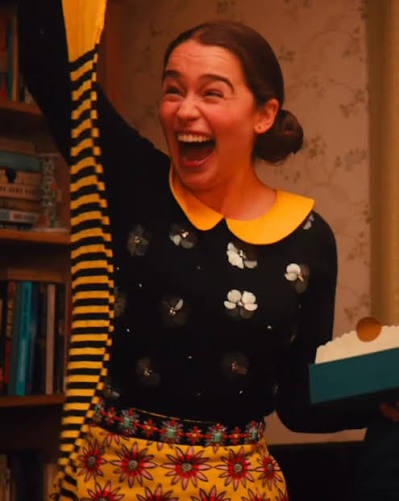
I relate most to Louisa Clarke in Jojo Moyes’s Me Before You, with her bumbling character and bumble bee tights. She’s a working class girl whose ambitions feel out of reach and she’s so caught up in the lives of her family that she doesn’t make plans in her own. Lou loves fashion and colour which is definitely something we share. When she gets a job as carer to Will Traynor her life starts to change. Will’s family are wealthy so they’ve never moved in the same circles but an accident has left him quadriplegic and he’s back, living in his own part of the family home. Lou is a bubbly and kooky sort of girl and she’s never done this sort of work. Slowly they start to understand one another and they each teach the other person something. Will sees that Lou is under confident and doesn’t have the nerve to follow her dreams in case she fails. She thinks she’s going to open up Will’s world, he’s been depressed since his accident and doesn’t really participate in life so she starts to suggest going out more. He’s reluctant, but he sees someone who hasn’t had the experiences in life he’s had mainly down to his family having money. So he takes her to the theatre/opera, slowly opening up her world.

Emilia Clarke as Louisa in the film version of Me Before You

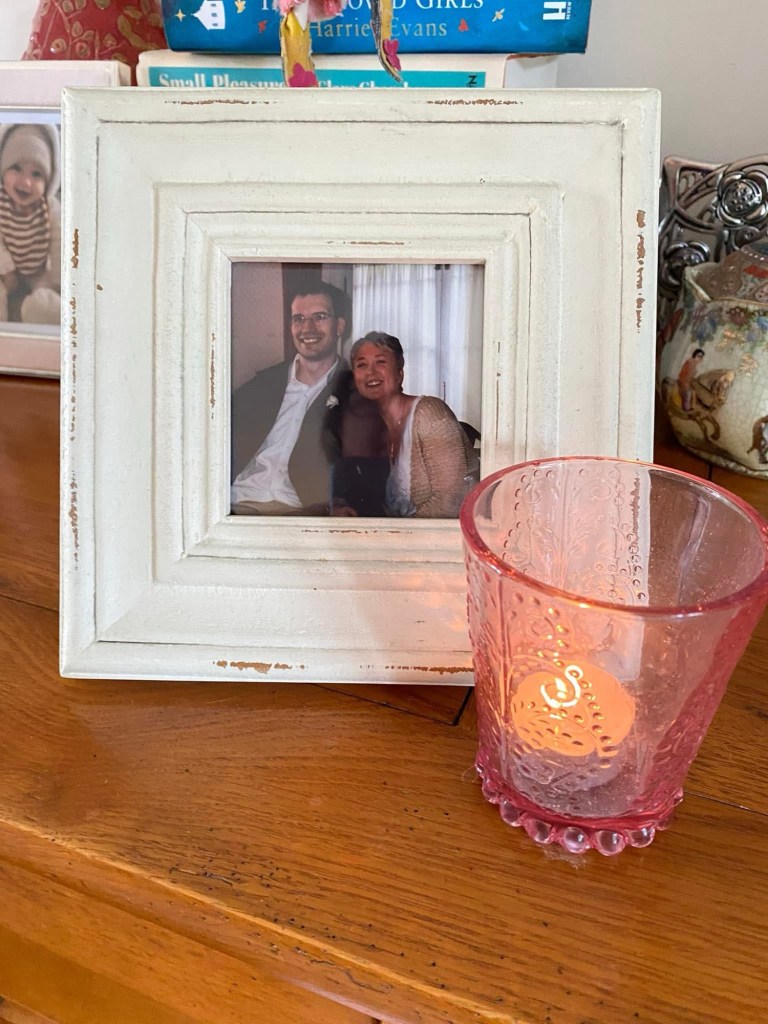
I relate to this because I arrived on my late husband’s doorstep with only a photograph and address. We’d written and talked on the phone for several months but never met. When we did meet we went for dinner and talked for hours. Before I left he asked me if I wanted to go to the ballet and I said yes, I’d never seen one. We saw Romeo and Juliet by the Northern Ballet and I was entranced with it. We came home late that night and ate scrambled eggs and bacon with Buck’s Fizz at midnight. Six weeks later we got married. It was crazy, but I simply didn’t want to be anywhere else. He totally opened up my world with opera, jazz, theatre and supported me to do the English degree I’d always wanted to do. I was learning so much about culture and art, but also about love. On our honeymoon week I had to learn about intermittent catheters from a man called Richard who we dubbed the King of Piss. We didn’t get out of bed much except to order Chinese food which we’d eat in bed, showing each other our favourite films and listening to music, reading the papers together. He’d travelled and I’d never had a passport. He’d spent time in New York, played rugby for London Irish, and learned both scuba diving and tall ship sailing after becoming a wheelchair user. He was adventurous and believed I could do these things too. I think this is exactly what Will gave Louisa, but she gave him a sense of family that was warm and loving. She saw him and not the disability, something he was even struggling to do for himself. She let him know he was still everything he was before his accident and the rest was just logistics.

I believe I taught Jerzy to laugh at himself. To find his situation annoying but not unbearable. I taught him that family look after each other and that true friends don’t say ‘we must get together’ but never ring. They pop in and put their own kettle on. I taught him that loving someone means you’ll fight for them, to make their life the best it can possibly be. I taught him to stop and look around once in a while. To enjoy the small things. Unfortunately for Louisa, Will decides that his life is still not how he wants to live and he opts to go abroad for assisted dying. This has been heavily criticised in disability circles for the trope of using a disabled character to teach or improve the life of an able bodied person, only to be discarded once the lesson is learned.

I also had to lose Jerzy. Not in the same way Lou lost Will but we had that discussion. Once he was unable to swallow food without aspirating and had to be PEG fed through a tube into his stomach he lost a lot of the joy he had in food, one of his great passions. He said later that he wished he’d made the choice back then, had he not wanted to stay with me. However, pneumonia and sepsis weakens the body and when it’s a repetitive cycle it’s exhausting. I was essentially doing the work of several nurses by the end with skills in PEG feeding, catheterising, suctioning the airway, chest physio and many other things. I was tired. He was exhausted. One night he was taken to hospital again and he never returned. He spent weeks in hospital and eventually chose to suspend treatment. When he died at 5am in the morning the world stopped making sense.

What Jerzy left me with was similar to what Will left Louisa with. So many experiences and a confidence I’d never had before. He had more faith in me than I had. I got a first in my English degree, then went on to get a diploma in therapeutic counselling, after five years of study. I even started a PhD – although I didn’t finish. I also got that passport and went to New York and Venice, two bucket list destinations. More recently I’ve started to write for myself and have the confidence to put my writing out into the world. Jerzy taught me more than anyone or anything else in life because he taught me how to love, to commit to someone even when the going is almost impossible, to laugh every single day and I hold what he said to me before he died very close to my heart. He’d watched his father struggle after his mother was killed in a car accident and he didn’t want me to be stuck. I’ve resolutely moved forward and kept going even when I made terrible mistakes, never forgetting and keeping him lodged firmly within my heart. Now all I need are those bumble bee tights.

Posted in Netgalley

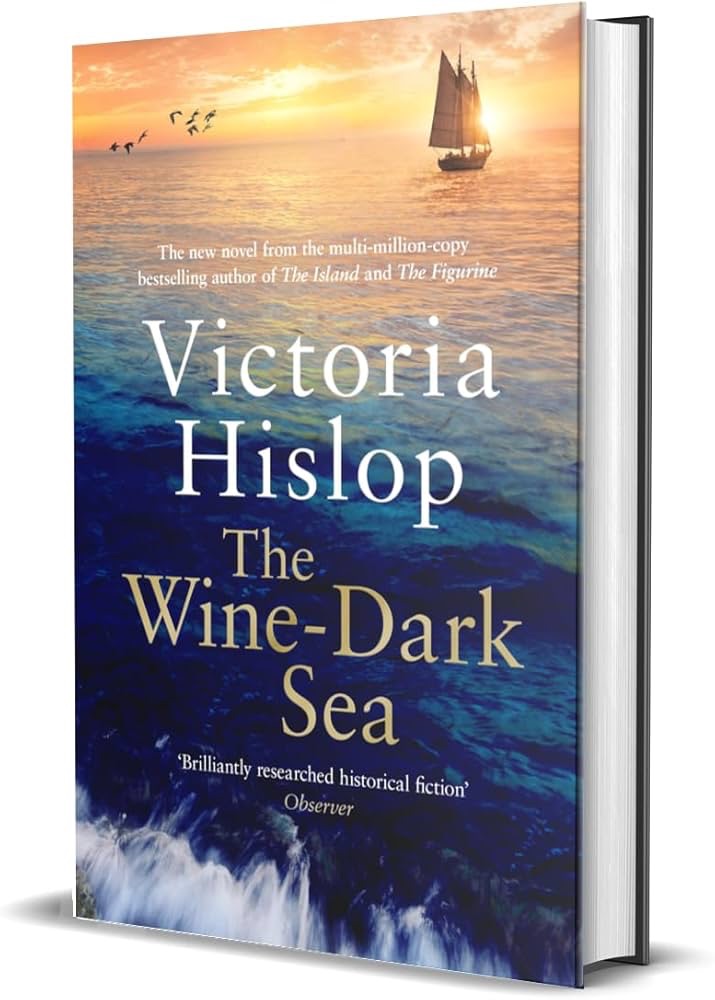
The Wine Dark Sea by Victoria Hislop 

Greece, 1946. In the power vacuum remaining after the Second World War, a brutal civil war erupts between rival left- and right-wing factions. The conflict spirals as the country pays a bitter price in human lives and fighting soon erupts in the mountains, turning villages into battlefields and pulling ordinary women and children into the fray.

When the government soldiers come to Kalopetra, Fotini is nursing her newborn second child. She urges her daughter, Iliana, to hide with the older children as she and the other women are herded into trucks. Weeks later, soldiers return for the children . . . but they are not to be reunited with their mothers, a wholly different fate awaits them.

Fotini finds herself transported to a prison on the island of Chios, where she befriends Markella, whose little son, Nikos, is wise beyond his years. After months of imprisonment, when Fotini and Markella find themselves separated from one another – and from Nikos – Fotini vows to hunt not only for her own child but for Markella’s too. 

The Wine-Dark Sea tells of families flung apart across continents and of a strong, determined mother who resolves not to let war destroy hers.

This epic story from Victoria Hislop really taught me a lot about a period of history I know little about. She has taken an incredible amount of research for this novel and I imagine some of it was harrowing. She has taken the stories from women living through this time and shown some of them through one family, magnifying their power. The events happen after the end of WW2, a turbulent time that has already seen the punishment of Nazi collaborators and now many would like to see the end of their right wing government. The setting is one little village called Kalopetra where Fotini’s husband has gone to fight for government forces against the communists. This immediately causes a schism in the family because Fotini’s sister Stella has a husband who fights for the communists. The sudden divide is causing friction across the village, but the women left behind must work together if they’re to survive. When government forces come to the village they capture all the women and Fotini is allowed to bring her baby son with her. However, her older daughter Iliana is left behind along with a group of older children. How will they survive? That moment of Iliana chasing the truck with her mother unable to do anything to reassure her is burned into my memory. Although soon enough communist forces will round up the children and move them into camps where they are fed, clothed and then sent on to other countries like Yugoslavia. After having the entire burden of the other village children on her shoulders, Iliana is relieved to be fed and clothed by such kind people and so the process of brainwashing begins. All Fotini can think about is returning to her peaceful village and living the rustic existence that has survived for centuries, she doesn’t know that her way of life is already dead and nothing will be the same again. 

The author uses Fotini as her main narrator, but we also have chapters from Iliana’s perspective as she grows into adulthood and some through Nikos, the clever son of Fotini’s friend in their camp. These two narratives show how far and wide one family could be spread as Iliana thrives in the communist way of life and Nikos is chosen for a programme directly backed by the Queen of Greece. Iliana sums it up perfectly when she asks:

“Was there a single family on earth that had remained intact, or in the place they belonged or wanted to be.” 

One of the benefits of a communist system is that women are seen as equal to men and this intrigues Iliana who knows that if they’d remained in Kalopetra her fate would have been the same as her mother and grandmother. She’d be married to someone in the village and bring up babies. Here she could learn to drive or even fly a plane. She longs to be an engineer and hopes if she studies hard she will have the opportunity to go to university. It’s easy to see how a young woman like her would see communism as an improvement on what she expected from life, scratching out a living from the land and being second to a man. In the government camp Fotini is holding out against signing a confession that she was a communist. Those who do sign the waiver are set free but forever marked as traitors to the government, especially in the eyes of their fellow villagers. Fotini doesn’t want that hanging over their family when they return home. She doesn’t know whether her husband is alive or dead, but isn’t longing for his return. She makes friends within the camp, particularly with Markella who comes from an island with a leper colony where she used to work. It’s where she plans to return. As her baby Mitsos grows he plays with Markella’s interesting boy Nikos, something of a child prodigy when it comes to numbers. His fascination is with ships and he will build them out of any material he can find to hand. It’s not long before he’s noticed and singled out for a different institution backed by the Queen. From there he seems to disappear and Fotini is determined to find both her daughter and Nikos when she is released. When she is released it’s clear one thing hasn’t changed – the generosity of Greek people. As Fotini and Mitsos travel to search for the lost children people take them in, share their own dwindling food supplies and clothe them too. It restores her faith in humanity that there is still such generosity left in a people who have been tearing each other apart. There is a glimmer of hope for the future. 
I really enjoyed the later parts of the novel where we see Fotini piecing life back together in the city of Piraeus. It’s a massive change for this country girl but she can see the benefits of more job opportunities, entertainments like the cinema and eating good Greek food again at a lovely restaurant run by Demetrios. He’s such a kind man and gently reminds Fotini that she can’t spend the rest of her life wandering and looking for the children. The best thing she and Mitsos can do is stay in one place and hope the children find her, the place she was trying to get back to is gone. There was so much material to choose from in this book that it could have filled a trilogy. I had questions about all sorts of characters, such as Fotini’s relationship with her sister Stella. I also had questions about Nikos’s journey and his adoptive mother, there just seemed to be more about her that could have been explored. However, I loved Iliana’s growth and her life as an adult living under communism. The differences between Greece and Hungary were fascinating and imagine some very heavy editing of this material had to be done to get it into one novel. As always the author captures the beauty of the Greek islands, their isolation and wildness and how this conflict disrupts a way of life that existed for centuries. The book symbolically ends with a circular dance that’s life affirming and perhaps a way of capturing, just for a few moments, that lost way of being. 

Out from Headline Books September 24th 2026

Meet the Author

Victoria Hislop is the international bestselling author of The Island and The Return. In the United Kingdom, she writes travel features for The Sunday Telegraph, The Mail on Sunday, House & Garden, and Woman & Home. The Island sold over a million copies in the UK and has been translated into 24 languages. Victoria’s second novel, The Return, has been published in more than a dozen languages. She lives in Kent, with her husband Ian and their two children.

Posted in Wordpress Prompts

Dolly Moo aka Fat Bird, The Chonk, Fatty Moo Moo

Share a photo of your pet and tell us one thing that makes them uniquely them.

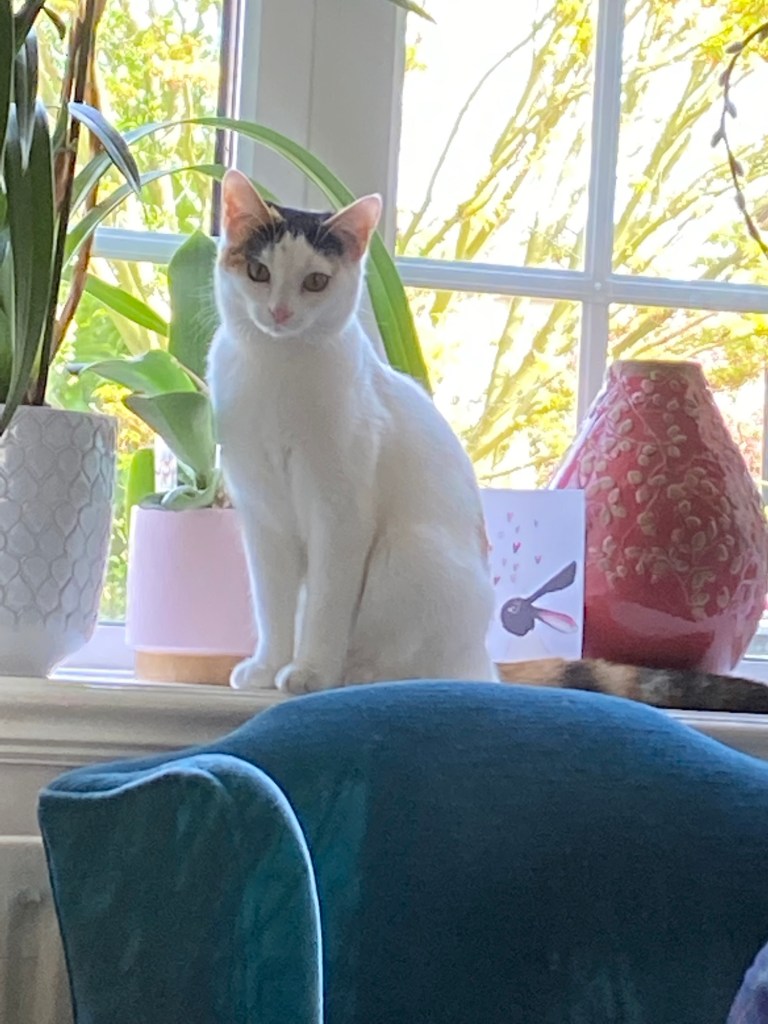
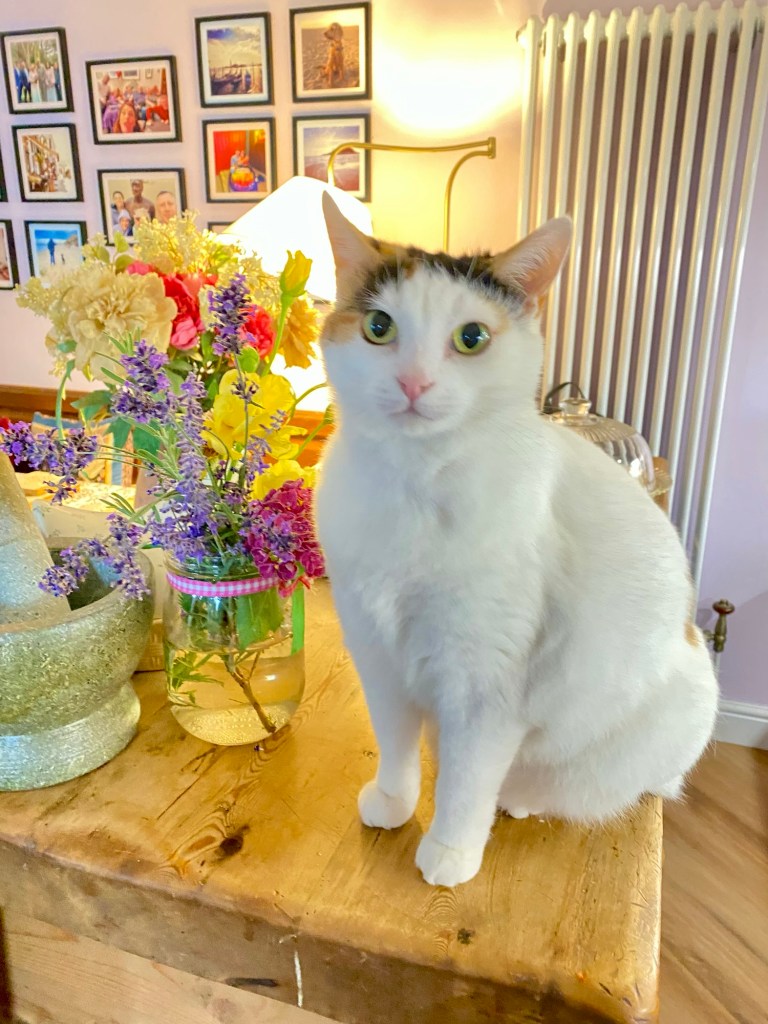
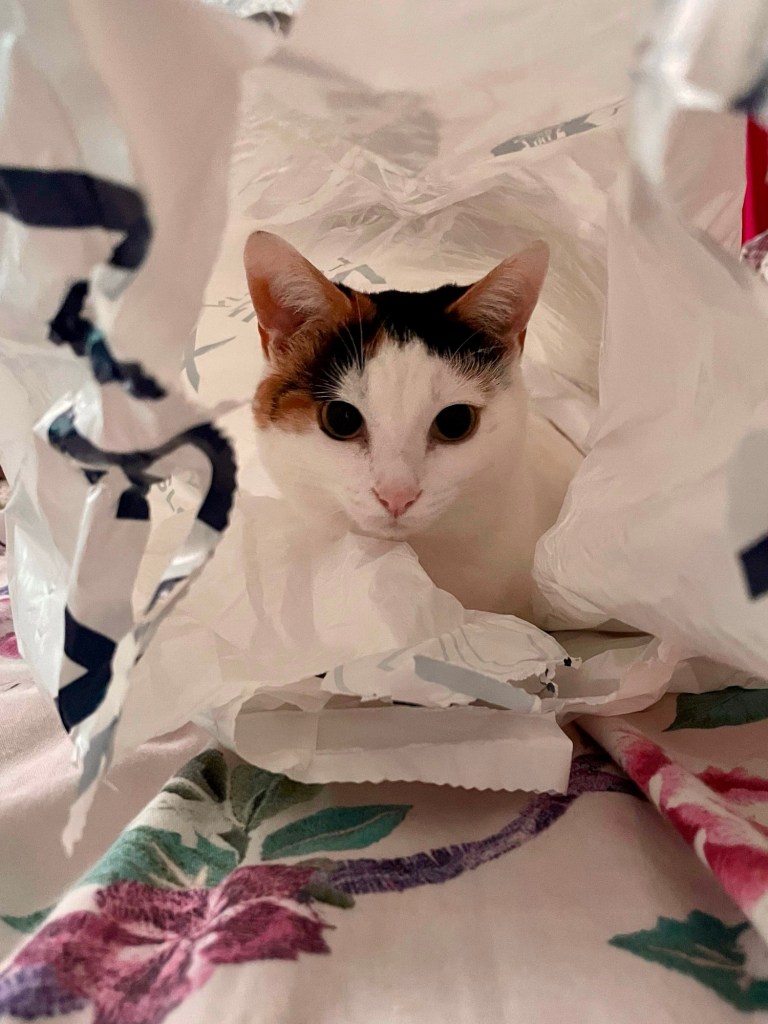
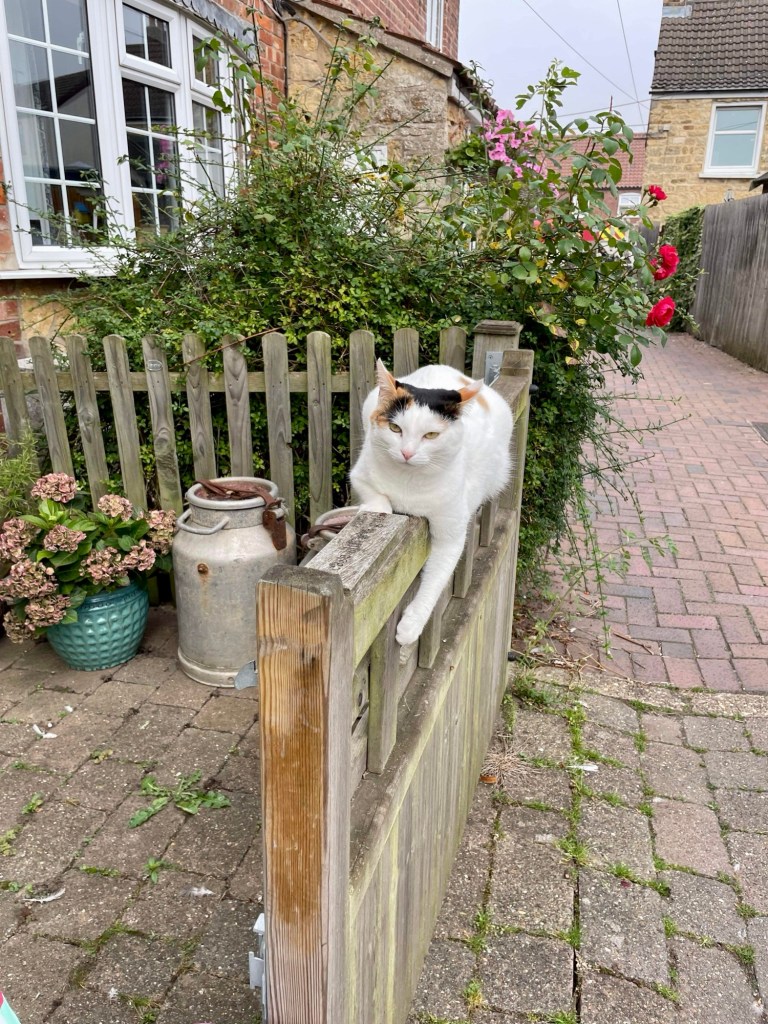
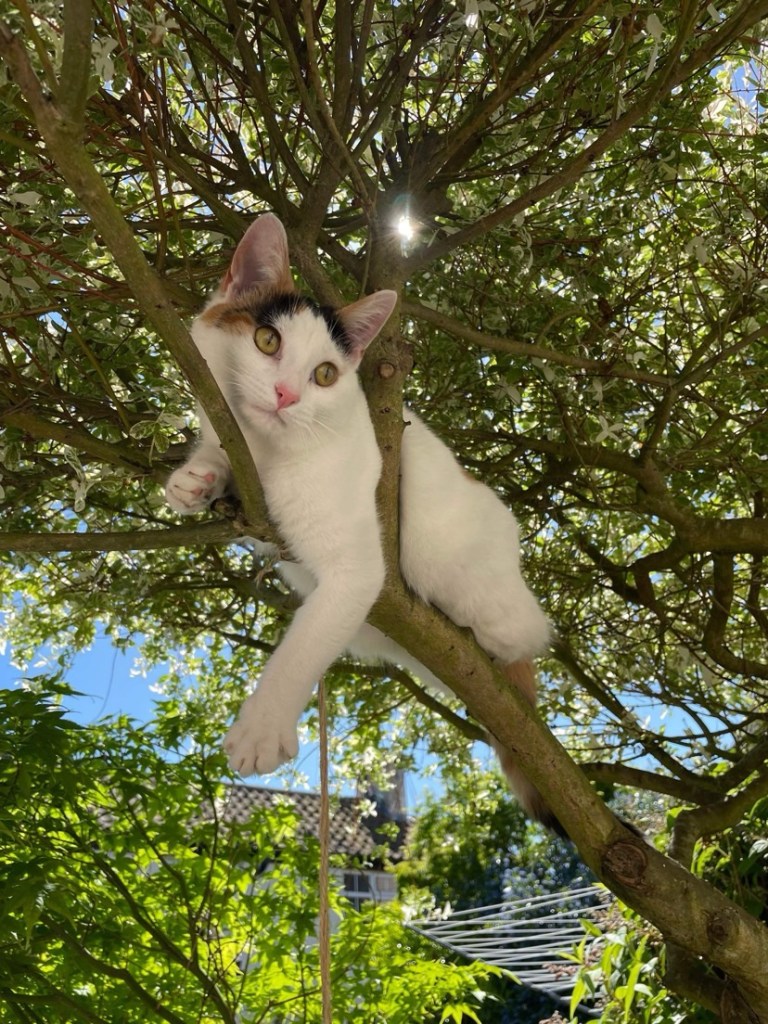
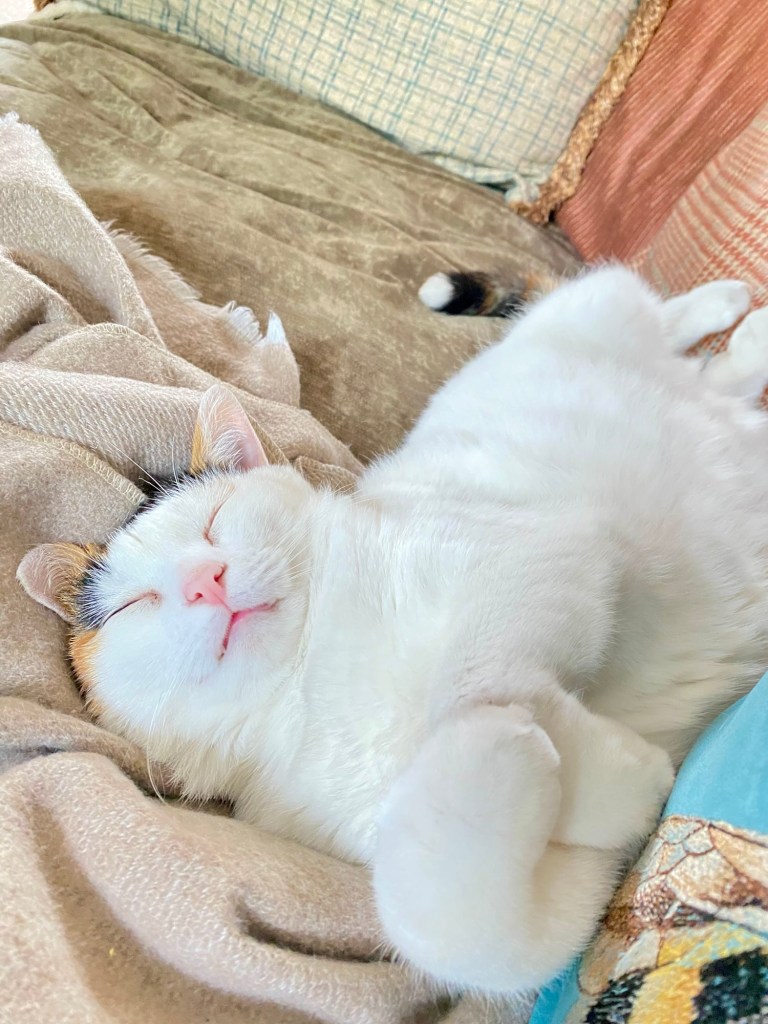
This is Dolly. I had to share several pictures because I’m always photographing the pets, particularly Dolly because she stays still the most. We saw her online at the RSPCA and I knew straight away. So we got in the car and called them on the way. Can we come to see Dolly? Yes, when would you like to come. Is now alright, we’re outside? Experience has taught me that when you know it’s your cat you have to go for it. She was a gregarious little cat that first day. Barely a year old and already had a litter of kittens. She came out of her enclosure and strutted up and down the walkway saying hello to all the other cats. Now she does that here. We’re a tucked away little lane of four 18th Century cottages and in the morning I hear her go out of the cat flap and visit each house in turn. Saying good morning to the neighbours as they start their day.

She’s now progressed to visiting them. Especially in summer when doors and windows are open. It’s weird enough that she sleeps in our bathroom sink, but I know the neighbour was shocked to find her sleeping in theirs when he went to the loo in the night. She pops up onto their porch and slips through the open window and sleeps with their daughter too.

She is an absolute gannet when it comes to food. We feed her twice a day, but have had to reduce it as she also eats elsewhere. Once when we returned from holiday we were greeted by an elderly man who lives just over our garden fence in another cottage. He was very anxious that we should come and collect our pregnant cat. I assured him she wasn’t pregnant, just fat and he told us he didn’t mind her being there but she’d taken over their conservatory and ‘mother’ was getting worried she might give birth. He went scurrying back to fetch her and about ten minutes later he reappeared with Dolly laid in his arms like a baby. We’ve found out since he calls her Madame La Blanc and feeds her from time to time. This is a much more flattering name than Fat Bird or Fat Girl that she gets at home. Our neighbours call her Chonk and Fatso, but if I hear them I message and say ‘stop fat shaming my cat.” They adore her and send us videos of her trying to catch pigeons with very little success.

We noticed one winter that she’d stopped sitting with us in the evening. Nights were drawing in and we had the log burner in so we were very surprised that she wasn’t warming her tummy. One Saturday night a week later the neighbours sent us a picture of her laid in front of their open fire watching Strictly. It became a habit and at the end of the show she asks to be let out again and is usually home before that week’s eliminated celebrity has finished their final dance. I wouldn’t mind but we’re watching the same thing. As soon as the series is over she’s back home again on Saturdays.

Every morning, after breakfast she comes upstairs and arranges herself on my lap in bed. My other half starts work early so he feeds them and lets Dolly upstairs when he brings my breakfast – in bed, every morning for eight years. I got a good one. She will never lie on the bed or even my left leg. It has to be the right leg or nothing at all. I’m not allowed to move. I will rub her head whether I like it or not. She will fling an iPad out of my hand if I’m not paying attention.

This is where she waits for visitors, delivery drivers, the postie. Everyone must pay the toll of a head rub before passing through.

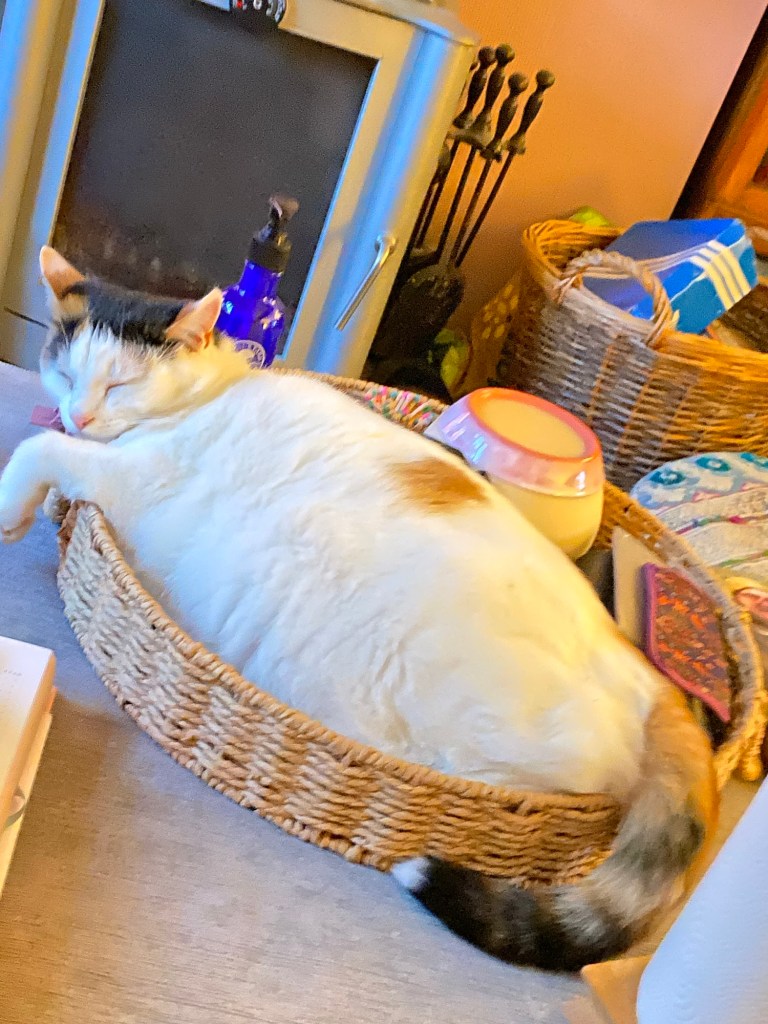
She likes to be enclosed. I bought a wicker tray to sit on the footstool but it only took a week for Dolly to commandeer it and now it’s her bed. She will push everything out of her path to get comfy.

Every so often she has a mad burst of energy and runs up a tree or onto the garage roof. She is remarkably sprightly for a large cat, unfortunately she has a similar penchant for the Christmas tree and has to have supervised access.

Most of the time she’s my companion. She’s usually next to me when I’m reading, indoors and outdoors. When I run a bath I hear her thundering up the stairs to the bathroom and she leaps into the sink. While I read in the bath she sleeps there as if we’re two besties on a spa weekend. When it’s hot she likes me to run the tap and soak her in cool water. She’s also a fan hogger, making sure she’s at the right angle for the most benefit. She hates it when I wear slidy satin pyjamas because she slips off me in bed. She’s our little peacekeeper, trying to calm relations between our male cat Max and our new addition Minka. She is very adept at keeping the dog in check too. We don’t know what we’d do without this massive ray of sunshine in our lives. She’s such a big personality and I’m so glad we found her.

Posted in Monthly Wrap Up

Best Reads July 2026

It’s been a very busy month with a reduced time for reading and reviewing. First my mum and I went to Liverpool to see Moulin Rouge which was brilliant. Then I was back less than a week later to see my stepdaughter graduate with a first class degree in Early Childhood Education. We stayed in the philanthropic village of Port Sunlight and I soaked up the arts and craft architecture for a few days. We also visited the Redbrick Market, a labyrinth of tiny craft and antique stalls in an old brewery complex in the Baltic Quarter too. Then I needed to rest up for a few days to give my body chance to recover I did some reading and lots of sleeping. As always but I’m very behind with reviewing. My favourites have mainly been thrillers, with a beautiful Irish fiction debut too. August is quieter with just one tour, so I’m setting aside a stack of novels I’ve been dying to get to for months. I try and have a mood read month twice a year, otherwise I think I’d burn out. So here’s what I enjoyed last month ❤️📚

Sugartown was one of the Squad Pod Collective’s featured books last month. I loved it and was really surprised to learn it had so many rejections before publication so it really does pay to keep plugging away. Now it’s up for a major Irish fiction prize. Our story follows Saoirse as she returns to her Irish town after trying out living and working in London. She’s come back to lick her wounds and hoped for a little grace from mum Màire, but she’s on her almost immediately, making sure she’s up at a reasonable hour and pointedly hoovering outside her room if she doesn’t. Màire is what Saoirse has always called her mum at her instruction. She absolutely refused to be called Mammy, but now that she has three younger daughters she’s a model mum. Saoirse sees how organised she is, getting all three ready for school in the morning with identical plaits and immaculate uniforms. All she can do is wonder why she didn’t do that for her? Saoirse only hears her mother’s criticism and there is plenty of it.

She insists that Saoirse takes a job and then finds one for her, even bullying her out of bed for the interview and driving her there. She’s very insistent that her stepdad shouldn’t have to keep her. To cope with the boredom of small town life and the job at a hardware store she goes out with her best friend Doireann, drinking to excess and trying whatever drug is going. Her dreams have shattered and she can’t see the point. It’s then she meets Charlie and there’s an immediate attraction, will this prove to be the love Saoirse needs or will her excesses prove to be her undoing? I remember being this age and I felt equally uncomfortable, having missed my uni place at Liverpool by one point I had to stay in my small town and grabbed a job in a nursing home and a local pub. I felt a little lost but luckily I had god friends and family around me. I could feel Saoirse’s pain about her relationship with Mum and the on and off again relationship with Charlie doesn’t help. It’s not long before Saoirse hits rock bottom. This is a fascinating look at motherhood and how our maternal relationship is so important for self-esteem and identity. I was relieved when she starts counselling because it’s the only way to improve her life and it’s revelatory to hear she doesnt have to have a relationship wiith Mum. The author captures young adulthood perfectly and how, if we don’t know who we are, we can’t choose healthy relationships or build a life for ourselves. This is beautifully written, devastating but also hopeful.

I think I’m the last person to read this brilliant court room thriller with a killer of a twist. Leila is a barrister, working at a chambers in the north east of England. Leila has worked hard from a poor background to university and into the law, often difficult for those without family money. She is married to Julian who used to her mentor when she was just a pupil, but now a case has come in where they’ll be pitted against each other. This isn’t necessarily unusual, but she would have recused herself if the client hadn’t insisted on her especially. However, the solicitor on the case doesn’t know why he wants Leila, especially since the last time she represented him she lost. Jack has been accused of the murder of Anthony Smythe, a well respected high court judge. He informs Leila he’ll be pleading not guilty, but won’t be disclosing his defence before he takes the stand to give evidence. This makes Leila twitchy and nervous. As the trial draws near Leila finds a distance growing between her and Julian, as well as a condescension and arrogance that she’s never seen before. She also feels voices from the past might be closer, people she thought she’d outrun. This felt like one of my favourite drama series, Silk, starring Maxine Peake. I love the drama and the way everything started to shift and change around our central character. This is a belter of a thriller, fiendishly clever and although I did guess the twist it didn’t ruin my enjoyment at all.

Vikas Swarup’s heroine Devi grabs hold of you the minute she starts to tell her own story in this episodic novel set in Delhi. The opening brings Devi to the lair of an unknown assailant who tells her he has seven people on the phone line who want to bid for her destiny. This auction will take one night and seven stories, stories she thought were secrets. As Devi tells each tale her kidnapper will take a bid on her life and he hopes to reach seven figures. However, Devi’s circumstances have not been easy and the fact she is alive is down to her cunning and experience. Has the kidnapper underestimated his prisoner or are Devi’s lives finally running out?

I was hooked from the first story as Devi explains how she started in a family home in the slum area known as Rail Basti, because the train tracks ran straight through the centre of the huts. This was Devi’s early childhood and despite the poverty she has happy times. She tells us about her annoying brothers, the eldest a maths prodigy and the youngest a terrible bedwetter, the daily sequence of trains that seem to rattle the ground under their hut and depth of water that rises indoors in monsoon season. Change comes when her parents choose an unorthodox plan to make an almost life-changing sum of money and fortune seems to turn almost immediately. Devi is an intelligent, funny and excitable nine year old and sometimes it’s hard to read about her daily life, never mind the more perilous and painful circumstances she finds herself in. She learns through necessity, takes chances where she sees them, soon inured to the fact that the only constant in her life is change. There’s so much energy in this novel. It leaps off the page and its biggest achievement is its mix of addictive suspense and emotional insight. I came away from it feeling a little bit battered by the force of the story and it might take a few days to fully sink in. I liked Devi as a child, but as time and experience move her forward she becomes more morally questionable, complex and deeply conflicting. Although even if I didn’t always like her I could understand why she makes the choices she does and how she’s come to each terrible conclusion, every time wondering if this present adventure will be her last. It’s easy to forget when you’re deeply embedded in one of her stories that this is where it’s brought her, tied to a chair and listening as each person bids on her life. If you like to kept in suspense and to experience an extraordinary life lived in destitute and dangerous circumstances this is definitely for you.

Ben is living in Penzance, taking a break from his home island of Bryhir in the Scilly Isles after the events of the previous novel. He’s taking a break from police work and instead has found a job at a joiner and cabinetmakers, using the skills he learned building boats with his Uncle. It’s settled and therapeutic work as Ben slowly creates beautiful pieces of furniture and starts to deal with his grief and loss. Noah is a little confused to be away from everything he knows, but he’s enrolled at a kindergarten near Ben’s work so life has some routine and peace. He is starting to be brought into the community too, with an arts festival on the horizon he’s bound to be pulled into the planning, even just as a steward he’s happy to do his bit. Then life takes a sinister turn as he’s on the beach and sees a young mother with a baby in a pram. One moment of distraction and a black figure jumps out of the shadows and racing towards the pram it grabs the baby and throws it into the sea. Ben and Shadow are running before they’ve even thought and he dives into the sea to rescue the baby. He’s now a local hero, but the disturbing and traumatic event plays on his mind. How could someone do such a thing and will they do it again? 

The author weaves her story around the local myth of the Zennor Mermaid, a figured carved into one of the pews in Zennor church. By the time the festival arrives everyone has done all they can to keep families safe, with a security perimeter at the park that can’t be broken, of course that assumes the attacker isn’t one of the stewards. I was still suspecting the nursery nurse, the festival organiser, a police officer, a young man who is abused by his older brother and even the DCI’s nanny. The author has created short, urgent chapters here. They ramp up the tension as we flip between Ben’s inner world and the attacker’s, following them and their newest victim to the dark, wildness of the festival’s other site at Zennor. We can sense the mystical feeling of Cornwall and how it’s become warped in this person’s mind. It’s pitch black and rough terrain, plus with miles and miles of coastline can they be sure to find the right place in time. I defy anyone to put the book down at this point and I devoured it in one sitting. Ben still knows he’s missing a part of the puzzle and we have to trust that his intuition will click in before it’s too late. This is a great thriller and taking Ben out of his natural habitat does bring a different feel to the series, though I hope he does eventually return to island because he belongs there. We can see in the aftermath that he needs his found family and just like Zoe he will always return to the island and each other. 

I love it when a new Mark Edwards novel appears and this one really did grab me from the off. It’s a familiar set up. Holly seems like the perfect girlfriend. Clever, funny, beautiful – Patrick feels like he’s hit the jackpot. Until he meets her family.

Her dad has a mysterious new girlfriend. Her sister is unwelcoming. Her brother is clearly lying about something. And Patrick gets the sense all of them share a dark secret – even Holly. When he finds out about the body that was found nearby on their last family holiday, Patrick sets out to find the truth. But as skeletons tumble out of the family’s closet, Patrick realises he needs to be careful. Because in this family, loyalty is everything – and at least one of them is willing to kill to keep their secrets…

The best bit about reading this was that I didn’t really like any of Holly’s family. In fact her sister and brother-in-law are horrific human beings. Anyway, I loved the setting, a remote part of Scotland where not many people visit and the family have a holiday home. However it hasn’t always been a happy place. This is where Holly’s mother died many years before and also where something happened to a teenager from the village – the brother of their cleaner. Then there’s the added stress of Dad’s new American girlfriend. The family dynamic is toxic before she arrives and when she does it causes a meltdown! Meanwhile Patrick is trying to find out what happened at the caves when Holly was a teenager and why a young man was found dead nearby in the dead of winter in summer clothing. As snow starts to fall and the village becomes cut off the family’s behaviour becomes more extreme and Patrick makes discoveries that leave him fearing for his life. I loved the look at tech companies and their ethics, or lack of them and the tension between the locals and the family. Another great thriller from this prolific author.

Lisa Jewell really is a must buy author as I can’t remember a time when I was disappointed by one of her novels and as she mentions in the acknowledgements, this is her twenty fourth! I gelled with the main character Jane very quickly, perhaps because I related to her a little bit. I don’t have a mansion house, but I do have rescue animals, step-children and a similar turn of phrase – a couple of her lines genuinely made me laugh out loud. I never expected to hear the line “with all due respect, Stuart, I’m not sure what could actually be worse than Daisy being abused by a pervert dressed as a clown.” It’s also a good point to mention that I actually hate clowns. Hate them all. They scare me. I don’t like masks, mime artists or anything else where someone is trying to change their face. This might have led to me finding this novel incredibly creepy. Jane comes across as forthright and opinionated but I love those qualities. Basically she’s the perfect investigator because she’s quite happy to ask uncomfortable questions and to suspect the worst of people, although I don’t think she imagined returning a lost west highland terrier would lead her into the darkness of the Black family. Under her exterior she has a big heart and whether it’s her rescue dogs or her step-children she’s always there, especially for Dexter who she spends a lot of time with. When she comes across the strange disappearance of a young girl called Daisy from a local AirBnB she never imagined taking a step back into her past and a house she fled from many years ago. Told through Jane and Daisy’s stepfather Stuart this is a masterclass in generational trauma and the different traits that can run in families. When Jane glimpses an open drawer that contains white gloves, handcuffs and a clown mask I was creeped out and then Stuart finds shackles in the outhouse! This is a very dark thriller with moments of humour that made me laugh out loud. Another belter from this talented author.

August’s reading looks like this:

Posted in Personal Purchase

It Could Have Been Her by Lisa Jewell 

It was the night she almost died.

Newly divorced and feeling a little lost, Jane Trevally agrees to accompany a man she doesn’t know to his house in the darkest corner of Hampstead Heath.

She’s offered a drink. She steps inside.

And then she hears a scream.

Jane runs.

Twenty five years later, Jane finds herself outside the same house, this time to return a dog who’s been found near her home. A dog whose owner has just been reported missing.

A fleeting glimpse of a haunted looking woman through the window sends Jane on a mission to uncover the house’s secrets – secrets more terrifying than she could have ever imagined.

And she can’t stop thinking:

It could have been her . . 

Lisa Jewell really is a must buy author. I can’t remember a time when I was disappointed by one of her novels and as she mentions in the acknowledgements, this is her twenty fourth! I gelled with the main character Jane very quickly, perhaps because I related to her a little bit. I don’t have a mansion house, but I do have rescue animals, step-children and a similar turn of phrase – a couple of her lines genuinely made me laugh out loud. I never expected to hear the line “with all due respect, Stuart, I’m not sure what could actually be worse than Daisy being abused by a pervert dressed as a clown.” It’s also a good point to mention that I actually hate clowns. Hate them all. They scare me. I don’t like masks, mime artists or anything else where someone is trying to change their face. This might have been the reason I found this novel particularly creepy. Jane comes across as an independent, forthright and opinionated woman of middling age and I loved those qualities in her. Basically she’s the perfect investigator because she’s quite happy to ask uncomfortable questions and to suspect the worst of people, although I don’t think she imagined returning a lost west highland terrier would lead her into the darkness of the Black family. Under her exterior she has a big heart and whether it’s her rescue dogs or her step-children she’s always there, especially for Dexter who she spends a lot of time with. When she comes across the strange disappearance of a young girl called Daisy from a local AirBnB she didn’t imagine taking a step back into her past and the house she fled from many years ago. 

This particular house is a brilliant setting, residing in a quirky little part of London called the Vale of Health on Hampstead Heath. I had to look it up because it sounded so odd and fell in love, because it’s almost like a village within a city. The house Jane is looking for is at the far end of a lane and quite isolated, but Jane knows it as soon as she arrives and meets a man called Stuart who lives there with a woman called Jessamine Black, Daisy’s mother. She’s worried that Daisy hasn’t returned home or to the house she rented to revise for her exams. There’s Déjà vu for Jane as she sits on the same sofa she sat on years before, because nothing much has changed here. Of course our houses do tend to represent us and they often stand in for our bodies when we dream about them – the attic in particular standing in for our psychological state. This doesn’t bode well for this family because the house is untidy and unloved. Being nosey, Jane sees that Stuart has left a drawer slightly open she peers inside. There are the secateurs he was looking for, but also some handcuffs, white leather gloves and a plastic clown mask. Needless to say I’d be back on a train before that drawer was closed. From there Jane is hooked and gets the chance to house sit for a friend in London so she can follow up on Daisy and her hunch that something very dark has happened in that house and the family that live there. 

Though Jane is our main protagonist we have flashback chapters from Stuart’s perspective and we see how he meets Daisy’s mother Jessamine at his local pub. Stuart has been homeless for many years, but has been living in a coveted spot in a squat with several other people. He’s noticed Jessamine a couple of times and there’s something winsome about her big eyes and waif-like frame, but he realises very quickly that she has a drink problem. Always arriving immaculate at opening time and then slowly becoming more messy as it gets towards the end of the school day as she seems to scurry off to be at the school gates. When she becomes very unsteady on her feet one day Stuart turns Good Samaritan and helps her to get home. This is how he ends up meeting her daughter Daisy and takes Jessamine up on her offer to stay, which he does for a few days. As these flashbacks continue we see that Jessamine is not the victim Stuart originally thought she was. She has the ability to be neglectful of her daughter, prioritising alcohol and is surprisingly manipulative. Stuart is surprised that Jessamine’s mother doesn’t say anything to her daughter and he wonders if he’s imagining that something is off about her too. There’s a total lack of accountability, particularly from Jessamine who at one point tries to cut off his ear, then saying “I know I’m a handful” like she’s bought another pair of shoes or had one too many at a hen night. When Stuart comes under pressure to return to the squat or lose his space he decides to return, but will Jessamine agree to that and what might she do to ensure he stays? Jane realises he has largely been there for Daisy and while he has been a great stepfather, he has enabled Jessamine. It’s as if everyone in the house turns a blind eye to the issue and he worries she will drink herself to death. He’s also found some things disturbing. He doesn’t know who Daisy’s father is, but no one else seems to know either. In the outhouse there are metal rings attached to the walls and a chair, as if someone has been chained up there. There’s a room upstairs referred to as the au pair’s room, but there hasn’t been an au pair for some time and no one talks about Jessamine’s father or brother either. The family story is that the brother ran away to join the circus and Jane is wondering if he is the clown? Like Stuart she’s starting to wonder about this family and their generational trauma.  

This is a great plot, revealed deliciously slowly as Jane begins to realise that other women have gone missing in that part of Hampstead Heath. She and Dexter put their heads together and start to investigate in earnest, unearthing photos of the missing women and several incidents across the country involving a clown. Dealing with those allegations send to her to drink, asking Dexter to fix her anything that “will take the edge off the thought of that tiny masked clown pulling a scarf out of a woman’s ear in a car park with a hard-on.” Another laugh out loud moment. Jane relates to Daisy struggling to survive in this dysfunctional family, because she did too. Her parents neglected her and her brother until they were malnourished and practically feral. This is probably why she takes her role as a stepmother so seriously, she knows what it’s like to have no one from a very young age. I thought the twists and turns were done so well here, paced beautifully and not rushed as they sometimes are in thrillers. I read the end and felt satisfied, like every question had been answered and I wasn’t having to turn back through the pages and read it again to be sure I’d understood who’d done what.  Nevertheless I still managed to devour it in a couple of days and I’m sure you will too. This is as thriller that comes highly recommended for it’s grasp of family dynamics and psychology of trauma, but I fear I will always be on alert for tiny little clowns from now on.                                                          

Meet the Author

LISA JEWELL was born in London in 1968.

Her first novel, Ralph’s Party, was the best- selling debut novel of 1999. Since then she has written another twenty novels, most recently a number of dark psychological thrillers, including The Girls, Then She Was Gone, The Family Upstairs, The Family Remains and The Night She Disappeared, all of which were Richard & Judy Book Club picks.

Lisa is a New York Times and Sunday Times number one bestselling author who has been published worldwide in over thirty languages. She lives in north London with her husband and two daughters.

Posted in Squad Pod Collective

Under Story by Chloe Benjamin 

WHAT IF TOMORROW WAS ALREADY WRITTEN, BUT YESTERDAY WAS YOURS TO CHANGE?

At an isolated research station in Antarctica, biologist Laurel Salter washes dishes for a living ten hours a day, six days a week. She tells no one why she left her career, or why her marriage ended.

But even in this remote outpost, Laurel can’t outrun her past. When a strange light appears across the ice and draws a group of physicists to McMurdo, her former husband, Eli, won’t be far behind.

Laurel is captivated by the Arc: its surreal glow; the way it seems almost alive. And though Eli is reluctant to test her wildest theory, Laurel is convinced that the Arc leads down a rabbit hole, and into a world they can barely imagine. Can she persuade him to risk everything to fix the burden that hangs between them – to turn back the clock and live their story a second time?

And this time, live it differently.

Once read, never forgotten, Under Story is a genre-defying exploration of the promise of this life, what might lie beyond it, and how far we would go for more time with the people we love.

This is my book of the year so far and I can’t stop talking about it. I’d read it on NetGalley in the spring and I was desperate to review but it felt too early. So when I found out my fellow squadettes were reading this in August I had to join in. I was quite simply blown away by this complex and beautiful story of science, loss and second chances. I still think about it all the time. Our heroine Laurel is a scientist, studying fungus and how it grows but for some reason that isn’t clear at first, she’s on a research station in the Antarctic, away from her former husband Eli and without any fungus in sight. When she develops a fascination in the Arc that appears above the pole she thinks about its significance, but when she becomes aware there is a matching basin underneath the water, her imagination becomes fired. Could this possibly be a portal? A gateway to a different world? She knows Eli won’t be far behind her because she remembers his theory of the ‘duoverse’, the idea that at the moment of the big bang time and space was formed in two directions: our universe, the planets and the development of the world we know and in the other direction it’s complete opposite. I am not a scientist, in fact I barely have GCSE Biology, so I wasn’t aware of any background to this idea so could drift with it and enjoy two incredible minds exploring ideas. I was fascinated with Laurel’s experiments with fungus growing in a maze and whether it moved in a specific direction. She was disappointed to find it tried out all routes then doubled back on itself, but then a second batch made straight for the right route as if it had learned from the previous batch’s mistakes. It felt like a demonstration of Jung’s collective consciousness:

“Ideas spread and somehow we’re all plugged into them.”

I often feel this about ideas, like when several books come out on the same subject at once. It reminded me of something I’ve read before – that ideas are hanging in the air and if we don’t grab them someone else will. As Laurel presents her paper at conference she’s asked some particularly tough questions by one delegate who is unimpressed with her work, claiming she’s applying a human lens to interpret her results. Laurel’s retort is to ask why the delegate is assuming that all intelligence is human? Laurel knows that we like to separate ourselves from animals and plants, safely in our own superior category, but oxygen from our atmosphere is running through our veins and the word human comes from the Latin word ‘humus’ meaning soil. Thinking that we are of the earth is the only thing that comforted Laurel when her dad died. She thinks about how bronchi in our lungs branch like trees and how a ‘neural network in the brain is structured like a galaxy’. I loved reading these aspects of the book and really appreciated how cleverly the author plants these ideas in the first part of the book and they grow in the second part. 

Our characters are fascinating, Eli and Laurel are a couple who were made for each other but their relationship is real and they face tough times, particularly devastating events crash into their lives but I never doubted their love for each other. It’s fascinating to watch their characters face the concept of the duoverse, not just whether it is a portal, but if it is what will their relationship look like there and will going backwards fix whatever tore them apart. I felt both were analytical and might even appear cold at times, but in the moments of heightened emotion we really see who these characters are and the deep wells of love they hold. It was two other characters that caught my imagination though: Gloria and Mr Nakamura. I absolutely loved Gloria who is Laurel’s mentor in our universe and her house in San Francisco was so brilliant I wanted to live there: 

‘It was an old Arts and Crafts house on Prospect Avenue, dark wood with purple roses growing in the garden and ivy trailing over the windows. Inside was enchantment; half melted candles, cabinets of oddities, a Maine Coon cat the colour of midnight.’ 

Gloria is intelligent, feisty and an incredible mentor to Laurel and I had a feeling they would meet in any universe. Mr Nakamura is a character from later in the book who is an ‘overtaker’ – a thought I’ll leave with you – who’s incredibly wise and understanding, helping with the difficult parts of life’s journey with dignity. Every character springs to life and has a backstory. 

The book’s settings are incredible. First the frozen wasteland of the Antarctic and its different scientific research bases are fascinating. I had no idea how many were there, but McMurdo is like a mini town and it’s the tiny details that give it authenticity. Many of the scientists go home for the winter months when it’s impossible to go outside and cabin fever can really kick in. Some people have an ‘ice-wife’ or husband who they’re in a relationship with in the summer months, then go home to their real spouses in the winter. Bits of the real world come through, such as the disappointment in a second Trump presidency, but it feels like a different world and the perfect place to avoid reality too. Every world the author presents to us feels absolutely real even though some of it seems impossible. I was on tenterhooks wondering about the duoverse under the ice and if Lauren is right whether they’ll ever be able to return? I found myself wondering how this world would look as time scrolled backwards. I was genuinely scared for them but also full of admiration for their bravery. The mirroring is so cleverly done, showing how life always comes full circle and we’re often helpless at the end and the beginning, if we’re lucky enough to lead a full life. As someone who worked in nursing homes in my twenties this really made me think of the role of nostalgia and how often elderly people hanker after experiences from their childhood. Laurel wants her mother’s blueberry pancakes, to watch a film she’s seen a million times and disappear into a favourite book because there’s comfort in it. It might seem like science has sent them on this potential journey, but it isn’t. The totally unscientific emotion of love is what pushes them on, but also guilt, hope and desperation. Loss is a huge theme in the novel, something that always hits me in the heart, and I was deeply moved by how the author dealt with grief across the novel and how the scientific concept of a duoverse changes this experience. This novel was moving, profound, invigorating, deeply intelligent and so full of life. I kept thinking about the symbols of the cover, the circle and the tree, the same under the ground as they are over it. As Laurel observes: 

“A line implies before and after; a circle says And then, and then…” 

Out 1st September from Tinder Press

Meet the Author

Chloe Benjamin is the author of THE IMMORTALISTS, a New York Times Bestseller, and THE ANATOMY OF DREAMS. Her third novel, UNDER STORY, will be published in September 2026.

A Barnes & Noble Discover Great New Writers selection, LibraryReads favorite, and #1 Indie Next pick, THE IMMORTALISTS was named a best book of 2018 by NPR, The Washington Post, Entertainment Weekly, and others. THE ANATOMY OF DREAMS received the Edna Ferber Fiction Book Award and was long listed for the 2014 Center for Fiction First Novel Prize.

Originally from San Francisco, CA, Benjamin is a graduate of Vassar College and the M.F.A. in fiction at the University of Wisconsin. Her work has been translated into over thirty languages. She lives with her husband in the San Francisco Bay Area.