Posted in Blogger Life

Scottish Book Buys from Gallovidia Books

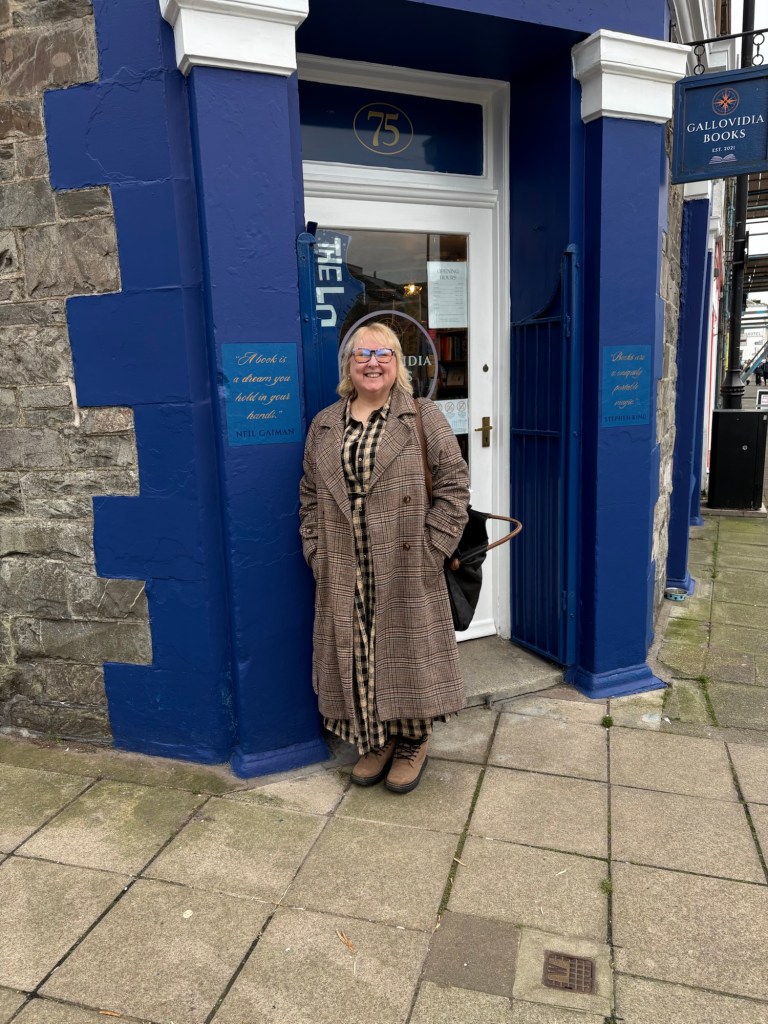
It was lovely to be back at Gallovidia Books in the Artist’s Town of Kircudbright. It’s one of my favourite places to visit because it’s easy to get around and it has a pop-up artists and makers shop which is brilliant for Christmas shopping – sorry, I have started – as well as an art gallery with great exhibits and a cafe where we always stop off for breakfast on our way home. Gallovidia Books is painted the beautiful blue of the bottom book of the stack and is absolutely crammed with books and bookish gifts. It’s a small shop but the selections are so well judged and the recommendations are great. The owners are so friendly, even remembering me from one visit last year, and their book knowledge is second to none. My choices have a very Scottish flavour this time, apart from the last two. All are books I picked on the spot from recommendation or simply from browsing. I can’t recommend this shop highly enough if you’re in Dumfries and Galloway, full of atmosphere and quirky decor.
The Edinburgh Skating Club by Michelle Sloan
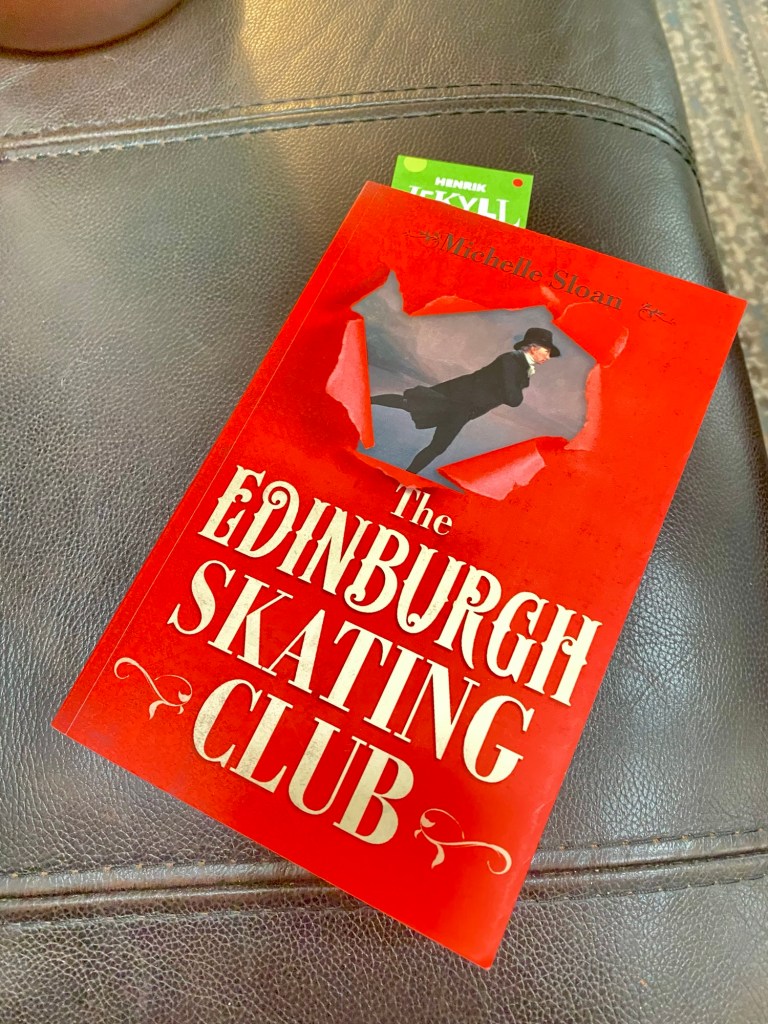
I picked this from the historical fiction section and it’s a story based on the painting The Skating Minister. An art historian called Claire Sharp is tasked to find the true provenance of the painting. While in the 18th Century a poet called Alison Cockburn accepts a challenge from her friend Katherine Hume, to infiltrate the all-male Edinburgh Skating Club. Alison will have to live as a man and neither of them could predict how it will affect their future. I love books that celebrate people overlooked by history and this sounds like it’s right up my street.
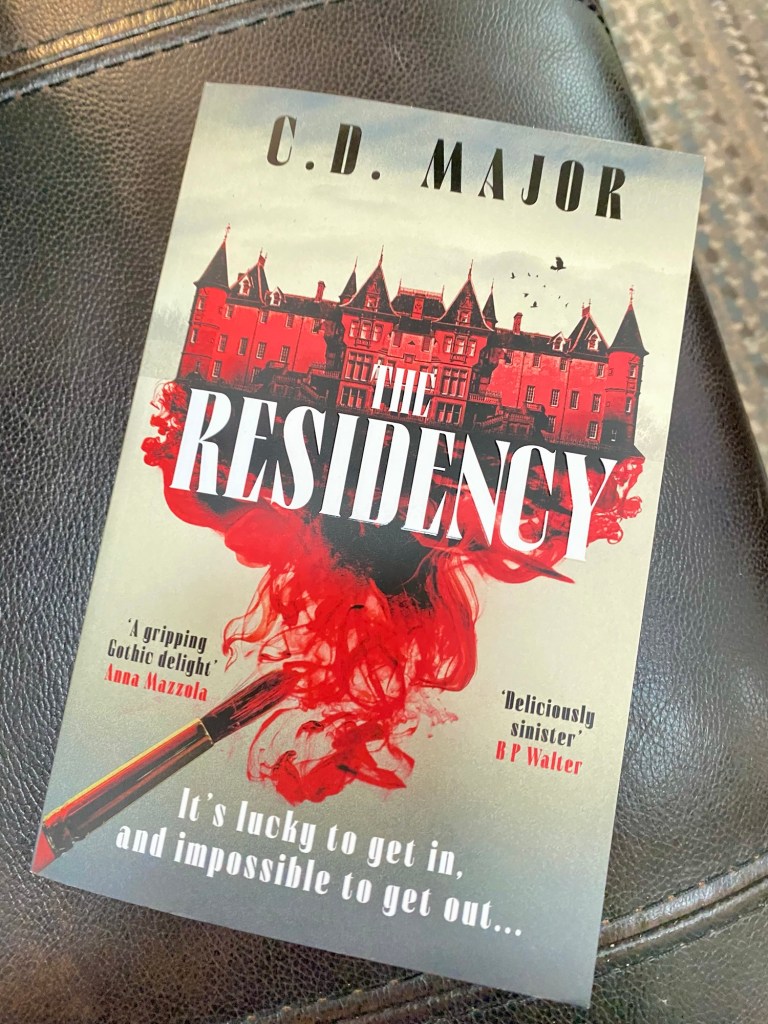
When on holiday we all have those dreams of upping sticks and moving to our favourite spot. Yesterday I was looking at property in Scotland!! So this was an obvious pick, being about someone also feeling like she needs a change. Ginny is a single mum living in London and has been trying to make it as an artist, despite a promising start she is now barely scraping by. On a whim she applies for an artists residency in Scotland with all expenses paid. She’s shocked to be accepted and is soon on a boat to a remote Scottish island with her daughter. She worries slightly that she’s been hasty in accepting and locals seem to be avoiding her questions about her benefactor. Is this just that they don’t like publicity or are they scared into silence? The place is eerie and she has questions about her contract which states she mustn’t go into the gallery part of the old property. She thinks she hears whispers and is sure that the people in the paintings change overnight. However, as soon as she realises that she’s made a grave mistake will it be too late to escape? I’m looking forward to this spooky read that’s perfect for autumn.
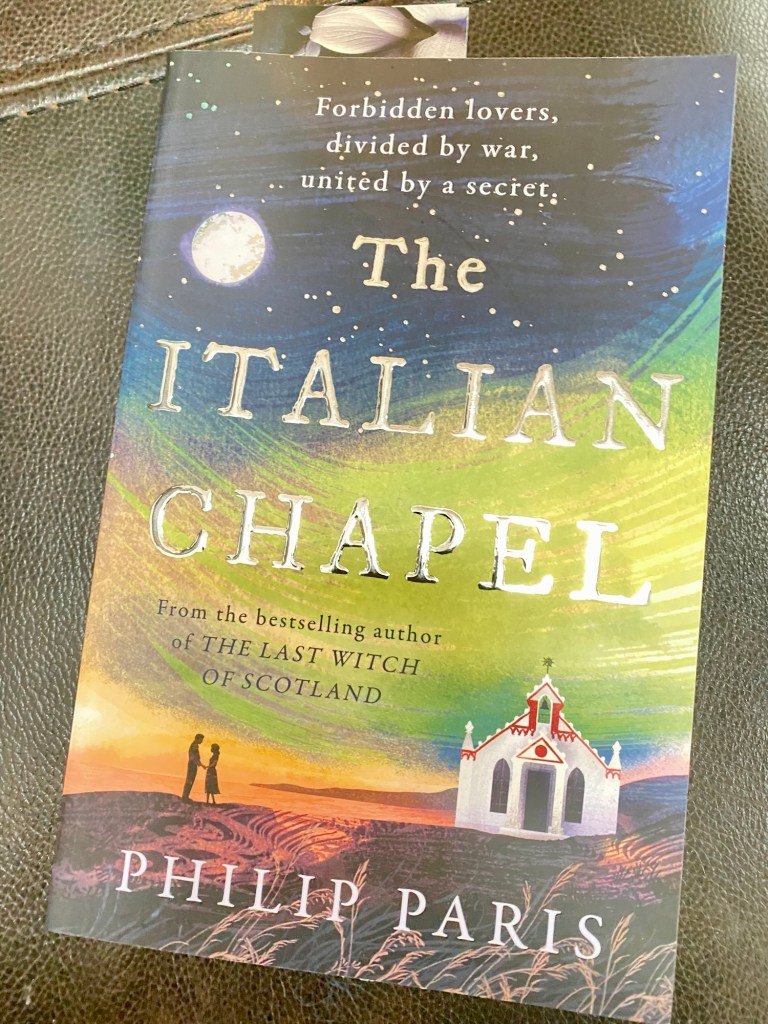
A few years ago I read Caroline Lea’s wonderful novel The Metal Heart which was about the Italian prisoner’s of war on Orkney and the tin chapel they built to worship. So I had to pick up this love story that’s set on the Orkney island of Lamb Holm and the prisoner’s camp 60. Among them is Domenico who is an artist and inspires his friends to create a symbol of peace, building an Italian chapel from scrap. The chapel soon lives up to its symbolism when POW Guiseppe falls in love with a local woman called Fiona. Inside the chapel he hides a token of love that is unveiled for the first time in this book. Based on an incredible true story I’m looking forward to learning more about this special place.
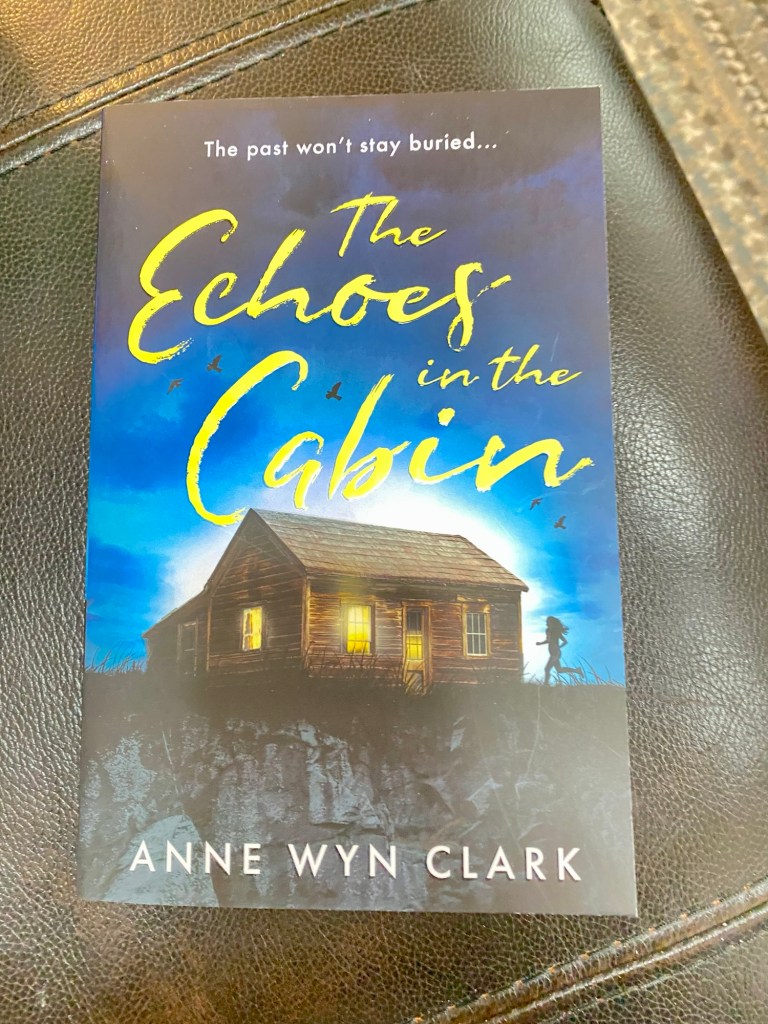
This book is set in another of my favourite haunts, North Wales. Elin returns home to Anglesey after a tragic accident, to the same bay where her mother was drowned ten years ago. I picked this up having just read Doug Johnstone’s latest instalment in his Skelf series that covered a similar subject of ‘grief bots’, an AI generated version of the person who died constructed by scraping all their data from social media and other digital sources. Here Elin agrees to try a grief hologram, but when the avatar says something that shocks Elin she realises that her current loss and the loss of her mother could be related. What if they weren’t an accident? Because if that’s the case she might be in danger…
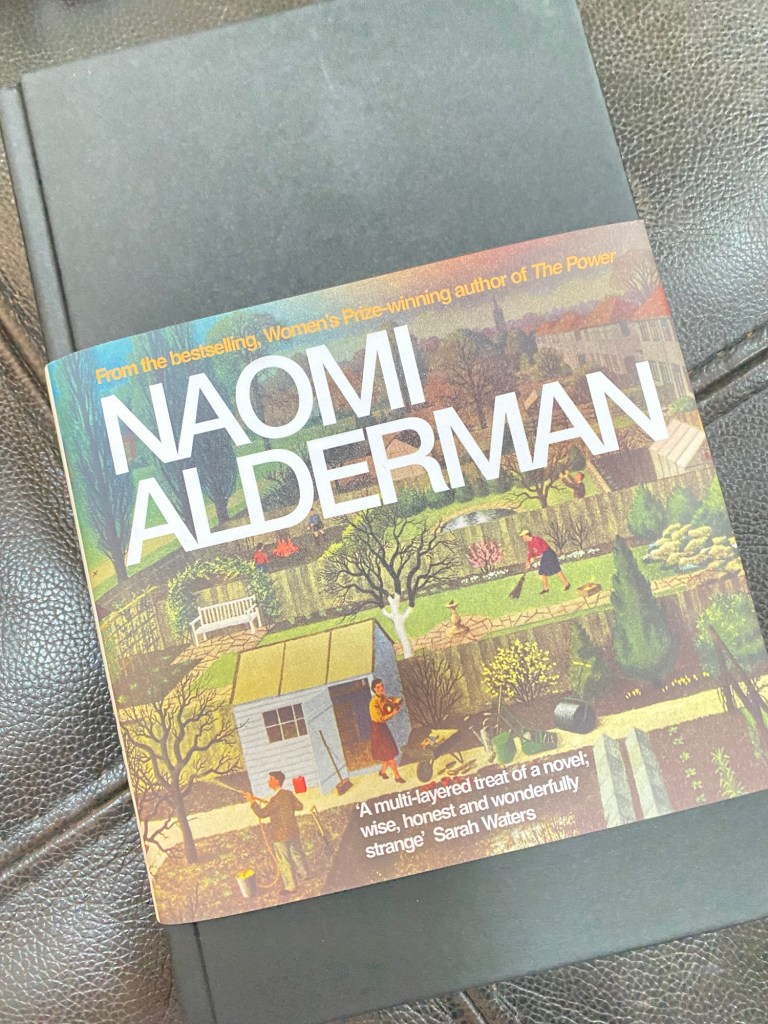
My final choices are a little bit different and this one was highly recommended. It claims to be like nothing I’ve read before which is an excellent way to grab someone who reads a lot. Written while grieving her mother, it’s more like auto-fiction than a novel and follows what happens when she puts up a wildlife camera in the garden. It captures an image of a strange new animal, low to the ground like a badger but with a flat face and a long trunk like nose. Soon the animals, called mimmoths, are everywhere and no longer he knows where they’ve come from. As sightings spread across the world it seems they are common, harmless but following their own purpose. They won’t take human food and can’t be captured. They are intelligent. The author feels connected to them and becomes caught up in conspiracy theories and global power dynamics. Has grief made the world surreal or is reality changing? I’m intrigued..
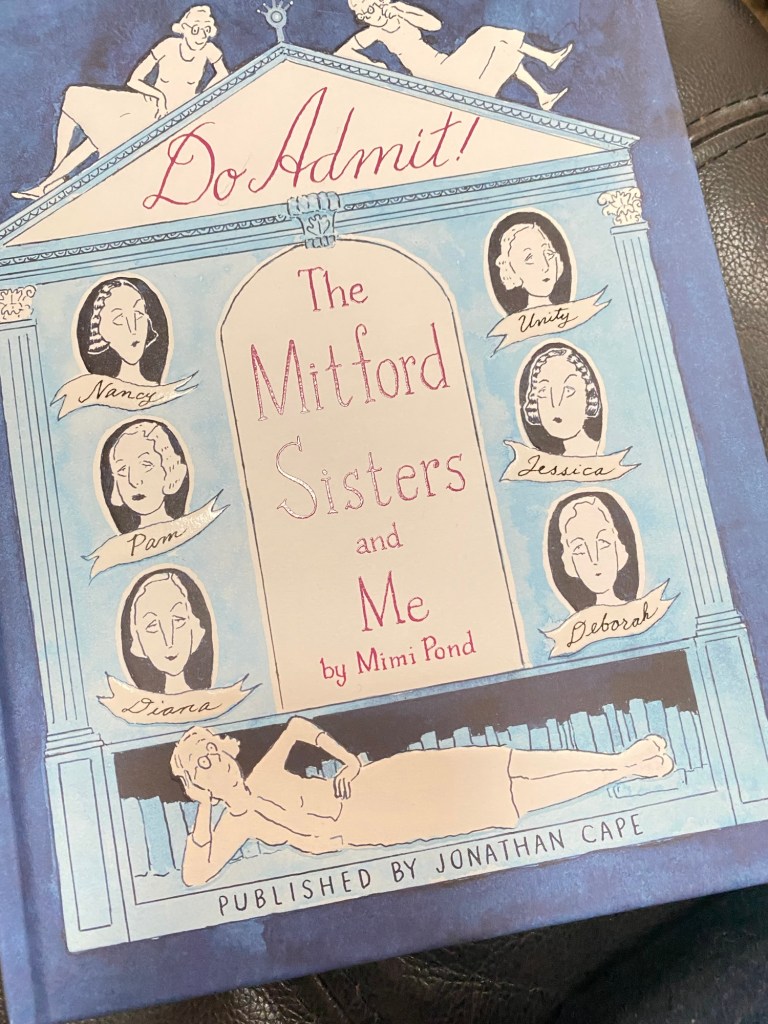
My final choice was unexpected but as soon as I saw it I knew it was for me. I have a lot of books by and about the Mitford sisters, even meeting Deborah, the dowager Duchess of Devonshire at one of her book events at Chatsworth. I find the Mitford sisters intriguing and this is a beautiful and unusual book about their complicated and varied lives.
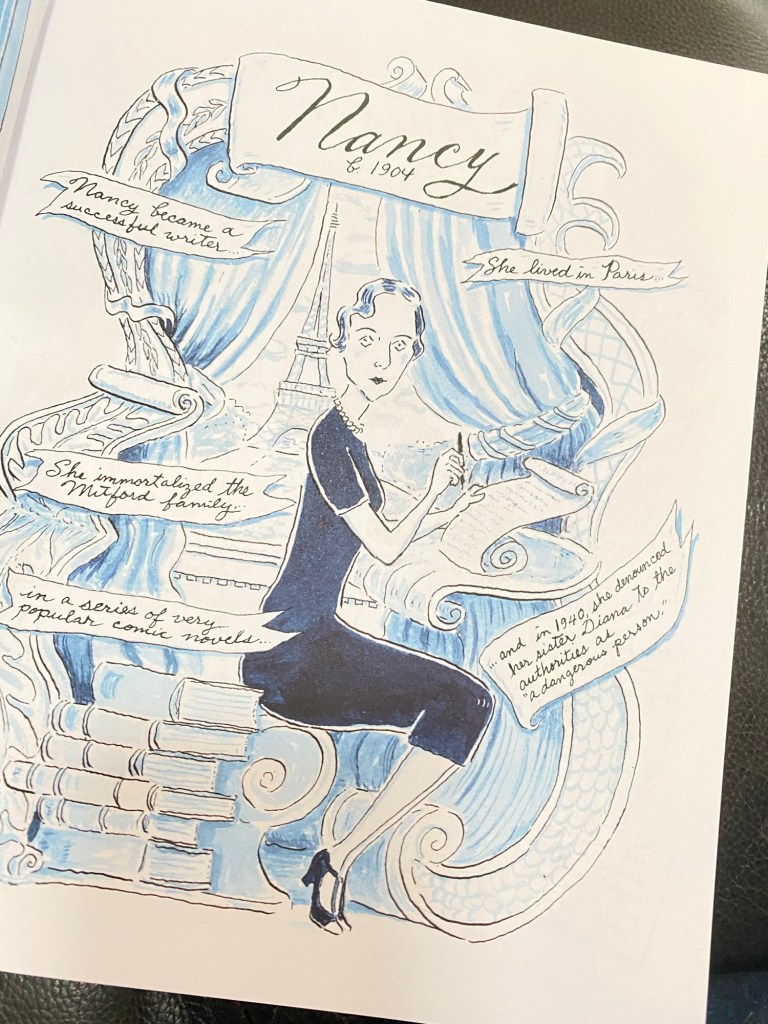
It details each sisters particular history and is so well illustrated by Mimi Pond. As a young girl living in sun-bleached 1960s suburban California, Mimi Pond fell in love with the Mitford sisters. Nancy, Pamela, Diana, Unity, Jessica and Deborah Mitford brought society glitz, pageantry, scandal, and real (rainy) weather to her own prosaic life.

High society debutantes known for rubbing shoulders with some of history’s most infamous fascists and communists, the sisters were also, in turn, gifted writers, inveterate nicknamers, chicken-raising homebodies, scathing wits, and passionate adventurers in the maelstrom of the 20th century. Drawn with inimitable artistic flair and a mischievous affinity for the decadent and grandly declining aristocracy, Mimi Pond brings the Mitfords to life in this glittering and lovingly researched family biography. This is my first graphic book in years and will sit happily on my shelf next to my other Mitford acquisitions.
Posted in Random Things Tours

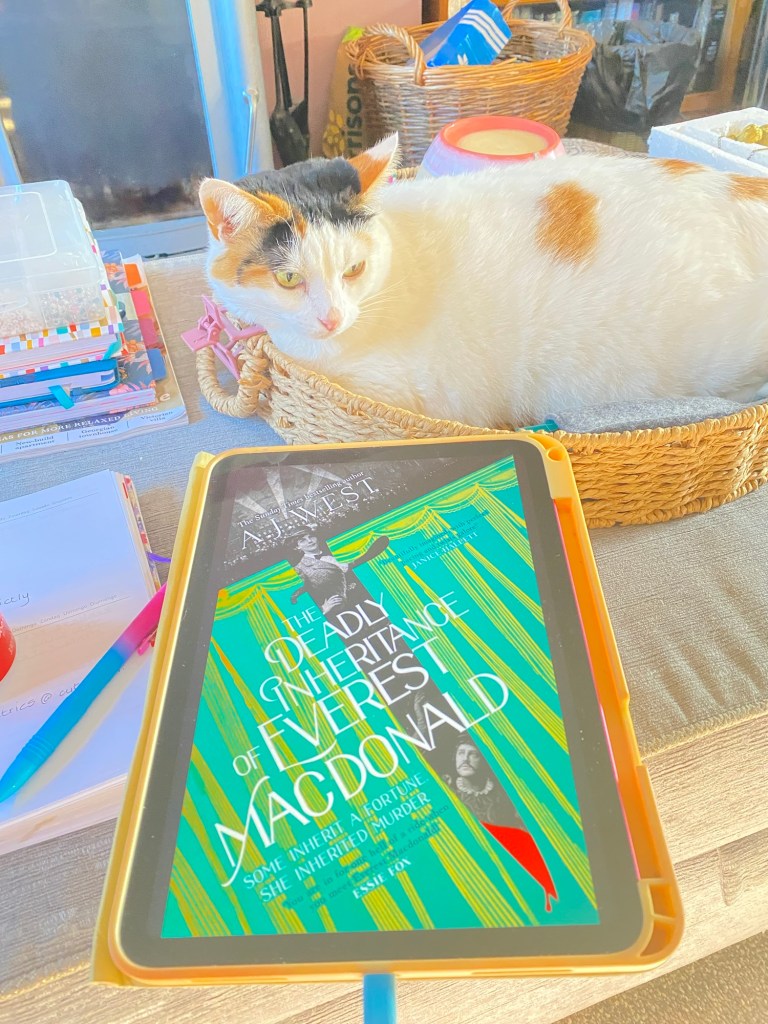
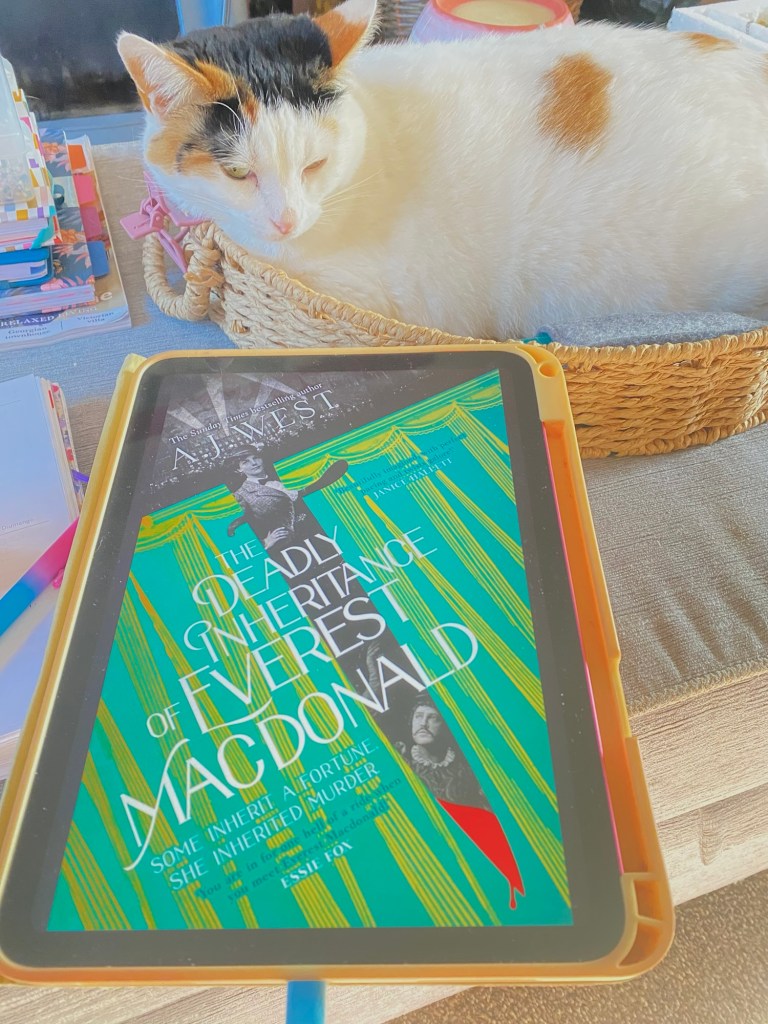
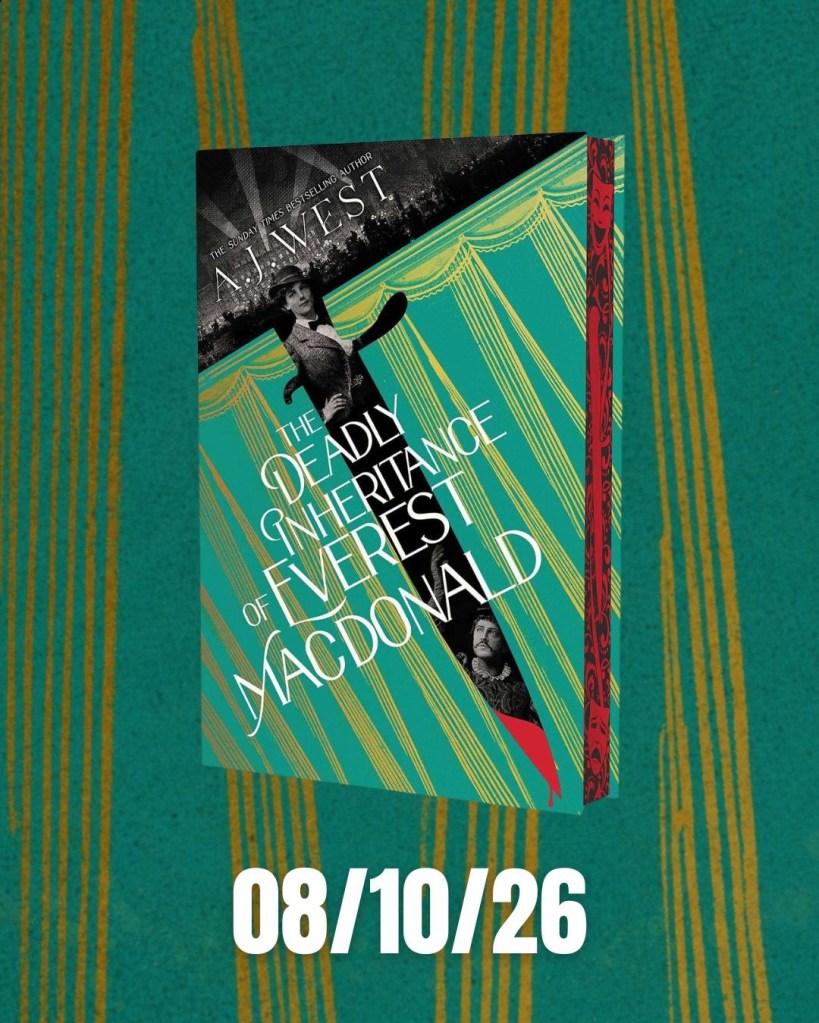
The Deadly Inheritance of Everest MacDonald by A.J.West

Some inherit a fortune.
She inherited murder…

1917. As the Great War rages on the continent, Everest Macdonald is summoned to her father’s deathbed and entrusted with a final urgent request: she must uncover the truth behind the murder of her uncle, the celebrated Victorian actor William Terriss, a crime that has haunted her family for twenty years.

In 1897, Terriss was stabbed to death outside London’s Adelphi Theatre, a killing that shocked Victorian society. The murderer was swiftly arrested and confined to Broadmoor, the case declared closed. Yet, years later, a sealed package of evidence is passed to Everest by her dying father, which casts doubt on the official verdict and the haste with which it was reached.

Drawn back to wartime London, with her husband and children left behind, Everest begins her investigation, following a trail that leads her into the world of late-Victorian theatre, where fame and fortune mask obsession, envy and cruelty. With time running out and her father’s strength failing, Everest must uncover what really happened on the night Terriss died, and shed light on the unsettling legacy he left behind.

It was amazing to finish this latest book from A.J. West and realise that it is based on a true story! I love this author’s combination of historical detail, a sprinkle of gothic mysticism and a determination to write people back into the history they’ve been removed from. There are moments where it seems impossible that this actually happened! Our story is told through Everest’s perspective as she vows to find out the truth about her Uncle William, murdered at the door of the Adelphi Theatre in 1897. Her intelligence, determination and forthright attitude carry us through her early enquiries and the hiring of a young woman called Clare who she meets on the train. Between her story we are also privy to the diary of Everest’s father TH Lewin from his time as a local dignitary in the Chittagong Hills of India. She also finds the diary of her beloved aunt Isabel Lewin, who married the wayward William and became his partner in his endeavours to be an adventurer abroad. There were a few moments when I became lost as to what time and place I was in because our narrators are so intrepid we visit both the Falkland Islands and Kentucky before William returns to London and a life on the stage. 

I loved the way the author brought mysticism into the historical story, especially the sections of William and Thomas’s 19th Century antics in India. His diary felt like the perfect period example of how their story would be told, a boy’s own tale through the lens of the exoticism and orientalism of the time. Thomas appropriates the local culture, dressing and behaving like a tribal chief and even taking an Indian wife.  His musings on what to do with Dari and their child shows that he considers her feelings in his decision to return home thinking she would be “ridiculed” but he never once considers it his duty to stay. She is a belonging he can discard at will. Even benevolent colonialism is still colonialism, his only saving grace is that he recognises the damage he’s done. William is reckless, taking whatever he wants because he can whether it’s substances or human beings. 

“William goaded me by bedding every woman in the village causing terrible ructions with the menfolk”. 

Each brother receives a curse, appropriate to their crimes, but while Thomas clearly has a conscience does his brother? I also enjoyed how the Victorian and early 20th Century theatre worlds aligned so beautifully with the murder mystery genre, with masking in both senses of the word. There’s physical and emotional transformation on stage and disguise is something that creates some huge surprises along the way. There are a lot of superstitions around stage acting and the gothic plays it’s part again with the ghosts of the Adelphi creating a haunted atmosphere or possibly a smokescreen.

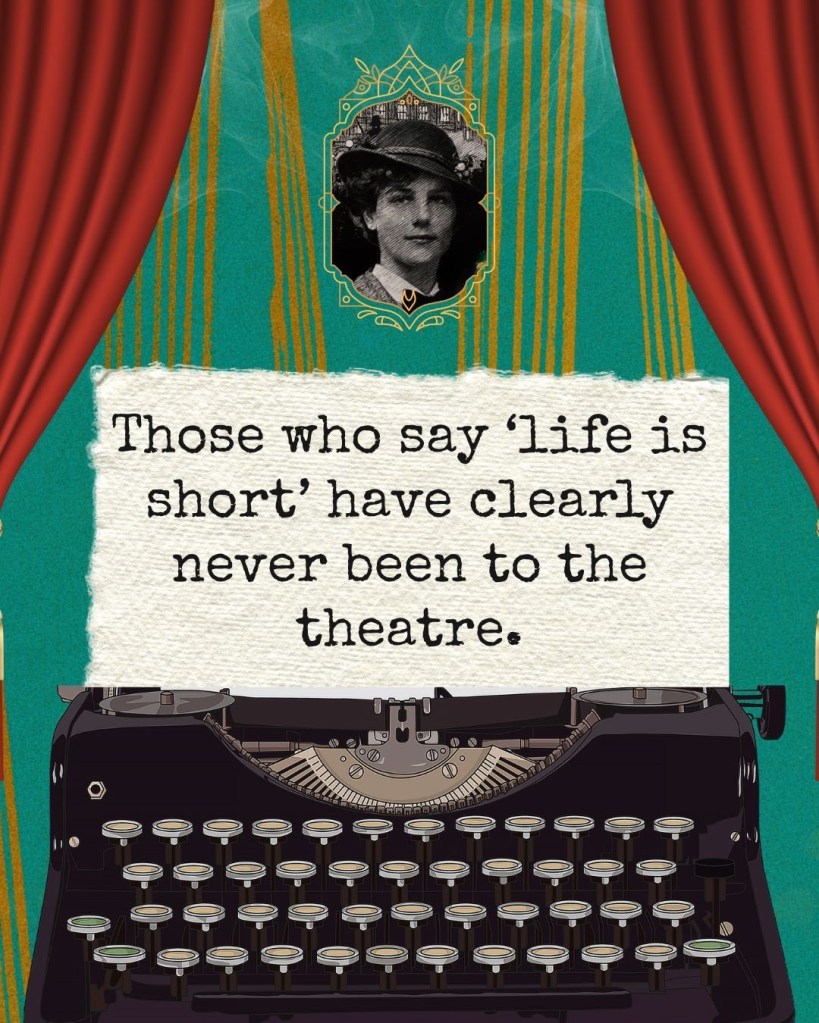
Everest is a brilliant investigator with the accent and privilege of an Agatha Christie heroine. She’s dogged and determined, trying to weed through the frivolity and illusion of theatre folk as well as the attitudes of men. She has a wonderful turn of phrase, the delightful “those who say life is short, have never been to the theatre” made me laugh, remembering a particularly lengthy opera scene where I said to my companion that I would be leaving if no one died in the next ten minutes. She also used an insult I haven’t heard for years, in fact since caring for a cantankerous but funny Scottish lady in a nursing home, so I’ve been calling my cat Minka ‘a petulant bism’ for the past month. My favourite character aside from the brilliantly eccentric Everest, was her Aunt Isabel Lewin and her diary drew me in immediately. She was an incredible adventurer who took on any challenge William threw at her, while performing the role of wife and mother. She had a very liberated enjoyment of sex and isn’t cowed by rough seas, a potential drowning and suicide pact in the Atlantic or fighting off attackers. While she complained of the endless dust and wild weather of some places it’s clear she was left to deal with the consequences of William’s pioneering decisions. She actually lived the life he chose, while he failed and went on to the next adventure and abandoned his family sometimes for years. It’s no coincidence that the author paraphrases the speech of Elizabeth I before the Spanish Armada as Isabel states “I am no weak and feeble woman”. I was really sad that her epitaph – “she lived her life for others” – makes her out to be an angel when she’s really a queen.

A.J. West’s writing performs the feat of time travel. Each piece of writing in this novel feels like it was written at the time, whether it’s the 19th Century diaries or Everest’s investigation taking place during WWI. He skilfully whirls the reader back in time and I felt like I was there watching William kill a sacred crocodile in India or feeling Everest’s fear as she experiences a terrifying daytime raid on London by German bombers, a scene that’s absolutely electric. The novel is cinematic in scope and every place I was taken to was real in just a few sentences. In fact I read a passage about the Falklands to my ex- RAF husband who said it hasn’t changed much. Probably due to our heroine and her female assistant in the overarching narrative, I really felt the female gaze throughout the novel, both in the present and when reading about the past. So much changed for women in the space of fifty years, especially Everest’s present in 1917. When Thomas and William were young they might never have imagined women working as land girls or in munitions factories, another reminder that neither appreciated the power of the women they were with, whether it was Dari’s mystical curses or Isabel’s strength and anger. With all that said, this is a fascinating murder mystery that I hadn’t solved at all before the final revelations. It seems staggering that this is based on a real unsolved case and I think readers will find the afterword really interesting. I’m now holding my breath for an Everest MacDonald TV series, for some reason I can see Anna Chancellor, or maybe another literary adventure for this formidable character. 

Meet the Author

A.J. West’s bestselling debut novel The Spirit Engineer won the Historical Writers’ Association Debut Crown Award, gaining international praise for its telling of a long forgotten true story. His second novel, The Betrayal of Thomas True, debuted at number two on the Sunday Times bestseller list, and won the CWA Historical Dagger. A.J. was also shortlisted for the Booksellers Association Author the Year. An award-winning BBC newsreader and reporter, he has written for national newspapers and regularly appears on network television discussing his writing and the historical context of contemporary events. A passionate historical researcher, he writes at The London Library and museum archives around the world.

Posted in Squad Pod Collective

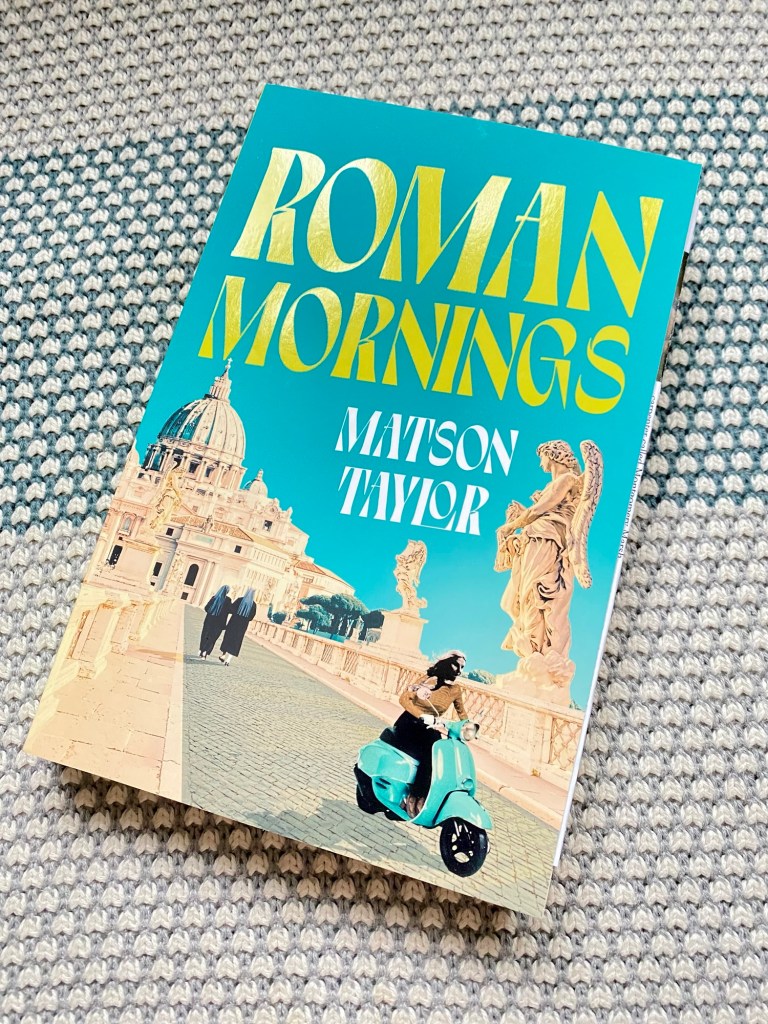
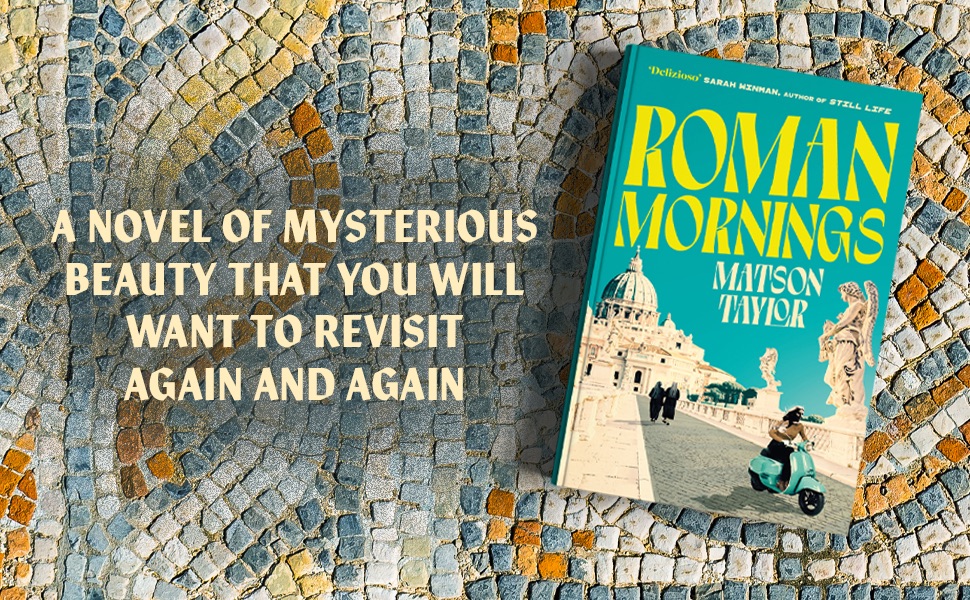
Roman Mornings by Matson Taylor 

I’ve looked forward to a new Matson Taylor novel for a while now and this one is such a charming, humorous, comfort read set in 1970s Rome. The word serendipitous was made for this novel as friends and housemates Clemmie and Floss are trying out the turquoise Vespa that Floss has bought as a gift. Unsure whether she will get the hang of the scooter, at first Clemmie is a bit wobbly but as she gets to grips with it and sails off into Roman traffic she starts to enjoy herself. Strangely something like this is exactly what she needed. She’s been feeling a little stale and middle aged of late. However, as she makes her way towards a bridge flanked by angels, she quite literally bumps into a blonde, curly headed angel of a young man who was idling by the water on a break from work. Clemmie takes Monty to the hospital where his injuries are bad enough to stop him working but well enough to go home. The problem is Monty doesn’t have a home, just some digs he’s sharing with a few other craftsmen doing up an apartment for an acquaintance from London. It’s not long before his boss is in the emergency department, with Monty’s meagre belongings telling him he no longer has a job or digs. Feeling terribly guilty and also drawn to this angelic young man, Clemmie decides he will go home with her and Floss. Ensconced in their wonderfully bohemian living room, filled with plants and Floss’s theatrical memorabilia, Monty is soon drifting off to sleep with his new protectors looking on indulgently and Octavian, their large house cat laid on his chest. 

This is a story about friendship, found family, reaching crossroads in life and being your authentic self, with a bit of romance thrown in for good measure. I love Matson’s chatty writing style, it brings to mind writers like James Herriot whose books mix beautiful settings, humour, everyday life and characters who feel as familiar as family. I thought his usually evocative 1970s setting would feel different in an ancient city like Rome, but we’re soon hearing about foods from my childhood and the brand new craze for avocado bathroom suites. Monty’s clothes are also of the era and Floss’s flat with its boho chic style reminds me of the indoor hanging baskets, posters and tasselled throws of my own youth. I remembered my parent’s romantic evenings in with a vesta curry and a bottle of Mateus Rosé. These contemporary 1970s references set against the ancient beauty of Rome is such an interesting contrast. I felt like I’d been to the city as the author conjured up the beautiful light, the soft and gentle colours of the stone, tiles and marble. It sounds busy and chaotic at first but it’s easy to find moments of calm. There are those cafe moments with Italian espresso and mouth watering Italian food that had me craving a trip to Italy. 

The author excels when it comes to character and these are all generous, loving people. There are those incredible comic characters that lighten the mood like Floss and those like Clemmie who have more complexity and are questioning their future. Loving the city and the Italian language led Clemmie to move here and living at the palazzo with Floss is a dream, but intellectually she’s not being stretched. She has so much of the city’s history in her bones, but she’s using the language to translate plumber’s manuals. When an accident means moving out of her office for a while she has time to think. Is this what she really wants? Floss is getting older and thoughts about what’s next are accelerated by an accident that leaves her stranded on one floor of the palazzo. Is it time for a change and to accept that she’s not as young as she used to be? It’s Monty who’s the beating heart of this novel though, and I had the same urge as the women, to give him the biggest hug. I could feel the little boy in him. A boy who’s scared and wants his mum, and he’s found two in Clem and Floss. He’s a joiner by trade and incredibly skilled, he’s also keen to pay the women back for their kindness and on the advice of Octavian the cat, he starts to fix things in the palazzo. Despite his skill he’s not the best at pushing himself forwards. It’s also clear that he has a secret or too, but he needs to feel safe first. I felt like he’d found a kindred spirit in the kind and hesitant Clem. I have to mention the nuns who are incredible and I’d like to have first casting rights if this is ever a film please. These are not the stern scary nuns of my Catholic school, but a rather giggly pair who distribute British foods amongst the ex-pat community in Rome. They get to know Monty by offering him work in the many ecclesiastical buildings locally. They also end up at a club dancing to disco at one point which made me laugh out loud.

The story is quiet at first, allowing characters to settle and get to know each other, but when secrets start to emerge the deeper story comes through and it’s heartbreaking. It might have been nice to have seen some of his story slowly reveal itself in flashback across the novel, but it’s so emotional and beautifully romantic. My heart broke for Monty. We also have a slow burn romantic story for Clemmie and a man called Bob who appears in an ice-cream van and helps Monty build a basement apartment for Floss. The book meanders slowly with the odd intervention from the statues that decorate the buildings and bridges all over this city. I’ve read so many novels recently that are great but don’t have a single character I like. It was such a relief to be in a book where the characters are gentle, kind and want to help each other. Books like this, that bring joy and comfort to the reader, are hard to find and even more difficult to write. Reading about these characters embracing change with feelings of hope and renewal provided a window of solace and hope in what feels like a very angry world. For Monty it’s facing his authentic self without judgement and censure from others, a journey that isn’t without its trials. Clemmie embraces the boost she gets from teaching Monty about Rome. It reminds her she knows so much more than she’s using in her daily life and his story opens a door in her heart for potential romance but also her first love – writing poetry. Floss is embracing the new stage in her life and the freedom living in the basement flat brings for the next stage in life. Octavian the cat, prowls each level of the palazzo enjoying his new friends and casting an imperious eye over their adventures. This is a very emotional read in a stunning setting, with a big heart, a sprinkle of magic and a definite Northern slant to the humour. 

Out Now from Scribner Uk

Posted in Netgalley

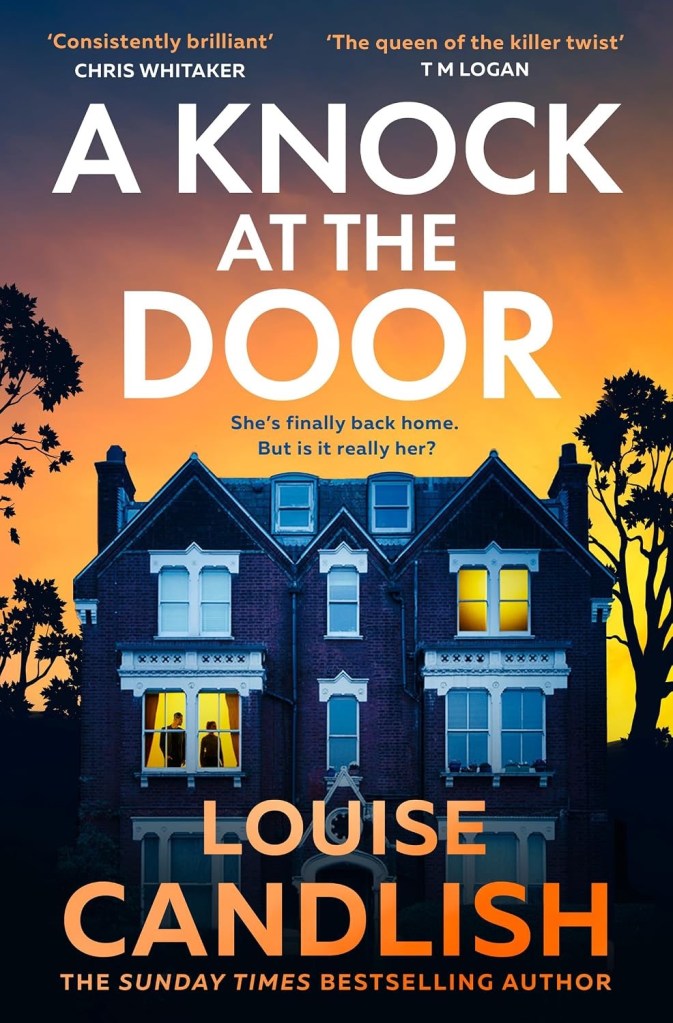
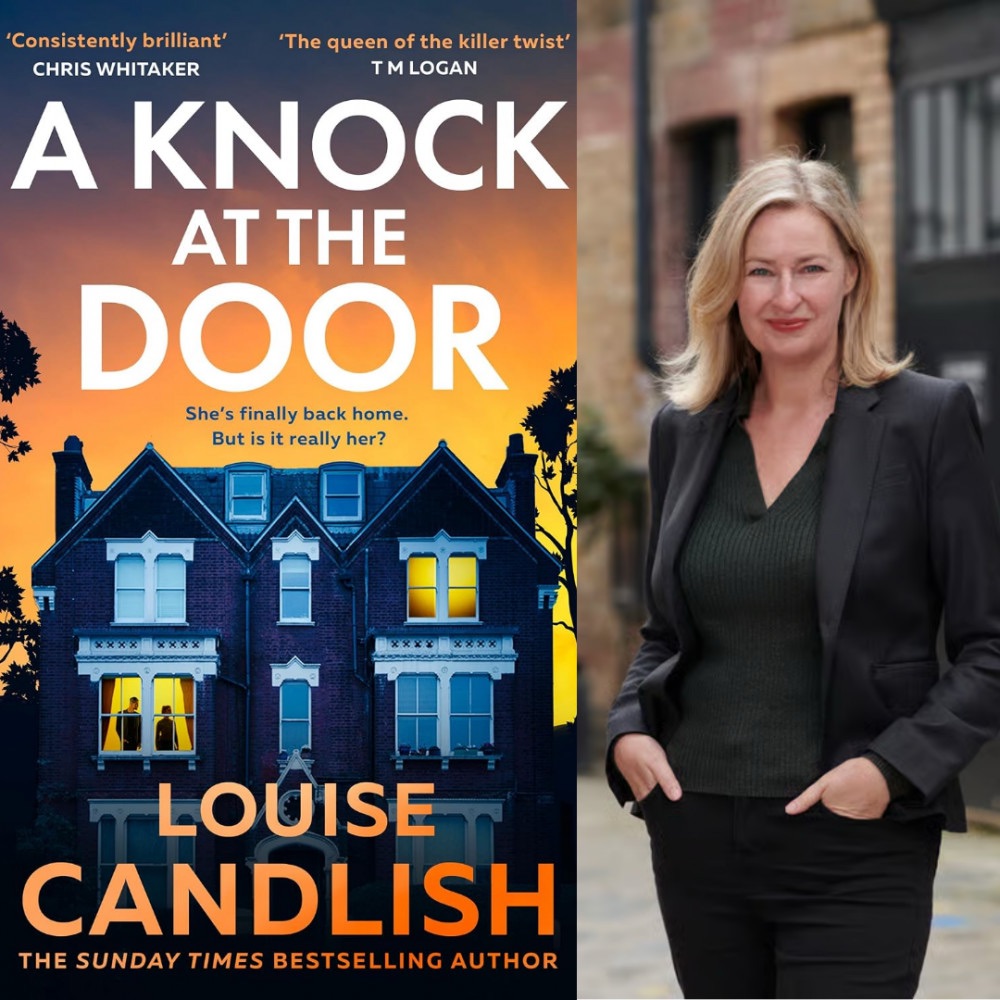
A Knock At The Door by Louise Candlish 

She’s finally back home … but is it really her?

When three-year-old Tippi Macklin goes missing on a weekend break with her parents, her face appears in newspapers around the world, sparking endless debate and conspiracy theories. Wealthy and glamorous Jed and Gabby never give up hope that ‘Little Tippi’ will be found.

Eighteen years later, a young woman arrives at their door claiming to be their lost girl. She has a new name, a new history and some startling evidence to support her claim. Can she really be Tippi – or is she an imposter?

A DNA test will prove her identity one way or the other, but when the results come back, it seems the mystery has only just begun…

I do LOVE a Louise Candlish novel, so much so that when I saw I’d been approved on Netgalley I spent my whole Saturday reading it. I’m never disappointed and this is such a fascinating subject and family. Narrated by Gabby Macklin’s sister Bel, this is about how such a huge tragedy affects a whole family, but also about the underlying tensions and dynamics between its members. If it wasn’t for Jed and Gabby losing their daughter eighteen years ago you would absolutely hate them. They’re one of those couples on Escape to the Country or Grand Designs who say ‘I’m a cheese maker, my wife is a freelance bid writer and we have 2.4 million to spend.” Those people who claim to want a country kitchen, but really mean Downton Abbey. It’s now eighteen years later and a young woman claims that, after her parents died in a car crash, she’s discovered things that make her think she’s their lost daughter Tippi. This isn’t the first time their hopes have been raised, but it’s by far the most exciting lead they’ve had in a long time. Gabby tells her sister she feels that Eden is her daughter but Bel isn’t so sure and starts to investigate. Told mainly through Bel there are also a few different narratives: feeds from the couple’s social media pages for Tippi, some creative writing pieces from Tippi’s perspective from someone clearly obsessed with the case and text messages between two people that are very hard to decipher and suggest illegal activities. 

The characters are fascinating with Bel and her sister Gabby at the story’s heart, but also a weird dynamic between Bel and her brother in law Jed. The two families are in very different positions financially. Jed runs a very successful training business and Gabby makes candles in at home studio. Their home is clearly interior designed with a sunken living room area and so much party space. Theirs is the house where the family get together and with such a disparity in their earnings, it’s clear that some resentment is felt by Bel. She’s supporting her family while husband Marc gets his business off the ground. They rent their home and are aware that if London prices go up much more they will have to move, probably to a worse area than now. Their home is lived in rather than designed and with Bel working full time as a trading standards officer she has a lot on her plate. Daughter Luna is coming up to her GCSEs and becomes more incommunicative by the day. Grace is away at university studying psychology and seems the most sensible and sorted out of all of them. Wherever Bel’s busy schedule allows she is quite determined to find out whether Eden really is her lost niece or has she realised her similarity to Tippi and noticed Gabby and Jed’s wealthy lifestyle? It’s hard to like Bel but there’s a lot to empathise with. Jed came across as a man who is used to setting the agenda and uses his money to control and manipulate. Gabby is almost like a shadow, physically present but quiet and passive. Losing her daughter has been a trauma she will never get over and Bel doesn’t want her sister to sleepwalk into a relationship with Eden without proof that she’s definitely who she says she is. But why is Bel so sure Eden isn’t Tippi?

I thought the author captured the endless speculation and media attention around a missing child, especially one as photogenic and appealing as Tippi clearly was. When a case captures the public attention it’s as if everyone wants to be involved. The furore surrounding Madeleine McCann’s disappearance has shown us that people on social media will comment, discuss and make wild accusations about the family. The excerpts from the Facebook page show that people want to be part of the story whether that’s pretending to know something, throwing a wild theory out there or just sending their love and prayers. Often there appears to be no thought for the family who have to wade through this just in case there is a clue. The creative writing pieces are particularly cruel and well written. Who would do such a thing? What’s their aim? Is there any truth in them? It plays on Gabby’s hope that one day she’ll find her. The guilt of the parents felt very real and I found it very hard to believe that Eden was preying on that hope, just wishing that Gabby’s need to find her daughter might overwhelm the need for the truth. In the midst of DNA tests, research and quizzing Eden, has Bel has taken her eye off the ball at home? Something that has bothered her for years keeps resurfacing, a frustration that her sister’s ongoing drama overshadows her and her daughters. Because of what happened, Gabby is the precious sister who they can’t upset. Every problem Bel’s family has pales in comparison to what the Macklins have gone through. As her mother says, she can’t complain about her daughters because at least she has them. 

There are so many secrets here and as always I was glued to the page as they were revealed. Each revelation was a surprise and explained a lot about the family dynamics. The twists were not just focused on the Macklins though, Bel’s family had a few surprises in store too. I thought this was an addictive read and captured perfectly how trauma like this ripples outwards into wider family and friends. Through Gabby we can see how the loss affects a mother, leaving her in limbo and something of a recluse in her own home, perhaps not wanting to miss any development and having her hopes raised and dashed continually. Bel tells the story very well, becoming obsessed with Eden perhaps at the expense of her own daughters. My thoughts about some characters were confirmed, but others surprised me completely. You will devour this novel like I did as it’s Louise Candlish at her very best. 

Out November 5th from Harper Collins

Meet the Author

Louise’s previous thrillers include OUR HOLIDAY, a Sunday Times bestseller, WHSmith Richard & Judy Book Club pick, and OUR HOUSE, now a major four-part drama starring Martin Compston and Tuppence Middleton (watch the full series on ITVX in the UK and PBS/Amazon Prime in the US) and winner of the British Book Awards Book of the Year – Crime & Thriller.

She has celebrated her 20th anniversary as an author with the news of two prestigious awards for 90s-set thriller THE ONLY SUSPECT: the Capital Crime Fingerprint Award for Thriller of the Year and the Ned Kelly Award for Best International Crime Fiction. Filming has just wrapped in London for the ITV adaptation, with Kevin McKidd starring as Alex, a middle-aged man with a deadly secret to hide. More soon on that – and on the adaptation of THE HEIGHTS, starring Anna Friel.

She lives in South London with her husband, daughter and a fox-red Labrador called Bertie. Books, TV and long walks are her passions – and drinking wine in the sun with family and friends. Authors she loves include Tom Wolfe, Patricia Highsmith, Barbara Vine, Agatha Christie and Evelyn Waugh. Her favourite book is Madame Bovary.

Posted in Orenda

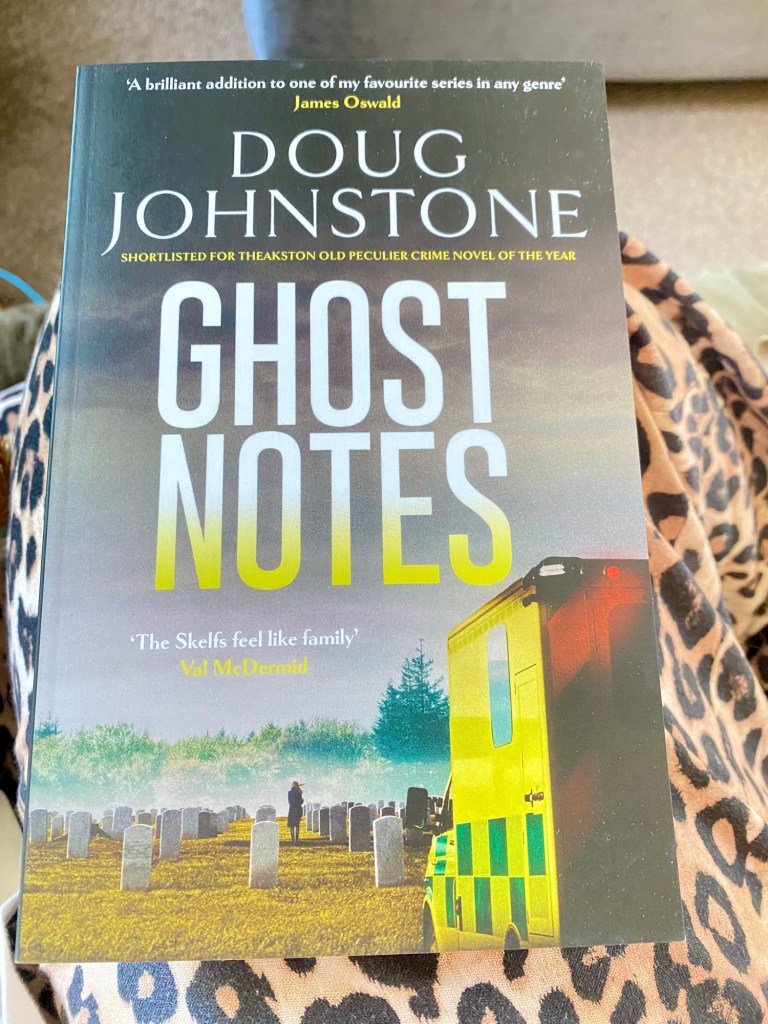
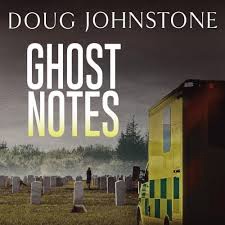
Ghost Notes by Doug Johnstone

The Skelf women have been keeping their heads down, running the family’s funeral directors and private investigation businesses. But when a woman collapses at her husband’s funeral and is saved by Dorothy, she finds herself drawn into the murky world of ‘grief tech’ – a booming new industry that creates digital avatars of the dead.

Jenny’s latest case – a simple blackmail job for an old school friend – quickly spirals into chaos as the woman’s tangled love life pulls Jenny towards dangerous old habits.

Meanwhile, Hannah and her wife, Indy, are confronted by the unexpected arrival of Indy’s ex-boyfriend, claiming to be dying and eager for the Skelfs to arrange his funeral. But his arrival uncovers more ghosts from the past, and threatens to upend everything they’ve built.

As their cases collide and their personal lives spiral, the Skelfs face danger from all sides. How far will they go to protect one another, and what will it cost to finally silence the ghosts?

I always love the ideas and philosophies that Doug Johnstone brings to the Skelf series and in this eighth book his musical knowledge must have inspired the title. A ghost note can be played on piano, but more frequently on the drums and the matriarch of the family, Dorothy, is still drumming. She teaches and plays in a band that comes together for what used to be called ‘pauper’s funerals’, a duty that the funeral parlour perform for those who are buried or cremated by the local authority. As Dorothy teaches she explains ‘ghost notes’ to her student – a soft note like a whisper, usually on the snare drum played between the accented beat. The listener might not hear them being played, but would feel a difference when they’re not. They partner beautifully with one of Hannah’s physics concepts, the ghost particle, invisible and very rarely connecting with other matter that makes up our world but ever present. There are people in our lives who are like these notes, ever present but often completely unnoticed, until they aren’t there any more and we can feel their absence. I’ve felt like this about Hannah’s wife Indy in the series and have often wished to hear more about her life and experiences. She’s always quietly been in the background of the Skelf’s very dramatic and noisy lives, she is the person who notices you haven’t had a drink and brings you one before you’ve even asked. I was so excited to see her taking more of a central role in this story, where three cases are also dividing up their time. Jenny’s investigation comes from a local estate agent who is being blackmailed. Dorothy is investigating a family’s tragic losses as they bury the father of a girl found dead several months before. This takes her into the world of ‘grief bots’ and how anything built for profit has a harmful element to it. Finally there’s Hannah who is investigating the trouble brought to their door by Indy’s ex-partner and those he has wronged. 

The book opens with a funeral and a widow who has a heart attack by the grave side. This family have already experienced tragedy, because the man in the coffin has killed himself after the death of his daughter. If the widow can’t be saved then her son will have lost his whole family. On her return home the widow asks Dorothy to look into her husband’s death and the first thing she discovers is very strange – a company who scrape a dead person’s identity from the internet and use AI to create a lifelike avatar of that person. The account holder simply signs into the app to visit their loved one, but innovations like this – including social media and other apps – are rarely altruistic and always based on money, so somewhere there’s a catch. I found this part of the story quite emotional because there’s something about seeing your lost love one moving and breathing. I can’t even watch videos I have of my late husband, photographs are fine but a moving version is still too much for me twenty years on. Also, thinking from a therapy perspective, how do we ever get over losing someone when they’re still there at the opening of an app? Apps like this could be seriously harmful to someone who’s grieving, complicating already painful emotions. Quietly, Dorothy is dealing with a loss of her own as her detective boyfriend Thomas is still not accepting her letters sent to the prison where he serves a sentence for murder. Jenny’s case seems simple but quickly turns into something more complicated, emotionally and investigatively. Watching an estate agent with a very busy sex life drags Jenny into a realisation that she’s been hovering around for some time. Luckily she has Archie there to support her and I loved how non-judgemental he is because Jenny needs to know someone is staying for the long haul, even while trying to push them away. 

It’s Hannah and Indy who have the most dangerous encounter when an unknown face from Indy’s past comes crashing into their life, along with everyone who’s looking for him, to settle scores or the money owed. It seems implausible that Indy dated a man who is involved in the drug scene, although for Hannah it’s a revelation that Indy even dated a man. This chequered past brings violence into their home and Hannah has to reevaluate the woman she’s married to in light of their conversations. It’s clear there is so much Hannah didn’t know, not just about this relationship but about the deaths of Indy’s parents and other losses. So far in their relationship Hannah has always been the one to bring the chaos and her wife has always been the calm ship steering them into safe waters. To me Indy has always seemed like a wise woman, slightly mystical and enigmatic, but now we can see that her wisdom is hard won and comes from mistakes she can never take back. It’s when Schrodinger disappeared that I began to worry, the Skelf’s cat has been with them through thick and thin and I was so worried that he’d been taken as a threat.

Lately, I’ve been struggling with the world around me, feeling more and more dislocated from what ‘ordinary’ people think. Being a disabled person in a world that appears to hate our very existence is draining and even depressing. Added to that, the work we do with Stand Up To Racism means we’re exposed to individuals who hate others, people who they perceive to be different thanks to the hateful rhetoric from some of our politicians and the sections of the media. It feels so prevalent that more than once I’ve found myself stopping and asking ‘is it me?’ Am I in the wrong? Then I read a Skelf novel and feel like I’ve found my tribe among these intelligent, flawed, tough and compassionate women and their found family. Each one is genuinely woke and I mean that as a positive thing, rather than the insult it has become. Having your consciousness raised was always considered a good thing and these incredible women give me hope. Their compassion for others is shown again and again, in their work on civic funerals, their search for more environmentally friendly funeral options, their tendency to take in waifs and strays and their constant love and care for each other. Doug Johnstone’s writing reassures me that there are people like this in the world and that I might fit here after all. Good people like Archie, Brodie and Indy who quietly go about their business supporting the Skelf’s are the ghost notes of the family. Barely noticeable, but incredibly vital too. 

Out now from Orenda Books.

Meet the Author

Doug Johnstone is the author of twelve novels, most recently The Great Silence, the third in the Skelfs series, which has been optioned for TV. In 2021,The Big Chill, the second in the series, was longlisted for the Theakston’s Old Peculier Crime Novel of the Year. In 2020, A Dark Matter, the first in the series, was shortlisted for the McIlvanney Prize for Scottish Crime Novel of the Year and the Capital Crime Amazon Publishing Independent Voice Book of the Year award. Black Hearts (Book four), will be published in 2022. Several of his books have been best sellers and award winners, and his work has been praised by the likes of Val McDermid, Irvine Welsh and Ian Rankin. He’s taught creative writing and been writer in residence at various institutions, and has been an arts journalist for twenty years. Doug is a songwriter and musician with five albums and three EPs released, and he plays drums for the Fun Lovin’ Crime Writers, a band of crime writers. He’s also player-manager of the Scotland Writers Football Club. He lives in Edinburgh.

Posted in Wordpress Prompts

Kindness Is Underrated

What’s the most underrated life skill?

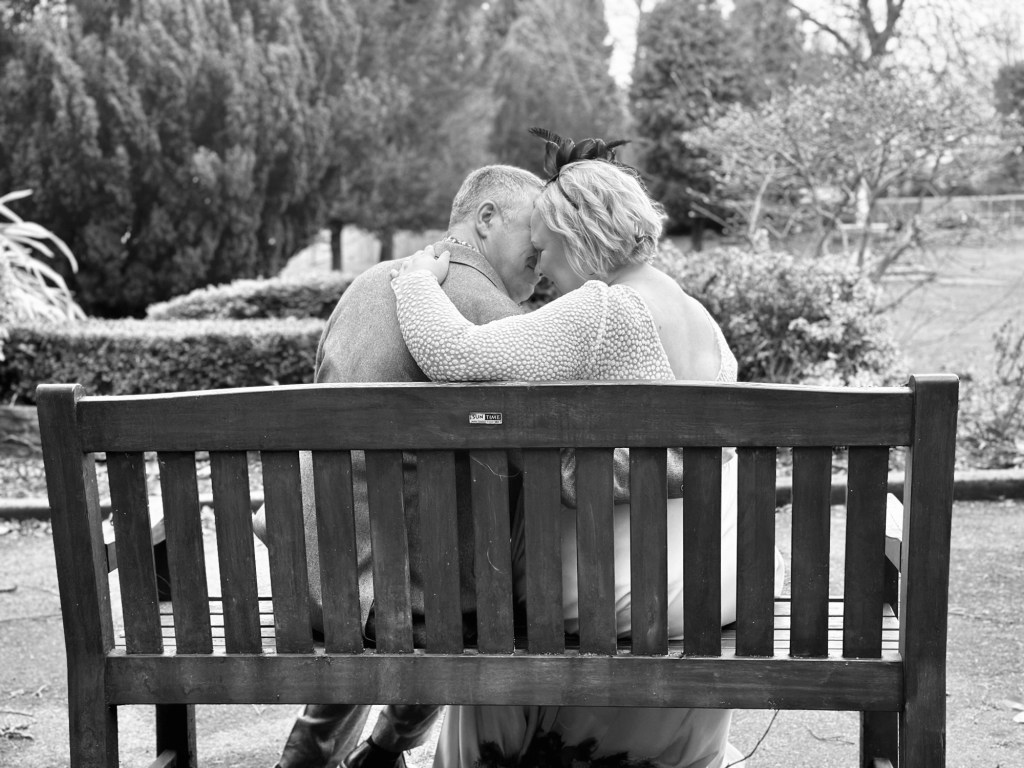
When I met my current husband, after six years of living happily alone, people asked what had made me want to jump back into a relationship. I’d been married to Jerzy for seven years until his death, then fell into a relationship that was abusive and coercive. I’d declared myself done with relationships, moved into my little converted piggery in a dead end village and threw myself into finishing my counselling training, giving authentic self workshops and using meditation as a recovery exercise. I told friends that I didn’t want setting up and I wouldn’t be dating – why would I spend an uncomfortable evening in the presence of someone I might not like when I could be at home watching a film or reading a book while snuggled up with the dog? I made little changes to make life happier: I went to the cinema every week; I walked the dog at least once a day; I went to a meditation class every Tuesday evening. Looking back I can honestly say I’d made myself a really enjoyable life. I was alone but I didn’t feel lonely. When people asked I would say I wasn’t looking for anyone and if I was going to meet someone they would just have to walk in the door. That’s exactly what Kev did. A friend brought him round and as soon as he fell in the door I knew we would get along. Many years ago my friend and I wrote a list of the qualities that were essential in a partner and it still makes me laugh now when we think about her list, which included trainers and teeth. My number one was kindness. I became friends with Kev, but what won me over was his killer smile, his sense of humour, but above all his kindness.

Kev was positively mushy about his daughters and I loved the way he dealt with their arguments. He wouldn’t ask what had happened or who started it, he just told them to give each other a hug till he said stop. They were usually giggling way before he joined in. If he knew I’d been doing paperwork all weekend he would bring round a Sunday dinner, once tipping an entire beef casserole into the footwell of his car when he took the village bends a touch too fast. He said he knew I was his sort of woman when I went inside for a serving spoon and put it all back in the dish, leaving just a couple of centimetres for the dog to finish. He asked me if we were going to eat it and I replied ‘yes, of course we are that’s really good stewing steak’. When we were going back and forth to Scotland visiting his dad who was unwell he made up a ‘kit’ of a hot water bottle, dressing gown, sanitary products and toiletries to keep at his dad’s flat. He would look for bookshops near to fishing grounds so we could both do what we loved on holiday. Eight years on he still brings be breakfast in bed every morning and brings me flowers on payday. He took on my family completely, happy to help with anything they needed. He helped with the electrical wiring on my brother’s camper van, installed a hot tub for my niece and always runs my parents to and from hospitals, picks up prescriptions, helped friends move house and recently took volunteer work with an outreach kitchen that feeds homeless people. His everyday kindnesses made a huge difference in my life and I’m determined to reciprocate the kindness he shows me.

We live in a world where people constantly spout the hashtag #BeKind without following any of its principles. Social media is so full of division and hate I’ve started to ration my time spent on it. I’m so saddened by the things people think it’s okay to say and I’ve felt it strongly over the last two weeks during the return of Strictly Come Dancing. I have found myself reminding people that this is a Saturday night dancing show, it’s entertainment not life and death. The vitriol aimed at the new presenting trio was expected, but I was shocked by how incredibly harsh and personal it was. We had the usual Pete from Texas inexplicably moaning about a same sex dancing couple on a show he wouldn’t have seen. Homophobia was rampant and most definitely politically motivated, coming from people who had feeds filled with anti-vax propaganda, Islamaphobia and Christian nationalism. Happy to use any opportunity to spout hateful views about two women dancing together and Jojo wearing a ‘dress’. I’m impressed by the tenacity of Josh Widdecombe who has been inundated by vicious abuse that went way beyond criticism of his presenting skills. People were asking why a total unknown with no live telly experience had been chosen – actually Josh has been presenting live tv over on Channel 4 since the 2012 Paralympics on The Last Leg. However, on that show he gets to work like a live comedian – chipping in, making off the cuff remarks and vying for the biggest laughs. He is funny in that environment and could easily be funny on Strictly but the strict timings and structure don’t really allow for improv. It was the personal comments that offended me most, judgements about Josh’s looks, voice, laugh and stature. Josh can improve week by week and settle into his new surroundings, the producers could move him to different sections of the production or allow more of that off the cuff comedy within the format. All these things can be changed and worked on. What Josh can’t change is who he is or how he looks and why should he?

I’m not going to repeat insults or show them because why give them column inches? You would think that Strictly fans would realise it was this type of judgement and bullying that contributed to the death of one of its brightest and most talented glitterball winners, Caroline Flack. She had so much to give, way beyond the presenting skills of her day job. Not only could she dance, she had an incredible voice too and I was waiting for her to announce a musical at some point. We must remember that no matter what they earn, how famous they are or how talented and beautiful they are, underneath it all they are a human being just like us. They feel self-doubt, imposter syndrome and will make mistakes. I hope that Josh has the ability to rationalise this as people looking for attention inside an algorithm that rewards negative and controversial content above kindness. I hope he has a support system as strong as I have and can disappear into his family bubble away from the media. We need to remember how to be kind. Don’t comment or argue against the negativity because that is what drives the algorithm and clutters up your feed with even more hateful comments. Instead put out something kind and supportive, that acknowledges what a huge change this is and the bravery it must have taken for the new presenters to accept the role. Each episode will get easier as they settle in and become used to each other’s way of working. Tell them you’re willing them on and then talk about what went well, the characters and the incredible dancing. We must start making time each day to actively be kinder to each other and not just those at home, although I do try to say at least one kind thing each day to Kevin and the girls. If you see someone and think they look amazing tell them so, say the colour suits them or ask where they got it, complimenting their style. Tell someone they’re good at their job. My eldest stepdaughter FaceTimes us once a week and was telling us about a setback at work and we reassured her, admired her approach to the children she works with and the example she gives to them. We told her we’re so proud of what she achieves in a tough job. Kindness can be shown in actions too. We take cake or a serving of pudding to a neighbour on Sundays. The proofs I’ve read and don’t want to keep go to our telephone box book exchange or to the outreach program with my husband. We gather items through autumn to go into Christmas gifts for homeless people and every month, instead of giving a tiny amount to a huge charity we give it to a local cat rescue lady to feed the cats. These small actions make us feel better, happy to be putting something positive into an increasingly negative world. It lifts our mood and allows us to breathe instead of being suffocated by frustration and anger. Kindness is powerful and transformative for you and the other person.

Posted in Netgalley

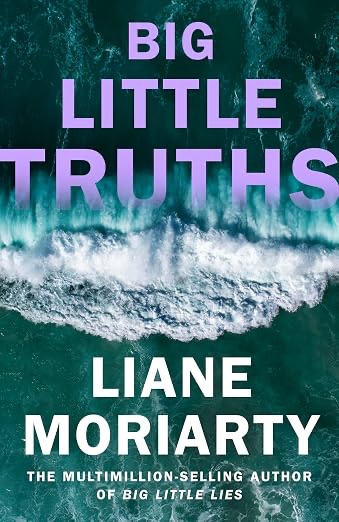
Big Little Truths by Liane Moriarty 

What’s worse than a big little lie? An even bigger little truth . . .

Ten years ago, at the Pirriwee Primary school gates, the friendships of Celeste, Jane and Madeline were forged in the fires of young motherhood, the big little lies we all tell to hide our deepest fears and secrets – and the event that changed everything.

Now mothers to hormonal teens, these frazzled friends are starting to worry about the strangers occupying their kids’ bedrooms. Or they would, if they weren’t so distracted by their own problems.

Because:

Madeline’s landmark birthday is about to land a bombshell.

Jane’s rock-solid marriage is suddenly crumbling.

And Celeste’s mother-in-law is asking awkward questions about the past.

Not to mention the mystery of who sent the school principal a freshly severed finger.

So many difficult little truths.

Such a pity then that not a one of them can see the biggest ugliest truth hiding in their midst . . .

Reading this book felt like catching up with old friends and listening to their latest gossip. It was good to be back in Pirriwee and it’s a testament to the HBO series that I was surprised to be in Australia. The music, casting and setting of the series were so strong that I was seeing Reece Witherspoon and Nicole Kidman as I was reading. The ongoing lives of Madeline, Celeste and Jane are narrated in chapters headed with their names. In between is the transcript of a group counselling session with all the teenagers. All of this must link to a package, sent to the school containing a severed human finger. Their narration has all the hallmarks of life in the dreaded ‘middle’ even though Jane is a little younger than her friends. Their days are taken up with the care of their teenagers and elderly parents, ill health, the question of more children before menopause, big birthday celebrations and a role as mother of the bride for one of our friends. There’s also a cool new teacher at the school who’s keen to make friends. Underlying this are the events of the previous novel – the trauma of domestic violence for Celeste and the loss of Perry her husband, the discovery that Jane had a non-consensual experience with Perry resulting in the birth of her son Ziggy, and Perry’s ‘accidental’ death at a fancy dress party. Bonnie, the wife of Madeleine’s ex-husband Nathan is processing the trauma of pushing Perry to his eventual death and both she and Renata have larger roles in this follow up. 

Our new storylines are the growing presence and confusion of Celeste’s mother-in-law Mary Louise, who is both monstrous and hilarious at the same time. Celeste has to cope with Mary-Louise’s perception of Perry as her golden boy and her perception of Bonnie as a murderer. In a co-hort of liberal and correct women, her loose canon approach is hilarious at times. However she’s in danger of ruining her twin grandsons and turning them into their father. On a more positive note she treats Jane’s son Ziggy equally and insists on spending time with all three, much to Jane’s anxiety. Jane is coping with Perry’s ever widening circle of victims as the consequences of his actions affect her marriage and Tom in particular. Celeste is worried that Mary-Louise is being unusually spontaneous, erratic and forgetful. The fear of being responsible for a woman she never bonded with is always in the back of her mind. Madeline is turning 50, but instead of all eyes being on her the limelight is stolen by her eldest daughter and the ‘perfect boyfriend’ when he decides to publicly propose. Madeleine is just waiting for the cracks to show in this seemingly faultless young man, but soon planning for the wedding falls to the wayside as she finds a lump in her breast and needs to undergo diagnostic procedures. Facing her mortality and waiting for her test results has Madeline on a very thin rope, however it’s a bombshell from husband Ed that really brings life to a crashing halt. It. was interesting to see Madeline actually lose some of her famous composure and with very good reason.

The peripheral characters are also back and with a little bit more space to grow, something the author has deliberately done after watching actress Laura Dern turn the small role of Renata into something really interesting. Now she’s in the centre of the group more and I really enjoyed her ballsy choices and independent spirit, such as taking motorcycle lessons. She’s also a lot more astute than the others give her credit for, calmly sitting back and reading people perfectly. Bonnie has always felt underused in the first novel, now we focus on her a little more as she continues to process the trauma of Perry’s death and struggles to communicate with her daughter. Then there’s new woman in town and everyone’s favourite teacher, Melody, who is soon at Tom’s morning boot camp and gravitating towards the friends. She’s a good listener and brilliant at giving women permission to focus on their own needs between all the demands on our time. The freedom Jane feels when she’s taken to a club spontaneously and just lets loose is so lovely to see. The rather magical weekend away she organises is another hit, allowing Madeline to open up about struggles she’s having. Melody starts to feel like a fairy godmother and as the women welcome her into their friendship group, their teenagers enjoy her approach to teaching and she looks like a welcome addition to their community. There’s a new principle too and Celeste meets a man called Marco who has also just moved to Piriwee and is pleasantly surprised to feel that tingle of excitement when meeting someone who has romantic potential.  

So when a severed finger arrives at school addressed to the new principal rumours start to fly. A particularly worrying one for the parents is their kids casual joke about a ‘paedo’ middle aged man hanging around and asking questions about the school. Another rumour involves a mob boss who has the reputation for sending body parts through the mail when displeased, but who is his intended target? This central mystery meanders along through their busy lives. As before this set of parents are trying their best to work together, despite their tangled web of blended families. Jane hates being with Mary Louise, in fact it makes her feel sick, but if it’s the price of Ziggy having a grandmother in his life she will persevere. Maddy tries to work with Bonnie and Nathan, actually turning to her ex-husband for help when she realises that she’s overwhelmed. I felt so much for Jane and her experience of giving birth to the child of a man who has assaulted her. She finally shares something about Ziggy’s birth that I really identified with and found very emotional. The only jarring note in the whole narrative was the transcript of the teenagers who seem to be super intelligent and articulate compared with teenagers I know. They felt way more sophisticated (and rich) than me. I did have some inkling of the central mystery but it didn’t detract from my enjoyment at all. I’d feared I might be let down by this sequel but it definitely lived up to the first novel and the TV series. It still had that difficult to describe magic that makes you want to read it all in one go and I pretty much did. 

Out now from Michael Joseph

Meet the Author

Liane Moriarty is the Australian author of nine internationally best-selling novels: Three Wishes, The Last Anniversary, What Alice Forgot, The Hypnotist’s Love Story, Nine Perfect Strangers and the number one New York Times bestsellers: The Husband’s Secret, Big Little Lies, Truly Madly Guilty and Apples Never Fall. Her books have been translated into over forty languages and sold more than 20 million copies.

Big Little Lies, Nine Perfect Strangers and Apples Never Fall were adapted into popular television series with the star-studded casts including Nicole Kidman, Reese Witherspoon, Melissa McCarthy and Annette Bening.

Liane lives in Sydney, Australia, together with her husband, son and daughter.

Posted in Monthly Wrap Up

Best Reads September 2026

I have genuinely struggled to read this month and I’m relieved to be at the end of it and taking a much needed break. My home is in chaos because one of the cats is seriously injured, so keeping him safe and indoors while allowing the others to roam normally is difficult. If I separate Max from Dolly he gets very vocal and upset, but if we let him free to see her we have to block off the cat flap. The girls have started to tap at the window when they went to come in, but why is it always when I have my lap tray on my knee? It’s like they can sense me writing or doing my embroidery and want to cause maximum disruption, my lap is then free for cat cuddles of course. Minka is very outdoorsy and has taken over catching vermin, something Max is famous for. Max really wants to be out but although he’s healing he’s not ready yet. The bones seem to be healing well but the muscles and ligaments need plenty of rest yet. He broke his hip joint and his pelvis in several places then in the sacral area his ligaments had become detached leaving the spine separated from the pelvis. He’s walking now and looking a lot more like his old self, just with a slightly twisted walk. My dad has been struggling with his health meanwhile mum is trying to look after him as best she can as well as spending time with grandma who died last week at the age of 93. I sat down on the last day of September to write reviews but I couldn’t think straight. My head felt like a huge ball of chaos and I get weird neurological symptoms when I’m tired or overloaded. I took Max for his anti-inflammatory injections and the vet stopped and fetched me a chair. Apparently I was rocking as if I was about to faint. I’d gone white and when I took my glasses off my pupils were moving back and forth making me feel dizzy. I’ve read way more books than the four above but haven’t typed up my reviews as I’ve found it easier to use a pen and my reading journal so there are lots more reviews and snippets of my own writing coming soon.

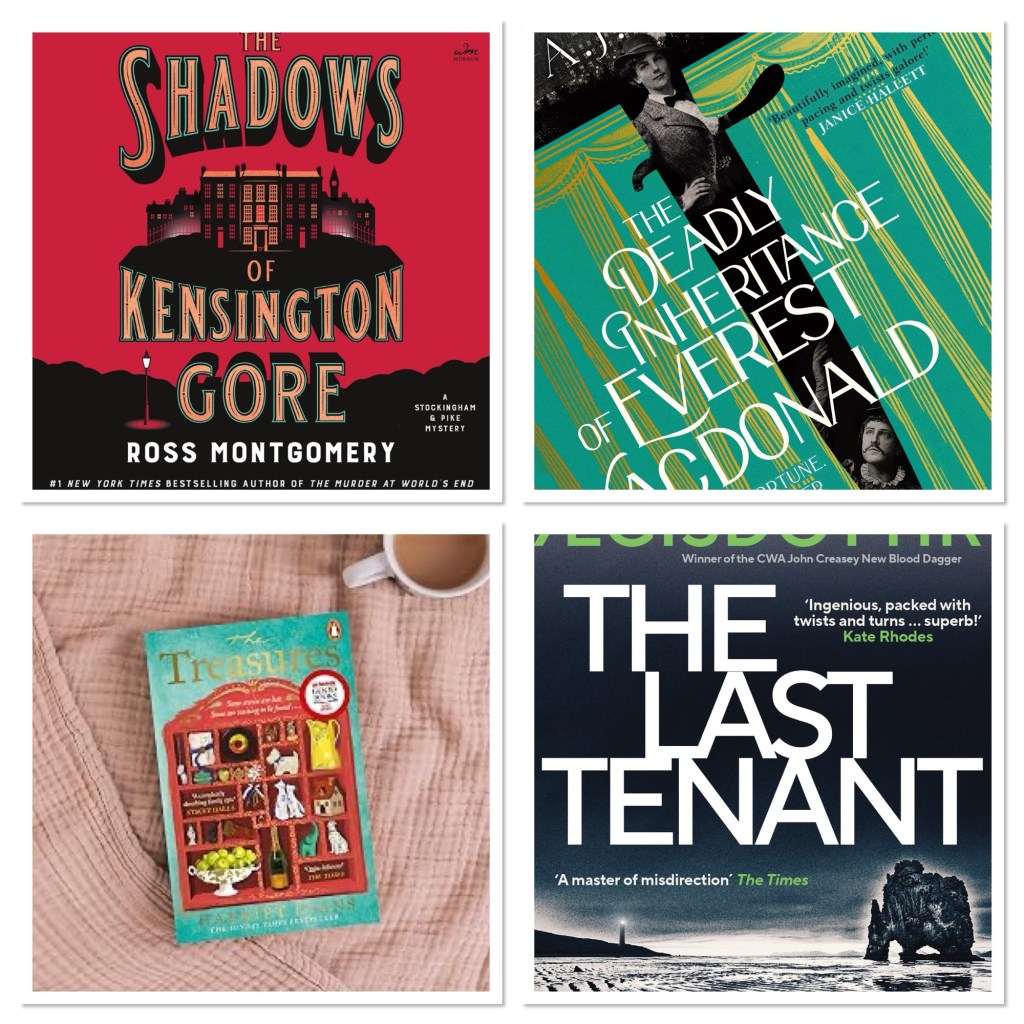
This historical murder mystery by the author of last year’s smash hit The Betrayal of Thomas True, A.J. West. You may have seen him on Insta travelling around book stores with his worldly belongings in a camper van. I’m not going to give you my review because it’s due on a blog tour this month, but I’ll give you a preview and some background. We’re drawn into the story of Thomas Lewin and his brother William who went to the Chittagong hills in India. Thomas was a tool of empire but as far as English dignitaries go he did make some effort to speak to local chiefs in their dialect and kept local customs. He also had a relationship with a local woman called Dari who was referred to as the ‘wife’ of the great Thangliana. Everest is his daughter, drawn into the murder of her Uncle William who was killed thirty years after their return from India while acting in the West End. Everest isn’t sure about the murder, or the man kept in Broadmoor for committing it, especially when her father kept telling her about a curse. A.J.West has taken the historical details and written a great murder mystery with gothic and mystical elements and a very forthright female investigator. I fell in love with the journal entries that cover this family’s adventurous lives and particularly one written from the perspective of William’s wife Isabel who I was captivated by. It’s also incredibly witty and packed with colourful characters. Look out for my full review coming soon.

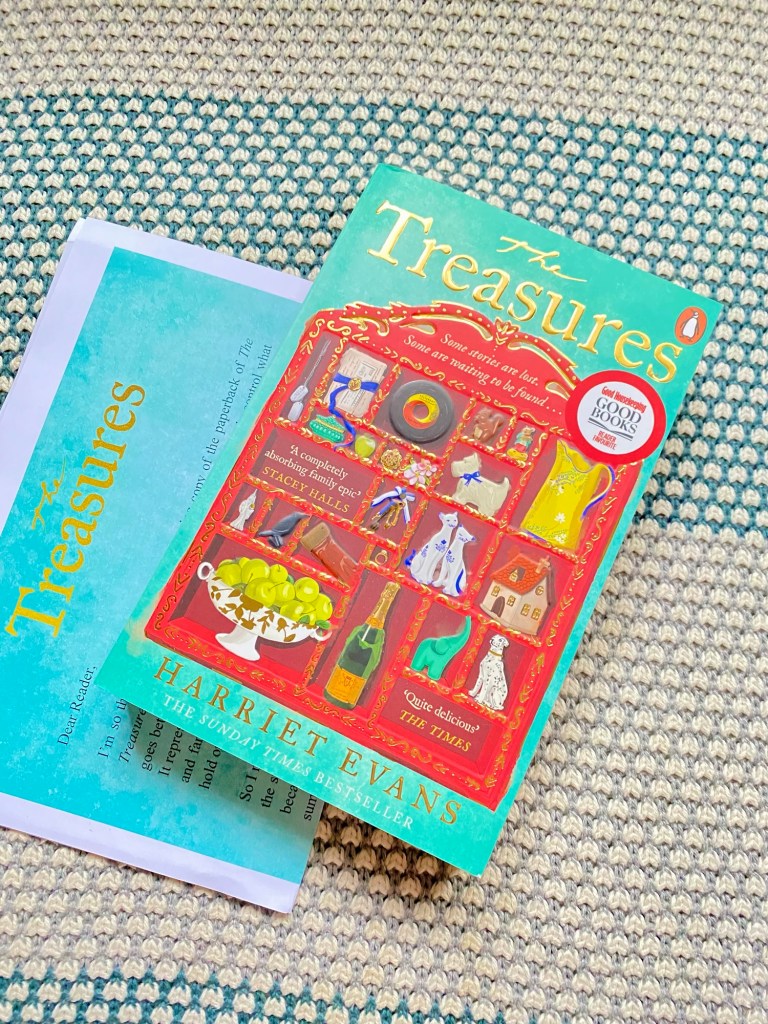
One golden summer. One missing treasure. And a secret that binds two lives together. 

Every year, Alice’s father gives her a treasure. Then on the morning of her sixteenth birthday, her final gift vanishes – along with the fragile certainty of her world. Alice runs, towards New York City and away from the memories of that last summer at the orchard where she grew up. Across the Atlantic, Tom has always felt that something is missing from his life. When he finds a long-forgotten letter, it leads him away from Sevenstones – the house at the heart of his family for generations – and towards a truth no one has ever fully told. From post-war London to 1960s New York, Alice and Tom’s stories become entwined. But will the secrets of their past bring them together, or break them apart?

I always think that the good marker of a book is when you find yourself thinking about it days later and this book brought up so many feelings! While we start with Alice’s devastating story of her early years, it was Tom’s narrative where the book came alive for me, with his early life in Dumfries and Galloway only a stone’s throw from my favourite yearly holiday destination. The descriptions are so vivid, from the hand to mouth existence of Tom and his father, their total connection with the seasons and each other. To be torn from all of that and transported to post-war London by his mother’s family feels so unjust. As Tom deals with new expectations, the fractured feel of the city and its bomb sites, we start to sense a secret behind all of this, only hinted at and never made clear to Tom. A promise was made in wartime, one that couldn’t be broken and has it’s roots in a house called Sevenstones where a key was left under a stone at the door for anyone who needed an interlude from their wartime duties. It’s a secret that follows Tom throughout his years at school and eventually across the Atlantic. Each section of this book is so evocative of its time and place and it is such an incredible example of how trauma is passed down through families. It made me think about world events that have affected previous generations of my family and why they made the decisions they did for their children.

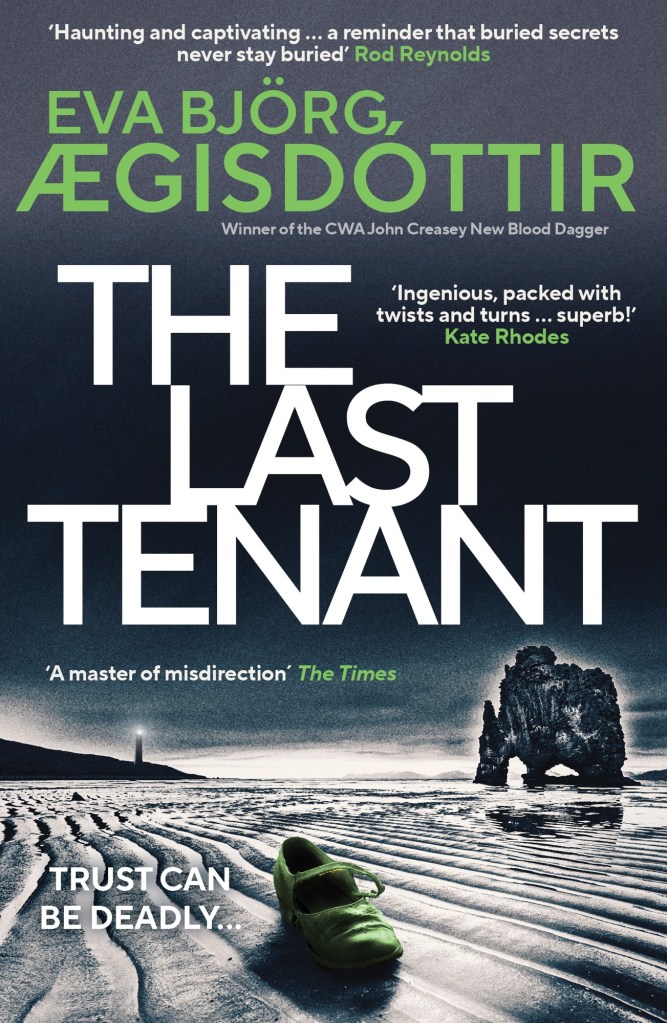
When the skeletons of a young woman and a baby are uncovered on a long-abandoned farm in Hvalfjörður, it is clear they were buried years apart. West Iceland CID begins to investigate the disturbing discovery, aware that someone has gone to great lengths to keep the past hidden. In Akranes, Karitas, a young single mother seeking a new start, settles in with her four-year-old son and rents a basement flat from an eccentric landlord. A cautious sense of happiness returns when she meets the boy next door. But when news breaks that a local girl has been murdered, Karitas must decide who she can trust, knowing that one wrong choice could place her and her child in danger. Detective Elma is drawn into the case, forced to navigate long-hidden family secrets to understand a killer’s motive, while trying to hold together her increasingly troubled relationship with Sævar.

Wow I love this series and at the sixth book in it just gets better and better. These cases are never tidy. There’s always something that doesn’t quite fit or can’t be explained. I imagine this is the norm in real life police work, but often detective fiction is way too cleanly tidied away. Here someone always knows more than they’re willing to say or are more involved than you imagined. Then there’s the burden of proof needed for a conviction. Then there’s how everyone in Akranes is interlinked and having grown up in a small rural town I can see how it’s easy to think we know everything about another person. The truth is that we rarely see the full picture, just our part of it coloured by our own experience. Even within families there are things people know but no one talks about, there are different versions of the family history, things we’re open about and things we bury. Even so, how far would we go to protect those we love, especially our children? Throughout this series the people of Akranes are like a wider family, burying each other’s crimes and collectively forgetting the truth. The impact of one generation’s choices affecting the next. This is the scariest truth about monsters, they don’t look like storybook monsters, they can come out in daylight and ‘on the surface they’re just like ordinary people.’ This is a dark psychological thriller, full of atmosphere and a detective who always digs deep into her cases, even when it makes her personal life uncomfortable.

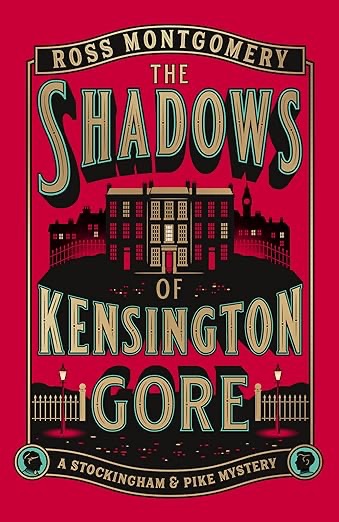
London, 1911. Coronation fever. Suffragette unrest. A city crackling with tension.

When a policeman is found brutally murdered on the streets of Kensington, blame falls on the three women seen fleeing the scene. Their sole witness? Stephen Pike: ex-borstal boy, under-butler extraordinaire and assistant to the most unconventional detective in London, Miss Decima Stockingham. Sharp-tongued, fearless and bored of behaving herself, she’s the only one able to see that this case is not what it seems.

Aided by an invisible network of maids – their eyes and ears in every house in London – this unlikely duo must catch the killer before time runs out. But in a city dazzled by ceremony and divided by change, you never know what might be lurking in the shadows…

It’s impossible for me to start this review without declaring my undying devotion to Miss Decima Stockingham who intelligent, entitled, sweary and short-tempered. On meeting her long-suffering servant Stephen Pike, other servants from the apartments that line Kensington Gore commiserate that at least he isn’t indentured to the mad old cow in 89C. He doesn’t correct them because largely their only impression of this woman is her morning bellow for her egg and her propensity to fling books out of the window until it arrives: 

“I was under the impression that boiling an egg was a quick job, but apparently you’re rearing the chicken by hand and fetching the water from fucking Spain.” 

Underneath this exterior is a sharp-witted woman who doesn’t mind appearing contrary and rude if it gets her the results she needs or the information she’s seeking. This character is begging for a TV series and Olivia Coleman. Her foil is Stephen Pike, driven to distraction by her demands and her willingness to place him in dangerous situations. He’s equally comic, mainly physically, in one scene he’s lured to a union meeting at the pub which soon descends into an evening of rounds, a drunken football match, injury and a hefty hangover. He may seem ordinary to the untrained eye but Miss Decima can see a sharp intelligence, observational skill and an ability to put a pattern together that makes them a formidable team. We meet them just before the coronation of George V and Queen Mary is just around the corner. The suffragettes are ramping up their civil disobedience and taking direct action to gain the vote. The author uses this backdrop for the labyrinthine murder mystery our mismatched pair are investigating. I loved the mix of comedy, suspense and action in this second book in the series and I’m now dying to read the first.

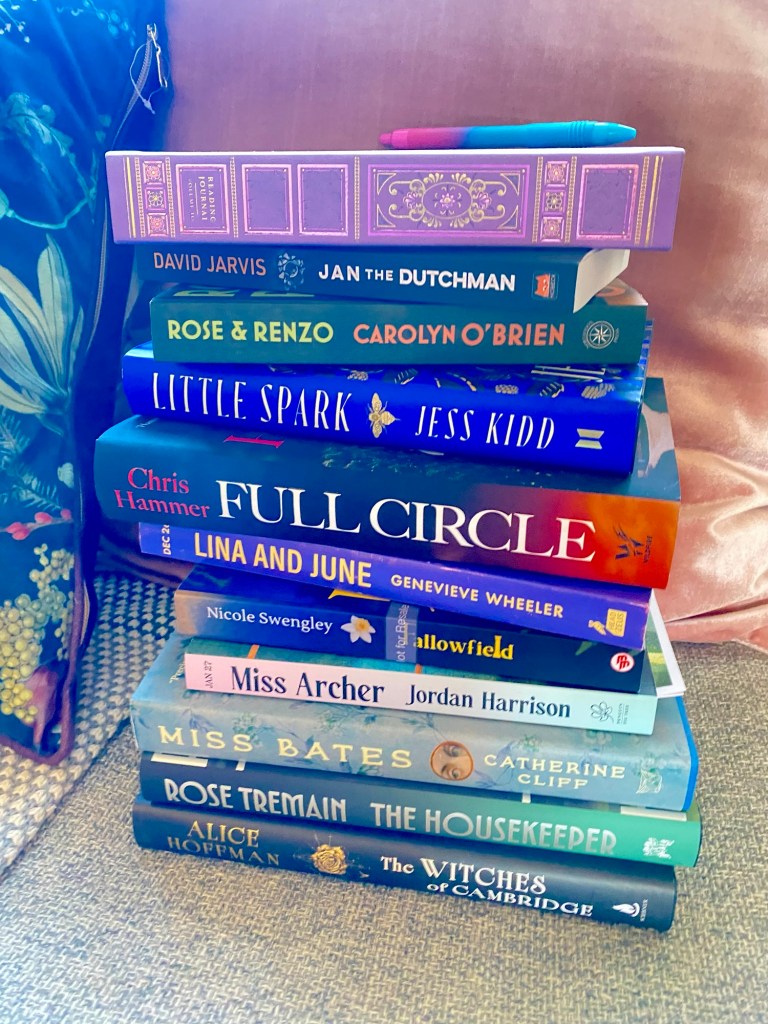
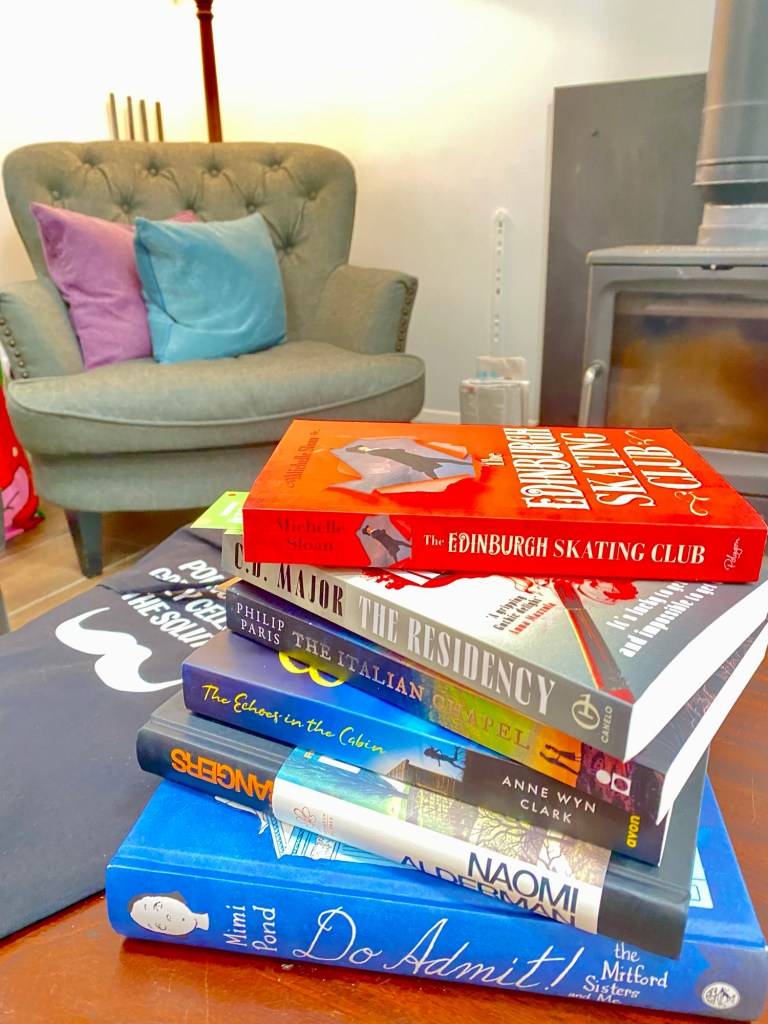
Below is my October tbr stack.

Posted in Film Adaptations

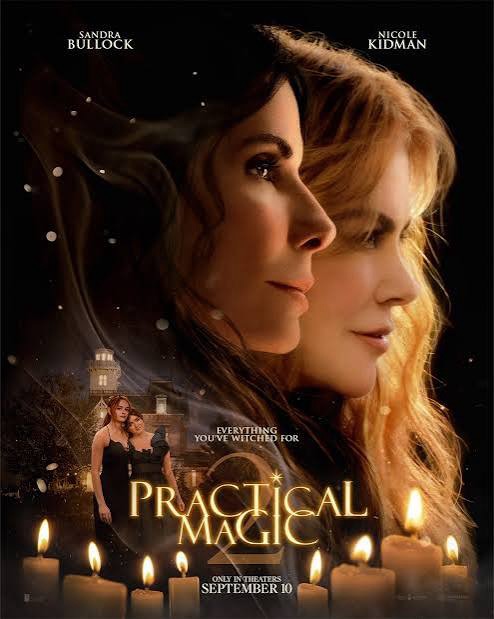
Practical Magic 2 

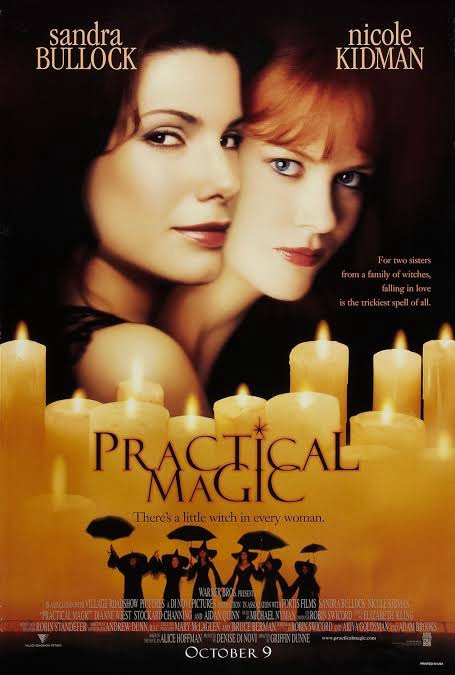
As all my readers know by know I’m a huge fan of Alice Hoffman, since the early 2000s when I first read Skylight  Confession. I then tore through her entire back catalogue and fell in love with her mix of magic realism, the north east United States and moments from history. I hadn’t realised she was the original author of Practical Magic, the 1998 film starring Sandra Bullock and Nicole Kidman as the Owens sisters, Gillian and Sally. Sally, the more sensible sister has her life disrupted when Gillian turns up in her life, as always bringing trouble behind her. However, it’s only in recent years that she’s revisited the Owen’s family, going back to their origins in the UK with Magic Lessons. This is the first book chronologically, starting in the 1600s when wise woman Hannah Owens finds a baby abandoned in a snowy field. She brings Maria up as her daughter, passing on her wisdom and plant knowledge to benefit the women who arrive at night looking for their help. Maria soon has her own familiar and when Hannah is taken and burned as a witch she flees England for the Caribbean and then Massachusetts USA in pursuit of the lover who lies and breaks her heart. It is Maria who intends to create a protection spell for the women in her family, keeping them safe from heartbreak. The spell becomes a curse that every Owens descendant has to face: they fall in love their lover will die. 

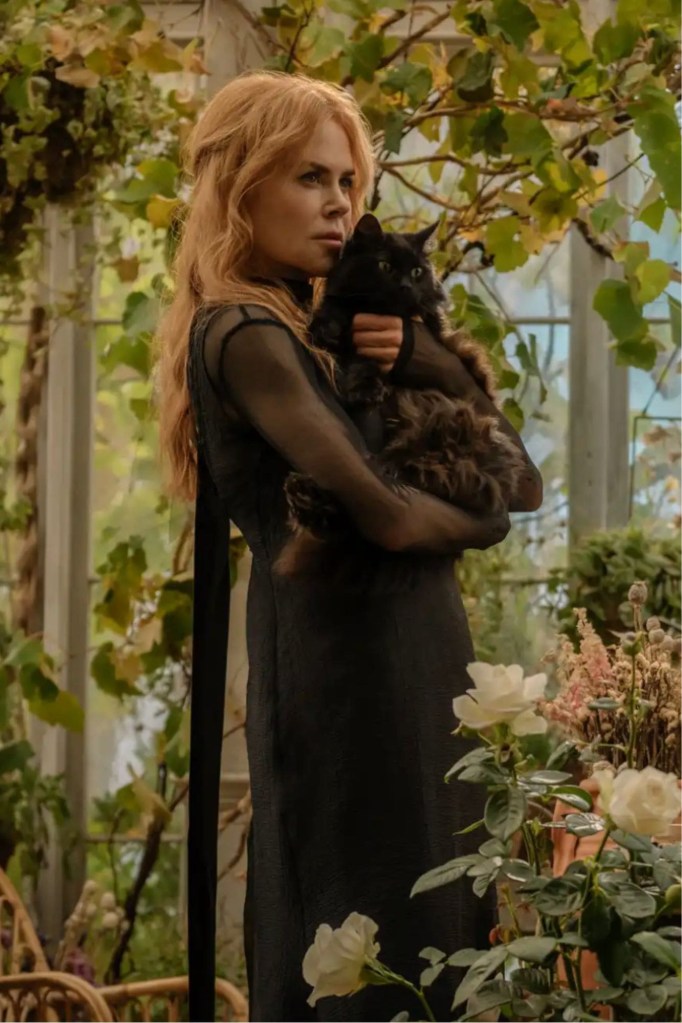
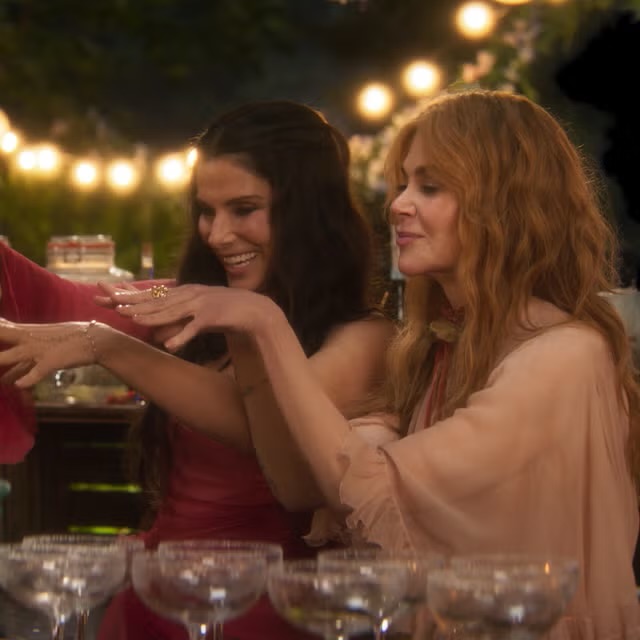
I went to see the film Practical Magic 2 last week, starring the original actresses as Sally and Gillian, plus Stockard Channing and Dianne Wiest as the aunts who brought them up – Frannie and Jet. The younger generation are Sally’s daughters Antonia played by Game of Thrones Maisie Williams and Kylie played by Joey King. Once I got over the shock that Nicole Kidman and Sandra Bullock look younger than they did in 1998, I began to enjoy the film. It’s based mainly on the third book in the series – The Book of Magic but does allude to Maria Owens too. Gillian’s daughter Kylie is falling in love, knowing nothing of the curse that hangs over their family. Gillian wanted to bring up girls free from their heritage as witches, even though women do still queue up at the door for their help. Sally has been against this decision, keeping her promise to her sister while worrying that this secret will only bring trouble. Unbeknownst to Sally, Kylie is slowly falling in love with Gideon at university oblivious to how dangerous her emotions can be. Meanwhile Aunt Jet has heard the death watch beetle clicking all over the house and knows her time is close. Before she dies she wants to use the book of magic to free the younger generations from the protection spell that has become a curse. As tragedy strikes and Gideon’s life hangs in the balance, Kylie takes the book of magic and makes her way to England hoping to find someone who can help her break the curse. 

The film has all the charm of Practical Magic and some emotional moments as Sally battles to save her daughter using the magic she’s kept from them all these years. Gillian is right by her side as they follow Kylie to England, leaving Aunt Frannie and Antonia to look after Gideon in hospital. There are some comic moments, mainly based in the difference between the sisters. Gillian is much freer than Sally, shown in short scenes like the one as they leave for England with Sally’s only luggage being a small weekend bag and Gillian’s comically large suitcases having to be lugged up and down many flights of stairs. The casting of the men in the film is very good, particularly the magic professor Ian Wright, played by Lee Pace with a quiet intensity and the chemistry between him and Sandra Bullock is off the charts. We’re introduced to him as the sisters blunder their way into his third floor flat (with all their suitcases) only to find him naked on his bed paralysed by magic. Sally covers as much of his body as she can while performing the magic to break this powerful spell. Meanwhile Gillian is quite happy to enjoy the view and tease her sister at the same time. One he’s awake he can’t believe the famous Owens sisters are in front of him and helps them to follow Kylie on her journey to their heritage, the small village where Hannah Owens was burned. There’s magic, loss, romance and laughs along the way with the sacrifice that needs to be made to save Gideon especially emotional. Films are almost never better than the book and this one isn’t, but it’s a fair adaptation of Practical Magic’s two prequels and definitely keeps the charm of the original film. I recommend the books wholeheartedly and it seems they’re doing a film tie-in repackaging The Book of Magic to match the film. If you want an easy, engaging night at the cinema then this is definitely a good girl’s night film. As always with this family I came an away wishing I was an Owens, even if it’s just to live in their incredible house!