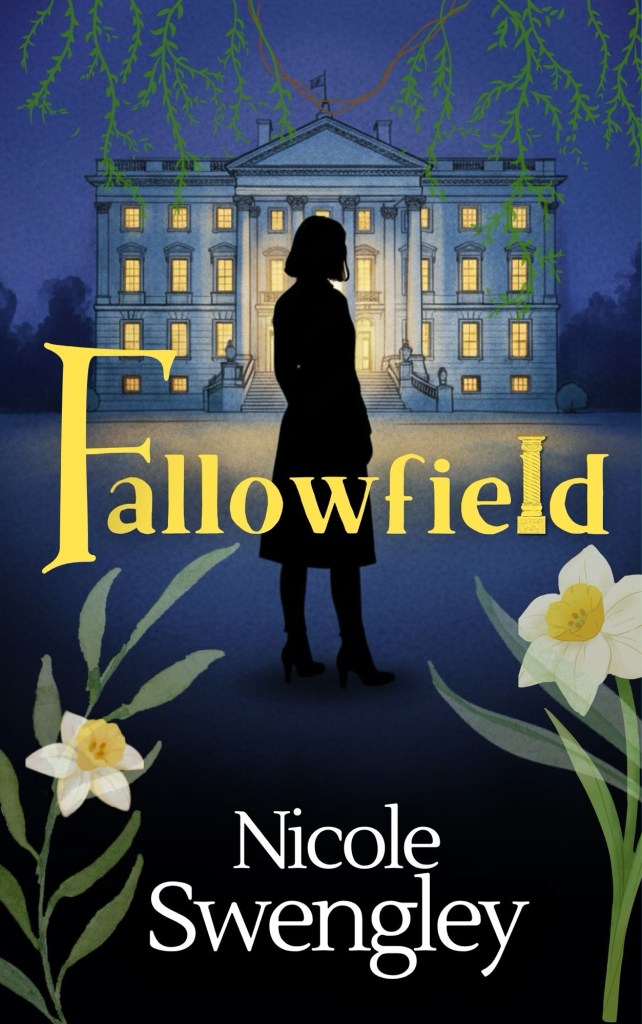
Fallowfield Hall: once an avant garde art college, now abandoned and decaying. To journalist Rowan Woodhouse it is the fabled backdrop to her parents’ 1970s love story. But is there more to Fallowfield – and her family – to uncover?
Seeking solace after the loss of her artist-teacher father, Rowan accepts a research project to interview college alumni, hoping this may reveal more about him – and her enigmatic mother who died tragically young.
But Rowan soon discovers that Fallowfield had a darker side than hedonistic student life and idyllic picnics on its famous daffodil lawns. Jealousies, betrayals and rivalries emerge when she learns of the mysterious death of one young woman and the unsolved disappearance of another. As part and present become dangerously intertwined, how will the suspicions sparked by her investigations impact Rowan’s own troubled life?
I was immediately intrigued by this story that uncovers life at a progressive art school called Fallowfield, where journalist Rowan Woodhouse’s parents met in the 1970s. The opportunity to contact alumni from her parent’s years at the college has a personal benefit, to find out more about her parent’s relationship. However, she finds a surprising amount aren’t keen on talking about their student days, with some coming across as rude on her first phone call. Where people do engage with the project the author has cleverly created different perspectives of the same time, showing that while people might be in the same place they haven’t always had the same experience. This is usually because everything in life is experienced through our own filter, formed by our personality traits, learned behaviours, past experiences and general outlook Time also affects memories, causing events to be distorted, bundled together and confused. We each create a narrative of our past, but how do our friends and family see those same events? Previous student Patrick remembers his college days as living in a hazy bubble but recommends she talks to Maksym, a rival of her father’s who might remember it differently. Of course there’s also the possibility that people are lying, bringing a more sinister edge to the story and inspiring Rowan to dig further. Parts of the mystery are only revealed as Rowan uncovers them so we experience her emotions in the moment. It’s a slow- burn read and I enjoyed the chance to really understand the characters and Rowan’s complex emotions as she moves through people’s hazy memories and her father’s memorabilia and sketchbooks.
I thought the passage of time – can it really be over fifty years – played an interesting part, because the world has changed so much in that time. In the same way ideas about childhood developed during the Victorian period and into the 20th Century our views on teenagers and young people has changed. I feel like we’ve extended the protection and care we give to a child to this older age group. We’re more aware that they might need support with decisions and that they’re more open to exploitation. This comes from psychological research but also from the decision to extend school or training to the age of eighteen. Added to that is an extended time living at home for many young people thanks to the cost of living crisis and rising rents. The #MeToo movement has made us more aware of inappropriate relationships and power imbalances so behaviour that was perhaps frowned upon in the late 20th Century is an absolute ‘no no’ for today’s students and tutors. The criminalisation of coercive control and emotional abuse has finally made people realise that intimate partner abuse isn’t just physical and young people are vulnerable to manipulation and grooming. Rowan realises that her father’s romantic stories about how he met her mother Annie at Fallowfield could be viewed differently now. Nick had been a student at the college before returning as a lecturer and as Annie’s tutor he knew their relationship was against the college’s rules but they still continued to see each other. Now her father has died Rowan has been visiting his country cottage as an escape from her London home. She’s surprised to find newspaper articles in her father’s things about a student who went missing and a tutor’s girlfriend from around Fallowfield who was found dead during her parent’s time there. Could these articles contain the big secret behind the alumni’s reluctance to reminisce and what part do her parents play in the events of that time?
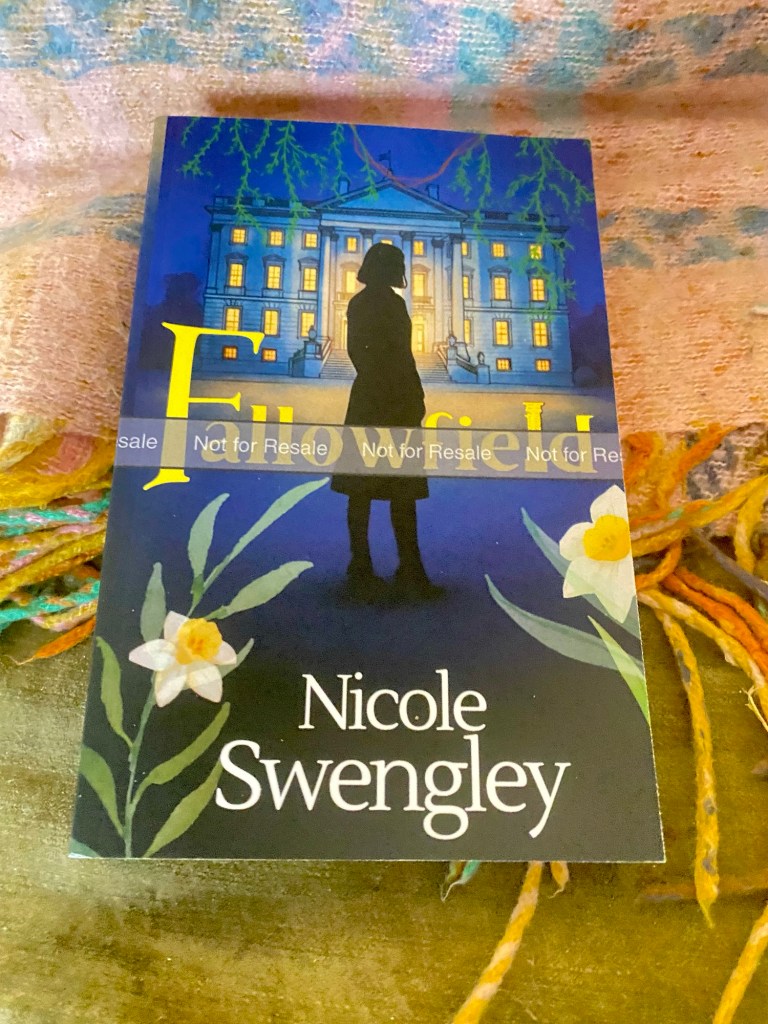
I’m fascinated by artists and the art world and I learned a lot about a genre I’d never come across before. Rowan’s father painted within the Good Girl genre – an illustrative style often used for comics, book covers and erotic art. It’s glamorous women in tight or skimpy clothing and had been around for a few decades before Nick was a student. Rowan didn’t seem keen on her father’s style, branding it as trashy although she did listen as he showed her why his women were different from the more exploitative side of the style. I still wondered if there was a link between the representation of women in his art and his behaviour? It’s clear a toxic atmosphere was brewing at the college, an interesting contrast between the idyllic setting at Fallowfield which was a secluded country estate. Not many painters become household names and an atmosphere of determination and competition thrived between this group. It’s clear some will let nothing stand in the way of their success, creating dangerous situations. After the events in the articles and the summer ball Fallowfield was closed suddenly leaving students struggling to find other courses. The governing committee felt the scandal was too great for the college to continue in its current form. Alongside Rowan we’re starting to understand the rather permissive regime at Fallowfield, with drinking, drug-taking and free love. A woman called Zizi is part of the art college’s social scene but lived in a hippy community camping in a nearby field. Is she the one described in the newspapers as the girlfriend of a tutor? Could her father have been seeing this woman at the same time as her mother?
The most fascinating part of the story from a psychological perspective is how her parent’s ‘perfect’ love story seemingly prevented Rowan from forming loving and functional relationships as an adult. She sees Nick and Annie through a romantic lens, mainly due to Nick reinforcing the story throughout her life and after Annie’s death. All families have their own myths and this one was so strong she’s measured every relationship next to it and none have made the grade. She met current boyfriend Doug in a work capacity with Doug providing the photographs to her features on an assignment. It seems that he is often absent and while this is normal for someone who works freelance, when present in body he often isn’t in mind. Rowan seems a bit lost in terms of how he feels and where he sees their relationship going and is reluctant to invite him to her father’s cottage. She cooks him a dinner from scratch before leaving but he’s incredibly late and when she does get in touch he’s tired and wants to stay home, with no apology for wasting her time. I wondered if her feeling that she came second to her mother in her father’s affections had led to her repeating the pattern with emotionally unavailable partners. I found her a little bit childlike in her acceptance of her parent’s great love story. It’s something we often re-evaluate as we get older, especially when we start having our own relationships. As she starts to uncover student stories of drinking, drug-taking and multiple lovers she seems surprised and I wondered what sort of student experience she had because I would have expected it. It’s a jolt for her to realise Nick and Annie weren’t perfectly romantic and had their problems. I wondered whether her mother would have categorised their relationship differently had she lived longer? Rowan has to face that maybe she’d let people go who could have been a great partner. Being performatively romantic like Nick isn’t everyone’s style and verbal, public declarations of love often cover up a multitude of secrets.
The anniversary celebration is to be held at Fallowfield’s original site, now a resort hotel owned by another alumni student. Everyone, apart from her father, will be present in the same place as the events of that final summer. The tension really kicked in at this point and I wondered if Rowan was placing herself in danger. Can this event be the catalyst to breaking through all the confusion and lies to finally see the truth? Through each of these characters we can see a stark contrast between the self- fulfilment of using your artistic talent and the dangerous and competitive scramble towards fame and success. Often incredibly talented people also have huge egos and narcissistic traits, a combination that could become deadly when their ego is bruised. I had so many questions at this point. I was intrigued by sculptor Maksym’s suggestion that he provided a service for Rowan’s father. I wanted to know whether it was true that Nick was seeing other women as well as Annie. Could being at the original college for an event like that final summer ball bring up new memories for the students? Rowan’s research had thrown up some disturbing truths in my mind and I was happy and satisfied by the ending. I wondered how the truth would impact Rowan’s life going forward. I was strongly reminded of the opening to L.P. Hartley’s The Go- Between – ‘the past is a foreign country: they do things differently there’.
Out now from Breakthrough Books
Meet the Author

Nicole Swengley is an author and journalist who has written for the Financial Times, the Telegraph, The Times, Wall Street Journal, London Evening Standard and many other publications. Her short stories have featured in women’s magazines, a crime anthology and themed anthologies from Breakthrough Books. A past student of Faber Academy, one of her stories was shortlisted in a national TV/magazine competition some years ago. Her debut novel, The Portrait Girl, was published in 2024. Fallowfield is her second, standalone, art-and-design inspired mystery.