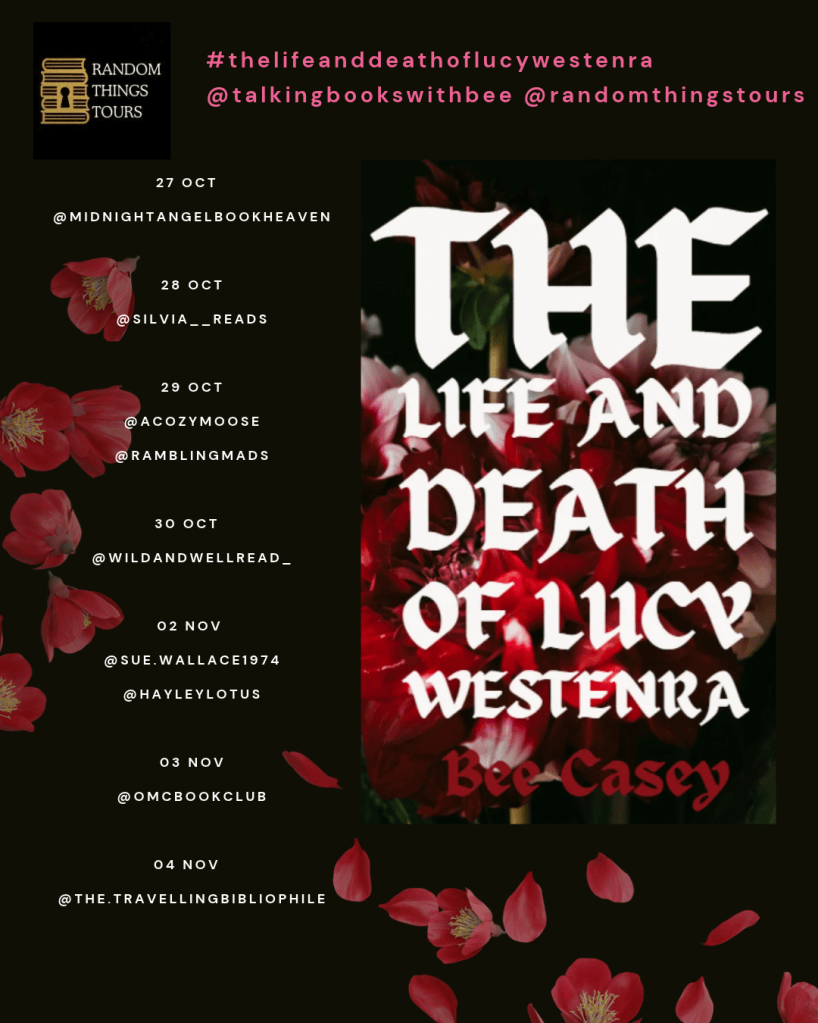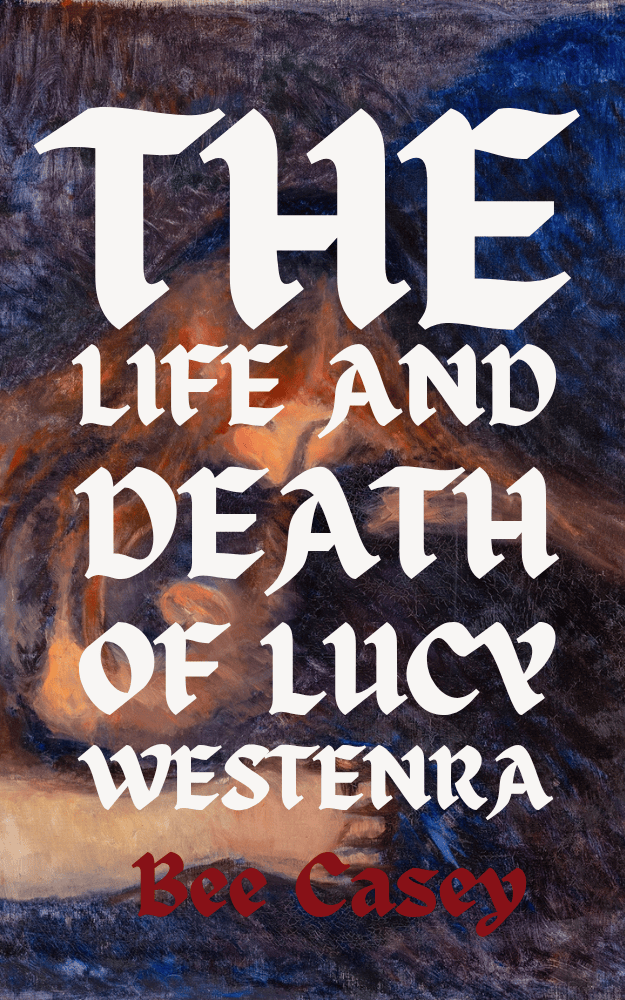
“In this moment, I pray for time to stop. If I could just stay here, listening to her breathing I would never ask for anything else. In her arms, I’d happily spend forever … but she always lets go.”
When Lucy Westenra met the mysterious vampire, Count Dracula, the world believed she died. But that is the story of men, not the truth.
Lucy was desperate to escape her life, her betrothal to Lord Holmwood, her forbidden love for Mina and ran away into the night willingly. Her death though, is being threatened by a rogue band of vampire hunters made of Van Helsing, her ex suitors … and her beloved Mina.
She will have to risk everything to finally rest in peace; including the love of her life. In this sapphic reimagining of a classic gothic tale, Lucy rewrites her own story as a master of her own fate, her own desire and her own death.
I have always had a bee in my bonnet about Lucy Westenra. I didn’t read Dracula until university in my late twenties but prior to that was spellbound by 1990s it girl/actress Sadie Frost and her depiction of this sexy and sassy Victorian woman with three suitors and a thirst for blood. I felt like she got a raw deal. Especially when Jonathon Harker was seduced by three brides of Dracula, but still got the girl, once he’d rescued her from the Count’s clutches of course. When I read the book in both my first and second years of uni I became more aware of the psychosexual elements in the novel and even did a presentation on Sex and Death in Dracula where I talked about the homoerotic elements of Lucy’s suitors, the tainted blood as a metaphor for disease and how Lucy is trapped by her class, her gender and her sexuality. As a mature student it seemed unexpected and I earned the respect of some neo-goths that day. This is the book I’ve been waiting for and I thoroughly enjoyed it. I felt like it righted a wrong and gave life to a character I enjoyed but who had been written as a walking warning, both to her friend Mina and Victorian readers.
Bee Casey’s Lucy is a delight. She’s beautiful and vivacious, but also intelligent and radical, not afraid of questioning the status quo. Even when it might shock. She mentions that Mina brought her a new piece of clothing called culottes that she felt more free wearing than her usual skirts. She also thinks about the whispering she’s heard of women who seemingly live together, like a married couple. One of them sometimes wears masculine dress like a suit. But these are whispers and she’s never heard of this in Whitby, making the joke that even the Queen can’t imagine such relationships exist. However Lucy knows better and realises people are only viewing sexual pleasure through a male viewpoint and even her own mother has warned her it’s largely disappointing for the woman. She has known the sexual pleasure between two women and she knows she’s in love with her friend Mina. Why can’t they live their lives together, instead of becoming married to the men in their lives? Mina though sees their relationship as girlish experimentation, but something that can’t exist out in the open. When they encounter a strange ship that runs aground in the Whitby harbour, Lucy is mesmerised by it. What follows is like a sickness and those around her are desperately worried for her sanity and her life.
The author has followed the story of Dracula, but writes from Lucy’s perspective with letters bringing other events into the story, such as Jonathon Harker’s visit to the Carpathian Mountains. This keeps everything focused on our heroine. Her nocturnal wanderings and nightmares are viewed as possible hysteria because rest is advised to start with. What they don’t know is that Lucy encountered an unusual woman called Mercy near the abbey and is seduced. Mercy relates the life of a vampire and describes her two ‘sisters’ and the Count as a family. She describes the eternal life of the undead, the freedoms and pleasures of living outside society and it’s easy to see why this would be attractive to Lucy who often bemoans having to choose one person to spend her life with and the expectation that it will be a man and marriage.
“Why I cannot just keep them all. Why do we have to deal with the trappings and expectations of modern marriage. Why must I choose one partner when the world is so large, when people are so complex […] Why must possibility be sacrificed in the name of propriety”.
She likens herself to the mythical examples of Penelope and Persephone. Penelope weaving and waiting for Odysseus to return, keeps delaying suitors in a strategy they don’t even recognise, something Lucy calls a ‘quiet rebellion’. When considering a life and death like Mercy’s she thinks of Persephone living half her life in society and half in Hades. Can there be such a compromise for her? It’s telling to me that Quincey is the only one of her suitors who reads the female authors she suggests and he’s also the first to offer up his blood when Van Helsing insists on a transfusion. He was also the first to propose. He seemed like the better choice to me but as she points out she has a choice but no freedom – “an illusion of free will”. She’s also intelligent enough to realise that the others proposed because Quincey did, more enthralled in the competition with each other than marriage to the real her. She considers whether she’s scared of dying to become undead and ponders that even her name would be erased if she married her choice – Holmwood. Even her gravestone would have his name and she would only be remembered as the wife of Holmwood and not her own self. Of course at first she has no idea what Van Helsing has in store for her interred body. This is a brutal scene in Dracula as all three of her suitors drive a stake through her heart and cut off her head. It feels like a punishment for resisting them and with the phallic stake it also has a corrective element too, driving home that this is what men do to women. But as the men talk, thinking her unconscious, she overhears. This would be a second death. How can she avoid such a brutal fate?
This novel is filled with a tension that comes from us knowing the source material and Lucy’s fate, where as readers we should be glad she has been restored to eternal life by her suitors desecrating her body. I was desperate for there to be a different ending here. The joyous moments happen when she and Mina are together and Lucy truly does light up when she’s around. I was absolutely desperate for a happy ending! This book clearly comes from a love of the Gothic classic, but a frustration with Lucy’s lack of agency and voice throughout. This novel elevates her character beyond the moral warning she becomes in Bram Stoker’s hands. It repositions her as a radical thinker, passionate lover and a critic of the male dominated society she’s brought up in. Exactly where Lucy should be. I’ll leave the final words on men to her.
They ‘have always revealed themselves to be a disappointment, to have some ulterior motive, to enjoy the chase of me, then upon realising my excitement and whimsy is not just an act of seduction attempt to put out the fires of my passion and sedate me to becoming an acceptable bride”.
Out now on Kindle and paperback
Meet the Author
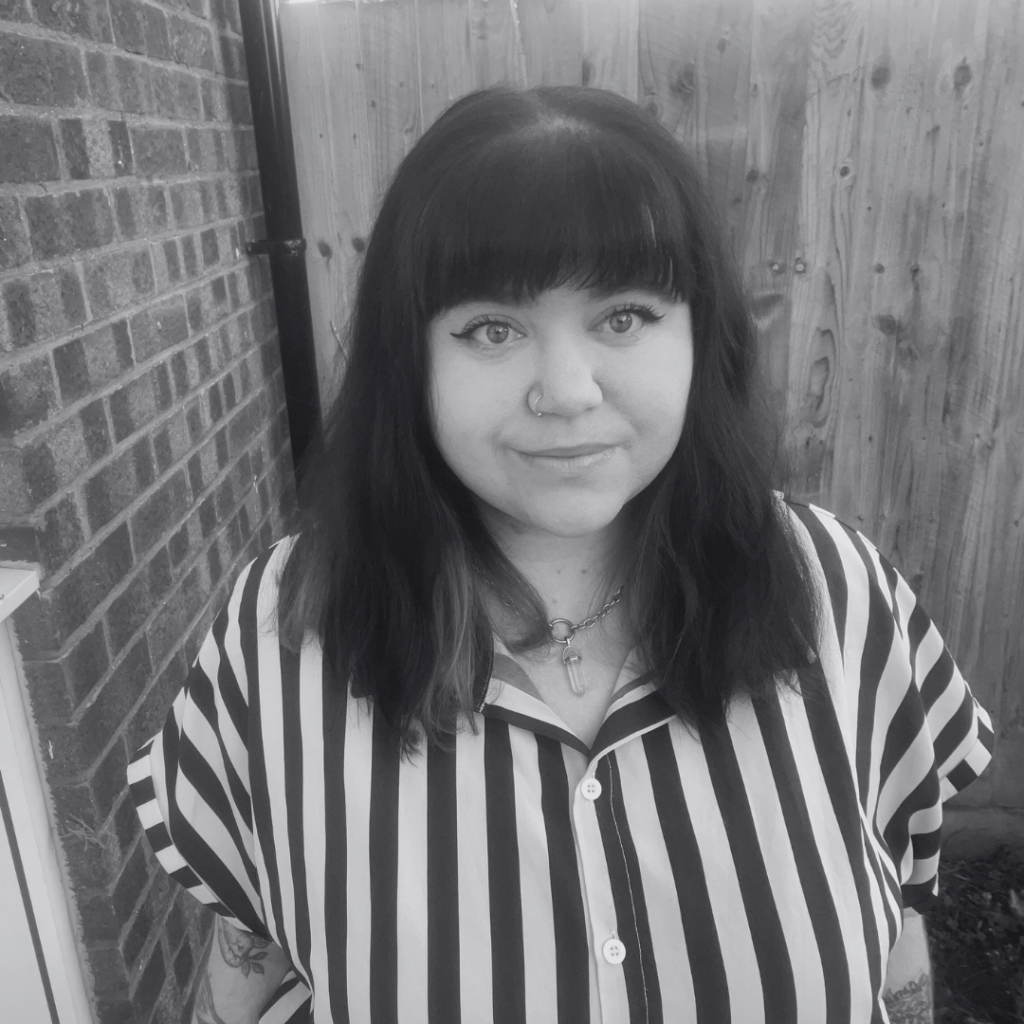
Bee Casey is a writer, book reviewer, copy editor but above all – a book lover. They describe themselves as genre-fluid, because they write whatever inspires them; whether it’s horror, poetry, fantasy or romance. They wrote their first ‘novel’ when they were eight years old, the exciting tales of Desmond the Bear (written in beautiful purple crayon and unfortunately lost to time). They have released two novellas, What If and Constellations, and a poetry collection, Healing in Reverse, available now from most online retailers and select indie stores. Their next release is set for early 2027. When not writing, they are also a Random Things Tours reviewer too!