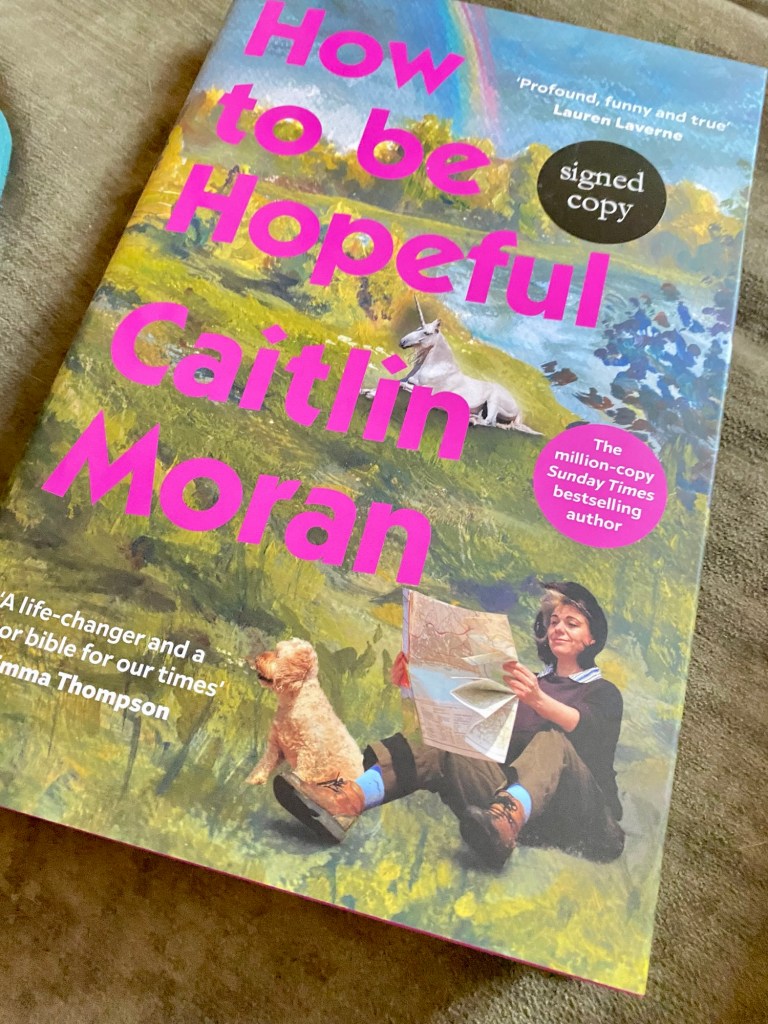
Not getting enough sleep, doomscrolling on your phone, and feeling acid anxiety every time you watch the news? You’re not alone. One morning, Caitlin Moran lay in bed and realised: she had finally reached Peak Despair. The point where, in books and movies, the heroine decides to move to a remote farmhouse, walk an ancient, 600-mile pathway, or adopt a baby hare. The moment where someone goes on a quest to find … hope.
But this – this is not that kind of book. Caitlin tried – but it turns out remote Welsh farmhouses are really expensive. No-one with a job can walk 600 miles. And it’s incredibly hard to get access to baby hares in Crouch End.
And so, Caitlin decides instead to go on a domestic quest. To see if you can stay in the same house, in the same neighbourhood, but feel better about the frantic modern world by trying to make better days. Leaving social media, eschewing 24/7 news for local newspapers, sitting on buses without headphones, and listening to what people are really saying. Picking litter, donating blood, rewilding a garden, and the hardest thing of all – learning to fall back in love with the world again.
I would imagine that I’m not the only one who has lost sleep over the state of the world at the moment, or turned off the news for fear of launching a brick at the screen. Back in the 1980s my grandad would converse with the television, usually with hastily put together child friendly swear words – ‘suffering night’ was a favourite. I used to think it must be hard to find a level of rage that made you swear and argue with a tv screen but then I turned fifty and the floodgates opened! Now rarely a day goes by where I’m not exclaiming ‘What the fuck?’ Or telling someone to fuck the fuck off. At least my grandad only had Thatcher to rail against, I have Musk, Farage, Trump, Bannon, Hegseth, Zuckerberg, Fox, Robinson, Truss, Jenrick, Anderson, Yusuf, Tate… etc. Our county has a Reform council and mayor. The list feels endless so it’s no surprise that I have a daily conversation with tv, radio and every one of the social media sites, particularly X (stupid name) which is an absolute cess pit of hatred and bile. I worry about the future all the time and tonight I’m writing this after a very trying day as I’m still wide awake at 4am. Food prices are rising, so is fuel and the level of hate towards people with disabilities and anyone else marked out as different has started to affect me. I can’t always get my prescribed drugs since Brexit. I can’t afford to go out as much and some experiences like theatre and gigs are becoming unaffordable. The government are telling us to prepare for disruption so I’m stockpiling candles, loo roll, tinned and long life food as if we’re on a war footing. I can’t get to my own GP. My personal details have been hacked to such an extent that I had three different bank cards this year and I don’t know if my money is safe. It feels like we’re in the second episode of the brilliant series Years and Years where the banks crash and AI has taken most of our jobs. It feels like everything is in flux and if you haven’t noticed it’s because you’re on beta-blockers or you’re not paying attention.
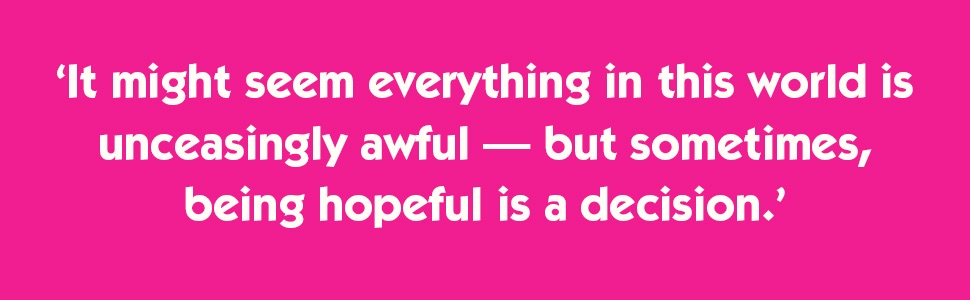
Into this maelstrom of disaster and anxiety comes the wise counsel of Caitlin Moran, a writer I’ve followed since her years at NME. I loved her book How to be a Woman and her novel about her time as a music journalist. She’s honest, warm, funny but wise too, characteristics that are in abundance in this new guide to all of the above. Set in clear individual chapters, she gives us a roadmap out of the sleepless nights and pointless arguing with fascists on social media. It’s a brisk walk through middle aged life starting with a crisis over the state of the world. She decides that the only way to be happy is to create her very own Eden in the Welsh hills – a dilapidated farmhouse with several acres for hens, wildflower meadows and a buffer against the world. It’s months before the realisation comes that the house needs raising to the ground then rebuilding, they don’t have the necessary skills or enough money to pay someone else. After a period of mourning, Moran reevaluates and decides she will have to create a happier life where she is, near a tube station and with a world’s supply of Red Bull cans sticking out of her hedge. In fact her first task is to stop saying ‘someone should do something about this’ and just get on and do it. She starts by tidying her garden, the hedge and the path outside, but her endeavours reach the local park where people just dump their unwanted crap next to the recycling bins, instead of in them. Slowly she notices other people tidying their front yard and the pavement outside, the road starts to look smarter and the rubbish gathers more slowly.
The chapters that most resonated with me were those on the ‘uni-cause’ and social media. Don’t be an activist she tells us, relating a story about an acquaintance who has fallen down the rabbit hole of X and become gripped by the ‘uni-cause’ – performative outrage or emotion over one issue. We all know someone this has happened to and it is no different to radicalisation. She cites how this person has become obsessed with the plight of the Palestinians, a good cause to raise awareness about until it becomes all they do online. They start to share their cause with friends, especially those with a lot of followers asking them to retweet their posts. If they don’t, he then follows it up with entreaties to ‘not look away’ and berates those who haven’t supported his viewpoint, concluding that if they’re not on his side they’re an enemy. As people like this are drawn further in, their relationships start to suffer, family gatherings become bad tempered, they stop talking to people with an opposing viewpoint and see everything in binary rather than the multitude of grey shades in between. Why are we actively making ourselves miserable? Especially when we know that these algorithms work to narrow down our interests – so if we argue on a post about immigration, you’re suddenly inundated with the latest news from Reform, right wing commentators and more outrage. It’s like stoking the fire. Moran gives sensible advice on the input – limit the time you spend online, retrain your algorithm by watching nothing but cats, don’t read the news or reactions to it and instead read the papers at the weekend. If someone you know is depressed or incensed by a specific cause she gives them a limited time to speak then tells them to find a charity, a petition, a march or someone to write to about the issue. In this way you get involved and become part of the solution rather than wallowing morbidly in the slurry of other people’s opinions. I’m trying to apply this with my own family and it does help. Moran often finds that an issue that seemed disastrous on Monday has gone away by the weekend anyway, or at the very least a few world leaders are promising a summit about it.
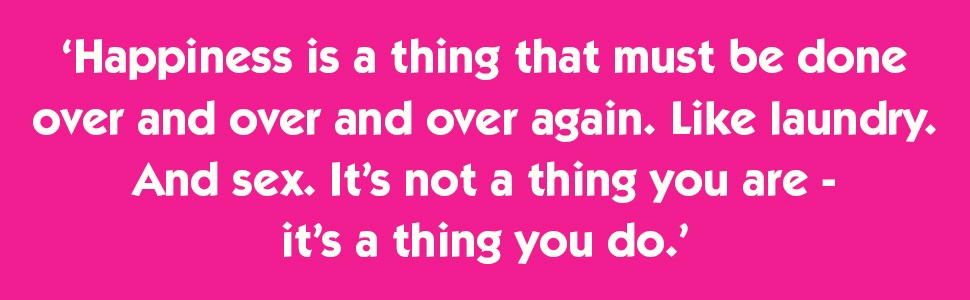
Another great tip is having an awareness of how animals act at different times of the year and even each day. Her cockapoo gets up in the morning, goes into the garden and stretches. She sniffs her territory and welcomes the day, instead of languishing in bed or hunched over a screen, taking in an avalanche of bad news and faux outrage. It sounds obvious but just being present in whatever you’re doing is key with this. You can walk the dog on the same path every day, not taking anything in and listening to a podcast or you can take the ear pods out and listen to what’s around you, letting the dog dictate the direction and varying what you see. Walking the dog regularly is something I really struggle with due to my mobility issues but when I can be out in the fresh air I always have a better day. I’m also a big believer in keeping your ears free to hear what’s happening around you and I always carry a notebook so I can jot down snippets of other people’s conversation. It makes us more connected to the world and means we’re doing one thing at once, a more mindful way of living. Also varying what you do according to the season is sensible – if you feel more relaxed and the need to hibernate in winter, then do it, it’s what animals do. It made me think of something I say about holidays. We work hard to afford our holidays but often feel quite blue and stressed as we go back into normal life. I tell clients to think about what they do on holiday that creates the relaxed, happy feelings. Obviously we can’t give up work, family commitments and all of normal life but what made the difference: less screen time? More time outdoors? Quality time with our partner? Having lie-ins? Then try to incorporate a bit of that in everyday life. Me and my husband spent two weeks in Scotland but when we returned he was soon stressed so we talked about what helped his stress levels and it was more time outdoors, having time to fish and spending less time on his cause (anti-fascism) especially online. We realised we need more quiet time, so we’re spending more time with no tv, radio or music. Both of us are calmer.
There’s nothing ground breaking here from a counsellor’s perspective, but it is sensible, effective advice to stave off apathy and try to bring some hope back into life. This is delivered with Moran’s usual honesty, forthrightness and wit. It made me think of a very low point in my life, when I moved into a little barn conversion on my own. I’d not lived alone for very long so it was a real opportunity to get to know myself again, and find what I needed at this point in my life. I went to New York and Venice, spent more time with friends, I picked up my counselling training and became qualified. I went to gigs and started writing again. I helped out at the meditation garden in the village. One of the key things that made me feel ready to face the day was a few lines of Emily Dickinson’s poetry that I had on the chimney breast in my bedroom:
“Hope is the thing with feathers,
That perches in the soul,
And sings the tune without the words
And never stops at all.”
It was just one small moment of uplift as the day started that made everything else possible. If you’re having a mid-life moment of ‘let’s emigrate’ or ‘shall we move to the seaside and open a zoo?’ maybe go get your hormone levels checked and chat to a counsellor before buying an expensive money pit and uprooting your whole family. Then make tiny little changes to how you spend each day. I promise it will lead to bigger ones and the despair, although we can’t banish at altogether, will definitely improve.
Meet the Author
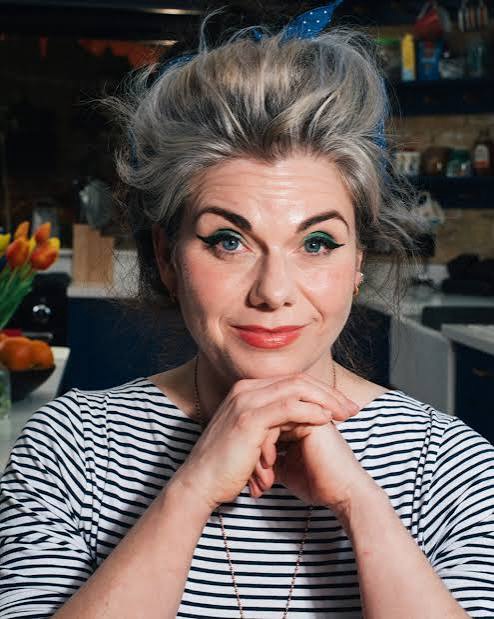
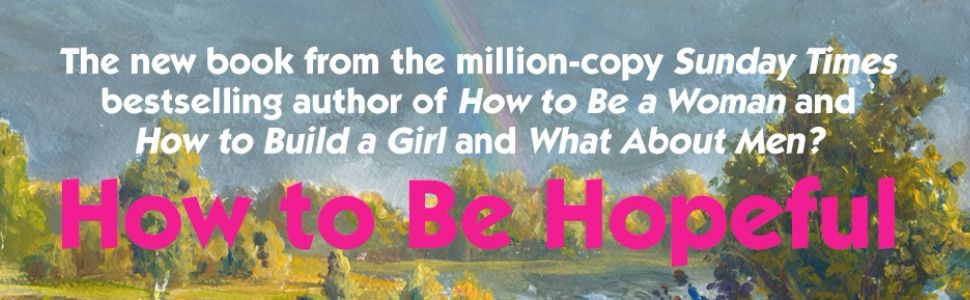
Caitlin Moran is the eldest of eight children, home educated on a council estate in Woverhampton. She published her first novel at 16 and became a columnist at The Times at 18. She has won Columnist of the Year seven times and has also been named Interviewer and Critic of the Year. Her million-selling groundbreaking feminist memoir How to be a Woman was voted one of the Sunday Times ‘Most Important Books of the Twenty-First Century’.
Caitlin’s other books have also been bestsellers and How to Build a Girlwas made into a film with Beanie Feldstein and Emma Thompson. Her Channel 4 sitcom Raised by Wolves, co-written with her sister Caroline Moran, won a Rose d’Or for Best Sitcom. Her Who’s Who entry lists her interests as ‘cava, eyeliner, hair embiggening, and The Struggle’.
She lives in North London with her husband and two children, and, after following all her own advice, she really is hopeful now.


This sounds good. I’ve enjoyed her previous books.
LikeLike