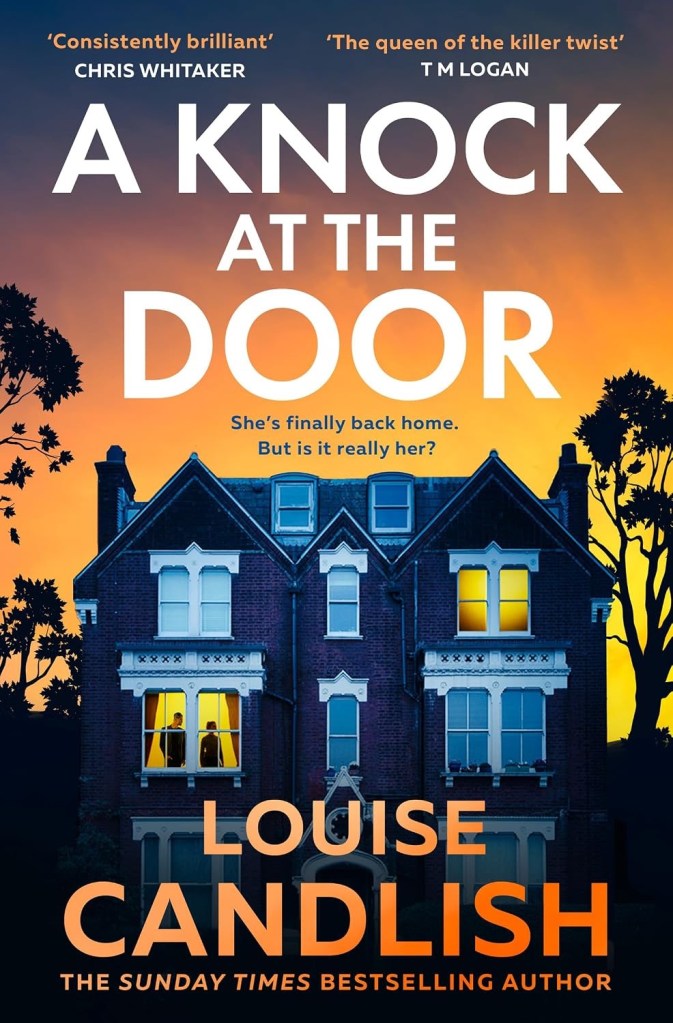
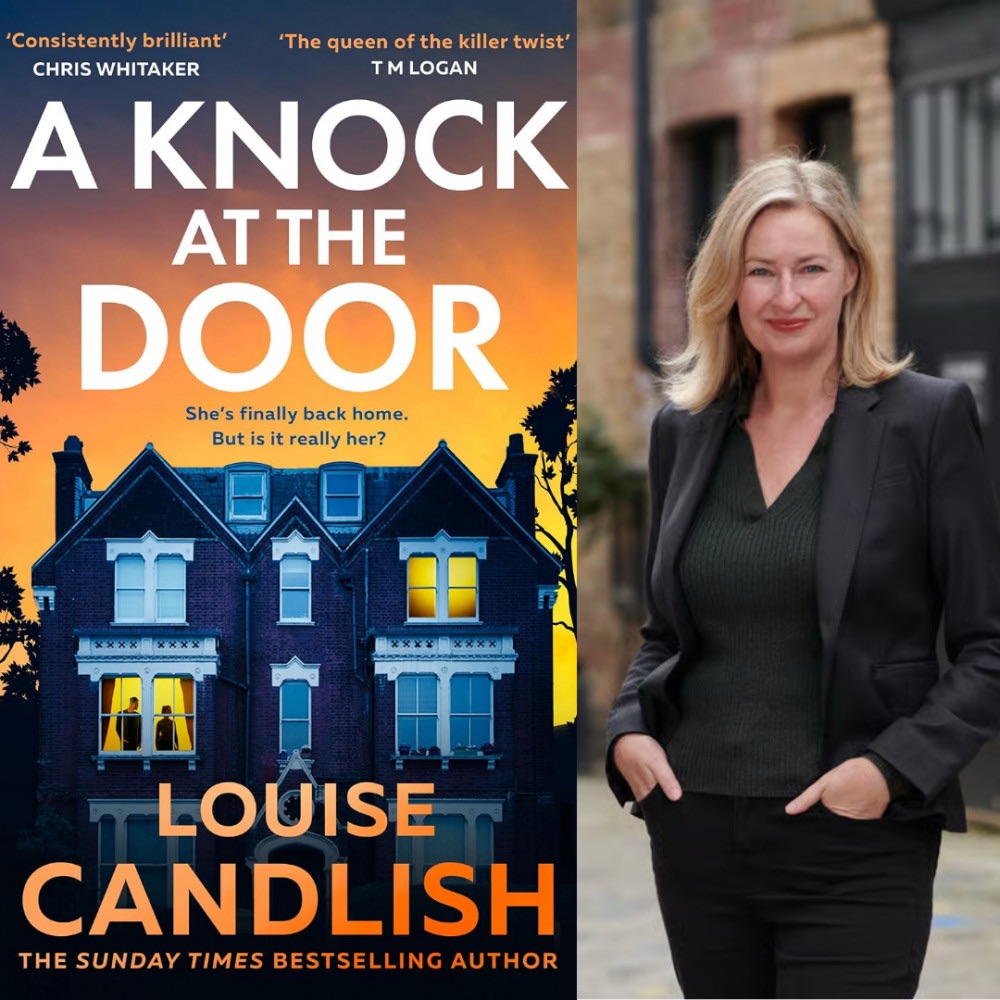
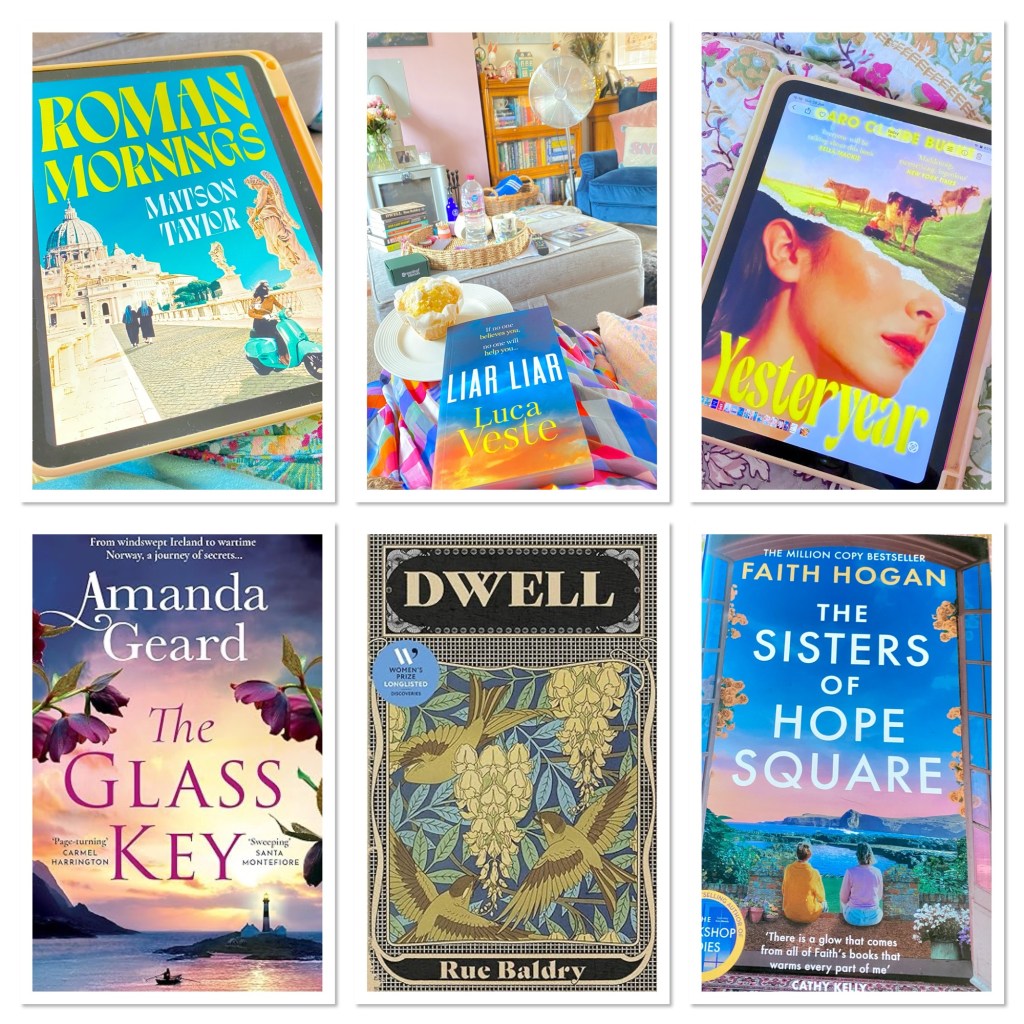
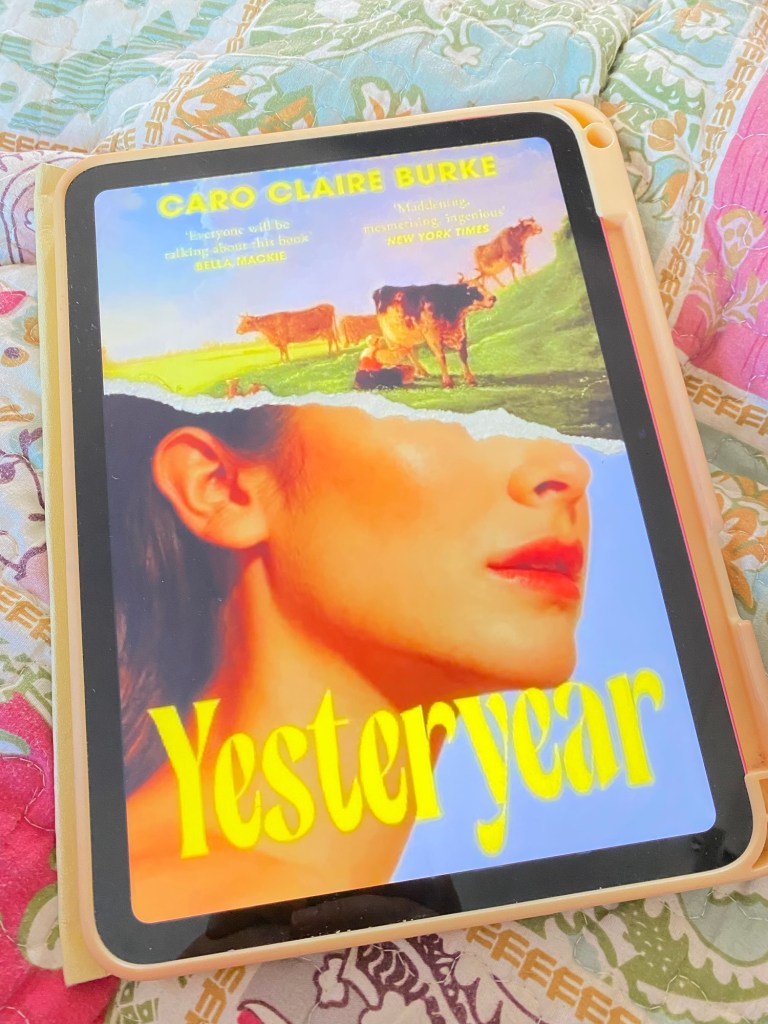
When three-year-old Tippi Macklin goes missing on a weekend break with her parents, her face appears in newspapers around the world, sparking endless debate and conspiracy theories. Wealthy and glamorous Jed and Gabby never give up hope that ‘Little Tippi’ will be found.
Eighteen years later, a young woman arrives at their door claiming to be their lost girl. She has a new name, a new history and some startling evidence to support her claim. Can she really be Tippi – or is she an imposter?
A DNA test will prove her identity one way or the other, but when the results come back, it seems the mystery has only just begun…
I do LOVE a Louise Candlish novel, so much so that when I saw I’d been approved on Netgalley I spent my whole Saturday reading it. I’m never disappointed and this is such a fascinating subject and family. Narrated by Gabby Macklin’s sister Bel, this is about how such a huge tragedy affects a whole family, but also about the underlying tensions and dynamics between its members. If it wasn’t for Jed and Gabby losing their daughter eighteen years ago you would absolutely hate them. They’re one of those couples on Escape to the Country or Grand Designs who say ‘I’m a cheese maker, my wife is a freelance bid writer and we have 2.4 million to spend.” Those people who claim to want a country kitchen, but really mean Downton Abbey. It’s now eighteen years later and a young woman claims that, after her parents died in a car crash, she’s discovered things that make her think she’s their lost daughter Tippi. This isn’t the first time their hopes have been raised, but it’s by far the most exciting lead they’ve had in a long time. Gabby tells her sister she feels that Eden is her daughter but Bel isn’t so sure and starts to investigate. Told mainly through Bel there are also a few different narratives: feeds from the couple’s social media pages for Tippi, some creative writing pieces from Tippi’s perspective from someone clearly obsessed with the case and text messages between two people that are very hard to decipher and suggest illegal activities.
The characters are fascinating with Bel and her sister Gabby at the story’s heart, but also a weird dynamic between Bel and her brother in law Jed. The two families are in very different positions financially. Jed runs a very successful training business and Gabby makes candles in at home studio. Their home is clearly interior designed with a sunken living room area and so much party space. Theirs is the house where the family get together and with such a disparity in their earnings, it’s clear that some resentment is felt by Bel. She’s supporting her family while husband Marc gets his business off the ground. They rent their home and are aware that if London prices go up much more they will have to move, probably to a worse area than now. Their home is lived in rather than designed and with Bel working full time as a trading standards officer she has a lot on her plate. Daughter Luna is coming up to her GCSEs and becomes more incommunicative by the day. Grace is away at university studying psychology and seems the most sensible and sorted out of all of them. Wherever Bel’s busy schedule allows she is quite determined to find out whether Eden really is her lost niece or has she realised her similarity to Tippi and noticed Gabby and Jed’s wealthy lifestyle? It’s hard to like Bel but there’s a lot to empathise with. Jed came across as a man who is used to setting the agenda and uses his money to control and manipulate. Gabby is almost like a shadow, physically present but quiet and passive. Losing her daughter has been a trauma she will never get over and Bel doesn’t want her sister to sleepwalk into a relationship with Eden without proof that she’s definitely who she says she is. But why is Bel so sure Eden isn’t Tippi?
I thought the author captured the endless speculation and media attention around a missing child, especially one as photogenic and appealing as Tippi clearly was. When a case captures the public attention it’s as if everyone wants to be involved. The furore surrounding Madeleine McCann’s disappearance has shown us that people on social media will comment, discuss and make wild accusations about the family. The excerpts from the Facebook page show that people want to be part of the story whether that’s pretending to know something, throwing a wild theory out there or just sending their love and prayers. Often there appears to be no thought for the family who have to wade through this just in case there is a clue. The creative writing pieces are particularly cruel and well written. Who would do such a thing? What’s their aim? Is there any truth in them? It plays on Gabby’s hope that one day she’ll find her. The guilt of the parents felt very real and I found it very hard to believe that Eden was preying on that hope, just wishing that Gabby’s need to find her daughter might overwhelm the need for the truth. In the midst of DNA tests, research and quizzing Eden, has Bel has taken her eye off the ball at home? Something that has bothered her for years keeps resurfacing, a frustration that her sister’s ongoing drama overshadows her and her daughters. Because of what happened, Gabby is the precious sister who they can’t upset. Every problem Bel’s family has pales in comparison to what the Macklins have gone through. As her mother says, she can’t complain about her daughters because at least she has them.
There are so many secrets here and as always I was glued to the page as they were revealed. Each revelation was a surprise and explained a lot about the family dynamics. The twists were not just focused on the Macklins though, Bel’s family had a few surprises in store too. I thought this was an addictive read and captured perfectly how trauma like this ripples outwards into wider family and friends. Through Gabby we can see how the loss affects a mother, leaving her in limbo and something of a recluse in her own home, perhaps not wanting to miss any development and having her hopes raised and dashed continually. Bel tells the story very well, becoming obsessed with Eden perhaps at the expense of her own daughters. My thoughts about some characters were confirmed, but others surprised me completely. You will devour this novel like I did as it’s Louise Candlish at her very best.
Out November 5th from Harper Collins
Meet the Author
Louise’s previous thrillers include OUR HOLIDAY, a Sunday Times bestseller, WHSmith Richard & Judy Book Club pick, and OUR HOUSE, now a major four-part drama starring Martin Compston and Tuppence Middleton (watch the full series on ITVX in the UK and PBS/Amazon Prime in the US) and winner of the British Book Awards Book of the Year – Crime & Thriller.
She has celebrated her 20th anniversary as an author with the news of two prestigious awards for 90s-set thriller THE ONLY SUSPECT: the Capital Crime Fingerprint Award for Thriller of the Year and the Ned Kelly Award for Best International Crime Fiction. Filming has just wrapped in London for the ITV adaptation, with Kevin McKidd starring as Alex, a middle-aged man with a deadly secret to hide. More soon on that – and on the adaptation of THE HEIGHTS, starring Anna Friel.
She lives in South London with her husband, daughter and a fox-red Labrador called Bertie. Books, TV and long walks are her passions – and drinking wine in the sun with family and friends. Authors she loves include Tom Wolfe, Patricia Highsmith, Barbara Vine, Agatha Christie and Evelyn Waugh. Her favourite book is Madame Bovary.
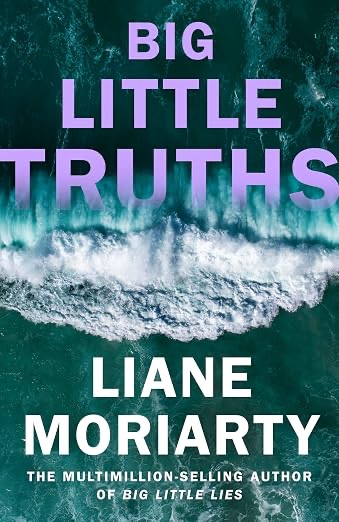
What’s worse than a big little lie? An even bigger little truth . . .
Ten years ago, at the Pirriwee Primary school gates, the friendships of Celeste, Jane and Madeline were forged in the fires of young motherhood, the big little lies we all tell to hide our deepest fears and secrets – and the event that changed everything.
Now mothers to hormonal teens, these frazzled friends are starting to worry about the strangers occupying their kids’ bedrooms. Or they would, if they weren’t so distracted by their own problems.
Because:
Madeline’s landmark birthday is about to land a bombshell.
Jane’s rock-solid marriage is suddenly crumbling.
And Celeste’s mother-in-law is asking awkward questions about the past.
Not to mention the mystery of who sent the school principal a freshly severed finger.
So many difficult little truths.
Such a pity then that not a one of them can see the biggest ugliest truth hiding in their midst . . .
Reading this book felt like catching up with old friends and listening to their latest gossip. It was good to be back in Pirriwee and it’s a testament to the HBO series that I was surprised to be in Australia. The music, casting and setting of the series were so strong that I was seeing Reece Witherspoon and Nicole Kidman as I was reading. The ongoing lives of Madeline, Celeste and Jane are narrated in chapters headed with their names. In between is the transcript of a group counselling session with all the teenagers. All of this must link to a package, sent to the school containing a severed human finger. Their narration has all the hallmarks of life in the dreaded ‘middle’ even though Jane is a little younger than her friends. Their days are taken up with the care of their teenagers and elderly parents, ill health, the question of more children before menopause, big birthday celebrations and a role as mother of the bride for one of our friends. There’s also a cool new teacher at the school who’s keen to make friends. Underlying this are the events of the previous novel – the trauma of domestic violence for Celeste and the loss of Perry her husband, the discovery that Jane had a non-consensual experience with Perry resulting in the birth of her son Ziggy, and Perry’s ‘accidental’ death at a fancy dress party. Bonnie, the wife of Madeleine’s ex-husband Nathan is processing the trauma of pushing Perry to his eventual death and both she and Renata have larger roles in this follow up.
Our new storylines are the growing presence and confusion of Celeste’s mother-in-law Mary Louise, who is both monstrous and hilarious at the same time. Celeste has to cope with Mary-Louise’s perception of Perry as her golden boy and her perception of Bonnie as a murderer. In a co-hort of liberal and correct women, her loose canon approach is hilarious at times. However she’s in danger of ruining her twin grandsons and turning them into their father. On a more positive note she treats Jane’s son Ziggy equally and insists on spending time with all three, much to Jane’s anxiety. Jane is coping with Perry’s ever widening circle of victims as the consequences of his actions affect her marriage and Tom in particular. Celeste is worried that Mary-Louise is being unusually spontaneous, erratic and forgetful. The fear of being responsible for a woman she never bonded with is always in the back of her mind. Madeline is turning 50, but instead of all eyes being on her the limelight is stolen by her eldest daughter and the ‘perfect boyfriend’ when he decides to publicly propose. Madeleine is just waiting for the cracks to show in this seemingly faultless young man, but soon planning for the wedding falls to the wayside as she finds a lump in her breast and needs to undergo diagnostic procedures. Facing her mortality and waiting for her test results has Madeline on a very thin rope, however it’s a bombshell from husband Ed that really brings life to a crashing halt. It. was interesting to see Madeline actually lose some of her famous composure and with very good reason.
The peripheral characters are also back and with a little bit more space to grow, something the author has deliberately done after watching actress Laura Dern turn the small role of Renata into something really interesting. Now she’s in the centre of the group more and I really enjoyed her ballsy choices and independent spirit, such as taking motorcycle lessons. She’s also a lot more astute than the others give her credit for, calmly sitting back and reading people perfectly. Bonnie has always felt underused in the first novel, now we focus on her a little more as she continues to process the trauma of Perry’s death and struggles to communicate with her daughter. Then there’s new woman in town and everyone’s favourite teacher, Melody, who is soon at Tom’s morning boot camp and gravitating towards the friends. She’s a good listener and brilliant at giving women permission to focus on their own needs between all the demands on our time. The freedom Jane feels when she’s taken to a club spontaneously and just lets loose is so lovely to see. The rather magical weekend away she organises is another hit, allowing Madeline to open up about struggles she’s having. Melody starts to feel like a fairy godmother and as the women welcome her into their friendship group, their teenagers enjoy her approach to teaching and she looks like a welcome addition to their community. There’s a new principle too and Celeste meets a man called Marco who has also just moved to Piriwee and is pleasantly surprised to feel that tingle of excitement when meeting someone who has romantic potential.
So when a severed finger arrives at school addressed to the new principal rumours start to fly. A particularly worrying one for the parents is their kids casual joke about a ‘paedo’ middle aged man hanging around and asking questions about the school. Another rumour involves a mob boss who has the reputation for sending body parts through the mail when displeased, but who is his intended target? This central mystery meanders along through their busy lives. As before this set of parents are trying their best to work together, despite their tangled web of blended families. Jane hates being with Mary Louise, in fact it makes her feel sick, but if it’s the price of Ziggy having a grandmother in his life she will persevere. Maddy tries to work with Bonnie and Nathan, actually turning to her ex-husband for help when she realises that she’s overwhelmed. I felt so much for Jane and her experience of giving birth to the child of a man who has assaulted her. She finally shares something about Ziggy’s birth that I really identified with and found very emotional. The only jarring note in the whole narrative was the transcript of the teenagers who seem to be super intelligent and articulate compared with teenagers I know. They felt way more sophisticated (and rich) than me. I did have some inkling of the central mystery but it didn’t detract from my enjoyment at all. I’d feared I might be let down by this sequel but it definitely lived up to the first novel and the TV series. It still had that difficult to describe magic that makes you want to read it all in one go and I pretty much did.
Out now from Michael Joseph
Meet the Author
Liane Moriarty is the Australian author of nine internationally best-selling novels: Three Wishes, The Last Anniversary, What Alice Forgot, The Hypnotist’s Love Story, Nine Perfect Strangers and the number one New York Times bestsellers: The Husband’s Secret, Big Little Lies, Truly Madly Guilty and Apples Never Fall. Her books have been translated into over forty languages and sold more than 20 million copies.
Big Little Lies, Nine Perfect Strangers and Apples Never Fall were adapted into popular television series with the star-studded casts including Nicole Kidman, Reese Witherspoon, Melissa McCarthy and Annette Bening.
Liane lives in Sydney, Australia, together with her husband, son and daughter.
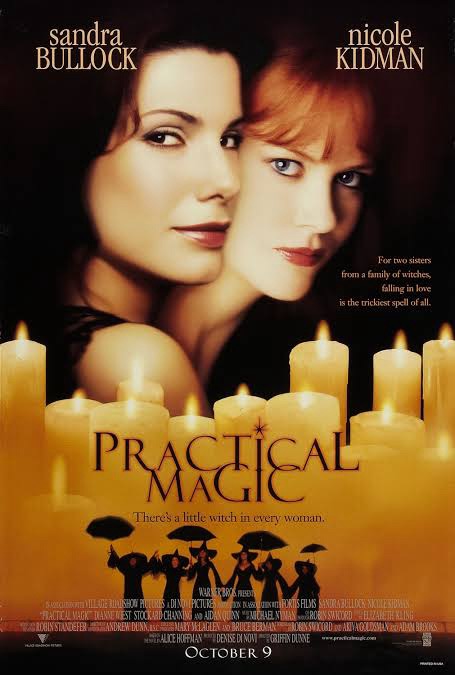
As all my readers know by know I’m a huge fan of Alice Hoffman, since the early 2000s when I first read Skylight Confession. I then tore through her entire back catalogue and fell in love with her mix of magic realism, the north east United States and moments from history. I hadn’t realised she was the original author of Practical Magic, the 1998 film starring Sandra Bullock and Nicole Kidman as the Owens sisters, Gillian and Sally. Sally, the more sensible sister has her life disrupted when Gillian turns up in her life, as always bringing trouble behind her. However, it’s only in recent years that she’s revisited the Owen’s family, going back to their origins in the UK with Magic Lessons. This is the first book chronologically, starting in the 1600s when wise woman Hannah Owens finds a baby abandoned in a snowy field. She brings Maria up as her daughter, passing on her wisdom and plant knowledge to benefit the women who arrive at night looking for their help. Maria soon has her own familiar and when Hannah is taken and burned as a witch she flees England for the Caribbean and then Massachusetts USA in pursuit of the lover who lies and breaks her heart. It is Maria who intends to create a protection spell for the women in her family, keeping them safe from heartbreak. The spell becomes a curse that every Owens descendant has to face: they fall in love their lover will die.
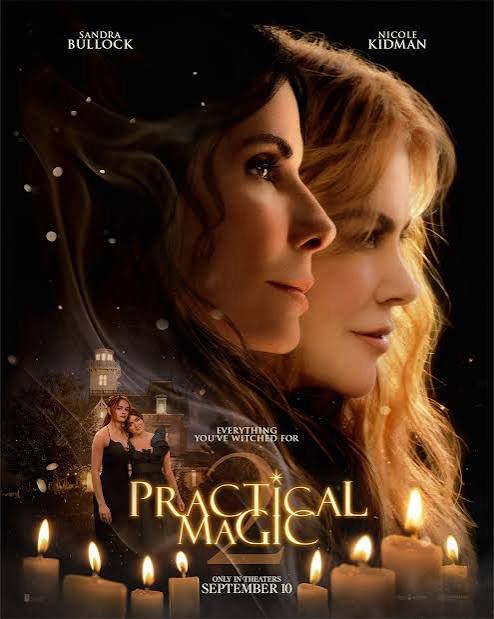
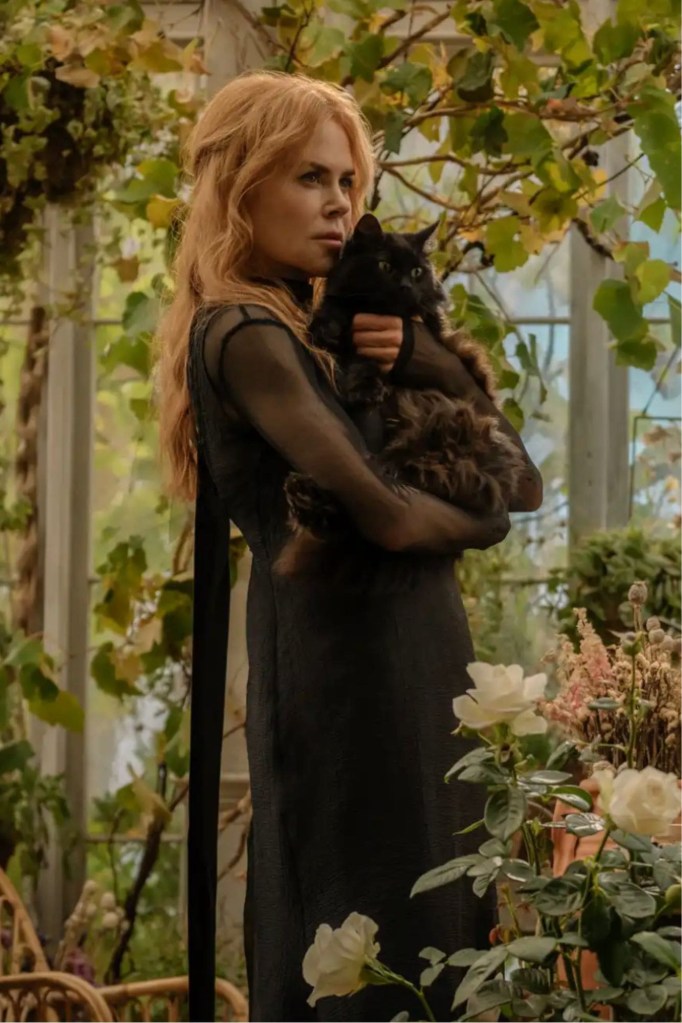
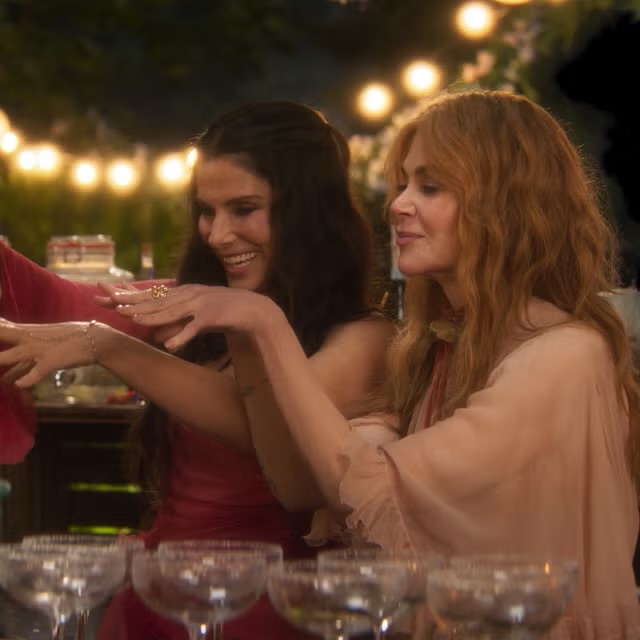
I went to see the film Practical Magic 2 last week, starring the original actresses as Sally and Gillian, plus Stockard Channing and Dianne Wiest as the aunts who brought them up – Frannie and Jet. The younger generation are Sally’s daughters Antonia played by Game of Thrones Maisie Williams and Kylie played by Joey King. Once I got over the shock that Nicole Kidman and Sandra Bullock look younger than they did in 1998, I began to enjoy the film. It’s based mainly on the third book in the series – The Book of Magic but does allude to Maria Owens too. Gillian’s daughter Kylie is falling in love, knowing nothing of the curse that hangs over their family. Gillian wanted to bring up girls free from their heritage as witches, even though women do still queue up at the door for their help. Sally has been against this decision, keeping her promise to her sister while worrying that this secret will only bring trouble. Unbeknownst to Sally, Kylie is slowly falling in love with Gideon at university oblivious to how dangerous her emotions can be. Meanwhile Aunt Jet has heard the death watch beetle clicking all over the house and knows her time is close. Before she dies she wants to use the book of magic to free the younger generations from the protection spell that has become a curse. As tragedy strikes and Gideon’s life hangs in the balance, Kylie takes the book of magic and makes her way to England hoping to find someone who can help her break the curse.
The film has all the charm of Practical Magic and some emotional moments as Sally battles to save her daughter using the magic she’s kept from them all these years. Gillian is right by her side as they follow Kylie to England, leaving Aunt Frannie and Antonia to look after Gideon in hospital. There are some comic moments, mainly based in the difference between the sisters. Gillian is much freer than Sally, shown in short scenes like the one as they leave for England with Sally’s only luggage being a small weekend bag and Gillian’s comically large suitcases having to be lugged up and down many flights of stairs. The casting of the men in the film is very good, particularly the magic professor Ian Wright, played by Lee Pace with a quiet intensity and the chemistry between him and Sandra Bullock is off the charts. We’re introduced to him as the sisters blunder their way into his third floor flat (with all their suitcases) only to find him naked on his bed paralysed by magic. Sally covers as much of his body as she can while performing the magic to break this powerful spell. Meanwhile Gillian is quite happy to enjoy the view and tease her sister at the same time. One he’s awake he can’t believe the famous Owens sisters are in front of him and helps them to follow Kylie on her journey to their heritage, the small village where Hannah Owens was burned. There’s magic, loss, romance and laughs along the way with the sacrifice that needs to be made to save Gideon especially emotional. Films are almost never better than the book and this one isn’t, but it’s a fair adaptation of Practical Magic’s two prequels and definitely keeps the charm of the original film. I recommend the books wholeheartedly and it seems they’re doing a film tie-in repackaging The Book of Magic to match the film. If you want an easy, engaging night at the cinema then this is definitely a good girl’s night film. As always with this family I came an away wishing I was an Owens, even if it’s just to live in their incredible house!
I reach up and unravel my braid. When my hair is loose and whipping around my face, I take the red ribbon I’ve woven through it and press it just beneath my mother’s etched name, underlining. She was here. She was mine.
When Molly Fitzgerald was two months old, her mother went to a morning appointment in downtown New York.
Like so many who left their homes on September 11th, 2001, Molly’s mother never came home. Now Molly saves lives for a living, running a department for when disasters strike.
Molly and her husband Jesse―a police polygraph expert with his own fractured family―have found a love that is a solace in a dangerous world.
But then Molly’s whole world is turned on its head. She’s spent her life preparing for catastrophe. But nothing could prepare her when a disaster strikes too close to home.
In this powerful novel, Jodi Picoult tells an epic story of the lies we tell ourselves, the plans we design to protect ourselves at the worst moments, and the ties that bind mothers and daughters.
A new Jodi Picoult novel is always cause for celebration in my house and this was devoured in just two days. She has a knack of drawing in the reader immediately with a casual conversational style. I went in with no blurb so I didn’t know which way the story was going and was surprised by the different direction. This is the story of a family caught up in events beyond their control as the world processed one of those events that splits history into a before and after. The shock of 9/11 was felt the world over and everyone has a story of where they were when the planes hit the World Trade Centre. I was in Milton Keynes and I’d been married to my late husband Jez for six weeks. A few days previously he’d flown out to Cape Cod to attend a family wedding, planned long before we met. I stayed home and started university, but I also had my mum staying with me. I’d dropped her in the town centre, came home for a brew and switched on the television to see the second plane hit the south tower and I was transfixed. Then it hit me. When was Jez’s internal flight from Boston to Washington? I didn’t know. I remember scrabbling through paperwork and even ringing his secretary to see if she had it, but nothing. By the time a jet hit the Pentagon I was sure I’d lost him. Between my mum and my sister-in-law Jenny in New Zealand we tried to keep calm, but no calls were going through to his hotel or their mobiles. I’d been so happy in our honeymoon period that I hadn’t thought to ask where he was and when. Finally at around 9 o’clock that night, his cousin Joanna rang me from her honeymoon to tell me they were ok. They left Dullas Airport in Boston twelve hours before the hijackers and had been eating breakfast at IHOP when the pentagon was hit close to their hotel. I was lucky.
The author has also written a flashback section that goes back and takes us through Eloise’s story. We meet her twin sister Adie who wears the white ribbon – a link to The Scarlet Letter perhaps? Eloise’s story isn’t an easy read but I identified with her upbringing in an evangelical church and the spiritual and emotional harm such environments can have on developing teenagers. Eloise had plenty of reasons to run away and she kept running. She’s an artist and uses her art to express her emotion. The significance of her chosen medium – mosaics- is clearly recovery, painstakingly placing broken pieces together to create a bigger, beautiful picture. At art college she creates a large heart with an anatomical heart placed within it using white grout to define its shape. Called ‘Love Thyself’ the piece seemed to signify romantic love but with the reality of love deep inside, a recognition that love isn’t easy but needs action not just pretty words. Despite having empathy for Eloise I did also feel for Evie, Eloise’s best friend at college who falls in love with Adam before she introduces him to Eloise, only to see them fit together as if meant for one another. Evie isn’t perfect, but she stepped in and held Adam and Molly in the aftermath of 9/11 and has been an incredible stepmum. Eloise might have been Adam’s great love but there’s no doubt that Evie’s great loves are Adam and Molly. There’s a huge twist within the book that I hadn’t expected at all, taking it in a completely different direction to what I was expecting. It was so unexpected I had to go back and read a few pages for it to make sense, but from that point on I was gripped. As always this is one of those books that made me think, about chance and destiny and whether there’s ever a right time for something. It made me think about the lives we don’t live – what if Jez had been on that earlier plane? What if I’d gone to the US with them?
Lastly I want to say how brave Jodi Picoult is. At a time when she is the most banned author in school libraries she continues to write about those hot topics that stir up interest and even anger. Here I felt she used her reputation to throw the reader a couple of curveballs – when I realised Molly was pregnant I wondered if she was going to revisit the controversial subject of abortion or babies with special needs, but she surprised me by going in a completely different direction. Taking on 9/11, a seismic event in everyone’s memory, is going to bring criticism her way but she doesn’t let it stop her. Taking on Evangelical Christianity is something that needs to be done a lot more because it should be treated as a cult. We can see the current effect it’s having on politics in the curbing of women’s rights and policies to end an equality people in minority groups have had for most of the 21st Century. Finally she uses Molly’s job in disaster preparation to criticise the current US administration! When I met Jodi Picoult over ten years ago now she told me that it’s the issues in her books that come first. If it stays in her mind a few days she knows it might be worth researching and then finally she hears the characters voices. Here she’s taken different criticisms of the Trump presidency and directly attacked his choices for important roles within government and cuts in spending. I love that she’s still speaking truth to power in her work. This is a timely novel about the world we live in since 9/11 but also how a family face personal loss inside such an international tragedy. It’s also a beautiful look at motherhood and how mums sacrifice themselves for their children in small everyday ways, but also in big life-changing ways too.
“I reach up and unravel my braid. When my hair is loose and whipping around my face, I take the red ribbon I’ve woven through it and press it just beneath my mother’s etched name, underlining. She was here. She was mine.”
Meet the Author
Jodi Picoult is the #1 New York Times bestselling author of twenty-nine novels, including Mad Honey, Wish You Were Here, The Book of Two Ways, A Spark of Light, Small Great Things, Leaving Time, and My Sister’s Keeper, and, with daughter Samantha van Leer, two young adult novels, Between the Lines and Off the Page. Picoult lives in New Hampshire.
Follow Jodi Picoult on Instagram, TikTok, Facebook, and Twitter: @jodipicoult
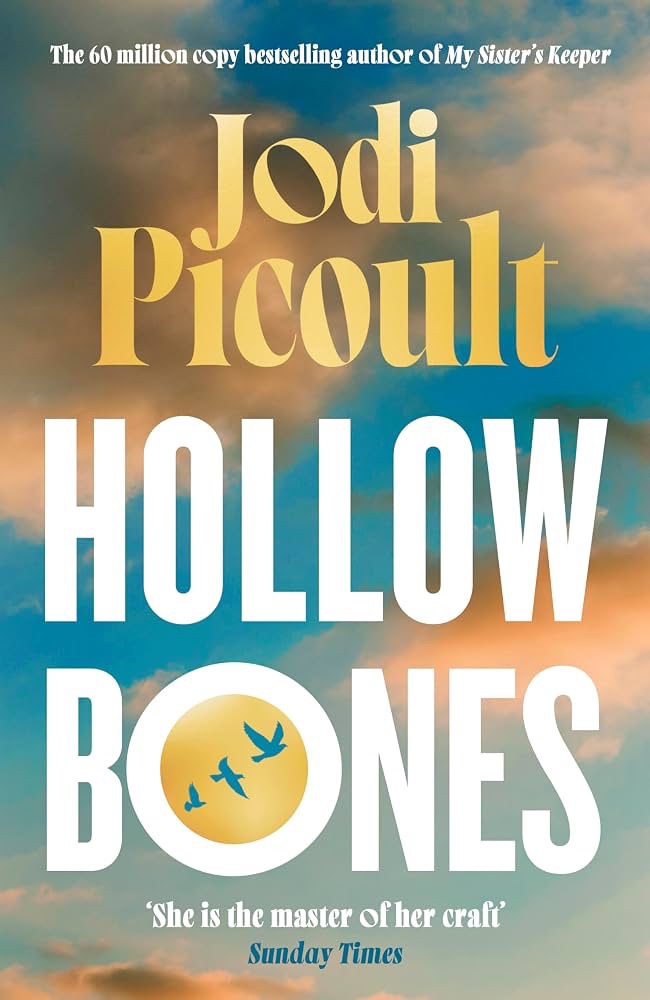
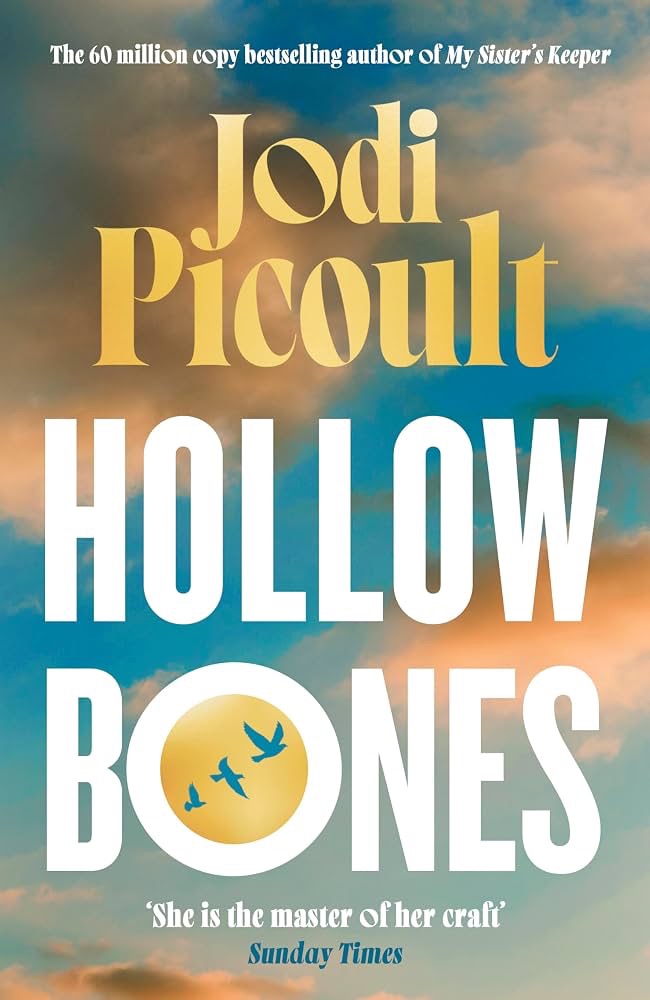
Hollow Bones is out in the UK on 5th November from Penguin
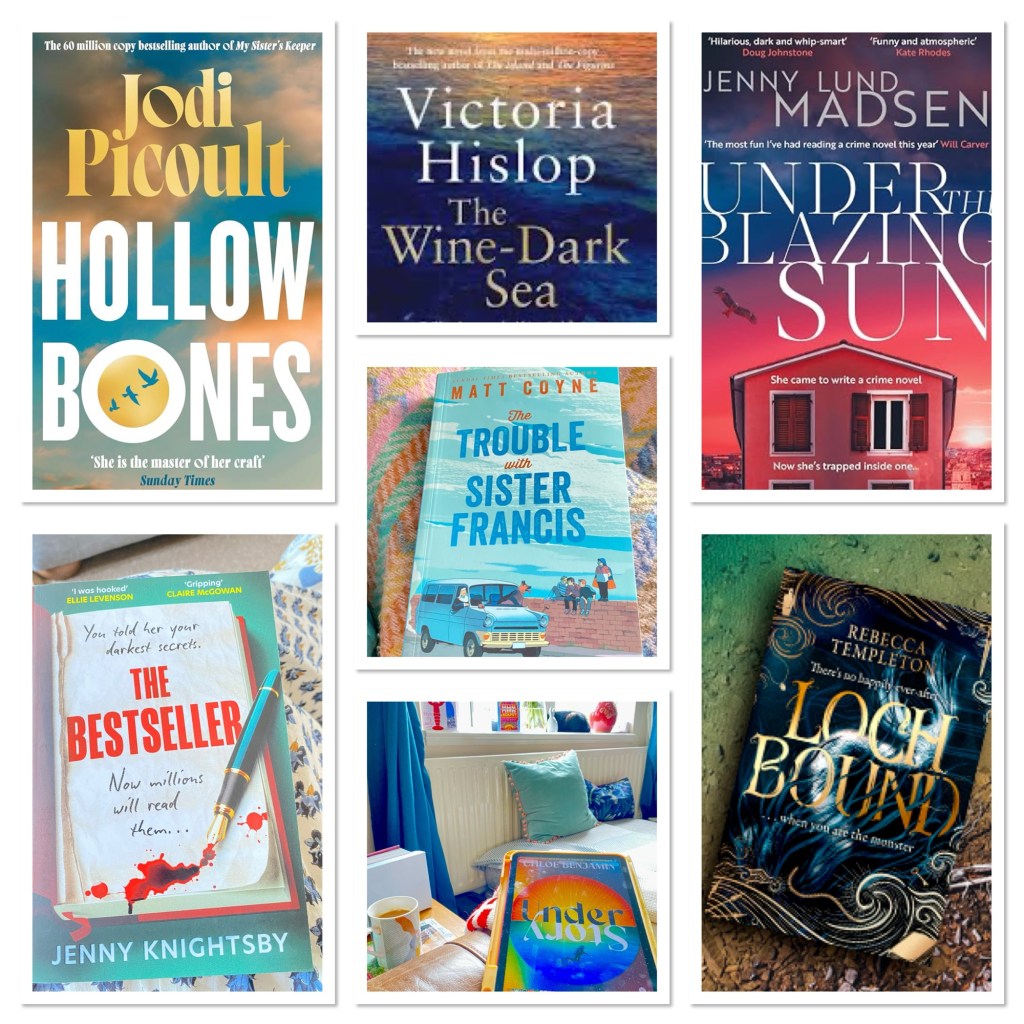
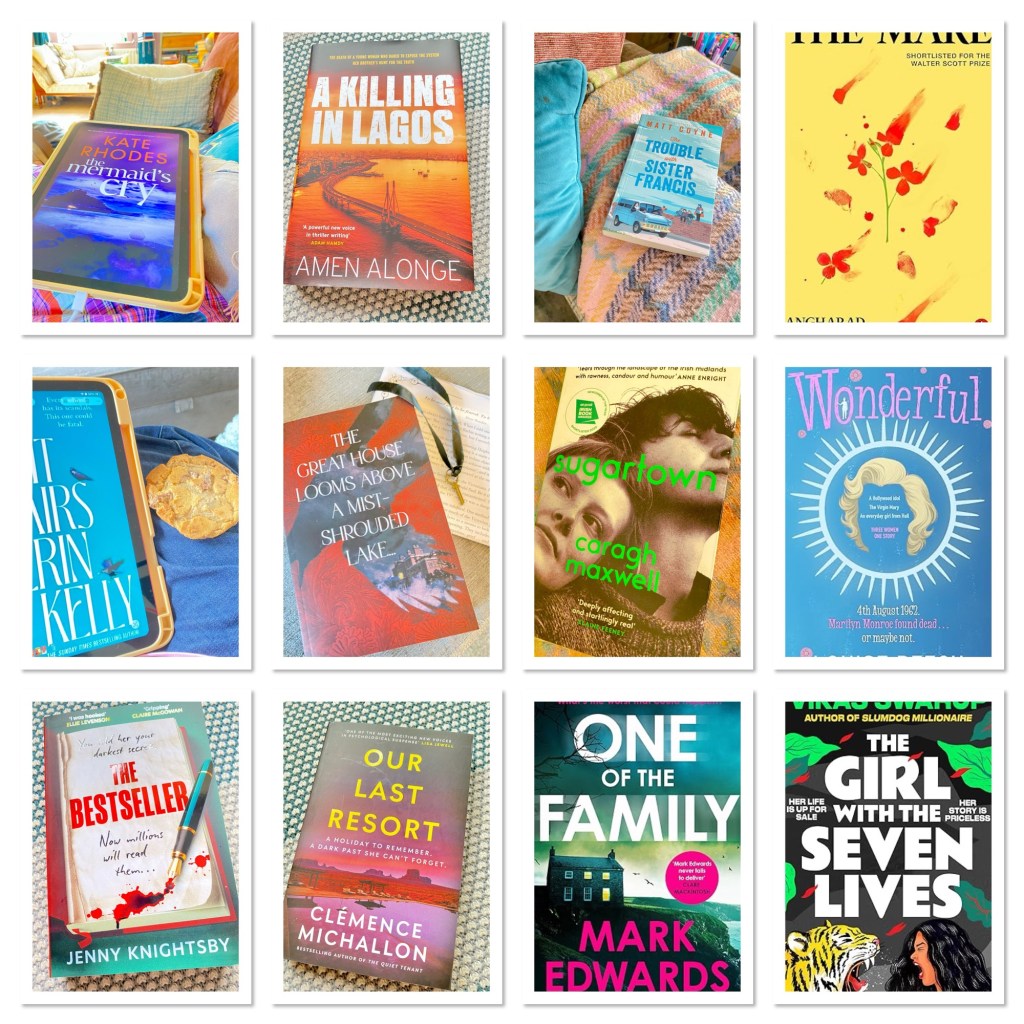
There have been some absolutely belting books this month and I loved telling you all about them. So I’ve been in the US, Italy, Greece Scotland and Sheffield. Oh I forgot about the ‘anti-verse’. It’s been a whirlwind of monstrous mermaids, a universe that goes backwards, the Greek civil war, a family dealing with the aftermath of 9/11, a crime writer who wakes up in a Sicilian villa with a dead body, a counsellor dealing with coercive control and a group of young boys trying to save their summer boy’s club. I’ve struggled to keep my mind on my reading to be honest it’s been a tough month. At the end of the last heatwave my cat returned home late one night and collapsed in the hall. I thought it was heatstroke and we tried to cool him but I could see he couldn’t put any weight on his back end. We rushed him to the vets where they diagnosed possible epilepsy. I knew this wasn’t right. She gave us some anti-convulsants but I wasn’t sure this was the right call. We kept him confined and on pain killers but he still couldn’t walk. I decided on a second opinion and went to a vet I used to see before moving house and he was brilliant. Poor Max had broken his pelvis in two places, his hip and damaged his lumbar spine. He also had a partially healed wound on his side. I can’t believe all that was missed. I could feel where his pelvis was pushed over, twisting his whole lower body. He’s had some surgery and lots of care at home. It’s going to take twelve weeks or more to fully settle. My husband has built him a three bedroom home under the stairs so he’s confined some of the time but can come out for exercise and fuss. My animals are my daily company now I don’t get out and about too well so they’re an important part of my life. I was so upset and I’ve really been focused on making him comfy and safe. So there’ll be lots of reading time in the upcoming weeks and I can’t wait be use it looks like an amazing autumn. I’ll share some recommendations for your tbr at the end. ❤️📚
I’ve been looking forward to this new release from Jodi Picoult and I was lucky enough to get it on NetGalley. I dived in and read it very quickly over a couple of days. My full review will be later in the week, but this was a fascinating read, bravely taking on some of the most contentious and sacred subjects in modern day America. We follow Molly, a young woman in her twenties who is incredibly driven and has the difficult job of coordinating emergency response in her state. Her job is not medical, it’s to prevent incidents and plan for potential disaster situations based on the geographical features of the area, possible targets and population. Having just got through COVID, Molly is happily settled down with husband Jesse close to her dad and stepmum. It’s easy to see that it’s the loss of her mother that has influenced Molly’s choice of career. Eloise was lost on 9/11 when she attended a medical appointment in the South Tower. Every year Molly takes the trip to NYC for the memorial ceremony and tucks a red ribbon behind her mum’s name, representing the one she always wore in her French plait. What Molly doesn’t know is that her own life is about to blow up unexpectedly, changing everything she’s ever known and challenging what she knows about motherhood and risk prevention. I thought this was a classic Jodi Picoult novel with dilemmas, big emotions and using different narrative voices to give us all sides of an argument. We think we know Molly’s story, but a different narrator throws all of that up in the air so unexpectedly. Reading Molly’s narrative I kept thinking “ah this is going to be about x” but I was wrong. There are strong issues here – mental health, abuse, cult mentality – and they are shocking, because they should be. Jodi Picoult has such an easy, conversational style and it was great to be back in the hands of a fantastic storyteller.
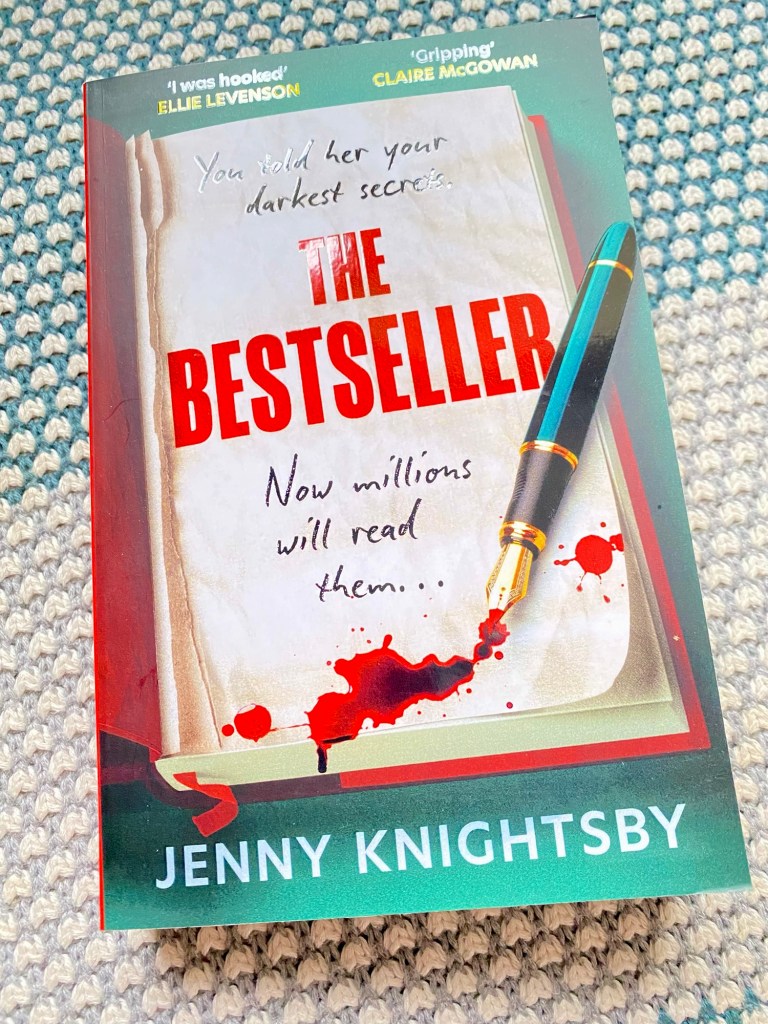
This is a great premise for a thriller and having been a therapist I’m always fascinated by books that are based on the therapeutic relationship. I think there’s a fascination in what therapist’s personal lives actually look like. Do they have it all sorted? The answer is invariably no and here there’s so much projection happening between Helena and her client Belle. Confidentiality is the bedrock of any therapeutic relationship, but that can get tricky when the therapist knows the client needs either specialist help or practical help. Helena is there to listen and guide Belle towards her own answers, but the constant disclosure of coercive control is uncomfortable to sit in. The urge to do rather than sit back and listen becomes difficult for Helena and it’s this discomfort that leads to her talking about it with best friend Tala. This is an issue for supervision, where Helena should disclose that she’s finding Belle’s passivity and indecision on leaving very difficult, but she doesn’t and now Tala is talking about how positive early responses have been to her new novel. Yet she doesn’t offer Helena a proof. When Helena stumbles across one at Tala’s flat she takes it and reads in horror as she realises Tala has fictionalised the problems of her client. This is going to be like a grenade in her personal and professional life.
The lives of Tala, Helena and her boyfriend Dylan and their paths into adulthood hinged on a single night. I thought the author managed these flashbacks well, placing them absolutely perfectly for maximum effect. It seems everyone has secrets but they are slowly revealed creating a very addictive read with short, pacy chapters that make you want to read just one more. The tension is almost unbearable as I worried about Helena overstepping with her client, the client finding out what’s in Tala’s book and somehow passing that on to her husband Julius. Would Helena be safe? As her well-ordered life starts to fall apart Helena starts to lose her belongings, forget her schedule and have terrible nightmares. She has no access to supervision and her relationship with Tala is broken. I wondered if she was heading for a breakdown. You may see the twist coming, but that doesn’t detract from the story. Eyes are opened, secrets past and present are revealed and I devoured the last few chapters late at night, unable to wait till the morning to find out what happened. This was an excellent thriller, full of psychological drama and really nailed the experience of being a counsellor with a problematic client. I also loved the ‘meta’ structure of reading a book about a book and just like Tala’s new novel this one should be a bestseller.
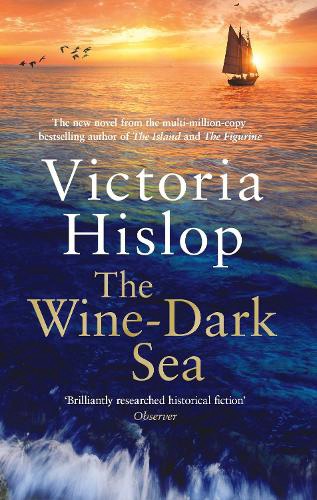
This epic story from Victoria Hislop really taught me a lot about a period of history I knew little about. The events happen after the end of WW2, a turbulent time that has already seen the punishment of Nazi collaborators and now many would like to see the end of their right wing government. The setting is a village called Kalopetra where Fotini’s husband has gone to fight for government forces against the communists, causing a schism in the family because Fotini’s brother-in-law fights for the communists. The sudden divide causes friction across the village, but the women must work together if they’re to survive. When government forces come to the village they capture all the women and Fotini is allowed to bring her baby son with her but older daughter Iliana is left behind with older children. How will they survive? That moment of Iliana chasing the truck, with her mother unable to do anything to reassure her, is burned into my memory. Although soon enough communist forces will round up the children and move them into camps where they are fed, clothed and then sent on to other countries like Yugoslavia. After having the entire burden of the other village children on her shoulders, Iliana is relieved to be fed and clothed by such kind people and so the process of brainwashing begins. All Fotini can think about is returning to her peaceful village and living the rustic existence that has survived for centuries, she doesn’t know that her way of life is already dead and nothing will be the same again.
I really enjoyed the later parts of the novel where we see Fotini piecing life back together in the city of Piraeus. It’s a massive change for this country girl but she can see the benefits of more job opportunities, entertainments like the cinema and eating good Greek food again at a lovely restaurant run by Demetrios. He’s such a kind man and gently reminds Fotini that she can’t spend the rest of her life wandering and looking for the children. The best thing she and Mitsos can do is stay in one place and hope the children find her, the place she was trying to get back to is gone. There was so much material to choose from in this book that it could have filled a trilogy. I had questions about all sorts of characters, such as Fotini’s relationship with her sister Stella. I also had questions about Nikos’s journey and his adoptive mother, there just seemed to be more about her that could have been explored. However, I loved Iliana’s growth and her life as an adult living under communism. The differences between Greece and Hungary were fascinating and as always the author captured the beauty of the Greek islands, their isolation and wildness and how this conflict disrupts a way of life that existed for centuries. The book symbolically ends with a circular dance that’s life affirming and perhaps a way of capturing, just for a few moments, that lost way of being.
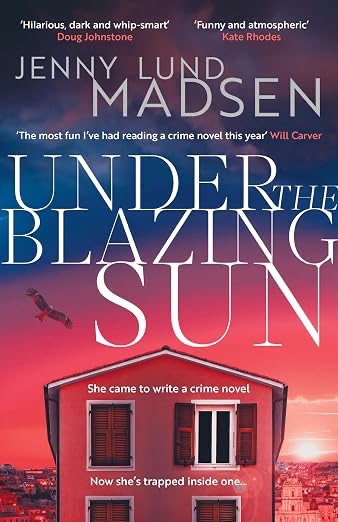
I loved the first book in this series and I devoured this one in a day. Hannah is once again fretting over writing her latest book, disgusted that copies of the romance novel she poured her heart into is being ignored, while the crime novel she wrote in one month for a bet is a bestseller. Hannah is a brilliantly flawed character full of writer’s neurosis, hating that she is forced to write what will sell rather than the books she aspires to write. Again she’s on a deadline and as a last resort her editor Bastian finds her a quiet villa in Sicily with its own swimming pool. No distractions and plenty of time to unwind and write the novel she’s had an advance to produce. I love this character because she says and does the things I’d love to, but my inhibitions keep it inside. She has no such restrictions, happily saying what she thinks when she thinks it. Her disgust with the crime genre and Jorn Jensen in particular is so funny. I wonder if she has ever had a thought or need she didn’t express? She also seems totally unregulated. I would have asked the elderly couple who caretake the villa for help but Hannah decides to walk to the village without thought about the heat, how far and which direction home is in. She has no idea which hill to take and ends up exhausted and on the verge of sunstroke on her way back. This is where she is found by Hans and Greta who take her to their incredible house to clean up and drink something. This turns into dinner, wine and a night spent in their house. It’s when she wakes up in a strange place that she and the housekeeper Lucette find a dead body. Greta has been murdered and Hans is nowhere to be found. Has he been kidnapped or could he be the murderer? Hannah seems to have an inability to weigh up a decision before taking action. There’s so much going on in her head that it’s very hard for her to remain in the present. I’m always wishing she’d slow down a minute and breathe, but the only times she seems to do this are in water.
The case is an absolute maze of connections and suspects showing up a tension between villagers and tourists, a misogynistic police force and possible Mafia interference. Despite Hannah’s aversion to crime as a genre, she’s just as caught up in the mystery of this murder as any reader would be. She’s utterly reckless, in a comical way and there’s a chase on a moped during the final chapters that is clumsy and hilarious to imagine. Sparks fly when Jorn Jensen appears, but she can’t deny he helps make things happen. His arrogance is brilliant and when he suggests they write a crime novel together I thought Hannah might hit him with something heavy. The creepy moment in the basement, including Jensen’s cardboard cut out made me laugh out loud. This is a dark humour that I love. Jorn’s statement that he has ‘enormous sex appeal’ and it’s that and not his wealth that attracts women shows what sort of brash and conceited character he is, but there’s no denying his bravery and quick thinking. They are quite the investigative team, despite her reticence about working with him. Hannah’s instincts are good. She won’t accept the police’s conclusion that Hans killed his wife, reasoning that he adored her and couldn’t have done it. Instead she follows the money, often blundering into compromising situations and dangerous people. If the conclusion teaches her anything it’s that people will murder for very unexpected reasons. This is a brilliant second instalment of Hannah’s adventures and I’m going to resolve to be a little more Hannah and say what I think here and there.
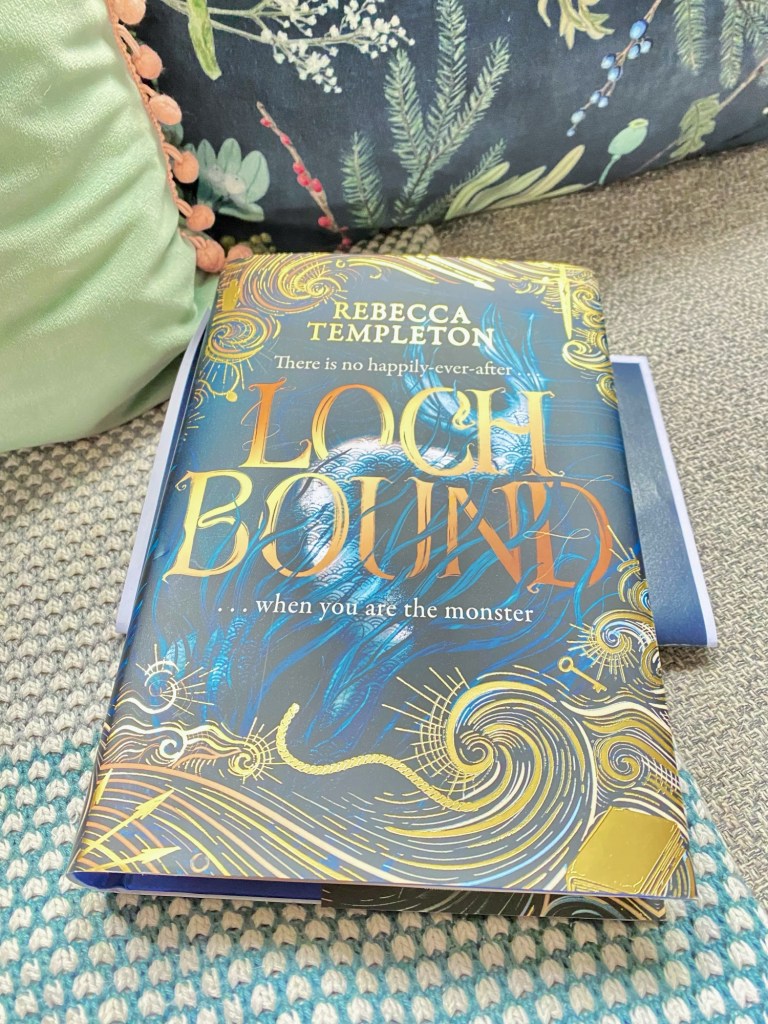
I love when monster stories are given a retelling and in this one it’s a mermaid living in a loch, but not the Disney-fixed Little Mermaid we might be used to. Here she is a truly fearsome creature named Moireach with yellow eyes, sharp teeth, shiny scales and the drive of a predator. She lives in the loch, only changing after dark when she reverts back to her human form – Iris. As a young girl Iris defied her father and fell in love with Thane. He forbade their relationship, as the daughter of a laird she must marry well and for the clan’s gain not her own. Devastated she visits a witch hoping to be free of her father’s obligations, but the witch cursed her and she became banished to the loch by day. Now, some fifty years later, when Iris emerges she is still the beautiful girl of her youth. Thane has never come for her and as dead men have been discovered around the loch with their hearts ripped out, the name of the monster is on everyone’s lips. Her childhood friend Duncan, now an old man, knows it cannot be Iris. She isn’t capable. He hides her with all the love and loyalty he had fifty years earlier, even though she chose someone else. The laird has made a big decision, he’s hired a hunter of monsters, a man called Henry Cartwright and he has never failed to catch his prey.
The backdrop of this story is perfect, using the mist, cold and breathtaking landscape to add to it’s mystery. There are parallels with Outlander here in the feel of this place, making good use of Scotland as a thin place where the paranormal, time travel and a history of monsters seems part of life. With the historical backdrop of the witch trials it’s also a dangerous place, particularly for a woman. Iris talks about the smell of the burnings and how women must be careful, but it’s no easier being a monster when men are turning up dead. The background of misogyny and brutal witch trials hangs over them all and shows a willingness to believe in magic, curses and female malevolence. It’s not just witches though, other fantastical creatures exist here like the seelies and selkies and there’s more one woman with powers a man would kill for. All of these things appear to be aligned with the nature that surrounds them and we can see that wildness as Iris changes to Moireach. It’s not just the yellow eyes and scales but the way her mind becomes that of a predator with only one goal. Reading this felt like being a child again and discovering a fairy tale rooted in darkness. Yes, some elements are fantastical, but it doesn’t read like fantasy. It’s more like a hybrid of historical fiction and fairy tales with aspects of a thriller. The pace speeds up as Iris begins to run out of time and we still don’t know why she was cursed, who cursed her and what will finally break it. There are those in the village who may seem kind, but could benefit from keeping Iris in her watery prison. As she takes us back to those fateful days in flashback, when her family were all together and her father didn’t yet know about Thane. I was engrossed with the tangled web of lies and betrayal but also by the question of what life Iris would choose if she could lift the curse. Would she pick the life she’d always wanted or had things changed? There are some unexpected revelations too, making for an exciting and absorbing conclusion. I thoroughly enjoyed this dark and feminist take on the mermaid stories we’re used to and I look forward to what the author writes next.
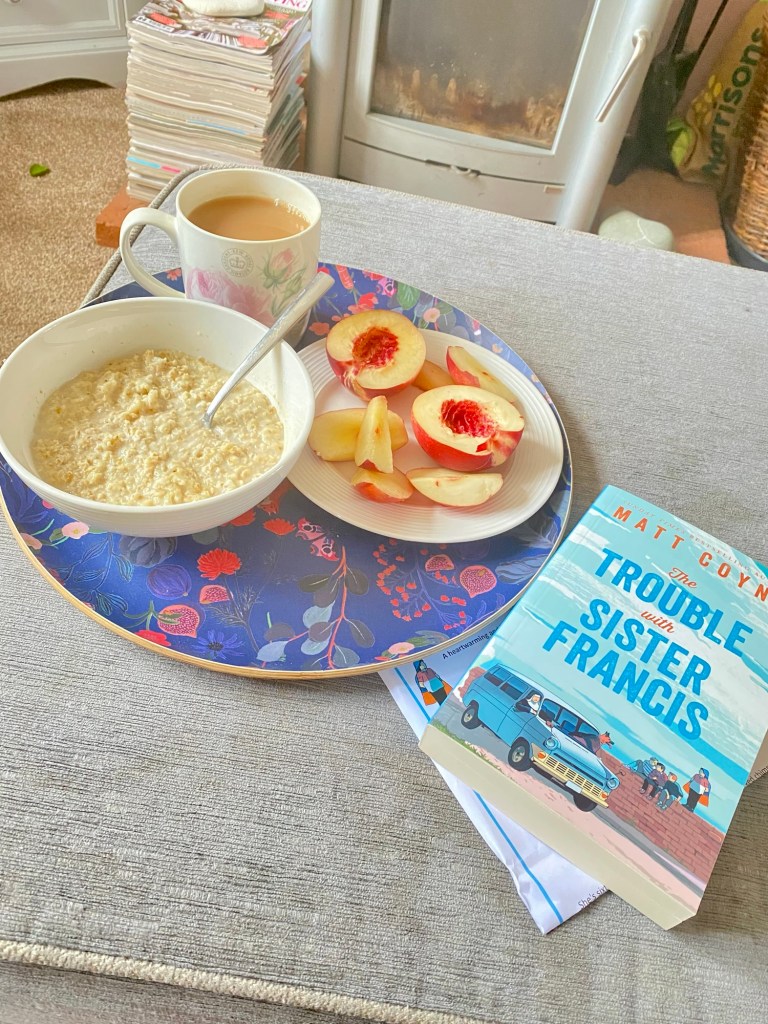
I feel like I’ve been living under a rock because I’m the only book blogger who hasn’t read Frank and Red, so this was my first introduction to Matt Coyne. I don’t even follow him on social media so went in completely blind. This book was a gem from start to finish. Matt Coyne’s ability to write a novel with the emotional intelligence to balance weighty subjects like war and loss against laugh out loud comedy is akin to Sue Townsend and her wonderful creation Adrian Mole. Sister Francis is like my rather formidable previous schoolteacher, Sister Joan. She had the sharpness and discipline of a military veteran, but underneath that there was a twinkle that made me think there was a sense of humour and quick wit underneath. Sister Francis drives an old van as if she’s in a rally, always has a cigarette on the go and reads the racing post. I have always found nuns to be singular and quirky individuals so I warmed to her immediately. Although she’s a comic character there’s so much more to her. She’s clearly keen on restarting a boy’s club she used to run years ago, with origins of supporting boys who had lost their father in WW2. She has a way of relating to boys from the area and our four friends can see she’s a formidable ally from the first day. When they roll up to the clapped out shed they’re accosted by one of the local priests, asking what they’re doing hanging around the presbytery and accusing them of looking for things to steal. When Sister Francis bursts out of the shed he’s taken aback and the boys notice she uses her sweetest voice and emphasises the holy intentions behind her club, but as soon as he’s gone she lights up and is her sweary self. Behind this exterior are buckets of empathy and determination to help the boys in her care, not that she’s easy on them. The four boys have a deal with her, if they come and help her clean the club house on the last Saturdays of term they can come to the club in the holidays and keep the entrance fee. It’s hard work but they stick at it and it’s not long before the Dead Dad’s Club is up and running.
I developed a soft spot for Rich’s Grandad Bob, who has a keen sense of humour and is a great role model for a young boy who has lost his father. I loved how he made Rich laugh with his assessment of Aunt Carole – she has a beard and looks like a pirate. He’s also there for the worse times too, after Rich’s dad died he has enough sense to simply sit with him as the loss hits him, no platitudes or promises, just sitting with him in his grief. Alongside Rich’s 1980s narrative is the journal of another boy who went to the Dead Dad’s Club after the upheaval of WW2. This narrative is evocative of a totally different era as Reginald is evacuated to a small village near Sheffield that’s something of a culture shock after growing up in London. Evacuees didn’t always have the best time and Reginald is coping with the boredom of the village – his observations on what passes as news worthy are so funny. He’s also navigating that rite of passage from primary to secondary school and the author really does conjure up those fears about the bigger school, getting lost and being without your usual friends. I wasn’t sure where his story fit with our four main characters and this is kept under wraps until exactly the right moment. This book has been a wonderful mood lifter just when I needed one, like a warm hug in book form. One line made me think about the friends who knew me in my small village at a similar age, one of whom I’ve tried to see regularly more recently. We try to get together at least once a month for cake and a catch up and I remember being taken aback at first by exactly how well she knew me. But of course she does. As Matt Coyne writes ‘real friendships are cast in the everyday’ and even though my friend and I often just walked her dog, cleaned out the rabbits and watched telly we grew up together and that counts for a lot. I heartily recommend this hilarious but heartfelt story that’s a ray of sunshine in book form.
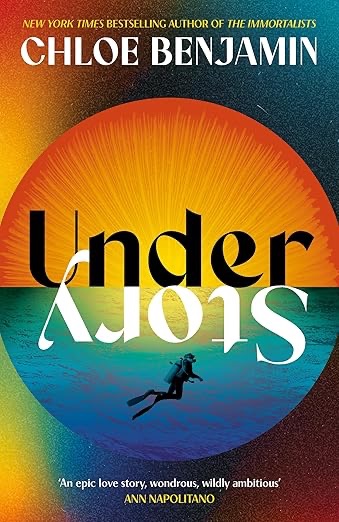
This book has to be my book of the year so far. I’ve been going on about it since May because it really is something special. I was quite simply blown away by this complex and beautiful story of science, loss and second chances. Our heroine Laurel is a scientist, studying fungus and how it grows but for some reason that isn’t clear at first, she’s on a research station in the Antarctic, away from her former husband Eli and without any fungus in sight. When she develops a fascination in the Arc that appears she thinks about its significance. When she becomes aware there is a matching basin underneath the water, her imagination is fired. Could this possibly be a portal? A gateway to a different world? She knows Eli won’t be far behind because she remembers his theory of the ‘duoverse’, the idea that at the moment of the big bang time and space was formed in two directions: our universe, the planets and the development of the world we know and in the other direction it’s complete opposite. I am not a scientist, in fact I barely have GCSE Biology, so I wasn’t aware of any background to this idea so could drift with it and enjoy two incredible minds exploring ideas. Our characters are fascinating, Eli and Laurel are a couple who were made for each other but their relationship is real and they face tough times, particularly when devastating events crash into their lives but I never doubted their love for each other. It’s fascinating to watch their characters face the concept of the duoverse, not just whether it is a portal, but if it is what will their relationship look like there and will going backwards fix whatever tore them apart? I felt both were analytical and might even appear cold at times, but in the moments of heightened emotion we really see who these characters are and the deep wells of love they hold.
I was on tenterhooks wondering about the duoverse under the ice and if Lauren is right whether they’ll ever be able to return? I found myself wondering how this world would look as time scrolled backwards. I was genuinely scared for them but also full of admiration for their bravery. The mirroring is so cleverly done, showing how life always comes full circle and we’re often helpless at the end and the beginning, if we’re lucky enough to lead a full life. As someone who worked in nursing homes in my twenties this really made me think of the role of nostalgia and how often elderly people hanker after experiences from their childhood. Laurel wants her mother’s blueberry pancakes, to watch a film she’s seen a million times and disappear into a favourite book because there’s comfort in it. It might seem like science has sent them on this potential journey, but it isn’t. The totally unscientific emotion of love is what pushes them on, but also guilt, hope and desperation. Loss is a huge theme in the novel, something that always hits me in the heart, and I was deeply moved by how the author dealt with loss and how the scientific concept of a duoverse changes this experience. This novel was moving, profound, invigorating, deeply intelligent and so full of life. I kept thinking about the symbols of the cover, the circle and the tree, the same under the ground as they are over it. As Laurel observes:
“A line implies before and after; a circle says And then, and then…”
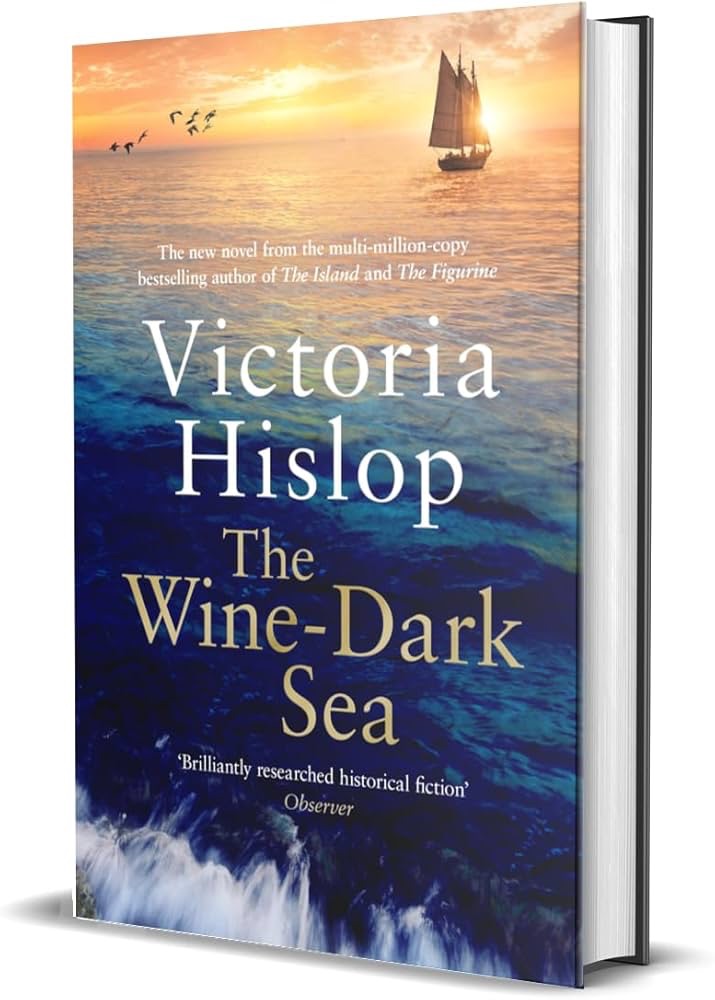
Greece, 1946. In the power vacuum remaining after the Second World War, a brutal civil war erupts between rival left- and right-wing factions. The conflict spirals as the country pays a bitter price in human lives and fighting soon erupts in the mountains, turning villages into battlefields and pulling ordinary women and children into the fray.
When the government soldiers come to Kalopetra, Fotini is nursing her newborn second child. She urges her daughter, Iliana, to hide with the older children as she and the other women are herded into trucks. Weeks later, soldiers return for the children . . . but they are not to be reunited with their mothers, a wholly different fate awaits them.
Fotini finds herself transported to a prison on the island of Chios, where she befriends Markella, whose little son, Nikos, is wise beyond his years. After months of imprisonment, when Fotini and Markella find themselves separated from one another – and from Nikos – Fotini vows to hunt not only for her own child but for Markella’s too.
The Wine-Dark Sea tells of families flung apart across continents and of a strong, determined mother who resolves not to let war destroy hers.
This epic story from Victoria Hislop really taught me a lot about a period of history I know little about. She has taken an incredible amount of research for this novel and I imagine some of it was harrowing. She has taken the stories from women living through this time and shown some of them through one family, magnifying their power. The events happen after the end of WW2, a turbulent time that has already seen the punishment of Nazi collaborators and now many would like to see the end of their right wing government. The setting is one little village called Kalopetra where Fotini’s husband has gone to fight for government forces against the communists. This immediately causes a schism in the family because Fotini’s sister Stella has a husband who fights for the communists. The sudden divide is causing friction across the village, but the women left behind must work together if they’re to survive. When government forces come to the village they capture all the women and Fotini is allowed to bring her baby son with her. However, her older daughter Iliana is left behind along with a group of older children. How will they survive? That moment of Iliana chasing the truck with her mother unable to do anything to reassure her is burned into my memory. Although soon enough communist forces will round up the children and move them into camps where they are fed, clothed and then sent on to other countries like Yugoslavia. After having the entire burden of the other village children on her shoulders, Iliana is relieved to be fed and clothed by such kind people and so the process of brainwashing begins. All Fotini can think about is returning to her peaceful village and living the rustic existence that has survived for centuries, she doesn’t know that her way of life is already dead and nothing will be the same again.
The author uses Fotini as her main narrator, but we also have chapters from Iliana’s perspective as she grows into adulthood and some through Nikos, the clever son of Fotini’s friend in their camp. These two narratives show how far and wide one family could be spread as Iliana thrives in the communist way of life and Nikos is chosen for a programme directly backed by the Queen of Greece. Iliana sums it up perfectly when she asks:
“Was there a single family on earth that had remained intact, or in the place they belonged or wanted to be.”
One of the benefits of a communist system is that women are seen as equal to men and this intrigues Iliana who knows that if they’d remained in Kalopetra her fate would have been the same as her mother and grandmother. She’d be married to someone in the village and bring up babies. Here she could learn to drive or even fly a plane. She longs to be an engineer and hopes if she studies hard she will have the opportunity to go to university. It’s easy to see how a young woman like her would see communism as an improvement on what she expected from life, scratching out a living from the land and being second to a man. In the government camp Fotini is holding out against signing a confession that she was a communist. Those who do sign the waiver are set free but forever marked as traitors to the government, especially in the eyes of their fellow villagers. Fotini doesn’t want that hanging over their family when they return home. She doesn’t know whether her husband is alive or dead, but isn’t longing for his return. She makes friends within the camp, particularly with Markella who comes from an island with a leper colony where she used to work. It’s where she plans to return. As her baby Mitsos grows he plays with Markella’s interesting boy Nikos, something of a child prodigy when it comes to numbers. His fascination is with ships and he will build them out of any material he can find to hand. It’s not long before he’s noticed and singled out for a different institution backed by the Queen. From there he seems to disappear and Fotini is determined to find both her daughter and Nikos when she is released. When she is released it’s clear one thing hasn’t changed – the generosity of Greek people. As Fotini and Mitsos travel to search for the lost children people take them in, share their own dwindling food supplies and clothe them too. It restores her faith in humanity that there is still such generosity left in a people who have been tearing each other apart. There is a glimmer of hope for the future.
I really enjoyed the later parts of the novel where we see Fotini piecing life back together in the city of Piraeus. It’s a massive change for this country girl but she can see the benefits of more job opportunities, entertainments like the cinema and eating good Greek food again at a lovely restaurant run by Demetrios. He’s such a kind man and gently reminds Fotini that she can’t spend the rest of her life wandering and looking for the children. The best thing she and Mitsos can do is stay in one place and hope the children find her, the place she was trying to get back to is gone. There was so much material to choose from in this book that it could have filled a trilogy. I had questions about all sorts of characters, such as Fotini’s relationship with her sister Stella. I also had questions about Nikos’s journey and his adoptive mother, there just seemed to be more about her that could have been explored. However, I loved Iliana’s growth and her life as an adult living under communism. The differences between Greece and Hungary were fascinating and imagine some very heavy editing of this material had to be done to get it into one novel. As always the author captures the beauty of the Greek islands, their isolation and wildness and how this conflict disrupts a way of life that existed for centuries. The book symbolically ends with a circular dance that’s life affirming and perhaps a way of capturing, just for a few moments, that lost way of being.
Out from Headline Books September 24th 2026
Meet the Author
Victoria Hislop is the international bestselling author of The Island and The Return. In the United Kingdom, she writes travel features for The Sunday Telegraph, The Mail on Sunday, House & Garden, and Woman & Home. The Island sold over a million copies in the UK and has been translated into 24 languages. Victoria’s second novel, The Return, has been published in more than a dozen languages. She lives in Kent, with her husband Ian and their two children.
WHAT IF TOMORROW WAS ALREADY WRITTEN, BUT YESTERDAY WAS YOURS TO CHANGE?
At an isolated research station in Antarctica, biologist Laurel Salter washes dishes for a living ten hours a day, six days a week. She tells no one why she left her career, or why her marriage ended.
But even in this remote outpost, Laurel can’t outrun her past. When a strange light appears across the ice and draws a group of physicists to McMurdo, her former husband, Eli, won’t be far behind.
Laurel is captivated by the Arc: its surreal glow; the way it seems almost alive. And though Eli is reluctant to test her wildest theory, Laurel is convinced that the Arc leads down a rabbit hole, and into a world they can barely imagine. Can she persuade him to risk everything to fix the burden that hangs between them – to turn back the clock and live their story a second time?
And this time, live it differently.
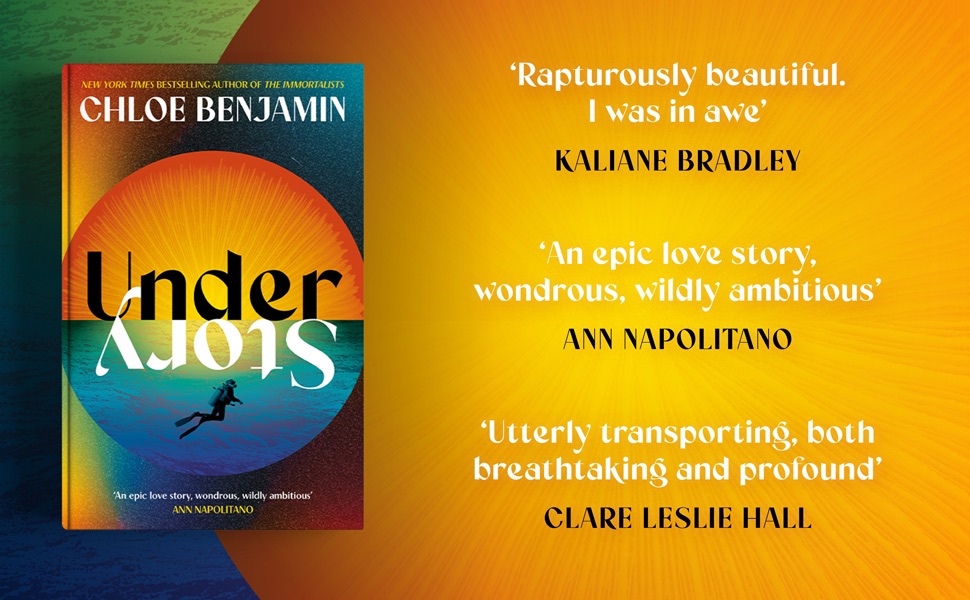
Once read, never forgotten, Under Story is a genre-defying exploration of the promise of this life, what might lie beyond it, and how far we would go for more time with the people we love.
This is my book of the year so far and I can’t stop talking about it. I’d read it on NetGalley in the spring and I was desperate to review but it felt too early. So when I found out my fellow squadettes were reading this in August I had to join in. I was quite simply blown away by this complex and beautiful story of science, loss and second chances. I still think about it all the time. Our heroine Laurel is a scientist, studying fungus and how it grows but for some reason that isn’t clear at first, she’s on a research station in the Antarctic, away from her former husband Eli and without any fungus in sight. When she develops a fascination in the Arc that appears above the pole she thinks about its significance, but when she becomes aware there is a matching basin underneath the water, her imagination becomes fired. Could this possibly be a portal? A gateway to a different world? She knows Eli won’t be far behind her because she remembers his theory of the ‘duoverse’, the idea that at the moment of the big bang time and space was formed in two directions: our universe, the planets and the development of the world we know and in the other direction it’s complete opposite. I am not a scientist, in fact I barely have GCSE Biology, so I wasn’t aware of any background to this idea so could drift with it and enjoy two incredible minds exploring ideas. I was fascinated with Laurel’s experiments with fungus growing in a maze and whether it moved in a specific direction. She was disappointed to find it tried out all routes then doubled back on itself, but then a second batch made straight for the right route as if it had learned from the previous batch’s mistakes. It felt like a demonstration of Jung’s collective consciousness:
“Ideas spread and somehow we’re all plugged into them.”
I often feel this about ideas, like when several books come out on the same subject at once. It reminded me of something I’ve read before – that ideas are hanging in the air and if we don’t grab them someone else will. As Laurel presents her paper at conference she’s asked some particularly tough questions by one delegate who is unimpressed with her work, claiming she’s applying a human lens to interpret her results. Laurel’s retort is to ask why the delegate is assuming that all intelligence is human? Laurel knows that we like to separate ourselves from animals and plants, safely in our own superior category, but oxygen from our atmosphere is running through our veins and the word human comes from the Latin word ‘humus’ meaning soil. Thinking that we are of the earth is the only thing that comforted Laurel when her dad died. She thinks about how bronchi in our lungs branch like trees and how a ‘neural network in the brain is structured like a galaxy’. I loved reading these aspects of the book and really appreciated how cleverly the author plants these ideas in the first part of the book and they grow in the second part.
Our characters are fascinating, Eli and Laurel are a couple who were made for each other but their relationship is real and they face tough times, particularly devastating events crash into their lives but I never doubted their love for each other. It’s fascinating to watch their characters face the concept of the duoverse, not just whether it is a portal, but if it is what will their relationship look like there and will going backwards fix whatever tore them apart. I felt both were analytical and might even appear cold at times, but in the moments of heightened emotion we really see who these characters are and the deep wells of love they hold. It was two other characters that caught my imagination though: Gloria and Mr Nakamura. I absolutely loved Gloria who is Laurel’s mentor in our universe and her house in San Francisco was so brilliant I wanted to live there:
‘It was an old Arts and Crafts house on Prospect Avenue, dark wood with purple roses growing in the garden and ivy trailing over the windows. Inside was enchantment; half melted candles, cabinets of oddities, a Maine Coon cat the colour of midnight.’
Gloria is intelligent, feisty and an incredible mentor to Laurel and I had a feeling they would meet in any universe. Mr Nakamura is a character from later in the book who is an ‘overtaker’ – a thought I’ll leave with you – who’s incredibly wise and understanding, helping with the difficult parts of life’s journey with dignity. Every character springs to life and has a backstory.
The book’s settings are incredible. First the frozen wasteland of the Antarctic and its different scientific research bases are fascinating. I had no idea how many were there, but McMurdo is like a mini town and it’s the tiny details that give it authenticity. Many of the scientists go home for the winter months when it’s impossible to go outside and cabin fever can really kick in. Some people have an ‘ice-wife’ or husband who they’re in a relationship with in the summer months, then go home to their real spouses in the winter. Bits of the real world come through, such as the disappointment in a second Trump presidency, but it feels like a different world and the perfect place to avoid reality too. Every world the author presents to us feels absolutely real even though some of it seems impossible. I was on tenterhooks wondering about the duoverse under the ice and if Lauren is right whether they’ll ever be able to return? I found myself wondering how this world would look as time scrolled backwards. I was genuinely scared for them but also full of admiration for their bravery. The mirroring is so cleverly done, showing how life always comes full circle and we’re often helpless at the end and the beginning, if we’re lucky enough to lead a full life. As someone who worked in nursing homes in my twenties this really made me think of the role of nostalgia and how often elderly people hanker after experiences from their childhood. Laurel wants her mother’s blueberry pancakes, to watch a film she’s seen a million times and disappear into a favourite book because there’s comfort in it. It might seem like science has sent them on this potential journey, but it isn’t. The totally unscientific emotion of love is what pushes them on, but also guilt, hope and desperation. Loss is a huge theme in the novel, something that always hits me in the heart, and I was deeply moved by how the author dealt with grief across the novel and how the scientific concept of a duoverse changes this experience. This novel was moving, profound, invigorating, deeply intelligent and so full of life. I kept thinking about the symbols of the cover, the circle and the tree, the same under the ground as they are over it. As Laurel observes:
“A line implies before and after; a circle says And then, and then…”
Out 1st September from Tinder Press
Meet the Author
Chloe Benjamin is the author of THE IMMORTALISTS, a New York Times Bestseller, and THE ANATOMY OF DREAMS. Her third novel, UNDER STORY, will be published in September 2026.
A Barnes & Noble Discover Great New Writers selection, LibraryReads favorite, and #1 Indie Next pick, THE IMMORTALISTS was named a best book of 2018 by NPR, The Washington Post, Entertainment Weekly, and others. THE ANATOMY OF DREAMS received the Edna Ferber Fiction Book Award and was long listed for the 2014 Center for Fiction First Novel Prize.
Originally from San Francisco, CA, Benjamin is a graduate of Vassar College and the M.F.A. in fiction at the University of Wisconsin. Her work has been translated into over thirty languages. She lives with her husband in the San Francisco Bay Area.
What do you do when you’ve ruined your life? You go home to your mother, if you’re lucky enough still to have one. Saoirse Maher wouldn’t recommend it.
Leaving home wasn’t supposed to be temporary. When she moved to London, Saoirse was leaving Ireland behind for good, and with it her messy, broken family. But it turns out that starting again isn’t as easy as she imagined, and when her five-year relationship goes south, Saoirse finds herself out of options. And so here she is, trudging back to her mother Máire’s house up a side road on the outskirts of Irish civilisation.
Except the world she comes back to is nothing like the one she left behind. Her mother has a new family, and everyone else seems to be moving on. But between the drinking, drugs, and an entirely healthy, not-problematic-at-all-thanks relationship with Charlie, there’s plenty to distract her.
Don’t look too closely, and everything’s fine. Saoirse is just fine.
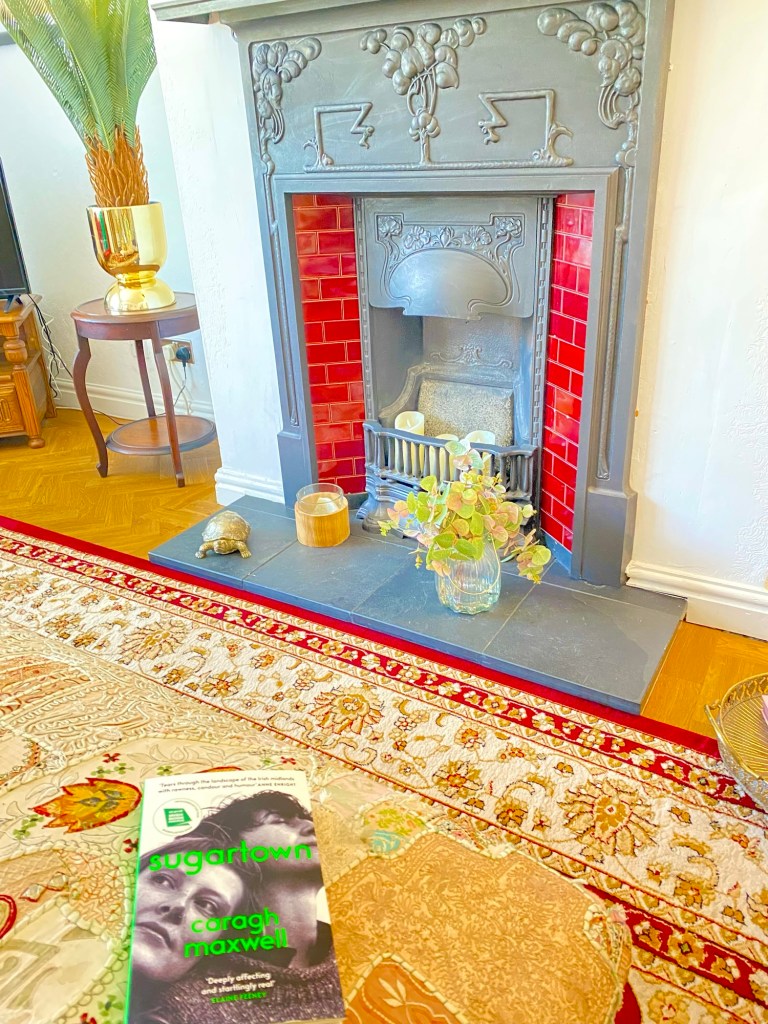
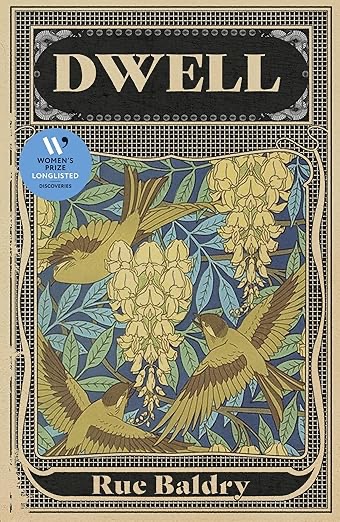
This was one of those books where the narrative voice captures you straight away and you know you’ll follow wherever she takes you. Saoirse is in her early twenties, newly returned to a small town in the Irish midlands when her big life in London doesn’t go as planned. Now back under the roof of her mother, her second husband JJ and their three perfect daughters, all Saoirse can see is the difference between the mother her little sisters have and the mother she had at the same age. Back then Máire was young and struggling, with a husband who’d rather drink his wages than bring them home to his wife and child. In fact Saoirse can remember being in her mother’s car, driving from pub to pub to look for him. There was so much drama between her parents she might as well have been invisible. When she contrasts this with Lily, Grace and Emilia’s life she can see the difference but she can’t understand it; are they just more lovable than her? She notices the way her mother Máire dotes on them, puts their hair into identical plaits but stops short of identical clothes, reads to them at night and makes sure they’re cared for and these small expressions of love hit Saoirse like poison darts. Her sisters even get to call her Mammy, something that Máire was very clear about:
“I was christened Máire Lynch. Not Mammy. That is not my name. I won’t speak to you if you don’t use my name.”
Sometimes she wonders if the impression she has of their relationship is distorted but then she remembers Granny Lynch, the person who cared for her most asking her aunt to give her some leeway; ‘leave her be, you’ve met her mother.’ Granny’s is the only place she had stability and felt loved for herself, just for existing. Even now, at the age of 24, Saoirse feels her mum’s bite as she bullies her out of bed in the morning, insists she does an interview for the local hardware store and is insistent that JJ shouldn’t have to keep her. Saoirse just wanted a few days grace to gather her thoughts and adjust, but now she’s everything she didn’t want to be, living back with her mother in a small Irish town and doing a job that has no meaning and pays enough money to get by week to week. Then, with her friend Doireann she spends it on alcohol and drugs to forget the tedium and disappointment of life for a few hours. She isn’t even allowed to express her disappointments because Máire is right there, ready to tell her what it was like to be her age with a baby and an alcoholic husband. The author uses wit and humour, even within the darker themes and here Saoirse talks about the ‘overarching theme of the Annual Irish Suffering Olympics’. If you complained about a broken toe, someone else had lost their foot in a mowing accident, so you should ‘get over yourself’. This was such a familiar moment of Irish family humour that it made me smile.
It’s easy to forget Máire’s struggles because Saoirse’s voice is so compelling. It’s no wonder her mother enjoys the routine and stability of her relationship with JJ after the turbulence of marriage to Saoirse’s father. When Saoirse hits rock bottom her dad is briefly there for her, but it’s the first time. Although we concentrate on the mother/ daughter relationship, he has been completely absent in her life. He’s one of those Irishmen who are great at stories and for the craic down at the pub, but they don’t see the state he’s in at home and the way he chooses drink over his family again and again. He seems stable enough at the moment, living with his second wife and making bodhrains in his garden workshop, but he will always let her down. I was concerned that Saoirse would end up living her mum’s life, young, pregnant and with a partner who can’t be trusted. I felt so maternal towards Saoirse throughout and I could see that her lack of parental support left her craving love and acceptance. It’s like a huge hole that can never be filled. Unfortunately it also leaves her open to damaging relationships and when she meets Charlie, through Doireann and her on again off again boyfriend Connor, she falls headlong into tumultuous and possessive feelings.
I was holding on to hope that she could get her life back on track, even when it hits rock bottom and she wakes up in hospital. In the end she turns to counselling and one of the first things they talk about is that emptiness Saoirse feels where the love and support of a parent should be. One line of dialogue in the book broke my heart more than anything and it’s when Máire is throwing all her anger and resentment at her daughter. Their fight turns physical when Saoirse reminds her that she forgot she had a fourth child. When she asks her mother what she’ll tell her little sisters Máire says ‘I’ll tell them to be anyone but you.’ It’s so harsh it stopped me short. Of course in order to heal we look for closure and Saoirse has tried drugs, alcohol, relationships and acting out to fill that hole at her centre. The counsellor asks her some searching questions. What if that closure never comes? What if she doesn’t have a relationship with her mother? Somehow she has to learn to feel that uncomfortable absence without trying to fill it with other things. I felt there was hope that she would build self esteem, because even in the throes of first love she finds Doireann’s relationship with Connor uncomfortable. When she tries to clarify whether they are together or not, Doireann says they’re not ‘together, together’ but it’s great because they both get their space and they’re not making claims on each other. Saoirse is confused and asks Doireann who else she’s seeing, but she’s only seeing Connor while he’s seeing other girls.
“So you do all the things a couple does without the security of knowing you’re not going to get cheated on.”
Of course she could be cheated on whether in an official relationship or not, but the need to point out that only Connor benefits from their arrangement shows that Saoirse does have some expectations and standards. She knows she doesn’t want that kind of relationship. She wants boundaries, exclusivity and respect it’s just that her desperate need for love and acceptance means she settles for less. She also knows that her own capacity for love is immense, saying she would tear herself down to make sure Charlie grew because ‘it was just my way.’ Luckily at this point she moves in with Doireann and her family and sees a totally different way of parenting, a seemingly natural maternity in her mum Karen who struggled to become a parent and sees her daughter as something of a miracle. Saoirse notices that they have saved mementoes of every milestone in their daughter’s life and yet are still able to listen and support her plans to move away from home. When Karen’s had a hard shift at the hospital, Saoirse listens and makes her a cup of tea and Karen tells her she’s a ‘good girleen’ but the compliment is so alien to her she doesn’t know what to do with it. Being mothered makes her realise how complicated it is and opens up the guilt, anger, resentment and thoughts that she could ‘fuck up’ her own daughter. Yet she’s already thinking about how to stop repeating the pattern.
This is a remarkable debut. Every single character felt completely real and the author has captured the awkward vulnerability of youth and a girl who has never had that parental safety net that allows her to experiment and work out who she is. The language is beautiful too from the viciousness of a resentful parent, to the delirium of drug addled parties and the tedium of the hardware store. She describes a silence between her and her mother as weighing on her like ‘wet wool’ and I could feel its heaviness. It all rings true and struck a chord with me about my own teenage years and not always being understood. Some of the descriptive passages are so layered they create tiny moments of stillness within the turbulence becoming passages to breathe in. I found myself responding to the book bodily, so immersed that when the author described a panic attack I realised I was holding my own breath. I felt sad, angry and deeply maternal towards Saoirse and with my counsellor head on I wanted to help. I wanted her to see that she wasn’t the sum of her parents and all the bad things that had happened, that even in the darkest moments there is a tiny spark of light. Any writer that can make a reader feel so much for her characters and their journey is special and I can’t wait to read what Caragh does next, but for now I know Saoirse will be staying with me for a while.
Out now from OneWorld Publications
Caragh Maxwell is a writer living in Sligo town. She graduated from the Trinity College MPhil in Creative Writing in 2023, and her essays, poems and stories have been published in The Irish Times, The Cormorant and other publications. Her writing focuses on the self, memory, and womanhood. Sugartown is her debut novel, and was shortlisted for the 2025 A Post Irish Book Awards.
“They do say secrets are revealed one funeral at a time.”
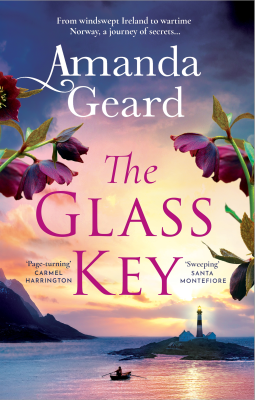
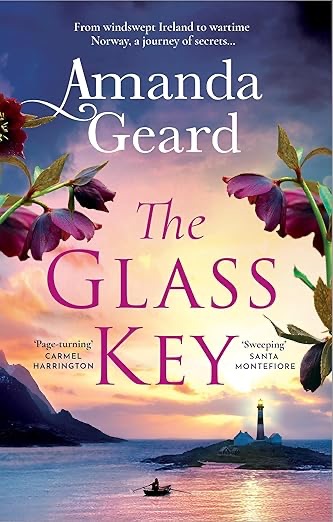
I absolutely adored Amanda’s previous novel The Moon Gate, set at the outbreak of WW2 and straddling Australia, Ireland and the UK. This time she starts her story in Ireland, where Maggie has grown up hearing her mother tell her the bedtime story of The Glass Key. It’s a Nordic fairytale passed down by Maggie’s grandmother Anna Swan, who mysteriously left her home one stormy night years ago, never to return. Now Maggie’s grandfather has died and going through his things, Maggie is shocked to discover a faded wartime letter, asking him to take in a baby. In that moment she realises that Anna Swan was a woman of many secrets.
Only by travelling to Norway and discovering the story of four brave young women whose lives were forever changed by the occupation of their tiny islands, can Maggie uncover the shocking truth about her family – and finally unlock the mystery of the glass key…
There are many historical fiction novels looking at women’s lives during WW2, but I hadn’t read any set on Norway’s many islands, so it brought a different perspective and an atmospheric setting to the story. People becoming displaced and lost during WW2 is close to my heart as my late husband was Polish and both of his parents were displaced during the war: Hannah escaped Warsaw as a small child in the sewers and ended up alone at a Scottish school for refugee children. Whereas Alek was taken to Siberia by the Russians, but somehow escaped and ended up living in the Siberian forests before making his way to England through the Middle East, North Africa and Europe. These individual family stories have huge impact through the generations. Hannah’s dad believed his family to be dead and made his way to America where he remarried. Hannah then had a half-sister in Washington who she only discovered decades later. Amanda shows the chaos of war, not just on the battlefield but in ordinary everyday lives and it brings home how impossible it was to escape the war’s grasp. Through Maggie’s family and four extraordinary women in the Norwegian islands we can see how far the war reached, in fact it’s only for one afternoon on an uninhabited island that the women could let go and clear their minds. Around these archipelagoe there are tiny bays and secret places that are impossible to police, especially when up against local knowledge. It’s no surprise that the allies would use it as the perfect spot for secret assignations. Small boats can be missed in fog and poor weather conditions and although Germany annexed Norway, they haven’t reached these remote places yet. But there’s no doubt they’re coming.
The narrative is a dual timeline split between wartime Norway and modern day Ireland. In Ireland Maggie has had to come home after her grandfather’s death because his home at Hellebore House may have to be sold. Her grandfather Atticus lived there with his Norwegian wife Anna. Anna spent many years in the garden, cultivating Norwegian plants and flowers. She left when Maggie’s mother Freja was young, with no explanation. Maggie’s first instinct, now Atticus is gone, is to try and save the house but as she goes through his things letters from Freja’s mother are hidden away, sketches of Norwegian flowers and a painting of the island of Einevar that she’s never noticed before. The key is a photograph of three young women and a man lying in the grass surrounded by wild flowers. On the back are four names: Liv, Nina, Astrid and Lief and the place, Lyosa. How might these people be connected to her great-grandmother Anna? As Maggie becomes more curious about her family’s past, she also has to face her own past in the shape of first love Jack who has moved back to the area. She doesn’t need to complication as she’s still healing from her divorce and the knowledge that she’s infertile. The Norway narrative is told chronologically as we meet sisters Nina and Liv, their friend Gudrun and a new teacher called Astrid who’s been sent from the mainland to work alongside the formidable school mistress Froken Henrikson. Nina and Liv soon make friends with Astrid after they’re introduced by Gudrun. All the women know the Germans are getting closer and when they find a British man injured in a small boat they assume he is carrying out some secret mission. His appearance sets up a love triangle between him and the fisherman Lief who absolutely adores Liv, but are those feelings reciprocated? Meanwhile, Astrid and Nina are becoming much closer too. When the Germans do arrive, it’s two brothers called Grimm and a man called Bruno Schmitte who is an artist. The tiny population of Einevar can’t predict how the islanders will respond to a German presence. There are those who will resist and place themselves in danger and others who will fall in line, causing a fracture between young people who’ve known each other all their lives. Their last uncomplicated day was spent on Lyosa when, for one afternoon, the friends lie in the sun and don’t think about the war.
There are brilliantly layered and complex characters here, particularly the women. Astrid is brave, very sure of who she is and her feelings. She’s loyal to those she loves and to her country, becoming very close to the sisters, especially Nina. Liv is young and headstrong, placing herself and others in dangerous situations. Lief has adored her for his whole life and will do anything for her, but will that loyalty place him in harm’s way? Liv shelters and nurses an allied agent who drifts onto Einevar having been attacked by German fighters, until he’s fit for the voyage back, knowing that if found out she and Nina would likely end up in prison. I loved how independent the Norwegian women seemed to be, able to sail, weather the elements and forage for themselves. It’s not an easy life, even before the war starts and they are determined to resist the Germans in any way they can. Not everybody on the island thinks this way though, with some becoming close to the German brothers despite it being an affront to family and friends. I did wonder if I could be so brave as to fend for myself without basic utilities and forced to fish or forage for food. These women are so in touch with the land, with its incredible night sky with endless stars and curious Northern Lights. Maggie gets a taste of their lives when she arrives at the cabin in Lyosa to do her family research. It’s like walking back in history with no electricity or running water and gives her an experience of what previous generations had to face just to survive. I also admired the bravery of those who continued to resist despite knowing their capture would mean death or imprisonment and torture.
Motherhood is also a huge theme in the novel, starting with the shock of great-grandmother Anna leaving Freja behind with her father when she was just a child. What caused her to flee and why did Atticus never try to find her? There are many different representations of motherhood, from women who leave their babies, to infertility and being a mother to someone else’s child. If Maggie and Jack were to become close again she has the prospect of being a stepmother while not being able to have her own children, something that echoes through the generations. These women are linked by those experiences but also their talents, such as Freja’s Nordic fairy tales for children once told to her by her mother Anna. Maggie’s creativity also links back to a previous generation, with Liv’s drawings and a book of botanical sketches uncovered to Hellebore House. I loved how the author showed the war’s reach and how one tiny uninhabited island gave the young women a chance to let go of it for just one afternoon. Maggie is the conduit for all the drama of WW2 and these sections of the book are nail-biting in parts. Maggie’s present is more gentle and flows beautifully, resolving the secrets kept for three generations and in a way I didn’t expect. Amanda’s novels are real favourites of mine and this had everything – family secrets, hidden letters, forbidden relationships, espionage and some incredibly brave women who sacrifice everything for the people they love. This is a fascinating read should be on every historical fiction fan’s summer list.
Out now from Headline Review
Meet the Author
Hi, I’m Amanda, and I absolutely cannot WAIT to share my latest novel with you.
THE GLASS KEY is a tale very close to my heart and inspired by the Norwegian Arctic island my husband and I bought when we were 29. Evie Woods said it’s ‘a captivating story that unlocks an emotional doorway to the past’, and well, I love that.
If you’re new to my work, you might like to start with THE MIDNIGHT HOUSE, inspired by a message I found scratched into the rafters of our Irish home, a two-hundred-year-old stone building perched on the edge of the Atlantic. The book was a Richard & Judy book club pick and translated into 8 languages.
THE MOON GATE uncovers the secret behind a mysterious legacy – Towerhurst, an old house crumbling in a rainforest. It takes place across three locations: Tasmania (my home state), London (where we rented a houseboat for many years) and County Kerry, Ireland (where I now live). THE MOON GATE is my most sweeping and beloved book.
I’m also a geologist who explores the world’s remote places. I’ve worked on five continents, and spend months at a time out in the wilds. Writing novels provides a similar sense of discovery, though the conditions rather more comfortable!
You’ll find me on my website, Instagram (@amandageard) and Facebook (@amandageardauthor). I love chatting with readers, so please come on by.
I’m writing this from a puddle of my own sweat and with a fan roaring in the background. Every animal has spread their body as far as possible across the wooden floor trying to keep cool. It’s been a stay at home month for sure as my neurological symptoms worsen when it’s hot, within a couple of days I had the texture of a wet noodle. So it’s been a month with lots of reading. I’m organised though, fans in both rooms I use a lot, ice cold water, lollies and ice chips, a neck fan and a handheld motorised fan that’s a god send. Nothing tells you that you’re middle aged more than a neck fan for Christmas. Especially when you’re pleased with it. I’ve been reading for the Squad POD Collective this month, then mainly NetGalley reads in between. There’s a huge range in these favourites as we go to Ireland, Liverpool, Norway, Italy and the US, from the aftermath of WW1 to the present day. There are family sagas, an incredible forbidden love story, a great start to a new crime series, the most talked about book on social media and finally a slice of whimsical joy from Matson Taylor. See you next month 📚
Look at that fantastic gothic cover! This is the dark and dangerous side to my favourite city as disgraced detective Mark Fletcher wakes up disoriented in the Castle Street Hotel. He’s horrified to find he’s in bed with a corpse, a man with a bullet hole in his head. How can he explain this when he has no memory of what happened last night? His finger prints and DNA will be everywhere, so will his disillusioned colleagues believe him if he calls it in? He can take his chances with his old team or he can run. This is the man who caught the Butcher of Bootle, only to watch his life rapidly fall apart nine months ago. Luca Veste takes us on a breathless chase through Liverpool while the crime team are playing catch up. We follow his old colleagues Kirkham and Abs as they investigate a body discovered in a garden in Kirby, making Brookside jokes along the way. Could these two deaths be linked? We’re also introduced to the Bonucci family, patriarch Salvatore and his second in command Gino and Frankie. Everyone knows the Bonucci family, they have legitimate business interests but underlying that is a criminal enterprise that’s seeped into every area of the city. They also blame Mark for the death of Salvatore’s youngest daughter Sofia, a huge lapse of judgement that went terribly wrong. Now Mark is trying to investigate who killed his bedfellow, Kirkham and Abs are 24 hours behind him, but could the Bonucci’s be closer? This is a nail-biting and action packed crime thriller that had me rooting for Mark from the moment he woke up. I loved the Scouse humour and the settings the author used as Mark jumps out of windows and even into the Mersey. The ending is such a shock and very clever indeed. I’m already waiting for the next book.
I’ve not written my full review on this but I can’t stop thinking about it and I’m dying to talk to other people for their opinion. We are introduced to Natalie, a trad wife influencer in the US with a hugely successful social media business and merchandising from their ranch Yesteryear. Natalie espouses the traditional life where the man is the head of the household and the woman looks after the home and their ever growing family. Her husband Caleb works the farm, while she runs the business with the help of two nannies and a producer. The monetisation paradox is clear to see, she’s making a living by preaching values that she doesn’t live by. Natalie wants her followers to embrace her trad view on family life, but has turned her ideology into a successful business run by a woman. Followers can watch her baking bread or collecting eggs from the chickens, but they don’t see her childcare or the producer who live on the isolated ranch with the family. Thanks to some clever remodelling of the house they also have all mod cons, but hidden from view with clever screening. Natalie tells women they should submit to their husbands, while agreeing privately that her own is an idiot. Without her this family would be lost. At university Natalie kept herself to herself, noting her roommate’s promiscuity and feminist viewpoint knowing she would become one of the ‘angry women’. Women who think they can have it all – the career, the marriage, the home, the children – end up doing it all and no wonder they’re angry. She still criticises the angry woman; seemingly never realising that’s exactly who she is and that her life is unsustainable. One morning she wakes up when it’s still dark, she can hear children having breakfast in the kitchen. Why hasn’t anyone put a light on? As she makes her way into the kitchen she realises that it’s very basic and her children are eating by candlelight. Except they’re not her children. The oldest girl is looking after them, but she doesn’t know her. Then she sees Caleb, but there’s nothing behind his eyes. They seem to living a real pioneer life, with everything done by hand, no hidden gadgets or shortcuts, no staff, no filming. Is this a nightmare? Has she been imprisoned here? Has she time travelled? You will ask all these questions alongside Natalie as the author takes you back and forth from the internet friendly lifestyle she created and the real thing. The author has managed to make an unlikeable character incredibly compelling, asks questions of this strange world where everyone has a real life and an Instagram ready life, and challenges ideals that current US politicians are advocating for women. The minute you finish this book you will want to find someone else who’s finished it so you can talk.
It was lovely to spend some time this month in one of Faith Hogan’s warm and welcoming worlds, this time on an isolated Irish island called Pin Hill. In this small community, sisters Blythe and Rae grew up with their grandparents at the family hotel in Hope Square after the death of their parents. Blythe’s ambition in life was to train in hospitality at university and follow her grandad into the family’s hotel business. Rae on the other hand was more of ‘go with the flow’ girl, spending her time with friends rather than learning the family trade. Yet, when we meet the grown up sisters, life hasn’t turned out as planned. Blythe lives in her own guest house at Still Water House with handyman husband Kip and daughter Siggy. Rae’s husband Marcus has died and she’s living alone in the Hope Street Hotel, where she’s run the family business with her husband for many years. What happened to place these sisters at odds with their expectations, especially Blythe who lived and breathed the hotel. As always Faith has created some great characters here in the rather strident and opinionated Blythe and her quieter, less confident sister. Blythe’s actually a bit much in parts and I found her very hard to like. We’re taken back and forth to the women’s teenage years where the explanations lie and uncover the secrets and events that set them on the wrong paths. While in the present day, Rae is struggling to maintain the hotel alone and has discovered financial problems her husband covered up. Unfortunately they aren’t the only secrets about her marriage. She has the help and support of niece Siggy and refugee Danial who’s just moved to the island with his grandmother. Blythe is suspicious of both of them and becomes obsessed with Rae’s potential plans for the hotel, setting herself on a path to disaster. This was a lovely, warm novel with great moments of humour in between the sister’s broken relationship. This is the perfect summer holiday read.
First of all I have to mention that gorgeous Art Nouveau cover on this novel, matching perfectly with the time period which is post WW1. This is one of my favourite periods for historical novels because I’m fascinated with the pace of societal change that ranged across class, gender and sexuality. It’s also a period where mental health issues and disability became much more prominent. Many men came home from the war with amputations and facial disfigurements, changing their lives forever. Of course many men didn’t return and every family was touched by loss either on the battlefield or in the waves of Spanish Flu that broke out after Armistice Day. Into this period of seismic change, Rue Baldry has written a beautiful story of forbidden love that touches the heart. Our two narrators are Albert and Edgar, who are both at a boarding school but for different reasons, despite being close in age. Albert was demobbed and needed a job, so is working at the school as a gardener. He has been through so much, yet is only 19 years old. Edgar is 18, a schoolboy from the middle classes who has just missed active service and longs to train as a doctor despite his dad’s wishes. When they meet there’s an instant affinity between them and we’re drawn into their fledgling love. This is a book that’s so evocative of the era whether it’s the old-fashioned British private school or in hell of the trenches. I thought the exploration of a class divide between the two men was very well done too and represented the societal changes in post-WW1 England. It’s impossible not to be drawn in by this love story, especially poignant considering these men were paved the way for the more permissive society we have today. There is no better representation of love is love,
In Ireland, Maggie has grown up hearing her mother tell her the bedtime story of The Glass Key. It’s a Nordic fairytale passed down by Maggie’s grandmother Anna Swan, who mysteriously left her home one stormy night years ago, never to return. Now Maggie’s grandfather has died and going through his things, Maggie is shocked to discover a faded wartime letter, asking him to take in a baby. In that moment she realises that Anna Swan was a woman of many secrets.
Only by travelling to Norway and discovering the story of four brave young women whose lives were forever changed by the occupation of their tiny islands, can Maggie uncover the shocking truth about her family – and finally unlock the mystery of the glass key…
I’ve still to write my review for this one, but I enjoyed it immensely particularly the WW2 timeline in the Norwegian islands that I knew nothing about. People displaced and lost during WW2 is close to my heart as my late husband was Polish and both of his parents were displaced during the war. I loved how the author showed how far the war reached and how it was only on one tiny uninhabited island that the young women could let go of it for just one afternoon. Amanda’s novels are real favourites of mine and this had everything – family secrets, hidden letters, forbidden relationships, espionage and some incredibly brave women. This should be on every historical fiction fan’s summer list.
Last, but definitely not least we come to Matson Taylor, not only a great writer but an all round good egg. His knowledge of art. architecture, and ancient Rome gives us a fabulous summer setting for this standalone novel about found family in the eternal city. A wobble on a new Vespa has Clemmie and Monty literally bumping into each other on a bridge flanked with angels as the novel opens. Monty’s injuries aren’t too severe but mean he can’t work on the renovation job he has in Rome. Now without a roof over his head and needing to recover from concussion (at least he hopes that’s why he can hear Octavian the cat talking to him) Clemmie and her friend Floss offer their palazzo. In their very unique home he finds the rest, relaxation and the care he has needed for a long time. You’ll fall in love with Monty who really is one of life’s innocents or what me and my mum call ‘new people’ who are on their first incarnation in the world. What he does have are secrets and a private grief that he’s never shared. Matson brings him together with the caring aspiring writer Clemmie and her friend, the flamboyant retired actress Floss. Add to these eccentrics a pair of food smuggling nuns, a man who lives in a converted ice cream van and a little twinkle of magic too. I never want Matson to stop writing because where else would I find scenes of nuns going to a gay disco? Set in the 1970s where the height of fashion is Floss’s new avocado en-suite, dazzling Rome is brought beautifully to life and as always there are deep emotions at its core. This is a wonderful comfort read for the summer, especially for those of us who are staycationing.
Here’s next months tbr, if I don’t get distracted of course!