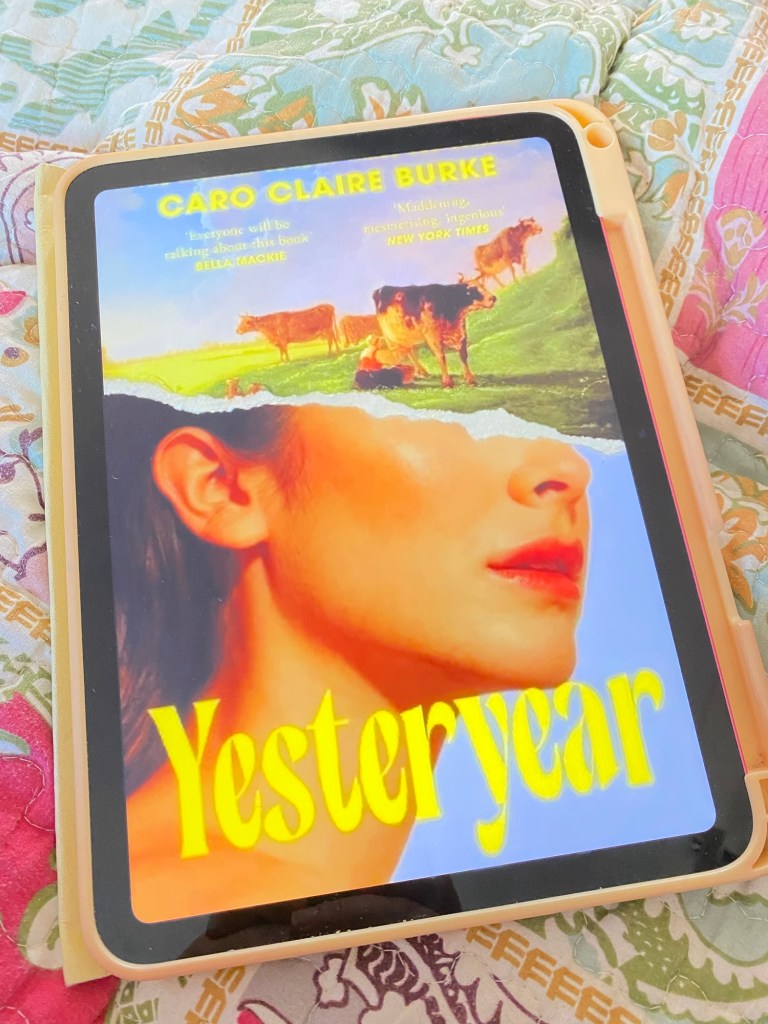
I’d seen so many extremely varied viewpoints on this book that I couldn’t resist dipping in and it was definitely worth the hype it’s received. I read it voraciously over two days, so excited and so confused towards the end I realised I’d read it too fast. I had to go back and force myself to read it slowly. Read either way, this really is a delicious story that has hit at exactly the right time in history. With the US administration rolling back women’s rights and rumours about the implementation of Project 25 it feels like we’re watching Gilead formed in real life. One of the most controversial online figures in this huge political move to the far right is that of the ‘trad wife’, a woman who lives her life focused solely on the home, children and obeying her husband who is always head of the household. This might come from a religious conviction or a political one, but social media is awash with trad wife influencers like Hannah Neelham who shows life at the family farm and cooking from scratch or Estee Williams who proudly declares a return to 1950s values where motherhood and domesticity are the priority. To me this feels like the logical extension of the late 1990s dating book ‘The Rules’, much lauded by Charlotte in Sex and the City. Single women were advised to keep their distance and mystery on the dating scene – with men naturally being pursuers they are more responsive to women who play hard to get. It also advocated withholding sexual contact and focusing on the man’s wants and needs. It stands to reason that any eventual marriage would also involve the man’s needs coming first and feminists are concerned that the current trad wife trend appears like a pop culture phenomenon, but is born of patriarchal policies that will set back women’s autonomy and authority by decades. Of course the obvious paradox here is the influencer’s monetisation of the trad wife lifestyle, promoting the concept of the man as sole breadwinner while simultaneously operating successful and lucrative online content creation businesses, often with merchandising and multiple staff. These women are highly driven and ambitious and this is where our main character Natalie is situated; right at the centre of the monetisation paradox.
The story is told through Natalie in a compelling inner monologue that had me absolutely gripped, despite disliking her quite intensely. The author takes us back to her college days, where she keeps herself separate from her roommate and other students often with a condescending and superior attitude. She firmly believes she has the answer to why feminism isn’t working, labelling her roommate the archetypal ‘angry woman’ who thinks they can have it all but will only end up exhausted and dissatisfied. She marries Caleb and is pregnant before graduation, not finishing her degree. She’s married into a political dynasty, with Cal’s father hoping to start a presidential campaign soon. Obviously they are republicans and Natalie’s father in law does point out that Caleb could be perfect for politics, being an ‘idiot’ who has no direction and is easily controlled. It’s Natalie who gets the idea to run a ranch, scouting for suitable properties and approaching her father-in-law for funding. He agrees to give them the five million they need, but Nat must keep her end of the bargain and keep producing beautiful grandbabies. She sets out to sell the great American Dream on social media, giving her ranch the tongue in cheek name ‘Yesteryear’. Despite having no farming experience, the plans for are to keep livestock, grow vegetables and become self-sufficient. She sets out to represent their lifestyle as pioneers, deliberately choosing her decor accordingly and instructing builders to hide all their modern appliances behind doors and false walls. She starts out posting nostalgic pictures, but then expands to videos where she and the children cook from scratch or make items for the house. Before long she has a business on her hands and now she isn’t just hiding the appliances, but two nannies and a producer, not to mention the merchandising. What could possibly go wrong?
This is a book with some huge reveals, you won’t always know what’s going on and you won’t be able to put it down – I was even reading while cooking the tea. I was so involved that when Natalie wakes up one morning to find her home isn’t as she knows it I was completely discombobulated – we ended up with gluey spaghetti that night! There’s no electricity and she finds children in her kitchen eating breakfast by candlelight, but they’re not her children. Caleb looks like her husband but there’s nothing behind his eyes. She’s now living pioneer life for real and when she opens the cupboards to look for her appliances, there aren’t any. There’s no help either. Her eldest daughter Mary cares for her with something close to a resigned exasperation, making sure that even if Natalie is only sitting, she can still do laundry and churn butter. Imagine a more realistic version of Little House on the Prairie where you can never escape to a power shower or flushing toilet. Natalie asks herself what’s going on: is this a punishment for something she’s done, has she lost her mind or is this some sort of sick reality TV situation? Is God punishing her. She’s now a trad wife for real, but she definitely isn’t happy, nor is she making any money.
This book is so well written, incredibly ambitious and captures the zeitgeist. I didn’t like Natalie but found her inner voice almost hypnotic. She’s deliberately hiding her intelligence and business brain on screen, but makes the comment that her eldest daughter takes after her because she holds “her intelligence like a knife behind her back.”However, once she becomes a traditional wife for real Caleb is the head of the household and she realises that whatever their home situation men can opt out of chores and childcare with no explanation, whereas she’s being forced out of bed while unwell. I was intrigued about where her belief system comes from, expecting generational religious beliefs and trauma but her mother and sister, while religious, have compassion and the ability to accept changes to their world view. They have understanding and compassion, something that Natalie seems to lack and it is utterly damning when her mother asks her why it’s so hard for her to be kind. I was so angry about the hypocrisy, pushing her ‘lifestyle’ to an online audience of women while keeping, not only her modern applicances, but the help hidden. She must know she’s making women feel inadequate, taking their money and lying to them. Once you become a tool of the patriarchy you’re an enemy of your fellow women, even though she gives them lip service by repeating the Christian Nationalist narrative that a trad wife is equal to her husband in the eyes of God – her work is different but of equal value. How can they be equal when only one of them has autonomy and the final say? In fact she openly fears aspects of the real pioneer life, especially giving birth. She is also aware of the paradox:
‘To be a wealthy Christian woman and maintain good standing, you needed to publicly disavow your luxuries in order to maintain possession of them.’
It’s only by pretending they have nothing, that she becomes rich. I think I kept reading because I was so desperate to see her carefully planned, fake world fall apart. At a time where feminists are debating whether they’d rather be alone with a man or a bear (and regularly choosing the bear) she pedals a dangerous rhetoric and any woman selling it is colluding with the patriarchy. On a day where I’ve seen yet another group of white British men on trial for raping a woman drugged by her husband, I’m not inclined to give any man that sort of power over me. This week a pregnant woman on holiday in Florida had an incomplete miscarriage and was still, days later, unable to get the procedure she needed to prevent infection. This is because she wasn’t in her home state and doctors in Florida were unsure on the legal position of performing a D and C operation thanks to ‘pro-life’ policies. Another woman who’d been informed that her baby was too malformed to survive outside the womb, was bombarded with hate on Instagram for choosing to end her pregnancy early. Female influencers can’t post on social media without facing a barrage of abuse from trolls. Thanks to all this, men like Andrew Tate and Christian Nationalist men in positions of huge power, I have a permanent level of inner rage. There should be a special level of hell for women who take up this cause and use their religious beliefs to make life harder for their fellow women. I let go a bit of that rage while reading this because it helped me remember that what we see online is like any other representation of real life – heavily edited and stretching the truth, if not an outright lie. Not only is this book addictive and inventive, but through Natalie, the author blows apart the whole hypocritical and dangerous industry as well as the Christian Nationalist ideology that espouses trad wives and I absolutely loved that.
Out Now from Fourth Estate.
Meet The Author
Caro Claire Burke received her Master’s in Fine Arts from the Bennington Writing Seminars. She is the co-host of Diabolical Lies, a politics and culture podcast. YESTERYEAR is her first novel.
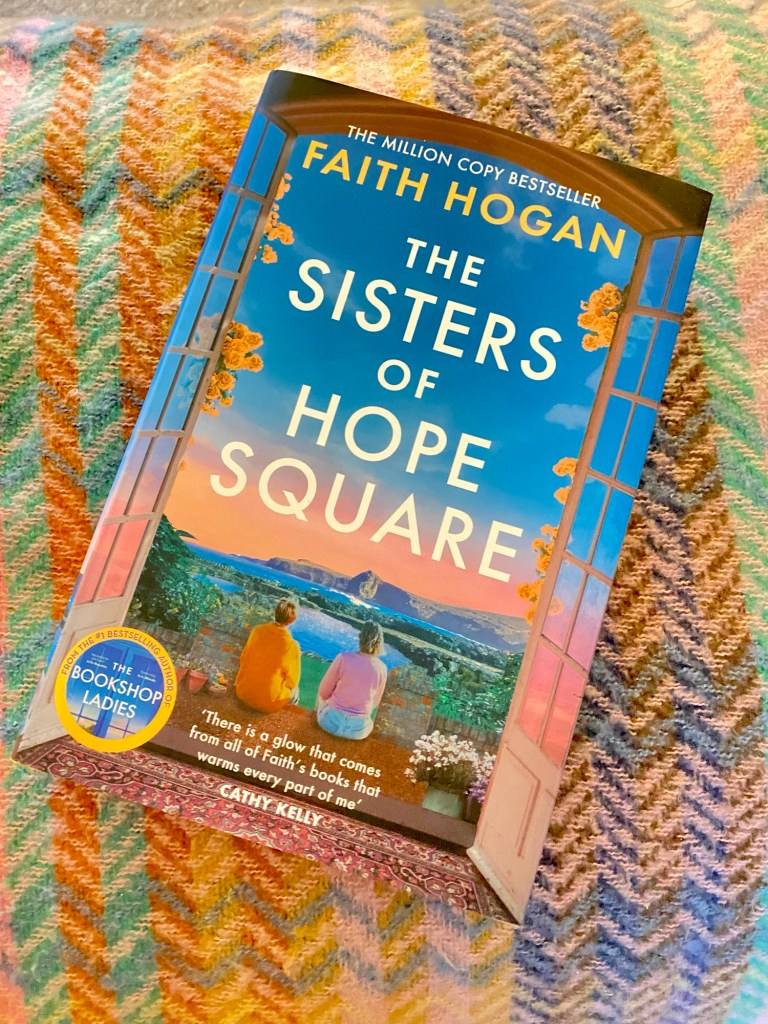
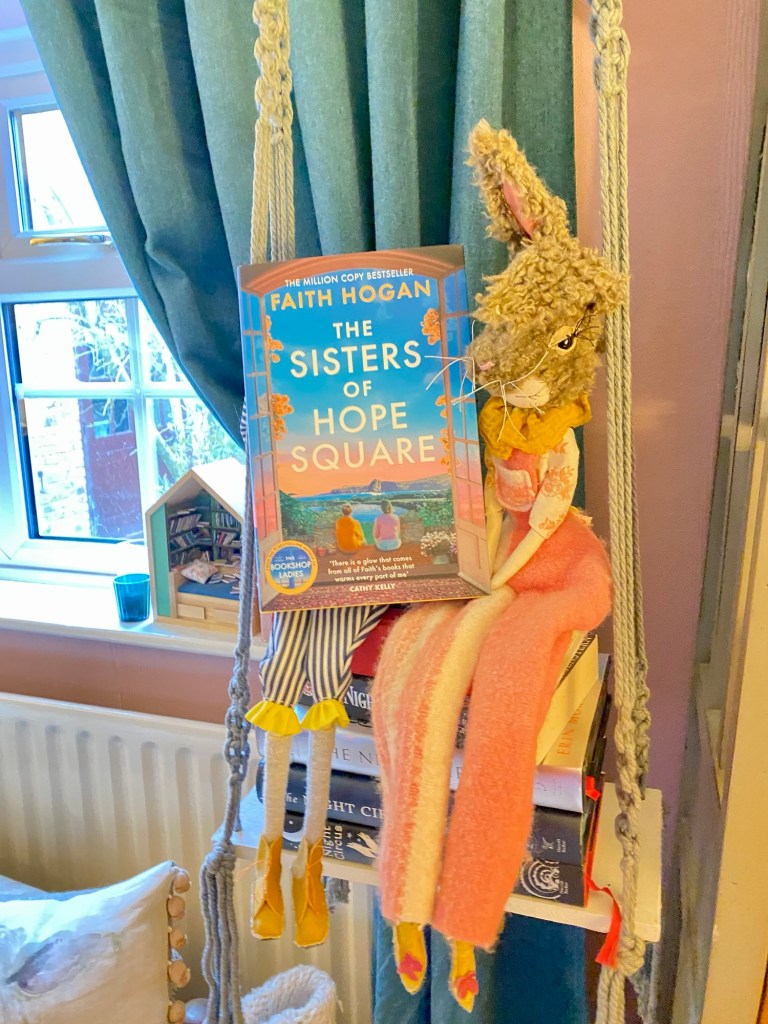
All Blythe Carney ever wanted was to become a hotelier and run her family’s business, the Hope Square Hotel. But fate, and her grandfather, intervened and it fell into her younger sister Rae’s lap, taking her dreams with it. Now Blythe owns Still Water House, the most exclusive guest house on Pin Hill Island, but she can’t help but feel she’s still not living the life she was meant to.
Rae Johnson had no interest in taking over the hotel, her dreams lay elsewhere, but when she ended up with the family business her sister had set her heart on, her sense of duty to continue their family legacy with her husband was too strong to ignore.
Now, fifteen years later, newly widowed Rae is struggling to keep the hotel afloat and she knows that selling it could be the final straw in her already fragile relationship with her sister.
What do you do when your sister lives the life that you’d set your heart on? And when the perfect storm is brewing, surely, it’s time to put aside the jealousy and disappointment that can tear a family apart, and fight for the future you have always dreamed of?
I love the joy and care in Faith Hogan’s writing and this has been a brilliant book to sit back and enjoy while we’ve been having a few weeks of very warm weather. Her characters always have so many layers and usually plenty of secrets and these women are no exception. I also feel like she cares about them and wants us to understand their journey. The author takes us back and forth in time to give us the story of the Hope Square sisters, Blythe and Rae. In the present Blythe runs a very successful guest house on Pin Hill Island, at Still Water House, the home she shares with husband Kip and daughter Siggy. By contrast her sister Rae lives alone in what was the family business and the only hotel on the island, the Hope Square Hotel. The sisters couldn’t be more different. Blythe has the drive and ambition of a great business woman whose only dream was to gain her degree and take over at the helm of the family business after her grandfather. Blythe runs a tight ship, even at home, and while she and Kip are an excellent team on the business side, of late there’s been some tension between them. Their main point of contention is Blythe’s treatment of their daughter Siggy who is a teenager ready to start planning the next stage of her life, perhaps going away to university? Blythe has closed her mind to this idea, she rarely lets Siggy hang out with other kids on the island and refuses any activity she believes is unsafe. Kip is becoming frustrated, not only does he feel taken for granted, he wants his daughter to be allowed to grow up. However, there is no reasoning with Blythe. Siggy often escapes to work at Hope Square with her Aunt Rae. Rae feels fragile, not surprising since she’s a recent widow, but there’s something more that seems to be keeping her paralysed, unable to make plans and move forward. She and Marcus didn’t have children so she values her precious time with Siggy, but her relationship with Blythe has never fully recovered since Rae and Marcus took over the hotel. How did this sequence of events happen?
The author takes us back and forth in time with both sisters so we can see events and decisions that led us here, but she also uses it to let us in on secrets the sisters have kept from each other. We as readers have the full picture, so behaviour that seems unreasonable or excessive to other characters has some context for us. It’s very frustrating to see characters misunderstanding each other completely. One such instance is Blythe’s behaviour when a new resident comes to Pin Hill Island. Val and her grandson Danial are refugees, he’s eager to find work and she’s keen to join groups and make friends. Blythe’s behaviour around Val seems utterly irrational, but there must be a reason probably buried deep in the past. I found Blythe a challenge I must admit but I couldn’t quite believe she was just a hateful person. The major question that keeps popping up is why would the girl’s grandfather make the inexplicable decision to pass the hotel to Rae and her boyfriend Marcus? The answers will come, but needless to say there were some men in this book who needed a bit of reeducation. Meanwhile as Danial volunteers at the hotel for Rae to get some work experience, he and Siggy spend some time together. Could there be romance on the cards? If there is, Blythe will be definitely have something to say about it and I worried it would have implications for her relationship with her daughter.
All these misunderstandings and secrets are set against a picturesque backdrop on this isolated island. The incredible scenery is clearly what draws people to visit, but is there still enough to sustain two hotels? Blythe is determined to get in a tourist guide and in one of the best comic moments she has a guest from hell, who she suspects is an inspector. I have to admit I imagined Maggie Smith playing this role at her most imperious. The vision of Blythe having to tolerate smoking, moving furniture and waiting on this woman hand and foot made me laugh. Her eventual response to 48 hours of this treatment was priceless. There’s a lot of trauma to unpack here. There’s so much loss for both these women, even after they lost their parents. There are themes of bereavement, motherhood, domestic abuse and being a victim of crime as well as the central family feud. As always the author gives these subjects the depth they deserve and they do have impact especially when it’s a revelation from the past that gives us more insight into the characters. What I like is that she always keeps us hopeful, that there’s a chance for healing and light in what seems a dark world at the moment. As the tension and miscommunication builds I just wanted the two sisters to talk openly and honestly, but it reaches a dramatic conclusion I didn’t expect. This is a great summer read and something of an escape from reality, full of intrigue and family drama but with bucketloads of warmth and hope.
Out now from Aria Books
Meet the Author
Faith Hogan is an award-winning, million copy best seller. She is a USA Today, Irish Times Top Ten and an Amazon UK Number 1 Best Selling writer of contemporary fiction novels. Her stories have charmed readers around the world – she’s sold internationally and translated widely. She writes grown up women’s fiction which is unashamedly uplifting, feel-good and inspiring.
The Bookshop Ladies was shortlisted for an An Post Book Award in 2024.
The Sisters of Hope Square is her brand new summer read coming June 2026. It is a gripping and poignant story of two sisters divided by jealousy and disappointment who must put their differences aside to save the inheritance that drove a wedge between them decades earlier.
She writes twisty contemporary crime fiction as Geraldine Hogan.
She lives in the west of Ireland with her family and their Labrador named Penny. She’s a writer, reader, enthusiastic dog walker and reluctant jogger – except of course when it is raining!
Eleven-year-old Meg Lefleur has learned the hard way to rely on no one. Ever since her beloved mother failed to come home last Christmas Eve, she’s been one of the ‘unadoptable’ girls at the town’s orphanage, where she fights each day to keep her wits sharp and her spirit unbowed.
When she meets Birdie, a young woman who has come to Oxford determined to remind her socialite sister of the impoverished family she left behind, for the first time in a long while it seems someone else might care about Meg’s future. But as the Depression tightens its grip, Birdie begins to suspect her sister’s charmed life may be founded on a tapestry of lies. Then, Birdie encounters Charlie, a woman haunted by loss who has been pushed to the brink with nothing left to lose. Drawn together by circumstance, they find unexpected kinship among a disreputable, determined band of women.
But in a town steeped in hypocrisy, even the smallest act of defiance can have dangerous consequences …
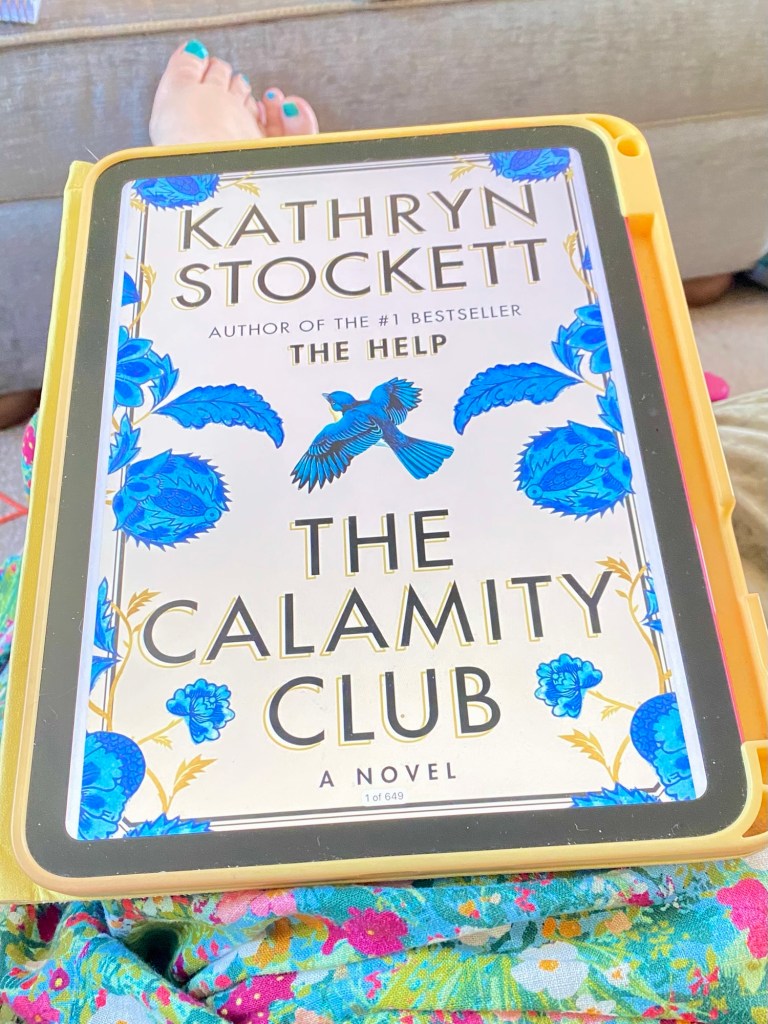
In our prologue we find Birdie in the pharmacy of a small town in the southern states of America buying ‘Merry Widows’ condoms by the dozens. I then became so engrossed in the story of this fascinating woman and the relationship she makes with a girl called Meg at the orphanage that I forgot all about the question that came to mind; why she would be buying so many? Thankfully all questions are answered in this incredible book that’s moving, infuriating, saddening and hilarious all at once. The plot takes us on a journey as Birdie travels to visit her newly married sister Frances who is living with her in-laws at their house Idlewilde. Frances is at great pains to point out her new family, the Tartts, are well to do and Birdie must try not to show her up. In truth, Birdie can only ever be her glorious self and Mrs Tartt is too much of a Southern lady to show anything but politeness to a guest. Frances’s husband, Rory Tartt, is a good looking man, but to Birdie he seems to have something on his mind. He’s eager to leave in the morning and eager to be in his office in the evenings, even retiring to his own bedroom at the end of the day and not his wife’s. Frances confides in Birdie that there’s been very little in the bedroom department and Birdie starts to worry. One thing she knows is money and if she didn’t know better she’d be concerned about Rory’s business and where he’s going. When asked to book-keep for the local orphanage Frances again gives her a note of warning. The president of the orphanage board, Mrs Garnett, is very influential and is hoping to be the governor of the Anti-Vice Committee. Birdie is unimpressed with this paragon of virtue and lets Frances do the sucking up, instead she puts her energy into the disgusting room she’s working in alongside one of the orphans, Meg. As far as Birdie can see, Meg is in this room by herself every day away from the other girls. She has nothing to read. The walls are mouldy and she’s not allowed to open the window. She’d think it was a punishment, but Meg doesn’t appear to have done anything wrong. With an attentive adult to clean and paint the room, let the air in and ask her interesting questions Meg starts to blossom, much to Mrs Garnett’s consternation. Birdie can find solutions to most problems and is enjoying her time with Meg, but the Tartt’s troubles loom and Birdie will have to come up with a creative way to help. When she meets Charlie, a woman broken down by the system and longing to get her child back, they make a formidable team.
I absolutely loved Birdie, the sensible person between an anxious mother who thinks the price of canned peaches will put the family over the edge and a sister who is willing to spend every penny they have if it makes her pretty. She is pragmatic, knowing she’s not a beauty she decided she would have to look after herself and got a job bookkeeping at the local store. Frances didn’t even invite her family to her wedding, scared of being found out as poor. Birdie doesn’t believe in trying to be what you’re not and she’s utterly herself which I loved. She’s sensible but also has a loathing of injustice. She has her own moral compass that is based on the Bible, common sense and kindness. She doesn’t believe in people that set themselves up as good in a performative way, just be good because it’s the right thing to do. Meg was fascinating and her story is so deeply sad. She believes her mother left her one Christmas Eve and never came back, so she had to survive on what was in the house until the local doctor found her. She’s absolutely starving for books and learning, even sneaking a Life magazine she finds in the cupboard and gorging on it like a cream cake. She has to some extent accepted her treatment at the orphanage, never expecting to be chosen as one of the eldest there. I found myself hoping Birdie might adopt her, they certainly have an instant affinity. I loved Meg’s sense of humour too, especially when she relates an adoption letter received that states:
“We need us an older girl, on account of I was chopping cotton and it was hot out and the blade swung out my hand and sliced my wife’s arm clean off so we had a proper funeral for it but she cannot lift a pot now.”
As Meg observes, they had a funeral for an arm? That’s quite a letter. It has people, action and weather, with a bit of gore for interest. She’s a girl with so much to say and no outlet at all. It’s a whole lot different than life with her mum who was a feminist and clearly loves her daughter. She celebrated when Meg was placed in the ‘exceptional learners’ and tells her to remember that most men are placed in the slow learners category. Where could this woman have gone?
The themes in this are very much like The Help, injustice, inequality, the strength of women and what we’ll do to survive. In addition there’s the rise of the eugenics movement in America, something I researched at university and when preparing for my PhD. Eugenics supposes there is a master race, that white able-bodied heterosexuals with European origins are superior. This is such an important topic when we see what’s going on in the US today and when The Sanctuary exists in London – a destination that stays out of the press, but launched the Restore party, houses a eugenics magazine and race scientists. People forget that Germany didn’t start this lean towards wanting a superior race. Birdie finds out that Mrs Garnett’s policies for the Anti-Vice group include eugenic thinking such as imbeciles will give birth to more imbeciles, some ethnic groups should be prevented from having more children and that others should be forced onto contraception from a very young age, especially girls from poor, black families. It’s an evil that’s never really gone away, especially in America where some of these measures were still happening in the 1970s. These policies made it easy to get inconvenient people out of the way, just like Meg’s mum whose story brought me to tears. Birdie starts to realise that doing something considered immoral by society might be the best way to survive and she has to weigh it up in her own mind.
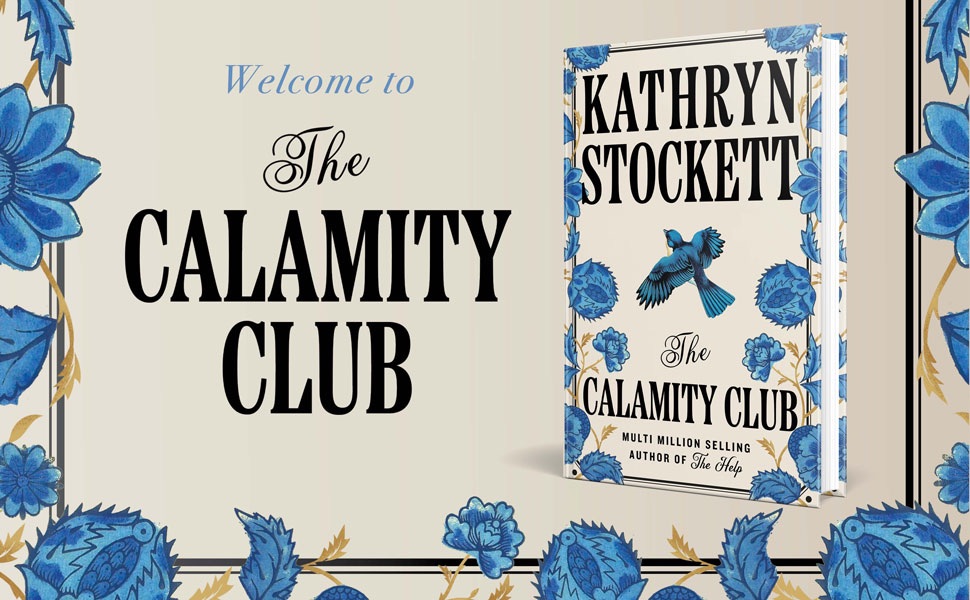
There was just so much I want to say about this book and I’ve had to stop myself rambling! Kathryn Stockett has done it again. I can see this on the big screen and it will be brilliant. It also has the added bonus of chatter about merkins at the breakfast table, which made me laugh out loud. I fell in love with Meg and Birdie, but also the women who form a team to get Birdie’s in-laws out of the mess they’re in. This book has so much to say about female strength, friendship and adaptability in terrible circumstances. Every character is so well drawn I could see them. I know a lot about eugenics and its history in the US and this is an important book right now, going against where Christian Nationalist policy is taking the country. It shows the damage that can be done when someone lives the rigid rules of manmade religion rather than the actual message of love given in the Bible. Often those who want the appearance of goodness most, will do anything to keep it. Birdie finds that friendship and loyalty can be found in the most unusual circumstances and with people you never expected. There’s tragedy and brutality but also lightness, humour and so much love. Utterly brilliant!
Out now from Penguin Books
Meet the Author
Kathryn Stockett was born and raised in Jackson, Mississippi. After graduating from the University of Alabama with a degree in English and Creative Writing, she moved to New York City, where she worked in magazine publishing and marketing for nine years. The Calamity Club is her second novel.
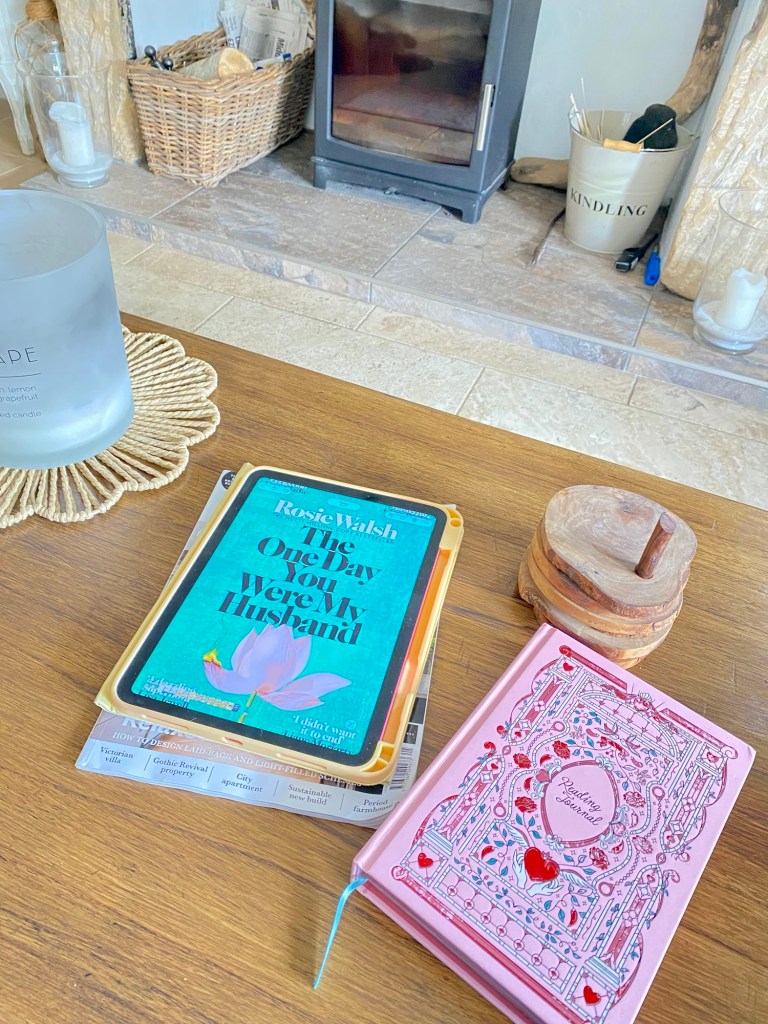
I don’t usually like romance novels, but I do love Rosie Walsh’s novels. That might seem strange when often her novels are categorised as romance, but for me there’s much more to them than the more formulaic romances I see. Rosie Walsh creates such complex characters, facing heart-wrenching situations. This is definitely the case for our narrator Carrie Cole who’s a surgeon by profession, but since the premature birth of her twins has been more focused on home life. She and her husband Robin live in a draughty cottage on the moors, with a small ‘Roof’ (AirB&B) holiday let next door in the old piggery. Robin works in the world of medical philanthropy, matching investors to areas they can support medical causes and this is how the couple met. Nearby, her Dad lives with his wife Nicola, but he’s recently been struggling with dementia and may need to move into a home. Both Carrie and her sister Maya have a complex relationship with their mum, who is an international activist and charity worker. Carrie has been feeling the urge to return to work and has put out feelers with her old mentor Yanika about what steps she would have to take in order to level up to the required standard. There’s an event coming up for Roof hosts in Sweden, where Yanika works and they discuss meeting up for a conversation. She could do both in one trip. Carrie has never left the children overnight, although she knows they’re perfectly safe with Robin, in fact he gives her his blessing in the form of a generous booking of a lovely hotel near to the venue. Carrie had been looking at cheaper Roof accommodation, when a familiar name and face appeared on the screen. All of a sudden Carrie’s mind sweeps back to her twenties, where she’s dancing barefoot on a Thai beach with her new husband, Johan, mere moments before Thai police swarmed the beach with guns and arrested him. Carrie knows that Johan was sentenced to twenty years in a Bangkok prison, so how can he be in Sweden hosting a beautiful lakeside retreat?
There were so many questions I wanted to ask during this novel, as Carrie’s narrative follows her present and a deeply traumatic past that she thought was buried, This is a love story but it’s also a mystery, as we see how the couple met when he came into the hospital with a trauma patient he’d helped. He travelled with them into the hospital. Carrie’s connection to him is immediate, but it’s incredibly deep and even though she knows she can’t pursue anything with him, she can’t stop thinking about him. Slowly, through flashbacks we piece together their story and I was devastated for both of them. Carrie pieced herself together after Johan’s court case with the help of her family, particularly her mother who had flown out to Thailand to use her influence and local contacts. Over time Carrie has hardened her heart towards Johan, feeling both betrayed and abandoned by him. Abandonment is a big deal for Carrie and her sister, after they were removed from their mother’s care as children when her advocacy and activism were so absorbing she’d overlooked their safety. Since then Carrie and Maya lived with their father who had a more stable home life. Both girls show signs of abandonment issues and a tendency to self-medicate their feelings. Carrie doesn’t eat when stressed and Maya has issues with alcohol, both of them display displacement activity like cleaning madly when they’re in distress. Robin has proved himself to be a safe harbour for Carrie and she calls him her rock. However, she can’t deny that she wants to know what happened to Johan and the urge to see him is stronger than she expected. I could understand why she needed this, to have someone ripped from your life in this way is devastating, but even worse would be the questions: was Johan really trafficking drugs? If not why did he plead guilty? How did he end up back in Sweden and when? Lost love is painful enough but when you’re left unsure of what was real there’s no sense of closure, Can Carrie meet with Johan and get her answers without her carefully balanced life back in the UK imploding?
I really understood Carrie and I believed in her love story with Johan. Their connection leaps off the page like a flame and never goes out. I also had so much time for Robin, who is an incredibly supportive husband and dad. I was willing Carrie to be honest with him and explain why she still needed the answers. Carrie’s inner voice is so powerful that I believed in her utterly. She has the problems of every working mum who has gone through a traumatic pregnancy with incredibly premature twins and all the ailments that come alongside that. Her little boy still struggles with asthma and her instinct to be with them is a definite response to her mother’s inability to put her and Maya first. Carrie doesn’t want her children to ever doubt her love and commitment to them, but that has come at a high price for her own goals. Perhaps she’s even denied a strong part of who she is – that drive and ambition to the best doesn’t just disappear. She berates herself for thinking about Johan, telling herself she’s very lucky and has everything she needs, but does she? I loved how the author gave Carrie room to ask questions of herself and her closest relationships. Is there a part of her that chose to hide away after the birth of the children? Although she loves the feeling of being cared for and supported, where does caring end and control begin? In some ways her pursuit of Johan and the answers isn’t about her feelings for him, but her feelings for herself and the person she was when they met, I loved how Johan called her Carrie Cole, as if only her full name could encompass all the things she is. Part of me wanted their love to still be there, but the more rational part of me knows that long term relationships and parenthood are tough. Often what we long for in past relationships is a fantasy, one that doesn’t include vomit on the rug, temper tantrums and a Dad that’s slowly losing his sense of reality. Can Johan really be all that Carrie sees through her younger, love filled eyes?
Once the questions start there’s no stopping this complex tale from unravelling and the tension builds as we realise there’s so much that Carrie doesn’t know. As Johan realises that Carrie truly knew nothing from their final moments in front of the courthouse in Bangkok he’s he’s confused. Has she really only just found out a week ago when she looked for accommodation in Sweden? He asks why nobody told her. But who should have told her? Who in her protective and much loved inner circle has been keeping secrets? Can she cope with another betrayal? The answers, when they came, were totally unexpected.. Nothing here is exactly as it seems, for both us and Carrie. What happened on her wedding day in Thailand created a huge scar across her timeline, with her life divided into before and after as if severed from each other, Now she knows there were tiny unseen strands of connection and the cut was never as clean as she thought. Despite telling herself, ever since that day, to make decisions with her head could her heart and her gut have been right along? This really was a heart-breaking love story, with so much depth and emotion for the reader to relate too. I was rooting for Carrie, both with her ambitions to return to work and her personal life. I felt an affinity with her discovery that she had allowed herself to become small and knew that only time alone, recovering and accepting the truth would help her make the right choices. Yet there was still an impulsive and romantic part of me hoping that love would find a way.
Out in June 2026 from MacMillan
Meet the Author
Rosie Walsh is the internationally bestselling author of two novels, the global smash hit THE MAN WHO DIDN’T CALL, and – new for 2022 – THE LOVE OF MY LIFE, a heart-wrenching, keep-you-up-all-night emotional thriller, which was an instant New York Times bestseller and stayed in the German top ten for several weeks.
Rosie Walsh lives on a medieval farm in Devon, UK, with her partner and two young children, after years living and travelling all over the world as a documentary producer and writer.
The Man Who Didn’t Call (UK) / Ghosted (US) was her first book under her own name, and was published around the world in 2018, going on to be a multimillion bestseller.
Prior to writing under her own name she wrote four romantic comedies under the pseudonym Lucy Robinson. When she isn’t parenting or writing, Rosie can be found walking on Dartmoor, growing vegetables and throwing raves for adults and children in leaking barns.
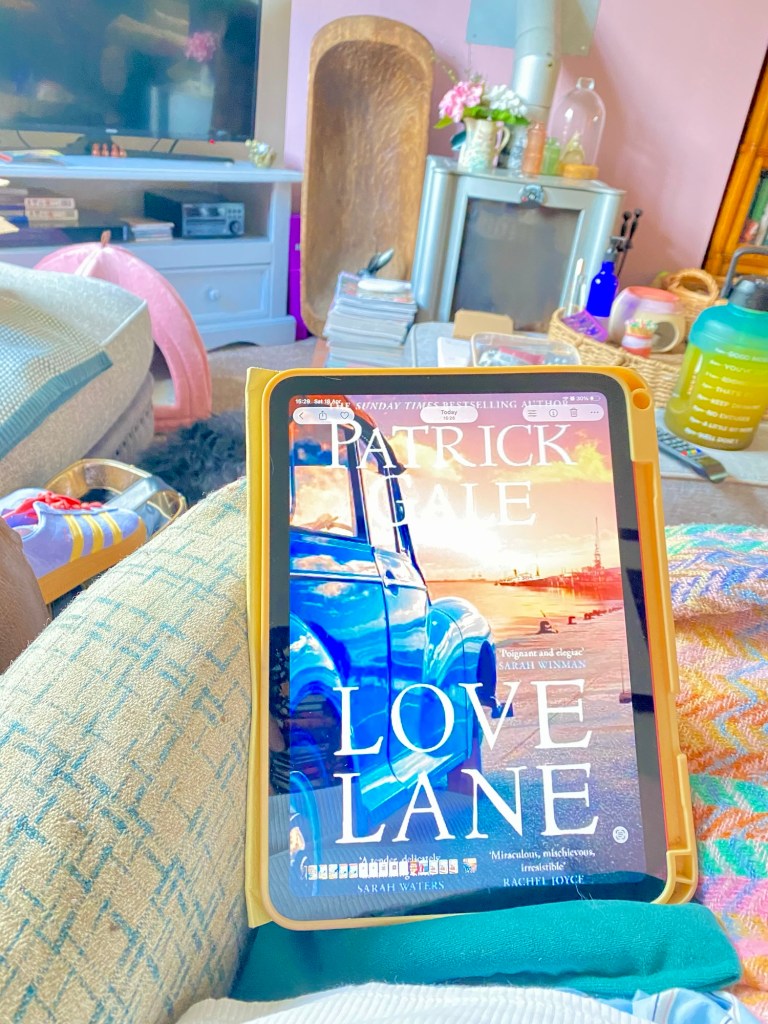
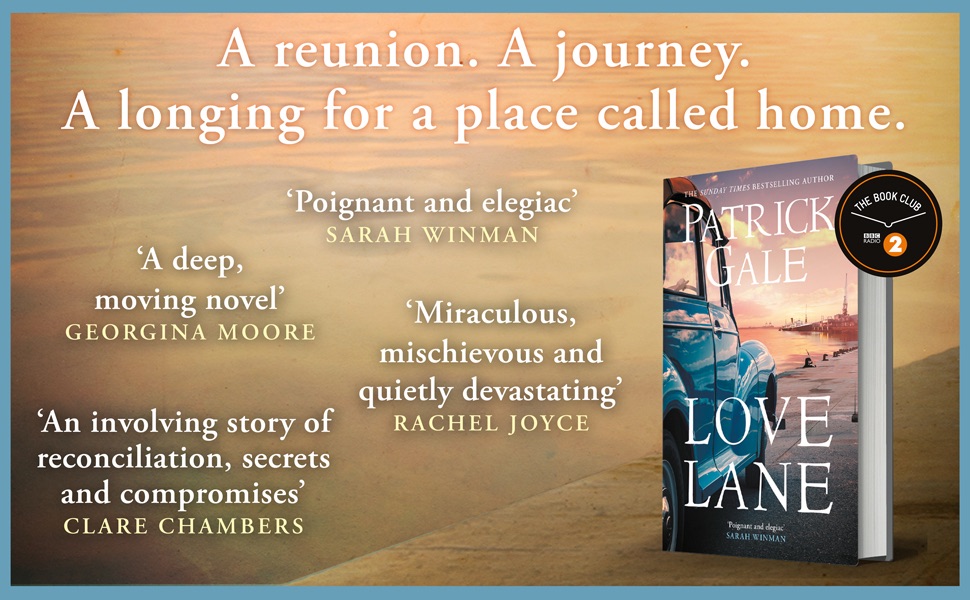
A reunion. A journey. A longing for a place called home… When veteran Canadian wheat farmer, Harry Cane is obliged to sell up and sail home to an England transformed by two world wars, his arrival triggers unwelcome self-examination for the family he abandoned, and for whom he has never been more than a distant myth. His daughter feels duty bound to take him in but is riven with doubt and ambushed by a long buried anger she has never before expressed. Harry’s effect on the next generation is less predictable, and enables his granddaughter to deal with an unspeakable trauma, while her gentle husband feels seen for who he truly is. Can Harry stay and make a new life before it’s too late, or will he find himself cast out again, punished for having witnessed and understood too much? LOVE LANE is a searing portrayal of escape and entrapment, and a powerful exploration of what home and family can really be.
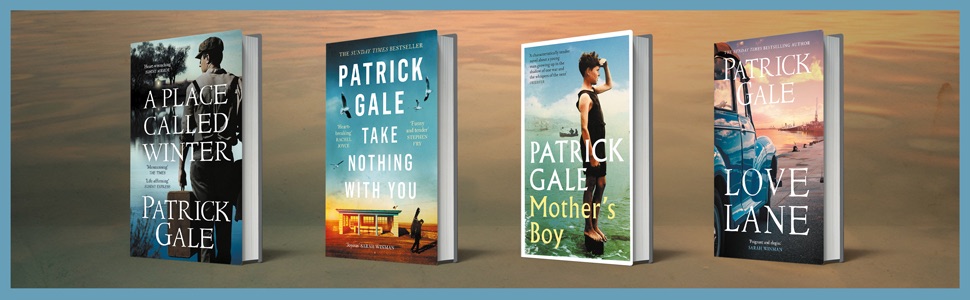
I was thrilled when I found out that Patrick Gale had written a sequel to one of my favourite books of all time, A Place Called Winter. This first book followed Harry as a secret is discovered and he’s advised to leave the country by his wife’s family. Leaving both wife and daughter behind Harry embarks on a new life in Canada as a pioneer. This book finds a much older Harry living on his homestead with his dog and secret nightly visits from his neighbour Paul who he loves. When a woman and her young son come to Harry’s place looking for work, Harry says he has nothing, but that Paul might need help. He takes her to Paul’s and they settle her and her son into Paul’s cabin, separate from the main house. It only takes a few days for his whole world to change, with Paul’s houseguests now living in the main house. Harry isn’t all that surprised when Paul tells him they’re to be married, but assumes their arrangement will continue exactly as it did when Harry married Paul’s sister, who died a few years before. However, for Paul this signals the end of their relationship leaving Harry heartbroken. At the same time Harry has been receiving letters from his estranged daughter Betty who is now married. Her cabal of aunts have kept her away from her father but now she wants to get to know him and they start a tentative correspondence. So, years later when Harry is forced to sell the homestead he suggests a visit to England and with no set plan he sets sail for Betty’s city of Liverpool.
Gale splits the novel into five narrators: Harry, Betty, her husband Terry, their daughter Pip and her husband Mike, with Harry closing the story. I know this character’s inner world so well but have never really seen him through someone else’s eyes. Liverpool couldn’t be more different to the wheat fields of Canada and it’s interesting to hear it described as it would have been when my mother was born there. I was experiencing my favourite city as my grandma and grandad would have done. It’s also a big change for Betty, from the moneyed world of the aunts and their large family home at Strawberry Hill. This is post WW2 and the city is rather grey and dismal, more dirty and industrial than it is now. Knowing the docks as I do it was strange to see it actually being used where now it’s all museums, hotels and galleries. If Harry finds Liverpool a little imposing and grey, Betty is shocked at his appearance, thinking he looks like ‘a man who has been through a series of shattering ordeals or a war.” This is a man who has worked very hard and never had spare money to spend on himself and Betty can see he is in need of clothes and a dentist at least. She expected more warmth, but can see that he’s a man of restraint who values his privacy. Will they even get on and what will her daughter Whistle make of him?
Terry’s section focuses on his work as prison governor, with Harry arriving just as two executions are to be carried out, something that Whistle finds particularly difficult to cope with as their street becomes overrun with protestors and journalists. I found it interesting how women are kept sheltered from the details of prison life, perhaps a hangover from the reality of WW2. For Pip’s section we travel to Wakefield and Harry stays with their family for a couple of weeks. Pip’s husband is also in the prison service and they have children, making Harry a great grandfather. What she finds in Harry’s silence is someone who will listen and she can confide in, knowing it will be guarded as a secret. I was astonished about what she almost discloses. Mike is a very controlled individual who worries about money, Harry is perceptive and on walks with the dog realises things about Mike that no one else has. The effect Harry has on several generations of this family is fascinating for a man who is so taciturn and unable to reveal his true self. Gale paints a picture of a closeted England, with homosexual men furtively making secret connections in fear of the law. Terry has met many men who are imprisoned not for what they’ve done but for who they are something he seems to find unjust. He has known men who prefer men during the war, but hasn’t noticed that his own tailor is living with a man. Harry notices their matching rings straight away. There’s also a secret bar on the voyage across the Atlantic where Harry is invited by one of the stewards. It’s probably the only openly gay space Harry has ever been in and my heart broke for him as he glimpses a little of the freedom to come.
Another person who responds to Harry is his granddaughter Whistle, she doesn’t have her own narrative but we can see she’s very different to her sister Pip. Betty describes her as beautiful but sensitive, born ‘without Pip’s protective layers’. One evening close to the execution she has a panic attack in her bedroom and Betty is shocked when she finds Harry has come into the room, talking to her quietly and calmly, encouraging her to breath slowly and bringing her anxiety down much quicker than Betty can. We can see this side of him in his chats with Mike also, proving that he’s an emotionally intelligent observer who never lets on the depths of his own heartbreak. We can see so much about the mid-Twentieth Century in these generations, from the Great Aunts of Harry’s generation to Pip we can see the collapse of the social order. There’s a drop from upper middle class to lower middle class in two generations. Betty bemoans the fact that a girl as beautiful as Whistle would have had a ‘mantle-piece crowded with invitations but rationing and bereavements and shortages had made everyone so cautious and life rather drab.” There are devastating moments delivered with such matter of factness – Harry’s only proof that Paul loved him destroyed by blackmail, Mike’s handling of the family dog, Pip’s secret about her hospital appointments and more than anything the chillingly robotic way Pierrepoint and his executioner apprentices measure out the correct drop to break a young man’s neck in the name of justice. Behind it all I felt a huge anxiety about where Harry was going to go? Would Betty ask him to stay or will he have to make his home back across the Atlantic with strangers. I cried in those final pages with Harry. Patrick Gale has created a character I’ve grown unexpectedly fond of and I didn’t want him to live out his final years alone. This is a beautiful companion to A Place Called Winter full of compassion and unspoken yearning, not just for a lost lover but for a place to call home in the twilight of life.
Out Now from Tinder Press
Meet the Author
Patrick Gale is a cellist, gardener and patron of North Cornwall Book Festival, Penzance LitFest and the Charles Causley Trust. He lives with his husband, the farmer and sculptor, Aidan Hicks (aidanhicks dot com), on their farm at Land’s End. In addition to his latest, Love Lane, published on March 26, 2026, his eighteen novels include Mother’s Boy (2022), Take Nothing With You (2018), which was his fourth Sunday Times bestseller, Rough Music (2000), Notes From an Exhibition (2007), A Perfectly Good Man (2012) and A Place Called Winter (2015). In 2017 his two part drama Man in an Orange Shirt was screened by BBC2 as part of the Gay Britannia season. Continuing to be broadcast regularly around the world, this won the International Emmy for best miniseries and is now in development as a musical. He is working on a television adaptation of A Place Called Winter and a stage version of Take Nothing With You. Extracts from the BBC documentary All Families Have Secrets – the Narrative Art of Patrick Gale can be seen on his website galewarning dot org. The garden at Trevilley was featured on Gardener’s World and is opened under the National Garden Scheme every June.
Adelaide Hills, 1959. At the end of a scorching hot day, in the grounds of a grand country house, a local man makes a terrible discovery. Police are called, and the small town of Tambilla becomes embroiled in one of the most mystifying murder investigations in the history of Australia.
London, 2018. Jess is a journalist in search of a story. Having lived and worked in London for nearly two decades, a phone call summons her back to Sydney, where her beloved grandmother, Nora, has suffered a fall and is seriously ill in hospital.
Seeking comfort in her past, Jess discovers a true crime book at Nora’s house chronicling a long-buried police case: the Turner Family Tragedy of 1959. And within its pages she finds a shocking personal connection to this notorious event – a crime that has never truly been solved . . .
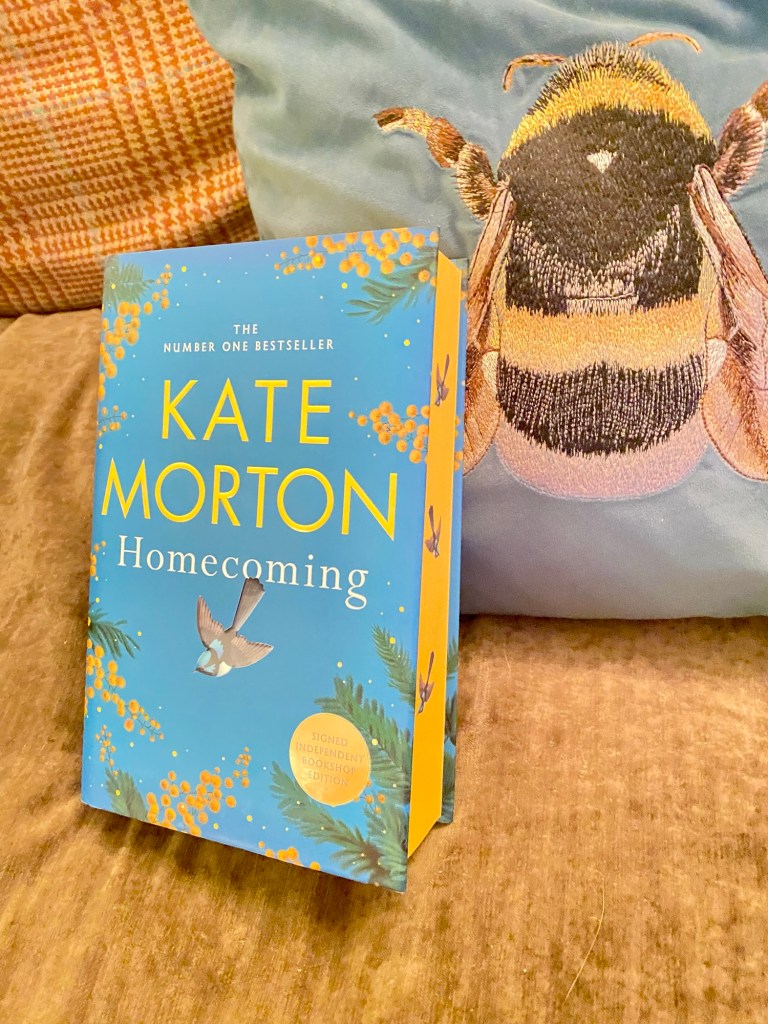
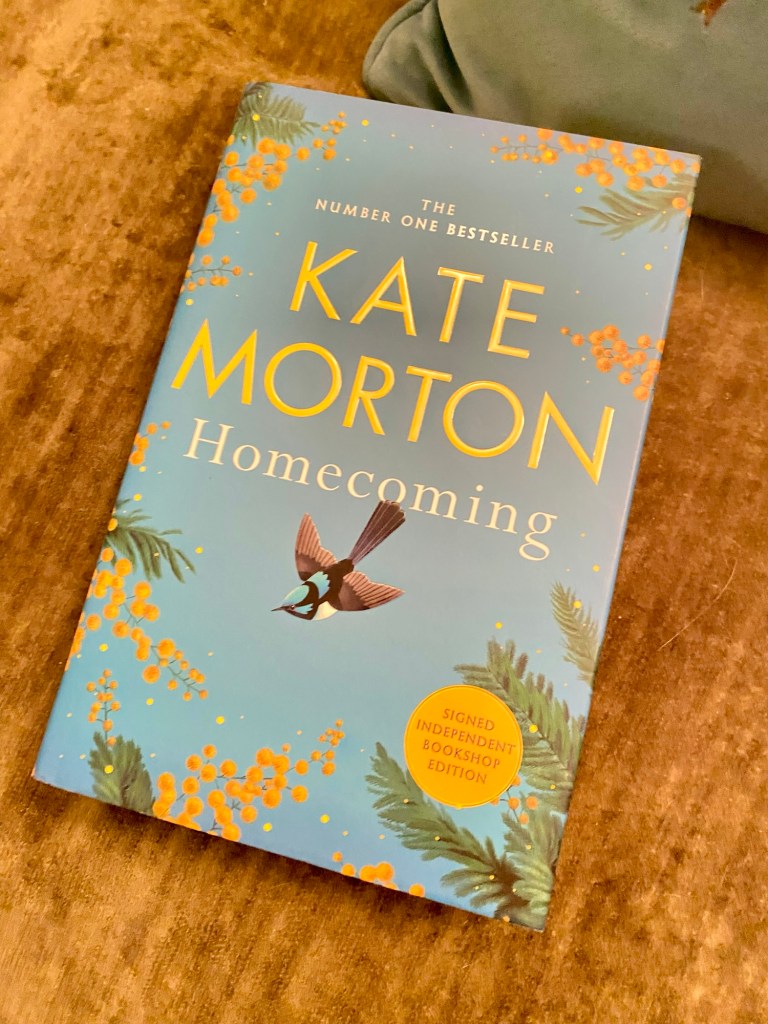
I’ve always picked up Kate Morton’s novels and I don’t really know why this one has sat on my shelves for so long. I made it one of the novels to catch up on in December, when I take a break from blog tours and read what I feel like. It’s a chunky novel and it took some time to get to grips with everyone and their timelines but there’s no mistaking the power of the central image as new mum Izzy and her children are found on their picnic blanket by the creek. The man who makes the discovery assumes they’re asleep, until he sees a line of ants crawling over Matilda’s wrist. It’s such a striking image that it inspires the title of journalist Daniel Miller’s book ‘As If They Were Asleep’. The only person missing is baby Thea and it’s assumed she’s been carried away by wild dogs. The conclusion is that Izzy has poisoned herself and her children, in the grip of post-natal depression and unable to leave them behind. Back at their home, Halcyon, Izzy’s heavily pregnant sister-in-law Nora is waiting for her brother’s family to return. Possibly due to the shock and in a powerful storm, Nora gives birth to her own daughter Polly. Once she leaves for her own home, no one will ever return to Halcyon. Nora’s brother stays in the USA seemingly unable to face what happened to the woman he loved and the children whose voices once filled the house he fell in love with as soon as he saw it. Now, with Nora seriously ill in hospital, her granddaughter Jessie will be drawn into the cold case through Nora’s rambling words and Daniel’s book. What follows is a not just a complex murder case but a tale of mothers and daughters and how intergenerational trauma has an impact, even when it’s a closely guarded secret.
We’re given various viewpoints through the book and outside sources such as letters, documents and excerpts from Daniel’s book. We travel back to 1959 and Nora’s time at Halcyon and the accounts of various Turners, to Polly’s years growing up with mother Nora at their home near Sydney and Jess brings everything together in the present day. We dip in and out of these timelines and viewpoints and they are layered perfectly by Morton where they will make the most impact. Through this careful placement we build up a picture of characters and their motivations, only to have that impression change when we see a different viewpoint or Jess makes a discovery. My view of some characters changed radically, especially towards the end of the book when we hear more from Polly who has been an absent mother for most of Jess’s life. Nora and Jess have a solid relationship, perhaps closer than most grandchildren have with their grandmother since Jess grew up in Nora’s house until she left for England. She is distraught to arrive and realise her grandmother is more unwell than she imagined. For Jess, Nora has been the perfect example of a formidable woman. She gets things done and Jess has inherited her organisational talents and business-like manner. She feels she has little in common with Polly who is seen by both women as rather unreliable or flaky, a pregnant teenager who left the job of mothering Jess to Nora. I really liked the Nora I saw through Jess’s eyes and I was intrigued to know whether that would track back to 1959 and the young Nora who is pregnant with Polly and staying with Izzy and the children for Christmas.
I loved how Morton used the landscape, particularly regarding Halcyon – a veritable house of dreams. Michael fell in love with it straight away but it’s interesting how it echoes with his choice of wife and how it sits within the wider Aussie landscape. Described as a Georgian manor complete with its own English country garden strangely situated within the heat of southern Australia. It has a backdrop of boiling heat, ghostly silver gum trees on the horizon and its lush green garden stands out against the parched landscape. There’s something unnatural about it, as if a tornado had picked it up in England and dropped it on the other side of the world. This same description applies to Izzy, her pale and freckled beauty out of place in the brutal heat of that last summer. Michael Turner knew this was the right home for his family because it is the embodiment of his wife. Without tending and daily care, the garden and house would be taken over, becoming yellowed and dry and home to native plats and animals. Does Izzy also need such gentle tending? It is Nora who supplies the most compelling piece of evidence that she was struggling and feeling unable to cope. Jess needs to read the book about the case and have a search round the house before her grandmother comes home. It is only by chance that she gets to read Izzy’s thoughts first hand. Then when Polly arrives there’s a real chance for them to connect and discuss their family history openly and this is where the novel became really gripping. Up to this point we’ve only seen Nora through Jess’s eyes but now we see her through Polly’s eyes and there are so many more layers to this elderly lady, now unconscious in her hospital bed. I started to see her controlling side and her ability to manipulate with her money and status. I began to see Polly in a different light too and felt a huge amount of empathy for her situation and the things she lost.
It was only towards the end of the book when I realised that there aren’t many men in this family. In fact the only person who has no voice in the novel is Michael Turner. Why did he buy Halcyon, the dream family home and then live in a separate country from them? Polly doesn’t have a man in her life and nor does Jess. Morton keeps the twists and turns coming right up to the end of the novel, some expected and others a complete surprise. She never leaves even the tiniest loose end and that isn’t easy when we see just how far the ripples of this tragedy spread in the community. In the midst of that Christmas and all that comes after, Izzy really has an impact with her beauty and vitality. It is unthinkable that only hours later all that sparkle is simply snuffed out. If you love Kate Morton, this has all the aspects that make her novels so popular – the family saga, the big house and the secrets kept behind closed doors. However, this had the added element of an unsolved crime giving it an addictive quality. Added to that is the length of the book, allowing the story and characters to fully develop, showing fascinating and complex psychological dynamics between each mother and daughter. I can’t believe it took me so long to finally read it.
Meet the Author
KATE MORTON is an award-winning, Sunday Times and New York Times bestselling author. Her novels – The House at Riverton, The Forgotten Garden, The Distant Hours, The Secret Keeper, The Lake House, The Clockmaker’s Daughter and Homecoming – are published in over 45 countries, in 38 languages, and have all been number one bestsellers around the world.
Kate Morton grew up in the mountains of southeast Queensland and now lives with her family in London and Australia. She has degrees in dramatic art and English literature, and harboured dreams of joining the Royal Shakespeare Company until she realised that it was words she loved more than performing. Kate still feels a pang of longing each time she goes to the theatre and the house lights dim.
“I fell deeply in love with books as a child and believe that reading is freedom; that to read is to live a thousand lives in one; that fiction is a magical conversation between two people – you and me – in which our minds meet across time and space. I love books that conjure a world around me, bringing their characters and settings to life, so that the real world disappears and all that matters, from beginning to end, is turning one more page.”
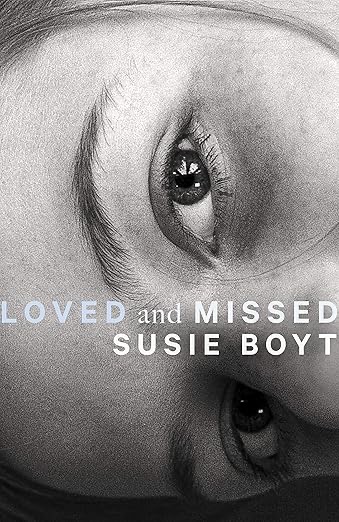
I love the tagline to this novel because it is just so peculiarly British. The phrase ‘shall I be mother’ meaning ‘shall I pour the tea’ must seem so odd to people whose first language isn’t English. It fits perfectly to this book because it’s about all those tiny tasks of motherhood, not to mention the ‘mental load’. It acknowledges a role, but is it a role that can be avoided as easily as it can be adopted? Underlying all those tiny things a mother does are huge acts of care and love, duty, loyalty and service. I read this book back when I was at university but have never been a mother, until I entered a relationship with a man who had two daughters around eight years ago. So it’s later in life when I’ve started to complain about all the tiny things I do that go unnoticed, usually after Christmas when I have the annual moan of ‘without women there would be no Christmas.” Loved and Missed is about Ruth a schoolteacher and single mother whose daughter Eleanor rebels against her fiercely, before leaving her to bring up her granddaughter Lily when Eleanor can’t. It’s not a plot driven novel, but more of an observance on life as a mum. The title refers to a gravestone that Lily notices with the epitaph ‘Loved and Missed’, which sounds as if love was intended but never quite reached or the target moved at the last moment. This slightly comedic, bittersweet observation sets the tone for a novel that’s about the mundanities of everyday life but also the emotions hidden amongst the endless washing and cleaning. It suggests that motherhood can take many forms and doesn’t always run in linear ways – a truth that rings home for me as the mother to many more people than my two stepdaughters. However, once taken, these bonds can’t be removed. This is a novel about what jt’s like to be in a mother -daughter relationship that may be a rollercoaster at times and at other times just ordinary everyday life.
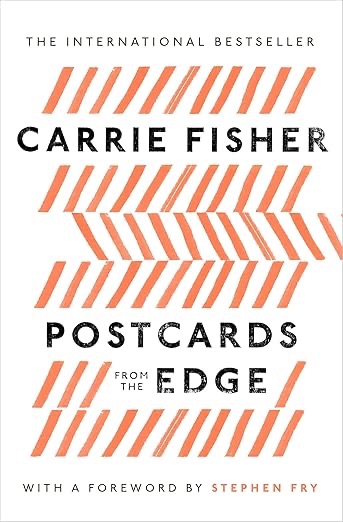
Postcards From The Edge
‘I don’t think you can even call this a drug. This is just a response to the conditions we live in.’
I really do miss Carrie Fisher, whether it’s the 19year old of Star Wars, the cynical friend of Sally Albright or the grumpy and hilarious mother in Catastrophe. A fictionalised look at her own relationship with her mother Debbie Reynolds, made all the more poignant by the fact that we now know that when Carrie died suddenly and unexpectedly, her mother died the day after. She just wanted to be with Carrie, said Reynolds’s son and it tells us how strong that bond is, even when it’s been stretched and almost broken. Susannah Vale is a former acclaimed actress, but is now in rehab, feeling like ‘something on the bottom of someone’s shoe, and not even someone interesting’. She becomes Immersed in the harrowing, but often hilarious, goings-on of the drug hospital and wondering how she’ll cope – and find work – back on the outside. Then she meets the Heathcliff of addiction, new patient Alex. He’s ambitious, Byronically good looking and is in the depths of addiction. He makes Suzanne realize that, although her life might seem eccentric, there’s always someone who’s even closer to the edge of reason. This is clearly in some ways autobiographical, dealing with that second generation Hollywood problem of following in a parent’s footsteps. There are times when Suzanne would like her mum to be there, but Mum is filming so has to send the maid over instead. It’s quite different from the film, but both are witty and a great read. I often wondered if Debbie Fisher’s role as Grace’s mother in the series Will and Grace had some basis in her relationship with her daughter and it’s possible.
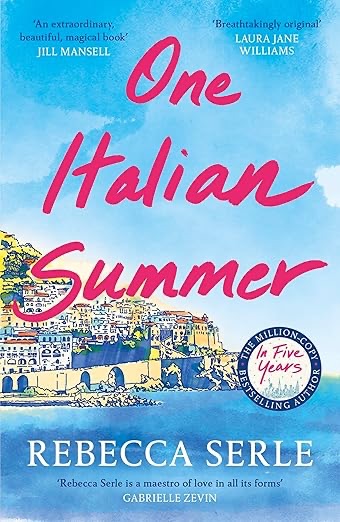
One Italian Summer by Rebecca Serle
When Katy’s mother dies, she is left reeling. Carol wasn’t just Katy’s mum, but her best friend and first phone call. She had all the answers and now, when Katy needs her the most, she is gone. To make matters worse, the mother-daughter trip of a lifetime looms: two weeks in Positano, the magical town where Carol spent the summer before she met Katy’s father. Katy has been waiting years for Carol to take her, and now she is faced with embarking on the adventure alone. But as soon as she steps foot on the Amalfi Coast, Katy begins to feel her mother’s spirit. Buoyed by the stunning waters, beautiful cliffsides, delightful residents, and – of course – delectable food, Katy feels herself coming back to life. And then Carol appears, healthy and sun-tanned… and thirty years old. Meeting her Mum at this age is going to throw up things Katy didn’t know about. Carol doesn’t recognise her, so her actions are completely unguarded, whereas Katy does know who Carol is and I wondered how long she would be able to keep it to herself. It was interesting to see Katy starting to question whether all aspects of their relationship were positive. Carol has always been so opinionated about how things should be done so Katy and Eric have always gone to her for advice when making decisions. Katy realises she’s never made her own decisions because Carol has always weighed in on everything from what clothes to buy and whether she should have children yet. She always seemed so sure of what to do and Katy has felt inadequate to an extent, unable to weigh up the options and make her own mistakes. There is a bit of anger and resentment here; Why does this Carol seem so go with the flow when her mum always planned everything with military precision? This was another beautiful book from Rebecca Searle, concentrating on the relationships between mothers and daughters and the effect our parents have on our development as people. All set in the magical Italian sun, with a lot of personal reflection and even a little bit of romance thrown in. I loved how the space and the experience gives Katy a chance to re-evaluate her life and the way she’s been living it.
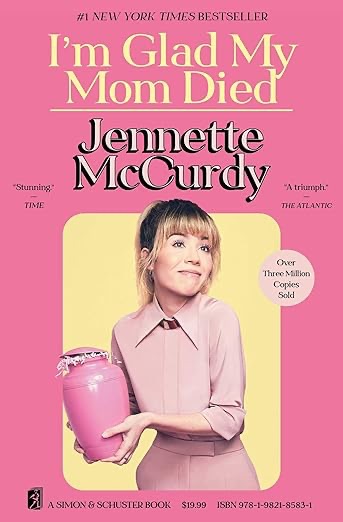
I’m Glad My Mom Died by Jeanette McCurdy
Jennette McCurdy was only six years old when she had her first acting audition. Her mother’s dream was for her only daughter to become a star, whatever it took, and Jennette would do anything to make her mother happy. So she went accepted what her mother called “calorie restriction”, plus weighing herself five times a day and eventually shrinking down to 89 pounds. She endured endless at-home makeovers using knockoff whitening strips, hot curlers, eyelash tint, and gobs of bleach to enhance her “natural beauty.” She was showered by her mother until she was sixteen while sharing her diaries, an email account, and all her earnings. The dream finally comes true when Jennette is cast in a new Nickelodeon series called iCarly and is thrust into fame. But for Jennette, the dream is a nightmare. Overnight, her fake smile and cheesy airbrushed hair-do is plastered on billboards across the country. Of course her mom is ecstatic, ordering her to smile for the paparazzi (with whom she’s on a first-name basis) and sign endless autographs for fans who only know her by her character’s name, Jennette is riddled with anxiety, shame and self-loathing, which manifest into eating disorders, addiction and a series of unhealthy relationships.These issues only get worse when Jennette’s mother dies of cancer. Finally, after discovering therapy and coldly examining the relationship with her mother, Jennette embarks on recovery and decides for the first time in her life what she really wants. Told with raw honesty and equal parts gravity and humor, I’m Glad My Mom Died is a shocking, devastating, and ultimately inspiring story of resilience.
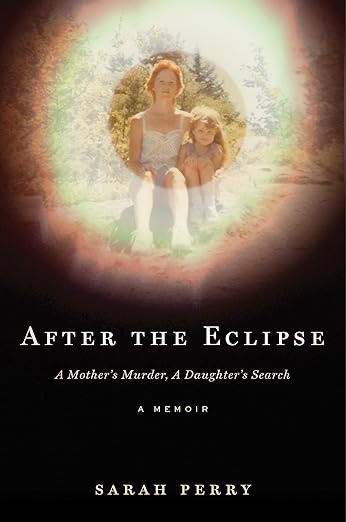
After the Eclipse by Sarah Perry
When Sarah Perry was twelve, there was a partial eclipse – supposedly a good omen for her and her mother, Crystal who were living in rural Maine. But that moment of darkness was a foreshadowing moment: two days later, Crystal is murdered in their home. It then took twelve years to find the killer. In that time, Sarah had to learn how to rebuild her life despite the obvious abandonment issues and the toll of the police interrogation and effects of trauma. She looked forward to the eventual trial, hoping that afterwards she would feel a sense of closure, but it didn’t come. Finally, she realised that she understanding her mother’s death wasn’t what she needed. She needed to understand her mother’s life. So, drawn back to Maine and the secrets of a small American town she begins to investigate. I was stunned by what Perry does with such a dark subject matter. This could have been a tragedy but Perry manages to create warmth and humanity from her story. I was honestly surprised by how hopeful it felt, despite the grief and a search for understanding. Perry shows how the working poor overcome challenges and how strong mothers make choices we can’t imagine in terrible circumstances. With clarity and kindness Perry explains the motivations of people in poverty and is even understanding towards the men in her mother’s life, while managing to make the link between misogyny and violence against women. Something that’s both a cause of violence and a factor in investigating crimes against women. She presents her hometown with so much warmth and the landscape of Maine provides a stunning backdrop to her childhood. This was a beautiful and authentic read.
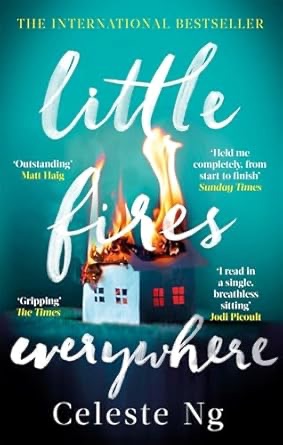
Little Fires Everywhere by Celeste Ng
Everyone in Shaker Heights was talking about it that summer: how Isabelle, the last of the Richardson children, had finally gone around the bend and burned the house down.
In Shaker Heights, a placid, progressive suburb of Cleveland, everything is meticulously planned – from the layout of the winding roads, to the colours of the houses, to the successful lives its residents will go on to lead. And no one embodies this spirit more than Elena Richardson, whose guiding principle is playing by the rules. Mia Warren is an enigmatic artist and single mother, who arrives in this idyllic suburb with her teenage daughter Pearl. She rents a house from the Richardsons and soon Mia and Pearl become more than just tenants. Soon and in different ways all four Richardson children are drawn to this mother-daughter pairing. But Mia carries a mysterious past and a disregard for the unspoken rules that threatens to upend this carefully ordered community. The catalyst for conflict comes when an old family friend of the Richardsons attempts to adopt a Chinese-American baby and a custody battle erupts that dramatically divides the town. A divide that puts Mia and Elena on opposing sides. Suspicious of Mia and her motives, Elena is determined to uncover the secrets in Mia’s past. But her obsession will come at an unexpected and devastating cost. This is an unputdownable thriller that shows us two very different ways of mothering. One is very ordered and focused on achievements, having goals and knowing the right people. The other is more intuitive and emotionally authentic, but also carries baggage from previous lives. It also shows how individual children can’t be approached or parented in the same way. Finally with the adoption storyline she brings in the economic impact of becoming a mother, meaning it’s a hard or impossible choice for some women. Utterly gripping.
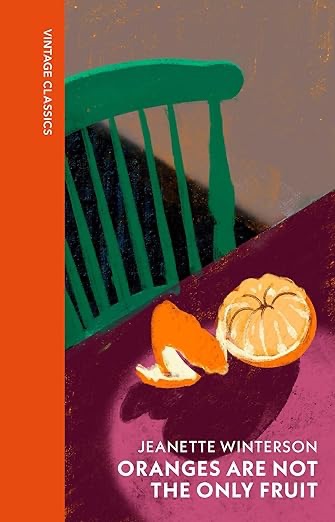
Oranges Are Not The Only Fruit by Jeanette Winterson
This is the story of Jeanette, born to be one of God’s elect: adopted by a fanatical Pentecostal family and ablaze with her own zeal for the scriptures, she seems perfectly suited for the life of a missionary. But then she converts Melanie, and realises she loves this woman almost as much as she loves the Lord. How on Earth could her Church called that passion Unnatural? While this is categorised as a queer coming of age story, it is not Jeanette’s relationship with Melanie that I remember but the relationship between her and her mother. Perhaps because I grew up in an evangelical church environment after being a Roman Catholic until I was ten years old, those scenes at the church and just how intransigent her mother was, stayed with me. This was a book and a tv series I shared with my mother and possibly played a part in her realisations about the church she was in. There’s a horrifying zeal to her mother’s actions. Her religion dominates the life of her household and has effectively placed a barrier between her and her husband. Jeanette’s childhood is a litany of brainwashing that starts the moment she gets up and only stops when she goes to sleep. There is no room to manoeuvre within her rules and expectations, but when Jeanette becomes friends with Melanie it emboldens her to ask the question. If her love for Melanie feels so authentic and natural, how can it be wrong? This thought and the kindness of others in her community is her lifeline. This book showed me what I already suspected was wrong with the teachings of my own mother’s choice of church and how much it had taken over my parent’s lives – thankfully not for too long. I didn’t know at first that this was auto-fiction but I admired Jeanette Winterson so much for writing it, not just because it was a queer love story, but because it questioned evangelical religion and showed how it can devastate the relationship between mothers and daughters.
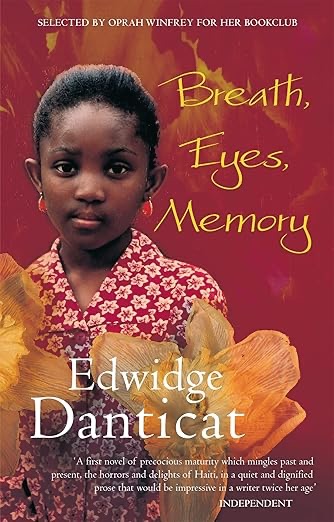
Breath, Eyes, Memory by Edwidge Danticat
I always recommend this debut novel of Edwidge Danticat’s. I first read it at university as part of my post-colonial and American literature modules and set off a lifelong interest in Haiti. Sophie has always lived with her aunt in Haiti, but at the age of twelve, she is sent to New York to be reunited with her mother, who she barely remembers. Feeling completely out of place in New York’s Haitian diaspora she longs for the sights and tastes of home, with a mother who only wants to forget. She doesn’t understand why her mother bleaches her skin and doesn’t eat very much, only that she misses her home. There are also her mother’s boyfriends who seem to make the gulf between her and her mum even wider, leaving them no time to get to know each other. After a while she makes friends with a boy in their apartment block and starts to feel heard, but this friendship is a catalyst for terrible actions, family secrets and a legacy of shame that comes from trauma. Sophie knows this can be healed only when she returns to Haiti – to the women who first reared her. What ensues is a passionate journey through a landscape charged with the supernatural and scarred by political violence.
Danticat evokes the wonder, terror, and heartache of her native Haiti through the women of this family. She depicts the enduring strength of Haiti’s women – with vibrant imagery and a narrative that bears witness to their suffering.
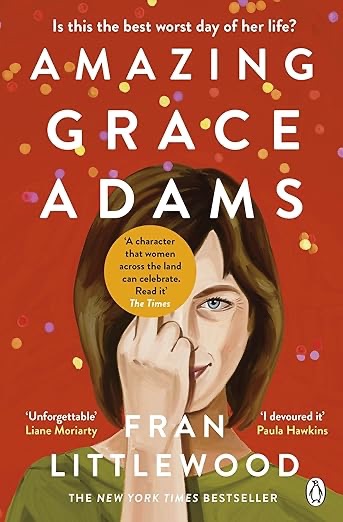
Amazing Grace Adam’s by Fran Littlewood
Is this the best worst day of her life?
Grace is stuck in traffic, it’s a boiling hot day and she’s melting. All she wants to do is get to the bakery and pick up the cake for her daughter’s birthday. Lotte moved out and is living with her father. This is one hell of a birthday cake, not only is it a Love Island cake; it has to say that Grace cares, that she’s sorry, that will show Lotte she loves her and hasn’t given up on their relationship. It’s shaping up to be the day from hell and as Grace sits in a tin can on boiling hot tarmac, something snaps. She decides to get out of the car and walk, leaving her vehicle stranded and pissing off everyone now blocked by a car parked in the middle of a busy road. She’s peri-menopausal, wearing trainers her daughter thinks she shouldn’t be wearing at her age and she’s had enough. So, despite the fact her trainers aren’t broken in, she sets off walking towards the bakery and a reunion with Lotte. There are just a few obstacles in the way, but Grace can see the cake and Lotte’s face when she opens the box. As she walks she recounts everything that has happened to bring her to where she is now, including the secret of how they all got here.
The truth when it comes is devastating, but feels weirdly like something you’ve known all along. Those interspersed chapters from happier times are a countdown to this moment, a before and after that runs like a fault line through everything that’s happened since. As Grace closes in on Lotte’s party, sweaty, dirty and brandishing her tiny squashed cake, it doesn’t seem enough to overturn everything that’s happened, but of course it isn’t about the cake. This is about everything Grace has done to be here, including the illegal bits. In a day that’s highlighted to Grace how much she has changed, physically and emotionally, her determination to get to Lotte has shown those who love her best that she is still the same kick-ass woman who threw caution to the wind and waded into the sea to save a man she didn’t know from drowning. That tiny glimpse of how amazing Grace Adams is, might just save everything.
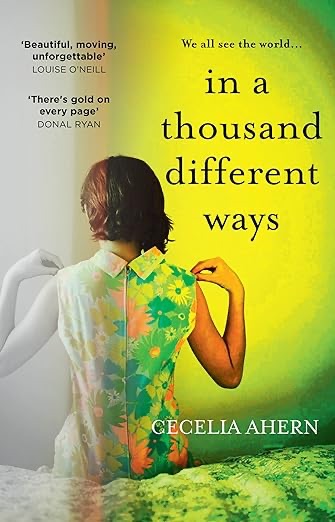
In A Thousand Different Ways by Cecilia Aherne
She knows your secrets. Now discover hers…
You’ve never met anyone like Alice. She sees the best in people. And the worst. She always seems to know exactly what everyone around her is feeling: a thousand different emotions. Every. Single. Day. In amongst all that noise, she’s lost herself.
But there’s one person she can’t read. And that’s the person who could change her life.
Is she ready to let him in? While this is Alice’s story it all hinges on the relationship she and her two brothers had with their mother. Alice has a form of synasthaesia – an ability to see people’s character and emotions in colour. These auras help to inform her of the mood her mum is in, so she knows when to keep her head down or get out of the way. Alice and her older brother are desperately trying to keep their family together despite their mother’s mental health and the alcohol she abuses to self-medicate. Alice can tell the highs, when her mother might go into a frenzy of baking or creating, imagining she could run her own business. Then there are days she can’t even make it out of bed. The children don’t want to be found out and split up, perhaps even taken into care. Until one day Alice comes home and sees a dark blue colour hovering over her mum and knows she must take action. Alice’s childhood affects her ability to trust, to form relationships and even value herself but one thing she does know is what kind of mother she will be. Years later, Alice’s mother re-enters her life with a terminal illness. She wants to meet her grandchildren and make amends. Can Alice trust her and will she finally be able to process the trauma of her childhood? This was a great read from a writer I don’t usually read. It captures the fear of going home for a child whose parent struggles with their mental health an addiction. It also explores the complexities of time away from that parent, how it can be healing but also difficult to draw those boundaries. It also brings up forgiveness and how it can be just as healing.
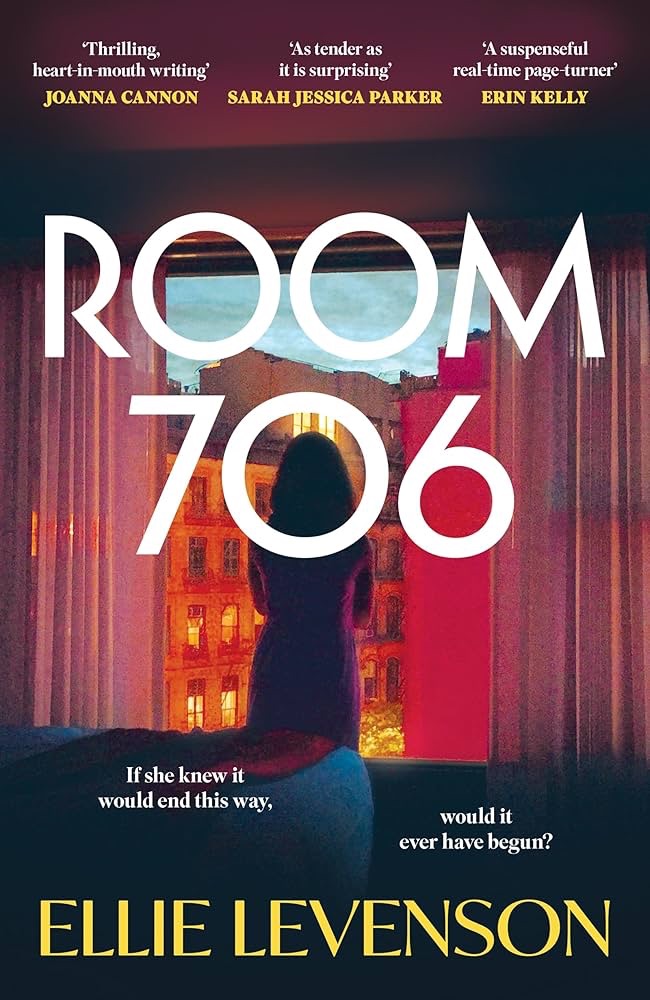
Kate and Vic have been married for a few years after meeting when she was studying in Rome. After a normal morning rush at home she travels into London, on the pretext of doing an interview. However, she has a different destination in mind. This is an appointment she’s been keeping for several years like clockwork. Now she’s caught in the wrong place at the wrong time. She should be travelling home later this afternoon – picking up the kids from school and collecting the rabbit from the vets. Instead she’s trapped in room 706, in a luxury hotel that’s under siege by a terrorist group. How can she explain why she’s here? Even if her body is discovered in the aftermath, everyone will wonder what she is doing here? She has always been very careful, leaving no trace. Now she wonders whether her husband Vic will understand why? As she tries to summon the words that convey just how much Vic and her children mean to her, Kate reflects on all the choices that brought her here.
I’d read so many great reports of this book and I couldn’t wait to read it, as soon as it arrived last year. It’s such a great premise and has a woman who doesn’t enjoy the constraints of marriage and motherhood. I can honestly say that even I’ve fantasied about holidaying alone for a fortnight, never mind an afternoon in a hotel. Although I couldn’t be bothered by a lover either. This is one of those books that makes the reader go back and forth on what they think of the characters and I can imagine book clubs having long conversations about Kate particularly. After all, society judges women far more harshly than men, especially those who express dislike or even ambivalence about motherhood. I didn’t just focus on Kate, because I felt if I was to understand I needed to look at the whole of her life and the people who’d had the most influence on her. The author takes us beyond those Instagram selfies with the new baby and the false idea it can give of other people’s perfect lives. Here we look at the reality of family life for Kate and how the way we parent is often based on the example of our parents or grandparents. Our ability to parent is also dependent on our work situation as well as the personality or parenting style of the other parent. The author cleverly tells Kate’s story in her own words and then shows through memories, alerts and messages on her phone, as well as mental conversation with people she’s lost, who Kate is and what happened to bring her here.
We know she loves her husband Vic. While studying in Rome she lived in his Nonna’s apartment, while Nonna had her own place with her grandson Vic who has suffered a nervous breakdown. Despite being ten years older than Kate, Vic is treated as the vulnerable one who needs protection. His brother Tom pleads with her not to hurt his brother and I felt the weight of that placed upon her. Yet Kate has just lost her mother, will she ever get to be the vulnerable one? They are happy and Kate relives so many beautiful memories that show us how much she loves him and their children. Yet there isn’t anyone apart from Vic’s brother to be their support network. Kate and her mum were a duo, no dad around and no siblings either. I loved one moment where Kate asked her mother what it’s like being a single mum. Her mum replies honestly that it’s hard work, but she can choose how they live and the values they have. There’s no one else to negotiate with, no clashing parenting styles or being let down by someone not doing their bit. If you contrast this with the evidence of Kate’s own phone it’s telling. She has an app that divides her ‘to do’ list into things that need to be done now, in the next couple of months, or sometime in the future. She sets reminders to coordinate her life, so ‘to do’ reminders join the reminder to check her breasts, to do her kegel exercises, to do the weekly food order. Meanwhile she places family photos into folders, makes lists of bank passwords, Christmas gift lists and house maintenance jobs. If she dies here, Vic will need to know this stuff. By contrast her male lover simply sleeps. Because he can.
Kate reminisces about a family holiday they took to Italy and reassesses the hours spent on research, price comparing, insurance, bite and sunburn cream, swimwear for the kids and so on. Vic would have simply bought a couple of T-shirts and booked the second or third package deal they saw and it would still have been a good holiday. Vic’s laidback parenting style and his vulnerability mean she’s he person who carries that mental load. Of course some of this is on Kate, as she’s clearly risk averse and overthinks decisions but she also has no significant female support. Since she lost her mum and then best friend Eve, all her relationships outside the home are superficial. Do these things excuse adultery? It will still hurt the ones they love, never mind the psychological reasons for the decision. However, all of that juggling made me understand a little. She has a need for something – rather like an old-fashioned pressure cooker needs to blow off steam. In this time, in an anonymous hotel room what she needs is no strings, no judgement and no backstory. It’s just completely selfish pleasure. Her sex life at home is tender and loving, they consider each other and everything they’ve built together as a couple is part of their sex life. From that unexpected first time with her lover it’s been about taking her pleasure and asking for exactly what she wants. This afternoon, that happens once every few weeks, enables her to be the wife and mum the family need her to be. She’s trying to recapture that carefree young woman who went off to study in Italy, who has clearly been totally changed by everything that’s happened since. It seems ironic that someone who plans everything so carefully, finds herself in a situation that’s absolutely out of her control.
This is an incredible debut! It’s absolutely pitch perfect. The author carefully lets the tension mount so slowly that while reminiscing we can almost forget where Kate is in the here and now. A prisoner in this room, she has to be silent so they can’t put the television on and they can’t flush a toilet. When the lights and electricity go they’re almost totally cut off from the outside world. It’s an eerie muffled silence, but a quiet that is sometimes broken by heavy footsteps or other hotel guests meeting their fate. You will hold your breath at times. The forced intimacy means she asks questions of her lover that she’s never asked before. She knows nothing about his life, only that he’s married and has been sleeping with her in this way for several years. We know the terrorists are stalking the corridors, one floor at a time, but we don’t know whether they have a master key or a bomb. I realised that despite her family unit, Kate is lonely. What she wants is for someone to see and appreciate her as Kate the woman, not the mum, wife or journalist. You will be compelled to read this as I did, long into the night. It has the pitch perfect pacing and tension of a thriller, but so many psychological layers. Women will identify with Kate, at least some part of her. She very simply wants to be seen, desired and receive pleasure. Surely though, at some point, Room 706 will be next. Kate has had an opportunity to assess and understand her life, to possibly make changes and live more. You’ll have to read to the end to find out whether she gets that chance.
Out on Jan 15th 2026 from Headline
Meet the Author
Hi, I’m Ellie Levenson. I’m the author of the novel Room 706 which comes out in January 2026. It’s my debut novel, though you may see other books by me online as I was previously a freelance journalist and during this time wrote some non fiction books including one on feminism and one on how to get ideas for features. I have also written various books for children using the name Eleanor Levenson.
Room 706 tells the story of Kate, a happily married mother who meets her lover, James, in hotels every few months as a form of me-time. It might as well be a facial or a shoe-buying habit, she tells herself. Except this time, while cleaning up and getting dressed, she turns on the television and looks at her phone and realises the hotel has been seized by terrorists. How do you tell your spouse that you won’t be home to pick up the kids because you’re at the centre of the incident on the news?
It comes out in January 2026. In the meantime do give this page a follow if you’d like to be kept up to date with my work, and any special offers. And if you do feel able to pre-order, that is super helpful.
What an absolute privilege it was to read this incredible story a couple of years ago and it was my book of the year. It is truly the best book Maggie O’Farrell has ever written and I’m a huge fan. I’ve loved her previous novels, especially The Vanishing Act of Esme Lennox. The scary part was trying to do this incredible work justice in my review. Something that director Chloe Zhao must have thought before embarking on the film version, due out on the 9th January. The responsibility of taking something so precious and recreating it for the cinema must have weighed heavy on the cast too. I watched an interview with Jessie Buckley a few days ago where she divulged that at first she didn’t know how to be. Not how to capture Agnes but how to portray something she’d never had in real life – to embody the role of being a mum when she wasn’t one and to capture the enormity of losing a child. I think her reticence and how she searched for those emotions show that Agnes is in safe hands with Buckley. I’ve been a fan since her debut you on the BBC series I’d Do Anything and to see the wonderful Paul Mescal cast opposite her took away any concerns I might have had about the book being ruined. Here though I want to tell you about this beautiful book and encourage people to read Maggie O’Farrell’s masterpiece.
Despite his place in literature as our most famous playwright, not a lot is known about Shakespeare’s life with his wife and children. Until reading this, and despite doing a module in Renaissance Literature at university, my only knowledge was of a wife called Anne Hathaway. Any other knowledge has rather embarrassingly and erroneously come from Upstart Crow, which depicts his eldest daughter Susannah as an intelligent, outspoken and boy crazy teenager. I also remember that many years ago I was shown the outside of a picture perfect cottage that belonged to Anne Hathaway. This was Hewlands where Anne was born, and after her marriage, the home of her brother Bartholomew. There has always been this hole in my knowledge, and when watching the totally inaccurate Shakespeare in Love I do remember wondering whatever happened to his wife. Did he love her and if so, how did he spend so much time away from her and their family? Also, with his success down in London, what did Anne do with her life? I wondered whether she was weighed down with the care of children, as well as her elderly in-laws with whom they lived.
For the author it was a different absence that became her way into the story. She had always wondered why the Black Death or ‘pestilence’ never featured in any of Shakespeare’s works. It’s absence seemed odd, considering that, in this time period, it killed large swathes of people. From 1575 in Venice over 50,000 people died as a result of plague over two years, thought to be caused by troop movements associated with The Thirty Years War. The beautiful cathedral Santa Maria Della Salute was built after a third of the population was wiped out in a return of the plague in 1630. The city still celebrates the Festival of the Redeemer today as a thank you that the city and some of its residents survived these pandemics. In England in 1563 the plague killed 20,000 people in London alone. Historical sources cite the plague as cause of death to extended members of Shakespeare’s family and possibly his sisters. His work was also affected, with all London playhouses closed down in 1593, 1603 and 1608. However, the biggest loss of all was his only son Hamnet, who is thought to have contracted the disease and died, aged 11, in 1596. O’Farrell takes these facts as the bare bones and fleshes out a more human story, weaving the life of a boy and his family with empathy, poetry and a touch of magic.
One of my favourite passages of the book focuses on the transmission of this horrific disease via some fleas and the beautiful millefiore glass beads crafted on the Venetian island of Murano. It takes accident, upon chance, and coincidence to carry the deadly disease all the way back to Stratford. A glassmaker burns his hand, so someone else packs his beads into some soft rags he finds lying around, instead of their usual packaging. A merchant ship bound for England has docked and a cabin boy searches Venice for cats to combat rats on board, when he is diverted by a monkey in a waistcoat. The keeper roughly pulls him away, but left behind are a few fleas, some of which make their way onto the cats an a crew member who tends to sleep with cats in his cabin. He doesn’t report for duty and has a fever plus the telltale ‘buboes’ or swelling of the lymph glands. These swellings turn black and the smell of the dead man is so repugnant that other crew members are relieved to heave him overboard for burial. He isn’t the last. Only five crew members remain as the ship docks in London and one box of beads from Murano makes its way to a Stratford dressmaker, where a customer is determined that only Murano glass beading would do for her new dress. The dressmakers assistant unpacks the beads from their ragged packaging and as she does a flea jumps from the fabric to its new host. The dressmaker’s assistant is Judith Shakespeare, Hamnet’s twin sister. This is typical of the author’s signature style of layering description to create depth and its effect is like an assault on the senses. I can smell the sweat of the glassmaker, feel the fur of the monkey, hear the creak of the boats in the canals and the shouts in the market, and feel the swell of the waves and ruts in the road as the package takes its journey, delivering both beauty and death at the same time.
In one timeline Judith and then Hamnet succumb to the plague, while unwittingly the family go about their usual day. There is a clever nod to the cross dressing in Shakespeare’s comedies here in the likeness of the twins, but this is anything but funny, it’s a disguise to cheat death. As the family slowly discover what fate has in store, our timeline jumps into the past following Agnes and Hamnet’s father. Although she is more widely known as Anne, she was recorded in official records as Agnes so the author chose to stick with that name. She always refers to him as the tutor, the husband or the father and never by name. The absence of his name creates a sense of two people; the London celebrity playwright and the family man. We start to see what an extraordinary woman Agnes is in her own right. The object of gossip in town, people say the daughter at Hewlands is a very singular character. She has a friend who is a priest, she has her own hawk and can charm bees. In truth she knows a lot of old country ways such as foraging, hawking and bee keeping as well as what plants to grow for household ailments. She often roams barefoot in the forest and her stepmother Joan despaired of her a long time ago and is jealous of the love her husband held for his late wife. When Agnes meets her brother’s Latin tutor, she uses her method of reading people and pinches the flesh between his thumb and forefinger. Here she sees depths and universes within, that his surface youth and inexperience don’t even hint at. It is this promise, these unseen layers, that she falls in love with. For his part, it is her difference he finds intoxicating. He realises that he will never see another woman who walks barefoot, with lose hair and a hawk on her arm. However much they accept each other, will their families accept their choice and will those untapped depths come between them?
I enjoyed the way these two timelines intersected, each informing the other and adding layers of understanding. How both families assimilated and worked together over time was really interesting. In each generation sibling relationships were particularly important, with their rivalries, but also their unspoken trusts and understandings. The idea of ‘doubling’ and disguise around siblings, especially where there are different genders such as Judith and Hamnet, makes us think again about a play like Twelfth Night. Disguise allows women to do things they would normally be excluded from and O’Farrell shows that in the industriousness of women in the novel. This isn’t just based around domestic matters but planning and running businesses. Agnes grows medicinal plants and creates cures, with people often knocking on the door to be seen. As a country girl I also liked the depiction of her relationship with the land. When I stand on the bank of the River Trent, I feel an urge to go barefoot and ground myself. I was born there, so when I moved next to the river recently grounding and feeling the earth felt so powerful. Agnes is the same with the land at Hewlands, particularly the woods, and she chooses to give birth there to Susannah. Agnes feels cradled by the earth, it protects, cures and grounds her. She also has great ‘countrycraft’ such as being able to control bees – something I’ve seen my own father do with a swarm – there’s a practicality but also a mysticism to these abilities.
Underpinning all of this, I am in love with Maggie O’Farrell’s flow. It’s a hard book to put down because it reads like one long poem to love, family, and home. Then there is the tension that comes when a member of this family follows their dream and is taken away from that unit. How does a father balance his roles as lover, son, father and still follow his dreams? Especially when those dreams are so big. When he gets that balance wrong will he be forgiven and will he be able to forgive himself? The book is full of contrasts, from passages so vibrant and full of life, to the devastating silence of Hamnet’s loss. From birth scenes to death scenes. Wild country lanes and the leafy woods compared with the noise and enclosure of town. The routine of daily family life as opposed to a chaotic life in the theatres of London. All of these contrasts exist within one family, and no matter what we know about our most famous and celebrated playwright, this is about family. Finally, the author’s depiction of grief is so moving. Whether quiet and contained, or expressed loudly, we never doubt its devastating power. We never overlook the boy-shaped hole in the life of this family. Whether our response to grief is to run from it, distract ourselves from it or deny it, eventually we do have to go through it. In the life of this couple, will their grief be expressed differently and if so, can they ever make their way back to each other? This is a simply stunning piece of work. Moving, haunting and ultimately unforgettable.
I’ll keep you posted for the film version but I know I’ll be taking lots of tissues.
As autumn deepens into darkness in Lidingö, on the Stockholm archipelago, the island is plunged into chaos: in the space of a week, two teenagers, the son of the island’s mayor and that of a powerful businessman, are brutally murdered. Their bodies are left deep in the forest, dressed in white tunics with crowns of candles atop their heads, like offerings to Saint Lucia. Maïa Rehn has fled Paris for Lidingö, where her husband grew up, trying to come to terms with the death of their only child in a car accident. But when the murders shake the island community, the former police commissioner is drawn into the heart of the investigation, joining Commissioner Aleksander Storm to unravel a mystery as chilling as the Nordic winter. As they dig deeper, it becomes clear that a wind of vengeance is blowing through the archipelago, unearthing secrets that are as scandalous as they are inhuman. But what if the victims weren’t who they seemed? What if those long silenced had finally found a way to strike back? How far would they go to make their tormentors pay? And you – how far would you go?
I loved the timing of this novel from Johanna Gustawsson, her second set on the island of Lidingö in the cold, dark run up to Christmas. Here she bases her murder mystery around the feast of St Lucia and it begins when a body is found in the traditional dress of the festival. The victim is wearing a white tunic that’s been slit up the back, with a red sash and a crown of candles representing the festival of light. It reminded me of the locally held Christingle services, where small children in white hold a symbolic orange with a lighted candle in it and a red ribbon meant to symbolise Christ’s blood and his role as the Light of the World. It was something I’d never encountered before, being Catholic it wasn’t part of our tradition, but it fits into the many festivals that bring light to the winter months such as Hanukkah and Diwali. The festival and the victim’s clothing make the scene of the crime even more dramatic and hard to forget. It also throws up immediate questions about whether the date or the costume is a message from the killer. Visiting French detective Maia Rehn offers her help to local commissioner Aleksander Storm and they begin to investigate together. It soon becomes clear that the killer isn’t finished with the island community and the pair must work very fast, prizing secrets from people who are reluctant to talk and digging up long buried events that will devastate and destroy lives.
One of the things I love most about this series is the atmosphere that the author builds. This is not the average crime novel, it definitely has a more Gothic feel that I would normally associate with folk horror.
“It was hardly an ocean this mere strip of sea. A moat more like – cutting Lidingo off from the life of the Stockholm mainland. A ghost infested moat, surrounding a poisoned island”.
This killing takes the community back several years to the murder and rape of a young woman dressed in her St Lucia costume. The victim is Jennifer, a well known and liked teenager in the community whose white dress and crown gives the impression of a angel in the snow. Jennifer was the daughter of Sophie Ackerman who bonds with Maia at a party, when they realise that both of them have lost a child. The pain and confusion of these unexpected and sudden losses have no descriptive word in the Swedish language, only the Sanskrit word ‘vilomah’ comes close, meaning ‘against the natural order.’ Motherhood and who we become when we lose a child is a theme of the novel and drives home that violent deaths affect a whole community. In fact, following the death of Jennifer Ackerman suspicions fell on her friend Gustav who found her body. The way the community treated Gustav, as well as the grief, caused him to commit suicide. It’s such an important theme that the novel’s opening takes us to a classroom on the island where Gustav’s mother holds everyone at gunpoint, blaming them for the death of her grief stricken son. These events and the darkening winter days hang heavy over the tiny island. Maia describes the loss of her son with such beautiful and haunting words that let us know he is still so present in her thoughts she almost expects him to materialise:
‘He’s everywhere around me, so I’m always waiting for […] a word, a sound, the slightest caress from him. I find myself sniffing the air for the scent of him’.
Sophie talks about her daughter Jennifer in the words of Cyrano de Bergerac, showing that she is still ever present for her too. It’s such a beautiful way of describing grief that comes in waves, some days it seems far away and other days it feels as if the loss was yesterday. I identified with this so much, knowing that even ten or twenty years on there are days when the grief feels painfully fresh. How much worse it must be with violent deaths where there are feelings of anger, guilt, resentment and so many questions left unanswered.
‘Her name is in my heart like a bell. Every time I think of her it’s like I can hear that bell ringing and ringing and the memories and feelings resurface every time’.
As the investigation unfolds it is clear that Maĩan and Aleks work quite differently, but complement each other. He is more of a facts person, whereas she picks up on emotion and her own feelings, heightened by tragedy, seem to have honed this skill. As an outsider she also seems more effective at getting people to talk, something that can be a struggle when a detective lives in the community they’re investigating. Their discoveries are both haunting and horrifying – especially a ‘trophy’ find that absolutely turned my stomach. Some of the themes were very timely, aside from the normal teenage themes of peer pressure, relationship angst and experimentation, there are also more up to date themes of incels, grooming and consent. I found it fascinating that Swedish law reform in 2018 placed the emphasis on positive consent so that rape was no longer defined by saying no, but the absence of actively saying yes. It recognises that when backed into a corner, freezing and becoming unresponsive are normal survival instincts and not consent, so threat and physical force don’t have to be present for an incident to be defined as rape. When we are finally taken to the night Jennifer Ackerman died it is hard to read, but that’s how it should be. This first incident is like a veil of darkness triumphing over light. It’s as if the island loses its innocence. I loved that the answers don’t come easily and the tendrils of the aftermath are everywhere. This is a vivid, symbolic and haunting crime story and the truth is devastating – a gradually revealed horror that has echoed down the generations of this isolated community.
Out now from Orenda Books
Meet the Author
Born in Marseille, France, and with a degree in Political Science, Johana Gustawssonhas worked as a journalist for the French and Spanish press and Her critically acclaimed Roy & Castells series, including Block 46, Keeper and Blood Song, has won the Plume d’Argent, Balai de la découverte, Balai d’Or and Prix Marseillais du Polar awards, and is now published in nineteen countries. A TV adaptation is currently under way in a French, Swedish and UK co-production. The Bleeding was a number-one bestseller in France and is the first in a new series. Johana lives in Sweden with her Swedish husband and their three sons.