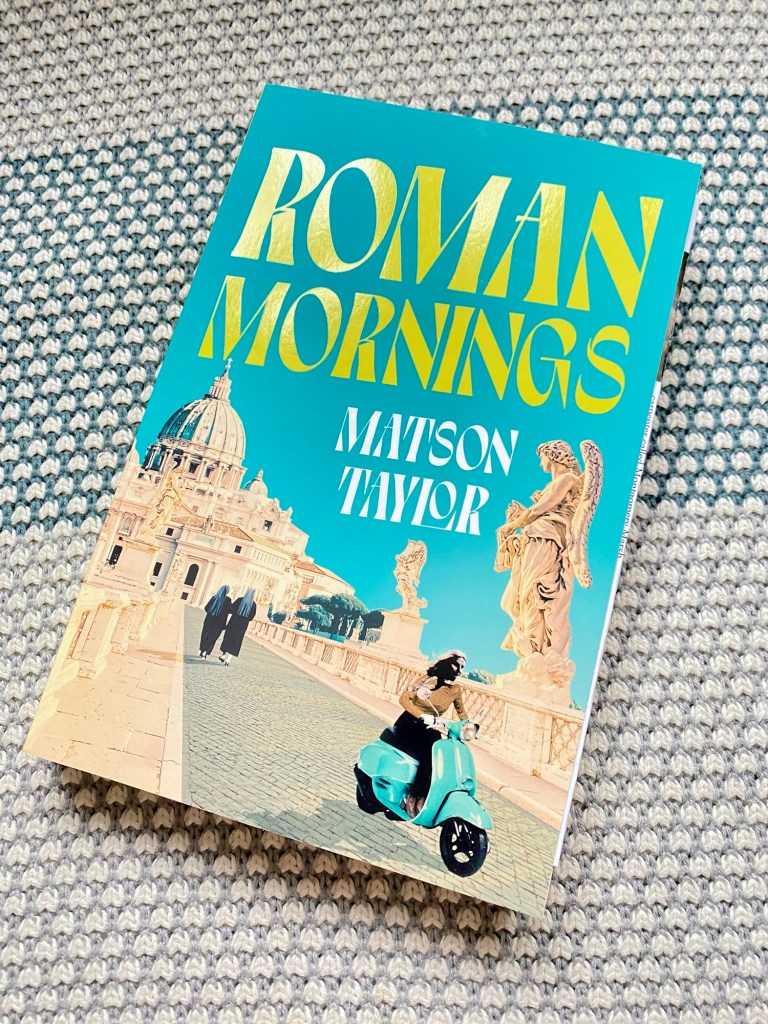
I’ve looked forward to a new Matson Taylor novel for a while now and this one is such a charming, humorous, comfort read set in 1970s Rome. The word serendipitous was made for this novel as friends and housemates Clemmie and Floss are trying out the turquoise Vespa that Floss has bought as a gift. Unsure whether she will get the hang of the scooter, at first Clemmie is a bit wobbly but as she gets to grips with it and sails off into Roman traffic she starts to enjoy herself. Strangely something like this is exactly what she needed. She’s been feeling a little stale and middle aged of late. However, as she makes her way towards a bridge flanked by angels, she quite literally bumps into a blonde, curly headed angel of a young man who was idling by the water on a break from work. Clemmie takes Monty to the hospital where his injuries are bad enough to stop him working but well enough to go home. The problem is Monty doesn’t have a home, just some digs he’s sharing with a few other craftsmen doing up an apartment for an acquaintance from London. It’s not long before his boss is in the emergency department, with Monty’s meagre belongings telling him he no longer has a job or digs. Feeling terribly guilty and also drawn to this angelic young man, Clemmie decides he will go home with her and Floss. Ensconced in their wonderfully bohemian living room, filled with plants and Floss’s theatrical memorabilia, Monty is soon drifting off to sleep with his new protectors looking on indulgently and Octavian, their large house cat laid on his chest.
This is a story about friendship, found family, reaching crossroads in life and being your authentic self, with a bit of romance thrown in for good measure. I love Matson’s chatty writing style, it brings to mind writers like James Herriot whose books mix beautiful settings, humour, everyday life and characters who feel as familiar as family. I thought his usually evocative 1970s setting would feel different in an ancient city like Rome, but we’re soon hearing about foods from my childhood and the brand new craze for avocado bathroom suites. Monty’s clothes are also of the era and Floss’s flat with its boho chic style reminds me of the indoor hanging baskets, posters and tasselled throws of my own youth. I remembered my parent’s romantic evenings in with a vesta curry and a bottle of Mateus Rosé. These contemporary 1970s references set against the ancient beauty of Rome is such an interesting contrast. I felt like I’d been to the city as the author conjured up the beautiful light, the soft and gentle colours of the stone, tiles and marble. It sounds busy and chaotic at first but it’s easy to find moments of calm. There are those cafe moments with Italian espresso and mouth watering Italian food that had me craving a trip to Italy.
The author excels when it comes to character and these are all generous, loving people. There are those incredible comic characters that lighten the mood like Floss and those like Clemmie who have more complexity and are questioning their future. Loving the city and the Italian language led Clemmie to move here and living at the palazzo with Floss is a dream, but intellectually she’s not being stretched. She has so much of the city’s history in her bones, but she’s using the language to translate plumber’s manuals. When an accident means moving out of her office for a while she has time to think. Is this what she really wants? Floss is getting older and thoughts about what’s next are accelerated by an accident that leaves her stranded on one floor of the palazzo. Is it time for a change and to accept that she’s not as young as she used to be? It’s Monty who’s the beating heart of this novel though, and I had the same urge as the women, to give him the biggest hug. I could feel the little boy in him. A boy who’s scared and wants his mum, and he’s found two in Clem and Floss. He’s a joiner by trade and incredibly skilled, he’s also keen to pay the women back for their kindness and on the advice of Octavian the cat, he starts to fix things in the palazzo. Despite his skill he’s not the best at pushing himself forwards. It’s also clear that he has a secret or too, but he needs to feel safe first. I felt like he’d found a kindred spirit in the kind and hesitant Clem. I have to mention the nuns who are incredible and I’d like to have first casting rights if this is ever a film please. These are not the stern scary nuns of my Catholic school, but a rather giggly pair who distribute British foods amongst the ex-pat community in Rome. They get to know Monty by offering him work in the many ecclesiastical buildings locally. They also end up at a club dancing to disco at one point which made me laugh out loud.
The story is quiet at first, allowing characters to settle and get to know each other, but when secrets start to emerge the deeper story comes through and it’s heartbreaking. It might have been nice to have seen some of his story slowly reveal itself in flashback across the novel, but it’s so emotional and beautifully romantic. My heart broke for Monty. We also have a slow burn romantic story for Clemmie and a man called Bob who appears in an ice-cream van and helps Monty build a basement apartment for Floss. The book meanders slowly with the odd intervention from the statues that decorate the buildings and bridges all over this city. I’ve read so many novels recently that are great but don’t have a single character I like. It was such a relief to be in a book where the characters are gentle, kind and want to help each other. Books like this, that bring joy and comfort to the reader, are hard to find and even more difficult to write. Reading about these characters embracing change with feelings of hope and renewal provided a window of solace and hope in what feels like a very angry world. For Monty it’s facing his authentic self without judgement and censure from others, a journey that isn’t without its trials. Clemmie embraces the boost she gets from teaching Monty about Rome. It reminds her she knows so much more than she’s using in her daily life and his story opens a door in her heart for potential romance but also her first love – writing poetry. Floss is embracing the new stage in her life and the freedom living in the basement flat brings for the next stage in life. Octavian the cat, prowls each level of the palazzo enjoying his new friends and casting an imperious eye over their adventures. This is a very emotional read in a stunning setting, with a big heart, a sprinkle of magic and a definite Northern slant to the humour.
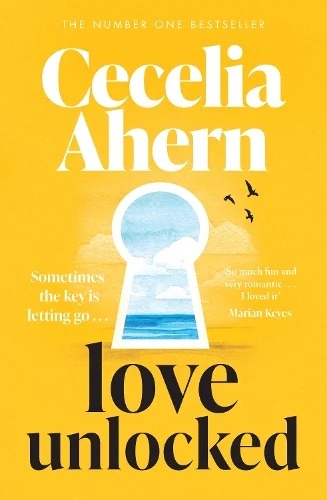
Melody has vowed never to fall in love again. Al is a hopeless romantic. So, when they quite literally bump into each other, there’s no reason sparks should fly. But the world seems a little upside down lately.
A few weeks ago, Al ordered the removal of all the lovers’ padlocks from one of Dublin’s beautiful bridges. Ever since then, couples across the world have started splitting up. And as Melody begins investigating this mysterious wave of breakups for her podcast, it seems there might be a bigger story to tell.
Together, they decide to uncover what’s unravelling so many love stories. And, in the middle of solving everyone else’s heartbreak, can they unlock theirown?
For her latest novel, Cecilia has brought us to Dublin and the marriage of Joseph Plunkett and Grace Gifford, a famous love story that ended with a candlelight marriage in Kilmainham Jail the night before his execution. This tragic story is immortalised in the 1985 song Grace and the Grace Plunkett bridge is a site of pilgrimage where people represent their love with initialled padlocks secured to the bridge railings. However, this proclamation of love is having its effect on the city’s bridges, that were never engineered for the extra weight of thousands of steel padlocks. For Al this is a problem, he works for the bridge authorities and he has been tasked with checking not only how much strain this adds to their bridges but how best to manage the problem. When the advice comes it’s not great for those of a romantic disposition, the locks will need to be removed in order to keep the bridge safe. So Al orders their removal as soon as possible, not in the best frame of mind romantically he isn’t fully prepared for the response. It’s not long before podcaster and DJ Melody is in touch with him regarding the love locks, she’s been inundated with stories of people who had a lock on the Grace Plunkett Bridge and since their removal have split with their other half. Some of them very close to home. She decides she must interview the man behind this phenomenon, but this isn’t the best time for Al since his own relationship has spectacularly imploded. Melody isn’t someone who takes no for an answer and soon the pair are investigating the stories and getting to know each other. Could the unlucky lovers clamouring for answers turn into something like luck for these two heartbroken people?
This is a story I’ve come across before with a lesser known author and found the whole subject fascinating. Could removing a love lock genuinely remove the love between two people, or was it a matter of psychological suggestion? They know they can’t rule out some opportunists using it as a reason to break up without taking the blame, but the sheer amount of coincidences is spooky. Neither Al or Melody are lucky in love. Melody split up with long term partner Sam after a very public proposal she wasn’t ready for. They still run a jacket potato van together and spend lots of time in each other’s company, despite Sam’s marriage and new baby. Melody knew that it wasn’t that she didn’t want to marry Sam but more that she knew she didn’t want to marry anyone, ever. Al’s relationship with Tara ended when he discovered a long term affair with their flatmate and Al’s best friend, Walter. Now Al has been forced to move out of a house he owns and Tara and Walter are living together. Not that he’s taking this lying down. There are some downright sneaky but hilarious ways of getting your own back. One of which backfires spectacularly leading to an office confrontation that had me in the same position as Al’s assistant Natasha – almost pissing myself. In fact Natasha was one of my favourite characters throughout. Both Al and Melody need to let go of the past and grow; could the misfortune of hundreds of couples actually bring them together?
I really loved Melody. She’s quirky, edgy, funny and a bit neurotic – but all the best people are… right? She’s beautiful in an offbeat way and knows exactly what she wants, her pizza ordering at Al’s flat is a great example:
“We are ordering two separate pizzas because we are two unique individuals who have different tastes, desires and goals and who know our own minds”.
Perhaps keeping their connection loose and undefined gives them both the space to properly get to know each other. Melody has relied on Sam (and still does if she’s honest) but that can’t continue. Even her mum isn’t available this time and needs space of her own. This means she gets to know Al with no expectations or barriers and actually opens up. She can’t sleep well at night without someone there but Al supports her to try. He’s there listening on the end of the phone while she does her bedtime routine and it’s strangely intimate despite the distance between them. He’s encouraging her to stand on her own two feet and she’s allowing herself to be vulnerable with someone she’s attracted to. She recognises that important ritual of going to bed with someone, not in the sexual sense, but seeing each other without a mask. It’s when we’re our most authentic self, trusting someone enough to fall asleep in their presence when we’re so vulnerable and sharing each other’s day, our worries and fears. My husband always says it’s the absolute favourite part of his day. Al on the other hand could do with learning to lean on someone, especially in this situation where he works with the man who’s betrayed him. I loved the scene with his fellow rowers, literally being part of something bigger than himself again and working as a team. It breaks the dam he’s built to hold his feelings and he finds himself both relieved and surprised by their reactions.
I found myself rooting for this couple and aside from their romantic potential I hoped for Melody’s podcast with unlikely friend Prunella to take off. Their shared visit to Joseph Plunkett’s jail cell was moving and gave a depth to the story they were telling. I could see them thinking about what Grace’s story could teach them. I could also see how Melody’s fear of being alone was linked to her absent father, something that can have a devastating impact on women’s later relationships. The space she gets from Sam and from her Mum allows her to make a connection between how she feels when alone and an incident from the past. Her chat with her mum’s partner Dave during their split really cements their own relationship. He leaves her his record player and the memories it evokes bring real revelations about how she thinks in a negative way and misses the positives in her life. This book left me feeling like no love is perfect, but it isn’t meant to be. It left me happy, hopeful and so privileged to have a man like my husband even if he does drive me up the wall at times.
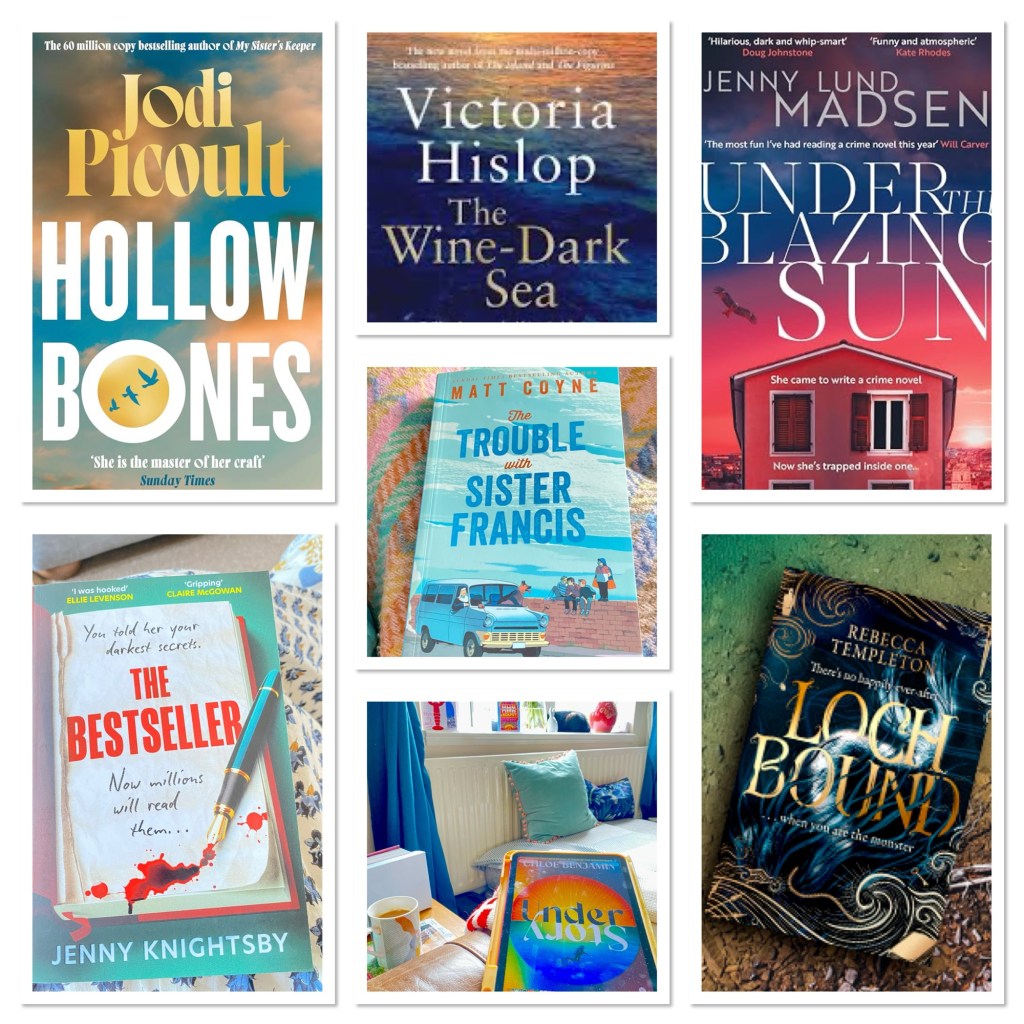
There have been some absolutely belting books this month and I loved telling you all about them. So I’ve been in the US, Italy, Greece Scotland and Sheffield. Oh I forgot about the ‘anti-verse’. It’s been a whirlwind of monstrous mermaids, a universe that goes backwards, the Greek civil war, a family dealing with the aftermath of 9/11, a crime writer who wakes up in a Sicilian villa with a dead body, a counsellor dealing with coercive control and a group of young boys trying to save their summer boy’s club. I’ve struggled to keep my mind on my reading to be honest it’s been a tough month. At the end of the last heatwave my cat returned home late one night and collapsed in the hall. I thought it was heatstroke and we tried to cool him but I could see he couldn’t put any weight on his back end. We rushed him to the vets where they diagnosed possible epilepsy. I knew this wasn’t right. She gave us some anti-convulsants but I wasn’t sure this was the right call. We kept him confined and on pain killers but he still couldn’t walk. I decided on a second opinion and went to a vet I used to see before moving house and he was brilliant. Poor Max had broken his pelvis in two places, his hip and damaged his lumbar spine. He also had a partially healed wound on his side. I can’t believe all that was missed. I could feel where his pelvis was pushed over, twisting his whole lower body. He’s had some surgery and lots of care at home. It’s going to take twelve weeks or more to fully settle. My husband has built him a three bedroom home under the stairs so he’s confined some of the time but can come out for exercise and fuss. My animals are my daily company now I don’t get out and about too well so they’re an important part of my life. I was so upset and I’ve really been focused on making him comfy and safe. So there’ll be lots of reading time in the upcoming weeks and I can’t wait be use it looks like an amazing autumn. I’ll share some recommendations for your tbr at the end. ❤️📚
I’ve been looking forward to this new release from Jodi Picoult and I was lucky enough to get it on NetGalley. I dived in and read it very quickly over a couple of days. My full review will be later in the week, but this was a fascinating read, bravely taking on some of the most contentious and sacred subjects in modern day America. We follow Molly, a young woman in her twenties who is incredibly driven and has the difficult job of coordinating emergency response in her state. Her job is not medical, it’s to prevent incidents and plan for potential disaster situations based on the geographical features of the area, possible targets and population. Having just got through COVID, Molly is happily settled down with husband Jesse close to her dad and stepmum. It’s easy to see that it’s the loss of her mother that has influenced Molly’s choice of career. Eloise was lost on 9/11 when she attended a medical appointment in the South Tower. Every year Molly takes the trip to NYC for the memorial ceremony and tucks a red ribbon behind her mum’s name, representing the one she always wore in her French plait. What Molly doesn’t know is that her own life is about to blow up unexpectedly, changing everything she’s ever known and challenging what she knows about motherhood and risk prevention. I thought this was a classic Jodi Picoult novel with dilemmas, big emotions and using different narrative voices to give us all sides of an argument. We think we know Molly’s story, but a different narrator throws all of that up in the air so unexpectedly. Reading Molly’s narrative I kept thinking “ah this is going to be about x” but I was wrong. There are strong issues here – mental health, abuse, cult mentality – and they are shocking, because they should be. Jodi Picoult has such an easy, conversational style and it was great to be back in the hands of a fantastic storyteller.
This is a great premise for a thriller and having been a therapist I’m always fascinated by books that are based on the therapeutic relationship. I think there’s a fascination in what therapist’s personal lives actually look like. Do they have it all sorted? The answer is invariably no and here there’s so much projection happening between Helena and her client Belle. Confidentiality is the bedrock of any therapeutic relationship, but that can get tricky when the therapist knows the client needs either specialist help or practical help. Helena is there to listen and guide Belle towards her own answers, but the constant disclosure of coercive control is uncomfortable to sit in. The urge to do rather than sit back and listen becomes difficult for Helena and it’s this discomfort that leads to her talking about it with best friend Tala. This is an issue for supervision, where Helena should disclose that she’s finding Belle’s passivity and indecision on leaving very difficult, but she doesn’t and now Tala is talking about how positive early responses have been to her new novel. Yet she doesn’t offer Helena a proof. When Helena stumbles across one at Tala’s flat she takes it and reads in horror as she realises Tala has fictionalised the problems of her client. This is going to be like a grenade in her personal and professional life.
The lives of Tala, Helena and her boyfriend Dylan and their paths into adulthood hinged on a single night. I thought the author managed these flashbacks well, placing them absolutely perfectly for maximum effect. It seems everyone has secrets but they are slowly revealed creating a very addictive read with short, pacy chapters that make you want to read just one more. The tension is almost unbearable as I worried about Helena overstepping with her client, the client finding out what’s in Tala’s book and somehow passing that on to her husband Julius. Would Helena be safe? As her well-ordered life starts to fall apart Helena starts to lose her belongings, forget her schedule and have terrible nightmares. She has no access to supervision and her relationship with Tala is broken. I wondered if she was heading for a breakdown. You may see the twist coming, but that doesn’t detract from the story. Eyes are opened, secrets past and present are revealed and I devoured the last few chapters late at night, unable to wait till the morning to find out what happened. This was an excellent thriller, full of psychological drama and really nailed the experience of being a counsellor with a problematic client. I also loved the ‘meta’ structure of reading a book about a book and just like Tala’s new novel this one should be a bestseller.
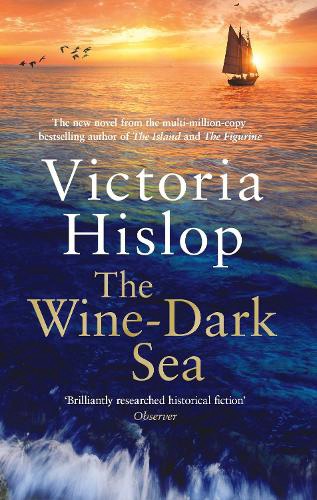
This epic story from Victoria Hislop really taught me a lot about a period of history I knew little about. The events happen after the end of WW2, a turbulent time that has already seen the punishment of Nazi collaborators and now many would like to see the end of their right wing government. The setting is a village called Kalopetra where Fotini’s husband has gone to fight for government forces against the communists, causing a schism in the family because Fotini’s brother-in-law fights for the communists. The sudden divide causes friction across the village, but the women must work together if they’re to survive. When government forces come to the village they capture all the women and Fotini is allowed to bring her baby son with her but older daughter Iliana is left behind with older children. How will they survive? That moment of Iliana chasing the truck, with her mother unable to do anything to reassure her, is burned into my memory. Although soon enough communist forces will round up the children and move them into camps where they are fed, clothed and then sent on to other countries like Yugoslavia. After having the entire burden of the other village children on her shoulders, Iliana is relieved to be fed and clothed by such kind people and so the process of brainwashing begins. All Fotini can think about is returning to her peaceful village and living the rustic existence that has survived for centuries, she doesn’t know that her way of life is already dead and nothing will be the same again.
I really enjoyed the later parts of the novel where we see Fotini piecing life back together in the city of Piraeus. It’s a massive change for this country girl but she can see the benefits of more job opportunities, entertainments like the cinema and eating good Greek food again at a lovely restaurant run by Demetrios. He’s such a kind man and gently reminds Fotini that she can’t spend the rest of her life wandering and looking for the children. The best thing she and Mitsos can do is stay in one place and hope the children find her, the place she was trying to get back to is gone. There was so much material to choose from in this book that it could have filled a trilogy. I had questions about all sorts of characters, such as Fotini’s relationship with her sister Stella. I also had questions about Nikos’s journey and his adoptive mother, there just seemed to be more about her that could have been explored. However, I loved Iliana’s growth and her life as an adult living under communism. The differences between Greece and Hungary were fascinating and as always the author captured the beauty of the Greek islands, their isolation and wildness and how this conflict disrupts a way of life that existed for centuries. The book symbolically ends with a circular dance that’s life affirming and perhaps a way of capturing, just for a few moments, that lost way of being.
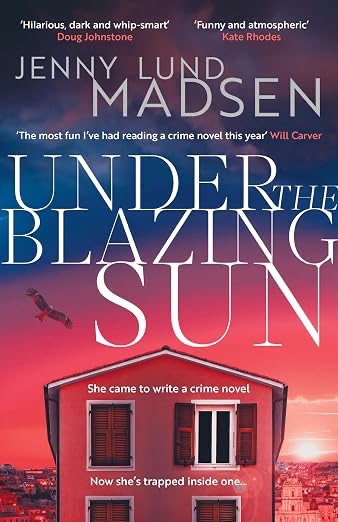
I loved the first book in this series and I devoured this one in a day. Hannah is once again fretting over writing her latest book, disgusted that copies of the romance novel she poured her heart into is being ignored, while the crime novel she wrote in one month for a bet is a bestseller. Hannah is a brilliantly flawed character full of writer’s neurosis, hating that she is forced to write what will sell rather than the books she aspires to write. Again she’s on a deadline and as a last resort her editor Bastian finds her a quiet villa in Sicily with its own swimming pool. No distractions and plenty of time to unwind and write the novel she’s had an advance to produce. I love this character because she says and does the things I’d love to, but my inhibitions keep it inside. She has no such restrictions, happily saying what she thinks when she thinks it. Her disgust with the crime genre and Jorn Jensen in particular is so funny. I wonder if she has ever had a thought or need she didn’t express? She also seems totally unregulated. I would have asked the elderly couple who caretake the villa for help but Hannah decides to walk to the village without thought about the heat, how far and which direction home is in. She has no idea which hill to take and ends up exhausted and on the verge of sunstroke on her way back. This is where she is found by Hans and Greta who take her to their incredible house to clean up and drink something. This turns into dinner, wine and a night spent in their house. It’s when she wakes up in a strange place that she and the housekeeper Lucette find a dead body. Greta has been murdered and Hans is nowhere to be found. Has he been kidnapped or could he be the murderer? Hannah seems to have an inability to weigh up a decision before taking action. There’s so much going on in her head that it’s very hard for her to remain in the present. I’m always wishing she’d slow down a minute and breathe, but the only times she seems to do this are in water.
The case is an absolute maze of connections and suspects showing up a tension between villagers and tourists, a misogynistic police force and possible Mafia interference. Despite Hannah’s aversion to crime as a genre, she’s just as caught up in the mystery of this murder as any reader would be. She’s utterly reckless, in a comical way and there’s a chase on a moped during the final chapters that is clumsy and hilarious to imagine. Sparks fly when Jorn Jensen appears, but she can’t deny he helps make things happen. His arrogance is brilliant and when he suggests they write a crime novel together I thought Hannah might hit him with something heavy. The creepy moment in the basement, including Jensen’s cardboard cut out made me laugh out loud. This is a dark humour that I love. Jorn’s statement that he has ‘enormous sex appeal’ and it’s that and not his wealth that attracts women shows what sort of brash and conceited character he is, but there’s no denying his bravery and quick thinking. They are quite the investigative team, despite her reticence about working with him. Hannah’s instincts are good. She won’t accept the police’s conclusion that Hans killed his wife, reasoning that he adored her and couldn’t have done it. Instead she follows the money, often blundering into compromising situations and dangerous people. If the conclusion teaches her anything it’s that people will murder for very unexpected reasons. This is a brilliant second instalment of Hannah’s adventures and I’m going to resolve to be a little more Hannah and say what I think here and there.
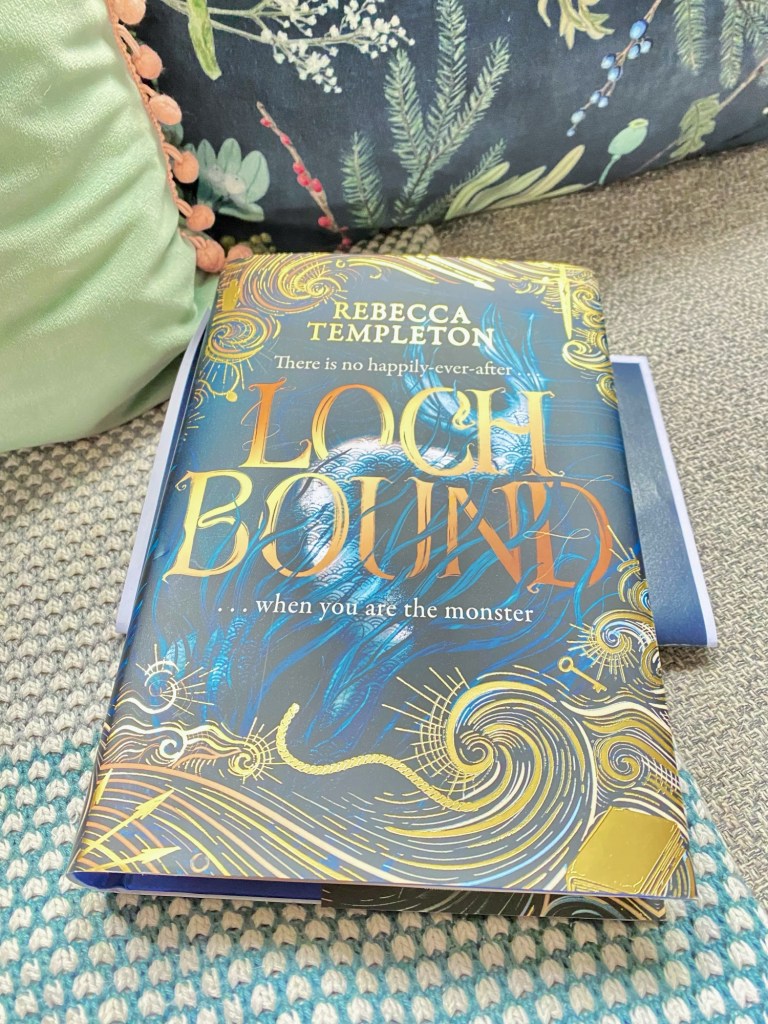
I love when monster stories are given a retelling and in this one it’s a mermaid living in a loch, but not the Disney-fixed Little Mermaid we might be used to. Here she is a truly fearsome creature named Moireach with yellow eyes, sharp teeth, shiny scales and the drive of a predator. She lives in the loch, only changing after dark when she reverts back to her human form – Iris. As a young girl Iris defied her father and fell in love with Thane. He forbade their relationship, as the daughter of a laird she must marry well and for the clan’s gain not her own. Devastated she visits a witch hoping to be free of her father’s obligations, but the witch cursed her and she became banished to the loch by day. Now, some fifty years later, when Iris emerges she is still the beautiful girl of her youth. Thane has never come for her and as dead men have been discovered around the loch with their hearts ripped out, the name of the monster is on everyone’s lips. Her childhood friend Duncan, now an old man, knows it cannot be Iris. She isn’t capable. He hides her with all the love and loyalty he had fifty years earlier, even though she chose someone else. The laird has made a big decision, he’s hired a hunter of monsters, a man called Henry Cartwright and he has never failed to catch his prey.
The backdrop of this story is perfect, using the mist, cold and breathtaking landscape to add to it’s mystery. There are parallels with Outlander here in the feel of this place, making good use of Scotland as a thin place where the paranormal, time travel and a history of monsters seems part of life. With the historical backdrop of the witch trials it’s also a dangerous place, particularly for a woman. Iris talks about the smell of the burnings and how women must be careful, but it’s no easier being a monster when men are turning up dead. The background of misogyny and brutal witch trials hangs over them all and shows a willingness to believe in magic, curses and female malevolence. It’s not just witches though, other fantastical creatures exist here like the seelies and selkies and there’s more one woman with powers a man would kill for. All of these things appear to be aligned with the nature that surrounds them and we can see that wildness as Iris changes to Moireach. It’s not just the yellow eyes and scales but the way her mind becomes that of a predator with only one goal. Reading this felt like being a child again and discovering a fairy tale rooted in darkness. Yes, some elements are fantastical, but it doesn’t read like fantasy. It’s more like a hybrid of historical fiction and fairy tales with aspects of a thriller. The pace speeds up as Iris begins to run out of time and we still don’t know why she was cursed, who cursed her and what will finally break it. There are those in the village who may seem kind, but could benefit from keeping Iris in her watery prison. As she takes us back to those fateful days in flashback, when her family were all together and her father didn’t yet know about Thane. I was engrossed with the tangled web of lies and betrayal but also by the question of what life Iris would choose if she could lift the curse. Would she pick the life she’d always wanted or had things changed? There are some unexpected revelations too, making for an exciting and absorbing conclusion. I thoroughly enjoyed this dark and feminist take on the mermaid stories we’re used to and I look forward to what the author writes next.
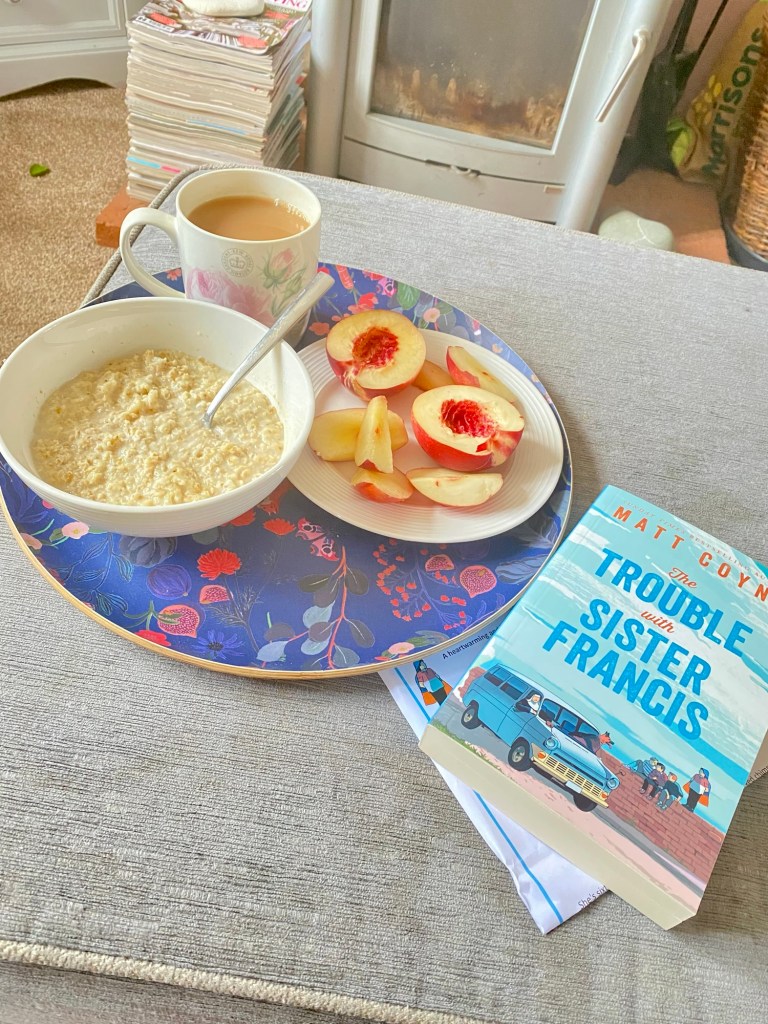
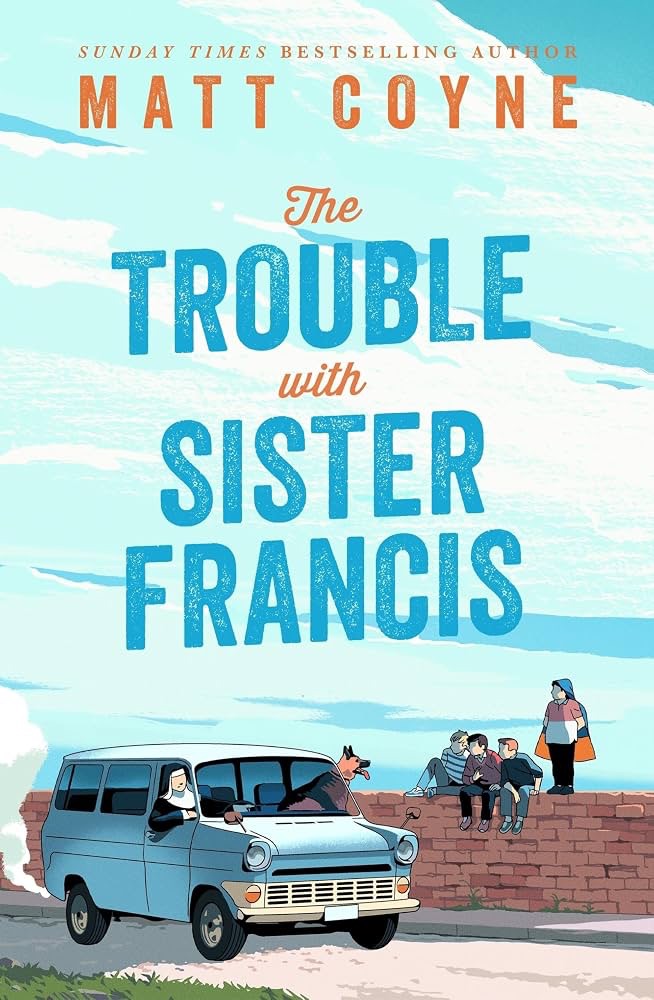
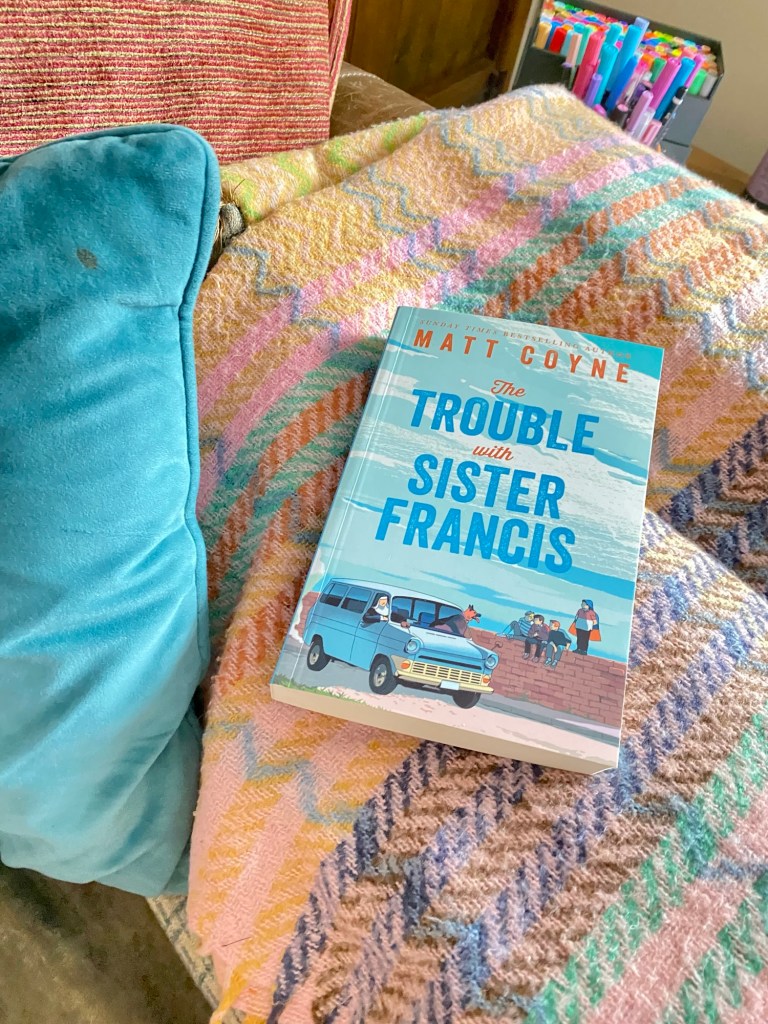
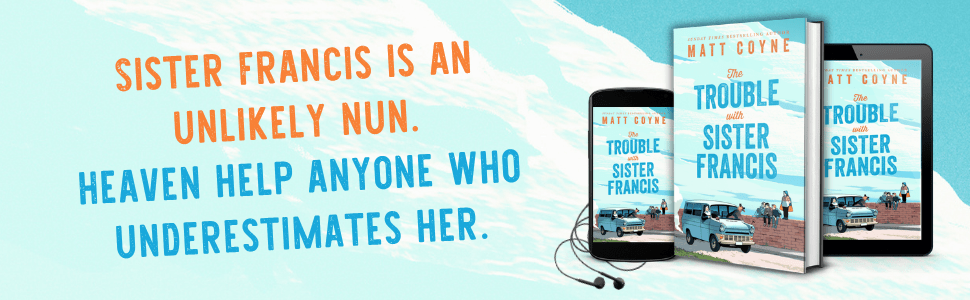
I feel like I’ve been living under a rock because I’m the only book blogger who hasn’t read Frank and Red, so this was my first introduction to Matt Coyne. I don’t even follow him on social media so went in completely blind. This book was a gem from start to finish. Matt Coyne’s ability to write a novel with the emotional intelligence to balance weighty subjects like war and loss against laugh out loud comedy is akin to Sue Townsend and her wonderful creation Adrian Mole. Sister Francis is like my rather formidable previous schoolteacher, Sister Joan. She had the sharpness and discipline of a military veteran, but underneath that there was a twinkle that made me think there was a sense of humour and quick wit underneath. Sister Francis drives an old van as if she’s in a rally, always has a cigarette on the go and reads the racing post. I have always found nuns to be singular and quirky individuals so I warmed to her immediately. Although she’s a comic character there’s so much more to her. She’s clearly keen on restarting a boy’s club she used to run years ago, with origins of supporting boys who had lost their father in WW2. She has a way of relating to boys from the area and our four friends can see she’s a formidable ally from the first day. When they roll up to the clapped out shed they’re accosted by one of the local priests, asking what they’re doing hanging around the presbytery and accusing them of looking for things to steal. When Sister Francis bursts out of the shed he’s taken aback and the boys notice she uses her sweetest voice and emphasises the holy intentions behind her club, but as soon as he’s gone she lights up and is her sweary self. Behind this exterior are buckets of empathy and determination to help the boys in her care, not that she’s easy on them. The four boys have a deal with her, if they come and help her clean the club house on the last Saturdays of term they can come to the club in the holidays and keep the entrance fee. It’s hard work but they stick at it and it’s not long before the Dead Dad’s Club is up and running.
I developed a soft spot for Rich’s Grandad Bob, who has a keen sense of humour and is a great role model for a young boy who has lost his father. I loved how he made Rich laugh with his assessment of Aunt Carole – she has a beard and looks like a pirate. He’s also there for the worse times too, after Rich’s dad died he has enough sense to simply sit with him as the loss hits him, no platitudes or promises, just sitting with him in his grief. Alongside Rich’s 1980s narrative is the journal of another boy who went to the Dead Dad’s Club after the upheaval of WW2. This narrative is evocative of a totally different era as Reginald is evacuated to a small village near Sheffield that’s something of a culture shock after growing up in London. Evacuees didn’t always have the best time and Reginald is coping with the boredom of the village – his observations on what passes as news worthy are so funny. He’s also navigating that rite of passage from primary to secondary school and the author really does conjure up those fears about the bigger school, getting lost and being without your usual friends. I wasn’t sure where his story fit with our four main characters and this is kept under wraps until exactly the right moment. This book has been a wonderful mood lifter just when I needed one, like a warm hug in book form. One line made me think about the friends who knew me in my small village at a similar age, one of whom I’ve tried to see regularly more recently. We try to get together at least once a month for cake and a catch up and I remember being taken aback at first by exactly how well she knew me. But of course she does. As Matt Coyne writes ‘real friendships are cast in the everyday’ and even though my friend and I often just walked her dog, cleaned out the rabbits and watched telly we grew up together and that counts for a lot. I heartily recommend this hilarious but heartfelt story that’s a ray of sunshine in book form.
This book has to be my book of the year so far. I’ve been going on about it since May because it really is something special. I was quite simply blown away by this complex and beautiful story of science, loss and second chances. Our heroine Laurel is a scientist, studying fungus and how it grows but for some reason that isn’t clear at first, she’s on a research station in the Antarctic, away from her former husband Eli and without any fungus in sight. When she develops a fascination in the Arc that appears she thinks about its significance. When she becomes aware there is a matching basin underneath the water, her imagination is fired. Could this possibly be a portal? A gateway to a different world? She knows Eli won’t be far behind because she remembers his theory of the ‘duoverse’, the idea that at the moment of the big bang time and space was formed in two directions: our universe, the planets and the development of the world we know and in the other direction it’s complete opposite. I am not a scientist, in fact I barely have GCSE Biology, so I wasn’t aware of any background to this idea so could drift with it and enjoy two incredible minds exploring ideas. Our characters are fascinating, Eli and Laurel are a couple who were made for each other but their relationship is real and they face tough times, particularly when devastating events crash into their lives but I never doubted their love for each other. It’s fascinating to watch their characters face the concept of the duoverse, not just whether it is a portal, but if it is what will their relationship look like there and will going backwards fix whatever tore them apart? I felt both were analytical and might even appear cold at times, but in the moments of heightened emotion we really see who these characters are and the deep wells of love they hold.
I was on tenterhooks wondering about the duoverse under the ice and if Lauren is right whether they’ll ever be able to return? I found myself wondering how this world would look as time scrolled backwards. I was genuinely scared for them but also full of admiration for their bravery. The mirroring is so cleverly done, showing how life always comes full circle and we’re often helpless at the end and the beginning, if we’re lucky enough to lead a full life. As someone who worked in nursing homes in my twenties this really made me think of the role of nostalgia and how often elderly people hanker after experiences from their childhood. Laurel wants her mother’s blueberry pancakes, to watch a film she’s seen a million times and disappear into a favourite book because there’s comfort in it. It might seem like science has sent them on this potential journey, but it isn’t. The totally unscientific emotion of love is what pushes them on, but also guilt, hope and desperation. Loss is a huge theme in the novel, something that always hits me in the heart, and I was deeply moved by how the author dealt with loss and how the scientific concept of a duoverse changes this experience. This novel was moving, profound, invigorating, deeply intelligent and so full of life. I kept thinking about the symbols of the cover, the circle and the tree, the same under the ground as they are over it. As Laurel observes:
“A line implies before and after; a circle says And then, and then…”
She’s sixty, sweary, drives like a lunatic and smokes like a stacked chimney . . . and she runs the Blessed Assumption Boys Club.
Richie, Bennett, Kenny and Stan are four best friends from the Whittle council estate with little to do but get up to no good. After a run-in with local bullies, they discover the crumbling, forgotten club and find themselves in the company of the most remarkable person they will ever meet.
Set against early 1980s Britain, THE TROUBLE WITH SISTER FRANCIS is a funny, heartwarming, and heartbreaking story of unlikely heroes, quiet rebellions, fierce loyalty and unexpected hope.
And at the centre of it all lies a long-forgotten journal that might just change everything.
I feel like I’ve been living under a rock because I seem to be the only book blogger who hasn’t read Matt Coyne’s Frank and Red, so this was my first introduction to his writing. I didn’t even follow him on social media before now so I went in completely blind. I can honestly say this book was a gem from start to finish. Matt Coyne’s ability to write a novel with the emotional intelligence to balance weighty subjects like war and loss against laugh out loud comedy is akin to Sue Townsend and her wonderful creation Adrian Mole. In fact it was Adrian I thought of when reading these four boys, Richie, Bennett, Kenny and Stan, all from the Whittle Council Estate in Sheffield in the early 1980s. Their dialogue is pitch perfect for a boy of that age, with their slang, swearing and prurient interest in Mrs Bolcheck’s ‘wibblies’. It brought back a memory of my brother and his friend Darren who would hang out together in our Lincolnshire village, hiding behind hedges to shout at a rather well endowed lady ‘show us your tits’. Thank goodness there were no formidable nuns nearby.
Nostalgia and charm are definitely are a huge factor in the enjoyment of this story, with exactly the right 1980s sweets, pop culture references and Northern humour. For me, it the presence of a nun that drew me in and having been brought up Roman Catholic nuns feature strongly in my memory. In 1980 as I was falling in love with Lady Di like the rest of the world and wondering whether to cut off my hair, I was also making my holy communion. I couldn’t get to Catholic school where we lived so I went to the convent every Monday evening for lessons with Sister Anne, a large, twinkly and very maternal nun who taught me my catechism. She also gave me homework every week, to write out a Bible story and illustrate it. I came across this folder when my mum and dad downsized a few years ago and found various crayon drawings of Jesus and his disciples but thanks to a seven year olds grasp of anatomy I’d placed their arms too low on their bodies. The result was various saints whose spidery hands looked like big throbbing knobs! How did she keep a straight face?
Sister Francis is more like my rather formidable previous schoolteacher, Sister Joan. She had the sharpness and discipline of a military veteran, but underneath that there was a twinkle that made me think there was a sense of humour and quick wit underneath. Sister Francis drives an old clapped out van as if she’s in a rally car. Smoke seems to billow from the exhaust and the a cigarette she always has on the go. She swears and is often reading the racing post. I have always found nuns to be singular and quirky individuals so I warmed to her immediately. Although she’s a comic character there’s so much more to her. She’s clearly keen on restarting a boy’s club she used to run years ago, with origins of supporting boys who had lost their father in WW2. She has a way of relating to boys from the area and our four friends can see she’s a formidable ally from the first day. When they roll up to the clapped out shed they’re accosted by one of the local priests, asking what they’re doing hanging around the presbytery and accusing them of looking for things to steal. When Sister Francis bursts out of the shed he’s taken aback and the boys notice she uses her sweetest voice and emphasises the holy intentions behind her club, but as soon as he’s gone she lights up and is her sweary self. Behind this exterior are buckets of empathy and determination to help the boys in her care, not that she’s easy on them. The four boys have a deal with her, if they come and help her clean the club house on the last Saturdays of term they can come to the club in the holidays and keep the entrance fee. It’s hard work but they stick at it and I found this so reminiscent of little dens me and my brother would build together in those long summer holidays where the sun seemed to shine endlessly.
I developed a soft spot for Rich’s Grandad Bob, who has a keen sense of humour and is a great role model for a young boy who has lost his father. I loved how he made Rich laugh with his assessment of Aunt Carole – she has a beard and looks like a pirate. He’s also there for the worse times too, after Rich’s dad died he has enough sense to simply sit with him as the loss hits him, no platitudes or promises, just sitting with him in his grief. Alongside Rich’s 1980s narrative is the journal of another boy who went to the Dead Dad’s Club after the upheaval of WW2. This narrative is evocative of a totally different era as Reginald is evacuated to a small village near Sheffield that’s something of a culture shock after growing up in London. It includes little documents he’s saved that really add to the historic significance of his experiences. Evacuees didn’t always have the best time and Reginald is coping with the boredom of the village and his observations on what passes as news worthy are so funny. He’s also navigating that rite of passage from primary to secondary school and the author really does conjure up those fears about the bigger school, getting lost and being without your usual friends. I wasn’t sure where his story fit with our four main characters and this is kept under wraps until exactly the right moment. This book has been a wonderful mood lifter just when I needed one, like a warm hug in book form. One line made me think about the friends who knew me in my small village at a similar age, one of whom I’ve tried to see regularly more recently. We try to get together at least once a month for cake and a catch up and I remember being taken aback at first by exactly how well she knew me. But of course she does. As Matt Coyne writes ‘real friendships are cast in the everyday’ and even though my friend and I often just walked her dog, cleaned out the rabbits and watched telly we grew up together and that counts for a lot. I heartily recommend this hilarious but heartfelt story that’s a ray of sunshine in book form.
Out Now from Wildfire Books
Meet the Author
Matt Coyne is from Sheffield, South Yorkshire. In September 2015, his life was turned upside down by the arrival of his son, Charlie. Three months into parenthood, he took to social media to write about his experience as a clueless first-time dad. Within days, his post about surviving the early months of parenthood was shared by millions around the world.
Following this, Matt created his popular blog Man vs Baby, which now has more than 500,000 followers. He is the author of two Sunday Timesbestselling books – Dummy and Man vs. Toddler – both based on Man vs Baby and has written for the Guardian, Telegraph, Private Eye and GQ.
The Trouble with Sister Francis is Matt’s second novel, following his acclaimed, award-winning debut Frank and Red.
Matt lives in Sheffield with his son Charlie, his partner Lyndsay and a Jack Russell terrier with ‘issues’ called Popcorn.
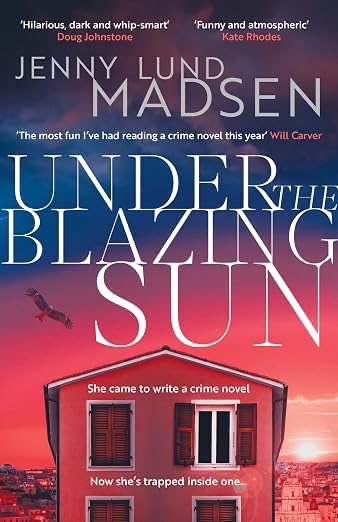
Hannah is miserable. Her love life is in ruins, her contract demands a sequel to her bestselling crime debut – and she’s out of ideas. After a mortifying TV interview, her agent ships her off to a sun-drenched Sicilian villa with a simple order: finish the book. No distractions. No excuses.
But inspiration doesn’t strike – murder does. When a night out ends in murder, Hannah finds herself at the centre of a murder investigation … again. The police want her out of the way, and the only person who seems to believe her is a young but charming Italian police officer. That is, until she doesn’t.
Soon Hannah is chasing suspects, fleeing crime scenes, and doing whatever it takes to avoid becoming the next victim. She came to write a crime novel. Now she’s trapped inside one. Dark, sly and deliciously atmospheric, Under the Blazing Sun is the second novel in the award-winning series featuring accidental sleuth and disgruntled literary author Hannah, whose pursuit of plot twists keeps turning dangerously real.
I loved the author’s first book in this series and I devoured this one in a day. Hannah is once again fretting over writing her latest book, disgusted that copies of the romance novel she poured her heart into is being ignored, while the crime novel she wrote in one month for a bet is a bestseller. Hannah is a brilliantly flawed character full of writer’s neurosis, hating that she is forced to write what will sell rather than the books she aspires to write. Again she’s on a deadline and as a last resort her editor Bastian finds her a quiet villa in Sicily with its own swimming pool. No distractions and plenty of time to unwind and write the novel she’s had an advance to produce. I love this character because she says and does the things I want to, but my inhibitions keep it inside. She has no such restrictions, happily saying what she thinks when she thinks it. Her disgust with the crime genre and Jorn Jensen in particular is so funny. I wonder if she has ever had a thought or need she didn’t express? She’s also totally unregulated and this is what lands her in trouble every time. She decides to walk to the village without thought about the heat, how far it is and which direction she takes. So when it comes to going back to the villa she has no idea which hill to take and ends up exhausted and on the verge of sunstroke on her way back. This is where she is found by Hans and Greta who take her to their incredible house to clean up and drink something. This turns into dinner, wine and a night spent in their house. It’s when she wakes up in a strange place that she and the housekeeper Lucette find a dead body. Greta has been murdered and Hans is nowhere to be found. Has he been kidnapped or could he be the murderer? Hannah seems to have an inability to weigh up a decision before taking action. There’s so much going on in her head that it’s very hard for her to remain in the present. I’m always wishing she’d slow down a minute and breathe, but the only times she seems to do this are in the water.
This hot Italian island couldn’t be further from Hannah’s Scandinavian home and is a great backdrop for a murder. Hannah is a fish out of water here and she notes the contrast between the cold and snow of her last case and the relentless heat and dryness of Sicily. The area throws up different obstacles too. There’s the rather sexist and misogynistic Sicilian police, aside from their one female recruit Carlotta. Hannah has to consider the local community and possible objections to people like Greta who are making money by bringing even more tourists into the area. There’s the possibility of corruption too with links between the Mafia, business and local government. We see the contrast of what the area is like for holiday makers and wealthy incomers, as opposed to the young people in the area who are struggling to find work and homes without moving away. The young police detective Carlotta wants to be the difference in the police force, banding together with Hannah on a couple of occasions and proving to be quite the distraction. Hannah is still in love with Margret and is dangling on an open ended waiting game. They’re not in a relationship until Margret can extricate herself from her marriage and make the best decisions for her children. Hannah isn’t always patient with this and doesn’t seem to realise that if Margret was in her life permanently so are her children. When she imagines them together I’m not sure the children feature in that picture. It was interesting to see her getting more than she bargained for and having the cheek to ask Margret’s police officer husband for help! He voices what many readers might be thinking when he tells her she’s the most annoying person he’s ever met.
The case is an absolute maze of connections and suspects and despite her aversion to crime as a genre, she’s just as caught up in the mystery of this murder as any reader would be. She’s utterly reckless, in a comical way and there’s a chase on a moped during the final chapters that is clumsy and hilarious to imagine. Sparks fly when Jorn Jensen appears, but she can’t deny he helps make things happen. His arrogance is brilliant and when he suggests they write a crime novel together I thought Hannah might hit him with something heavy. The creepy moment in the basement, including Jensen’s cardboard cut out made me laugh and worry about her safety at the same time. This is a dark humour that I love. Jorn’s statement that he has ‘enormous sex appeal’ and it’s that and not his wealth that attracts women shows what sort of brash and conceited character he is, but there’s no denying his bravery and quick thinking. They are quite the investigative team, despite her reticence about working with him. Hannah’s instincts are good. She won’t accept the police’s conclusion that Hans killed his wife, reasoning that he adored her and couldn’t have done it. Instead she follows the money, often blundering into compromising situations and dangerous people. If the conclusion teaches her anything it’s that people will murder for very unexpected reasons. This is a brilliant second instalment of Hannah’s adventures and I’m going to resolve to be a little more Hannah and say what I think here and there.
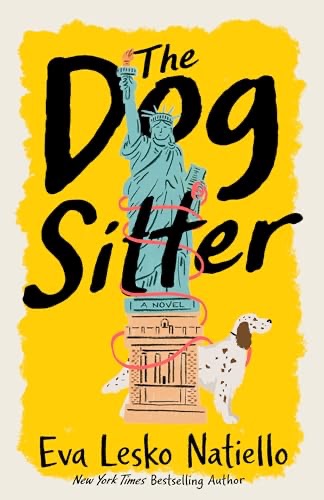
When a woman whose life has gone sideways takes a 30-day dog-sitting job in New York City, despite not being a dog person, she’s pulled into Manhattan’s chaotic social orbit. This delightfully offbeat story is a heartfelt journey of messy midlife reinvention, filled with sharp humor, quirky characters, and one very judgmental dog.
Recently divorced, newly evicted, and suddenly strapped, Colleen Fitzroy is out of options. She reluctantly agrees to work for former boss, Massimo Locatelli—editor of Savor Magazine—dog sitting his precious Aldo while he’s out of town. At least no one will bother her.
That’s until an endless parade of New Yorkers arrives unannounced, pulling Colleen into their knotty orbit. As she juggles strangers, a high maintenance dog, and her unraveling plans, Massimo takes note of her grit. He offers her a role in an ambitious new venture inside Manhattan’s rarefied restaurant scene—which triggers a shameful secret.
Colleen must confront the life she’s been living—and decide if she has the courage to seize the life that’s long overdue.
My counselling work is all about hope and recovery so as soon as I saw this book on NetGalley I knew it would be for me. We follow Colleen who’s something of a character as she has a total break from her disastrous life to think about what to do next. All she must do is spend one month in her previous boss’s incredible apartment to dog sit his canine companion Aldo. This is complicated by the fact that Massimo once fired her from the magazine he edits. There’s no one else and he must fly to Italy in a hurry to help his cousin and Colleen is the only option. However, Colleen has never had a dog before so this is going to be a steep learning curve. She’s also not that keen on being woken in the middle of the night, having unexpected visitors who let themselves into the apartment with no warning, or spending long FaceTime calls with Massimo so he can spend time with Aldo. She also doesn’t have a lot of time for privileged rich people. She honestly made me laugh and struck me as someone who has been through a lot in her life and has zero fucks left to give. If this were a film I could imagine either Meg Ryan or Renee Zellwegger playing this part to perfection. She has all of her belongings, meagre as they are, with and nowhere to go when Massimo returns. She’s insightful about the position she’s in. She was married to a firefighter who survived 9/11 but contracted terminal lung cancer from the dust at Ground Zero. Having lost the man she loves and struggling with the sense of loss she throws herself into a relationship with a man she describes as a ‘party partner’ – great fun for one night but disastrous in the long term. She thought she’d left grief behind but it came back and hit her twice has hard. This is a definite crossroads, but does she know how to move forward both physically and emotionally?
The change is gradual as she learns to look after the beautiful Aldo and cope with the various visitors to Massimo’s flat. She’s woken in the middle of the night by someone entering the flat and a lot of shouting from the street below. It’s Massimo’s daughter and a boyfriend who won’t take no for an answer. Without missing a beat Colleen opens the window and lets fly with some well chosen warnings. In no uncertain terms he knows to give the apartment a wide berth. Other visitors include a woman called Gloria who appears to be a cleaner, but a very stylish and well-dressed one. There’s also the caretaker of the building, a group of gourmets who hold a supper club despite Massi not being there and various others. At times these interruptions are a little jarring, especially when we’re first trying to get to know Colleen. However, all play their part and slowly Colleen starts to see that Massi’s life might not be as picture perfect as it seems. The gourmets let slip that he may have lost his job at Savor magazine, gossiping about their absent host in a horrible way. Slowly we can see Colleen opening up to people again as she enjoys chatting with Massi’s daughter and when she sees a photo of the supper club she barely recognises herself because she looks engaged and as if she’s truly in the moment. Aldo slowly begins to bond with Colleen as only dogs can, showing he’s now depending on her for comfort. Even Massi starts to make longer phone calls where he’s actually confiding in this women he’d pretty much written off. We can see their similarities in upbringing, with poverty and scarcity of food being the source of their pleasure in food now. In fact food is very sentimental to Colleen who remembers her garden with her husband very fondly, in fact her prize possession is a carrot plan grown directly from the seeds he collected on their vegetable patch. She also does a regular stint at the food bank, making sure children don’t grow up in food poverty and hates what she calls ‘food peacocking’ something that Massi and Savor Magazine do daily. Even though Massi grew up in a poor environment he certainly doesn’t now. When he asks if Colleen has found Aldo’s dog food in the fridge she realises she’s been heating it in the microwave and eating it herself it is so delicious.
The settings are interesting and contrast beautifully. Massi’s apartment is both aspirational and sentimental with his kitchen table covered with the carved names of people who’ve eaten there. He keeps back copies of his magazine in pristine condition, clearly very proud of his position. By contrast the home that Colleen has just left is in a New Jersey suburb, ‘neat and smells like ocean mist and sea salt in the way cheap candles do.’ This is typical of the self-deprecating way Colleen talks about her life, she’s never had the luxury that Massi and his friends take for granted. Manhattan is frenetically busy when compared to the serenity and elegance of Massi’s hotel in Italy. We can even see the difference in the pace of life with city people like little ants, busily scurrying around. Colleen’s back in that pace but struggles to cope with the busy in and out of the apartment and it does interrupt the flow a little. The plot then wanders into different territory as Massi decides to start a business importing truffles for Manhattan restaurants and asks Colleen to be his courier and saleswoman, visiting contacts in their kitchens and selling directly. This was a plot development I really didn’t expect and I suspected there was more to this venture than met the eye.
This book could have been a simply madcap makeover story, but it does tap into deeper themes such as childhood, loss and how we process trauma. I wasn’t sure where the truffle business was going to go but it felt like a great metaphor for humans – even the most dirty and unpromising truffles are treated like gold and Colleen could be seen like that, a treasure underneath those layers of defensiveness and snarky wit. She also learns that people are not what they seem and even those who live very different lives can teach each other something. Rather than do all the cliched things such as yoga and celebrating her ‘me’ period, Colleen actually learns things she didn’t expect like not taking people at face value and of course she learns the joy that a dog like Aldo can bring into your life. The absolute gem of the story though is Colleen herself, a rather chaotic, irritable and closed off person who slowly blossoms.
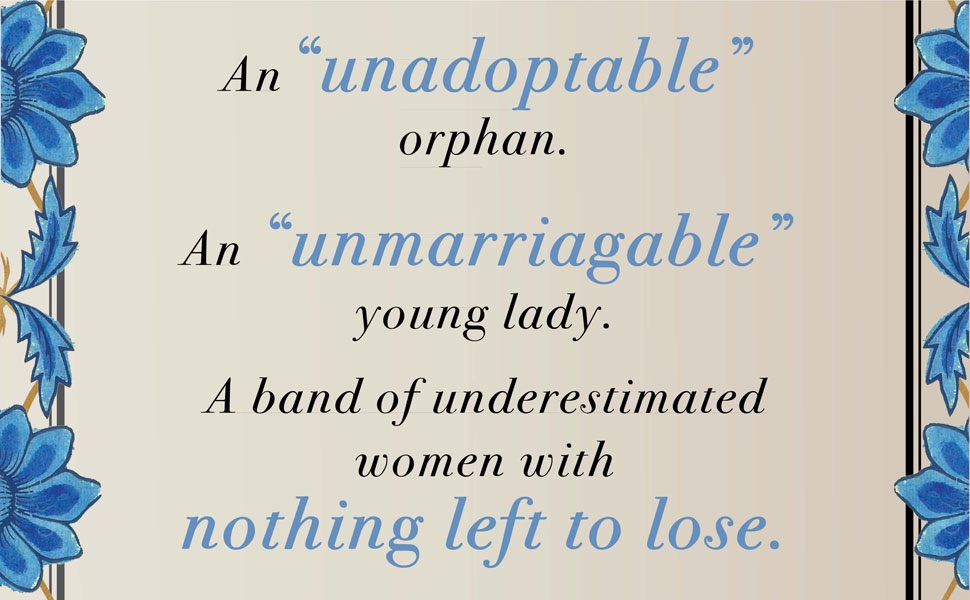
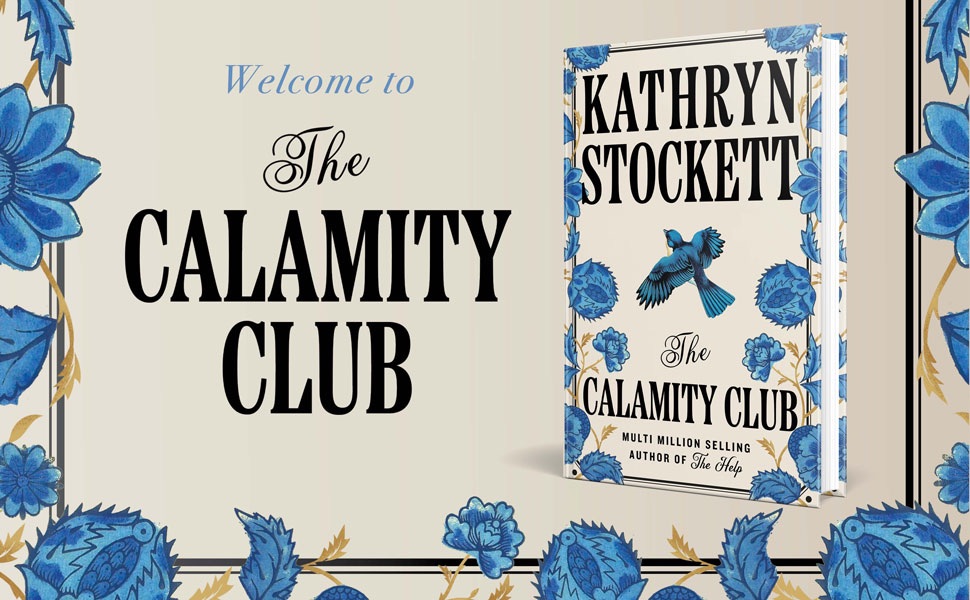
Eleven-year-old Meg Lefleur has learned the hard way to rely on no one. Ever since her beloved mother failed to come home last Christmas Eve, she’s been one of the ‘unadoptable’ girls at the town’s orphanage, where she fights each day to keep her wits sharp and her spirit unbowed.
When she meets Birdie, a young woman who has come to Oxford determined to remind her socialite sister of the impoverished family she left behind, for the first time in a long while it seems someone else might care about Meg’s future. But as the Depression tightens its grip, Birdie begins to suspect her sister’s charmed life may be founded on a tapestry of lies. Then, Birdie encounters Charlie, a woman haunted by loss who has been pushed to the brink with nothing left to lose. Drawn together by circumstance, they find unexpected kinship among a disreputable, determined band of women.
But in a town steeped in hypocrisy, even the smallest act of defiance can have dangerous consequences …
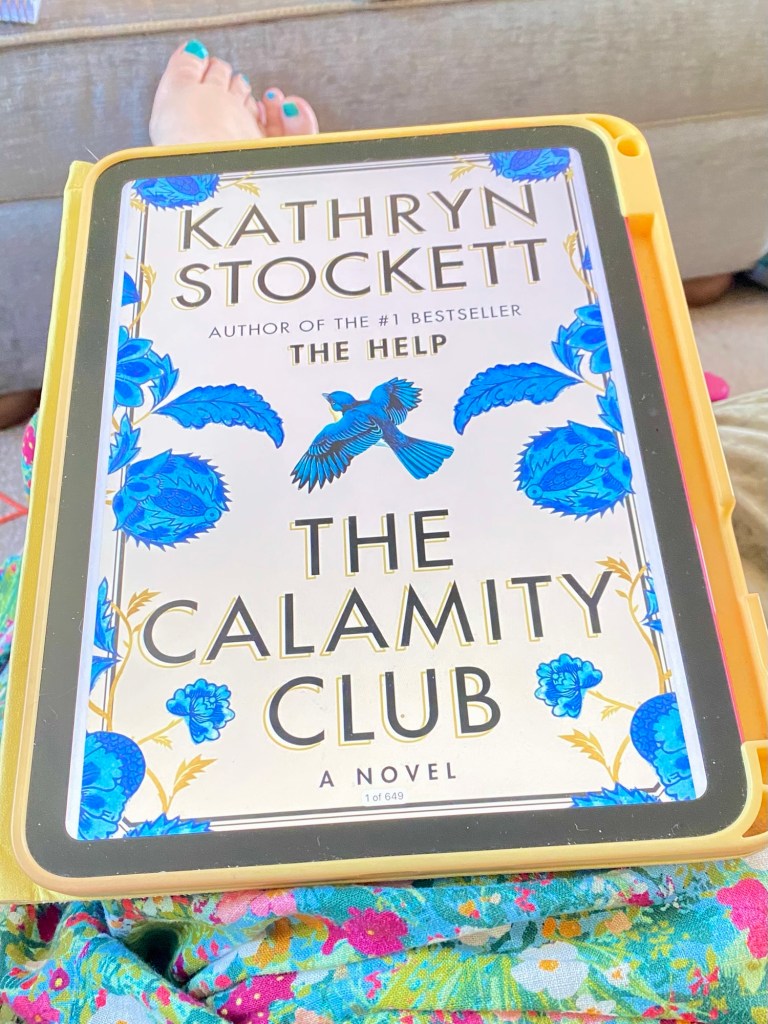
In our prologue we find Birdie in the pharmacy of a small town in the southern states of America buying ‘Merry Widows’ condoms by the dozens. I then became so engrossed in the story of this fascinating woman and the relationship she makes with a girl called Meg at the orphanage that I forgot all about the question that came to mind; why she would be buying so many? Thankfully all questions are answered in this incredible book that’s moving, infuriating, saddening and hilarious all at once. The plot takes us on a journey as Birdie travels to visit her newly married sister Frances who is living with her in-laws at their house Idlewilde. Frances is at great pains to point out her new family, the Tartts, are well to do and Birdie must try not to show her up. In truth, Birdie can only ever be her glorious self and Mrs Tartt is too much of a Southern lady to show anything but politeness to a guest. Frances’s husband, Rory Tartt, is a good looking man, but to Birdie he seems to have something on his mind. He’s eager to leave in the morning and eager to be in his office in the evenings, even retiring to his own bedroom at the end of the day and not his wife’s. Frances confides in Birdie that there’s been very little in the bedroom department and Birdie starts to worry. One thing she knows is money and if she didn’t know better she’d be concerned about Rory’s business and where he’s going. When asked to book-keep for the local orphanage Frances again gives her a note of warning. The president of the orphanage board, Mrs Garnett, is very influential and is hoping to be the governor of the Anti-Vice Committee. Birdie is unimpressed with this paragon of virtue and lets Frances do the sucking up, instead she puts her energy into the disgusting room she’s working in alongside one of the orphans, Meg. As far as Birdie can see, Meg is in this room by herself every day away from the other girls. She has nothing to read. The walls are mouldy and she’s not allowed to open the window. She’d think it was a punishment, but Meg doesn’t appear to have done anything wrong. With an attentive adult to clean and paint the room, let the air in and ask her interesting questions Meg starts to blossom, much to Mrs Garnett’s consternation. Birdie can find solutions to most problems and is enjoying her time with Meg, but the Tartt’s troubles loom and Birdie will have to come up with a creative way to help. When she meets Charlie, a woman broken down by the system and longing to get her child back, they make a formidable team.
I absolutely loved Birdie, the sensible person between an anxious mother who thinks the price of canned peaches will put the family over the edge and a sister who is willing to spend every penny they have if it makes her pretty. She is pragmatic, knowing she’s not a beauty she decided she would have to look after herself and got a job bookkeeping at the local store. Frances didn’t even invite her family to her wedding, scared of being found out as poor. Birdie doesn’t believe in trying to be what you’re not and she’s utterly herself which I loved. She’s sensible but also has a loathing of injustice. She has her own moral compass that is based on the Bible, common sense and kindness. She doesn’t believe in people that set themselves up as good in a performative way, just be good because it’s the right thing to do. Meg was fascinating and her story is so deeply sad. She believes her mother left her one Christmas Eve and never came back, so she had to survive on what was in the house until the local doctor found her. She’s absolutely starving for books and learning, even sneaking a Life magazine she finds in the cupboard and gorging on it like a cream cake. She has to some extent accepted her treatment at the orphanage, never expecting to be chosen as one of the eldest there. I found myself hoping Birdie might adopt her, they certainly have an instant affinity. I loved Meg’s sense of humour too, especially when she relates an adoption letter received that states:
“We need us an older girl, on account of I was chopping cotton and it was hot out and the blade swung out my hand and sliced my wife’s arm clean off so we had a proper funeral for it but she cannot lift a pot now.”
As Meg observes, they had a funeral for an arm? That’s quite a letter. It has people, action and weather, with a bit of gore for interest. She’s a girl with so much to say and no outlet at all. It’s a whole lot different than life with her mum who was a feminist and clearly loves her daughter. She celebrated when Meg was placed in the ‘exceptional learners’ and tells her to remember that most men are placed in the slow learners category. Where could this woman have gone?
The themes in this are very much like The Help, injustice, inequality, the strength of women and what we’ll do to survive. In addition there’s the rise of the eugenics movement in America, something I researched at university and when preparing for my PhD. Eugenics supposes there is a master race, that white able-bodied heterosexuals with European origins are superior. This is such an important topic when we see what’s going on in the US today and when The Sanctuary exists in London – a destination that stays out of the press, but launched the Restore party, houses a eugenics magazine and race scientists. People forget that Germany didn’t start this lean towards wanting a superior race. Birdie finds out that Mrs Garnett’s policies for the Anti-Vice group include eugenic thinking such as imbeciles will give birth to more imbeciles, some ethnic groups should be prevented from having more children and that others should be forced onto contraception from a very young age, especially girls from poor, black families. It’s an evil that’s never really gone away, especially in America where some of these measures were still happening in the 1970s. These policies made it easy to get inconvenient people out of the way, just like Meg’s mum whose story brought me to tears. Birdie starts to realise that doing something considered immoral by society might be the best way to survive and she has to weigh it up in her own mind.
There was just so much I want to say about this book and I’ve had to stop myself rambling! Kathryn Stockett has done it again. I can see this on the big screen and it will be brilliant. It also has the added bonus of chatter about merkins at the breakfast table, which made me laugh out loud. I fell in love with Meg and Birdie, but also the women who form a team to get Birdie’s in-laws out of the mess they’re in. This book has so much to say about female strength, friendship and adaptability in terrible circumstances. Every character is so well drawn I could see them. I know a lot about eugenics and its history in the US and this is an important book right now, going against where Christian Nationalist policy is taking the country. It shows the damage that can be done when someone lives the rigid rules of manmade religion rather than the actual message of love given in the Bible. Often those who want the appearance of goodness most, will do anything to keep it. Birdie finds that friendship and loyalty can be found in the most unusual circumstances and with people you never expected. There’s tragedy and brutality but also lightness, humour and so much love. Utterly brilliant!
Out now from Penguin Books
Meet the Author
Kathryn Stockett was born and raised in Jackson, Mississippi. After graduating from the University of Alabama with a degree in English and Creative Writing, she moved to New York City, where she worked in magazine publishing and marketing for nine years. The Calamity Club is her second novel.
When it feels as if the world has gone to hell in a handcart we need books that absorb us into another world, that distract us, or teach us how to cope. We want something gentle maybe? A feel good novel or something that makes us laugh out loud. So I’ve compiled a list of books that have helped me over the years from those that have given me inspiration or suggestions on how to cope – the best one? Get a small dog. Often we need something nostalgic or an old favourite to sustain us, or perhaps something with a hint of magic. I think we all need just a tiny sprinkling of hope.
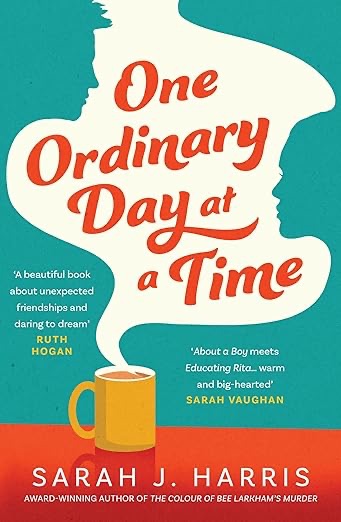
This is a lovely, heartwarming read. It’s about being broken and trying to put ourselves back together. Sometimes we need another person to help us, a spark of friendship and a chance to learn from each other. Here’s the blurb…
Two people.
Simon Sparks hides in plain sight – his astonishing gifts locked deep inside himself, as he dreams of lost potential and extraordinary tomorrows.
Jodie Brook hides behind what you think of her – a single mum who can barely make ends meet. But her dreams are filled with the education she always wanted and discovering a better life for her and her son.
One life.
When Simon and Jodie’s lonely worlds collide, it upends everything. But as it becomes clear they have so much to learn from each other – Jodie can show Simon how to rejoin the world, and Simon can help Jodie prepare for her greatest challenge yet – they begin to realise that life could be so much more.
One ordinary day at a time…
Sometimes the old ones really are the best and I’m always instantly soothed by one of these books, mainly for me the first two that focus on the March sisters as they grow up and choose their way forward in life. Yes, I know exactly how they’re going to turn out but that means there are no nasty surprises and I can just luxuriate in the sisters, their hobbies and passions, the warmth of their home and their generosity as a family. The March family are not without their trials, with their father away at war, sickness and loss and heartache but these are character building and the girls always look forward with hope. I can’t believe there’s a reader out there who hasn’t seen one of the films or read these books when they were younger so I won’t do the blurb. All you need to know is these books are funny, hopeful, romantic and everyone has a favourite sister. Beware of doing those quizzes that tell you which March sister you are. I wanted Jo but got Amy and that put a real dampener on my day! 😂😂
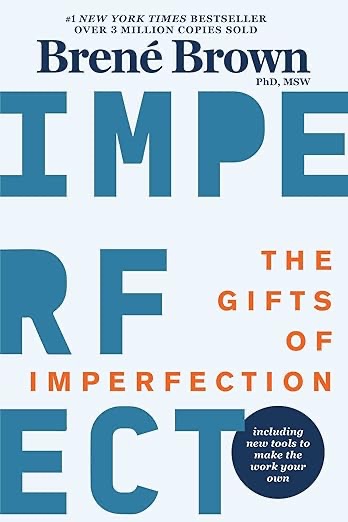
I’ve been following Dr Brené Brown’s work for around 12 years now and often used it in my counselling practice. I could have taken any of the books because they’re all helpful, but this is the one I started with. One of the biggest barriers to success and connection in my life has always been perfectionism. I’ve failed at things before I’ve even started because I wanted my work to be perfect. I even went to university with the aim of getting a first, because anything less would have felt like a failure. A chronic illness and disability has taught me that I can’t work in the way I want to. I have to work in short bursts and sometimes it I have to accept it’s a day to rest and work, chores and everything have to take a back seat. It’s a hard lesson. Reading this book helped me to accept my imperfections and realise admitting them to friends and family would bring us closer. Brené Brown tells us about her own struggles with perfectionism and it’s like reading the words of a close friend. Under this chatty style is a serious academic, with many years of research behind her. I never felt lectured but I did learn. I came away feeling like we’d had an honest, in-depth conversation where she showed her own vulnerability. I would advise reading it through, then go back to it with a notebook and pen, working through the tasks and applying them to your life. This really did create change in my life and allowed me to relax about being a messy, imperfect human.
Many of you have probably read Cheryl Strayed’s book Wild or watched the Reece Witherspoon film of the same name. It chronicled her decision to walk eleven hundred miles up the West Coast of America from the Mojave Desert, through California and into Washington State. This wasn’t something she normally did, but life’s circumstances had brought her to breaking point. Her mother died suddenly, her family seemed to fall apart and her own relationship totally broke down. She knew she needed to do something drastic, otherwise addiction could completely take over her life. This one of those survival stories where just getting up every day and walking and the nature around her began the healing process. This is a later book, compiled from the online anonymous agony aunt Cheryl became afterwards. Using the name Sugar, she tackled so many different problems with empathy but also a deep understanding of how it feels to be at rock bottom. Having down to earth advice from someone who’s been on the same journey is so powerful. Somehow it comes across as down to earth, genuine and caring, while also avoiding bullshit. This is a great book to dip in and out of when you’re feeling a bit low. In fact I recommend creating a pile of books by the bed for this very reason, books where you can read one section, a poem or a letter for those mornings when you need that boost.
This book is an absolute beauty and was a total surprise too! I picked it up in a second hand bookshop because it had an octopus on the cover and I read these lines:
Who am I, you ask? My name is Marcellus, but most humans do not call me that. Typically, they call me that guy. For example: Look at that guy—there he is—you can just see his tentacles behind the rock. I am a giant Pacific octopus. I know this from the plaque on the wall beside my enclosure.
It went from a maybe to a must buy in a couple of sentences. Our main character is Tova Sullivan whose husband died and ever since she’s worked as the night cleaner at the Sowell Bay Aquarium. Ever since her eighteen-year-old son, Erik, mysteriously vanished on a boat over thirty years ago keeping busy has helped her cope. One night she meets Marcellus, a giant Pacific octopus living at the aquarium who sees everything, but wouldn’t dream of lifting one of his eight arms for his human captors – until he forms a remarkable friendship with Tova.
Ever the detective, Marcellus deduces what happened the night Tova’s son disappeared. And now Marcellus must use every trick his old body can muster to unearth the truth for her before it’s too late… This book is heartwarming, original and so clever. Being inside the mind of Marcellus just made me smile and still does whenever I have a re-read. This book stays by my bed because I know it will always bring me joy.
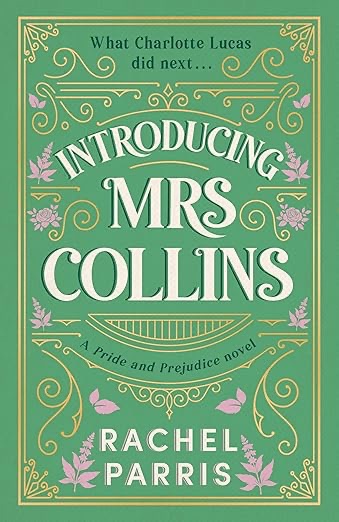
I may be cheating here because this is more of a genre than an individual book, but I simply had to add it to this collection. There’s a reason streaming channels fill their schedules with Jane Austen adaptations, with a new Pride and Prejudice and Sense and Sensibility on their way soon, and it’s because they’re a joy to watch. Especially if they put one on opposite the endless football. These are gentle, witty and romantic stories with the hope of a happy ending. Of course you’ve probably already read Austen, so what next? Reach for an Austen inspired book. My three choices are inspired by Pride and Prejudice and involve all of the characters we are so familiar with. Eligible relocates P&P to a wealthy New York neighbourhood and the present day. The Other Bennett Sister tells a familiar story from the perspective of the middle Bennett sister Mary, something of a joke in the original, here Mary starts to enjoy life and it’s glorious. Finally there’s last year’s take from Rachel Parris, which keeps all the wit and romance of the original but our heroine is Lizzy’s best friend Charlotte Lucas, last seen accepting the proposal of the seemingly dreadful and ridiculous Mr Collins. What’s great about these books are the new plots, different perspectives on characters you know well, witty interesting women and yes, a touch of romance too. There’s the comforting feeling of knowing this world but also the unexpected joy of seeing it anew.
This book was a gift from my mum, after my husband died. Having been his carer for the final year of his life I hadn’t just lost the person I loved but I’d lost my purpose, the thing that occupied almost all of my time. Before he died I was ‘on’ day and night, except for the two nights we received nurses paid for by the NHS. Occasionally Marie Curie had a cancellation and I was offered care for the night and I jumped at it. He couldn’t move, eat or swallow so had a feeding tube in his stomach. He had primary progressive MS and it even affected his breathing, so he needed someone awake at all times.
This is a really honest and powerful memoir from Bel Mooney, mixing personal stories with literature, history, and inspiration. This book tells the story of her rescue dog, Bonnie, and how she rescued Bel when her world fell apart. She writes about the very public break-up of her 35-year marriage to Jonathon Dimbleby who fell in love with an opera singer. Not long afterwards the other woman was diagnosed with terminal cancer, leaving Bel’s ex- husband devastated and needing support. Bel covers six turbulent years from when she first acquired Bonnie from a rescue home, through this personal heartbreak and disappointment. It also shows the joy and companionship a dog can bring at a very difficult time. It inspired me to get my dog Rafferty who lived through some very difficult times with me and only died around four years ago. I can honestly say if I hadn’t picked him up on New Years Eve 2007 I might not even be here. Bel has now found happiness in a new life, with her Maltese at her side all the way. She writes about transformation, about healing then picking yourself up and attacking life. It’s also about celebrating the good parts of life, much as a dog always celebrate your return, even from the shortest trip. This is such an engaging story and I suppose my dog and this small book saved my life.
In my teenage years, our holidays were always spent in North Wales at a holiday let owned by an elderly gentleman called Ted. It was a large secluded farmhouse not far from the coast and we’d originally found it in a brochure. But Ted liked us and knew my parents had no money, she he’d let us stay for a whole week for £50. We’d stay in the front of the house and Ted would live in the small living space at the back that had probably been a piggery at one point. There was an adjoining door and at breakfast he would appear like a magic trick from the pantry. He was ever the gentleman, full of stories from the RAF and looked like the BFG, just smaller. Every year I would aim for the bookshelves and grab a compilation of James Herriot stories. I would read them laid on the lawn or by the river while my brother fished. I still find them some of the funniest and most uplifting stories I’ve ever read. I defy you not to laugh out loud when reading the ghostly monk who wanted a particular lonely road, perfect for terrifying a vet who’d had a call out at 3am. Or the angry cat Tristan and James are conned into collecting from an elderly lady, only for it to escape from its box on the return trip. As James tries to concentrate on the road while this black streak whirls around the car, causing Tristan to shout:
“The bloody thing’s shitting Jim. It’s shitting everywhere”.
Or the disastrous night he first takes Helen out to a dance, and tries to drive through a flood. They return to her farm with James soaked from the knees down and with ruined shoes. He then has to attend a dance with crinkled trousers and her father’s old dancing slippers that have bows on! The animals are amazing and I love reading about the bond between animals and their owners, even some of the farmers are more attached to their livestock than we might think. This is another one that’s great for keeping next to the bed when some cozy humour is needed.
This lovely novel from indie publisher Orenda Books has all those feel good words attached to it – heartfelt, life-affirming, hopeful. I can honestly say it is all of those things. Our hero, Robin Edmund Blake is halfway through his life. Born in 1986, when Halley’s Comet crossed the sky, he is destined to go out with it, when it returns in 2061. Until that day, he can’t die. He has proof.
With his future mapped out in minute detail, a lucrative but increasingly dull job in the City of London, and Gemma to share his life with, Robin has a plan to be remembered forever. But when Robin’s sick father has one accident too many, the plan starts to unravel. Robin must return home to the tiny seaside town of Eastgate, learn to care for the man who never really cared for him, and face the childhood ghosts he fled decades ago. Desperate to get his life back on schedule, he connects with fellow outsider Astrid. Brutally direct, sharp-witted and a professor at a nearby university, she’s unlike anyone he’s ever met. But Astrid is hiding something and someone from Robin. And he’s hiding even more from her. I loved this book because I could relate to Robin, hit by one of those life circumstances that come out of the blue. He and his dad are awkward and don’t really know how to talk to one another. Robin is equally awkward with the characters, avoiding them if he can manage it. He’s dealing with a huge life change and seeing the person who brought you up becoming helpless is a difficult thing. An old friend gets Robin out of the house and out on a bike, taking in the scenery he remembers from being a child. Then there’s Astrid who is like no one he has ever met. When I finished this book I had a huge smile on my face and I’d read it again tomorrow.
My final choice is not a novel or a self-help book, in fact it’s more pictures than words. My mum’s copy of this book was kept on a recipe stand in the living room and was turned to each month as if it was a calendar. There was no point keeping a book this beautiful on a shelf, it needed to be seen. I fell in love with it and tried to convince myself I was an Edwardian lady in a floaty frock, flitting around the forest drawing ferns and butterflies. I copied her illustrations and did my own, even taking the book into school to do a project on it when I was around ten. Edith Holden’s original diary is filled with a masterful paintings and observations chronicling the English countryside throughout 1906. It’s one of the few true records of the time in print, the handwritten thoughts and paintings contained in The Country Diary of an Edwardian Lady transport readers to a more refined, romantic, and simpler time. Her poetry and illustrations bring the reader back to a time in which propriety, civility, and an appreciation for the natural world reigned. It feels like a souvenir of a bygone era but it’s also a calming touchstone. I grew up surrounded by land, in a very agricultural county and I loved recording the plants and insects or birds I had seen, although my illustrations of butterflies and flowers were probably the most successful. It’s a charming book and even now a copy sits on the sideboard in my hall, open to the right month. It’s the perfect book to flick through, or read the quotations she has placed next to her sketches and lines of poetry. I feel completely in a different world when I look through this book, because it’s a powerful reminder of a gentler time, my own childhood and nature combined.
Rachel (Rocky) is seemingly living her best life as the irreverent, funny beating heart of her family. Her ageing father is his unique, adorable self; daughter Willa is prone to bouts of existential angst whilst berating the fact that her mother has zero filter; husband Nick is steady, logical, sometimes infuriating.
They are messy, they are flawed, they are completely, ridiculously normal.
And like most normal people, Rocky worries about what might happen next. So when a former classmate of her son Jamie dies in a seemingly random accident, Rocky becomes obsessed.
For if accidents can happen – and they do – is it truly safe to love anyone?
Fresh, honest, laugh out loud funny and genuinely relatable, WRECK follows Rocky and her family through one rollercoaster year as they negotiate the unpredictable and beautiful messiness of life.
I don’t know how Catherine Newman does it, but I feel so at home with Rocky as if she’s a really close friend who you can tell anything to. After Sandwich, we meet the family at home, getting over Grandma’s death and getting back into the swing of life. Rocky’s dad has been living in their outside shed since his wife died and daughter Willa is also at home. Newman lets us live alongside these characters as part of the family and I adore their humour and their warm, chaotic household – not to mention their food always sounds incredible. Rocky is a freelance writer and doesn’t have regular work coming in, so when a young man is killed in his car on the nearby railway crossing she becomes fixated on what happened. If anything Rocky is over empathetic, she can’t stop thinking about how devastated his family must be and trying to work out how it happened. Meanwhile, a strange rash appears on her shoulder and while she’s having a check on sun damage her dermatologist suggests they look into it. This turns out to be a good call as it begins to appear elsewhere on her body. A biopsy of the skin and some bloods should solve the mystery but it becomes a deep rabbit hole with many frightening possibilities.
I am not overstating when I say this book could save my life! As Rocky’s symptoms started to mount I kept reading bits out to my husband and looking up the terms, wondering if somehow the author had magical access to my medical records. I identified so strongly with this story of living while unwell because this has been the last eighteen months of my life. I had two breaks in my spine as a child causing issues with pain and the use of my right arm and shoulder. I was also diagnosed with multiple sclerosis at 21. However I have always had a collection of symptoms that didn’t fit with that diagnosis. With increasing arthritis in my lumbar and sacral spine my pain management consultant asked for a full body MRI. I couldn’t have prepared myself for the list of problems that unfolded. Not only did I have arthritis and impingement of peripheral nerves, I also had a narrowed spinal canal in places, potentially causing issues with my spinal cord. However, I also had a lesion in my spine, one in my spleen and several growths on my thyroid. All of these things are being dealt with by separate specialists, but Rocky’s story popped a little light bulb over my head. Surely I had to ask the question – what if all these issues are connected? I’ve already been told it’s likely I have Hashimoto’s disease and it’s being treated, but I’m having biopsies and I’ve asked to see an endocrinologist to flush out whether it’s one of diagnoses that Rocky is facing. I recognised the sudden feeling that your body is falling apart and is even working against you. I’ve felt that terrible fear that there’s a ticking time bomb somewhere in your body and almost becoming divorced from it. I could see that Rocky felt better when she did something physical such as going to a dance group or plunging into an icy lake, because her body works for her and becomes part of her again.
This author knows how it feels to be going through all the volatile changes of menopause, while simultaneously supporting young adult or teenage children and elderly parents. It’s a hell of a balancing act while getting used to a body that puts on weight where it never has before, thins all the things you want to be lustrous and thick and thickens all the bits that used to be slender. She captures what it’s like to feel invisible to most of the world, but the absolute beating heart of the home. The generation gap is also brilliantly portrayed when Rocky and Willa try to take grandad to a juice bar, his grumpiness giving the perfect edge this warm and nurturing family. While Rocky’s husband is like a little moon, constantly orbiting his wife and tending to those little things like cheesy nachos in bed. It’s interesting when this very liberal family have to cope with family members whose views are not like their own. Jamie and his wife Maya visit from New York for Thanksgiving and it’s clear their values are different, especially when Rocky makes a discovery about her son. He works for a company that consults for businesses, finding ways to make them more profitable and openly says to his mum that he just loves money. Even though she doesn’t agree, Rocky is never happier than when all her children are under her roof.
‘“Yayy, I say. All the kids back under my roof! When I send out my ESP stealth probe in the night to check on everybody, they’ll be in their proper beds”.
Mostly I love the emotion and atmosphere of this author’s novels. I live for a messy pile of books by the couch, usually with a pint mug of tea within reach and the dog and cats all quietly snoozing in their own places. That’s exactly what this family has, an untidy but welcoming house with cats everywhere and always gorgeous food on the go. It feels very conscious of the seasons too as summer turns to autumn and winter, with festivals like Halloween playing their part – I loved the moment when Rocky tries to do the trick or treat routine on the porch not realising the young woman is Willa’s date. Every festival is marked with excellent food, followed by a long tramp through the nearby woods and foraging for things. I always want to be part of their world and feel like I’ve lived with them for a while once the story ends. As my story continues I’m going to take a bit of Rocky’s dermatologist’s wisdom with me. When he gives his diagnosis Rocky is taken aback and he acknowledges her feelings but tempers it with some advice:
“Yikes, I said, and he said, ‘a little bit of yikes. You can visit with the fear but don’t hire a van and move there.”
Out Now from Doubleday
Meet the Author
Catherine Newman is the New York Times bestselling author of Sandwich and We All Want Impossible Things, which was also chosen for the Richard & Judy Book Club. She is also the author of the memoirs Catastrophic Happiness and Waiting for Birdy, and the bestselling children’s book How to be a Person. She is a regular contributor to the New York Times, O, The Oprah Magazine, Cup of Jo, and many other publications. She writes the Substack newsletter Crone Sandwich and lives in Amherst, Massachusetts, with her family.
Charlotte Lucas has never been a romantic. Practical to a fault, she accepted Mr Collins’s proposal with clear eyes and a steady heart, trading passion for security. Life at Hunsford Parsonage may be quiet and predictable, but it is hers to manage – and she’s determined to make the best of it, whatever Elizabeth Bennet may think.
That is, until an unexpected guest at Rosings Park turns Charlotte’s careful world on its head. He sees her, challenges her – and a spark is lit. But true contentment is not only about who you choose to love, but who you choose to be. For the first time, she wonders: has playing by the rules kept her on the sidelines of her own life?
It is a truth, universally acknowledged that a sick woman in bad humour will be revived in the company of a witty novel…
This is the Pride and Prejudice inspired novel I’ve been waiting for and it came at the perfect time, when I’ve been feeling very unwell and was stuck in bed. I read for two days between sleeping and I swear it kept me sane. I always felt that Lizzie Bennett underestimated her friend Charlotte and I wondered what happened to her and Mr Collins in the future. It’s a great reminder that we only see a novel’s events through the gaze of our narrator and central character. The same events, viewed from a different perspective, bring a more balanced and multi-faceted view of what happened in the novel and its characters. The events of Parris’s novel take place during and after Pride and Prejudice, from the point that Lizzie rejects Mr Collins proposal. A decision that pleases her father but sends her mother into conniptions! Lizzie’s choice means that once Mr Bennett dies, Mrs Bennett and all of her daughters are at the mercy of Mr Collins, the male heir. Whoever he chooses to marry will become mistress of the Bennett’s home Longbourne. Charlotte Lucas is our focus, Lizzie’s best friend and now the recipient of Mr Collins’s attentions. The author has added inserts from the past, adding depth and insight to both Charlotte and Mr Collins’s characters as adults. We see events that we have only imagined, like the Darcy’s wedding at Pemberley and its ensuing drama. However we also see Charlotte settle into the everyday of married life, with all its strangeness and frustrations. I left Pride and Prejudice a little worried about Charlotte, even though the way she does talk about life at the parsonage with humour and optimism when Lizzie visits. So this story of her growing relationships, her new home and her dissatisfactions with her new life is so welcome. What she misses most is passion, but if it arose would she be able to resist it?
Charlotte is viewed with pity by the Bennetts, apart from Mrs Bennett who is wailing that she will be the mistress of their beloved home. I felt like Charlotte knows her prospects are few. She’s witty and fun, but she knows she doesn’t have the charm and looks of Lizzie. She is someone who people get to know slowly and hasn’t reached her full potential yet. Mr Collins was always a pragmatic choice, but here I could also see it as a mature and confident choice. The Bennetts may see Mr Collins as ridiculous and in some ways he is, but Charlotte doesn’t see her worth as solely defined by the man she chooses to marry. He may be thought of as silly, but that doesn’t mean she is. Also, as Mrs Collins she has a beautiful home and garden, a steady income and a benefactor in Lady Catherine de Bourgh. As a married woman she has status and purpose, going out to visit sick parishioners and keeping the home running smoothly. While Mr Collins is busy Charlotte spends her hours in her library continuing to educate herself, she tends her garden and she practises her piano at Rosings. Charlotte is able to be happy and content in her own company, separate from Mr Collins’s anxieties and emotions. In this light we also see Lizzie differently, perhaps even as a little spoiled. As we see in this book, Mr and Mrs Bennett are the architects of their daughter’s misfortunes and their attitudes are clear in two crucial letters they send to the parsonage. Darcy’s assessment of the family, unwisely passed on to Lizzie during his first proposal, is absolutely correct. Mr and Mrs Bennett’s leniency with their younger daughter’s behaviour allows a window for Mr Wickham to connect with the foolish Lydia. It’s their behaviour that prompts both Darcy and Caroline Bingley to warn Mr Bingley away from his attachment to Jane. In letters to both Charlotte and Mrs Collins, the Bennett parents show they are both fierce in the defence of their daughters but spiteful towards the recipients. Mr Bennett calls Lydia unwise, but at least not judgmental – a criticism that Mr Collins perhaps deserves. However, in a letter to Charlotte Mrs Bennett shows awful spite in an unnecessary postscript:
“I saw your Maria this week at church and she is become such a beauty! What a pleasant girl – always with a smile and a manner that puts one at ease. You would not think you were sisters.”
However, I did come away with some forgiveness for Mrs Bennett’s view that Lizzie might have thought of her mother and sisters when she refused Mr Collins, because now they would surely lose their home. It’s clear that Mr Bennett has little respect for his wife and for good reason on some occasions. However, he does favour Lizzie and perhaps his treatment of her has led to Lizzie thinking she has better prospects than she does. Luckily fate brings her Darcy but I did understand Charlotte for thinking that luck just seems to fall into her friend’s lap.
I felt like Charlotte blossomed in her new environment and that sometimes it is because of Mr Collins not despite him. If nothing else he shows kindness and understanding. The vignettes of his childhood show a sad history that goes some way to understanding his character better. However, it is a connection that she never expected that seems to bring out a new side to Charlotte. An unexpected visitor to Rosings Park brings her friendship and an affinity she never expected, not to mention a passionate spark. I loved the point in the novel when Mr Collins has both a revelation about his wife and is genuinely awe inspired by her. As she plays a piece on the piano for a gathering at Rosings, Mr Collins sees his wife anew:
“This poised assertive woman was a vision, undaunted by entertaining a room of high-born people in a house such as this with the talent he had no idea she possessed […] she was splendid and her splendour shook the foundation of his peace of mind. Whereas another man might have felt only pride in his wife, for Collins, this feeling was mixed with something much more disquieting. She is beyond me: what he felt was I will not be able to keep her.”
This is a worry born of never being enough for his father, who tried to change him by whatever means necessary. I felt the author didn’t excuse all of his failings, but explained what was behind them. The narrative voice is so incredibly good that this didn’t feel like a stranger telling me about these characters I knew very well. It felt like a continuation; a meeting with old friends. Of course the author does bring some of our modern thinking to the story, otherwise we wouldn’t be hearing about Mr Collins’s childhood – a psychological aspect to character we wouldn’t perhaps expect in a book pre-Freud. I won’t touch on Charlotte’s eventual fate but I will say that Mr Collins definitely has a part in it. Maybe not in the most romantic sense, but sometimes there’s a kind of love in duty and honour. I love Rachel Parris’s humour and there’s plenty of that here, with the tone and the wit feeling positively Austen-esque. I could tell by how well each character was drawn that the author loved her books and wanted to do them justice. I think she has.
Meet the Author
Rachel Parris is a BAFTA-nominated comedian, musician, actor and improvisor, best known for her viral segments on The Mash Report and Late Night Mash, which have garnered over 100 million views. Her TV appearances include Live at the Apollo, Would I Lie to You?, QI and Mock the Week, and she is a regular guest on Radio 4’s The Now Show and I’m Sorry I Haven’t a Clue. She co-hosts the popular podcast How Was It for You? with her husband Marcus Brigstocke. Rachel also wrote and presented a Jane Austen comedy programme, Austensibly Feminist, about how to view Jane Austen as modern feminists. Rachel is a founding member of the critically acclaimed improv comedy group Austentatious, in which the all-star cast invent a play based on a title suggestion from the audience. As a touring comedian she has performed her award-winning musical comedy to sell-out audiences across the UK.