Some inherit a fortune.
She inherited murder…
1917. As the Great War rages on the continent, Everest Macdonald is summoned to her father’s deathbed and entrusted with a final urgent request: she must uncover the truth behind the murder of her uncle, the celebrated Victorian actor William Terriss, a crime that has haunted her family for twenty years.
In 1897, Terriss was stabbed to death outside London’s Adelphi Theatre, a killing that shocked Victorian society. The murderer was swiftly arrested and confined to Broadmoor, the case declared closed. Yet, years later, a sealed package of evidence is passed to Everest by her dying father, which casts doubt on the official verdict and the haste with which it was reached.
Drawn back to wartime London, with her husband and children left behind, Everest begins her investigation, following a trail that leads her into the world of late-Victorian theatre, where fame and fortune mask obsession, envy and cruelty. With time running out and her father’s strength failing, Everest must uncover what really happened on the night Terriss died, and shed light on the unsettling legacy he left behind.
It was amazing to finish this latest book from A.J. West and realise that it is based on a true story! I love this author’s combination of historical detail, a sprinkle of gothic mysticism and a determination to write people back into the history they’ve been removed from. There are moments where it seems impossible that this actually happened! Our story is told through Everest’s perspective as she vows to find out the truth about her Uncle William, murdered at the door of the Adelphi Theatre in 1897. Her intelligence, determination and forthright attitude carry us through her early enquiries and the hiring of a young woman called Clare who she meets on the train. Between her story we are also privy to the diary of Everest’s father TH Lewin from his time as a local dignitary in the Chittagong Hills of India. She also finds the diary of her beloved aunt Isabel Lewin, who married the wayward William and became his partner in his endeavours to be an adventurer abroad. There were a few moments when I became lost as to what time and place I was in because our narrators are so intrepid we visit both the Falkland Islands and Kentucky before William returns to London and a life on the stage.
I loved the way the author brought mysticism into the historical story, especially the sections of William and Thomas’s 19th Century antics in India. His diary felt like the perfect period example of how their story would be told, a boy’s own tale through the lens of the exoticism and orientalism of the time. Thomas appropriates the local culture, dressing and behaving like a tribal chief and even taking an Indian wife. His musings on what to do with Dari and their child shows that he considers her feelings in his decision to return home thinking she would be “ridiculed” but he never once considers it his duty to stay. She is a belonging he can discard at will. Even benevolent colonialism is still colonialism, his only saving grace is that he recognises the damage he’s done. William is reckless, taking whatever he wants because he can whether it’s substances or human beings.
“William goaded me by bedding every woman in the village causing terrible ructions with the menfolk”.
Each brother receives a curse, appropriate to their crimes, but while Thomas clearly has a conscience does his brother? I also enjoyed how the Victorian and early 20th Century theatre worlds aligned so beautifully with the murder mystery genre, with masking in both senses of the word. There’s physical and emotional transformation on stage and disguise is something that creates some huge surprises along the way. There are a lot of superstitions around stage acting and the gothic plays it’s part again with the ghosts of the Adelphi creating a haunted atmosphere or possibly a smokescreen.
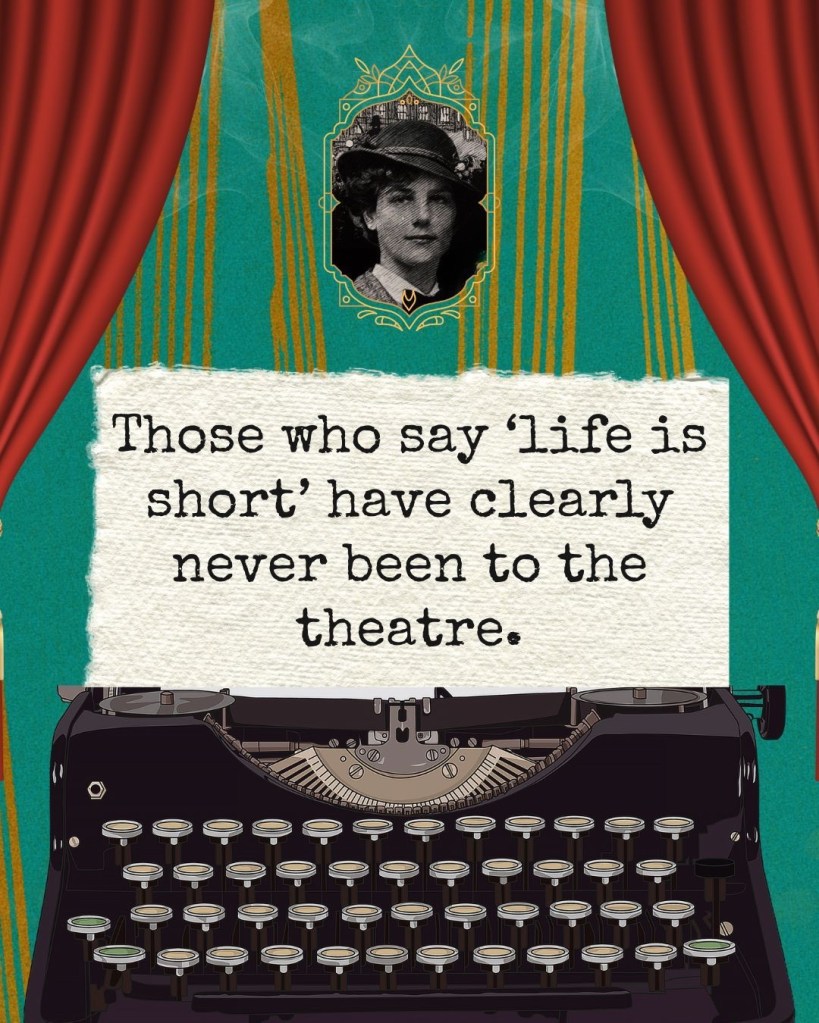
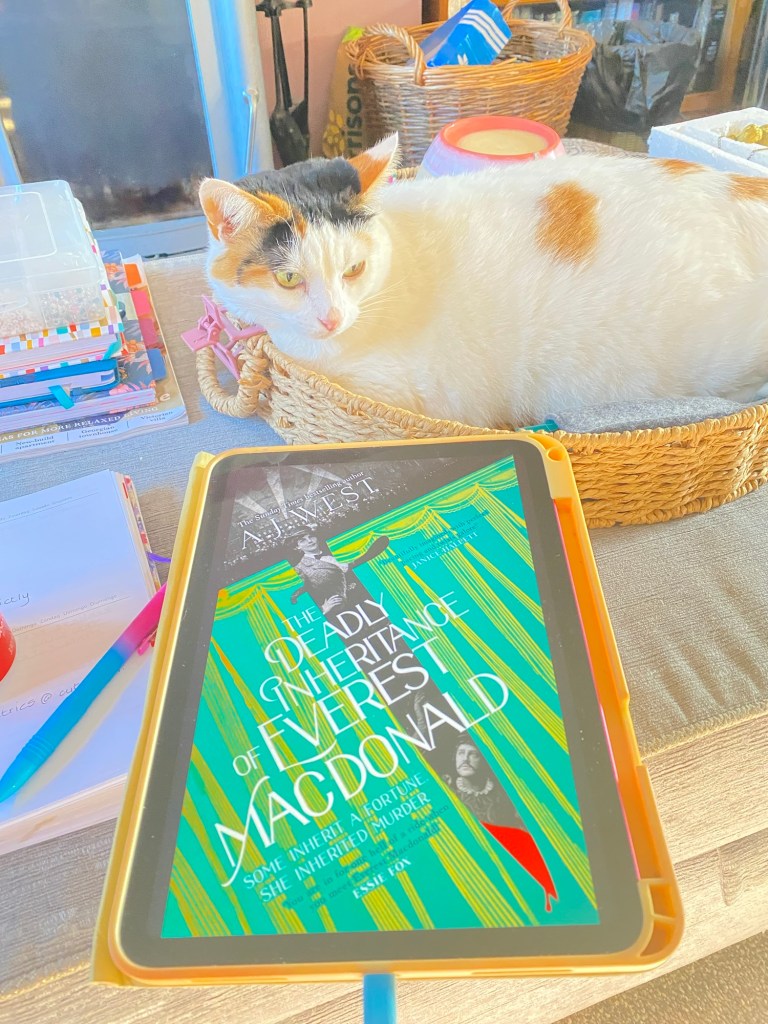
Everest is a brilliant investigator with the accent and privilege of an Agatha Christie heroine. She’s dogged and determined, trying to weed through the frivolity and illusion of theatre folk as well as the attitudes of men. She has a wonderful turn of phrase, the delightful “those who say life is short, have never been to the theatre” made me laugh, remembering a particularly lengthy opera scene where I said to my companion that I would be leaving if no one died in the next ten minutes. She also used an insult I haven’t heard for years, in fact since caring for a cantankerous but funny Scottish lady in a nursing home, so I’ve been calling my cat Minka ‘a petulant bism’ for the past month. My favourite character aside from the brilliantly eccentric Everest, was her Aunt Isabel Lewin and her diary drew me in immediately. She was an incredible adventurer who took on any challenge William threw at her, while performing the role of wife and mother. She had a very liberated enjoyment of sex and isn’t cowed by rough seas, a potential drowning and suicide pact in the Atlantic or fighting off attackers. While she complained of the endless dust and wild weather of some places it’s clear she was left to deal with the consequences of William’s pioneering decisions. She actually lived the life he chose, while he failed and went on to the next adventure and abandoned his family sometimes for years. It’s no coincidence that the author paraphrases the speech of Elizabeth I before the Spanish Armada as Isabel states “I am no weak and feeble woman”. I was really sad that her epitaph – “she lived her life for others” – makes her out to be an angel when she’s really a queen.
A.J. West’s writing performs the feat of time travel. Each piece of writing in this novel feels like it was written at the time, whether it’s the 19th Century diaries or Everest’s investigation taking place during WWI. He skilfully whirls the reader back in time and I felt like I was there watching William kill a sacred crocodile in India or feeling Everest’s fear as she experiences a terrifying daytime raid on London by German bombers, a scene that’s absolutely electric. The novel is cinematic in scope and every place I was taken to was real in just a few sentences. In fact I read a passage about the Falklands to my ex- RAF husband who said it hasn’t changed much. Probably due to our heroine and her female assistant in the overarching narrative, I really felt the female gaze throughout the novel, both in the present and when reading about the past. So much changed for women in the space of fifty years, especially Everest’s present in 1917. When Thomas and William were young they might never have imagined women working as land girls or in munitions factories, another reminder that neither appreciated the power of the women they were with, whether it was Dari’s mystical curses or Isabel’s strength and anger. With all that said, this is a fascinating murder mystery that I hadn’t solved at all before the final revelations. It seems staggering that this is based on a real unsolved case and I think readers will find the afterword really interesting. I’m now holding my breath for an Everest MacDonald TV series, for some reason I can see Anna Chancellor, or maybe another literary adventure for this formidable character.
Meet the Author

A.J. West’s bestselling debut novel The Spirit Engineer won the Historical Writers’ Association Debut Crown Award, gaining international praise for its telling of a long forgotten true story. His second novel, The Betrayal of Thomas True, debuted at number two on the Sunday Times bestseller list, and won the CWA Historical Dagger. A.J. was also shortlisted for the Booksellers Association Author the Year. An award-winning BBC newsreader and reporter, he has written for national newspapers and regularly appears on network television discussing his writing and the historical context of contemporary events. A passionate historical researcher, he writes at The London Library and museum archives around the world.