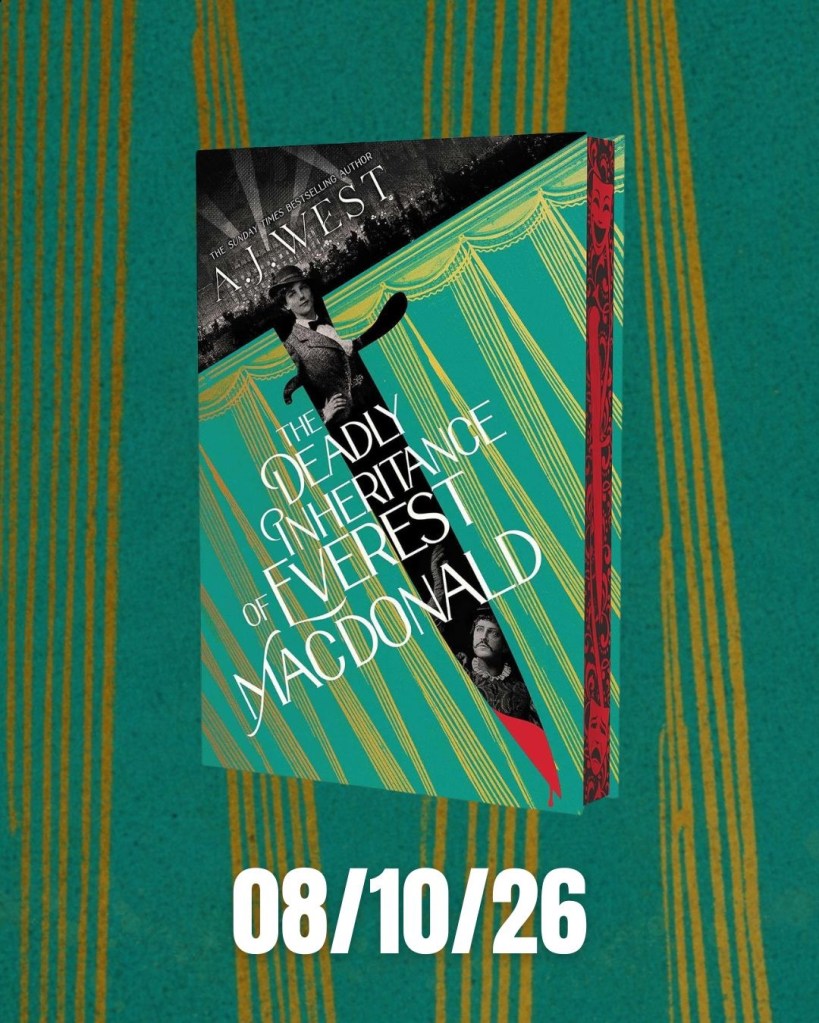
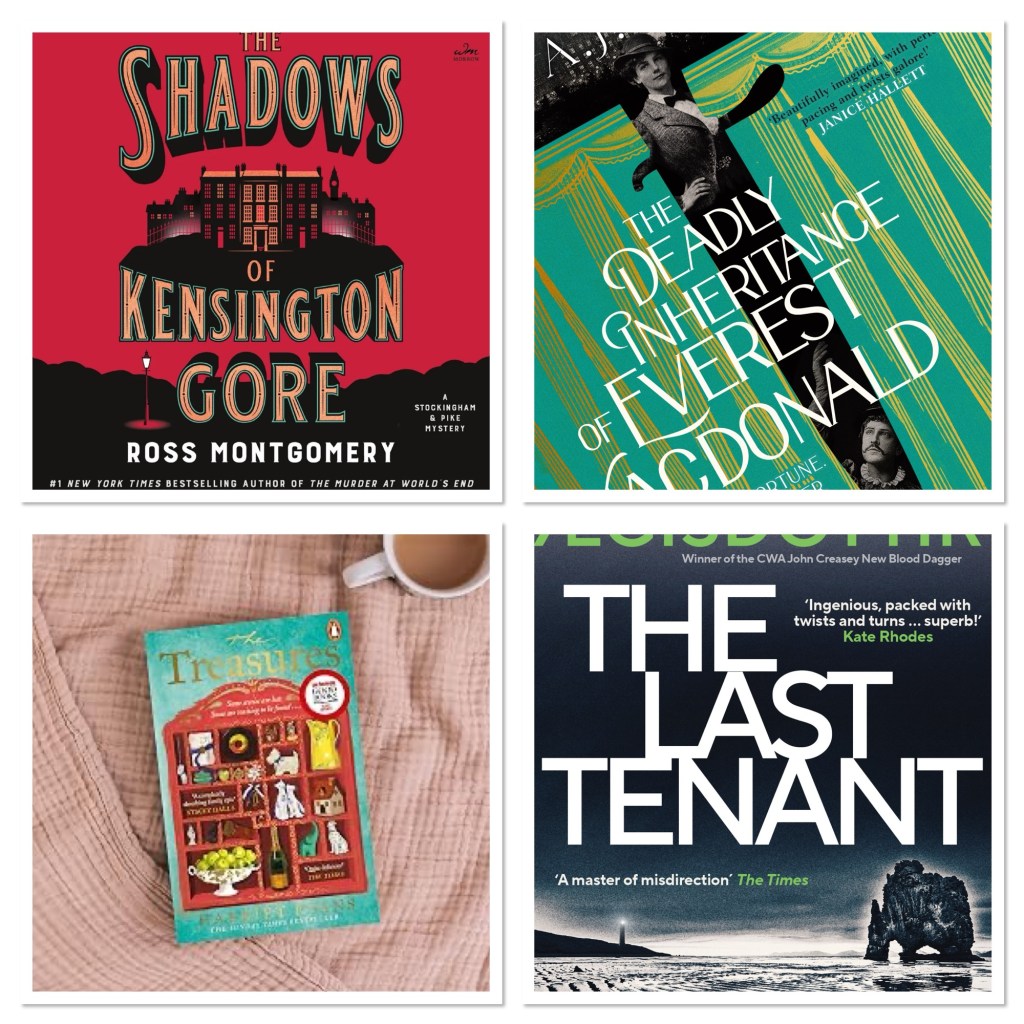
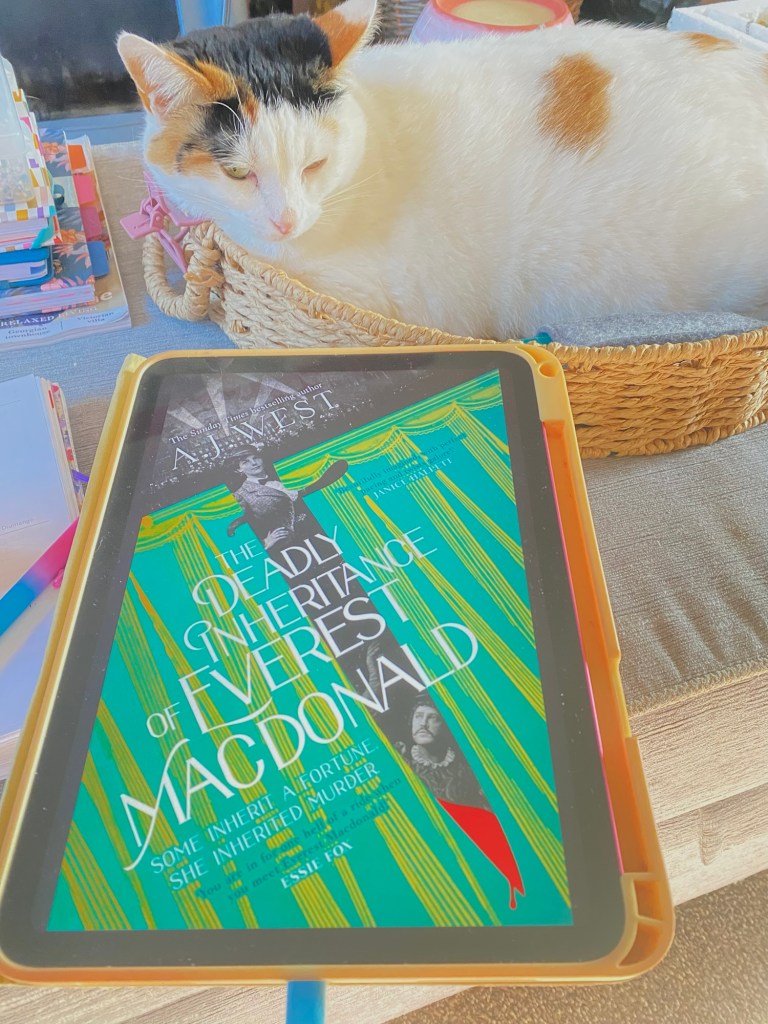
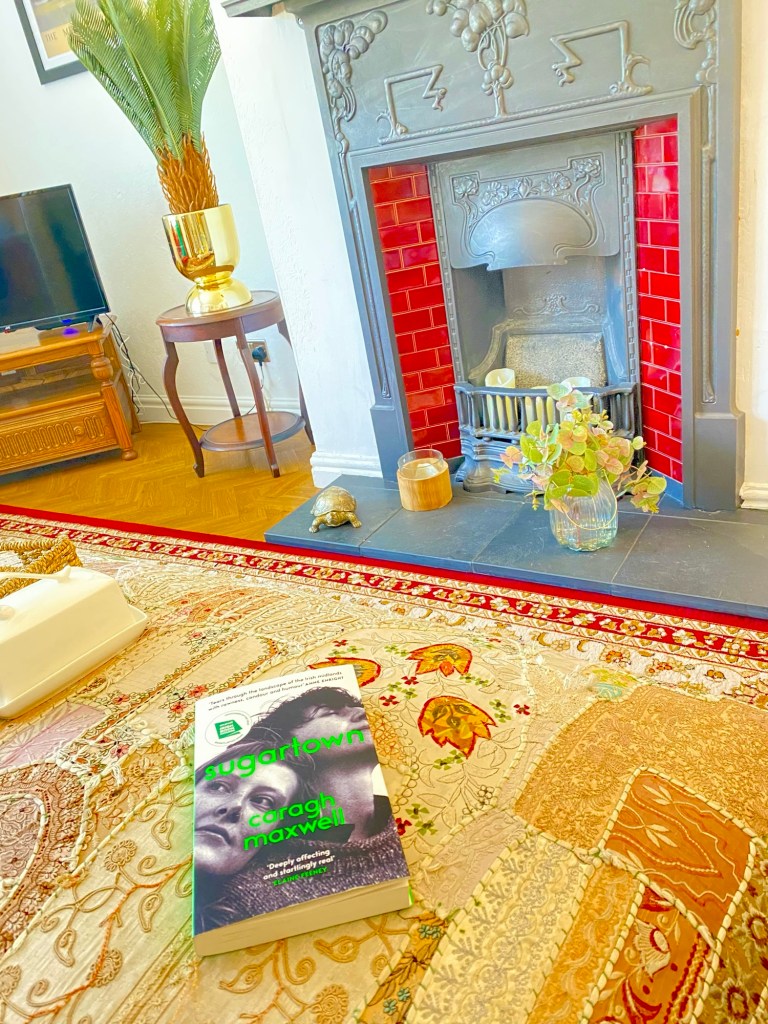
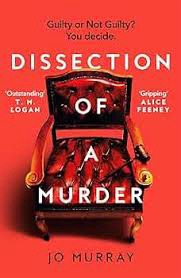
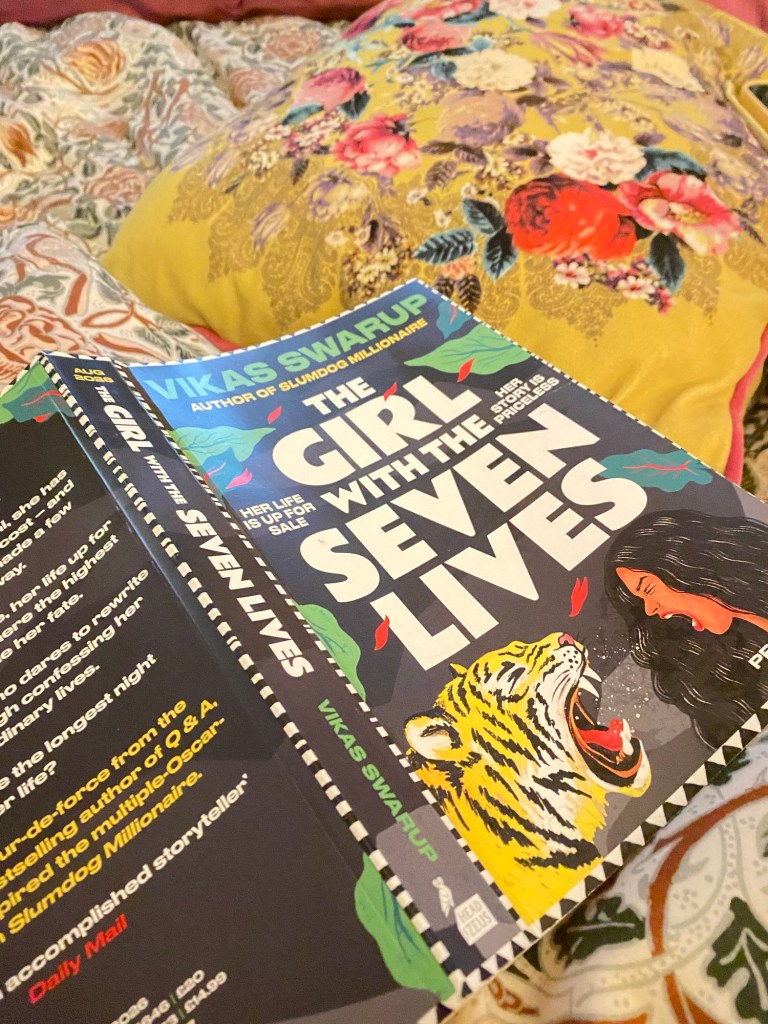
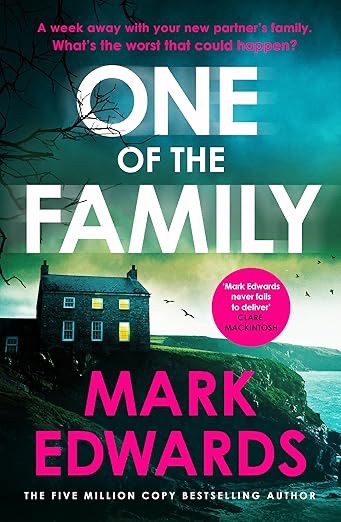
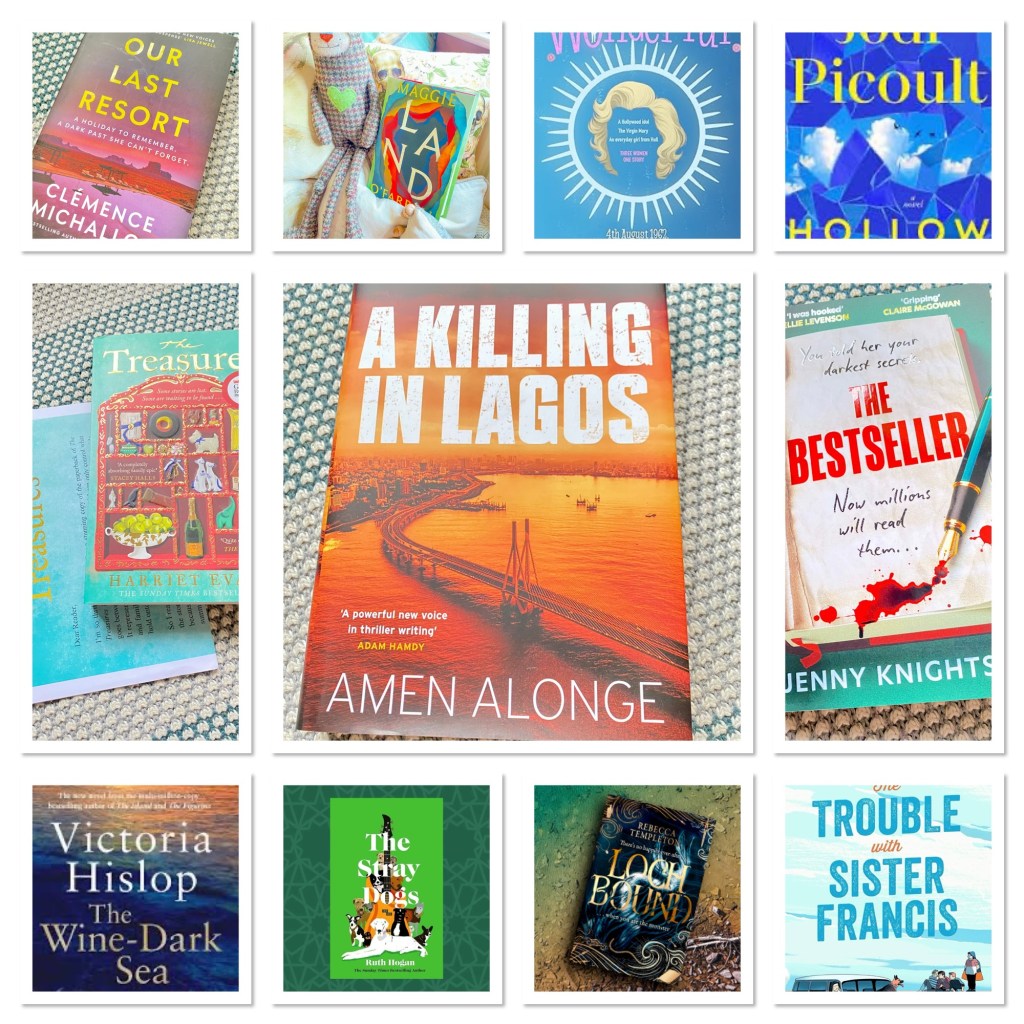
1917. As the Great War rages on the continent, Everest Macdonald is summoned to her father’s deathbed and entrusted with a final urgent request: she must uncover the truth behind the murder of her uncle, the celebrated Victorian actor William Terriss, a crime that has haunted her family for twenty years.
In 1897, Terriss was stabbed to death outside London’s Adelphi Theatre, a killing that shocked Victorian society. The murderer was swiftly arrested and confined to Broadmoor, the case declared closed. Yet, years later, a sealed package of evidence is passed to Everest by her dying father, which casts doubt on the official verdict and the haste with which it was reached.
Drawn back to wartime London, with her husband and children left behind, Everest begins her investigation, following a trail that leads her into the world of late-Victorian theatre, where fame and fortune mask obsession, envy and cruelty. With time running out and her father’s strength failing, Everest must uncover what really happened on the night Terriss died, and shed light on the unsettling legacy he left behind.
It was amazing to finish this latest book from A.J. West and realise that it is based on a true story! I love this author’s combination of historical detail, a sprinkle of gothic mysticism and a determination to write people back into the history they’ve been removed from. There are moments where it seems impossible that this actually happened! Our story is told through Everest’s perspective as she vows to find out the truth about her Uncle William, murdered at the door of the Adelphi Theatre in 1897. Her intelligence, determination and forthright attitude carry us through her early enquiries and the hiring of a young woman called Clare who she meets on the train. Between her story we are also privy to the diary of Everest’s father TH Lewin from his time as a local dignitary in the Chittagong Hills of India. She also finds the diary of her beloved aunt Isabel Lewin, who married the wayward William and became his partner in his endeavours to be an adventurer abroad. There were a few moments when I became lost as to what time and place I was in because our narrators are so intrepid we visit both the Falkland Islands and Kentucky before William returns to London and a life on the stage.
I loved the way the author brought mysticism into the historical story, especially the sections of William and Thomas’s 19th Century antics in India. His diary felt like the perfect period example of how their story would be told, a boy’s own tale through the lens of the exoticism and orientalism of the time. Thomas appropriates the local culture, dressing and behaving like a tribal chief and even taking an Indian wife. His musings on what to do with Dari and their child shows that he considers her feelings in his decision to return home thinking she would be “ridiculed” but he never once considers it his duty to stay. She is a belonging he can discard at will. Even benevolent colonialism is still colonialism, his only saving grace is that he recognises the damage he’s done. William is reckless, taking whatever he wants because he can whether it’s substances or human beings.
“William goaded me by bedding every woman in the village causing terrible ructions with the menfolk”.
Each brother receives a curse, appropriate to their crimes, but while Thomas clearly has a conscience does his brother? I also enjoyed how the Victorian and early 20th Century theatre worlds aligned so beautifully with the murder mystery genre, with masking in both senses of the word. There’s physical and emotional transformation on stage and disguise is something that creates some huge surprises along the way. There are a lot of superstitions around stage acting and the gothic plays it’s part again with the ghosts of the Adelphi creating a haunted atmosphere or possibly a smokescreen.
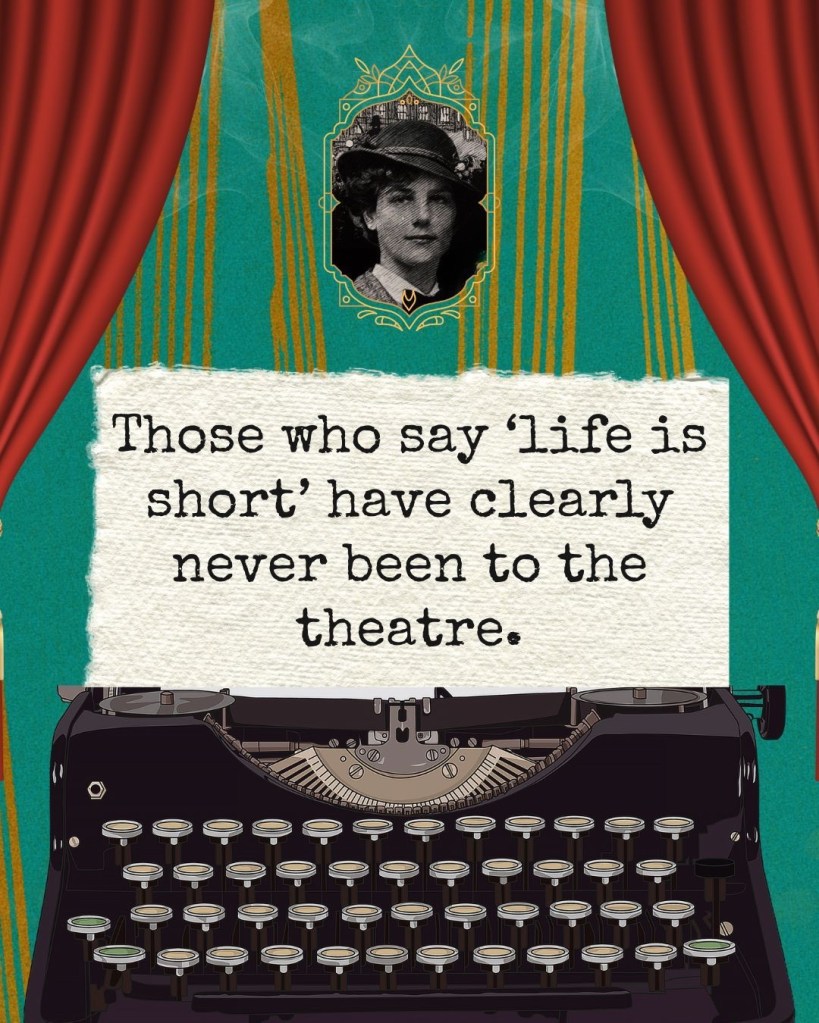
Everest is a brilliant investigator with the accent and privilege of an Agatha Christie heroine. She’s dogged and determined, trying to weed through the frivolity and illusion of theatre folk as well as the attitudes of men. She has a wonderful turn of phrase, the delightful “those who say life is short, have never been to the theatre” made me laugh, remembering a particularly lengthy opera scene where I said to my companion that I would be leaving if no one died in the next ten minutes. She also used an insult I haven’t heard for years, in fact since caring for a cantankerous but funny Scottish lady in a nursing home, so I’ve been calling my cat Minka ‘a petulant bism’ for the past month. My favourite character aside from the brilliantly eccentric Everest, was her Aunt Isabel Lewin and her diary drew me in immediately. She was an incredible adventurer who took on any challenge William threw at her, while performing the role of wife and mother. She had a very liberated enjoyment of sex and isn’t cowed by rough seas, a potential drowning and suicide pact in the Atlantic or fighting off attackers. While she complained of the endless dust and wild weather of some places it’s clear she was left to deal with the consequences of William’s pioneering decisions. She actually lived the life he chose, while he failed and went on to the next adventure and abandoned his family sometimes for years. It’s no coincidence that the author paraphrases the speech of Elizabeth I before the Spanish Armada as Isabel states “I am no weak and feeble woman”. I was really sad that her epitaph – “she lived her life for others” – makes her out to be an angel when she’s really a queen.
A.J. West’s writing performs the feat of time travel. Each piece of writing in this novel feels like it was written at the time, whether it’s the 19th Century diaries or Everest’s investigation taking place during WWI. He skilfully whirls the reader back in time and I felt like I was there watching William kill a sacred crocodile in India or feeling Everest’s fear as she experiences a terrifying daytime raid on London by German bombers, a scene that’s absolutely electric. The novel is cinematic in scope and every place I was taken to was real in just a few sentences. In fact I read a passage about the Falklands to my ex- RAF husband who said it hasn’t changed much. Probably due to our heroine and her female assistant in the overarching narrative, I really felt the female gaze throughout the novel, both in the present and when reading about the past. So much changed for women in the space of fifty years, especially Everest’s present in 1917. When Thomas and William were young they might never have imagined women working as land girls or in munitions factories, another reminder that neither appreciated the power of the women they were with, whether it was Dari’s mystical curses or Isabel’s strength and anger. With all that said, this is a fascinating murder mystery that I hadn’t solved at all before the final revelations. It seems staggering that this is based on a real unsolved case and I think readers will find the afterword really interesting. I’m now holding my breath for an Everest MacDonald TV series, for some reason I can see Anna Chancellor, or maybe another literary adventure for this formidable character.
Meet the Author
A.J. West’s bestselling debut novel The Spirit Engineer won the Historical Writers’ Association Debut Crown Award, gaining international praise for its telling of a long forgotten true story. His second novel, The Betrayal of Thomas True, debuted at number two on the Sunday Times bestseller list, and won the CWA Historical Dagger. A.J. was also shortlisted for the Booksellers Association Author the Year. An award-winning BBC newsreader and reporter, he has written for national newspapers and regularly appears on network television discussing his writing and the historical context of contemporary events. A passionate historical researcher, he writes at The London Library and museum archives around the world.
When three-year-old Tippi Macklin goes missing on a weekend break with her parents, her face appears in newspapers around the world, sparking endless debate and conspiracy theories. Wealthy and glamorous Jed and Gabby never give up hope that ‘Little Tippi’ will be found.
Eighteen years later, a young woman arrives at their door claiming to be their lost girl. She has a new name, a new history and some startling evidence to support her claim. Can she really be Tippi – or is she an imposter?
A DNA test will prove her identity one way or the other, but when the results come back, it seems the mystery has only just begun…
I do LOVE a Louise Candlish novel, so much so that when I saw I’d been approved on Netgalley I spent my whole Saturday reading it. I’m never disappointed and this is such a fascinating subject and family. Narrated by Gabby Macklin’s sister Bel, this is about how such a huge tragedy affects a whole family, but also about the underlying tensions and dynamics between its members. If it wasn’t for Jed and Gabby losing their daughter eighteen years ago you would absolutely hate them. They’re one of those couples on Escape to the Country or Grand Designs who say ‘I’m a cheese maker, my wife is a freelance bid writer and we have 2.4 million to spend.” Those people who claim to want a country kitchen, but really mean Downton Abbey. It’s now eighteen years later and a young woman claims that, after her parents died in a car crash, she’s discovered things that make her think she’s their lost daughter Tippi. This isn’t the first time their hopes have been raised, but it’s by far the most exciting lead they’ve had in a long time. Gabby tells her sister she feels that Eden is her daughter but Bel isn’t so sure and starts to investigate. Told mainly through Bel there are also a few different narratives: feeds from the couple’s social media pages for Tippi, some creative writing pieces from Tippi’s perspective from someone clearly obsessed with the case and text messages between two people that are very hard to decipher and suggest illegal activities.
The characters are fascinating with Bel and her sister Gabby at the story’s heart, but also a weird dynamic between Bel and her brother in law Jed. The two families are in very different positions financially. Jed runs a very successful training business and Gabby makes candles in at home studio. Their home is clearly interior designed with a sunken living room area and so much party space. Theirs is the house where the family get together and with such a disparity in their earnings, it’s clear that some resentment is felt by Bel. She’s supporting her family while husband Marc gets his business off the ground. They rent their home and are aware that if London prices go up much more they will have to move, probably to a worse area than now. Their home is lived in rather than designed and with Bel working full time as a trading standards officer she has a lot on her plate. Daughter Luna is coming up to her GCSEs and becomes more incommunicative by the day. Grace is away at university studying psychology and seems the most sensible and sorted out of all of them. Wherever Bel’s busy schedule allows she is quite determined to find out whether Eden really is her lost niece or has she realised her similarity to Tippi and noticed Gabby and Jed’s wealthy lifestyle? It’s hard to like Bel but there’s a lot to empathise with. Jed came across as a man who is used to setting the agenda and uses his money to control and manipulate. Gabby is almost like a shadow, physically present but quiet and passive. Losing her daughter has been a trauma she will never get over and Bel doesn’t want her sister to sleepwalk into a relationship with Eden without proof that she’s definitely who she says she is. But why is Bel so sure Eden isn’t Tippi?
I thought the author captured the endless speculation and media attention around a missing child, especially one as photogenic and appealing as Tippi clearly was. When a case captures the public attention it’s as if everyone wants to be involved. The furore surrounding Madeleine McCann’s disappearance has shown us that people on social media will comment, discuss and make wild accusations about the family. The excerpts from the Facebook page show that people want to be part of the story whether that’s pretending to know something, throwing a wild theory out there or just sending their love and prayers. Often there appears to be no thought for the family who have to wade through this just in case there is a clue. The creative writing pieces are particularly cruel and well written. Who would do such a thing? What’s their aim? Is there any truth in them? It plays on Gabby’s hope that one day she’ll find her. The guilt of the parents felt very real and I found it very hard to believe that Eden was preying on that hope, just wishing that Gabby’s need to find her daughter might overwhelm the need for the truth. In the midst of DNA tests, research and quizzing Eden, has Bel has taken her eye off the ball at home? Something that has bothered her for years keeps resurfacing, a frustration that her sister’s ongoing drama overshadows her and her daughters. Because of what happened, Gabby is the precious sister who they can’t upset. Every problem Bel’s family has pales in comparison to what the Macklins have gone through. As her mother says, she can’t complain about her daughters because at least she has them.
There are so many secrets here and as always I was glued to the page as they were revealed. Each revelation was a surprise and explained a lot about the family dynamics. The twists were not just focused on the Macklins though, Bel’s family had a few surprises in store too. I thought this was an addictive read and captured perfectly how trauma like this ripples outwards into wider family and friends. Through Gabby we can see how the loss affects a mother, leaving her in limbo and something of a recluse in her own home, perhaps not wanting to miss any development and having her hopes raised and dashed continually. Bel tells the story very well, becoming obsessed with Eden perhaps at the expense of her own daughters. My thoughts about some characters were confirmed, but others surprised me completely. You will devour this novel like I did as it’s Louise Candlish at her very best.
Out November 5th from Harper Collins
Meet the Author
Louise’s previous thrillers include OUR HOLIDAY, a Sunday Times bestseller, WHSmith Richard & Judy Book Club pick, and OUR HOUSE, now a major four-part drama starring Martin Compston and Tuppence Middleton (watch the full series on ITVX in the UK and PBS/Amazon Prime in the US) and winner of the British Book Awards Book of the Year – Crime & Thriller.
She has celebrated her 20th anniversary as an author with the news of two prestigious awards for 90s-set thriller THE ONLY SUSPECT: the Capital Crime Fingerprint Award for Thriller of the Year and the Ned Kelly Award for Best International Crime Fiction. Filming has just wrapped in London for the ITV adaptation, with Kevin McKidd starring as Alex, a middle-aged man with a deadly secret to hide. More soon on that – and on the adaptation of THE HEIGHTS, starring Anna Friel.
She lives in South London with her husband, daughter and a fox-red Labrador called Bertie. Books, TV and long walks are her passions – and drinking wine in the sun with family and friends. Authors she loves include Tom Wolfe, Patricia Highsmith, Barbara Vine, Agatha Christie and Evelyn Waugh. Her favourite book is Madame Bovary.
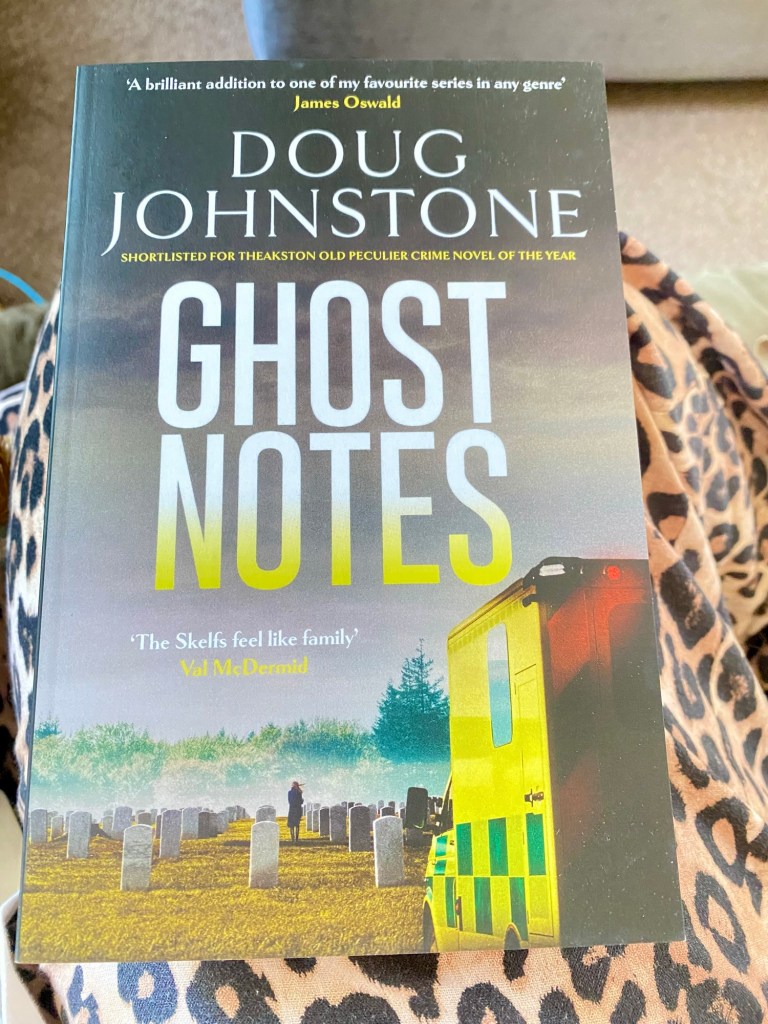
The Skelf women have been keeping their heads down, running the family’s funeral directors and private investigation businesses. But when a woman collapses at her husband’s funeral and is saved by Dorothy, she finds herself drawn into the murky world of ‘grief tech’ – a booming new industry that creates digital avatars of the dead.
Jenny’s latest case – a simple blackmail job for an old school friend – quickly spirals into chaos as the woman’s tangled love life pulls Jenny towards dangerous old habits.
Meanwhile, Hannah and her wife, Indy, are confronted by the unexpected arrival of Indy’s ex-boyfriend, claiming to be dying and eager for the Skelfs to arrange his funeral. But his arrival uncovers more ghosts from the past, and threatens to upend everything they’ve built.
As their cases collide and their personal lives spiral, the Skelfs face danger from all sides. How far will they go to protect one another, and what will it cost to finally silence the ghosts?
I always love the ideas and philosophies that Doug Johnstone brings to the Skelf series and in this eighth book his musical knowledge must have inspired the title. A ghost note can be played on piano, but more frequently on the drums and the matriarch of the family, Dorothy, is still drumming. She teaches and plays in a band that comes together for what used to be called ‘pauper’s funerals’, a duty that the funeral parlour perform for those who are buried or cremated by the local authority. As Dorothy teaches she explains ‘ghost notes’ to her student – a soft note like a whisper, usually on the snare drum played between the accented beat. The listener might not hear them being played, but would feel a difference when they’re not. They partner beautifully with one of Hannah’s physics concepts, the ghost particle, invisible and very rarely connecting with other matter that makes up our world but ever present. There are people in our lives who are like these notes, ever present but often completely unnoticed, until they aren’t there any more and we can feel their absence. I’ve felt like this about Hannah’s wife Indy in the series and have often wished to hear more about her life and experiences. She’s always quietly been in the background of the Skelf’s very dramatic and noisy lives, she is the person who notices you haven’t had a drink and brings you one before you’ve even asked. I was so excited to see her taking more of a central role in this story, where three cases are also dividing up their time. Jenny’s investigation comes from a local estate agent who is being blackmailed. Dorothy is investigating a family’s tragic losses as they bury the father of a girl found dead several months before. This takes her into the world of ‘grief bots’ and how anything built for profit has a harmful element to it. Finally there’s Hannah who is investigating the trouble brought to their door by Indy’s ex-partner and those he has wronged.
The book opens with a funeral and a widow who has a heart attack by the grave side. This family have already experienced tragedy, because the man in the coffin has killed himself after the death of his daughter. If the widow can’t be saved then her son will have lost his whole family. On her return home the widow asks Dorothy to look into her husband’s death and the first thing she discovers is very strange – a company who scrape a dead person’s identity from the internet and use AI to create a lifelike avatar of that person. The account holder simply signs into the app to visit their loved one, but innovations like this – including social media and other apps – are rarely altruistic and always based on money, so somewhere there’s a catch. I found this part of the story quite emotional because there’s something about seeing your lost love one moving and breathing. I can’t even watch videos I have of my late husband, photographs are fine but a moving version is still too much for me twenty years on. Also, thinking from a therapy perspective, how do we ever get over losing someone when they’re still there at the opening of an app? Apps like this could be seriously harmful to someone who’s grieving, complicating already painful emotions. Quietly, Dorothy is dealing with a loss of her own as her detective boyfriend Thomas is still not accepting her letters sent to the prison where he serves a sentence for murder. Jenny’s case seems simple but quickly turns into something more complicated, emotionally and investigatively. Watching an estate agent with a very busy sex life drags Jenny into a realisation that she’s been hovering around for some time. Luckily she has Archie there to support her and I loved how non-judgemental he is because Jenny needs to know someone is staying for the long haul, even while trying to push them away.
It’s Hannah and Indy who have the most dangerous encounter when an unknown face from Indy’s past comes crashing into their life, along with everyone who’s looking for him, to settle scores or the money owed. It seems implausible that Indy dated a man who is involved in the drug scene, although for Hannah it’s a revelation that Indy even dated a man. This chequered past brings violence into their home and Hannah has to reevaluate the woman she’s married to in light of their conversations. It’s clear there is so much Hannah didn’t know, not just about this relationship but about the deaths of Indy’s parents and other losses. So far in their relationship Hannah has always been the one to bring the chaos and her wife has always been the calm ship steering them into safe waters. To me Indy has always seemed like a wise woman, slightly mystical and enigmatic, but now we can see that her wisdom is hard won and comes from mistakes she can never take back. It’s when Schrodinger disappeared that I began to worry, the Skelf’s cat has been with them through thick and thin and I was so worried that he’d been taken as a threat.
Lately, I’ve been struggling with the world around me, feeling more and more dislocated from what ‘ordinary’ people think. Being a disabled person in a world that appears to hate our very existence is draining and even depressing. Added to that, the work we do with Stand Up To Racism means we’re exposed to individuals who hate others, people who they perceive to be different thanks to the hateful rhetoric from some of our politicians and the sections of the media. It feels so prevalent that more than once I’ve found myself stopping and asking ‘is it me?’ Am I in the wrong? Then I read a Skelf novel and feel like I’ve found my tribe among these intelligent, flawed, tough and compassionate women and their found family. Each one is genuinely woke and I mean that as a positive thing, rather than the insult it has become. Having your consciousness raised was always considered a good thing and these incredible women give me hope. Their compassion for others is shown again and again, in their work on civic funerals, their search for more environmentally friendly funeral options, their tendency to take in waifs and strays and their constant love and care for each other. Doug Johnstone’s writing reassures me that there are people like this in the world and that I might fit here after all. Good people like Archie, Brodie and Indy who quietly go about their business supporting the Skelf’s are the ghost notes of the family. Barely noticeable, but incredibly vital too.
Out now from Orenda Books.
Meet the Author
Doug Johnstone is the author of twelve novels, most recently The Great Silence, the third in the Skelfs series, which has been optioned for TV. In 2021,The Big Chill, the second in the series, was longlisted for the Theakston’s Old Peculier Crime Novel of the Year. In 2020, A Dark Matter, the first in the series, was shortlisted for the McIlvanney Prize for Scottish Crime Novel of the Year and the Capital Crime Amazon Publishing Independent Voice Book of the Year award. Black Hearts (Book four), will be published in 2022. Several of his books have been best sellers and award winners, and his work has been praised by the likes of Val McDermid, Irvine Welsh and Ian Rankin. He’s taught creative writing and been writer in residence at various institutions, and has been an arts journalist for twenty years. Doug is a songwriter and musician with five albums and three EPs released, and he plays drums for the Fun Lovin’ Crime Writers, a band of crime writers. He’s also player-manager of the Scotland Writers Football Club. He lives in Edinburgh.
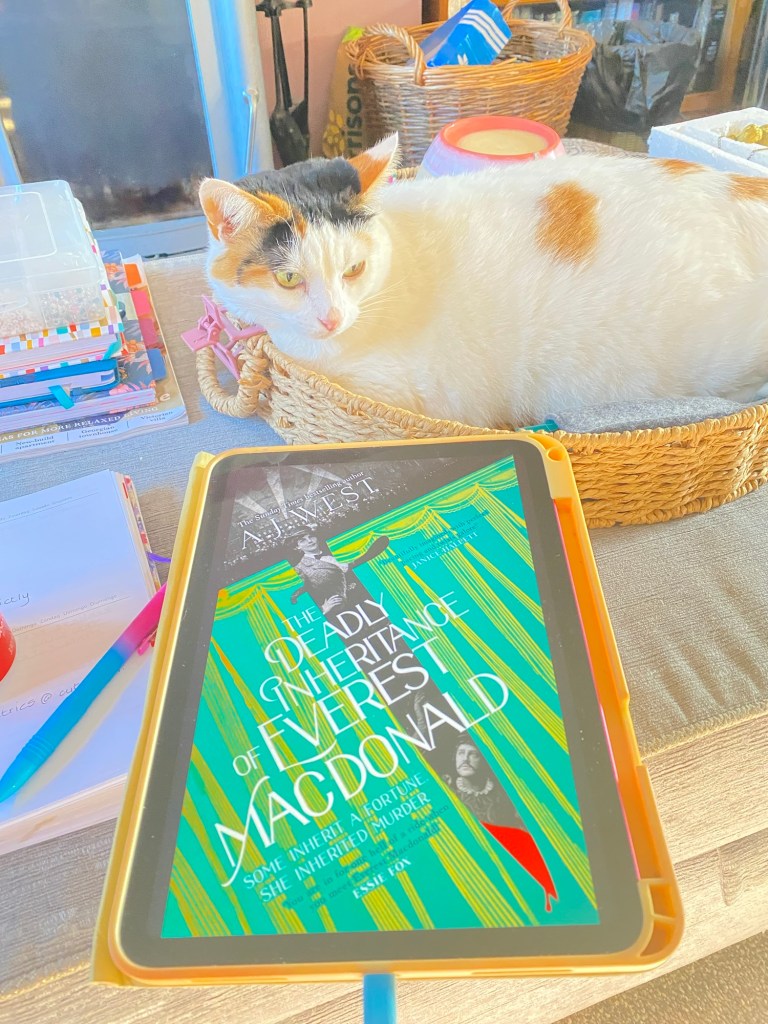
I have genuinely struggled to read this month and I’m relieved to be at the end of it and taking a much needed break. My home is in chaos because one of the cats is seriously injured, so keeping him safe and indoors while allowing the others to roam normally is difficult. If I separate Max from Dolly he gets very vocal and upset, but if we let him free to see her we have to block off the cat flap. The girls have started to tap at the window when they went to come in, but why is it always when I have my lap tray on my knee? It’s like they can sense me writing or doing my embroidery and want to cause maximum disruption, my lap is then free for cat cuddles of course. Minka is very outdoorsy and has taken over catching vermin, something Max is famous for. Max really wants to be out but although he’s healing he’s not ready yet. The bones seem to be healing well but the muscles and ligaments need plenty of rest yet. He broke his hip joint and his pelvis in several places then in the sacral area his ligaments had become detached leaving the spine separated from the pelvis. He’s walking now and looking a lot more like his old self, just with a slightly twisted walk. My dad has been struggling with his health meanwhile mum is trying to look after him as best she can as well as spending time with grandma who died last week at the age of 93. I sat down on the last day of September to write reviews but I couldn’t think straight. My head felt like a huge ball of chaos and I get weird neurological symptoms when I’m tired or overloaded. I took Max for his anti-inflammatory injections and the vet stopped and fetched me a chair. Apparently I was rocking as if I was about to faint. I’d gone white and when I took my glasses off my pupils were moving back and forth making me feel dizzy. I’ve read way more books than the four above but haven’t typed up my reviews as I’ve found it easier to use a pen and my reading journal so there are lots more reviews and snippets of my own writing coming soon.
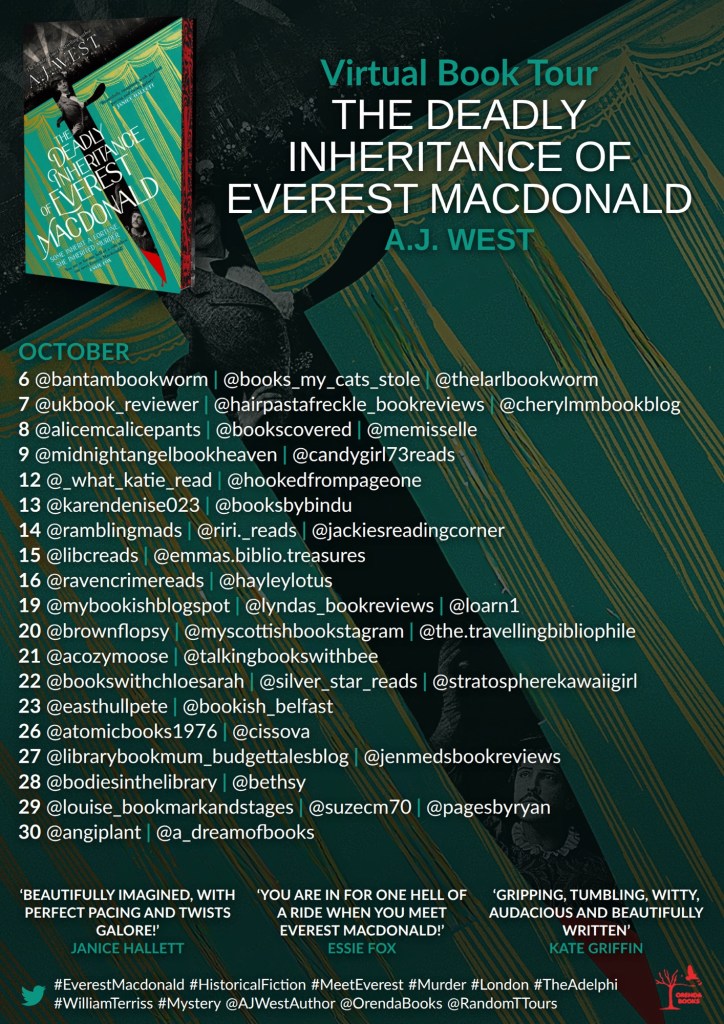
This historical murder mystery by the author of last year’s smash hit The Betrayal of Thomas True, A.J. West. You may have seen him on Insta travelling around book stores with his worldly belongings in a camper van. I’m not going to give you my review because it’s due on a blog tour this month, but I’ll give you a preview and some background. We’re drawn into the story of Thomas Lewin and his brother William who went to the Chittagong hills in India. Thomas was a tool of empire but as far as English dignitaries go he did make some effort to speak to local chiefs in their dialect and kept local customs. He also had a relationship with a local woman called Dari who was referred to as the ‘wife’ of the great Thangliana. Everest is his daughter, drawn into the murder of her Uncle William who was killed thirty years after their return from India while acting in the West End. Everest isn’t sure about the murder, or the man kept in Broadmoor for committing it, especially when her father kept telling her about a curse. A.J.West has taken the historical details and written a great murder mystery with gothic and mystical elements and a very forthright female investigator. I fell in love with the journal entries that cover this family’s adventurous lives and particularly one written from the perspective of William’s wife Isabel who I was captivated by. It’s also incredibly witty and packed with colourful characters. Look out for my full review coming soon.
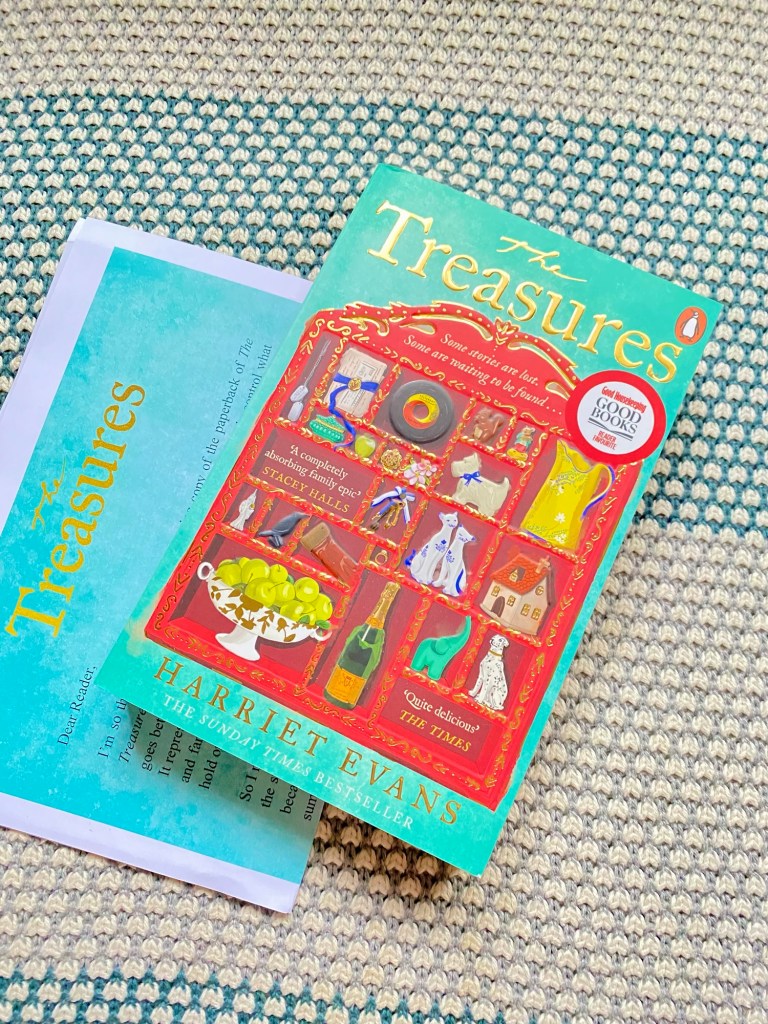
One golden summer. One missing treasure. And a secret that binds two lives together.
Every year, Alice’s father gives her a treasure. Then on the morning of her sixteenth birthday, her final gift vanishes – along with the fragile certainty of her world. Alice runs, towards New York City and away from the memories of that last summer at the orchard where she grew up. Across the Atlantic, Tom has always felt that something is missing from his life. When he finds a long-forgotten letter, it leads him away from Sevenstones – the house at the heart of his family for generations – and towards a truth no one has ever fully told. From post-war London to 1960s New York, Alice and Tom’s stories become entwined. But will the secrets of their past bring them together, or break them apart?
I always think that the good marker of a book is when you find yourself thinking about it days later and this book brought up so many feelings! While we start with Alice’s devastating story of her early years, it was Tom’s narrative where the book came alive for me, with his early life in Dumfries and Galloway only a stone’s throw from my favourite yearly holiday destination. The descriptions are so vivid, from the hand to mouth existence of Tom and his father, their total connection with the seasons and each other. To be torn from all of that and transported to post-war London by his mother’s family feels so unjust. As Tom deals with new expectations, the fractured feel of the city and its bomb sites, we start to sense a secret behind all of this, only hinted at and never made clear to Tom. A promise was made in wartime, one that couldn’t be broken and has it’s roots in a house called Sevenstones where a key was left under a stone at the door for anyone who needed an interlude from their wartime duties. It’s a secret that follows Tom throughout his years at school and eventually across the Atlantic. Each section of this book is so evocative of its time and place and it is such an incredible example of how trauma is passed down through families. It made me think about world events that have affected previous generations of my family and why they made the decisions they did for their children.
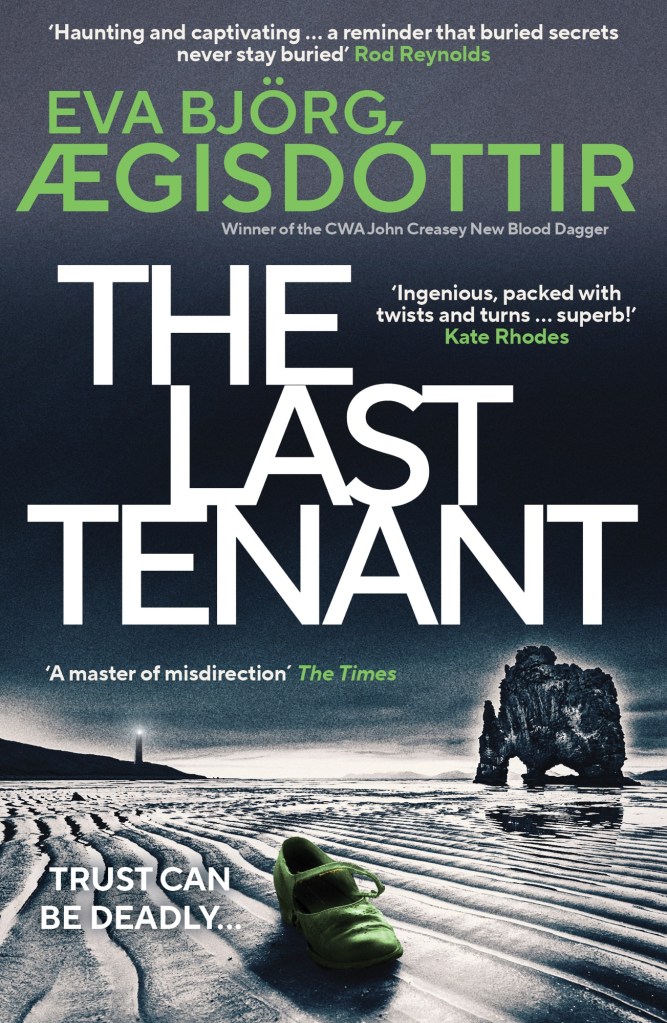
When the skeletons of a young woman and a baby are uncovered on a long-abandoned farm in Hvalfjörður, it is clear they were buried years apart. West Iceland CID begins to investigate the disturbing discovery, aware that someone has gone to great lengths to keep the past hidden. In Akranes, Karitas, a young single mother seeking a new start, settles in with her four-year-old son and rents a basement flat from an eccentric landlord. A cautious sense of happiness returns when she meets the boy next door. But when news breaks that a local girl has been murdered, Karitas must decide who she can trust, knowing that one wrong choice could place her and her child in danger. Detective Elma is drawn into the case, forced to navigate long-hidden family secrets to understand a killer’s motive, while trying to hold together her increasingly troubled relationship with Sævar.
Wow I love this series and at the sixth book in it just gets better and better. These cases are never tidy. There’s always something that doesn’t quite fit or can’t be explained. I imagine this is the norm in real life police work, but often detective fiction is way too cleanly tidied away. Here someone always knows more than they’re willing to say or are more involved than you imagined. Then there’s the burden of proof needed for a conviction. Then there’s how everyone in Akranes is interlinked and having grown up in a small rural town I can see how it’s easy to think we know everything about another person. The truth is that we rarely see the full picture, just our part of it coloured by our own experience. Even within families there are things people know but no one talks about, there are different versions of the family history, things we’re open about and things we bury. Even so, how far would we go to protect those we love, especially our children? Throughout this series the people of Akranes are like a wider family, burying each other’s crimes and collectively forgetting the truth. The impact of one generation’s choices affecting the next. This is the scariest truth about monsters, they don’t look like storybook monsters, they can come out in daylight and ‘on the surface they’re just like ordinary people.’ This is a dark psychological thriller, full of atmosphere and a detective who always digs deep into her cases, even when it makes her personal life uncomfortable.
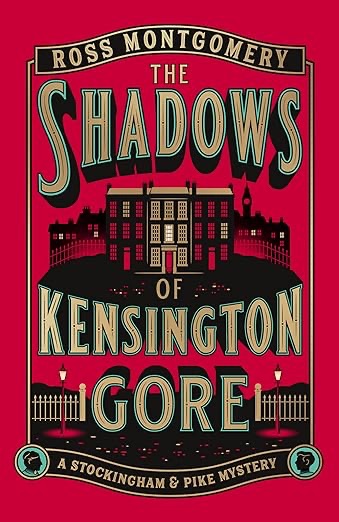
London, 1911. Coronation fever. Suffragette unrest. A city crackling with tension.
When a policeman is found brutally murdered on the streets of Kensington, blame falls on the three women seen fleeing the scene. Their sole witness? Stephen Pike: ex-borstal boy, under-butler extraordinaire and assistant to the most unconventional detective in London, Miss Decima Stockingham. Sharp-tongued, fearless and bored of behaving herself, she’s the only one able to see that this case is not what it seems.
Aided by an invisible network of maids – their eyes and ears in every house in London – this unlikely duo must catch the killer before time runs out. But in a city dazzled by ceremony and divided by change, you never know what might be lurking in the shadows…
It’s impossible for me to start this review without declaring my undying devotion to Miss Decima Stockingham who intelligent, entitled, sweary and short-tempered. On meeting her long-suffering servant Stephen Pike, other servants from the apartments that line Kensington Gore commiserate that at least he isn’t indentured to the mad old cow in 89C. He doesn’t correct them because largely their only impression of this woman is her morning bellow for her egg and her propensity to fling books out of the window until it arrives:
“I was under the impression that boiling an egg was a quick job, but apparently you’re rearing the chicken by hand and fetching the water from fucking Spain.”
Underneath this exterior is a sharp-witted woman who doesn’t mind appearing contrary and rude if it gets her the results she needs or the information she’s seeking. This character is begging for a TV series and Olivia Coleman. Her foil is Stephen Pike, driven to distraction by her demands and her willingness to place him in dangerous situations. He’s equally comic, mainly physically, in one scene he’s lured to a union meeting at the pub which soon descends into an evening of rounds, a drunken football match, injury and a hefty hangover. He may seem ordinary to the untrained eye but Miss Decima can see a sharp intelligence, observational skill and an ability to put a pattern together that makes them a formidable team. We meet them just before the coronation of George V and Queen Mary is just around the corner. The suffragettes are ramping up their civil disobedience and taking direct action to gain the vote. The author uses this backdrop for the labyrinthine murder mystery our mismatched pair are investigating. I loved the mix of comedy, suspense and action in this second book in the series and I’m now dying to read the first.
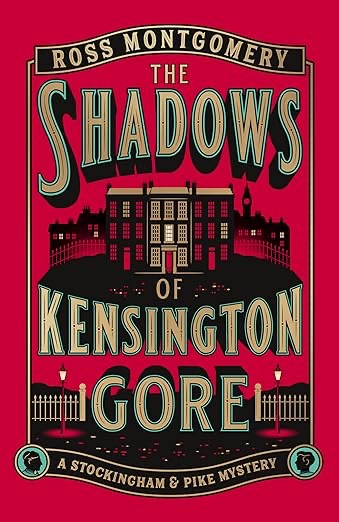
London, 1911. Coronation fever. Suffragette unrest. A city crackling with tension.
When a policeman is found brutally murdered on the streets of Kensington, blame falls on the three women seen fleeing the scene.
Their sole witness? Stephen Pike: ex-borstal boy, under-butler extraordinaire and assistant to the most unconventional detective in London, Miss Decima Stockingham. Sharp-tongued, fearless and bored of behaving herself, she’s the only one able to see that this case is not what it seems.
Aided by an invisible network of maids – their eyes and ears in every house in London – this unlikely duo must catch the killer before time runs out. But in a city dazzled by ceremony and divided by change, you never know what might be lurking in the shadows…
It’s impossible for me to start this review without declaring my undying devotion to Miss Decima Stockingham who intelligent, entitled, sweary and short-tempered. On meeting her long-suffering servant Stephen Pike, other servants from the apartments that line Kensington Gore commiserate that at least he isn’t indentured to the mad old cow in 89C. He doesn’t correct them because largely their only impression of this woman is her morning bellow for her egg and her propensity to fling books out of the window until it arrives:
“I was under the impression that boiling an egg was a quick job, but apparently you’re rearing the chicken by hand and fetching the water from fucking Spain.”
Underneath this exterior is a sharp-witted woman who doesn’t mind appearing contrary and rude if it gets her the results she needs or the information she’s seeking. This character is begging for a TV series and Olivia Coleman. Her foil is Stephen Pike, driven to distraction by her demands and her willingness to place him in dangerous situations. He’s equally comic, mainly physically, in one scene he’s lured to a union meeting at the pub which soon descends into an evening of rounds, a drunken football match, injury and a hefty hangover. He may seem ordinary to the untrained eye but Miss Decima can see a sharp intelligence, observational skill and an ability to put a pattern together that makes them a formidable team.
We meet them ten years after the Victorian era ended and the coronation of George V and Queen Mary is just around the corner. The suffragettes are ramping up their civil disobedience and taking direct action to gain the vote. The author uses this backdrop for a labyrinthine murder mystery and our mismatched pair are investigating. Historically, we can see all the signs of change that will come to England after WW1, the changes in class structure with working men wanting to form unions and enforce their employment rights. Women didn’t just want to vote but also to work, run their own finances and have rights to divorce. The Divorce and Matrimonial Causes Act of 1857 made divorce a civil matter but it didn’t treat men and women equally, seeing women as property. The suffragettes had very different factions within the wider movement, although Miss Decima claims to have no time for any of them, particularly those who take direct and destructive action. She believes that their antics play into the hands of men who say women are too emotional to vote. However, despite some snobbery about which class of woman should get the vote, she is a feminist. She explains women’s frustration with the status quo by pointing out the memorial statue for the Great Exhibition of 1851 to Stephen. It depicts Prince Albert held aloft by four female figures showing that women are relegated to the background.
“The world is stacked upon the unseen labours of women’.
The murder case is sensationally linked to the suffragette movement with three young campaigners, seen to leave the main march and head towards the south of Kensington Gore, situated near the Royal Albert Hall. Their intent seems to have been defacing a statue but all that’s left behind is a dead policeman and the women seem to have vanished. The police officer has had his throat cut from ear to ear and the gory details causes a sensation, as Miss Decima shrewdly observes female murder suspects are regarded more harshly than men. If they apply the theory of Occam’s Razor it’s an open and shut case but Miss Decima senses this plot is more Byzantine than first thought. Stephen is befuddled when she takes the case on, especially when she states her reasoning – ‘they’re clearly innocent.’ If found guilty the women’s actions could upset the suffrage cause for some time and have repercussions of international significance, maybe that’s worth killing for? On a more basic level she believes there is no way the woman could have physically managed to overpower and kill him. This is the case they have to prove and with her razor sharp logic, a small battalion of female investigators all called Ivy and Stephen’s ability to pick out obscure clues and patterns they will surely succeed.
There was nothing about this historical crime caper that I didn’t like. It is full of action, humour and incredible period detail. Miss Decima is a formidable woman and I could hear a definite Miriam Margoyles tone as she barks out her orders and insults: ‘put down the poker and stop being a twat’ being a favourite. The author perfectly captures the struggles and atrocities committed against women in the suffrage movement, especially by the police and prison service. Then in the next chapter we’re knee deep in the funniest union meeting I’ve encountered. Stephen is so endearing and the perfect foil for his employer. He can go where a more upper class woman can’t, although I’m sure she’d give it a good try. She knows that other servants and those lower down the class order are going to be more candid with someone of their own station. This mystery does have some links to the previous book but I didn’t have to read it to enjoy this one in its own right. The action sequence at the end, as all those old jigsaw pieces come together in Stephen’s mind is so well done I could see it all – Guy Ritchie’s directing style would be perfect for a film adaptation. Miss Decima is the closest thing to a female Sherlock Holmes I’ve read in a long time. With her three sets of teeth -“one for speaking, one for eating, one for shouting” – she’s a wonderful grotesque and an absolute joy to read. More please..
Out October 2026 from Penguin Books
Meet the Author
Ross Montgomery has worked as a pig farmer, a postman and a primary school teacher, so writing books was the next logical step. He spent his childhood reading everything he could get his hands on, from Jacqueline Wilson to Beano annuals, and it taught him pretty much everything that’s worth knowing. He has now written over twenty books for children, including THE MIDNIGHT GUARDIANS, which was shortlisted for the Costa Book Award 2021 and selected as one of The Guardian’s Children’s Books of the Year. He lives in London with his wife, a cat called Fun Bobby, and a cactus on every available surface.
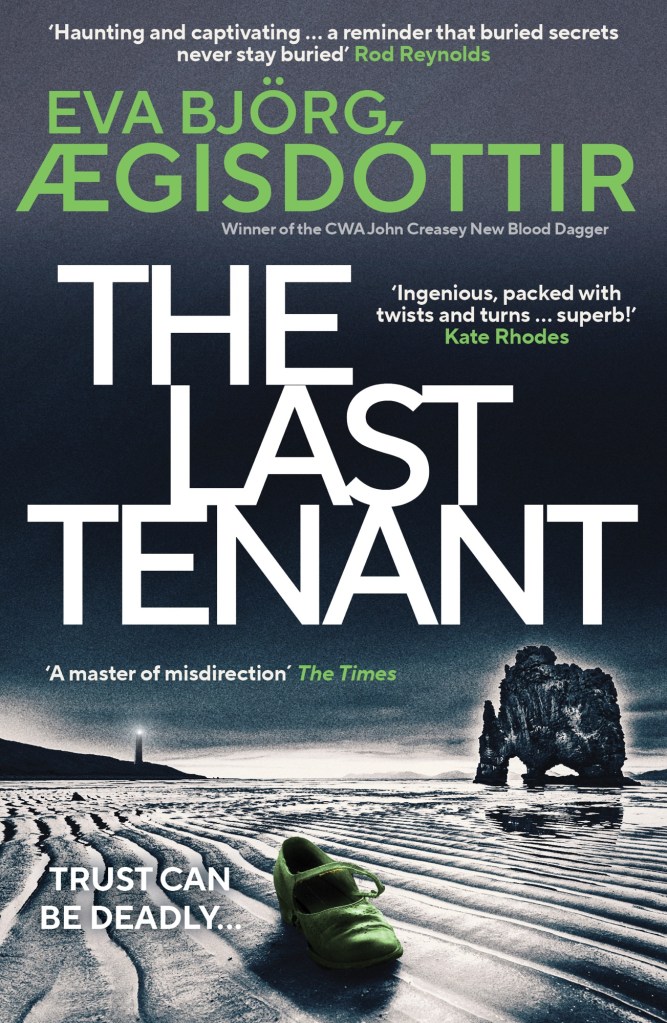
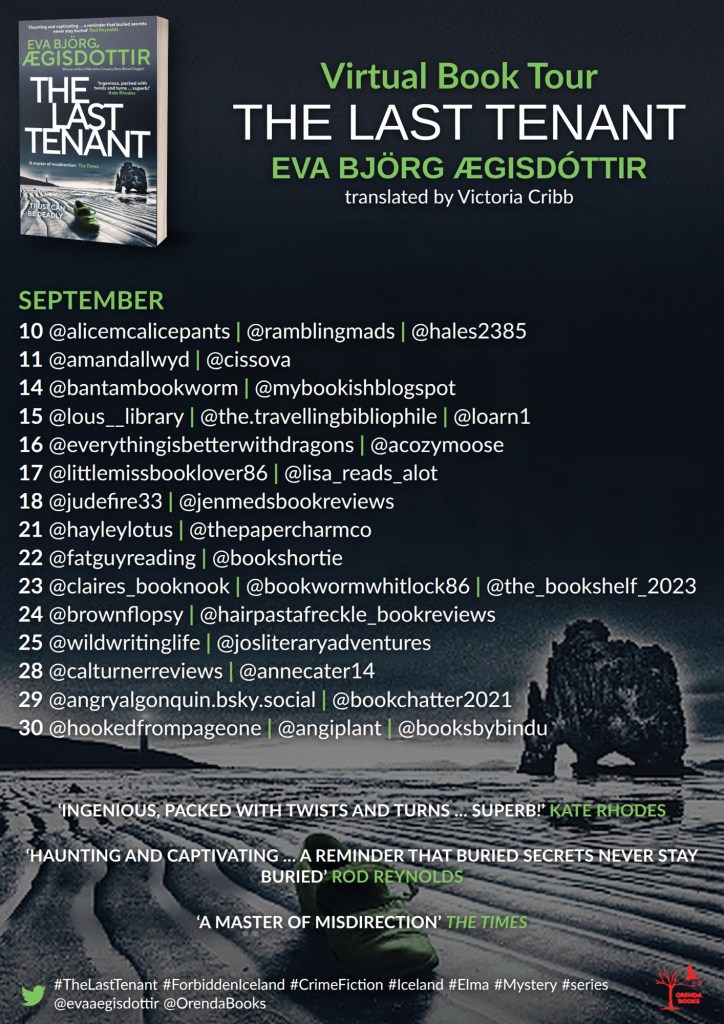
When the skeletons of a young woman and a baby are uncovered on a long-abandoned farm in Hvalfjörður, it is clear they were buried years apart. West Iceland CID begins to investigate the disturbing discovery, aware that someone has gone to great lengths to keep the past hidden.
In Akranes, Karitas, a young single mother seeking a new start, settles in with her four-year-old son and rents a basement flat from an eccentric landlord. A cautious sense of happiness returns when she meets the boy next door. But when news breaks that a local girl has been murdered, Karitas must decide who she can trust, knowing that one wrong choice could place her and her child in danger. Detective Elma is drawn into the case, forced to navigate long-hidden family secrets to understand a killer’s motive, while trying to hold together her increasingly troubled relationship with Sævar. Dark, atmospheric and rich with psychological suspense, The Last Tenant confirms Eva Björg Ægisdóttir as one of Iceland’s finest crime writers, as a meticulous investigation and a series of unsettling discoveries draw a close-knit community towards a reckoning no one can escape…
Wow! I love this series and at the sixth book in it just gets better and better. Elma’s case is a difficult and historic one as remains of a woman are found on a remote farm next to the long-buried bones of an infant. Elma will have to wait to find out whether the two are linked and how they’ve died, in the meantime she will have to trawl through missing person reports to find a likely candidate for the woman. She finds one in a young woman named Solrun, a medical student who had been dating a local boy when she went missing and both her car and clothes were found on a beach. Now Elma must delve into her past and reopen the scars for those she knew and loved because Solrun did not walk into the sea and drown. The baby’s DNA matches hair found buried with Solrun, but she hadn’t been pregnant and the baby’s remains predate hers by some years. Confused, Elma becomes engrossed in the case that is bound to cause a stir in her home town of Akranes as dark family secrets are uncovered. We see the case through Elma’s eyes but we’re also taken into the life of a young woman called Karitas who has recently moved into town with her young son Bessi. At first glance their basement flat is small but clean and her new landlord Baldvin seems odd but kind. There are also transcripts of a young man recording his troubled relationship with his father and the disappearance of his girlfriend on to his phone. Lyrical jornal entries from a young woman book end the novel. These different narratives are just one of the reasons I love this author’s writing. It reminds me of the Shetland novels by Anne Cleeves. In a remote small towns cases become complicated because everybody knows each other and their history family history. It brings home the emotional fallout of the crime committed and the toll it takes on the detectives like Elma who grew up here and have to picture their friends and neighbours as suspects. There are twists here you won’t see coming, but they’re not there for sensation but come about because people have secrets and tell lies. In the background runs the tension between retired police chief Otto and Elma, who blackmailed her on a previous case by claiming he knew a secret about Saever.
Elma throws herself into this case, mainly working alone but with Saever close by or at home to test her theories. Otto’s claims from the last book haven’t been addressed between them and along with having a lively toddler it has definitely sewn a bit of distance into their relationship. Her concerns grow when she sees he is distracted and receiving emails or messages from a woman that he isn’t sharing with her. I love the equity of their relationship, always equally responsible for chores, cooking and childcare, with none of the angst or guilt we often read with fictional female police officers. She’s a great mum but when she’s at work her mind is on the case, endlessly scrolling what she knows so far like a fruit machine in her head until something suddenly matches. She’s so absorbed that she’s not always checking her own well-being, with her mum intervening here and there to let the couple have some time and fun. On a night of wine with friends she’s horrified to have blurted out something about the case and mentally kicks herself for being unprofessional but she has discovered something she didn’t have before – other people’s impressions of someone she’s considering.
I enjoyed the character of Baldvin, the landlord of the basement flat where Karitas and Bessi live. He’s just the sort of the elderly gentleman I’d make friends with and I’ve had some eccentric friends over the years! He comes across as harmless and lonely with monologues that drift off at tangents and become philosophical. With a typical child’s innocence Bessi forms a bond with him, mainly fuelled by biscuits and ice-cream. He’s kind to them both so Karitas is surprised when neighbour Kristofer suggests she should be careful, insinuating he was creepy around his previous girlfriend. He does mention something about Karitas’s last name, its meaning and something about three suns that seems odd. She couldn’t be so wrong about him surely? She does sometimes come home and feel that someone has been in the flat and perhaps senses the whiff of his aftershave. When Elma asks around she finds that many people find him an odd character, almost like a child himself with a strange little giggle. A story about him did the rounds some years ago, that when working at the leisure centre he touched a young girl inappropriately, but one of her friends insists it wasn’t true. It shows that ‘apparently the truth doesn’t matter’ she says, something that seems more true today than ever before.
These cases are never tidy. There’s always something that doesn’t quite fit or can’t be explained. I imagine this is the norm in real life police work, but often detective fiction is way too cleanly tidied away. Here someone always knows more than they’re willing to say or are more involved than you imagined. Then there’s the burden of proof needed for a conviction. Elma knows Solrun was chasing down a clue before she disappeared, because one of her friends mentioned she’d asked for help about symptoms and medication. It wasn’t a personal enquiry but Elma can’t see where it might fit in her death, even when everything else is explained. Then there’s how everyone in Akranes is interlinked and having grown up in a small rural town I can see how it’s easy to think we know everything about another person. The truth is that we rarely see the full picture, just our part of it coloured by our own experience. Even within families there are things people know but no one talks about, there are different versions of the family history, things we’re open about and things we bury. Even so, how far would we go to protect those we love, especially our children? Throughout this series the people of Akranes are like a wider family, burying each other’s crimes and collectively forgetting the truth. The impact of one generation’s choices affecting the next. This the genius and the darkness at the heart of this series. The scariest truth about monsters is they don’t look like they do in storybooks; they can come out in daylight and ‘on the surface they’re just like ordinary people.’
Out Now from Orenda Books
Meet the Author
Born in Akranes, Eva Björg Ægisdóttir studied for an MSc in Globalisation in Norway before returning to Iceland and deciding to write a novel. Her debut, The Creak on the Stairs, was published in 2018, becoming a bestsellerin Iceland and going on to win the Blackbird Award and the Storytel Award for Best Crime Novel of the Year. It was published in English by Orenda Books in 2020, and became a number-one bestseller in ebook, shortlisting for Capital Crime’s Amazon Publishing Awards in two categories, and winning the CWA John Creasey New Blood Dagger. Girls Who Lie, Night Shadows, You Can’t See Me and Boys Who Hurt soon followed suit, shortlisting for the CWA Crime in Translation Dagger, the Capital Crime Awards, and the Petrona Award for Best Scandinavian Crime Novel. You Can’t See Me won the Storytel Award for Best Crime Novel of the Year in Iceland in 2023. In 2024, Eva won Iceland’s prestigious Crime Fiction Award, the Blood Drop, for Home before Dark and was shortlisted for the coveted Glass Key. The Forbidden Iceland series, due to hit streaming servicesin Autumn 2026 via GlassRiver, has established Eva as one of Iceland’s bestselling and most distinguished crime writers, and her books are published in twenty-nine languages with more than a million copies sold.
There have been some absolutely belting books this month and I loved telling you all about them. So I’ve been in the US, Italy, Greece Scotland and Sheffield. Oh I forgot about the ‘anti-verse’. It’s been a whirlwind of monstrous mermaids, a universe that goes backwards, the Greek civil war, a family dealing with the aftermath of 9/11, a crime writer who wakes up in a Sicilian villa with a dead body, a counsellor dealing with coercive control and a group of young boys trying to save their summer boy’s club. I’ve struggled to keep my mind on my reading to be honest it’s been a tough month. At the end of the last heatwave my cat returned home late one night and collapsed in the hall. I thought it was heatstroke and we tried to cool him but I could see he couldn’t put any weight on his back end. We rushed him to the vets where they diagnosed possible epilepsy. I knew this wasn’t right. She gave us some anti-convulsants but I wasn’t sure this was the right call. We kept him confined and on pain killers but he still couldn’t walk. I decided on a second opinion and went to a vet I used to see before moving house and he was brilliant. Poor Max had broken his pelvis in two places, his hip and damaged his lumbar spine. He also had a partially healed wound on his side. I can’t believe all that was missed. I could feel where his pelvis was pushed over, twisting his whole lower body. He’s had some surgery and lots of care at home. It’s going to take twelve weeks or more to fully settle. My husband has built him a three bedroom home under the stairs so he’s confined some of the time but can come out for exercise and fuss. My animals are my daily company now I don’t get out and about too well so they’re an important part of my life. I was so upset and I’ve really been focused on making him comfy and safe. So there’ll be lots of reading time in the upcoming weeks and I can’t wait be use it looks like an amazing autumn. I’ll share some recommendations for your tbr at the end. ❤️📚
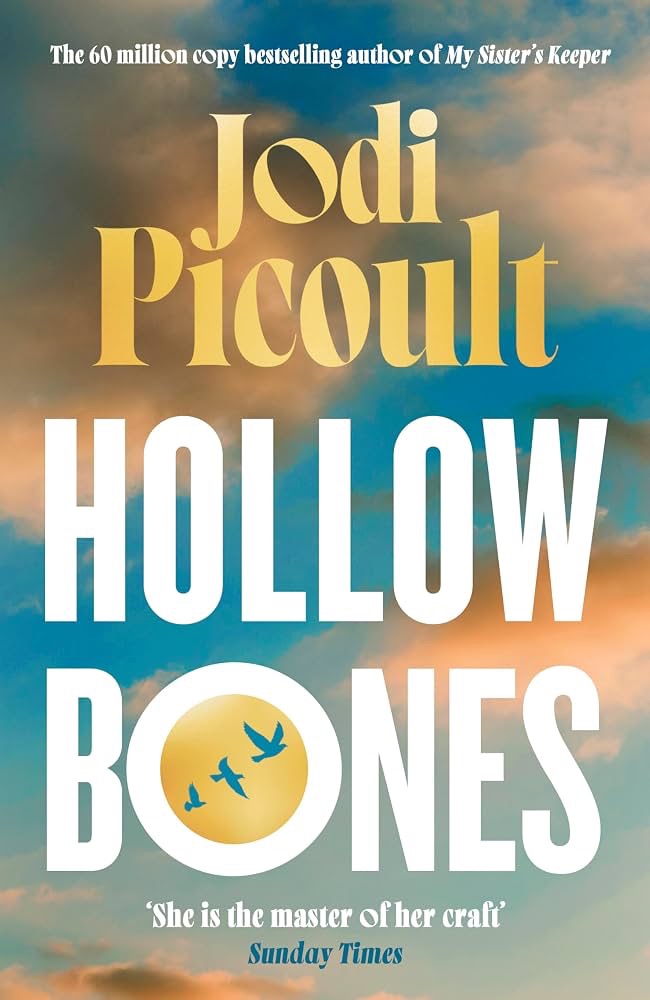
I’ve been looking forward to this new release from Jodi Picoult and I was lucky enough to get it on NetGalley. I dived in and read it very quickly over a couple of days. My full review will be later in the week, but this was a fascinating read, bravely taking on some of the most contentious and sacred subjects in modern day America. We follow Molly, a young woman in her twenties who is incredibly driven and has the difficult job of coordinating emergency response in her state. Her job is not medical, it’s to prevent incidents and plan for potential disaster situations based on the geographical features of the area, possible targets and population. Having just got through COVID, Molly is happily settled down with husband Jesse close to her dad and stepmum. It’s easy to see that it’s the loss of her mother that has influenced Molly’s choice of career. Eloise was lost on 9/11 when she attended a medical appointment in the South Tower. Every year Molly takes the trip to NYC for the memorial ceremony and tucks a red ribbon behind her mum’s name, representing the one she always wore in her French plait. What Molly doesn’t know is that her own life is about to blow up unexpectedly, changing everything she’s ever known and challenging what she knows about motherhood and risk prevention. I thought this was a classic Jodi Picoult novel with dilemmas, big emotions and using different narrative voices to give us all sides of an argument. We think we know Molly’s story, but a different narrator throws all of that up in the air so unexpectedly. Reading Molly’s narrative I kept thinking “ah this is going to be about x” but I was wrong. There are strong issues here – mental health, abuse, cult mentality – and they are shocking, because they should be. Jodi Picoult has such an easy, conversational style and it was great to be back in the hands of a fantastic storyteller.
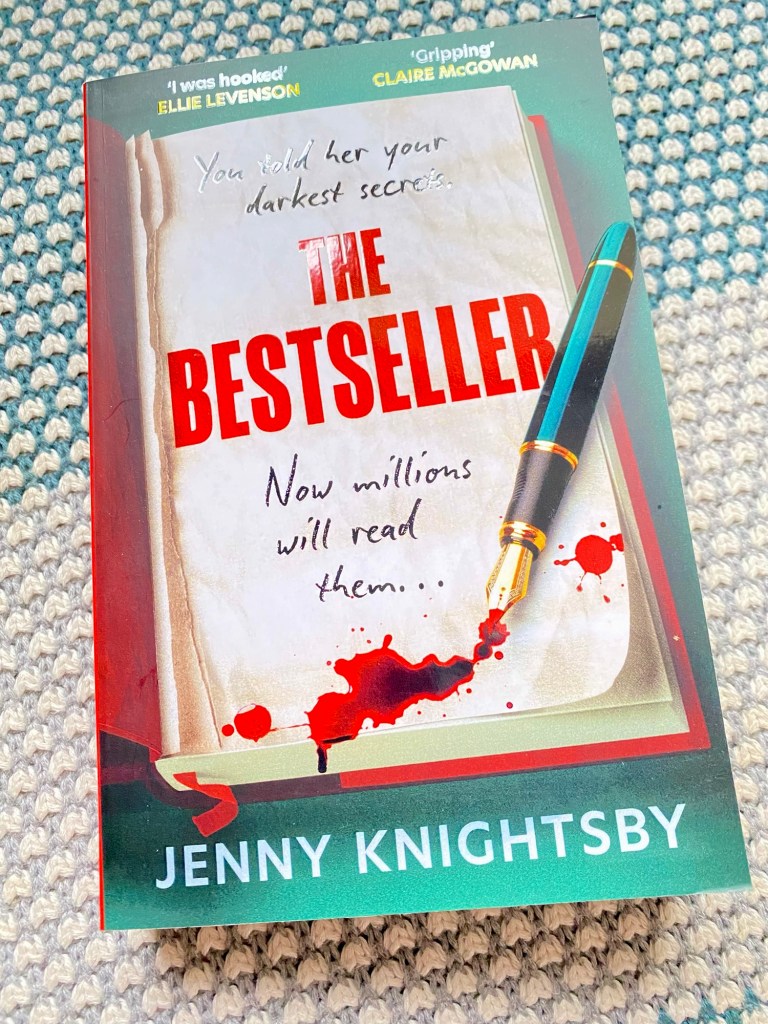
This is a great premise for a thriller and having been a therapist I’m always fascinated by books that are based on the therapeutic relationship. I think there’s a fascination in what therapist’s personal lives actually look like. Do they have it all sorted? The answer is invariably no and here there’s so much projection happening between Helena and her client Belle. Confidentiality is the bedrock of any therapeutic relationship, but that can get tricky when the therapist knows the client needs either specialist help or practical help. Helena is there to listen and guide Belle towards her own answers, but the constant disclosure of coercive control is uncomfortable to sit in. The urge to do rather than sit back and listen becomes difficult for Helena and it’s this discomfort that leads to her talking about it with best friend Tala. This is an issue for supervision, where Helena should disclose that she’s finding Belle’s passivity and indecision on leaving very difficult, but she doesn’t and now Tala is talking about how positive early responses have been to her new novel. Yet she doesn’t offer Helena a proof. When Helena stumbles across one at Tala’s flat she takes it and reads in horror as she realises Tala has fictionalised the problems of her client. This is going to be like a grenade in her personal and professional life.
The lives of Tala, Helena and her boyfriend Dylan and their paths into adulthood hinged on a single night. I thought the author managed these flashbacks well, placing them absolutely perfectly for maximum effect. It seems everyone has secrets but they are slowly revealed creating a very addictive read with short, pacy chapters that make you want to read just one more. The tension is almost unbearable as I worried about Helena overstepping with her client, the client finding out what’s in Tala’s book and somehow passing that on to her husband Julius. Would Helena be safe? As her well-ordered life starts to fall apart Helena starts to lose her belongings, forget her schedule and have terrible nightmares. She has no access to supervision and her relationship with Tala is broken. I wondered if she was heading for a breakdown. You may see the twist coming, but that doesn’t detract from the story. Eyes are opened, secrets past and present are revealed and I devoured the last few chapters late at night, unable to wait till the morning to find out what happened. This was an excellent thriller, full of psychological drama and really nailed the experience of being a counsellor with a problematic client. I also loved the ‘meta’ structure of reading a book about a book and just like Tala’s new novel this one should be a bestseller.
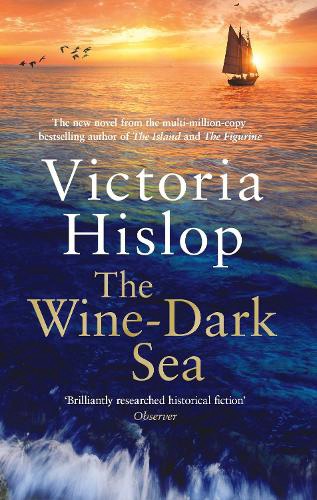
This epic story from Victoria Hislop really taught me a lot about a period of history I knew little about. The events happen after the end of WW2, a turbulent time that has already seen the punishment of Nazi collaborators and now many would like to see the end of their right wing government. The setting is a village called Kalopetra where Fotini’s husband has gone to fight for government forces against the communists, causing a schism in the family because Fotini’s brother-in-law fights for the communists. The sudden divide causes friction across the village, but the women must work together if they’re to survive. When government forces come to the village they capture all the women and Fotini is allowed to bring her baby son with her but older daughter Iliana is left behind with older children. How will they survive? That moment of Iliana chasing the truck, with her mother unable to do anything to reassure her, is burned into my memory. Although soon enough communist forces will round up the children and move them into camps where they are fed, clothed and then sent on to other countries like Yugoslavia. After having the entire burden of the other village children on her shoulders, Iliana is relieved to be fed and clothed by such kind people and so the process of brainwashing begins. All Fotini can think about is returning to her peaceful village and living the rustic existence that has survived for centuries, she doesn’t know that her way of life is already dead and nothing will be the same again.
I really enjoyed the later parts of the novel where we see Fotini piecing life back together in the city of Piraeus. It’s a massive change for this country girl but she can see the benefits of more job opportunities, entertainments like the cinema and eating good Greek food again at a lovely restaurant run by Demetrios. He’s such a kind man and gently reminds Fotini that she can’t spend the rest of her life wandering and looking for the children. The best thing she and Mitsos can do is stay in one place and hope the children find her, the place she was trying to get back to is gone. There was so much material to choose from in this book that it could have filled a trilogy. I had questions about all sorts of characters, such as Fotini’s relationship with her sister Stella. I also had questions about Nikos’s journey and his adoptive mother, there just seemed to be more about her that could have been explored. However, I loved Iliana’s growth and her life as an adult living under communism. The differences between Greece and Hungary were fascinating and as always the author captured the beauty of the Greek islands, their isolation and wildness and how this conflict disrupts a way of life that existed for centuries. The book symbolically ends with a circular dance that’s life affirming and perhaps a way of capturing, just for a few moments, that lost way of being.
I loved the first book in this series and I devoured this one in a day. Hannah is once again fretting over writing her latest book, disgusted that copies of the romance novel she poured her heart into is being ignored, while the crime novel she wrote in one month for a bet is a bestseller. Hannah is a brilliantly flawed character full of writer’s neurosis, hating that she is forced to write what will sell rather than the books she aspires to write. Again she’s on a deadline and as a last resort her editor Bastian finds her a quiet villa in Sicily with its own swimming pool. No distractions and plenty of time to unwind and write the novel she’s had an advance to produce. I love this character because she says and does the things I’d love to, but my inhibitions keep it inside. She has no such restrictions, happily saying what she thinks when she thinks it. Her disgust with the crime genre and Jorn Jensen in particular is so funny. I wonder if she has ever had a thought or need she didn’t express? She also seems totally unregulated. I would have asked the elderly couple who caretake the villa for help but Hannah decides to walk to the village without thought about the heat, how far and which direction home is in. She has no idea which hill to take and ends up exhausted and on the verge of sunstroke on her way back. This is where she is found by Hans and Greta who take her to their incredible house to clean up and drink something. This turns into dinner, wine and a night spent in their house. It’s when she wakes up in a strange place that she and the housekeeper Lucette find a dead body. Greta has been murdered and Hans is nowhere to be found. Has he been kidnapped or could he be the murderer? Hannah seems to have an inability to weigh up a decision before taking action. There’s so much going on in her head that it’s very hard for her to remain in the present. I’m always wishing she’d slow down a minute and breathe, but the only times she seems to do this are in water.
The case is an absolute maze of connections and suspects showing up a tension between villagers and tourists, a misogynistic police force and possible Mafia interference. Despite Hannah’s aversion to crime as a genre, she’s just as caught up in the mystery of this murder as any reader would be. She’s utterly reckless, in a comical way and there’s a chase on a moped during the final chapters that is clumsy and hilarious to imagine. Sparks fly when Jorn Jensen appears, but she can’t deny he helps make things happen. His arrogance is brilliant and when he suggests they write a crime novel together I thought Hannah might hit him with something heavy. The creepy moment in the basement, including Jensen’s cardboard cut out made me laugh out loud. This is a dark humour that I love. Jorn’s statement that he has ‘enormous sex appeal’ and it’s that and not his wealth that attracts women shows what sort of brash and conceited character he is, but there’s no denying his bravery and quick thinking. They are quite the investigative team, despite her reticence about working with him. Hannah’s instincts are good. She won’t accept the police’s conclusion that Hans killed his wife, reasoning that he adored her and couldn’t have done it. Instead she follows the money, often blundering into compromising situations and dangerous people. If the conclusion teaches her anything it’s that people will murder for very unexpected reasons. This is a brilliant second instalment of Hannah’s adventures and I’m going to resolve to be a little more Hannah and say what I think here and there.
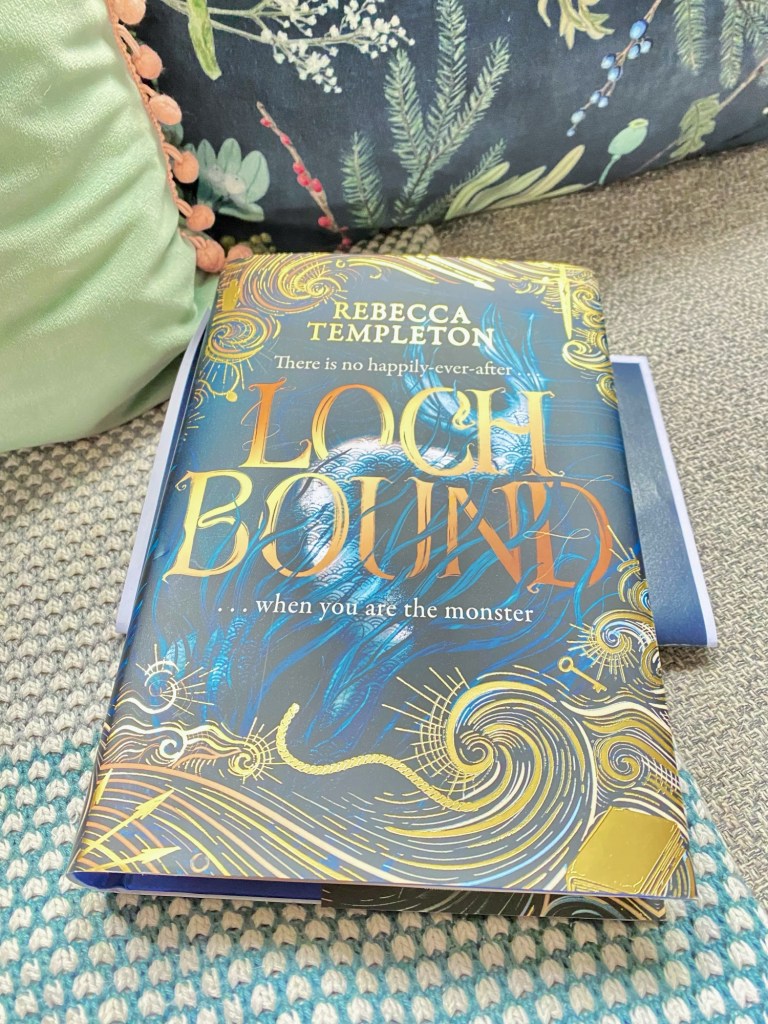
I love when monster stories are given a retelling and in this one it’s a mermaid living in a loch, but not the Disney-fixed Little Mermaid we might be used to. Here she is a truly fearsome creature named Moireach with yellow eyes, sharp teeth, shiny scales and the drive of a predator. She lives in the loch, only changing after dark when she reverts back to her human form – Iris. As a young girl Iris defied her father and fell in love with Thane. He forbade their relationship, as the daughter of a laird she must marry well and for the clan’s gain not her own. Devastated she visits a witch hoping to be free of her father’s obligations, but the witch cursed her and she became banished to the loch by day. Now, some fifty years later, when Iris emerges she is still the beautiful girl of her youth. Thane has never come for her and as dead men have been discovered around the loch with their hearts ripped out, the name of the monster is on everyone’s lips. Her childhood friend Duncan, now an old man, knows it cannot be Iris. She isn’t capable. He hides her with all the love and loyalty he had fifty years earlier, even though she chose someone else. The laird has made a big decision, he’s hired a hunter of monsters, a man called Henry Cartwright and he has never failed to catch his prey.
The backdrop of this story is perfect, using the mist, cold and breathtaking landscape to add to it’s mystery. There are parallels with Outlander here in the feel of this place, making good use of Scotland as a thin place where the paranormal, time travel and a history of monsters seems part of life. With the historical backdrop of the witch trials it’s also a dangerous place, particularly for a woman. Iris talks about the smell of the burnings and how women must be careful, but it’s no easier being a monster when men are turning up dead. The background of misogyny and brutal witch trials hangs over them all and shows a willingness to believe in magic, curses and female malevolence. It’s not just witches though, other fantastical creatures exist here like the seelies and selkies and there’s more one woman with powers a man would kill for. All of these things appear to be aligned with the nature that surrounds them and we can see that wildness as Iris changes to Moireach. It’s not just the yellow eyes and scales but the way her mind becomes that of a predator with only one goal. Reading this felt like being a child again and discovering a fairy tale rooted in darkness. Yes, some elements are fantastical, but it doesn’t read like fantasy. It’s more like a hybrid of historical fiction and fairy tales with aspects of a thriller. The pace speeds up as Iris begins to run out of time and we still don’t know why she was cursed, who cursed her and what will finally break it. There are those in the village who may seem kind, but could benefit from keeping Iris in her watery prison. As she takes us back to those fateful days in flashback, when her family were all together and her father didn’t yet know about Thane. I was engrossed with the tangled web of lies and betrayal but also by the question of what life Iris would choose if she could lift the curse. Would she pick the life she’d always wanted or had things changed? There are some unexpected revelations too, making for an exciting and absorbing conclusion. I thoroughly enjoyed this dark and feminist take on the mermaid stories we’re used to and I look forward to what the author writes next.
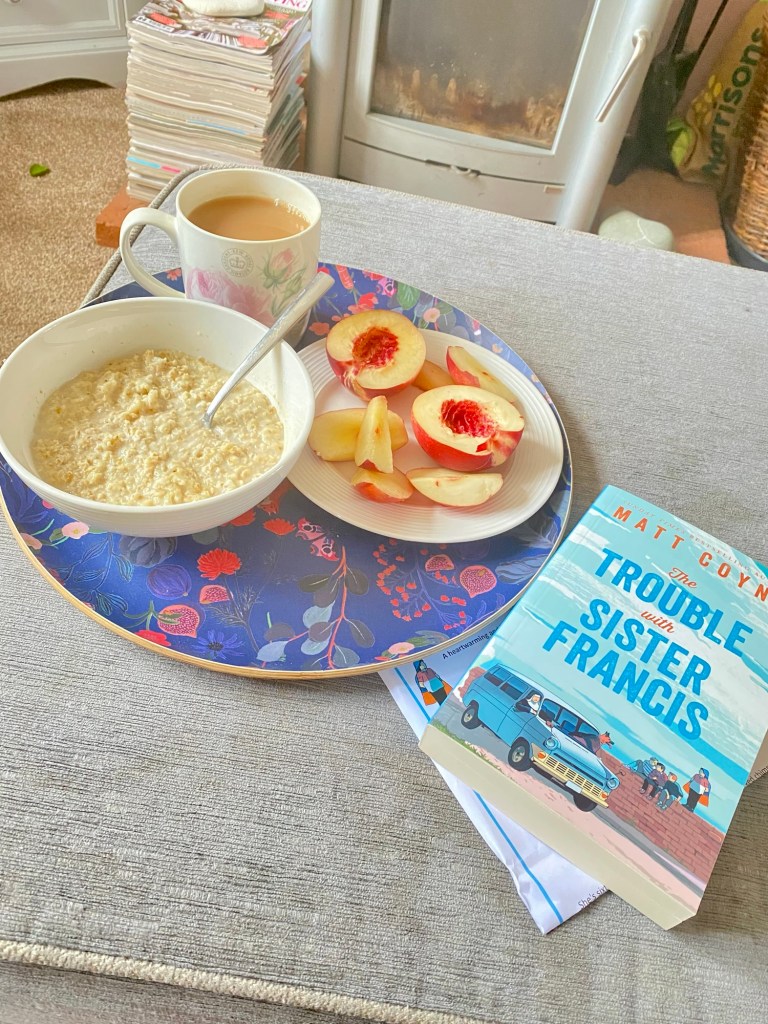
I feel like I’ve been living under a rock because I’m the only book blogger who hasn’t read Frank and Red, so this was my first introduction to Matt Coyne. I don’t even follow him on social media so went in completely blind. This book was a gem from start to finish. Matt Coyne’s ability to write a novel with the emotional intelligence to balance weighty subjects like war and loss against laugh out loud comedy is akin to Sue Townsend and her wonderful creation Adrian Mole. Sister Francis is like my rather formidable previous schoolteacher, Sister Joan. She had the sharpness and discipline of a military veteran, but underneath that there was a twinkle that made me think there was a sense of humour and quick wit underneath. Sister Francis drives an old van as if she’s in a rally, always has a cigarette on the go and reads the racing post. I have always found nuns to be singular and quirky individuals so I warmed to her immediately. Although she’s a comic character there’s so much more to her. She’s clearly keen on restarting a boy’s club she used to run years ago, with origins of supporting boys who had lost their father in WW2. She has a way of relating to boys from the area and our four friends can see she’s a formidable ally from the first day. When they roll up to the clapped out shed they’re accosted by one of the local priests, asking what they’re doing hanging around the presbytery and accusing them of looking for things to steal. When Sister Francis bursts out of the shed he’s taken aback and the boys notice she uses her sweetest voice and emphasises the holy intentions behind her club, but as soon as he’s gone she lights up and is her sweary self. Behind this exterior are buckets of empathy and determination to help the boys in her care, not that she’s easy on them. The four boys have a deal with her, if they come and help her clean the club house on the last Saturdays of term they can come to the club in the holidays and keep the entrance fee. It’s hard work but they stick at it and it’s not long before the Dead Dad’s Club is up and running.
I developed a soft spot for Rich’s Grandad Bob, who has a keen sense of humour and is a great role model for a young boy who has lost his father. I loved how he made Rich laugh with his assessment of Aunt Carole – she has a beard and looks like a pirate. He’s also there for the worse times too, after Rich’s dad died he has enough sense to simply sit with him as the loss hits him, no platitudes or promises, just sitting with him in his grief. Alongside Rich’s 1980s narrative is the journal of another boy who went to the Dead Dad’s Club after the upheaval of WW2. This narrative is evocative of a totally different era as Reginald is evacuated to a small village near Sheffield that’s something of a culture shock after growing up in London. Evacuees didn’t always have the best time and Reginald is coping with the boredom of the village – his observations on what passes as news worthy are so funny. He’s also navigating that rite of passage from primary to secondary school and the author really does conjure up those fears about the bigger school, getting lost and being without your usual friends. I wasn’t sure where his story fit with our four main characters and this is kept under wraps until exactly the right moment. This book has been a wonderful mood lifter just when I needed one, like a warm hug in book form. One line made me think about the friends who knew me in my small village at a similar age, one of whom I’ve tried to see regularly more recently. We try to get together at least once a month for cake and a catch up and I remember being taken aback at first by exactly how well she knew me. But of course she does. As Matt Coyne writes ‘real friendships are cast in the everyday’ and even though my friend and I often just walked her dog, cleaned out the rabbits and watched telly we grew up together and that counts for a lot. I heartily recommend this hilarious but heartfelt story that’s a ray of sunshine in book form.
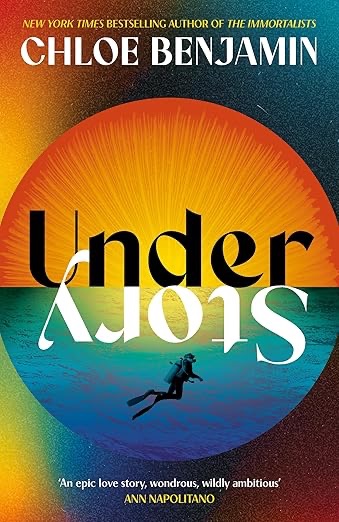
This book has to be my book of the year so far. I’ve been going on about it since May because it really is something special. I was quite simply blown away by this complex and beautiful story of science, loss and second chances. Our heroine Laurel is a scientist, studying fungus and how it grows but for some reason that isn’t clear at first, she’s on a research station in the Antarctic, away from her former husband Eli and without any fungus in sight. When she develops a fascination in the Arc that appears she thinks about its significance. When she becomes aware there is a matching basin underneath the water, her imagination is fired. Could this possibly be a portal? A gateway to a different world? She knows Eli won’t be far behind because she remembers his theory of the ‘duoverse’, the idea that at the moment of the big bang time and space was formed in two directions: our universe, the planets and the development of the world we know and in the other direction it’s complete opposite. I am not a scientist, in fact I barely have GCSE Biology, so I wasn’t aware of any background to this idea so could drift with it and enjoy two incredible minds exploring ideas. Our characters are fascinating, Eli and Laurel are a couple who were made for each other but their relationship is real and they face tough times, particularly when devastating events crash into their lives but I never doubted their love for each other. It’s fascinating to watch their characters face the concept of the duoverse, not just whether it is a portal, but if it is what will their relationship look like there and will going backwards fix whatever tore them apart? I felt both were analytical and might even appear cold at times, but in the moments of heightened emotion we really see who these characters are and the deep wells of love they hold.
I was on tenterhooks wondering about the duoverse under the ice and if Lauren is right whether they’ll ever be able to return? I found myself wondering how this world would look as time scrolled backwards. I was genuinely scared for them but also full of admiration for their bravery. The mirroring is so cleverly done, showing how life always comes full circle and we’re often helpless at the end and the beginning, if we’re lucky enough to lead a full life. As someone who worked in nursing homes in my twenties this really made me think of the role of nostalgia and how often elderly people hanker after experiences from their childhood. Laurel wants her mother’s blueberry pancakes, to watch a film she’s seen a million times and disappear into a favourite book because there’s comfort in it. It might seem like science has sent them on this potential journey, but it isn’t. The totally unscientific emotion of love is what pushes them on, but also guilt, hope and desperation. Loss is a huge theme in the novel, something that always hits me in the heart, and I was deeply moved by how the author dealt with loss and how the scientific concept of a duoverse changes this experience. This novel was moving, profound, invigorating, deeply intelligent and so full of life. I kept thinking about the symbols of the cover, the circle and the tree, the same under the ground as they are over it. As Laurel observes:
“A line implies before and after; a circle says And then, and then…”
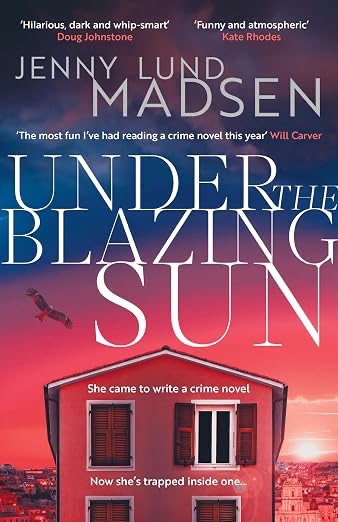
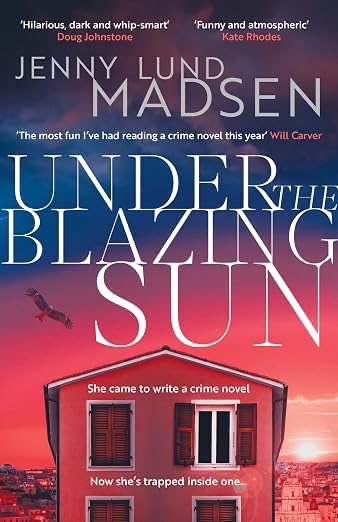
Hannah is miserable. Her love life is in ruins, her contract demands a sequel to her bestselling crime debut – and she’s out of ideas. After a mortifying TV interview, her agent ships her off to a sun-drenched Sicilian villa with a simple order: finish the book. No distractions. No excuses.
But inspiration doesn’t strike – murder does. When a night out ends in murder, Hannah finds herself at the centre of a murder investigation … again. The police want her out of the way, and the only person who seems to believe her is a young but charming Italian police officer. That is, until she doesn’t.
Soon Hannah is chasing suspects, fleeing crime scenes, and doing whatever it takes to avoid becoming the next victim. She came to write a crime novel. Now she’s trapped inside one. Dark, sly and deliciously atmospheric, Under the Blazing Sun is the second novel in the award-winning series featuring accidental sleuth and disgruntled literary author Hannah, whose pursuit of plot twists keeps turning dangerously real.
I loved the author’s first book in this series and I devoured this one in a day. Hannah is once again fretting over writing her latest book, disgusted that copies of the romance novel she poured her heart into is being ignored, while the crime novel she wrote in one month for a bet is a bestseller. Hannah is a brilliantly flawed character full of writer’s neurosis, hating that she is forced to write what will sell rather than the books she aspires to write. Again she’s on a deadline and as a last resort her editor Bastian finds her a quiet villa in Sicily with its own swimming pool. No distractions and plenty of time to unwind and write the novel she’s had an advance to produce. I love this character because she says and does the things I want to, but my inhibitions keep it inside. She has no such restrictions, happily saying what she thinks when she thinks it. Her disgust with the crime genre and Jorn Jensen in particular is so funny. I wonder if she has ever had a thought or need she didn’t express? She’s also totally unregulated and this is what lands her in trouble every time. She decides to walk to the village without thought about the heat, how far it is and which direction she takes. So when it comes to going back to the villa she has no idea which hill to take and ends up exhausted and on the verge of sunstroke on her way back. This is where she is found by Hans and Greta who take her to their incredible house to clean up and drink something. This turns into dinner, wine and a night spent in their house. It’s when she wakes up in a strange place that she and the housekeeper Lucette find a dead body. Greta has been murdered and Hans is nowhere to be found. Has he been kidnapped or could he be the murderer? Hannah seems to have an inability to weigh up a decision before taking action. There’s so much going on in her head that it’s very hard for her to remain in the present. I’m always wishing she’d slow down a minute and breathe, but the only times she seems to do this are in the water.
This hot Italian island couldn’t be further from Hannah’s Scandinavian home and is a great backdrop for a murder. Hannah is a fish out of water here and she notes the contrast between the cold and snow of her last case and the relentless heat and dryness of Sicily. The area throws up different obstacles too. There’s the rather sexist and misogynistic Sicilian police, aside from their one female recruit Carlotta. Hannah has to consider the local community and possible objections to people like Greta who are making money by bringing even more tourists into the area. There’s the possibility of corruption too with links between the Mafia, business and local government. We see the contrast of what the area is like for holiday makers and wealthy incomers, as opposed to the young people in the area who are struggling to find work and homes without moving away. The young police detective Carlotta wants to be the difference in the police force, banding together with Hannah on a couple of occasions and proving to be quite the distraction. Hannah is still in love with Margret and is dangling on an open ended waiting game. They’re not in a relationship until Margret can extricate herself from her marriage and make the best decisions for her children. Hannah isn’t always patient with this and doesn’t seem to realise that if Margret was in her life permanently so are her children. When she imagines them together I’m not sure the children feature in that picture. It was interesting to see her getting more than she bargained for and having the cheek to ask Margret’s police officer husband for help! He voices what many readers might be thinking when he tells her she’s the most annoying person he’s ever met.
The case is an absolute maze of connections and suspects and despite her aversion to crime as a genre, she’s just as caught up in the mystery of this murder as any reader would be. She’s utterly reckless, in a comical way and there’s a chase on a moped during the final chapters that is clumsy and hilarious to imagine. Sparks fly when Jorn Jensen appears, but she can’t deny he helps make things happen. His arrogance is brilliant and when he suggests they write a crime novel together I thought Hannah might hit him with something heavy. The creepy moment in the basement, including Jensen’s cardboard cut out made me laugh and worry about her safety at the same time. This is a dark humour that I love. Jorn’s statement that he has ‘enormous sex appeal’ and it’s that and not his wealth that attracts women shows what sort of brash and conceited character he is, but there’s no denying his bravery and quick thinking. They are quite the investigative team, despite her reticence about working with him. Hannah’s instincts are good. She won’t accept the police’s conclusion that Hans killed his wife, reasoning that he adored her and couldn’t have done it. Instead she follows the money, often blundering into compromising situations and dangerous people. If the conclusion teaches her anything it’s that people will murder for very unexpected reasons. This is a brilliant second instalment of Hannah’s adventures and I’m going to resolve to be a little more Hannah and say what I think here and there.
A dead judge. A silent defendant. And a courtroom full of liars.
When Leila Reynolds is handed her first murder case, she’s shocked at how high-profile it is: the murder of a well-respected, well-known judge. This shouldn’t be the kind of case she’s leading; it’s way beyond her expertise. But the defendant, Jack Millman, is clear. He wants her, and only her.
To make things worse, he’s refusing to talk. How is she supposed to prove herself on what appears to be an unwinnable case?
Losing is not an option. She must find the most persuasive argument. Trials aren’t won by convincing judges or fellow barristers – they’re all about convincing a jury.
Suddenly, Leila finds herself fighting not only to keep Jack out of prison, but also to keep her own secrets buried.
It’s true what they say – there are two sides to every story.
Guilty or not guilty?
Wow! This was a ‘devour in one sitting’ thriller in the high stakes setting of a barrister’s chambers and an incendiary case where two of their barristers have been requested; one in prosecution and one in defence. The defendant has requested Leila, an up and coming young barrister who has just heard she’s getting a mention in an exclusive legal publication. The man who’s keen to let Leila know she has him to thank for that mention, is her previous mentor Julian. As a pupil she had to work under Julian to complete her training and he’s now going to be her opponent in court. Even more complicated is the fact that they’re now husband and wife. This is a murder case and the victim was a high court judge, Anton Smythe, who died in a flat above a nightclub after being hit in the head with a doorstop. The accused is Jack, who works as security for the nightclub owner and lives on the premises. Leila is surprised that his solicitor has requested her because she has defended this client before, and lost. When they meet again for instructions, Jack tells her he will be pleading not guilty but offers no defence. She absolutely refuses to put him on the stand and his solicitor agrees. They should argue his case if he will trust them with the truth. Jack sticks to his guns, he will not say a word about his defence until he is on the stand. Could this be paranoia? Although to be a judge like Anton means you have powerful friends, maybe it is sensible to keep his story under wraps for now.
I’m a big fan of legal dramas like Silk and North Square so the setting in a barrister’s chambers definitely appealed to me. I loved Maxine Peake as Martha, she was Northern, intelligent, quick with a put down and nobody’s fool. Leila comes across as more of a gentle character than that, but definitely intelligent, determined and perhaps driven by a background that has its secrets. I intensely disliked Julian, but he is so well-written. There was a definite power imbalance between them, especially since she’d been his pupil. He must have seen her star quality and I had the thought that maybe he’d married Leila to keep her under him, both literally and figuratively. The layers of charm and ease soon fall away as the case starts.
“You want someone whose mind is in alignment with yours, but whose appetite for dominance will never exceed your own”.
When Leila is congratulated on her mention he makes sure to comment that without his influence it wouldn’t have happened. I noticed that his ex-wife seems to want to talk to Leila, something she’s avoiding but might be worthwhile. As lines are drawn in the court room there’s a definite misogyny in how Julian gangs up with the police witnesses against her, but because he can couch it in terms of prosecuting competently even though she’s his wife, it’s hard to narrow down his intentions. Is he just serving the best interests of his client? Or is he trying to rattle his wife and make her feel like she’s dependent on him? As the case continues their once calm married life becomes more fraught and separate. Leila isn’t sure whether it’s just the case and the distance needed to be opponents or whether something more fundamental is wrong. The other thing that struck me as odd is that it’s Leila who goes to spend Friday evenings having fish and chips with her mother-in-law Audrey who is in the early stages of dementia. Julian never goes with her. When she does have one lucid moment Leila asks what she thinks about her son. ‘You can’t trust him she says very quietly. Thats why he doesn’t come to see me. He hates women who can see through him.” Maybe Leila is just starting to see the real man she married. There is also mystery around Leila’s background, definitely a poorer area of the North East than Durham but she seems to have no family. It’s as if she has totally reinvented herself. She calls it a wretched life that’s left it’s mark:
“It’s the smaller, subtler things I’m now fiercely protective of, like feeling safe when I turn the light off before I go to sleep […] recognising my body is my own and I now get a say in who touches it. The things I had to do to get here you’d be horrified to know.”
It feels as if her relationships have been transactional even when she’s had a choice. Could Julian just be another rung on the ladder? It seems he wasn’t her first mentor and she wonders often whether this past will catch up with her. The twist is very good indeed. I had an inkling, but it is a proper ‘sixth sense’ moment where you’ll want to flick back through the book and see the clues you missed. This is a high drama, high stakes, legal battle and only one of them can win. The tension is unbearable as Jack takes the stand, it almost feels like a done deal but no one is expecting his testimony. The fall out is seismic. This is such a clever thriller with a cast of characters you won’t like but will be fascinated with. It’s very well written by an author who knows this profession and its pitfalls for women, particularly working class ones. It feels like social commentary – with the well educated, upholders of the law and all their status, against the ordinary, working class person who’s usually in the dock. Can the law be the great equaliser it seems or are some people more equal than others? This was a great debut with a fast pace and some brilliant ‘oh my God’ moments.
Meet the Author
Jo grew up in Teesside during the 90s when working class girls were told they probably shouldn’t try to become barristers. Thankfully, she ignored everyone. After studying Classics at Newcastle University, she went to law school and did just that. Jo was a criminal barrister before leaving the profession to look after her two children. She lives in North Yorkshire.
It’s been a very busy month with a reduced time for reading and reviewing. First my mum and I went to Liverpool to see Moulin Rouge which was brilliant. Then I was back less than a week later to see my stepdaughter graduate with a first class degree in Early Childhood Education. We stayed in the philanthropic village of Port Sunlight and I soaked up the arts and craft architecture for a few days. We also visited the Redbrick Market, a labyrinth of tiny craft and antique stalls in an old brewery complex in the Baltic Quarter too. Then I needed to rest up for a few days to give my body chance to recover I did some reading and lots of sleeping. As always but I’m very behind with reviewing. My favourites have mainly been thrillers, with a beautiful Irish fiction debut too. August is quieter with just one tour, so I’m setting aside a stack of novels I’ve been dying to get to for months. I try and have a mood read month twice a year, otherwise I think I’d burn out. So here’s what I enjoyed last month ❤️📚
Sugartown was one of the Squad Pod Collective’s featured books last month. I loved it and was really surprised to learn it had so many rejections before publication so it really does pay to keep plugging away. Now it’s up for a major Irish fiction prize. Our story follows Saoirse as she returns to her Irish town after trying out living and working in London. She’s come back to lick her wounds and hoped for a little grace from mum Màire, but she’s on her almost immediately, making sure she’s up at a reasonable hour and pointedly hoovering outside her room if she doesn’t. Màire is what Saoirse has always called her mum at her instruction. She absolutely refused to be called Mammy, but now that she has three younger daughters she’s a model mum. Saoirse sees how organised she is, getting all three ready for school in the morning with identical plaits and immaculate uniforms. All she can do is wonder why she didn’t do that for her? Saoirse only hears her mother’s criticism and there is plenty of it.
She insists that Saoirse takes a job and then finds one for her, even bullying her out of bed for the interview and driving her there. She’s very insistent that her stepdad shouldn’t have to keep her. To cope with the boredom of small town life and the job at a hardware store she goes out with her best friend Doireann, drinking to excess and trying whatever drug is going. Her dreams have shattered and she can’t see the point. It’s then she meets Charlie and there’s an immediate attraction, will this prove to be the love Saoirse needs or will her excesses prove to be her undoing? I remember being this age and I felt equally uncomfortable, having missed my uni place at Liverpool by one point I had to stay in my small town and grabbed a job in a nursing home and a local pub. I felt a little lost but luckily I had god friends and family around me. I could feel Saoirse’s pain about her relationship with Mum and the on and off again relationship with Charlie doesn’t help. It’s not long before Saoirse hits rock bottom. This is a fascinating look at motherhood and how our maternal relationship is so important for self-esteem and identity. I was relieved when she starts counselling because it’s the only way to improve her life and it’s revelatory to hear she doesnt have to have a relationship wiith Mum. The author captures young adulthood perfectly and how, if we don’t know who we are, we can’t choose healthy relationships or build a life for ourselves. This is beautifully written, devastating but also hopeful.
I think I’m the last person to read this brilliant court room thriller with a killer of a twist. Leila is a barrister, working at a chambers in the north east of England. Leila has worked hard from a poor background to university and into the law, often difficult for those without family money. She is married to Julian who used to her mentor when she was just a pupil, but now a case has come in where they’ll be pitted against each other. This isn’t necessarily unusual, but she would have recused herself if the client hadn’t insisted on her especially. However, the solicitor on the case doesn’t know why he wants Leila, especially since the last time she represented him she lost. Jack has been accused of the murder of Anthony Smythe, a well respected high court judge. He informs Leila he’ll be pleading not guilty, but won’t be disclosing his defence before he takes the stand to give evidence. This makes Leila twitchy and nervous. As the trial draws near Leila finds a distance growing between her and Julian, as well as a condescension and arrogance that she’s never seen before. She also feels voices from the past might be closer, people she thought she’d outrun. This felt like one of my favourite drama series, Silk, starring Maxine Peake. I love the drama and the way everything started to shift and change around our central character. This is a belter of a thriller, fiendishly clever and although I did guess the twist it didn’t ruin my enjoyment at all.
Vikas Swarup’s heroine Devi grabs hold of you the minute she starts to tell her own story in this episodic novel set in Delhi. The opening brings Devi to the lair of an unknown assailant who tells her he has seven people on the phone line who want to bid for her destiny. This auction will take one night and seven stories, stories she thought were secrets. As Devi tells each tale her kidnapper will take a bid on her life and he hopes to reach seven figures. However, Devi’s circumstances have not been easy and the fact she is alive is down to her cunning and experience. Has the kidnapper underestimated his prisoner or are Devi’s lives finally running out?
I was hooked from the first story as Devi explains how she started in a family home in the slum area known as Rail Basti, because the train tracks ran straight through the centre of the huts. This was Devi’s early childhood and despite the poverty she has happy times. She tells us about her annoying brothers, the eldest a maths prodigy and the youngest a terrible bedwetter, the daily sequence of trains that seem to rattle the ground under their hut and depth of water that rises indoors in monsoon season. Change comes when her parents choose an unorthodox plan to make an almost life-changing sum of money and fortune seems to turn almost immediately. Devi is an intelligent, funny and excitable nine year old and sometimes it’s hard to read about her daily life, never mind the more perilous and painful circumstances she finds herself in. She learns through necessity, takes chances where she sees them, soon inured to the fact that the only constant in her life is change. There’s so much energy in this novel. It leaps off the page and its biggest achievement is its mix of addictive suspense and emotional insight. I came away from it feeling a little bit battered by the force of the story and it might take a few days to fully sink in. I liked Devi as a child, but as time and experience move her forward she becomes more morally questionable, complex and deeply conflicting. Although even if I didn’t always like her I could understand why she makes the choices she does and how she’s come to each terrible conclusion, every time wondering if this present adventure will be her last. It’s easy to forget when you’re deeply embedded in one of her stories that this is where it’s brought her, tied to a chair and listening as each person bids on her life. If you like to kept in suspense and to experience an extraordinary life lived in destitute and dangerous circumstances this is definitely for you.
Ben is living in Penzance, taking a break from his home island of Bryhir in the Scilly Isles after the events of the previous novel. He’s taking a break from police work and instead has found a job at a joiner and cabinetmakers, using the skills he learned building boats with his Uncle. It’s settled and therapeutic work as Ben slowly creates beautiful pieces of furniture and starts to deal with his grief and loss. Noah is a little confused to be away from everything he knows, but he’s enrolled at a kindergarten near Ben’s work so life has some routine and peace. He is starting to be brought into the community too, with an arts festival on the horizon he’s bound to be pulled into the planning, even just as a steward he’s happy to do his bit. Then life takes a sinister turn as he’s on the beach and sees a young mother with a baby in a pram. One moment of distraction and a black figure jumps out of the shadows and racing towards the pram it grabs the baby and throws it into the sea. Ben and Shadow are running before they’ve even thought and he dives into the sea to rescue the baby. He’s now a local hero, but the disturbing and traumatic event plays on his mind. How could someone do such a thing and will they do it again?
The author weaves her story around the local myth of the Zennor Mermaid, a figured carved into one of the pews in Zennor church. By the time the festival arrives everyone has done all they can to keep families safe, with a security perimeter at the park that can’t be broken, of course that assumes the attacker isn’t one of the stewards. I was still suspecting the nursery nurse, the festival organiser, a police officer, a young man who is abused by his older brother and even the DCI’s nanny. The author has created short, urgent chapters here. They ramp up the tension as we flip between Ben’s inner world and the attacker’s, following them and their newest victim to the dark, wildness of the festival’s other site at Zennor. We can sense the mystical feeling of Cornwall and how it’s become warped in this person’s mind. It’s pitch black and rough terrain, plus with miles and miles of coastline can they be sure to find the right place in time. I defy anyone to put the book down at this point and I devoured it in one sitting. Ben still knows he’s missing a part of the puzzle and we have to trust that his intuition will click in before it’s too late. This is a great thriller and taking Ben out of his natural habitat does bring a different feel to the series, though I hope he does eventually return to island because he belongs there. We can see in the aftermath that he needs his found family and just like Zoe he will always return to the island and each other.
I love it when a new Mark Edwards novel appears and this one really did grab me from the off. It’s a familiar set up. Holly seems like the perfect girlfriend. Clever, funny, beautiful – Patrick feels like he’s hit the jackpot. Until he meets her family.
Her dad has a mysterious new girlfriend. Her sister is unwelcoming. Her brother is clearly lying about something. And Patrick gets the sense all of them share a dark secret – even Holly. When he finds out about the body that was found nearby on their last family holiday, Patrick sets out to find the truth. But as skeletons tumble out of the family’s closet, Patrick realises he needs to be careful. Because in this family, loyalty is everything – and at least one of them is willing to kill to keep their secrets…
The best bit about reading this was that I didn’t really like any of Holly’s family. In fact her sister and brother-in-law are horrific human beings. Anyway, I loved the setting, a remote part of Scotland where not many people visit and the family have a holiday home. However it hasn’t always been a happy place. This is where Holly’s mother died many years before and also where something happened to a teenager from the village – the brother of their cleaner. Then there’s the added stress of Dad’s new American girlfriend. The family dynamic is toxic before she arrives and when she does it causes a meltdown! Meanwhile Patrick is trying to find out what happened at the caves when Holly was a teenager and why a young man was found dead nearby in the dead of winter in summer clothing. As snow starts to fall and the village becomes cut off the family’s behaviour becomes more extreme and Patrick makes discoveries that leave him fearing for his life. I loved the look at tech companies and their ethics, or lack of them and the tension between the locals and the family. Another great thriller from this prolific author.
Lisa Jewell really is a must buy author as I can’t remember a time when I was disappointed by one of her novels and as she mentions in the acknowledgements, this is her twenty fourth! I gelled with the main character Jane very quickly, perhaps because I related to her a little bit. I don’t have a mansion house, but I do have rescue animals, step-children and a similar turn of phrase – a couple of her lines genuinely made me laugh out loud. I never expected to hear the line “with all due respect, Stuart, I’m not sure what could actually be worse than Daisy being abused by a pervert dressed as a clown.” It’s also a good point to mention that I actually hate clowns. Hate them all. They scare me. I don’t like masks, mime artists or anything else where someone is trying to change their face. This might have led to me finding this novel incredibly creepy. Jane comes across as forthright and opinionated but I love those qualities. Basically she’s the perfect investigator because she’s quite happy to ask uncomfortable questions and to suspect the worst of people, although I don’t think she imagined returning a lost west highland terrier would lead her into the darkness of the Black family. Under her exterior she has a big heart and whether it’s her rescue dogs or her step-children she’s always there, especially for Dexter who she spends a lot of time with. When she comes across the strange disappearance of a young girl called Daisy from a local AirBnB she never imagined taking a step back into her past and a house she fled from many years ago. Told through Jane and Daisy’s stepfather Stuart this is a masterclass in generational trauma and the different traits that can run in families. When Jane glimpses an open drawer that contains white gloves, handcuffs and a clown mask I was creeped out and then Stuart finds shackles in the outhouse! This is a very dark thriller with moments of humour that made me laugh out loud. Another belter from this talented author.