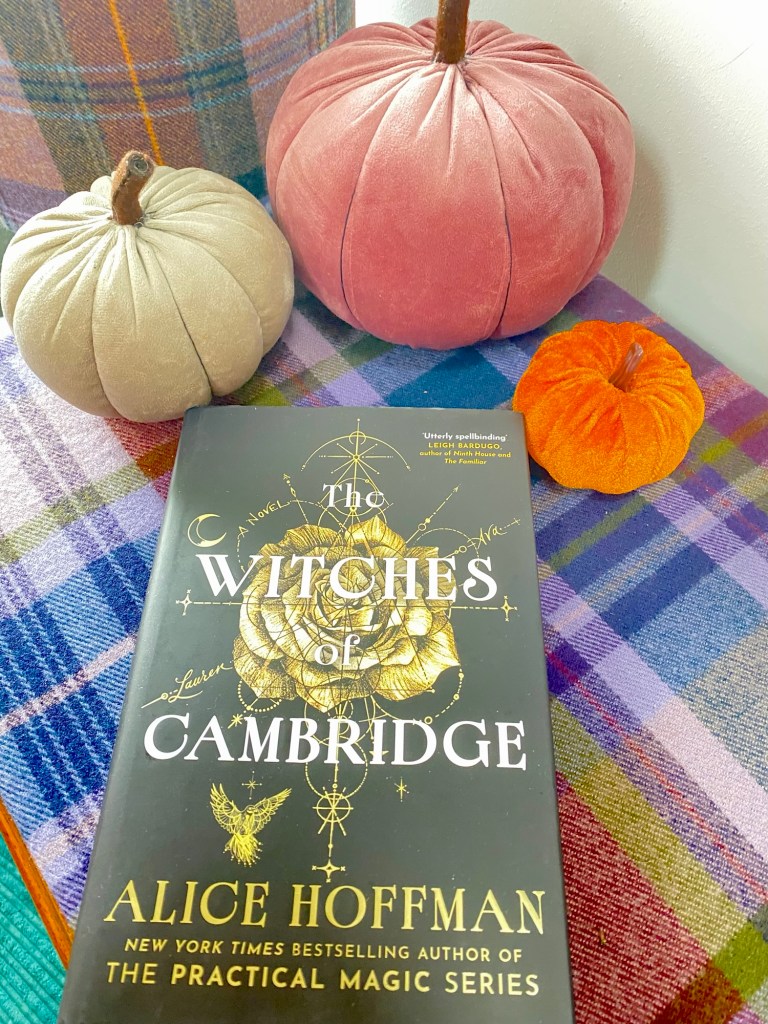
Once upon a time, women were drowned in the river and the only witnesses were the crows in the trees. The Puritans blamed Eve for the sins of the world. That was when we began to meet in the name of Lilith, Adam’s first wife―banished for refusing to do as she was told.
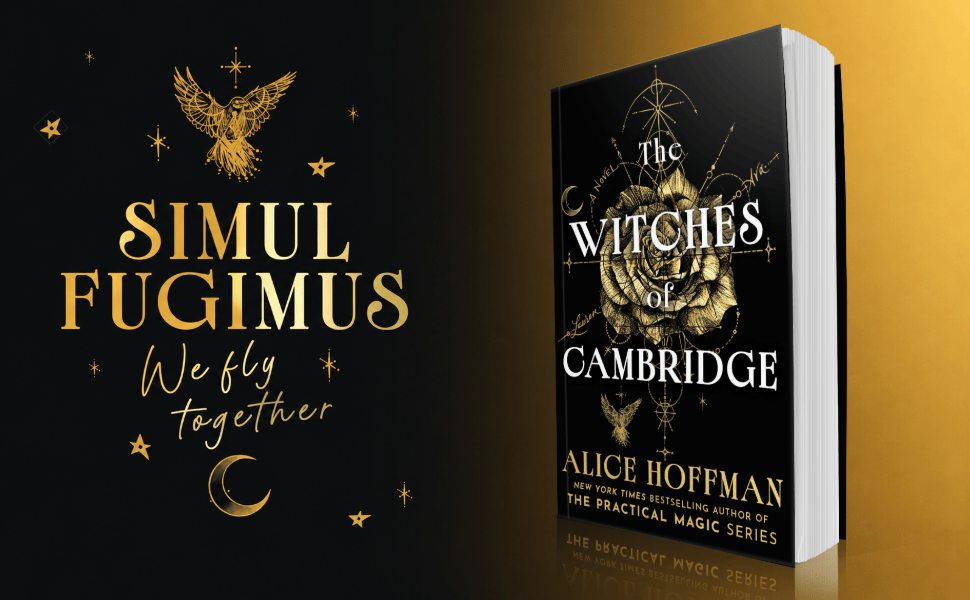
We Fly Together…
By the 1950s, Cambridge, Massachusetts feels far removed from the legendary witch trials that marked its early days as a colony. Ava, a bright young woman from a small town in Maine, arrives for her first year at Radcliffe College. There, she meets Lauren, her opposite in every way―the wild and brazen daughter of a wealthy and well-established Cambridge family. But the two have more in common than they think. Both are recruited by the Lilith Society, a secret organization of witches at Radcliffe dating back to colonial times. As they learn more about their legacy, Ava and Lauren form a close bond that is put to the test as they learn to navigate their new power, friendship, and love.
While Radcliffe seems like a safe haven, the shadow of McCarthyism looms large, an ever-present threat to the flourishing creative and intellectual life in Cambridge. And as girls from the Lilith Society begin to go missing, Ava and Lauren realize the witch trials of the past may not be as deeply buried as they once believed.
What a perfect read for cozy autumn months! Alice Hoffman’s latest novel is on the surface a fantasy – a magical battle between the female witches of Lilith House at Radcliffe and the male witch hunters of the founding families responsible for Yale and Harvard. Within this battle we have two friends, Ava and Lauren, as well as a love story between Ava and Jamie Mather that isn’t just a mismatch of class, but a clash of witch and a family of hunters. Underneath these magical and romantic stories is a much darker tale about history repeating itself, one that is incredibly brave when in real life it feels like we’re about to reach the peak of that repetitive cycle. Our first storyline is narrated by Ava and Lauren, invited to join the sorority at Lillith House, a house paid for by its alumni that takes on two freshmen a year but only those with particular skills. Lauren is aware of her heritage and skills, but for Ava it’s a revelation and something to explore. She finds her skills come naturally as she finds her familiar, a grey wolf called Jack, and when her emotions are heightened as she meets Jamie Mather – a legacy student with a pedigree that goes back to the founding families of Massachusetts. Then we delve into the past to look at the formation of these Ivy League universities but also the Mather’s family business of witch hunting. Hoffman’s unique narrative voice weaves a spell around you with her layered imagery and I found myself completely absorbed.
There are two paths a witch can take. There’s the kind of witch who provides love spells and helps the women in their town who queue up for herbal remedies that give them choice about their bodies and tonics for women’s ailments. The other path is the crooked or ‘left-handed’ path, the magic of control, domination, power and anger. I felt for Lauren, who is tempted by the power of the crooked path and the desire she feels for one of their university tutors who researches the anthropology of magic. However, she is offered a different direction when she meets an unusual young man called Carrick who is a tattooist. Lauren wants her body covered with magical words, but she can sense that she and Carrick have a connection. Could she leave the crooked path behind her and instead fall in love with this man? She knows from bitter experience though, that love brings vulnerability and the possibility of being hurt. Or will she choose the path that gives her power and control, but also the ability to deeply hurt the ones she loves? I had empathy for Lauren, but was drawn in by Ava’s loyalty, bravery and willingness to go it alone. Her connection with her dog Jack is touching and incredibly endearing. Her love for Jamie will put her directly in the path of an historic enemy: the Mather family. When she visits for Thanksgiving she has to borrow clothes from Lauren as she knows there is nothing in her wardrobe that would fit into his world. It doesn’t work and she finds the hostility towards her almost overwhelming. Mrs Mather is aware that her youngest son is different to his brothers, more sensitive and emotionally aware but also born with a sixth finger, now removed, that betrays his real identity and skills. She watches her husband belittle Jamie and his brothers follow suit until he walks out. She can see something in Ava, she has an ability to truly understand Jamie and accept him for all of who he is.
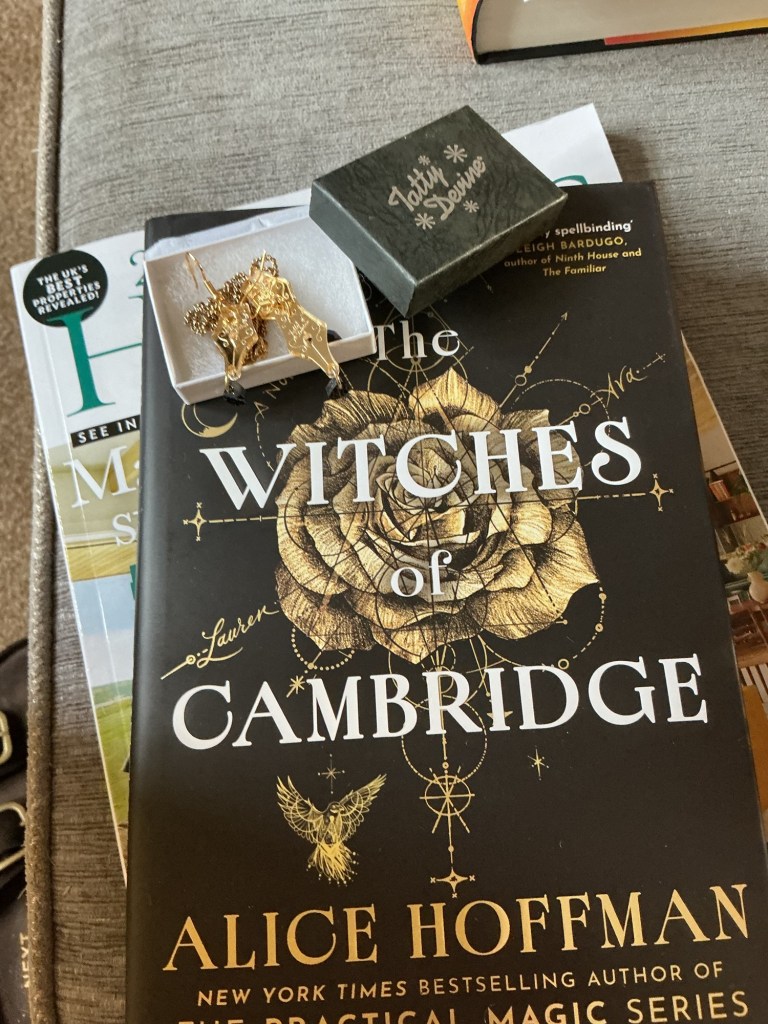
It is Ava who takes us back in time through the diary of the very first witch of Cambridge, another woman battling the Mathers family. This account takes us back to the persecution of witches and a history of ‘lost women’ made up of those who were accused but innocent and those who were skilled in magic, all of whom were drowned, burned or hanged. This history is about men who wanted to control, not just women but the means of treating ailments and illnesses. Their evidence was flimsy and flawed, now it’s clear that what were taken as signs of witchcraft could be explained. Crop failure could have been fungi or rot and ergot poisoning could produce vivid hallucinations in humans who must have thought themselves enchanted in some way. The signs were women who lived alone, supported themselves, had a sixth finger or an animal companion, or wore red boots. When I read that description I realised it was all about control and fear of women who did not need men. Nothing here has changed, except instead of red boots it’s a comedian on a popular Saturday night show complaining that the women at his gym dress like whores. Or an evangelical preacher warning his female congregation about the evils of gossip and groups of them meeting together, because if they meet together they might talk and compare notes on what men are doing. It’s a president of the United States telling a female journalist that she doesn’t smile enough or calling her ‘piggy piggy.” Misogyny runs deep in society and as Hoffman observes “what men don’t understand they seek to destroy”.
In the current context of US book bans, Hoffman uses a magical story to underline those policies that set out to control women, to keep them at home, pregnant and under their husbands. The US government believe this to such an extent that they will seek legal advice to keep a brain dead woman alive on machines as an incubator for a baby that was eventually born with profound disabilities – because unsurprisingly a dead body isn’t the best host for a pregnancy. In her past narrative she explores the Puritan settlers of North- East America, their treatment of the indigenous people who lived on the land and the women accused of witchcraft. In the 1950s narrative she explores McCarthyism and how it sought out traitors and communists, particularly focusing on the entertainment industry and the liberal arts communities. The most famous example is Arthur Miller who wrote The Crucible about the witch hunt of Salem, as an allegory of Senator McCarthy’s committees and blacklists. Other victims were Dorothy Parker, Dashiell Hammett and Dalton Trumbo who won an Academy Award under a pseudonym. There were also investigations dubbed the Lavender Scare that sought out homosexuals employed by the federal government, represented in the novel by Lauren’s brother Lionel and his relationship with a local detective. We’re right now in a phase of black- listing writers and novels that centre on abortion, gun massacres, transgender characters, racism and homosexuality. Similarly there’s a war on DEI, where right wing politicians and governments are actively removing DEI hiring policies in universities and any federal employment. I have often been interviewed due to DEI policy, but all it guarantees is, if you have the right qualifications and experience, you get an interview – providing equality where a candidate might be overlooked because of their race, sexuality or disability. This has been re-packaged by Trump and right wing politicians in this country as not giving the job to the best candidate and awarding it to the token candidate instead. Only this week Channel 4 showed a documentary called The Experiment and it found that if Nazi policies on disability are re-packaged and presented to the public they will accept them, even to the extent of institutionalising all disabled people and stopping their benefits. We often ask how did people stand by and allow the Holocaust to happen, so I think Hoffman is brave to write a book that reminds us this history can repeat itself over and over.
I loved how the first witch warns that this type of persecution has never gone away, particularly against women. She defines real witches as those who try not to be noticed, who stay away from men and align themselves with nature. I also enjoyed her philosophy of life as the chapters of a book, for life to have balance it must have seasons of joy and seasons of sadness. The strength of female friendship is the strongest theme in the book and I loved Ava and Lauren’s friendship, hoping it would endure everything that threatens it, from falling in love, to left-handed magic and serious betrayal. She captures beautifully how women know instinctively when their friend is in trouble and how loyal those bonds are, even after long periods of being apart. I have those friendships that have endured, a couple of them that have even reached the forty year point, way beyond any relationship I’ve had with a man. Even when life takes us in different directions I know that if I called they would be there for me because they’ve seen me through so much. The magical darkness that envelops Lauren is thrilling when read as a magical fantasy, but takes on greater resonance if we think of it as the influence of an abusive older man preying on one of his students. I so wanted Ava to bring her back just as my friends have got me through bereavement, illness and other dark seasons of my life. Magic is strong but female friendship is the strongest magic of all. Hoffman’s writing is as dream-like and beautifully lyrical as ever. From a writing therapy perspective what I loved most that Hoffman acknowledged the power in the act of writing whether it’s a grimoire, a letter or a daily journal.
“Writing is the antidote to sorrow and the first step of magic.”
Meet the Author
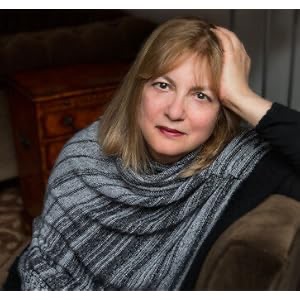
Alice Hoffman was born in New York City on March 16, 1952, and grew up on Long Island. After graduating from high school in 1969, she attended Adelphi University, from which she received a BA, and then received a Mirrellees Fellowship to the Stanford University Creative Writing Center, which she attended in 1973 and 74, receiving an MA in creative writing. She holds an MA from the Harvard Divinity School and is currently a fellow at the Harvard Divinity School. She lives outside of Boston.
Hoffman’s first novel, Property Of, was written at the age of twenty-one, while she was studying at Stanford, and published shortly thereafter by Farrar Straus and Giroux. She credits her mentor, professor and writer Albert J. Guerard, and his wife, the writer Maclin Bocock Guerard, for helping her to publish her first short story in the magazine Fiction. Editor Ted Solotaroff then contacted her to ask if she had a novel, at which point she quickly began to write what was to become Property Of, a section of which was published in Mr. Solotaroff’s magazine, American Review.
Since that remarkable beginning, Alice Hoffman has become one of the most distinguished novelists. She has published over thirty novels, three books of short fiction, and eight books for children and young adults. Her novel, Here on Earth, an Oprah’s Book Club choice, was a modern reworking of some of the themes of Emily Bronte’s masterpiece Wuthering Heights. Practical Magic was made into a Warner Brothers film starring Sandra Bullock and Nicole Kidman. Her novel, At Risk, which concerns a family dealing with AIDS, can be found on the reading lists of many universities, colleges and secondary schools. Hoffman’s advance from Local Girls, a collection of inter-related fictions about love and loss on Long Island, was donated to help create the Hoffman Breast Center at Mt. Auburn Hospital in Cambridge, MA. Hoffman has written a number of novels for young adults, including Aquamarine, Green Angel, and Green Witch. In 2007 Little Brown published the teen novel Incantation, a story about hidden Jews during the Spanish Inquisition, which Publishers Weekly chose as one of the best books of the year.
Hoffman’s work has been published in more than twenty translations and more than one hundred foreign editions. Her novels have received mention as notable books of the year by The New York Times, Entertainment Weekly, The Los Angeles Times, Library Journal, and People Magazine. She has also worked as a screenwriter and is the author of the original screenplay “Independence Day,” a film starring Kathleen Quinlan and Diane Wiest. Her teen novel Aquamarine was made into a film starring Emma Roberts. Her short fiction and non-fiction have appeared in The New York Times, The Boston Globe Magazine, Kenyon Review, The Los Angeles Times, Architectural Digest, Harvard Review, Ploughshares and other magazines.
Toni Morrison calls The Dovekeepers “… a major contribution to twenty-first century literature.” The story of the survivors of Masada is considered by many to be Hoffman’s masterpiece. The New York Times bestselling novel was adapted for television in a 2015 miniseries starring Rachel Brosnahan and Cote de Pablo.
Her most recent novels have received many accolades and are New York Times bestsellers. They include The Museum of Extraordinary Things, The Marriage of Opposites, Faithful, The Invisible Hour, and When We Flew Away. Her novel, The Rules of Magic, is the prequel to her cult-classic Practical Magic. It was selected as a LibraryReads and Indie Next List Pick for October 2017, and was one of the Most Anticipated Books on iTunes. Reese Witherspoon picked it as her October 2017 Book Club read, remarking that the “story is full of magic, love, family, heartbreak and redemption.” Set in New York City at the cusp of the sixties, The Rules of Magic is a timeless story that reminds us that the only remedy for being human is to be true to yourself. The World That We Knew, published in 2019, is an exploration of humanity set in France during the Holocaust. Magic Lessons, book three in the Practical Magic series, was published in October 2020, and received praise from The New York Times, Publishers Weekly, The Boston Globe, and was a Book of the Month Top Pick for October. Book four in the Practical Magic series, The Book of Magic, was released in October 2021 and was selected as a Indie Next Pick and a LibraryReads Hall of Fame Pick.
Giveaway
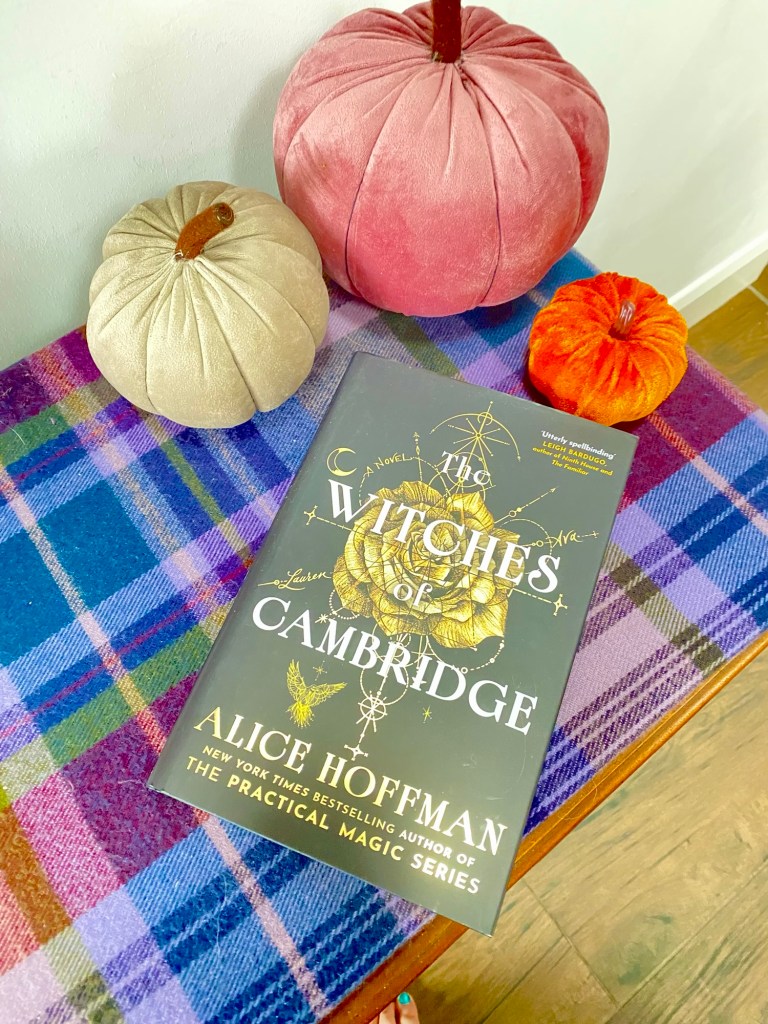
Would you like to win a copy of The Witches of Cambridge? All you need to do is subscribe to the blog before the 31st October, when a number will be picked at random from my subscribers. The winner will be noticed on 1st November.


