Posted in Netgalley

The Jewel Keepers by Sara Sheridan

Men would kill for this treasure.

The McKenzie women will guard it with their lives.

London, 1837. When 25-year-old Araminta McKenzie-Moore is summoned from Richmond to her great aunt’s deathbed in Edinburgh, it’s the first time she’s met her extended family. The McKenzie women, however, have been keeping a close eye on her. For they have a long, secret and dangerous history as Jewel Keepers to the Scottish Crown and they need Araminta to play her part to solve a puzzle which stretches back generations.
But the McKenzies are not alone in this high-stakes treasure hunt though history. They’re being pursued. The last of her line, if Araminta succeeds, she will uncover something more valuable than mere jewels – a secret that will change the lives of all women living on this, the cusp of the Queen Victoria’s rule.

The plot of this novel is extraordinary, taking historical facts and weaving in the story of a long line of McKenzie women who have fought for the Crown Jewels of the Scottish Royal family, most specifically the Stuart queens. The last Stuart queen was Queen Anne, who died without a direct heir in 1714, to be followed by the Hanoverians. If found, the jewels are meant to be kept safe until a ‘worthy Queen’ sits on the throne and they can be returned to her. The book is set just before the reign of Queen Victoria so this is an important time for their quest. Could she possibly be the worthy Queen they’ve been hoping for? Araminta has had no knowledge of the family history or her role in history until she’s summoned to Edinburgh by her aunt Eilidh McKenzie who lives in a beautiful Georgian house. In the course of one evening, Eilidh hints at the quest ahead, explaining Araminta’s ancestors were Jacobites and clearly also early feminists. A family tree shows that McKenzie women kept their own surname even when married, with a diamond marking out those chosen to safeguard the Queen’s Crown, down the maternal line. Unfortunately Aunt Eilidh dies before she can give Araminta any more clues meaning she faces a complicated task, solving the final clues in a strange city. Added to this quest are a shady male organisation called The Hermits, treacherous servants, dangerous missions and a very feisty nun. 
There are great female characters in this story, especially Araminta who blooms as the story progresses, achieving so much more than she thought possible. She grasps this challenge and runs with it, despite not knowing Scotland and meeting with violence, kidnap and false imprisonment – not to mention a very precarious church roof! It’s great to see that transition where she starts to think for herself: 

‘For years she’s been restrained by teachers, by her position, by other people’s expectations. Now, here, perhaps for the first time in her life she’s free to follow her own judgement.” 

It’s not surprising that she finds this freedom in Edinburgh where she’s informed that even the Bishop was a supporter of women becoming more than wives and mothers. Araminta finds that her powers of deduction are sound and starts to trust herself. She recognises this mission as her chance to grow and test out her capabilities, free from the burden of society’s rules. It’s not a surprise when we learn about her ancestors and especially when she meets with a feisty nun called Sister Winifred, a very intelligent woman who carries a ‘muff gun’ and is quite willing to fight. Even when imprisoned, Araminta finds an ingenious way of escaping her cell that even has a police officer surprised! Apparently no one else has ever thought to try it.

Brodie the butler (and so much more) captured my heart as well. He’s so noble and I loved how even with these smaller characters the author gives so much attention to detail. Brodie doesn’t just have a romantic back story, his night visits to a make shift boxing gym also give his character dimension. Our villain of the piece, Harry Thom, is a vile character. Today he’d be a fully paid up member of the manosphere for sure. He’s got issues with women, but particularly Catholics and the McKenzie women specifically. He’s violent, crafty and will stop at nothing to make sure he beats them in their quest. I loathed him and I was turning the pages desperate for him to have some sort of comeuppance. This is a pacy and tense novel with lots of action scenes and some moments of real danger where you’ll be biting your nails. It has great historical detail too and is bolstered by a fascinating afterword. The quest made me think of Queen Victoria in a different light, she may have been a powerful Queen but was she ever a feminist? Would she be the worthy Queen or was she too wrapped up in portraying the Victorian ‘Angel in the House’ ideal? It seems quite a tame way of ruling when we think back to the Tudor Queens or Mary Queen of Scots and possibly still influences the image cultivated by the Royal Family we have today. I thoroughly enjoyed every minute of this story and as Araminta raced towards the treasure with Thom in pursuit, I wondered whether it would be what either of them were expecting? 

Out on 14th May from Hodder and Stoughton

Meet the Author

“History is a treasure chest of stories. I love them.”

Sara Sheridan works in a wide range of media and genres but mostly historical and especially the stories of women. She loves exploring where our culture comes from. In 2018 she remapped Scotland according to women’s history. Tipped in Company and GQ magazines, she was nominated for a Young Achiever Award. She has received a Scottish Library Award and has been shortlisted for the Saltire Book Prize and the Wilbur Smith Prize. Her work was included in the David Hume Institute’s Summer Reading list 2019. She has sat on the committee for the Society of Authors in Scotland (where she lives) and on the board of ’26’ the campaign for the importance of words. She took part in 3 ’26 Treasures’ exhibitions at the V&A, London, The National Museum of Scotland and the Museum of Childhood in Bethnal Green. She occasionally blogs for the Guardian about her writing life, the Huffington Post about her activism as a writer and a feminist and puts her hand up to being a ‘twitter evangelist’. From time to time she appears on radio, and has reported for BBC Radio 4’s From Our Own Correspondent from both Tallin and Sharjah. Sara is a member of the Society of Authors and the Historical Writers Association. A self-confessed ‘word nerd’ her favourite book is ‘Water Music’ by TC Boyle. In 2016 she cofounded feminist perfume brand, REEK: artefacts from the project are now held at the National Museums of Scotland and the Glasgow Women’s Library.

Posted in Publisher Proof

Elizabeth and Marilyn by Julie Owen Moylan

London, October, 1956. A glittering Royal Film Premiere. The whole world is watching . . . 

Tonight, Elizabeth II will formally greet an array of stars. Though she was not born to be Queen, this young mother and wife has embraced her patriotic duty and its unforgiving demands.

A limousine pulls up. Out steps a vision in dazzling gold: Marilyn Monroe. A money-making machine for Hollywood, with curves that drive men wild and a smile that lets women know she’s in on the joke. 

As the two most famous women in the world come face to face, they look to be worlds apart. Yet beneath the glamorous costumes, both are fighting to keep the men they love, while trying to do their work in a man’s world. And they have spent the summer of 1956 battling secret demons the public could never imagine. 

Now, Marilyn steps forward. These photographs will be on the front page of every newspaper in the morning. 

But this isn’t their first meeting. And the story behind the headlines is even more sensational . . .

As soon as I knew that Julie’s next novel was going to feature these two women I was intrigued, because until now the comparison between Hollywood stars and our royal family has been Marilyn and Diana, Princess of Wales. Both were globally famous, incredibly beautiful, hounded by the press and died far too young. This comparison was compounded when Elton John rewrote Candle in the Wind, formerly about Marilyn Monroe, for the late Princess of Wales and played it at her funeral. I was around eight years old when Diana came into public view and I was obsessed for a couple of years with her beautiful dresses and how glamorous it all was, but of course as I grew older her story became more complex and tragic. I think my initial intrigue was due to my age, because to me Queen Elizabeth had always seemed old. This was partly to do with her style I think, but she was in her early fifties (as I am now) when I was taken to the bridge that crosses the River Trent in Keadby, North Lincolnshire to see her car pass by in the silver jubilee year of 1977. I was three and being around for 50 years seemed a million miles away. However, this book focuses on 1956 when the Queen was still a young woman in her twenties and experiencing a very turbulent year. She hadn’t had time to fully settle into her role, she’d had to advise her own sister that she couldn’t marry the man she loved if she wished to remain a princess and her relationship with Prince Phillip had it’s problems. Marilyn was in London to film The Prince and the Showgirl opposite one of our most acclaimed actors, Laurence Olivier. She too was coming into a turbulent phase of her life, after spending some time living in Manhattan and studying the acting ‘method’ theorised by Stanislavski and taught by Strasberg. The idea was to act in a natural way, experiencing what the character is going through, to bring personal emotion and past trauma into the scene, or even stay in character between scenes to keep the intensity in your performance. This was going to prove entirely at odds with Olivier’s way of working. She was also recently married to playwright Arthur Miller, making headlines around the world as the ‘egghead and the hourglass’. The couple came to London in lieu of a honeymoon and were living in a house situated next to the Windsor Castle estate so for a while, the two women were neighbours. The author has taken this background and created a fascinating story about stratospheric levels of fame, how women are treated in the media, and the difficulty of negotiating the line between public and private. 

Each woman has their own narrative and we’re taken inside their deepest fears and emotions. This is incredibly difficult to do with such famous subjects because both women are so iconic and we all have an idea in our heads of what they were like and who they were. I found I couldn’t come to them as new characters straight away, but I did find each woman’s inner voice convincing and engaging. This approach means we get to experience each woman in three different ways: the public face; the private face; and their innermost thoughts. Each has an insecurity about their relationship. Marilyn feels that Arthur does see the real her underneath the persona but fears that he will find the press, the attention from other men and her role as Marilyn Monroe too taxing. Where they would have liked a cute little cottage away from it all to spend their honeymoon alone, they have a huge house with staff and constant requests for photo opportunities. Will Arthur always accept that his wife frequently has to switch Marilyn on? The Queen has had two children with Prince Phillip and now has a very busy public role, while his own is largely undefined. This has left him racketing around town with his Private Secretary Michael, attended a gentleman’s club which has a whiff of scandal about it. The Prince seems very aware of the duality of his wife, but being the Queen means playing that role even within her own family at times. There’s the recent unhappiness with Princess Margaret where Elizabeth the sister wanted to grant her wish to marry Group Captain Pete Townsend, but Elizabeth the Queen couldn’t. Prince Phillip refers to her “Queen Face” and she employs it as a shield so nobody knows what she’s thinking or for when she has to deliver news that family members might dislike. When scandal rears it’s head, the Queen has to think every carefully about how she handles her husband but first and foremost she must protect the crown. Will her relationship suffer because of this? 

Marilyn’s excitement about her new film is tempered by the tone as soon as she arrives to meet Laurence Olivier and his wife, Vivien Leigh. It seems Leigh has played this role on stage and perhaps hoped to be in the film? It’s hard to read how eager Marilyn is to be with these revered British actors who she sees as the real deal. There’s an incident with Dame Sybil Thorndike at the read through that really does reinforce Marilyn’s ability to switch her star power on and off. It’s a defence mechanism to cover her natural shyness, but also a response to her childhood experiences. It’s clear when she’s bullied on set, her response comes from trauma – the muteness, the stammering and getting her lines wrong. Her past experiences are devastating and we can see them playing out in her work and her relationship with Miller, who she calls ‘Pa’ in private. The author poses the dilemma of each woman being much more famous than their husband and worrying about how to negotiate that imbalance. Marilyn is constantly placed in the middle by the press and her commitments to the film, meaning she’s forced to switch Marilyn on even in private events like a party. Can Miller accept this duality and the constant demands on her time while still seeing the real her? If the Queen makes the decision to act in the way her courtiers advise will Phillip forgive her? If only these women could have known what the other was going through – how impossible it is to be a wife, or a sister and also be a global icon. It made me think of the Queen in a new light and I wondered whether she ever thought of her younger experiences when Diana was globally famous. This is a really interesting read, shedding light on a fascinating time and showing how impossible it is to please everyone, something most women find particularly hard. I was moved by something attributed to the Queen: 

“I want to be something constant to people – beaming out a little ray of light that provides a sort of normality. A kind of ‘if she’s still there doing her duty, then all will be well

I think she achieved this because her death felt seismic and I think as a country we’ve been all at sea since she died. While politics were in turmoil the Queen was a constant for every generation since my mum who was born in 1953 and also has pictures of Marilyn in her bedroom. Both women have a legacy but only one got to live out her life in full, both publicly and privately. This is a beautifully judged piece of modern historical fiction, getting underneath the skin of women we feel like we knew well but perhaps didn’t know at all. The book goes beyond the facts and lets us wonder how these women could have had insights into each other’s lives. With all the research and sensitivity I’ve come to expect from this author, she has once again captured the mid-20th Century perfectly while also showing us that our modern preoccupations with image and celebrity are perhaps not as new as we thought.

Out Now from Penguin

Meet the Author

Julie Owen Moylan is the author of three novels: That Green Eyed Girl, 73 Dove Street and Circus of Mirrors.

Her debut novel That Green Eyed Girl was a Waterstones’ Welsh Book of the Month and the official runner up for the prestigious Paul Torday Memorial Prize. It was also shortlisted for Best Debut at the Fingerprint Awards and featured at the Hay Festival as one of its TEN AT TEN debuts.

73 Dove Street was recently named as a Waterstones’ Book of the Year and Daily Mail Historical Fiction Book of the Year with the paperback a Waterstones Welsh Book of the month in 2024.

Her writing and short stories have appeared in a variety of publications including Sunday Express, The Independent, New Welsh Review and Good Housekeeping.

Elizabeth and Marilyn will be released in April 2026.

Posted in Netgalley

The Repentants by Kate Foster 

St Monans, Fife, Scotland 1790. Two women are forced to publicly repent in church, one for adultery the other for breaching the sabbath. Wealthy housewife, Florrie, and salt serf, Eliza, form a quick and unusual bond over their mutual humiliation. So when Florrie’s husband decides she must accompany him on a trade venture to Iceland, she insists Eliza comes as her maid.

Far from home, isolated and fearful, the two women grow ever closer. Then Florrie’s husband reveals his sinister plan: he will leave her in Iceland, banished for the shame she has cast upon him. Florrie must escape, but when she turns to Eliza for help she realizes nothing is quite as it seems . . .

Inspired by an attempt by Scottish merchants to annex Iceland as a remote prison for the British Empire, The Repentants is a chilling tale of betrayal, exile and survival

Florrie feels neglected. She has a lovely home, a husband who has inherited a salt works run by several generations of his family and an inheritance of her own as soon as she turns 21. Her husband Jonny has been struggling the burns he incurred by running into fire at work to make sure the building was clear. Florrie knows there is more to marriage than she and Jonny share even before the injury, particularly in the bedroom where he takes no care for her pleasure at all. This restlessness has drives her to back door of the Mermaid Inn in her most alluring dress. Inside and up the back stairs is a room where an Icelandic sailor is waiting for her. For a blissful moment Florrie is finally experiencing something, when the door is flung open and she is discovered. While there’s no criminal punishment for adultery, religion is important in this Scottish community and the minister at the kirk is keen on shaming his penitents. Florrie becomes one of the repentants, wearing sack cloth and standing in front of the congregation facing her neighbours and everything they think about her. It’s humiliating for her and for her husband, so when Jonny lets her know about his plan to spend some months in Iceland she sees it as an escape. With the Icelandic contacts he was introduced to at his gentleman’s club he plans to set up another salt works. However, instead of the serfs he owns in Scotland, the plan is for a ship full of local convicts to serve their hard labour sentences in the salt works. Florrie is determined to go and requests the company of a salt serf called Eliza who was a repentant on the same day. She asks Eliza to be her lady’s maid, but in truth Eliza has no choice since she was signed up as a serf to Jonny’s family as soon as she was born. Underneath the surface though she has spirit and is fiercely independent. With two restless women and a man determined to indenture others for monetary gain, this trip may bring more than any of them expect. 

The story is told from the perspective of three women: Florrie, Eliza and Hallgerd – a woman who is their neighbour in Iceland. Florrie’s narration comes from her journal and there are letters here and there too. What these women share is their experience of misogyny from men who think they have the right to control women through marriage, religion, slavery or just because they believe they have the right to do whatever they want, when they want. Eliza has largely avoided men back home, she lived alone and her repentance was for missing kirk two Sundays in a row. She doesn’t care much what the congregation think of her, because she’s well aware of the hypocrisy of church people. She can’t really be lower in their estimation anyway. As the story unfolds we realise what she’s been doing to survive and who is willing to exploit that knowledge. She was my favourite character because of her inner strength and determination to survive. At the kirk, when she’s asked if she’s scared of the devil she shows her defiance and understanding of her situation: “the devil does not frighten me minister. but men do”. Once she has a plan, she will never tolerate being manipulated, restricted or punished again. Florrie realises as soon as they reach Iceland that this is not going to be an easy way of life and definitely not the standard she had back home. In her journal she reminisces about that morning at the inn where for a brief time she felt desired: 

“The most vivid memory, the one where I am astride him and we are going at it for the second time, pure bliss, I was right.” 

However, her journal isn’t the safe space she thinks it is, her mother read it when she lived at home, Jonny reads it now and he makes sure that others do too. Florrie remembers that beautiful pink dress too, the one that the dressmaker’s assistant said was “whorish”, and its matching wrapper that got lost at the inn. The third repentant that Sunday was a lady called Auld Beatrice and she was there for being a nag. She recognises something in Florrie and warns her to develop her inner life and skills: 

“I hope you are not too reliant on those looks of yours. A woman needs to be resourceful. Or years from now, when you are my age and miserable at how your looks have slid, you will regret not having any other skills.” 

Between Eliza and Beatrice, Florrie gets the message to shrug off shame and realise that she’s only being treated like this because men like to assert their power over women. Deep down Florrie is furious with herself, she’s angry with Jonny for professing such love for her before their marriage then withdrawing it afterwards, but she’s angrier with herself for believing it. Now their home is a small cottage, the weather is bitter and there’s literally nothing – no shops, church, clubs for entertainment. Reykjavik is a busier place but still has only one two storey house that Jonny’s contacts have commandeered as the headquarters of their operation. It was originally the home of Hallgerd their neighbour. She has so many memories of her childhood in that home and hates seeing it used by a man who wants to show his power by having the best house in town. She is surviving alone, while her husband takes jobs on sailing ships and chooses where he sleeps. I loved the blunt and honest way these women talked to each other, fully aware they are the equal of men but having to find ways around their assumed power. It felt like the women and Iceland had many things in common. After stopping over in Copenhagen which is a bustling port, Iceland is a shock to the system. It feels vast and unknowable, but men still think they can use it, tame it and exploit it for profit. Hallgerd is part of the land, she knows it and the power it holds underneath the surface, she can even feel it in her body when a volcano is ready to erupt. The sailors align women with strange abilities, they are scared to have Eliza and Florrie on their ship and give them a bleeding cure in case their menstrual blood attracts sea serpents. It made my blood boil that it was the men who were terrified of a natural process, but it was the women who had to bear the responsibility for that fear. I was reminded so strongly of the Coventry Patmore poem The Angel in the House: 

“A woman is a foreign land

Of which though there he settle young, 

A man will ne’er quite understand 

The custom, politics and tongue.” 

It also reminded me of a recent conversation on X where a man said ‘ I don’t trust something that bleeds for seven days and doesn’t die’. Men still fear us and policy is being made on the basis of that fear and the urge to control us. I was hoping that all the women, especially Eliza, would see that the men’s suspicion and fear is the female superpower and she could use it to escape and flourish. Kate Foster has become a must-buy author for me over her four novels because her female characters are so layered and there’s a firm feminist stance as she writes these fascinating characters back into history. She doesn’t just concentrate on one class either, giving us both working and wealthy women and the difference that makes to their journey through life. Most of all her stories grab hold of the reader and are absolutely full of atmosphere. I’ve no doubt she has another hit on her hands with this novel. 

Out 28th May from Mantle Books

Posted in Monthly Wrap Up, Uncategorized

Best Reads March 2026

So it turns out that March is the month of mysteries and thrillers, suspense, plot twists and secrets aplenty! These are my favourites from the month and although I haven’t managed full reviews for some of them, these are my favourites. Wishing you all a Happy Easter weekend, hope you get some good reading and relaxation time with some treats. ❤️📚 🐇

St Monans, Fife, Scotland 1790. Two women are forced to publicly repent in church, one for adultery the other for breaching the sabbath. Wealthy housewife, Florrie, and salt serf, Eliza, form a quick and unusual bond over their mutual humiliation. So when Florrie’s husband decides she must accompany him on a trade venture to Iceland, she insists Eliza comes as her maid.

Far from home, isolated and fearful, the two women grow ever closer. Then Florrie’s husband reveals his sinister plan: he will leave her in Iceland, banished for the shame she has cast upon him. Florrie must escape, but when she turns to Eliza for help she realizes nothing is quite as it seems . . .

Based on the true story of the British Empire trying to annex Iceland as a penal colony, this books tells us about subjugation and control of women by husbands, serf owners, and ministers. Kate Foster always has strong female characters and Florrie, Eliza and Hallgerd are no exception. This was a historical thriller, full of suspense and with a few plot twists too. It’s about what happens when women reject the shame men and society say they should feel and embrace their transgressions, using them as a stepping stone to true freedom. My full review is coming up soon.

Twelve years ago, Carrie married Johan on a beach in Thailand. But as the sun set on their perfect day, armed men swarmed the island and her husband was taken, never to be seen again.

Carrie is now happily remarried; a mother of two. The past is firmly behind her – until she stumbles across Johan by accident online. He is alive and well.

As the memories of their passionate relationship flood back, Carrie is compelled to find out what happened on that beach, and why Johan never got in contact.

The man who promised her a lifetime of love is now a mystery she must solve. But are the answers worth risking her marriage, her family, and the life she fought so hard to rebuild?

The truth, it turns out, is more shocking than any lie . . .

I read this novel on my weekend away and became absolutely absorbed in the story, a love story that’s also a mystery. It’s heartbreaking, romantic but also sinister and unsettling. Our main character, Carrie Cole, has been a brilliant surgeon but gave up when she had very premature twins and felt the need to be at home with them. She lives with her husband Robin in an old cottage with a holiday let in the old piggery next door that they let through the Roof app. It’s there that she sees Johan again for the first time since his arrest in Thailand. Her urge to see him is part emotional but also a desperate need to know what happened and how he ended up back home in Sweden when he should still be in prison. I loved how the author played with our expectations of who to trust and whether Carrie should think with her heart or head. She’s safe, she’s happily married, she’s a mother about to return to work so we know the right choice to make. Right? Full review coming later in the month.

Famed children’s author Dame Eleanor Kingman has summoned her family and friends to her exquisite manor house on the cliffs. They’re celebrating her birthday – and her latest number one bestseller in her series of books based on a mother fox and her cubs.

But the night before the party, Eleanor receives an email: an email that threatens to expose the lie she’s kept up for over half a century.

Someone knows her secret. Is it her estranged literary agent? Is it her ex-husband, to whom she no longer speaks? Is it the nanny she fired all those years ago, who always did have a knack for storytelling? Or is it one of her three daughters, all of whom have a stake in the publishing empire she has built…

With a TV crew arriving to film a documentary of her life, Eleanor needs to find out who sent the email – and preserve her multimillion-pound career.

But when push comes to shove, and it’s time to tell the truth – will anyone actually believe her?

This was a brilliant thriller from Sarah Vaughan, based around a wealthy and respected children’s author and her birthday party. There’s enough tension in the air already with an event so big, but Eleanor’s three daughters each have secrets, her illustrator has turned up early for a confrontation about her percentage, there’s an odd man hanging around the grounds who approached her grandchildren and dog, plus an old couple who have apparently lost their way from their caravan park into the gardens. Told in the tense two days before the celebrations, we also get flashbacks to key moments in Eleanor’s past that might give us the answers. You’ll absolutely devour this book like I did.

When 18-year-old Christian Shaw is found dead in an Edinburgh park, the city reels – and the shock only deepens when police charge her best friends, Eliza Lawson and Isobel Smyth, with her murder.

As their trial begins and headlines scream for justice, rumours of bullying spiral into something darker: whispers of rituals, obsession, and a teenage pact gone wrong.

But then the girls take the stand – revealing a chilling defence no one saw coming – and the jury must question everything: the motives, the evidence, even their own judgement.

Who’s telling the truth? Who can be trusted?
And what really happened to Christian Shaw?

Let the Witch Trial begin . . .

Harriet Tyce’s brain works differently to other people’s! We follow the trial of two teenage girls through the eyes of a juror called Matthew who is a surgeon. He’s everything a good juror should be – reliable, intelligent, rational, objective, pillar of the community – but he seems strangely excited about this trial, having been told several times he could have been excused because of his job. As the trial moves on he seems to deteriorate: he stops wearing a shirt and tie, has a rash that spreads and irritates him, starts to drink and eat junk food. The story of witchcraft and teenage girls is intriguing, but does it constitute murder? Who is the blonde woman that catches Matthew’s eye and seems to follow him to the flat? There are so many layers to this story that your mind will be blown in the final chapters!

Ten years ago, Hope left Somerset with a fatal secret and a broken heart. She has spent a decade in the shadows, living a quiet life of penance to protect the man she once loved – the world-famous author Ambrose Glencourt.

YOUR LIFE IS NOT YOUR OWN.

Then, she opens his latest bestseller. To the world, it’s a brilliant work of fiction. To Hope, it’s a betrayal. Every private moment, every dark truth, and every ‘fatal disaster’ from that summer is laid bare on the page.

YOUR TRUTH IS A LIE.

But Ambrose has changed the ending. In his version of the story, Hope isn’t the victim. She’s the villain.

Now, Hope must step out of the shadows to reclaim her narrative. But in a world of glamorous elites and whispered secrets, who will believe the word of an unreliable woman against the word of a literary icon?

Two narrators. One truth. And a secret worth killing for.

This novel is another triumph for this incredible writer, with so many layers and very timely themes around rich white men and their assumption of their own genius and their right to exploit those around them. Hope is a compelling character whose one summer with Ambrose and his wife Delia sets her life on a different course. To find the events of that summer in a book, prompts her to go to the police and tell her story to detective Nat. Is this the ramblings of a mad, middle aged woman or is something very wrong at Shadowlands, the Glencourt’s mansion. Hall beautifully shows us young love and how a girl who loves books can be manipulated by someone who believes young, naive lower class girls who worship writers are theirs for the taking. I love how Hall weaves in the concept of playing with reality, how we construct stories and who has the right to tell them.

There’s something out there in the darkness.
By morning, bones lie in the snow, picked clean.

Zach knows the moods of the mountains – his mother taught him before she was gone. His father and the other men on the ski weekend think they know better though.

Drinking and boasting, they laugh in the face of the icy conditions.

But Zach understands what danger looks like. Can he survive the wilderness, and all the monsters within it?

This is a stunning new novel from Tracy Sierra, whose debut novel NightWatching was one of my favourite books of 2024. This is just as good as that thrilling debut, if not better. Set in one weekend in the mountains, this is no ordinary trip or boy’s own adventure. Everyone who is coming is there to be impressed by Zach’s dad and his latest business venture. Everything has to go right. Everything is told through Zach’s eyes and we can see him slowly lose his innocence as he notices that his dad doesn’t have half the knowledge about the outdoors that his mother had, everyone else can see that all his gear is new, flash and not what a regular skier or hiker would use. Zach can also see they dislike him. Russ is the only other kid on the trip and he knows that these men are going to lead them into danger, simply because they’re selfish and full of bravado. They must get to do exactly what they want and damn the consequences. Tracy Sierra gets inside this little boy’s mind perfectly and I was desperate for him to survive, but with a strange monster on the prowl outside and the terrible weather it’s hard to know what he can do to escape. Unless the real danger is on the inside. This author shows shades of Stephen King and The Shining in this brilliant story, bristling with menace and childhood fears.

Here are a few of next months reads:

Posted in Blogger Life

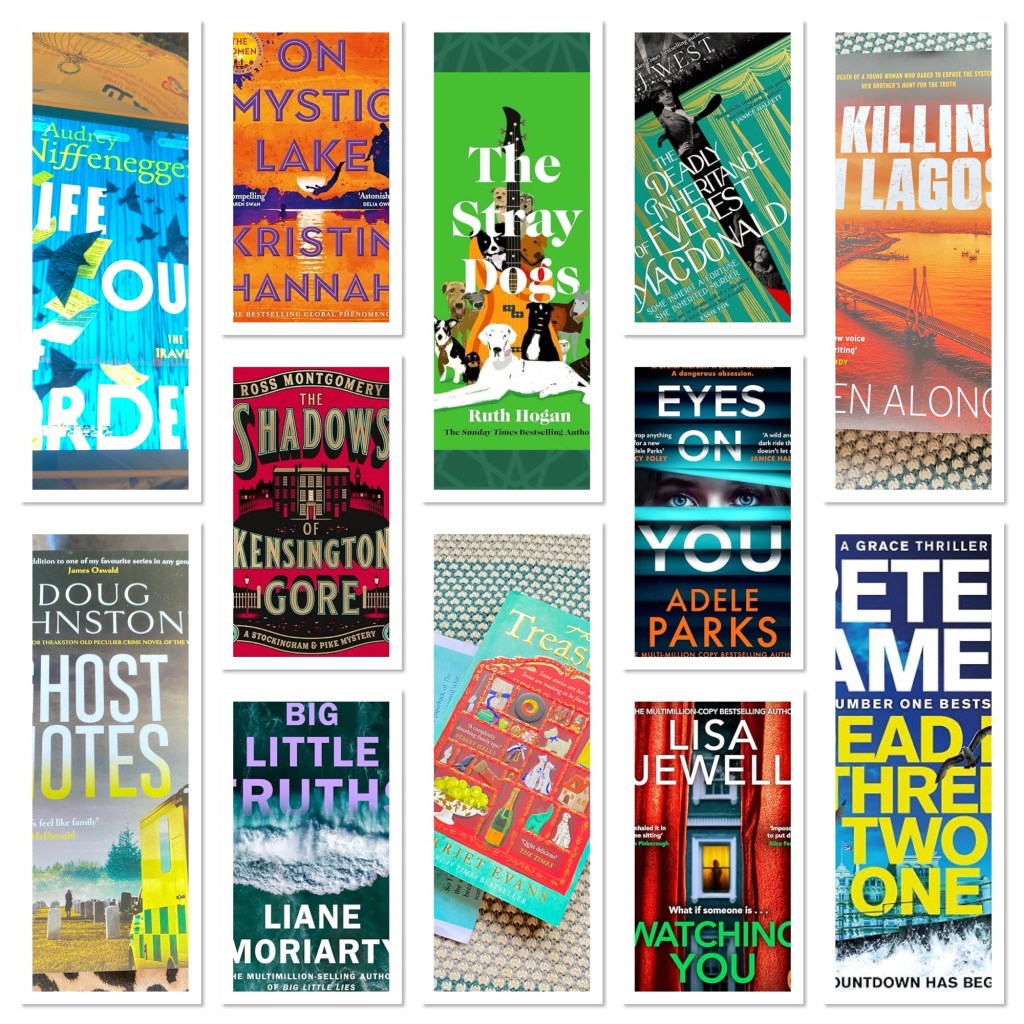
The Last Ten Books I Bought

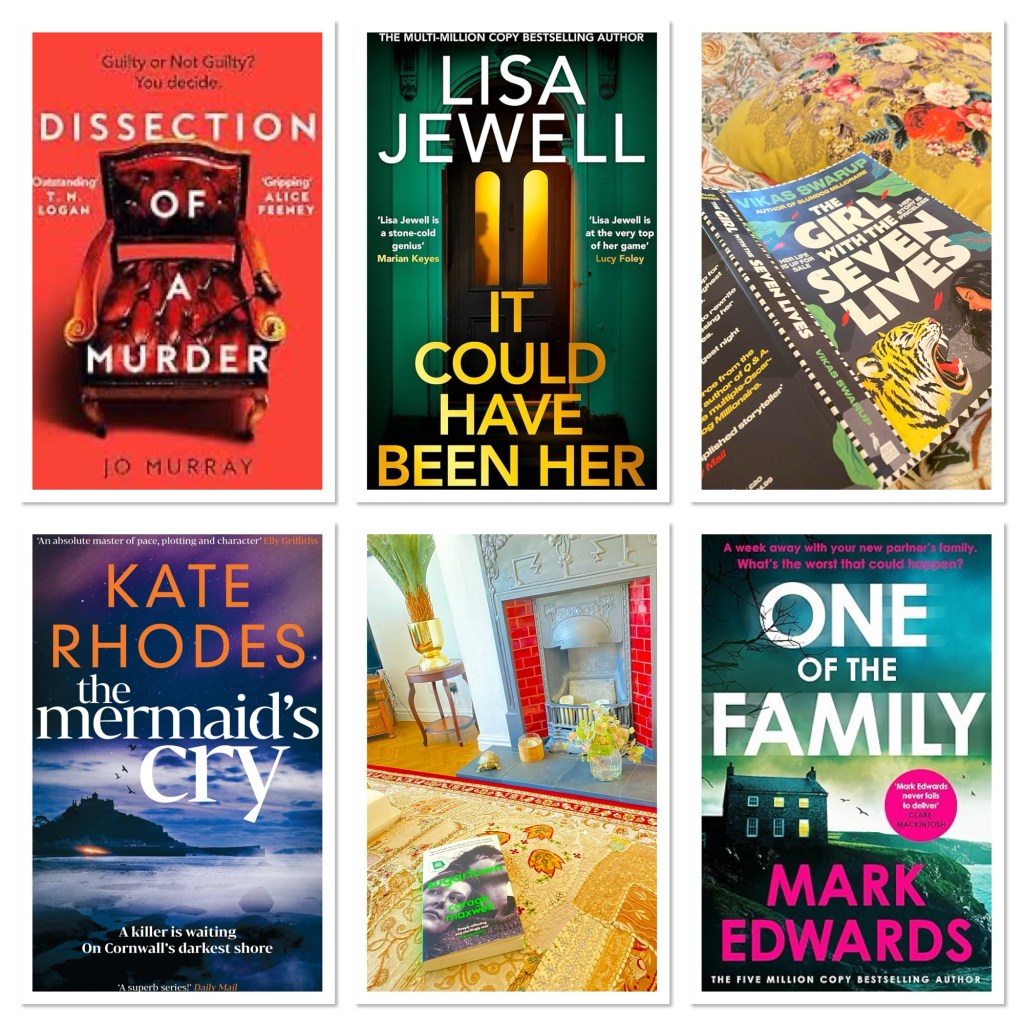
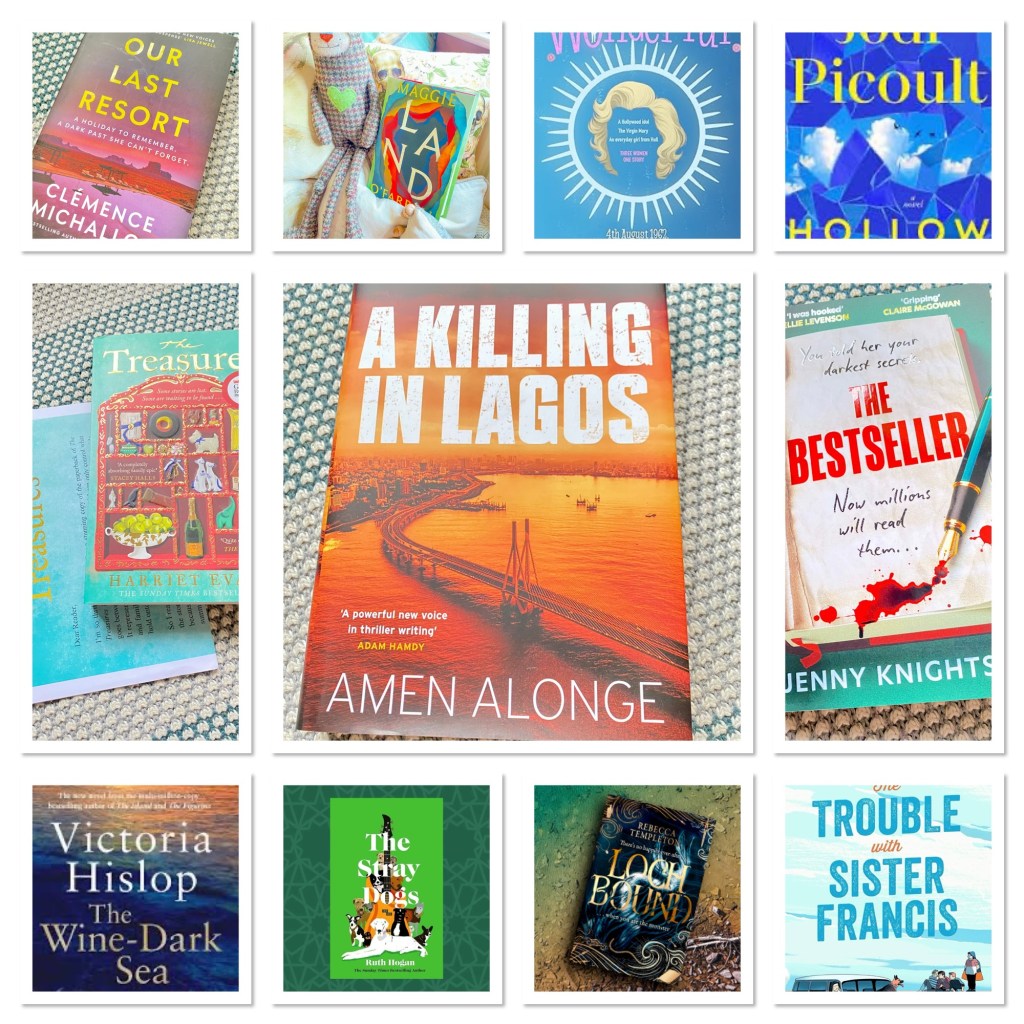
I thought that today I’d share with you the last ten books I’ve bought. Sometimes people think that because I review books on my blog, I get given every book I review but that’s far from the case. I still buy an enormous amount of books every month. It’s my main indulgence, aside from Doc Marten boots and a weird fascination with animals in clothes (probably best left unexplored but I’m sure it has to do with Mr Tumnus). I’d do get proof copies but they are becoming more scarce these days so mainly they come from the reviewing I do through the Squad Pod Collective – a group of blogger friends who have come together to share the book love – or through blog tours. More often it’s digital copies that are available, either offered by the publisher or through NetGalley. There are many reasons I might buy a book, as discussed last week there are come authors who are must-buy and are usually pre-ordered for a discount. Another reason might be that I’ve loved a book on Netgalley or digital proof and I’d like a finished copy. Then there’s the bookshop purchases where I have a terrible love of spredges and beautiful book cover art as well as the story itself. Finally comes those I buy second-hand in charity shops, second hand bookshops like Barter Books in Alnwick or Vinted, which is a great hunting ground for special editions. I also collect various copies of old classics or my favourites – I have about six different copies of The Night Circus for example. Currently on my radar is the Folio Society copy of The Colour Purple which is stunning but will take up a whole month’s book budget! Here are my latest buys:

I love Will Dean’s Tuva Moodysson series and pre-order those always, but his stand-alone novels I tend to buy on Kindle. This has all the hallmarks of a heart-stopping thriller.

Three of them adrift on the narrowboat.
Mother, son, and wickedness.

Peggy Jenkins and her teenage son, Samson, live on a remote stretch of canal in the Midlands. She is a writer and he is a schoolboy. Together, they battle against the hardness and manipulation of the man they live with. To the outside world he is a husband and father. To them, he is a captor.

Their lives are tightly controlled; if any perceived threat appears, their mooring is moved further down the canal, further away from civilisation. Until the day when the power suddenly shifts, and nothing can be the same again.

I left the parking ticket bookmark in this one, because I bought this from my local bookshop on Saturday and then my other half went to Screwfix so I read five chapters in the car out of boredom. I wanted to read this before I watched the BBC series and as usual I’ve left it to the last minute. I recently thoroughly enjoyed Rachel Pariss’s novel about Charlotte Lucas and I’d forgotten how lovely it is to be in Austen’s worlds so I thought this would be light relief, both from other reading and the news.

In Jane Austen’s Pride and Prejudice, we know the fates of the five Bennet girls. But while her sisters are celebrated for their beauty or their wit, Mary is the “plain” middle sister, the introvert in a family of extroverts, and a constant disappointment to her mother.

Lonely and lacking connection, Mary turns to the only place she feels safe: her books. Determined to be “right” since she can never be “beautiful,” she prepares for a life of solitude at Longbourn.

One by one, the other sisters move on: Jane and Lizzy for love, and Lydia for respectability. Mary is destined to remain single, at least until her father dies and the house is bequeathed to the reviled Mr Collins.

But when that fateful day finally arrives, the life Mary expected is turned upside down. In the face of uncertainty, she slowly discovers that there is hope for the “plain” sister after all. . .

Experience the witty, life-affirming tale of a young woman finally finding her place in the world.

This book falls into the special edition category as it’s one I might normally have bought on Kindle, but couldn’t resist this beautiful signed edition complete with stunning spredges and endpapers.

It’s the summer of 1939. London is on the brink of catastrophic war. Iris Hawkins, an ambitious young woman in the stuffy world of City finance, has a chance encounter with Geoff, a technical whizz at the BBC’s nascent television unit.

What was supposed to be one night of abandon draws her instead into an adventure of otherworldly pursuit – into a reality where time bends, spirits can be summoned, and history hangs by a thread. Soon there are Nazi planes overhead. But Iris has more to contend with than the terrors of the Blitz. Over the rooftops of burning London, in the twisted passages between past and present, a fascist fanatic is travelling with a gun in her hand.

And only Iris can stop her from altering the course of history forever.

Just look at those beautiful spredges. I’m itching to dive into this but need to get my blog tour reading done first.

As you can see another ‘nostalgic’ purchase. Wuthering Heights is one of my favourite books of all time, despite the problematic middle bit where too many people die at once, so when I bought Essie Fox’s beautiful retelling through Catherine Earnshaw’s eyes I couldn’t resist this new edition of Wuthering Heights. The spredges are to die for!

With a nature as wild as the moors she loves to roam, Catherine Earnshaw grows up alongside Heathcliff, a foundling her father rescued from the streets of Liverpool. Their fierce, untamed bond deepens as they grow – until Mr Earnshaw’s death leaves Hindley, Catherine’s brutal brother, in control and Heathcliff reduced to servitude.

Desperate to protect him, Catherine turns to Edgar Linton, the handsome heir to Thrushcross Grange. She believes his wealth might free Heathcliff from cruelty – but her choice is fatally misunderstood, and their lives spiral into a storm of passion, jealousy and revenge.

Now, eighteen years later, Catherine rises from her grave to tell her story – and seek redemption.

Essie Fox’s Catherine reimagines Wuthering Heights with beauty and intensity – a haunting, atmospheric retelling that brings new life to a timeless classic and lays bare the dark heart of an immortal love.

As you will know I’ve been raving about this one after reading it last month and yes I do have a proof copy but I do like to support independent publishers, authors and bookshops so I went to Lindum Books for her signing a few weeks ago. Sadly, by the time I arrived they’d run out of copies so they were waiting for new stock and Rachel kindly supplied a signed bookplate for it.

Lincolnshire, 1914. As the First World War approaches, three women are living, trapped between the unforgiving marsh, the wide, relentless river, and the isolation of the fen.

Their lives are held fast by profound grief, haunted by the spectres of the past. Trapped by the looming presence and eerie stillness of a hospital that has never admitted a single patient.  

Eleanor longs to escape. To make a life with the man she loves, leaving her sister, and all her ghosts behind. Clara’s marriage is crumbling and violent and she yearns for peace and security for both herself and her innocent children. Meanwhile, Lily, a formidable force of will, stands resolute against the relentless tide of change. She will stop at nothing, no matter the devastating cost, to ensure that life, and her family, remain frozen in an unyielding embrace of the past.

The author, Rachel Canwell, grew up with the story of this forgotten hospital. Isolated, stocked weekly and cleaned daily but never admitting a single patient. The hospital was real, tended by her family for over sixty years and set against the ethereal beauty and loneliness of the Fens, is the inspiration for her novel.

This beauty is the independent bookshop copy of Almost Life that came from Lindum Books. I always love the artwork from Kiran’s books and this is a stunner.

One chance encounter can define a lifetime

Erica and Laure meet on the steps of the Sacré-Cœur in Paris, 1978. Erica is a student, relishing her first summer abroad before beginning university at home in England. Laure is studying for her Ph.D. at the Sorbonne, drinking and smoking far too much, and sleeping with a married woman.

The moment the two women meet the spark is undeniable. But their encounter turns into far more than a summer of love. It is the beginning of a relationship that will define their lives and every decision they have yet to make. Spanning cities, decades and heartbreaks, fate brings them within touching distance again and again.

But will they be brave enough to seize the life they truly want?

My next purchases are two for the Kindle and after recently reading and reviewing her third Cal Hooper novel The Keeper, I decided I need to catch up on the first two in the series. I’d previously read her Dublin Murders series so I know I enjoy her writing and I read The Keeper through Netgalley so these are a treat for when I have a gap ?!

The Searcher covers Cal Hooper’s move to Ireland and the fixer-upper he’s bought in a remote Irish village, thinking it would be the perfect escape. After twenty-five years in the Chicago police force, and a bruising divorce, he just wants to build a new life in a pretty spot with a good pub where nothing much happens.

But then a local kid comes looking for his help. His brother has gone missing, and no one, least of all the police, seems to care. Cal wants nothing to do with any kind of investigation, but somehow he can’t make himself walk away.

Soon Cal will discover that even in the most idyllic small town, secrets lie hidden, people aren’t always what they seem, and trouble can come calling at his door.

The Hunter takes us back to Ardnakelty and blazing summer, when two men arrive in the village they’re coming for gold. What they bring is trouble.

Two years have passed since retired Police Detective Cal Hooper moved from Chicago to the West of Ireland looking for peace. He’s found it, more or less – in his relationship with local woman Lena, and the bond he’s formed with half-wild teenager Trey. So when two men turn up with a money-making scheme to find gold in the townland, Cal gets ready to do whatever it takes to protect Trey. Because one of the men is no stranger: he’s Trey’s father.

But Trey doesn’t want protecting. What she wants is revenge.

My final book came from the indie Northodox Press and features a place I know very well indeed. The Adelphi Hotel in Liverpool is a famous landmark I’ve known all my life, with my mum being a Liverpool girl. A former grand hotel, designed to look like the interior of an ocean liner it still has spectacular bones although its more recent furnishing choices in the original tea room have made it look more like a nursing home. Every time I go past it we say someone could make a lot of money doing that place up, it could be gorgeous. I live in hope, but currently she’s a strange mishmash of styles from art deco to faux leather BarcaLoungers. It’s a great cheap place to stay in Liverpool and my dad particularly enjoyed the prostitute’s card that was slipped under his door in the middle of the night!

Where better to work than the famous Adelphi Hotel?

Alistair Monroe is keen to make his way in Nineteenth Century Liverpool. The Adelphi is a landmark known for its grandeur, drawing many visitors, including Clemency Martin, an American psychic.

She too needs to make her way. But Alistair discovers that power and darkness lie at the heart of the hotel, and he must finally take risks to bring the truth to light. Step into the atmospheric world of the Adelphi…

So that’s all my recent purchases and buying secrets, but I’m sure there’ll be more next month, if I can resist The Folio Society that is.

Posted in Netgalley

Getting Away by Kate Sawyer

Margaret Smith is at the beach.

It is a summer day unlike any other Margaret has ever known.

The Smith family have left the town where they live and work and go to school and come to a place where the sky is blue, the sand is white, and the sound of the sea surrounds them. An ordinary family discovering the joy of getting away for the first time.

Over the course of the coming decades, they will be transformed through their holiday experiences, each new destination a backdrop as the family grows and changes, love stories begin and end — and secrets are revealed.

Getting Away takes us into the lives and the secrets of four generations of the Smith family, through their holidays. From an east coast beach in the UK just after the war to the early 21st Century, Maggie is central to this, moving from childhood to old age. Through each character in the novel, the author creates snapshots of the century from Maggie’s father Jim and his war injuries to an renewed openness about individual sexuality and her brother Tommy having to police the first Pride in London. He’s worried about the lads at work and their response, he’s not keen either but change is the only constant. We can also see the huge changes in social mobility across the generations. We start with Jim and Betty and their daughter Maggie just affording a day at the beach with a picnic brought from home. Later, Maggie’s brother Tommy and his wife Debbie buy an apartment in Spain and then her granddaughter Melissa is the first in the family to go ‘travelling’ as a young woman as opposed to having a holiday. The shifts are seismic when seen together like this and it made me realise that my own grandchildren will look at me and my husband and realise we were born in the last century. Just like I did with my grandma who was born in 1913, they’ll probably imagine all the changes we’ve seen in that time. That’s what reading this felt like, as morals, finances and our ability to connect with others changes beyond recognition. When Robert takes a holiday with his friend Fitz while Susan is pregnant, they have to send a telegram to one of his destinations to get him to come home urgently. By the next generation, Melissa is island hopping around Asia and keeps them all updated via Instagram and her blog. What is amazing about Kate Sawyer is this doesn’t feel contrived and all these things in the background are just that, because the real drama is happening within this family and the secrets each generation keeps from the next. 

Maggie is at the centre though and hers is the most carefully guarded secret. I loved how she and her mother Betty slowly grew to understand each other, but also how one secret breeds another. Her husband Alec knows Maggie is vulnerable when he meets her on a break with her friends, but he’s looking for a wife who won’t make demands and will be happy to travel around the world for his job buying fabric. He is a protector and he remains that way throughout her life, although things do change within their marriage. Maggie has panic attacks near the sea, although her friends don’t know why. We know something happened on a day by the sea when the Americans from Jim’s work travelled with them, but she keeps the secret for decades. However, she isn’t the only one with a huge secret. Maggie’s brothers couldn’t be more different. Tommy comes across as very brash and often drunk, very proud of how well he’s doing at work and happy to splash the cash around. Robert is the baby of the three and a lot more sensitive than his brother. I rooted for him and his girlfriend Susan who he’s desperately in love with. As secrets start to come out their relationship suffers, but I was sure they’d never stopped loving each other. Their children are the final generation we get to know, but it felt like Robert was impacted most by decisions made about his life, even though it was a common choice in that situation. I love how this author writes about her character’s inner lives, she even makes me root for people when their behaviour isn’t great. Once I’m a few chapters in these are real people and I’m feeling every one of their emotions. 

Having once had a spectacularly bad holiday with my lovely family I was amazed that they all persevered over years. There are all those little details about each character and how they irritate each other. When they undertake a trip to Florence with Maggie, Betty is exhausted and the others are bored. Maggie likes to stride about the city while her husband Alec is working, sight-seeing and learning about art, architecture and the local food. With all good intentions she wants to make sure those she loves get the most out of being here, but everyone else wants some shade and a cold drink. Tommy is more of a drink by the pool and English food sort of person, it’s clear he has a drinking problem and it doesn’t help his temper. Bringing us into the 21st Century, I loved how Joe and his husband Piotr’s daughter Maja has travelled all over the world when she’s only a toddler. This family have gone from greenhouse tomatoes by the North Sea to being more like the Americans who visited Jim and Betty and scoffed at how backward the British seemed. They also go through every complicated situation a family can, with secrets, affairs, divorce, violence and the addition of those who become ‘found family” like Robert’s lifelong friend Fitz and his daughter. I loved that their friendship survived huge upheaval and betrayal, and that it happened on a holiday pilgrimage. I particularly enjoyed Maggie’s solo holiday after her divorce and her sexual adventure, beautifully written and much needed in order to heal from the past and claim her future as a desirable woman. Maggie’s favourite book is A Room With a View so she felt like a kindred spirit and the passion in that book obviously appealed to this woman who had to reach middle-age before desire was a priority. I loved that this family kept its in-laws close, even after divorce and we can see that as everyone comes together for Joe’s wedding. I became utterly absorbed by this family, so much so I felt like I’d seen one of them as a client. It emphasises the secret complexity of everyday lives and made we think about the fascinating narratives in both sides of my own families. The ending felt like the best one we can ever hope for, which is a family taking time and trying to heal together. 

Out now from Zaffre Books

Meet the Author

Kate was born in Bury St Edmunds, Suffolk, UK where she grew up in the countryside as the eldest of four siblings, after briefly living with her parents in Qatar and the Netherlands.

Kate Sawyer worked as an actor and producer before turning her hand to fiction. She has previously written for theatre and short-film.

Having lived in South London for the best part of two decades with brief stints in the Australia and the USA she recently returned to East Anglia to have her first child as a solo mother by choice.

Posted in Monthly Wrap Up

Best Reads February 2026

Hello all. Welcome to my February favourite reads. It’s been a busy reading month and thankfully I’ve been feeling less foggy and able to read a lot more. I’ve also found more balance in my reading so I’ve been able to read by choice a lot more too. These are the best ones I’ve read this month, a couple still have full reviews outstanding but I’ll tell you a little bit about why I enjoyed them so much.

This beautiful Pride and Prejudice inspired book is an absolute dream to read and felt like being back with old friends. I had always felt that Elizabeth Bennett underestimated her friend Charlotte Lucas and clearly she was a character whose possibilities played on author and comedian Rachel Parris’s mind too. Taken from the point Lizzie rejects Mr Collins’s proposal, the book takes in events from the rest of Austen’s romance and carries on beyond giving us glimpses into events we don’t get to see, such as the Darcy wedding at Pemberley. It’s told from Charlotte’s perspective but with letters from other characters and glimpses into Mr Collins’s past. These give us an insight into his manner and behaviour, while the letters give us a new slant on other characters too. I felt that Charlotte was pragmatic in her choice of husband and found ways to grow within it – sometimes in spite of Mr Collins and other times because of him, rather surprisingly. She has purpose, status and time to educate herself. Even Mr Collins has to admit she has blossomed, but when a spark is lit with a visitor to Rosings will Charlotte pursue the one thing she doesn’t have – romantic love and passion? I loved this and I’m sure many of you will too. It is pitch perfect, funny, sad and incredibly entertaining.

I have raved about Tracy Whitwell’s series following the adventures of Tanzy, actor and reluctant medium. This is the fifth and final instalment so I wanted to savour it. After her eventful trip to Iceland Tanz is back on home soil and soon makes her way back to her childhood home of Newcastle. Both she and her ‘little mam’ have been experiencing dreams about hangings, in Tanz’s case very alarming ones where she has a bag over her head and a noose round her neck. Her visions are powerful and are accompanied by sudden and torrential storms. Knowing she needs some help here, she asks Sheila to come and join her. They’re soon at the very spot where a travelling witch finder condemned several women to death by hanging. Even more alarming than usual, he seems to be able to see Tanz too, coming at her with his ‘pricker’ – the implement he uses to prod his prisoners to see if they bleed. This is toxic masculinity 17th Century style and Tanz is going to know her new Icelandic guides and all her power to defeat it. There’s the usual eccentric characters, including an Amazon woman dressed ‘like a Valkyrie’ who is also researching local history of witches and a ghostly lady called Mags who is full of mischief when it comes to putting men in their place. This is genuinely scary in parts and is based on historical research of the area. It was great to see Tanz back home again and with a case to solve, a love story to wrap up and a surprise that might determine her future, it’s a great finale to this funny and fierce series.

I’ve been able to catch up on some reading this month and I’ve been dying to get to the latest Kate Sawyer. She is now one of my ‘must buy’ authors and this novel just confirms her status on my shelves. Using the structure of family holidays, this book follows four generations of one family and the secrets they carry. Starting post-war with Betty who is at the seaside with her little girl Margaret and husband Jim, but Margaret doesn’t know the secret romance her mother had with the son of a local factory owner. Jim was a pragmatic choice and he’s a good husband despite the facial injuries and terrible memories he carries. Jim is doing well in his job and a few years later they visit the beach with his American colleagues and a teenage Margaret. There something happens that changes the course of this family. The author takes us through the 20th Century, showing how the changing world shapes the experiences of this family. From a beach on the east coast of England, we see holidays in Cornwall, then abroad as Maggie embraces the opportunities of a her husband’s job as a travelling buyer, and when her brother Tommy invests in and up and coming area of Europe. We see how changes in law and culture make some relationships and break others. The women in this novel are exceptionally well-written and the issues they face from infidelity, domestic violence, infertility and the consequences of a more permissive society opening the door for a more open generation than the one before. Throughout, this is a family that tries its hardest to stay together, even when some members are on the other side of the world. I love complex relationship dynamics so this was an absolute joy to read.

This incredible debut by Rachel Canwell deserves all the praise it’s receiving online. In fact she had a books signing at my local bookshop in Lincoln and had sold out within an hour! Her book is set in the south of Lincolnshire, in the fens and a family who live on the banks of the River Nene at Sutton Bridge. The new swing bridge allows them to visit the village and on the opposite bank a port is being built. Next to their home is a small hospital, readied by their father to serve port workers when everything is finished. One dark and disorienting night the family are woken by a rumbling sound and the splash of things hitting the water, but it’s only in the morning that the full devastation can be seen. The bank has collapsed underneath the new port, the family has lost their occupation and one of its sons, who drowned trying to rescue workers. We meet the three women who tell our story in the 1910s, Eleanor and her sister Lily are the last family members living in the house adjacent to the hospital – still empty and unused. Eleanor has fallen in love with John, the local blacksmith but can’t make plans because of her sister Lily. Lily will not leave the family house, in fact she rarely leaves her bedroom. The loss of her twin brother in the port disaster still affects her daily and she will not allow Eleanor to leave her alone in the house. Eleanor’s best friend Clara is married to their older brother Frank and they live in the village with their children. Clara is married to a bully and she sees one in Lily, who passive aggressively controls her sister. War is looming and as a prisoner of war camp is suggested for the old port site tensions within the community rise. With grief joining domestic violence, manipulation and alcohol issues this family is set for an explosive reckoning. I became so attached to these women and their family’s tragic history that I read it so quickly. I will go back and read it again though. Every element – character, setting, plot – is beautifully done and the historical background took me back to a time when my own grandparents would have been working the land and living next to the River Trent further North in the county. This is an excellent debut that had me absorbed completely. 

This was an unexpectedly great crime novel set around an auction rooms in Glasgow, a venue where criminal elements mix with rich collectors and eccentric dealers. Rilke is pulled into a difficult situation after his friend Les finishes his prison sentence. When one of the Bowery Auctions regulars, the creepy and questionable Manderson, is killed on the premises it’s only 24 hours till their next auction. In fact Manderson has been stabbed in the eye with one of the antique hat pins they had out for the viewing afternoon. An Edwardian amethyst pin would have had to make its way through a huge hat and into a woman’s long, piled up hair, to keep it secure. Now it’s made its way through Manderson’s eye into his brain and it’s going to take a lot of strength to remove it. Knowing the police will be involved and that Bowery’s will be implicated, perhaps it would be better if it wasn’t obvious that he’s been killed with one of their auction lots. Things get worse when a gangster turns up at Bowery Auctions with Rilke’s mate Les in tow. Ray has a way with a razor and he focuses Rilke with a swipe to Les’s face. Rilke must now investigate who killed Manderson in just ten days or Les will pay the consequences. His investigations will take him to an old school where many ex-pupils have reported sexual abuse, to a brothel named after a questionable film and a girl called Chloe who may or may not be controlled by her boyfriend, Dickie Bird. Will he find the answers that will save Les? More to the point, are the answers to be found outside Glasgow or a lot closer to home? Glasgow is a city that doesn’t hide its darker quarters or episodes in its history and we see them here from pubs to brothels and a particularly creepy old school. The author brings in modern concerns around women using Only Fans and other internet sex work to make ends meet. Can it ever be a feminist thing? There are also issues around coercive control and manipulation, but as Rilke learns it’s easy to get the wrong end of the stick. There’s a familiar jaded feeling around these issues and a knowledge that no matter what’s brought to light, some people will always get away with it. This is a gritty thriller with a streak of humour and some fantastic characters. I’m looking forward to the rest of the series.

Finally this month I’m recommending this brilliant thriller from Tana French, the third in a series featuring ex- Chicago cop Cal and his new life in the small Irish village of Ardnakelty. This is such an atmospheric read that manages to feel isolated, but suffocating at the same time. Cal and his fiancée Lena, who was born here, try to keep out of any local gossip or feuding. However, when young teenager Rachel goes missing one night in a storm both Cal and his woodworking protoge Trey go looking for her. She’s found in the river, after setting out to meet her boyfriend Eugene Moynihan at the bridge. She appears to have drowned but Eugene claims not to have made the arrangement to meet in such terrible weather and when the autopsy comes back it reports that Rachel had swallowed anti-freeze. Is this an accident or suicide. Cal and Lena suspect foul play and with Lena being the last person to see Rachel, staying out of this might not be possible. When Cal appears to side with his neighbour Mart against the Moynihan family tensions rise and Tommy Moynihan, family patriarch, starts to show just how much of Ardnakelty he holds in his power. This is a complex mystery, with risky allegiances and terrible consequences. The Irish dialogue is so beautifully written and there are moments of laugh out loud humour to dispel the tension. This was an incredibly good thriller with plenty of twists and a fascinating central character too.

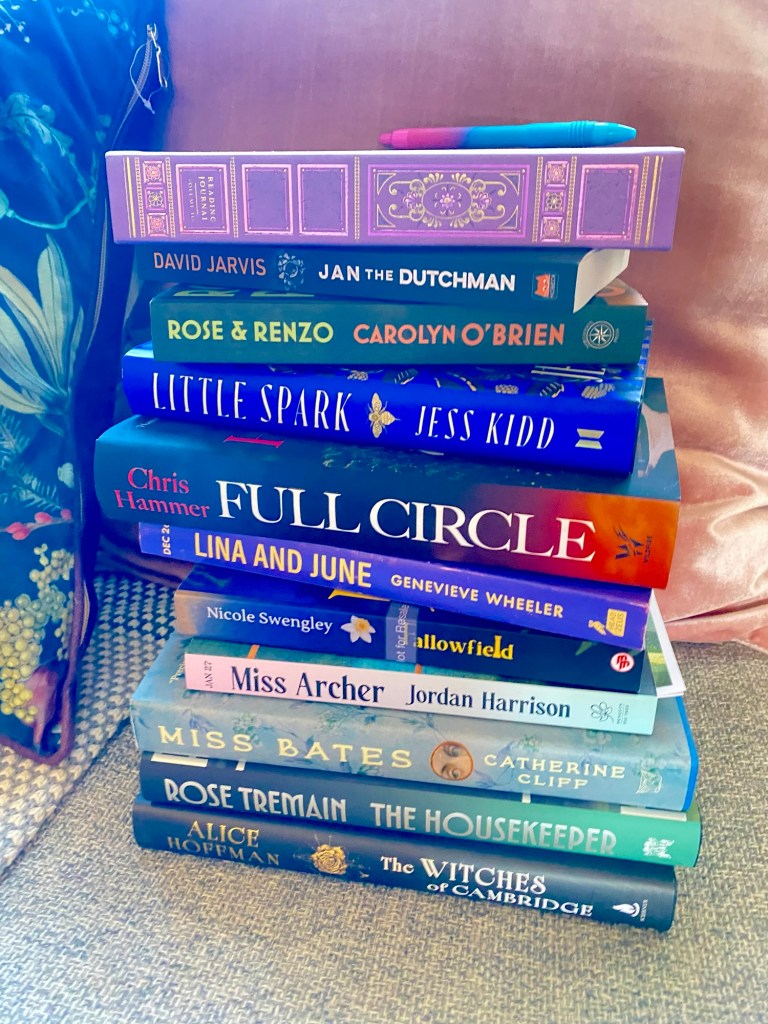
Here’s a selection from my March tbr:

Posted in Netgalley

Introducing Mrs Collins by Rachel Parris

Charlotte Lucas has never been a romantic. Practical to a fault, she accepted Mr Collins’s proposal with clear eyes and a steady heart, trading passion for security. Life at Hunsford Parsonage may be quiet and predictable, but it is hers to manage – and she’s determined to make the best of it, whatever Elizabeth Bennet may think. 

That is, until an unexpected guest at Rosings Park turns Charlotte’s careful world on its head. He sees her, challenges her – and a spark is lit. But true contentment is not only about who you choose to love, but who you choose to be. For the first time, she wonders: has playing by the rules kept her on the sidelines of her own life?

It is a truth, universally acknowledged that a sick woman in bad humour will be revived in the company of a witty novel…

This is the Pride and Prejudice inspired novel I’ve been waiting for and it came at the perfect time, when I’ve been feeling very unwell and was stuck in bed. I read for two days between sleeping and I swear it kept me sane. I always felt that Lizzie Bennett underestimated her friend Charlotte and I wondered what happened to her and Mr Collins in the future. It’s a great reminder that we only see a novel’s events through the gaze of our narrator and central character. The same events, viewed from a different perspective, bring a more balanced and multi-faceted view of what happened in the novel and its characters. The events of Parris’s novel take place during and after Pride and Prejudice, from the point that Lizzie rejects Mr Collins proposal. A decision that pleases her father but sends her mother into conniptions! Lizzie’s choice means that once Mr Bennett dies, Mrs Bennett and all of her daughters are at the mercy of Mr Collins, the male heir. Whoever he chooses to marry will become mistress of the Bennett’s home Longbourne. Charlotte Lucas is our focus, Lizzie’s best friend and now the recipient of Mr Collins’s attentions. The author has added inserts from the past, adding depth and insight to both Charlotte and Mr Collins’s characters as adults. We see events that we have only imagined, like the Darcy’s wedding at Pemberley and its ensuing drama. However we also see Charlotte settle into the everyday of married life, with all its strangeness and frustrations. I left Pride and Prejudice a little worried about Charlotte, even though the way she does talk about life at the parsonage with humour and optimism when Lizzie visits. So this story of her growing relationships, her new home and her dissatisfactions with her new life is so welcome. What she misses most is passion, but if it arose would she be able to resist it? 

Charlotte is viewed with pity by the Bennetts, apart from Mrs Bennett who is wailing that she will be the mistress of their beloved home. I felt like Charlotte knows her prospects are few. She’s witty and fun, but she knows she doesn’t have the charm and looks of Lizzie. She is someone who people get to know slowly and hasn’t reached her full potential yet. Mr Collins was always a pragmatic choice, but here I could also see it as a mature and confident choice. The Bennetts may see Mr Collins as ridiculous and in some ways he is, but Charlotte doesn’t see her worth as solely defined by the man she chooses to marry. He may be thought of as silly, but that doesn’t mean she is. Also, as Mrs Collins she has a beautiful home and garden, a steady income and a benefactor in Lady Catherine de Bourgh. As a married woman she has status and purpose, going out to visit sick parishioners and keeping the home running smoothly. While Mr Collins is busy Charlotte spends her hours in her library continuing to educate herself, she tends her garden and she practises her piano at Rosings. Charlotte is able to be happy and content in her own company, separate from Mr Collins’s anxieties and emotions. In this light we also see Lizzie differently, perhaps even as a little spoiled. As we see in this book, Mr and Mrs Bennett are the architects of their daughter’s misfortunes and their attitudes are clear in two crucial letters they send to the parsonage. Darcy’s assessment of the family, unwisely passed on to Lizzie during his first proposal, is absolutely correct. Mr and Mrs Bennett’s leniency with their younger daughter’s behaviour allows a window for Mr Wickham to connect with the foolish Lydia. It’s their behaviour that prompts both Darcy and Caroline Bingley to warn Mr Bingley away from his attachment to Jane. In letters to both Charlotte and Mrs Collins, the Bennett parents show they are both fierce in the defence of their daughters but spiteful towards the recipients. Mr Bennett calls Lydia unwise, but at least not judgmental – a criticism that Mr Collins perhaps deserves. However, in a letter to Charlotte Mrs Bennett shows awful spite in an unnecessary postscript: 

“I saw your Maria this week at church and she is become such a beauty! What a pleasant girl – always with a smile and a manner that puts one at ease. You would not think you were sisters.” 

However, I did come away with some forgiveness for Mrs Bennett’s view that Lizzie might have thought of her mother and sisters when she refused Mr Collins, because now they would surely lose their home. It’s clear that Mr Bennett has little respect for his wife and for good reason on some occasions. However, he does favour Lizzie and perhaps his treatment of her has led to Lizzie thinking she has better prospects than she does. Luckily fate brings her Darcy but I did understand Charlotte for thinking that luck just seems to fall into her friend’s lap. 

I felt like Charlotte blossomed in her new environment and that sometimes it is because of Mr Collins not despite him. If nothing else he shows kindness and understanding. The vignettes of his childhood show a sad history that goes some way to understanding his character better. However, it is a connection that she never expected that seems to bring out a new side to Charlotte. An unexpected visitor to Rosings Park brings her friendship and an affinity she never expected, not to mention a passionate spark. I loved the point in the novel when Mr Collins has both a revelation about his wife and is genuinely awe inspired by her. As she plays a piece on the piano for a gathering at Rosings, Mr Collins sees his wife anew: 

“This poised assertive woman was a vision, undaunted by entertaining a room of high-born people in a house such as this with the talent he had no idea she possessed […] she was splendid and her splendour shook the foundation of his peace of mind. Whereas another man might have felt only pride in his wife, for Collins, this feeling was mixed with something much more disquieting. She is beyond me: what he felt was I will not be able to keep her.” 

This is a worry born of never being enough for his father, who tried to change him by whatever means necessary. I felt the author didn’t excuse all of his failings, but explained what was behind them. The narrative voice is so incredibly good that this didn’t feel like a stranger telling me about these characters I knew very well. It felt like a continuation; a meeting with old friends. Of course the author does bring some of our modern thinking to the story, otherwise we wouldn’t be hearing about Mr Collins’s childhood – a psychological aspect to character we wouldn’t perhaps expect in a book pre-Freud. I won’t touch on Charlotte’s eventual fate but I will say that Mr Collins definitely has a part in it. Maybe not in the most romantic sense, but sometimes there’s a kind of love in duty and honour. I love Rachel Parris’s humour and there’s plenty of that here, with the tone and the wit feeling positively Austen-esque. I could tell by how well each character was drawn that the author loved her books and wanted to do them justice. I think she has.

Meet the Author

Rachel Parris is a BAFTA-nominated comedian, musician, actor and improvisor, best known for her viral segments on The Mash Report and Late Night Mash, which have garnered over 100 million views. Her TV appearances include Live at the ApolloWould I Lie to You?QI and Mock the Week, and she is a regular guest on Radio 4’s The Now Show and I’m Sorry I Haven’t a Clue. She co-hosts the popular podcast How Was It for You? with her husband Marcus Brigstocke. Rachel also wrote and presented a Jane Austen comedy programme, Austensibly Feminist, about how to view Jane Austen as modern feminists. Rachel is a founding member of the critically acclaimed improv comedy group Austentatious, in which the all-star cast invent a play based on a title suggestion from the audience. As a touring comedian she has performed her award-winning musical comedy to sell-out audiences across the UK.

Posted in Netgalley

The Witch Finder by Tracy Whitwell

This is the fifth and final installment in the hilarious Accidental Medium series featuring Tanz, who with the help of the dead, has become an unwilling crime-solver.

When Tanz returns to her hometown in Newcastle, she comes face-to-face with dark, ancestral secrets lurking in its shadows. Haunted by chilling visions of the witch-trials, a voice from the past warns her, You’re the one. Burn it, chosen one. As a sinister figure threatens to ruin everything she’s built for herself, Tanz must embrace her connection to the dead to uncover her destiny.

With everything on the line, Tanz finds herself entangled in a web of folklore, mystery and imminent danger. Elements collide as the echoes of history demand intervention and new relationships entwine in her mystical journey. Tanz must wield courage against paranormal forces and listen to old and new allies in order to prevent ominous threats from consuming her world.

Will Tanz unravel the mysteries surrounding the witch pricker and her own lineage in time, or will she fall prey to the darkness that stalks her?

I love a good witch story and the Accidental Medium books have been a brilliant series from Tracy Whitwell. So much so that I’m really sad this is the last set of adventures for our titular accidental medium Tanzy. I love the combination of magical and ghostly goings on with our down to earth and sweary Geordie witch. This time the atmosphere is slightly different as we’re delving into the history of witches in Tanz’s home town of Newcastle. After returning from her exciting and romantic exploits in Iceland, she takes a worried call from her ‘little mam’ who has had strange and unsettling dreams about hangings. As usual Tanz tries not to alarm her mam because she isn’t comfortable with the family gift, but Tanz has also had similar dreams of feeling a bag over her head and a noose around her neck. She gets straight into the car and drives home and not a moment too soon since someone has thrown a dead hare over her parent’s garden wall warning them away, but from what? Newcastle is a lovely city and I enjoyed seeing Tanz in her own environment. She soon calls her friend Sheila to join her and tries to find out as much as she can about the city’s history with witches. As a contrast to the friendliness of people and the buzz of a lively city, Tanz starts to notice an atmosphere change heralding one of her visions. She notices storm clouds suddenly gathering and rain lashing down, especially when she’s confronted with the figure of the witchfinder, Matthew Hopkins. More disturbingly, he seems to be able to see Tanzy too and tries to attack her with his ‘pricker’ – the implement he uses to test whether marks on a witch’s skin bleed or not. In one terrifying scene he makes a swipe for the window of a tearoom leaving a scratch down the glass and down Tanzy’s cheek. As they research Hopkins in the library, Tanzy finds out that he identified several witches who were all hanged together on the common. She can hear Hopkins’s hatred of women and there were definite parallels with the current political situation around the Epstein files and Andrew Tate. 

“All of them are witches, these sly cows with their lies and their ‘ways’. Once they’ve bred we should hang ‘em all. More peace for us”. 

Tanzy feels more powerful than ever after her trip and her meeting with the Icelandic magical folk, there’s also the matter of Thor who it’s quite clear she’s fallen in love with. Her visions are so incredibly vivid and they seem to tire her more easily. In fact she collapses on the common at one point and ends up covered in mud. Tanz feels the emotions of the witches who’ve been imprisoned for a long time, broken down by lack of food and unsanitary conditions, not to mention the way they’ve been treated by the male guards. Hopkins was being paid ‘by the witch’ so it’s in his interest to find as many as possible. Tanz and Sheila soon realise that his pricker is false, with a needle that disappears inside the shaft when he uses it, leaving no marks on the woman and branded her a witch. In her usual frank language Tanz brands him ‘ a cunt and a shithouse’ which made me laugh out loud. When she’s not incensed, Tanzy is delightfully warm and open, making friends with a couple who own a small bar near the hotel and an Amazon woman called Lydia who definitely dresses like she enjoys taking up space! She is also connected to the mass hangings and has been researching her family tree and local witches at the library for years. There is also a new ghostly friend, a hooded lady called Mags who is an absolute mischief and brings some comic relief between the most serious scenes. In the bar, Mags terrorises a cocky young man who is manipulating his shy girlfriend by moving his drink and pulling his chair away. She proves very useful and doesn’t leave Tanz’s side until the spiritual warfare is over. 

I did really worry for Tanz this time, especially when Sheila is laid low by a cold and can’t accompany her. Tanz knows she needs to be on her guard, but the plight of these women have left her feeling furious constantly. There will be a final showdown and with this being our last adventure I was on tenterhooks wondering whether Tanzy would come through okay. While I love all the characters in the book she is the magic spell of this series. Her earthiness and Northern wit balance out the more ‘woowoo’ aspects of her life and I wondered if it was time for her to return home? Somehow, despite nothing being resolved between them, Tanz also seems quite settled in her feelings for Thor and the more settled she is the more powerful she seems. As she’s offered a completely unexpected opportunity I really hoped she would take it. I recommend this whole series to anyone who enjoys a touch of the supernatural with a side order of history and realism. I’m going to miss Tanzy hugely but I’m excited for what this author might do next too.

Out now from Pan MacMillan

Meet the Author

Tracy Whitwell was born, brought up and educated in the north-east of England. She wrote plays and short stories

from an early age, then moved to London where she became a busy actress on stage and screen. After having her son, she wound down the acting to concentrate on writing full time. Many projects followed until she finally found the courage to write the first in her Accidental Medium series, a work of fiction based on a whole heap of crazy truth​. Apart from the series, Tracy has written novels in several other genres and also writes mini self-help books as the Sweary Witch.

Tracy is nothing like her lead character Tanz in The Accidental Medium. (This is a lie.)

Posted in Random Things Tours

Fireflies in Winter by Eleanor Shearer 

Nova Scotia 1796. Cora, an orphan newly arrived from Jamaica, has never felt cold like this. In the depths of winter, everyone in her community huddles together in their homes to keep warm. So when she sees a shadow slipping through the trees, Cora thinks her eyes are deceiving her. Until she creeps out into the moonlight and finds the tracks in the snow.

Agnes is in hiding. On the run from her former life, she has learned what it takes to survive alone in the wilderness. But she can afford mistakes. When she first spies the young woman in the woods, she is afraid. Yet Cora is fearless, and their paths are destined to cross.

Deep among the cedars, Cora and Agnes find a fragile place of safety. But when Agnes’s past closes in, they are confronted with the dangerous price of freedom – and of love…

Eleanor Shearer tells stories about fictional people in situations I didn’t even know existed and then makes me root for them so hard that I cry real tears. Cora is our central character and we see everything through her eyes, so it’s no surprise I felt close to her. Cora is so vulnerable and thoughtful. She cares for her unusual ‘family’ – Leah who has brought her up and been a substitute mother and Silas and young Ben who’s still a young boy. It’s makeshift but it’s the only family she has known, ever since Leah found her as a baby. They are ‘maroons’, escaped slaves from Jamaica who settled in Nova Scotia, Canada. Many maroons negotiated peace treaties with the British, but part of that treaty forced them to aid the British in capturing any new runaways. However, Agnes’s freedom is more precarious. She’s out in the forest alone, except for her dog Patience, and it’s a harsh existence with the added fear of discovery. I’m not sure Cora fully understands that her presence and connection to the Maroons settlement adds to that anxiety and doubles her chance of discovery. Cora isn’t hardened to winter in the forest and hasn’t had to hone her survival instincts in the way Agnes has. Something she shows by getting into scrapes in the snow, saved by the ever present Patience. There are different types of freedom in terms of gender and sexuality too. Cora knows that Silas has an expectation that they will be together one day and so far she has avoided this. However, it is there in every confrontation they have; the fear of his resentment and the threat of sexual violence is ever present. Cora doesn’t question her sexuality, she just knows she loves Agnes. Will they have the freedom to be together? 

The environment is an incredibly strong part of this story and here the author excels in creating a Nova Scotia that’s harsh but exceptionally beautiful. I found the time Cora spends in the forest incredibly peaceful to read, the animals, the ice and the frosted trees have a romance, a poetry about them. Yet she doesn’t hide the raw reality of living in it. The girls must trap animals, although Cora frees a white hare unable to kill such a beautiful and mystical creature however hungry they may be. One of my favourite scenes is when Agnes takes Cora out on a boat to visit the whales who appear for them as if by magic. As they sit among these huge creatures one of them lifts their head and looks directly at Agnes and she feels seen for the first time in her life. Not as a woman, or a slave, or a Maroon. Just as Cora, another living being. There are also moments where Mother Nature shows its bite and when Cora falls through the ice I was holding my breath. The suspense of those moments are brilliantly pitched and show us that Agnes’s lifestyle may have magical moments, but it can be lethal. 

I love that Eleanor writes people back into history, we can read the historical facts about settled slaves in Canada but she brings their experiences to life in a way that hits the emotions and helps us to understand. We’re also reminded by Cora that women have choices, sometimes marriage is just another form of slavery. It’s something she’s keen to avoid, even if the offer came from a more loving and kind man like her friend Thursday. She knows herself enough to know it is not for her and she’s not willing to sacrifice herself. Luckily, Thursday is a loyal friend and will help Cora without imposing conditions. When Cora finds out the truth about where she comes from, secrets that have been held for years come flooding out and threaten everything that Cora has known about herself. When Agnes faces a similar reckoning it threatens everything in their future. I was emotional about the little details the author puts into her book such as the braiding of Cora’s hair being the only moment where they’re both present and the ‘love can flow between them unimpeded’. Cora’s loss of her sister also hangs over her and I loved the nature metaphors she uses to express those emotions: 

“Cora cannot stop thinking of her life like a tree, with the branches that split and split again until you reach the highest […] that there’s somewhere, the branches not taken – the world where she stayed with Elsy and Elsy would still be living.” 

However, in everything that happens, one loss hit me the hardest and actually brought me to tears. I loved the still moments created, where Cora learned to be in nature. Where they are both present and entirely in the moment. The fireflies are a symbol for Agnes and Cora, in that they are glowing in the darkest and coldest circumstances. Cora and Agnes have a bond that flourishes where many things don’t survive, they are extraordinary like fireflies in winter. 

Out from Headline Review on 10th February

Meet the Author

Eleanor Shearer is a mixed race writer from the UK. She splits her time between London and Ramsgate on the coast of Kent, so that she never has to go too long without seeing the sea.

As the granddaughter of Caribbean immigrants who came to the UK as part of the Windrush Generation, Eleanor has always been drawn to Caribbean history. Her first novel, RIVER SING ME HOME (Headline, UK & Berkley, USA) is inspired by the true stories of the brave woman who went looking for their stolen children after the abolition of slavery in 1834. The novel draws on her time spent in the Caribbean, visiting family in St Lucia and Barbados. It was also informed by her Master’s degree in Politics, where she focused on how slavery is remembered on the islands today.

Her second novel, FIREFLIES IN WINTER, is a love story set in the snow-covered wilderness of Nova Scotia in the 1790s. When Cora, an orphan newly arrived from Jamaica, glimpses a strange figure in the forest, she is increasingly drawn into the frozen woods. She meets Agnes, who is on the run from her former life. As the two women grow closer, they learn more about love, survival and the price of freedom.