Mrs Danowski – known as Danni – is the housekeeper of a grand mansion on the wild coast of Cornwall. When glamorous young writer Daphne du Maurier visits Manderville Hall to research her new novel, she and Danni are drawn into a clandestine and intoxicating affair.
For Danni, it is an all-consuming love; for Daphne a submission to long-suppressed desires. But their fragile secret is vulnerable to prying eyes and destined for heartbreak. When Daphne’s novel launches to triumphant success, Danni is distraught to find herself transformed into a malign and jealous character on the page. She seeks respite from the hurt by telling her own story: The Housekeeper.
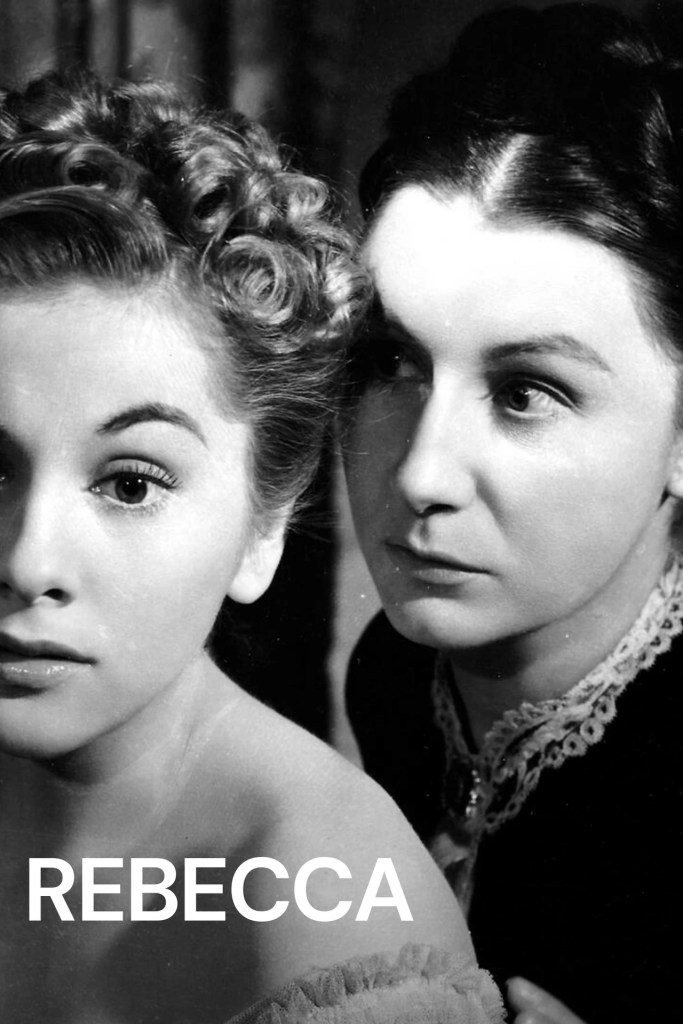
I remember my mum first showing me the 1940 Alfred Hitchcock film adaptation of Rebecca, the novel by Daphne du Maurier and I have loved it ever since. Of course as an adolescent girl I thought this was a romance and missed most of the complex psychology between the characters and their insignificance next to the overwhelming presence of Max de Winter’s dead wife Rebecca. She’s in the diary in the morning room, on the stationery, the bed linen and in the sheer and fragile nightgown still laid out on her bed in the wing overlooking her beloved sea. So significant is her ghost that Max’s new and unprepared young bride doesn’t even have a name. One thing that always stayed with me though was the pale and haunting face of the housekeeper, Mrs Danvers. Beautifully played by Judith Anderson in her severe black dress, she seemingly floats quietly through the house always catching out his new bride who is inept and deeply self-conscious. She doesn’t have the upbringing or self-assurance to assert her own opinions and ideas for how they live at Manderley, simply acquiescing to the status quo and Mrs Danvers lead. We never know whether she means harm or is simply devoted to her dead mistress, a relationship that as I got older took on a different meaning – the display of the sheer nightgown, the way Rebecca told Danni of her sexual exploits and how she talks about touching Rebecca’s hair all have a sapphic undertone I didn’t see when I was young. It remains one of my favourite books and films to this day, so knowing there was a novel inspired by Rebecca was really exciting and this book didn’t disappoint.
Rose Tremain takes everything we know from Rebecca and gives the novel an origin story. At Lord Grenville- Whithers’s house, set on the Cornish coast, we meet Mrs Danowski, the housekeeper of Manderville. Danni, as she is known, worked for Grenville’s wife who recently died. She’s protective of her employer who was so shocked by his wife’s untimely death he suffered a small stroke. Along with the other servants Danni runs a tight ship and still keeps her mistress’s things in her part of the house. Her quiet and regimented world is blown apart when the novelist Daphne du Maurier visits the house. She falls in love with its position on the cliffs near Fowey, where she lives at Ferryside. She tells Lord Grenville that she is struggling to write in their family home always interrupted by the children and the servants. She asks if she can use the small boating shed in the cove for a writing place. He agrees that she can come and go as she pleases and orders Dani to make sure the place is ready for Daphne’s visits. It’s soon clear that there is more to Daphne’s request than meets the eye. An intoxicating pull of desire exists between the two women and as Daphne confides, there are times when the boy inside her needs to come out. As they embark on this passionate and dangerous affair change is in the air. The possibility of war looms and closer to home Grenville- Whithers is thinking about the future and where to bestow Manderville if he should die. He’s considering his niece Adelaide, a loud and careless girl who has no experience running a big house. The servants are feeling restless and start looking at other options for their future. Suddenly the place Danni felt safe and stable is in flux and she’s living life on a dangerous edge again.
I loved how the author incorporated Rebecca into the novel, so that her whole story becomes the reason for its creation. Mrs Danvers becomes the repository of Daphne’s passion and ‘perverted’ nature. She makes Danni into this evil and obsessive woman to excuse her own behaviour. Then there’s Rebecca and the second Mrs de Winter who function as two sides to Daphne’s character: the social butterfly with insatiable passions and the inept and inexperienced mistress of the house.
“What I see in this character is Daphne’s horror of her own nature.’
As well as using the boat house in the cove for her novel, Daphne incorporates the ball thrown by Grenville- Whithers at Manderville as the scene of the young wife’s disastrous choice of costume, encouraged by the housekeeper to drive a wedge between them. This is the unforgettable night where Mrs Danvers takes the young wife into Rebecca’s bedroom and shows her Rebecca’s alluring sheer nightgown and how she would confide her sexual exploits. It’s where I first realised the depths of her obsession with her mistress, she’s almost living vicariously through Rebecca and getting an erotic thrill from her sexual conquests. Rose Tremain uses the ball as a catalyst for change too. It’s the moment where Manderville’s future is decided and where a decision is made about Daphne and Danni’s relationship. Danni has to look at herself in the mirror at times to see whether the woman she sees in the glass is who she expects or if she’s become the woman immortalised in Daphne’s new book. She replays parts of her upbringing in Poland in her mind, the terrible rise of hate against Jewish families like hers and being ostracised at school. Even though the memories are painful she uses them to reaffirm who she is, Mrs Danowski born in Kalinskiego Street now housekeeper of Manderville Hall with the attention to detail and quiet deference the position requires. Overriding the memories of Daphne and her naked in the boathouse giving in to their desires.
“The more she is made guilty by these feelings, the more terrible she must make me in her story.”
I enjoyed the two subplots about two younger servants called Roly and Florence and around Dani’s dressmaking. Roly wants to get ahead and dreams of opening a tobacco and sweet shop. Danni supports the young couple and is willing to help them set up, but is horrified when Roly goes to extreme lengths to secure what he wants. She feels an affinity with a young woman called Emerald, brought along to Danni by her mother because they are finding it impossible to buy a wedding dress that suits her. Danni gets the sense that Emerald isn’t looking forward to her wedding, but sets to work creating a dress that’s simple but cut beautifully to suit her fuller figure. When Danni gets the chance to talk to Emerald alone, she confides in her about the real love of her life. Danni’s thwarted feelings for Daphne drive her to help Emerald live the life she wants, on her own terms.
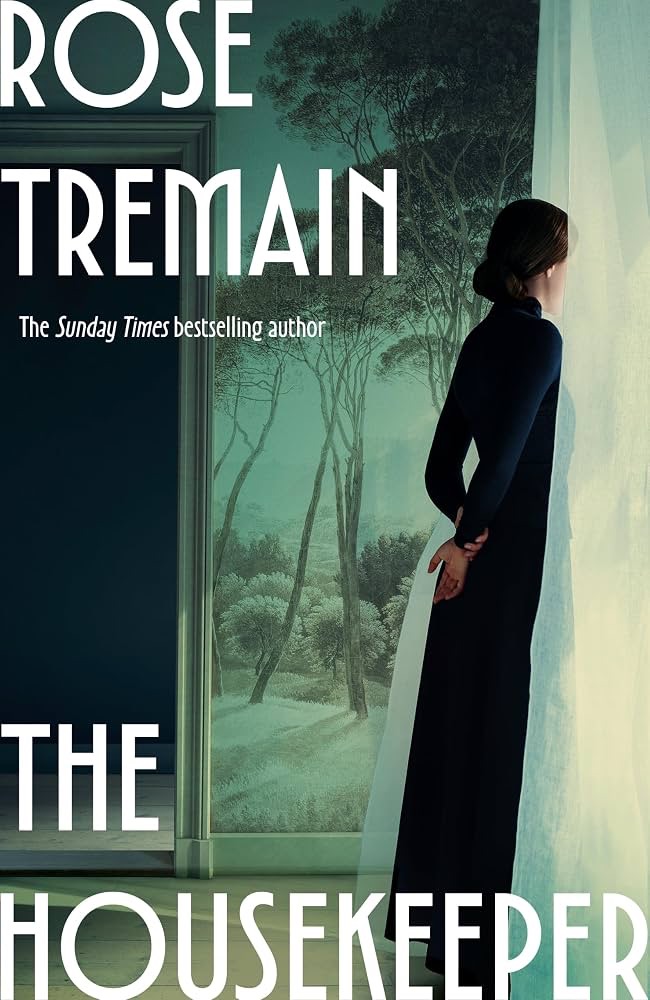
The pace of the novel is perfect, slow and languorous at first with moments of intense and hurried desire. My heart raced at times, terrified they would be found out. There was a constantly ticking clock in my mind, waiting for the moment everything would change. The author’s representation of Daphne du Maurier feels genuine, even to someone who has read a lot about her background and life at Menabilly – her very own Manderley near Fowey. It’s easy to see aspects of Rebecca and the second Mrs de Winter in her character and behaviour, but also Daphne herself. It was interesting to imagine Danni beyond the Hitchcock film’s representation of Mrs Danvers. Instead of the austere and ghostly housekeeper we see a woman in moments of abandonment, with her hair down her back and nothing but a fur coat on, the object of Daphne’s desire. A desire she’s so ashamed of she makes her lover evil in print then burns her to death. I must mention the stunning cover of this book too, a wonderfully stylised Art Deco representation of the housekeeper, perhaps peering from her dead mistress’s window to the sea below. It’s stylish and immediately takes us to the East Wing of Manderley where the housekeeper is stood as a boat runs aground bringing disaster for Maxim de Winter. Most exciting is the news that Rose Tremain has also written a screenplay to turn the novel into a film. Now in post production this is a Richard Eyre film with Anthony Hopkins as Grenville and Outlander’s Catriona Balfe as Danni. I’m really looking forward to seeing this and I’ll be placing this book pride of place in my collection of books I inspired by Rebecca and Jane Eyre.
Out Now from Chatto and Windus


