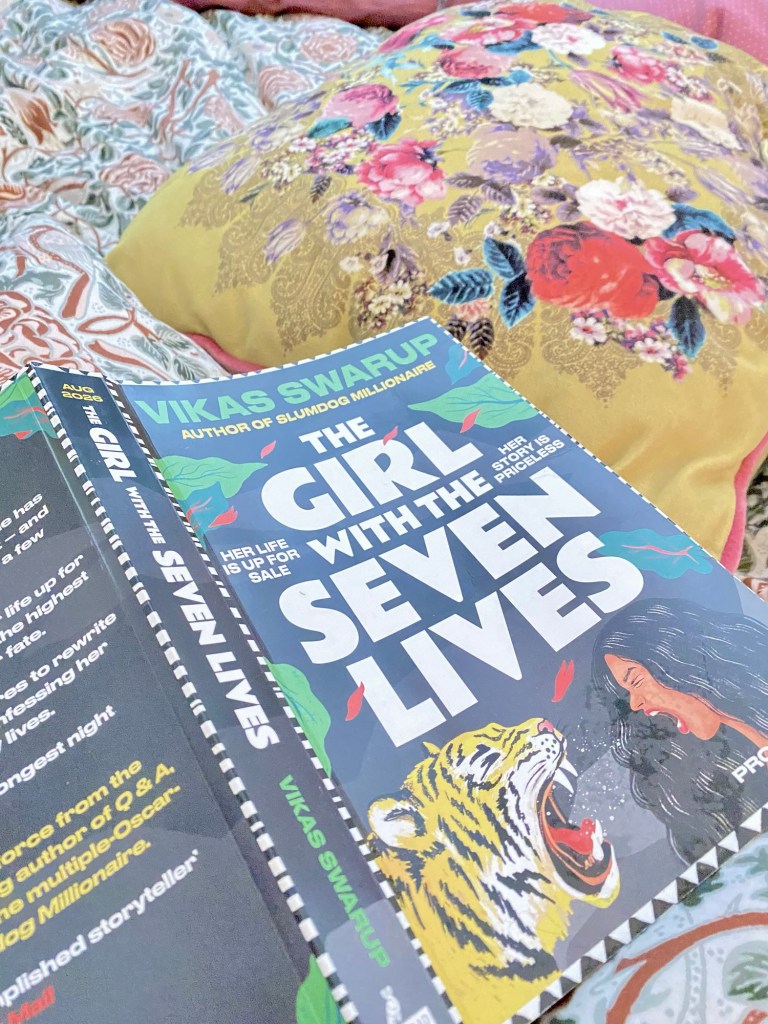
Devi is a fighter. Growing up in the slums of Delhi, she has learnt that survival comes at a cost – and naturally, that means she’s made a few enemies along the way.
Now she’s being held captive, her life up for sale in an online auction, where the highest bidder will determine her fate.
With her existence hanging in the balance, Devi proceeds to give her captor ‘a confession to beat all confessions’ – as over the course of a single night, Devi unveils the secrets of her seven extraordinary lives.
Devi is the ultimate survivor – a girl from the gutters who dares to rewrite her own destiny. But will she survive the longest night of her life?
Vikas Swarup’s heroine Devi grabs hold of you the minute she starts to tell her own story in this episodic novel set in Delhi. The opening brings Devi to the lair of an unknown assailant who tells her he has seven people on the phone line who want to bid for her destiny. This auction will take one night and seven stories, stories she thought were secrets. As Devi tells each tale her kidnapper will take a bid on her life and he hopes to reach seven figures. However, Devi’s circumstances have not been easy and the fact she is alive is down to her cunning and experience. Has the kidnapper underestimated his prisoner or are Devi’s lives finally running out?
I was hooked from the first story as Devi explains how she started in a family home in the slum area known as Rail Basti, because the train tracks ran straight through the centre of the huts. This was Devi’s early childhood and despite the poverty she has happy times. She tells us about her annoying brothers, the eldest a maths prodigy and the youngest a terrible bedwetter, the daily sequence of trains that seem to rattle the ground under their hut and depth of water that rises indoors in monsoon season. Change comes when her parents choose an unorthodox plan to make an almost life-changing sum of money and fortune seems to turn almost immediately. Devi is an intelligent, funny and excitable nine year old and sometimes it’s hard to read about her daily life, never mind the more perilous and painful circumstances she finds herself in. She learns through necessity, takes chances where she sees them, soon inured to the fact that the only constant in her life is change.
The author’s visceral descriptions of the slums, the crime and violence and particularly the treatment of young girls of her caste are a hard read. He conjures up a picture of her family home perfectly with deftly layered descriptions of their space and the surrounding crowded alley ways:
“Sanitation in the slum was non-existent. The open surface drains looked like a river of green, clogged with garbage and plastic trash. For toilet the men would go with their lotas to the railway track. Mercifully for the women and girls there were a few communal latrines at the southern end of the slum that afforded a degree of privacy, though the long lines in the morning meant waits up to an hour.”
Once the family’s circumstances improve a little there are small improvements to daily life, like the arrival of a television that keeps Devi rapt for hours and helps her learn more than she ever has before. Her father decides they need to move, into a better area of the slum with the luxury of two rooms and its own toilet. It was more solid and didn’t let the rain in. However, the monthly payment was crippling financially and soon there was nothing left, they couldn’t ‘freeboot’ the electricity so television was strictly rationed and they were back living hand to mouth. Devi is the best storyteller, drawing you into their lives and then destroying you when disaster befalls them. I felt she was a very lonely person, aside from her early alliance with ‘German Sheffered’ dog Sheru. Each time she trusts someone, her parents, the police, authority figures, they all let her down. She has never known what it is to have someone absolutely in your corner.
The author captures the noise and colour of New Delhi so perfectly it’s almost a sensory overload as you read. The combination of this and the terrible ordeals that Devi faces are overwhelming sometimes and definitely left me feeling privileged in life. Devi’s narration keeps us constantly alert because that’s how she lives her life, constantly in the moment and ever alert to what’s going on around her. Her intelligence and experience mean she can sense when something’s wrong, such as noticing some girls in her dormitory at Muskan juvenile facility are more moody and unpredictable than normal. These young women are utterly powerless, so not only are they preyed upon by bullies and evil men but the system is so corrupt there is never any justice. No one is listening. I realised with surprise that the conversations she has on this one night with her kidnapper are perhaps the most intimate she has ever had. She gets to bare her soul and disclose secrets she has never told anyone. To be this vulnerable and knowing a terrible fate might await you at the end is both cathartic and terrifying.
The pacing is perfect as at the end of each story the phone call is made and the offer increases. She knows who must be on the end of the line and understands their capacity for revenge, she’s wanted it for herself enough times. It’s such a compelling read that I read this in a day, feeling like I’d visited Punjab, Goa, Kerala and finally Mumbai with Devi. The feel of each place is captured beautifully and the contrasts of her rollercoaster life kept me glued to the page. We know how red in tooth and claw the world is but what I found most hard to comprehend is how people could blind themselves from the suffering going on around them. It’s as if the British immigrants and millionaires living in Sector 1 of the city see those in the slums as ants, something they simply tread on as they get on with their vastly superior lives. We see the contrast when Devi lives with a woman who is a banker and wants to use Devi as her muse. On her daughter’s birthday there’s an orgy of gift giving with designer scarves, sunglasses, bracelets and a laptop are unwrapped, with her main present being a vintage Cartier watch. By contrast on Devi’s birthday there’s no party, just a cake and one present – a brand new Sony Handycam. Devi is overwhelmed and when the banker tells her to film the slums she does. She films people she knew, other kids dancing and play fighting, imitating famous people and having fun. Her benefactors are unsatisfied, they don’t want kids enjoying themselves they want to see the dirt and degradation, the alcohol, the drugs and the domestic violence. They want slum porn and she certainly delivers it, raw and unedited, but she knows that no film can truly capture what it’s like to live there.
There’s so much energy in this novel. It leaps off the page and its biggest achievement is its mix of addictive suspense and emotional insight. I came away from it feeling a little bit battered by the force of the story and it might take a few days to fully sink in. I liked Devi as a child, but as time and experience move her forward she becomes more morally questionable, complex and deeply conflicting. Although even if I didn’t always like her I could understand why she makes the choices she does and how she’s come to each terrible conclusion, every time wondering if this present adventure will be her last. It’s easy to forget when you’re deeply embedded in one of her stories that this is where it’s brought her, tied to a chair and listening as each person bids on her life. If you like to kept in suspense and to experience an extraordinary life lived in destitute and dangerous circumstances this is definitely for you.

Out 13th August from Head of Zeus


