Posted in Squad Pod

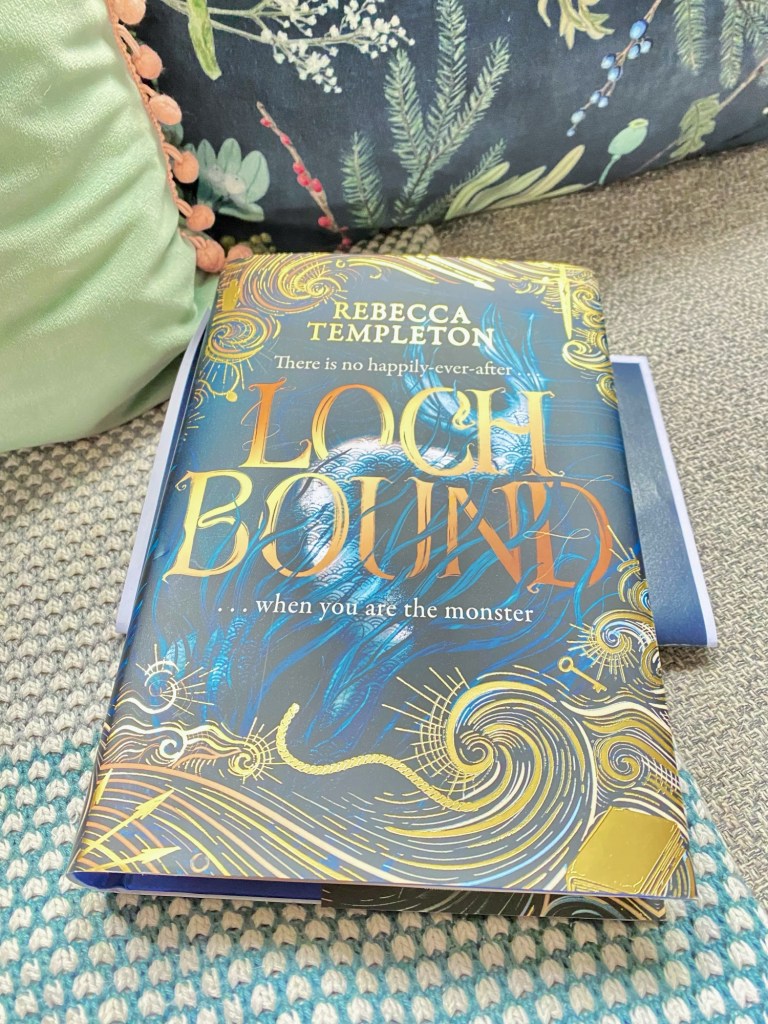
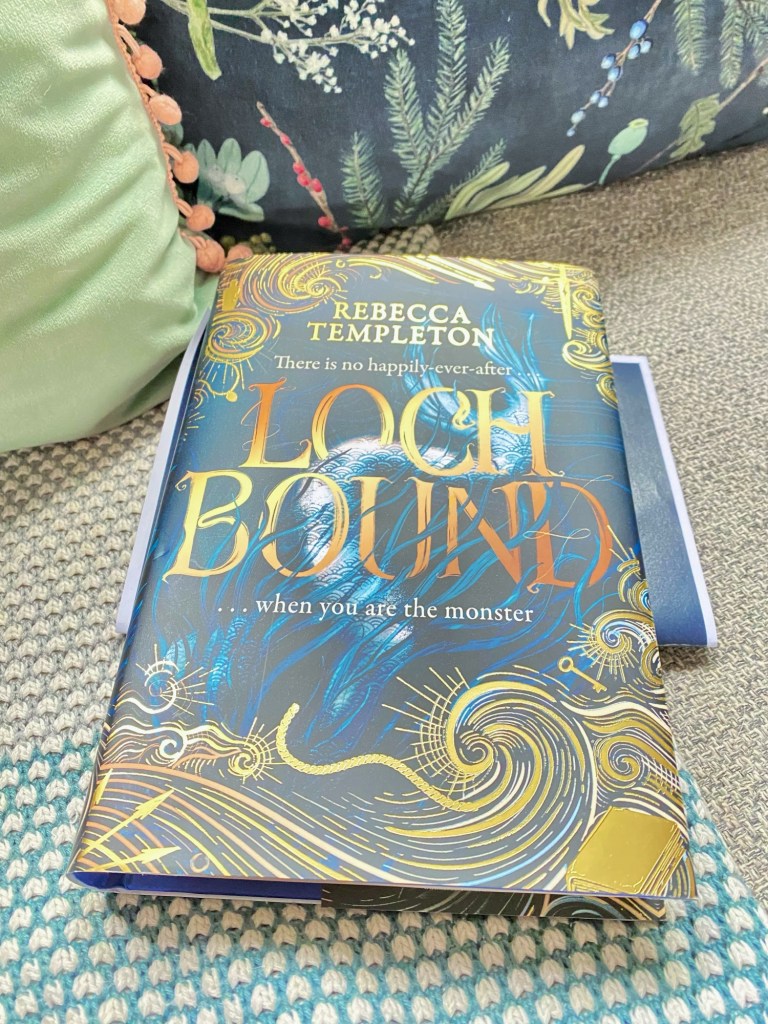
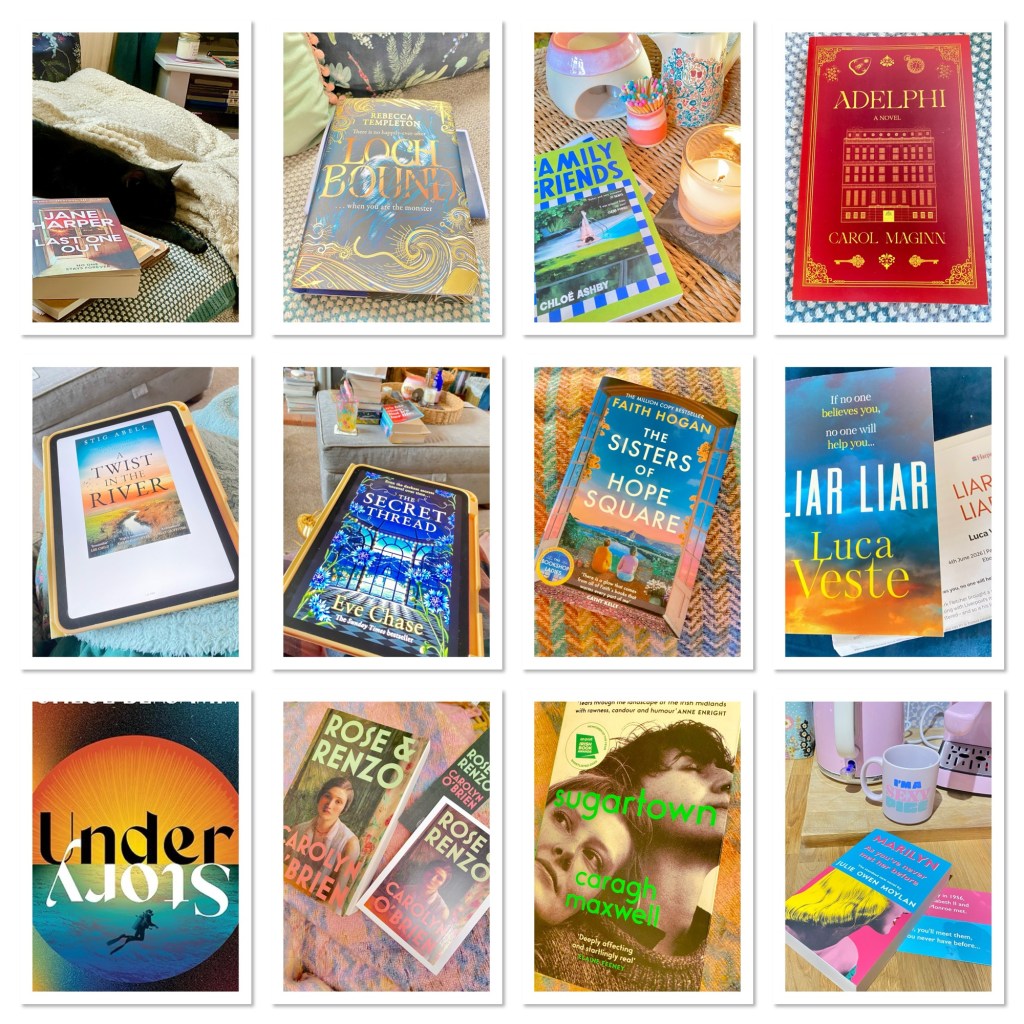
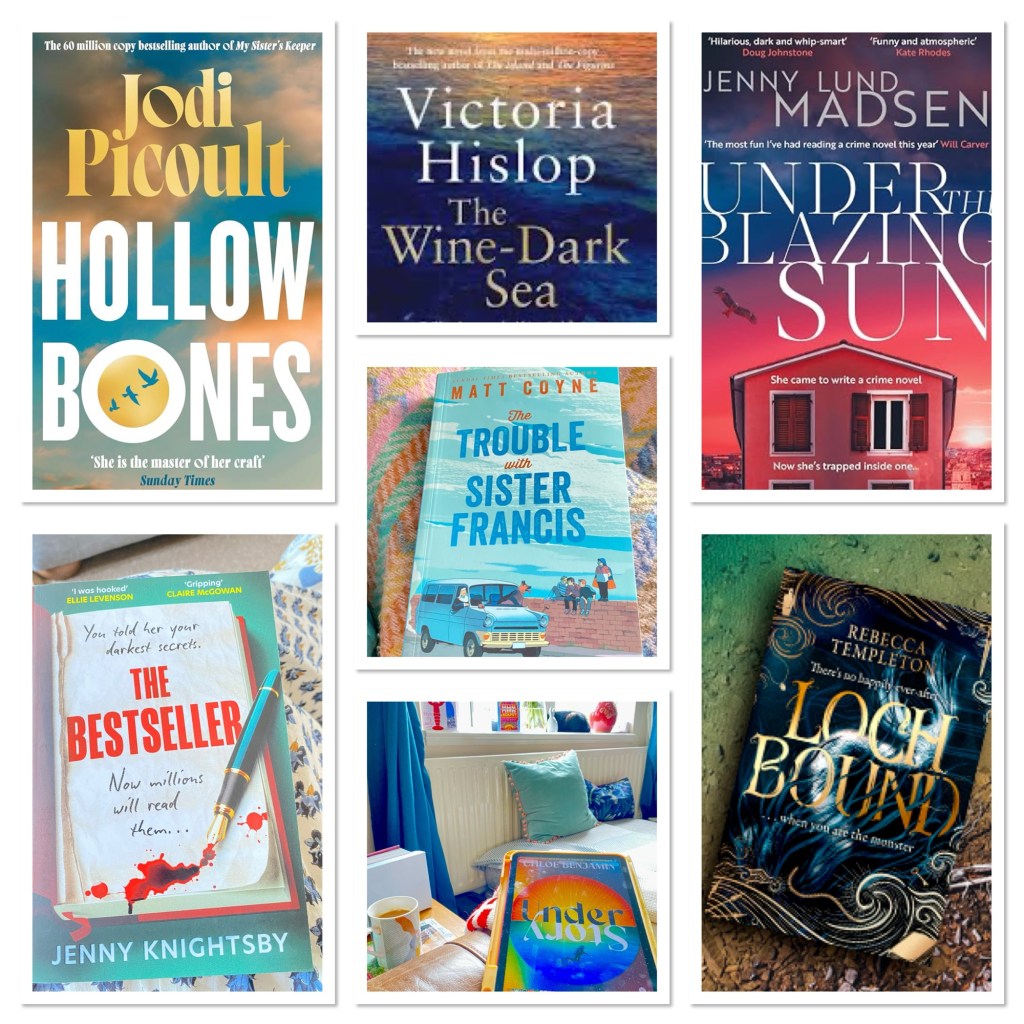
Loch Bound by Rebecca Templeton 

Mermaids. Monsters. Magic. But this story is no fairy tale . . . 

Kilmara, Scotland. 1725. For fifty years, Iris has accepted the curse that blighted her life. By night, she is a heartbroken woman, destined to walk the misty shores of Kilmara without growing older. By day, she is Moireach, a terrifying monster imprisoned in the murky depths of Loch Moine.

When bodies begin appearing on the shore, the villagers are convinced Moireach is responsible. So a hunter – the rugged, ruthless Henry Carver – is summoned to slay the monster of the loch. 

Iris must break her curse before she is killed for crimes she cannot believe she has committed. But as Kilmara’s hunt for the monster becomes ever more fevered, she and Henry are drawn together in a dangerous game of impossible attraction. 

And when a figure from Iris’s past suddenly reappears, she must choose what – or who – she is willing to sacrifice to win her freedom.

Because there is no happily-ever-after when you are the monster.

I love books where monsters are used in a clever way and I also love books set in Scotland and this brings the two together beautifully. I’ve recently been reading about mermaids and their dual narrative of being beautiful women with long hair, beautiful faces and glistening scales or terrifying sea monsters dragging sailors into the deep and eating them alive. It’s a long way from the Little Mermaid. However, what is common is the misogyny of the narrative – an early Syrian goddess was said to have had an illicit relationship with a youth, ashamed of her actions she then drowned herself in a lake. She was forgiven by the gods but from then on had the upper body of a woman and the lower body of a fish, thus remaining celibate for life as punishment. I’ve never liked the tale of The Little Mermaid who falls in love with a man and wishes to live on land. She can have her wish granted and have human legs, but is doomed to having pain like knives in them. The wish to be and live like a human has to have a penance attached. The fashion for taxidermy, curiosities and freak shows in Victorian Britain meant that many women were performing as mermaids but also strange mixes of animals were being sewn together and shown as mermaids, such as the strange example at the Horniman Museum in London. In this story she’s a truly fearsome creature named Moireach with yellow eyes, sharp teeth, shiny scales and the drive of a predator. She lives in the loch, only changing after dark when she reverts back to her human form – Iris. As a young girl Iris defied her father and fell in love with Thane. He forbade their relationship, as the daughter of a laird she had to marry well and for the clan’s gain not her own. Devastated she visited a witch hoping to be free of her father’s obligations, but the witch cursed her and she became banished to the loch by day. Now even fifty years later, when Iris emerges she is still the beautiful girl of her youth. Thane has never come for her and now when dead men are being found around the loch with their hearts ripped out the name of the monster is on everyone’s lips. Her childhood friend Duncan, now an old man, knows it cannot be Iris. She isn’t capable. He hides her with all the love and loyalty he had fifty years earlier, even though she chose someone else. The current laird has made a big decision, he’s hired a hunter of monsters, a man called Henry Carver and he has never failed to catch his prey. 

The backdrop of this story is perfect, using the mist, cold and breathtaking landscape to add to its mystery. There are parallels with Outlander here in the feel of this place, making good use of Scotland as a thin place where the paranormal, time travel and a history of monsters seems part of life. With the historical backdrop of the witch trials it’s also a dangerous place, particularly for a woman. Iris talks about the smell of the burnings and how women must be careful, but it’s no easier being a monster when men are turning up dead. The background of misogyny and brutal witch trials hangs over them all and shows a willingness to believe in magic, curses and female malevolence. It’s not just witches though, other fantastical creatures exist here like the seelies and selkies and there’s more one woman with powers a man would kill for. All of these things appear to be aligned with the nature that surrounds them and we can see that wildness as Iris changes to Moireach. It’s not just the yellow eyes and scales but the way she becomes a predator with only one goal. However she has only killed things in the loch, never on land before. She has always been able to keep her dual personalities separate before, never feeling Moireach at night when she leaves the lake. Now that separation is becoming harder. Is that because of the presence of the hunter or is the curse changing? Will Iris will be lost forever? 

The hunter is an interesting character, made solitary by loss and preferring to keep moving from place to place. His opinions on grief are based on hard experience, when his wife died he didn’t just lose her, but also that part of himself. The part that loved her. He knows that grief doesn’t go away, he’s had to learn to live with that dead part. When he sees Iris in her human form something awakens in him, even though he notices that she seems like a wild creature. She’s always around at night, wearing men’s clothing and runs away if he tries to get too close, with her flaming red hair trailing behind her. There is something between them and it could be love, or it could be his hunter’s instinct kicking in. Iris can feel it too, even though her aim has always been to break the curse and find Thane, the man she was in love with and wanted to marry. I felt like Iris grew up in the course of the story. It’s as if Duncan’s protection of her has kept her a young girl in mind as well as looks. Maybe she needed to break out a little in order to gain some wisdom and perspective. If she does break the curse, will Thane come for her? She would need to decide whether she wants the life she expected when she was cursed or if the time she’s spent as Moireach has changed her outlook? I also started to wonder if Duncan had a vested interest in keeping her under control. 

Reading this felt like being a child again and discovering a fairy tale. One that’s rooted in darkness. Yes, some elements are fantastical, but it doesn’t read like fantasy. It’s more like a hybrid of historical fiction and fairy tales with aspects of a thriller. The pace speeds up as Iris begins to run out of time and we still don’t know why she was cursed, who cursed her and what will finally break it. There are those in the village who may seem kind, but could benefit from keeping Iris in her watery prison. As she takes us back to those fateful days in flashback, when her family were all together and her father didn’t yet know about Thane. I was engrossed with the tangled web of lies and betrayal but also by the question of what life Iris would choose if she could lift the curse. Would she pick the life she’d always wanted or had things changed? She has memorialised her relationship with Thane but he has let her down by not coming for her as she’d expected. Maybe she would want a different life, rooted in her present reality instead of the fantasy she has held all this time. There are some unexpected revelations too, making for an exciting and absorbing conclusion. I thoroughly enjoyed this dark and feminist take on the mermaid stories we’re used to and I look forward to what the author writes next. 
Meet the Author

Rebecca Templeton has had a love of books from a very early age and had lofty childhood aspirations of being a writer, though she ended up joining the legal profession instead. When her husband encouraged her to start writing again, she rediscovered her creative outlet and hasn’t looked back since.

When not writing or working, Rebecca can usually be found crocheting giant blankets, baking or watching Gilmore Girls. She is also owned by a couple of very energetic children.

Posted in Personal Purchase

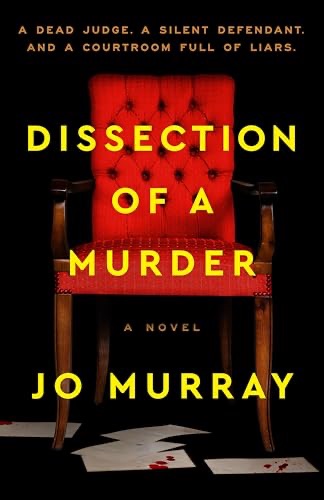
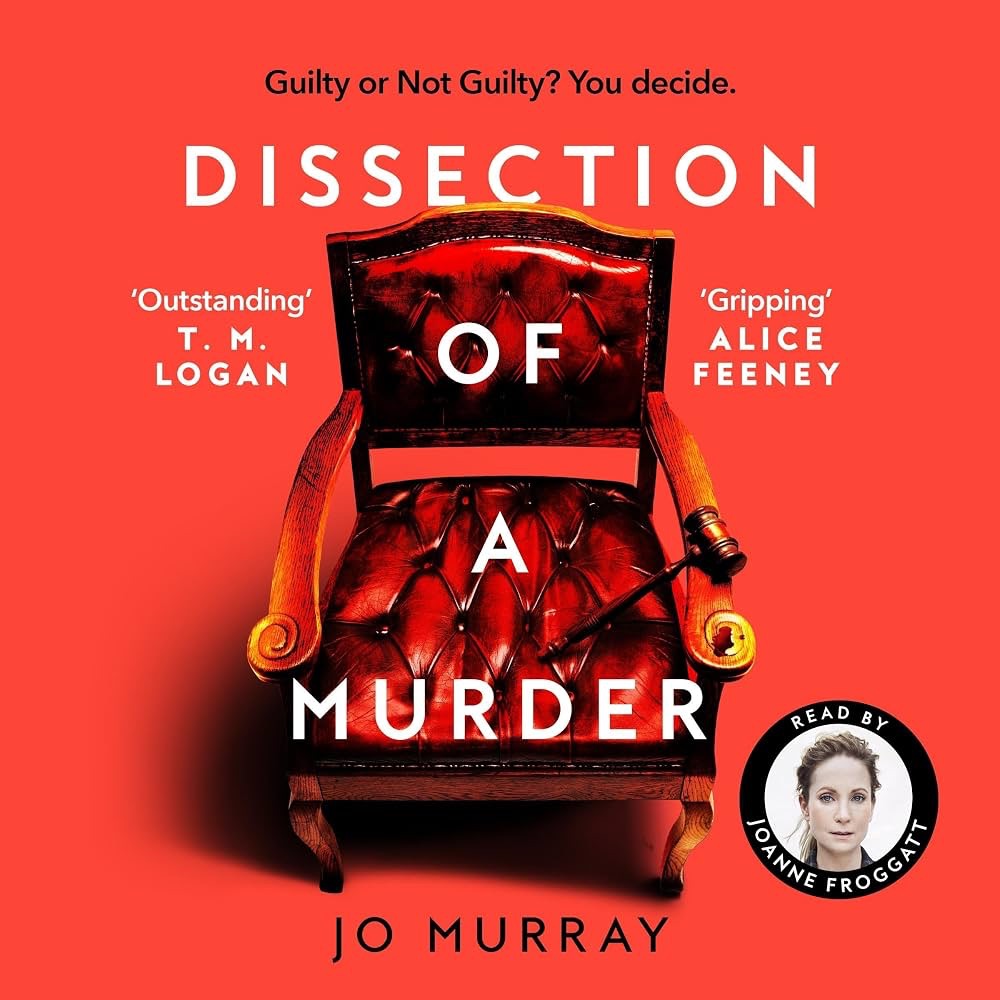
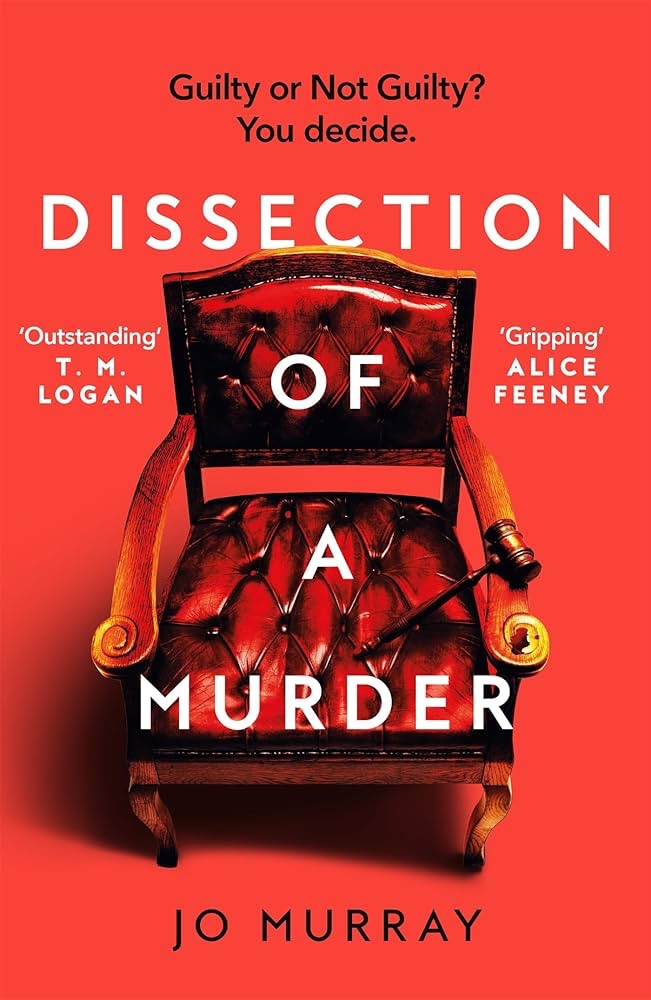
Dissection of A Murder by Jo Murray

A dead judge. A silent defendant. And a courtroom full of liars.

When Leila Reynolds is handed her first murder case, she’s shocked at how high-profile it is: the murder of a well-respected, well-known judge. This shouldn’t be the kind of case she’s leading; it’s way beyond her expertise. But the defendant, Jack Millman, is clear. He wants her, and only her.

To make things worse, he’s refusing to talk. How is she supposed to prove herself on what appears to be an unwinnable case?

Losing is not an option. She must find the most persuasive argument. Trials aren’t won by convincing judges or fellow barristers – they’re all about convincing a jury.

Suddenly, Leila finds herself fighting not only to keep Jack out of prison, but also to keep her own secrets buried.

It’s true what they say – there are two sides to every story.

Guilty or not guilty?

Wow! This was a ‘devour in one sitting’ thriller in the high stakes setting of a barrister’s chambers and an incendiary case where two of their barristers have been requested; one in prosecution and one in defence. The defendant has requested Leila, an up and coming young barrister who has just heard she’s getting a mention in an exclusive legal publication. The man who’s keen to let Leila know she has him to thank for that mention, is her previous mentor Julian. As a pupil she had to work under Julian to complete her training and he’s now going to be her opponent in court. Even more complicated is the fact that they’re now husband and wife. This is a murder case and the victim was a high court judge, Anton Smythe, who died in a flat above a nightclub after being hit in the head with a doorstop. The accused is Jack, who works as security for the nightclub owner and lives on the premises. Leila is surprised that his solicitor has requested her because she has defended this client before, and lost. When they meet again for instructions, Jack tells her he will be pleading not guilty but offers no defence. She absolutely refuses to put him on the stand and his solicitor agrees. They should argue his case if he will trust them with the truth. Jack sticks to his guns, he will not say a word about his defence until he is on the stand. Could this be paranoia? Although to be a judge like Anton means you have powerful friends, maybe it is sensible to keep his story under wraps for now. 

I’m a big fan of legal dramas like Silk and North Square so the setting in a barrister’s chambers definitely appealed to me. I loved Maxine Peake as Martha, she was Northern, intelligent, quick with a put down and nobody’s fool. Leila comes across as more of a gentle character than that, but definitely intelligent, determined and perhaps driven by a background that has its secrets. I intensely disliked Julian, but he is so well-written. There was a definite power imbalance between them, especially since she’d been his pupil. He must have seen her star quality and I had the thought that maybe he’d married Leila to keep her under him, both literally and figuratively. The layers of charm and ease soon fall away as the case starts. 

“You want someone whose mind is in alignment with yours, but whose appetite for dominance will never exceed your own”. 

When Leila is congratulated on her mention he makes sure to comment that without his influence it wouldn’t have happened. I noticed that his ex-wife seems to want to talk to Leila, something she’s avoiding but might be worthwhile. As lines are drawn in the court room there’s a definite misogyny in how Julian gangs up with the police witnesses against her, but because he can couch it in terms of prosecuting competently even though she’s his wife, it’s hard to narrow down his intentions. Is he just serving the best interests of his client? Or is he trying to rattle his wife and make her feel like she’s dependent on him? As the case continues their once calm married life becomes more fraught and separate. Leila isn’t sure whether it’s just the case and the distance needed to be opponents or whether something more fundamental is wrong. The other thing that struck me as odd is that it’s Leila who goes to spend Friday evenings having fish and chips with her mother-in-law Audrey who is in the early stages of dementia. Julian never goes with her. When she does have one lucid moment Leila asks what she thinks about her son. ‘You can’t trust him she says very quietly. Thats why he doesn’t come to see me. He hates women who can see through him.” Maybe Leila is just starting to see the real man she married. There is also mystery around Leila’s background, definitely a poorer area of the North East than Durham but she seems to have no family. It’s as if she has totally reinvented herself. She calls it a wretched life that’s left it’s mark: 

“It’s the smaller, subtler things I’m now fiercely protective of, like feeling safe when I turn the light off before I go to sleep […] recognising my body is my own and I now get a say in who touches it. The things I had to do to get here you’d be horrified to know.”

It feels as if her relationships have been transactional even when she’s had a choice. Could Julian just be another rung on the ladder? It seems he wasn’t her first mentor and she wonders often whether this past will catch up with her. The twist is very good indeed. I had an inkling, but it is a proper ‘sixth sense’ moment where you’ll want to flick back through the book and see the clues you missed. This is a high drama, high stakes, legal battle and only one of them can win. The tension is unbearable as Jack takes the stand, it almost feels like a done deal but no one is expecting his testimony. The fall out is seismic. This is such a clever thriller with a cast of characters you won’t like but will be fascinated with. It’s very well written by an author who knows this profession and its pitfalls for women, particularly working class ones. It feels like social commentary – with the well educated, upholders of the law and all their status, against the ordinary, working class person who’s usually in the dock. Can the law be the great equaliser it seems or are some people more equal than others? This was a great debut with a fast pace and some brilliant ‘oh my God’ moments. 

Meet the Author

Jo grew up in Teesside during the 90s when working class girls were told they probably shouldn’t try to become barristers. Thankfully, she ignored everyone. After studying Classics at Newcastle University, she went to law school and did just that. Jo was a criminal barrister before leaving the profession to look after her two children. She lives in North Yorkshire.

Posted in Squad Pod Collective

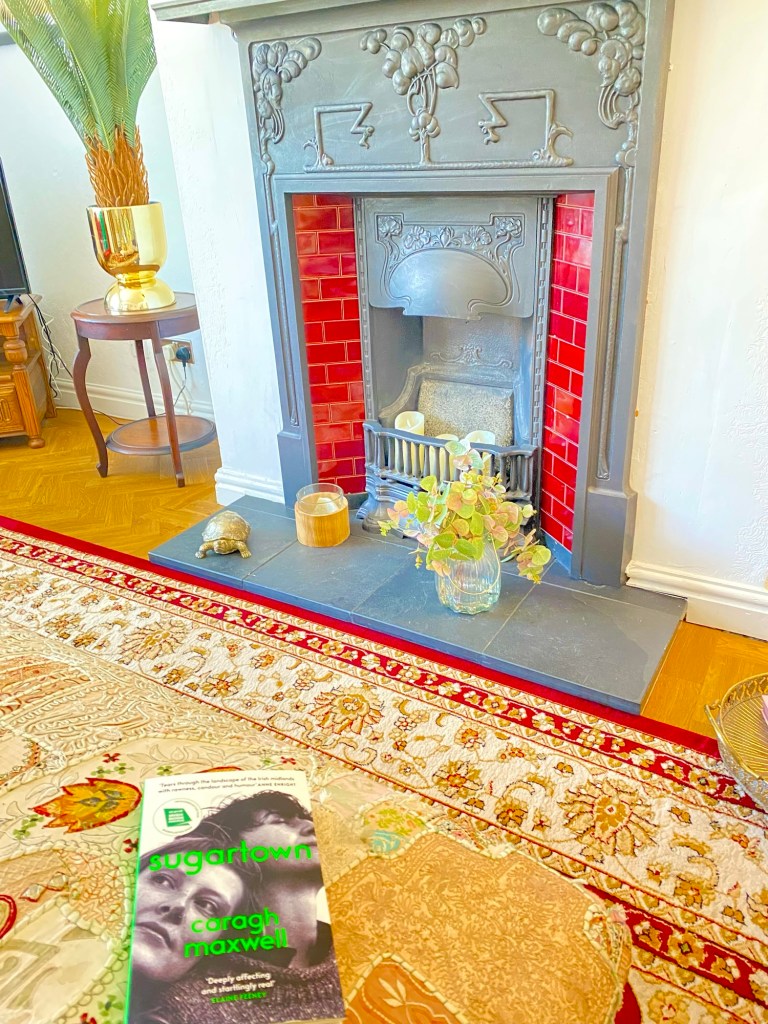
Sugartown by Caragh Maxwell 

What do you do when you’ve ruined your life? You go home to your mother, if you’re lucky enough still to have one. Saoirse Maher wouldn’t recommend it. 

Leaving home wasn’t supposed to be temporary. When she moved to London, Saoirse was leaving Ireland behind for good, and with it her messy, broken family. But it turns out that starting again isn’t as easy as she imagined, and when her five-year relationship goes south, Saoirse finds herself out of options. And so here she is, trudging back to her mother Máire’s house up a side road on the outskirts of Irish civilisation. 

Except the world she comes back to is nothing like the one she left behind. Her mother has a new family, and everyone else seems to be moving on. But between the drinking, drugs, and an entirely healthy, not-problematic-at-all-thanks relationship with Charlie, there’s plenty to distract her.

Don’t look too closely, and everything’s fine. Saoirse is just fine. 

This was one of those books where the narrative voice captures you straight away and you know you’ll follow wherever she takes you. Saoirse is in her early twenties, newly returned to a small town in the Irish midlands when her big life in London doesn’t go as planned. Now back under the roof of her mother, her second husband JJ and their three perfect daughters, all Saoirse can see is the difference between the mother her little sisters have and the mother she had at the same age. Back then Máire was young and struggling, with a husband who’d rather drink his wages than bring them home to his wife and child. In fact Saoirse can remember being in her mother’s car, driving from pub to pub to look for him. There was so much drama between her parents she might as well have been invisible. When she contrasts this with Lily, Grace and Emilia’s life she can see the difference but she can’t understand it; are they just more lovable than her? She notices the way her mother Máire dotes on them, puts their hair into identical plaits but stops short of identical clothes, reads to them at night and makes sure they’re cared for and these small expressions of love hit Saoirse like poison darts. Her sisters even get to call her Mammy, something that Máire was very clear about:

“I was christened Máire Lynch. Not Mammy. That is not my name. I won’t speak to you if you don’t use my name.”

Sometimes she wonders if the impression she has of their relationship is distorted but then she remembers Granny Lynch, the person who cared for her most asking her aunt to give her some leeway; ‘leave her be, you’ve met her mother.’ Granny’s is the only place she had stability and felt loved for herself, just for existing. Even now, at the age of 24, Saoirse feels her mum’s bite as she bullies her out of bed in the morning, insists she does an interview for the local hardware store and is insistent that JJ shouldn’t have to keep her. Saoirse just wanted a few days grace to gather her thoughts and adjust, but now she’s everything she didn’t want to be, living back with her mother in a small Irish town and doing a job that has no meaning and pays enough money to get by week to week. Then, with her friend Doireann she spends it on alcohol and drugs to forget the tedium and disappointment of life for a few hours. She isn’t even allowed to express her disappointments because Máire is right there, ready to tell her what it was like to be her age with a baby and an alcoholic husband. The author uses wit and humour, even within the darker themes and here Saoirse talks about the ‘overarching theme of the Annual Irish Suffering Olympics’. If you complained about a broken toe, someone else had lost their foot in a mowing accident, so you should ‘get over yourself’. This was such a familiar moment of Irish family humour that it made me smile. 

It’s easy to forget Máire’s struggles because Saoirse’s voice is so compelling. It’s no wonder her mother enjoys the routine and stability of her relationship with JJ after the turbulence of marriage to Saoirse’s father. When Saoirse hits rock bottom her dad is briefly there for her, but it’s the first time. Although we concentrate on the mother/ daughter relationship, he has been completely absent in her life. He’s one of those Irishmen who are great at stories and for the craic down at the pub, but they don’t see the state he’s in at home and the way he chooses drink over his family again and again. He seems stable enough at the moment, living with his second wife and making bodhrains in his garden workshop, but he will always let her down. I was concerned that Saoirse would end up living her mum’s life, young, pregnant and with a partner who can’t be trusted. I felt so maternal towards Saoirse throughout and I could see that her lack of parental support left her craving love and acceptance. It’s like a huge hole that can never be filled. Unfortunately it also leaves her open to damaging relationships and when she meets Charlie, through Doireann and her on again off again boyfriend Connor, she falls headlong into tumultuous and possessive feelings.

I was holding on to hope that she could get her life back on track, even when it hits rock bottom and she wakes up in hospital. In the end she turns to counselling and one of the first things they talk about is that emptiness Saoirse feels where the love and support of a parent should be. One line of dialogue in the book broke my heart more than anything and it’s when Máire is throwing all her anger and resentment at her daughter. Their fight turns physical when Saoirse reminds her that she forgot she had a fourth child. When she asks her mother what she’ll tell her little sisters Máire says ‘I’ll tell them to be anyone but you.’ It’s so harsh it stopped me short. Of course in order to heal we look for closure and Saoirse has tried drugs, alcohol, relationships and acting out to fill that hole at her centre. The counsellor asks her some searching questions. What if that closure never comes? What if she doesn’t have a relationship with her mother? Somehow she has to learn to feel that uncomfortable absence without trying to fill it with other things. I felt there was hope that she would build self esteem, because even in the throes of first love she finds Doireann’s relationship with Connor uncomfortable. When she tries to clarify whether they are together or not, Doireann says they’re not ‘together, together’ but it’s great because they both get their space and they’re not making claims on each other. Saoirse is confused and asks Doireann who else she’s seeing, but she’s only seeing Connor while he’s seeing other girls. 

“So you do all the things a couple does without the security of knowing you’re not going to get cheated on.”

Of course she could be cheated on whether in an official relationship or not, but the need to point out that only Connor benefits from their arrangement shows that Saoirse does have some expectations and standards. She knows she doesn’t want that kind of relationship. She wants boundaries, exclusivity and respect it’s just that her desperate need for love and acceptance means she settles for less. She also knows that her own capacity for love is immense, saying she would tear herself down to make sure Charlie grew because ‘it was just my way.’ Luckily at this point she moves in with Doireann and her family and sees a totally different way of parenting, a seemingly natural maternity in her mum Karen who struggled to become a parent and sees her daughter as something of a miracle. Saoirse notices that they have saved mementoes of every milestone in their daughter’s life and yet are still able to listen and support her plans to move away from home. When Karen’s had a hard shift at the hospital, Saoirse listens and makes her a cup of tea and Karen tells her she’s a ‘good girleen’ but the compliment is so alien to her she doesn’t know what to do with it. Being mothered makes her realise how complicated it is and opens up the guilt, anger, resentment and thoughts that she could ‘fuck up’ her own daughter. Yet she’s already thinking about how to stop repeating the pattern. 

This is a remarkable debut. Every single character felt completely real and the author has captured the awkward vulnerability of youth and a girl who has never had that parental safety net that allows her to experiment and work out who she is. The language is beautiful too from the viciousness of a resentful parent, to the delirium of drug addled parties and the tedium of the hardware store. She describes a silence between her and her mother as weighing on her like ‘wet wool’ and I could feel its heaviness. It all rings true and struck a chord with me about my own teenage years and not always being understood. Some of the descriptive passages are so layered they create tiny moments of stillness within the turbulence becoming passages to breathe in. I found myself responding to the book bodily, so immersed that when the author described a panic attack I realised I was holding my own breath. I felt sad, angry and deeply maternal towards Saoirse and with my counsellor head on I wanted to help. I wanted her to see that she wasn’t the sum of her parents and all the bad things that had happened, that even in the darkest moments there is a tiny spark of light. Any writer that can make a reader feel so much for her characters and their journey is special and I can’t wait to read what Caragh does next, but for now I know Saoirse will be staying with me for a while. 

Out now from OneWorld Publications

Caragh Maxwell is a writer living in Sligo town. She graduated from the Trinity College MPhil in Creative Writing in 2023, and her essays, poems and stories have been published in The Irish Times, The Cormorant and other publications. Her writing focuses on the self, memory, and womanhood. Sugartown is her debut novel, and was shortlisted for the 2025 A Post Irish Book Awards.

Posted in Personal Purchase

Yesteryear by Caro Claire Burke 

I’d seen so many extremely varied viewpoints on this book that I couldn’t resist dipping in and it was definitely worth the hype it’s received. I read it voraciously over two days, so excited and so confused towards the end I realised I’d read it too fast. I had to go back and force myself to read it slowly. Read either way, this really is a delicious story that has hit at exactly the right time in history. With the US administration rolling back women’s rights and rumours about the implementation of Project 25 it feels like we’re watching Gilead formed in real life. One of the most controversial online figures in this huge political move to the far right is that of the ‘trad wife’, a woman who lives her life focused solely on the home, children and obeying her husband who is always head of the household. This might come from a religious conviction or a political one, but social media is awash with trad wife influencers like Hannah Neelham who shows life at the family farm and cooking from scratch or Estee Williams who proudly declares a return to 1950s values where motherhood and domesticity are the priority. To me this feels like the logical extension of the late 1990s dating book ‘The Rules’, much lauded by Charlotte in Sex and the City. Single women were advised to keep their distance and mystery on the dating scene – with men naturally being pursuers they are more responsive to women who play hard to get. It also advocated withholding sexual contact and focusing on the man’s wants and needs. It stands to reason that any eventual marriage would also involve the man’s needs coming first and feminists are concerned that the current trad wife trend appears like a pop culture phenomenon, but is born of patriarchal policies that will set back women’s autonomy and authority by decades. Of course the obvious paradox here is the influencer’s monetisation of the trad wife lifestyle, promoting the concept of the man as sole breadwinner while simultaneously operating successful and lucrative online content creation businesses, often with merchandising and multiple staff. These women are highly driven and ambitious and this is where our main character Natalie is situated; right at the centre of the monetisation paradox. 

The story is told through Natalie in a compelling inner monologue that had me absolutely gripped, despite disliking her quite intensely. The author takes us back to her college days, where she keeps herself separate from her roommate and other students often with a condescending and superior attitude. She firmly believes she has the answer to why feminism isn’t working, labelling her roommate the archetypal ‘angry woman’ who thinks they can have it all but will only end up exhausted and dissatisfied. She marries Caleb and is pregnant before graduation, not finishing her degree. She’s married into a political dynasty, with Cal’s father hoping to start a presidential campaign soon. Obviously they are republicans and Natalie’s father in law does point out that Caleb could be perfect for politics, being an ‘idiot’ who has no direction and is easily controlled. It’s Natalie who gets the idea to run a ranch, scouting for suitable properties and approaching her father-in-law for funding. He agrees to give them the five million they need, but Nat must keep her end of the bargain and keep producing beautiful grandbabies. She sets out to sell the great American Dream on social media, giving her ranch the tongue in cheek name ‘Yesteryear’. Despite having no farming experience, the plans for are to keep livestock, grow vegetables and become self-sufficient. She sets out to represent their lifestyle as pioneers, deliberately choosing her decor accordingly and instructing builders to hide all their modern appliances behind doors and false walls. She starts out posting nostalgic pictures, but then expands to videos where she and the children cook from scratch or make items for the house. Before long she has a business on her hands and now she isn’t just hiding the appliances, but two nannies and a producer, not to mention the merchandising. What could possibly go wrong?

This is a book with some huge reveals, you won’t always know what’s going on and you won’t be able to put it down – I was even reading while cooking the tea. I was so involved that when Natalie wakes up one morning to find her home isn’t as she knows it I was completely discombobulated – we ended up with gluey spaghetti that night! There’s no electricity and she finds children in her kitchen eating breakfast by candlelight, but they’re not her children. Caleb looks like her husband but there’s nothing behind his eyes. She’s now living pioneer life for real and when she opens the cupboards to look for her appliances, there aren’t any. There’s no help either. Her eldest daughter Mary cares for her with something close to a resigned exasperation, making sure that even if Natalie is only sitting, she can still do laundry and churn butter. Imagine a more realistic version of Little House on the Prairie where you can never escape to a power shower or flushing toilet. Natalie asks herself what’s going on: is this a punishment for something she’s done, has she lost her mind or is this some sort of sick reality TV situation? Is God punishing her. She’s now a trad wife for real, but she definitely isn’t happy, nor is she making any money.

This book is so well written, incredibly ambitious and captures the zeitgeist. I didn’t like Natalie but found her inner voice almost hypnotic. She’s deliberately hiding her intelligence and business brain on screen, but makes the comment that her eldest daughter takes after her because she holds “her intelligence like a knife behind her back.”However, once she becomes a traditional wife for real Caleb is the head of the household and she realises that whatever their home situation men can opt out of chores and childcare with no explanation, whereas she’s being forced out of bed while unwell. I was intrigued about where her belief system comes from, expecting generational religious beliefs and trauma but her mother and sister, while religious, have compassion and the ability to accept changes to their world view. They have understanding and compassion, something that Natalie seems to lack and it is utterly damning when her mother asks her why it’s so hard for her to be kind. I was so angry about the hypocrisy, pushing her ‘lifestyle’ to an online audience of women while keeping, not only her modern applicances, but the help hidden. She must know she’s making women feel inadequate, taking their money and lying to them. Once you become a tool of the patriarchy you’re an enemy of your fellow women, even though she gives them lip service by repeating the Christian Nationalist narrative that a trad wife is equal to her husband in the eyes of God – her work is different but of equal value. How can they be equal when only one of them has autonomy and the final say? In fact she openly fears aspects of the real pioneer life, especially giving birth. She is also aware of the paradox: 

‘To be a wealthy Christian woman and maintain good standing, you needed to publicly disavow your luxuries in order to maintain possession of them.’ 

It’s only by pretending they have nothing, that she becomes rich. I think I kept reading because I was so desperate to see her carefully planned, fake world fall apart. At a time where feminists are debating whether they’d rather be alone with a man or a bear (and regularly choosing the bear) she pedals a dangerous rhetoric and any woman selling it is colluding with the patriarchy. On a day where I’ve seen yet another group of white British men on trial for raping a woman drugged by her husband, I’m not inclined to give any man that sort of power over me. This week a pregnant woman on holiday in Florida had an incomplete miscarriage and was still, days later, unable to get the procedure she needed to prevent infection. This is because she wasn’t in her home state and doctors in Florida were unsure on the legal position of performing a D and C operation thanks to ‘pro-life’ policies. Another woman who’d been informed that her baby was too malformed to survive outside the womb, was bombarded with hate on Instagram for choosing to end her pregnancy early. Female influencers can’t post on social media without facing a barrage of abuse from trolls. Thanks to all this, men like Andrew Tate and Christian Nationalist men in positions of huge power, I have a permanent level of inner rage. There should be a special level of hell for women who take up this cause and use their religious beliefs to make life harder for their fellow women. I let go a bit of that rage while reading this because it helped me remember that what we see online is like any other representation of real life – heavily edited and stretching the truth, if not an outright lie. Not only is this book addictive and inventive, but through Natalie, the author blows apart the whole hypocritical and dangerous industry as well as the Christian Nationalist ideology that espouses trad wives and I absolutely loved that. 

Out Now from Fourth Estate.

Meet The Author

Caro Claire Burke received her Master’s in Fine Arts from the Bennington Writing Seminars. She is the co-host of Diabolical Lies, a politics and culture podcast. YESTERYEAR is her first novel.

Posted in Squad Pod Collective

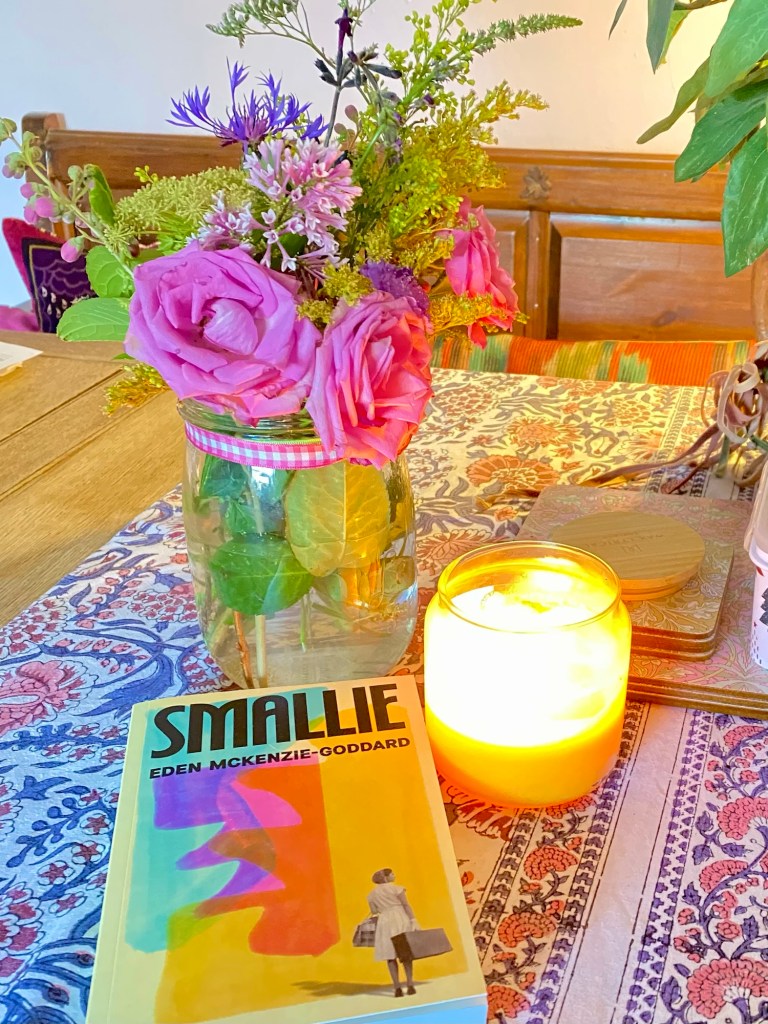
Smallie by Eden McKenzie-Goddard 

Smallie adj. |smal·lie|
Definition: Caribbean (informal). Describing or relating a person from a small island; a small islander.

In 1961, nineteen-year-old Lucinda Brown travels to England in search of her son’s father, Clarence Braithwaite, who left Barbados to join the British army. But aboard the ship to Southampton she meets a man named Raldo who offers her a glimpse of a new life, a freer life. Bound by the memory of her son waiting at home, she chooses Clarence – realizing too late that war has made a stranger out of him.

Nearly fifty years later, Lucinda receives a letter from the Home Office that threatens to tear her world apart. Her children rally together to prove her legal arrival, and to do so they must track down an elusive man from her past, a man she wanted to love but instead lost, a man who now holds the key to her family’s future. Raldo . . . An exhilarating and expansive tale of a family thrown into collision with the Windrush scandal, Smallie shows just how easily the past can spill into our lives, even when – especially when – we think we’ve closed the door on it.

The author splits their timeline so in 2017 we see Lucinda’s children trying to make sense of the letter from the Home Office that states she has no leave to remain in the UK. Then we go back several decades to her early life in Barbados and her trip to the UK. This worked so well because we get to see the huge generation gap in her children’s incredulous response to the letter and Lucinda’s more mured response. They have lived in the UK all their lives and with their education and important jobs they’ve experienced racism but not in the same way their mother has. They don’t know that the system can fail. This is their first real sense of utter powerlessness. Whereas Lucinda has spent most of her life like a leaf in the wind. Her strict religious father would keep her at home with a life that revolved around church, chores and schoolwork. In fact it’s only her friend Sheila that manages to lure her out to a club, where she meets Clarence, a liaison that results in a hidden pregnancy and her son Reggie. Yet still her father calls the shots and when Clarence decides to emigrate to the UK she is only allowed to follow on the proviso that they marry, only then will her father release Reggie to join them. Then, on the voyage across she meets Raldo and their chemistry is immediate, he offers her a way out. When they reach the UK she can leave with him and his friend, avoiding Clarence. Will she make the decision to put herself or Reggie first? I couldn’t stop reading because in the 2017 timeline I was desperate to know whether her children would manage to find enough evidence for their mother to stay, but also I wanted to know who was the father of her children born in the UK? It’s cleverly plotted to keep you guessing, even when their father is present.  

I loved the moments of freedom that Lucinda has with Sheila, nights of jazz, dancing, laughing where she comes alive. Either in clubs or at house parties they forget the one room they share, the lack of money, the family they clean for and the way British people treat them. Sheila is older and wiser. She explains to Lucinda why their employer’s treat them differently. Both girls work for a cleaning company run by a friend and Sheila points out how differently she is treated compared to Lucinda. They speak harshly to Sheila and expect her to steal, whereas Lucinda is treated more politely. She explains what ‘passing’ means, the family treat Lucinda better because of her paler skin. She could pass as a white girl. Even so, neither of them can have bank accounts and decide to use the ‘pardner’ system. Every week they all put their wages into a pot that’s kept by the most trustworthy friend, then once a month they take it in turns to have the lump sum. It’s the only way individuals could buy a house and set down roots here. Strong communities were built from these bonds of trust. The group decide that Lucinda should look after the money, but her trustworthiness is dependent on whether Clarence decides to beat her or not, till she hands it over. She is being brought down by this relationship, but she still clings to the idea of Reggie making his way here to be a family. Yet every so often she sees Raldo, conducting buses or at the same party and that spark is still there. He brings her alive.

It seems inconceivable that someone who has lived in this country for most of their lives could be detained and placed in an immigration facility. Lucinda is placed in Yarl’s Wood and her children are falling apart. She is the foundation that supports them all. While they struggle to come to terms with the situation, Lucinda quietly gets on with it. The Home Office need proof that she arrived on a certain date, with her boarding pass or similar, but then also prove that she didn’t leave for a period of time. They are applying 21st Century rules to a time when paper tickets were damaged or thrown out, where jobs were cash in hand and there was no paper trial. As they desperately look around for people who could corroborate her account, they unearth more of their mother’s story. There’s betrayal, anger and bitterness that’s lasted over fifty years. Will they find this man called Raldo who looked after her boarding pass? As the date for the hearing looms closer, Lucinda starts to wonder whether it’s time to make decisions that suit her, not everyone else leading to an ending I didn’t expect, but that was total perfection. I felt so much reading this book – everything from anger to joy and so much inbetween. Lucinda is a brilliant central character, so used to being pushed around she almost disappears in the cacophony of her children. We know theres so much depth and experience in this woman and I was willing her on to finally make a choice for herself. Beautifully written, this is an emotional account of one woman’s life caught up in the Windrush scandal and it kept me spellbound to the end. 

Out Now From Penguin

Meet the Author

Eden McKenzie-Goddard is a UK-based writer and podcaster, with Barbadian-Jamaican roots. His work sheds light on the lives of the forgotten and bringing their stories to the forefront.

In 2018, Eden co-founded the top 30 music and culture podcast Don’t Alert The Stans – commended by Apple Podcasts, Complex, Beats By Dre and more.

With almost a decade working in publishing and a degree in English Literature and Creative Writing from University of Westminster, McKenzie-Goddard is a student of literary minds Silvia Plath, Hanya Yanagihara and James Baldwin.

Posted in Squad Pod Collective

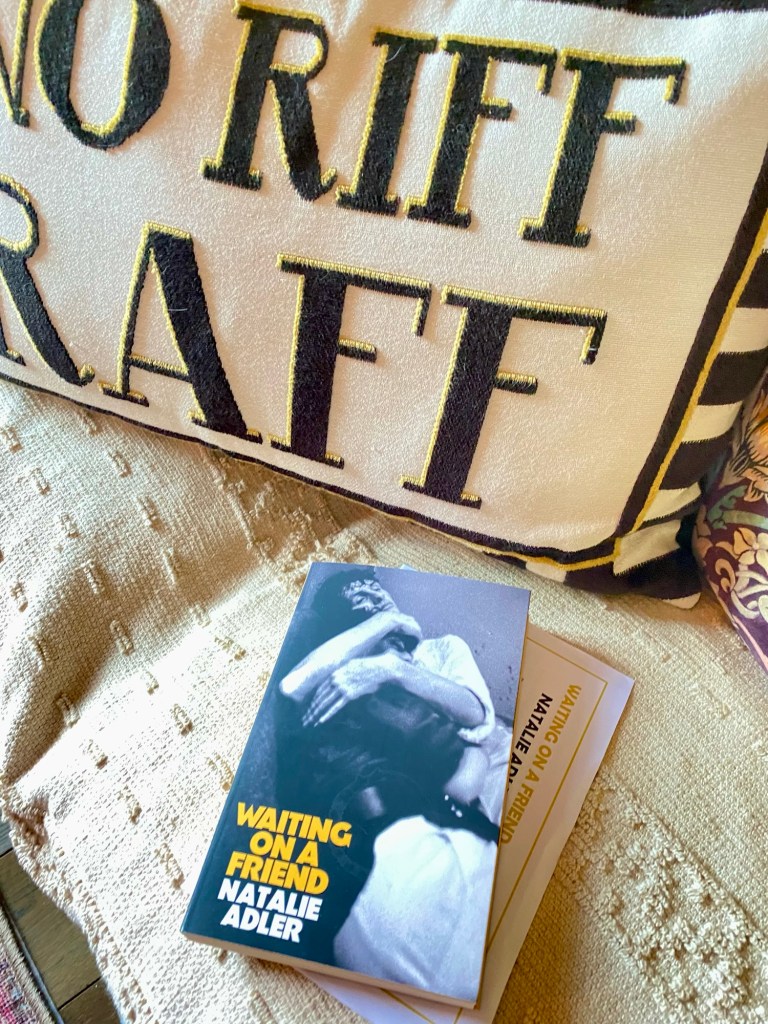
Waiting on a Friend by Natalie Adler 

“When Mark died I thought I’d start seeing him around more..”

From that fascinating opener this book becomes so many things: a meditation on grief; a witness to the AIDS crisis in 1984 New York City; a community’s anger at the gentrification of the East Village; a ghost hunt led by a company called Manhattan Remediation. Renata is a young dyke-about-town who has the ability to see ghosts, which has been happening more and more frequently as her friends have started dying of what has recently been named AIDS. So, when her best friend Mark dies, she assumes she’ll see him again. There’s no way Mark wouldn’t give her a chance to say goodbye, would he? But to her disappointment – and increasingly, her concern – Mark doesn’t appear. Renata has other problems, too. A mysterious, police-like force has begun ridding their East Village neighbourhood of anything abnormal or inexplicable. At first, she’s sure they’re scam artists, but it becomes clear they’re actually trapping ghosts. With her band of lovably eccentric pals and lovers, Renata is determined to fight back against the erasure of her friends’ memories and the sanitizing of her beloved New York.

Renata is our narrator throughout and I felt a kindred spirit in seconds. Her expectation of seeing her friend Mark seems odd at first reading, but when I realised he had died without her and she hadn’t known for a few days I was so sad for her. Mark is clearly the most important person in her life, they shared a living space when either one of them wasn’t sleeping at a lover’s place and it seems unthinkable that she wouldn’t have known. That she wouldn’t have felt it. That the sky didn’t cave in. When people say life goes on this is exactly what they mean – everything carries on as normal while you feel like a shrieking banshee. However, for Renata there’s an added element to this disbelief. She can see dead people. In fact she’s being plagued by the ghost of their friend Francois, who she definitely doesn’t want in her flat. So why hasn’t Mark appeared? It’s hard to accept that the powerful and deep emotions you share with someone have suddenly become one sided. I remember thinking when my husband died, we were so close, how can that line of communication be cut? Years later, a chance encounter with a medium left me questioning again, she definitely had Jerzy’s turn of phrase, his humour and tendency to flirt with the furniture, but why was he talking to her and not me? Renata and Mark had a complicated relationship, they each had lovers, but they did have times when they slept together. There was no possessiveness in life, but in death I could understand Renata’s desire to have him to herself.

I was reminded of Jill in the TV series It’s A Sin and the deep connections the residents of the pink palace had with each other. When her best friend Ritchie starts to deteriorate badly, his family take him back home and cut him off from the people who have lived with him. It’s devastating when Jill travels to his childhood home, only to be told by his mother that Ritchie is already dead. The author picks up on this in the novel, the families unable to live with their child’s sexuality rushing in near the end to claim them. This could be out of love, but is also a way of cutting them off from their community, not wanting the stigma of AIDS to touch their family. Some families quickly and quietly arranged funerals for their children without the people who loved them for who they truly were, often citing the cause of death as cancer so the neighbours didn’t know. I was a teenager at the start of the AIDS epidemic here in the UK and I remember feeling genuine fear. The government leaflet had a gravestone on the front with ‘don’t die of ignorance’ carved on it. I even remember a bizarre telethon type event called First AIDS, presented by comedians and DJs telling us which sexual acts were most risky, how to prevent contracting the virus and how to put a condom on. I was thirteen and I honestly believe that it informed by sexual behaviour from the offset – I was known by my friends in later years for two methods of contraception at all times and I’m sure that was down to how frightening it felt back then. There was enormous stigma and prejudice, but because I lived in a quiet village in a rural county it felt somewhat removed from me. Even though I had an Uncle who was obviously gay in hindsight, we never really talked about it. Reading this and knowing that, a few years earlier than First AIDS, death was a daily reality in the gay community of the East Village really made me realise how far behind and out of touch we were. 

The author skilfully switches tones from crushing reality, to horror and even humour at times which I really enjoyed. She doesn’t spare the realities of a death from full blown AIDS, in particular she tells us the story of Francois who is haunting her apartment. He is an angry ghost, throwing and pushing things, always making a noise and creating a horrible atmosphere, even before he appears. When he does he is known to vomit, pee on the rug and often lets out a terrible scream. Francois was a teacher, but when he started losing weight and sores were appearing on his face he was asked to leave because ‘his face was scaring the children.’ She details the secondary illnesses that would kill someone with the HIV, the lymphoma or other types of cancer or infection like pneumonia. Then there’s the encephalopathy and dementia. It’s no surprise, when we hear François’s story, that his ghost is angry. She talks about the guilt she feels for wanting him to die quicker, to stop his suffering. Renata’s mother, who never let on that she had the same gift as her daughter, said that spreading salt in the corners of problematic rooms helped soak up the negative energy, so she’s been trying baths with mineral salts but it hasn’t helped. There is some comedy in Francois as well as fear and it’s Renata’s irritation with him that made me smile. She knows she can’t live with him, but what to do? Another theme within the book is the gentrification of the neighbourhood, with talk of landlords trying to remove tenants in rent controlled apartments so they can renovate and earn more from a new one. A company called Manhattan Remediation are mentioned, claiming to be able to remove ghosts or entities from apartments. It’s discussed as a possible link to gentrification, a way to ‘clean up’ the neighbourhood. This is a proud community that wants to keep its history and its ghosts. When Francois finally pushes Renata to the edge she calls them and like the fourth emergency service Dr Silverman arrives with a faraday cage. Could this be the answer? 

I was really interested in the community Renata lives in and her job at the vintage shop. She also has other friends who help her sit Shiva for Mark – a Jewish week of mourning where the bereaved stop their daily activities and focus on grieving. Renata’s friends cover the mirrors and prepare food and they talk about their memories. This is a stark contrast to her visit with Mark’s lover Patrick where there is tension and anger on both sides and I was glad she had a loving community around her. The author has captured the resistance and pride of the gay community when they’re coping with stigma and suspicion. The warmth and empathy they show each other is moving. This is such a powerful subject and really succeeds as a piece of queer history in New York City, especially since most US deaths from AIDS occurred in NYC and San Francisco. It really embodies the fear and paranoia of that time perfectly, but also depicts a community of people for whom sex may be fluid but love is plentiful and loyalty is strong. For individuals already stigmatised by their sexuality and estranged from families, this community is their found family and those ties are unbreakable. As Renata observes, if the strength of her grief alone could compel Mark to appear then he would. The addition of Renata’s psychic abilities is a genre-bending idea that mostly works really well and accentuates how lost and confused she feels. I felt her need to keep living too, even though the pull of the dead is so strong. The way she relates her personal grief to the reader, in a time of unprecedented loss, is the strongest part of the book. 

Out now from RiverRun

Posted in Monthly Wrap Up, Uncategorized

Best Reads March 2026

So it turns out that March is the month of mysteries and thrillers, suspense, plot twists and secrets aplenty! These are my favourites from the month and although I haven’t managed full reviews for some of them, these are my favourites. Wishing you all a Happy Easter weekend, hope you get some good reading and relaxation time with some treats. ❤️📚 🐇
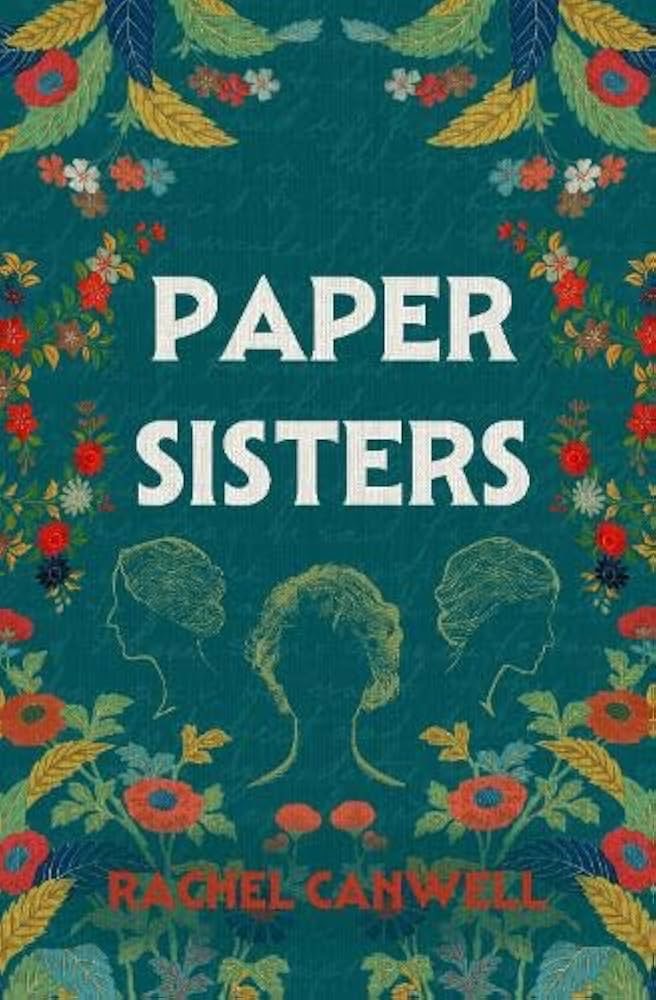
St Monans, Fife, Scotland 1790. Two women are forced to publicly repent in church, one for adultery the other for breaching the sabbath. Wealthy housewife, Florrie, and salt serf, Eliza, form a quick and unusual bond over their mutual humiliation. So when Florrie’s husband decides she must accompany him on a trade venture to Iceland, she insists Eliza comes as her maid.

Far from home, isolated and fearful, the two women grow ever closer. Then Florrie’s husband reveals his sinister plan: he will leave her in Iceland, banished for the shame she has cast upon him. Florrie must escape, but when she turns to Eliza for help she realizes nothing is quite as it seems . . .

Based on the true story of the British Empire trying to annex Iceland as a penal colony, this books tells us about subjugation and control of women by husbands, serf owners, and ministers. Kate Foster always has strong female characters and Florrie, Eliza and Hallgerd are no exception. This was a historical thriller, full of suspense and with a few plot twists too. It’s about what happens when women reject the shame men and society say they should feel and embrace their transgressions, using them as a stepping stone to true freedom. My full review is coming up soon.

Twelve years ago, Carrie married Johan on a beach in Thailand. But as the sun set on their perfect day, armed men swarmed the island and her husband was taken, never to be seen again.

Carrie is now happily remarried; a mother of two. The past is firmly behind her – until she stumbles across Johan by accident online. He is alive and well.

As the memories of their passionate relationship flood back, Carrie is compelled to find out what happened on that beach, and why Johan never got in contact.

The man who promised her a lifetime of love is now a mystery she must solve. But are the answers worth risking her marriage, her family, and the life she fought so hard to rebuild?

The truth, it turns out, is more shocking than any lie . . .

I read this novel on my weekend away and became absolutely absorbed in the story, a love story that’s also a mystery. It’s heartbreaking, romantic but also sinister and unsettling. Our main character, Carrie Cole, has been a brilliant surgeon but gave up when she had very premature twins and felt the need to be at home with them. She lives with her husband Robin in an old cottage with a holiday let in the old piggery next door that they let through the Roof app. It’s there that she sees Johan again for the first time since his arrest in Thailand. Her urge to see him is part emotional but also a desperate need to know what happened and how he ended up back home in Sweden when he should still be in prison. I loved how the author played with our expectations of who to trust and whether Carrie should think with her heart or head. She’s safe, she’s happily married, she’s a mother about to return to work so we know the right choice to make. Right? Full review coming later in the month.

Famed children’s author Dame Eleanor Kingman has summoned her family and friends to her exquisite manor house on the cliffs. They’re celebrating her birthday – and her latest number one bestseller in her series of books based on a mother fox and her cubs.

But the night before the party, Eleanor receives an email: an email that threatens to expose the lie she’s kept up for over half a century.

Someone knows her secret. Is it her estranged literary agent? Is it her ex-husband, to whom she no longer speaks? Is it the nanny she fired all those years ago, who always did have a knack for storytelling? Or is it one of her three daughters, all of whom have a stake in the publishing empire she has built…

With a TV crew arriving to film a documentary of her life, Eleanor needs to find out who sent the email – and preserve her multimillion-pound career.

But when push comes to shove, and it’s time to tell the truth – will anyone actually believe her?

This was a brilliant thriller from Sarah Vaughan, based around a wealthy and respected children’s author and her birthday party. There’s enough tension in the air already with an event so big, but Eleanor’s three daughters each have secrets, her illustrator has turned up early for a confrontation about her percentage, there’s an odd man hanging around the grounds who approached her grandchildren and dog, plus an old couple who have apparently lost their way from their caravan park into the gardens. Told in the tense two days before the celebrations, we also get flashbacks to key moments in Eleanor’s past that might give us the answers. You’ll absolutely devour this book like I did.

When 18-year-old Christian Shaw is found dead in an Edinburgh park, the city reels – and the shock only deepens when police charge her best friends, Eliza Lawson and Isobel Smyth, with her murder.

As their trial begins and headlines scream for justice, rumours of bullying spiral into something darker: whispers of rituals, obsession, and a teenage pact gone wrong.

But then the girls take the stand – revealing a chilling defence no one saw coming – and the jury must question everything: the motives, the evidence, even their own judgement.

Who’s telling the truth? Who can be trusted?
And what really happened to Christian Shaw?

Let the Witch Trial begin . . .

Harriet Tyce’s brain works differently to other people’s! We follow the trial of two teenage girls through the eyes of a juror called Matthew who is a surgeon. He’s everything a good juror should be – reliable, intelligent, rational, objective, pillar of the community – but he seems strangely excited about this trial, having been told several times he could have been excused because of his job. As the trial moves on he seems to deteriorate: he stops wearing a shirt and tie, has a rash that spreads and irritates him, starts to drink and eat junk food. The story of witchcraft and teenage girls is intriguing, but does it constitute murder? Who is the blonde woman that catches Matthew’s eye and seems to follow him to the flat? There are so many layers to this story that your mind will be blown in the final chapters!

Ten years ago, Hope left Somerset with a fatal secret and a broken heart. She has spent a decade in the shadows, living a quiet life of penance to protect the man she once loved – the world-famous author Ambrose Glencourt.

YOUR LIFE IS NOT YOUR OWN.

Then, she opens his latest bestseller. To the world, it’s a brilliant work of fiction. To Hope, it’s a betrayal. Every private moment, every dark truth, and every ‘fatal disaster’ from that summer is laid bare on the page.

YOUR TRUTH IS A LIE.

But Ambrose has changed the ending. In his version of the story, Hope isn’t the victim. She’s the villain.

Now, Hope must step out of the shadows to reclaim her narrative. But in a world of glamorous elites and whispered secrets, who will believe the word of an unreliable woman against the word of a literary icon?

Two narrators. One truth. And a secret worth killing for.

This novel is another triumph for this incredible writer, with so many layers and very timely themes around rich white men and their assumption of their own genius and their right to exploit those around them. Hope is a compelling character whose one summer with Ambrose and his wife Delia sets her life on a different course. To find the events of that summer in a book, prompts her to go to the police and tell her story to detective Nat. Is this the ramblings of a mad, middle aged woman or is something very wrong at Shadowlands, the Glencourt’s mansion. Hall beautifully shows us young love and how a girl who loves books can be manipulated by someone who believes young, naive lower class girls who worship writers are theirs for the taking. I love how Hall weaves in the concept of playing with reality, how we construct stories and who has the right to tell them.

There’s something out there in the darkness.
By morning, bones lie in the snow, picked clean.

Zach knows the moods of the mountains – his mother taught him before she was gone. His father and the other men on the ski weekend think they know better though.

Drinking and boasting, they laugh in the face of the icy conditions.

But Zach understands what danger looks like. Can he survive the wilderness, and all the monsters within it?

This is a stunning new novel from Tracy Sierra, whose debut novel NightWatching was one of my favourite books of 2024. This is just as good as that thrilling debut, if not better. Set in one weekend in the mountains, this is no ordinary trip or boy’s own adventure. Everyone who is coming is there to be impressed by Zach’s dad and his latest business venture. Everything has to go right. Everything is told through Zach’s eyes and we can see him slowly lose his innocence as he notices that his dad doesn’t have half the knowledge about the outdoors that his mother had, everyone else can see that all his gear is new, flash and not what a regular skier or hiker would use. Zach can also see they dislike him. Russ is the only other kid on the trip and he knows that these men are going to lead them into danger, simply because they’re selfish and full of bravado. They must get to do exactly what they want and damn the consequences. Tracy Sierra gets inside this little boy’s mind perfectly and I was desperate for him to survive, but with a strange monster on the prowl outside and the terrible weather it’s hard to know what he can do to escape. Unless the real danger is on the inside. This author shows shades of Stephen King and The Shining in this brilliant story, bristling with menace and childhood fears.

Here are a few of next months reads:

Posted in Monthly Wrap Up

Best Reads February 2026

Hello all. Welcome to my February favourite reads. It’s been a busy reading month and thankfully I’ve been feeling less foggy and able to read a lot more. I’ve also found more balance in my reading so I’ve been able to read by choice a lot more too. These are the best ones I’ve read this month, a couple still have full reviews outstanding but I’ll tell you a little bit about why I enjoyed them so much.

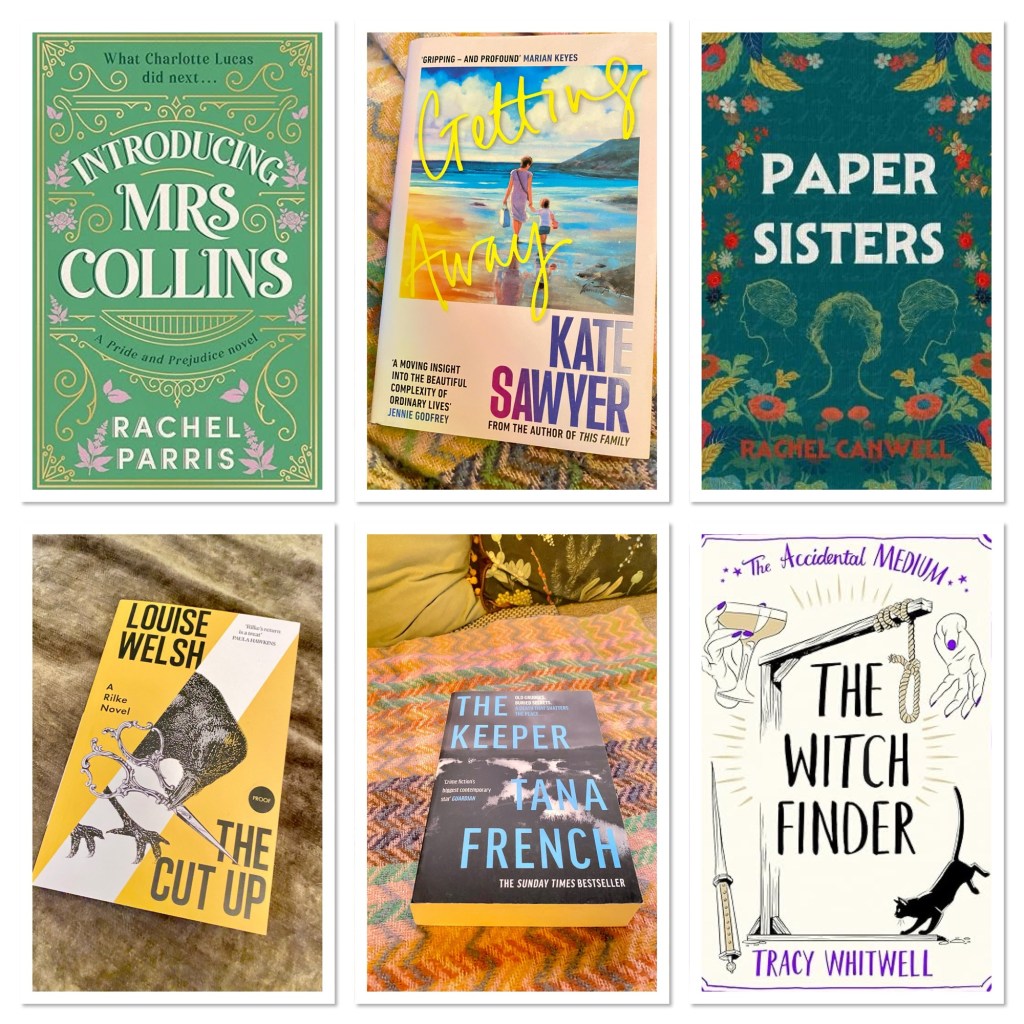
This beautiful Pride and Prejudice inspired book is an absolute dream to read and felt like being back with old friends. I had always felt that Elizabeth Bennett underestimated her friend Charlotte Lucas and clearly she was a character whose possibilities played on author and comedian Rachel Parris’s mind too. Taken from the point Lizzie rejects Mr Collins’s proposal, the book takes in events from the rest of Austen’s romance and carries on beyond giving us glimpses into events we don’t get to see, such as the Darcy wedding at Pemberley. It’s told from Charlotte’s perspective but with letters from other characters and glimpses into Mr Collins’s past. These give us an insight into his manner and behaviour, while the letters give us a new slant on other characters too. I felt that Charlotte was pragmatic in her choice of husband and found ways to grow within it – sometimes in spite of Mr Collins and other times because of him, rather surprisingly. She has purpose, status and time to educate herself. Even Mr Collins has to admit she has blossomed, but when a spark is lit with a visitor to Rosings will Charlotte pursue the one thing she doesn’t have – romantic love and passion? I loved this and I’m sure many of you will too. It is pitch perfect, funny, sad and incredibly entertaining.

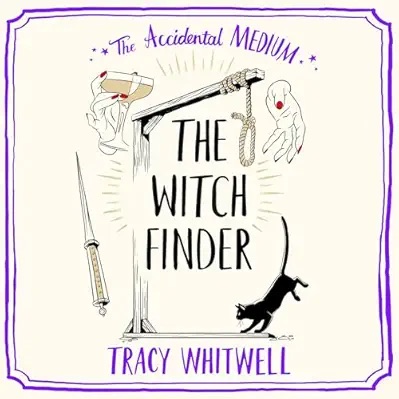
I have raved about Tracy Whitwell’s series following the adventures of Tanzy, actor and reluctant medium. This is the fifth and final instalment so I wanted to savour it. After her eventful trip to Iceland Tanz is back on home soil and soon makes her way back to her childhood home of Newcastle. Both she and her ‘little mam’ have been experiencing dreams about hangings, in Tanz’s case very alarming ones where she has a bag over her head and a noose round her neck. Her visions are powerful and are accompanied by sudden and torrential storms. Knowing she needs some help here, she asks Sheila to come and join her. They’re soon at the very spot where a travelling witch finder condemned several women to death by hanging. Even more alarming than usual, he seems to be able to see Tanz too, coming at her with his ‘pricker’ – the implement he uses to prod his prisoners to see if they bleed. This is toxic masculinity 17th Century style and Tanz is going to know her new Icelandic guides and all her power to defeat it. There’s the usual eccentric characters, including an Amazon woman dressed ‘like a Valkyrie’ who is also researching local history of witches and a ghostly lady called Mags who is full of mischief when it comes to putting men in their place. This is genuinely scary in parts and is based on historical research of the area. It was great to see Tanz back home again and with a case to solve, a love story to wrap up and a surprise that might determine her future, it’s a great finale to this funny and fierce series.

I’ve been able to catch up on some reading this month and I’ve been dying to get to the latest Kate Sawyer. She is now one of my ‘must buy’ authors and this novel just confirms her status on my shelves. Using the structure of family holidays, this book follows four generations of one family and the secrets they carry. Starting post-war with Betty who is at the seaside with her little girl Margaret and husband Jim, but Margaret doesn’t know the secret romance her mother had with the son of a local factory owner. Jim was a pragmatic choice and he’s a good husband despite the facial injuries and terrible memories he carries. Jim is doing well in his job and a few years later they visit the beach with his American colleagues and a teenage Margaret. There something happens that changes the course of this family. The author takes us through the 20th Century, showing how the changing world shapes the experiences of this family. From a beach on the east coast of England, we see holidays in Cornwall, then abroad as Maggie embraces the opportunities of a her husband’s job as a travelling buyer, and when her brother Tommy invests in and up and coming area of Europe. We see how changes in law and culture make some relationships and break others. The women in this novel are exceptionally well-written and the issues they face from infidelity, domestic violence, infertility and the consequences of a more permissive society opening the door for a more open generation than the one before. Throughout, this is a family that tries its hardest to stay together, even when some members are on the other side of the world. I love complex relationship dynamics so this was an absolute joy to read.

This incredible debut by Rachel Canwell deserves all the praise it’s receiving online. In fact she had a books signing at my local bookshop in Lincoln and had sold out within an hour! Her book is set in the south of Lincolnshire, in the fens and a family who live on the banks of the River Nene at Sutton Bridge. The new swing bridge allows them to visit the village and on the opposite bank a port is being built. Next to their home is a small hospital, readied by their father to serve port workers when everything is finished. One dark and disorienting night the family are woken by a rumbling sound and the splash of things hitting the water, but it’s only in the morning that the full devastation can be seen. The bank has collapsed underneath the new port, the family has lost their occupation and one of its sons, who drowned trying to rescue workers. We meet the three women who tell our story in the 1910s, Eleanor and her sister Lily are the last family members living in the house adjacent to the hospital – still empty and unused. Eleanor has fallen in love with John, the local blacksmith but can’t make plans because of her sister Lily. Lily will not leave the family house, in fact she rarely leaves her bedroom. The loss of her twin brother in the port disaster still affects her daily and she will not allow Eleanor to leave her alone in the house. Eleanor’s best friend Clara is married to their older brother Frank and they live in the village with their children. Clara is married to a bully and she sees one in Lily, who passive aggressively controls her sister. War is looming and as a prisoner of war camp is suggested for the old port site tensions within the community rise. With grief joining domestic violence, manipulation and alcohol issues this family is set for an explosive reckoning. I became so attached to these women and their family’s tragic history that I read it so quickly. I will go back and read it again though. Every element – character, setting, plot – is beautifully done and the historical background took me back to a time when my own grandparents would have been working the land and living next to the River Trent further North in the county. This is an excellent debut that had me absorbed completely. 

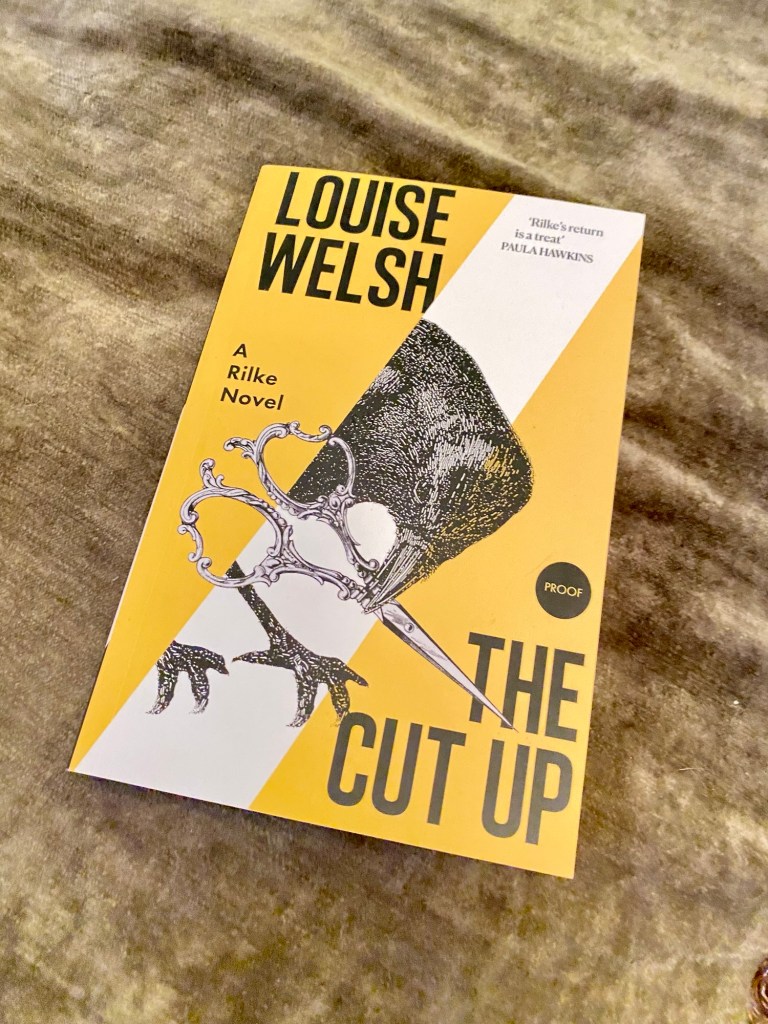
This was an unexpectedly great crime novel set around an auction rooms in Glasgow, a venue where criminal elements mix with rich collectors and eccentric dealers. Rilke is pulled into a difficult situation after his friend Les finishes his prison sentence. When one of the Bowery Auctions regulars, the creepy and questionable Manderson, is killed on the premises it’s only 24 hours till their next auction. In fact Manderson has been stabbed in the eye with one of the antique hat pins they had out for the viewing afternoon. An Edwardian amethyst pin would have had to make its way through a huge hat and into a woman’s long, piled up hair, to keep it secure. Now it’s made its way through Manderson’s eye into his brain and it’s going to take a lot of strength to remove it. Knowing the police will be involved and that Bowery’s will be implicated, perhaps it would be better if it wasn’t obvious that he’s been killed with one of their auction lots. Things get worse when a gangster turns up at Bowery Auctions with Rilke’s mate Les in tow. Ray has a way with a razor and he focuses Rilke with a swipe to Les’s face. Rilke must now investigate who killed Manderson in just ten days or Les will pay the consequences. His investigations will take him to an old school where many ex-pupils have reported sexual abuse, to a brothel named after a questionable film and a girl called Chloe who may or may not be controlled by her boyfriend, Dickie Bird. Will he find the answers that will save Les? More to the point, are the answers to be found outside Glasgow or a lot closer to home? Glasgow is a city that doesn’t hide its darker quarters or episodes in its history and we see them here from pubs to brothels and a particularly creepy old school. The author brings in modern concerns around women using Only Fans and other internet sex work to make ends meet. Can it ever be a feminist thing? There are also issues around coercive control and manipulation, but as Rilke learns it’s easy to get the wrong end of the stick. There’s a familiar jaded feeling around these issues and a knowledge that no matter what’s brought to light, some people will always get away with it. This is a gritty thriller with a streak of humour and some fantastic characters. I’m looking forward to the rest of the series.

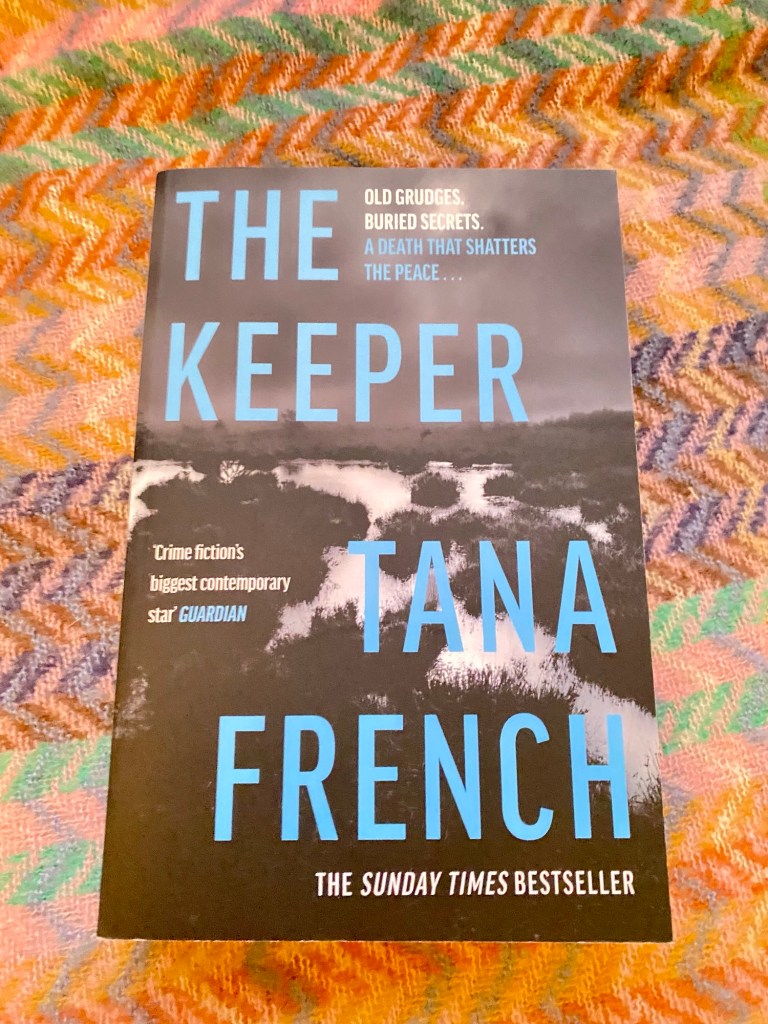
Finally this month I’m recommending this brilliant thriller from Tana French, the third in a series featuring ex- Chicago cop Cal and his new life in the small Irish village of Ardnakelty. This is such an atmospheric read that manages to feel isolated, but suffocating at the same time. Cal and his fiancée Lena, who was born here, try to keep out of any local gossip or feuding. However, when young teenager Rachel goes missing one night in a storm both Cal and his woodworking protoge Trey go looking for her. She’s found in the river, after setting out to meet her boyfriend Eugene Moynihan at the bridge. She appears to have drowned but Eugene claims not to have made the arrangement to meet in such terrible weather and when the autopsy comes back it reports that Rachel had swallowed anti-freeze. Is this an accident or suicide. Cal and Lena suspect foul play and with Lena being the last person to see Rachel, staying out of this might not be possible. When Cal appears to side with his neighbour Mart against the Moynihan family tensions rise and Tommy Moynihan, family patriarch, starts to show just how much of Ardnakelty he holds in his power. This is a complex mystery, with risky allegiances and terrible consequences. The Irish dialogue is so beautifully written and there are moments of laugh out loud humour to dispel the tension. This was an incredibly good thriller with plenty of twists and a fascinating central character too.

Here’s a selection from my March tbr:

Posted in Ten on Tuesday

Ten on Tuesday: Ten From My Personal TBR

Every bookblogger works differently and most are probably a lot more organised than I am. I have books I’m looking forward to for a given year, from series or authors I follow religiously or books I’ve seen as debuts from publishers. Inevitably though there will always be others that creep in along the way, such as the blog tour you agree to as a favour, or a group read along or something that a publisher or PR offers you and sounds intriguing. Aside from all of these there are those books that just turn up, sent by publishers and authors in the hope I can fit them in. Any book that comes in goes on my TBR list in my reading journal and I tick them off as I go. The same goes for NetGalley reads, which often have to take a back seat for a while and then I have a quick blitz to get my reading percentage up a bit. Then there are the books I buy and sadly they often take last place. These books occupy a book shelf in the corner of the sitting room, totally separate from books I’ve been sent to review. This pile just doesn’t get priority, especially when there’s a really busy month. They languish on the shelf – and three piles on the floor if I’m being honest – and get read while I’m on holiday or taking a break from the blog. I often still review them, but usually they’re so behind they end up featuring on my Throwback Thursdays. Today I thought I’d share a flavour of what’s on my ‘bought books’ TBR. They come from many sources, independent bookshops, second hand bookshops, Bookshop.org and Amazon or even Vinted these days. I hope you enjoy a delve into my bookshelf.

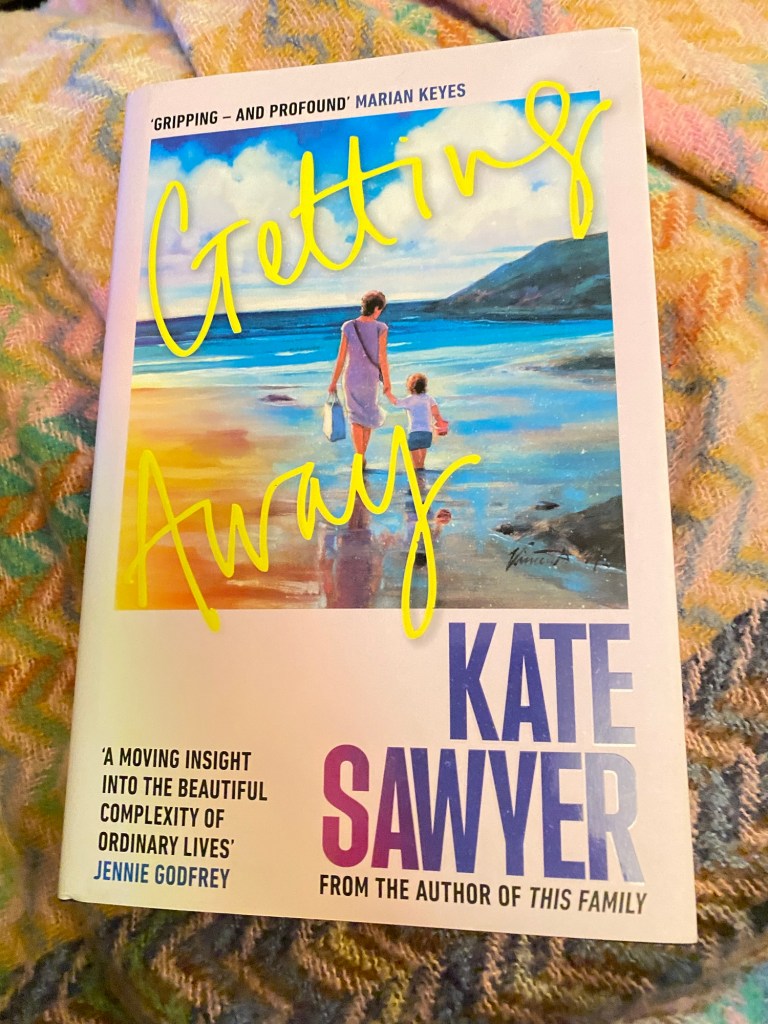
Getting Away by Kate Sawyer

Margaret Smith is at the beach.

It is a summer day unlike any other Margaret has ever known.

The Smith family have left the town where they live and work and go to school and come to a place where the sky is blue, the sand is white, and the sound of the sea surrounds them. An ordinary family discovering the joy of getting away for the first time.

Over the course of the coming decades, they will be transformed through their holiday experiences, each new destination a backdrop as the family grows and changes, love stories begin and end — and secrets are revealed. The author takes us through eight years of holidays from British beaches, to Spanish getaways and a trip to New York, but this more than a postcard. It charts the highs and lows of a family and there’s nothing like complex family dynamics for me. I love Kate’s writing so I must make time for this one.

Broken Country by Clare Leslie Hall

This novel gets such a great write up online and the synopsis is incredible.

Everyone in the village said nothing good would come of Gabriel’s return. And as Beth looks at the man she loves on trial for murder, she can’t help thinking they were right. 

Beth was seventeen when she first met Gabriel. Over that heady, intense summer, he made her think and feel and see differently. She thought it was the start of her great love story. When Gabriel left to become the person his mother expected him to be, she was broken. 

It was Frank who picked up the pieces and together they built a home very different from the one she’d imagined with Gabriel. Watching her husband and son, she remembered feeling so sure that, after everything, this was the life she was supposed to be leading. 

But when Gabriel comes back, all Beth’s certainty about who she is and what she wants crumbles. Even after ten years, their connection is instant. She knows it’s wrong and she knows people could get hurt. But how can she resist a second chance at first love? 

A love story with the pulse of a thriller, Broken Country is a heart-pounding novel of impossible choices and devastating consequences.

Wow! That’s quite a summary. I am told by other bloggers I will be ‘broken’ or ‘ruined‘ by the end of this and yet I still want to read it.

The Everlasting by Alix E. Harrow

A lady-knight whose legend built a nation meets a retiring historian in awe of her fame. He’s sent back through time to make sure she plays her part . . . even if it breaks his heart.

Sir Una Everlasting was Dominion’s greatest hero: the orphaned girl who became a knight, who died for queen and country. Her legend lives on in songs and stories, in children’s books and recruiting posters – but her life as it truly happened has been forgotten.

Centuries later, Owen Mallory – failed soldier, struggling scholar – falls in love with the tale of Una Everlasting. Her story takes him to war, to the archives, and then into the past itself. Una and Owen are tangled together in time, bound to retell the same story over and over again, no matter what it costs. But that story always ends the same way.

If they want to rewrite Una’s legend, and finally tell a different story, they’ll have to rewrite history itself – and change their lives in the process . . . So, this sounds a bit of an odd one for me. I’m always saying I don’t read a lot of fantasy and I don’t, but I love Alix Harrow’s writing, ever since her first novel Ten Thousand Doors of January. This would take me into the realms of romantasy for the first time (thanks Zoe for explaining it to me) but I’m here for it.

The Bewitching by Silvia Moreno-Garcia

Back then, when I was a young woman, there were still witches’: that was how Nana Alba always began the stories she told her great-granddaughter Minerva – stories that have stayed with Minerva all her life. Perhaps that’s why Minerva has become a graduate student focused on the history of horror literature and is researching the life of Beatrice Tremblay, an obscure author of macabre tales.

In the course of assembling her thesis, Minerva uncovers information that reveals that Tremblay’s most famous novel, The Vanishing, was inspired by a true story: decades earlier, during the Great Depression, Tremblay attended the same university where Minerva is now studying and became obsessed with her beautiful and otherworldly roommate, who then disappeared under mysterious circumstances.

As Minerva descends ever deeper into Tremblay’s manuscript, she begins to sense that the malign force that stalked Tremblay and the missing girl might still walk the halls of the campus. These disturbing events also echo the stories Nana Alba told about her girlhood in 1900s Mexico, where she had a terrifying encounter with a witch.

Minerva suspects that the same shadow that darkened the lives of her great-grandmother and Beatrice Tremblay is now threatening her own in 1990s Massachusetts. An academic career can be a punishing pursuit, but it might turn outright deadly when witchcraft is involved.

I LOVE a witch story. I blame Practical Magic. So I’m dying to read the author’s take on witching, especially if it has the same horror vibes as her other novels.

All the Way to the River by Elizabeth Gilbert

In 2000, Elizabeth Gilbert met Rayya. They became friends, then best friends, then inseparable. When tragedy entered their lives, the truth was finally laid bare: the two were in love. They were also a pair of addicts, on a collision course toward catastrophe.

What if your most beautiful love story turned into your biggest nightmare? What if the dear friend who taught you so much about your self-destructive tendencies became the unstable partner with whom you disastrously reenacted every one of them? And what if your most devastating heartbreak opened a pathway to your greatest awakening?

All the Way to the River is a landmark memoir that will resonate with anyone who has ever been captive to love – or to any other passion, substance or craving – and who yearns, at long last, for liberation.

I hear a lot of criticism of Elizabeth Gilbert but most of it tends to revolve around concerns that she’s mining her life for her writing. That’s what memoir is. I love complicated people and I don’t need to like a writer to enjoy their memoirs, especially if they have a lot of insight and clarity about their own struggles. I’m looking forward to seeing where Liz is now, after Eat, Pray, Love’s rather hopeful ending I know a lot has changed.

Our Beautiful Mess by Adele Parks

Connie can’t wait to have her daughters back home for the holidays. Fran is bringing a new boyfriend to stay, and the empty nest will once again be full of friends, family and young love.

Yet from the moment she sees Zac, Connie knows trouble is coming. Zac reminds her of the worst mistake she has ever made: a man whose charm and good looks nearly destroyed her marriage. She doesn’t want him in Fran’s world, but then Fran announces she’s pregnant.

Connie is terrified that her past is going to threaten her family’s future, but there’s a greater menace looming. She’s not the only one who has something to hide. Someone in the house has another devastating secret. A deception which will put everyone Connie loves in shocking danger, and one of them will pay the ultimate price.

I place Adele Parks in the same category as Louise Candlish and Lisa Jewell, in that I absolutely devour their books. Usually I can read them so quickly that they’re easy to fit between my other reads so I don’t know how this ended up in the unread pile. Now hopefully I’ll have time to read it.

Small Pleasures by Clare Chambers

1957, the suburbs of south east London. Jean Swinney is a journalist on a local paper, trapped in a life of duty and disappointment from which there is no likelihood of escape. When a young woman, Gretchen Tilbury, contacts the paper to claim that her daughter is the result of a virgin birth, it is down to Jean to discover whether she is a miracle or a fraud. As the investigation turns her quiet life inside out, Jean is suddenly given an unexpected chance at friendship, love and – possibly – happiness.

I was first recommended this book about three years ago and I see it constantly on bloggers favourite lists so I’m determined to get it read this year. It sounds so unusual and hopeful and at the moment that’s just what I’m looking for.

The Woman in Suite 11 by Ruth Ware

The stunning mountain views. The beautiful shore of Lake Geneva. The terrified woman held in the suite belonging to the hotel’s millionaire owner.

Lo Blacklock’s all-expenses paid trip to a luxury Swiss chateau should have been the ideal return to work. But as her past catches up with her, the millionaire’s mistress demanding that Lo help her escape, and a body turning up in the room next door, forces Lo to ask how far would she go to help someone she’s not even sure she can trust… 

Having read Ruth Ware’s Woman in Cabin 10 I picked this up in a second hand bookshop in Scotland. I love the strange anonymity of hotels and the muffled quiet you get in luxury hotels. They can also be a little creepy. Again, I should be able to devour this so why haven’t I picked it up yet? Sometimes I frustrate myself!

Everything about Adeline Copplefield is a lie . . .

To the world Mrs Copplefield is the epitome of Victorian propriety: an exemplary society lady who writes a weekly column advising young ladies on how to be better wives.

Only Adeline has never been a good wife or mother; she has no claim to the Copplefield name, nor is she an English lady . . .

Now a black woman, born in Africa, who dared to pretend to be something she was not, is on trial in the English courts with all of London society baying for her blood. And she is ready to tell her story . . .

I loved Lola’s book The Attic Child so this was a ‘must-buy’ for me, I love books that write people back into their history. This has that intrigue of a secret writer who is very different to the character they’re portraying. I love the idea of subverting The Angel in the House stereotype so this one is definitely going next to the bed.

The Unrecovered by Richard Strachan

This book came out exactly one year ago this week and it has languished in the pile ever since. The money I could save!

At a Scottish manor house requisitioned as a temporary hospital during the First World War, Esther works as a volunteer nurse while dreaming of becoming a poet. With her husband and beloved father both dead, she knows that if the war ever ends she must build a very different life for herself. 

Meanwhile, on the coast beyond her new home lies Gallondean Castle, a gloomy near-ruin that has been unhappily inherited by Jacob. Jacob is already haunted by his own demons but as he uncovers details of the castle’s past, the shadows only seem to be growing darker around him. 

However it is Daniel, one of the soldiers who appears to have received only a minor, yet mysterious, injury, whose life will come to connect with both Esther and Jacob in horrifying and unexpected ways…

This was nominated for a Bloody Scotland prize and I do tend towards Scottish settings for both crime and gothic fiction. I have a feeling I’m going to love it.

So that’s ten from my personal TBR and I need to incorporate them into my reading list so they’re not languishing for another year! I’ll let you know how I get on.

Posted in Squad Pod Collective

Blank Canvas by Grace Murray 

Introducing an outstanding new voice in literary fiction: a sensual, sharp, and utterly compelling campus novel about grief, reinvention, and the ripple effects of telling lies

If I ever woke up with an ungodly dread ― that I could change it all now, turn around, and confess ― I ignored it. I had never been good, and there was no point in trying now.

On a small liberal arts campus in upstate New York, Charlotte begins her final year with a lie. Her father died over the summer, she says. Heart attack. Very sudden.

Charlotte had never been close with her classmates but as she repeats her tale, their expressions soften into kindness. And so she learns there are things worth lying for: attention, affection, and, as she embarks on a relationship with fellow student Katarina, even love. All she needs to do is keep control of the threads that hold her lie – and her life – together.

But six thousand miles away, alone in the grey two-up-two-down Staffordshire terrace she grew up in, her father is very much alive, watching television and drinking beer. Charlotte has always kept difficult truths at arm’s length, but his resolve to visit his distant daughter might just be the one thing she can’t control?

I found myself unsure who to like in this novel about a student on a liberal arts campus, but I became drawn in by the tangle of lies and complicated emotions around Charlotte and her relationship with Katarina. When Charlotte first sees Katarina on campus she’s not impressed and describes some aspects of her as ugly, but I thought she became fascinated by Katarina’s confidence. This stands out in the work she’s producing and her very clear sense of who she is, she also seems to make friends easily, whereas Charlotte is something of a loner. When they first meet Katarina has a lot of opinions, likening the TV show ‘Married at First Sight’ to our ancestors enjoyment of public executions. She sees no distinction between high and low forms of art. Katarina is an artist who has no trouble in taking her work seriously, whereas Charlotte is full of doubts and struggles to meet the workload. Charlotte doesn’t really know who she is: in the car she checks whether Katarina likes a song before confirming that she likes it too; she starts to dress like Katarina and notices her wardrobe has become ‘theirs’. It’s also clear that she feels different and dislocated from a sense of family, as she notices Katarina’s lock screen on her phone where she and her mother are hugging and smiling for the camera she thinks they look like ‘catalogue people, entirely unreal’. When Katarina and her friends ask about her own family she tells them family life was turbulent, she was uprooted from schools and moved around a lot. She also tells them her father died over the summer. Of course this brings sympathy and less questions, but Tamsyn mentions her misgivings to Katarina: 

“If my dad were gone […] I’d feel insane. Totally scooped out. I wouldn’t be able to chill or smile, or fuck or anything.” 

Charlotte tells Katarina that Tamsyn can’t cope with someone’s grief response being different to her own. Even though Charlotte seems attached to Katarina, she says things that suggest she’s just playing out the role of girlfriend rather than actually being present. There are things she doesn’t like about Katarina, in fact she finds some behaviours disgusting, but pushes the thoughts to the back of her mind. As she analyses how she feels she does mention that she loves her – “in a way. The only way I could”. What she has learned is that her story of her father’s sudden heart attack makes people soften towards her and treat her nicely. Although that comes with its own problems, when the following summer Katarina finds them a working stay in Italy. As they’re fed by Guilia and do the work on her smallholding she finds a sense of peace and even contentment, but she doesn’t know how to process or enjoy these positive emotions.

“There was something bottomless about being content. I knew other emotions well, sought them out. I knew how to be in them, occupy them and how to cover them up, so they looked like something else, all wrapped and packaged.” 

Her need to be so tightly controlled is being tested and there may be something else she can’t control. The father she has buried and mourned in her head has been concerned about the growing distance between him and his daughter. He could simply book an AirBnB and fly out to see her, meet her friends and have a catch up. I felt Charlotte’s tension as she tries to control her every response and remember the lies she has told before and be consistent. I was waiting for everything to collapse and found myself concerned about what that might do to her mental health. I also felt for her father, who comes across as a loving and kind man. I found myself wondering whether her lie was rooted in repressed feelings around her dad. What was she angry about and what had happened in her childhood to leave her with no sense of who she is or what she is worth? During the last third of the book we find the answers to these questions, bringing that hopefulness to the book that began to creep in during their time in Italy. Not only does Charlotte have to deal with the consequences of her lies, she must face the reasons she started to tell them in the first place. This was where I started to feel some emotion for her and I think other readers will too. When I used to work with clients, I would use the brick wall analogy. If the wall is unstable, the builder must take it back brick by brick to where the problem begins and fix it before rebuilding. That’s what Charlotte must now do and I had hopes that she would reconcile with her father, find some inspiration for her final art piece and most of all find her sense of self. 

I was impressed by the author’s depiction of Charlotte’s fragile mental state and sense of self. The novel asks all sorts of questions about what makes us who we are – is it the things we like, the people who love us, our achievements or is there a solid, innate character that determines all these things? Is our sense of who we are fixed and unchanging or is it more fluid? The background of university and Charlotte’s choice of a creative subject is interesting because we create and generate ideas that show aspects of our self and the times we live in. One of the tutors explains this by showing his students a female face that can be seen reproduced in many different ways through centuries and art movements, but it is eventually revealed to be variations on the Madonna. He tells his students that every image is the ghost of all the words and pictures that come before it and that is also true of us. The self we are today is the result of every thing, person or experience we’ve ever known, good or bad. It is only by stripping back and rebuilding, accepting all the parts of our self – even the parts or experiences we don’t like and have caused us pain – that we can be content. In that journey, Charlotte might finally be able to create something she can own and be proud of. 

Meet the Author

Grace Murray was born in 2003 and grew up in Norwich. She has recently graduated from Edinburgh University, where she read English Literature and found time to write between her studies and two part-time jobs. Her short fiction has been published in The London Magazine.


In writing Blank Canvas, Grace set out to explore themes of Catholic guilt and queer identity, clashing moral codes and lies, and the opportunity for reinvention presented by moving between countries and settings. Blank Canvas was written over the course of a year as part of WriteNow, Penguin Random House’s flagship mentorship scheme for emerging talent. Grace Murray won one of nine places on the scheme on the exceptional strength of her writing, selected from a pool of over 1,300 applicants.