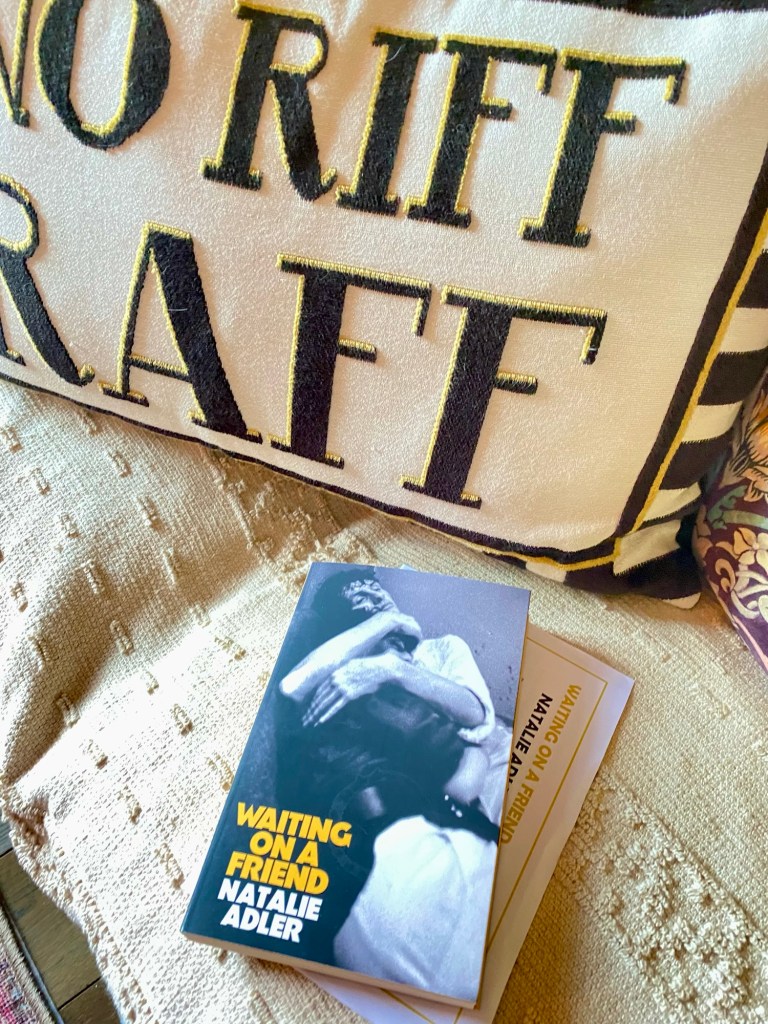
“When Mark died I thought I’d start seeing him around more..”
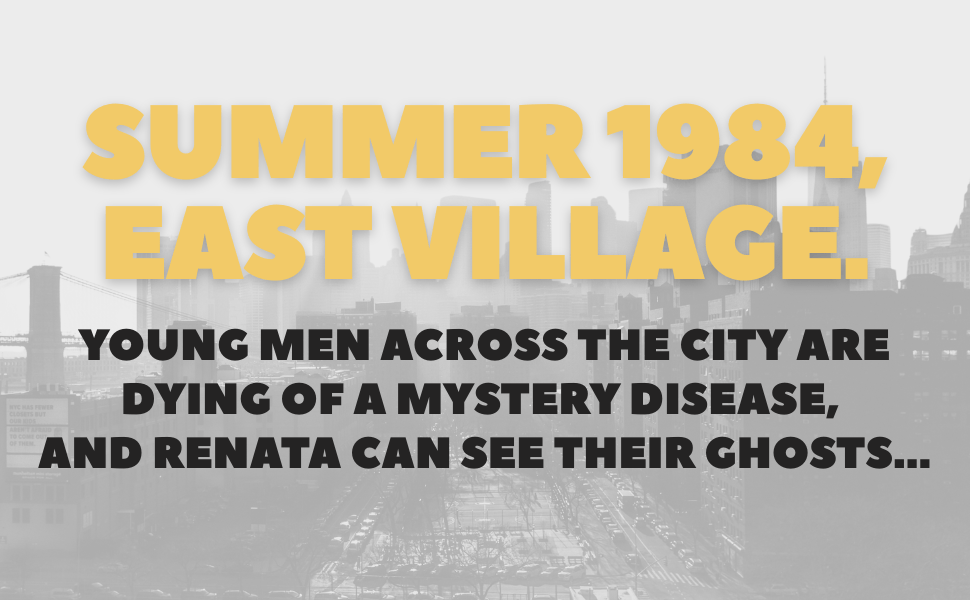
From that fascinating opener this book becomes so many things: a meditation on grief; a witness to the AIDS crisis in 1984 New York City; a community’s anger at the gentrification of the East Village; a ghost hunt led by a company called Manhattan Remediation. Renata is a young dyke-about-town who has the ability to see ghosts, which has been happening more and more frequently as her friends have started dying of what has recently been named AIDS. So, when her best friend Mark dies, she assumes she’ll see him again. There’s no way Mark wouldn’t give her a chance to say goodbye, would he? But to her disappointment – and increasingly, her concern – Mark doesn’t appear. Renata has other problems, too. A mysterious, police-like force has begun ridding their East Village neighbourhood of anything abnormal or inexplicable. At first, she’s sure they’re scam artists, but it becomes clear they’re actually trapping ghosts. With her band of lovably eccentric pals and lovers, Renata is determined to fight back against the erasure of her friends’ memories and the sanitizing of her beloved New York.
Renata is our narrator throughout and I felt a kindred spirit in seconds. Her expectation of seeing her friend Mark seems odd at first reading, but when I realised he had died without her and she hadn’t known for a few days I was so sad for her. Mark is clearly the most important person in her life, they shared a living space when either one of them wasn’t sleeping at a lover’s place and it seems unthinkable that she wouldn’t have known. That she wouldn’t have felt it. That the sky didn’t cave in. When people say life goes on this is exactly what they mean – everything carries on as normal while you feel like a shrieking banshee. However, for Renata there’s an added element to this disbelief. She can see dead people. In fact she’s being plagued by the ghost of their friend Francois, who she definitely doesn’t want in her flat. So why hasn’t Mark appeared? It’s hard to accept that the powerful and deep emotions you share with someone have suddenly become one sided. I remember thinking when my husband died, we were so close, how can that line of communication be cut? Years later, a chance encounter with a medium left me questioning again, she definitely had Jerzy’s turn of phrase, his humour and tendency to flirt with the furniture, but why was he talking to her and not me? Renata and Mark had a complicated relationship, they each had lovers, but they did have times when they slept together. There was no possessiveness in life, but in death I could understand Renata’s desire to have him to herself.
I was reminded of Jill in the TV series It’s A Sin and the deep connections the residents of the pink palace had with each other. When her best friend Ritchie starts to deteriorate badly, his family take him back home and cut him off from the people who have lived with him. It’s devastating when Jill travels to his childhood home, only to be told by his mother that Ritchie is already dead. The author picks up on this in the novel, the families unable to live with their child’s sexuality rushing in near the end to claim them. This could be out of love, but is also a way of cutting them off from their community, not wanting the stigma of AIDS to touch their family. Some families quickly and quietly arranged funerals for their children without the people who loved them for who they truly were, often citing the cause of death as cancer so the neighbours didn’t know. I was a teenager at the start of the AIDS epidemic here in the UK and I remember feeling genuine fear. The government leaflet had a gravestone on the front with ‘don’t die of ignorance’ carved on it. I even remember a bizarre telethon type event called First AIDS, presented by comedians and DJs telling us which sexual acts were most risky, how to prevent contracting the virus and how to put a condom on. I was thirteen and I honestly believe that it informed by sexual behaviour from the offset – I was known by my friends in later years for two methods of contraception at all times and I’m sure that was down to how frightening it felt back then. There was enormous stigma and prejudice, but because I lived in a quiet village in a rural county it felt somewhat removed from me. Even though I had an Uncle who was obviously gay in hindsight, we never really talked about it. Reading this and knowing that, a few years earlier than First AIDS, death was a daily reality in the gay community of the East Village really made me realise how far behind and out of touch we were.
The author skilfully switches tones from crushing reality, to horror and even humour at times which I really enjoyed. She doesn’t spare the realities of a death from full blown AIDS, in particular she tells us the story of Francois who is haunting her apartment. He is an angry ghost, throwing and pushing things, always making a noise and creating a horrible atmosphere, even before he appears. When he does he is known to vomit, pee on the rug and often lets out a terrible scream. Francois was a teacher, but when he started losing weight and sores were appearing on his face he was asked to leave because ‘his face was scaring the children.’ She details the secondary illnesses that would kill someone with the HIV, the lymphoma or other types of cancer or infection like pneumonia. Then there’s the encephalopathy and dementia. It’s no surprise, when we hear François’s story, that his ghost is angry. She talks about the guilt she feels for wanting him to die quicker, to stop his suffering. Renata’s mother, who never let on that she had the same gift as her daughter, said that spreading salt in the corners of problematic rooms helped soak up the negative energy, so she’s been trying baths with mineral salts but it hasn’t helped. There is some comedy in Francois as well as fear and it’s Renata’s irritation with him that made me smile. She knows she can’t live with him, but what to do? Another theme within the book is the gentrification of the neighbourhood, with talk of landlords trying to remove tenants in rent controlled apartments so they can renovate and earn more from a new one. A company called Manhattan Remediation are mentioned, claiming to be able to remove ghosts or entities from apartments. It’s discussed as a possible link to gentrification, a way to ‘clean up’ the neighbourhood. This is a proud community that wants to keep its history and its ghosts. When Francois finally pushes Renata to the edge she calls them and like the fourth emergency service Dr Silverman arrives with a faraday cage. Could this be the answer?
I was really interested in the community Renata lives in and her job at the vintage shop. She also has other friends who help her sit Shiva for Mark – a Jewish week of mourning where the bereaved stop their daily activities and focus on grieving. Renata’s friends cover the mirrors and prepare food and they talk about their memories. This is a stark contrast to her visit with Mark’s lover Patrick where there is tension and anger on both sides and I was glad she had a loving community around her. The author has captured the resistance and pride of the gay community when they’re coping with stigma and suspicion. The warmth and empathy they show each other is moving. This is such a powerful subject and really succeeds as a piece of queer history in New York City, especially since most US deaths from AIDS occurred in NYC and San Francisco. It really embodies the fear and paranoia of that time perfectly, but also depicts a community of people for whom sex may be fluid but love is plentiful and loyalty is strong. For individuals already stigmatised by their sexuality and estranged from families, this community is their found family and those ties are unbreakable. As Renata observes, if the strength of her grief alone could compel Mark to appear then he would. The addition of Renata’s psychic abilities is a genre-bending idea that mostly works really well and accentuates how lost and confused she feels. I felt her need to keep living too, even though the pull of the dead is so strong. The way she relates her personal grief to the reader, in a time of unprecedented loss, is the strongest part of the book.
Out now from RiverRun