
*SPOILER WARNING*
This week’s ten are the fictional deaths that really affected me emotionally and why, so if you haven’t read the above books be aware that I will be revealing who dies and the twists that led there if there are any. I’ve been reading about death a lot this month and it’s probably not been the easiest month for that sort of read. 19 years ago on the 25th May I became a widow at the age 34. My husband and I married just six weeks after meeting and I uprooted my whole life to be with him. He had progressive multiple sclerosis and unfortunately died from aspiration pneumonia only seven years later. I’m so grateful for the years I had with him though. They were not easy, two people in a house with a disability is tough and made tougher by a stupid system that deemed me too sick to work but well enough to provide two thirds of the 24 hour care he needed in the last couple of years. Having exhausted myself, I was relieved that he wasn’t suffering and that I had time to look after myself. I was glad to lose the illness (although I still have it) but it took a few months for the loss of the person to hit me, so hard that I felt hollow. So, deaths in fiction do tend to hit me hard and I’m going to start with a YA novel with a character who was so like my husband Jerzy it made me smile as it ripped my heart out.
This story of two terminally ill teenagers is such a quick read, but it lasts a long time in your heart. Augustus Waters was so like Jerzy, just younger. He’s charismatic, positive and almost glows with that special something that makes others look up to him and listen to what he says. When he meets Hazel at a support group she finds him handsome, intelligent and brimming with positivity about his own outlook, having had a brush with osteosarcoma that led to the amputation of his leg. Their love is almost instant and the poignancy is that their first love could be their last. Augustus wants to do something heroic and it’s a quality Jerzy had in spades. Even from his wheelchair he went tall ship sailing, scuba diving and before the MS had played rugby for his county and London Irish. He had that sparkle I could feel in Gus and that undefinable something that made others want to be near him. Gus is a romantic, both in this beautiful love he has for Hazel and in his attitude to his illness. His outlook attracts other patients and keeps them going, so his death, when it comes, feels impossible and like a betrayal. How can someone as bright and beautiful as this do something as ordinary as die. It heightens the relentless nature of the disease and the human condition – no matter how great, how loved or how heroic we are, we all die in the end.
We all experience a book in different ways because we read it through the filter of our own experiences and emotions. I haven’t met anyone who finds Jay Gatsby’s death as sad as I do. Gatsby is another romantic and he truly believes that to win Daisy all he needs is wealth and status, he never doubts her love. He’s been clinging to his feelings for Daisy, thinking she has been doing the same. Finding out she’s married to Tom Buchanan and lives out on Long Island, he moves in across the water and waits. His next door neighbour Nick, who is also Daisy’s cousin, gets her to visit his house for tea and finally they are in the same room. Gatsby shows her his home and his wealth, thinking that now she must see there are no obstacles in their way. However, the Buchanans are ‘old money’ and despite Tom’s drinking, aggression and cheating with Myrtle from the gas station, he’s still the ‘right sort’, whereas Gatsby’s wealth is from dubious sources and even though hundreds of people attend his grand parties he’s probably one of the loneliest characters in fiction. The terrible accident that occurs as the group race back from the Plaza Hotel has been building slowly in the background. When Gatsby takes the blame for hitting Myrtle with his car, even though Daisy was driving, it’s the beginning of the end. Myrtle’s husband, who has been driven mad with jealousy over her affair, will seek revenge. It comes as Gatsby waits for Daisy’s call, hoping she’ll leave Tom and be with him. She never calls, but the waiting Gatsby doesn’t know this as he’s floating face down in the pool, dead from gunshot wounds. What’s devastating is the yearning, the hope and our knowledge that Daisy and Tom have already left, having got away with murder and seemingly untouched by the deaths of their lovers.
David Nicholls writes relationships and emotions like no one else and when I first read this back in the early 2000s I spontaneously burst into tears. For me this line is up there with the most devastating in fiction:
“Then Emma Mayhew dies, and everything that she thought or felt vanishes and is gone forever.”
It’s so utterly final. All the things we’ve read about her on previous St Swithin’s Days that made both us and Dexter fall in love with her are gone. It makes us realise that it’s not just her presence that’s gone, but her love for Dex and all their little relationship jokes and rituals. No one else will understand Dex like Emma did. The author builds up our expectations for this couple for so long and they spend long periods apart, mainly for Dex to get his shit together and realise that what they have is love. So their time together was so brief and we grieve that, the loss of all they were going to do, such as start a family as they were discussing at breakfast. Before she gets on her bike and rides off into the path of a lorry. I’ve seen so many people on forums complaining about her death and how it doesn’t serve the plot or purpose of the novel. Her death is the purpose of the novel, it’s sudden and brutal, leaving everything unresolved and that’s how people die sometimes. Nicholls is showing us what happens what happens when we don’t take risks and waste time, life is fragile and can be snuffed out at any moment. It brings a gut punch of reality to the romance and it’s a line I’ll never forget.
Sometimes, death occurs out of sight or when the author has distracted us with other things. Kate Atkinson’s book Life After Life is a masterpiece and probably one of my favourite books of all time, but this sequel following her younger brother Teddy absolutely floored me. As with Ursula in Life After Life, we see the events of the 20th Century through the eyes of Teddy and his family. Too young for WW1, we know Teddy survives the ‘Spanish Flu’ and goes on to meet his wife Nancy, then has life interrupted by WW2 where he serves in the RAF as a crew member on Halifax Bombers. He then goes on to have a steady life, the suburbs and a steady marriage that’s more everyday companionship than a grand passion. They have one daughter, Viola, who struggles when Nancy does of a brain tumour. Ted gives her his time and keeps a steady job as a schoolteacher, but their relationship is never easy. It is only the close relationship with his granddaughter that proves to be an easier and more loving relationship. As he grows older Viola chooses a nursing home for Teddy, where he spends his time reminiscing. However, in a meta fictional twist, Teddy remembers his final bombing mission in 1944 where his plane was shot down and he hands the final parachute to his fellow crew member, sacrificing his own life. Teddy died and all that we’ve seen of his life since then, is fiction. This ending brings home the waste of war and the endless possibilities in life that he missed out on are utterly heartbreaking.
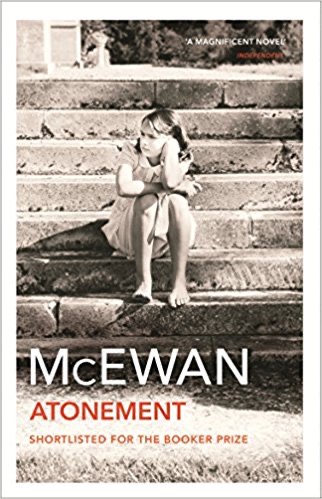
Atonement is one of those novels that shows a death doesn’t need to be witnessed to be devastating. We have no doubt that our young narrator Briony Tallis will be a writer, in fact we have the evidence of her play that she’s written, made costumes for, cast the children of visiting friends and become a formidable director. It’s a warning to the reader that Briony is very much in charge of this story as we go back to the Tallis country house where her older sister Cecilia has returned from university. So has Robbie their young gardener. We realise as adult readers what transpires that weekend when Robbie sees Cecilia soaking wet after diving into the fountain for a piece of broken vase. Viewing through Briony’s eyes, casts a different light on it because she’s too young to understand desire and love. Confused by the pair’s secret meeting in the library that evening she comes to the conclusion that Robbie is hurting her sister, so when a terrible crime is committed she suggests it might have been Robbie. He is subsequently taken to prison then sent on to fight in France at the outbreak of WW2. We then see the fractured moments the unexpected couple snatch together over the years and their estrangement from Briony who tore them apart with a lie. Then at the very end, the rug is pulled from underneath us. An elderly Briony is interviewed about her career as a writer and she shares why she wrote a book featuring her sister and Robbie, to give them the happy ending she took away from them in real life. In truth Robbie died alone in a bombed out house at Dunkirk and Cecilia was killed when a V2 hit Balham underground station. I remember being shell shocked and heartbroken for some time.
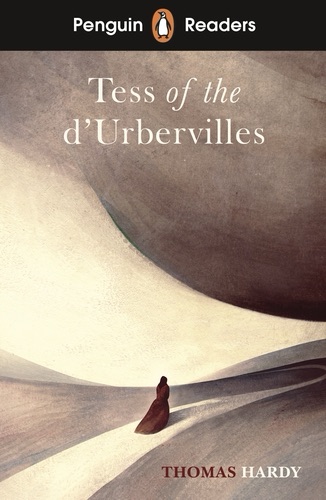
In typical Hardy fashion, Tessa’s whole life is dependent on fate from the time her drunken father suggests they might be related to a wealthy family: the d’Urbervilles of the title being a more upmarket version of their own Durbyfield. Assured of their wealth, Tess is dressed up and sent out on an errand, to claim kinship with these distant relations and hopefully secure some money to replace their recently deceased horse. He has gifted his daughter on a plate and her life feels cursed from that point on. Her cousin Alec d’Urberville is charming, he doesn’t claim her as kin but he does promise her a living on his estate. Once there the other workers, jealous of Tess’s beauty, don’t warn her about Alec. Subsequently, Tess is raped, setting motion a terrible chain of events that follows her to the inevitable end. Tess is hung as a murderess, but as if that isn’t bad enough her husband Angel Clare – who is an absolute let down – watches from a hill above the town in the early hours with her sister. They are watching for the black flag to be raised above the prison to show her sentence has been carried out, They then walk away hand in hand, as if he has simply replaced one sister with another. Not only did I finish this book angry about the injustices of Tess’s life, but I was devastated by Angel’s faithlessness. Not only does he abandon her on their honeymoon for something that was never her fault, but the minute she is dead replaces her with a younger and more biddable model. I was left equally sad and furious,
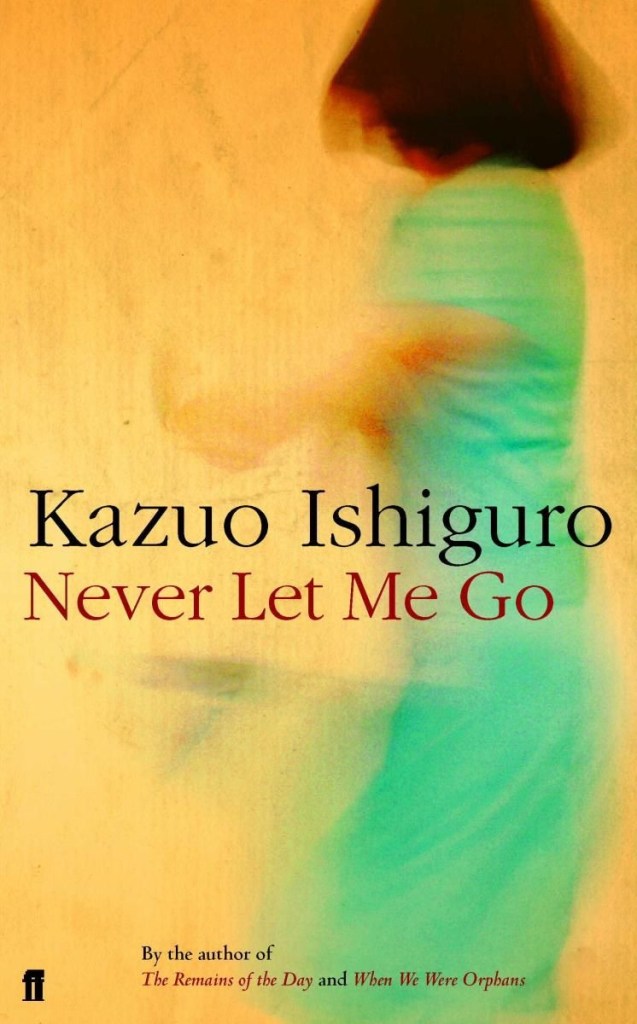
We are in a British dystopia in Never Let Me Go. Kathy is in her early thirties and her growing up years in the school of Hailsham are an idyllic memory. The pupils were secluded and brought up to believe they were of great importance for the country’s future. However, when fellow pupils Tommy and Ruth come back into her life, other memories start to resurface. Hints of discord come to the surface as she wonders whether there was more to Hailsham than met the eye, a mysterious or even dark purpose behind their isolation. As her feelings for Tommy begin to deepen into love she imagines their future. When the truth emerges in a clinical brutality they desperately try to find a way out of their fate. I found this book devastating. The silences that characterise the friend’s lives, the horror of the thing that’s unsaid but known. We want there to be a heroic arc, a triumph over the system of sanitised violence, but the acceptance of who they are and the value placed by that system on their autonomy and their lives has been drilled into them. There’s an absence where rage and injustice should be burning. I felt that rage and injustice for these characters and as Kathy moves towards her assigned fate I felt utter despair.
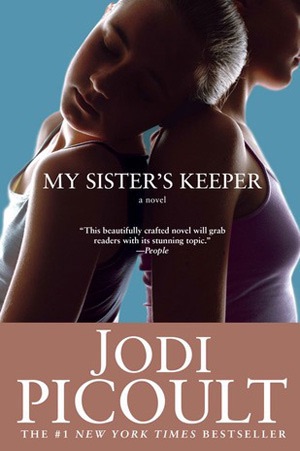
There’s a moment in the film Silver Linings Playbook where Bradley Cooper’s character is so disgusted by A Farewell to Arms that he wakes up his parents for a rant and then throws it out of the window. That’s how I felt about My Sister’s Keeper. I’d read and loved Plain Truth, so much so that when I finally met Jodi Picout on her book tour for Sing Me Home, I got her to sign it as well. Then came the book that seemed to go stratospheric and became a (terrible) film of the same name. Anna was born thanks to genetic pre-diagnosis implantation and although she isn’t ill, she has undergone endless medical procedures and operations her whole life. The whole purpose of Anna being born was for her to be a living donor for her sister Kate who has had a lifelong struggle with leukaemia. She was created as a bone marrow donor and up until now has never questioned it, but teenagers tend to rebel in some way and Anna is intelligent and has done her research. She no longer wants to donate but at the moment her medical choices are controlled by her parents. However, if she can get a court to emancipate her from that parental control, she can make her own medical choices. This is a typical Jodi Picoult ethical and legal dilemma and it’s such a compelling story. I was furious particularly with Anna and Kate’s mother who seems not to understand Anna’s need to make independent choices and sees it as selfish, so wrapped up in losing her eldest daughter she hasn’t noticed she’s already lost Anna. The death that happens at the end of this book was devastating, unexpected and totally unfair and not only made me sob but left me deeply angry with the author’s choices. Then I figured that if an author could make me feel that deeply about a character she was probably very talented.

In this incredible novel, Boyd takes introduces us to Logan Mountstuart and we follow the rollercoaster of his life as he traverses the 20th Century. Usually inserted into key moments of history in a rather Forrest Gump way, but more successful. Born in 1906 and written as a disjointed autobiography, it traces his interesting heritage and his education at a Norfolk private school followed by Oxford. Logan plans to be a writer, but life events intervene sending him off course and takes in the Bloomsbury set, the 1930s in Paris, World War II, the New York art scene and the Baader Meinhoff gang. All the time Logan drifts through postings, jobs, relationships and even some very murky goings on with the Duke and Duchess of Windsor. Logan is far from perfect, he makes mistakes and questionable choices but he’s also witty, intelligent and human. He’s something of a womaniser until he meets Freya, the love of his life and finally he feels something more than lust and the thrill of illicit sex. When he looks back over his long life, a lonely man in his eighties, in a grotty flat and eating the cheapest food he can find, it is but a fleeting moment of true happiness. Her loss is something he can’t recover from. Similarly the death of his aging dog is quietly devastating, leaving him utterly alone. As the book closes I felt grateful to have spend a lifetime with this rather unusual, imperfect and lonely man and to think of his death alone in that flat was only bearable if we hope that Freya is waiting there to meet him.
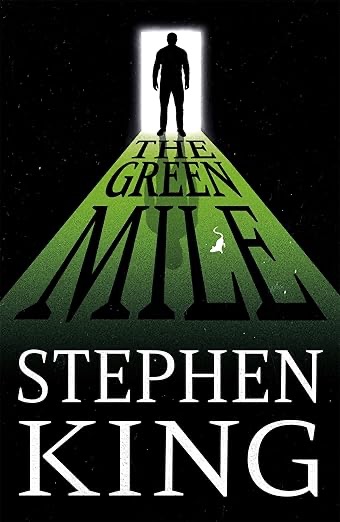
I’m a lifelong Stephen King fan and this has to be up there as one of his best books, released in one large volume in 1996. I read it the same year and was deeply affected by the years our narrator Paul Edgecombe spent working at Cold Mountain Petitionary on Death Row. He tells his story from his present day residence in a local care home as an old man. The story is about a series of strange, unexplained events surrounding a black prisoner called John Coffey – a giant, mountain of a man jailed for the rape and murder of two young white girls. In a row of serial killers, John is a gentle giant of a man who proclaims his innocence telling Paul he was only found near the girls because he was trying to help them. This claim gains more credibility when Paul suffers a terrible urinary tract infection and John touches him with a healing hand, removing the pain and taking it into himself. It’s a feat he repeats spectacularly when the twisted and sadistic guard Percy stamps on a pet mouse John has lured into his cell and called Mr Jingles. Paul witnesses John breathe life back into Mr Jingles, although the feat exhausts him. Paul and the other guards become convinced of John’s innocence, even busting him out of jail for the night to heal the prison warden’s wife who’s dying from cancer. As the execution date comes closer, the guards weigh the responsibility of killing an innocent man. I love the mix of reality, horror, the evil inside human beings and those moments of magic realism and wonder. By the time it was John’s turn to become the dead man walking I was in tears.


