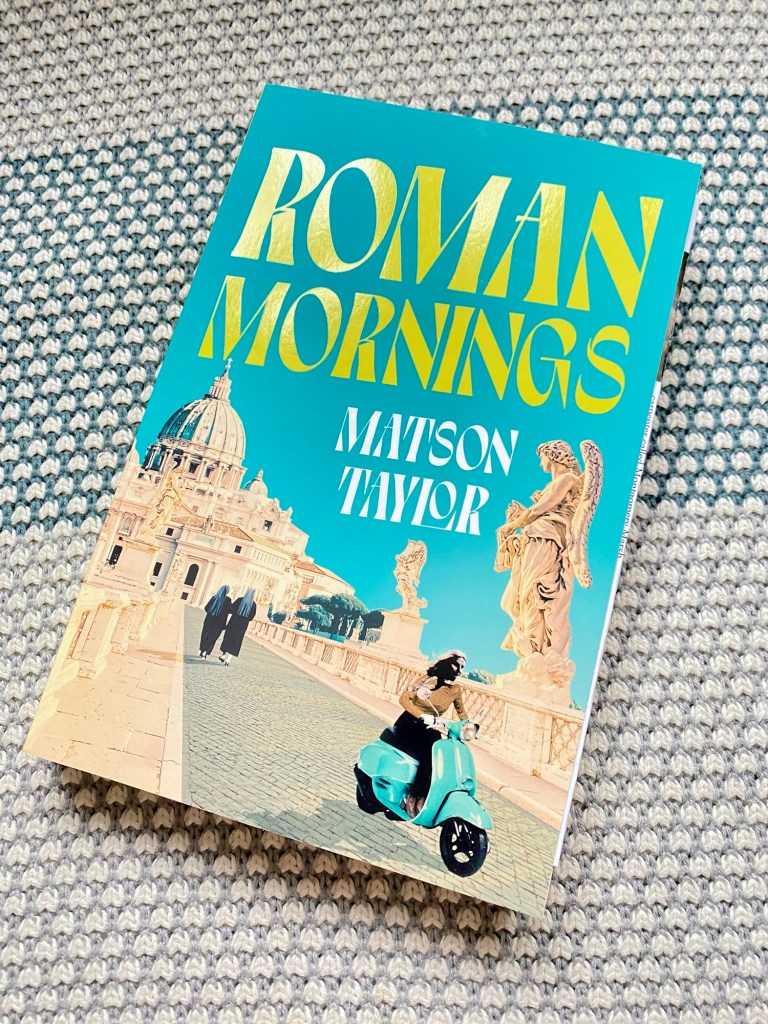
I’ve looked forward to a new Matson Taylor novel for a while now and this one is such a charming, humorous, comfort read set in 1970s Rome. The word serendipitous was made for this novel as friends and housemates Clemmie and Floss are trying out the turquoise Vespa that Floss has bought as a gift. Unsure whether she will get the hang of the scooter, at first Clemmie is a bit wobbly but as she gets to grips with it and sails off into Roman traffic she starts to enjoy herself. Strangely something like this is exactly what she needed. She’s been feeling a little stale and middle aged of late. However, as she makes her way towards a bridge flanked by angels, she quite literally bumps into a blonde, curly headed angel of a young man who was idling by the water on a break from work. Clemmie takes Monty to the hospital where his injuries are bad enough to stop him working but well enough to go home. The problem is Monty doesn’t have a home, just some digs he’s sharing with a few other craftsmen doing up an apartment for an acquaintance from London. It’s not long before his boss is in the emergency department, with Monty’s meagre belongings telling him he no longer has a job or digs. Feeling terribly guilty and also drawn to this angelic young man, Clemmie decides he will go home with her and Floss. Ensconced in their wonderfully bohemian living room, filled with plants and Floss’s theatrical memorabilia, Monty is soon drifting off to sleep with his new protectors looking on indulgently and Octavian, their large house cat laid on his chest.
This is a story about friendship, found family, reaching crossroads in life and being your authentic self, with a bit of romance thrown in for good measure. I love Matson’s chatty writing style, it brings to mind writers like James Herriot whose books mix beautiful settings, humour, everyday life and characters who feel as familiar as family. I thought his usually evocative 1970s setting would feel different in an ancient city like Rome, but we’re soon hearing about foods from my childhood and the brand new craze for avocado bathroom suites. Monty’s clothes are also of the era and Floss’s flat with its boho chic style reminds me of the indoor hanging baskets, posters and tasselled throws of my own youth. I remembered my parent’s romantic evenings in with a vesta curry and a bottle of Mateus Rosé. These contemporary 1970s references set against the ancient beauty of Rome is such an interesting contrast. I felt like I’d been to the city as the author conjured up the beautiful light, the soft and gentle colours of the stone, tiles and marble. It sounds busy and chaotic at first but it’s easy to find moments of calm. There are those cafe moments with Italian espresso and mouth watering Italian food that had me craving a trip to Italy.
The author excels when it comes to character and these are all generous, loving people. There are those incredible comic characters that lighten the mood like Floss and those like Clemmie who have more complexity and are questioning their future. Loving the city and the Italian language led Clemmie to move here and living at the palazzo with Floss is a dream, but intellectually she’s not being stretched. She has so much of the city’s history in her bones, but she’s using the language to translate plumber’s manuals. When an accident means moving out of her office for a while she has time to think. Is this what she really wants? Floss is getting older and thoughts about what’s next are accelerated by an accident that leaves her stranded on one floor of the palazzo. Is it time for a change and to accept that she’s not as young as she used to be? It’s Monty who’s the beating heart of this novel though, and I had the same urge as the women, to give him the biggest hug. I could feel the little boy in him. A boy who’s scared and wants his mum, and he’s found two in Clem and Floss. He’s a joiner by trade and incredibly skilled, he’s also keen to pay the women back for their kindness and on the advice of Octavian the cat, he starts to fix things in the palazzo. Despite his skill he’s not the best at pushing himself forwards. It’s also clear that he has a secret or too, but he needs to feel safe first. I felt like he’d found a kindred spirit in the kind and hesitant Clem. I have to mention the nuns who are incredible and I’d like to have first casting rights if this is ever a film please. These are not the stern scary nuns of my Catholic school, but a rather giggly pair who distribute British foods amongst the ex-pat community in Rome. They get to know Monty by offering him work in the many ecclesiastical buildings locally. They also end up at a club dancing to disco at one point which made me laugh out loud.
The story is quiet at first, allowing characters to settle and get to know each other, but when secrets start to emerge the deeper story comes through and it’s heartbreaking. It might have been nice to have seen some of his story slowly reveal itself in flashback across the novel, but it’s so emotional and beautifully romantic. My heart broke for Monty. We also have a slow burn romantic story for Clemmie and a man called Bob who appears in an ice-cream van and helps Monty build a basement apartment for Floss. The book meanders slowly with the odd intervention from the statues that decorate the buildings and bridges all over this city. I’ve read so many novels recently that are great but don’t have a single character I like. It was such a relief to be in a book where the characters are gentle, kind and want to help each other. Books like this, that bring joy and comfort to the reader, are hard to find and even more difficult to write. Reading about these characters embracing change with feelings of hope and renewal provided a window of solace and hope in what feels like a very angry world. For Monty it’s facing his authentic self without judgement and censure from others, a journey that isn’t without its trials. Clemmie embraces the boost she gets from teaching Monty about Rome. It reminds her she knows so much more than she’s using in her daily life and his story opens a door in her heart for potential romance but also her first love – writing poetry. Floss is embracing the new stage in her life and the freedom living in the basement flat brings for the next stage in life. Octavian the cat, prowls each level of the palazzo enjoying his new friends and casting an imperious eye over their adventures. This is a very emotional read in a stunning setting, with a big heart, a sprinkle of magic and a definite Northern slant to the humour.
The Skelf women have been keeping their heads down, running the family’s funeral directors and private investigation businesses. But when a woman collapses at her husband’s funeral and is saved by Dorothy, she finds herself drawn into the murky world of ‘grief tech’ – a booming new industry that creates digital avatars of the dead.
Jenny’s latest case – a simple blackmail job for an old school friend – quickly spirals into chaos as the woman’s tangled love life pulls Jenny towards dangerous old habits.
Meanwhile, Hannah and her wife, Indy, are confronted by the unexpected arrival of Indy’s ex-boyfriend, claiming to be dying and eager for the Skelfs to arrange his funeral. But his arrival uncovers more ghosts from the past, and threatens to upend everything they’ve built.
As their cases collide and their personal lives spiral, the Skelfs face danger from all sides. How far will they go to protect one another, and what will it cost to finally silence the ghosts?
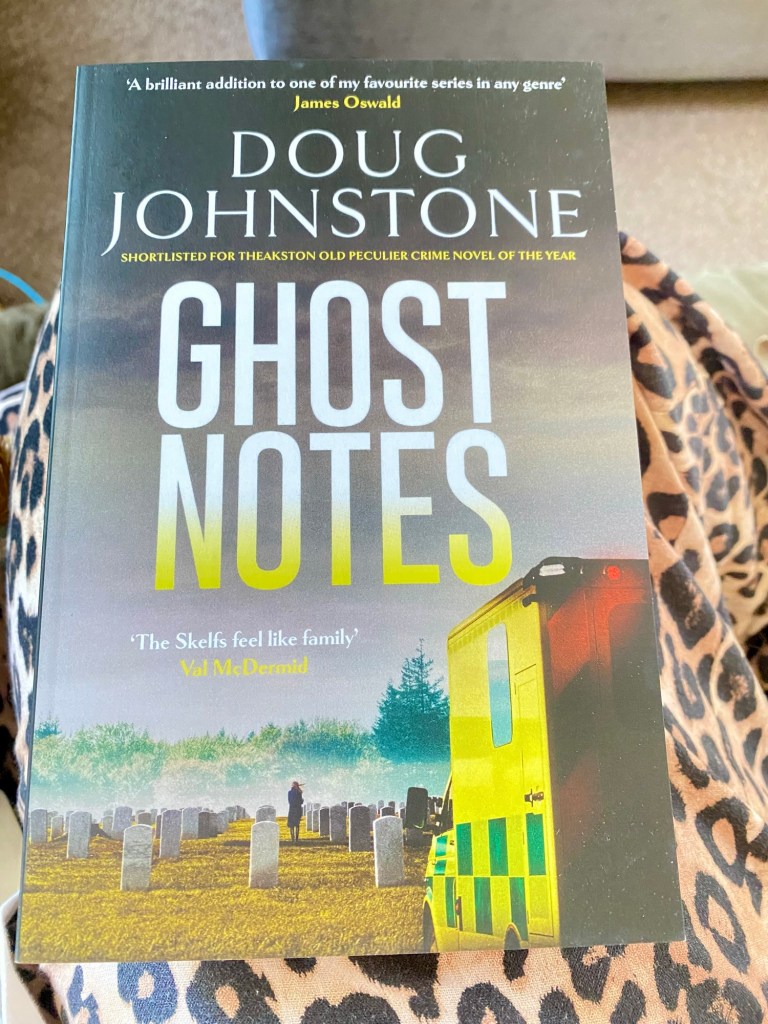
I always love the ideas and philosophies that Doug Johnstone brings to the Skelf series and in this eighth book his musical knowledge must have inspired the title. A ghost note can be played on piano, but more frequently on the drums and the matriarch of the family, Dorothy, is still drumming. She teaches and plays in a band that comes together for what used to be called ‘pauper’s funerals’, a duty that the funeral parlour perform for those who are buried or cremated by the local authority. As Dorothy teaches she explains ‘ghost notes’ to her student – a soft note like a whisper, usually on the snare drum played between the accented beat. The listener might not hear them being played, but would feel a difference when they’re not. They partner beautifully with one of Hannah’s physics concepts, the ghost particle, invisible and very rarely connecting with other matter that makes up our world but ever present. There are people in our lives who are like these notes, ever present but often completely unnoticed, until they aren’t there any more and we can feel their absence. I’ve felt like this about Hannah’s wife Indy in the series and have often wished to hear more about her life and experiences. She’s always quietly been in the background of the Skelf’s very dramatic and noisy lives, she is the person who notices you haven’t had a drink and brings you one before you’ve even asked. I was so excited to see her taking more of a central role in this story, where three cases are also dividing up their time. Jenny’s investigation comes from a local estate agent who is being blackmailed. Dorothy is investigating a family’s tragic losses as they bury the father of a girl found dead several months before. This takes her into the world of ‘grief bots’ and how anything built for profit has a harmful element to it. Finally there’s Hannah who is investigating the trouble brought to their door by Indy’s ex-partner and those he has wronged.
The book opens with a funeral and a widow who has a heart attack by the grave side. This family have already experienced tragedy, because the man in the coffin has killed himself after the death of his daughter. If the widow can’t be saved then her son will have lost his whole family. On her return home the widow asks Dorothy to look into her husband’s death and the first thing she discovers is very strange – a company who scrape a dead person’s identity from the internet and use AI to create a lifelike avatar of that person. The account holder simply signs into the app to visit their loved one, but innovations like this – including social media and other apps – are rarely altruistic and always based on money, so somewhere there’s a catch. I found this part of the story quite emotional because there’s something about seeing your lost love one moving and breathing. I can’t even watch videos I have of my late husband, photographs are fine but a moving version is still too much for me twenty years on. Also, thinking from a therapy perspective, how do we ever get over losing someone when they’re still there at the opening of an app? Apps like this could be seriously harmful to someone who’s grieving, complicating already painful emotions. Quietly, Dorothy is dealing with a loss of her own as her detective boyfriend Thomas is still not accepting her letters sent to the prison where he serves a sentence for murder. Jenny’s case seems simple but quickly turns into something more complicated, emotionally and investigatively. Watching an estate agent with a very busy sex life drags Jenny into a realisation that she’s been hovering around for some time. Luckily she has Archie there to support her and I loved how non-judgemental he is because Jenny needs to know someone is staying for the long haul, even while trying to push them away.
It’s Hannah and Indy who have the most dangerous encounter when an unknown face from Indy’s past comes crashing into their life, along with everyone who’s looking for him, to settle scores or the money owed. It seems implausible that Indy dated a man who is involved in the drug scene, although for Hannah it’s a revelation that Indy even dated a man. This chequered past brings violence into their home and Hannah has to reevaluate the woman she’s married to in light of their conversations. It’s clear there is so much Hannah didn’t know, not just about this relationship but about the deaths of Indy’s parents and other losses. So far in their relationship Hannah has always been the one to bring the chaos and her wife has always been the calm ship steering them into safe waters. To me Indy has always seemed like a wise woman, slightly mystical and enigmatic, but now we can see that her wisdom is hard won and comes from mistakes she can never take back. It’s when Schrodinger disappeared that I began to worry, the Skelf’s cat has been with them through thick and thin and I was so worried that he’d been taken as a threat.
Lately, I’ve been struggling with the world around me, feeling more and more dislocated from what ‘ordinary’ people think. Being a disabled person in a world that appears to hate our very existence is draining and even depressing. Added to that, the work we do with Stand Up To Racism means we’re exposed to individuals who hate others, people who they perceive to be different thanks to the hateful rhetoric from some of our politicians and the sections of the media. It feels so prevalent that more than once I’ve found myself stopping and asking ‘is it me?’ Am I in the wrong? Then I read a Skelf novel and feel like I’ve found my tribe among these intelligent, flawed, tough and compassionate women and their found family. Each one is genuinely woke and I mean that as a positive thing, rather than the insult it has become. Having your consciousness raised was always considered a good thing and these incredible women give me hope. Their compassion for others is shown again and again, in their work on civic funerals, their search for more environmentally friendly funeral options, their tendency to take in waifs and strays and their constant love and care for each other. Doug Johnstone’s writing reassures me that there are people like this in the world and that I might fit here after all. Good people like Archie, Brodie and Indy who quietly go about their business supporting the Skelf’s are the ghost notes of the family. Barely noticeable, but incredibly vital too.
Out now from Orenda Books.
Meet the Author
Doug Johnstone is the author of twelve novels, most recently The Great Silence, the third in the Skelfs series, which has been optioned for TV. In 2021,The Big Chill, the second in the series, was longlisted for the Theakston’s Old Peculier Crime Novel of the Year. In 2020, A Dark Matter, the first in the series, was shortlisted for the McIlvanney Prize for Scottish Crime Novel of the Year and the Capital Crime Amazon Publishing Independent Voice Book of the Year award. Black Hearts (Book four), will be published in 2022. Several of his books have been best sellers and award winners, and his work has been praised by the likes of Val McDermid, Irvine Welsh and Ian Rankin. He’s taught creative writing and been writer in residence at various institutions, and has been an arts journalist for twenty years. Doug is a songwriter and musician with five albums and three EPs released, and he plays drums for the Fun Lovin’ Crime Writers, a band of crime writers. He’s also player-manager of the Scotland Writers Football Club. He lives in Edinburgh.
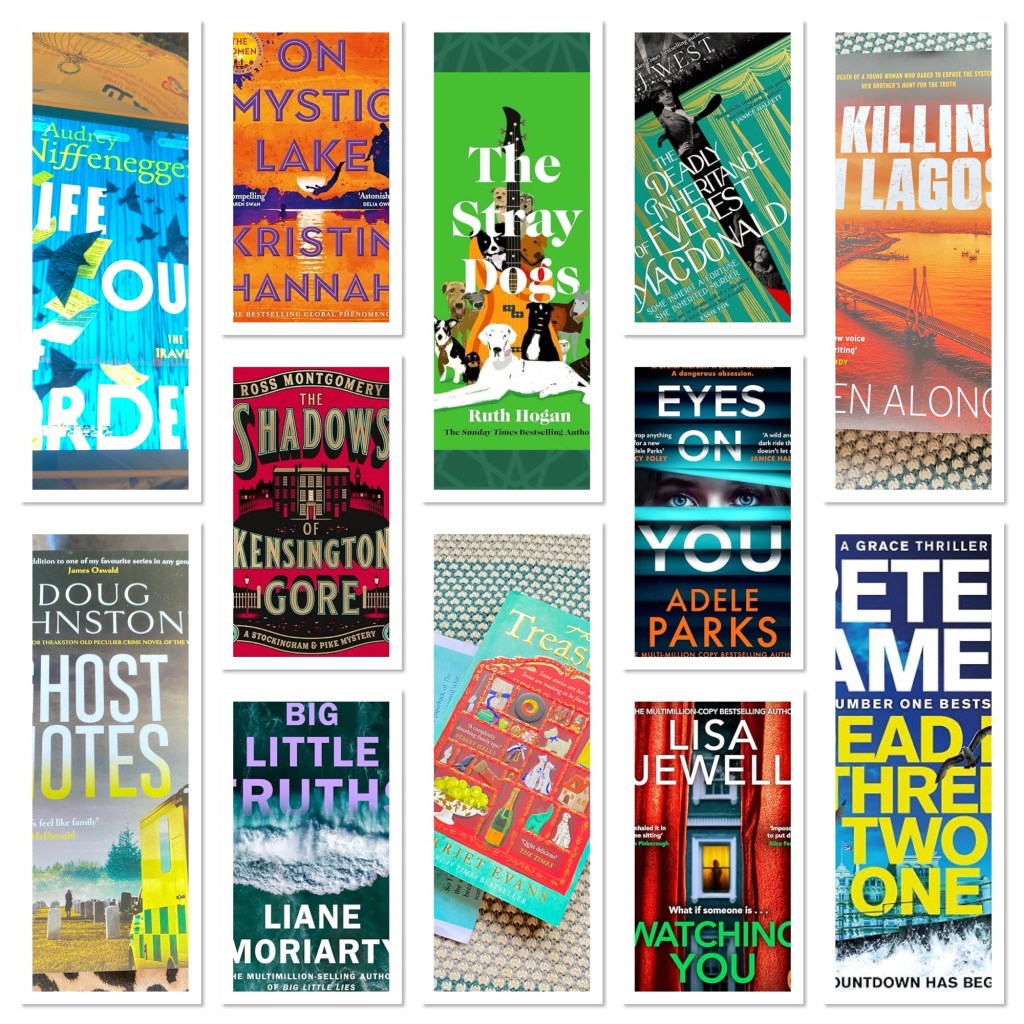
There have been some absolutely belting books this month and I loved telling you all about them. So I’ve been in the US, Italy, Greece Scotland and Sheffield. Oh I forgot about the ‘anti-verse’. It’s been a whirlwind of monstrous mermaids, a universe that goes backwards, the Greek civil war, a family dealing with the aftermath of 9/11, a crime writer who wakes up in a Sicilian villa with a dead body, a counsellor dealing with coercive control and a group of young boys trying to save their summer boy’s club. I’ve struggled to keep my mind on my reading to be honest it’s been a tough month. At the end of the last heatwave my cat returned home late one night and collapsed in the hall. I thought it was heatstroke and we tried to cool him but I could see he couldn’t put any weight on his back end. We rushed him to the vets where they diagnosed possible epilepsy. I knew this wasn’t right. She gave us some anti-convulsants but I wasn’t sure this was the right call. We kept him confined and on pain killers but he still couldn’t walk. I decided on a second opinion and went to a vet I used to see before moving house and he was brilliant. Poor Max had broken his pelvis in two places, his hip and damaged his lumbar spine. He also had a partially healed wound on his side. I can’t believe all that was missed. I could feel where his pelvis was pushed over, twisting his whole lower body. He’s had some surgery and lots of care at home. It’s going to take twelve weeks or more to fully settle. My husband has built him a three bedroom home under the stairs so he’s confined some of the time but can come out for exercise and fuss. My animals are my daily company now I don’t get out and about too well so they’re an important part of my life. I was so upset and I’ve really been focused on making him comfy and safe. So there’ll be lots of reading time in the upcoming weeks and I can’t wait be use it looks like an amazing autumn. I’ll share some recommendations for your tbr at the end. ❤️📚
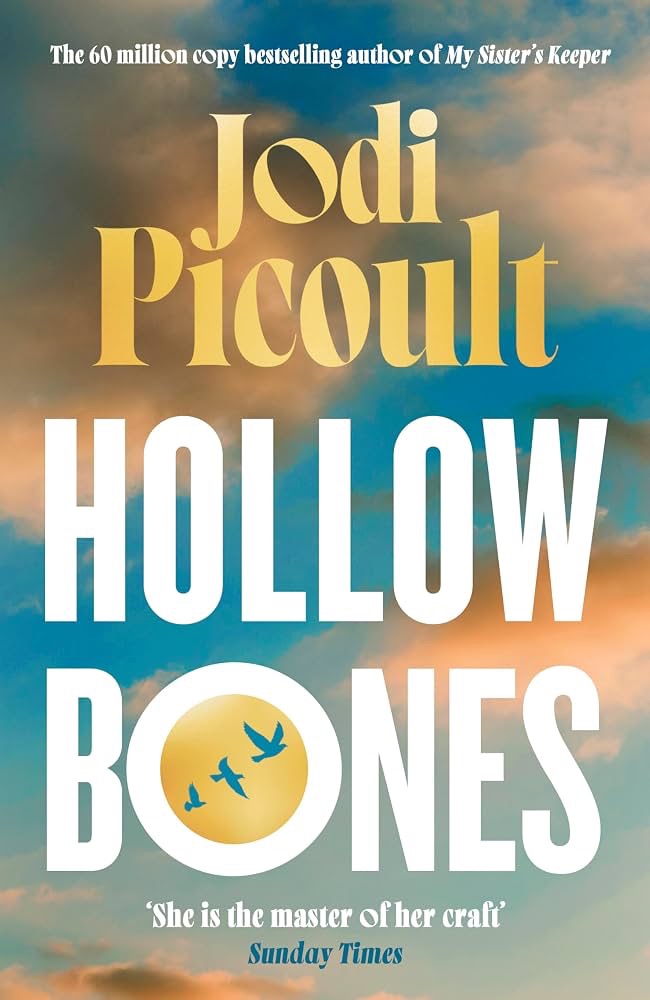
I’ve been looking forward to this new release from Jodi Picoult and I was lucky enough to get it on NetGalley. I dived in and read it very quickly over a couple of days. My full review will be later in the week, but this was a fascinating read, bravely taking on some of the most contentious and sacred subjects in modern day America. We follow Molly, a young woman in her twenties who is incredibly driven and has the difficult job of coordinating emergency response in her state. Her job is not medical, it’s to prevent incidents and plan for potential disaster situations based on the geographical features of the area, possible targets and population. Having just got through COVID, Molly is happily settled down with husband Jesse close to her dad and stepmum. It’s easy to see that it’s the loss of her mother that has influenced Molly’s choice of career. Eloise was lost on 9/11 when she attended a medical appointment in the South Tower. Every year Molly takes the trip to NYC for the memorial ceremony and tucks a red ribbon behind her mum’s name, representing the one she always wore in her French plait. What Molly doesn’t know is that her own life is about to blow up unexpectedly, changing everything she’s ever known and challenging what she knows about motherhood and risk prevention. I thought this was a classic Jodi Picoult novel with dilemmas, big emotions and using different narrative voices to give us all sides of an argument. We think we know Molly’s story, but a different narrator throws all of that up in the air so unexpectedly. Reading Molly’s narrative I kept thinking “ah this is going to be about x” but I was wrong. There are strong issues here – mental health, abuse, cult mentality – and they are shocking, because they should be. Jodi Picoult has such an easy, conversational style and it was great to be back in the hands of a fantastic storyteller.
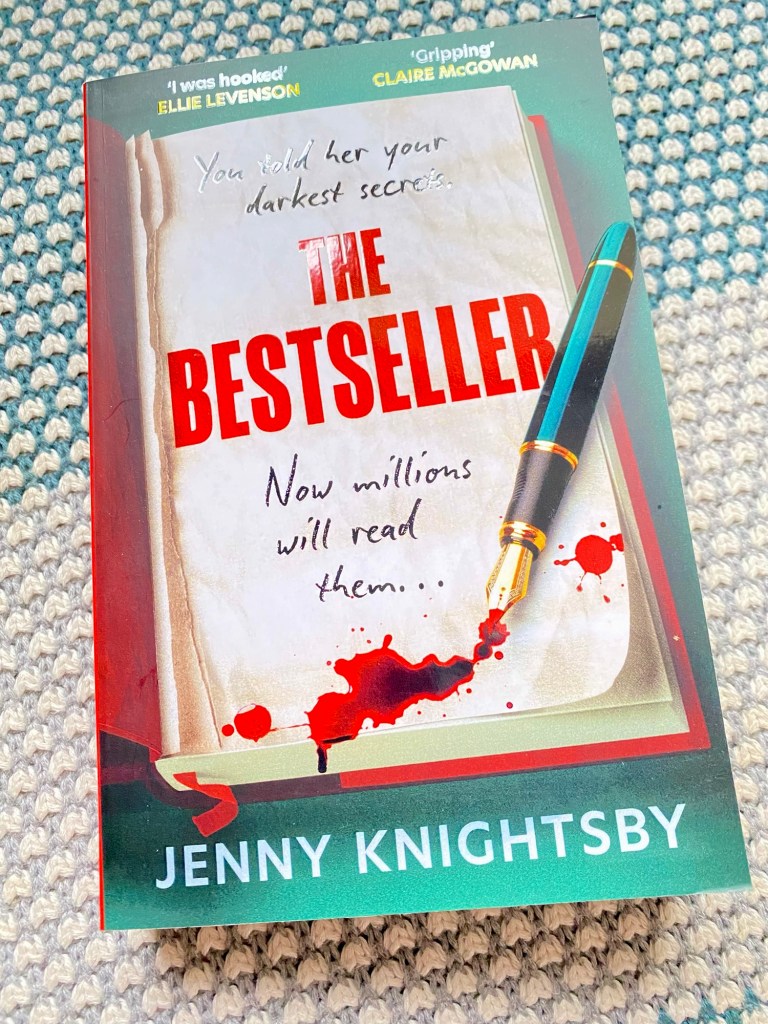
This is a great premise for a thriller and having been a therapist I’m always fascinated by books that are based on the therapeutic relationship. I think there’s a fascination in what therapist’s personal lives actually look like. Do they have it all sorted? The answer is invariably no and here there’s so much projection happening between Helena and her client Belle. Confidentiality is the bedrock of any therapeutic relationship, but that can get tricky when the therapist knows the client needs either specialist help or practical help. Helena is there to listen and guide Belle towards her own answers, but the constant disclosure of coercive control is uncomfortable to sit in. The urge to do rather than sit back and listen becomes difficult for Helena and it’s this discomfort that leads to her talking about it with best friend Tala. This is an issue for supervision, where Helena should disclose that she’s finding Belle’s passivity and indecision on leaving very difficult, but she doesn’t and now Tala is talking about how positive early responses have been to her new novel. Yet she doesn’t offer Helena a proof. When Helena stumbles across one at Tala’s flat she takes it and reads in horror as she realises Tala has fictionalised the problems of her client. This is going to be like a grenade in her personal and professional life.
The lives of Tala, Helena and her boyfriend Dylan and their paths into adulthood hinged on a single night. I thought the author managed these flashbacks well, placing them absolutely perfectly for maximum effect. It seems everyone has secrets but they are slowly revealed creating a very addictive read with short, pacy chapters that make you want to read just one more. The tension is almost unbearable as I worried about Helena overstepping with her client, the client finding out what’s in Tala’s book and somehow passing that on to her husband Julius. Would Helena be safe? As her well-ordered life starts to fall apart Helena starts to lose her belongings, forget her schedule and have terrible nightmares. She has no access to supervision and her relationship with Tala is broken. I wondered if she was heading for a breakdown. You may see the twist coming, but that doesn’t detract from the story. Eyes are opened, secrets past and present are revealed and I devoured the last few chapters late at night, unable to wait till the morning to find out what happened. This was an excellent thriller, full of psychological drama and really nailed the experience of being a counsellor with a problematic client. I also loved the ‘meta’ structure of reading a book about a book and just like Tala’s new novel this one should be a bestseller.
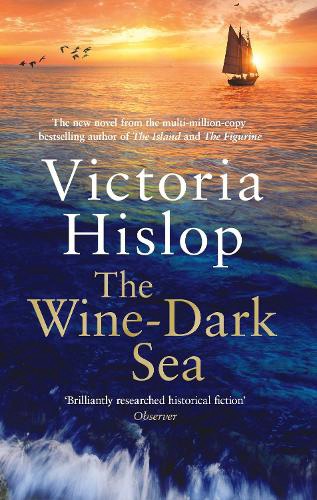
This epic story from Victoria Hislop really taught me a lot about a period of history I knew little about. The events happen after the end of WW2, a turbulent time that has already seen the punishment of Nazi collaborators and now many would like to see the end of their right wing government. The setting is a village called Kalopetra where Fotini’s husband has gone to fight for government forces against the communists, causing a schism in the family because Fotini’s brother-in-law fights for the communists. The sudden divide causes friction across the village, but the women must work together if they’re to survive. When government forces come to the village they capture all the women and Fotini is allowed to bring her baby son with her but older daughter Iliana is left behind with older children. How will they survive? That moment of Iliana chasing the truck, with her mother unable to do anything to reassure her, is burned into my memory. Although soon enough communist forces will round up the children and move them into camps where they are fed, clothed and then sent on to other countries like Yugoslavia. After having the entire burden of the other village children on her shoulders, Iliana is relieved to be fed and clothed by such kind people and so the process of brainwashing begins. All Fotini can think about is returning to her peaceful village and living the rustic existence that has survived for centuries, she doesn’t know that her way of life is already dead and nothing will be the same again.
I really enjoyed the later parts of the novel where we see Fotini piecing life back together in the city of Piraeus. It’s a massive change for this country girl but she can see the benefits of more job opportunities, entertainments like the cinema and eating good Greek food again at a lovely restaurant run by Demetrios. He’s such a kind man and gently reminds Fotini that she can’t spend the rest of her life wandering and looking for the children. The best thing she and Mitsos can do is stay in one place and hope the children find her, the place she was trying to get back to is gone. There was so much material to choose from in this book that it could have filled a trilogy. I had questions about all sorts of characters, such as Fotini’s relationship with her sister Stella. I also had questions about Nikos’s journey and his adoptive mother, there just seemed to be more about her that could have been explored. However, I loved Iliana’s growth and her life as an adult living under communism. The differences between Greece and Hungary were fascinating and as always the author captured the beauty of the Greek islands, their isolation and wildness and how this conflict disrupts a way of life that existed for centuries. The book symbolically ends with a circular dance that’s life affirming and perhaps a way of capturing, just for a few moments, that lost way of being.
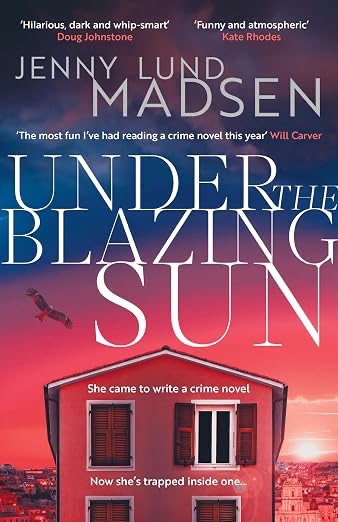
I loved the first book in this series and I devoured this one in a day. Hannah is once again fretting over writing her latest book, disgusted that copies of the romance novel she poured her heart into is being ignored, while the crime novel she wrote in one month for a bet is a bestseller. Hannah is a brilliantly flawed character full of writer’s neurosis, hating that she is forced to write what will sell rather than the books she aspires to write. Again she’s on a deadline and as a last resort her editor Bastian finds her a quiet villa in Sicily with its own swimming pool. No distractions and plenty of time to unwind and write the novel she’s had an advance to produce. I love this character because she says and does the things I’d love to, but my inhibitions keep it inside. She has no such restrictions, happily saying what she thinks when she thinks it. Her disgust with the crime genre and Jorn Jensen in particular is so funny. I wonder if she has ever had a thought or need she didn’t express? She also seems totally unregulated. I would have asked the elderly couple who caretake the villa for help but Hannah decides to walk to the village without thought about the heat, how far and which direction home is in. She has no idea which hill to take and ends up exhausted and on the verge of sunstroke on her way back. This is where she is found by Hans and Greta who take her to their incredible house to clean up and drink something. This turns into dinner, wine and a night spent in their house. It’s when she wakes up in a strange place that she and the housekeeper Lucette find a dead body. Greta has been murdered and Hans is nowhere to be found. Has he been kidnapped or could he be the murderer? Hannah seems to have an inability to weigh up a decision before taking action. There’s so much going on in her head that it’s very hard for her to remain in the present. I’m always wishing she’d slow down a minute and breathe, but the only times she seems to do this are in water.
The case is an absolute maze of connections and suspects showing up a tension between villagers and tourists, a misogynistic police force and possible Mafia interference. Despite Hannah’s aversion to crime as a genre, she’s just as caught up in the mystery of this murder as any reader would be. She’s utterly reckless, in a comical way and there’s a chase on a moped during the final chapters that is clumsy and hilarious to imagine. Sparks fly when Jorn Jensen appears, but she can’t deny he helps make things happen. His arrogance is brilliant and when he suggests they write a crime novel together I thought Hannah might hit him with something heavy. The creepy moment in the basement, including Jensen’s cardboard cut out made me laugh out loud. This is a dark humour that I love. Jorn’s statement that he has ‘enormous sex appeal’ and it’s that and not his wealth that attracts women shows what sort of brash and conceited character he is, but there’s no denying his bravery and quick thinking. They are quite the investigative team, despite her reticence about working with him. Hannah’s instincts are good. She won’t accept the police’s conclusion that Hans killed his wife, reasoning that he adored her and couldn’t have done it. Instead she follows the money, often blundering into compromising situations and dangerous people. If the conclusion teaches her anything it’s that people will murder for very unexpected reasons. This is a brilliant second instalment of Hannah’s adventures and I’m going to resolve to be a little more Hannah and say what I think here and there.
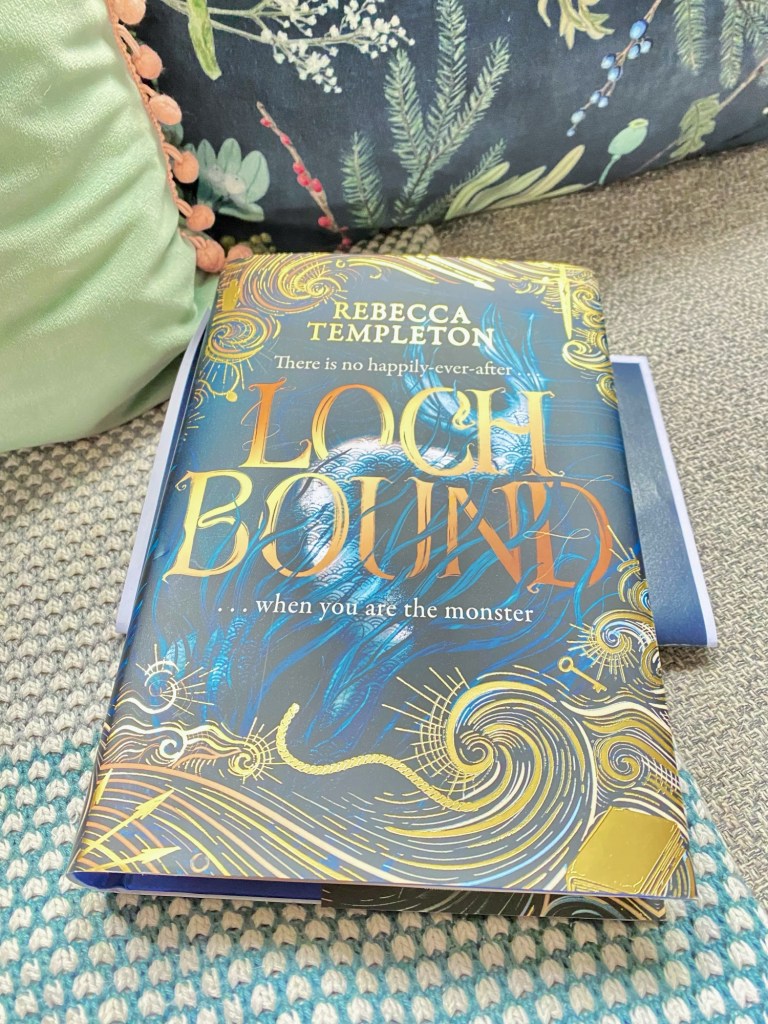
I love when monster stories are given a retelling and in this one it’s a mermaid living in a loch, but not the Disney-fixed Little Mermaid we might be used to. Here she is a truly fearsome creature named Moireach with yellow eyes, sharp teeth, shiny scales and the drive of a predator. She lives in the loch, only changing after dark when she reverts back to her human form – Iris. As a young girl Iris defied her father and fell in love with Thane. He forbade their relationship, as the daughter of a laird she must marry well and for the clan’s gain not her own. Devastated she visits a witch hoping to be free of her father’s obligations, but the witch cursed her and she became banished to the loch by day. Now, some fifty years later, when Iris emerges she is still the beautiful girl of her youth. Thane has never come for her and as dead men have been discovered around the loch with their hearts ripped out, the name of the monster is on everyone’s lips. Her childhood friend Duncan, now an old man, knows it cannot be Iris. She isn’t capable. He hides her with all the love and loyalty he had fifty years earlier, even though she chose someone else. The laird has made a big decision, he’s hired a hunter of monsters, a man called Henry Cartwright and he has never failed to catch his prey.
The backdrop of this story is perfect, using the mist, cold and breathtaking landscape to add to it’s mystery. There are parallels with Outlander here in the feel of this place, making good use of Scotland as a thin place where the paranormal, time travel and a history of monsters seems part of life. With the historical backdrop of the witch trials it’s also a dangerous place, particularly for a woman. Iris talks about the smell of the burnings and how women must be careful, but it’s no easier being a monster when men are turning up dead. The background of misogyny and brutal witch trials hangs over them all and shows a willingness to believe in magic, curses and female malevolence. It’s not just witches though, other fantastical creatures exist here like the seelies and selkies and there’s more one woman with powers a man would kill for. All of these things appear to be aligned with the nature that surrounds them and we can see that wildness as Iris changes to Moireach. It’s not just the yellow eyes and scales but the way her mind becomes that of a predator with only one goal. Reading this felt like being a child again and discovering a fairy tale rooted in darkness. Yes, some elements are fantastical, but it doesn’t read like fantasy. It’s more like a hybrid of historical fiction and fairy tales with aspects of a thriller. The pace speeds up as Iris begins to run out of time and we still don’t know why she was cursed, who cursed her and what will finally break it. There are those in the village who may seem kind, but could benefit from keeping Iris in her watery prison. As she takes us back to those fateful days in flashback, when her family were all together and her father didn’t yet know about Thane. I was engrossed with the tangled web of lies and betrayal but also by the question of what life Iris would choose if she could lift the curse. Would she pick the life she’d always wanted or had things changed? There are some unexpected revelations too, making for an exciting and absorbing conclusion. I thoroughly enjoyed this dark and feminist take on the mermaid stories we’re used to and I look forward to what the author writes next.
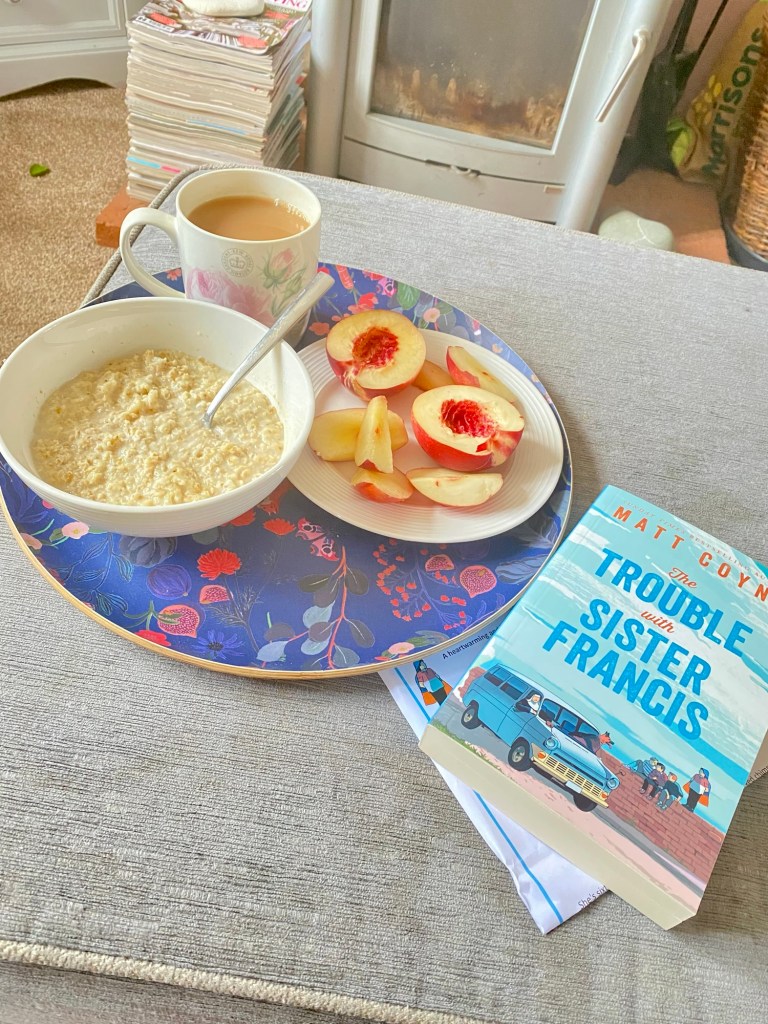
I feel like I’ve been living under a rock because I’m the only book blogger who hasn’t read Frank and Red, so this was my first introduction to Matt Coyne. I don’t even follow him on social media so went in completely blind. This book was a gem from start to finish. Matt Coyne’s ability to write a novel with the emotional intelligence to balance weighty subjects like war and loss against laugh out loud comedy is akin to Sue Townsend and her wonderful creation Adrian Mole. Sister Francis is like my rather formidable previous schoolteacher, Sister Joan. She had the sharpness and discipline of a military veteran, but underneath that there was a twinkle that made me think there was a sense of humour and quick wit underneath. Sister Francis drives an old van as if she’s in a rally, always has a cigarette on the go and reads the racing post. I have always found nuns to be singular and quirky individuals so I warmed to her immediately. Although she’s a comic character there’s so much more to her. She’s clearly keen on restarting a boy’s club she used to run years ago, with origins of supporting boys who had lost their father in WW2. She has a way of relating to boys from the area and our four friends can see she’s a formidable ally from the first day. When they roll up to the clapped out shed they’re accosted by one of the local priests, asking what they’re doing hanging around the presbytery and accusing them of looking for things to steal. When Sister Francis bursts out of the shed he’s taken aback and the boys notice she uses her sweetest voice and emphasises the holy intentions behind her club, but as soon as he’s gone she lights up and is her sweary self. Behind this exterior are buckets of empathy and determination to help the boys in her care, not that she’s easy on them. The four boys have a deal with her, if they come and help her clean the club house on the last Saturdays of term they can come to the club in the holidays and keep the entrance fee. It’s hard work but they stick at it and it’s not long before the Dead Dad’s Club is up and running.
I developed a soft spot for Rich’s Grandad Bob, who has a keen sense of humour and is a great role model for a young boy who has lost his father. I loved how he made Rich laugh with his assessment of Aunt Carole – she has a beard and looks like a pirate. He’s also there for the worse times too, after Rich’s dad died he has enough sense to simply sit with him as the loss hits him, no platitudes or promises, just sitting with him in his grief. Alongside Rich’s 1980s narrative is the journal of another boy who went to the Dead Dad’s Club after the upheaval of WW2. This narrative is evocative of a totally different era as Reginald is evacuated to a small village near Sheffield that’s something of a culture shock after growing up in London. Evacuees didn’t always have the best time and Reginald is coping with the boredom of the village – his observations on what passes as news worthy are so funny. He’s also navigating that rite of passage from primary to secondary school and the author really does conjure up those fears about the bigger school, getting lost and being without your usual friends. I wasn’t sure where his story fit with our four main characters and this is kept under wraps until exactly the right moment. This book has been a wonderful mood lifter just when I needed one, like a warm hug in book form. One line made me think about the friends who knew me in my small village at a similar age, one of whom I’ve tried to see regularly more recently. We try to get together at least once a month for cake and a catch up and I remember being taken aback at first by exactly how well she knew me. But of course she does. As Matt Coyne writes ‘real friendships are cast in the everyday’ and even though my friend and I often just walked her dog, cleaned out the rabbits and watched telly we grew up together and that counts for a lot. I heartily recommend this hilarious but heartfelt story that’s a ray of sunshine in book form.
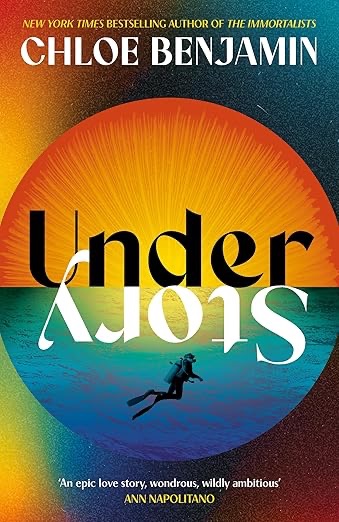
This book has to be my book of the year so far. I’ve been going on about it since May because it really is something special. I was quite simply blown away by this complex and beautiful story of science, loss and second chances. Our heroine Laurel is a scientist, studying fungus and how it grows but for some reason that isn’t clear at first, she’s on a research station in the Antarctic, away from her former husband Eli and without any fungus in sight. When she develops a fascination in the Arc that appears she thinks about its significance. When she becomes aware there is a matching basin underneath the water, her imagination is fired. Could this possibly be a portal? A gateway to a different world? She knows Eli won’t be far behind because she remembers his theory of the ‘duoverse’, the idea that at the moment of the big bang time and space was formed in two directions: our universe, the planets and the development of the world we know and in the other direction it’s complete opposite. I am not a scientist, in fact I barely have GCSE Biology, so I wasn’t aware of any background to this idea so could drift with it and enjoy two incredible minds exploring ideas. Our characters are fascinating, Eli and Laurel are a couple who were made for each other but their relationship is real and they face tough times, particularly when devastating events crash into their lives but I never doubted their love for each other. It’s fascinating to watch their characters face the concept of the duoverse, not just whether it is a portal, but if it is what will their relationship look like there and will going backwards fix whatever tore them apart? I felt both were analytical and might even appear cold at times, but in the moments of heightened emotion we really see who these characters are and the deep wells of love they hold.
I was on tenterhooks wondering about the duoverse under the ice and if Lauren is right whether they’ll ever be able to return? I found myself wondering how this world would look as time scrolled backwards. I was genuinely scared for them but also full of admiration for their bravery. The mirroring is so cleverly done, showing how life always comes full circle and we’re often helpless at the end and the beginning, if we’re lucky enough to lead a full life. As someone who worked in nursing homes in my twenties this really made me think of the role of nostalgia and how often elderly people hanker after experiences from their childhood. Laurel wants her mother’s blueberry pancakes, to watch a film she’s seen a million times and disappear into a favourite book because there’s comfort in it. It might seem like science has sent them on this potential journey, but it isn’t. The totally unscientific emotion of love is what pushes them on, but also guilt, hope and desperation. Loss is a huge theme in the novel, something that always hits me in the heart, and I was deeply moved by how the author dealt with loss and how the scientific concept of a duoverse changes this experience. This novel was moving, profound, invigorating, deeply intelligent and so full of life. I kept thinking about the symbols of the cover, the circle and the tree, the same under the ground as they are over it. As Laurel observes:
“A line implies before and after; a circle says And then, and then…”
WHAT IF TOMORROW WAS ALREADY WRITTEN, BUT YESTERDAY WAS YOURS TO CHANGE?
At an isolated research station in Antarctica, biologist Laurel Salter washes dishes for a living ten hours a day, six days a week. She tells no one why she left her career, or why her marriage ended.
But even in this remote outpost, Laurel can’t outrun her past. When a strange light appears across the ice and draws a group of physicists to McMurdo, her former husband, Eli, won’t be far behind.
Laurel is captivated by the Arc: its surreal glow; the way it seems almost alive. And though Eli is reluctant to test her wildest theory, Laurel is convinced that the Arc leads down a rabbit hole, and into a world they can barely imagine. Can she persuade him to risk everything to fix the burden that hangs between them – to turn back the clock and live their story a second time?
And this time, live it differently.
Once read, never forgotten, Under Story is a genre-defying exploration of the promise of this life, what might lie beyond it, and how far we would go for more time with the people we love.
This is my book of the year so far and I can’t stop talking about it. I’d read it on NetGalley in the spring and I was desperate to review but it felt too early. So when I found out my fellow squadettes were reading this in August I had to join in. I was quite simply blown away by this complex and beautiful story of science, loss and second chances. I still think about it all the time. Our heroine Laurel is a scientist, studying fungus and how it grows but for some reason that isn’t clear at first, she’s on a research station in the Antarctic, away from her former husband Eli and without any fungus in sight. When she develops a fascination in the Arc that appears above the pole she thinks about its significance, but when she becomes aware there is a matching basin underneath the water, her imagination becomes fired. Could this possibly be a portal? A gateway to a different world? She knows Eli won’t be far behind her because she remembers his theory of the ‘duoverse’, the idea that at the moment of the big bang time and space was formed in two directions: our universe, the planets and the development of the world we know and in the other direction it’s complete opposite. I am not a scientist, in fact I barely have GCSE Biology, so I wasn’t aware of any background to this idea so could drift with it and enjoy two incredible minds exploring ideas. I was fascinated with Laurel’s experiments with fungus growing in a maze and whether it moved in a specific direction. She was disappointed to find it tried out all routes then doubled back on itself, but then a second batch made straight for the right route as if it had learned from the previous batch’s mistakes. It felt like a demonstration of Jung’s collective consciousness:
“Ideas spread and somehow we’re all plugged into them.”
I often feel this about ideas, like when several books come out on the same subject at once. It reminded me of something I’ve read before – that ideas are hanging in the air and if we don’t grab them someone else will. As Laurel presents her paper at conference she’s asked some particularly tough questions by one delegate who is unimpressed with her work, claiming she’s applying a human lens to interpret her results. Laurel’s retort is to ask why the delegate is assuming that all intelligence is human? Laurel knows that we like to separate ourselves from animals and plants, safely in our own superior category, but oxygen from our atmosphere is running through our veins and the word human comes from the Latin word ‘humus’ meaning soil. Thinking that we are of the earth is the only thing that comforted Laurel when her dad died. She thinks about how bronchi in our lungs branch like trees and how a ‘neural network in the brain is structured like a galaxy’. I loved reading these aspects of the book and really appreciated how cleverly the author plants these ideas in the first part of the book and they grow in the second part.
Our characters are fascinating, Eli and Laurel are a couple who were made for each other but their relationship is real and they face tough times, particularly devastating events crash into their lives but I never doubted their love for each other. It’s fascinating to watch their characters face the concept of the duoverse, not just whether it is a portal, but if it is what will their relationship look like there and will going backwards fix whatever tore them apart. I felt both were analytical and might even appear cold at times, but in the moments of heightened emotion we really see who these characters are and the deep wells of love they hold. It was two other characters that caught my imagination though: Gloria and Mr Nakamura. I absolutely loved Gloria who is Laurel’s mentor in our universe and her house in San Francisco was so brilliant I wanted to live there:
‘It was an old Arts and Crafts house on Prospect Avenue, dark wood with purple roses growing in the garden and ivy trailing over the windows. Inside was enchantment; half melted candles, cabinets of oddities, a Maine Coon cat the colour of midnight.’
Gloria is intelligent, feisty and an incredible mentor to Laurel and I had a feeling they would meet in any universe. Mr Nakamura is a character from later in the book who is an ‘overtaker’ – a thought I’ll leave with you – who’s incredibly wise and understanding, helping with the difficult parts of life’s journey with dignity. Every character springs to life and has a backstory.
The book’s settings are incredible. First the frozen wasteland of the Antarctic and its different scientific research bases are fascinating. I had no idea how many were there, but McMurdo is like a mini town and it’s the tiny details that give it authenticity. Many of the scientists go home for the winter months when it’s impossible to go outside and cabin fever can really kick in. Some people have an ‘ice-wife’ or husband who they’re in a relationship with in the summer months, then go home to their real spouses in the winter. Bits of the real world come through, such as the disappointment in a second Trump presidency, but it feels like a different world and the perfect place to avoid reality too. Every world the author presents to us feels absolutely real even though some of it seems impossible. I was on tenterhooks wondering about the duoverse under the ice and if Lauren is right whether they’ll ever be able to return? I found myself wondering how this world would look as time scrolled backwards. I was genuinely scared for them but also full of admiration for their bravery. The mirroring is so cleverly done, showing how life always comes full circle and we’re often helpless at the end and the beginning, if we’re lucky enough to lead a full life. As someone who worked in nursing homes in my twenties this really made me think of the role of nostalgia and how often elderly people hanker after experiences from their childhood. Laurel wants her mother’s blueberry pancakes, to watch a film she’s seen a million times and disappear into a favourite book because there’s comfort in it. It might seem like science has sent them on this potential journey, but it isn’t. The totally unscientific emotion of love is what pushes them on, but also guilt, hope and desperation. Loss is a huge theme in the novel, something that always hits me in the heart, and I was deeply moved by how the author dealt with grief across the novel and how the scientific concept of a duoverse changes this experience. This novel was moving, profound, invigorating, deeply intelligent and so full of life. I kept thinking about the symbols of the cover, the circle and the tree, the same under the ground as they are over it. As Laurel observes:
“A line implies before and after; a circle says And then, and then…”
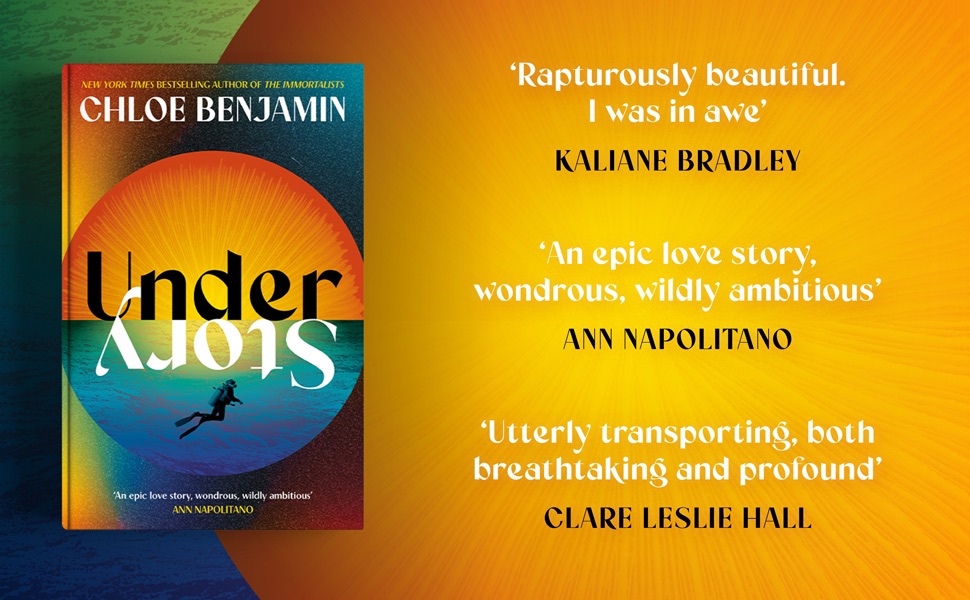
Out 1st September from Tinder Press
Meet the Author
Chloe Benjamin is the author of THE IMMORTALISTS, a New York Times Bestseller, and THE ANATOMY OF DREAMS. Her third novel, UNDER STORY, will be published in September 2026.
A Barnes & Noble Discover Great New Writers selection, LibraryReads favorite, and #1 Indie Next pick, THE IMMORTALISTS was named a best book of 2018 by NPR, The Washington Post, Entertainment Weekly, and others. THE ANATOMY OF DREAMS received the Edna Ferber Fiction Book Award and was long listed for the 2014 Center for Fiction First Novel Prize.
Originally from San Francisco, CA, Benjamin is a graduate of Vassar College and the M.F.A. in fiction at the University of Wisconsin. Her work has been translated into over thirty languages. She lives with her husband in the San Francisco Bay Area.
Eleven-year-old Meg Lefleur has learned the hard way to rely on no one. Ever since her beloved mother failed to come home last Christmas Eve, she’s been one of the ‘unadoptable’ girls at the town’s orphanage, where she fights each day to keep her wits sharp and her spirit unbowed.
When she meets Birdie, a young woman who has come to Oxford determined to remind her socialite sister of the impoverished family she left behind, for the first time in a long while it seems someone else might care about Meg’s future. But as the Depression tightens its grip, Birdie begins to suspect her sister’s charmed life may be founded on a tapestry of lies. Then, Birdie encounters Charlie, a woman haunted by loss who has been pushed to the brink with nothing left to lose. Drawn together by circumstance, they find unexpected kinship among a disreputable, determined band of women.
But in a town steeped in hypocrisy, even the smallest act of defiance can have dangerous consequences …
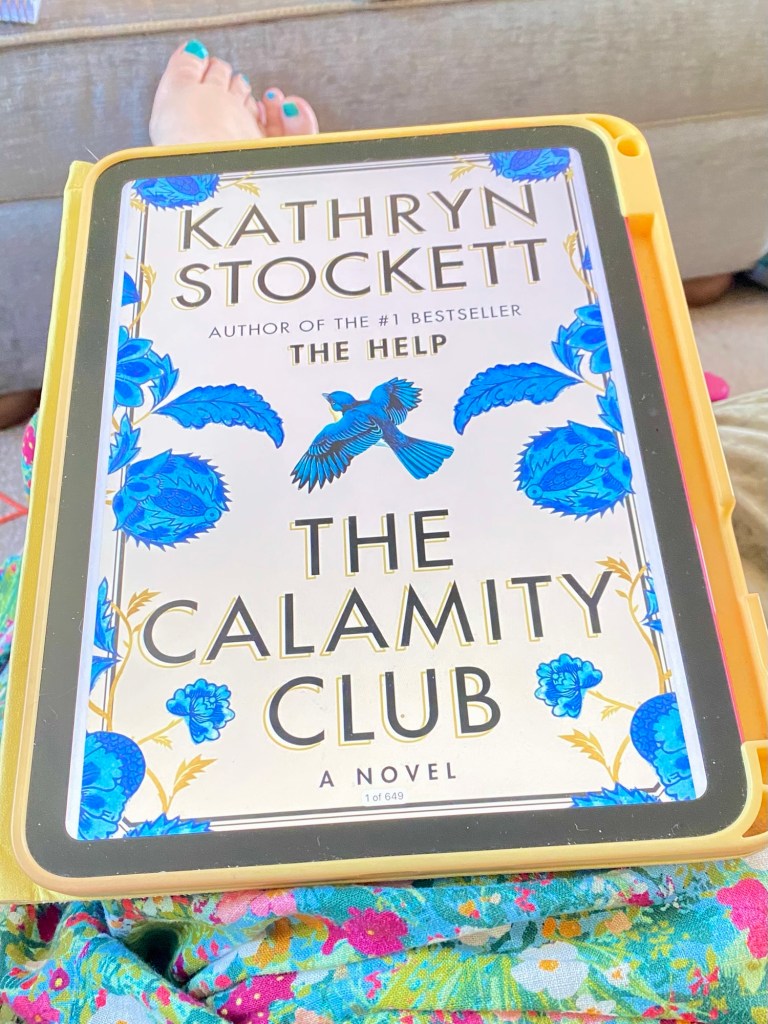
In our prologue we find Birdie in the pharmacy of a small town in the southern states of America buying ‘Merry Widows’ condoms by the dozens. I then became so engrossed in the story of this fascinating woman and the relationship she makes with a girl called Meg at the orphanage that I forgot all about the question that came to mind; why she would be buying so many? Thankfully all questions are answered in this incredible book that’s moving, infuriating, saddening and hilarious all at once. The plot takes us on a journey as Birdie travels to visit her newly married sister Frances who is living with her in-laws at their house Idlewilde. Frances is at great pains to point out her new family, the Tartts, are well to do and Birdie must try not to show her up. In truth, Birdie can only ever be her glorious self and Mrs Tartt is too much of a Southern lady to show anything but politeness to a guest. Frances’s husband, Rory Tartt, is a good looking man, but to Birdie he seems to have something on his mind. He’s eager to leave in the morning and eager to be in his office in the evenings, even retiring to his own bedroom at the end of the day and not his wife’s. Frances confides in Birdie that there’s been very little in the bedroom department and Birdie starts to worry. One thing she knows is money and if she didn’t know better she’d be concerned about Rory’s business and where he’s going. When asked to book-keep for the local orphanage Frances again gives her a note of warning. The president of the orphanage board, Mrs Garnett, is very influential and is hoping to be the governor of the Anti-Vice Committee. Birdie is unimpressed with this paragon of virtue and lets Frances do the sucking up, instead she puts her energy into the disgusting room she’s working in alongside one of the orphans, Meg. As far as Birdie can see, Meg is in this room by herself every day away from the other girls. She has nothing to read. The walls are mouldy and she’s not allowed to open the window. She’d think it was a punishment, but Meg doesn’t appear to have done anything wrong. With an attentive adult to clean and paint the room, let the air in and ask her interesting questions Meg starts to blossom, much to Mrs Garnett’s consternation. Birdie can find solutions to most problems and is enjoying her time with Meg, but the Tartt’s troubles loom and Birdie will have to come up with a creative way to help. When she meets Charlie, a woman broken down by the system and longing to get her child back, they make a formidable team.
I absolutely loved Birdie, the sensible person between an anxious mother who thinks the price of canned peaches will put the family over the edge and a sister who is willing to spend every penny they have if it makes her pretty. She is pragmatic, knowing she’s not a beauty she decided she would have to look after herself and got a job bookkeeping at the local store. Frances didn’t even invite her family to her wedding, scared of being found out as poor. Birdie doesn’t believe in trying to be what you’re not and she’s utterly herself which I loved. She’s sensible but also has a loathing of injustice. She has her own moral compass that is based on the Bible, common sense and kindness. She doesn’t believe in people that set themselves up as good in a performative way, just be good because it’s the right thing to do. Meg was fascinating and her story is so deeply sad. She believes her mother left her one Christmas Eve and never came back, so she had to survive on what was in the house until the local doctor found her. She’s absolutely starving for books and learning, even sneaking a Life magazine she finds in the cupboard and gorging on it like a cream cake. She has to some extent accepted her treatment at the orphanage, never expecting to be chosen as one of the eldest there. I found myself hoping Birdie might adopt her, they certainly have an instant affinity. I loved Meg’s sense of humour too, especially when she relates an adoption letter received that states:
“We need us an older girl, on account of I was chopping cotton and it was hot out and the blade swung out my hand and sliced my wife’s arm clean off so we had a proper funeral for it but she cannot lift a pot now.”
As Meg observes, they had a funeral for an arm? That’s quite a letter. It has people, action and weather, with a bit of gore for interest. She’s a girl with so much to say and no outlet at all. It’s a whole lot different than life with her mum who was a feminist and clearly loves her daughter. She celebrated when Meg was placed in the ‘exceptional learners’ and tells her to remember that most men are placed in the slow learners category. Where could this woman have gone?
The themes in this are very much like The Help, injustice, inequality, the strength of women and what we’ll do to survive. In addition there’s the rise of the eugenics movement in America, something I researched at university and when preparing for my PhD. Eugenics supposes there is a master race, that white able-bodied heterosexuals with European origins are superior. This is such an important topic when we see what’s going on in the US today and when The Sanctuary exists in London – a destination that stays out of the press, but launched the Restore party, houses a eugenics magazine and race scientists. People forget that Germany didn’t start this lean towards wanting a superior race. Birdie finds out that Mrs Garnett’s policies for the Anti-Vice group include eugenic thinking such as imbeciles will give birth to more imbeciles, some ethnic groups should be prevented from having more children and that others should be forced onto contraception from a very young age, especially girls from poor, black families. It’s an evil that’s never really gone away, especially in America where some of these measures were still happening in the 1970s. These policies made it easy to get inconvenient people out of the way, just like Meg’s mum whose story brought me to tears. Birdie starts to realise that doing something considered immoral by society might be the best way to survive and she has to weigh it up in her own mind.
There was just so much I want to say about this book and I’ve had to stop myself rambling! Kathryn Stockett has done it again. I can see this on the big screen and it will be brilliant. It also has the added bonus of chatter about merkins at the breakfast table, which made me laugh out loud. I fell in love with Meg and Birdie, but also the women who form a team to get Birdie’s in-laws out of the mess they’re in. This book has so much to say about female strength, friendship and adaptability in terrible circumstances. Every character is so well drawn I could see them. I know a lot about eugenics and its history in the US and this is an important book right now, going against where Christian Nationalist policy is taking the country. It shows the damage that can be done when someone lives the rigid rules of manmade religion rather than the actual message of love given in the Bible. Often those who want the appearance of goodness most, will do anything to keep it. Birdie finds that friendship and loyalty can be found in the most unusual circumstances and with people you never expected. There’s tragedy and brutality but also lightness, humour and so much love. Utterly brilliant!
Out now from Penguin Books
Meet the Author
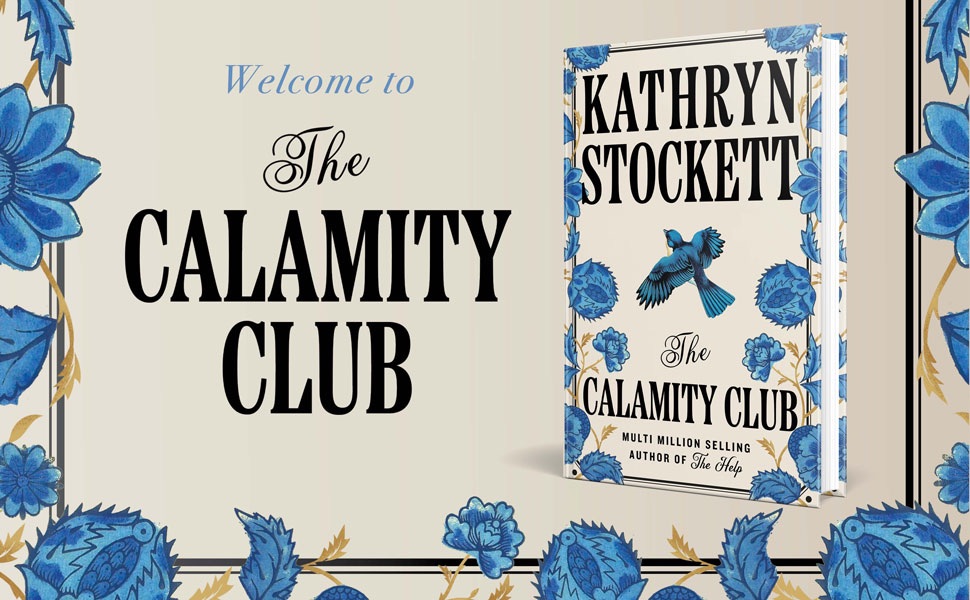
Kathryn Stockett was born and raised in Jackson, Mississippi. After graduating from the University of Alabama with a degree in English and Creative Writing, she moved to New York City, where she worked in magazine publishing and marketing for nine years. The Calamity Club is her second novel.
“When Mark died I thought I’d start seeing him around more..”
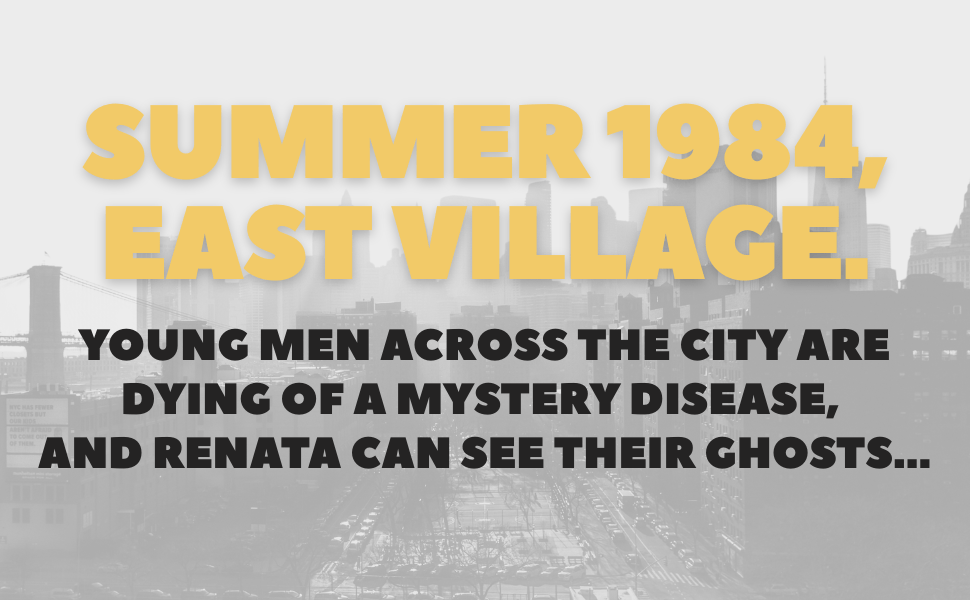
From that fascinating opener this book becomes so many things: a meditation on grief; a witness to the AIDS crisis in 1984 New York City; a community’s anger at the gentrification of the East Village; a ghost hunt led by a company called Manhattan Remediation. Renata is a young dyke-about-town who has the ability to see ghosts, which has been happening more and more frequently as her friends have started dying of what has recently been named AIDS. So, when her best friend Mark dies, she assumes she’ll see him again. There’s no way Mark wouldn’t give her a chance to say goodbye, would he? But to her disappointment – and increasingly, her concern – Mark doesn’t appear. Renata has other problems, too. A mysterious, police-like force has begun ridding their East Village neighbourhood of anything abnormal or inexplicable. At first, she’s sure they’re scam artists, but it becomes clear they’re actually trapping ghosts. With her band of lovably eccentric pals and lovers, Renata is determined to fight back against the erasure of her friends’ memories and the sanitizing of her beloved New York.
Renata is our narrator throughout and I felt a kindred spirit in seconds. Her expectation of seeing her friend Mark seems odd at first reading, but when I realised he had died without her and she hadn’t known for a few days I was so sad for her. Mark is clearly the most important person in her life, they shared a living space when either one of them wasn’t sleeping at a lover’s place and it seems unthinkable that she wouldn’t have known. That she wouldn’t have felt it. That the sky didn’t cave in. When people say life goes on this is exactly what they mean – everything carries on as normal while you feel like a shrieking banshee. However, for Renata there’s an added element to this disbelief. She can see dead people. In fact she’s being plagued by the ghost of their friend Francois, who she definitely doesn’t want in her flat. So why hasn’t Mark appeared? It’s hard to accept that the powerful and deep emotions you share with someone have suddenly become one sided. I remember thinking when my husband died, we were so close, how can that line of communication be cut? Years later, a chance encounter with a medium left me questioning again, she definitely had Jerzy’s turn of phrase, his humour and tendency to flirt with the furniture, but why was he talking to her and not me? Renata and Mark had a complicated relationship, they each had lovers, but they did have times when they slept together. There was no possessiveness in life, but in death I could understand Renata’s desire to have him to herself.
I was reminded of Jill in the TV series It’s A Sin and the deep connections the residents of the pink palace had with each other. When her best friend Ritchie starts to deteriorate badly, his family take him back home and cut him off from the people who have lived with him. It’s devastating when Jill travels to his childhood home, only to be told by his mother that Ritchie is already dead. The author picks up on this in the novel, the families unable to live with their child’s sexuality rushing in near the end to claim them. This could be out of love, but is also a way of cutting them off from their community, not wanting the stigma of AIDS to touch their family. Some families quickly and quietly arranged funerals for their children without the people who loved them for who they truly were, often citing the cause of death as cancer so the neighbours didn’t know. I was a teenager at the start of the AIDS epidemic here in the UK and I remember feeling genuine fear. The government leaflet had a gravestone on the front with ‘don’t die of ignorance’ carved on it. I even remember a bizarre telethon type event called First AIDS, presented by comedians and DJs telling us which sexual acts were most risky, how to prevent contracting the virus and how to put a condom on. I was thirteen and I honestly believe that it informed by sexual behaviour from the offset – I was known by my friends in later years for two methods of contraception at all times and I’m sure that was down to how frightening it felt back then. There was enormous stigma and prejudice, but because I lived in a quiet village in a rural county it felt somewhat removed from me. Even though I had an Uncle who was obviously gay in hindsight, we never really talked about it. Reading this and knowing that, a few years earlier than First AIDS, death was a daily reality in the gay community of the East Village really made me realise how far behind and out of touch we were.
The author skilfully switches tones from crushing reality, to horror and even humour at times which I really enjoyed. She doesn’t spare the realities of a death from full blown AIDS, in particular she tells us the story of Francois who is haunting her apartment. He is an angry ghost, throwing and pushing things, always making a noise and creating a horrible atmosphere, even before he appears. When he does he is known to vomit, pee on the rug and often lets out a terrible scream. Francois was a teacher, but when he started losing weight and sores were appearing on his face he was asked to leave because ‘his face was scaring the children.’ She details the secondary illnesses that would kill someone with the HIV, the lymphoma or other types of cancer or infection like pneumonia. Then there’s the encephalopathy and dementia. It’s no surprise, when we hear François’s story, that his ghost is angry. She talks about the guilt she feels for wanting him to die quicker, to stop his suffering. Renata’s mother, who never let on that she had the same gift as her daughter, said that spreading salt in the corners of problematic rooms helped soak up the negative energy, so she’s been trying baths with mineral salts but it hasn’t helped. There is some comedy in Francois as well as fear and it’s Renata’s irritation with him that made me smile. She knows she can’t live with him, but what to do? Another theme within the book is the gentrification of the neighbourhood, with talk of landlords trying to remove tenants in rent controlled apartments so they can renovate and earn more from a new one. A company called Manhattan Remediation are mentioned, claiming to be able to remove ghosts or entities from apartments. It’s discussed as a possible link to gentrification, a way to ‘clean up’ the neighbourhood. This is a proud community that wants to keep its history and its ghosts. When Francois finally pushes Renata to the edge she calls them and like the fourth emergency service Dr Silverman arrives with a faraday cage. Could this be the answer?
I was really interested in the community Renata lives in and her job at the vintage shop. She also has other friends who help her sit Shiva for Mark – a Jewish week of mourning where the bereaved stop their daily activities and focus on grieving. Renata’s friends cover the mirrors and prepare food and they talk about their memories. This is a stark contrast to her visit with Mark’s lover Patrick where there is tension and anger on both sides and I was glad she had a loving community around her. The author has captured the resistance and pride of the gay community when they’re coping with stigma and suspicion. The warmth and empathy they show each other is moving. This is such a powerful subject and really succeeds as a piece of queer history in New York City, especially since most US deaths from AIDS occurred in NYC and San Francisco. It really embodies the fear and paranoia of that time perfectly, but also depicts a community of people for whom sex may be fluid but love is plentiful and loyalty is strong. For individuals already stigmatised by their sexuality and estranged from families, this community is their found family and those ties are unbreakable. As Renata observes, if the strength of her grief alone could compel Mark to appear then he would. The addition of Renata’s psychic abilities is a genre-bending idea that mostly works really well and accentuates how lost and confused she feels. I felt her need to keep living too, even though the pull of the dead is so strong. The way she relates her personal grief to the reader, in a time of unprecedented loss, is the strongest part of the book.
This week’s ten are the fictional deaths that really affected me emotionally and why, so if you haven’t read the above books be aware that I will be revealing who dies and the twists that led there if there are any. I’ve been reading about death a lot this month and it’s probably not been the easiest month for that sort of read. 19 years ago on the 25th May I became a widow at the age 34. My husband and I married just six weeks after meeting and I uprooted my whole life to be with him. He had progressive multiple sclerosis and unfortunately died from aspiration pneumonia only seven years later. I’m so grateful for the years I had with him though. They were not easy, two people in a house with a disability is tough and made tougher by a stupid system that deemed me too sick to work but well enough to provide two thirds of the 24 hour care he needed in the last couple of years. Having exhausted myself, I was relieved that he wasn’t suffering and that I had time to look after myself. I was glad to lose the illness (although I still have it) but it took a few months for the loss of the person to hit me, so hard that I felt hollow. So, deaths in fiction do tend to hit me hard and I’m going to start with a YA novel with a character who was so like my husband Jerzy it made me smile as it ripped my heart out.
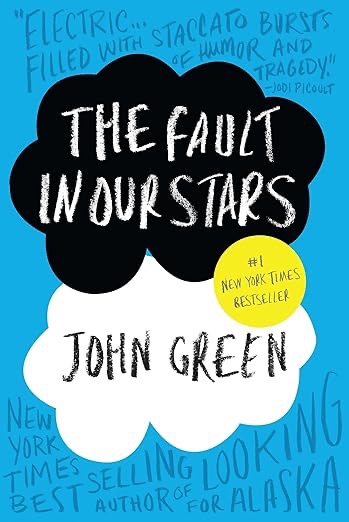
This story of two terminally ill teenagers is such a quick read, but it lasts a long time in your heart. Augustus Waters was so like Jerzy, just younger. He’s charismatic, positive and almost glows with that special something that makes others look up to him and listen to what he says. When he meets Hazel at a support group she finds him handsome, intelligent and brimming with positivity about his own outlook, having had a brush with osteosarcoma that led to the amputation of his leg. Their love is almost instant and the poignancy is that their first love could be their last. Augustus wants to do something heroic and it’s a quality Jerzy had in spades. Even from his wheelchair he went tall ship sailing, scuba diving and before the MS had played rugby for his county and London Irish. He had that sparkle I could feel in Gus and that undefinable something that made others want to be near him. Gus is a romantic, both in this beautiful love he has for Hazel and in his attitude to his illness. His outlook attracts other patients and keeps them going, so his death, when it comes, feels impossible and like a betrayal. How can someone as bright and beautiful as this do something as ordinary as die. It heightens the relentless nature of the disease and the human condition – no matter how great, how loved or how heroic we are, we all die in the end.
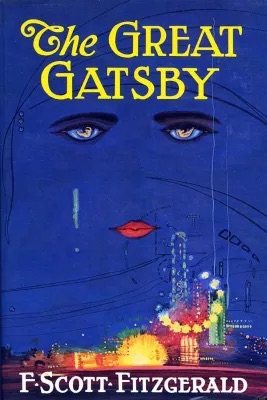
We all experience a book in different ways because we read it through the filter of our own experiences and emotions. I haven’t met anyone who finds Jay Gatsby’s death as sad as I do. Gatsby is another romantic and he truly believes that to win Daisy all he needs is wealth and status, he never doubts her love. He’s been clinging to his feelings for Daisy, thinking she has been doing the same. Finding out she’s married to Tom Buchanan and lives out on Long Island, he moves in across the water and waits. His next door neighbour Nick, who is also Daisy’s cousin, gets her to visit his house for tea and finally they are in the same room. Gatsby shows her his home and his wealth, thinking that now she must see there are no obstacles in their way. However, the Buchanans are ‘old money’ and despite Tom’s drinking, aggression and cheating with Myrtle from the gas station, he’s still the ‘right sort’, whereas Gatsby’s wealth is from dubious sources and even though hundreds of people attend his grand parties he’s probably one of the loneliest characters in fiction. The terrible accident that occurs as the group race back from the Plaza Hotel has been building slowly in the background. When Gatsby takes the blame for hitting Myrtle with his car, even though Daisy was driving, it’s the beginning of the end. Myrtle’s husband, who has been driven mad with jealousy over her affair, will seek revenge. It comes as Gatsby waits for Daisy’s call, hoping she’ll leave Tom and be with him. She never calls, but the waiting Gatsby doesn’t know this as he’s floating face down in the pool, dead from gunshot wounds. What’s devastating is the yearning, the hope and our knowledge that Daisy and Tom have already left, having got away with murder and seemingly untouched by the deaths of their lovers.
David Nicholls writes relationships and emotions like no one else and when I first read this back in the early 2000s I spontaneously burst into tears. For me this line is up there with the most devastating in fiction:
“Then Emma Mayhew dies, and everything that she thought or felt vanishes and is gone forever.”
It’s so utterly final. All the things we’ve read about her on previous St Swithin’s Days that made both us and Dexter fall in love with her are gone. It makes us realise that it’s not just her presence that’s gone, but her love for Dex and all their little relationship jokes and rituals. No one else will understand Dex like Emma did. The author builds up our expectations for this couple for so long and they spend long periods apart, mainly for Dex to get his shit together and realise that what they have is love. So their time together was so brief and we grieve that, the loss of all they were going to do, such as start a family as they were discussing at breakfast. Before she gets on her bike and rides off into the path of a lorry. I’ve seen so many people on forums complaining about her death and how it doesn’t serve the plot or purpose of the novel. Her death is the purpose of the novel, it’s sudden and brutal, leaving everything unresolved and that’s how people die sometimes. Nicholls is showing us what happens what happens when we don’t take risks and waste time, life is fragile and can be snuffed out at any moment. It brings a gut punch of reality to the romance and it’s a line I’ll never forget.
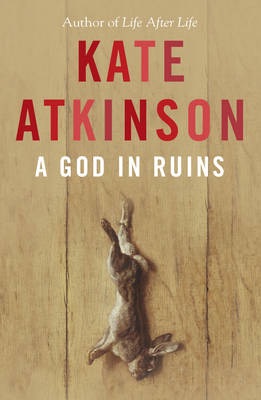
Sometimes, death occurs out of sight or when the author has distracted us with other things. Kate Atkinson’s book Life After Life is a masterpiece and probably one of my favourite books of all time, but this sequel following her younger brother Teddy absolutely floored me. As with Ursula in Life After Life, we see the events of the 20th Century through the eyes of Teddy and his family. Too young for WW1, we know Teddy survives the ‘Spanish Flu’ and goes on to meet his wife Nancy, then has life interrupted by WW2 where he serves in the RAF as a crew member on Halifax Bombers. He then goes on to have a steady life, the suburbs and a steady marriage that’s more everyday companionship than a grand passion. They have one daughter, Viola, who struggles when Nancy does of a brain tumour. Ted gives her his time and keeps a steady job as a schoolteacher, but their relationship is never easy. It is only the close relationship with his granddaughter that proves to be an easier and more loving relationship. As he grows older Viola chooses a nursing home for Teddy, where he spends his time reminiscing. However, in a meta fictional twist, Teddy remembers his final bombing mission in 1944 where his plane was shot down and he hands the final parachute to his fellow crew member, sacrificing his own life. Teddy died and all that we’ve seen of his life since then, is fiction. This ending brings home the waste of war and the endless possibilities in life that he missed out on are utterly heartbreaking.
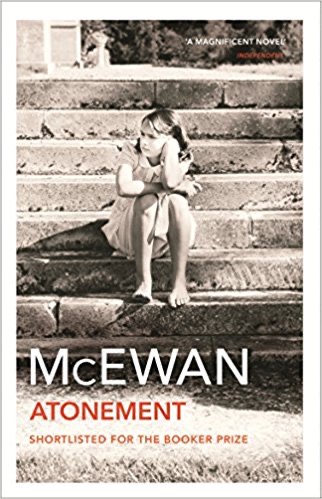
Atonement is one of those novels that shows a death doesn’t need to be witnessed to be devastating. We have no doubt that our young narrator Briony Tallis will be a writer, in fact we have the evidence of her play that she’s written, made costumes for, cast the children of visiting friends and become a formidable director. It’s a warning to the reader that Briony is very much in charge of this story as we go back to the Tallis country house where her older sister Cecilia has returned from university. So has Robbie their young gardener. We realise as adult readers what transpires that weekend when Robbie sees Cecilia soaking wet after diving into the fountain for a piece of broken vase. Viewing through Briony’s eyes, casts a different light on it because she’s too young to understand desire and love. Confused by the pair’s secret meeting in the library that evening she comes to the conclusion that Robbie is hurting her sister, so when a terrible crime is committed she suggests it might have been Robbie. He is subsequently taken to prison then sent on to fight in France at the outbreak of WW2. We then see the fractured moments the unexpected couple snatch together over the years and their estrangement from Briony who tore them apart with a lie. Then at the very end, the rug is pulled from underneath us. An elderly Briony is interviewed about her career as a writer and she shares why she wrote a book featuring her sister and Robbie, to give them the happy ending she took away from them in real life. In truth Robbie died alone in a bombed out house at Dunkirk and Cecilia was killed when a V2 hit Balham underground station. I remember being shell shocked and heartbroken for some time.
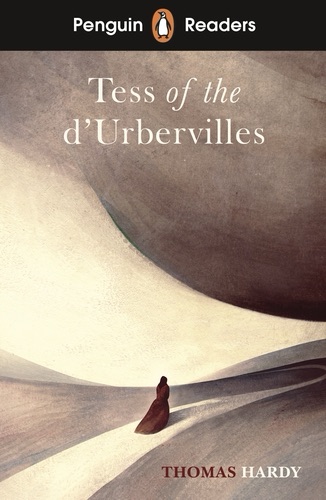
In typical Hardy fashion, Tessa’s whole life is dependent on fate from the time her drunken father suggests they might be related to a wealthy family: the d’Urbervilles of the title being a more upmarket version of their own Durbyfield. Assured of their wealth, Tess is dressed up and sent out on an errand, to claim kinship with these distant relations and hopefully secure some money to replace their recently deceased horse. He has gifted his daughter on a plate and her life feels cursed from that point on. Her cousin Alec d’Urberville is charming, he doesn’t claim her as kin but he does promise her a living on his estate. Once there the other workers, jealous of Tess’s beauty, don’t warn her about Alec. Subsequently, Tess is raped, setting motion a terrible chain of events that follows her to the inevitable end. Tess is hung as a murderess, but as if that isn’t bad enough her husband Angel Clare – who is an absolute let down – watches from a hill above the town in the early hours with her sister. They are watching for the black flag to be raised above the prison to show her sentence has been carried out, They then walk away hand in hand, as if he has simply replaced one sister with another. Not only did I finish this book angry about the injustices of Tess’s life, but I was devastated by Angel’s faithlessness. Not only does he abandon her on their honeymoon for something that was never her fault, but the minute she is dead replaces her with a younger and more biddable model. I was left equally sad and furious,
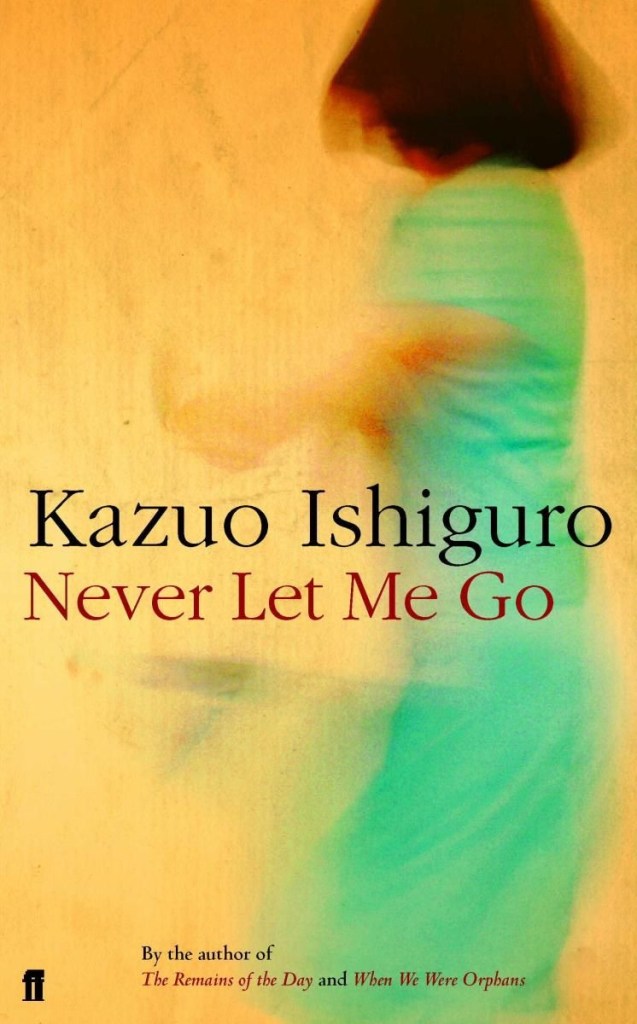
We are in a British dystopia in Never Let Me Go. Kathy is in her early thirties and her growing up years in the school of Hailsham are an idyllic memory. The pupils were secluded and brought up to believe they were of great importance for the country’s future. However, when fellow pupils Tommy and Ruth come back into her life, other memories start to resurface. Hints of discord come to the surface as she wonders whether there was more to Hailsham than met the eye, a mysterious or even dark purpose behind their isolation. As her feelings for Tommy begin to deepen into love she imagines their future. When the truth emerges in a clinical brutality they desperately try to find a way out of their fate. I found this book devastating. The silences that characterise the friend’s lives, the horror of the thing that’s unsaid but known. We want there to be a heroic arc, a triumph over the system of sanitised violence, but the acceptance of who they are and the value placed by that system on their autonomy and their lives has been drilled into them. There’s an absence where rage and injustice should be burning. I felt that rage and injustice for these characters and as Kathy moves towards her assigned fate I felt utter despair.
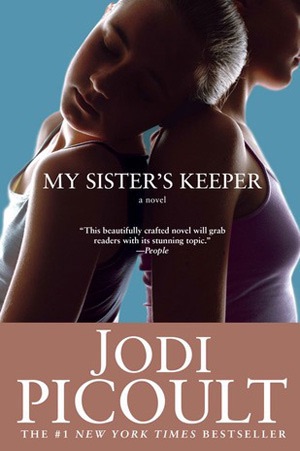
There’s a moment in the film Silver Linings Playbook where Bradley Cooper’s character is so disgusted by A Farewell to Arms that he wakes up his parents for a rant and then throws it out of the window. That’s how I felt about My Sister’s Keeper. I’d read and loved Plain Truth, so much so that when I finally met Jodi Picout on her book tour for Sing Me Home, I got her to sign it as well. Then came the book that seemed to go stratospheric and became a (terrible) film of the same name. Anna was born thanks to genetic pre-diagnosis implantation and although she isn’t ill, she has undergone endless medical procedures and operations her whole life. The whole purpose of Anna being born was for her to be a living donor for her sister Kate who has had a lifelong struggle with leukaemia. She was created as a bone marrow donor and up until now has never questioned it, but teenagers tend to rebel in some way and Anna is intelligent and has done her research. She no longer wants to donate but at the moment her medical choices are controlled by her parents. However, if she can get a court to emancipate her from that parental control, she can make her own medical choices. This is a typical Jodi Picoult ethical and legal dilemma and it’s such a compelling story. I was furious particularly with Anna and Kate’s mother who seems not to understand Anna’s need to make independent choices and sees it as selfish, so wrapped up in losing her eldest daughter she hasn’t noticed she’s already lost Anna. The death that happens at the end of this book was devastating, unexpected and totally unfair and not only made me sob but left me deeply angry with the author’s choices. Then I figured that if an author could make me feel that deeply about a character she was probably very talented.
In this incredible novel, Boyd takes introduces us to Logan Mountstuart and we follow the rollercoaster of his life as he traverses the 20th Century. Usually inserted into key moments of history in a rather Forrest Gump way, but more successful. Born in 1906 and written as a disjointed autobiography, it traces his interesting heritage and his education at a Norfolk private school followed by Oxford. Logan plans to be a writer, but life events intervene sending him off course and takes in the Bloomsbury set, the 1930s in Paris, World War II, the New York art scene and the Baader Meinhoff gang. All the time Logan drifts through postings, jobs, relationships and even some very murky goings on with the Duke and Duchess of Windsor. Logan is far from perfect, he makes mistakes and questionable choices but he’s also witty, intelligent and human. He’s something of a womaniser until he meets Freya, the love of his life and finally he feels something more than lust and the thrill of illicit sex. When he looks back over his long life, a lonely man in his eighties, in a grotty flat and eating the cheapest food he can find, it is but a fleeting moment of true happiness. Her loss is something he can’t recover from. Similarly the death of his aging dog is quietly devastating, leaving him utterly alone. As the book closes I felt grateful to have spend a lifetime with this rather unusual, imperfect and lonely man and to think of his death alone in that flat was only bearable if we hope that Freya is waiting there to meet him.
I’m a lifelong Stephen King fan and this has to be up there as one of his best books, released in one large volume in 1996. I read it the same year and was deeply affected by the years our narrator Paul Edgecombe spent working at Cold Mountain Petitionary on Death Row. He tells his story from his present day residence in a local care home as an old man. The story is about a series of strange, unexplained events surrounding a black prisoner called John Coffey – a giant, mountain of a man jailed for the rape and murder of two young white girls. In a row of serial killers, John is a gentle giant of a man who proclaims his innocence telling Paul he was only found near the girls because he was trying to help them. This claim gains more credibility when Paul suffers a terrible urinary tract infection and John touches him with a healing hand, removing the pain and taking it into himself. It’s a feat he repeats spectacularly when the twisted and sadistic guard Percy stamps on a pet mouse John has lured into his cell and called Mr Jingles. Paul witnesses John breathe life back into Mr Jingles, although the feat exhausts him. Paul and the other guards become convinced of John’s innocence, even busting him out of jail for the night to heal the prison warden’s wife who’s dying from cancer. As the execution date comes closer, the guards weigh the responsibility of killing an innocent man. I love the mix of reality, horror, the evil inside human beings and those moments of magic realism and wonder. By the time it was John’s turn to become the dead man walking I was in tears.
I don’t usually like romance novels, but I do love Rosie Walsh’s novels. That might seem strange when often her novels are categorised as romance, but for me there’s much more to them than the more formulaic romances I see. Rosie Walsh creates such complex characters, facing heart-wrenching situations. This is definitely the case for our narrator Carrie Cole who’s a surgeon by profession, but since the premature birth of her twins has been more focused on home life. She and her husband Robin live in a draughty cottage on the moors, with a small ‘Roof’ (AirB&B) holiday let next door in the old piggery. Robin works in the world of medical philanthropy, matching investors to areas they can support medical causes and this is how the couple met. Nearby, her Dad lives with his wife Nicola, but he’s recently been struggling with dementia and may need to move into a home. Both Carrie and her sister Maya have a complex relationship with their mum, who is an international activist and charity worker. Carrie has been feeling the urge to return to work and has put out feelers with her old mentor Yanika about what steps she would have to take in order to level up to the required standard. There’s an event coming up for Roof hosts in Sweden, where Yanika works and they discuss meeting up for a conversation. She could do both in one trip. Carrie has never left the children overnight, although she knows they’re perfectly safe with Robin, in fact he gives her his blessing in the form of a generous booking of a lovely hotel near to the venue. Carrie had been looking at cheaper Roof accommodation, when a familiar name and face appeared on the screen. All of a sudden Carrie’s mind sweeps back to her twenties, where she’s dancing barefoot on a Thai beach with her new husband, Johan, mere moments before Thai police swarmed the beach with guns and arrested him. Carrie knows that Johan was sentenced to twenty years in a Bangkok prison, so how can he be in Sweden hosting a beautiful lakeside retreat?
There were so many questions I wanted to ask during this novel, as Carrie’s narrative follows her present and a deeply traumatic past that she thought was buried, This is a love story but it’s also a mystery, as we see how the couple met when he came into the hospital with a trauma patient he’d helped. He travelled with them into the hospital. Carrie’s connection to him is immediate, but it’s incredibly deep and even though she knows she can’t pursue anything with him, she can’t stop thinking about him. Slowly, through flashbacks we piece together their story and I was devastated for both of them. Carrie pieced herself together after Johan’s court case with the help of her family, particularly her mother who had flown out to Thailand to use her influence and local contacts. Over time Carrie has hardened her heart towards Johan, feeling both betrayed and abandoned by him. Abandonment is a big deal for Carrie and her sister, after they were removed from their mother’s care as children when her advocacy and activism were so absorbing she’d overlooked their safety. Since then Carrie and Maya lived with their father who had a more stable home life. Both girls show signs of abandonment issues and a tendency to self-medicate their feelings. Carrie doesn’t eat when stressed and Maya has issues with alcohol, both of them display displacement activity like cleaning madly when they’re in distress. Robin has proved himself to be a safe harbour for Carrie and she calls him her rock. However, she can’t deny that she wants to know what happened to Johan and the urge to see him is stronger than she expected. I could understand why she needed this, to have someone ripped from your life in this way is devastating, but even worse would be the questions: was Johan really trafficking drugs? If not why did he plead guilty? How did he end up back in Sweden and when? Lost love is painful enough but when you’re left unsure of what was real there’s no sense of closure, Can Carrie meet with Johan and get her answers without her carefully balanced life back in the UK imploding?
I really understood Carrie and I believed in her love story with Johan. Their connection leaps off the page like a flame and never goes out. I also had so much time for Robin, who is an incredibly supportive husband and dad. I was willing Carrie to be honest with him and explain why she still needed the answers. Carrie’s inner voice is so powerful that I believed in her utterly. She has the problems of every working mum who has gone through a traumatic pregnancy with incredibly premature twins and all the ailments that come alongside that. Her little boy still struggles with asthma and her instinct to be with them is a definite response to her mother’s inability to put her and Maya first. Carrie doesn’t want her children to ever doubt her love and commitment to them, but that has come at a high price for her own goals. Perhaps she’s even denied a strong part of who she is – that drive and ambition to the best doesn’t just disappear. She berates herself for thinking about Johan, telling herself she’s very lucky and has everything she needs, but does she? I loved how the author gave Carrie room to ask questions of herself and her closest relationships. Is there a part of her that chose to hide away after the birth of the children? Although she loves the feeling of being cared for and supported, where does caring end and control begin? In some ways her pursuit of Johan and the answers isn’t about her feelings for him, but her feelings for herself and the person she was when they met, I loved how Johan called her Carrie Cole, as if only her full name could encompass all the things she is. Part of me wanted their love to still be there, but the more rational part of me knows that long term relationships and parenthood are tough. Often what we long for in past relationships is a fantasy, one that doesn’t include vomit on the rug, temper tantrums and a Dad that’s slowly losing his sense of reality. Can Johan really be all that Carrie sees through her younger, love filled eyes?
Once the questions start there’s no stopping this complex tale from unravelling and the tension builds as we realise there’s so much that Carrie doesn’t know. As Johan realises that Carrie truly knew nothing from their final moments in front of the courthouse in Bangkok he’s he’s confused. Has she really only just found out a week ago when she looked for accommodation in Sweden? He asks why nobody told her. But who should have told her? Who in her protective and much loved inner circle has been keeping secrets? Can she cope with another betrayal? The answers, when they came, were totally unexpected.. Nothing here is exactly as it seems, for both us and Carrie. What happened on her wedding day in Thailand created a huge scar across her timeline, with her life divided into before and after as if severed from each other, Now she knows there were tiny unseen strands of connection and the cut was never as clean as she thought. Despite telling herself, ever since that day, to make decisions with her head could her heart and her gut have been right along? This really was a heart-breaking love story, with so much depth and emotion for the reader to relate too. I was rooting for Carrie, both with her ambitions to return to work and her personal life. I felt an affinity with her discovery that she had allowed herself to become small and knew that only time alone, recovering and accepting the truth would help her make the right choices. Yet there was still an impulsive and romantic part of me hoping that love would find a way.
Out in June 2026 from MacMillan
Meet the Author
Rosie Walsh is the internationally bestselling author of two novels, the global smash hit THE MAN WHO DIDN’T CALL, and – new for 2022 – THE LOVE OF MY LIFE, a heart-wrenching, keep-you-up-all-night emotional thriller, which was an instant New York Times bestseller and stayed in the German top ten for several weeks.
Rosie Walsh lives on a medieval farm in Devon, UK, with her partner and two young children, after years living and travelling all over the world as a documentary producer and writer.
The Man Who Didn’t Call (UK) / Ghosted (US) was her first book under her own name, and was published around the world in 2018, going on to be a multimillion bestseller.
Prior to writing under her own name she wrote four romantic comedies under the pseudonym Lucy Robinson. When she isn’t parenting or writing, Rosie can be found walking on Dartmoor, growing vegetables and throwing raves for adults and children in leaking barns.
Edenscar, a town in the Peak District, has more than most. 17 years ago, its inhabitants were hit by tragedy when a school bus veered off the road and everyone on board drowned. Everyone, that is, except Joseph Ashe. His miraculous survival has haunted him and the town ever since.
Now a Detective Sergeant in the local police, Joe is called to the scene of a brutal and apparently inexplicable crime. The whole town is spooked, but Joe’s new boss, DI Laurie Bower, more used to inner-city police work, has no time for superstition. She just wants to find the very real killer who has left no trace and apparently had no motive.
Joining forces, Joe and Laurie work to uncover the secrets of Edenscar, both past and present.
But when you dig up the dead, expect to get your hands dirty…
Detective Laurie Bower has a new job on a very different patch from inner city Manchester. They have returned to her husband Adam’s family home at Edenscar in the Peak District, to live with his father who has been diagnosed with advanced dementia. This is a wild place and a community where every family has been hit in some way by a tragic accident from 17 years ago. Everyone including Laurie’s new DS Joseph Ashe. Joseph was the only survivor of a terrible minibus crash that plunged his primary school class, their teacher and the driver to the bottom of Lady Bower reservoir. The village is haunted by the loss of those children and so is Joseph Ashe, whose best friend Sammi is still always by his side, even though only Joe can see him. This is going to be a hard district for Laurie to get used to, not only will she be living in the family home, which means getting used to less privacy and the presence of different family members all the time, but she’s not used to the tiny roads, rough terrain and awful weather. She has to hit the ground running when they receive a call about a couple who haven’t been seen over the weekend. Joe has a terrible feeling, because he’d heard gunshots late on Friday night but put it down to poachers in the woods. He also saw car lights heading in the direction of Manchester. Joe and Laurie drive out to Chris and Odette Miles’s cottage on the edge of the woods, a place they’ve been renovating and now share with baby Eric who is almost a year old. As they enter it’s immediately obvious the couple have been dead all weekend, shot in their own kitchen. Laurie chooses to search upstairs to spare Joe from what she fears has happened, a fear that sadly comes true when she finds Eric drowned in only a few centimetres of bath water. Now they must work together, with Sammi alongside, to discover who Chris and Odette were behind the image of a happy family, and then to find their killer.
The atmosphere of this novel is amazing with an opening section that takes us into the minibus to experience that crash as the children did, bringing home just how terrifying it must have been.
“It hit the water hard. Went under, fast. Waves of broken glass from the front to the back […] water like thunder was filling the bus, roll after roll of it, black.”
It’s astounding that Joe survived, but he has been seen with suspicion ever since with whispers that he and Sammi were messing around on the back seat, distracting the driver. Sammi has never left his side since and appears as if he’s the same age as Joe. However, once the bereaved villagers thought Joe could see their lost children he has been something of an oddity. For some the ability to see their child with Joe can be a comfort, but for others it must be distressing and confronting. The moments when this happens lift the hairs on the back of the neck, one child’s ’little icy fingers’ were reminiscent of Cathy trying to get into the window at Wuthering Heights. They’re always visible as if conjured from under the water, dripping wet and wreathed in shattered glass, their eyes black as night. Laurie’s husband Adam is a therapist and he dismisses it as ‘emotional contagion’, a shared trauma that causes mass hallucination. However, they are usually for a set time period and then fade, but Joe’s powers never go away. The weather is also full of foreboding, with several seasons in one day and the woods near the Miles house not recommended after dark. Laurie’s home set up is also unsettling. She is bereaved, but doesn’t share with Joe that she has lost her sister to addiction. She’s also uneasy at her father-in-law’s house, because Pete’s dementia means he behaves differently, becoming agitated towards sunset in a behaviour known as sundowning. He sometimes doesn’t know Laurie, but then when he does recognise her he becomes threatening. This is a place that has secrets and Joe and Laurie need to uncover them if they are going to solve the murders.
Neither detective is in the best place for an investigation and Laurie realises one of the main differences in policing an area where you live. In Manchester she had anonymity from who she was investigating, but here everyone is connected and has an opinion. To hear Chris’s parents talk about the murdered couple they sound like an idyllic family, with his father very proud of his son’s skill as an electrician. In fact he’s been doing so well recently that he’s been able to send his parents on holiday abroad. Odette’s mother has a slightly different perspective, wondering whether the pressure of the renovations and a new baby were taking their toll on her daughter who seemed to be providing most of the child care. Neighbour Bobby, who is an incredible bit of comic relief with habits that could earn him an ASBO and his arse constantly hanging out of his trousers, is more forthcoming. He thinks Chris was up to something to bring in the sort of money he was making. He often heard the couple arguing even though their house is some distance away. Bobby himself has has trouble with developers wanting to buy his ramshackle house, that is currently devaluing the holiday let next door. The team go through several theories – could Chris have been distributing drugs, keeping stolen goods or weapons? This is going to take a deep dive into his business records and asking more searching questions of his resentful family.
I loved how the author has woven in the real-life concerns of a village in an area like Derbyshire within the Peak District. There’s the difficulty for young people who grow up there not being able to afford a decent home as second home owners and investors buy up the local cottages for their portfolio, some with unscrupulous business practices. Laurie feels herself an outsider in this space, the weapons are different for a start as the pair encounter a crossbow booby trap, animal traps and then shotguns in her first few days. Even the motives and suspects are different to those she encountered back in Manchester. She can also see the pressure Joe is under as a receptacle for the village’s resentment and grief. The horrors here are both manmade and supernatural. The pair peel back the layers of secrets and find a neglected kid practically living wild, a plan for hunting in the woods that could have come from the Epstein files and someone who likes to watch their fellow villagers. These twists and turns of the case are fascinating and kept me reading all day. The ghosts are both horrifying and desperately sad, with parents who long to see their child again but not in the way they appear with deep black pools for eyes and dripping with water. It culminates in a terrifying showdown from a totally unexpected direction. The survivor’s guilt is unbearable and I kept hoping that Laurie’s presence and this awful case might be a catalyst for change. Both her and Joe are outsiders in different ways and I could see that distance from the community being useful in terms of their policing but painfully lonely in private. This was a deeply atmospheric and devastating start to a series I can’t wait to dive back into.
Out now from Harvill Publishing
Meet the Author
Sarah Hilary is the critically-acclaimed author of nine novels. Her debut, Someone Else’s Skin, won the Theakston Crime Novel of the Year 2015 and was a World Book Night selection, a Richard & Judy Book Club pick and a finalist for both the Silver Falchion and Macavity Awards in the US. No Other Darkness, the second in her DI Marnie Rome series, was shortlisted for a Barry Award.
In April 2026, The Drowning Place will introduce readers to DS Joseph Ashe at the start of a brand new series set in the Peak District.
Sarah is Programme Director for St Hilda’s Crime Fiction Weekend, and co-founder of Ledburied, a crime fiction festival in her home town. Her short stories have won the Fish Criminally Short Histories Prize, the Cheshire Prize for Literature, and the SENSE Prize.
A reunion. A journey. A longing for a place called home… When veteran Canadian wheat farmer, Harry Cane is obliged to sell up and sail home to an England transformed by two world wars, his arrival triggers unwelcome self-examination for the family he abandoned, and for whom he has never been more than a distant myth. His daughter feels duty bound to take him in but is riven with doubt and ambushed by a long buried anger she has never before expressed. Harry’s effect on the next generation is less predictable, and enables his granddaughter to deal with an unspeakable trauma, while her gentle husband feels seen for who he truly is. Can Harry stay and make a new life before it’s too late, or will he find himself cast out again, punished for having witnessed and understood too much? LOVE LANE is a searing portrayal of escape and entrapment, and a powerful exploration of what home and family can really be.
I was thrilled when I found out that Patrick Gale had written a sequel to one of my favourite books of all time, A Place Called Winter. This first book followed Harry as a secret is discovered and he’s advised to leave the country by his wife’s family. Leaving both wife and daughter behind Harry embarks on a new life in Canada as a pioneer. This book finds a much older Harry living on his homestead with his dog and secret nightly visits from his neighbour Paul who he loves. When a woman and her young son come to Harry’s place looking for work, Harry says he has nothing, but that Paul might need help. He takes her to Paul’s and they settle her and her son into Paul’s cabin, separate from the main house. It only takes a few days for his whole world to change, with Paul’s houseguests now living in the main house. Harry isn’t all that surprised when Paul tells him they’re to be married, but assumes their arrangement will continue exactly as it did when Harry married Paul’s sister, who died a few years before. However, for Paul this signals the end of their relationship leaving Harry heartbroken. At the same time Harry has been receiving letters from his estranged daughter Betty who is now married. Her cabal of aunts have kept her away from her father but now she wants to get to know him and they start a tentative correspondence. So, years later when Harry is forced to sell the homestead he suggests a visit to England and with no set plan he sets sail for Betty’s city of Liverpool.
Gale splits the novel into five narrators: Harry, Betty, her husband Terry, their daughter Pip and her husband Mike, with Harry closing the story. I know this character’s inner world so well but have never really seen him through someone else’s eyes. Liverpool couldn’t be more different to the wheat fields of Canada and it’s interesting to hear it described as it would have been when my mother was born there. I was experiencing my favourite city as my grandma and grandad would have done. It’s also a big change for Betty, from the moneyed world of the aunts and their large family home at Strawberry Hill. This is post WW2 and the city is rather grey and dismal, more dirty and industrial than it is now. Knowing the docks as I do it was strange to see it actually being used where now it’s all museums, hotels and galleries. If Harry finds Liverpool a little imposing and grey, Betty is shocked at his appearance, thinking he looks like ‘a man who has been through a series of shattering ordeals or a war.” This is a man who has worked very hard and never had spare money to spend on himself and Betty can see he is in need of clothes and a dentist at least. She expected more warmth, but can see that he’s a man of restraint who values his privacy. Will they even get on and what will her daughter Whistle make of him?
Terry’s section focuses on his work as prison governor, with Harry arriving just as two executions are to be carried out, something that Whistle finds particularly difficult to cope with as their street becomes overrun with protestors and journalists. I found it interesting how women are kept sheltered from the details of prison life, perhaps a hangover from the reality of WW2. For Pip’s section we travel to Wakefield and Harry stays with their family for a couple of weeks. Pip’s husband is also in the prison service and they have children, making Harry a great grandfather. What she finds in Harry’s silence is someone who will listen and she can confide in, knowing it will be guarded as a secret. I was astonished about what she almost discloses. Mike is a very controlled individual who worries about money, Harry is perceptive and on walks with the dog realises things about Mike that no one else has. The effect Harry has on several generations of this family is fascinating for a man who is so taciturn and unable to reveal his true self. Gale paints a picture of a closeted England, with homosexual men furtively making secret connections in fear of the law. Terry has met many men who are imprisoned not for what they’ve done but for who they are something he seems to find unjust. He has known men who prefer men during the war, but hasn’t noticed that his own tailor is living with a man. Harry notices their matching rings straight away. There’s also a secret bar on the voyage across the Atlantic where Harry is invited by one of the stewards. It’s probably the only openly gay space Harry has ever been in and my heart broke for him as he glimpses a little of the freedom to come.
Another person who responds to Harry is his granddaughter Whistle, she doesn’t have her own narrative but we can see she’s very different to her sister Pip. Betty describes her as beautiful but sensitive, born ‘without Pip’s protective layers’. One evening close to the execution she has a panic attack in her bedroom and Betty is shocked when she finds Harry has come into the room, talking to her quietly and calmly, encouraging her to breath slowly and bringing her anxiety down much quicker than Betty can. We can see this side of him in his chats with Mike also, proving that he’s an emotionally intelligent observer who never lets on the depths of his own heartbreak. We can see so much about the mid-Twentieth Century in these generations, from the Great Aunts of Harry’s generation to Pip we can see the collapse of the social order. There’s a drop from upper middle class to lower middle class in two generations. Betty bemoans the fact that a girl as beautiful as Whistle would have had a ‘mantle-piece crowded with invitations but rationing and bereavements and shortages had made everyone so cautious and life rather drab.” There are devastating moments delivered with such matter of factness – Harry’s only proof that Paul loved him destroyed by blackmail, Mike’s handling of the family dog, Pip’s secret about her hospital appointments and more than anything the chillingly robotic way Pierrepoint and his executioner apprentices measure out the correct drop to break a young man’s neck in the name of justice. Behind it all I felt a huge anxiety about where Harry was going to go? Would Betty ask him to stay or will he have to make his home back across the Atlantic with strangers. I cried in those final pages with Harry. Patrick Gale has created a character I’ve grown unexpectedly fond of and I didn’t want him to live out his final years alone. This is a beautiful companion to A Place Called Winter full of compassion and unspoken yearning, not just for a lost lover but for a place to call home in the twilight of life.
Out Now from Tinder Press
Meet the Author
Patrick Gale is a cellist, gardener and patron of North Cornwall Book Festival, Penzance LitFest and the Charles Causley Trust. He lives with his husband, the farmer and sculptor, Aidan Hicks (aidanhicks dot com), on their farm at Land’s End. In addition to his latest, Love Lane, published on March 26, 2026, his eighteen novels include Mother’s Boy (2022), Take Nothing With You (2018), which was his fourth Sunday Times bestseller, Rough Music (2000), Notes From an Exhibition (2007), A Perfectly Good Man (2012) and A Place Called Winter (2015). In 2017 his two part drama Man in an Orange Shirt was screened by BBC2 as part of the Gay Britannia season. Continuing to be broadcast regularly around the world, this won the International Emmy for best miniseries and is now in development as a musical. He is working on a television adaptation of A Place Called Winter and a stage version of Take Nothing With You. Extracts from the BBC documentary All Families Have Secrets – the Narrative Art of Patrick Gale can be seen on his website galewarning dot org. The garden at Trevilley was featured on Gardener’s World and is opened under the National Garden Scheme every June.