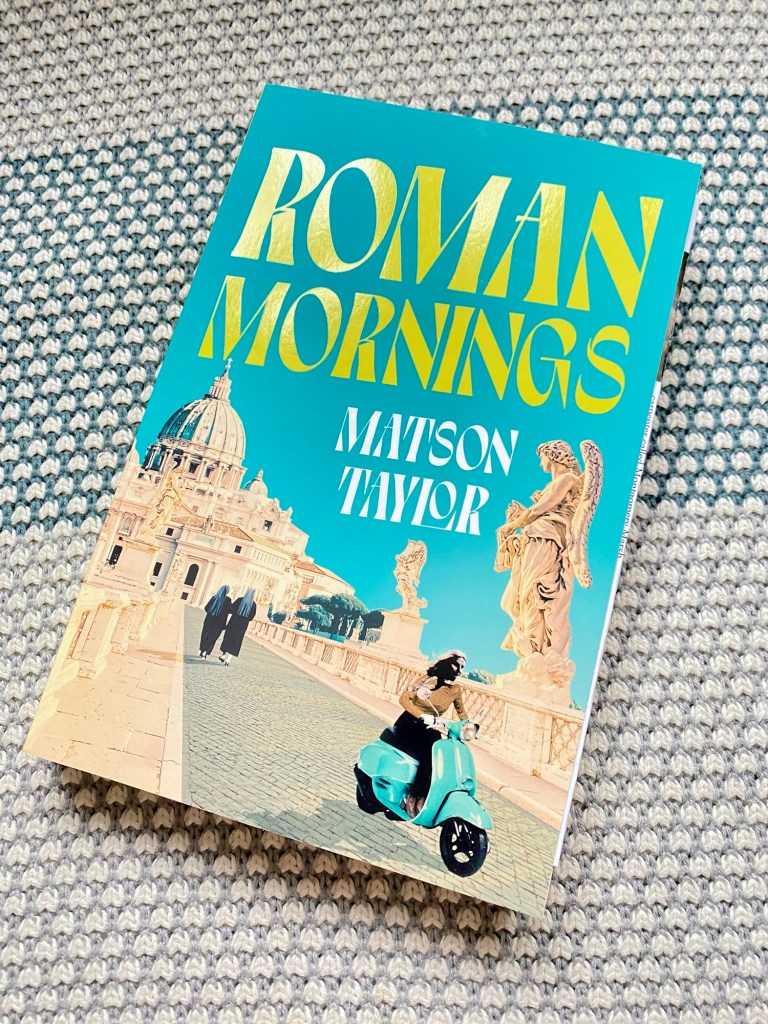
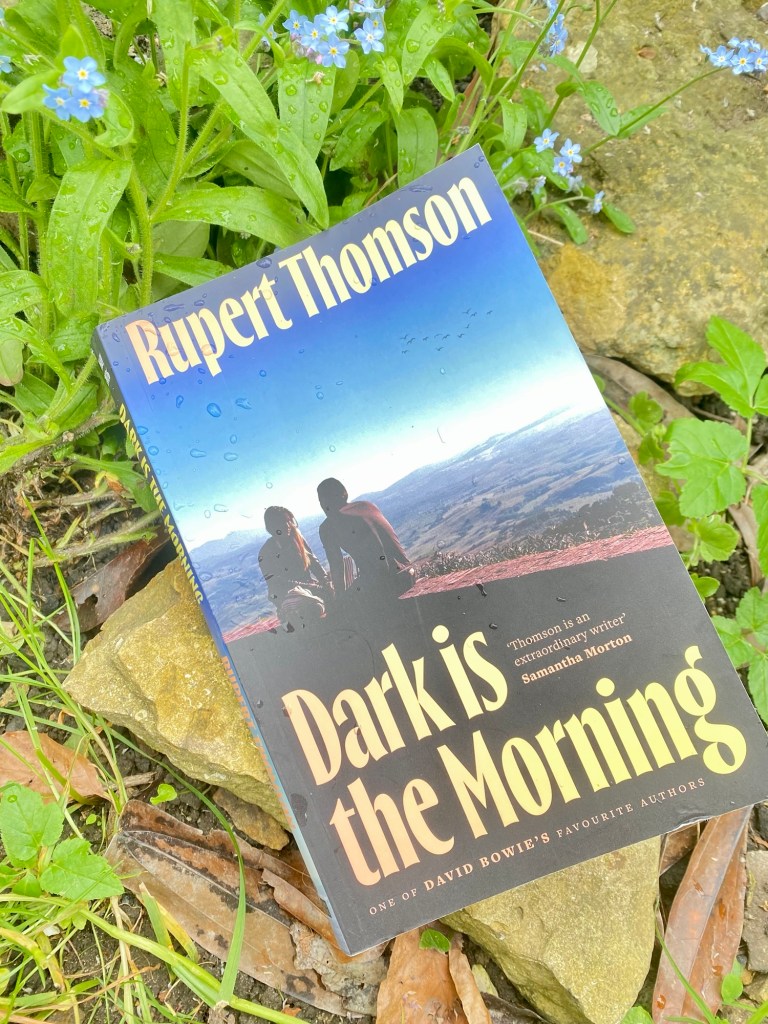
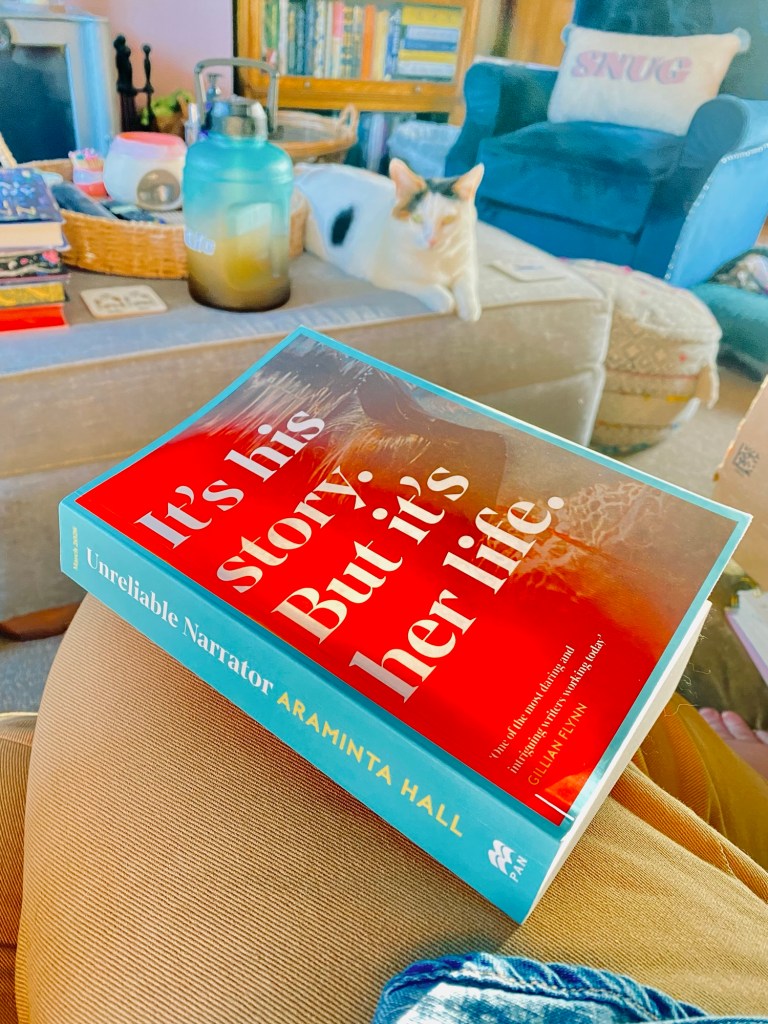
I’ve looked forward to a new Matson Taylor novel for a while now and this one is such a charming, humorous, comfort read set in 1970s Rome. The word serendipitous was made for this novel as friends and housemates Clemmie and Floss are trying out the turquoise Vespa that Floss has bought as a gift. Unsure whether she will get the hang of the scooter, at first Clemmie is a bit wobbly but as she gets to grips with it and sails off into Roman traffic she starts to enjoy herself. Strangely something like this is exactly what she needed. She’s been feeling a little stale and middle aged of late. However, as she makes her way towards a bridge flanked by angels, she quite literally bumps into a blonde, curly headed angel of a young man who was idling by the water on a break from work. Clemmie takes Monty to the hospital where his injuries are bad enough to stop him working but well enough to go home. The problem is Monty doesn’t have a home, just some digs he’s sharing with a few other craftsmen doing up an apartment for an acquaintance from London. It’s not long before his boss is in the emergency department, with Monty’s meagre belongings telling him he no longer has a job or digs. Feeling terribly guilty and also drawn to this angelic young man, Clemmie decides he will go home with her and Floss. Ensconced in their wonderfully bohemian living room, filled with plants and Floss’s theatrical memorabilia, Monty is soon drifting off to sleep with his new protectors looking on indulgently and Octavian, their large house cat laid on his chest.
This is a story about friendship, found family, reaching crossroads in life and being your authentic self, with a bit of romance thrown in for good measure. I love Matson’s chatty writing style, it brings to mind writers like James Herriot whose books mix beautiful settings, humour, everyday life and characters who feel as familiar as family. I thought his usually evocative 1970s setting would feel different in an ancient city like Rome, but we’re soon hearing about foods from my childhood and the brand new craze for avocado bathroom suites. Monty’s clothes are also of the era and Floss’s flat with its boho chic style reminds me of the indoor hanging baskets, posters and tasselled throws of my own youth. I remembered my parent’s romantic evenings in with a vesta curry and a bottle of Mateus Rosé. These contemporary 1970s references set against the ancient beauty of Rome is such an interesting contrast. I felt like I’d been to the city as the author conjured up the beautiful light, the soft and gentle colours of the stone, tiles and marble. It sounds busy and chaotic at first but it’s easy to find moments of calm. There are those cafe moments with Italian espresso and mouth watering Italian food that had me craving a trip to Italy.
The author excels when it comes to character and these are all generous, loving people. There are those incredible comic characters that lighten the mood like Floss and those like Clemmie who have more complexity and are questioning their future. Loving the city and the Italian language led Clemmie to move here and living at the palazzo with Floss is a dream, but intellectually she’s not being stretched. She has so much of the city’s history in her bones, but she’s using the language to translate plumber’s manuals. When an accident means moving out of her office for a while she has time to think. Is this what she really wants? Floss is getting older and thoughts about what’s next are accelerated by an accident that leaves her stranded on one floor of the palazzo. Is it time for a change and to accept that she’s not as young as she used to be? It’s Monty who’s the beating heart of this novel though, and I had the same urge as the women, to give him the biggest hug. I could feel the little boy in him. A boy who’s scared and wants his mum, and he’s found two in Clem and Floss. He’s a joiner by trade and incredibly skilled, he’s also keen to pay the women back for their kindness and on the advice of Octavian the cat, he starts to fix things in the palazzo. Despite his skill he’s not the best at pushing himself forwards. It’s also clear that he has a secret or too, but he needs to feel safe first. I felt like he’d found a kindred spirit in the kind and hesitant Clem. I have to mention the nuns who are incredible and I’d like to have first casting rights if this is ever a film please. These are not the stern scary nuns of my Catholic school, but a rather giggly pair who distribute British foods amongst the ex-pat community in Rome. They get to know Monty by offering him work in the many ecclesiastical buildings locally. They also end up at a club dancing to disco at one point which made me laugh out loud.
The story is quiet at first, allowing characters to settle and get to know each other, but when secrets start to emerge the deeper story comes through and it’s heartbreaking. It might have been nice to have seen some of his story slowly reveal itself in flashback across the novel, but it’s so emotional and beautifully romantic. My heart broke for Monty. We also have a slow burn romantic story for Clemmie and a man called Bob who appears in an ice-cream van and helps Monty build a basement apartment for Floss. The book meanders slowly with the odd intervention from the statues that decorate the buildings and bridges all over this city. I’ve read so many novels recently that are great but don’t have a single character I like. It was such a relief to be in a book where the characters are gentle, kind and want to help each other. Books like this, that bring joy and comfort to the reader, are hard to find and even more difficult to write. Reading about these characters embracing change with feelings of hope and renewal provided a window of solace and hope in what feels like a very angry world. For Monty it’s facing his authentic self without judgement and censure from others, a journey that isn’t without its trials. Clemmie embraces the boost she gets from teaching Monty about Rome. It reminds her she knows so much more than she’s using in her daily life and his story opens a door in her heart for potential romance but also her first love – writing poetry. Floss is embracing the new stage in her life and the freedom living in the basement flat brings for the next stage in life. Octavian the cat, prowls each level of the palazzo enjoying his new friends and casting an imperious eye over their adventures. This is a very emotional read in a stunning setting, with a big heart, a sprinkle of magic and a definite Northern slant to the humour.
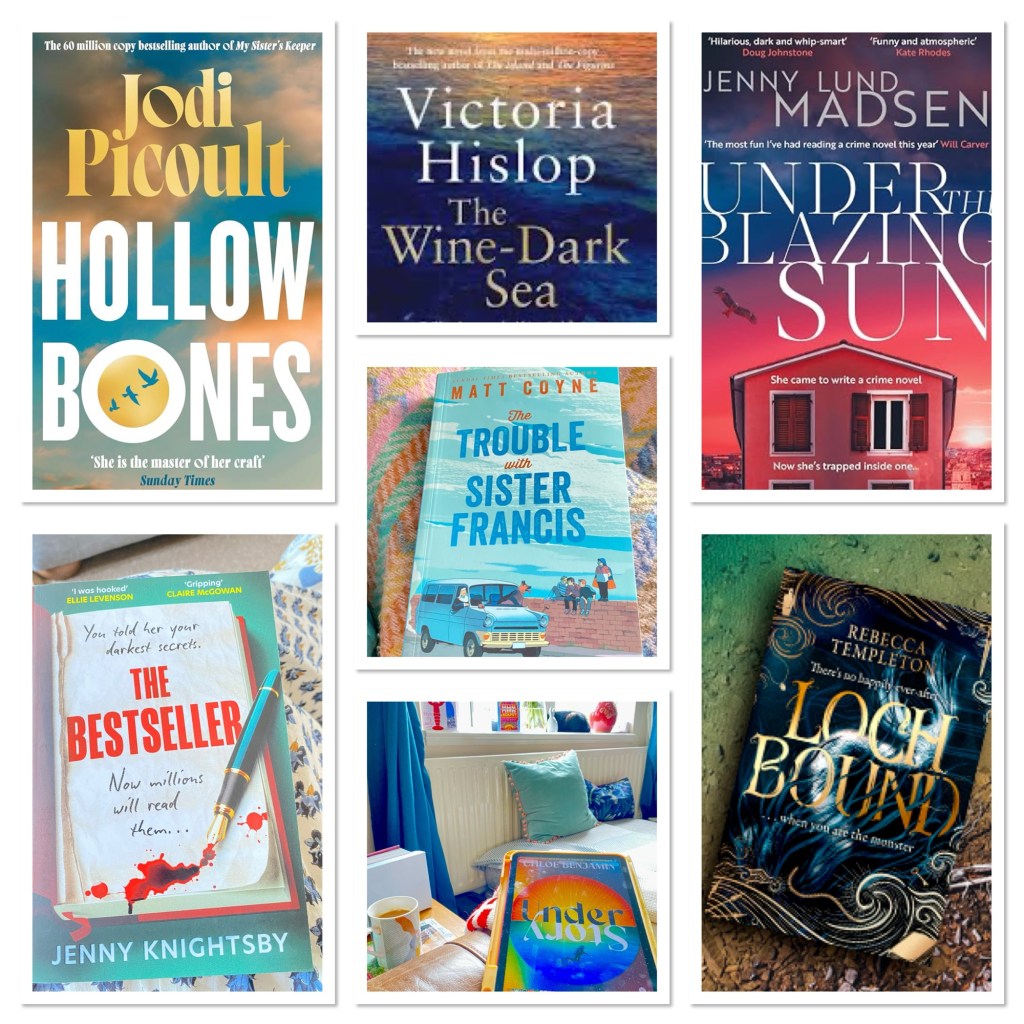
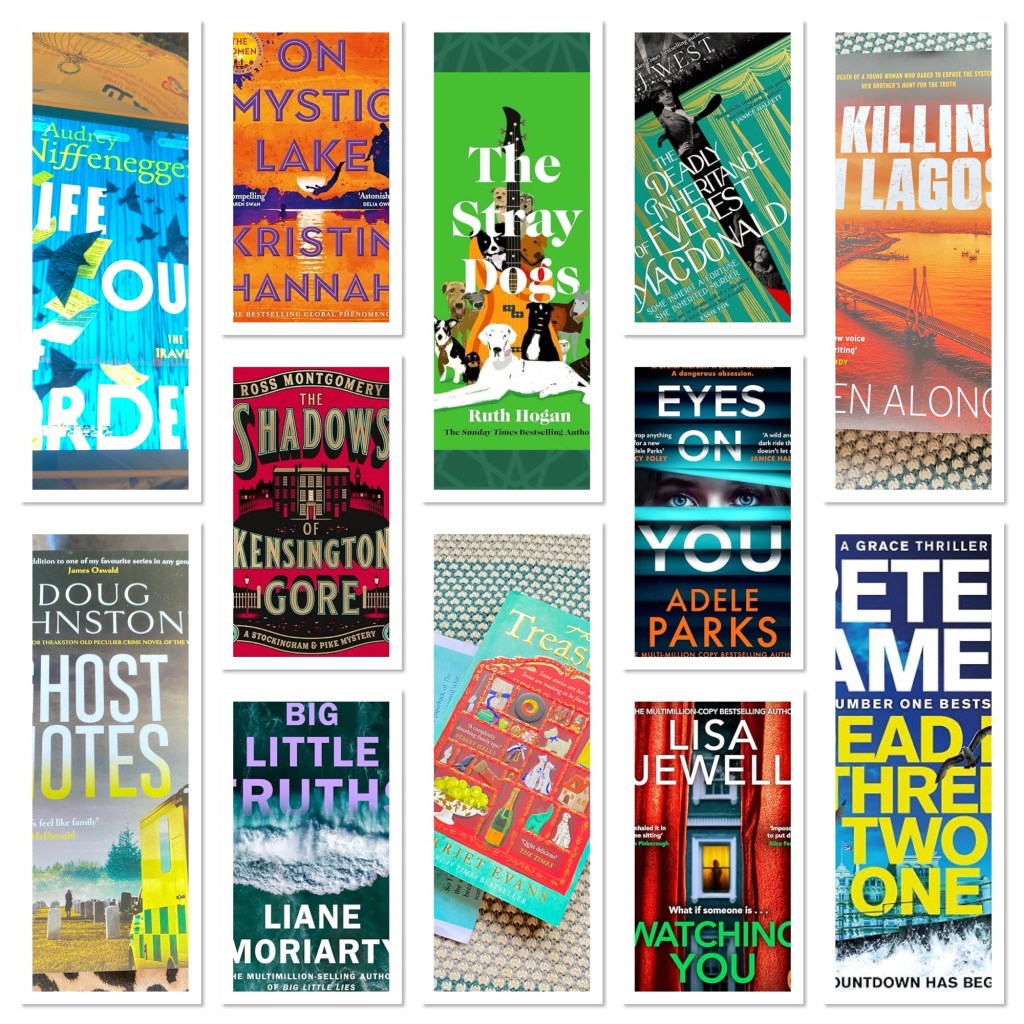
There have been some absolutely belting books this month and I loved telling you all about them. So I’ve been in the US, Italy, Greece Scotland and Sheffield. Oh I forgot about the ‘anti-verse’. It’s been a whirlwind of monstrous mermaids, a universe that goes backwards, the Greek civil war, a family dealing with the aftermath of 9/11, a crime writer who wakes up in a Sicilian villa with a dead body, a counsellor dealing with coercive control and a group of young boys trying to save their summer boy’s club. I’ve struggled to keep my mind on my reading to be honest it’s been a tough month. At the end of the last heatwave my cat returned home late one night and collapsed in the hall. I thought it was heatstroke and we tried to cool him but I could see he couldn’t put any weight on his back end. We rushed him to the vets where they diagnosed possible epilepsy. I knew this wasn’t right. She gave us some anti-convulsants but I wasn’t sure this was the right call. We kept him confined and on pain killers but he still couldn’t walk. I decided on a second opinion and went to a vet I used to see before moving house and he was brilliant. Poor Max had broken his pelvis in two places, his hip and damaged his lumbar spine. He also had a partially healed wound on his side. I can’t believe all that was missed. I could feel where his pelvis was pushed over, twisting his whole lower body. He’s had some surgery and lots of care at home. It’s going to take twelve weeks or more to fully settle. My husband has built him a three bedroom home under the stairs so he’s confined some of the time but can come out for exercise and fuss. My animals are my daily company now I don’t get out and about too well so they’re an important part of my life. I was so upset and I’ve really been focused on making him comfy and safe. So there’ll be lots of reading time in the upcoming weeks and I can’t wait be use it looks like an amazing autumn. I’ll share some recommendations for your tbr at the end. ❤️📚
I’ve been looking forward to this new release from Jodi Picoult and I was lucky enough to get it on NetGalley. I dived in and read it very quickly over a couple of days. My full review will be later in the week, but this was a fascinating read, bravely taking on some of the most contentious and sacred subjects in modern day America. We follow Molly, a young woman in her twenties who is incredibly driven and has the difficult job of coordinating emergency response in her state. Her job is not medical, it’s to prevent incidents and plan for potential disaster situations based on the geographical features of the area, possible targets and population. Having just got through COVID, Molly is happily settled down with husband Jesse close to her dad and stepmum. It’s easy to see that it’s the loss of her mother that has influenced Molly’s choice of career. Eloise was lost on 9/11 when she attended a medical appointment in the South Tower. Every year Molly takes the trip to NYC for the memorial ceremony and tucks a red ribbon behind her mum’s name, representing the one she always wore in her French plait. What Molly doesn’t know is that her own life is about to blow up unexpectedly, changing everything she’s ever known and challenging what she knows about motherhood and risk prevention. I thought this was a classic Jodi Picoult novel with dilemmas, big emotions and using different narrative voices to give us all sides of an argument. We think we know Molly’s story, but a different narrator throws all of that up in the air so unexpectedly. Reading Molly’s narrative I kept thinking “ah this is going to be about x” but I was wrong. There are strong issues here – mental health, abuse, cult mentality – and they are shocking, because they should be. Jodi Picoult has such an easy, conversational style and it was great to be back in the hands of a fantastic storyteller.
This is a great premise for a thriller and having been a therapist I’m always fascinated by books that are based on the therapeutic relationship. I think there’s a fascination in what therapist’s personal lives actually look like. Do they have it all sorted? The answer is invariably no and here there’s so much projection happening between Helena and her client Belle. Confidentiality is the bedrock of any therapeutic relationship, but that can get tricky when the therapist knows the client needs either specialist help or practical help. Helena is there to listen and guide Belle towards her own answers, but the constant disclosure of coercive control is uncomfortable to sit in. The urge to do rather than sit back and listen becomes difficult for Helena and it’s this discomfort that leads to her talking about it with best friend Tala. This is an issue for supervision, where Helena should disclose that she’s finding Belle’s passivity and indecision on leaving very difficult, but she doesn’t and now Tala is talking about how positive early responses have been to her new novel. Yet she doesn’t offer Helena a proof. When Helena stumbles across one at Tala’s flat she takes it and reads in horror as she realises Tala has fictionalised the problems of her client. This is going to be like a grenade in her personal and professional life.
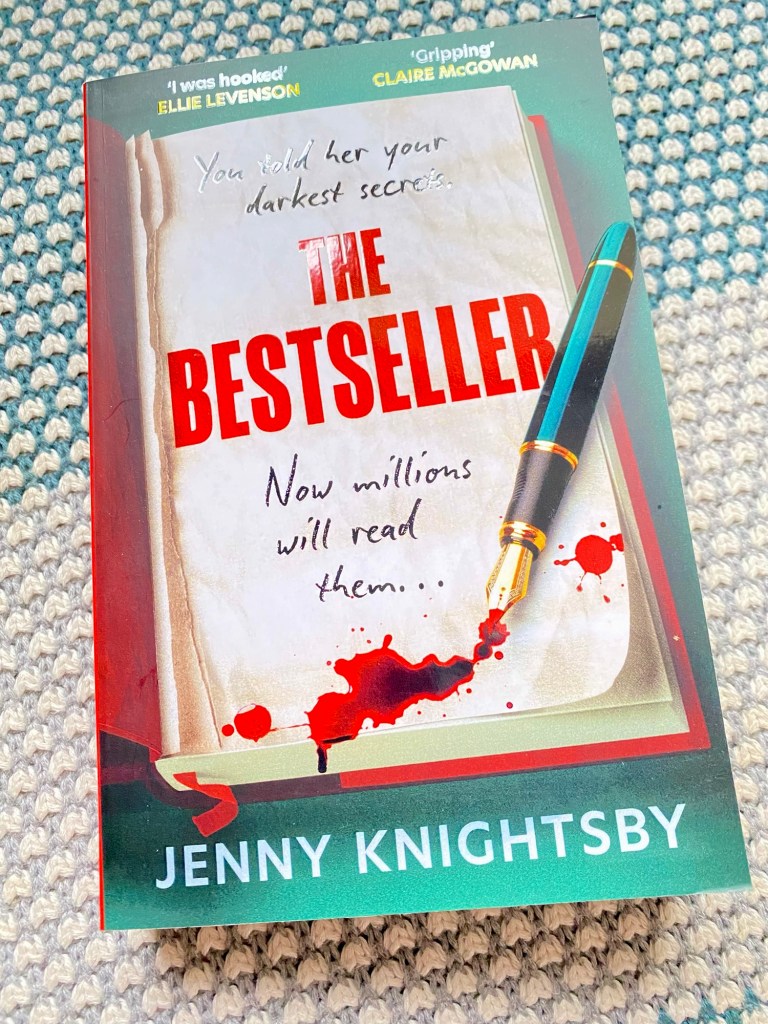
The lives of Tala, Helena and her boyfriend Dylan and their paths into adulthood hinged on a single night. I thought the author managed these flashbacks well, placing them absolutely perfectly for maximum effect. It seems everyone has secrets but they are slowly revealed creating a very addictive read with short, pacy chapters that make you want to read just one more. The tension is almost unbearable as I worried about Helena overstepping with her client, the client finding out what’s in Tala’s book and somehow passing that on to her husband Julius. Would Helena be safe? As her well-ordered life starts to fall apart Helena starts to lose her belongings, forget her schedule and have terrible nightmares. She has no access to supervision and her relationship with Tala is broken. I wondered if she was heading for a breakdown. You may see the twist coming, but that doesn’t detract from the story. Eyes are opened, secrets past and present are revealed and I devoured the last few chapters late at night, unable to wait till the morning to find out what happened. This was an excellent thriller, full of psychological drama and really nailed the experience of being a counsellor with a problematic client. I also loved the ‘meta’ structure of reading a book about a book and just like Tala’s new novel this one should be a bestseller.
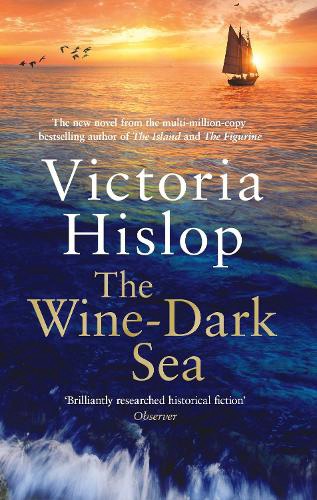
This epic story from Victoria Hislop really taught me a lot about a period of history I knew little about. The events happen after the end of WW2, a turbulent time that has already seen the punishment of Nazi collaborators and now many would like to see the end of their right wing government. The setting is a village called Kalopetra where Fotini’s husband has gone to fight for government forces against the communists, causing a schism in the family because Fotini’s brother-in-law fights for the communists. The sudden divide causes friction across the village, but the women must work together if they’re to survive. When government forces come to the village they capture all the women and Fotini is allowed to bring her baby son with her but older daughter Iliana is left behind with older children. How will they survive? That moment of Iliana chasing the truck, with her mother unable to do anything to reassure her, is burned into my memory. Although soon enough communist forces will round up the children and move them into camps where they are fed, clothed and then sent on to other countries like Yugoslavia. After having the entire burden of the other village children on her shoulders, Iliana is relieved to be fed and clothed by such kind people and so the process of brainwashing begins. All Fotini can think about is returning to her peaceful village and living the rustic existence that has survived for centuries, she doesn’t know that her way of life is already dead and nothing will be the same again.
I really enjoyed the later parts of the novel where we see Fotini piecing life back together in the city of Piraeus. It’s a massive change for this country girl but she can see the benefits of more job opportunities, entertainments like the cinema and eating good Greek food again at a lovely restaurant run by Demetrios. He’s such a kind man and gently reminds Fotini that she can’t spend the rest of her life wandering and looking for the children. The best thing she and Mitsos can do is stay in one place and hope the children find her, the place she was trying to get back to is gone. There was so much material to choose from in this book that it could have filled a trilogy. I had questions about all sorts of characters, such as Fotini’s relationship with her sister Stella. I also had questions about Nikos’s journey and his adoptive mother, there just seemed to be more about her that could have been explored. However, I loved Iliana’s growth and her life as an adult living under communism. The differences between Greece and Hungary were fascinating and as always the author captured the beauty of the Greek islands, their isolation and wildness and how this conflict disrupts a way of life that existed for centuries. The book symbolically ends with a circular dance that’s life affirming and perhaps a way of capturing, just for a few moments, that lost way of being.
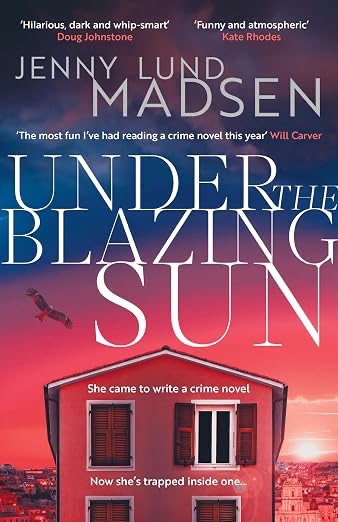
I loved the first book in this series and I devoured this one in a day. Hannah is once again fretting over writing her latest book, disgusted that copies of the romance novel she poured her heart into is being ignored, while the crime novel she wrote in one month for a bet is a bestseller. Hannah is a brilliantly flawed character full of writer’s neurosis, hating that she is forced to write what will sell rather than the books she aspires to write. Again she’s on a deadline and as a last resort her editor Bastian finds her a quiet villa in Sicily with its own swimming pool. No distractions and plenty of time to unwind and write the novel she’s had an advance to produce. I love this character because she says and does the things I’d love to, but my inhibitions keep it inside. She has no such restrictions, happily saying what she thinks when she thinks it. Her disgust with the crime genre and Jorn Jensen in particular is so funny. I wonder if she has ever had a thought or need she didn’t express? She also seems totally unregulated. I would have asked the elderly couple who caretake the villa for help but Hannah decides to walk to the village without thought about the heat, how far and which direction home is in. She has no idea which hill to take and ends up exhausted and on the verge of sunstroke on her way back. This is where she is found by Hans and Greta who take her to their incredible house to clean up and drink something. This turns into dinner, wine and a night spent in their house. It’s when she wakes up in a strange place that she and the housekeeper Lucette find a dead body. Greta has been murdered and Hans is nowhere to be found. Has he been kidnapped or could he be the murderer? Hannah seems to have an inability to weigh up a decision before taking action. There’s so much going on in her head that it’s very hard for her to remain in the present. I’m always wishing she’d slow down a minute and breathe, but the only times she seems to do this are in water.
The case is an absolute maze of connections and suspects showing up a tension between villagers and tourists, a misogynistic police force and possible Mafia interference. Despite Hannah’s aversion to crime as a genre, she’s just as caught up in the mystery of this murder as any reader would be. She’s utterly reckless, in a comical way and there’s a chase on a moped during the final chapters that is clumsy and hilarious to imagine. Sparks fly when Jorn Jensen appears, but she can’t deny he helps make things happen. His arrogance is brilliant and when he suggests they write a crime novel together I thought Hannah might hit him with something heavy. The creepy moment in the basement, including Jensen’s cardboard cut out made me laugh out loud. This is a dark humour that I love. Jorn’s statement that he has ‘enormous sex appeal’ and it’s that and not his wealth that attracts women shows what sort of brash and conceited character he is, but there’s no denying his bravery and quick thinking. They are quite the investigative team, despite her reticence about working with him. Hannah’s instincts are good. She won’t accept the police’s conclusion that Hans killed his wife, reasoning that he adored her and couldn’t have done it. Instead she follows the money, often blundering into compromising situations and dangerous people. If the conclusion teaches her anything it’s that people will murder for very unexpected reasons. This is a brilliant second instalment of Hannah’s adventures and I’m going to resolve to be a little more Hannah and say what I think here and there.
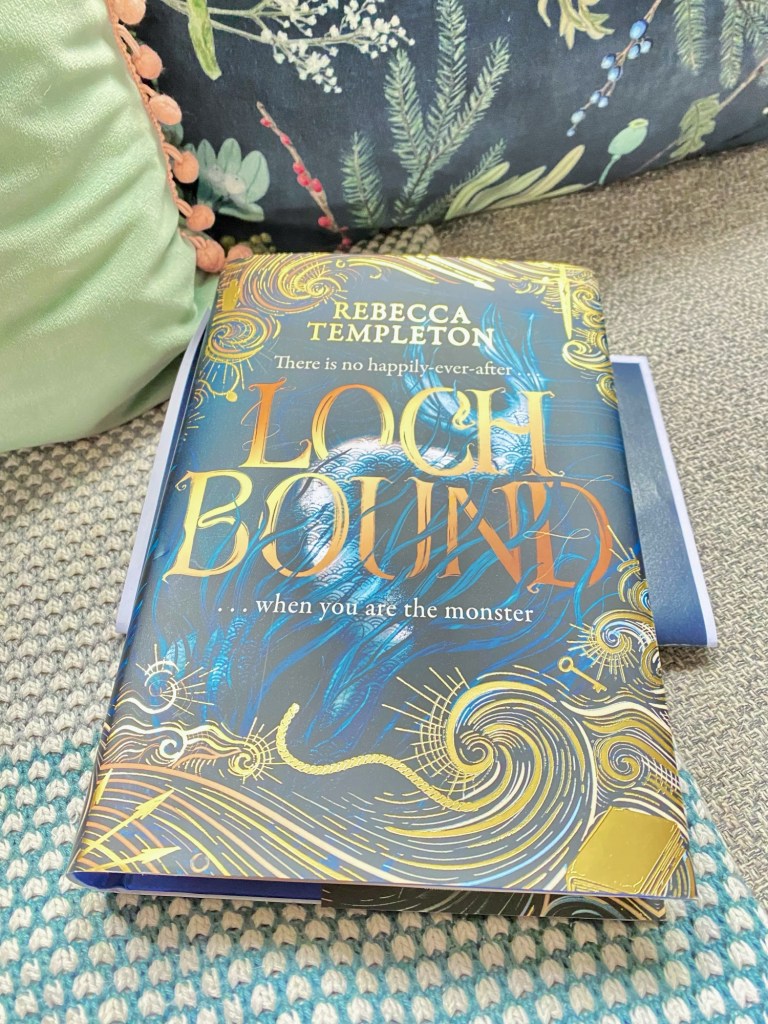
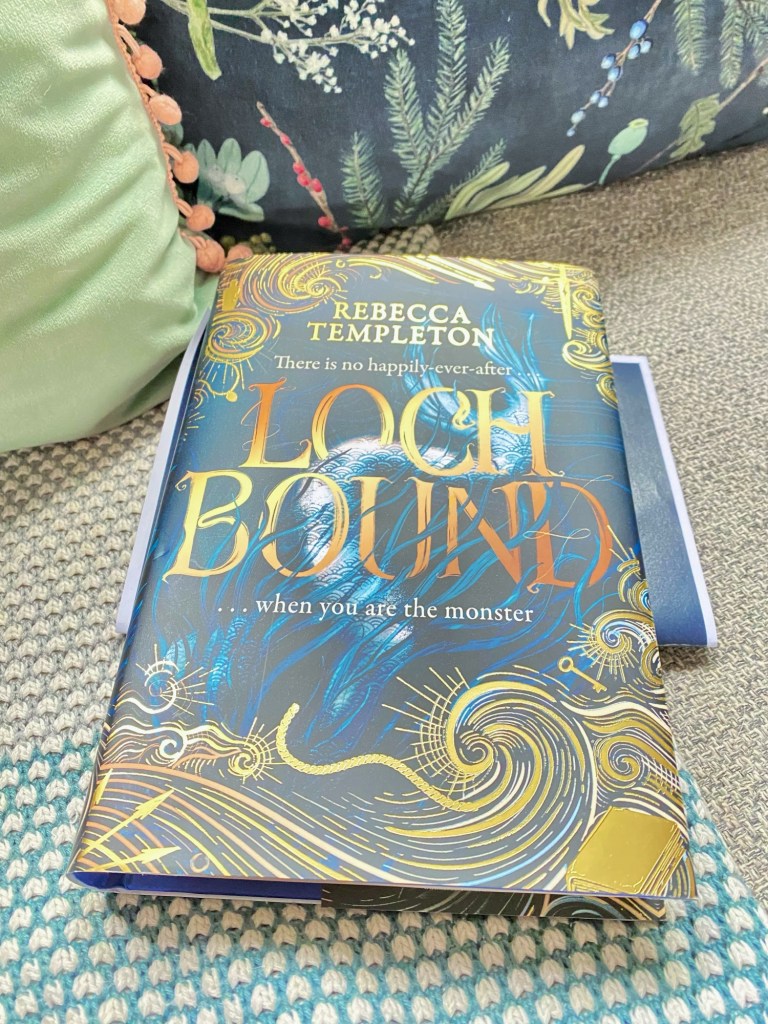
I love when monster stories are given a retelling and in this one it’s a mermaid living in a loch, but not the Disney-fixed Little Mermaid we might be used to. Here she is a truly fearsome creature named Moireach with yellow eyes, sharp teeth, shiny scales and the drive of a predator. She lives in the loch, only changing after dark when she reverts back to her human form – Iris. As a young girl Iris defied her father and fell in love with Thane. He forbade their relationship, as the daughter of a laird she must marry well and for the clan’s gain not her own. Devastated she visits a witch hoping to be free of her father’s obligations, but the witch cursed her and she became banished to the loch by day. Now, some fifty years later, when Iris emerges she is still the beautiful girl of her youth. Thane has never come for her and as dead men have been discovered around the loch with their hearts ripped out, the name of the monster is on everyone’s lips. Her childhood friend Duncan, now an old man, knows it cannot be Iris. She isn’t capable. He hides her with all the love and loyalty he had fifty years earlier, even though she chose someone else. The laird has made a big decision, he’s hired a hunter of monsters, a man called Henry Cartwright and he has never failed to catch his prey.
The backdrop of this story is perfect, using the mist, cold and breathtaking landscape to add to it’s mystery. There are parallels with Outlander here in the feel of this place, making good use of Scotland as a thin place where the paranormal, time travel and a history of monsters seems part of life. With the historical backdrop of the witch trials it’s also a dangerous place, particularly for a woman. Iris talks about the smell of the burnings and how women must be careful, but it’s no easier being a monster when men are turning up dead. The background of misogyny and brutal witch trials hangs over them all and shows a willingness to believe in magic, curses and female malevolence. It’s not just witches though, other fantastical creatures exist here like the seelies and selkies and there’s more one woman with powers a man would kill for. All of these things appear to be aligned with the nature that surrounds them and we can see that wildness as Iris changes to Moireach. It’s not just the yellow eyes and scales but the way her mind becomes that of a predator with only one goal. Reading this felt like being a child again and discovering a fairy tale rooted in darkness. Yes, some elements are fantastical, but it doesn’t read like fantasy. It’s more like a hybrid of historical fiction and fairy tales with aspects of a thriller. The pace speeds up as Iris begins to run out of time and we still don’t know why she was cursed, who cursed her and what will finally break it. There are those in the village who may seem kind, but could benefit from keeping Iris in her watery prison. As she takes us back to those fateful days in flashback, when her family were all together and her father didn’t yet know about Thane. I was engrossed with the tangled web of lies and betrayal but also by the question of what life Iris would choose if she could lift the curse. Would she pick the life she’d always wanted or had things changed? There are some unexpected revelations too, making for an exciting and absorbing conclusion. I thoroughly enjoyed this dark and feminist take on the mermaid stories we’re used to and I look forward to what the author writes next.
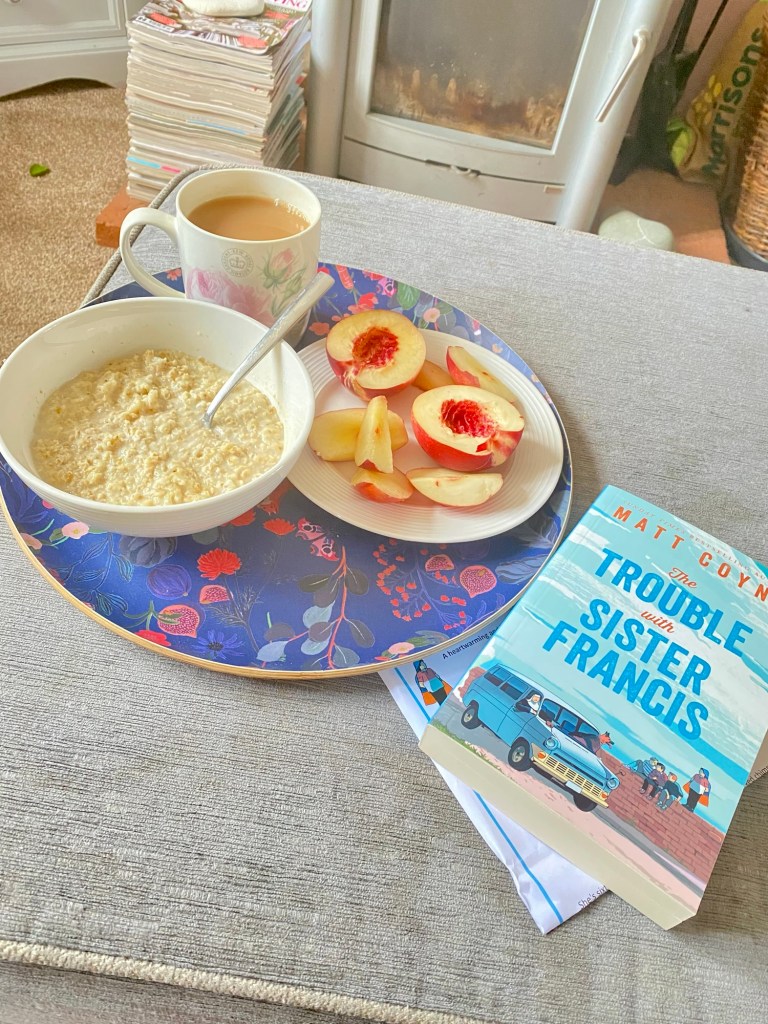
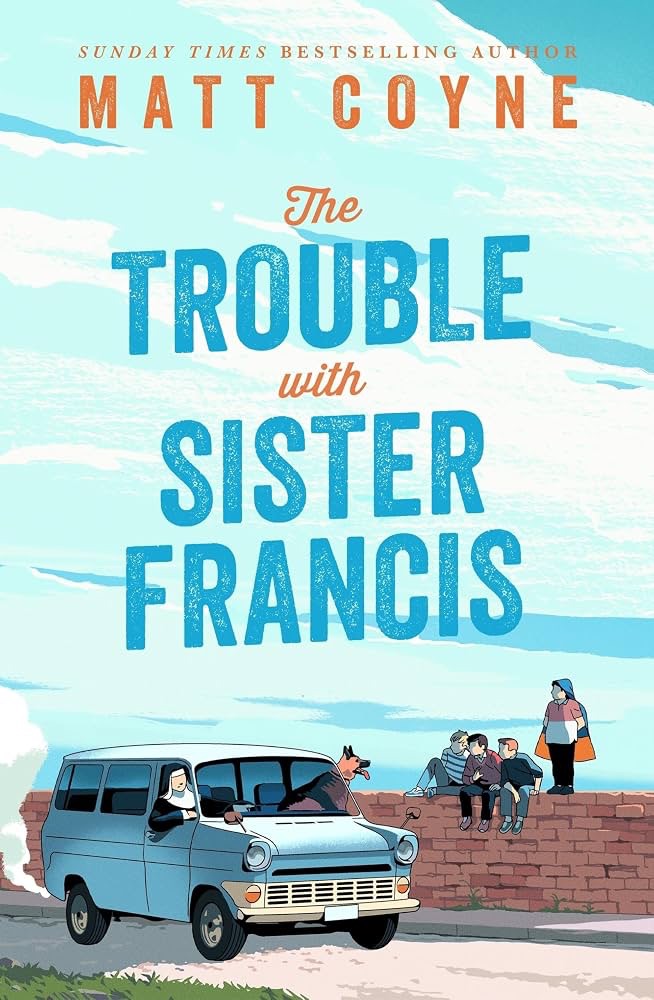
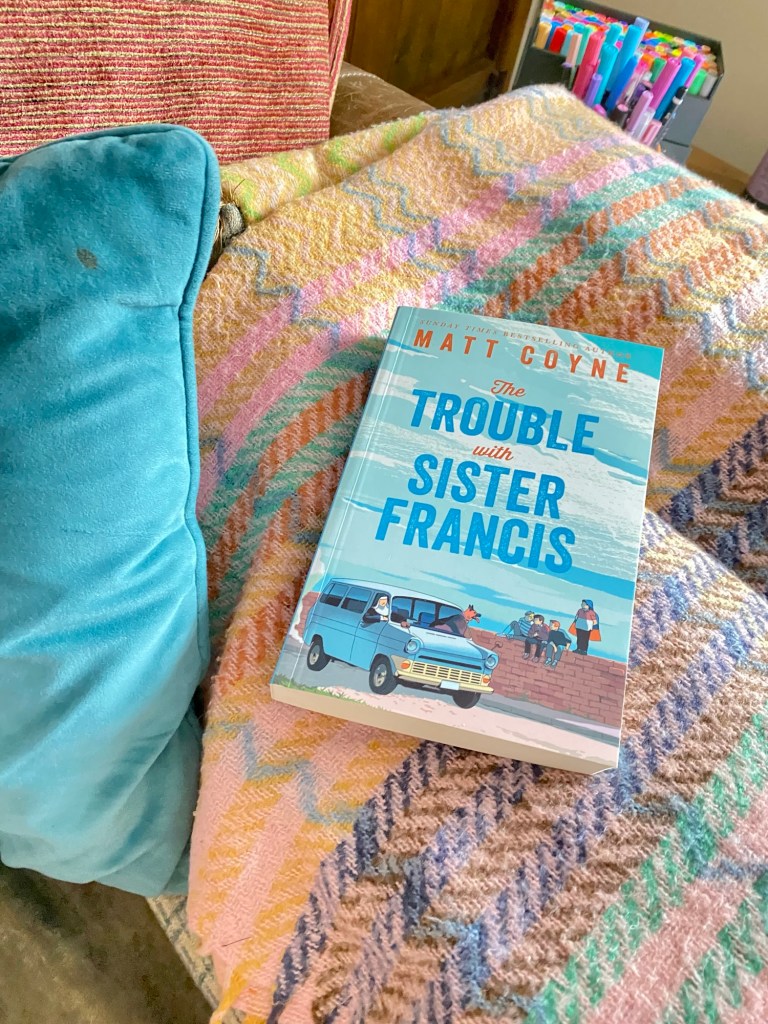
I feel like I’ve been living under a rock because I’m the only book blogger who hasn’t read Frank and Red, so this was my first introduction to Matt Coyne. I don’t even follow him on social media so went in completely blind. This book was a gem from start to finish. Matt Coyne’s ability to write a novel with the emotional intelligence to balance weighty subjects like war and loss against laugh out loud comedy is akin to Sue Townsend and her wonderful creation Adrian Mole. Sister Francis is like my rather formidable previous schoolteacher, Sister Joan. She had the sharpness and discipline of a military veteran, but underneath that there was a twinkle that made me think there was a sense of humour and quick wit underneath. Sister Francis drives an old van as if she’s in a rally, always has a cigarette on the go and reads the racing post. I have always found nuns to be singular and quirky individuals so I warmed to her immediately. Although she’s a comic character there’s so much more to her. She’s clearly keen on restarting a boy’s club she used to run years ago, with origins of supporting boys who had lost their father in WW2. She has a way of relating to boys from the area and our four friends can see she’s a formidable ally from the first day. When they roll up to the clapped out shed they’re accosted by one of the local priests, asking what they’re doing hanging around the presbytery and accusing them of looking for things to steal. When Sister Francis bursts out of the shed he’s taken aback and the boys notice she uses her sweetest voice and emphasises the holy intentions behind her club, but as soon as he’s gone she lights up and is her sweary self. Behind this exterior are buckets of empathy and determination to help the boys in her care, not that she’s easy on them. The four boys have a deal with her, if they come and help her clean the club house on the last Saturdays of term they can come to the club in the holidays and keep the entrance fee. It’s hard work but they stick at it and it’s not long before the Dead Dad’s Club is up and running.
I developed a soft spot for Rich’s Grandad Bob, who has a keen sense of humour and is a great role model for a young boy who has lost his father. I loved how he made Rich laugh with his assessment of Aunt Carole – she has a beard and looks like a pirate. He’s also there for the worse times too, after Rich’s dad died he has enough sense to simply sit with him as the loss hits him, no platitudes or promises, just sitting with him in his grief. Alongside Rich’s 1980s narrative is the journal of another boy who went to the Dead Dad’s Club after the upheaval of WW2. This narrative is evocative of a totally different era as Reginald is evacuated to a small village near Sheffield that’s something of a culture shock after growing up in London. Evacuees didn’t always have the best time and Reginald is coping with the boredom of the village – his observations on what passes as news worthy are so funny. He’s also navigating that rite of passage from primary to secondary school and the author really does conjure up those fears about the bigger school, getting lost and being without your usual friends. I wasn’t sure where his story fit with our four main characters and this is kept under wraps until exactly the right moment. This book has been a wonderful mood lifter just when I needed one, like a warm hug in book form. One line made me think about the friends who knew me in my small village at a similar age, one of whom I’ve tried to see regularly more recently. We try to get together at least once a month for cake and a catch up and I remember being taken aback at first by exactly how well she knew me. But of course she does. As Matt Coyne writes ‘real friendships are cast in the everyday’ and even though my friend and I often just walked her dog, cleaned out the rabbits and watched telly we grew up together and that counts for a lot. I heartily recommend this hilarious but heartfelt story that’s a ray of sunshine in book form.
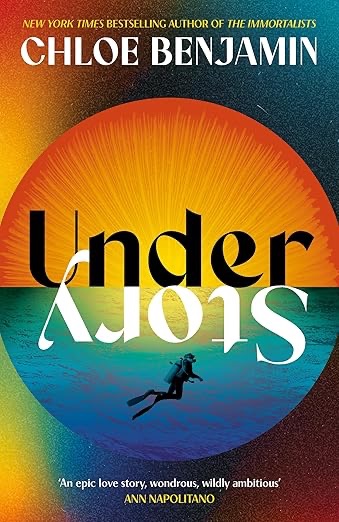
This book has to be my book of the year so far. I’ve been going on about it since May because it really is something special. I was quite simply blown away by this complex and beautiful story of science, loss and second chances. Our heroine Laurel is a scientist, studying fungus and how it grows but for some reason that isn’t clear at first, she’s on a research station in the Antarctic, away from her former husband Eli and without any fungus in sight. When she develops a fascination in the Arc that appears she thinks about its significance. When she becomes aware there is a matching basin underneath the water, her imagination is fired. Could this possibly be a portal? A gateway to a different world? She knows Eli won’t be far behind because she remembers his theory of the ‘duoverse’, the idea that at the moment of the big bang time and space was formed in two directions: our universe, the planets and the development of the world we know and in the other direction it’s complete opposite. I am not a scientist, in fact I barely have GCSE Biology, so I wasn’t aware of any background to this idea so could drift with it and enjoy two incredible minds exploring ideas. Our characters are fascinating, Eli and Laurel are a couple who were made for each other but their relationship is real and they face tough times, particularly when devastating events crash into their lives but I never doubted their love for each other. It’s fascinating to watch their characters face the concept of the duoverse, not just whether it is a portal, but if it is what will their relationship look like there and will going backwards fix whatever tore them apart? I felt both were analytical and might even appear cold at times, but in the moments of heightened emotion we really see who these characters are and the deep wells of love they hold.
I was on tenterhooks wondering about the duoverse under the ice and if Lauren is right whether they’ll ever be able to return? I found myself wondering how this world would look as time scrolled backwards. I was genuinely scared for them but also full of admiration for their bravery. The mirroring is so cleverly done, showing how life always comes full circle and we’re often helpless at the end and the beginning, if we’re lucky enough to lead a full life. As someone who worked in nursing homes in my twenties this really made me think of the role of nostalgia and how often elderly people hanker after experiences from their childhood. Laurel wants her mother’s blueberry pancakes, to watch a film she’s seen a million times and disappear into a favourite book because there’s comfort in it. It might seem like science has sent them on this potential journey, but it isn’t. The totally unscientific emotion of love is what pushes them on, but also guilt, hope and desperation. Loss is a huge theme in the novel, something that always hits me in the heart, and I was deeply moved by how the author dealt with loss and how the scientific concept of a duoverse changes this experience. This novel was moving, profound, invigorating, deeply intelligent and so full of life. I kept thinking about the symbols of the cover, the circle and the tree, the same under the ground as they are over it. As Laurel observes:
“A line implies before and after; a circle says And then, and then…”
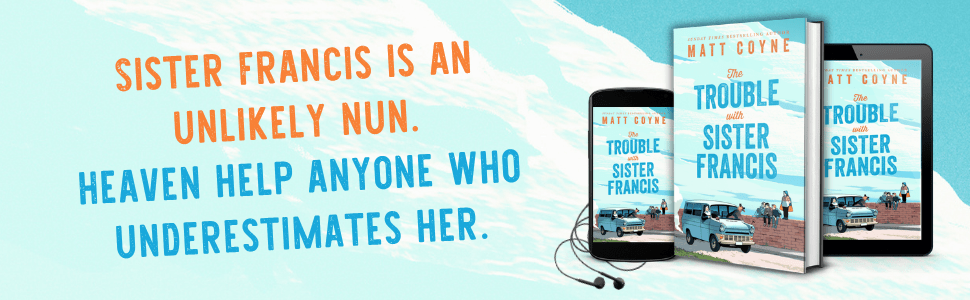
She’s sixty, sweary, drives like a lunatic and smokes like a stacked chimney . . . and she runs the Blessed Assumption Boys Club.
Richie, Bennett, Kenny and Stan are four best friends from the Whittle council estate with little to do but get up to no good. After a run-in with local bullies, they discover the crumbling, forgotten club and find themselves in the company of the most remarkable person they will ever meet.
Set against early 1980s Britain, THE TROUBLE WITH SISTER FRANCIS is a funny, heartwarming, and heartbreaking story of unlikely heroes, quiet rebellions, fierce loyalty and unexpected hope.
And at the centre of it all lies a long-forgotten journal that might just change everything.
I feel like I’ve been living under a rock because I seem to be the only book blogger who hasn’t read Matt Coyne’s Frank and Red, so this was my first introduction to his writing. I didn’t even follow him on social media before now so I went in completely blind. I can honestly say this book was a gem from start to finish. Matt Coyne’s ability to write a novel with the emotional intelligence to balance weighty subjects like war and loss against laugh out loud comedy is akin to Sue Townsend and her wonderful creation Adrian Mole. In fact it was Adrian I thought of when reading these four boys, Richie, Bennett, Kenny and Stan, all from the Whittle Council Estate in Sheffield in the early 1980s. Their dialogue is pitch perfect for a boy of that age, with their slang, swearing and prurient interest in Mrs Bolcheck’s ‘wibblies’. It brought back a memory of my brother and his friend Darren who would hang out together in our Lincolnshire village, hiding behind hedges to shout at a rather well endowed lady ‘show us your tits’. Thank goodness there were no formidable nuns nearby.
Nostalgia and charm are definitely are a huge factor in the enjoyment of this story, with exactly the right 1980s sweets, pop culture references and Northern humour. For me, it the presence of a nun that drew me in and having been brought up Roman Catholic nuns feature strongly in my memory. In 1980 as I was falling in love with Lady Di like the rest of the world and wondering whether to cut off my hair, I was also making my holy communion. I couldn’t get to Catholic school where we lived so I went to the convent every Monday evening for lessons with Sister Anne, a large, twinkly and very maternal nun who taught me my catechism. She also gave me homework every week, to write out a Bible story and illustrate it. I came across this folder when my mum and dad downsized a few years ago and found various crayon drawings of Jesus and his disciples but thanks to a seven year olds grasp of anatomy I’d placed their arms too low on their bodies. The result was various saints whose spidery hands looked like big throbbing knobs! How did she keep a straight face?
Sister Francis is more like my rather formidable previous schoolteacher, Sister Joan. She had the sharpness and discipline of a military veteran, but underneath that there was a twinkle that made me think there was a sense of humour and quick wit underneath. Sister Francis drives an old clapped out van as if she’s in a rally car. Smoke seems to billow from the exhaust and the a cigarette she always has on the go. She swears and is often reading the racing post. I have always found nuns to be singular and quirky individuals so I warmed to her immediately. Although she’s a comic character there’s so much more to her. She’s clearly keen on restarting a boy’s club she used to run years ago, with origins of supporting boys who had lost their father in WW2. She has a way of relating to boys from the area and our four friends can see she’s a formidable ally from the first day. When they roll up to the clapped out shed they’re accosted by one of the local priests, asking what they’re doing hanging around the presbytery and accusing them of looking for things to steal. When Sister Francis bursts out of the shed he’s taken aback and the boys notice she uses her sweetest voice and emphasises the holy intentions behind her club, but as soon as he’s gone she lights up and is her sweary self. Behind this exterior are buckets of empathy and determination to help the boys in her care, not that she’s easy on them. The four boys have a deal with her, if they come and help her clean the club house on the last Saturdays of term they can come to the club in the holidays and keep the entrance fee. It’s hard work but they stick at it and I found this so reminiscent of little dens me and my brother would build together in those long summer holidays where the sun seemed to shine endlessly.
I developed a soft spot for Rich’s Grandad Bob, who has a keen sense of humour and is a great role model for a young boy who has lost his father. I loved how he made Rich laugh with his assessment of Aunt Carole – she has a beard and looks like a pirate. He’s also there for the worse times too, after Rich’s dad died he has enough sense to simply sit with him as the loss hits him, no platitudes or promises, just sitting with him in his grief. Alongside Rich’s 1980s narrative is the journal of another boy who went to the Dead Dad’s Club after the upheaval of WW2. This narrative is evocative of a totally different era as Reginald is evacuated to a small village near Sheffield that’s something of a culture shock after growing up in London. It includes little documents he’s saved that really add to the historic significance of his experiences. Evacuees didn’t always have the best time and Reginald is coping with the boredom of the village and his observations on what passes as news worthy are so funny. He’s also navigating that rite of passage from primary to secondary school and the author really does conjure up those fears about the bigger school, getting lost and being without your usual friends. I wasn’t sure where his story fit with our four main characters and this is kept under wraps until exactly the right moment. This book has been a wonderful mood lifter just when I needed one, like a warm hug in book form. One line made me think about the friends who knew me in my small village at a similar age, one of whom I’ve tried to see regularly more recently. We try to get together at least once a month for cake and a catch up and I remember being taken aback at first by exactly how well she knew me. But of course she does. As Matt Coyne writes ‘real friendships are cast in the everyday’ and even though my friend and I often just walked her dog, cleaned out the rabbits and watched telly we grew up together and that counts for a lot. I heartily recommend this hilarious but heartfelt story that’s a ray of sunshine in book form.
Out Now from Wildfire Books
Meet the Author
Matt Coyne is from Sheffield, South Yorkshire. In September 2015, his life was turned upside down by the arrival of his son, Charlie. Three months into parenthood, he took to social media to write about his experience as a clueless first-time dad. Within days, his post about surviving the early months of parenthood was shared by millions around the world.
Following this, Matt created his popular blog Man vs Baby, which now has more than 500,000 followers. He is the author of two Sunday Timesbestselling books – Dummy and Man vs. Toddler – both based on Man vs Baby and has written for the Guardian, Telegraph, Private Eye and GQ.
The Trouble with Sister Francis is Matt’s second novel, following his acclaimed, award-winning debut Frank and Red.
Matt lives in Sheffield with his son Charlie, his partner Lyndsay and a Jack Russell terrier with ‘issues’ called Popcorn.
Mermaids. Monsters. Magic. But this story is no fairy tale . . .
Kilmara, Scotland. 1725. For fifty years, Iris has accepted the curse that blighted her life. By night, she is a heartbroken woman, destined to walk the misty shores of Kilmara without growing older. By day, she is Moireach, a terrifying monster imprisoned in the murky depths of Loch Moine.
When bodies begin appearing on the shore, the villagers are convinced Moireach is responsible. So a hunter – the rugged, ruthless Henry Carver – is summoned to slay the monster of the loch.
Iris must break her curse before she is killed for crimes she cannot believe she has committed. But as Kilmara’s hunt for the monster becomes ever more fevered, she and Henry are drawn together in a dangerous game of impossible attraction.
And when a figure from Iris’s past suddenly reappears, she must choose what – or who – she is willing to sacrifice to win her freedom.
Because there is no happily-ever-after when you are the monster.
I love books where monsters are used in a clever way and I also love books set in Scotland and this brings the two together beautifully. I’ve recently been reading about mermaids and their dual narrative of being beautiful women with long hair, beautiful faces and glistening scales or terrifying sea monsters dragging sailors into the deep and eating them alive. It’s a long way from the Little Mermaid. However, what is common is the misogyny of the narrative – an early Syrian goddess was said to have had an illicit relationship with a youth, ashamed of her actions she then drowned herself in a lake. She was forgiven by the gods but from then on had the upper body of a woman and the lower body of a fish, thus remaining celibate for life as punishment. I’ve never liked the tale of The Little Mermaid who falls in love with a man and wishes to live on land. She can have her wish granted and have human legs, but is doomed to having pain like knives in them. The wish to be and live like a human has to have a penance attached. The fashion for taxidermy, curiosities and freak shows in Victorian Britain meant that many women were performing as mermaids but also strange mixes of animals were being sewn together and shown as mermaids, such as the strange example at the Horniman Museum in London. In this story she’s a truly fearsome creature named Moireach with yellow eyes, sharp teeth, shiny scales and the drive of a predator. She lives in the loch, only changing after dark when she reverts back to her human form – Iris. As a young girl Iris defied her father and fell in love with Thane. He forbade their relationship, as the daughter of a laird she had to marry well and for the clan’s gain not her own. Devastated she visited a witch hoping to be free of her father’s obligations, but the witch cursed her and she became banished to the loch by day. Now even fifty years later, when Iris emerges she is still the beautiful girl of her youth. Thane has never come for her and now when dead men are being found around the loch with their hearts ripped out the name of the monster is on everyone’s lips. Her childhood friend Duncan, now an old man, knows it cannot be Iris. She isn’t capable. He hides her with all the love and loyalty he had fifty years earlier, even though she chose someone else. The current laird has made a big decision, he’s hired a hunter of monsters, a man called Henry Carver and he has never failed to catch his prey.
The backdrop of this story is perfect, using the mist, cold and breathtaking landscape to add to its mystery. There are parallels with Outlander here in the feel of this place, making good use of Scotland as a thin place where the paranormal, time travel and a history of monsters seems part of life. With the historical backdrop of the witch trials it’s also a dangerous place, particularly for a woman. Iris talks about the smell of the burnings and how women must be careful, but it’s no easier being a monster when men are turning up dead. The background of misogyny and brutal witch trials hangs over them all and shows a willingness to believe in magic, curses and female malevolence. It’s not just witches though, other fantastical creatures exist here like the seelies and selkies and there’s more one woman with powers a man would kill for. All of these things appear to be aligned with the nature that surrounds them and we can see that wildness as Iris changes to Moireach. It’s not just the yellow eyes and scales but the way she becomes a predator with only one goal. However she has only killed things in the loch, never on land before. She has always been able to keep her dual personalities separate before, never feeling Moireach at night when she leaves the lake. Now that separation is becoming harder. Is that because of the presence of the hunter or is the curse changing? Will Iris will be lost forever?
The hunter is an interesting character, made solitary by loss and preferring to keep moving from place to place. His opinions on grief are based on hard experience, when his wife died he didn’t just lose her, but also that part of himself. The part that loved her. He knows that grief doesn’t go away, he’s had to learn to live with that dead part. When he sees Iris in her human form something awakens in him, even though he notices that she seems like a wild creature. She’s always around at night, wearing men’s clothing and runs away if he tries to get too close, with her flaming red hair trailing behind her. There is something between them and it could be love, or it could be his hunter’s instinct kicking in. Iris can feel it too, even though her aim has always been to break the curse and find Thane, the man she was in love with and wanted to marry. I felt like Iris grew up in the course of the story. It’s as if Duncan’s protection of her has kept her a young girl in mind as well as looks. Maybe she needed to break out a little in order to gain some wisdom and perspective. If she does break the curse, will Thane come for her? She would need to decide whether she wants the life she expected when she was cursed or if the time she’s spent as Moireach has changed her outlook? I also started to wonder if Duncan had a vested interest in keeping her under control.
Reading this felt like being a child again and discovering a fairy tale. One that’s rooted in darkness. Yes, some elements are fantastical, but it doesn’t read like fantasy. It’s more like a hybrid of historical fiction and fairy tales with aspects of a thriller. The pace speeds up as Iris begins to run out of time and we still don’t know why she was cursed, who cursed her and what will finally break it. There are those in the village who may seem kind, but could benefit from keeping Iris in her watery prison. As she takes us back to those fateful days in flashback, when her family were all together and her father didn’t yet know about Thane. I was engrossed with the tangled web of lies and betrayal but also by the question of what life Iris would choose if she could lift the curse. Would she pick the life she’d always wanted or had things changed? She has memorialised her relationship with Thane but he has let her down by not coming for her as she’d expected. Maybe she would want a different life, rooted in her present reality instead of the fantasy she has held all this time. There are some unexpected revelations too, making for an exciting and absorbing conclusion. I thoroughly enjoyed this dark and feminist take on the mermaid stories we’re used to and I look forward to what the author writes next.
Meet the Author
Rebecca Templeton has had a love of books from a very early age and had lofty childhood aspirations of being a writer, though she ended up joining the legal profession instead. When her husband encouraged her to start writing again, she rediscovered her creative outlet and hasn’t looked back since.
When not writing or working, Rebecca can usually be found crocheting giant blankets, baking or watching Gilmore Girls. She is also owned by a couple of very energetic children.
WHAT IF TOMORROW WAS ALREADY WRITTEN, BUT YESTERDAY WAS YOURS TO CHANGE?
At an isolated research station in Antarctica, biologist Laurel Salter washes dishes for a living ten hours a day, six days a week. She tells no one why she left her career, or why her marriage ended.
But even in this remote outpost, Laurel can’t outrun her past. When a strange light appears across the ice and draws a group of physicists to McMurdo, her former husband, Eli, won’t be far behind.
Laurel is captivated by the Arc: its surreal glow; the way it seems almost alive. And though Eli is reluctant to test her wildest theory, Laurel is convinced that the Arc leads down a rabbit hole, and into a world they can barely imagine. Can she persuade him to risk everything to fix the burden that hangs between them – to turn back the clock and live their story a second time?
And this time, live it differently.
Once read, never forgotten, Under Story is a genre-defying exploration of the promise of this life, what might lie beyond it, and how far we would go for more time with the people we love.
This is my book of the year so far and I can’t stop talking about it. I’d read it on NetGalley in the spring and I was desperate to review but it felt too early. So when I found out my fellow squadettes were reading this in August I had to join in. I was quite simply blown away by this complex and beautiful story of science, loss and second chances. I still think about it all the time. Our heroine Laurel is a scientist, studying fungus and how it grows but for some reason that isn’t clear at first, she’s on a research station in the Antarctic, away from her former husband Eli and without any fungus in sight. When she develops a fascination in the Arc that appears above the pole she thinks about its significance, but when she becomes aware there is a matching basin underneath the water, her imagination becomes fired. Could this possibly be a portal? A gateway to a different world? She knows Eli won’t be far behind her because she remembers his theory of the ‘duoverse’, the idea that at the moment of the big bang time and space was formed in two directions: our universe, the planets and the development of the world we know and in the other direction it’s complete opposite. I am not a scientist, in fact I barely have GCSE Biology, so I wasn’t aware of any background to this idea so could drift with it and enjoy two incredible minds exploring ideas. I was fascinated with Laurel’s experiments with fungus growing in a maze and whether it moved in a specific direction. She was disappointed to find it tried out all routes then doubled back on itself, but then a second batch made straight for the right route as if it had learned from the previous batch’s mistakes. It felt like a demonstration of Jung’s collective consciousness:
“Ideas spread and somehow we’re all plugged into them.”
I often feel this about ideas, like when several books come out on the same subject at once. It reminded me of something I’ve read before – that ideas are hanging in the air and if we don’t grab them someone else will. As Laurel presents her paper at conference she’s asked some particularly tough questions by one delegate who is unimpressed with her work, claiming she’s applying a human lens to interpret her results. Laurel’s retort is to ask why the delegate is assuming that all intelligence is human? Laurel knows that we like to separate ourselves from animals and plants, safely in our own superior category, but oxygen from our atmosphere is running through our veins and the word human comes from the Latin word ‘humus’ meaning soil. Thinking that we are of the earth is the only thing that comforted Laurel when her dad died. She thinks about how bronchi in our lungs branch like trees and how a ‘neural network in the brain is structured like a galaxy’. I loved reading these aspects of the book and really appreciated how cleverly the author plants these ideas in the first part of the book and they grow in the second part.
Our characters are fascinating, Eli and Laurel are a couple who were made for each other but their relationship is real and they face tough times, particularly devastating events crash into their lives but I never doubted their love for each other. It’s fascinating to watch their characters face the concept of the duoverse, not just whether it is a portal, but if it is what will their relationship look like there and will going backwards fix whatever tore them apart. I felt both were analytical and might even appear cold at times, but in the moments of heightened emotion we really see who these characters are and the deep wells of love they hold. It was two other characters that caught my imagination though: Gloria and Mr Nakamura. I absolutely loved Gloria who is Laurel’s mentor in our universe and her house in San Francisco was so brilliant I wanted to live there:
‘It was an old Arts and Crafts house on Prospect Avenue, dark wood with purple roses growing in the garden and ivy trailing over the windows. Inside was enchantment; half melted candles, cabinets of oddities, a Maine Coon cat the colour of midnight.’
Gloria is intelligent, feisty and an incredible mentor to Laurel and I had a feeling they would meet in any universe. Mr Nakamura is a character from later in the book who is an ‘overtaker’ – a thought I’ll leave with you – who’s incredibly wise and understanding, helping with the difficult parts of life’s journey with dignity. Every character springs to life and has a backstory.
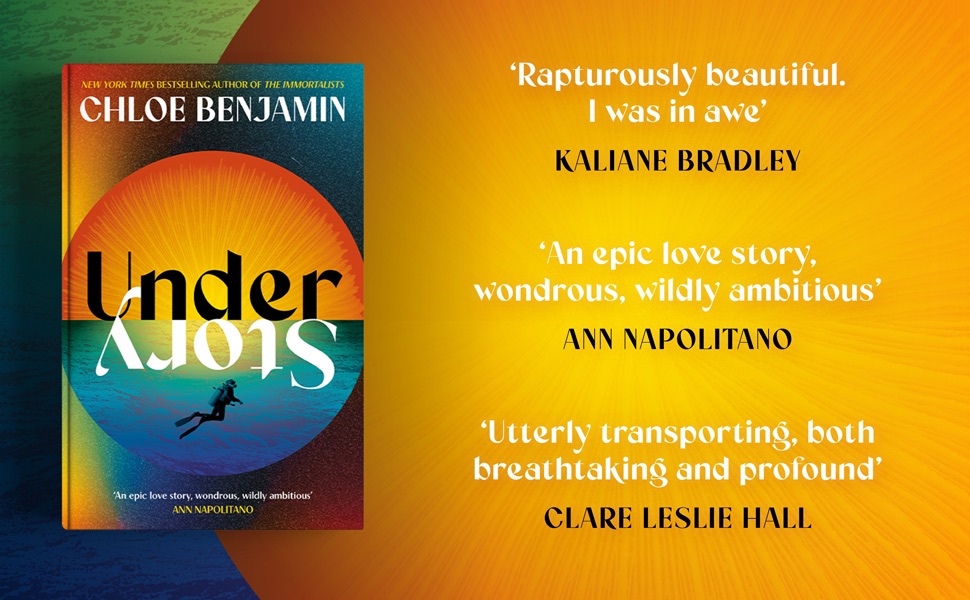
The book’s settings are incredible. First the frozen wasteland of the Antarctic and its different scientific research bases are fascinating. I had no idea how many were there, but McMurdo is like a mini town and it’s the tiny details that give it authenticity. Many of the scientists go home for the winter months when it’s impossible to go outside and cabin fever can really kick in. Some people have an ‘ice-wife’ or husband who they’re in a relationship with in the summer months, then go home to their real spouses in the winter. Bits of the real world come through, such as the disappointment in a second Trump presidency, but it feels like a different world and the perfect place to avoid reality too. Every world the author presents to us feels absolutely real even though some of it seems impossible. I was on tenterhooks wondering about the duoverse under the ice and if Lauren is right whether they’ll ever be able to return? I found myself wondering how this world would look as time scrolled backwards. I was genuinely scared for them but also full of admiration for their bravery. The mirroring is so cleverly done, showing how life always comes full circle and we’re often helpless at the end and the beginning, if we’re lucky enough to lead a full life. As someone who worked in nursing homes in my twenties this really made me think of the role of nostalgia and how often elderly people hanker after experiences from their childhood. Laurel wants her mother’s blueberry pancakes, to watch a film she’s seen a million times and disappear into a favourite book because there’s comfort in it. It might seem like science has sent them on this potential journey, but it isn’t. The totally unscientific emotion of love is what pushes them on, but also guilt, hope and desperation. Loss is a huge theme in the novel, something that always hits me in the heart, and I was deeply moved by how the author dealt with grief across the novel and how the scientific concept of a duoverse changes this experience. This novel was moving, profound, invigorating, deeply intelligent and so full of life. I kept thinking about the symbols of the cover, the circle and the tree, the same under the ground as they are over it. As Laurel observes:
“A line implies before and after; a circle says And then, and then…”
Out 1st September from Tinder Press
Meet the Author
Chloe Benjamin is the author of THE IMMORTALISTS, a New York Times Bestseller, and THE ANATOMY OF DREAMS. Her third novel, UNDER STORY, will be published in September 2026.
A Barnes & Noble Discover Great New Writers selection, LibraryReads favorite, and #1 Indie Next pick, THE IMMORTALISTS was named a best book of 2018 by NPR, The Washington Post, Entertainment Weekly, and others. THE ANATOMY OF DREAMS received the Edna Ferber Fiction Book Award and was long listed for the 2014 Center for Fiction First Novel Prize.
Originally from San Francisco, CA, Benjamin is a graduate of Vassar College and the M.F.A. in fiction at the University of Wisconsin. Her work has been translated into over thirty languages. She lives with her husband in the San Francisco Bay Area.
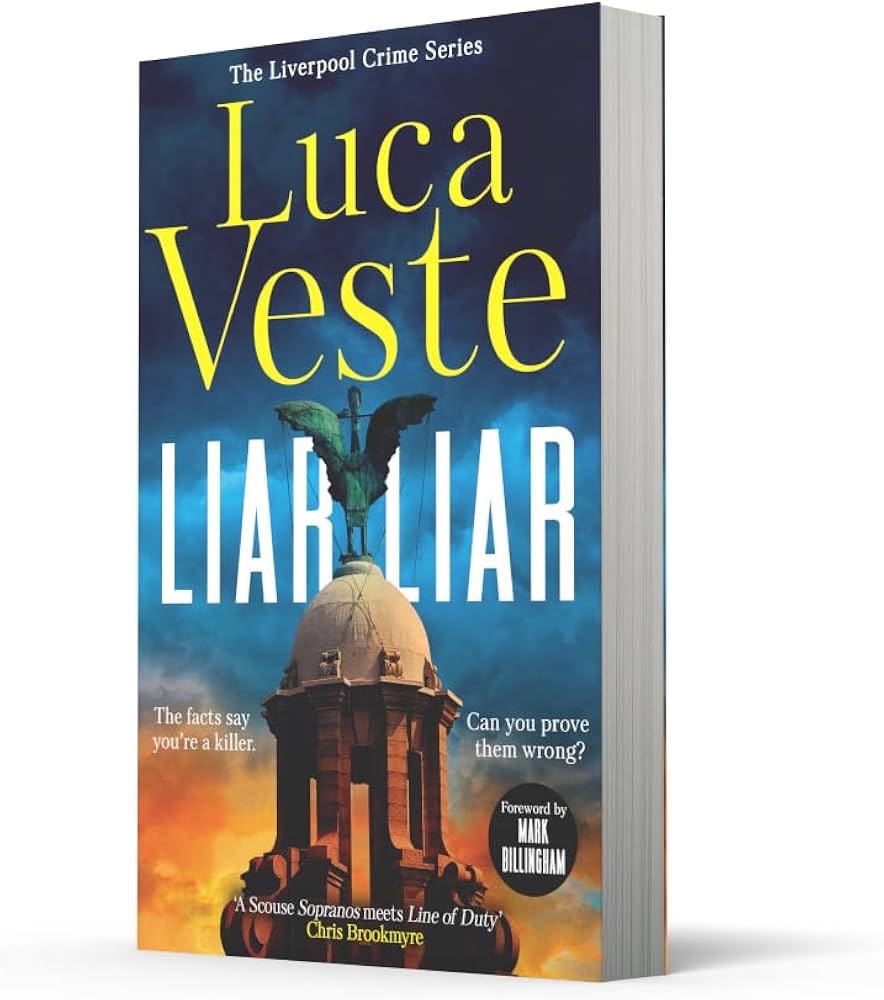
Once hailed as Liverpool’s finest detective, Mark Fletcher brought a serial killer to justice and earned the city’s admiration. But when he’s accused of working with Liverpool’s most notorious crime family, his legacy is shattered – and so is his life.
Now disgraced and spiralling, Fletcher wakes up in a hotel room with no memory of the last 24 hours… and a dead body beside him.
The evidence says he did it. His instincts say otherwise.
Hunted by the force he once served, Fletcher must uncover the truth – not just to clear his name, but to survive. Because someone wants him silenced, and they’ll stop at nothing to finish what they started…
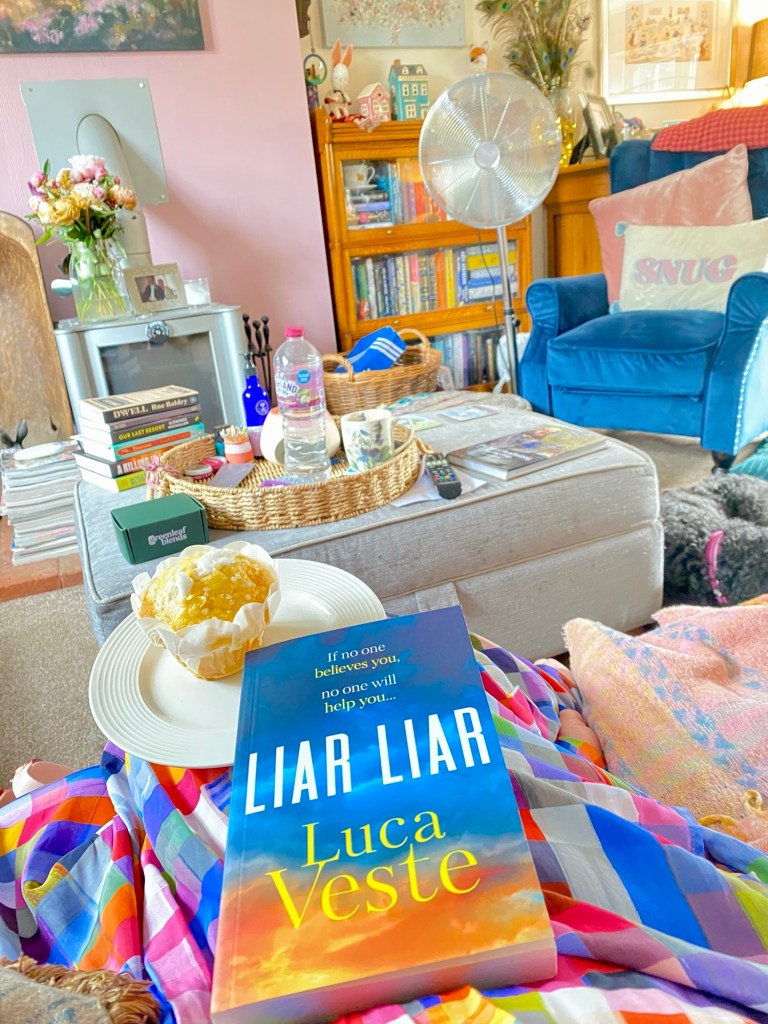
Wow! What an opener to a new series from Luca Veste, set in his hometown of Liverpool which just happens to be my mum’s hometown too. I’ve spent time in Liverpool since I was a little girl, visiting family in Rainhill, going to mass at the the cathedral and visiting art exhibitions as a teenager when the Tate opened up on the Albert Dock. It was the first trip my husband and I took with his daughters visiting the museums and going vintage shopping on Bold Street. They loved it so much that my eldest stepdaughter and her boyfriend have been living there for the last three years for university and are making the city their home. Mostly I love the people and their attitude on life, their resilience, their determination to fight injustice and the way they stick together. It’s a great city with so much diversity, both in its residents and its buildings something the author really captures in this novel. He uses different areas of the city for different moods, showing that there’s a reason Liverpool is often used as a film set for shows like Peaky Blinders, This City Is Ours and The Responder, capturing the grandeur of the Georgian quarter, the more run down areas and where industrial buildings from it’s heyday as a port city have been revamped for new projects. It’s no surprise it’s often used in feature films to represent New York, because Liverpool’s energy made NYC feel strangely familiar when I first visited. It also has a darker, criminal underbelly that the author delves into here.
The incredible cover for the book features the iconic Liver Birds, one looking towards the city and the other looking out over the Mersey. They bring a gothic feel to the cover and this is definitely a very dark tale, highlighting the criminal underworld that visitors don’t get to see. While the Liver Birds and grand riverfront buildings have grandeur they never lose their sense of humour, the Cunard Building’s distinctive brickwork mean its known as the Streaky Bacon building, the grand grey stone buildings in the administrative district have pride coloured pigeons on the eaves reminding us it’s also the gay quarter and there are also Superlambananas – yes they are exactly what they sound like. Even the huge Queen Victoria statue at the end of Castle Street has its own name – Victoria’s Knob – because her sceptre looks very phallic from a certain angle. It’s Castle Street where the book opens as suspended police detective, Mark Fletcher, wakes up in a hotel room bed with a dead man. From that point we follow Mark’s every decision as he tries to save his career, but also his life. He has two choices: to call it in and hope he has enough goodwill left that his colleagues will listen or to leave the hotel and try to investigate. Who wants him implicated in a murder? Do they want to give him a taste of his own medicine and see him jailed or are they playing a game that ends with his death? In between the action packed present day, we’re taken back to nine months ago when Mark was riding high, the detective responsible for catching the Butcher of Bootle. What could possibly have happened to start the fall from grace he’s had in such a short time? The answer to that question lies with one woman, Sofia Bonnuci and her gangster family. The minute he tried to help by hiding Sofia from her violent boyfriend everything changed. Today, from the moment Mark wakes up, the plot is action packed as he jumps out of windows and into the Mersey, dodges suspects and bullets at breathless speed. We tear across Liverpool from the very grand Castle Street to the docks, Rainhill and into the Wirral. I loved the dialogue too, full of Scouse humour with references to ‘the bizzies’ and Brookside as Mark’s old colleagues Kirkham and Abs investigate a body found buried in someone’s back garden in Kirby- their boss asking whether anyone called Sinbad lived there. They find out that the landlord of the houses is an agent who works for the Bonucci family. Could these events be linked in some way or is it just a coincidence?
Mark really does grab you as a central character and I was on his side immediately. We’re privy to all his thoughts and deductions, as well as his changing emotions as the day progresses. This is a deliberate choice by the author who wants us to bond with the central character in this new series. I trusted him too because he feels like a good man who’s made some poor choices, possibly due to being one of life’s ‘rescuers’. He can’t resist helping, even if it has meant stretching the rules a little. Stepping outside the rules only works when nothing goes wrong, but when it does the situation runs away from him and here he is living alone, drinking a little too much and potentially losing the job he loves. It’s a case of poor judgement, something that plays into his decisions now, involving other people in what could be a doomed situation. His colleagues Kirkham and Abs will soon start investigating the body in the hotel. Would they even believe Mark if he did contact them? The discussions between them show the impact of Mark’s previous actions on his team, with Abs pointing out that they were close and now nobody even talks about him. It’s hard to know what to think, especially when they see CCTV from the hotel. Did Mark made one mistake that went drastically wrong or has he been completely rogue all along? We are let into their world of the Bonucci family too, where legitimate business interests across the city seem to be a cover for more illegal activities. This family are like a liquid that’s seeped into every area of Liverpool and the author cleverly sets them up for future novels with a potential interest in a new Italian restaurant that sounds very like a favourite of mine in Bold Street. A power struggle seems to be emerging, with Salvatore Bonucci now becoming older, his seconds in command Gino and Frankie, are jostling for position and both have very different approaches to business.
The tension is absolutely nail-biting as Mark ends up cornered but escapes again and again. However, constantly looking over your shoulder is wearing and Mark is getting colder, dirtier and more tired all the time. There’s also his mental state, as his conscience is battered again and again will he simply run out of self-belief? Every time he escapes, his choices narrow. A show down is coming, but will it be with his old colleagues or will the Bonucci family find him first? The ending of this book, when it comes, was so unexpected my jaw dropped. The forbidding setting of Toxteth Reservoir is a brilliant choice, with derelict buildings full of dark, damp labyrinth of endless corridors and hiding places. It brings us full circle back to the gothic Liver Birds:
‘Their wings weren’t spread in triumph, but half open as if caught in the moment before deciding whether to strike”.
They’re a metaphor for the whole book, constantly on edge and potentially dangerous, leaving the reader trailing behind unsure what’s going to happen next. It’s clear Luca Veste values his readers by giving his previous Liverpool Detectives a cameo, with Murphy as Kirkham and Abs’s boss and Rossi helping her parents set up their (very familiar) new restaurant. He’s setting them firmly into the future of this series, something fans will love. This has definitely whet my appetite for more from this team, thanks to the author’s love for his city and his ability to surprise the hell out of his readers.
Out now from Harper Collins
Meet the Author
Luca Veste is a writer of Italian and Liverpudlian heritage, married with two young daughters, and one of nine children. He studied psychology and criminology at university in Liverpool. He is the author of the Murphy and Rossi series, which includes DEAD GONE, THE DYING PLACE, BLOODSTREAM, and THEN SHE WAS GONE.
Part psychological thriller, part police procedural, his books follow the detective pairing of DI David Murphy and DS Laura Rossi. The novels are set in Liverpool, bringing the city to life in a dark and terrifying manner…with just a splash of Scouse humour. Liar Liar is the first in a new crime series set in Liverpool.
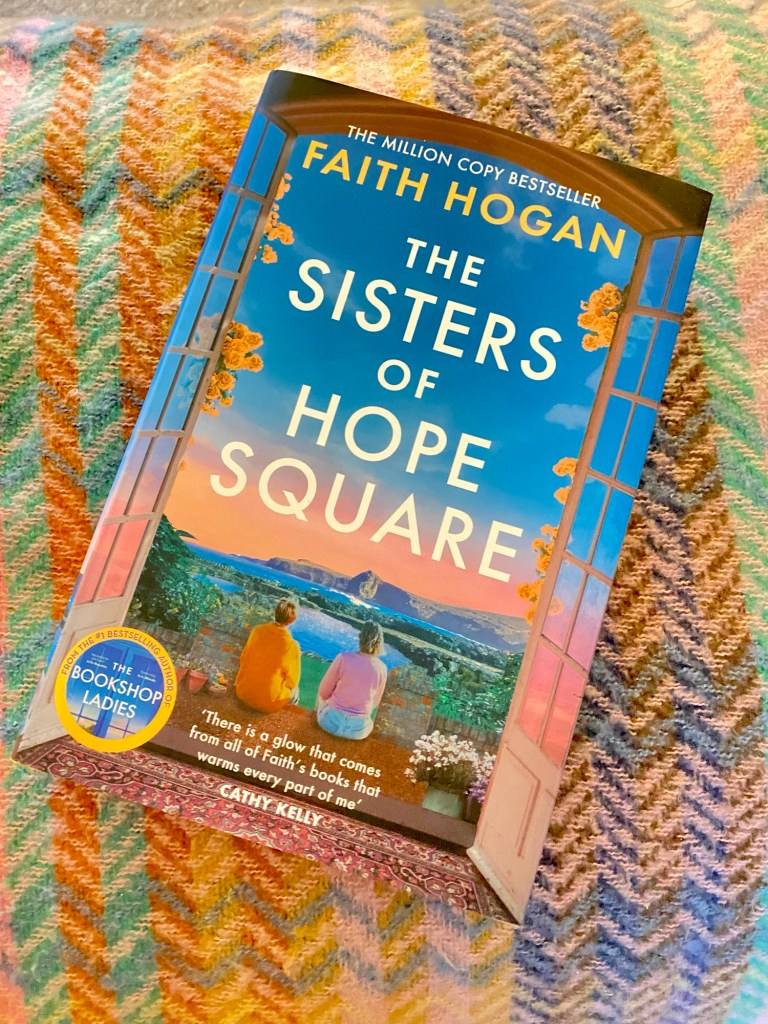
All Blythe Carney ever wanted was to become a hotelier and run her family’s business, the Hope Square Hotel. But fate, and her grandfather, intervened and it fell into her younger sister Rae’s lap, taking her dreams with it. Now Blythe owns Still Water House, the most exclusive guest house on Pin Hill Island, but she can’t help but feel she’s still not living the life she was meant to.
Rae Johnson had no interest in taking over the hotel, her dreams lay elsewhere, but when she ended up with the family business her sister had set her heart on, her sense of duty to continue their family legacy with her husband was too strong to ignore.
Now, fifteen years later, newly widowed Rae is struggling to keep the hotel afloat and she knows that selling it could be the final straw in her already fragile relationship with her sister.
What do you do when your sister lives the life that you’d set your heart on? And when the perfect storm is brewing, surely, it’s time to put aside the jealousy and disappointment that can tear a family apart, and fight for the future you have always dreamed of?
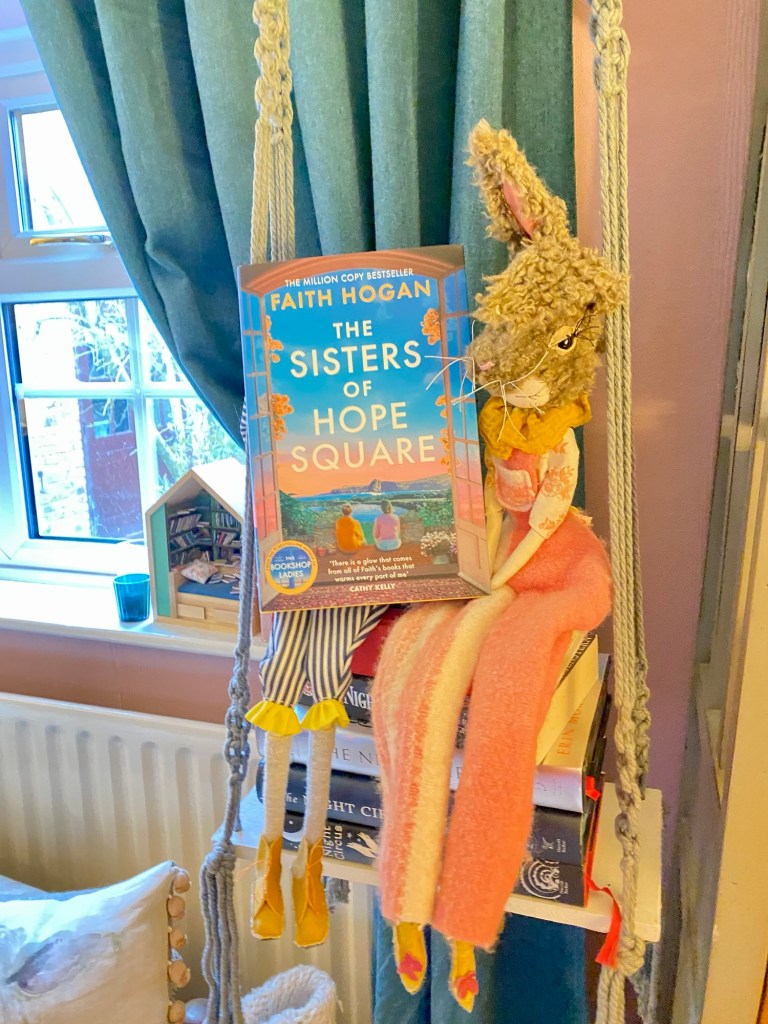
I love the joy and care in Faith Hogan’s writing and this has been a brilliant book to sit back and enjoy while we’ve been having a few weeks of very warm weather. Her characters always have so many layers and usually plenty of secrets and these women are no exception. I also feel like she cares about them and wants us to understand their journey. The author takes us back and forth in time to give us the story of the Hope Square sisters, Blythe and Rae. In the present Blythe runs a very successful guest house on Pin Hill Island, at Still Water House, the home she shares with husband Kip and daughter Siggy. By contrast her sister Rae lives alone in what was the family business and the only hotel on the island, the Hope Square Hotel. The sisters couldn’t be more different. Blythe has the drive and ambition of a great business woman whose only dream was to gain her degree and take over at the helm of the family business after her grandfather. Blythe runs a tight ship, even at home, and while she and Kip are an excellent team on the business side, of late there’s been some tension between them. Their main point of contention is Blythe’s treatment of their daughter Siggy who is a teenager ready to start planning the next stage of her life, perhaps going away to university? Blythe has closed her mind to this idea, she rarely lets Siggy hang out with other kids on the island and refuses any activity she believes is unsafe. Kip is becoming frustrated, not only does he feel taken for granted, he wants his daughter to be allowed to grow up. However, there is no reasoning with Blythe. Siggy often escapes to work at Hope Square with her Aunt Rae. Rae feels fragile, not surprising since she’s a recent widow, but there’s something more that seems to be keeping her paralysed, unable to make plans and move forward. She and Marcus didn’t have children so she values her precious time with Siggy, but her relationship with Blythe has never fully recovered since Rae and Marcus took over the hotel. How did this sequence of events happen?
The author takes us back and forth in time with both sisters so we can see events and decisions that led us here, but she also uses it to let us in on secrets the sisters have kept from each other. We as readers have the full picture, so behaviour that seems unreasonable or excessive to other characters has some context for us. It’s very frustrating to see characters misunderstanding each other completely. One such instance is Blythe’s behaviour when a new resident comes to Pin Hill Island. Val and her grandson Danial are refugees, he’s eager to find work and she’s keen to join groups and make friends. Blythe’s behaviour around Val seems utterly irrational, but there must be a reason probably buried deep in the past. I found Blythe a challenge I must admit but I couldn’t quite believe she was just a hateful person. The major question that keeps popping up is why would the girl’s grandfather make the inexplicable decision to pass the hotel to Rae and her boyfriend Marcus? The answers will come, but needless to say there were some men in this book who needed a bit of reeducation. Meanwhile as Danial volunteers at the hotel for Rae to get some work experience, he and Siggy spend some time together. Could there be romance on the cards? If there is, Blythe will be definitely have something to say about it and I worried it would have implications for her relationship with her daughter.
All these misunderstandings and secrets are set against a picturesque backdrop on this isolated island. The incredible scenery is clearly what draws people to visit, but is there still enough to sustain two hotels? Blythe is determined to get in a tourist guide and in one of the best comic moments she has a guest from hell, who she suspects is an inspector. I have to admit I imagined Maggie Smith playing this role at her most imperious. The vision of Blythe having to tolerate smoking, moving furniture and waiting on this woman hand and foot made me laugh. Her eventual response to 48 hours of this treatment was priceless. There’s a lot of trauma to unpack here. There’s so much loss for both these women, even after they lost their parents. There are themes of bereavement, motherhood, domestic abuse and being a victim of crime as well as the central family feud. As always the author gives these subjects the depth they deserve and they do have impact especially when it’s a revelation from the past that gives us more insight into the characters. What I like is that she always keeps us hopeful, that there’s a chance for healing and light in what seems a dark world at the moment. As the tension and miscommunication builds I just wanted the two sisters to talk openly and honestly, but it reaches a dramatic conclusion I didn’t expect. This is a great summer read and something of an escape from reality, full of intrigue and family drama but with bucketloads of warmth and hope.
Out now from Aria Books
Meet the Author
Faith Hogan is an award-winning, million copy best seller. She is a USA Today, Irish Times Top Ten and an Amazon UK Number 1 Best Selling writer of contemporary fiction novels. Her stories have charmed readers around the world – she’s sold internationally and translated widely. She writes grown up women’s fiction which is unashamedly uplifting, feel-good and inspiring.
The Bookshop Ladies was shortlisted for an An Post Book Award in 2024.
The Sisters of Hope Square is her brand new summer read coming June 2026. It is a gripping and poignant story of two sisters divided by jealousy and disappointment who must put their differences aside to save the inheritance that drove a wedge between them decades earlier.
She writes twisty contemporary crime fiction as Geraldine Hogan.
She lives in the west of Ireland with her family and their Labrador named Penny. She’s a writer, reader, enthusiastic dog walker and reluctant jogger – except of course when it is raining!
“When Mark died I thought I’d start seeing him around more..”
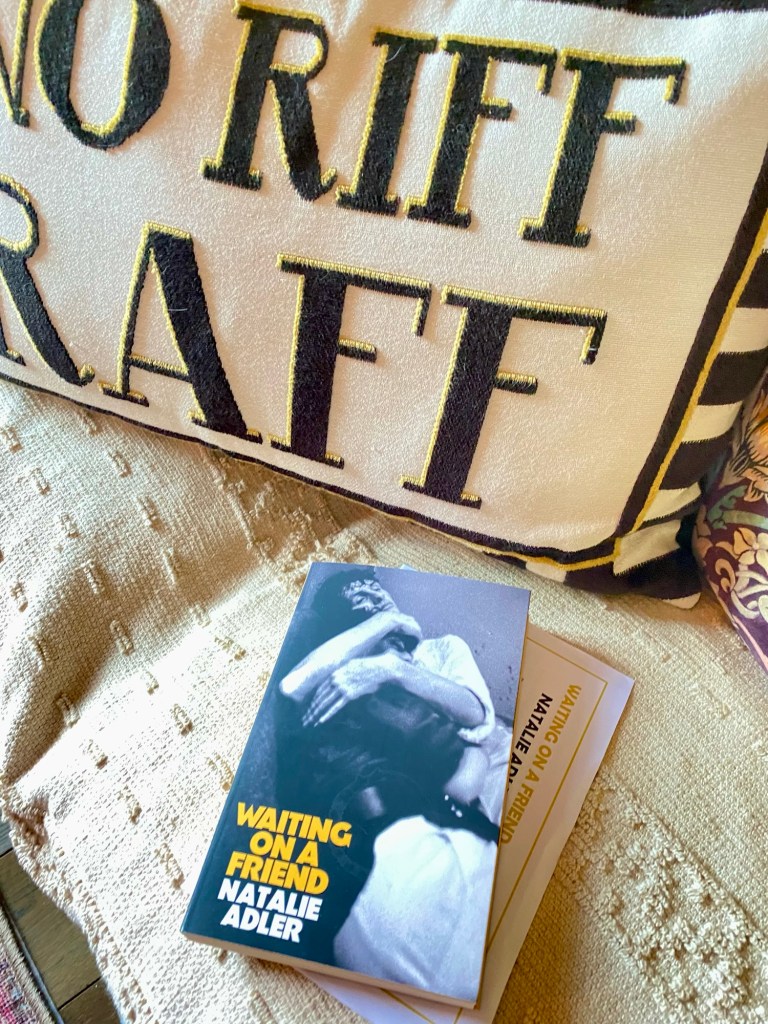
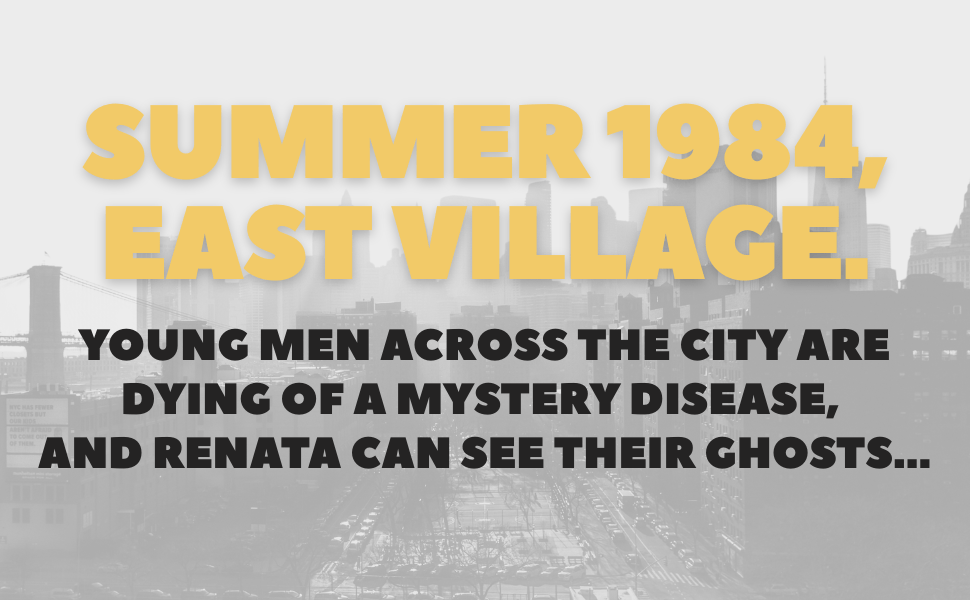
From that fascinating opener this book becomes so many things: a meditation on grief; a witness to the AIDS crisis in 1984 New York City; a community’s anger at the gentrification of the East Village; a ghost hunt led by a company called Manhattan Remediation. Renata is a young dyke-about-town who has the ability to see ghosts, which has been happening more and more frequently as her friends have started dying of what has recently been named AIDS. So, when her best friend Mark dies, she assumes she’ll see him again. There’s no way Mark wouldn’t give her a chance to say goodbye, would he? But to her disappointment – and increasingly, her concern – Mark doesn’t appear. Renata has other problems, too. A mysterious, police-like force has begun ridding their East Village neighbourhood of anything abnormal or inexplicable. At first, she’s sure they’re scam artists, but it becomes clear they’re actually trapping ghosts. With her band of lovably eccentric pals and lovers, Renata is determined to fight back against the erasure of her friends’ memories and the sanitizing of her beloved New York.
Renata is our narrator throughout and I felt a kindred spirit in seconds. Her expectation of seeing her friend Mark seems odd at first reading, but when I realised he had died without her and she hadn’t known for a few days I was so sad for her. Mark is clearly the most important person in her life, they shared a living space when either one of them wasn’t sleeping at a lover’s place and it seems unthinkable that she wouldn’t have known. That she wouldn’t have felt it. That the sky didn’t cave in. When people say life goes on this is exactly what they mean – everything carries on as normal while you feel like a shrieking banshee. However, for Renata there’s an added element to this disbelief. She can see dead people. In fact she’s being plagued by the ghost of their friend Francois, who she definitely doesn’t want in her flat. So why hasn’t Mark appeared? It’s hard to accept that the powerful and deep emotions you share with someone have suddenly become one sided. I remember thinking when my husband died, we were so close, how can that line of communication be cut? Years later, a chance encounter with a medium left me questioning again, she definitely had Jerzy’s turn of phrase, his humour and tendency to flirt with the furniture, but why was he talking to her and not me? Renata and Mark had a complicated relationship, they each had lovers, but they did have times when they slept together. There was no possessiveness in life, but in death I could understand Renata’s desire to have him to herself.
I was reminded of Jill in the TV series It’s A Sin and the deep connections the residents of the pink palace had with each other. When her best friend Ritchie starts to deteriorate badly, his family take him back home and cut him off from the people who have lived with him. It’s devastating when Jill travels to his childhood home, only to be told by his mother that Ritchie is already dead. The author picks up on this in the novel, the families unable to live with their child’s sexuality rushing in near the end to claim them. This could be out of love, but is also a way of cutting them off from their community, not wanting the stigma of AIDS to touch their family. Some families quickly and quietly arranged funerals for their children without the people who loved them for who they truly were, often citing the cause of death as cancer so the neighbours didn’t know. I was a teenager at the start of the AIDS epidemic here in the UK and I remember feeling genuine fear. The government leaflet had a gravestone on the front with ‘don’t die of ignorance’ carved on it. I even remember a bizarre telethon type event called First AIDS, presented by comedians and DJs telling us which sexual acts were most risky, how to prevent contracting the virus and how to put a condom on. I was thirteen and I honestly believe that it informed by sexual behaviour from the offset – I was known by my friends in later years for two methods of contraception at all times and I’m sure that was down to how frightening it felt back then. There was enormous stigma and prejudice, but because I lived in a quiet village in a rural county it felt somewhat removed from me. Even though I had an Uncle who was obviously gay in hindsight, we never really talked about it. Reading this and knowing that, a few years earlier than First AIDS, death was a daily reality in the gay community of the East Village really made me realise how far behind and out of touch we were.
The author skilfully switches tones from crushing reality, to horror and even humour at times which I really enjoyed. She doesn’t spare the realities of a death from full blown AIDS, in particular she tells us the story of Francois who is haunting her apartment. He is an angry ghost, throwing and pushing things, always making a noise and creating a horrible atmosphere, even before he appears. When he does he is known to vomit, pee on the rug and often lets out a terrible scream. Francois was a teacher, but when he started losing weight and sores were appearing on his face he was asked to leave because ‘his face was scaring the children.’ She details the secondary illnesses that would kill someone with the HIV, the lymphoma or other types of cancer or infection like pneumonia. Then there’s the encephalopathy and dementia. It’s no surprise, when we hear François’s story, that his ghost is angry. She talks about the guilt she feels for wanting him to die quicker, to stop his suffering. Renata’s mother, who never let on that she had the same gift as her daughter, said that spreading salt in the corners of problematic rooms helped soak up the negative energy, so she’s been trying baths with mineral salts but it hasn’t helped. There is some comedy in Francois as well as fear and it’s Renata’s irritation with him that made me smile. She knows she can’t live with him, but what to do? Another theme within the book is the gentrification of the neighbourhood, with talk of landlords trying to remove tenants in rent controlled apartments so they can renovate and earn more from a new one. A company called Manhattan Remediation are mentioned, claiming to be able to remove ghosts or entities from apartments. It’s discussed as a possible link to gentrification, a way to ‘clean up’ the neighbourhood. This is a proud community that wants to keep its history and its ghosts. When Francois finally pushes Renata to the edge she calls them and like the fourth emergency service Dr Silverman arrives with a faraday cage. Could this be the answer?
I was really interested in the community Renata lives in and her job at the vintage shop. She also has other friends who help her sit Shiva for Mark – a Jewish week of mourning where the bereaved stop their daily activities and focus on grieving. Renata’s friends cover the mirrors and prepare food and they talk about their memories. This is a stark contrast to her visit with Mark’s lover Patrick where there is tension and anger on both sides and I was glad she had a loving community around her. The author has captured the resistance and pride of the gay community when they’re coping with stigma and suspicion. The warmth and empathy they show each other is moving. This is such a powerful subject and really succeeds as a piece of queer history in New York City, especially since most US deaths from AIDS occurred in NYC and San Francisco. It really embodies the fear and paranoia of that time perfectly, but also depicts a community of people for whom sex may be fluid but love is plentiful and loyalty is strong. For individuals already stigmatised by their sexuality and estranged from families, this community is their found family and those ties are unbreakable. As Renata observes, if the strength of her grief alone could compel Mark to appear then he would. The addition of Renata’s psychic abilities is a genre-bending idea that mostly works really well and accentuates how lost and confused she feels. I felt her need to keep living too, even though the pull of the dead is so strong. The way she relates her personal grief to the reader, in a time of unprecedented loss, is the strongest part of the book.
In a mountain village in the Abruzzo region of Italy, Gino, a troubled young man, realises that his childhood sweetheart Franca can give his life the happiness and stability he needs. They seem made for each other, and move to a remote house in the countryside – but there is something in Franca’s past that haunts Gino.
Descending into pathological jealousy and resentment towards a married man who had been Franca’s lover, Gino is unable to stop himself imagining the worst, and embarks on a violent path that has catastrophic consequences.
There couldn’t be a better book for a counsellor to read than this one, following the life of Gino who lives in a small Italian town on the Adriatic Sea. The setting isn’t a bucolic, sun drenched and charming little town, despite Gino’s upbringing on his father’s smallholding where he mainly grows tomatoes. This is a grittier Italy, perfectly suited to the story and Gino himself. Although there is a sense that there’s a different existence within reach, perhaps the life his father has living off the land or whatever brings his father’s friend Harry back every few months. Whatever contentment is, Gino doesn’t know how to find it or accept it once he has it. Gino was born here and makes the comment that he’ll die here if he isn’t careful. He doesn’t want to live the life his parents have, he has bigger and better things to do. However, it could also be the foreshadowing of what’s to come when he meets Franca again. Franca was at school with Gino and in some senses he feels they’re both outsiders: ‘She was a strange little stringy thing, with a thin face and brown hair’. Franca was nicknamed The Rat by other girls, but then Gino was called Dopey after the dwarf in Snow White. She’s very bold, walking up to Gino and telling him that she’s going to marry him one day something both of them were teased about for years. Now, when his father mentions her, he seems irritated but they do have something in common, an inability to live up to their heroic parents. Gino confided in her when they were thirteen, saying all he seems to do is disappoint his father. Franca seems to get this, after all Gino’s father is known for something heroic he did in WW2 and her father is the local ambulance man. Maybe, she suggests, they could be something different to each other? She’s a realist, saying her father could have wanted a beautiful daughter and she’s aware she isn’t. How can they compare to heroes? They are only human. Gino gets into trouble in his teens and spent time in a psychiatric unit and he admits he’d forgotten his old friend, but the conversation with his father lights up his memory and he questions his choices. With a new view on life he searches Franca out and asks to take her to dinner and they are married in a whirlwind and given the chance to make a home in her aunt’s house in the countryside. Is it possible that Gino has learned from his mistakes and now sees what is important in life?
If I had a trainee who wanted to understand the Cognitive Behavioural Therapy concept of negative automatic thoughts I’d get them to read this book. Everything Gino experiences is filtered through a faulty lens. Whether this is innate or a result of constantly feeling like a disappointment is hard to tell. At the moment he has it all, but in his mind it’s already unravelling. The house needs a lot of work, but could be a secluded haven for a family. Gino hears that something strange happened to Franca’s aunt here during the war and starts to wonder about it, could an event like that leave something in the house like a mood or a feeling? Is the house unlucky in some way? To be transparent about her past Franca tells him about an affair she had with one of her father’s friends. Although outwardly he seems to accept this confession, inwardly it becomes a nagging concern he can’t shake off. He asks others about man who has a concrete business, telling them he has a friend who’s putting in a pool. He tells himself he just wants to look at him, but can he resist speaking to him or perhaps even warning him off? At the end of her working day Franca goes to a cafe in town to wait for Gino to pick her up after work. He notices that she’s chatting to a man, laughing and passing the time of day and he knows he’s been trying to pick her up. His strangest obsession comes when his son Elio is born, a beautiful baby with amazing violet eyes. Everyone who sees him comments on what a beautiful boy he is and he genuinely seems hypnotic for some people, almost holy. All Gino can see is a boy who looks nothing like him. Neither he nor Franca are beauties so how can Elio be his and inspire such reverence in complete strangers? Being in his mind is exhausting and worrying, the author leaves us unsure what he might do next. Pressure mounts with every page and Harry is the only person who seems to get through to Gino, telling him that perhaps the boy embodies the beauty inside them both.
Everything about Gino screams of a paranoid personality disorder, his mistrust of others and ability to twist innocent encounters into personal slights and grudges are classic symptoms. He has stopped listening to others and his behaviours become more extreme, including hallucinations that his baby son is talking to him. Franca is disturbed to come home and find Elio screaming in the house alone, while Gino is zoned out in the garden. As readers we’re inside his mind and see his motivations, the wrong patterns of thinking and the way he broods and cultivates grudges that are simply not there. Instead of facing these painful thoughts he directs his anger and obsession outward. If Elio is nothing like him, then someone else must be the father. I genuinely believe that Pierozzi would have carried on his life rarely thinking of Franca and her new husband, but Gino’s places himself in harm’s way. Pierozzi is a dangerous man. He’s described as someone things happened to and that resonated with my idea of Gino. Is this something people would eventually say about him? The way the author builds this difficult inner world is so clever and I was anxious, mainly for Franca and Elio. They are living in the middle of nowhere, with a husband and father who is no longer rational. I was mentally screaming at her to make sure she had somewhere safe to go.
Franca is very sure of her own emotions and choices. When Gino asks her if she’d still marry him she tells him calmly that her feelings have never changed. However she does have “something of the fox about her. That sudden, absolute stillness, that pricking of the ears, that readiness to flee.” Will Franca be just as resolute if she does sense danger? I felt so sad for her, because Gino’s obsession with her past harms her, even though it has nothing to do with him. Why can’t he see that she has only ever loved him? Despite him leaving and never making her any promises when they’re younger, her love never dies. That shows loyalty, but it’s never appreciated or rewarded. Even the beautiful son they have isn’t enough and I wondered if it was partly about his fears of her infidelity but mainly about his relationship with his own father. They were so different in character and distant emotionally, did he ever wonder about his own paternity? The author bookends this story with Harry as the narrator and honestly I had an emotional reaction to being back in Harry’s steady hands at the end. Being in his world felt safer and the way he frames Gino’s story gives it some closure and structure too. I found myself wondering how I’d work with a client like Gino and whether he could ever be satisfied with his life. This book has emotional depth and complexity, tension and action alongside some incredibly surreal moments too. I would definitely read this author again.
Out now from Head of Zeus
Meet the Author
Rupert Thomson is the author of fifteen critically acclaimed novels, including ‘The Insult’, which was shortlisted for the Guardian Fiction Prize, and chosen by David Bowie as one of the 100 Must-Read Books of All Time, ‘The Book of Revelation’, which was made into a feature film by the Australian writer/director, Ana Kokkinos, and ‘Death of a Murderer’, which was shortlisted for the Costa Prize.
His latest novel, ‘Dark is the Morning’, was published on May 7th 2026. Praised in advance by the likes of Chloe Aridjis, Claire-Louise Bennet, Sarah Waters, Julie Myerson, and Philip Pullman, LoveReading subsequently made it one of their Star Books of the Year, saying “Thomson’s writing casts an almost other-worldly spell…Teeming with tension, ‘Dark is the Morning’ represents literary fiction at its most page-turningly thrilling and poignant.” According to the Financial Times, which admired Thomson’s “stunned, post-traumatic prose”, it’s “the ideal holiday read: frictionless at the level of the sentence; stealthy, romantic, and utterly unpredictable in every other way.”
Rupert Thomson is a Fellow of the Royal Society of Literature, and has contributed to the Financial Times, Granta, the Guardian, the Independent, and the London Review of Books. He has lived in many cities around the world, including Athens, Berlin, Amsterdam, New York, Sydney, Rome, and most recently Barcelona. He currently lives in London.
Ten years ago, Hope left Somerset with a fatal secret and a broken heart. She has spent a decade in the shadows, living a quiet life of penance to protect the man she once loved – the world-famous author Ambrose Glencourt.
YOUR LIFE IS NOT YOUR OWN.
Then, she opens his latest bestseller. To the world, it’s a brilliant work of fiction. To Hope, it’s a betrayal. Every private moment, every dark truth, and every ‘fatal disaster’ from that summer is laid bare on the page.
YOUR TRUTH IS A LIE.
But Ambrose has changed the ending. In his version of the story, Hope isn’t the victim. She’s the villain.
Now, Hope must step out of the shadows to reclaim her narrative. But in a world of glamorous elites and whispered secrets, who will believe the word of an unreliable woman against the word of a literary icon?
Two narrators. One truth. And a secret worth killing for.
I was blown away by Araminta Hall’s last novel, because of how bold and timely it was. I wondered whether she could write something that would capture the world as it is now, crazier and more disturbing by the week. Well it turns out she can. Hope Jenkins takes a job with author Ambrose Glencourt as his personal assistant at his home, Shadowlands. Rosie, as he likes to be called, described the shadowlands as a place of imagination. However, its other meaning gave me a sense of foreboding – a thin place, the hinterland between life and the next, place filled with ghosts and spirits. It made me wonder, was this a place where the line between the real and the imaginary is blurred? The setting is the archetypal bohemian mansion, showing a lot of wear and tear, but still beautiful with idyllic grounds. The sort of place where books and art are piled everywhere, but the dishwasher is held closed with cord and a wooden spoon. Hope is stunned by her surroundings, it’s nothing like her mum’s flat and Rosie’s wife Delia is a fragile beauty who was a model for the artist Siegel when she was younger. Again though, little things stayed in the mind. The way that they call their staff by their Christian names in front of visitors, but Mrs A and B in private seemed odd. Delia seemed very keen to downplay her own artistic ambitions, always saying it’s just a hobby when she has her own studio and Hope can see she’s very talented. Then there’s a painting – in Rosie’s study, amongst the bookshelves he has a nude painting of a very young Delia with her legs wide open. It makes Hope uncomfortable and and she wondered whether that was why he kept it so public, or whether he liked to make other men desire his wife?
I felt like Hope was dazzled by the Glencourts and the relationship seemed unequal. Whereas staff seemed to stay in the garden and kitchen, Hope and another guest at the house eat and socialise with the couple. Tom is introduced as someone who Delia has worked with when teaching pottery at an outreach for addicts. He and Hope have afternoons to spend together when Rosie has finished working for the day and it’s clear there’s chemistry. Yet I wondered why had Rosie and Delia taken Tom in and what exactly is the nature of their relationship? Is he as taken in as Hope is by this bohemian utopia? Perhaps not, as he discloses more secrets about the couple and explains:
‘I’m not sure Rosie means everything he says, I think it’s more that he entertains himself by making people feel uncomfortable.”
Little unexpected touches and comments made me uneasy about Rosie and there’s a very uncomfortable dinner scene that made me feel sick and awkward. Rosie’s dinner guests became horribly familiar, men who think their sex and status gives them licence to manipulate and bully others. We can feel the pressure of that summer building as the heat rises and I was utterly absorbed by it.
Then we’re taken ten years later and Hope wants to make a statement to the police. We meet our narrator Nat, a young detective trying to get through her day and get home to her wife and kids on time. Nat is our narrator, coming into this ten year old world in our stead and trying to work out whether Hope is just a crank or a mad fan. However, there’s something about this Hope, a strange, sad lady and her journal, from a summer ten years before that catches her attention. This is an utterly different Hope, in fact she’s a woman transformed from that dreamy girl who fell in love with a lifestyle so far from her own. Now she’s working in a school office and doesn’t appear to be looking after herself. She returned home that summer in a state of delirium and shock and it looks like her life hasn’t recovered, although underneath the exterior there’s still a nurturing instinct and an ability to identify victims of abuse. She’s alerted by news of Ambrose Glencourt’s long awaited sequel to The Ruined Girl, his most famous and celebrated novel. Hope buys the first novel and as she reads she becomes more and more angry. This is Rosie’s version of that summer’s events written down for all the world to read and the character based on Hope is definitely the villain of the piece. He has taken the truth and twisted it. The only thing Hope has is her journal and as Nat reads Hope’s journal she does start to wonder whether there’s some truth in this? She’s experienced manipulation and abuse and something about this presses that trigger. She decides to visit Shadowlands for herself and meet the Glencourts, because even if Hope is mistaken about what ended her work with Rosie, something at Shadowlands feels wrong.
The structure is so complex, playing with stories and asking questions about how they’re told and who gets to tell them. Rosie made my flesh crawl a little, with the arrogant assumption that he can feast on anything to fuel his imagination and continue the important business of making literary art – there’s no downgrading his talent, unlike Delia’s. I really felt how much easier it is to work as a writer when you have money to support you and a mansion to live in. He discards all distractions, even those he’s created himself. I didn’t like his friends either and their little games, enjoying their ability to make someone much younger uncomfortable. Hope wants to be like him, to be able to “make language work that way as if it belonged to me”. What she didn’t realise back then was that there’s no one way to write, because each unique voice is just as valid. It just that certain voices are more likely to be heard because they follow the established narrative. Hopefully, we don’t have to sound like rich, middle aged white men any more. Hope has seen through the shiny exterior of Shadowlands and knows they’ll look down on Nat with her cheap suit and London accent. But could Rosie’s assumption of superiority be his downfall? This book sits perfectly alongside the #MeToo movement and the Epstein Files in that it’s a world operating on the assumption of silence. Hope isn’t silent any longer. Incredibly tense, twisty and timely, I was utterly under its spell from the first few pages. Ambrose Glencourt claimsthat in fiction “it’s much easier to blow a body apart than put it back together again.” For Hope’s sake I read this voraciously, full of rage and with everything crossed that Araminta Hall could do what Ambrose Glencourt couldn’t.
Out March 5th from MacMillan
Meet the Author
Araminta Hall has worked as a writer, journalist and teacher. Her first novel, Everything & Nothing, was published in 2011 and became a Richard & Judy read that year. Her second, Dot, was published in 2013.
She teaches creative writing at New Writing South in Brighton, where she lives with her husband and three children.
Araminta Hall’s novel Imperfect Women has been adapted for television by AppleTV starring Elizabeth Moss and Kerry Washington