Which book have you read more than any other?
‘You cannot step into the same river twice, for it is not the same river and you are not the same man.’
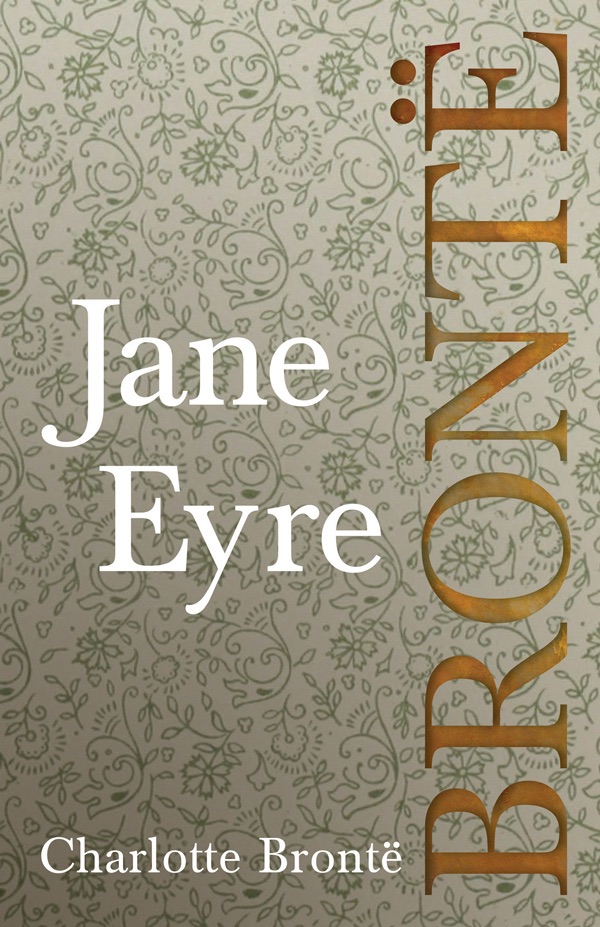
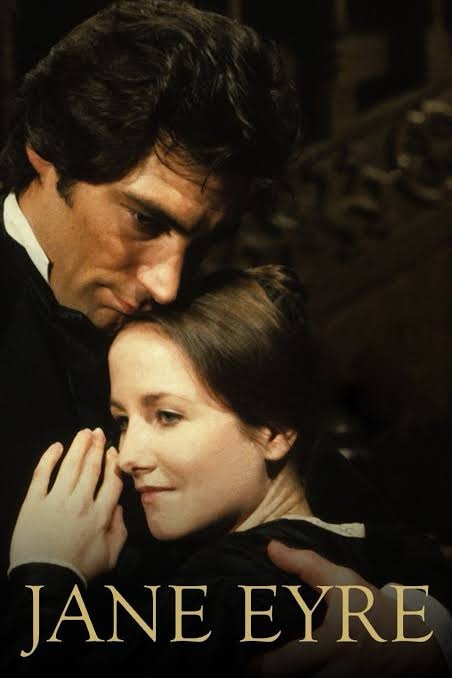
The above quote, attributed to the philosopher Heraclitus, is also applicable to a favourite book. In the time you’ve been away and reading other books, the world has moved on, progressing with new ideas and opinions that bring a fresh focus to an old favourite. We also change as readers. With every new concept learned and each new experience, the filter we view the world through changes and we become open to different interpretations of a novel we know well. The book I’ve read more than any other is Jane Eyre, starting out as a childhood favourite I’ve been reading this book every few years since I was ten. My first read coincided with the BBC adaptation on Sunday evenings, starring Timothy Dalton as Mr Rochester. Back then, for me, it was a romance and a ghost story. I was spellbound by the creepy laugh in the night, the candle set to burn Rochester in his bed and the dark, vampiric ghoul that takes Jane’s wedding veil and tears it in two. Yes I was scandalised that Rochester is already married when he tries to marry Jane, but given the choice I’d rather have him than St. John Rivers who has none of the passion and feeling that Jane needs. At least she knew herself well enough to avoid that path, even before Rochester’s strange telepathic call during the fire. I remember also being horrified by the injustice of Jane’s treatment at the hands of her Aunt and then at Lowood. I also found the death of the incredibly pious Helen Burns being particularly traumatic too. In my teenage years I studied it for my English A’Levels and back then un my teenage angst I felt Jane was lacking in feeling. Why did she have to leave Rochester? I compared her with Wuthering Heights and Catherine Earnshaw, full of passion and running wild. Both characters wander the moors, but Jane is rescued from that wilderness by a man of God. I identified more with Catherine as I wandered the flat fields of Lincolnshire walking our dogs, because she was wandering with the alluring Heathcliff. They ran away from the prying eyes of Nelly and Cathy was also experiencing all those dramatic feelings we have as teenagers. I admired Cathy for never losing her feelings for Heathcliff, by comparison it felt like Jane had chosen the good and holy way, but denied herself happiness. I loved the angst of Wuthering Heights, the constant drama and passionate declarations of love, a love that couldn’t be separated by death. I didn’t understand someone who didn’t choose passion and with my church upbringing I didn’t know if Jane was being true to herself or following the religion of Lowood School and her missionary parents as I was expected to. Cathy was my rebellion and Jane felt too safe.
I next encountered the book in my late twenties at university, alongside a huge amount of context and literary theory. I was learning that I could view the book through so many different lenses and my views were changed even further. I learned so much about 19th Century history and the governess as a cultural figure, from a different perspective I studied post-colonial literature and how important it is to the understanding of Bertha Mason’s marriage with Rochester. It made me wonder about her ‘Creole’ roots and whether it was not so much her madness that was hidden but her mixed heritage. I could imagine how powerless and bewildered she must have felt to be torn from the Caribbean, declared mad and locked in the attic by her husband. I read Wide Sargasso Sea and considered how Bertha has been renamed by Rochester, much like masters would rename their slaves. She is Jane’s double – a cautionary tale of what Jane might have become if she’d stayed the little spitfire who had to be locked in the dreaded red room. Lowood’s founder Mr Brocklehurst had been determined to knock the passion out of Jane’s nature, her spirited way of answering back and lashing out to defend herself against her bullying cousin John as well as her inability to hold her tongue when criticised by her aunt. It’s a broader use of the word ‘passionate’ than we tend to use now. In feminist terms men wanted to break her spirit, to turn her into the model and saintly young woman that Helen Burns was trying to become, never daring to look up from the floor. It made me think about women who are deemed acceptable in society and those that aren’t – inconvenient women who won’t shut up, have educated themselves and want to live life on their own terms. Jane has a freedom as a governess she’s never had before, an ability to earn her own money and use her knowledge to teach. She’s without the pressure to find a husband and marry well, the main focus for an upper class woman like the visiting Blanche Ingram. Jane doesn’t have to socialise and meet men, she can choose to leave and work elsewhere if she’s unhappy. Governesses are liminal figures in fiction, not in a specific class, outside the confines of the marriage market and choosing how they spend their own money. She’s invisible and there is freedom in that invisibility.
When I read the book again recently I had another insight that came from my personal experience. I’d been in an emotionally abusive relationship for a few years and found my way out. Living alone for the first time in ages, I picked up a lot of old books as comfort reads. This experience made me look at Rochester differently, especially in some scenes that had always made me uncomfortable without knowing why. Is the Jane that Rochester claims to love the true Jane? When Jane first meets Rochester, he does try to intimidate her in conversation and finds he can’t. He enjoys her intelligence and seems fascinated by her imagination, the inner world that informs her art work. However, just as young contemporary readers would red flag Heathcliff, Rochester is no stranger to manipulation. He doesn’t tell Jane who he is when they first meet on the lane, instead choosing to surprise her after dinner. He brings the awful Blanche Ingram to Thornfield Hall, just as he and Jane seem to reaching a friendship and instead of allowing Jane to retire gracefully to her room in the evening he insists she stay in the drawing room with his guests. Jane can only sit on the edge of proceedings, as someone of her status should, so why ask her to remain at all? She does hear Blanche’s opinions on governesses and the general expectation that she will become Rochester’s wife. All she wants to do is stay in her place, upstairs with Mrs Fairfax, Adele and Sophie, so his insistence on her presence when all the company ignore her seems cruel. Then there’s the strange incident of the visiting gypsy fortune teller who wishes to read the fortunes of the unmarried ladies at home. Jane is sought out by the woman who claims to know there is another single lady in the drawing room and she obliges the old woman even though she isn’t interested in seeking her fortune. To her surprise the gypsy turns out to be Rochester in disguise. This is far from normal behaviour and so outside of his usual character that the only purpose can be to solicit confessions or secrets from an unwary Jane. Although, judging by her mood he also takes the opportunity to torment Blanche Ingram too. Throughout Jane and Rochester’s interactions there is a definite hot and cold feel to their communications: he hints that she isn’t his friend so she will assert that she is; he tells her stay and leave in the same conversation; he holds her hand a fraction too long. Is the purpose to leave her unsure or unsettled? It leaves Jane unsure of his meaning and intentions, but in the position of his employee she doesn’t want to offend him. He holds all the privileges being an educated and well-travelled man of means and property, sought after in society and with the freedom to come and go as he pleases. Psychologically, the Madonna/Whore Complex is also at play here, because how Rochester describes his wife is very different from how he sees Jane. When discovered to be attempting bigamy he uses words like pure and innocent for Jane and when he thinks of his wife escaping the attic on the eve of his wedding he imagines her standing over the ‘dove’s nest’ Jane sleeps in, innocent and vulnerable. Surely, even as he asks it, he knows Jane won’t agree to be his mistress or take his promised gifts of furs and jewels?
Bringing my own experience to the book I saw that Jane leaving Thornfield was about her asserting her own boundaries. She doesn’t reject his offer of becoming his mistress just because it’s immoral and she fears other people’s opinion, it’s because she could never reconcile it with her own soul. Her wandering on the moors and almost dying of exposure is something of a rebirth, after a dark night of the soul where she wrestles with temptation she’s taken in by the Rivers family. Her subsequent friendship with St. John Rivers, who finds her on the moors, confirms her determination to be true to herself. She can see that an eligible young woman from the village has feelings for him and those feelings are reciprocated but rather than enjoy a marriage based on love, St. John needs to be sure that his future wife has the qualities he needs in a missionary’s wife. His future wife will need to share his mission, willing to suffer hardships, dangerous situations and live in poverty. He sees the qualities he needs in Jane and although he does not love her, he does make an offer of marriage because she has the moral qualities of a missionary and the ability to work hard. It’s here I could see the balanced character Jane has achieved through her life experiences. She rejects Rivers’s proposal on the basis that there’s no passion or love in their relationship. Yes, she would be a great missionary wife but she wants love too. These men are at opposite ends of the spectrum, Rochester is all passion and Rivers is all reason, Jane needs a middle ground and she won’t settle for anything less. After my reread I went to a talk about the book and I was really cross when a woman said that Jane’s return to Rochester is a betrayal of feminism. I argued it wasn’t. Jane makes the very best choice for her life and women making empowered choices is everything feminism is about. Jane is on a very different path when she returns to see Rochester after the fire, she is no longer his employee for a start and soon calls him Edward rather than Sir. She has also become an heiress in her own right, so while she was always his equal in intelligence, she is now his equal financially too. Rochester is also in a different position, with Thornfield burned to the ground he is a widow and trying to save his wife from the flames has left him blind and disfigured. Perhaps in Jane’s eyes this act of heroism redeems him slightly. His disability has left him reclusive, no longer in the highest society but that’s nothing to Jane. If they marry, it’s no longer a case of Rochester changing Jane’s position in society, she has already accomplished that on her own and he is no longer a dominant voice in the marriage. They finally come together as equals.
This is what rereading a book brings, that comfort and familiarity of a known story. Maybe there’s an element of nostalgia too. As I read the book again it’s a Russian doll experience; within this reading are all the other times I’ve read the book. Every discovery I’ve made within its pages informs me but my own changing experiences and societal changes give me a fresh eye every single time.
The Next Ten Books I Read Again and Again.

The Adrian Mole Series by Sue Townsend – touching, relatable, nostalgic and hilarious.
The Rutshire Chronicles by Jilly Cooper – glamorous, witty and sexy, with a rake we’d all like to reform.
All Creatures Great and Small by James Herriot – cosy and nostalgic animal stories, full of humour and warmth.
The Night Circus -, a love story with dark deeds set in a magical world that’s beautifully rendered.
Little Women by Louisa M. Alcott – the ultimate comfort book with an all time favourite heroine in Jo March.
Plain Truth by Jodi Picoult – a legal battle between the contemporary world and the closed off Amish Community with teenage girl in a heart-rending situation.
Life After Life by Kate Atkinson – a unique premise, Ursula meets the 20th Century again and again.
The Shining by Stephen King – a deserted hotel, hauntings, telepathy and the realisation that the things we fear can be much closer than we think.
The Final Testimony of Raphael Ignatius Phoenix – darkly humorous, deliciously wicked and incredibly clever.
Rebecca by Daphne Du Maurier – a brooding widower, a naive girl, a stately home on the Cornish cliffs and a wife who won’t stay dead.


