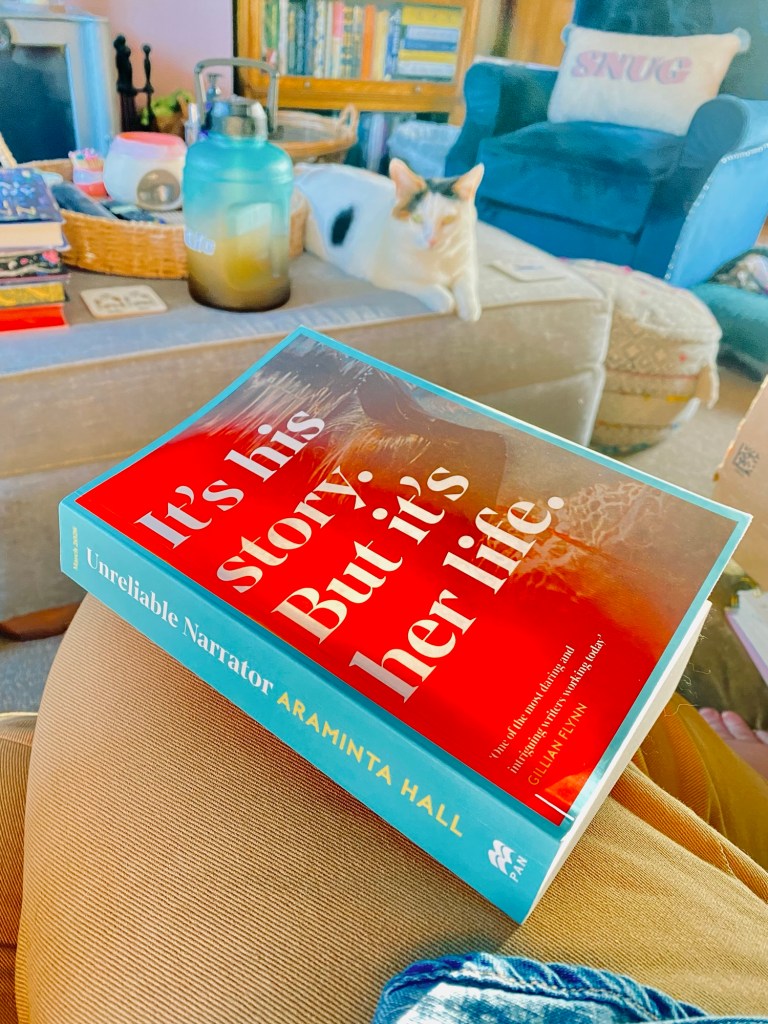
YOUR SECRETS AREN’T SAFE.
Ten years ago, Hope left Somerset with a fatal secret and a broken heart. She has spent a decade in the shadows, living a quiet life of penance to protect the man she once loved – the world-famous author Ambrose Glencourt.
YOUR LIFE IS NOT YOUR OWN.
Then, she opens his latest bestseller. To the world, it’s a brilliant work of fiction. To Hope, it’s a betrayal. Every private moment, every dark truth, and every ‘fatal disaster’ from that summer is laid bare on the page.
YOUR TRUTH IS A LIE.
But Ambrose has changed the ending. In his version of the story, Hope isn’t the victim. She’s the villain.
Now, Hope must step out of the shadows to reclaim her narrative. But in a world of glamorous elites and whispered secrets, who will believe the word of an unreliable woman against the word of a literary icon?
Two narrators. One truth. And a secret worth killing for.
I was blown away by Araminta Hall’s last novel, because of how bold and timely it was. I wondered whether she could write something that would capture the world as it is now, crazier and more disturbing by the week. Well it turns out she can. Hope Jenkins takes a job with author Ambrose Glencourt as his personal assistant at his home, Shadowlands. Rosie, as he likes to be called, described the shadowlands as a place of imagination. However, its other meaning gave me a sense of foreboding – a thin place, the hinterland between life and the next, place filled with ghosts and spirits. It made me wonder, was this a place where the line between the real and the imaginary is blurred? The setting is the archetypal bohemian mansion, showing a lot of wear and tear, but still beautiful with idyllic grounds. The sort of place where books and art are piled everywhere, but the dishwasher is held closed with cord and a wooden spoon. Hope is stunned by her surroundings, it’s nothing like her mum’s flat and Rosie’s wife Delia is a fragile beauty who was a model for the artist Siegel when she was younger. Again though, little things stayed in the mind. The way that they call their staff by their Christian names in front of visitors, but Mrs A and B in private seemed odd. Delia seemed very keen to downplay her own artistic ambitions, always saying it’s just a hobby when she has her own studio and Hope can see she’s very talented. Then there’s a painting – in Rosie’s study, amongst the bookshelves he has a nude painting of a very young Delia with her legs wide open. It makes Hope uncomfortable and and she wondered whether that was why he kept it so public, or whether he liked to make other men desire his wife?
I felt like Hope was dazzled by the Glencourts and the relationship seemed unequal. Whereas staff seemed to stay in the garden and kitchen, Hope and another guest at the house eat and socialise with the couple. Tom is introduced as someone who Delia has worked with when teaching pottery at an outreach for addicts. He and Hope have afternoons to spend together when Rosie has finished working for the day and it’s clear there’s chemistry. Yet I wondered why had Rosie and Delia taken Tom in and what exactly is the nature of their relationship? Is he as taken in as Hope is by this bohemian utopia? Perhaps not, as he discloses more secrets about the couple and explains:
‘I’m not sure Rosie means everything he says, I think it’s more that he entertains himself by making people feel uncomfortable.”
Little unexpected touches and comments made me uneasy about Rosie and there’s a very uncomfortable dinner scene that made me feel sick and awkward. Rosie’s dinner guests became horribly familiar, men who think their sex and status gives them licence to manipulate and bully others. We can feel the pressure of that summer building as the heat rises and I was utterly absorbed by it.
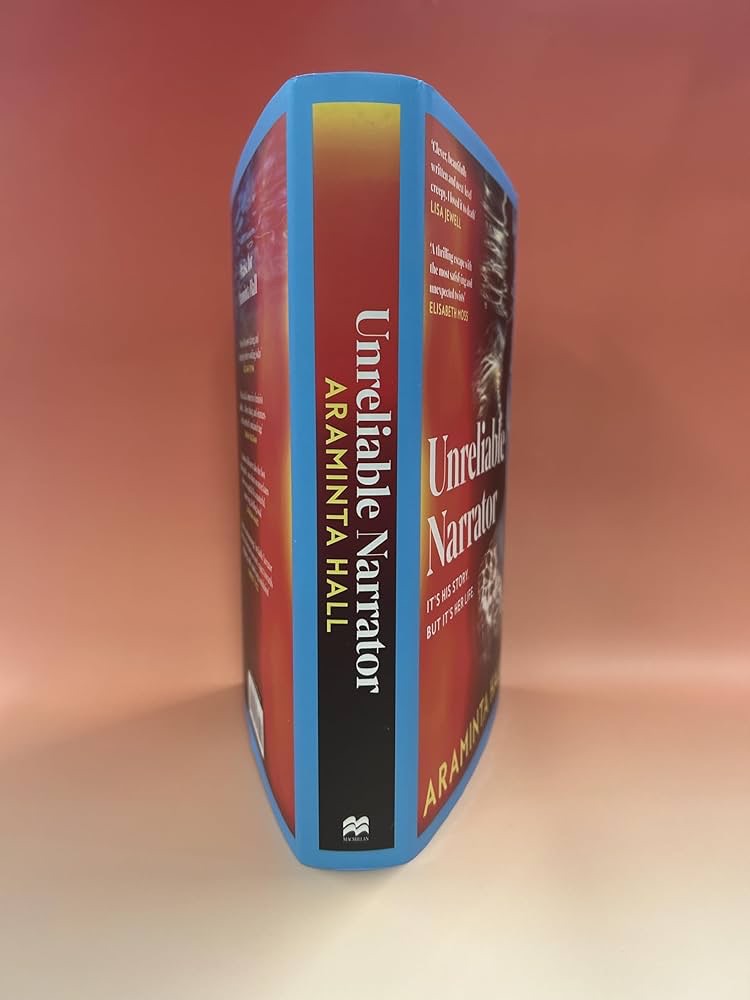
Then we’re taken ten years later and Hope wants to make a statement to the police. We meet our narrator Nat, a young detective trying to get through her day and get home to her wife and kids on time. Nat is our narrator, coming into this ten year old world in our stead and trying to work out whether Hope is just a crank or a mad fan. However, there’s something about this Hope, a strange, sad lady and her journal, from a summer ten years before that catches her attention. This is an utterly different Hope, in fact she’s a woman transformed from that dreamy girl who fell in love with a lifestyle so far from her own. Now she’s working in a school office and doesn’t appear to be looking after herself. She returned home that summer in a state of delirium and shock and it looks like her life hasn’t recovered, although underneath the exterior there’s still a nurturing instinct and an ability to identify victims of abuse. She’s alerted by news of Ambrose Glencourt’s long awaited sequel to The Ruined Girl, his most famous and celebrated novel. Hope buys the first novel and as she reads she becomes more and more angry. This is Rosie’s version of that summer’s events written down for all the world to read and the character based on Hope is definitely the villain of the piece. He has taken the truth and twisted it. The only thing Hope has is her journal and as Nat reads Hope’s journal she does start to wonder whether there’s some truth in this? She’s experienced manipulation and abuse and something about this presses that trigger. She decides to visit Shadowlands for herself and meet the Glencourts, because even if Hope is mistaken about what ended her work with Rosie, something at Shadowlands feels wrong.
The structure is so complex, playing with stories and asking questions about how they’re told and who gets to tell them. Rosie made my flesh crawl a little, with the arrogant assumption that he can feast on anything to fuel his imagination and continue the important business of making literary art – there’s no downgrading his talent, unlike Delia’s. I really felt how much easier it is to work as a writer when you have money to support you and a mansion to live in. He discards all distractions, even those he’s created himself. I didn’t like his friends either and their little games, enjoying their ability to make someone much younger uncomfortable. Hope wants to be like him, to be able to “make language work that way as if it belonged to me”. What she didn’t realise back then was that there’s no one way to write, because each unique voice is just as valid. It just that certain voices are more likely to be heard because they follow the established narrative. Hopefully, we don’t have to sound like rich, middle aged white men any more. Hope has seen through the shiny exterior of Shadowlands and knows they’ll look down on Nat with her cheap suit and London accent. But could Rosie’s assumption of superiority be his downfall? This book sits perfectly alongside the #MeToo movement and the Epstein Files in that it’s a world operating on the assumption of silence. Hope isn’t silent any longer. Incredibly tense, twisty and timely, I was utterly under its spell from the first few pages. Ambrose Glencourt claims that in fiction “it’s much easier to blow a body apart than put it back together again.” For Hope’s sake I read this voraciously, full of rage and with everything crossed that Araminta Hall could do what Ambrose Glencourt couldn’t.
Out March 5th from MacMillan
Meet the Author

Araminta Hall has worked as a writer, journalist and teacher. Her first novel, Everything & Nothing, was published in 2011 and became a Richard & Judy read that year. Her second, Dot, was published in 2013.
She teaches creative writing at New Writing South in Brighton, where she lives with her husband and three children.
Araminta Hall’s novel Imperfect Women has been adapted for television by AppleTV starring Elizabeth Moss and Kerry Washington


 The Lotus Readers
Sounds good!
LikeLike