Why are you writing? No one wants to read this. You have nothing interesting to say. I do, my experiences are unique. No one cares what you have to say. They do, some people have really enjoyed my writing. They’re just telling you that to spare your feelings. No, this is from strangers. They message or comment they like it. They’re probably embarrassed for you, what if someone you know reads it. They might but if they’re friends they’re not going to be horrible about it. What about those who aren’t friends? The social media trolls. They are awful but it wouldn’t be the first time and I can ignore them. Can you though? What if they say something really hurtful? Well then I’ll be hurt but surely being slightly hurt is better than not writing? Even if you’re writing the most cliched rubbish, first writing class sort of rubbish. Well I can try again. You know you hate being criticised. I’m getting better at taking it. Sometimes it’s a positive thing. It scares you though doesn’t it? Yes, but if I don’t write I’ll never know. Know what? If I can write a book, something I’ve always wanted to do and now I’m 52 and I can’t keep putting it off because I’m listening to you. I’m saying what you really think. You can talk yourself into being confident but you and I know you’re not. I am. I’m getting better. Other writers must have thoughts like these and they still write. Even Virginia Woolf had self-doubt. Listen to you. Virginia Woolf? You’re not in the same league. I know that, but what if self-doubt is normal. What if I’ve not had the nerve to write for all this time when every writer feels this way? It hasn’t stopped me writing. I keep writing. I can’t not write, even if it’s about someone else’s work or my journal. It’s just a part of me, like you are, except this is a part I want to keep. Silence. The only failure is if I stop. Quiet. The sound of a keyboard…..
My blog is a little different today because it is inspired by Monday’s WordPress prompt – who inspires you? Like many bloggers and readers I am an aspiring writer. Ever since I was a little girl I’ve wanted to be able to walk into a library and see my book on the shelf. I used to make little books, sewn into colourful covers, my writing is definitely better than my drawing. One particular book about a family of chickens is in a box in the attic, but remains infamous in my family because when my mum read it she was anxious the school would think this was my home life. Mr and Mrs Cockadoodledo were very volatile and he was fond of telling his wife she was a nag and stomping off to the pub while she watched Coronation Street. So far, the closest I’ve come to writing a book as an adult was writing the story of me and my late husband, killed by complications with primary progressive MS. I managed to finish it and then format it (goodness knows how) to go on Kindle around 15 years ago. I think it probably sold half a dozen copies. Everyone was very kind about it, but let’s be honest it’s hard to be critical to a recent widow. When it came to reformatting it I was finishing my counselling training so I let it go. So that’s where I am. I do have a work in progress, but it’s all fragments at the moment. I struggle with flow, a very negative inner voice and my health limitations. So today I thought I’d share people whose writing I really admired recently and how they’ve inspired me to keep writing.
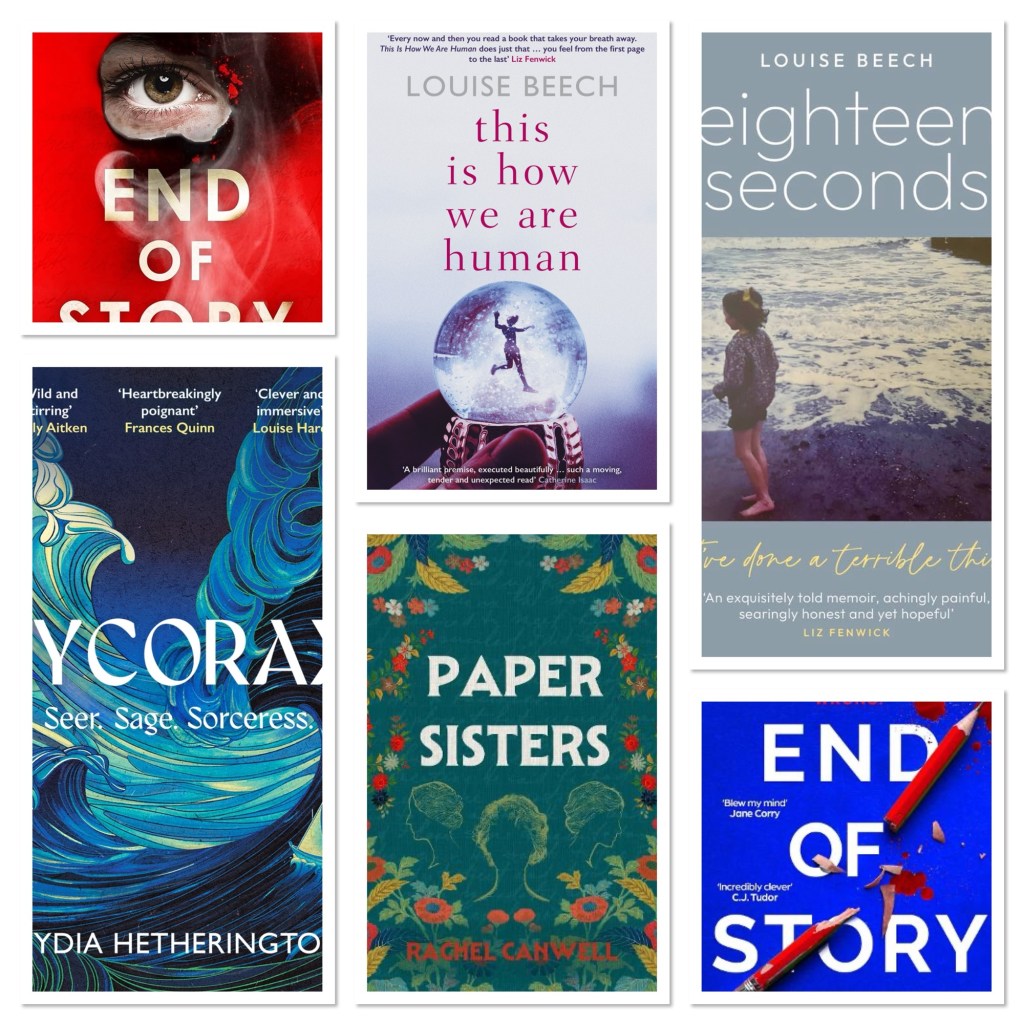
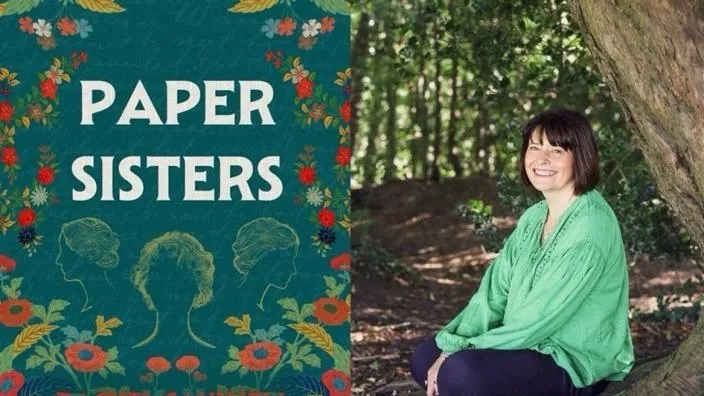
Rachel Canwell – Canwell’s debut novel Paper Sisters was brilliant and made me realise that any setting is fascinating if the writer makes it so. Set in my home county of Lincolnshire, in an area that suffers many jokes about Fen Folk and endless fields filled with mist and cabbage, Rachel still managed to draw me in. In fact she took the isolation of the area and made her characters grow from that, with their house, sited across the river from Sutton Bridge and accessed via a swing bridge. The abandoned hospital next door is primed, ready for patients that will never come creating an eerie and abandoned feeling. She uses the peculiar Lincolnshire mist to great effect in her opening scene as the family are woken by a rumbling noise coming from the small port area being built across the river. As they emerge into the darkness, the mist rises above the river and obscures their view but they can hear crashes and objects falling into the water. The mist also obscures the rescue of workers, leading to the terrible drowning of one of the brothers. I recognised that mist from years of living next to the River Trent, and eerie nights back in the 1990s driving home in my little Mini from working late at a local pub. Because the area is so flat, the mist seems to hang in mid air, with everything below and above still visible and it was exactly the height of my windscreen. I had to drive very slowly which at a late hour in the middle of nowhere was very creepy indeed. For Rachel’s characters WW1 comes and the fact that it’s reach extends to such an insignificant place somehow magnifies its impact – you imagine areas where people were carrying on as normal but this reminds us everyone was touched by it, rather like our recent experiences through COVID. Her female characters are two sisters Eleanor and Lily and Eleanor’s childhood friend Clara who is married to their brother Frank. Lily has rarely left the house since her brother died on the night of the port collapse, but for an apparent invalid she has a lot of control over Eleanor. She’s determined that her sister will never leave her. Eleanor wants to leave, she has fallen in love with the new blacksmith. Her day to day maintenance of Lily and the abandoned hospital her father created to treat the port workers is draining. The tension between the sisters builds and then there’s Clara and Frank. Clara wants to help her sister-in-law escape Lily’s control and Frank, an unreasonable and violent man at the best of times, returns from war struggling with a brain injury and PTSD. These two women only have each other and the strength of their loyalty is incredible. My main take away from a writing perspective is to remember that I have a unique voice. No one else has had my experiences or my way of dealing with them. Yes, they seem mundane to me because they’re mine, but to a reader they are completely new.
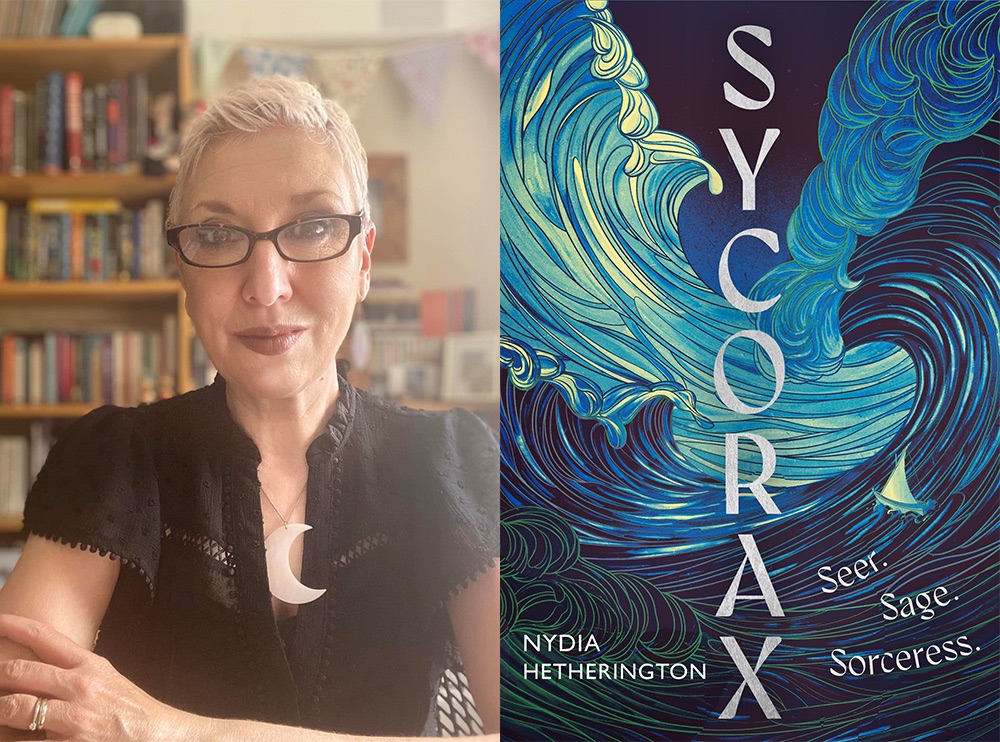
Nydia Hetherington – last year I was blown away by Nydia’s novelSycorax a book I was drawn to thanks to chatting with Nydia on social media after reading her debut novel but also because it features Shakespeare’s The Tempest. The Tempest is my favourite play of Shakespeare’s especially since studying it at university and becoming obsessed with Caliban, the play’s ‘monster’. It crossed over beautifully with my Post-Colonial Lit module because there we’d looked at Jonathon Miller’s 1970 production at the Mermaid Theatre. This production leaned heavily on post-colonial themes with two West Indian actors, Norman Beaton as Ariel and Rudolph Walker as Caliban. It depicted Ariel as a house slave who was plotting to take over the island when the colonialists left, by contrast Caliban was a field slave in a much lowlier position. With my specialism in disability literature, Caliban’s description as a ‘savage and deformed slave’ jumped out to me. In disability theory a deformity is used as a ‘narrative prosthesis’, Caliban’s deformity is a crutch, used to show his moral and intellectual inferiority and justifying his enslavement by Prospero. We have to think about the time Shakespeare is writing in and the treatment of people with disabilities, where they were used for entertainment and spectacle or hidden away because they deviate from the white European and abled-bodied ideal. I can’t believe that in this research I didn’t touch on Sycorax. Prospero often speaks of her as a sorcerer he banished from the island and his descriptions of her appearance as monstrous and a hag are there to justify his treatment of her and negates her own power. I was interested in how Nydia used her own experience of rheumatoid arthritis to flesh out this character and give her the story that Prospero denies her in the play. She weaves her own illness into the life of this young girl suffering bouts of extreme joint pain and malaise, gradually becoming bent over as she ages and having to use a stick to walk with. She also has a hand disfigured by fire, but she also has a beauty that men are drawn to and powers they’d like to possess. The juxtaposition of great supernatural power but physical weakness is a powerful one and it creates a fascinating woman who can’t be ignored, as much as she would sometimes like to be. She takes periods of solitude, living very simply and using periods of recuperation to commune with nature and deepen her connection to the earth. She gains wisdom and resilience from battling against the elements in order to survive. I have a chronic illness too and experienced long periods of solitude, particularly during the pandemic. Currently, there is a harmful rhetoric around long term illness and disability that ‘others’ disabled people and blames them for societal problems and I did feel a kinship with this character facing both ableism and the misogyny of men like Prospero. Nydia’s book reminded me that personal experience is a great place to start and that woven with research and imagination it can create something magical and meaningful.
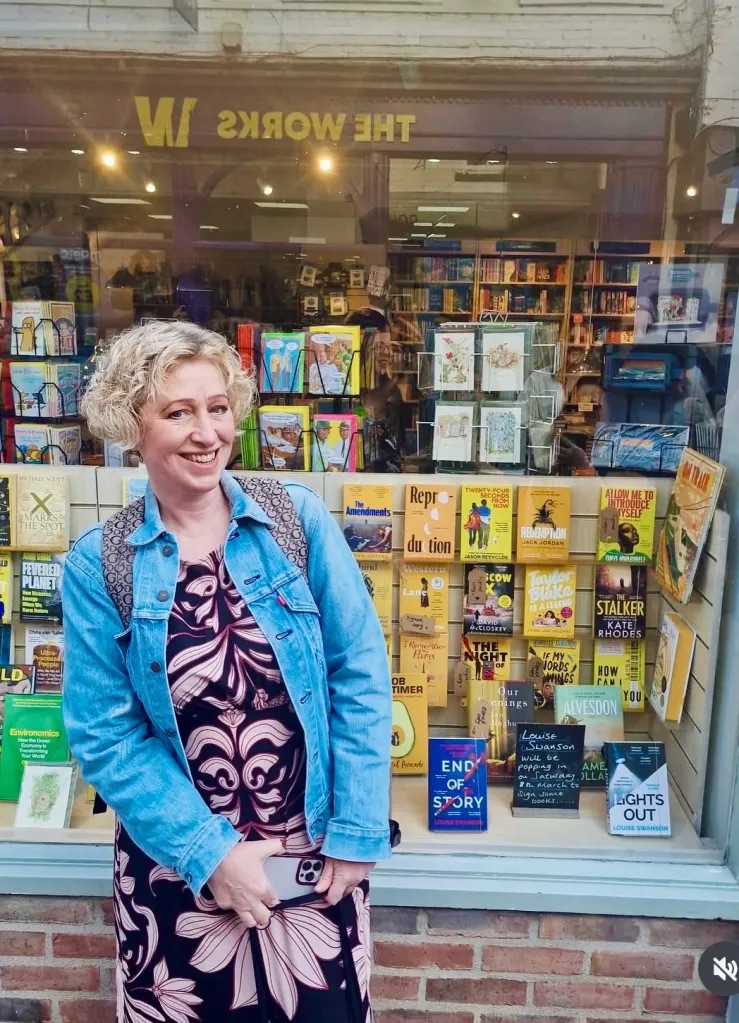
Louise Beech/ Swanson – Louise is a writer who is local to me and I’ve admired her novels for many years now. The first book of hers I absolutely loved was This Is How We Are Human where she writes about a woman caring for her adult son who has autism and other learning difficulties. She is used to providing everything he needs according to a strict daily routine, but one day he comes up with something that stumps her. He wants to experience sex. She’s unsure how to approach this, realising that the world of dating might be too stressful and involves a second person’s feelings and challenges. In the end she takes an unusual decision and hires an escort for her son – it’s interesting to add here that sex is a recognised human need when it comes to assessing a disabled person’s care in some areas of Europe and escort services can be used as part of a care package. I find we’re a lot more squeamish here about sex and disability, although very curious too judging by the amount of people who questioned me when I married a man with physical disabilities. I admired Louise’s bravery in choosing what many see as a taboo subject and managing it with dignity and with a surprising outcome that shows we all make assumptions about people with disabilities. She reminded me that it’s good to write about subjects many people never experience or might be shocked by. Then I read her novel End of Story, a dystopian thriller where fiction novels are banned and writer Fern is suddenly unable to tell stories. She’s followed by grey men in suits who want to be sure she isn’t writing, but joins a resistance movement of women who tell banned bedtime stories to children over the phone. The strangeness of this world is incredibly chilling and she draws us in completely, but something kept nagging at the back of my mind. Something else was going on here. I won’t ruin what this book is about but the twist is incredible and I will admit I cried. This book taught me that we can write about the depths of any human experience, by presenting it in a different place, time or genre and somehow give it even more power.
Finally there’s her memoir Eighteen Seconds that I devoured and loved for its brutal honesty, bravery and dark sense of humour – something I definitely recognised from my own family. One morning Louise received an awful phone call. Her mother had jumped from the Humber Bridge and despite falling onto a path underneath the bridge, rather than the river, she was alive but very badly injured. Through the lens of this experience Louise tells the story of her childhood and what it is like to be the eldest child of a mother who struggles with her mental health and copes with alcohol. Louise balances this book beautifully. She remembers the experiences she faced as the eldest child of a single mother who couldn’t care for her children and often met men who placed them in genuine danger. Louise was a mum to her younger siblings when she still needed a mother herself. Then there’s the present problem of her mum’s long recovery from her suicide attempt and the difficult balance of being there, but not being dragged back into parenting your own parent. Then there’s the incredible humour the family share in their WhatsApp messages were made me laugh out loud and reminded me of times when my family were sat around my husband’s bed just before he died – at one point watching a crucial Liverpool match. Gallows humour helps and it was inspiring to see personal experiences written in that way. It’s a truth many people don’t realise, that when someone is terminally ill or very badly injured, eventually life carries on. We have to live through the period of loss and still get up every day. It made me think back to the wake we had after my husband’s funeral where everyone had a drink and blew off steam after months of pain and stress. I found my mum down in the garden after midnight throwing smoked salmon from the buffet into the garden pond in order to ‘free the fish’. It was a terrible day but my abiding memory will always be my mum trying to revive a plate of smoked salmon. Louise reinforced the belief in my original memoir, reminding me that my experiences have worth and to tell them exactly as they were, despite fear of judgement and with nothing held back.
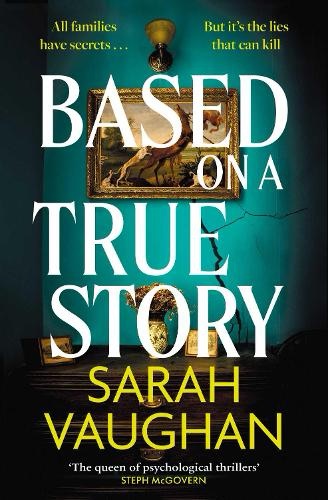
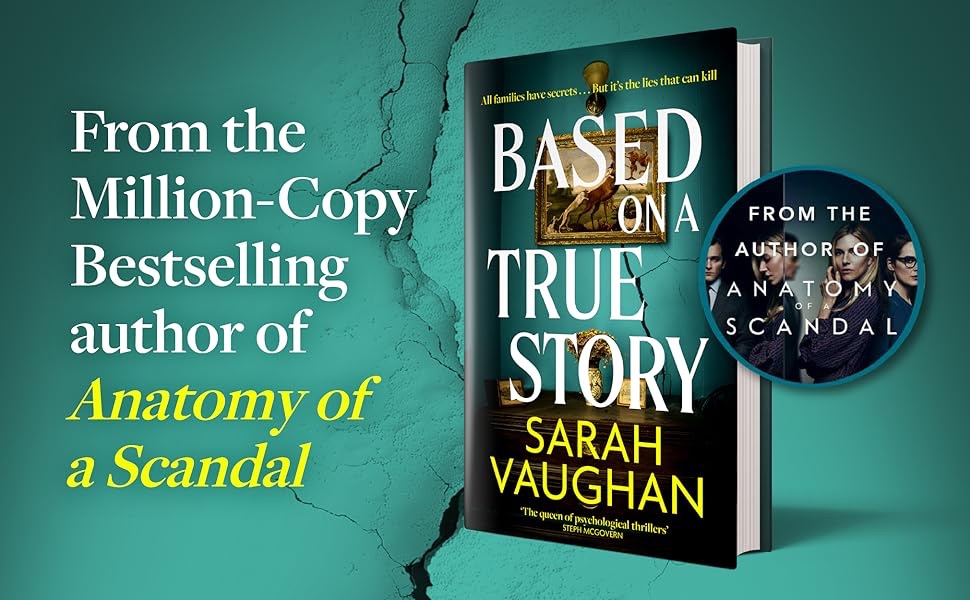
A lavish 70th birthday party. A body found on a storm-lashed beach. And a secret that someone is dying to tell…
Famed children’s author Dame Eleanor Kingman has summoned her family and friends to her exquisite manor house on the cliffs. They’re celebrating her birthday – and her latest number one bestseller in her series of books based on a mother fox and her cubs. But the night before the party, Eleanor receives an email: an email that threatens to expose the lie she’s kept up for over half a century.
Someone knows her secret. Is it her estranged literary agent? Is it her ex-husband, to whom she no longer speaks? Is it the nanny she fired all those years ago, who always did have a knack for storytelling? Or is it one of her three daughters, all of whom have a stake in the publishing empire she has built…
With a TV crew arriving to film a documentary of her life, Eleanor needs to find out who sent the email – and preserve her multimillion-pound career.
But when push comes to shove, and it’s time to tell the truth – will anyone actually believe her?
Eleanor Kingman is holding a huge 70th birthday party at her Cornish house that sits on the cliffs overlooking the sea. It’s a massive undertaking, even without the addition of a TV film crew who are filming the run up to the big day and interviewing Eleanor and her daughters. Her eldest two daughters have working roles alongside their mother. Gilly is her assistant, co-ordinating both the celebration and the TV crew. Rachel is her accountant, keeping track of the royalties and the spending. Her youngest, Delia will no doubt arrive early or late, she is a lifestyle influencer documenting her travels and the journey she’s taken as an addict. However, each daughter has her own secrets and the resentments between them and their mother threaten to boil over. There are hints of menace, such as the strange man who approaches Eleanor’s much loved spaniel Edith as she’s being walked by Rachel’s children. Then an older couple are seen trespassing on Eleanor’s land, claiming to have taken the wrong route while on a caravan holiday close by. There’s also the early arrival of her illustrator Ayisha, who has steeled herself to talk about her cut of the profits. Alone these things mean nothing, but Eleanor is jittery as the interview approaches and only she knows why. She has been receiving blackmail threats making it clear that they know her secret and are more than willing to expose her. Who are they coming from? What do they know? Eleanor doesn’t know if this is personal or about her work. However, she isn’t the only one in the family to have secrets. Each sister has something they’re hiding from their mother and each other. This night is really going to go off with a bang!
Eleanor is an interesting character and has a distinct style and way she presents herself. As she’s retiring to her room on the afternoon of the party she knows she needs to rest but thinks about what she needs to do ‘to reassemble herself with hair, make-up, fine jewellery, exquisite clothes. To reconstruct Dame Eleanor Kingham.’ It’s as if she is an actress with a role or that over the years people have developed an expectation of how a popular children’s author should appear. The party will be lavish but Rachel can testify that in other ways her mother does count the cost, even making sure food is used past it’s sell by date. There’s also the fact that she pays her daughters below market rate, in fact it could be said that she’s lavish with herself but not so much with others. This could go back to years of frugality as a young woman at university, then as wife of an author whose own ambitions have taken a back seat to his genius. The author gives us flashbacks to show Eleanor’s earlier life, including her writing at the kitchen table late at night, exhausted and wondering if her writing will ever be noticed. There’s a certain ruthlessness in her and a steely determination, in fact her first book had the vixen killing and eating a weak cub for her and other cubs survival. Her agent decided it was too grim a detail for a children’s story, no matter how accurate it might be in nature. This also tells us she is willing to bend or alter a narrative, if it allows her to succeed.
I felt particularly sorry for Gilly who is really working hard to keep things running well in the last few days, with very little credit or thanks. I was really glad there was a flirtation for her. With an attractive camera crew around and Ned the director being particularly handsome there’s certainly opportunity. Gilly is the little overlooked dormouse who scurries everywhere, quietly making everything happen. Rachel is in a world of trouble when her husband Tom finally tells her a secret he’s been keeping and she’s furious. He needs money, fast. Will Rachel be pushed into something unthinkable? I found Delia incredibly irritating! One of those influencers who always appears picture perfect, on a picturesque beach with pearls of wisdom for her thousands of followers. None of it is original and it’s borderline dishonest. She is sober at the moment, but has a gatecrasher coming for the party. Will the tension tip the balance for her? None of these people are particularly likeable, with Rachel’s husband being a candidate for a good slap at the very least – he made me furious. All of this will come crashing to a head on the big night and I was constantly second-guessing which would bring the author’s world crashing down or whether she’d manage to solve it all in her own inimitable style. This is a book that you won’t put down in those final chapters. Vaughan really is a master at drip feeding clues and reveals, keeping me hooked. It’s brilliantly paced, the characters and their dynamics are so complex. There’s also a cleverly created gap between professional personas and the real life person, whether it is a children’s author or an influencer. Honestly these characters are hard to like but there’s nothing like the schadenfreude of seeing some of them meeting their fate.
Out on 26th March from Simon and Schuster UK
Meet the Author
Sarah Vaughan read English at Oxford and spent eleven years at the Guardian as a news reporter and political correspondent, before leaving to write fiction. Her first two novels were followed by her first psychological thriller, Anatomy of a Scandal: a Sunday Times top five bestseller, Richard & Judy pick of the decade, and global number one Netflix adaptation starring Sienna Miller, Michelle Dockery and Rupert Friend. Her fourth novel, Little Disasters, was a Waterstones thriller of the month and developed as a number one Paramount Plus show. Her fifth novel, Reputation, was a Sunday Times thriller of the month and is currently in development by the team who made Anatomy of a Scandal. Based on a True Story is her sixth novel.
A million-copy international bestselling author, her books have been published in twenty-seven countries.
Ten years ago, Hope left Somerset with a fatal secret and a broken heart. She has spent a decade in the shadows, living a quiet life of penance to protect the man she once loved – the world-famous author Ambrose Glencourt.
YOUR LIFE IS NOT YOUR OWN.
Then, she opens his latest bestseller. To the world, it’s a brilliant work of fiction. To Hope, it’s a betrayal. Every private moment, every dark truth, and every ‘fatal disaster’ from that summer is laid bare on the page.
YOUR TRUTH IS A LIE.
But Ambrose has changed the ending. In his version of the story, Hope isn’t the victim. She’s the villain.
Now, Hope must step out of the shadows to reclaim her narrative. But in a world of glamorous elites and whispered secrets, who will believe the word of an unreliable woman against the word of a literary icon?
Two narrators. One truth. And a secret worth killing for.
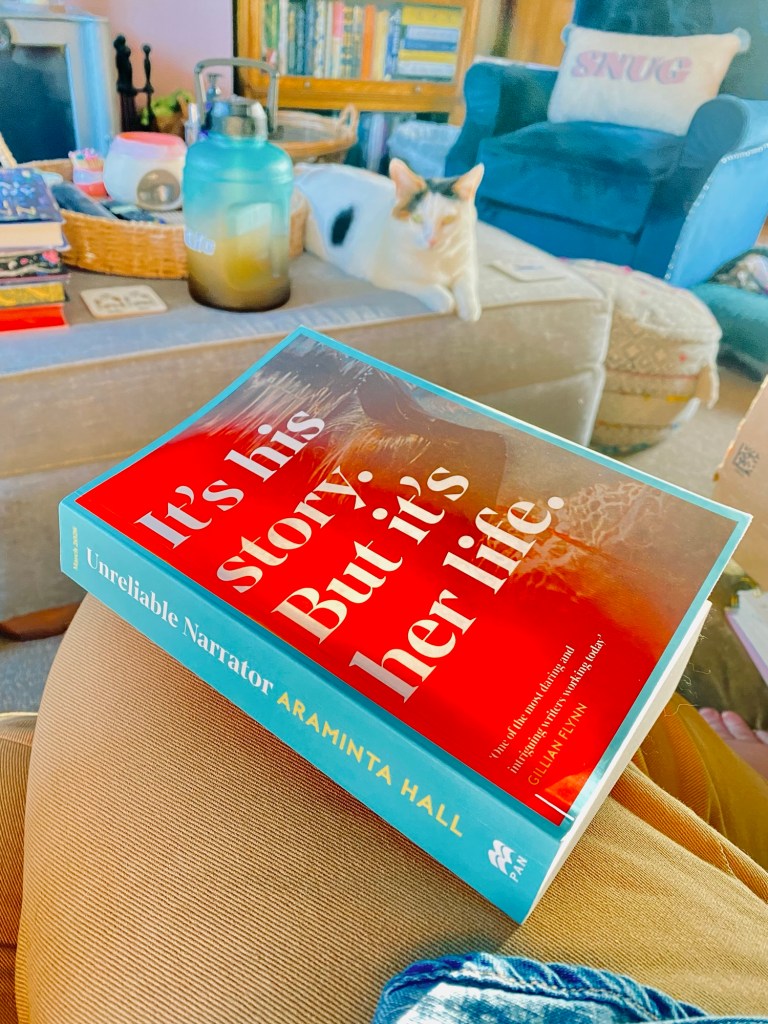
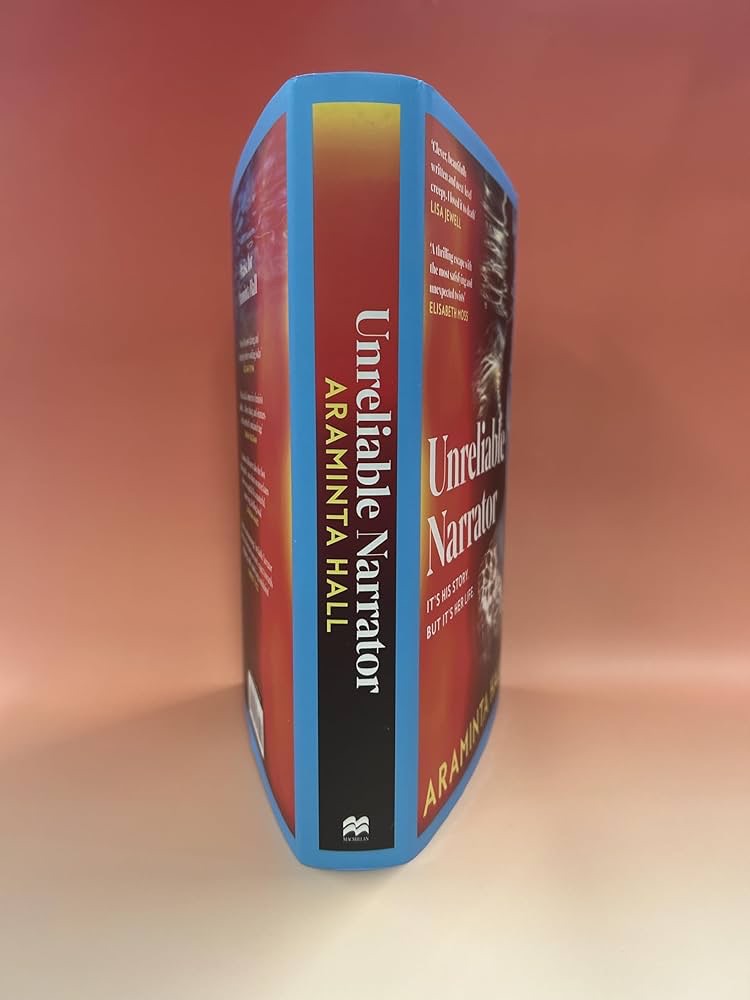
I was blown away by Araminta Hall’s last novel, because of how bold and timely it was. I wondered whether she could write something that would capture the world as it is now, crazier and more disturbing by the week. Well it turns out she can. Hope Jenkins takes a job with author Ambrose Glencourt as his personal assistant at his home, Shadowlands. Rosie, as he likes to be called, described the shadowlands as a place of imagination. However, its other meaning gave me a sense of foreboding – a thin place, the hinterland between life and the next, place filled with ghosts and spirits. It made me wonder, was this a place where the line between the real and the imaginary is blurred? The setting is the archetypal bohemian mansion, showing a lot of wear and tear, but still beautiful with idyllic grounds. The sort of place where books and art are piled everywhere, but the dishwasher is held closed with cord and a wooden spoon. Hope is stunned by her surroundings, it’s nothing like her mum’s flat and Rosie’s wife Delia is a fragile beauty who was a model for the artist Siegel when she was younger. Again though, little things stayed in the mind. The way that they call their staff by their Christian names in front of visitors, but Mrs A and B in private seemed odd. Delia seemed very keen to downplay her own artistic ambitions, always saying it’s just a hobby when she has her own studio and Hope can see she’s very talented. Then there’s a painting – in Rosie’s study, amongst the bookshelves he has a nude painting of a very young Delia with her legs wide open. It makes Hope uncomfortable and and she wondered whether that was why he kept it so public, or whether he liked to make other men desire his wife?
I felt like Hope was dazzled by the Glencourts and the relationship seemed unequal. Whereas staff seemed to stay in the garden and kitchen, Hope and another guest at the house eat and socialise with the couple. Tom is introduced as someone who Delia has worked with when teaching pottery at an outreach for addicts. He and Hope have afternoons to spend together when Rosie has finished working for the day and it’s clear there’s chemistry. Yet I wondered why had Rosie and Delia taken Tom in and what exactly is the nature of their relationship? Is he as taken in as Hope is by this bohemian utopia? Perhaps not, as he discloses more secrets about the couple and explains:
‘I’m not sure Rosie means everything he says, I think it’s more that he entertains himself by making people feel uncomfortable.”
Little unexpected touches and comments made me uneasy about Rosie and there’s a very uncomfortable dinner scene that made me feel sick and awkward. Rosie’s dinner guests became horribly familiar, men who think their sex and status gives them licence to manipulate and bully others. We can feel the pressure of that summer building as the heat rises and I was utterly absorbed by it.
Then we’re taken ten years later and Hope wants to make a statement to the police. We meet our narrator Nat, a young detective trying to get through her day and get home to her wife and kids on time. Nat is our narrator, coming into this ten year old world in our stead and trying to work out whether Hope is just a crank or a mad fan. However, there’s something about this Hope, a strange, sad lady and her journal, from a summer ten years before that catches her attention. This is an utterly different Hope, in fact she’s a woman transformed from that dreamy girl who fell in love with a lifestyle so far from her own. Now she’s working in a school office and doesn’t appear to be looking after herself. She returned home that summer in a state of delirium and shock and it looks like her life hasn’t recovered, although underneath the exterior there’s still a nurturing instinct and an ability to identify victims of abuse. She’s alerted by news of Ambrose Glencourt’s long awaited sequel to The Ruined Girl, his most famous and celebrated novel. Hope buys the first novel and as she reads she becomes more and more angry. This is Rosie’s version of that summer’s events written down for all the world to read and the character based on Hope is definitely the villain of the piece. He has taken the truth and twisted it. The only thing Hope has is her journal and as Nat reads Hope’s journal she does start to wonder whether there’s some truth in this? She’s experienced manipulation and abuse and something about this presses that trigger. She decides to visit Shadowlands for herself and meet the Glencourts, because even if Hope is mistaken about what ended her work with Rosie, something at Shadowlands feels wrong.
The structure is so complex, playing with stories and asking questions about how they’re told and who gets to tell them. Rosie made my flesh crawl a little, with the arrogant assumption that he can feast on anything to fuel his imagination and continue the important business of making literary art – there’s no downgrading his talent, unlike Delia’s. I really felt how much easier it is to work as a writer when you have money to support you and a mansion to live in. He discards all distractions, even those he’s created himself. I didn’t like his friends either and their little games, enjoying their ability to make someone much younger uncomfortable. Hope wants to be like him, to be able to “make language work that way as if it belonged to me”. What she didn’t realise back then was that there’s no one way to write, because each unique voice is just as valid. It just that certain voices are more likely to be heard because they follow the established narrative. Hopefully, we don’t have to sound like rich, middle aged white men any more. Hope has seen through the shiny exterior of Shadowlands and knows they’ll look down on Nat with her cheap suit and London accent. But could Rosie’s assumption of superiority be his downfall? This book sits perfectly alongside the #MeToo movement and the Epstein Files in that it’s a world operating on the assumption of silence. Hope isn’t silent any longer. Incredibly tense, twisty and timely, I was utterly under its spell from the first few pages. Ambrose Glencourt claimsthat in fiction “it’s much easier to blow a body apart than put it back together again.” For Hope’s sake I read this voraciously, full of rage and with everything crossed that Araminta Hall could do what Ambrose Glencourt couldn’t.
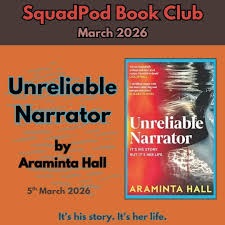
Out March 5th from MacMillan
Meet the Author
Araminta Hall has worked as a writer, journalist and teacher. Her first novel, Everything & Nothing, was published in 2011 and became a Richard & Judy read that year. Her second, Dot, was published in 2013.
She teaches creative writing at New Writing South in Brighton, where she lives with her husband and three children.
Araminta Hall’s novel Imperfect Women has been adapted for television by AppleTV starring Elizabeth Moss and Kerry Washington
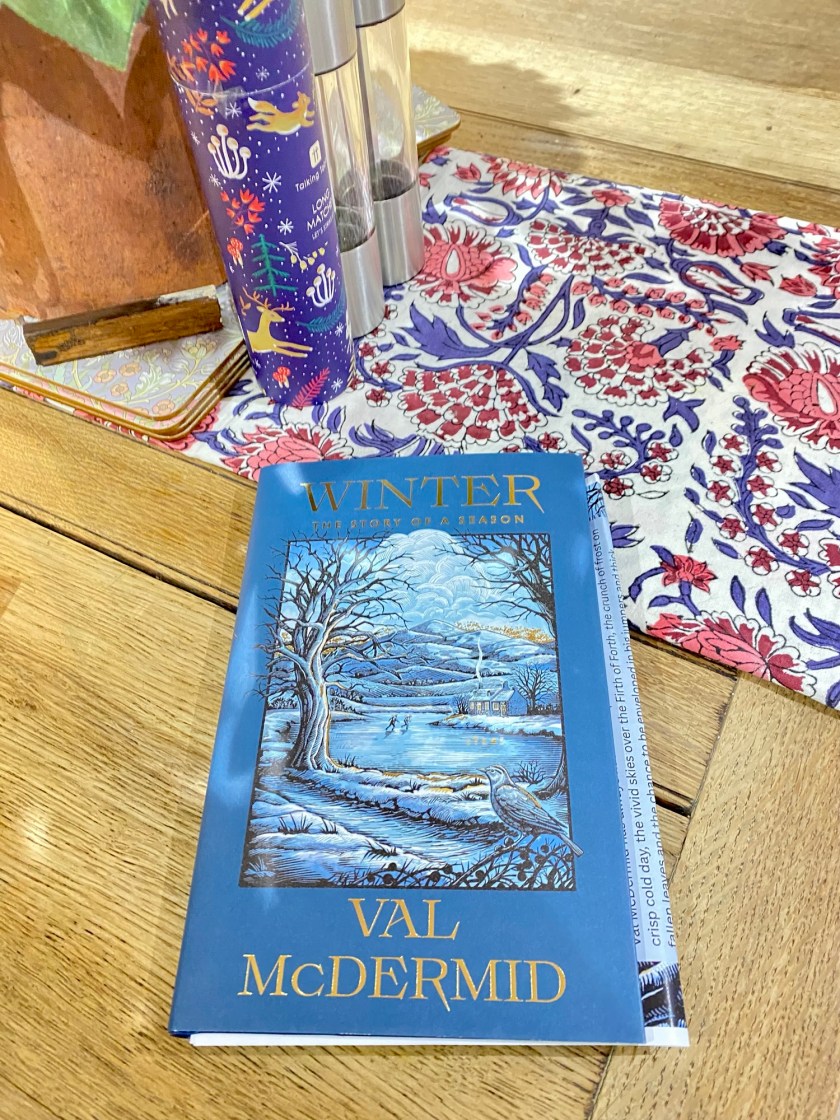
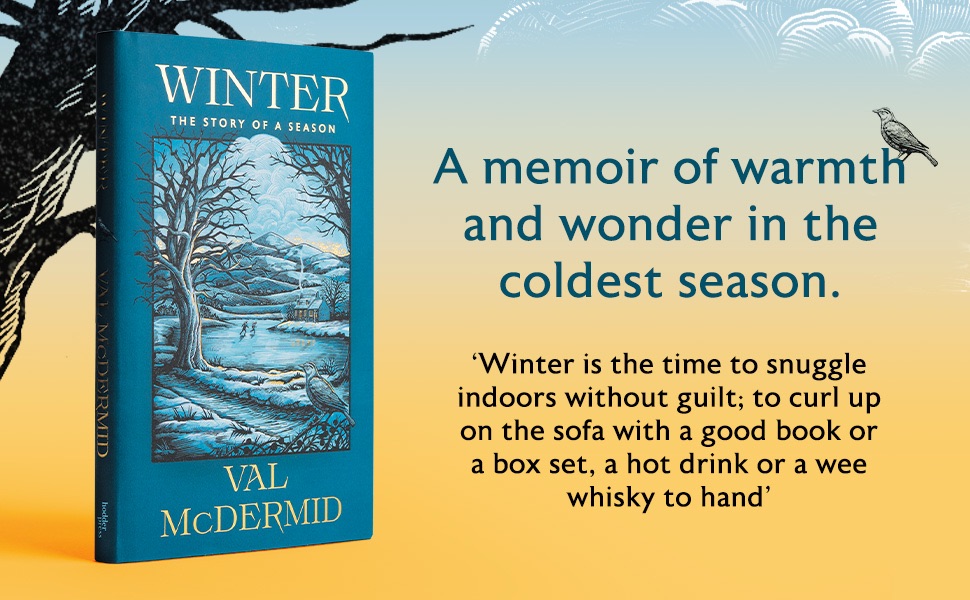
Winter is the time to snuggle indoors without guilt; to curl up on the sofa with a good book or a box set, a hot drink or a wee whisky to hand.
Val McDermid has always had a soft spot for winter: the bitter clarity of a crisp cold day, the vivid skies over the Firth of Forth, the crunch of frost on fallen leaves and the chance to be enveloped in big jumpers and thick socks.
In Winter, she takes us on an adventure through the season, from the frosty streets of Edinburgh to the windblown Scottish coast, from Bonfire Night and Christmas to Burns Night and Up Helly Aa. She remembers winters from childhood, the thrill of whizzing over a frozen lake on skates, carving a ‘neep’ (swede) for Halloween and being taken to see her first real Christmas tree in the town square, lights twinkling bravely in the dark Scottish winter night.
I was really interested to read Val McDermid’s Winter because I feel like it’s such a maligned season and it’s one that I enjoy. I’m a big fan of cozying up by the log burner with a mug of tea and a great book or film. I love crisp mornings where your cheeks feel pinched and seeing your own breath is still a novelty. I find myself able to do more in Winter, because somehow I feel invigorated by the cooler weather. I love winter festivals like Bonfire Night and a proper long Christmas – the full twelve days. It was joyous to find someone else who is able to enjoy winter in the same way I do and this book is definitely a celebration of the season I hear a lot of moans and groans about. Using creative non-fiction Val takes us through her favourite elements of winter in Scotland touching on nature, local customs and the memories they bring, as well as the comfort of resting and enjoying winter food.
The narrative was personal and very intimate too, like a stroll with a wise and knowledgable friend. There’s also a forthrightness in her character that I relished. One of my favourite things was her idea of being in step with the season because it’s an important part of how I live my life. I think we are part of an earth that has its rhythms and tides so it’s better for our wellbeing if we live with what our season and body tells us to. This season tells us to eat hearty stews and soups. It tells us to hibernate like bears – nights in watching films with a fire and sofa blankets. It tells us to gather with friends and celebrate light shining in the darkness. Whether we celebrate Hanukkah, the winter solstice, Christmas, Diwali or enjoy a good burn up on Bonfire Night it’s about lighting up the darker months and staving off the melancholy that can come in winter. Val tells us about Scottish traditions of carving turnips at Halloween and the incredible sight of the Norse festival Up Helly Aa which takes place across several islands in January, culminating in the Lerwick torch lit procession which is a real spectacle. I felt nostalgic for a time when the twelve days of Yule were just that and concluded with Twelfth Night festivities where the Lord of Misrule takes charge for a few hours. It was this and the Orkney Christmas Day tradition of The Ba’ that remind me of an old tradition called the Haxey Hood that at least three generations of my family participated in. It takes place on January 6th every year in the small village of Haxey in the Isle of Axholme. There is a Lord of Misrule and a Lady who drops her leather hood so two competing teams can play a long, arduous game to return it. The two teams have to get it back to whichever village pub they play for and it can carry on till nightfall. It’s best described as a cross between rugby and tug of war and results in a few hundred sweaty and muddy men either celebrating or commiserating in the pub.
My dad’s days of playing are over now but I loved that it elongated Christmas into January and I still keep to that tradition – in fact I can get quite grumpy when people ask me how my Christmas was when it’s Boxing Day! Or when I see people on Facebook who have their tree back in the loft on the 27th December. I spend the whole week saying ‘it’s still Christmas!’ I also get annoyed when people announce a diet on New Year’s Day! What a ridiculous idea it is to diet when our bodies are naturally telling us to eat as if we’re hibernating and there’s a mountain of Christmas food left to eat. Spring is the obvious time for renewal and rebirth, the perfect time to start new resolutions. We should be slower instead of wishing our lives away. We should stop and listen to what the season and our bodies are telling us, instead of being regulated by what’s in the supermarket. I found myself having these dialogues with the author in my head and I can easily see how I’d use the book as prompts for writing therapy. She tells us about Mardi Gras in New Orleans, a February festival, and it reminded me of the carnival and a particular February week in Venice when it unexpectedly snowed. It was magical and there was an excitement in the air as soon as we woke up. Someone had built a snowman outside with olive tree branches for arms and we walked to Florian, the famous cafe on St Mark’s Square and had a very indulgent afternoon tea and a hot chocolate that was thick, silky and warmed me to my boots.
It’s impossible to read or write a review of this beautiful little book without it conjuring up memories of your own. The illustrations are beautiful too and complement the writing perfectly. It felt like sharing winter memories with a friend and Val’s love of puffins has further cemented her place at my fantasy dinner party. The narrative rambles but it works, perfectly echoing her plea for a steadier and quieter pace of life in this season. Her writing style is lyrical and she draws you into something as simple as a winter walk, a skill I’ve always loved in her crime fiction. It’s perfect for keeping by the bed and dipping in and out of, rather like poetry. I was taken back to childhood and felt like I was given permission to claim this season for resting, relaxing and taking stock of- something I tend to do in that odd week of ‘betwixtmas’. I believe that the more we can go with the natural world rather than allowing the media, retail industry and other people to set our rhythms, then the healthier we’ll be mentally. Celebrate this season, relish its festivals and that Scandinavian hygge that we all read about a few years ago. If we accept this season for what it is, instead of wishing it was something else then we’ll be a lot happier. If you’re looking for a last minute Christmas present for a reader in your life then this is the perfect option.
Meet the Author
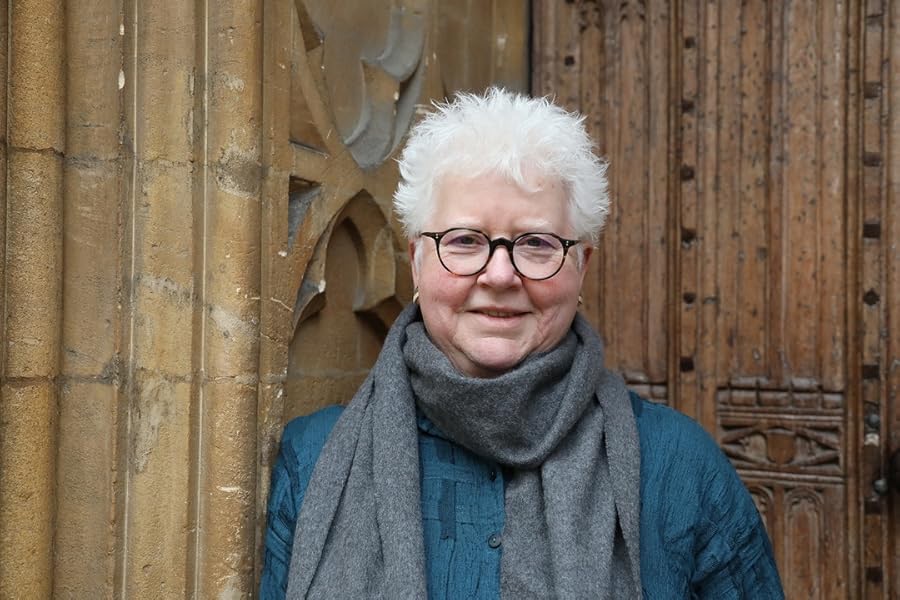
Val McDermid is a number one bestseller whose novels have been translated into more than forty languages, and have sold over eighteen million copies. She has won many awards internationally, including the CWA Gold Dagger for best crime novel of the year and the LA Times Book of the Year Award. She was inducted into the ITV3 Crime Thriller Awards Hall of Fame in 2009, was the recipient of the CWA Cartier Diamond Dagger in 2010 and received the Lambda Literary Foundation Pioneer Award in 2011. In 2016, Val received the Outstanding Contribution to Crime Fiction Award at the Theakstons Old Peculier Crime Writing Festival and in 2017 received the DIVA Literary Prize for Crime, and was elected a Fellow of both the Royal Society of Literature and the Royal Society of Edinburgh. Val has served as a judge for the Women’s Prize for Fiction and the Man Booker Prize, and was Chair of the Wellcome Book Prize in 2017. She is the recipient of six honorary doctorates and is an Honorary Fellow of St Hilda’s College, Oxford. She writes full-time and divides her time between Edinburgh and East Neuk of Fife.
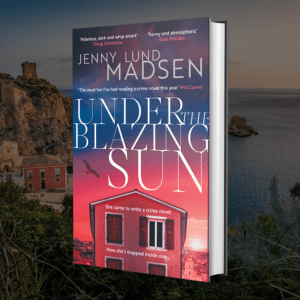
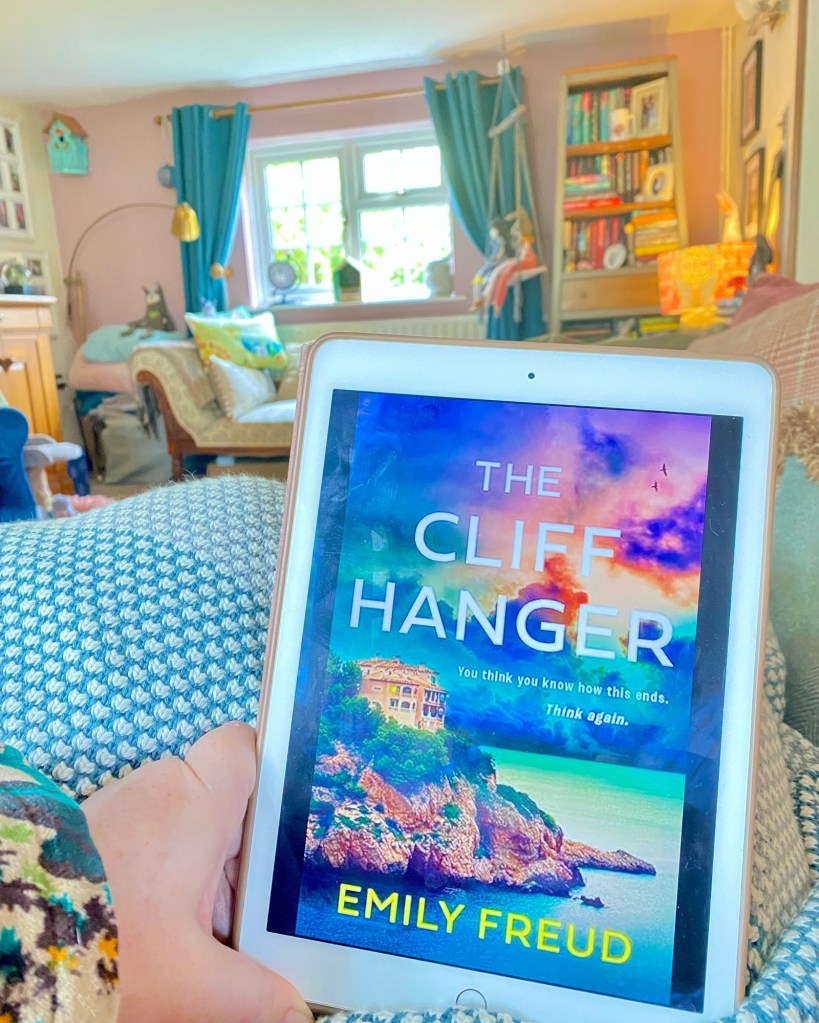
Goodness this was a wild ride, full of unexpected twists, characters that are pathological and a book being written within a book. Married couple Felix and Emma seem to have it all. They are the husband and wife team behind the hugely successful Morgan Savage thrillers. However, their latest novel isn’t coming as easily as their others. Felix is drinking to the point of blacking out and had an affair with a girl called Robin who worked for their publishing house. Emma is angry and popping anxiety pills any chance she gets. Their publisher Max, exiles them to the South of France in the hope that new surroundings for the summer will unlock their creativity. The house is beautiful, on a cliff overlooking the sea, when visiting housekeeper Juliette tells them a story about a painting that hangs in the house an uneasiness hangs in the air. The girl was prone to sleepwalking and one night got out into the garden and walked directly off the cliff edge. Sometimes, her cries can be heard at night. Under the sweltering sun, will the couple heal their differences or will they become trapped in a deadly game that beats the plot of any Morgan Savage bestseller.
This is a slow burn thriller, but when it does start to speed up it’s like a runaway train. Emma seems quite rigid and tightly controlled, almost as if she’s stifling her true feelings or self. Felix appears to be the more relaxed of the pair, sociable and happy to succumb to the pleasures of France. The couple met in a New York book shop, where Felix was sitting with his well worn copy of The Catcher in the Rye. Emma had a studious air, probably from the extra large glasses she wore. Both had always wanted to write but hadn’t yet succeeded. Years later Emma has become a neutral wearing, elegant and sophisticated woman who doesn’t like to be out of control. As an editor she knows what sells when it comes to fiction and how to jazz up or change the structure of a manuscript to create a bestseller. She writes early in the day, always sending her chapter of the book to Felix by 10am and then relaxing by the pool. Felix receives the chapter alongside little notes with suggestions or directions for Felix to follow. He falls out of bed (or wherever he slept) whenever he wakes, often nearer to lunchtime than breakfast. He has a leisurely start with plenty of coffee and when he’s feeling human again he gets to the book. He accepts that this is the way their joint writing works, but since they’re in France why not take the odd day off? He knows that without Emma starting the novel he would struggle. He had dreams of writing a great literary novel one day, but it’s never happened. His skills lend themselves to being the face of Morgan Savage. He does the festivals and book readings, because his charm and abilities lend themselves to being out front. He even signs their books as Morgan Savage, so it’s usually him people recognise. Emma stays behind the scenes, preferring the work to the publicity. She starts the new book on their first morning and then pushes Felix into his chapter each day to keep the momentum. Even in the quiet it’s clear there are resentments between them, a marriage’s worth of petty differences building towards a crescendo.
Over the days little snippets of their lives emerge until we finally see the full picture. The pace picks up and the chapters get shorter and I was soon racing through the chapters to see what would happen next. My other half found me sat on a kitchen stool, cooking and reading at the same time. It leaves you desperate to know what happens next. At one point I had to check how close I was to the end on my Kindle but found myself really confused when I still had 15% of the book left. I thought I’d reached the end, that’s how clever the twists and turns are. I loved the book within a book, especially the way they are writing characters that explored their own marriage. Each has their own version though and while Emma would signpost where Felix should go next, she would receive his chapter and find he’d develop a character with entirely the opposite emphasis and behaviour. They’re using their writing like couple’s therapy, working out the kinks and plot holes but also punishing and spiting their spouse at every turn. It gets even more exciting when the tone and quality of the writing start to change at one side of the partnership. There are mistakes in grammar and spelling, but is this a sign of deteriorating mental health, over use of drink or drugs or something more sinister. I found myself wondering whether I trusted either narrator.
Juliette is the girl who services the property. A carefree and natural young woman who cycles the area doing odds and ends for work. She’s the epitome of the term free spirit and could be a prime opportunity for Felix to continue his philandering ways. However, he’s confused when Emma befriends her, despite them being so different. Emma is also affected by Juliette’s story of the girl falling from the cliff and even has a bout of sleepwalking herself. Felix finds her in a trance in the living room and convinces her to go back to bed. Is this a reaction to Juliette’s story or something else? Emma was starting to remind me of Parker Posey’s character in the latest series of The White Lotus, uptight and reliant on pills to function. Could this be why the quality of the writing deteriorates or is Felix busier in his blackouts than previously thought? Just because he can’t remember doing anything, doesn’t mean he isn’t. This was a great story to get my teeth into and honestly, if they’d come to me as therapist, I might have asked them if they’d considered living apart. It’s a toxic atmosphere from the moment they arrive, but just when you think you’ve worked out why and what’s really going on it will surprise you again. As we go back in time, using flashbacks to important events, we can see how their romantic and professional lives began but these glimpses started to make me question what I thought I knew. I wanted to race back through the chapters to search for the clues that brought us to the unexpected conclusion. This was a thrilling and atmospheric read, with a brilliant portrayal of how a relationship has become toxic. If you love relationship dynamics partnered with a whole amusement park of twists and turns this will be your next completely unputdownable read.
Out 8th May from Quercus
Meet the Author
Emily Freud is the author of four thrillers: My Best Friend’s Secret, What She Left Behind, Her Last Summer and, coming in 2025, The Cliffhanger. She spent her career working on award-winning television programmes, including Educating Yorkshire, First Dates, and SAS: Who Dares Wins – as well as developing original programming for all the main broadcasters.
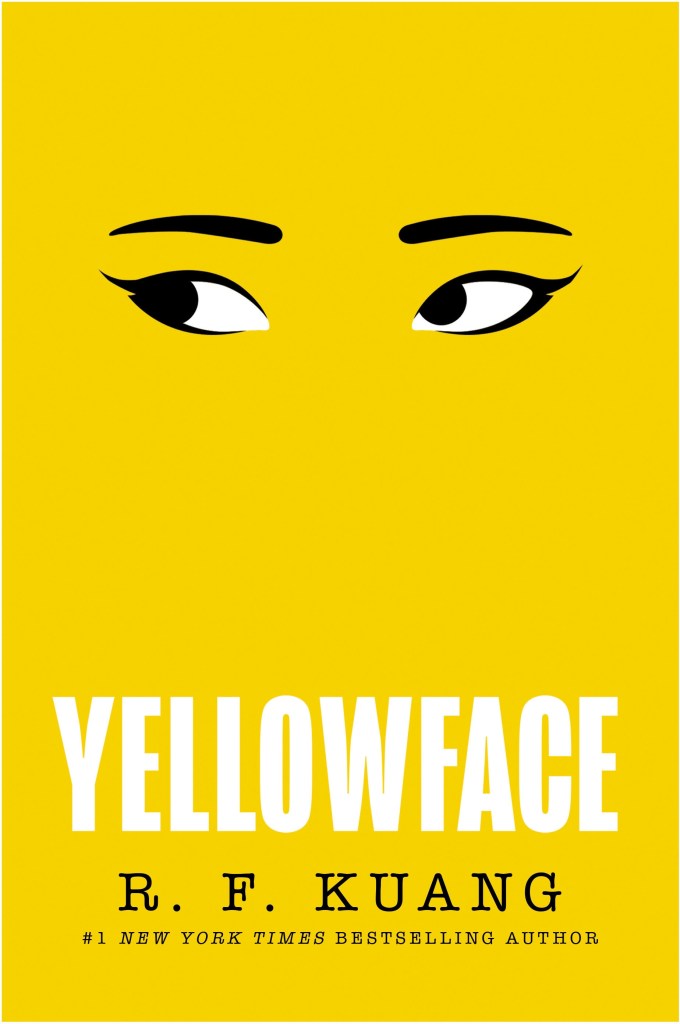
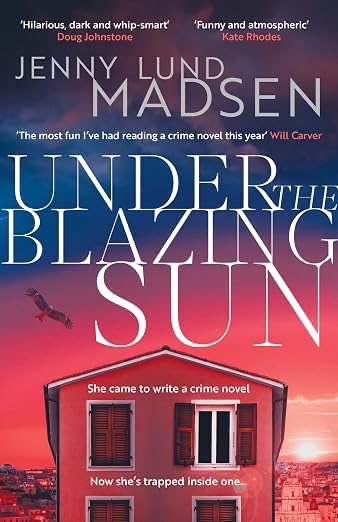
White lies. Dark humor. Deadly consequences… Bestselling sensation Juniper Song is not who she says she is, she didn’t write the book she claims she wrote, and she is most certainly not Asian American–in this chilling and hilariously cutting novel from R.F. Kuang
June Hayward and Athena Liu were in the same year at Yale and both debuted in the same year in publishing. Yet that’s where the similarities end. Athena is picked up immediately in the world that’s always looking for the next big thing. Stories about basic white girls just aren’t cutting it any more, so Athena is a cross genre literary darling. Her death is a freak accident that allows June an opportunity, she acts impulsively and steals Athena’s work in progress. Her work is an interesting novel about Chinese labourers and their part in WW1 helping the British and the French. Could she perhaps edit the manuscript and submit it to her own agent? Would it be wrong to start a new pseudonym? Enter the ethnically ambiguous new novelist June Song.
This was a brilliant inside look at issues and timely arguments within the publishing industry. In the past couple of years I’ve seen the question of authentic voices rage back and forth, especially interesting to me when it comes to writers with disabilities and the way disabled characters are written. Is it more important that a marginalised story is told or is who tells it the vital issue? This can be especially urgent when it’s a previously untold story or a hidden part of history. June has so much success with the book, but struggles to protect her secrets. One wrong word could expose her, so how far will she go to protect her new identity?
I’m always fascinated with books where I don’t like any of the characters because it usually means I’m learning something. I think some readers are uncomfortable with this. Athena is the wronged party and should therefore be ‘likeable’. In fact racist or more accurately model minority thinking means that a Western audience might expect the Athena to be sweet, pretty, docile and diligent just because she’s Asian. The qualities are positive, but allow no room for difference unlike the endlessly unique white characters created every day by Western writers. Huang broaches the idea that the industry’s criteria for deciding which Asian writers to publish is based within this flawed expectation. There’s also an issue around the type of subject matter chosen by publishers. In the wake of George Floyd’s death a lot changed in the publishing industry and we all talked a lot about diversity, but when I think of the subject matter of books I’ve read from ethnically diverse writers, particularly African American or Black British writers, they have all contained sexual abuse, violence or intergenerational trauma. Can we say this is a true reflection of the experience of people from those communities? Or do publishers expect this type of story from black writers and favour publishing them over other narratives? Do we only accept marginalised voices when they’re saying things we expect, things that make us comfortable because they echo our ideas about that particular community?
June truly believes that she’s becoming the minority in the writing world. That unless you’re a BIPOC writer you can’t get a look in from agents and publishers. The focus is on ‘own voice’ fiction and no one wants to hear from yet another white girl. I thought about the controversy around the book American Dirt when reading this. Writing is all about imagination and an author can imagine anything. An author can also research anything, but is research enough when you’re attempting to write from the perspective of someone with a disability, or someone LGBTQ+. I have to mention the proliferation of books from a neuro-divergent perspective by writers who have experience in this area, but who aren’t neuro-divergent themselves. I can understand the concern about it, but I’ve also really learned from some of these books and been led to other reading so I could educate myself. Where does ‘own voice’ writing end? Are we saying that a male writer can’t write in the voice of a female character? Writing is all about creativity so if we can only ever write from our own viewpoint wouldn’t it get a little boring? Should publishers accept a manuscript from a white writer who’s writing outside their own experience, if they are inundated with own voice manuscripts of equal merit?
“She’s using the pen name Juniper Song to pretend to be Chinese American. She’s taken new author photos to look more tan and ethnic, but she’s as white as they come. June Hayward you are a thief and a liar. You’ve stolen my legacy and now you spit on my grave’.
I loved that this book addressed those big issues, but it was also entertaining, delicious and disturbing in equal measure. I really enjoyed the ins and outs of the publishing world and the gossipy social media ‘blow-up’ feel of the book. Then there were moments that were more uncomfortable and challenging. It addressed what a lonely job it is to be a writer and how that isolation magnifies other aspects of being an author such as the negativity of social media and the perils of comparison. I wasn’t sure about June but that meant her character stayed with me. On one hand I felt she deserved to be exposed, but when I saw the reality of that I felt really bad for her. This was such a clever novel, so complex, full of amazing contemporary issues and always entertaining.
Meet the Author
Rebecca F. Kuang is the #1 New York Times bestselling and Hugo, Nebula, Locus, and World Fantasy Award nominated author of Babel, the Poppy War trilogy, and the forthcoming Yellowface. She is a Marshall Scholar, translator, and has an MPhil in Chinese Studies from Cambridge and an MSc in Contemporary Chinese Studies from Oxford. She is now pursuing a PhD in East Asian Languages and Literatures at Yale.
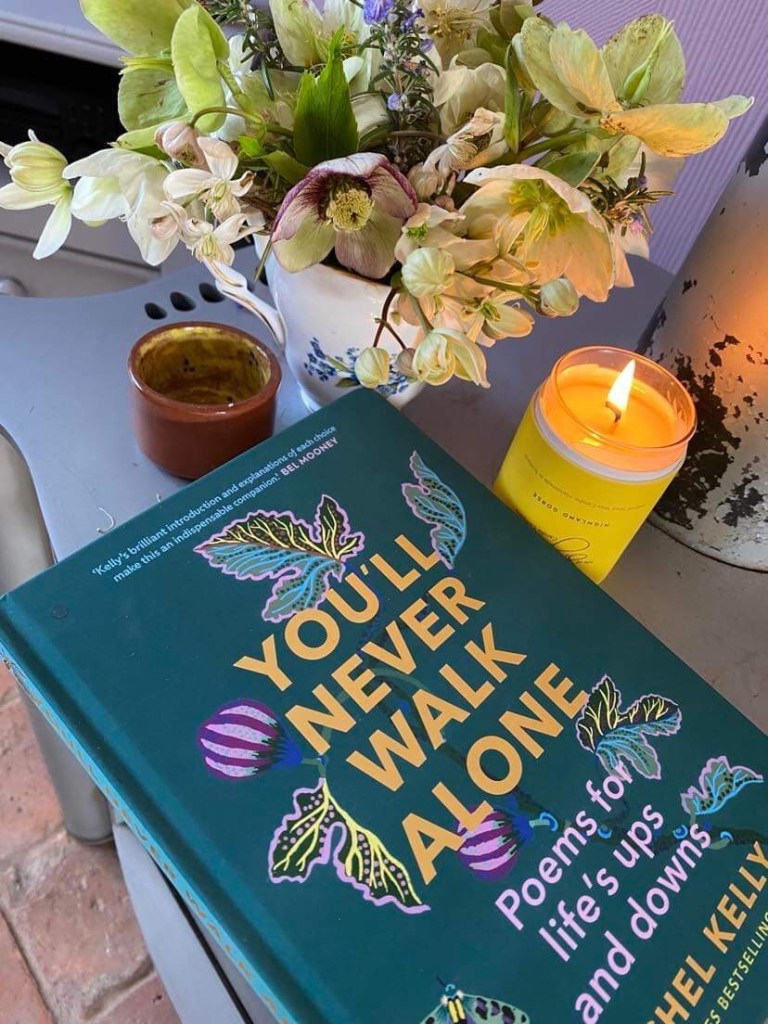
I’m continuing my series with Rachel Kelly’s collection of poetry for each season of the year. Today I want to share with you another poem from ‘You’ll Never Walk Alone’ because it speaks to me about being authentic and I know how liberating that can be.
Wild Gees by Mary Oliver
You do not have to be good.
You do not have to walk on your knees
For a hundred miles through the desert, repenting.
You only have to let the soft animal of your body
Love what it loves.
Tell me about despair, yours, and I will tell you mine.
Meanwhile the world goes on
Meanwhile the sun and the clear pebbles of the rain
Are moving across the landscapes,
Over the prairies and the deep trees,
The mountains and the rivers.
Meanwhile the wild geese, high in the clean blue air,
Are heading home again.
Whoever you are, no matter how lonely,
The world offers itself to your imagination,
Calls to you like the wild geese, harsh and exciting –
Over and over, announcing your place,
In the family of things.
In You’ll Never Walk Alone – Poems for Life’s Ups and Downs. Ed. Rachel Kelly. Yellow Kite. November 2022.
I love that we come to this poem in the middle of a conversation. Editor Rachel Kelly suggests that it might feel odd at first, to hear this voice telling us we do not have to be good – a lesson we are taught from being a small child. In order to be loved these days we are told we must be good, but also to behave in certain ways and look a particular way. We must have no body hair, thick lustrous hair on our head, the perfect figure and whitened teeth. But this poem says no, a goose only has to be a goose, the natural way a goose is meant to be. It follows it’s inner instincts, to fly to warmer climates in winter and back home in the spring. It isn’t trying to be something it’s not. It is unapologetically itself.
At this time of year I can go out with a cuppa into the garden and I identify the different clumps of leaves, what will become the aquilegias, daffodils, tulips and even foxgloves. Every year they are in the same place in the garden and will bloom at their set time, bringing bursts of scent and beautiful colour into my world. Even when I’m struggling with pain and I can’t walk far, I can get into my garden and enjoy my flowers. The consistency of their blooming brings me so much hope: of warmer days coming, having the doors and windows open, reclining in my garden chair with a good book – usually with a cat or two in my lap. When I did an authentic self workshop this was one of the activities when I felt most like my true self, just being outdoors with my animals and enjoying a good book. Nature is the backdrop to this and is grounding in a way. ‘The natural world unfolds anyway’, Kelly tells us not because it was told it must or should be a certain way. She goes on to talk about the metaphor of the geese, flying freely, following their instincts and but also being part of something bigger. It’s a powerful message, that we have a place in nature and can return to it any time for sustenance and to quieten that constant noise we’re bombarded with.
To listen to your inner self I ask clients to get out a notebook and write down the times in life when they’re at their most comfortable with themselves. ‘When you’re not questioning how to be or whether you’re wearing the right thing. When you feel totally in tune with what you’re doing and in the present moment’. This will be different for everyone but my first list was:
When I’m with my dog walking on the beach or in a forest
When I’m at a concert, caught up with the singing and the crowd
Sitting in the garden with a good book and my cats with me
At the theatre watching a ballet or a compelling play
Watching wildlife
From that I could pick up certain patterns, such as I like quiet or activities where people aren’t expecting conversation. I like solitary activities or being in a crowd that’s in tune with each other. I like to observe more than participate or perform. I find animals and nature soothing. This meant I could lean more towards activities that felt natural rather than activities that made me anxious or feel out of place. I will look back to this poem from time to time and probably use it in sessions, because it does remind us to take time in nature but mainly to stop trying to be what others tell us we should be. Be who you are and love what you love.
I’m not a usual reader of celebrity memoirs. I know there’s a certain snobbery in bookish circles for the celebrity memoir, so I thought I’d get that in there before you click away to another blog. I’m all for whatever gets people reading to be honest, but it’s a rare book that sits above the usual ghost written Christmas fare. These are memoirs that sit above the ordinary, that have touched me emotionally or made me laugh, that have surprised me with the beauty of their writing or their inventiveness, or even revealed incredible stories that kept me gripped to the final page. Some you may have heard of while others are lesser known, but just as compelling.
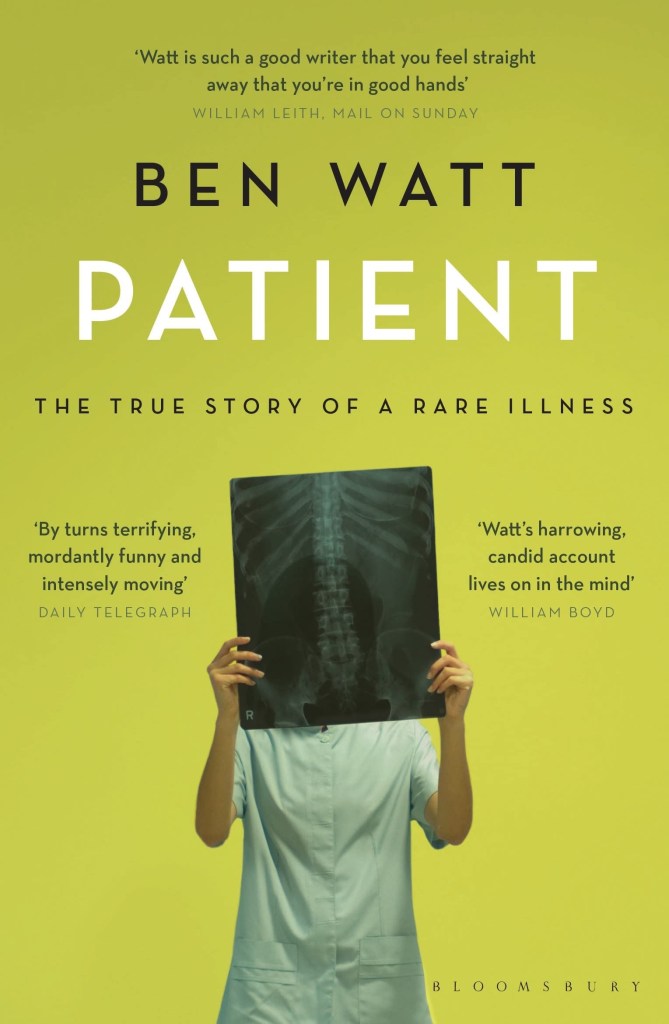
Patient by Ben Watt.
‘In the summer of 1992, on the eve of a trip to America, I was taken to a London hospital with bad chest pain and stomach pains. They kept me in for two and half months. I fell very ill – about as ill it is possible to be without actually dying – confronting a disease hardly anyone, not even some doctors, had heard of. People ask what was it like, and I say yes, of course it was dramatic and graphic and all that stuff, but at times it was just kind of comic and strange. It was, I suppose, my life-changing story.’
Benn Watt is half of the band Everything But The Girl and his short memoir covers a period when his bandmate Tracey Thorn was also his partner. In 1992, when I was taking my ALevels and listening to his band, Ben contracted a rare life-threatening illness that baffled doctors and required months of hospital treatment and operations. This is the story of his fight for survival and the effect it had on him and those nearest him. I recommend this book because it is beautifully written and captures the feeling of being seriously unwell perfectly. He describes coming institutionalised, so in sync with the day to day running of the ward that he could tell to the second when the newspaper lady was going to enter the ward. I love his play on ‘Patient’ as noun and verb at the same time, the patience it requires to endure the diagnostic process and to cope with what I call ‘hospital time’ – where ‘I’ll be a minute’ means half an hour. Only two years after his book is set, I was going through my own lengthy periods of hospitalisation, enduring unpleasant tests and realising there are limits to medical science. It’s an incredibly scary place to be and Ben conveys that so well, as well as the strange feeling when discharged when the patient goes from totally dependent to alone. I remember after a lengthy hospital stay, sitting in my flat thinking it was getting close to mealtime and that I was hungry, then a second later realising I had to make my own food! What he captures best is the realisation that what he expected to be a short interlude in his life, is actually becoming his life. The narrowing of his horizons from someone who toured the world to a resident of a single ward, or even to an individual bed.
Ben Watt
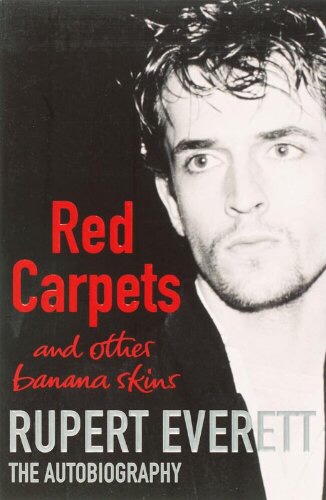
Red Carpets and Other Banana Skins by Rupert Everett
I became fascinated with Rupert Everett after seeing him on Graham Norton’s chat show and finding him both hilarious and painfully honest, both about himself and others. I loved his wit and comic timing in My Best Friend’s Wedding and especially in the Oscar Wilde films he starred in. I was pleased to find he was a devotee of Wilde, who wanted to make an honest film about his later life. My best friend from university always sends me a book at Christmas and I was lucky enough to receive a signed copy of his second memoir Vanished Years. I made sure I found a copy of his first memoir above so I could read them back to back. They both lived up to my expectations. I seem to remember first noticing him in conjunction with Madonna back in the 80’s and he had come across as a pretty boy in that context, but there is so much more to that rather spoiled exterior. His performance in Another Country was exceptional and his eventual film of Oscar Wilde was extraordinarily moving, but it is the drama of his private life that has attracted more attention than his talent. These memoirs show that he has always been surrounded by interesting and notorious people, becoming friends with Andy Warhol by the time he was 17. He has been friend to some of the most famous women in the world: Donatella Versace, Bianca Jagger, Sharon Stone and Faye Dunaway. This notoriety and films such as Dunstan Checks In overshadow incredible work with the RSC and I finally saw him shine on stage in the West End as Professor Higgins in Pygmalion.
I have always known, from his interview with Graham Norton, that Everett is a raconteur, but these memoirs show he can write a great story too. He has an uncanny ability to be at the centre of dramatic events: he was in Berlin when the wall came down, in Moscow at the end of Communism and in Manhattan on September 11th. The celebrity stories are deliciously gossipy and terribly honest. It seems Everett doesn’t hold anything back, whether he’s lampooning someone else or himself. His second memoir is again mischievous, but also touching with stories from childhood and early life. He takes the reader on an amazing journey around the world and from within the celebrity circus from LA to London. I loved the addition of family stories, such as a pilgrimage to Lourdes with his father that is both hilarious and moving. There’s a misguided step into reality TV that goes horribly wrong. A lot of celebrity authors are easy on themselves, writing solely from their own perspective rather than presenting life objectively. Everett is unfailingly honest, presenting his flaws and tragedies with the same scrutiny and irreverence he gives to others. Both books are incredibly enjoyable, a journey with the best and most disreputable storyteller you will ever meet.
Rupert Everett as Oscar Wilde
The Storyteller by Dave Grohl.
One of my favourite video clips recently was of the Westboro’ Baptist Church protesting outside a Foo Fighter’s gig. Then with perfect timing around the corner came a couple of majorettes, followed by a flat bed truck with a band playing The Beatle’s ‘All You Need Is Love’. On the back stood Dave Grohl with a microphone, shouting out their love for the protestors. I’ve always known that Grohl was a good guy and despite only enjoying some of the Foo Fighter’s music I’ve always thought he was an interesting and enlightened person. I’ve also wondered how he recovered following the suicide of Nirvana front man and personal friend Kurt Cobain, an event that stood out in my mind in the same way the death of John Lennon did for my parents. I loved Grohl’s humour and willingness to make an idiot of himself. My best friend and I rewatched the Tenacious D video for Tribute where Grohl is painted red and given an amazing pair of horns as Lucifer. I was bought this book last Christmas by my stepdaughters. However, it was only recently, after the death of another bandmate and friend Taylor Hawkins, that I picked it up and read a few pages every night in bed.
Grohl addresses my reservations about about celebrity memories straight away, stating that he’s even been offered a few questionable opportunities: ‘It’s a piece of cake! Just do four hours of interviews, find someone else to write it, put your face on the cover, and voila!’. Grohl writes his early experiences with fondness and an obvious nostalgia. He found the writing process much the same as writing songs, with the same eagerness to share the stories with the world. He has clearly linked back to old memories and emotions, feeling as if he was recounting ‘a primitive journal entry from a stained notebook’. He has definitely embraced the opportunity to show us what it was like to be a kid from Springfield, Virginia with all the crazy dreams of a young musician. He takes us from gigging with Scream at 18 years old, through his time in Nirvana to the Foo Fighters. What’s lovely is that same childlike enthusiasm while jamming with Iggy Pop, playing at the Academy Awards, dancing with AC/DC and the Preservation drumming for Tom Petty or meeting Sir Paul McCartney at Royal Albert Hall, hearing bedtime stories with Joan Jett or a chance meeting with Little Richard, to flying halfway around the world for one epic night with his daughters…the list goes on. We may know some of these stories, but what he promises is to help us reimagine these stories, focused through his eyes. I’ve seen reviews that claim he has glossed over or withheld some of the truth of his experiences, particularly around Kurt Cobain with Courtney Love absent from proceedings. I don’t think this is being disingenuous, I think this is what Dave Grohl is like – generous, humble and honest with regard to his own take on events. Perhaps he feels other people’s stories are their own and not his to tell. I was so impressed with how grounded he is and how aware of the most important things in his life: his family; his daughters; his friends; those who remind him of where he’s come from; and lastly, his music.
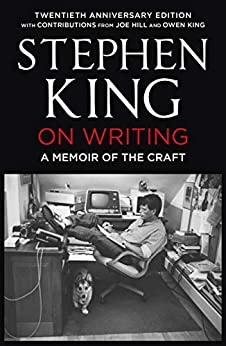
On Writing: A Memoir of the Craft by Stephen King.
Stephen King begins this memoir with the accident that he says has made the last twenty years of his life an incredible gift. With some humour he recounts being on his four mile daily walk and taking a break to relive himself in the woods. As he was returning to the road, a van driver was simultaneously trying to prevent one of his dogs rummaging in a beer cooler. This unlucky coincidence meant King was in a position to be struck as the van swerved off the road. A man who witnessed the crash watched as the impact threw King up and over the van, smashing the windscreen with his head and propelling him into a ditch 14 feet away. Local man, Donald Baker, found King ‘in a tangled-up mess, lying crooked, and had a heck of gash in his head. He kept asking what had happened.’ The van driver seemed devoid of emotion or panic, claiming he thought he’d hit a deer until he noticed King’s bloody glasses on his front seat. In a strange parody of his bestselling novel Misery King was left hospitalised with a shattered hip and pelvis, broken ribs, a punctured lung and fractured femur. The driver died only one year after the accident, from unrelated causes. It took King months to recover, with some limitations remaining to this day.
This strange hybrid book comes out of that time, from that trauma which affected him mentally as well as physically, back to his childhood, his early adult life, his marriage and the drinking that nearly cost him his relationship. If people read this hoping to read a masterclass or a shortcut to writing a bestseller, they’ll be disappointed. You don’t need a fancy masterclass to be a writer, you simply need to write. However, he does explore his own process and influences. There’s some practical advice on character building and plotting, showing how a spark of an idea was turned into Carrie. He also talks about pace, plots and presentation of a manuscript. He talks about he origins and development of certain books and uses examples of other writer’s work to illustrate what he’s advising. What he can’t do is identify that magic or spark that made him a No 1 bestseller for almost half a century. I enjoyed his stories about his early adult years when he was struggling financially, but was so persistent. The jobs he had to take to support his family, when the writing simply wasn’t paying. He was teaching by day and writing in the evenings. He also talks about the perceptions of him in the industry, perceptions I have always thought unfair, that despite incredible economic success and prolific output, he will never be considered a good writer. I loved his advice to write in a room with blinds and a closed door, if you’re not distracted by a view it is easy to disappear into a vista of your own making. He also plays loud rock music, but that wouldn’t be for me, I need silence or calm background music, no TV and no talking. It’s true that every writer needs their own best conditions for writing – although a closed door with no interruptions seems universal – you will need to find your own process. However, I do think he hits upon something important about life, like Dave Grohl, and that is the importance of family to ground us and stand by us while we create and especially when economic success does come.
As I go through other blogger’s fantastic end of year book lists, it strikes me how many brilliant books I haven’t had time to read. That’s not because I’m one of life’s busy people – I don’t work, the girls are only with us part-time, I’m still semi-shielding, and I have a carer/cleaner – I’m hardly plagued with Virginia Woolf’s worries and yes, I do have a room of my own. I could be reading more, but mainly I could be making better choices. The problem is I become distracted. I’m distracted by the same things a lot of other book bloggers are: should I be on Tik-Tok? Should I be chasing this year’s hottest release? Do I have enough Twitter followers? Is a photograph better than a review? How do I stay relevant? Is anyone even reading this? It’s so easy to spend half your day on Twitter or Instagram looking at other people’s beautiful and creative content and thinking ‘should I be doing that too?’
The only answer is to do what you love. I’m never going to be a major book influencer with followers in the millions, merchandise and a whole new income stream. So I have to think, what is it I enjoy about book blogging? Well, I love the Book Twitter community, the bloggers, blog tour organisers, the publishing assistants and other writers. By talking to writers over the last few years I’ve had so much encouragement and advice about my own writing, that I could see myself actually finishing my own book. People have been generous and kind with their time and their tips on how to be a book blogger. I love reading, discovering new authors and broadening my reading choices. I love writing about characters, their stories, their psychology and really championing those books that make my heart sing. I can do all of these things without putting myself under pressure, without chasing every new book, without joining every blog tour or buying every special edition. I can do this without pressuring or challenging myself even more than last year.
My village book exchange
That’s not to say I don’t appreciate those who take stunning Insta photos, or know a flat lay from a stack, because I do. Some people are absolute artists! I also admire those who worked hard to remain up to date and relevant, but it’s not always me. It takes me a long time to understand and adopt new apps and methods of getting the book love across. So in short, I’m going to worry less and read more of the books I already have. Stress less and enjoy this more. I’m going to spend more time writing my own work, putting new books into our village book exchange, and reaching to the back of the shelf for those books I didn’t get to this year. I’m going to write about those back of the shelf books and celebrate what I have as much as the new. I can’t believe I haven’t yet read The Appeal by Janice Hallet or Still Life by Sarah Winman, but they are both tucked away on the shelf. I’m going to look forward to those books I’ve highlighted for 2022, but not worry if I don’t get to them all. I’m also including my NetGalley shelf in this, which I’m afraid to say, is cluttered with forgotten gems and new books due to be published as far away as next summer!
It’s easy to forget why we do this. I need to remember those reasons, to simply enjoy being part of this great book community. To relax and celebrate the journey, rather than stress and strain towards an unknown goal. Here’s wishing you all a deliciously bookish 2022 and I look forward to chatting and sharing with you all this coming year. ❤️📚