Posted in Books of the Year 2021, Uncategorized

My Top 21 of 2021! Part One.

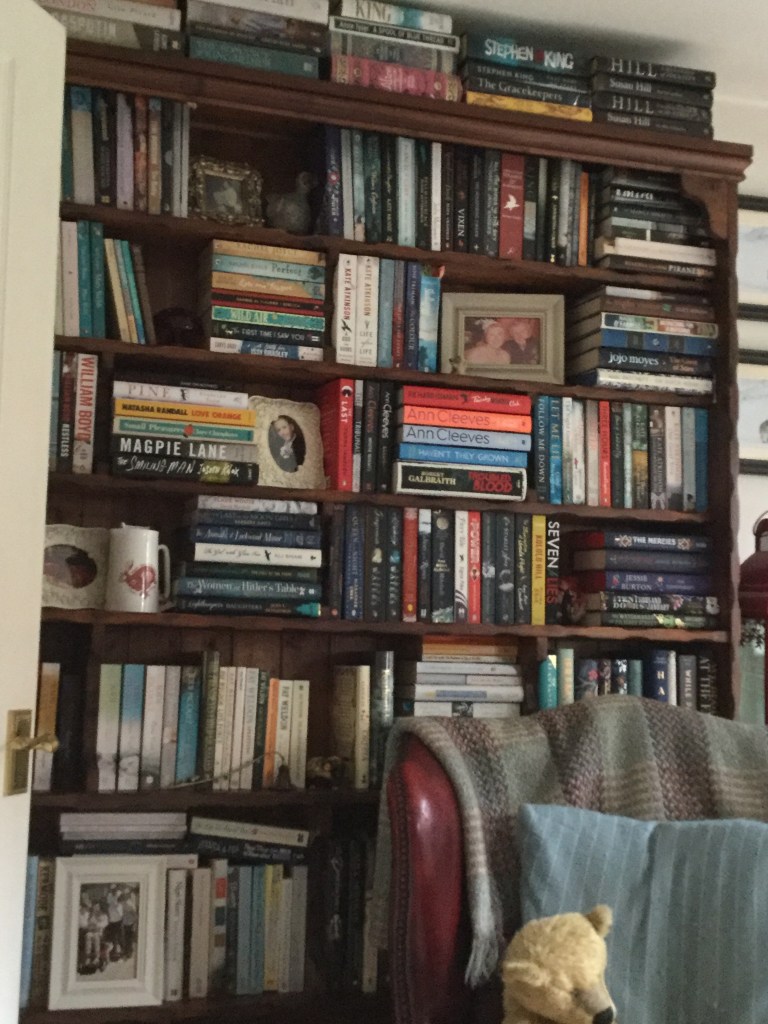
It’s been a fantastic reading year, my second full year as a blogger and lots of milestones met. This year I’ve cracked my goals of 3000 followers, 200 subscribers to The Lotus Readers blog and I’ve smashed my Goodreads reading goal of 120 books. Aside from these rather trivial goals, I’ve read some fabulous books this year. Although being a blogger means I’m all too aware of the ones I’ve missed or not had time for yet. Even more important than this are the wonderful friends I continue to make on BookTwitter and Bookstagram. Becoming part of the #SquadPod, a collective of book bloggers, has been a wonderful experience. Since I’m an ‘at risk’ person thanks to my multiple sclerosis and breathing issues, I’m home a lot but even when I don’t see anyone that day, I still have some wonderful, kind and supportive friends to listen to. I love them all. So this is the start of my favourite reads list for 2021. I had to go with 21 because I would have struggled to reduce them any further. If I did star ratings, all of them would be five stars so it’s not a countdown. It’s just a chance to reminisce and a recommend ahead of the January sales.

Circus of Wonders by Elizabeth MacNeal.

I had read Elizabeth’s MacNeal’s first novel The Doll Factory, so I knew I would love this one. The story of a young girl with birthmarks on her face and body, catches the eye of a passing showman. Jasper Jupiter has seen her dancing round the camp fire with her brother. She has the sort of wild abandon that’s rare in one so shy and reserved. He can see her now, in his circus, perhaps even performing before the Queen if she could be tempted away from mourning Prince Albert. The book flits between the circus and back to Jasper and his brother Toby’s time in the Crimea. We follow Nell as she leaves her village behind to become Queen of the Moon and Stars. However, could Jasper’s eagerness to expand and show in London be their undoing? There are some very interesting disability issues here, including a look at the ethical concerns around freak shows. The beautifully vivid descriptions of the acts and their costumes are wonderful too.

The Great Silence by Doug Johnstone.

It’s no secret how much I love Doug Johnstone’s Skelf series, since I outed myself as a #Skelfaholic on Twitter. I was lucky enough to be sent an early copy of this book, the third and potentially last one in the series. I had to dive on it immediately and find out what came next. As usual the book began with a strange event. Dorothy takes her dog Einstein for a walk in the park and he fetches a human foot, even more strange is that it appears to be embalmed. This embroils Dorothy in a very unusual case that could be deadly. Jenny is dealing with the aftermath of her ex-husband’s actions in the last book, she’s still healing emotionally and potentially regretting the end of her relationship with painter, Liam. She misses him, and wonders if perhaps they could rekindle something. Then the other daughter of her ex-husband disappears. Jenny wonders if her life will ever be free of this man, as she joins forces with the other woman in Craig’s life to find her daughter. Finally, Hannah is facing massive changes in her academic and personal life. In a sense she’s being pulled between past and future. Her graduation becomes a double celebration when Indy proposes, but then she’s pulled into the past when their flat is broken into and someone makes it clear they still want to be part of her life. Her academic supervisor José asks her if she’ll look into one of the central questions of astrophysics, if there is extraterrestrial life, why haven’t they replied to our messages? He has had a reply, but doesn’t know where it’s come from. Is it really from another life form or is someone playing game with him? Doug Johnstone is a poet, philosopher and incredible observer of human nature and I can only hope for another instalment of this much loved series.

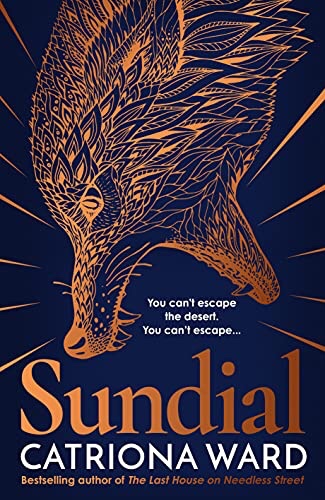
The Last House on Needless Street by Catriona Ward.

This was one of the first books I read in 2021 and for a while I didn’t know what on earth was going on for a while, I was drawn into this very strange mystery. I finished it in a sort of shell-shocked silence. I felt like I needed to go straight back to the beginning and start again. It is extraordinary and unlike anything I’ve ever read before. It’s also very difficult to review without spoiling other reader’s experience of it, but I had to give it a go. Multiple narrators were introduced, including a cat, and I was sometimes thoroughly confused, but never contemplated putting the book down. The beauty of the language and cleverness of the structure kept me going, determined to work out what exactly was going on. I was starting to be unsure which sections were real and what was illusion. The author is clearly hugely skilled at creating that sense of the uncanny – when everything seems normal and recognisable, but there is just that sense that something is off-kilter and sinister. The writing is so involving that I was inside a character’s head and at times I had an uneasy feeling I would never be able to get out. I guessed some of what was going on, but not the whole and I love the ambition and audacity. This is a unique, original and deeply creative piece of work that enthralled and stunned in equal measure. Ward is a writer of immense imagination and talent and I felt so privileged to have been given the chance to read this before it hit the shelves and became a phenomenon.

This Is How We Are Human by Louise Beech.

I absolutely loved this incredible book about love, disability, sex and the secrets we keep from each other. Veronica and her son Sebastian live together in Hull. Veronica wants the best for her son and just like all parents, she wants him to grow up and have a full life. However, Veronica isn’t like other parents, because despite Sebastian being twenty years, six months and two days old, he’s struggling with the love and relationships part of his life. Seb is autistic and he is lonely. Seb loves swimming, his fish, fried eggs and Billy Ocean, he’d also love to have sex but no one will have sex with him. He’s already been in trouble after the girl next door convinced him to write an explicit letter to her underage sister. When their lives collide with Violetta, Veronica thinks she can see a way forward. She’s thought of paying someone before, but has stopped herself. Here though, is someone they’ve met before and who was natural with Seb. Veronica couldn’t have known she was leading a double life as a high class escort, in order to earn enough money to keep her seriously ill father at home. These three lives come together and change each other in unexpected ways. This was an incredibly funny book as Seb’s straightforward way of interacting with the world butts up against nuanced and sometimes dishonest way humans deal with each other. This felt so real. So moving. It’s also wonderfully unexpected and such a fresh perspective. I loved it.

The Unheard by Nicci French.

I read this novel on the four hour drive to North Wales and spent most of the first day of my holiday absolutely enthralled with the story. I was hooked immediately, intrigued by the mystery of what exactly Tess’s daughter Poppy had seen or heard. Tess is starting a new life in a garden flat with her daughter, after a divorce from husband Jason. Having a background as a child of divorce, Tess was determined that Poppy should be their number one priority. No matter how much animosity and hurt they feel, their interaction with each other must be civil and they prioritise time with both parents. Jason is already remarried to Emily, a much younger woman who seems very sweet and tries hard to have a relationship with Poppy. One Saturday, Poppy returns from an overnight at her father’s and displays signs of distress. These were classic symptoms, that any counsellor like me, would be concerned by. She’s clingy, she wets the bed and seems to be having nightmares. Over a week these symptoms worsen: she bites a girl at school, uses foul language to her teacher, and her mother is terrified for her. She has her attention drawn to a picture Poppy has drawn, all in black crayon which is a huge contrast from her normal rainbow creations. The picture shows a tower and a woman falling from the top to the ground below. ‘He killed her’ she tells her Mum ‘and killed and killed and killed’. I read a lot of thrillers, but this one had me gripped. Had Poppy seen something? Who should we suspect? Or is Tess manipulating her daughter into such psychological distress? I was greedily hoovering up the chapters till the early hours!

The Metal Heart by Caroline Lea.

This was a simply stunning piece of historical fiction set on Orkney 1940. Five hundred Italian prisoners-of-war arrive to fortify these remote and windswept islands. Resentful islanders are fearful of the enemy in their midst, but not orphaned twin sisters Dorothy and Constance. Already outcasts, they volunteer to nurse all prisoners who are injured or fall sick. Soon Dorothy befriends Cesare, an artist swept up by the machine of war and almost broken by the horrors he has witnessed. She is entranced by his plan to build an Italian chapel from war scrap and sea debris, and something beautiful begins to blossom. But Con, scarred from a betrayal in her past, is afraid for her sister; she knows that people are not always what they seem. This book is stunningly beautiful, so much so that I had to sit and think in the quiet when I’d finished it. It’s so rich in folklore, historical detail, the trauma of war and bereavement that I know I could pick it up to read again and still find something new. I immediately ordered a signed copy for my forever shelf, because it is so special. What did I love about it? The Scottish folklore, the incredible landscape, the community, the dignity of people facing the hardest times of their lives. Then amidst the chaos, violence and confinement, beauty emerges in the shape of a deep, immediate, connection and growing love between two people who can’t even speak the same language. The counterpart to this human story is the Italian Chapel, built out of the scraps of metal huts and concrete the prisoners are allowed. Yet from these humble materials a building of true beauty emerges, that still stands today. It made me emotional to think about the lovers, but also the patience and faith of these incredible men who needed a place to worship, a piece of home.

The Lamplighters by Emma Stonex.

I loved this book so much that I went to bed early two nights running so I could finish it uninterrupted. I was so drawn in by the isolation of this lighthouse, that it was just standing directly in the sea and no one could come on or off until the relief boat came. Inspired by true events, the story is set in two time frames. In one we learn that a writer is researching a book on a famous disappearance of three lighthouse keepers. While in 1972, miles off the coast of Cornwall a relief boat arrives at the Maiden, to find the door locked from the inside, the clocks stopped and no sign of the Principle Keeper or his two assistants. The writer contacts the women left behind by these men: Helen, wife of the Principle Keeper, Arthur; Jenny, wife of Bill his deputy; Michelle, girlfriend of the new recruit Vince. They have all received money from Trident, the company who employ the keepers, but with that came a directive, not to talk about the events surrounding the mystery. At the time, Vince came under the most suspicion. New to the area and with a criminal past, he seems the likely candidate to have harmed the others. Yet, why would Arthur write of a huge storm in the log, when seas had been calm all week? What became of the small boat rumoured to have sailed near the Maiden? There were also whispers about a mechanic sent to carry out repairs at the Principle Keeper’s request. It’s hard, years later, to distinguish between rumour and truth. Will any of the women speak to the writer and will they finally solve the mystery of what happened to the men? This was a fascinating mix of mystery, love story and the hint of the supernatural. The atmosphere created by the writer was incredible and I knew straight away this would be a book of 2021.

That’s my first seven books of the year, so watch out for parts 2 and 3 coming up in the next ten days.

Posted in Random Things Tours

The Visitors by Caroline Scott.

I’ve been a huge fan of Caroline Scott’s last two novels and share an interest with her in the historical period following WW1. This novel touches upon some of the most important issues of the period, while telling a story that touches the heart strings and holds some surprises for the reader. It shows just how chaotic relationships can become during and post wartime, as well as how much people change when faced with terrible and traumatic experiences. We follow one young war widow called Esme whose whole life changed after she received news that her husband Alec had been killed. No longer able to afford to live in their marital home and needing to find work, Esme finds herself in the employment of Mrs Pickering as companion and helper, while also writing nature columns for her local newspaper. As the summer of 1923 approaches Esme is packing her employer’s clothes for a trip down to Cornwall. Mrs Pickering’s brother Gilbert, has established an artist’s residence in his large country house, and the artists have all served together in the war. As Esme meets Gilbert, Rory and the others she hopes to get an insight into what Alec might have experienced and maybe feel closer to him. What she finds there is certainly transformative, but in a very different way.

Esme is a very likeable character. She’s intelligent, resourceful and has really struggled to pick herself up again from nothing. She’s had no support system to help in her grief or her financial difficulties, in fact this is something she and Alec had in common, they were each other’s family. The author tells us this story in three separate narratives and each gives us a new perspective on the characters. Alongside the main narrative in which we follow Esme to Cornwall, we read the nature column she writes and it’s sublime in its descriptions of this place she’s visiting for the first time. We can see what a talented writer Esme is and how much nature means to her. I kept thinking how lovely these passages will sound on audiobook, almost like poetry. The observations she makes made me feel Cornwall again and in quite an emotional way considering I first visited there almost fifteen years ago when I was newly widowed. I felt like Esme’s Cornwall and mine were the same. I remember consciously walking round thinking that this was the first new memory I was making without my husband and Cornwall’s beauty seemed to make that even more poignant. The third narrative is a book written by Rory, one of Gilbert’s residents and close friend, in which he describes his experience of fighting in France. I was interested in the way he also describes nature as a blighted landscape, ruined by the ravages of warfare. There are vivid descriptions that will stay with me, such as the corruption of the very soil from constantly being churned up, contaminated by mustard gas and almost viscous in it’s consistency. Rory ponders whether this land would recover and how long it would take nature to return. It shows us the utter destruction caused and creates a link between the land the war was fought on and the men who fought it; how long might it take them to recover from the terrible things they have seen and done?
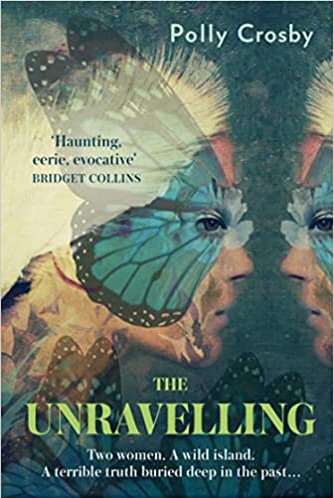
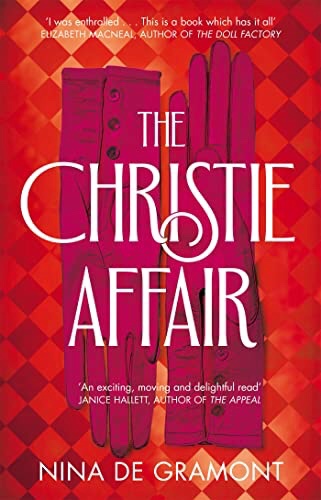
The author depicts PTSD in all of the men who live together in Cornwall, they are each affected by their experiences, but show that in different ways. There’s a vulnerability to them and a need to be with others who have shared their experiences. How else can they be understood and allowed to heal without the pressures of having to find work and cope with the demands of returning to a family? They are each very lucky to have Gilbert and this idyllic setting to slowly recover in. Although each must have another life, one that they belonged to pre-war, potentially leaving behind people who needed or might have asked something of them. It places them in a slightly privileged position over those who had returned straight into full-time work or job seeking by necessity, either because they belong to a different class or have a family to support. The excerpts of Rory’s book are also beautifully written, but don’t hold back from the horrors these men have seen. His descriptions are both vivid and visceral, and through reading his book Esme gains more understanding of these men than perhaps a lot of women would have at the time. How many times do we hear of war veterans who have kept all of this bottled-up inside with family member’s noting they didn’t like to talk about it much? At least here the men have a therapeutic outlet, whether by painting or writing, through which to understand or process these memories, but also communicate them to others without having to say them outright.

All of this would have been enough for a great novel, but the author also places a huge surprise part way through that I hadn’t expected. Through this we see the strength and restraint of Esme, the way she thinks things through before acting and never puts her own needs first. She needs a therapeutic outlet too, showing how the initial effect of war on the person who served ripples outwards to effect their loved ones and even future generations. Just as the land needs time to recover from the physical effects of warfare, there is a shockwave created that blasts through society as a whole. We are shown: how rigid Edwardian class structures are broken down; how marriage as an institution and way of constructing society is outdated and broken; how gender roles become more fluid allowing women more freedom and choice. I really did enjoy seeing how Esme negotiates this new world and makes bold choices for her life moving forwards. This book is another triumph for the author, because it’s a beautiful piece of historical fiction that tries to capture a moment in time where everything’s in flux. These constantly shifting sands of time show us the formation of our 20th Century and the resilience of the human spirit. It gave this reader hope that, just as nature found a way and those battlefields are now meadows and farmland, humans do have the capacity to heal and be reborn.

Meet The Author.

Caroline completed a PhD in History at the University of Durham. She developed a particular interest in the impact of the First World War on thelandscape of Belgium and France, and in the experience of women during the conflict – fascinations that she was able to pursue while she spent several years working as a researcher for a Belgian company. Caroline is originally from Lancashire, but now lives in southwest France. The Photographer of the Lost was a BBC Radio 2 Book Club pick.

Posted in Netgalley, Publisher Proof

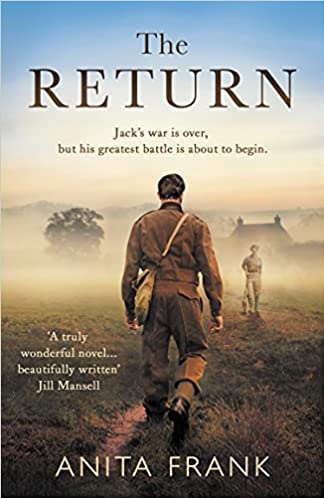
The Return by Anita Frank.

This beautiful story has just made it under the wire as I was compiling my Top 21 Books for 2021 and it truly deserves it’s place next to the others on the list. I was gripped by the story of Jack, who makes a very different promise to his new bride Gwen on the eve of WW2. Most soldiers are promising to see them again, to return, but Jack is quite clear. If he should survive the war, he won’t be back this way again. Gwen prays he keeps to his promise, but as they celebrate VE Day she does keep looking over her shoulder. What if he reneges on his promise? War has changed Jack and he is no longer the man who made that bargain. He wants to return and claim Gwen as his bride again, but little does he know that this could set in motion a chain of events that will leave he and Gwen fighting for what they love most.

We go back and forth in time throughout the book, but begins with Jack fleeing his home city on the night train, shielded by a friend who’s working on this nightly service down south from Newcastle. Jack is like many other young men in Newcastle, he’s a riveter in the shipyards and lives in a terrace house with his Mum and sister Jenny. One moment life is trundling along as normal, then the next a terrible twist of fate leads to a violent act of revenge. Stowing away on the night train, Jack plans to hop off somewhere far away where he can find work. So, as if from nowhere, he appears round the bend of a country lane to find a young woman who has fallen from her horse, but has her foot trapped in the stirrup. He hurries to help Gwen as her skittish horse takes off in the direction of the village. He takes her home to her family farm, where she helps her Dad with the dairy cattle and any other jobs that need doing. Lucky for Jack he’s arrived at a busy time on the farm, so while he stays for a home cooked meal to thank him for his service, Gwen’s dad Jim asked if he would like to stay and work. Jack accepts and as Gwen shows him his bed in the tack room, he thinks he may have fallen on his feet for the summer. What he doesn’t know is that Gwen is about to put him in a very difficult position. As he investigates a noise in the stack yard at night, he finds Gwen trying (and failing miserably) to quietly retrieve a ladder. She can’t pass her father’s door because the floor boards squeak. Reluctantly, he helps her climb up into her room, knowing that she must be meeting someone secretly and is surprised by how that bothers him.

I grew to like Jack, who is a young man of principles, only resorting to violence when someone he loves is hurt. He has an inbuilt moral compass, especially in his dealings with women and is very critical of anyone who doesn’t meet those standards of behaviour. He knows that in circumstances where young men lead women on and make false promises, it is the woman’s life and reputation that is ruined while the man just carries onto the next victim. He is a gentleman in his behaviour, even if he isn’t in position. I loved how he doesn’t have that family structure at home, but finds it with Jim and Gwen, and even housekeeper eventually. I didn’t always understand Gwen, although she is very young at the start of the novel and thanks to Jim’s overprotective nature, she’s quite naive. Something I did understand was her loyalty to the land and farm, it’s a way of life that’s in her blood and she isn’t afraid of hard work. She takes a very active part in the farm, from early morning milking, to driving tractors and locking the livestock up late at night. I thought the differences between gender and class were very pronounced in the novel. The women were far from passive in this rural community, with Gwen and Norah as great examples. It was interesting to see how the women from the hall were very separate from this industriousness – something that works against Gwen when it comes to being a mother.

The author creates a beautiful link between Gwen’s wholesomeness and the countryside – she’s miles away from the girls Jack has encountered in the city. She’s a young girl between places in society, she’s not in the lower classes but she’s not good enough for the landed gentry to consort with. At least not in public anyway. In the wartime sections of the book she’s well contrasted with land girl Norah, who has a cynical and knowing way about her. If they go the pub or an event, she soon disappears into a crowd of enthusiastic young men and seems completely at home flirting and telling stories that make them roar with laughter. Gwen is quieter, worried about how the farm will keep going with just her and Norah, wanting desperately to hold on to her father’s legacy. Besides, she knows the lies young men tell and the damage they can do. In those wartime sections, I felt the land and the countryside around it contrasted with the imagined battlefield far from here and the changes that farming had to come. Land was commandeered by the Ministry of Agriculture and fallow fields ploughed up for crops to feed the country. It was the beginning of the end for that quiet time when two ponies pulled the plough and two workers would weed the crop using a hoe. These passages of man working quietly within the countryside soon gives way to more modern farming methods which feel at odds with nature, rather than being harmonious. The author’s descriptions of animal and bird life are like a hymn to the old ways. I understood Jack’s need to return to this life, to feel at peace within it and allow the noise of battle, lodged in his head, to die down. However, I couldn’t see how he could stay either. I wondered constantly when the past would catch up with him and whether Gwen’s secrets could possibly remain hidden. This was a different slant on WW2, full of beautiful pastoral scenes and a relationship I was wishing would turn to love. A simply gorgeous read.

Meet the Author

Born in Shropshire, Anita studied English and American History at the University of East Anglia. She now lives in Berkshire with her husband and three children.

Posted in Throwback Thursday

Throwback Thursday! Like Water for Chocolate by Laura Esquivel.

Recently I’ve begun to realise that one of the literary devices I love most is magic realism. For those who’ve never come across it before, or didn’t know they had, magic realism is a 20th Century style or genre where a novel’s story is mostly realistic but with magical elements that can sometimes feel out of place in the narrative. I think I became interested in this style of writing, from my favourite teenage author Fay Weldon. The Life and Loves of a She-Devil was dramatised at this point and was widely talked about in the media and at school – where any chance to see clips that would titillate were applauded. How innocent we were that, without the internet, we were reduced to TV dramas for our fix of nudity – now we can see six naked people being visually assessed in their pods at any time of day. Back in the 1990s we had to commit to storyline for a whole episode, just for a glimpse of side boob! I read all Fay Weldon’s back catalogue and became fascinated with the skilful way she mixed realistic settings with sudden supernatural, astrological or magical elements. There was an audacity to it that I loved. So, when I came to reading Like Water for Chocolate I was charmed straight away by the love story and the magical powers that Tita has, especially her ability to bake her emotions into her food.

Movie poster for the 1992 adaptation of the novel

Set in early 20th Century Mexico, we meet Tita, the youngest daughter of the family who is hopelessly in love with Pedro. Sadly, Mexican tradition dictates that older siblings marry to carry on the family name, make connections and ensure their financial future. Younger siblings are destined to be the caregiver in the family, remaining single and close to home to help their parents in their old age. Tita and Pedro are in love and Tita’s mother knows this, so what happens next seems unusually cruel. She leaves older sister Rosauro open to marriage and then schemes behind the scenes, as a result and feeling like he has no realistic chance with Tita, he marries Rosauro because then at least he will be able to stay close to his real love. It is their wedding day where we see the full structure of the novel unfold. Tita’s mother forces her to bake the wedding cake, but as she does Tita begins to cry and somehow her sadness leaches into the cake batter. As they serve the cake at the wedding, much to Tita’s surprise, the guests start to experience their own memories of lost loves. Soon the whole room is reminiscing and weeping. From the extraordinary event onwards the novel is split so that a recipe forms each chapter. We are always waiting to see what emotion will get baked or fried into each incredible Mexican recipe as Pedro and Tita circle each other, forever in unrequited love. Would they ever get a chance to be together?

Cover for the movie tie-in edition

I first read this novel when I was an impressionable twenty year old, still in love with the idea of romantic love. Now if I was asked to give advice to Tita, I’d probably say that life is way too short to spend it in such a torturous situation. Pack a bag and get a bus out of there. Build your own life. It’s not just the idea of her sister marrying Pedro, it’s watching the milestones of their life together. If Rosauro had children with him, Tita would be hurt all over again. Every day there would be a new reason to mourn what she could have had. Her reward for this sacrifice? Looking after a mother who’s becoming more infirm by the day knowing that she was the one who took away Tita’s chance of happiness and gave it to her sister. I remember reading and hoping that Pedro’s love for Tita would remain. I couldn’t bear the thought that Pedro might grow to love Rosauro over the years. I won’t ruin the ending for those who haven’t read this extraordinary book, but I will say that it’s one of the most unusual endings I have ever read. I have been known to recreate a recipe from a book, especially where recipes are an important part of the story. I’ve often done it for my book club, where we’ve eaten: chocolate cream pie while reading Kathryn Stockett’s The Help and honesty cake while reading Alice Hoffman’s The Story Sisters. Yet, I’ve never attempted one of Tita’s family recipes – perhaps because they seem so uniquely hers and enchanted by her particular brand of magic. This is a beautiful novel for those hopeless romantics or if you love to be immersed in the culture of the characters from old customs, to celebrations and their chosen foods for those occasions. This has been a book that has endured for me and still feels uniquely magical.

Lumi Cavazos as Tita in the 1992 film

Meet The Author.

Laura Esquivel is the award-winning author of Like Water for Chocolate, which has sold over four and a half million copies around the world in 35 languages, The Law of Love, and most recently, Between Two Fires. She lives in Mexico City.

Posted in Netgalley

The Keeper of Happy Endings by Barbara Davis.

This was an incredibly charming book, so hopeful and uplifting. I’d read The Last of the Moon Girls so had some idea what to expect, but I actually preferred this tale of two women crossing paths in Paris. Soline works in the family’s bridal salon where a little bit of magic is sewn into the fabric. This magic gives each bride the promise of a long and happy relationship. However, there have been so many losses in WW2 that Soline’s hope has dampened and she has lost her faith in magic. She packs away her work in boxes, determined to forget the life she once enjoyed. We then join another woman, decades on from WW2. Rory has always wanted to open a gallery and she leases the same building that houses those pre-war wedding memories. Rory is also grieving, and knows the importance of remembrance, so when she finds a box with a vintage wedding dress and a pile of letters inside, she wants to return them to their rightful owner. The wedding dress looks unworn, but so much care and attention has gone into making it, Rory feels that the owner would want it returned. When she finds Soline, an unexpected friendship develops and the two women find a lot of parallels in their life stories. Is it possible that magic is still at work and these two women were destined to meet? Could Rory be the one to clarify and put right something that happened forty years ago?

I never seem to tire of these time slip novels and I really did enjoy this tale, with its little bit of magic thrown in. I am a believer that we shouldn’t fully lose that sense of magic we had as children, especially at this time of year. I think it’s only by keeping that childlike wonder and hope that we get to fully experience life. Here Soline has been closed off to magic, it’s been too painful to hope. However, when she and Rory cross paths and that faith is reignited, she starts to fully participate in life again and enjoy it. It was an easy read from the start so I looked forward to getting a mug of tea and my favourite chocolate slipping into their cozy world, even though there was some sadness in store for the our main characters. Soline and Rory do dominate and they are the most three-dimensional characters- none of the secondary characters have much depth. However, these were very personal stories and I don’t think the book would have felt as intimate if we’d had too many other viewpoints. Soline’s story follows her work in the bridal salon and her love for Anson, who has a difficult relationship with his father. As the Nazi’s start to infiltrate France, Soline escapes to America and it is her belief that Anson has died at their hands which knocks all the hope and joy out of Soline. She can’t continue with her work and watch others in love, fulfilling their destinies with each other.

Rory (short for Aurora) has a boyfriend called Hux. He’s a doctor and goes out to South Sudan to work with Doctors Without Borders, but is unfortunately captured. Rory doesn’t know where he is or even if he’s still alive. This is the experience that Rory and Soline have in common, they’re separated from their loves and have had to face up to the fact they may be dead – that might be preferable to thinking about what they could be going through instead. Both are very strong women, however, Rory is still entwined with her mother in a very unhealthy dynamic. She hasn’t realised she can simply walk away from her. The abuse is psychological and it is devastating to a young woman still growing up and finding out who she is. You might find that, like me, you’ll be mentally yelling at Rory to stand up to her mother. I just knew that if she finally did, it would be epic. It would be the catalyst to change her entire life. Rory might have the key to Soline’s wartime memories, but she has a lot to learn from Soline who has grown wise through loss and age. The book has a dusting of magic, but it’s subtle and more akin to perception than anything else. I often let people know how easy it can be to be manipulated into thinking someone’s a psychic by showing them how much I can intuit from them walking into a room and sitting down. As counsellors we do this all the time, reading people’s subtle cues in their body language and the words they choose to express themselves. It can be quite easy to work out why a client has come for counselling before they even open their mouths. So, the magic here isn’t overdone and is more about the sense of destiny and heightened perception we can get: in a house, when we walk into a party, or seeing a couple arguing in the DIY store. It’s also about that magical coincidence of these two women crossing paths, when they are perhaps the only person who could help and understand the other. I like this message that it’s not just romantic destiny that happens in lives. Soul mates are not always our romantic counterpart and I loved the friendship between these two. I think Soline helps Rory stand up and claim who she is.

Yes the ending is a bit schmaltzy, but I expected that and it didn’t ruin the book as some sugary endings can tip the book into being too saccharin and off-putting, I think this story has enough complication to keep the reader’s interest and something for everyone with the mix of historical period (although the 1980s doesn’t feel like history to me), dual narration, family strife and the mystery to solve. The tone of the novel is so relaxing and gentle, even when dealing with complex emotions. All in all, an intelligent story of love, loss, and friendship that I really enjoyed.

Published by Lake Union Publishing 1st October 2021

Meet the Author.


After twelve years in the jewelry business, Barbara Davis left the corporate world to pursue her lifelong dream of becoming a writer. She was born in Fair Lawn, New Jersey, but grew up and attended school in Florida. When she’s not writing she’s an avid reader, foodie, and lover of music, a rabid football fan, and a devoted Florida Gator. She also likes to travel with her husband/sweetheart, who over the years has learned much more about publishing and the craft of writing than he ever wanted to know.

Her most recent novel, THE KEEPER OF HAPPY ENDINGS, released October 1, 2021. She is currently working on her eighth novel, and professes to be just as delighted with her job as she was when she set her first word on the page!

For more about Barbara and her books, please visit her website at: http://www.barbaradavis-author.com, or find her on social media: Facebook: https://www.facebook.com/barbaradavisauthor OR on Twitter: @bdavisauthor.

Posted in Netgalley, Publisher Proof

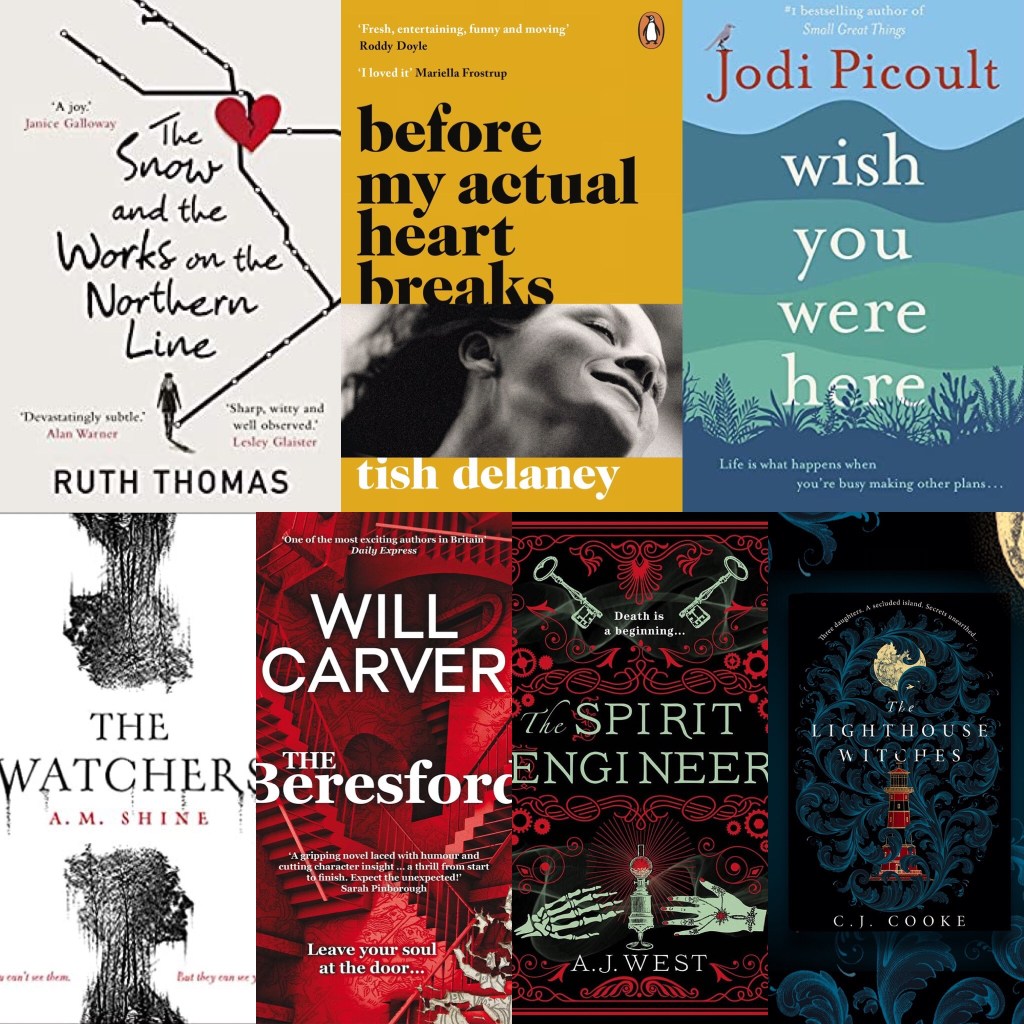
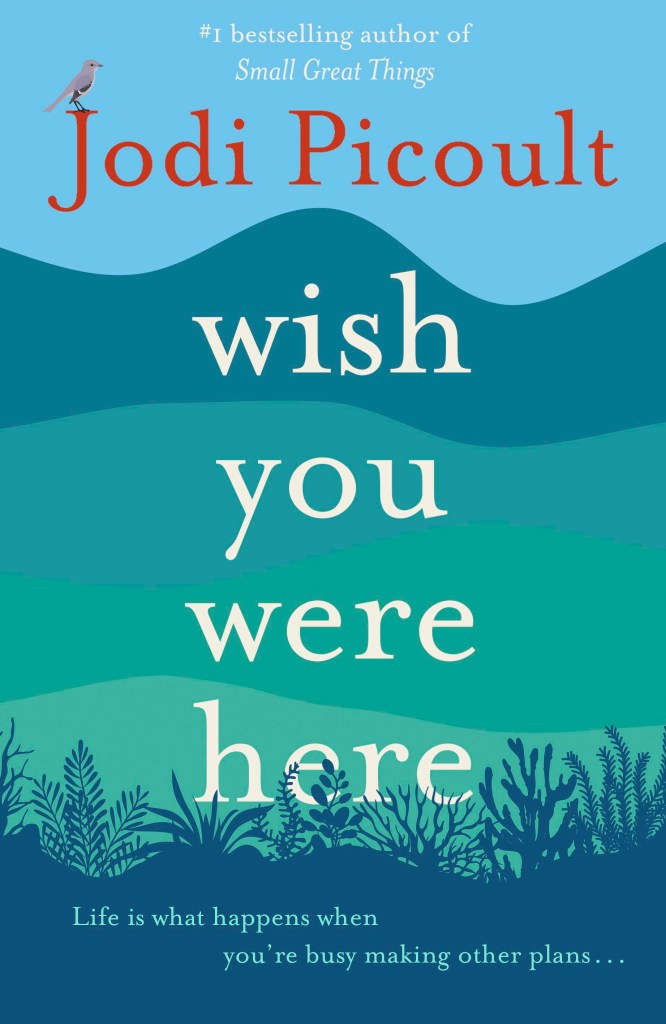
Wish You Were Here by Jodi Picoult

This was my first full on pandemic book. Others have mentioned or touched upon the changes of the last eighteen months, but this was full immersion!

I’ve been disappointed with the last two of Jodi Picoult’s books. They were still well written, but for some reason I felt detached from everyone in A Spark of Light – maybe because in the U.K. abortion isn’t such a contentious issue? The Book of Two Ways felt almost so full of detail that I was reading a textbook and losing interest in the story itself. This was a glorious return of form that I truly loved. Diana and her boyfriend Finn live in New York City, he is a doctor and she works at an auction house for fine art, on the verge of promotion to become an Art Specialist at Sotheby’s. She’s trying to acquire a Toulouse Lautrec painting that hangs in the bedroom of a Japanese artist -loosely based on Yoko Ono. Then, everything changes. Finn and Diana have a very set life plan and part of that was an upcoming visit to the Galápagos Islands. However there are rumours flying around in the medical community of a strange new virus in Wuhan, China. It seems like SARS in that it affects breathing, because it causes pneumonia and requires huge amounts of resources to keep patients alive. Diana’s boyfriend feels torn, as a doctor he’s worried and thinks they should be preparing but the president is on TV telling everyone it’s no worse than flu. What’s the truth?

. She meets Abuela’s granddaughter Beatrice who appears to have secrets and an inner pain that brings out a maternal instinct Diana didn’t know she had. Tour guide and Beatrice’s father, Gabriel, is the perfect person to be stranded with. He knows every corner of the island and has no work, so he can show Diana some of the sights she would never have seen ordinarily. The islands sound miraculous and here Picoult really does create an incredible sense of place. The seals lazily basking on the jetty, the sea turtles and their nests buried in sand, lush vegetation and lizards lying around intertwined. I could see and taste the salt air. I loved the islanders too – their openness to Diana, the bartering market set up when the island quarantined itself from the world. Everything is vivid and almost hyper-real. Then came the twist!! Oh my goodness I did not expect that at all. This was brilliantly done and shocked me. Yet it was all too plausible.

Diana has one link to the world beyond the Galapagos and that’s the occasional email from Finn. In it we see the reality of the COVID-19 epidemic in New York City. They have so many people being admitted and not enough people recovering and moving through rehabilitation. What do you do when the resources simply run out? Finn is exhausted, has permanent bruises on his cheeks, because they have to keep their masks so tight and is struggling mentally. He describes to her the patients lost, ones he can’t forget, because there are too many to remember them all. This was tough reading and I’ll be honest, I learned things about the virus I’d never heard before such as vascular compromise, bowel necrosis and neurological deficit. There were points where I felt a bit breathless and panicky. As someone who had to shelter from the virus, it made me think twice about going out in a couple of places. Anyone who thinks it’s just a ‘bit of flu’ should be locked in a room with the audio book playing on repeat! Please don’t let this put you off though. It’s beautifully written and the insight it gives into how hard things have been for those in the medical profession is priceless. We owe it to them to read such well-researched and thoughtful accounts of the pandemic. The Galapagos sections are like paradise in comparison and this was the space where I could take a long deep breath.

This book is Picoult at her best, in that it has an interesting storyline, and characters as well as an issue she could really get her teeth into. As the book started I was prepared for it to be set within the art world and I was already curious to see her relationship with Kito – the Japanese art collector – because they seemed to be on a similar wavelength. I thought we might end up embroiled in a legal battle over ownership or whether the painting was a forgery. Then everything she’d built at the beginning became subsumed by the pandemic and it became a totally different story. The structure effectively echoes how our lives have been interrupted and changed forever. There are people who went into the pandemic with a job that no longer exists. People have lost friends, family members and partners. The pandemic has changed people, they are looking at how they live and making changes. We moved into the country, and I’m sure others have done similar, focusing on enjoying life and working to live instead of living to work. There are people like me, who were disabled, but felt like part of society still. Gradually, over the last 18 months, I have become a recluse and I’ve felt more and more separated from people. Especially those people who say the vulnerable should be kept inside, so that ‘normal people’ can have their lives back. I’ve felt like an inconvenience, and like we’re holding the rest of the country to ransom. I’m hoping these feelings change with time, but who knows? I could understand Diana’s decision at the end of the novel, it might have seemed illogical but I got it. When you’ve been through something momentous you change, and part of that is re-evaluating life and choosing what makes you happy. It’s trying to recapture hope. I don’t want things to ‘go back to the normal’; I want this pandemic to mean something and I want things to get better. Diana takes that decision for herself and I found that both brave and uplifting.

Meet The Author


Jodi Picoult is the author of twenty five internationally bestselling novels, including MY SISTER’S KEEPER, HOUSE RULES and SMALL GREAT THINGS, and has also co-written two YA books with her daughter Samantha van Leer, BETWEEN THE LINES and OFF THE PAGE. She lives in New Hampshire with her husband and three children. 

Her most recent adult novel, A SPARK OF LIGHT first published in the UK on 30th October 2018, and was a #1 Sunday Times and New York Times bestseller. 

Follow Jodi Picoult on Twitter @JodiPicoult and find out more at http://www.jodipicoult.co.uk or on Facebook/JodiPicoultUK.

Posted in Throwback Thursday

Throwback Thursday! The New Woman by Charity Norman.

I’ve been reading Charity Norman for several years and I never tire of the way she builds her characters, full of depth and complexity. She excels at revealing characters slowly, one layer at a time, and putting them in complicated emotional situations. This is one such example and despite being published in 2017 it seems very timely as debate rages about transgender rights on social media and in the news. This is a family drama, where we are brought into the seemingly idyllic life of Luke Livingstone. As we meet Luke, he’s seen as the perfect family man with a beautiful home in rural Oxfordshire and a solid career as a solicitor. He is respected as a pillar of the local community with a long standing marriage, as well as being a good father and grandfather. However, Luke has spent his whole life hiding a secret about who he is and he’s not sure he can keep it under wraps much longer. He has been hiding a truth about his identity and it’s such a fundamental truth that he knows disclosure will rock his business, his standing in the local community and will shock his family. He might become an outcast. Yet, he might have to destroy his image and the way others see him, if he’s to stop the slow destruction of his inner self. He has to become the person, the woman, he knows he truly is, whatever the cost. Luke is focusing on his eventual rise from the ashes and the rebuilding of his life, but first he must face the flames.

As the novel opens, Luke is so desperately unhappy he is considering suicide. Luckily, someone intervenes and sends him on a different path – the possibility of becoming the woman he is inside. He has always kept this feeling under wraps because of his parents and has now followed a very conventional path with his marriage to Eilish, fatherhood and now a grandparent to Nico. Now his parents are gone, he feels more free to pursue his own happiness, but that’s made harder when you know your own happiness will impact on your family. My heart went out to him, but also to Eilish who has loved and lived with this man for most of her life. Luke is a wonderfully sympathetic character and I can’t agree with some reviewers who have referred to him as ‘selfish’ for pursuing his own happiness. Luke was born in a different time, with more pressure to conform to society’s norms and values, as well as parents who were more traditional. As a young teenager, his feelings about his gender were only just growing and without transgender role models, either locally or on television, there’s no template for where to go and who to confide in. It would seem that he genuinely fell in love with his wife, rather than chose her specifically to conceal his true identity, and he still loves her, despite wanting to change gender.

The central dilemma is that in order to successfully birth his female identity, his male identity – the husband and father his family know and love – has to die. This is a slow bereavement process as they hear the news, then see their family member begin to dress as a woman, to take that identity into the world to be seen by work colleagues, family friends and his children’s friends. Just as this process is hard for Luke, it’s equally hard for the family – I loved the inclusion of a politically aware daughter, full of support for causes like equal rights for the LGBTQ+ community, but finding it a very different prospect when the person involved is her own father. She acknowledges her father’s rights in principle, but that doesn’t stop the feelings of hurt and loss she’s suffering. Similarly, I felt deeply for Eilish who is losing the man she loves, but has to ask herself the question of whether she has to lose the person she loves too. I’m not sure about the conclusion to their relationship, and I’d be interested in knowing how common it is in real life.

I thought this book was a fascinating read and really started me thinking about how it must feel to be in the wrong body, in a society that still expects us to conform to the established norm. It really did show what transgender people go through, just to be who they are. For me, Norman’s book avoided all the controversy and cancel culture we see going on in society today, by focusing in on Luke and his family. This is one character’s experience and doesn’t make assumptions or create a stereotypical experience. It isn’t negative about Luke’s experience either, the viewpoints belong to him or his family members and while they may be upset or shocked by his news as individuals, the overall narrative remains positive and non-judgemental which I loved. I know some will ask whether a fictionalised account is appropriate, because such controversial and complex stories are often best told by ‘own voice’ writers. However, I felt that the author had insight, whether that’s through personal experience or research. It is a book that started many conversations at home about the distinction between gender and sexuality, how it would feel to be Luke and the overwhelming fear that has kept him in his male identity in so long, and how it would feel if it was our Mum or Dad. Luke deserves to be who he truly is and in order to keep his family, he must continue to be a parent and grandparent as Lucia. It’s a book that challenges the reader’s own preconceptions and I love it when a book makes me think like this, plus it makes it a great book club choice. This was informative, absorbing, deeply moving and is a story that has stayed with me over the last four years.

Meet The Author.

Charity is the author of six novels. She was born in Uganda, brought up in draughty vicarages in the North of England and met her husband under a truck in the Sahara desert. She worked for some years as a family and criminal barrister in York Chambers, until, realising that her three children barely knew her, she moved with her family to New Zealand where she began to write.

After the Fall was a Richard & Judy and World Book Night title, The New Woman a BBC Radio 2 Book Club choice. See You in September (2017) was shortlisted for best crime novel in the Ngaio Marsh Awards. Her sixth, The Secrets of Strangers, was released on 7th May 2020 and is also a Radio 2 Book Club choice. 

Charity loves hearing from readers. Please visit her on facebook.com/charitynormanauthor or Twitter: @charitynorman1

Posted in Publisher Proof

Volta by Nikki Dudley

When Briony Campbell confesses to killing her boyfriend, a straightforward crime of passion soon turns into a baffling mystery. Haunted by demons from his past, lawyer S.J. Robin is assigned to the case. But as confusion – and the body count – rises, he’s forced to question who is guilty and who is innocent. Can he see justice served and hold on to the woman he loves?

I’ve been slightly daunted by writing the review for this thriller, because I’m desperate not to give anything away. Volta really is a fast paced read, with a plot full of twists and turns and an engaging central character. Even more unusual, is the distinct thread of romance throughout. From the moment Briony wakes up covered in blood, I was drawn into the story. There’s an almost cinematic quality to the writing, because we’re totally in the moment as Briony wakes up and as her senses take in the terrifying situation she’s in so do ours. It’s a moment of of stillness that’s rare in the book. Then we pan out and see our other character’s reaction to the crime. Briony makes an statement to lawyer S. J. Robin that seems clear cut, but he soon realises the case is not that simple and as it becomes ever more entangled, it even brings his own demons to the surface.

The novel has three narrators: S.J, Briony and Mari. Mari is both Briony’s therapist and possible love interest to S.J, in a complicated coincidence. From the first time we see them together, it’s clear that S.J and Mari have history. Even more complexity comes in, when we realise that the investigator, Aris, is Mari’s brother – and they are a really convincing pair of siblings. It’s a small interrelated group of characters, and it creates a slightly claustrophobic feel. S.J relates his tale in the first person, and for some reason that makes me think he’s giving a true version of events. It’s an unconscious bias that I think comes from being a counsellor and ‘prizing’ the client’s account, never showing judgement or disbelief. However, I do love it when a novel’s narrator proves to be untrustworthy and as the story unfolded I started to feel a little unsettled by some aspects of the story – specifically S.J and Briony’s narratives. They each had an experience of trauma in their respective childhoods; from this it is easy to draw parallels between them. However, when a narrative’s in the third person we can see others interacting with our character, having inner thoughts about them and possibly being aware of their back story. A first-person narrative has no corroboration and though the difference in narrative perspective seems subtle it does have a large impact. S.J is intriguing. We learn very early in the novel, that he’s dealing with past trauma and his positioning as a victim also elicits sympathy from the reader – that is until doubts start to creep in. We learn that his psychological trauma could be permanent or at least difficult to heal, and this could create a further bond between him and Briony that is possibly unhelpful, both personally and in the investigation. I was left questioning what exactly had happened in Briony and S.J’s pasts? Did what happened with Briony relate to those circumstances? Can the victim have justice if S.J wins justice for Briony – are they the same thing? In between is the push and pull of S.J and Mari, whose attraction gave the book more of a light-hearted feel

Although the novel moves along at an incredible pace, I could identify certain threads or themes running throughout, always at the back of my mind like a constant nagging voice. I seemed to be thinking constantly, even when I wasn’t reading the book! Make no mistake these are complicated characters, with psychological damage that’s affecting their everyday lives and their work. Their relationships are difficult, or even broken. The author’s grasp of the consequences of trauma are nicely nuanced and I felt safe in the hands of a writer who understood psychological trauma well. In fact the reader works as a fourth character, bringing their own bias and assumptions to their assessment of Briony. The word ‘Volta’ is defined as a literary device, used in poetry. It’s a rhetorical shift, or a dramatic change in mood, emotion and tone. That’s how this book feels as a reading experience, I found myself shifting constantly in my assessment of Briony based on how one of the other characters viewed her or when a twist in the narrative turned everything on it’s head. This would be a great book club choice, because I imagine every reader has a different perspective. This is a strong, intense and clever thriller with characters to match.

Meet The Author


Nikki is a novelist and poet who grew up in London. She attended state school in Camden and spent her time hiding in the library. She is managing editor of streetcake magazine, which publishes innovative writing. She also runs the streetcake writing prize and MumWrite, a development programme for mums. Her novel, ‘Ellipsis’ was published by Sparkling Books in 2010. Additionally, she has been published in magazines and online. Her chapbook ‘exits/origins’ and collection ‘Hope Alt Delete’ are published by The Knives, Forks and Spoons Press. She won the Virginia Prize for fiction 2020 and her novel, Volta, was published by Aurora Metro Books in 2021. Her pamphlet, ‘I’d Better Let You Go’ was published by Beir Bua Press in 2021.

Nikki loves mysteries, thrillers and things that make her think. Some of her favourite books are Catch-22, the Raymond Chandler books, How to Life Safely in a Science Fictional Universe and anything by Yoko Ogawa. 

Her other interests include watching many genres of films and attending events such as poetry readings, sport, and gigs. You can start conversations with her by discussing your favourite type of cake, your favourite Avenger or telling her a fun fact. She loves travelling and trying local cuisines.

Posted in Netgalley, Publisher Proof

My Name is Jensen by Heidi Amsinck

This was a great opener in a new Scandi noir series, that left me looking forward to getting to know these characters a lot better. Jensen is a journalist living in Copenhagen after spending several years in London as the British correspondent for a Danish newspaper. She still hasn’t quite found her feet in the city, and knows that she’s very lucky to still have a job considering the cuts at work. Her editor Margrethe has faith in her ability to sniff out a story and one morning, while cycling to work.Jensen stumbles across the body of a young man with a large placard saying guilty on his chest. His eyes are covered with new fallen snow and it’s clear that he has several stab wounds to the abdomen. He’s also homeless, Jensen calls her ex-lover Detective Henrik Jungerson to report the murder, even though she’s been trying to avoid him since her return. Jensen doesn’t want to exploit such a sad death for newspaper headlines. Nor will she sensationalise it, However as more bodies are found it’s clear a serial killer is on the loose. Why would someone choose the homeless as their victims? Jensen has to investigate further.

I really enjoyed Jensen’s character. She’s rather mysterious and I think the author was clever to drop clues and hints about her in this first book of the series. It left me wanting to discover more and delve into her past, not least her relationship with Henrik. It certainly isn’t over. She’s determined and dogged once the story has piqued her journalistic interest and it’s probably true to use the word ‘obsessed’ when describing how she investigates. She feels very real because of the way she’s written – it’s like slowly getting to know a new acquaintance rather than having a fully formed person. She’s also a bit prickly and is very used to navigating a rather male dominated workplace. Her tension with Henrik leaps off the page and I’m very interested to see where their relationship goes next, as well as unearthing a bit more about their past.

“clues and hints about her in this first book of the series. It left me wanting to discover more and delve into her past, not least her relationship with Henrik. It certainly isn’t over. She’s determined and dogged once the story has piqued her journalistic interest and it’s probably true to use the word ‘obsessed’ when describing how she investigates. She feels very real because of the way she’s written – it’s like slowly getting to know a new acquaintance rather than having a fully formed person. She’s also a bit prickly and is very used to navigating a rather male dominated workplace. Her tension with Henrik leaps off the page and I’m very interested to see where their relationship goes next, as well as unearthing a bit more about their past.

The fact that Jensen focuses on finding out about the killer’s victim rather than the killer suggests a lot of empathy and a keen sense of social justice underneath the spikiness. She leaves Henrik to look for the killer and he’s soon connecting it to a previous suspicious death. They are a good team in this way, each with their own methods, but sharing information along the way. I think the book touches on a lot of current problems in our society, particularly how the world’s economic structure is creating horrendous poverty. Issues such as mental health, drug abuse and of course, homelessness are featured in the book and I thought the author wrote about this with understanding borne out of real life experience and conviction. The story was fast paced and very compulsive reading. There are twists and turns along the way in the investigation and moments where Jensen feels inundated with information, but none of it is making any sense. The tension builds towards the conclusion and these are the really addictive parts that I found myself reading in the car, the hospital waiting room and till 2am while on holiday! This was a fantastic opener to, what is now, a much anticipated series and I have to mention that gorgeous cover. It’s so beautiful I want to put in a frame and hang it on the wall.

Published by Muswell Press 31st August 2021.

Heidi Amsinck, a writer and journalist born in Copenhagen, spent many years covering Britain for the Danish press, including a spell as London Correspondent for the broadsheet daily Jyllands-Posten. She has written numerous short stories for radio, including the three-story sets Danish Noir, Copenhagen Confidential and Copenhagen Curios, all produced by Sweet Talk for BBC Radio 4. A graduate of the MA in Creative Writing at Birkbeck, University of London, Heidi lives in London. She was previously shortlisted for the VS Pritchett Memorial Prize. Last Train to Helsingør is her first published collection of stories. Her crime novel My Name is Jensen, set in Copenhagen, will be published in August 2021

Posted in Sunday Spotlight

More Than Mistletoe – The Christmas Collective.

Today’s Sunday Spotlight is a little bit different because I want to bring a collective of authors to the reader’s attention and not just one. The most important thing about Christmas, especially this year, is being together. So in that spirit, I was very happy to be approached by the Christmas Collective with their beautiful collaborative work More Than Mistletoe.

Cosy up for Christmas with 12 very different tales of love with all the festive feels!

More than Mistletoe, the debut anthology from The Christmas Collective, is an eclectic and inclusive mix of stories, with swoon-worthy characters, second chances and happy endings.

Between the pages, you will discover classic romance, festive thrillers, LGBTQ+ love stories, hilarious romcoms and historical settings, these stories really do span the whole spectrum of festive fiction.

Featuring twelve up and coming new authors, this refreshing, diverse and romantic read, is a must-have for Christmas 2021 that will leave you reaching for your Christmas jumper, gingerbread cookies and a mug of hot chocolate!

• Lumikinos by Lucy Alexander

• The Ghost of Christmas Past by Michelle Harris

• Christmas for Two by Marianne Calver

• August in December by Joe Burkett

• Under the Christmas Tree by Cici Maxwell

• Killing Christmas Eve by Jake Godfrey

• Christmas and Cocktails by Jenny Bromham

• Christmas at The Little Blu Bookshop by Sarah Shard

• Not Today, Santa by Martha May Little

• Sealed with a Christmas Kiss by Bláithín O’Reilly Murphy

• Love Forever by Donna Gowland

• The Last Christmas by S.L.Robinson

I felt very lucky to be sent a preview of this short story collection, along with a festive box of goodies – a lovely little treat to enjoy. The thoughtfulness of this little parcel gave me a preview of the care and attention given to this enjoyable collection of short stories. Although I’ve had the collection a little while, I hadn’t had chance to read them until last week and I think I timed them perfectly. As we’re now in the early stages of the run up till Christmas, I could imagine someone coming home after a fraught afternoon Christmas shopping and reading this with a warming hot chocolate in front of a roaring fire. That’s exactly what I did. I made some hot chocolate with Cointreau and settled on my chaise langue with my kindle and my cat Baggins for a few hours. I think these would be perfect to pop into people’s rooms if you’re having family to stay this Christmas or if you have adopted the Icelandic tradition of Jolabokaflod, where books are given and read on Christmas Eve ( I mention this an annoying amount, because I’d love to do it ).

I tend to gravitate towards two different types of stories at Christmas; slightly spooky tales and cosy love stories. I’ve been reading a lot of thrillers and spooky tales this month, so the love stories in this collection were a very welcome change of pace for me. I’m a sucker for a Christmassy rom-com so these fitted the bill perfectly, but there were also one or two stories that were hard to categorise into genre, which I love! There really is something for every reader here, although I have to say I’ll be buying it for female rather than male friends. These were perfectly chosen to work as a collection, so there was an overall cosy and uplifting feel, although Killing Christmas Eve by Jake Godfrey was a great change of pace in the middle. It’s so hard to pick a favourite, because I liked each story for different reasons, but I think S.L Robinson’s The Last Christmas was the one that moved me most, in a deeply personal way.

I’ve been writing since I was a little girl, but have only just had the courage to let people know that I write. In fact I started my blog to gain confidence in sharing my writing and to get into the discipline of writing every day. I’ve been working on my MA in Creative Writing and Well-being and, although I’ve been running writing therapy groups for several years, there’s something very different and daunting about sharing your work with fellow writers. In my head, they are always way more experienced, talented and disciplined than me. However, sharing some of my writing in the workshop environment every week, has helped enormously. Taking criticism and ideas from other writers has been invaluable. My writing has grown along with my confidence. So, I loved the story of this talented group meeting at a writing group and working collaboratively to create this collection. I’m sure it’s been a brilliant experience for the authors involved and will prove helpful for those who’ve taken their story from a longer work in progress. It has certainly whetted my appetite for those completed novels some time in the future. I love it when authors work together this way, and it seemed strangely apt that the collective approached my fellow bloggers in the Squad Pod Collective to review their work. A really lovely background story for collection that felt like a hug in book form.