If you love a juicy gossip about your fellow villagers or friends, or watching rich people’s lives implode, then this is definitely the book for you. Based around an elite Colorado private school, a tangled web connects three women. Brooke, the archetypal private school mum, fiercely protective and an filthy rich heiress with a creative approach to her wedding vows. Asha is a realtor, staging and selling houses while juggling children, hormones and an increasingly distant husband who she fears is having an affair. Then there’s Natalie, a lowly office assistant, watching the parents and children at the school taking for granted a life she could only dream about. Brooke has probably passed Natalie hundreds of times since she started working at the school, but probably doesn’t even know her name. Asha has noticed her, but only because Natalie has turned up at lots of her open house events. This is strange because there’s no way she could afford the types of properties Asha is selling. These women are bound by their relationships with the handsome, charming assistant athletic director Nicholas. Brooke wants him, in the way she wants any handsome man to notice her, but also because he has the contacts to get her daughter Sloane into one of the best colleges based on her talent at football. Asha uneeds him to get daughter Mia ready for the competitive world of college applications, because the best school won’t take two girls from the same school and Brooke seems several steps ahead. Natalie’s motives are the purist, she’s falling in llove with him and he’s making all the right noises, but is it just lip service? When two bodies are carried out of the school early one morning, it looks like the jealousy between mothers and daughters, or rival lovers, or the haves and have-nots has boiled over. The truth will shatter the surface of this isolated, affluent town, but whose version of the truth counts in a town where people will stop at nothing to get what they want?
I’ll be honest, it was hard to like anyone in this novel. Even the kids were awful; they were spoiled, entitled and self-centred. Asha’s daughter Mia, being the best of the bunch, is unsure what it will take to get into a good college until Brooke brings it to the family’s attention when she buys a state of the art camera to film Sloan’s soccer matches and create a reel for her application. Once Asha realises and approaches Coach Nick for help, Brooke becomes furious, worried that Mia’s Indian heritage will ensure her a place thanks to the positive discrimination built into the application process. Meanwhile, it’s clear there’s something brewing in the girl’s social circle of students who are particularly gifted at sport. I was shocked by just how sophisticated their sports programme was with gym work, massages, physiotherapy, and even anti-inflammatory injections happening on school premises. Are these kids simply rebelling over the level of control the coaches seem to have in their lives? I wondered whether they were plotting revenge against Coach Nick. Sloan’s boyfriend Reade, is fed up with Nick’s control over his athletes, hinting that he may want to get rid of Nick or at least have him reprimanded and he wants to recruit Mia to their plan.
Natalie is meant to be the most sympathetic character I think and on the morning she drives to the school to find it swarming with police she is in genuine shock. Then we go straight back to her reasons for being in Colorado; her brother had an accident and broke his leg so badly he couldn’t get around. So Natalie has been caring for him and took the job at the school when he started doing more for himself. She’s a painter by trade, with a shop on Etsy selling quirky pet portraits. She starts seeing Nick, almost accidentally, after a bit of flirtation at her desk when he’s been in to se the Headteacher. He invites her to his home and Natalie is blown away by how beautiful it is. Yet I was seeing red flags everywhere about their relationship going long term: Nick is a lot older and possibly wants different things; he’s previously been a womaniser; they never go anywhere but his place; he asks Natalie to keep their relationship secret. Yet Natalie seems to be falling in love and I had to admit he talked a good game. Is Nick just super careful because of his teaching role and what are these private sessions he seems to be conducting with elite kids?
The best thing about not really warming to anyone in the novel meant I could genuinely enjoy the tension and these people getting their comeuppance! The structure worked really well with an excerpt from a police interview, then going back to the events in question. The move back in time a few months illuminated the case going forward and the interview drew together many of the things I’d been concerned about. The drip feed of new information definitely kept me reading and gave me sudden changes of opinion on some characters. I was so invested in what the kids were up to and why Mia seemed to be under pressure from the others to join in. I kept wondering if they really had the measure of their opponent or was someone going to get hurt? I was also wondering if the mystery of the memorial Natalie had seen on her walk would be explained? Who was the crying woman and would new revelations shed light on this old story? With it’s luscious settings, opulent homes and beautiful people the best way to describe the book is to say this was like a particularly indulgent dessert. Strangely, even though the subject matter is dark, it’s delicious, decadent and rather thrilling.
I was absolutely gripped by this incredible thriller! Emma is nearing her fortieth birthday and she can’t sleep. Her insomnia is triggering anxiety about her Mum and the reappearance of her sister Phoebe isn’t helping. Both girls were taken into foster care on the night of their Mum’s fortieth birthday, when she’d had a breakdown – could the same thing be happening to Emma? Her Mum always said she had inherited the bad blood in the family. As the days pass and irritability, paranoia, fear and the hallucinations start to kick in Emma starts to wonder. Is she going mad or is someone out to ruin her life? Just because you’re paranoid, it doesn’t mean someone isn’t out to get you.
This was a great read and I’ll be shouting about it until publication day. The way Emma disintegrates over the course of a few days is shocking, but believable as every relationship in her life is touched by this ‘madness’, until there’s really nothing left. Emma has always prided herself on being a competent solicitor, very organised and together. I was desperate to find out what happened in their childhood and why her sister Phoebe has popped up in her life right now. I felt there was an element of Emma not processing her childhood trauma. She’s locked it away in the back of her mind, but Phoebe’s appearance, and advice that she should visit their mother, seems like the trigger that unlocks these memories. It’s very common for people to set great store by the ages of their parents when trauma occurs – such as thinking you’ll have a heart attack before your 60th birthday because your Dad did. The worry and stress this causes can lead to a self-fulfilling prophecy.
What the author does, very cleverly, is muddy the waters; just when I was starting to think she was having a breakdown, other things start happening. Her young son keeps creating a strange macabre drawing of a terrible memory that haunts Emma. How could he know? Who has told him this happened? It can’t be anyone in the home, because they don’t know. Her dictated letters have turned into a mumbled series of numbers when her secretary plays back the dictaphone. Added to these strange and inexplicable events the author also throws in a number of stressors that would make anyone struggle with their mental health. At work she is trying to avoid the advances of a very unpleasant client, not only that but his ex-wife confronts Emma over losing custody of their boys. Emma’s tyres are slashed among other nuisance acts that start to pile up over the week, particularly affecting Emma’s job. It becomes hard for the reader to see which events can be explained away, which events are incredibly strange and what are normal daily obstacles made worse by Emma’s severe sleep deprivation. I was never fully sure what to attribute to who, what is real and what is imagined, and who is to blame?
This novel kept me on my toes right up till the end. I felt stressed and paranoid alongside Emma, and could really feel her sense of panic and powerlessness as her carefully constructed life unravels. There are some jump scares here and there that really did give me a jolt! The way the author drew me in was brilliant and I was firmly on Emma’s side, while constantly worrying that she might be an unreliable narrator after all. The ending was unexpected with final scenes that had me on the edge of my seat, glued to the action until the early hours. This really will be an addictive and thrilling film or TV series. Insomnia is a psychologically complex novel, intelligent and exciting till the last page. Pre-order your copy, because this is a cracking read.
Published byHarper Collins 31stMarch 2022.
Meet The Author.
Sarah Pinborough is a New York Times bestselling and Sunday Times Number one and Internationally bestselling author who is published in over 30 territories worldwide. Having published more than 25 novels across various genres, her recent books include Behind Her Eyes, now a smash hit Netflix limited series, Dead To Her, now in development with Amazon Studios, and 13 Minutes and The Death House in development with Compelling Pictures.
Sarah was the 2009 winner of the British Fantasy Award for Best Short Story and also the 2010 and 2014 winner of the British Fantasy Award for Best Novella, and she has four times been short-listed for Best Novel and was shortlisted for the British Book Award for best Thriller.
Sarah lives in the historic town of Stony Stratford, the home of the Cock and Bull story, with her dog Ted.
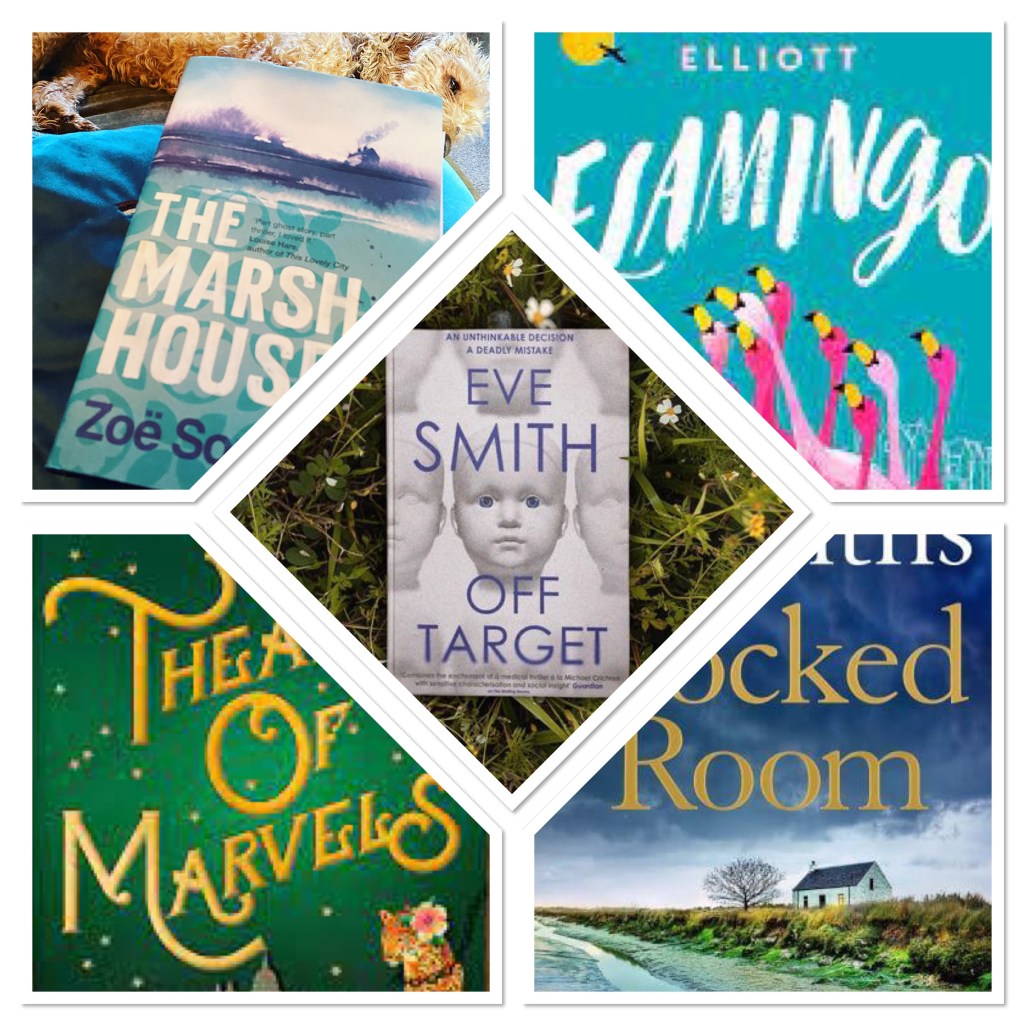
It’s been another excellent reading month at the Lotus Readers blog. My plan of taking one or two less blog tours has given me plenty of room to read some personal choices from the backlog on my shelves. So, these choices are a mix of blog tour books, NetGalley backlog and the latest in one of my favourite crime series. Hope you’ve all had a great reading month and now I must rush headlong into a rather overcommitted March! See you next time.
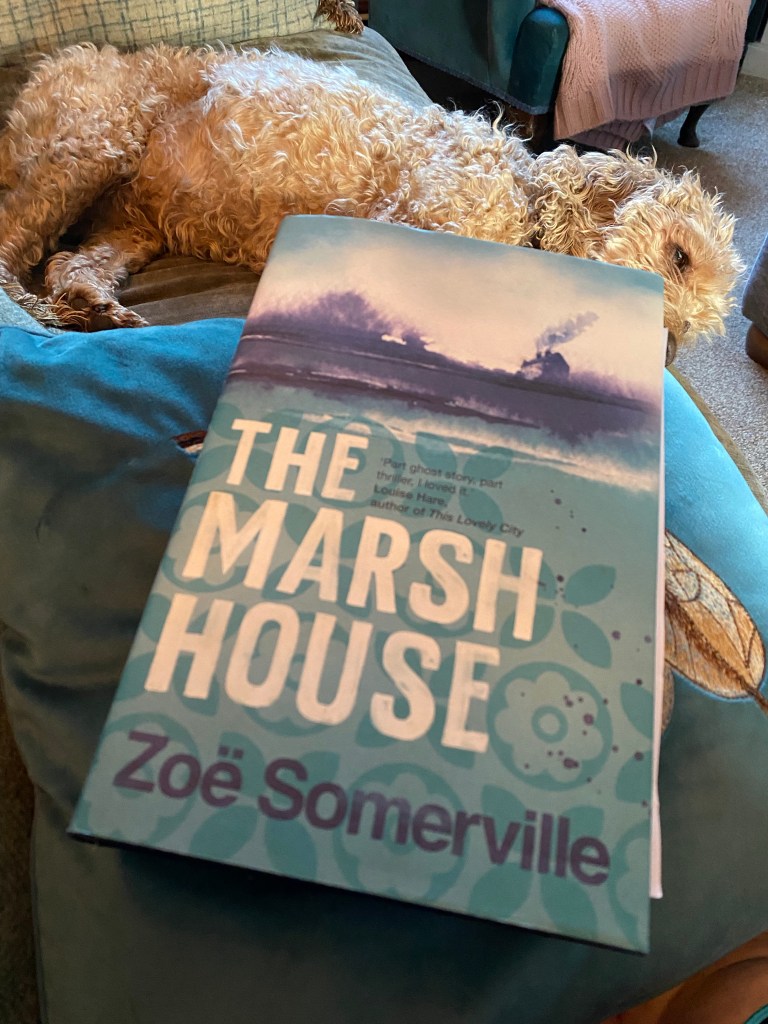
The Marsh House by Zoë Somerville
This excellent book is part of my NetGalley backlog, but I’ve just been asked to join the blog tour next month so I will whet your appetite for my full review in March. I simply loved this book. In fact, a finished copy arrived through the post and I started browsing the first page then couldn’t stop reading. So I read it straight through, only finishing at 2am. It’s a split timeline story, beginning with Malorie and her daughter deciding to spend Christmas in a cottage on the Norfolk coast after an argument with her boyfriend. Malorie feels like a bad mother and wants to get one thing right – an idyllic holiday cottage Christmas for her daughter. This is no ordinary cottage though, set right on the Marsh and shrouded with sea fog there is a definite atmosphere of foreboding. The house holds so much of the past in it’s art, the attic of belongings and the journals filled with the story of a 1930’s girl. Soon Malorie is feeling haunted by this place and it’s past. I loved the author’s look into the complicated, emotional experience of becoming a mother. There is a special skill in weaving real historical events with fiction and this author is so talented and creative. She brings Norfolk to life and makes the reader want to visit and search it out for themselves. The atmosphere was so evocative I spent two days with a ‘book hangover’ – unable to start another book because my emotions and senses were so embedded in Malorie’s story. I loved this so much I could have happily gone back to the first page and read it over again.
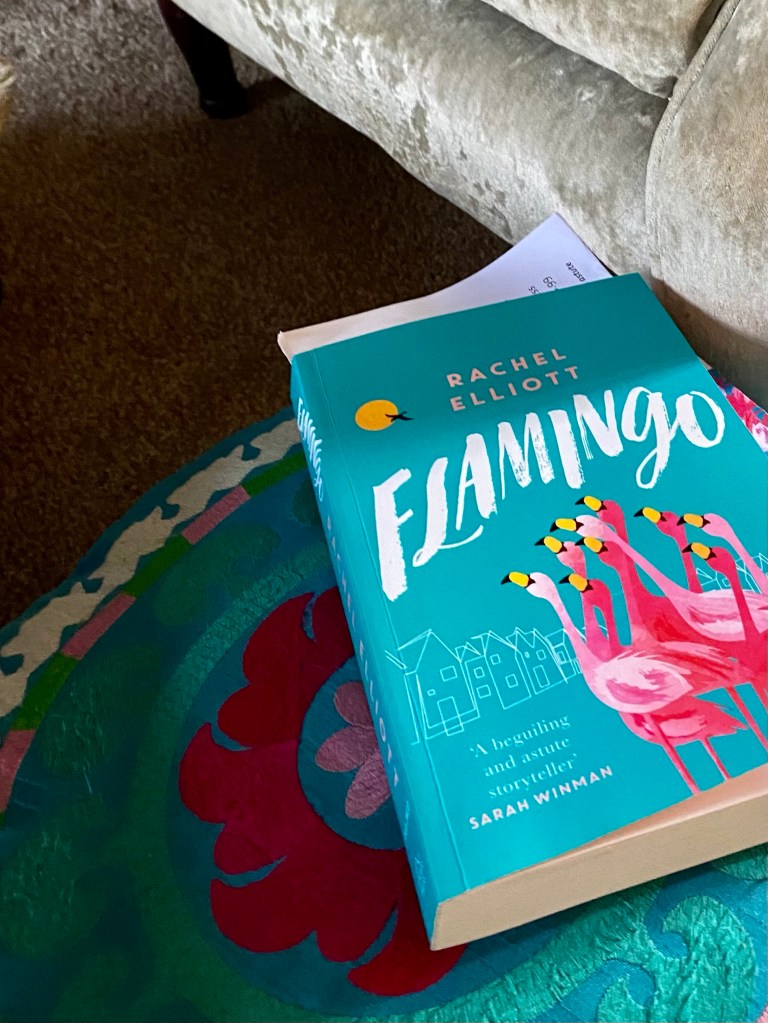
Flamingo by Rachel Elliot
In split time frames and across the characters of Eve and Daniel we hear the story of two families who live next door to each other. Eve and Daniel move in next door to Leslie and Sherry who have two daughters Rae and Pauline, and some ornamental flamingoes on their front lawn. Eve isn’t used to making friends as she and her son Daniel move around a lot, but there’s something about Sherry. So Eve goes to a specialist off-licence to find just the right bottle of Sherry to take to her new neighbour. Sherry is delighted and immediately welcomes the wandering pair into her home. That summer is the happiest summer mother and son have ever had, as they are enveloped by this wild, eccentric and loud family – Eve uses the word rambunctious. Then Eve and Daniel leave. All the colours seem to bleach out of the world. We then meet Daniel as an adult, wandering and broken. Deeply affected by some kind words and affection from a woman in the library, he decides to return to where he was happiest. He turns up at Sherry’s door and it feels like coming home, but where is Eve and what is the story underneath the one Daniel knows. It’s so hard to express how much I loved this book. This is a slow burn novel, told in fragments like half forgotten memories and with such beauty it could be a poem. The writer conveys beautifully how certain people can heal wounds and hold space for each other. In light of recent times it’s important to remember that to live fully we must connect with each other. It shows humans in their best light and at their most powerful, when showing love and accepting others for who they are. Just like the flamingo is pink through his diet, we too are shaped by what is put into us. Through Daniel, and Rae to an extent, there’s an acknowledgment of how painful life can be, but that healing and change is possible. I was enchanted by this story and it will keep a special place in my heart.
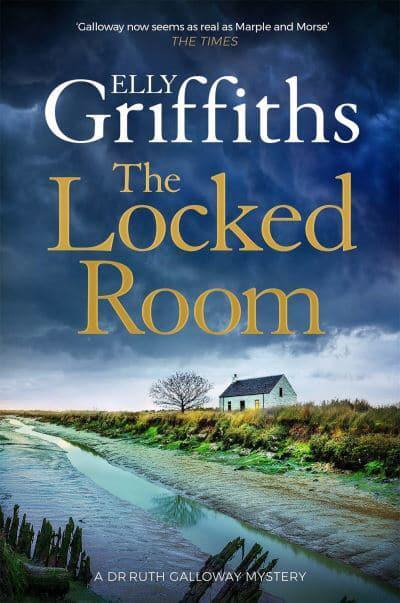
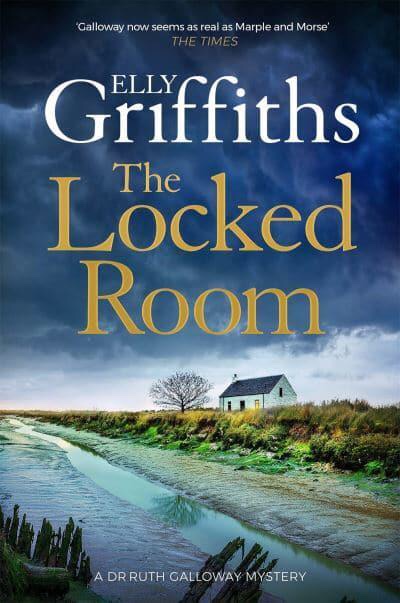
The Locked Room by Elly Griffiths
There are several mysteries in this latest book in Elly Griffith’s Ruth Galloway series, both professional and personal. Ruth is called in to excavate human remains discovered by a roadworks crew, in the evocatively named Tombland area of Norwich. This alerts her to Augustine Seward’s House, close to the cathedral and rumoured home of the Grey Lady – a young girl locked into the house during the plague with her sick parents in order to stop them spreading the virus. Another grim discovery is the death of an older woman, found by her cleaner after taking an overdose in her bedroom. A prior case had caught DI Nelson’s eye because he couldn’t understand why someone suicidal, would put their ready meal in the microwave first. This latest death adds to Nelson’s suspicions, because the cleaner is convinced she had to unlock the room, from the outside. There is also a personal mystery for Ruth, who is clearing out her mother’s things. She finds a box of photographs and is shocked to find a picture of her own cottage – a place her mother never really warmed to. Written on the back is Dawn, 1963, a full four years before Ruth was born. Why would her mother have kept this and why did she never share that she’d been there? Griffiths weaves the pandemic into this novel so beautifully, with each character responding in their own unique way. The spiritual and ghostly space of Tombland is truly spooky, thanks to the Grey Lady who wanders the house with a lit candle, but also walks through walls – where there used to be doors. It’s no surprise that Cathbad has also seen her in this area and the legend adds to the confusion of the final moments as the crime is solved. The crime is an interesting one due to the elements of coercive control and our team have to ask questions about how and if they can prosecute. However, my mind was also occupied with those characters catching COVID and their loved ones and I was on tenterhooks with that aspect of the book. I’d set aside two days to read this novel on publication and I only needed one because I had to know all my characters are safe and the cliffhanger ending has me already waiting for the next one.
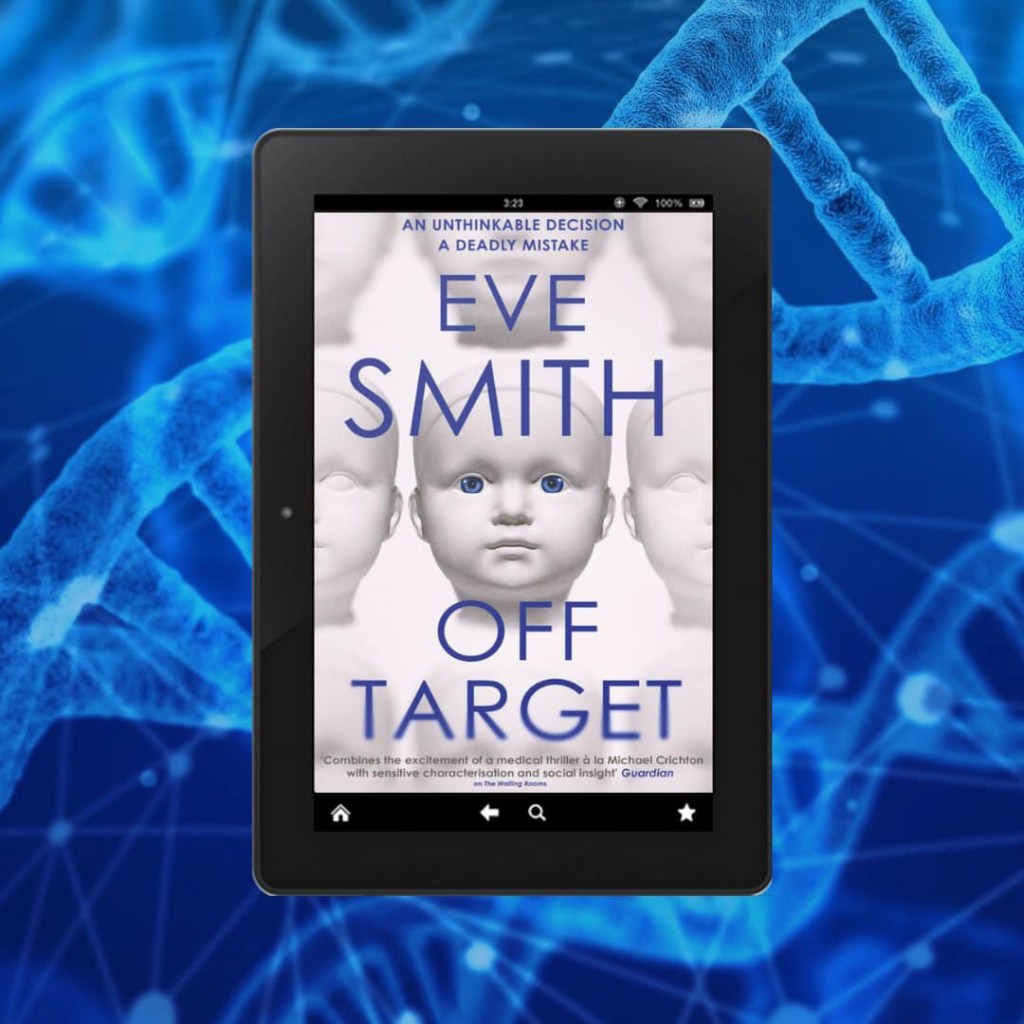
Off Target by Eve Smith
I loved Eve Smith’s last dystopian novel The Waiting Rooms, read during the first days of lockdown number one which exacerbated it’s strange feeling of being our world, but not quite. The author manages this feat again in Off Target, a dystopian thriller set in the not too distant future. Everything about this world is perfectly recognisable as ours, except for that one area that the author focuses on. Ever since Frankenstein there has been a tradition of horror writing around pregnancy and motherhood, showing just how far these fears are embedded in the human psyche. Monstrous births are part of the gothic and grotesque tradition and I think the author plays into that here, with her tale of meddling with babies in utero. Susan fears she will never become pregnant and this is killing her relationship with her husband. A drunken one night stand with a colleague is a world away from the sex she’s been having, which sometimes feels like a means to an end rather than something to enjoy and express love. Once she finds out she’s pregnant, there’s no question of her not keeping the baby. She can’t imagine terminating the pregnancy she’s waited so long for, but her husband looks very different to her colleague. He has very tanned skin and dark eyes, so what if her baby looks the same? She won’t be able to hide her indiscretion then. Susan confides in her best friend who suggests genetic engineering. Already approved in the UK for ruling out possible illnesses and disabilities, but what her friend is suggesting means swapping out the biological father’s DNA for the preferred father’s. Offered in clinics in Eastern Europe, these more extreme modifications are not approved in the UK but just one weekend in Kiev could see Susan’s infidelity covered up for good. Susan’s only concerns are the reported ‘off target’ effects of this extensive genetic engineering. There are underground reports of children suffering depression, becoming aggressive, or even committing suicide, but the urge to keep her infidelity quiet, might overcome her concerns about what could go wrong. The fall out is spectacular. A brilliant look at motherhood, genetics and a future we might already be engineering.
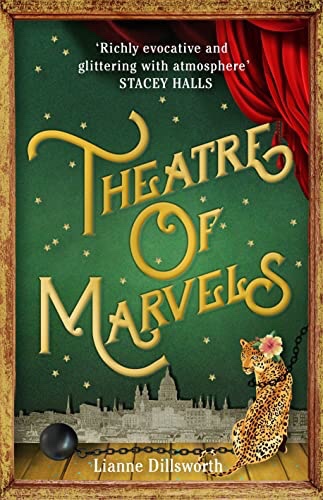
Theatre of Marvels by Lianne Dillsworth.
Our setting for this novel is a Victorian variety show produced under the watchful eye of Mr Crillick. His current headline act is Amazonia – a true African tribeswoman, dressed in furs and armed with a shield and spear, her native dancing brings down the house in show’s finale. The audience watch, transfixed with fear and fascination, never realising that she is a ‘fagged’ act. Zillah has never set foot in Africa and is in fact of mixed race heritage, born in East London. She’s used to slipping between worlds on stage and in her private life, renting a room in the rough St Giles area of the city, but regularly making her way to a more salubrious area and the bed of a Viscount by night. Everything changes as Zillah’s consciousness is raised in several ways. First, she realises that Vincent will never admit to their relationship in public. Secondly, she meets a young black man called Lucien, who places a question in her mind that she can’t shake off. How does it feel to earn money misrepresenting her ancestors? Finally, she sees Crillick parade a terrified women he’s called the ‘Leopard Lady’ at a party. With strange white patches all over her dark skin, the men are fascinated, drawing near and touching her and even roughly scratching to see if it comes off. Zillah notices medical implements laid out on a tray, the horror of what might happen to this woman overwhelms her. She must rescue the Leopard Lady from Crillick’s clutches. Exciting and fascinating, with elements of the thriller and a central character who is resilient and brave in her quest, this is a must read. I found the settings brought vividly to life and the author has clearly used solid research into freak shows, Victorian society and women’s live. She beautifully presents the realities of being bi-racial with the struggles of identity and belonging. I also enjoyed the theme of ‘otherness’ and how outsiders survive in society; the complexities of display and exploitation are weighed against poverty and deprivation. Can freak shows be acceptable if individuals can make a choice to exhibit themselves? Or is any exhibition of ‘different’ bodies unacceptable; a question that still needs debate today. I really enjoyed Zillah‘s quest and her own personal journey too. I read this so quickly and will be putting a copy on my bookshelves, because I know it’s one I’ll want to read again.
What a fantastic month of books! Next month is a crazy one, but here are just some of the novels I hope to read next month. thankfully I’ve read some early. See you soon.
Ruth Galloway is one of my all-time favourite characters in fiction, because I love her perspective on life, her intelligence and the fact that she doesn’t give in to all those things women are pressured to worry about. So, as I read her latest exploits, imagine my shock when she is lured to a Lean Zone meeting! I was horrified. I can’t cope with a Ruth who avoids cake. Rest assured, our favourite forensic archaeologist isn’t about to become a calorie counter. I gave a huge sigh of relief. When chatting about her decision not to continue at Lean Zone, Ruth tells her neighbour she was only inspired to go because she’d seen a school friend who lost an enormous amount of weight. The neighbour asks ‘and you thought she looked better?’ Ruth considers for a moment and replies ‘no I thought she looked worse.’ This is just one of the reasons I love Ruth and have followed her through 14 novels. How long will it take for someone to turn this into a TV series? There’s so much material to work with and she’s such a relatable character. I’ve entered into debate on Twitter over who should play these characters I love, even with Elly Griffiths herself. I know Ruth Jones was discussed, but I favour Olivia Colman who’s actually from Norfolk. David Tennant was put forward as Cathbad and I’m sure he’d pull it off admirably, although for some reason Rhys Ifans floats into my mind. As for Ruth’s love interest, the slightly ravaged and wonderfully Northern, DI Harry Nelson I’m thinking of either David Morrissey or Phillip Glenister (a little bit worn, but still a certain something that’s attractive).
There are several mysteries in this latest book in Elly Griffith’s Ruth Galloway series, both professional and personal. Ruth is called in to excavate human remains discovered by a roadworks crew, in the evocatively named Tombland area of Norwich. This alerts her to Augustine Seward’s House, close to the cathedral and rumoured home of the Grey Lady – a young girl locked into the house during the plague with her sick parents in order to stop them spreading the virus. Plague sufferers were often barricaded into their homes, but rumours suggest that this young girl was alive long after her parents death and had tried to eat them when she was starving. Another grim discovery is the death of an older woman, found by her cleaner after taking an overdose in her bedroom. A prior case had already caught DI Nelson’s eye because he couldn’t understand why someone suicidal, would put their ready meal in the microwave first. This latest death adds to Nelson’s suspicions, because the cleaner is convinced she had to unlock the room, from the outside. There is also a personal mystery for Ruth, who is clearing out her mother’s things. Her widowed dad has remarried and after several years leaving things as they were, his new wife would like to redecorate their home. It falls to Ruth to sort her clothes and belongings. She finds a box of photographs and is shocked to find a picture of her own cottage – a place her mother never really warmed to. Written on the back is Dawn, 1963, a full four years before Ruth was born. Why would her mother have kept this and why did she never share that she’d been there?
The pandemic is woven so well into the story and Griffiths really captures the disbelief, mental struggles and frustrations of trying to live in this strange time. It was interesting to see characters who are so familiar to us, reacting to something we’ve all lived through. Nelson is sceptical at first, but a few weeks later as wife Michelle ends up locked down with her parents in Blackpool, will he cope with living alone? Ruth takes lockdown in her stride, trying to juggle home schooling, lectures via Zoom and supporting her students. Griffiths weaves in the story of those students who haven’t been able to go home and are isolated in halls of residence, including one young man who is very interested in Dr. Galloway. Judy is as practical as ever, but surely this is the sort of crisis her partner Cathbad is ready for? Druid, wizard and all round mystical being, Cathbad is teaching yoga in the morning and has a pantry ready for any crisis. I felt quite tense though, waiting to see how COVID would affect these characters I love and worrying for them. Nelson’s team are struggling to investigate their case with the restrictions in lockdown, but the case is still fascinating with a lot of red herrings to muddy the waters. I loved how this mystery really looks at mental health and how difficult life events can leave us vulnerable to those who would prey on us. All the possible victims are women, live alone and have faced difficulties in life such as the loss of a partner. It also seems that all have been to weight loss groups, but is that a clue or a sad indication of the modern pressures of being a woman?
The personal mystery of Ruth’s had me hooked even more than the crime this time around. Ruth’s mother had never understood why she wanted to live her life in such an isolated place and there are times during lockdown where Ruth has wondered this herself, especially for Kate who is now 11 and has been totally reliant on the Internet to talk to friends. Ruth’s dad is equally befuddled by the photo she’s found which predates even his relationship with his wife. Ruth keeps wondering why, when she found her cottage, her mother never mentioned seeing it before. Plus, if it wasn’t important, why keep the photo for all these years? Answers come, but they’re unexpected and even life changing. It’s the personal relationships that shine here and the unexpected places and people that bring us comfort. For Judy, used to the ethereal and spiritual Cathbad, it’s her straight talking old sidekick Cloughie who brings the solace she needs from a friend. Ruth is surprised to find she has spent most of her time feeling almost separate from the world. She feels the strangeness of her daily life changes: more time in bed, the different way of working, and the jarring first sight of shoppers queueing outside the supermarket in their masks. Most of her observations are practical changes though and she’s remarkably comfortable, just her, Kate and Flint the cat. In fact the upside has been the lack of other people, the beautiful scenery and wildlife on their doorstep. They even have a new neighbour, who Ruth enjoys getting to know with a socially distanced glass of wine each evening separated by the garden fence. They can walk together on the beach and do Cathbad’s daily yoga, making them feel a connection rather than isolation. Nelson however is completely alone with only his dog Bruno for company. Used to a house run by Michelle and the rough and tumble of young son George he’s strangely lost and finds himself drawn mentally to the cottage on the coast and his other family.
There are little observations that make Griffith’s world feel so real to me. Lured to a small school reunion while staying at her parent’s house in London, Ruth observed how everyone had aged. In fact her school boyfriend Daniel is bald and she observes she wouldn’t have recognised him a line-up. She then does the middle aged calculation that all of us over 45 do in these circumstances; she wonders if she’s looking as old as they are. Then as the pandemic hits, these people she’s not seen for decades, are sending her messages on social media prompted by the ‘strange times’ we’re living through. It’s something I observed over over the last two years, when daily life is put on pause we look for things to ground us or start to re-evaluate our lives. These touches are grounded in that incredible Norfolk setting, fully formed in my brain now I can immediately see inside Ruth’s cottage by the salt marsh. This mysterious and wild space is offset by the city of Norwich and in this case, the setting of Tombland around the cathedral. This spiritual and ghostly space felt unsettling, as friend Janet explains to Ruth about sitings of the Grey Lady who wanders the house with a lit candle, but also walks through the walls where there used to be doors. It’s no surprise that Cathbad has once seen her in this area and the ghost story adds to the confusion of those final chapters as the case builds to a climax. I really loved the theme of the outcast dead, whether they are the undiscovered plague pits that one of Ruth’s students becomes fascinated with or the graves of those who committed suicide. Historically, people who’ve committed suicide are placed outside the boundaries of the graveyard in unconsecrated ground. The idea of punishing someone in so much pain seems archaic now and I loved the idea of a yearly church service to acknowledge all these outcast people. There are interesting elements of coercive control in the investigation and our team have to ask questions about their preconceptions of who commits crime and what criminals look like, never mind how and if they can prosecute. However, my mind was also occupied with worrying over which of my beloved characters might catch COVID and how their loved ones might cope. I’d set aside two days to read this novel on publication and I only needed one, because I had to know all my characters were safe and when I reached it, I was immediately hooked into waiting for my next instalment.
Meet The Author
ELLY GRIFFITHS is the author of the Ruth Galloway and Brighton mystery series, as well as the standalone novel The Stranger Diaries, winner of the Edgar Award for Best Novel, and The Postscript Murders. She is the recipient of the CWA Dagger in the Library Award and the Mary Higgins Clark Award. She has published a children’s book, A Girl Called Justice. She has previously written books under her real name, Domenica de Rosa.
The Ruth books are set in Norfolk, a place she knows well from childhood. It was a chance remark of her husband’s that gave her the idea for the first in the series, The Crossing Places. They were crossing Titchwell Marsh in North Norfolk when he mentioned that prehistoric people thought that marshland was sacred ground. Because it’s neither land nor sea, but something in-between, they saw it as a bridge to the afterlife; neither land nor sea, neither life nor death. In that moment, she saw Dr Ruth Galloway walking towards her out of the mist…
She lives near Brighton with her husband Andy, an archaeologist. She has two grown-up children. She writes in the garden shed accompanied by her cat, Gus.
I thought I’d celebrate Valentine’s Day by talking about our literary crushes. Let’s be honest, we all have them. Those literary heroes that draw us in and make us swoon. From a young age there have been literary heroes that have stuck in my mind, and probably informed some ill-advised dating choices over the years. Those formative literary heroes who made my adolescent heart flutter, have changed a lot as years have gone by. Perhaps because what I’ve learned through my real life relationships has started to change the characteristics that attract me in a hero. Those young, dashing, tortured souls don’t seem quite so attractive when you’ve encountered a few in real life. Of course, literary adaptations on film or TV often influence these crushes greatly – remember the endless banging on about a wet Colin Firth striding across the Derbyshire countryside? My mum’s expectation of that scene had obviously been honed by 1970’s literary adaptations like Women in Love where Oliver Reed and Alan Bates famously wrestled naked in front of a roaring fire. She expected Darcy to be wearing less clothes and couldn’t see what all the fuss was about. Anyway, I much preferred a slightly dishevelled Matthew McFadyen Mr Darcy, striding across a field at dawn. However, between the book covers, Mr Darcy simply doesn’t do it for me. Similarly, Mr Thornton from North and South was incredibly sexy when portrayed by the lovely Richard Armitage, but simply fails to light my fire when reading the book. So, with some trepidation, here are my reading crushes. Let me know yours. There’s no judgement here. ❤️❤️
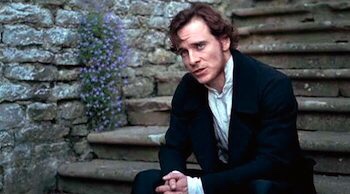
Mr Rochester – Jane Eyre
Michael Fassbender as Mr Rochester
“To women who please me only by their faces, I am the very devil when I find out they have neither souls nor hearts…but to the clear eye and eloquent tongue, to the soul made of fire, and the character that bends but does not break—at once supple and stable, tractable and consistent—I am every tender and true.”
Considering they barely left the surroundings of their home at Haworth, those Brontë girls knew how to write the brooding, Byronic, hero. Heathcliff is probably the best example, but I read Wuthering Heights again when I was older, and he was a bit too tortured soul for my liking, plus he hangs a woman’s dog for goodness sake! I first read Jane Eyre when I was ten, in my last year of primary school, and I’ve read it every couple of years since. When younger, I loved the slow burn of their romance. From the moment she saves him from burning in his bed, it’s clear there’s something about Jane that attracts him. For him, she seems like a cool drink on a hot day. Somewhere he can sit and find peace, and let’s face it, he has an awful lot of drama to escape from. Of course when I was young I couldn’t see the feminist or sexual implications of the novel – Bertha upstairs was a bit of a monster to me. She was the gothic, scary bit so I didn’t really think about her as a person or what Rochester had done to her, until I was in my teens. I liked his dark brooding character and when he appears out of the fog on his horse it is still a swoon moment for me. I think I also enjoyed that he loves the plain, poor governess rather than the decorative, but awful Blanche Ingram. I loved their conversations and the way he seems to enjoy that fiery part of Jane. In my teens I used to think she was mad for leaving Rochester, but later I could see why she left and sometimes wondered if it wouldn’t have been better for her to keep her fortune and take off on a trip across the world. At least when she does return to Rochester it’s as an equal, with her own fortune and experience
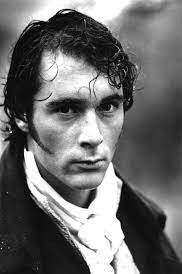
Willoughby – Sense and Sensibility
Greg Wise as Willoughby
In every meeting of the kind Willoughby was included; and the ease and familiarity which naturally attended these parties were exactly calculated to give increasing intimacy to his acquaintance with the Dashwoods, to afford him opportunity of witnessing the excellencies of Marianne, of marking his animated admiration of her, and of receiving, in her behaviour to himself, the most pointed assurance of her affection.
We’re still in bad boy territory here, with the ultimate cad who breaks Marianne’s heart and reputation in Sense and Sensibility. I have read the book, but I will admit that the Greg Wise version does play a large part in this choice. I loved the romantic way that Willoughby finds Marianne, having sprained her ankle on a hillside. He simply picks her up and carries her home. Factor in some rain, and Greg Wise being all dark and handsome, mastering a huge horse and a literary crush was born. No wonder Emma Thompson wrote in her diary on that particular day that Greg was setting all hearts fluttering as he was drippng wet an
a he loves Marianne, but in need of money he chooses status and an heiress above his heart. There’s no excuse for how he behaves, he’s an absolute rat, but that rush of chemistry can’t be denied. Would we have done any different to Marianne? In the film, when he rides to the hill in order to watch Marianne and Colonel Brandon leaving the church after their wedding, I think he’s truly sad and a little jealous.
Jamie Fraser – Outlander.
Sam Heughan as Jamie Fraser
“I will find you,” he whispered in my ear. “I promise. If I must endure two hundred years of purgatory, two hundred years without you–then that is my punishment, which I have earned for my crimes. For I have lied, and killed, and stolen; betrayed and broken trust. But there is the one thing that shall lie in the balance. When I shall stand before God, I shall have one thing to say, to weigh against the rest. Lord, ye gave me a rare woman, and God! I loved her well.”
I couldn’t resist the giant photo of Jamie Fraser! I had barely started reading the Outlander series when the TV series started so now the literary character is always going to be linked with the lovely Sam Heughan. He’s a great choice for the character and the chemistry between him and Catriona Balfe as Claire is perfect. What I love about Jamie is the way Diana Gabaldon has written him and it’s something that spills over into the TV series. We as readers are firmly with Claire and everything Jamie does is viewed through the female gaze. Their wedding night sequence is good example. We experience him through Claire and it’s his body we’re undressing and enjoying. I think the allure of Jamie is that heady mix of tough outdoors warrior, with a vulnerability underneath. There’s the way he respects her ideas and opinions, unheard of in most men of Claire’s time, never mind the 18th Century. It’s also his deep loyalty to Claire, not just across the few years they’re together but all those years inbetween when they’re in a different time from each other. There’s nothing more romantic than that.
Cormoran Strike – The Cuckoo’s Calling Series
Tom Burke as Cormoran Strike
‘My best mate . . . ” For a split second he wondered whether he was going to say it, but the whisky had lifted the guard he usually kept upon himself: why not say it, why not let go? ‘. . . is you.”
Robin was so amazed, she couldn’t speak. Never, in four years, had Strike come close to telling her what she was to him. Fondness had had to be deduced from offhand comments, small kindnesses, awkward silences or gestures forced from him under stress. She’d only once before felt as she did now, and the unexpected gift that had engendered the feeling had been a sapphire and diamond ring, which she’d left behind when she walked out on the man who’d given it to her.She wanted to make some kind of return, but for a moment or two, her throat felt too constricted. ‘I . . . well, the feeling’s mutual,” she said, trying not to sound too happy.”
Finally, I actually fancy someone in this century! From the moment I picked up a dog eared copy of The Cuckoo’s Calling in a charity shop I was hooked on private investigator Cormoran Strike. Yes, there’s the old tortured soul aspect to his personality, but it’s not just the high pitched warning alarm of a damaged man that calls out to me. I remember how well the author described him having to care for the stump left when his leg was amputated. It felt realistic to me, because walking and standing a lot was painful for him. If he is tailing someone he would ache and his leg might have chafed against his prosthetic. I appreciated a hero with a disability, his heroism magnified by the fact he was injured in action. He’s a big man, broad and tall, so much so that you’d feel safe with him. He may be vulnerable, but he can handle himself if necessary and that’s a heady combination. He’s a great listener, full of empathy for people in a predicament and for those close to him. He’s deeply loyal to those who he can trust, like his business partner Robin. He’s been messed up by women, from his mother to his long term girlfriend Charlotte. However, he’s a very private about his relationships and seems to have his own code of honour which is very attractive.
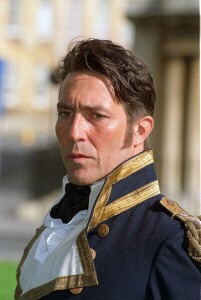
Captain Wentworth – Persuasion
Ciaran Hinds as Captain Wentworth
“I can listen no longer in silence. I must speak to you by such means as are within my reach. You pierce my soul. I am half agony, half hope. Tell me not that I am too late, that such precious feelings are gone for ever. I offer myself to you again with a heart even more your own than when you almost broke it, eight years and a half ago. Dare not say that man forgets sooner than woman, that his love has an earlier death. I have loved none but you.”
Are there any more romantic words in literature? Wentworth’s letter is, for me, the most romantic I’ve read. I’d go as far as saying it’s the best declaration of love in the classics. It’s all the more wonderful because Anne is so unassuming and modest. She has spent months with Wentworth back in her circle, loving him from afar, but never presuming he might feel the same way. In fact she’s so sure he’s moved on from the feelings he had for her when they were younger, she thinks he’s in love with Louisa Musgrove. She has so little confidence that she misses the care and kindness he shows her. After a long walk he makes sure it is Anne who gets the seat on the carriage because he’s thinking of her comfort. She thinks he wants to be alone with Louisa or that he thinks she needs to sit as she’s older. I love Wentworth’s constancy and the passion he has been hiding under that polite exterior. The kiss that follows is wonderful, because we’ve been waiting for it so long.
Jackson Brodie – Case Histories Series
Jason Isaacs as Jackson Brodie
“He was officially a lunatic, she decided. Strangely, that didn’t make him less attractive.”
What is it about Kate Atkinson’s Jackson Brodie? He’s a slightly rumpled, middle-aged, private investigator. He’s been in the military and the police so is probably institutionalised. In fact he’s a bit of a hopeless case, often taking on the lame ducks he finds along the way, whether they’re human or canine. Marriage doesn’t seem to suit him, but he is a very loyal friend. He’s quite grumpy and set in his ways. I’m not really selling him well I know, but there is that indefinable something that’s attractive. Rather like Cormoran Strike, there’s that sense that he’s an honourable man. He’s old-fashioned and would want to make sure you got home ok. In fact he’s one of those men who would walk on the outside on the pavement so you’re safe, away from the traffic and don’t get splashed. I imagine he looks like life has knocked him around a bit, but if someone needs help he would still be the first one there. There are times when he does the right thing, not by the book, but by his own moral code and I love that.
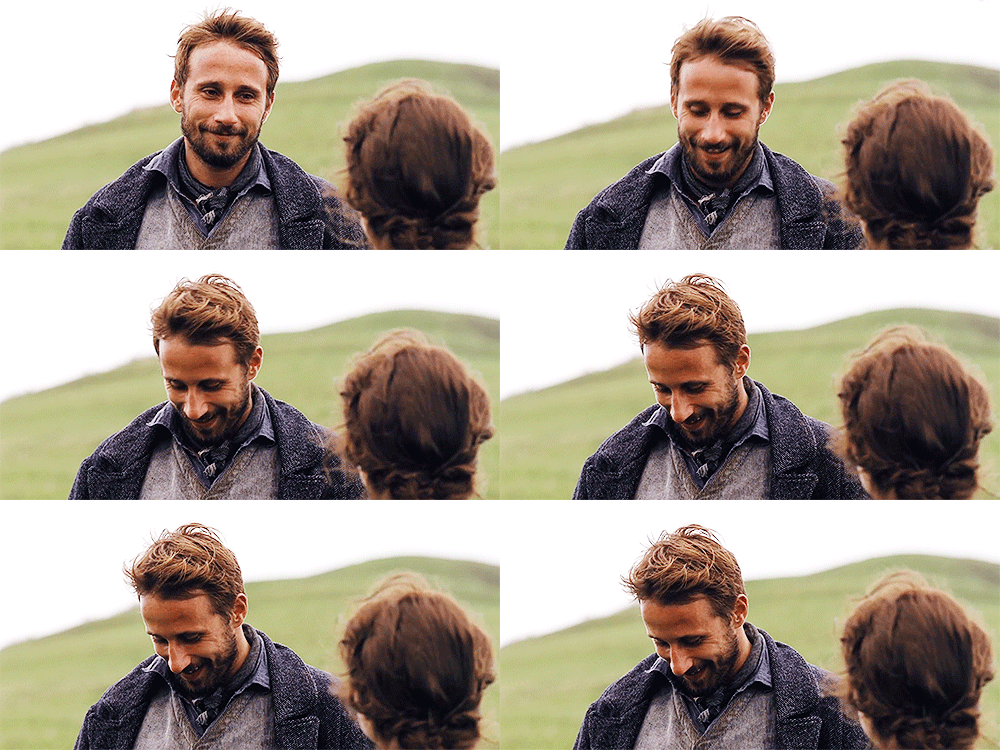
Gabriel Oak – Far From The Madding Crowd.
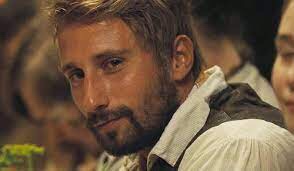
Matthias Schoenaerts as Gabriel Oak
“And at home by the fire, whenever you look up there I shall be— and whenever I look up, there will be you.”
I haven’t put my crushes in any sort of order, but I’ve definitely saved the best till last. If you ask me, for most of the book, Bathsheba Everdene needs her head examining. Near the beginning of the book, Gabriel visits her. They’ve been neighbours and he comes striding across the fields with a lamb under his arm. It’s an orphan and he thought she might like to feed and take care of him. He then proposes to her and she refuses! If a man brought me a lamb I’d be beside myself with excitement and I’d be saying yes before he’d finished his sentence. How can you turn down a man who brings you your very own lamb? However, their fates are intertwined. After a terrible tragedy where he loses his whole flock, Gabriel is forced to look for a job. It turns out that Bathsheba has become an heiress, inheriting a farm but luckily needing someone to manage it for her.
Gabriel proves himself to be a loyal employee and is constant even when she marries the ridiculous Sergeant Troy. Troy gambles her money and one night gets the whole workforce dangerously drunk. They are celebrating the harvest, but the hay stacks aren’t covered and a storm blows up. Bathsheba finds Gabriel desperately trying to save he harvest for her, while Troy is passed out cold in the barn. Bathsheba grows up a lot in the course of the novel and she starts to see and value the qualities Gabriel has. She has previously overlooked his steadfast loyalty, how hard he will work for her and what an incredible friend he can be. He listens to her and when she is silly enough to lead on Mr Boldwood, an older gentleman who owns the neighbouring land, he speaks to her and warns her that it isn’t fair. Of course, this being Hardy, this flirtation ends in tragedy. Yet Gabriel is still there and when he proposes a second time she’s finally ready for the love he’s offering.
Happy Valentine’s Day! I hope you have a literary crush you enjoy ❤️❤️
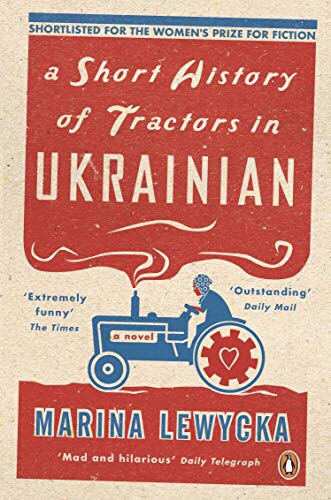
‘Two years after my mother died, my father fell in love with a glamorous blonde Ukrainian divorcee. He was eighty-four and she was thirty-six. She exploded into our lives like a fluffy pink grenade, churning up the murky water, bringing to the surface a sludge of sloughed-off memories, giving the family ghosts a kick up the backside.’
Sisters Vera and Nadezhda must aside a lifetime of feuding to save their émigré engineer father from voluptuous gold-digger Valentina. With her proclivity for green satin underwear and boil-in-the-bag cuisine, she will stop at nothing in her pursuit of Western wealth. But the sisters’ campaign to oust Valentina unearths family secrets, uncovers fifty years of Europe’s darkest history and sends them back to roots they’d much rather forget . .
My Thoughts
The second phone call came a few days after the first. ‘Tell me, Nadezhda, do you think it would be possible for a man of eighty-four to father a child?’
I love this unexpected question early on in the novel, coming from Nadezhda’s elderly father out of the blue. It’s not the sort of question I’d expect from my father, but as our narrator Nadezhda points out, her father is always straight to the point and when he’s in the grip of a big idea never bothers with small talk or enquiries about her health. My mum read this first and told me I needed to read it. Within a couple of pages I knew why, Nadezha’s father was an elderly Ukrainian engineer, widowed for several years, with a penchant for tractors and straight talking. I was laughing out loud within pages, I couldn’t believe Marina Lewycka had conjured this man out of her imagination, especially since he was sitting on my sofa reading his daily paper.
My father-in-law came to live with us in Spring 2004. The plan was that he would spend summers with us and winters in New Zealand with his other son and family. My husband’s family were from Poland, relocated as children from Poland to England, his father escaped from a labour camp in Siberia. So, not exactly the same story as Nadezhda’s father, but his speech, mannerisms and preoccupations were eerily similar. I should just say that my father-in-law would have been horrified to be propositioned by a woman thirty years his junior. He wore his wedding ring until the day he died, at least twenty years after his wife was killed in a car accident. We didn’t always see eye to eye. However, some of the things that drove me insane when we lived together, became rather endearing and even downright hilarious with time. Blunt speech was a trademark of his, to the point of seeming rude in some cases. Yet, when told someone was offended by his comment, he would say ‘but it was correct, yes?’
One favourite lunch party dissolved into disbelief and giggles when he addressed his godson’s wife and suggested she might be more comfortable sitting on his chair than the kitchen stool since she had a ‘much larger’ bottom than him. He was bewildered by the reaction, believing he was being chivalrous by offering her the dining chair and because she did, in fact, have a much larger bottom. I realised this was a preoccupation of his when he came to visit us proffering a carefully cut out article from his daily paper for me. The subject was scientific research that found women with larger bottoms had longer lives than apple shaped women who stored fat round their middle. He was very happy with his discovery, humming away to himself in the kitchen, as my father and I shut ourselves in the bathroom laughing uncontrollably so we didn’t offend him. I hadn’t realised he was very appreciative of this body type until he asked me to look up the journalist Victoria Derbyshire. He had been listening to her on the radio for some time, but had never seen her in person and despite his son being the director of the media lab at a university he wasn’t up to speed with using the internet yet. I showed him her photograph and he shrugged his shoulders mournfully saying he’d expected her to be a much rounder woman in general but specifically with a ‘much bigger bottom.’ It dawned on me that he felt this was a compliment, something he thought was vital to his idea of female beauty.
He also had a way of making even the most positive things sound like a problem. At a fancy dress party my husband and I threw at home, he watched me working all day to put together a buffet for the guests. Finally, just before people started arriving, he asked if he could take a picture of the buffet table. My husband seemed to think he was impressed by the spread, but his face seem to suggest he was inwardly struggling with what to say. Finally he sighed deeply and said ‘but so much food, how can one possibly choose?’ Later, I received in the post a printed copy of his photograph of the food, showing me that it was important to him. After learning more about his family struggles during the war, and the death of his brother as they were hiding in the Siberian forests, I understood more deeply his utter disbelief at so much choice when weighed against the constant hunger he remembered feeling. Nadezhda tells us about her father’s specialty of ‘Toshiba’ apples – chopped Bramley apples nuked so thoroughly in the microwave they became apple sauce. This was a speciality of my father-in-law with apples that were so hot, they were still cooking in the desert bowl half an hour later. If he wanted to cool food he had a brilliant idea. My brother-in-law had been living. with his father for many years. He was a tree surgeon and had built what they called ‘the cage’ attached to the back of the house. This was a dog run, padlocked and used as a store for chainsaws and other equipment. Any food that needed to cool was placed in the cage on an upturned tree stump, open to the elements on all sides, but sheltered by a roof and away from foraging animals. This made perfect sense in practice, but always caused questions at the dinner table from guests baffled by the instruction ‘fetch the pie from the cage’.
Nadezhda’s father is proud of his late wife’s ability to forage and preserve food to last into the winter season. There is a pantry of store bought supplies, boxes of preserves and fermenting alcohol under the bed, plus a deep freeze full of vegetables and individually portioned meals. Everything labelled and rotated by date.
The only way to outwit hunger is to save and accumulate, so that there is always something tucked away. […] What she couldn’t make had to be bought second hand. If you had to get it new, it had to be the cheapest money could buy, preferably reduced or a bargain. Fruit that was on the turn, tins that were dented, patterns that were out of date, last year’s style. It didn’t matter, we weren’t proud, we weren’t some foolish types who wasted money for the sake of appearance, Mother said, when every cultured person knows what really matters is what’s inside.’
It took three visits for me to work out that what I thought was a kitchen island, in Aleks’s kitchen, was actually a deep freeze with a loose work top laid over it. When he was out we looked in it to find portioned meals labelled by Jez’s mother who had died ten years previously. I thought it was grief that kept the freezer lid closed and it was in part. It was also a survival instinct of someone who had known hunger and that those closest to you, the people you depend on, could be taken from you without warning. All starting with a terrifying knock on the door. Aleks’s father was in the Polish military, shot by the Russians and his family marched to a Siberian labour camp. By the time they escaped and joined the Resistance in a forest camp there was only Aleks and his mother left alive. Behind the comic elements of her book, the author is telling a similar story of political fanaticism, social upheaval, hunger, displacement and terrible loss. I was more understanding when I he told me about his conversation with my sister -in-law who had just bought a property in New Zealand. Apparently, he was most impressed by how quickly his son had ploughed up the tennis courts and planted potatoes.
The part I find most sad, both in the book and for my father-in-law, is that the homeland they crave and hold in their hearts and minds no longer exists. Alek would have been ten when he left Poland, but the Poland he left isn’t there waiting for him. Nadezhda’s father talks at length about a Ukraine that was forty or even fifty years ago. He wants to save one person from the tyranny of communism and give them the freedom of a life in this country. In his head he imagines tyrannical politicians controlling the people, but also the Pastoral beauty of his home country. He will rescue Valentina and in return she will bring to him the Ukraine of his youth with golden wheat fields, lush forests and flowing rivers. Nadezhda who has visited more recently remembers concrete tower blocks and polluted rivers full of dead fish. She tries to tell him that the people are no longer noble peasants, they are consumers longing for Western designer goods. Within weeks of them marrying Valentina has insisted on her own car – ‘not just any old car either. Must be good car. Must be Mercedes or Jaguar at least.’ She also wants second car, for when she’s in the Ukraine. Then it’s the cooker, three rings are not working, but ‘it must be prestigious cooker, must be gas. Must be brown.’ When Nikolai objects because the brown one isn’t on offer, she won’t let it go. He wants her to have ‘crap cooker’ because he is ‘no good meanie’. In the meantime Nadezhda starts to ask for legal advice on her father’s behalf, because there must be a divorce and they can’t bear the thought of this woman owning half of their mother’s things.
I thank the Lord we never had a Valentina to contend with. We sometimes hoped he would find someone, to ease the loneliness and take his head out of the past. The wardrobes full of his mother’s furs and Hanna’s side of the bed, left as if she’d be coming back any moment. We simply didn’t understand each other. If my friends came round it was my welcome break from the care routine – my husband had MS and he was on palliative care – a space to unload a bit, but I couldn’t do that if my father-in-law was also pulling up a chair and joining in. Although I did have it easier than my sister-in-law who found he was in the room when she was on all fours in labour. We had long conversations on the phone where we would both complain that he found us too loud, too opinionated and in my case, a bit too Northern. She would complain that he never shared any praise or positive thoughts about her and I felt exactly the same. I did realise though that he was telling other people – I would tell Jenny that he was proud of her mothering skills and the way she was bringing up his grandsons. She would tell me that he was amazed at the strength I had to keep going, to look after Jerzy every day and not panic if things went wrong. I found that Alek and I bonded more after my husband died, with a shared grief and on his part an understanding and gratitude for the years I spent nursing ‘his boy’. He would ring me every Sunday morning until his eyesight failed him and I missed those calls so much when they were gone. Even now, when I think of him stroking the back of my head as I told him how his son died, it brings a lump to my throat. Every time I read this book it’s a bittersweet experience. It makes me laugh still. I think of all those funny stories and the times we shared, even the hard parts when we didn’t get along. I would do them all again just to spend time with this incredible man. As for Nadezhda and her father Nikolai, I won’t ruin the ending, but there are more twists and turns along the way. For me, every time I pick this book up, I get to spend a little more time with an incredible man who I miss every day.
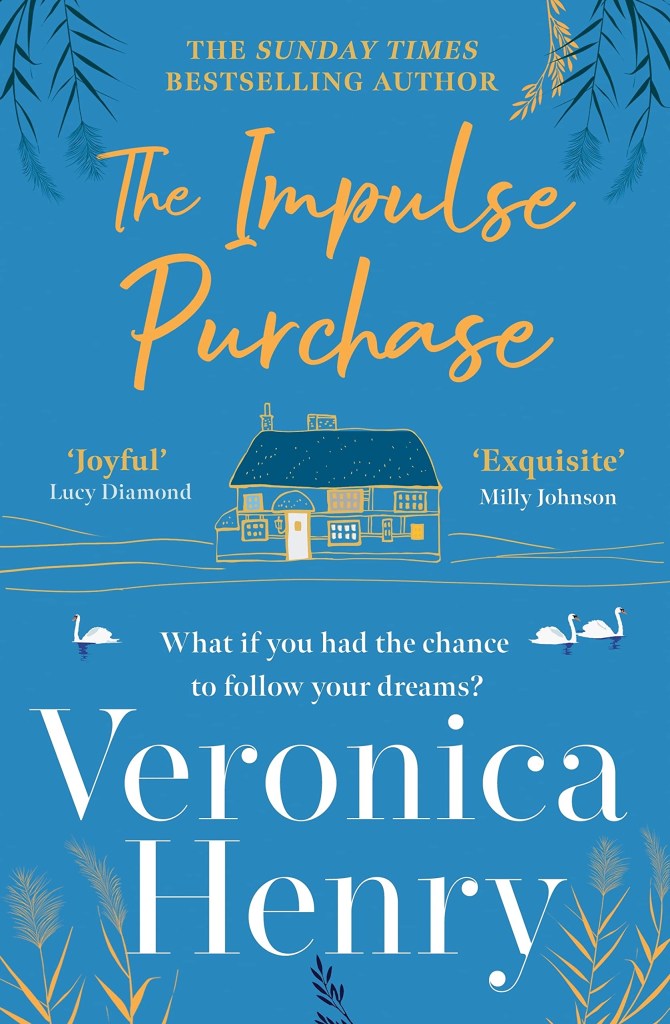
I spent a lovely escapist couple of days reading about this interesting family of women all at a crossroads in life. Julia, great-grandmother and owner of the beautiful Wisteria House in the village of Rushbrook, has died. She has left behind four generations of women: grandmother Cherry who was a model in the 1960’s; mother Maggie, the redoubtable owner of a food PR company; daughter Rose who is a new mum and volunteers at the local homeless charity; finally there’s Gertie, three years old and the apple of everyone’s eye. Aside from great-grandmother Julia’s death and Gertie’s birth, this is a family facing a lot of change. Maggie is still mourning the death of the love of her life, husband Frank. It’s been a couple of years now, but both Maggie and Rose miss him every day. Maggie also faces change at work, as her apprentice has absconded taking some of the business with her. Rose has struggled with grief, but her job is giving her more confidence even though she cares and gets involved more than she should. Cherry is organising a party to celebrate her husband’s retirement, something she’s very good at. Mike is an artist and photographer, retiring from teaching and looking forward to spending more time travelling with Cherry. They just need to finish the sale of Cherry’s childhood home at Wisteria House, but Cherry sees something at the party that changes her mind and sets in place a new plan for all the women of the family.
The Swan is Rushbrook’s public house and has been a family haunt for as long as they can remember, from Cherry’s teens to recent family celebrations with her mother. In fact, even though they live in Avonminster, this village is very important to the women. Rose was particularly close with her great-grandmother and when she’s feeling anxious closes her eyes and imagines the smells of the roses in her garden. In fact Gertie is even named after two of her favourite roses from the garden at Wisteria House. The Swan has become run down since the landlord’s wife has been ill and on an impromptu visit he tells Cherry he’s going to sell The Swan. Cherry has just completed on Wisteria House and partly because of Mike’s party, but also because she wants to take on a project for herself, she buys the pub on impulse. She knows she can make it work, but what will Mike think? Also, how will she do this on her own? With both Maggie and Rose at a crossroads too, they decide to help and all three women uproot themselves and move to the boathouse behind the pub. Soon all three are busy: Cherry with the refurb; Maggie in the kitchens; Rose in the gardens. Can this team of women make The Swan a success?
I found this book a delight from start to finish, so uplifting and full of formidable female characters. Cherry is a ray of sunshine and I enjoyed going back to the 1960’s to her meeting with Mike. They’re a lovely couple who have been devoted to each other for years, but as they both face changes and keep secrets from one another, they might be looking at a different relationship going forward. Maggie is a force of nature, hard working and full of ideas for the menu. She’s also coping with complicated feelings, that pull between missing the person you’ve lost while also becoming excited about moving forward with your life. She’s attractive and dynamic so isn’t short of attention from men, but finds dipping her toe in the water more complicated than she expected. I loved Rose, she has such a big heart and is stronger than she imagines. Her move to Rushbrook is something of an escape from overstepping the boundaries with a homeless client. Rose’s story arc is uplifting and joyful, especially her struggles to understand anxiety and live with her negative inner voice. She also has a tiny hint of romance for good measure.
One of the most powerful aspects of this novel is the inter generational relationships, so it was interesting to read this alongside my Mum. These women are wonderfully open with each other, they give each other support both emotionally and to succeed in life. Their support for Rose as she becomes a young single mum is crucial to Gertie being the carefree little soul she is. I know this because my parents, especially my Mum, did the same for my brother as he became a father at 17. I know that the way my mum helped bring up my niece and nephew, has been the inspiration and example for my niece now that she’s an incredible mum to two small boys. People think it’s instinctive, but I can see both my parents in the way she plays with her boys and encourages their development. We are in the lucky position of having four generation of family and I love seeing my dad playing football with his great-grandsons.
I have a similar, very open relationship with my mum and now I’m older we really are friends. People are often surprised when I say my parents would be the first names I’d put on any party list and my mum comes to my book club, workshops and we go to meditation together. Then I sit back and watch how she nurtures the younger members of these groups, particularly those who struggle with depression or social anxieties. In the same way, I enjoyed reading about the effects these women have on the residents of the village, particularly the lovely Chloe. They provide work for some, start unexpected friendships with others and give the inspiration for some to make changes of their own. They really are a force for good and I was hoping they could make the pub a success, that it would become a community hub for the village and that Cherry and Mike would find a way to assimilate The Swan into their relationship. These relationships are underpinned by an incredibly picturesque village, wonderful descriptions of interior designs and stunning gardens that feed all the senses. This is a gem of a book, full of hope and with a great sense of fun. I loved reading and discussing it with my mum too. I found myself smiling all the way through and at the end I felt like I’d been on a lovely weekend away.
Meet The Author
Veronica Henry has worked as a scriptwriter for The Archers, Heartbeat and Holby City amongst many others, before turning to fiction. She won the 2014 RNA Novel of the Year Award for A Night on the Orient Express and is a Sunday Times bestselling author of over twenty books. Veronica lives with her family in a village in north Devon and can often be found cooking up the perfect seaside feast. Find out more at veronicahenry.co.uk or follow her on social media: @veronica_henry @veronicahenryauthor @veronicahenryauthor
It’s been a busy month in book world and I’ve found my resolution to read more of my own choices and say no to blog tours severely tested. The emails land in my inbox like a siren song and I have to force myself to swipe them into the bin! I’m always scared that I’ll miss a fantastic read, perhaps a book from an small Indie publisher that I haven’t heard about before. I want to be careful I’m not just reading those books that have a huge publicity campaign behind them. It’s lovely to be able to read books that people haven’t heard about and really sing their praises. From everything I’ve read this month these were my favourite reads, some of which I’ve reviewed and some I’ll be reviewing next month, but want to start shouting about now.
The Maid by Nita Prose
Published by Harper Collins 20th Jan 2022.
I loved The Maid and I think it’s an incredible debut for Nita Prose. It’s a thriller novel, but with a huge heart. Molly is such a loveable character and as the novel begins she is truly alone in the world, after the death of her grandmother. Molly is a maid in the Regency Grand Hotel, someone completely invisible as far as the guests are concerned, but vital to the smooth running of the hotel. When she finds regular guest Mr Black dead in his suite, she becomes embroiled in a murder case. Yet, maybe she has a super power when it comes to investigating crime. When no one notices you and you clear away everyone’s mess, what might you notice that no one else does? I loved Molly as a narrator and her unique way of seeing the world. It’s rare for a thriller to leave you with a warm, fuzzy feeling, but The Maid is definitely the most uplifting thriller I’ve come across.
Demon by Matt Wesolowski.
Published by Orenda Books 20th January 2022
Demon is my favourite so far of Matt Wesolowski’s Six Stories series, where Scott King creates a podcast covering an historical crime. This may be an unsolved cold case, a crime where there are unanswered questions or a case so controversial it can still stir up public opinion. This case is the latter, the murder of a young boy called Sidney Parsons by two boys his own age in the village of Usslethwaite in the 1990’s. As with all his podcasts, King gathers six people either related to the crime or who have a new and distinct perspective on the case. The story has parallels with the James Bulger case, something that had huge resonance for me because of my family connections to Liverpool, but also because I was an older teenager in the 1990’s so I remember it vividly. Wesolowski covers some of the same controversies: the brutality of the crime; the age of the perpetrators; balancing justice and rehabilitation. Added to this is the haunting atmosphere of the village, the caves that loom in the landscape and over the crime scene; the first hand accounts of supernatural events around the time of the crime. I found the different perspectives fascinating and the horror elements unnerving, especially when reading late at night. This was a brilliant horror/crime combination.
The Unravelling by Polly Crosby
Published by HQ 6th Jan 2022
On the island of Dohallund, Miss Marianne Stourbridge is from a long line of island guardians and lives alone in the family home ardently studying her collections. When she advertises for help in her endeavours she encounters Tartelin Brown and offers her a job hunting butterflies for her research. However, as she travels around the island she discovers something more interesting. There’s the island’s history as a place annexed by the military and uninhabited until recently. There’s the mystery of what happened to the Stourbridge family and how Marianne came to be a wheelchair user. There’s the strange run down or unfinished follies dotted around. Most importantly, there are the strange encounters with the islands fauna, which are not always what they seem. In a dual timeline we explore the island of Marianne’s teenage years, as well as the strange present day, to answer the many questions the reader starts to have about the Stourbridge family and past events. I found this story magical, mysterious and ultimately very moving. Polly Crosby is fast becoming one of my favourite writers.
Insomnia by Sarah Pinborough
Published by Harper Collins 30th March 2022
This is an early heads up about a novel being published at the end of March. As Emma approaches her fortieth birthday she can’t sleep. She finds herself lured into obsessive behaviours, a steady nightly routine of checking the children, checking the doors and windows, standing in darkness observing the garden outside for movement. She opens the under stairs cupboard, looking for goodness knows what. Her uneasy behaviour is being noticed by her husband and her children. What keeps going round and round in her mind is that her own mother descended into mental illness just before she was forty. Is the same thing happening to her? I read this over the Christmas and New Year break and it was impossible to put down. It really is a master class in thriller writing. Look out for my review just before publication next month.
The Book of Magic by Alice Hoffman
Published by Scribner U.K. 6th Jan 2022
I’m sure regular readers will feel like I’ve been banging on about this book for months, mainly because I love Alice Hoffman but also because I had such early access to the novel. Originally pencilled in for publication last autumn, I’d read the book and reviewed it for October only for publication to be moved to early 2022. No matter, because this is a book worth talking about, especially if you love the Practical Magic novels. I have always maintained that Jet is the most interesting of the Owens women and she features prominently in this final novel of the series. Set after the events of Practical Magic we meet three generations of Owens from Jet and Franny, the elderly aunts, to Gillian and Sally, and down to Sally’s daughters. The focus is on the Owens curse, brought to bear on the family by Maria Owens who had been deceived and heart broken. It states that no member of the family can be in love without grave consequences befalling them. Each woman has tried to circumvent the curse in their own way. Sally embraced love but lost her husband only a few years later and is scarred by the experience. Gillian is married, but doesn’t live with her husband. Jet meets her lover in a hotel for interludes and never looks for more. Kylie’s best friend is the most important person in her life, but they have never used the word love. Until now. The curse strikes and as Kylie lies in a hospital bed, deep in a coma, the women and Uncle Vincent must find a way to end the curse for future generations. As Jet hears the death watch beetle ticking away in the timbers of the house, she also knows that time is running out. A fitting and magical end to this much loved series.
The Christie Affair by Nina de Gramont
Published by Mantle 20th Jan 2022
I absolutely loved this novel based around the disappearance of the crime novelist Agatha Christie in 1926. She disappeared for eleven days and nobody knew her whereabouts. Here the author weaves a tale narrated by Nan, the mistress of Agatha’s husband. There is a showdown between husband and wife as he explains he is leaving her for Nan. Then Christie’s car is found abandoned by the side of the road, but there is no sign of Agatha. The author takes us back from Nan’s growing up in Ireland, to her meeting the Christies. Her life has been one of hardships and heartbreak until now and we begin to realise that Nan wants more from Agatha than just her husband. Meanwhile, Agatha is resting at a spa hotel in Harrogate under an assumed name, when a murder occurs. She doesn’t know it, but detectives have been sent out to look for her and one of them may be closer than she thinks. This was a stylish and genre defying novel, being part love story, part crime novel, and historical fiction all at once. It definitely felt like a story of incredible, resilient and resourceful women.
The Impulse Purchase by Veronica Henry
Published by Orion 3rd Feb 2022.
This book was an absolute ray of sunshine and pure escapism at the end of the month after some heavy reads. My full review will appear as part of the blog tour in February but I can tell you a little bit about the story. The author gives us four generations of interesting and intelligent women. Just before her great-grandmother dies, Rose brings a fourth generation into the world. Gertie is the centre of her family’s world and mother Rose is trying to move into work by volunteering at a local charity helping people who are homeless. Maggie is Rose’s mother, she is feisty and intelligent and loves running her food PR business. Grandmother Cherry is a warm and nurturing woman, trying to process the death of her mother and the selling of the large family home that holds so many memories. The village she grew up in is dear to her heart, so when she hears that local pub The Swan is going to be closed down she makes a huge impulse purchase. Another catalyst in this decision was seeing husband Mike’s indiscretion with a beautiful young painter, at the retirement party Cherry meticulously planned for him. Now she’s going to grab something for herself and The Swan is the ultimate project. So three generations of women tackle the pub and settle into village life in a boathouse at the back of the pub. Has this purchase been an expensive folly, or can these women pull off the ideal country pub? This is an uplifting family drama, packed full of wonderful descriptions of decor and food.
The great thing about having friends who are bloggers is that occasionally they have spare proofs lying around and are very generous in sharing them. I’m very lucky to be a member of the blogger’s group the Squad Pod Collective, they’re a great group of ladies and we all support each other so much. There are often spare, or unwanted, proofs trundling back and forth to each other through the post. However, this time I was lucky enough to receive a bundle of spares from a blogger more local to me and I’ve been sitting on them waiting for the New Year. I planned to take a lot less blog tours and read more by choice in 2022, because I’m back at university and didn’t want to become overwhelmed. Not that I’m finding it easy, especially when the siren song of blog tour organisers drifts into my inbox almost daily. I’m taking half the tours I did last year, which averages at about one a week. The bonus is that when I’m feeling frazzled with my uni reading I can read something really escapist or more gentle to offset the tension. Luckily for me, in my friend’s big box of books, was the latest crime novel featuring one of my all-time favourite fictional characters in books and television – Jane Tennison.
Starting with the eponymous Tennison back in 2015, Unholy Murder is the seventh novel in the Prime Suspect 1973 series. As prolific as ever, Lynda La Plante is delivering one of these novels per year and I’ve found it fascinating to watch the character we’re used to watching as a Detective Inspector, starting out in uniform and learning the ropes. This novel finds Jane as DS Tennison and embroiled in the case of a body found on a building society, in a coffin. The grounds where the developer is digging foundations used to belong to a convent that burned down a couple of decades earlier. The inhabitant of the strange metal coffin is dressed modestly, and her hands are entwined with both a crucifix and a rosary. So it would seem that the victim could be a nun. Who would kill a nun? The investigation will place Jane between developers keen to restart work and get the money rolling and a secretive Catholic diocese, desperate to sweep any evidence under the carpet. Not only is she concerned about finding the killer so many years later, but will she even be able to identify her?
I remember watching Prime Suspect as a very young teenager and I really admired Tennison.She was tough, clever and able to hold her own in a room full of men. I wanted to be a professional too, as good at my job as Tennison is. I even thought of being a police officer, but when it came to it I couldn’t meet the height restriction which was 5 feet and 5 inches back in the early 1990s. I loved her ability to read people, profile them psychologically and question them until they cracked. Of course if you asked my little brother why I used to love watching PrimeSuspect he’d say because we were both bossy, but often bossy is a term used to silence ambitious women who are only giving orders. I was interested in the gender politics of the series, the way male officers would deride and try to undermine Tennison was shocking. The old boys network was working overtime, to wrong foot her and get her removed, especially if she had been made their superior. To me she was the first feminist character I’d really noticed in a lead role in a prime time tv series and i was inspired by that. She was also sexy, not afraid of asking for what she wanted in a partner. I couldn’t remember seeing a woman who was open and unapologetic in this way, even about one night stands. It was relationships she struggled with, finding that men wanted to be more important than the job. She was constantly apologising for not working regular hours, for not being available for family events and not being the little woman at home.
The great thing about these prequel novels is that we go back even further, to when a policewoman’s uniform included a matching handbag – useful for filling with stones and hitting criminals I guess. Jane is trying to make her mark, studying for her inspector’s exam and impressing the right people. The problem is that when she tries to impress she often goes off alone, takes unnecessary risks and leaves colleagues feeling that she’s holding out on them, to keep the best information to herself. Here she takes risks by befriending the parish priest and passing on a little more information than she should. She also keeps back something she’s seen because it doesn’t fit the way the investigation is heading, she wants to check it out for herself first. This puts her in considerable danger, as do her dating choices. The story of what has transpired in the old convent is harrowing, but believable and the author explores what happens when an institution cares more about it’s reputation than the truth. This should be scandalous, but seems very realistic, as is the reaction of Jane’s superior officer who has come up against the Catholic Church before. I am a Catholic and there was one detail that confused me. The nun in the coffin is Sister Melissa, but nuns would usually take saints names. I was taught by Sister Joan, Sister Anne and Sister Stephen (which at seven years old was incredibly funny). It’s a small thing, but these things jar in an otherwise well put together tale. I truly enjoyed the plot and spending time with a character I’ve known for a very long time. I would definitely recommend all of the Tennison series, for great storylines and the fascination of watching such a successful woman taking her first steps into the police force.
Meet The Author
Lynda’s latest book, Tennison, was published on 24th September 2015 and is the prequel the highly acclaimed Prime Suspect. The story charts Jane Tennison’s entry into the police force as a 22 year old Probationary Officer at Hackney Police Station in 1973.
Lynda La Plante is published in the UK by Simon & Schuster.
Lynda La Plante is published in the US by HarperCollins Publishers.
Please visit http://www.lyndalaplante.com for further information. You can also follow Lynda on Facebook and Twitter.
‘An astonishingly complex and moving literary detective story that made me sob but also snort with laughter. It’s the sort of novel you have to start rereading the minute you’ve finished it’ Guardian
In Case Histories we’re in a Cambridge that’s sweltering, during an unusually hot summer. To Jackson Brodie, former police inspector turned private investigator, the world consists of one accounting sheet – Lost on the left, Found on the right – and the two never seem to balance. Surrounded by death, intrigue and misfortune, his own life haunted by a family tragedy, Jackson attempts to unravel three disparate case histories and begins to realise that in spite of apparent diversity, everything is connected…
The Jackson Brodie novels were the first Kate Atkinson books I bought, one at a time as they were published. I was in love straight away. From the first novel Case Histories to her long awaited fifth in the series Big Sky, we are let into the world of this slightly world weary PI. Each time he collects cases that seem so disparate, but eventually overlap and connect. Atkinson has a unique way of blending very dark subject matter – missing persons, sex trafficking, modern slavery – with a sarcastic sense of humour and love of literature. Of course the investigations are serious and their subject matter is treated with care and diligence. However, some of the scrapes Jackson gets into and his frustrations with the women in his life are funny, acting as light relief. Atkinson has a very clever way of ending her novels without all the loose ends tied up – an issue that mentioned in a negative light in a lot of her reviews. I prefer that. Life isn’t tied up all neatly with a bow on top and I would imagine it’s quite rare when investigating crime. Often what we want to know, and rarely do, is why someone carries out a crime.
It’s maybe in an attempt to answer this question, that the author takes us deeply into the lives of all the characters involved, including their inner worlds. There’s an empathy and humanity to the writing that isn’t always present in crime fiction, in fact it does remind me a little of J.K. Rowling writing as Robert Galbraith for the Cormoran Strike series. There are critics of this style, with reviews commenting that there’s a focus on character above plot. I like that. I want to be invested in a character, otherwise I’m unmoved when things start happening to them. Atkinson also delves into areas of life that I’m interested in. Jackson has a penchant for finding life’s underdogs and more often than not, trying to rescue them. He finds those struggling after divorce, or with massive changes in life, the homeless and the destitute. They’re inbetween people who need help. It could be Jackson’s training as a police officer or his just in his DNA, but he wants to help people.
So If I’m asked what it is that grabbed me at the first novel and still hasn’t let go all these years later? I’d have to say it’s Jackson himself – and that’s before Jason Isaacs was on board for the TV series. Jackson is one of those men that could have the house burning down around him and I’d still feel safe. There’s an honour code about him, almost like a charter of correct behaviour. Yet on the other hand, there are rules he’s willing to break. He almost always gets too close to the client or a witness, showing a dedication to them that might explain his divorced state when we first meet him. There are times when he struggles to let go too, ending up with a dog to mention just one incident. If there’s a rule, such as keeping work and home separate, Jackson will break it for clients. As a result he doesn’t protect his own space, time or even safety. It is that dedication that endears him to me. I understand it, because I’m not great with boundaries myself. I read the book imagining an abrupt manner with a gruff Yorkshire accent. There’s something a bit Sean Bean in his manner. He has an undefinable something, that draws women to him.
The settings are interesting too, with the second novel set during the Edinburgh Festival, the third in Devon and the fourth and fifth in his home county of Yorkshire. Jackson is settled in North Yorkshire in the final novel Big Sky, divorced again but in a routine seeing his teenage son Nathan and their shared Labrador when his ex-wife Julia allows. This is the most settled Jackson has ever been and it’s nice to see him grounded in life. We waited a long time for a continuation in the series and Atkinson didn’t disappoint. In her inimitable style she presents several, seemingly disconnected, characters with various different problems. Jackson meets a man on a cliff top that leads him to a sinister network. He gains a client who claims she’s being watched and followed, which Jackson is starting to think is a paranoid delusion, until he follows her and witnesses her children being abducted. Only Atkinson can bring these strands together, not in a tidy way, but like a rough tapestry overlapping strands to make a beautiful whole.
It was great to see returning characters, like the sparky protégée Reggie who is now a police officer investigating a paedophile ring. I was hoping for DI Louise Munro because I know she and Jackson have unfinished business and lots of chemistry. The whole tale is bookended by a personal mission; Jackson helping his daughter be a runaway bride. It’s good to see a slightly more responsible Jackson, forging relationships with both of his children and staying in one place. I would recommend this series to readers who enjoy a combination of dark secrets and crimes, a wonderfully sardonic sense of humour and characters that get under your skin. I don’t know if there will be another novel in the series, but I do love the existing stories and re-read them from time to time. Atkinson is an incredibly skilled writer and if you pick up her Jackson Brodie series you won’t be disappointed.
Meet the Author
Kate Atkinson is one of the world’s foremost novelists. She won the Costa Book of the Year prize with her first novel, Behind the Scenes at the Museum. Her three critically lauded and prizewinning novels set around World War II are Life After Life, A God in Ruins (both winners of the Costa Novel Award), and Transcription. She was appointed MBE for services to literature in 2011.
Her bestselling literary crime novels featuring former detective Jackson Brodie, Case Histories, One Good Turn, When Will There Be Good News? and Started Early, Took My Dog became a BBC television series starring Jason Isaacs. Jackson Brodie returns in her new novel Big Sky.