Posted in Personal Purchase

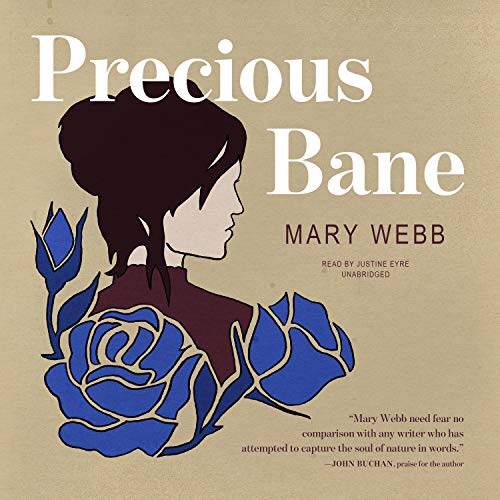
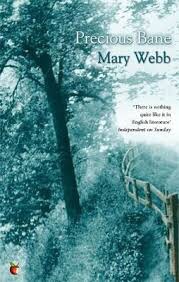
Throwback Thursday! Precious Bane by Mary Webb.

I was drawn to this novel because of my mum’s interest in Mary Webb’s novel Gone to Earth and the film adaptation starring Jennifer Jones. At the time I was writing my dissertation for my undergraduate degree in English Literature. I was writing about disability in 20th Century literature, but also developed an interest in disfigurement of female characters in literature such as Rosa Dartle in Dickens’s David Copperfield. I was interested in the way authors use it as an indicator of evil and/or sexual immorality. My mum suggested a more positive representation of disfigurement might be found in Precious Bane. Prudence is one of those characters it’s so easy to fall in love with. She’s so inextricably linked to the book’s setting, the wild country of Shropshire at the time of Waterloo. Prudence Sarn is a wild, passionate girl, cursed with a hare lip — her ‘precious bane’. Cursed for it, too, by the superstitious people amongst whom she lives. Prue loves two things: the remote countryside of her birth and, hopelessly, Kester Woodseaves, the weaver. The tale of how Woodseaves gradually discerns Prue’s true beauty is set against the tragic drama of Prue’s brother, Gideon, a driven man who is out of harmony with the natural world.

Prudence helps her mother and father on their farm, but is also deeply in tune with the wild countryside in which they live and grow crops. When her father dies suddenly, Prudence and her mother are under the protection of her brother Gideon who inherits the farm. Gideon was mistreated by their father, so now he sees the freedom to make changes at the farm and run it his way. This worries Prudence who knows her brother isn’t in tune with nature – at the funeral we see local superstition as the clergyman calls for the sin eater. Sin eaters were at funerals to take in the guilt and shame left over from sins that were not confessed before death. As Pru’s father died suddenly, they need someone to take on his sins so that he can enter heaven. The whole funeral party gasps as Gideon steps forward to take on his father’s sins. This will change his characters and peace of mind, as well as ruin his fledgling relationship with the beautiful Janice.

We see everything through Pru’s eyes and learn her innermost feelings about her life, family or about her looks. She refers to her lip as ‘hare-shotten’ – meaning that her pregnant mother was startled by a hare affecting her baby. Pru’s disability is what we know as a cleft palate; an opening in the lip that could extend to the nose or upper palate. This disability causes problems with eating, speaking and even hearing. These days it’s often corrected. Pru is philosophical about her lot and sees it as something that could have been much worse. It only starts to affect her when she falls in unrequited love. Each small holding would spin their own wool and employ a travelling weaver to create the fabric that they could use or trade. Pru is helping at Janice’s parents when the weaver arrives. Janice is the daughter of local wizard Beguildy, who has begrudgingly promised her to to Pru’s brother Gideon. All the women come together for a ‘love spinning’ to celebrate the wedding, but for Pru everything changes when Kester Woodseaves arrives. She explains it as a feeling that ‘the master has come’, but immediately knows there’s no future in it. Kester would not want a hare-shotten wife so she keeps her love close to her heart.
In the meantime, Gideon’s character has changed considerably since eating his father’s sins. He wants to run the farm his way after years of cruel treatment by his father. This means Pru and her mother working their fingers to the bone, for long hours and little thanks. He becomes obsessed with wanting a grand house in town and starts to neglect his relationship. He sees Janice less and when he does see her he is pressurising her to give up her virginity before their wedding. Janice will do anything for Gideon and when the consequences of his actions start to show, he has a choice. Will he forego material aspirations, marry Janice and claim their child? Or will he reject Janice’s plea for help and keep working towards the grand house? Even worse, if Janice is rejected by Gideon where will she go? Meanwhile Pru is strong as a workhorse, but life has had the joy sucked out of it and she worries about the long hours their elderly mother is working. She’s also concerned that Gideon has lost his soul.

Meanwhile, in a strange and comical turn of fate involving the mischievous Beguildy, Kester has seen Pru as a desireable woman. Aside from her face, Pru is aware that she’s not curvy and golden like Janice, but tall and willowy. Kester is transfixed by her figure when she poses as Venus, but he doesn’t see her face. However, he carries that vision in his mind as he moves to his next job far away and can’t forget her. For Pru, life takes a turn into tragedy that leaves her vulnerable. As the consequences of Gideon’s choices start to reverberate through the village, those who were friends and neighbours start to think differently. Crops fail and they’re looking for someone to blame. Superstition runs rampant as they suggest that witches can affect crops and livestock. Does a witch live in their midst? Does anyone have the mark of a witch? Pru is without protection and if the villagers turn who will save her?

I love this book because it depicts a woman with a disability in love, and being seen as desirable. Of course Mary Webb is writing back to the 18th century, from 1924. It has parallels with Daphne Du Maurier’s 1946 novel The King’s General, where the heroine, Honor, is a wheelchair user. It’s as though awareness at that time had changed towards disability – potentially due to two world wars creating veterans with impairments. I am emotionally invested as a disabled woman, because I want to see characters with impairments and illnesses being seen as sexual beings and potential life partners. Pru’s humbleness is so endearing. She doesn’t imagine for a second that Kester might see her or pick her out in a room full of women. That he might see her calmness, her intelligence, her modesty and think she’s the sort of woman he might want. I love the rural setting, the local superstition, and rituals like the love spinning or picking each other’s crops. Every time I read this, I fall in love with it over again. I can smell the warmth on the hay bales, the fresh picked apples and hear the buzz of dragonflies on the pond. This is one of my favourite love stories and it breaks my heart as Pru resigns herself to never being loved like Gideon loves Janice. Yet it warms my heart every time too. Pru calls her cleft palate her ‘precious bane’ and in truth it is a blessing. In a way it forces someone to look past her looks to her character and it brings her someone who is genuine, who loves her as she truly is and who gets her. That’s all we ever want.

Posted in Personal Purchase

Throwback Thursday! A Song for Issy Bradley by Carys Bray.

Meet the Bradleys.

In lots of ways, they’re a normal family:
Zippy is sixteen and in love for the first time; Al is thirteen and dreams of playing for Liverpool. And in some ways, they’re a bit different:
Seven-year-old Jacob believes in miracles. So does his dad. But these days their mum doesn’t believe in anything, not even getting out of bed.

How does life go on, now that Issy is gone?

This book is truly beautiful, moving and insightful novel about a family dealing with grief. The Bradley family have lost four year old Issy, and Carys Bray tells their story through each family member in turn. Bray has personal insight into the Mormon church, although she’s no longer a member. That doesn’t mean that this is a grand criticism of the religion, what she does is use her insight to craft a family of faith coping with the worst thing that could happen to them. She takes us on the weekly Merry-go-round of family night, youth club, Saturdays writing sermons and church on Sunday. I was brought up in a similarly restrictive evangelical Christian background till I rebelled at 16. I have spent my whole life watching adults try to reconcile their faith in an interventional God, with tragic events in their lives. When people believed that God granted them the good weather for their BBQ, it was hard for them to understand why my Multiple Sclerosis hadn’t responded to their healing. This could go one of two ways: God had a reason for giving me MS or I didn’t have enough faith for their healing to work. This family experience similar feelings and treatment, as their comfortable and cosy religious world implodes.

What the author shows us, is that nobody is immune from grief. Dad is a bishop in the church, and since marriage outside the faith is discouraged, Mum is a Mormon convert. His standpoint, although written with great empathy, is the one I found it hardest to relate to. Possibly this is because of my religious bias, but it felt like he was trying to make sense of it too early in the grieving process. It can take years to be able to put such an enormous loss into context and be able to identify its effect on your emotions and choices. This is the immediate aftermath and Ian is trying to make sense of it in terms of God’s purpose. As a bishop he has the pressure of the ‘public’ face he has to maintain. He’s a leader so he can’t appear weak, doubtful or as if he’s questioning God. It’s quite a normal reaction to feel very angry with God. If you have given your life over to his work you could be forgiven for having questions: Why has this happened when I serve you? Why should I believe in you? If followers see that doubt or uncertainty, it could undermine their faith. The only way to rationalise this, in the context of his position, is to assume God is testing him – testing his faith like Job or teaching him something. While this might keep Ian’s public face intact, he could be experiencing a crisis of faith behind the mask. Even worse it could put him on a collision course with the rest of his family.

Wife Claire is simply overwhelmed, unable to maintain a private face never mind a public one. She retires to her bed, completely paralysed by grief. She finds herself asking all the questions Ian is avoiding and as a convert she has a different context through which she can view her grief in many different ways, instead of just one. However, as she stays in bed, the rest of the children are dealing with their grief alone. The faith they’ve been brought up in has failed them, they have been faced with mortality so close to home it raises fears of further trauma. Eldest girl Zippy is trying to hold everything together at a turbulent point in her own development. She tries to be Mum to her youngest brother, the beautifully drawn Jacob. Her brother Alma is disappearing into his football and dreams of playing for Liverpool. All the children find their father’s responses strange and unsympathetic, but feel abandoned by Mum. There’s also an anger developing. Their father is a powerful man in church terms, so how have their parents let this happen? Could it happen to them? Bray has written in these children’s voices with skill and empathy. She has thoroughly imagined what their inner language would sound like. Jacob’s concept of his faith as at least the size of a toffee bonbon. They were so real I wanted to gather them and care for them.

For me, this was a stunning first novel and catapulted Carys Bray onto my list of authors whose work I would buy without hesitation. Her understanding of family dynamics and construction of each character’s inner world is exquisite. She just ‘gets’ the psychology of grief and I wasn’t surprised to discover she has experienced personal loss. Her care for each of these people, and even the religion she has left behind, is so evident and I was left feeling an affinity for her as well as the characters. The death of someone in such a young family is like throwing a grenade into the room. I felt like this book was capturing that immediate aftermath where adrenaline is still running, your ears are ringing, you don’t know where anyone else is or even how injured you are. I remember that feeling – of being so lost, you don’t know how lost you are. Bray is a novelist of exceptional depth and skill. I have just bought her third novel and I’m so looking forward to immersing myself into another of her worlds.

Meet The Author


Carys Bray was brought up in a devout Mormon family. In her early thirties she left the church and replaced religion with writing. She was awarded the Scott prize for her début short story collection Sweet Home. A Song for Issy Bradley is her first novel. She lives in Southport with her husband and four children.

Her first novel A SONG FOR ISSY BRADLEY was serialised on BBC Radio Four’s Book at Bedtime and was shortlisted for the Costa Book Awards and the Desmond Elliott Prize. It won the Authors’ Club Best First Novel Award. Her second novel, THE MUSEUM OF YOU, was published in June 2016. WHEN THE LIGHTS GO OUT, her third novel, was published in May 2020. Carys has a BA in Literature from The Open University and an MA and PhD in Creative Writing from Edge Hill University.

Posted in Personal Purchase

Throwback Thursday! The Final Testimony of Raphael Ignatius Phoenix by Paul Sussman.

Something very strange happened when I first read Paul Sussman’s book. I was up at night feeling unwell and made it half way through the novel without even taking a break. I had never read any of his books so as far as I knew this could have been a debut novel or one of hundreds. I launch straight into books without reading introductions, forewords or acknowledgements because I don’t like to be swayed by them. I don’t want someone else to tell me how to read a book, or in what context; I like to make up my own mind. I must admit on this occasion I was drawn in by the cover, but beyond that and the back cover blurb I knew nothing.


I realised half way through that I was reading with a smile on my face, despite feeling physically grotty! It made me smile because of the dark subject matter, the humour and sheer ingenuity of Raphael. I put it to one side and thought ‘I really wish my husband Jez had been around so I could read this to him’. He died 14 years ago and prior to his death he couldn’t read for himself. This is one of those books he would have loved. I then turned to the foreword and noticed it was written by Paul Sussman’s wife Alicky. I was so sad to read that she had been through the same loss I had, but amazed by the parallel. Jez couldn’t hold a book and couldn’t see to read for himself. He could get listening books but there were certain, funny, books that we liked to share so we could fall about laughing together. They would usually be ingenious, darkly comic and just a little bit naughty – rather like this one.

The character of Raphael Phoenix is irresistible. A cantankerous old pensioner, living alone in a castle, he decides that 100 years of living is enough. He has a plan and he also has a pill. He has had the pill his whole life since his birthday party with his childhood friend Emily. Emily’s father is a chemist and in his poison cupboard, among the ribbed glass bottles, is an innocuous white pill with a simple nick in one side. It has very particular ingredients that ensure an almost instant and painless death and it is the only thing he wants for his birthday so the pair replace the pill with mint of the very same size, with a nick from the edge to match. Raphael keeps the pill with him through his incredible life either in his pocket, in a gold ring or in more difficult circumstances, sellotaped under his armpit. He trusts his pill and knows that it will deliver the death he wants as he sits in his observatory, with an expensive glass of red wine (over £30 a bottle) watching the millennium fireworks. However, before then he has a story to tell us, several stories in fact, which take us through some of the most important periods of the 20th Century and he has a very peculiar way of splitting these stories into sections. He orders them according to the person he killed.

I had no idea what to expect and so I was surprised and charmed by this magical piece of work. It manages to be both, earthy and funny, but also incredibly poignant. You need to have a black sense of humour fir this one. Raphael is funny, but cantankerous and violent. The only two things he can depend on through his life are the pill and his friend Emily. Emily isn’t always by his side, but just manages to be there at the right times and seems to set his various destinies in motion. Raphael works backwards with his tales until the reader is desperate to know how all of these incredible twists and turns are set in motion and also whether his trusty pill will work so he gets the end he has been working so hard towards. I would read this if you enjoy dark humour and tall tales and like your narrators to be unreliable, as well as ever so slightly, morally ambiguous. It is darkly enchanting and I fell in love with it.

Meet The Author


Both the following posts are from Paul’s website:

For as long as I can remember, the two great loves of my life have been writing and archaeology (three if you include travelling in out of the way places, especially deserts). For many years I worked as a field archaeologist in Egypt, notably in Luxor and the Valley of the Kings, and all my novels to a greater or lesser extent draw on my experiences excavating and living in Egypt and the Middle East. My main protagonist, Inspector Yusuf Khalifa of the Luxor Police, is a composite of a number of people I know, and while his colourful adventures are products purely of my imagination, the world he inhabits is very much a real one. Through Khalifa I try to explore issues such as terrorism, contemporary Middle East politics, religion and government corruption, all against a backdrop of the extraordinary history and archaeological heritage of that part of the world. To find out a bit more about me and my novels, check out my website: http://www.paul-sussman.com.

Hello, this is Paul’s wife Alicky. As many of you know already, Paul died very suddenly from a ruptured aneurysm in May 2012. As well as being a talented author, he was a truly unique person – a brilliant Dad and adored husband. We all miss him so much. Paul finished putting together this website shortly before he died. He loved the design and was very excited about adding more photographs and writing his blog. I am keeping the site up to date with the latest news on his books – including the posthumously published novel – The Final Testimony of Raphael Ignatius Phoenix – but am loathe to make dramatic changes so apologize for anything that may feel a bit disjointed.

HOME

Posted in Personal Purchase

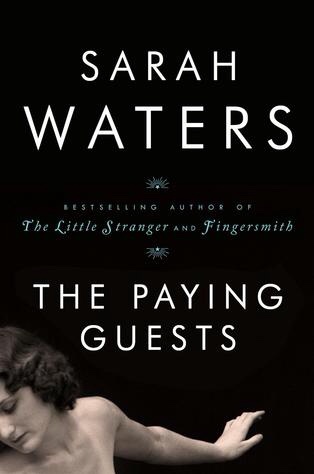
Throwback Thursday! The Paying Guests by Sarah Waters.

It’s been too long since we had a Sarah Waters novel and although I love her Victorian era fiction, this novel really did stay with me. In 1922 a mother and daughter live in a villa in Camberwell. A house once filled with the sounds of men – husbands, brothers and servants – is now largely quiet. Only the widow, Mrs Wray, and her daughter Frances remain. Impoverished by war and a lack of men to bring home the money, they are forced to rent out rooms in their home. Frances is a spinster, resigned to looking after her mother for the rest of her life, but with the arrival of tenants Lillian and Leonard Barber their house routine changes considerably. The couple do not come from the same class as the Wrays, and are the new, upcoming clerk class. However, no one could foresee the profound change their presence will make to Frances’s life as passions and frustrations mount. The Wray’s lives will never be the same again.

As some regular readers will know I love this post WW1 period of history. London is a very tense and unsettled place to live. The war followed by Spanish Flu has left generations in mourning, but has also managed to level out the class system, liberate women. Sadly it has also birthed a whole new dependent generation of people with disabilities and PTSD. Ex-servicemen might find a woman doing their job, who is very reluctant to give it up and return to the home. Or their disability prevents them from working at all, in some cases forcing them to beg on the street. The aristocracy are in decline – often hit by double death duties some are forced to go abroad, particularly the US, to look for a bride with money in order to prop up the estate. Women have moved out of the domestic sphere and have enjoyed the sense of freedom they’ve had. It’s a period of flux in a societal hierarchy that’s been in place for half a century or more. It’s a huge upheaval, but in such upheaval, previously suppressed groups can find their freedom.

I feel so much for Frances. The opportunities war brought to her are gone, but then so is the safety of her pre-war days when her father and brother were there to support and protect the household. Now she looks after her elderly mother alone, and now they can’t afford servants all the household tasks have fallen to her as well. She is sure she will die a spinster. She is also haunted by a lapse in self-control she gave in to during the war, scandalously involving another woman. Frances is haunted by her actions and now she knows how easy it is to lapse, she is even more determined to avoid impropriety. Their income is so depleted that Frances has prepared some of their upstairs rooms for use as a bed sit. They will now have to share their homes with a couple who are of a much lower class. The Barbers are shocking to Frances, and her mother, who are used to an element of deference from the lower classes. They are very direct and unencumbered by the manners and etiquette the Wrays are used to. Frances is desperately embarrassed by her lapse and their weakened circumstances. Taking in lodgers, or ‘paying guests’, is a humiliation for the family but they have no choice. The Barbers will have to be endured.

Sarah Waters cleverly takes a domestic space and uses it to illustrate the greater societal shifts of post-war Britain. Just as the aristocracy are having to relax the rules on who they marry, the Wrays have to get used to people they would never previously have entertained living in their home. Thinking they can remain separate and self-contained is an idea that simply doesn’t work in reality. Once they’ve settled in, the Barbers seem to encroach on the Wray’s private spaces. Their boundaries blur as the couple pass through Frances’s kitchen to get to the outside toilet. They meet each other on the landing in dressing gowns. With every cough or creak of the floorboards, Frances feels her quiet life being impinged upon. She is also finding her sexuality challenged again; she considered her war time experience with a woman a ‘one off’ incident. Now she senses an awakening as she gets to know Lillian. She knows women friends who live openly in London with their same sex partner. They are co-habiting with each other and being discreet, but true to who they are. Frances had chosen to stifle her feelings for fear of falling in love again and instigating her own ruin. The proximity of another woman could be challenging this and her connection to Lillian leads to a terrible act with far reaching consequences.

As usual with Waters, it was the strong characters and sense of place, that I engaged with first. I saw a review that called this crime fiction and of course it is, in that we have a crime and a nail-biting court case. It’s certainly a great addition to the crime genre, but it wasn’t the first things that stood out to me about the book. I love Waters’s women characters – they’re intelligent, complex and trying to be themselves in a world that wants to suppress and control them. Her depth of description makes her chosen historical period burst into life: the fabrics used in clothing, the objects in the Barber’s room, and the touch of forbidden skin. Her characters have rich inner lives and complex psychology. I would recommend this – and her other novels for anyone who loves historical or crime fiction. The court scenes are so tense and I found myself wishing and hoping for a particular outcome. That’s how good this author is, she can make you root for a character like they’re a real person and feel emotion for them. That shows how talented Sarah Waters is and if you’ve only read her Victorian fiction, make room for this on your book shelves.

Publisher: Riverhead Books 16th September 2014

Meet The Author

Sarah Waters was born in Wales in 1966 and lives in London. Author of Tipping the Velvet, Affinity, Fingersmith and The Night Watch, her most recent book is The Little Stranger. All of her books have attracted prizes: she won a Betty Trask Award, the Somerset Maugham Award and was twice shortlisted for the Mail on Sunday/John Llewellyn Rhys Prize. Fingersmith and The Night Watch were both shortlisted for the Man Booker and Orange prizes, and Fingersmith won the CWA Ellis Peters Dagger Award for Historical Crime Fiction and the South Bank Show Award for Literature. Tipping the Velvet, Affinity and Fingersmith have all been adapted for television.

Posted in Personal Purchase

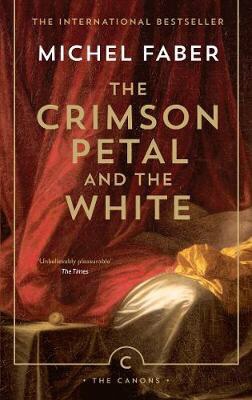
Throwback Thursday! The Crimson Petal and The White by Michael Faber.

Today is my first Throwback Thursday post where I tell you about a book that’s already in my collection. It can’t always be about brand new books. Especially at a time when people are struggling financially. All of my Thursday books should be available in your local library or might be found in a second hand book or charity shop. Hope you discover something new, but old at the same time 😊😊

Publisher: Canongate Books, 2014 – Paperback Edition

ISBN: 978-1782114413

Watch your step. Keep your wits about you; you will need them. This city I am bringing you to is vast and intricate, and you have not been here before. You may imagine, from other stories you’ve read, that you know it well, but those stories flattered you, welcoming you as a friend, treating you as if you belonged. The truth is that you are an alien from another time and place altogether.

This is a new feature for 2021 where I look back at a book that I’ve already read, possibly years ago, and bring it to reader’s attention. I was more than a little daunted by this brick of a novel by Michael Faber, but such is his incredible characterisation and ability to wrong foot you at every turn, that you’re left wishing you could stay in his world a little longer. This incredible work is the novel Dickens could gave written had not been constrained by the conventions and sensibilities of his age. In fact, this novel portrays a Victorian London slightly after Dickens time, where omnibuses take middle-class ladies to shop for fripperies, such as the soaps our hero William Rackham makes in the family factory. However, despite the period, it is not Rackham who occupies us or draws our attention. It’s the women in this novel who really hold the power. From poor Agnes, the long suffering wife of Rackham diagnosed with hysteria and confined to bed, to the alluring Sugar, a prostitute with a strange skin condition. I think it is Sugar who draws us into this tale, in much the same way she draws a man, the narrator beguilingly addresses us directly – perhaps in a parody of Jane Eyre’s ‘Reader I married him’. She makes it very clear that we may think we know London, we’ve read about it from other authors after all, but what she’s showing us is a London that was always there, but hidden from our eyes.

Sugar is just 19 years old, put on the game at a tender age, she is pale, and not even a beauty really. However, she has a reputation of mythic proportions, praised highly in More Sprees – the catalogue of London whores for those who are keen customers of brothels. Whilst the oft quoted estimate of a police magistrate was 50,000 prostitutes working in London in 1791, it’s likely this figure included unmarried women living with a partner, which was quite common in the working class communities. The British Library suggests a more accurate figure of 20,000, so for Sugar to be one of the best and even well-known is quite an achievement. Her entry in the book suggests that are acts she will perform that others don’t. William Rackham searches her out along with two friends who have the guide, although William seems more interested in drinking. Disillusioned with his job and married life, William has always wanted to be a writer, scribbling away at his desk in the big house, but has never finished anything publishable so his father drafts him in to to run the family business Rackham’s Soaps. His wife, Agnes, is rapidly turning into an invalid – spending much of her time in bed and only visited by the family doctor, convinced that the rest cure and his ‘treatments’ to correct potential hysteria will help. She doesn’t even remember she has a child.

When William does find Sugar, he is enamoured of her paleness, her compliance, and her keen brain. She is like no woman he’s ever met. He can talk about his business and she understands; perhaps the only woman who has truly understood him. However, there is one fly in the ointment. Agnes is still largely in bed, often distressed and resistant to the doctor’s visits, and unaware she is a mother. Their daughter needs to be kept quiet so that she doesn’t disturb her mother or William when he is working. As time goes on and keeping Sugar starts to become expensive, he has an idea. What if he were to move Sugar into the house as his daughter’s governess? There would be an answer to the problems posed by his child, and there would be no barrier to he and Sugar being together – even if he only has a short amount of time to spare. Anyone can see this is a disastrous idea, but ideas have never been William’s strong point. What will happen when every aspect of his life is under one roof?

These characters are so well drawn and our setting so painstakingly rendered with incredible detail, every time you pick up the novel it feels like you are there – with every smell and ribald comment of Sugar’s world. The lynch pin of the novel are the two women; Sugar and Agnes. With the two under one roof, William has the ideal situation for a man with a Madonna/Whore complex – one class of women for marrying and another for sex. Sugar has every sympathy for Agnes and soon has a shrewd idea of what is going on in this outwardly respectable home. Agnes is entirely an innocent, so much so she believes that demons ‘bleed’ her monthly. When she is subjected to sexual assault in the guise of examination by the doctor, Agnes is simply dosed with laudanum to keep her quiet. Every so often, even William visits his wife bed, taking what he can even when his wife is so drugged she can’t possibly consent or participate. For a young woman like Sugar who is used to women of bawdy conversation, who douche with vinegar next to each other and understand the mechanics of sex, Agnes is a complete innocent. In fact when she does see Sugar she thinks she is her Guardian Angel, something that Sugar is happy to cultivate. As William’s interest in Sugar wanes, she becomes furious and plots how she can help Agnes and Sophie. I also love that although William considers himself the literary figure, both women are writing daily. Sugar writes an erotic and bloody revenge novel on the men who have used and abused her. Meanwhile, Agnes keeps a daily diary, explaining what is happening to her and descending further into her ideas of angels and demons. Both women have a strength that William can only dream of.

I won’t ruin the end, because I recommend that you read it, especially those of you who love historical fiction. It’s really a race to find out whether our women will come out on top and how. If you’re used to historical fiction, you might expect things to be tied up neatly with a bow, but since this is a postmodern novel you won’t get that. In fact we !leave these people as abruptly as we came in with our all seeing narrator:

‘An abrupt parting I know but that’s the way it always is isn’t it?’


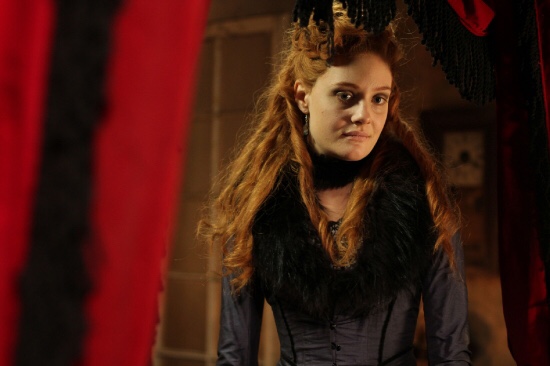
BBC Series The Crimson Petal and The White

The BBC series The Crimson Petal and the White was just as intriguing as the book and with an excellent cast. Romola Garai played Sugar, Gillian Anderson played her brothel madam and mother, and Chris O’Dowd took on his first drama role as William Rackham. The settings were authentic,the language of Sugar’s world and the lack of modesty in it’s women incredibly authentic. The series stayed very true to the book, was beautiful in terms of costume and sets, and even brought interest to lesser characters in the novel. Aside from the excellent main characters, Shirley Henderson memorably portrayed the religious reformer of prostitutes, Emmeline Fox. I always remember her tiny, hoarse voice and difficulties breathing which were a huge contrast to the conviction and fire within her. This was an excellent series, well worth searching out on DVD.

Posted in Personal Purchase

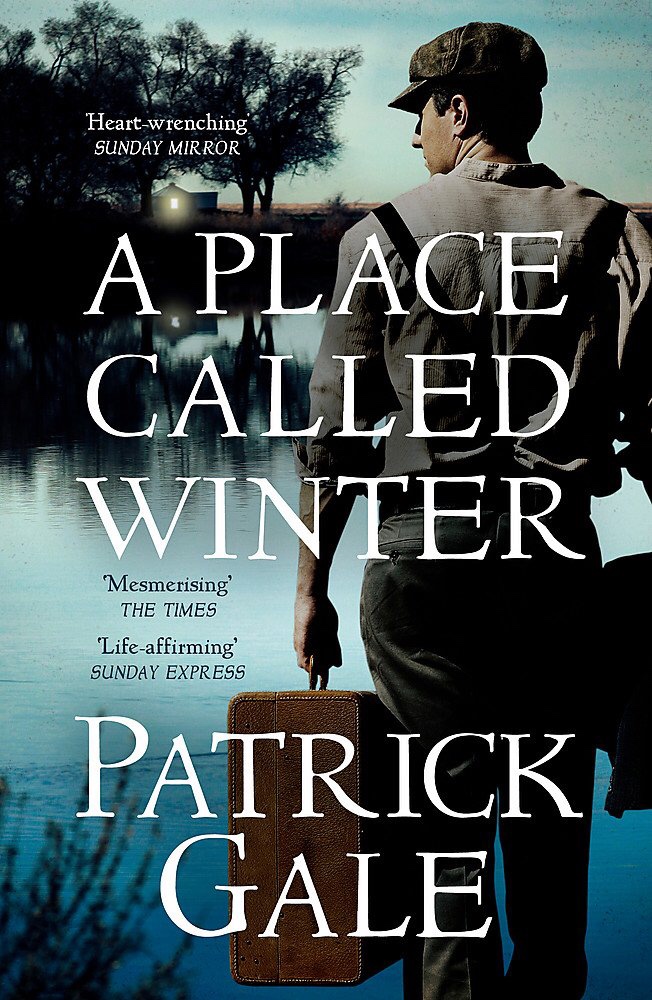
Throwback Thursday! A Place Called Winter by Patrick Gale.

Patrick Gale is one of those novelists I have so much confidence in, that I’ll buy their latest book straight away. I don’t need a review or blurb to tell me how good it is, if it’s Patrick Gale I’m going to enjoy it. In all his work there is such a warmth and empathy for his fellow humans. There’s an emotional intelligence in his work that makes him stand out and it was so evident in this novel based in the Edwardian period. Harry Cane is an upstanding member of society, living in a beautiful home with his wife and child. Many would think he has it all and he’s certainly followed a conventional path. He’s a quiet and shy man, who loves his child, but he also has a secret. He’s having an affair. Someone though, knows about his habits and has been watching him. He is offered a choice by his brother-in-law. If he leaves the country, avoiding the shame this could bring on their family, and starts again somewhere else, his wife and child will never know. If he stays, the shameful truth will emerge. Harry has been having an affair with a man.

The novel follows Harry on his way to Canada where he secures a ‘claim’ in a place called Winter. On his journey there he meets a man, villainous yet strangely magnetic, who will prove important in this new life. Leading to acts of cruelty, but also leading to his eventual happiness within a very unconventional family. I found my heart was inextricably bound up with Harry from an early stage of the novel. His relationship with his wife wasn’t passionate, but it was loving. I wondered if he’d spoken to her sooner, explained his true feelings, she might have listened. He married his best friend’s sister, so when he is discovered and threatened by his brother-in- law, there is an anger about their lost friendship too. I was gutted by him losing his daughter more than anything. In Canada, life is bleak and hard. For a man who has never worked hard or excelled at anything I wondered if he would be able to succeed. The work is back breaking, but Harry finds reserves of strength he didn’t know he had. He can cope with adversity, loneliness, war and even the brink of madness. I loved the arc of his self-knowledge; he leaves England believing himself a monster, but finds that he’s willing to fight to be loved. He knows he deserves it.

The historical context and sense of place are beautifully observed. We even see how the Cree are affected by the pioneers and the development of open prairie into farms. The love story is touching and I was rooting for them to find a way to be together, however unconventional. Patrick Gale always writes from a place of empathy and compassion for his characters and this book is no exception. This is a geographical journey, but also one of self-discovery. The title refers directly to a place, but also to a place where we live in isolation, without that one person who can mitigate the harshness of life. I felt like I lived alongside Harry, for every part of his journey. At the end I felt sad, but also like I’d experienced something real. That Harry’s life was like all human lives a combination of happiness, contentment, cruelty and loss. The author has written a novel here, that captures what it means to be human.

Meet The Author


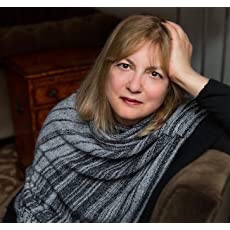
Patrick Gale was born on the Isle of Wight in 1962. He spent his infancy at Wandsworth Prison, which his father governed, then grew up in Winchester. He now lives on a farm near Land’s End. He’s a passionate gardener, cook, and cellist and chairs the North Cornwall Book Festival each October. His sixteen novels include the Costa-shortlisted A Place Called Winter, A Perfectly Good Man and Notes From an Exhibition – both of which were Richard and Judy Bookclub selections – The Whole Day Through and Rough Music. His latest, Take Nothing With You is a tale of teenage obsession, sexuality, betrayal and music-making. You can find out more on his website http://www.galewarning.org.

Posted in Personal Purchase

My Ramblings on the Reading Year 2021

Hello Subscribers and Visitors. This is me. The person behind The Lotus Readers. This is last August, on the beach at Beadnell with my dog Rafferty, during a brief relaxation of lockdown rules. This first year of my blog has been a tough one and this space, where I write about books is an oasis from the worries and concerns of the world out there. I’m lucky that I’ve not been touched by COVID personally. I have barely left the house since this shot was taken and it was my first time outside home since February 2020. I have multiple sclerosis, but I was having recurring problems with my breathing prior to the virus. I was waiting for an asthma assessment, then lockdown happened and of course there are more urgent priorities. This has made me more careful than perhaps I would have been, about who comes in and out of my space. I’m also lucky to have my partner and stepdaughters here, but I do spend a lot of time alone. I can’t do my job as a counsellor for MS patients inside my home because I’m at risk and many clients are too vulnerable to come out anyway. I quietly set my work aside last summer, hoping I will be able to start up again in the future. So, now I study from home, and last year I decided to start talking about books again – something I’d started and failed to keep up a few years ago. I truly believe that this blog, you readers, as well as the wonderful people I meet on book Twitter and other social media, have kept me going mentally. It’s been a huge positive in my life. So, in this first week of a new year and only weeks until my first blog birthday, what do I feel about book blogging in 2021?

I’ve seen many pronouncements on book Twitter over the last few days, about how people want to approach their new reading year. There’s been a lot of re-evaluation over several months on how we live our lives in general and I guess that’s bound to filter through to how we read. The added push of New Year marketing towards change and resolutions also affects us. It seems a few people want to scale back their reading – perhaps turning it back into something they do purely for pleasure and at their own pace. Going hand in hand with this has been talk of giving up blog tours. I know I’m not the only reader who has overcommitted at times, or felt the strain of a deadline and a book we simply haven’t clicked with. I can understand this approach, and I think it’s a genuine response to the pandemic. As our day to day choices are reduced by the government, it can feel too much to be obligated to read. We want to have choice in our personal activities and it’s natural to want to sit back and read solely for pleasure, especially for those who are still battling on in full time work or child care. My illness means I’m not working and I’m lucky that my stepdaughters are brilliant with helping out around the home. My time does have limits – my eyesight can be affected, fatigue and pain can prevent me from being active – but I do have a lot of time to devote to my love of books.

I don’t believe in New Year’s resolutions. If we think about it logically: the house is full of Christmas food and indulgent gifts; it’s usually cold and miserable outside; we’re all skint after Christmas shopping; we’re trudging back to work. It really is the most inhospitable environment for making changes, especially if those changes are to reduce, give up and take away things we enjoy. When we add a pandemic to the mix, it’s likely that we’re even more reliant on our indulgences just to get through – of course we know that drinking and eating have gone up since the first lockdown. The more natural times to start anew are spring and autumn. Spring aligns us with nature, everything is growing and bursting into life. We feel more optimistic as nights become lighter and we can be outdoors more. The other more obvious time is autumn and this is a learned feeling from our school days and the new academic year. Remember that first day back at school in new uniform, squeaky new shoes and looking forward to seeing friends again? Often adults still feel that tingle of excitement as days are crisper and signal the year is coming to an end. If you’re one of these people then this is a great time to make changes. My partner laughs because I’ve been really cranky towards companies telling me I’m obese exactly 24 hours after their advertising has been telling me to indulge!

My vices are books (and shoes) and I’ve spent a small fortune on mail orders to several different bookshops this year. It’s been those packages coming from time to time that have made my day. It’s been lovely to get unexpected ARCs or gifts from authors too, they lift me up. A great comment from an author or publisher on your review can mean everything on a day when you’ve seen no one, you’re still in yesterday’s pyjamas and you’re worried. I’m worried about my stepdaughter’s GCSE’s, my best friend having to shield again, being in the midst of buying and selling a house and my niece who’s having a baby amongst all of this. There are massive changes happening all around us and often it’s hard enough to take one day at a time and face what’s in front of me. I can’t make restrictive changes now and I’m not going to. Why restrain something that keeps me motivated and sane. Of course not all books on blog tours turn out to be my cup of tea, but I’m glad I stretch myself by reading them. Also, it helps out my bookish friends who are blog tour organisers. In turn some of the best books I read last year were on blog tours. I’m not going to restrict my amount of reading either; reading is my escape to different worlds, my travel, my meeting new people and my favourite way of passing time.

So what do I think about this new reading year? I’d like to remain part of a welcoming online community who’ve given me a home and help me with the technological stuff I’m not so good with. I think I could be better organised with a reading planner so that tours don’t spring up and surprise me. I’d like to add to my usual blogs with a ‘Throwback Thursday’ feature where I write about a book from my existing collection. Sometimes I can feel the pressure to get the latest ARC, and while that’s exciting, I’d like to focus once a week on the brilliant collection of books I have – maybe some that have passed others by. I’d also like to share my favourite writers with you in feature posts where I can explore and compare their work as well as looking at their life. Finally, I’d like to give back to all of you and my supportive fellow bloggers. So I’ll be hosting more book giveaways this year as I reach new milestones. As for my fellow bloggers, I want to make them feel their hard work is important. It’s all too easy to quickly like a post on Twitter or Instagram, and while likes are good, I have sometimes felt I’m writing into a void. Does anyone read this? Or the even less confident ‘ who would want to read this?’ We all have doubts about our blogging abilities so I’m going to make more effort to read my fellow bloggers work and leave more comments on the actual blog rather than on social media. It shows you’ve engaged with the piece of work someone has sweated over at 4am. It can spark conversation, but more importantly it lets the writer know you’re reading and enjoying what they have to say. So I look forward to spending 2021 with you all and wish you all a Happy Reading Year!

Posted in Throwback Thursday

Throwback Thursday! Blue Diary by Alice Hoffman.

When Ethan Ford fails to show up for work on a brilliant summer morning, none of his neighbors would guess that for more than thirteen years, he has been running from his past. His true nature has been locked away, as hidden as his real identity. But sometimes locks spring open, and the devastating truths of Ethan Ford’s history shatter the small-town peace of Monroe, affecting family and friends alike.

As regular readers know, Alice Hoffman is one of my favourite authors and while Blue Diary isn’t the first of her books I read, it’s definitely one of the best. Ethan and Jorie are one of those golden couples that probably annoy the hell out of everyone around them. They are a beautiful pair, with a lovely son, Collie. Jorie is the girl next door, the girl you’d ring if you needed advice or a shoulder to cry on, and the parent to ring if you need muffins baking for the school’s Christmas fair. Ethan is the neighbour you ring if you need help putting up a shelf, or if you wake up in the night and think someone is prowling in your garden. They are the cornerstone of this community.

Now, the police are at the door. Ethan Ford’s life as an irreproachable family man and heroic volunteer fireman has come to an end—and Jorie Ford’s life is coming apart. Some of the residents of Monroe are rallying behind Ethan. But others, including his wife and son, are wondering what remains true when so much is shown to be false—and how capable we really are of change.

Hoffman writes small towns and the dynamics of the people in them, so well. If Jorie and Ethan were in the Instagram age every photo would have #relationshipgoals in the replies underneath. Jorie’s world falls apart when Ethan is arrested and she is sure it must be a mistake. She knows this man, down to his bones. Surely she would know if he was hiding a dark secret? The novel invites us to ask the question: how well can we really know the person who’s head is on the pillow next to ours at night? Another thing that occurred to me as I was re-reading the novel, was how much the internet has changed our daily lives, into something we use like a daily diary. Originally published in 2001, when many people I knew didn’t have an internet connection in their home, my re-read of the book made me think about cancel culture and how much of people’s lives are now documented for all to see. Now, a long forgotten tasteless joke, inappropriate comment, or photographed drunken escapade, can be found years after the fact and be commented upon and criticised by millions. Applying the standards of today’s society, no matter how important and hard won they may be, to yesterday’s behaviour can be devastating for the individual involved. Even if their own views have now changed for the better, an individual can lose their livelihood, relationships, and potentially their whole life over one incident. It is an incredible power we hold in our hands when joining an internet ‘pile-on’.

Jorie only experiences this on a small town scale, but it’s effect is no less devastating. As it becomes known that Ethan has been arrested, to be interviewed on charges of the rape and murder of a young girl, neighbours and friends are shocked, but have to consider their response. Obviously the first question on everyone’s lips is whether Ethan is guilty or not, but beyond that: did Jorie know about this? Is she guilty by association? Is this his only crime? Can they still be friends with Jorie? Jorie has so many questions for Ethan, but other issues are swirling around in her mind. How will they cope financially? Will she lose her support network? Most importantly she wonders how to protect Collie from knowing about the accusations. This doesn’t just affect her and Ethan, this could blight Collie’s whole life too. With all this in mind, as well as needing to hear the truth, Jorie is wondering whether her marriage can survive this? Should it? When Ethan confesses to the crime, her world and her trust in her husband is shattered.

Ethan’s only defence is that he had no intention to rape or kill the young girl. His claim is that during consensual sex, he accidentally choked her and then decided to run, worrying that no one would believe his innocence. I wasn’t sure I did. He packed up and set up a new life for himself in Massachusetts where he met Jorie. Even if we believe his story, the injustice that he could choose to rebuild his life while his victim couldn’t really stayed with me. He had covered his tracks very well, until Collie’s 13 year old friend Kat, sees an e-fit of a suspect on television and rings the hotline to turn Ethan in. On one hand she feels it’s the right thing to do, but is sad about the effect this will have on Collie. I found it very surprising how many townsfolk were still willing to support and help Ethan, even after his confession. Jorie becomes more and more conflicted, then makes a decision to gain more information in an attempt to make peace with what has happened. She asks the victim’s brother if she can visit with him in Maryland. She needs to hear the context of the crime and the impact it had on the family involved.

There, Jorie gets a feel for the town and how this terrible act of violence was felt by all the residents. The victim’s name is Rachael and James takes Jorie up to Rachael’s room which has never been changed since her death. With Jorie the reader takes in the cuddly toys, the posters, and the framed photos of Rachael riding and with friends. This is a little girl’s room and when James talks about trying to scrub the bloodstain from the wall behind the bed, Ethan’s crime really comes home to the reader and to Jorie. The break also gives her some much needed breathing space, away from the pressure of the court case and the well-meaning supporters of Ethan, but also from Ethan himself. When she’s near him the love she has felt for him this past 13 years threatens to overwhelm her and the reality of Ethan’s crime. Here she has time to think clearly about what it is she has to forgive, before deciding whether she can. It isn’t just the crime itself, but the years of lies, as well as committing his life to her and starting a family knowing this was lurking in his past. He chose to have Collie with her, knowing that, if exposed, his crime would alter Collie’s life irreparably and leave him without a father. I found myself seeing a selfishness in these acts, but also in accepting help from the town seeking his acquittal and expecting Jorie to stand by him. Could the same selfishness, the wanting something and simply taking it, signal the real motive for his crime?

This is not a book about Ethan, nor is it a crime novel in the sense that we’re waiting for a murderer to be unmasked. This is more about the aftermath of violent crime for the family of the victim and the perpetrator. I think Hoffman does this very well. Her use of the victim’s diary as our way into her character is clever. We feel, alongside Jorie, for this sensitive girl falling in love for the first time. Her innocence in how she thinks of a relationship with Ethan is heartbreaking since we know the outcome. I loved the way Hoffman aligns her innocence with nature and gives us layers of description using flowers, trees, seasons and food to help us understand these characters and embed them within a place. We root for these people, drawn into a web of lies that is still being spun to protect Ethan. When we finally reach the section where the rape and murder takes place, it has a huge impact and made me cry on first reading, for all the victims of this crime. Ultimately, our ending hinges on Jorie’s ability to forgive and even if does, does forgiving mean we have to forget?

Meet The Author


Alice Hoffman is the author of thirty works of fiction, including Practical Magic, The Red Garden, The Dovekeepers and, most recently,The Museum of Extraordinary Things. She lives in Boston. Her latest novel The Book of Magic will be the fourth in the Practical Magic series abs will be released on 5th October 2021. Visit her website: http://www.alicehoffman.com

Posted in Personal Purchase

Books I’m Looking Forward To In 2021 Part 2

The Paris Library by Janet Skeslion Charles. John Murray Press 9th Feb 2021.

IN THE DARKNESS OF WAR, THE LIGHT OF BOOKS

I’ve had a particular interest in WW2 fiction more recently, because it’s a subject I’m using for my MA portfolio in Writing and Well-being. PARIS, 1939
Odile Souchet is obsessed with books, and her new job at the American Library in Paris – with its thriving community of students, writers and book lovers – is a dream come true. When war is declared, the Library is determined to remain open. But then the Nazis invade Paris, and everything changes. In Occupied Paris, choices as black and white as the words on a page become a murky shade of grey – choices that will put many on the wrong side of history, and the consequences of which will echo for decades to come.

MONTANA, 1983
Lily is a lonely teenage desperate to escape small-town Montana. She grows close to her neighbour Odile, discovering they share the same love of language, the same longings. But as Lily uncovers more about Odile’s mysterious past, she discovers a dark secret, closely guarded and long hidden. Based on the true Second World War story of the heroic librarians at the American Library in Paris, this is an unforgettable novel of romance, friendship, family, and of heroism found in the quietest of places. I have my pre-order in already! Watch out for my review in February.

Daughters of Night by Laura Shepherd-Robinson. Pan Macmillan. 18th February 2021.

Murder awaits in the illuminated night of Vauxhall Pleasure Gardens …

I love reading about the seedy underbelly of society, or different groups in society that aren’t usually represented in historical fiction. I love the work of Sarah Waters and one of my favourite books ever is Michael Faber’s The Crimson Petal and the White, where we follow the prostitute Sugar into an underclass of women trying to survive in a man’s world. These books change our one dimensional perceptions of a particular society or historical period. From an award-winning new star of historical fiction, Daughters of Night reveals the dangerous underbelly of Georgian London – giving a voice to the female victims history so often forgets, and the women who remembered them. Set in London, 1782. Caro Corsham finds a woman mortally wounded in the bowers of Vauxhall Pleasure Gardens. When the constables discover that the deceased woman was a high-society lady of the night, they stop searching for her killer – and it’s up to Caro to seek justice. But the hidden corners of Georgian society are filled with artifice, deception and secrets, and finding the killer will be harder, and more treacherous, than she can know … I’ve been lucky enough to have an ARC of this one and you won’t be disappointed.

Greenwich Park by Katherine Faulkner. Bloomsbury Publishing. 15th April 2021.

This novel is coming in early spring and I’m so looking forward to getting lost in the psyche of these two characters, Rachel and Helen. It fascinates me to see how the author has constructed these difficult selves and how they interact with each other. The overuse of the word ‘perfect’ in the blurb tells me that all in Helen’s world is maybe not as good as it appears.

Helen has it all… Daniel is the perfect husband. Rory is the perfect brother. Serena is the perfect sister-in-law. And Rachel? Rachel is the perfect nightmare. When Helen, finally pregnant after years of tragedy, attends her first antenatal class, she is expecting her loving architect husband to arrive soon after, along with her confident, charming brother Rory and his pregnant wife, the effortlessly beautiful Serena. What she is not expecting is Rachel. Extroverted, brash, unsettling single mother-to-be Rachel, who just wants to be Helen’s friend. Who just wants to get know Helen and her friends and her family. Who just wants to know everything about them. Every little secret… I can tell already that this is the book I won’t be able to put me down.

The Silk House by Katye Nunn. Orion. 21st January 2021.

This is a book I’m going to find myself completely immersed in. It has that combination of an old house filled with a weight of secrets, and a present day resident feeling the weight of that past, sucked into the mystery. An enchanting mystery kept hidden for hundreds of years…

1700s Rowan Caswell leaves her village to work at the home of an English silk merchant. Very soon, she finds herself thrust into a dangerous world, where her talent for herbs and healing starts to attract unwanted attention. Mary-LouiseStephenson dreams of becoming a silk designer, a path that has remained largely forbidden to women. A length of fabric she weaves with a pattern of deadly flowers will have shocking consequences for all who dwell at the Silk House. In the Present Day, Thea Rust arrives at an exclusive boarding school in the British countryside to look after the first intake of girls in its history. She is to stay with them in the Silk House, a converted silk factory from the 18th century, where the shadows hide secrets waiting to be discovered… I can’t wait to discover them with her.

The Summer Job by Lizzy Dent. Viking. 15th April 2021

Have you ever imagined running away from your life?

Well Birdy Finch didn’t just imagine it. She did it. Which might’ve been an error. And the life she’s run into? Her best friend, Heather’s. The only problem is, she hasn’t told Heather. Actually there are a few other problems… Can Birdy carry off a summer at a luxury Scottish hotel pretending to be her best friend (who incidentally is a world-class wine expert)? And can she stop herself from falling for the first man she’s ever actually liked (but who thinks she’s someone else)?

WANT TO ESCAPE REAL LIFE FOR A WHILE? RUN AWAY WITH BIRDY FINCH, A MESSY HEROINE WITH A HEART OF GOLD. THE SUMMER JOB IS THE HOTTEST DEBUT TO LOSE YOURSELF IN THIS YEAR.

‘Fresh, funny and oh so relatable – the perfect tonic’ — ABBIE GREAVES

‘Fun with a capital F . . . If you’ve ever felt you’re getting left behind in life, or don’t have everything worked out quite yet, this is the book for you’ — SOPHIE COUSENS

‘I fell for Birdy on the very first page and inhaled the rest of her story . . . A brilliantly original plot paired with fabulously funny writing – a pure joy to read!’ — HELLY ACTON

I’ve been lucky enough to receive a proof of this, with my very own lobster bookmark! When I watched a documentary on Helen Fielding and the phenomenon of Bridget Jones’s Diary I was thinking about how ready we are for a new heroine to fall in love with. This is going to be an indulgent weekend read for me, and I’m sure I will fall in love with Birdy too.

The World at my Feet by Catherine Isaac. Simon and Schuster U.K. Publication Date TBC

The dazzling new novel from Richard & Judy book club author Catherine Isaac, The World at my Feet is a story about the transforming power of love, as one woman journeys to uncover the past and reshape her future.

1990. Harriet is a journalist. Her job takes her to dangerous places, where she asks questions and tries to make a difference. But when she is sent to Romania, to the state orphanages the world is only just learning about, she is forced to rethink her most important rule. 2018. Ellie is a gardener. Her garden is her sanctuary, her pride and joy. But, though she spends long days outdoors, she hasn’t set foot beyond her gate for far too long. Now someone enters her life who could finally be the reason she needs to overcome her fears. From post-revolution Romania to the idyllic English countryside, The World at My Feet is the story of two women, two worlds, and a journey of self-discovery that spans a lifetime. I wanted to read this because I was a teenager when the news of the Romanian orphanages first came to light. I was deeply affected by the pictures of babies and toddlers, in rows of cots, rocking to comfort themselves. It was the silence that scared me most, the fact that they knew it was pointless to cry because no one would come. It was my first sense of wanting to do something, to get involved in some way and help. I am looking forward to reading about someone who was there on the ground and did just that.

The Last One At The Party by Bethany Clift. Hodder and Stoughton. 4th Feb 2021

THE END OF EVERYTHING WAS HER BEGINNING

It’s December 2023 and the world as we know it has ended. I’m not sure how I feel about reading this book at this height of this second wave, but I know that I’m intrigued by the premise. The human race has been wiped out by a virus called 6DM (‘Six Days Maximum’ – the longest you’ve got before your body destroys itself). But somehow, in London, one woman is still alive. A woman who has spent her whole life compromising what she wants, hiding how she feels and desperately trying to fit in. A woman who is entirely unprepared to face a future on her own. Now, with only an abandoned golden retriever for company, she must travel through burning cities, avoiding rotting corpses and ravenous rats on a final journey to discover if she really is the last surviving person on earth. And with no one else to live for, who will she become now that she’s completely alone? I’m prepared for a few nightmares when I delve into this next week.

Tall Bones by Anna Bailey. Random House U.K. 1st April 2021.

I know that when I start this book, it’s going to be one of those I can’t put down! When I’m like that I tell my other half to clear the weekend. I’ve been known to be still awake at 3am because I can’t stop. The blurb is so enticing. When seventeen-year-old Emma leaves her best friend Abi at a party in the woods, she believes, like most girls her age, that their lives are just beginning. Many things will happen that night, but Emma will never see her friend again. Abi’s disappearance cracks open the façade of the small town of Whistling Ridge, its intimate history of long-held grudges and resentment. Even within Abi’s family, there are questions to be asked – of Noah, the older brother whom Abi betrayed, of Jude, the shining younger sibling who hides his battle scars, of Dolly, her mother and Samuel, her father – both in thrall to the fire and brimstone preacher who holds the entire town in his grasp. Then there is Rat, the outsider, whose presence in the town both unsettles and excites those around him. Anything could happen in Whistling Ridge, this tinder box of small-town rage, and all it will take is just one spark – the truth of what really happened that night out at the Tall Bones….

The Shape of Darkness by Laura Purcell. Raven Books. 21st Jan 2021

Wicked deeds require the cover of darkness…

Victorian Gothic novels are like cat nip to me and Laura Purcell has become one of my go-to authors. That means she’s one of the privileged few writers whose books I will buy without reading a single review, Silhouette artist Agnes is struggling to keep her business afloat. Still recovering from a serious illness herself, making enough money to support her elderly mother and her orphaned nephew Cedric has never been easy, but then one of her clients is murdered shortly after sitting for Agnes, and then another, and another… Desperately seeking an answer, Agnes approaches Pearl, a child spirit medium lodging in Bath with her older half-sister and her ailing father, hoping that if Pearl can make contact with those who died, they might reveal who killed them. But Agnes and Pearl quickly discover that instead they may have opened the door to something that they can never put back…

What secrets lie hidden in the darkness? I can’t wait to find out.

Posted in Personal Purchase

Books I’m Looking Forward To In 2021 Part 1

The Lamplighters by Emma Stonex. Pan Macmillan. 4th March 2021

They say we’ll never know what happened to those men. They say the sea keeps its secrets . . .

Cornwall, 1972. Three keepers vanish from a remote lighthouse, miles from the shore. The entrance door is locked from the inside. The clocks have stopped. The Principal Keeper’s weather log describes a mighty storm, but the skies have been clear all week. What happened to those three men, out on the tower? The heavy sea whispers their names. The tide shifts beneath the swell, drowning ghosts. Can their secrets ever be recovered from the waves? Twenty years later, the women they left behind are still struggling to move on. Helen, Jenny and Michelle should have been united by the tragedy, but instead it drove them apart. And then a writer approaches them. He wants to give them a chance to tell their side of the story. But only in confronting their darkest fears can the truth begin to surface. Inspired by real events, The Lamplighters is an intoxicating and suspenseful mystery, an unforgettable story of love and grief that explores the way our fears blur the line between the real and the imagined.

See my full review of The Lamplighters here:

https://lotuswritingtherapy.com/2021/01/03/the-lamplighters-by-emma-stonex/

Madam by Phoebe Wynne. Quercus. 18th Feb 2021.

For 150 years, Caldonbrae Hall has loomed high above the Scottish cliffs as a beacon of excellence in the ancestral castle of Lord William Hope. A boarding school for girls, it promises that its pupils will emerge ‘resilient and ready to serve society’.
Into its illustrious midst steps Rose Christie, a 26-year-old Classics teacher and new head of department. Rose is overwhelmed by the institution: its arcane traditions, unrivalled prestige, and terrifyingly cool, vindictive students. Her classroom becomes her haven, where the stories of fearless women from ancient Greek and Roman history ignite the curiosity of the girls she teaches and, unknowingly, the suspicions of the powers that be.
But as Rose uncovers the darkness that beats at the very heart of Caldonbrae, the lines between myth and reality grow ever more blurred. It will be up to Rose – and the fierce young women she has come to love – to find a way to escape the fate the school has in store for them, before it is too late.

See my full review of Madam here:

https://lotuswritingtherapy.com/2020/12/19/madam-by-phoebe-wynne/

The Split by Laura Kaye. Quercus. 18th March 2021.

Brutally dumped by her girlfriend, Ally is homeless, friendless and jobless… but at least she has Malcolm. Wounded and betrayed, Ally has made off with the one thing she thinks might soothe the pain: Emily’s cat. 

After a long train journey she arrives home to her dad in Sheffield, ready to fold herself up in her duvet and remain on the sofa for the foreseeable. Her dad has other ideas. A phone call later, and Ally is reunited with her first ever beard and friend of old, Jeremy. He too is broken-hearted and living at home again. In an inspired effort to hold each other up, the pair decide to sign up for the local half marathon in a bid to impress their exes with their commitment and athleticism. Given neither of them can run, they enlist the support of athletic, not to mention beautiful, Jo. But will she have them running for the hills… or will their ridiculous plan pay off…? I’ve seen this described as ‘humour, kindness, cake and a cat’ – sounds like the perfect day to me. My full review will be out soon.

Everything Happens For A Reason by Katie Allen. Orenda Books. 10th June 2021.

Mum-to-be Rachel did everything right, but it all went wrong. Her son, Luke, was stillborn and she finds herself on maternity leave without a baby, trying to make sense of her loss. When a misguided well-wisher tells her that ‘everything happens for a reason’, she becomes obsessed with finding that reason, driven by grief and convinced that she is somehow to blame. She remembers that on the day she discovered her pregnancy, she’d stopped a man from jumping in front of a train, and she s now certain that saving his life cost her the life of her son. Desperate to find him, she enlists an unlikely ally in Lola, an Underground worker, and Lola’s seven-year-old daughter, Josephine, and eventually tracks him down, with completely unexpected results… Both a heart-wrenchingly poignant portrait of grief and a gloriously uplifting and disarmingly funny story of a young woman’s determination, Everything Happens for a Reasonis a bittersweet, life- affirming read and, quite simply, unforgettable.

While Paris Slept by Ruth Druart. Headline. 4th March 2021.

On a platform in occupied Paris, a mother whispers goodbye.
It is the end.
But also the beginning.

Paris 1944
A young woman’s future is torn away in a heartbeat. Herded on to a train bound for Auschwitz, in an act of desperation she entrusts her most precious possession to a stranger. All she has left now is hope.

Santa Cruz 1953
Jean-Luc thought he had left it all behind. The scar on his face a small price to pay for surviving the horrors of Nazi Occupation. Now, he has a new life in California, a family. He never expected the past to come knocking on his door. On a darkened platform, two destinies become entangled. Their choice will change the future in ways neither could have imagined.

Unwell Women by Elinor Cleghorn. Weidenfeld and Nicholson. 10th June 2021.

See my very personal preview of this exciting book here:

https://lotuswritingtherapy.com/2020/12/31/most-anticipated-2021-unwell-women-by-elinor-cleghorn/

The Last House on Needless Street by Catriona Ward. Serpent’s Tail/Viper. 18th March 2021.

I have been excited about this book for months now and was so excited to receive an ARC on NetGalley! It’s now at the top of my TBR pile and I’m looking forward to getting started this week. Why so excited? When I read that Stephen King had said ‘I haven’t read anything this exciting since Gone Girl’ I started to take notice. Another favourite author of mine, Joanne Harris, agreed that ‘Books like this don’t come around too often’ . This is the story of a murderer. A stolen child. Revenge. This is the story of Ted, who lives with his daughter Lauren and his cat Olivia in an ordinary house at the end of an ordinary street. All these things are true. And yet some of them are lies. You think you know what’s inside the last house on Needless Street. You think you’ve read this story before. In the dark forest at the end of Needless Street, something lies buried. But it’s not what you think… Based on the reviews I’ve read, I would pre- order now ( I’ve already got my hardback on order because this is one of those ARC’s I need a real copy of). Review coming soon.

The One Hundred Years of Lenni and Margot by Marianne Cronin. Doubleday/ Random House UK. 18th Feb 2021.

Everything I’ve read about this novel tells me it’s made for me. I’ve had a pending request for it on NetGalley for a while, but not long to wait until I can pop to the local bookshop for it. We all need something to keep our hopes alive, especially at the moment and this book seems to uplift people. It’s about an extraordinary friendship. A lifetime of stories. Their last one begins here. Life is short – no one knows that better than seventeen year-old Lenni Petterssen. On the Terminal Ward, the nurses are offering their condolences already, but Lenni still has plenty of living to do. When she meets 83-year-old Margot Macrae, a fellow patient offering new friendship and enviable artistic skills, Lenni’s life begins to soar in ways she’d never imagined. As their bond deepens, a world of stories opens up: of wartime love and loss, of misunderstanding and reconciliation, of courage, kindness and joy. Stories that have led Lenni and Margot to the end of their days.

The One Hundred Years is a celebration of life, hope and kindness. The perfect read to shine a light on dark days.

The Kingdoms by Natasha Pulley. Bloomsbury. 27th May 2021.

Such are the problems of a book bloggers world – I’ve had this proof for a couple of months but have such a pile of proofs I need to wait till we’re a bit closer to publication. It’s calling to me though, because I became a die-hard fan of Natasha Pulley’s writing in 2016 when I fell in love with a clockwork octopus and a lonely Japanese watchmaker. This promises to be another imaginative mash-up of history and fantasy.

Come home, if you remember.

The postcard has been held at the sorting office for ninety-one years, waiting to be delivered to Joe Tournier. On the front is a lighthouse – Eilean Mor, in the Outer Hebrides. Joe has never left England, never even left London. He is a British slave, one of thousands throughout the French Empire. He has a job, a wife, a baby daughter. But he also has flashes of a life he cannot remember and of a world that never existed – a world where English is spoken in England, and not French. And now he has a postcard of a lighthouse built just six months ago, that was first written nearly one hundred years ago, by a stranger who seems to know him very well. Joe’s journey to unravel the truth will take him from French-occupied London to a remote Scottish island, and back through time itself as he battles for his life – and for a very different future.

These are just a few of the releases I’m looking forward to in the first part of this year. Look out for part 2 later in the week, but be prepared for your wish list to grow even longer. Happy Reading!