Posted in Throwback Thursday, Uncategorized

Throwback Thursday! Engleby by Sebastian Faulks.

‘My name is Mike Engleby and I’m in my second year at an ancient university’.

In this book Faulks creates one of the best unreliable narrators in fiction. His voice is mesmerising, intelligent and strangely compelling. I found myself strangely drawn in by him. In fact he’s very funny, in a darkly humorous way. We’re restricted to his first person narrative and his tale of a working class upbringing, affected by poverty and physically abusive treatment from his stepfather. Despite his disadvantages, he wins a place at a Cambridge college. Although he’s intellectually capable of fitting in, socially he’s a misfit, struggling on the edges of college society. Then he sees a girl in the tearoom of the University Library and an obsession starts. He observes Jennifer to a degree that’s detailed and creepy.

‘She was smoking a cigarette and trying not to laugh, but her eyes looked concerned and vulnerable as Robin’s low voice went urgently on. She is alive, Godammit she is alive. She looks so poised, with that womanly concern, beginning to override the girlish humour. I will always remember that balanced woman/girl expression on her face.’

This is the detail of someone who is watching constantly. He seems to have very little empathy for others, apart from Jennifer. So when she disappears, we are left in conflict. Where should our sympathies lie? Has Engleby lost someone he truly cared for or is something more sinister going on? Now I can’t claim that Faulks created the unreliable narrator, but this is the first time I truly had the rug swept from under me by a book. It’s not so much a twist, as a seismic shift that makes me question absolutely everything I’d read up to this point. The next books that surprised me this much was Atonement and We Need To Talk About Kevin so the book is in great company.

The build up is very slow, but the tension soon becomes unbearable. We’re waiting for something to snap! I felt myself weirdly torn between compassion and contempt for this boy who has been subjected to cruelty and possibly developed this faux intellectual and pretentious personality to survive. Or, has simply been lying to us all along? Faulks is questioning the way writers construct identity on the page and the reader’s tendency to believe the person presented to them, often without question. Is identity as fluid as he presents, or are some of our characteristics set in a permanent ‘self’ as most of us would like to believe. It’s an uncomfortable read, not just because we might feel confused with our own fixed and fluid selves, but because we feel complicit with a narrator we’ve enjoyed. Even more uncomfortable, could it be because there might be a little bit of Engleby in all of us.

Meet the Author


Sebastian Faulks was born in April 1953. Before becoming a full-time writer in 1991, he worked as a journalist. Sebastian Faulks’s books include A Possible Life, Human Traces, On Green Dolphin Street, Engleby, Birdsong, A Week in December and Where My Heart Used to Beat.

Posted in Personal Purchase

The Lost Apothecary by Sarah Penner.

With crackling suspense, unforgettable characters and searing insight, The Lost Apothecary is a subversive and intoxicating debut novel of secrets, vengeance and the remarkable ways women can save each other despite the barrier of time.

Hidden in the depths of eighteenth-century London, a secret apothecary shop caters to an unusual kind of clientele. Women across the city whisper of a mysterious figure named Nella who sells well-disguised poisons to use against the oppressive men in their lives. But the apothecary’s fate is jeopardized when her newest patron, a precocious twelve-year-old, makes a fatal mistake, sparking a string of consequences that echo through the centuries.

Meanwhile in present-day London, aspiring historian Caroline Parcewell spends her tenth wedding anniversary alone, running from her own demons. When she stumbles upon a clue to the unsolved apothecary murders that haunted London two hundred years ago, her life collides with the apothecary’s in a stunning twist of fate―and not everyone will survive.

2021’s Most Highly Anticipated New Books Newsweek
Most Anticipated Books of 2021 Popsugar

Nearing her ten-year anniversary, Caroline stumbles on a secret that changes everything, and is now exploring London alone on a holiday booked to celebrate with her husband. There is an element of numbness in her response, as she reflects on the life she’d expected to have here in the U.K. Caroline is English and had plans to for a post-graduate career, when she met her husband who had a great job, back home in the States. She chose to follow her heart and is reflecting on all she gave up for the relationship, when she stumbles across a man who takes tourists out mudlarking. When she joins them, she finds wandering the shoreline looking for objects in the mud, strangely relaxing. She follows their guide’s advice that she shouldn’t look for an object, but look at patterns in the mud for an absence of something. Not long after she finds her bottle, an apothecary bottle, with a crude etching of a bear.

The object sends us back to the 18th Century and our second narrator, Eliza. Eliza is only twelve years old, but wise beyond her years in some ways. She is working as a lady’s maid, for a mistress whose husband has a wandering eye and even more worrying wandering hands. These don’t just extend to his mistress, but sometimes to Eliza, who wakes up one day having been drugged with no recollection of what has happened to her. Unable to stomach his infidelity, Eliza’s mistress sends her to a mysterious apothecary who resides in Bear Alley. There she will enter the shop front, and as instructed, leave her mistresses’s instructions in a barrel. The apothecary will make up a tincture or poison for the buyer’s purpose and it will be ready to collect the next day. Nella, the mysterious apothecary, creates a poison for the purpose of killing the husband. However, they are at crossed purposes, because Eliza’s mistress intends the poison for their dinner guest, her husband’s lover. The consequences of this mix-up will be life changing, for Eliza and Nella.

This was a brilliant eye-opener to women’s lives in 18th Century London, and an interesting comparison to 21st Century women too. Despite our usual thinking that females lives were quite restricted, here in Nelly and Eliza, we have two women who are acting quite independently. It showed me how we can be mislead in our perceptions of a time period and the people in it, highlighting how important academic research is. We tend to think of the late 18th Century and Regency periods in terms of Jane Austen – all polite, restrained, conversation and bonnets. However, that is only highlighting one class of women and here we see that there were women living on the margins, independent of the marriage market and making their own living. Eliza’s mistress is wholly dependent on her husband, so the fear around his relationship with another woman is not emotional, but financial and based on what others will think. If set aside, she would potentially lose her home, her comfortable living and her place in polite society. Nella lives a poorer life with no status in society, but she’s dependent on no one. Her shop and her trade are hers alone. She’s also a woman focused on helping the sisterhood, her potions and poisons are only sold for the healing or help of women. In fact when she finds out the poison Eliza seeks for her mistress is to harm another woman, she wants to destroy it.

In contrast, we imagine that a 21st Century woman would be in a better position than Eliza’s mistress, but is Caroline truly as independent as Nella? She had dreams and plans for her life, that were set aside when she met her husband because his career was established back in the USA. She then changed continents, leaving behind her dreams, her family and friends. She’s then dependent upon her husband financially and for his social circle, there’s no support network for her and she finally admits to herself that she’s been unhappy in the relationship for some time. When she takes the vial she’s found to Gaynor at the British Library a whole world opens up in front of her. She is enthusiastic, full of life and starts to gain back some agency in her own life. So when her husband unexpectedly arrives to join her, how will she feel about his desire to save their relationship? Caroline has to learn to be her own woman again and relish that sense of independence that Nella loved and protected two hundred years earlier.

I thought the author conveyed both 18th and 21st Century London really well. I could imagine myself there with all the sights and smells she conjured up. I loved the description of the apothecary shop, back in its heyday and as it was when Caroline rediscovered it. That she would find the very book where Nella recorded women who would otherwise be forgotten, was an amazing thought. These were women who wouldn’t be recorded in history largely written by men. When I first studied 18th Century literature I realised how narrow my knowledge of the period was, focussed on battles and adventure rather than the domestic. I remember Moll Flanders being a bawdy, unexpected eye opener of how one woman uses what she can to survive in life. Sometimes, we apply 21st Century standards to women living in an entirely different world and I loved that the author turned that on its head and asked whether we’re any more free? Even if the choices she made to get there were entirely her own, Caroline has still been living in a gilded cage. The ending of Nella and Eliza’s story was unexpected, but showed the strength of female friendship and solidarity. I found myself hoping that Caroline would do the same – to choose an unexpected and unknown future of her own making. This was a brilliant read, historical fiction at its best and an incredible debut from an author I’ll be watching in the future.

Meet The Author


Sarah Penner is the New York Times bestselling author of THE LOST APOTHECARY (Park Row Books/HarperCollins), available now wherever books are sold. THE LOST APOTHECARY will be translated into two dozen languages worldwide. Sarah and her husband live in St. Petersburg, Florida with their miniature dachshund, Zoe. To learn more, visit SarahPenner.com

Posted in Personal Purchase

Throwback Thursday! The Enchanted April by Elizabeth Von Armin.

This is such an apt novel for the time of year, but I’ve found myself thinking about it recently for two other reasons. Of course spring is on it’s way, but this year is something of a personal renaissance. I’ve been shielding since the second lockdown, because I have multiple sclerosis and it means I have a few issues with swallowing and breathing. This was a personal choice, but thank goodness I did, because I did receive a government letter four weeks ago telling me I should have been shielding. A brilliant bit of irony. So now I can have friends come and join me for a dog walk or sit in my garden for a cuppa together. I can’t explain how joyful this makes me feel. I will feel connected to the world again – well, as much as I ever want to be. I can also have my hair coloured silver blonde with lilac dip-dye! Hairdressers here I come.

The other reason is that four weeks ago I moved to my new home. It’s an 18th Century cottage in a really happy village, and I feel like the real me is re-emerging. We’d been living in the city, on a relatively new estate and I had no idea how much of an effect this as having on my mental health. I was sitting on my reading couch at the weekend with the sun coming in, next door have an apple tree and the branches hang over the fence, so I can smell the blossom when I have the window open. On Sunday afternoon we had a pot of tea and our Easter cake outside in the garden, where an enormous jasmine hangs heavily on the wall wafting a heady scent over the whole garden. I started planning what I’d like in the garden across the seasons and that always feels like a corner has been turned. It’s as if we went into hibernation in winter 2019 and we’re only just coming out and that feeling reminded me of the characters in this novel.

The premise of the book is that a discreet advertisement appears in The Times, addressed ‘To Those who Appreciate Wisteria and Sunshine’. On offer is a small medieval castle for rent, above a bay on the Italian Riviera. Four very different women – the dishevelled and downtrodden Mrs Wilkins, the sad, sweet-faced Mrs Arbuthnot, the formidable widow Mrs Fisher and the ravishing socialite Lady Caroline Dester – are drawn to the shores of the Mediterranean that April. As each, in turn, blossoms in the warmth of the Italian spring and finds their spirits stirring, quite unexpected changes occur. These characters drive the novel, as it is their responses to each other and to Italy that take centre stage. Mrs Wilkins and Mrs Arbuthnot are the first to respond, both ladies living resignedly, but quietly, in unhappy marriages. They are joined by Lady Caroline, a younger, beautiful woman who has found that her looks can be more of a burden than a blessing. Finally, there’s Mrs Fisher. A formidable woman who has a very strong will, which she tries to impose on the other women. The author is so perceptive when it comes to human foibles and how personalities rub against each other when living side by side. Tiny little acts of pettiness and selfishness can take on huge importance in these situations. However, what the author also shows is that one person’s character failing can have a transformative effect on someone else. One woman’s need to be in charge, inspires assertiveness in a quieter, more timid member of the party. The early chapters are a comedy of errors and miscommunication as the women try and often fail to understand each other.

The author deliberately creates an opening that feels like being under a rain cloud. The weather is miserable and cold, each woman feels unhappy or have lost themselves in some way. Then as they’re thrown together for this month in the castle we wonder if they’ll ever get along and if Italy will work its magic on them. The second half of the book feels like entering spring, the sun is shining and the surroundings start to work on each woman, even Mrs Fisher. The characters and the surroundings come into bloom. There are vivid descriptions of the castle and its gardens so the reader can really visualise the setting. It feels like a literary painting. Slowly, each woman begins their transformation. In the case of the married ladies, they invite their husbands to join them in Italy. Could this special place transform their marriages, relight a spark or remind them of the deeper love they once shared?

The movie version of the novel.

The novel is charming and light, without falling into whimsy or sentimentality, showing extraordinary skill in the writer. Despite barely having a plot, the book can be read as a satire on class and society post WW1. It could be read as a travel novel or just a study in how a different culture, characters and nature can soften and change us for the better. There isn’t a single character here who isn’t changed by the magic of Italy, and that’s the final reason I love this book. I was meant to get married last spring and go to Venice for my honeymoon. I picked the perfect hotel room with a double aspect and a balcony over one of the smaller canals. It would have been my third trip to Venice, but I don’t think I’ll ever tire of it. The first time I visited we arrived at night and took a water taxi in the dark across the lagoon. We arrived at a small jetty and it was so quiet, just the sound of water lapping against the buildings. The lamplight was reflected in the ripples on the surface, as well as tiny lanterns as we stepped up into a small garden. We walked through a courtyard with pots, pergolas with hanging plants and the tiny points of light hanging within. It was such a surprise because gardens are rare in Venice, but there it was. I did feel changed by my visit. I felt amazed that such a beautiful place actually existed and that I could go there whenever I wanted. It improved my confidence, my creativity and taught me to go a bit slower. If I never go abroad again in my life, I’ll be happy because I went to Venice. This book captures some of that transformative feeling; its a witty and delightful depiction of what it is like to rediscover joy.

Elizabeth von Arnim (1866-1941) was an Australian-born British novelist who was married to a Prussian aristocrat. Her most famous works include Elizabeth and Her German Garden and The Enchanted April

Posted in Throwback Thursday

Throwback Thursday! The Miniaturist and Meeting Jessie Burton.


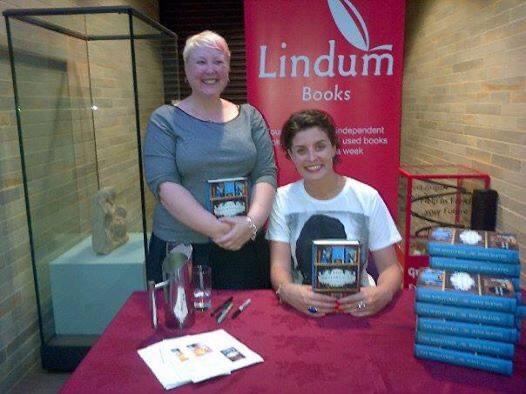
Me and Jessie Burton! I never imagined I would meet the author of a book I picked up at my local indie bookshop Lindum Books. They run regular evenings with authors at The Collection in the city of Lincoln – I can’t wait to attend them again in the future. This was a great evening listening to Jessie Burton talk about her exciting debut novel The Miniaturist. Admittedly the book was displayed well, but I picked it up because it looked so intriguing. There was an element of mystery as well as a historical setting, plus a cover with a vintage bird cage and since I have a bird cage tattoo I am attracted to them all the time. I had read the book before the evening and loved it, so I was very eager to hear about how it was written and as a very amateur writer I am always interested in a writer’s inspiration and the writing process.

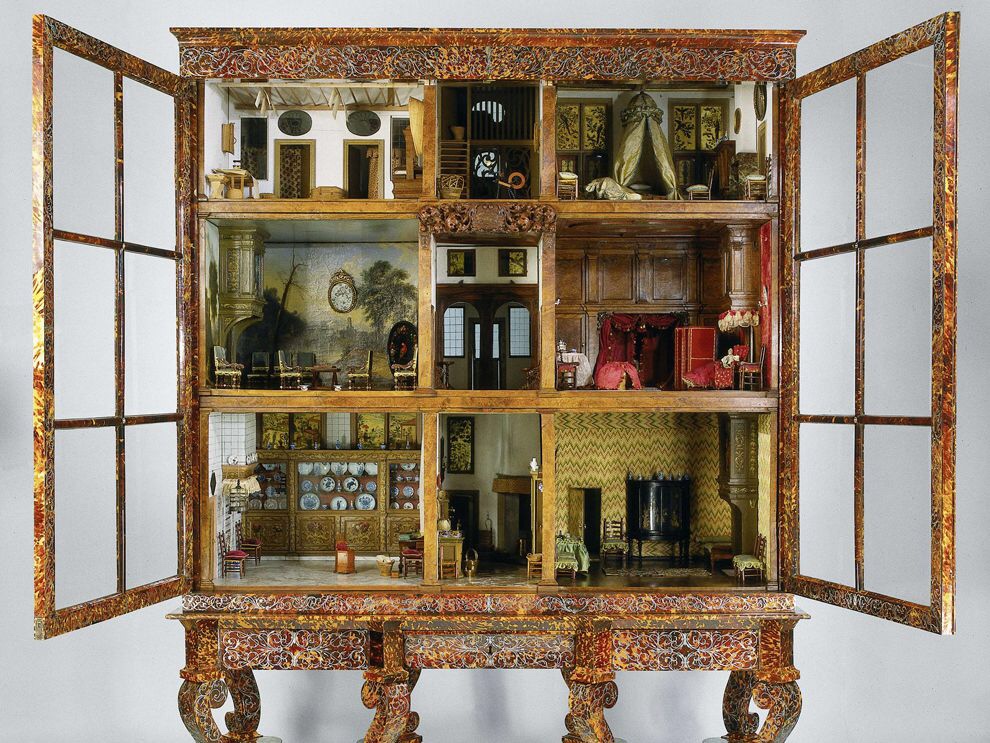
Jessie’s ability to tell stories means she is immediately engaging and natural with an audience. In her potted biography we learned she had a drama background and that definitely came across in her reading of the novel and during a humorous and lovely question and answer session. Jessie’s inspiration was a beautiful cabinet house in The Riijksmuseum, Amsterdam belonging to Petronella Oortman. The house is made up of 9 rooms that are so ornate and richly furnished that it cost as much as a real house. This fact and the sheer beauty of the piece piqued Jessie’s interest so much that she built her novel around it. Spending only ten days in Amsterdam but doing plenty of reading and researching, writing started using the name of Petronella Oortman but reimagining her as a new young wife entering Amsterdam for the first time. Nella needs to make a good marriage to support her family and marries business man Johannes Brandt who owns an incredible house in the wealthiest district of Amsterdam. However, when Nella arrives she is greeted by an open door and Johannes Brandt’s sharp tongued sister and housekeeper, Marin. Johannes buys Nella a cabinet house, an exact replica of the grand house they live in and its appearance in the novel is based on the one in the Riijksmuseum. Jessie did a reading of an early chapter entitled The Gift where Nella, disturbed by the fact she rarely sees Johannes in the day or at night, explores the house and starts to ask questions of Marin. It is a chapter where we see the beginning of an interesting tension between the two very different women and as Nella explores the house we start to see a major theme of the novel developing too; the conflict between interior and exterior worlds.


The questions began with one about research and how Jessie had gained her expertise in 17th Century Dutch culture. The audience also wanted to know how long the research process had been before she started writing. Jessie did most of her research the old fashioned way, by reading and writing in a piecemeal way (This amateur was pleased to know that writing while researching is ok). She shone some light into the publishing process too, it’s not as simple as getting an agent and then getting a publishing deal. There were 17 edits and 3 different drafts of the whole novel during the process and several different endings including one where every character had a happy outcome that was vetoed by her friends. One of the terms she used was to ‘write out’ something I was very interested in as a writing therapist where I am constantly using exercises to write out emotions and past experiences. She was referring to it as her writing process of working things out as she went along; there was no single moment where she sat down to write and it was all worked out with plot, characters and ending.

Petronella Oortman’s cabinet house.


I learned an enormous amount about the culture the novel was set in and there were some interesting parallels with Lincolnshire. Jessie felt that the people of Amsterdam were in the strange position of having built their own land by draining the area using canals and dykes. This was very pertinent to me because my ancestors on my father’s side were Dutch and came over to implement the same system of land drainage here in Lincolnshire. Jessie talked about the tension between the immense wealth of the city and the people’s Calvinist principles as well as the interesting roles of women in the city who often married later than their European counterparts and worked in business with their husbands. She was also interested in their liberality in that area but their barbarity in others, such as the practice of drowning homosexuals with a millstone round their necks. The African character, Otto, was discussed in his historical context; apparently wealthy merchant’s coats of arms were decorated with black faces as well as buildings in Amsterdam -probably a nod towards the city’s involvement with the slave trade. Otto would never have received the magnanimity he enjoys in the Brandt household anywhere outside. One of the most interesting ideas to me was the exploration of interior and exterior decor and architecture. The grand house has rooms that are lavishly decorated, but they are mainly to the front of the house where they can be seen from the street or where they are seen by visitors. Similarly, Nella’s cabinet house is a condensed version of the home but only contains the best rooms and it takes the miniaturist’s pieces to highlight the similar difference between what the character’s show and what remains hidden. The revelations of these character’s private rooms and their private lives is what makes the novel so compelling.


I still can’t recommend this novel enough. It combines intelligent research and just the type of relationship tensions, secrets and surprises to keep you reading. There will be a certain character that will grab you and Jessie admitted to having a soft spot for Marin who comes across as abrupt and harsh, but does have incredible depths beneath the icy exterior. The miniaturist of the title is a shadowy figure who has more insight into the characters than anyone else but only ever appears in glimpses despite Nella’s efforts to find her. This was intentional and although Jessie was asked whether she was planning to write a sequel there are none at present. Jessie is writing a second novel and is finding that a completely different experience because she has less time and is under more scrutiny since The Miniaturist ended up in an 11 publisher auction and there are rumours of film rights being obtained. The new novel is provisionally titled Belonging and is set across two times; the Spanish Civil War and 1960s London. Even now, years later, I am intrigued by the mystical and spiritual character of the miniaturist who knows all but cannot be seen, and has an ending that’s very much unfinished.

Published by Picador 3rd July 2014.

I have remained a huge fan of Jesse and loved the BBC adaptation of The Miniaturist in 2017. I have also built up a signed collection of her novels The Muse and The Confession and of the children’s book, The Restless Girls. Her novels have been translated into 38 languages, and she is a regular essay writer for newspapers and magazines. The Miniaturist ended up being a Sunday Times number 1 bestseller in both hardback and paperback, and a New York Times bestseller. It sold over a million copies in its first year of publication, and was awarded the Waterstones Book of the Year, and Book of the Year at the National Book Awards. The Muse was also a Sunday Times number 1 bestseller in both hardback and paperback, and has sold more than 500,000 copies. The Confession is Jessie’s third novel, and became an immediate bestseller too.

Visit her website at https://www.jessieburton.com, and follow her on Instagram at https://www.instagram.com/jessieburton

Posted in Throwback Thursday

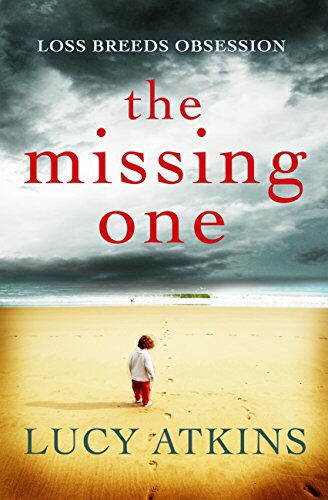
Throwback Thursday! The Missing One by Lucy Atkins

When this book first came out, I raced through it over a couple of days, because I was dying to find out what happened back in the 1970s to Elena and Susannah. A terrifying and traumatic event links these two women until the present day and it can’t stay a secret for ever. In the present is Elena’s daughter Kali, who has just lost her mother to breast cancer – a mother she could never make sense of or bond with as she wanted. In the aftermath of Elena’s death, Kali is trying to make sense of this difficult relationship, when she finds a pile of postcards from a woman called Susannah in her mother’s belongings. Thinking she has found the clue to her mother’s past, Kali pursues this woman to find out about events leading up to her birth and hints of a family history that has resolutely stayed hidden. Driven forward by grief and the worry that her husband is having an affair, Kali takes her son Finn on an odyssey to find the mother she never really knew and herself. She has many theories about what she might find: maybe her father had an affair; maybe Susannah was his lover or her mother’s? Yet, what she finds is something she never suspected.

Set against the backdrop of wild North America and Canada, we learn about a woman’s quest to understand the Orca. Distressed by witnessing the killer whales at Seaworld in California while doing her PhD, a young Elena leaves everything to record killer whale pods in the ocean. The Seaworld orca gave birth to a calf that was so disorientated by his tiny tank he kept banging himself against the glass trying to navigate through echolocation. His desperate mother keeps pushing him away from the sides to protect him from damage, but in her efforts to protect she forgets to nurture and the calf dies because she has forgotten to feed him. Kali was similarly starved of nurturing by her mother. Is it because Elena was so intent instead on protecting her from this awful secret?


The novel is an incredible insight into relations between mothers and daughters. Kali’s sister Alice has a great relationship with her mother that seems easy, whereas Kali and Elena clash over everything. Kali sees that her mother finds her hard to nurture and believes it is her fault. It takes putting herself in danger to find out why and in finding out she also discovers that essential piece of the jigsaw that tells her who she is and grounds her in a history. The novel shows how when you become a mother it becomes more important than ever to know where you are from and how you belong. It also shows how the secrets of one generation have a huge impact on the next, even if the secret is kept with the best of intentions. The book cleverly shows the difference between generations since we have now moved into a world where we put our own lives on show for fun. In a world where counselling and therapy are becoming the norm it is no longer seen as acceptable to keep such huge secrets and we know as post-Freudians what effect those early years of parenting have on the adult we become.


Aside from the complex human relationships are the family ties within the Orca families. We see how there are resident pods and transient pods with different feeding habits and rules to abide by. It is also clear that parallels can be drawn between the whale relationships and the human ones. Elena is so moved by their mothering instincts and the possibilities to map their language and understand their emotions. She gives up everything to spend as much time with them as she possibly can even going to sleep on her floathouse with the sounds of whales drifting up from a microphone in the water. I learned so much about these incredible creatures without losing the majesty of them and the awe a human being feels when a huge tail rises up out of the water next to their boat.

The novel can be read in many different ways: as a dissection of family relationships, a thriller, a study of whales and a study of grief. Grief causes Elena to suffer with depression throughout her life, grief traumatises Susannah to the extent that she is unbalanced by the things she has witnessed and it is grief that compels Kali to jump on a plane to Vancouver with nothing but a few postcards and the internet to go on. I struggled to put the novel down because of the thriller element. Like a good crime novel, you desperately want to know the truth of who- dunnit. Yet it is those final chapters I like best, after everything is resolved and each character is living in the aftermath of exposed secrets and recovery from physical and mental injury. The novel could have ended there and I am glad that it went further, back into Elena’s past so that we can see her happy on her floathouse making coffee and then hearing those whales come to greet her. As a widow of eight years I found those final words of Elena’s deeply moving:


She would go back to that throughout her life, right to the very end. But the last time, when the world had shrunken to the contours of her skin and she leaned over the railings, it wasn’t the whales that she saw in the water. And so she jumped.

It made me very hopeful for whoever might greet me when my time comes.

Meet The Author

Lucy Atkins is an award-winning British author and journalist. Her most recent novel, Magpie Lane, is a literary thriller set in an Oxford college. Her other novels are The Night Visitor (which has been optioned for TV), The Missing One, and The Other Child. 

Lucy is a book critic for The Sunday Times and has written features for UK newspapers including The Guardian, The Telegraph, The Times, and many magazines. She was a Costa Novel Award judge in 2017, and teaches creative writing to Masters students at Oxford University. 

She is mother of three and has also written several non-fiction books including the Amazon #1 parenting guide, First Time Parent (Collins). She has lived in Philadelphia, Boston and Seattle and now lives in Oxford, UK. 

For news, events and offers see http://www.lucyatkins.com

Follow Lucy on Twitter @lucyatkins

Posted in Throwback Thursday

Throwback Thursday! The Illusionists and Daughter of the House by Rosie Thomas.


My experience of finding these two novels by Rosie Thomas shows that the old cliché ‘never judge a book by its’ cover’ does sometimes apply. I was browsing on my kindle (a lethal pastime) and looking through my recommendations when I came across Daughter of the House. The cover had a magical, ‘circus’ feel that I loved so I had to discover more. It had an historical setting pre- WWI onward; a period I’d been drawn to that year. It also promised a brave, enlightened woman at the centre of the story about growing up in an unconventional musical hall family. I bought it based on cover alone, then realised it was the second in a series of books.The first was The Illusionists and I knew from the cover of top hats, decks of cards and magic wands that this was the series for me. It’s rare for me to find a magical novel set in the late Victorian period that I haven’t read. The title seemed familiar though and it was only the next morning that I found (among the many piles of books that litter the corners of my house) I had a hardback copy of the same novel, but had never picked it up to read. The cover was very different, depicting a bridge over an almost impressionistic river scene, that told me nothing about the contents inside. A friend had bought me the book when it first came out, but due to that cover and the lack of a synopsis on the back it kept being recycled to the bottom of the TBR pile. It showed me a difference between buying physical books and kindle copies. I am often alerted to unusual and highly enjoyable novels via kindle store or apps like Goodreads that I wouldn’t necessarily pick up in a book shop due to the cover. Of course the bonus was that I now had two great novels to read back to back and I was not disappointed by either of them.

Set in 1885 the first novel follows the story of Eliza who is a young woman limited by lack of money whose only choices for the future seem to be the domesticity of an advantageous marriage (an idea she finds suffocating) or a degrading downward spiral towards life on the streets. Despite the massive social changes happening in fin de siècle London, women have less chance of making their fortune and living life on their own terms. Then she meets the charismatic and ambitious illusionist Devil Wix. Devil is haunted by traumatic events in his childhood, but is determined to become a household name and successful entrepreneur in the theatre world. We follow Devil’s mission as he puts together a band of quirky misfits to put on the greatest show London has ever seen in the run down Palmyra Theatre. During the 12 years covered by the novel Devil is by turns alluring, brilliant and often comical. However, from his friend’s and Eliza’s point of view he can be elusive, maddening and deceptive when he wants to be. Somehow though, the reader is able to forgive him anything. Perhaps this is because we are charmed by him in the same way Eliza is. Two friends work alongside Devil. His magician friend Carlos and set/props designer Jasper. Carlos is a dwarf in stature, but has mighty magical ambitions of his own and with Devil creates new and memorable illusions to stun audiences. Jasper is more of a scientist who tinkers away in his workshop creating the props for the illusions, but has also designed an automaton he names Lucy. As soon as Eliza comes into their world it is as if the circle of friends is complete and they work together to create a magical show. Although it seems inevitable that they will be together, Devil and Eliza’s courtship is a slow dance. Their budding relationship sees Eliza step outside what is thought to be respectable for a Victorian woman and embark upon an alternative life she never thought possible. For Devil the relationship brings him the stability he has never had and a partner in work and life who can match him for determination, ambition and creativity.

The magical and more supernatural elements of the novel are balanced beautifully with the historical period detail. Eliza chooses to live in a women’s hostel and work for a living even before she becomes involved with the theatre crowd. This is a bold, modern choice that tells us a lot about her character. The author uses Eliza’s sister as the contrasting Victorian ideal of ‘The Angel in the House’. Eliza’s visits to her sister’s home show us that traditional Victorian domestic life, but while Eliza loves her nieces and nephews she doesn’t envy her sister’s position in society and often seems relieved to return to her unconventional life. She treads a very fine line between what is and isn’t respectable by socialising in bars with Devil, Carlos and Jasper, staying alone with Devil in his flat, becoming a life model at the art school and performing on the stage. She is confounded by her need for Devil to be faithful and exclusive to her.


We also see economic change and social mobility throughout the novel. Devil promotes his shows in a way that has never been done before. First he utilises Eliza’s art student friends to create mysterious adverts across the city, that develop a buzz about his show. He then creates street illusions that are easy to transport and perform, then performs these ‘pop-up’ illusions in the street, handing out leaflets to stunned onlookers. By choosing his streets carefully he attracts wealthy audiences who are happy to spend money and this ensures the theatre is packed night after night. Due to this method of promoting his theatre, and the different audience he attracts, Devil changes what is acceptable as entertainment in upper class circles. Whereas music hall was thought to be low culture and only for the working classes, Devil exploits the human need to ‘keep up with the Joneses’ and makes his theatre the place to be seen.. His entrepreneurial skills result in an upward mobility for his family so they can live in a beautiful area of London and have more opportunities that he had. This is where the story develops into the second novel and into a background of even more turbulent times in the early 20th Century.

Daughter of the House centres on Devil and Eliza’s daughter Zenobia (known to the family as Nancy) against the backdrop of WWI, the Suffragette movement and the decline of music hall. The novel opens as the family embark upon a boat trip and tragedy strikes when the captain decides they must return to port because of a storm. The boat crashes into the marina and it is a fight for survival for Devil and Eliza and all of their children. Thomas creates a beautiful metaphor here in Nancy’s fight to stay above the water as her large Victorian skirts and petticoat become water-logged and start dragging her under. This foreshadows Nancy need to live a different life and break free of Victorian expectations of women, perhaps even more radically than her mother did. In the struggle Nancy not only saves herself, but her brother too and it is here we see the beginnings of her resilience and determination. It is also here that we see the first glimpse of what she calls her ‘Uncanny’ – the ability to see beyond the physical world. Nancy fights against this unique gift and doesn’t want anyone to know about her ability. Yet it is because of this accident that family friend Mr Feather does become aware of her abilities. As his beloved sister is lost in the accident, he begs Nancy to foresee where she is and this episode sets off an obsession that never goes away.


The Palmyra theatre is struggling and Devil has been hiding the true extent of their financial difficulties from his family. Eliza’s growing role as a mother has meant taking time away from managing the theatre and Devil does not have her administrative or financial skills. Eliza loves her children, but is frustrated in the very role she never really wanted. Meanwhile Devil flounders in his management of the Palmyra, making bad financial decisions and failing to provide what modern audiences want to see. As the crisis deepens Nancy becomes aware that her gift, hidden until now, might be the only answer to her family’s problems. The late Victorian appetite for mesmerism, hypnosis and spiritualism has continued into the 20th Century and Nancy’s gift soon begins to fill the theatre. So, as WWI draws to a close, the Palmyra is once again playing to packed houses as grieving families in their thousands want to find their lost sons, fathers and husbands still lying unfound in the battlefields of France. Thomas shows the social and historical change of three difficult decades so cleverly especially the wake of WWI as women become more in control of their lives and a country grieves a generation lost. For those who survived, the need for to forget the horrors of war can be seen at the raucous country house parties of Nancy’s theatre friends. The breakdown of class barriers becomes apparent as Nancy’s brother transcends his family’s social class, becoming an officer in the army and attracting a wife from an aristocratic family. Alternative ways of living are explored as the author shows us more women living alone, and Nancy’s gay best friends who have openly set up home together. Yet, we also see what post-war living could be like for the lower classes who acquired injuries, but can’t afford adequate care or rehabilitation. Nancy’s brother returns home with shell-shock and finds coping with the outside world beyond his capabilities, instead finding solace in his garden.

The book explores Nancy’s struggle with a rare and beautiful gift that can also be terrifying and unexpected. Her rivalry with Mr Feather highlights the darker side of clairvoyance and ultimately ends in unwanted confrontation. We see the need in people who desperately want to hear from their lost loved one only to be disappointed. A disappointment that can develop into an obsession and an inability to move forward in the grieving process. Nancy wrestles to maintain the purity and honesty of her gift; never pretending or creating hope where there is none. Audiences fail to realise that she is unable to control her gift. It isn’t like picking up a telephone, she doesn’t know who or what will come through. However, audiences want the reassurance that they were seeking, or the guarantee their loved one lives on somewhere in the afterlife and is waiting for them. Nancy tries to give no promises and does not want to offer false reassurance, if forced to give the exact promise they seek, she feels she has betrayed herself and her gift. This is the difference between true clairvoyance and show business and for Nancy they are uneasy bedfellows. What she sees is not always spectacular nor the happy ending an audience might be hoping for. This dilemma rang true for me as something all people with these gifts might face and it shows that making money from her ‘Uncanny’ is not as going to be as easy as her father’s magic tricks; if she is going to do it with integrity.


I would recommend reading both of these books, but they do stand-alone too. The Wix family are entertaining and intriguing, the historical backdrop is well researched, and even the smaller characters are well written and memorable. Carlos’s determination to overcome his disability is inspiring and his friendship with Devil, like all showbiz partnerships, is full of ups and downs. Eliza’s sister and brother-in-law are there to provide a contrast to the Wix’s unconventional relationship, but their characters are still well-rounded and the relationship between the sisters feels real. Eliza’s realisation that having children is all consuming and life-changing creates an unexpected affinity with her sister. She recognises that even if you want an alternative way of life, children always create a need for a strong family network and support around you. In the early 20th Century women’s lives are changing, but not that much. Eliza’s daughter, Nancy, realises that even though she is more accepted as a strong independent woman she is still hampered by her class and bohemian background. Despite feeling free to pursue her love for a married man, she finds that this freedom is not all she imagined it would be and yearns for more. If you want page turning story-telling with a supernatural and magical twist then these are the books for you.

Posted in Personal Purchase

Throwback Thursday! Precious Bane by Mary Webb.

I was drawn to this novel because of my mum’s interest in Mary Webb’s novel Gone to Earth and the film adaptation starring Jennifer Jones. At the time I was writing my dissertation for my undergraduate degree in English Literature. I was writing about disability in 20th Century literature, but also developed an interest in disfigurement of female characters in literature such as Rosa Dartle in Dickens’s David Copperfield. I was interested in the way authors use it as an indicator of evil and/or sexual immorality. My mum suggested a more positive representation of disfigurement might be found in Precious Bane. Prudence is one of those characters it’s so easy to fall in love with. She’s so inextricably linked to the book’s setting, the wild country of Shropshire at the time of Waterloo. Prudence Sarn is a wild, passionate girl, cursed with a hare lip — her ‘precious bane’. Cursed for it, too, by the superstitious people amongst whom she lives. Prue loves two things: the remote countryside of her birth and, hopelessly, Kester Woodseaves, the weaver. The tale of how Woodseaves gradually discerns Prue’s true beauty is set against the tragic drama of Prue’s brother, Gideon, a driven man who is out of harmony with the natural world.

Prudence helps her mother and father on their farm, but is also deeply in tune with the wild countryside in which they live and grow crops. When her father dies suddenly, Prudence and her mother are under the protection of her brother Gideon who inherits the farm. Gideon was mistreated by their father, so now he sees the freedom to make changes at the farm and run it his way. This worries Prudence who knows her brother isn’t in tune with nature – at the funeral we see local superstition as the clergyman calls for the sin eater. Sin eaters were at funerals to take in the guilt and shame left over from sins that were not confessed before death. As Pru’s father died suddenly, they need someone to take on his sins so that he can enter heaven. The whole funeral party gasps as Gideon steps forward to take on his father’s sins. This will change his characters and peace of mind, as well as ruin his fledgling relationship with the beautiful Janice.

We see everything through Pru’s eyes and learn her innermost feelings about her life, family or about her looks. She refers to her lip as ‘hare-shotten’ – meaning that her pregnant mother was startled by a hare affecting her baby. Pru’s disability is what we know as a cleft palate; an opening in the lip that could extend to the nose or upper palate. This disability causes problems with eating, speaking and even hearing. These days it’s often corrected. Pru is philosophical about her lot and sees it as something that could have been much worse. It only starts to affect her when she falls in unrequited love. Each small holding would spin their own wool and employ a travelling weaver to create the fabric that they could use or trade. Pru is helping at Janice’s parents when the weaver arrives. Janice is the daughter of local wizard Beguildy, who has begrudgingly promised her to to Pru’s brother Gideon. All the women come together for a ‘love spinning’ to celebrate the wedding, but for Pru everything changes when Kester Woodseaves arrives. She explains it as a feeling that ‘the master has come’, but immediately knows there’s no future in it. Kester would not want a hare-shotten wife so she keeps her love close to her heart.

In the meantime, Gideon’s character has changed considerably since eating his father’s sins. He wants to run the farm his way after years of cruel treatment by his father. This means Pru and her mother working their fingers to the bone, for long hours and little thanks. He becomes obsessed with wanting a grand house in town and starts to neglect his relationship. He sees Janice less and when he does see her he is pressurising her to give up her virginity before their wedding. Janice will do anything for Gideon and when the consequences of his actions start to show, he has a choice. Will he forego material aspirations, marry Janice and claim their child? Or will he reject Janice’s plea for help and keep working towards the grand house? Even worse, if Janice is rejected by Gideon where will she go? Meanwhile Pru is strong as a workhorse, but life has had the joy sucked out of it and she worries about the long hours their elderly mother is working. She’s also concerned that Gideon has lost his soul.

Meanwhile, in a strange and comical turn of fate involving the mischievous Beguildy, Kester has seen Pru as a desireable woman. Aside from her face, Pru is aware that she’s not curvy and golden like Janice, but tall and willowy. Kester is transfixed by her figure when she poses as Venus, but he doesn’t see her face. However, he carries that vision in his mind as he moves to his next job far away and can’t forget her. For Pru, life takes a turn into tragedy that leaves her vulnerable. As the consequences of Gideon’s choices start to reverberate through the village, those who were friends and neighbours start to think differently. Crops fail and they’re looking for someone to blame. Superstition runs rampant as they suggest that witches can affect crops and livestock. Does a witch live in their midst? Does anyone have the mark of a witch? Pru is without protection and if the villagers turn who will save her?

I love this book because it depicts a woman with a disability in love, and being seen as desirable. Of course Mary Webb is writing back to the 18th century, from 1924. It has parallels with Daphne Du Maurier’s 1946 novel The King’s General, where the heroine, Honor, is a wheelchair user. It’s as though awareness at that time had changed towards disability – potentially due to two world wars creating veterans with impairments. I am emotionally invested as a disabled woman, because I want to see characters with impairments and illnesses being seen as sexual beings and potential life partners. Pru’s humbleness is so endearing. She doesn’t imagine for a second that Kester might see her or pick her out in a room full of women. That he might see her calmness, her intelligence, her modesty and think she’s the sort of woman he might want. I love the rural setting, the local superstition, and rituals like the love spinning or picking each other’s crops. Every time I read this, I fall in love with it over again. I can smell the warmth on the hay bales, the fresh picked apples and hear the buzz of dragonflies on the pond. This is one of my favourite love stories and it breaks my heart as Pru resigns herself to never being loved like Gideon loves Janice. Yet it warms my heart every time too. Pru calls her cleft palate her ‘precious bane’ and in truth it is a blessing. In a way it forces someone to look past her looks to her character and it brings her someone who is genuine, who loves her as she truly is and who gets her. That’s all we ever want.

Posted in Personal Purchase

Throwback Thursday! A Song for Issy Bradley by Carys Bray.

Meet the Bradleys.

In lots of ways, they’re a normal family:
Zippy is sixteen and in love for the first time; Al is thirteen and dreams of playing for Liverpool. And in some ways, they’re a bit different:
Seven-year-old Jacob believes in miracles. So does his dad. But these days their mum doesn’t believe in anything, not even getting out of bed.

How does life go on, now that Issy is gone?

This book is truly beautiful, moving and insightful novel about a family dealing with grief. The Bradley family have lost four year old Issy, and Carys Bray tells their story through each family member in turn. Bray has personal insight into the Mormon church, although she’s no longer a member. That doesn’t mean that this is a grand criticism of the religion, what she does is use her insight to craft a family of faith coping with the worst thing that could happen to them. She takes us on the weekly Merry-go-round of family night, youth club, Saturdays writing sermons and church on Sunday. I was brought up in a similarly restrictive evangelical Christian background till I rebelled at 16. I have spent my whole life watching adults try to reconcile their faith in an interventional God, with tragic events in their lives. When people believed that God granted them the good weather for their BBQ, it was hard for them to understand why my Multiple Sclerosis hadn’t responded to their healing. This could go one of two ways: God had a reason for giving me MS or I didn’t have enough faith for their healing to work. This family experience similar feelings and treatment, as their comfortable and cosy religious world implodes.

What the author shows us, is that nobody is immune from grief. Dad is a bishop in the church, and since marriage outside the faith is discouraged, Mum is a Mormon convert. His standpoint, although written with great empathy, is the one I found it hardest to relate to. Possibly this is because of my religious bias, but it felt like he was trying to make sense of it too early in the grieving process. It can take years to be able to put such an enormous loss into context and be able to identify its effect on your emotions and choices. This is the immediate aftermath and Ian is trying to make sense of it in terms of God’s purpose. As a bishop he has the pressure of the ‘public’ face he has to maintain. He’s a leader so he can’t appear weak, doubtful or as if he’s questioning God. It’s quite a normal reaction to feel very angry with God. If you have given your life over to his work you could be forgiven for having questions: Why has this happened when I serve you? Why should I believe in you? If followers see that doubt or uncertainty, it could undermine their faith. The only way to rationalise this, in the context of his position, is to assume God is testing him – testing his faith like Job or teaching him something. While this might keep Ian’s public face intact, he could be experiencing a crisis of faith behind the mask. Even worse it could put him on a collision course with the rest of his family.

Wife Claire is simply overwhelmed, unable to maintain a private face never mind a public one. She retires to her bed, completely paralysed by grief. She finds herself asking all the questions Ian is avoiding and as a convert she has a different context through which she can view her grief in many different ways, instead of just one. However, as she stays in bed, the rest of the children are dealing with their grief alone. The faith they’ve been brought up in has failed them, they have been faced with mortality so close to home it raises fears of further trauma. Eldest girl Zippy is trying to hold everything together at a turbulent point in her own development. She tries to be Mum to her youngest brother, the beautifully drawn Jacob. Her brother Alma is disappearing into his football and dreams of playing for Liverpool. All the children find their father’s responses strange and unsympathetic, but feel abandoned by Mum. There’s also an anger developing. Their father is a powerful man in church terms, so how have their parents let this happen? Could it happen to them? Bray has written in these children’s voices with skill and empathy. She has thoroughly imagined what their inner language would sound like. Jacob’s concept of his faith as at least the size of a toffee bonbon. They were so real I wanted to gather them and care for them.

For me, this was a stunning first novel and catapulted Carys Bray onto my list of authors whose work I would buy without hesitation. Her understanding of family dynamics and construction of each character’s inner world is exquisite. She just ‘gets’ the psychology of grief and I wasn’t surprised to discover she has experienced personal loss. Her care for each of these people, and even the religion she has left behind, is so evident and I was left feeling an affinity for her as well as the characters. The death of someone in such a young family is like throwing a grenade into the room. I felt like this book was capturing that immediate aftermath where adrenaline is still running, your ears are ringing, you don’t know where anyone else is or even how injured you are. I remember that feeling – of being so lost, you don’t know how lost you are. Bray is a novelist of exceptional depth and skill. I have just bought her third novel and I’m so looking forward to immersing myself into another of her worlds.

Meet The Author


Carys Bray was brought up in a devout Mormon family. In her early thirties she left the church and replaced religion with writing. She was awarded the Scott prize for her début short story collection Sweet Home. A Song for Issy Bradley is her first novel. She lives in Southport with her husband and four children.

Her first novel A SONG FOR ISSY BRADLEY was serialised on BBC Radio Four’s Book at Bedtime and was shortlisted for the Costa Book Awards and the Desmond Elliott Prize. It won the Authors’ Club Best First Novel Award. Her second novel, THE MUSEUM OF YOU, was published in June 2016. WHEN THE LIGHTS GO OUT, her third novel, was published in May 2020. Carys has a BA in Literature from The Open University and an MA and PhD in Creative Writing from Edge Hill University.

Posted in Personal Purchase

Throwback Thursday! The Final Testimony of Raphael Ignatius Phoenix by Paul Sussman.

Something very strange happened when I first read Paul Sussman’s book. I was up at night feeling unwell and made it half way through the novel without even taking a break. I had never read any of his books so as far as I knew this could have been a debut novel or one of hundreds. I launch straight into books without reading introductions, forewords or acknowledgements because I don’t like to be swayed by them. I don’t want someone else to tell me how to read a book, or in what context; I like to make up my own mind. I must admit on this occasion I was drawn in by the cover, but beyond that and the back cover blurb I knew nothing.


I realised half way through that I was reading with a smile on my face, despite feeling physically grotty! It made me smile because of the dark subject matter, the humour and sheer ingenuity of Raphael. I put it to one side and thought ‘I really wish my husband Jez had been around so I could read this to him’. He died 14 years ago and prior to his death he couldn’t read for himself. This is one of those books he would have loved. I then turned to the foreword and noticed it was written by Paul Sussman’s wife Alicky. I was so sad to read that she had been through the same loss I had, but amazed by the parallel. Jez couldn’t hold a book and couldn’t see to read for himself. He could get listening books but there were certain, funny, books that we liked to share so we could fall about laughing together. They would usually be ingenious, darkly comic and just a little bit naughty – rather like this one.

The character of Raphael Phoenix is irresistible. A cantankerous old pensioner, living alone in a castle, he decides that 100 years of living is enough. He has a plan and he also has a pill. He has had the pill his whole life since his birthday party with his childhood friend Emily. Emily’s father is a chemist and in his poison cupboard, among the ribbed glass bottles, is an innocuous white pill with a simple nick in one side. It has very particular ingredients that ensure an almost instant and painless death and it is the only thing he wants for his birthday so the pair replace the pill with mint of the very same size, with a nick from the edge to match. Raphael keeps the pill with him through his incredible life either in his pocket, in a gold ring or in more difficult circumstances, sellotaped under his armpit. He trusts his pill and knows that it will deliver the death he wants as he sits in his observatory, with an expensive glass of red wine (over £30 a bottle) watching the millennium fireworks. However, before then he has a story to tell us, several stories in fact, which take us through some of the most important periods of the 20th Century and he has a very peculiar way of splitting these stories into sections. He orders them according to the person he killed.

I had no idea what to expect and so I was surprised and charmed by this magical piece of work. It manages to be both, earthy and funny, but also incredibly poignant. You need to have a black sense of humour fir this one. Raphael is funny, but cantankerous and violent. The only two things he can depend on through his life are the pill and his friend Emily. Emily isn’t always by his side, but just manages to be there at the right times and seems to set his various destinies in motion. Raphael works backwards with his tales until the reader is desperate to know how all of these incredible twists and turns are set in motion and also whether his trusty pill will work so he gets the end he has been working so hard towards. I would read this if you enjoy dark humour and tall tales and like your narrators to be unreliable, as well as ever so slightly, morally ambiguous. It is darkly enchanting and I fell in love with it.

Meet The Author


Both the following posts are from Paul’s website:

For as long as I can remember, the two great loves of my life have been writing and archaeology (three if you include travelling in out of the way places, especially deserts). For many years I worked as a field archaeologist in Egypt, notably in Luxor and the Valley of the Kings, and all my novels to a greater or lesser extent draw on my experiences excavating and living in Egypt and the Middle East. My main protagonist, Inspector Yusuf Khalifa of the Luxor Police, is a composite of a number of people I know, and while his colourful adventures are products purely of my imagination, the world he inhabits is very much a real one. Through Khalifa I try to explore issues such as terrorism, contemporary Middle East politics, religion and government corruption, all against a backdrop of the extraordinary history and archaeological heritage of that part of the world. To find out a bit more about me and my novels, check out my website: http://www.paul-sussman.com.

Hello, this is Paul’s wife Alicky. As many of you know already, Paul died very suddenly from a ruptured aneurysm in May 2012. As well as being a talented author, he was a truly unique person – a brilliant Dad and adored husband. We all miss him so much. Paul finished putting together this website shortly before he died. He loved the design and was very excited about adding more photographs and writing his blog. I am keeping the site up to date with the latest news on his books – including the posthumously published novel – The Final Testimony of Raphael Ignatius Phoenix – but am loathe to make dramatic changes so apologize for anything that may feel a bit disjointed.

HOME

Posted in Personal Purchase

Throwback Thursday! The Paying Guests by Sarah Waters.

It’s been too long since we had a Sarah Waters novel and although I love her Victorian era fiction, this novel really did stay with me. In 1922 a mother and daughter live in a villa in Camberwell. A house once filled with the sounds of men – husbands, brothers and servants – is now largely quiet. Only the widow, Mrs Wray, and her daughter Frances remain. Impoverished by war and a lack of men to bring home the money, they are forced to rent out rooms in their home. Frances is a spinster, resigned to looking after her mother for the rest of her life, but with the arrival of tenants Lillian and Leonard Barber their house routine changes considerably. The couple do not come from the same class as the Wrays, and are the new, upcoming clerk class. However, no one could foresee the profound change their presence will make to Frances’s life as passions and frustrations mount. The Wray’s lives will never be the same again.

As some regular readers will know I love this post WW1 period of history. London is a very tense and unsettled place to live. The war followed by Spanish Flu has left generations in mourning, but has also managed to level out the class system, liberate women. Sadly it has also birthed a whole new dependent generation of people with disabilities and PTSD. Ex-servicemen might find a woman doing their job, who is very reluctant to give it up and return to the home. Or their disability prevents them from working at all, in some cases forcing them to beg on the street. The aristocracy are in decline – often hit by double death duties some are forced to go abroad, particularly the US, to look for a bride with money in order to prop up the estate. Women have moved out of the domestic sphere and have enjoyed the sense of freedom they’ve had. It’s a period of flux in a societal hierarchy that’s been in place for half a century or more. It’s a huge upheaval, but in such upheaval, previously suppressed groups can find their freedom.

I feel so much for Frances. The opportunities war brought to her are gone, but then so is the safety of her pre-war days when her father and brother were there to support and protect the household. Now she looks after her elderly mother alone, and now they can’t afford servants all the household tasks have fallen to her as well. She is sure she will die a spinster. She is also haunted by a lapse in self-control she gave in to during the war, scandalously involving another woman. Frances is haunted by her actions and now she knows how easy it is to lapse, she is even more determined to avoid impropriety. Their income is so depleted that Frances has prepared some of their upstairs rooms for use as a bed sit. They will now have to share their homes with a couple who are of a much lower class. The Barbers are shocking to Frances, and her mother, who are used to an element of deference from the lower classes. They are very direct and unencumbered by the manners and etiquette the Wrays are used to. Frances is desperately embarrassed by her lapse and their weakened circumstances. Taking in lodgers, or ‘paying guests’, is a humiliation for the family but they have no choice. The Barbers will have to be endured.

Sarah Waters cleverly takes a domestic space and uses it to illustrate the greater societal shifts of post-war Britain. Just as the aristocracy are having to relax the rules on who they marry, the Wrays have to get used to people they would never previously have entertained living in their home. Thinking they can remain separate and self-contained is an idea that simply doesn’t work in reality. Once they’ve settled in, the Barbers seem to encroach on the Wray’s private spaces. Their boundaries blur as the couple pass through Frances’s kitchen to get to the outside toilet. They meet each other on the landing in dressing gowns. With every cough or creak of the floorboards, Frances feels her quiet life being impinged upon. She is also finding her sexuality challenged again; she considered her war time experience with a woman a ‘one off’ incident. Now she senses an awakening as she gets to know Lillian. She knows women friends who live openly in London with their same sex partner. They are co-habiting with each other and being discreet, but true to who they are. Frances had chosen to stifle her feelings for fear of falling in love again and instigating her own ruin. The proximity of another woman could be challenging this and her connection to Lillian leads to a terrible act with far reaching consequences.

As usual with Waters, it was the strong characters and sense of place, that I engaged with first. I saw a review that called this crime fiction and of course it is, in that we have a crime and a nail-biting court case. It’s certainly a great addition to the crime genre, but it wasn’t the first things that stood out to me about the book. I love Waters’s women characters – they’re intelligent, complex and trying to be themselves in a world that wants to suppress and control them. Her depth of description makes her chosen historical period burst into life: the fabrics used in clothing, the objects in the Barber’s room, and the touch of forbidden skin. Her characters have rich inner lives and complex psychology. I would recommend this – and her other novels for anyone who loves historical or crime fiction. The court scenes are so tense and I found myself wishing and hoping for a particular outcome. That’s how good this author is, she can make you root for a character like they’re a real person and feel emotion for them. That shows how talented Sarah Waters is and if you’ve only read her Victorian fiction, make room for this on your book shelves.

Publisher: Riverhead Books 16th September 2014

Meet The Author

Sarah Waters was born in Wales in 1966 and lives in London. Author of Tipping the Velvet, Affinity, Fingersmith and The Night Watch, her most recent book is The Little Stranger. All of her books have attracted prizes: she won a Betty Trask Award, the Somerset Maugham Award and was twice shortlisted for the Mail on Sunday/John Llewellyn Rhys Prize. Fingersmith and The Night Watch were both shortlisted for the Man Booker and Orange prizes, and Fingersmith won the CWA Ellis Peters Dagger Award for Historical Crime Fiction and the South Bank Show Award for Literature. Tipping the Velvet, Affinity and Fingersmith have all been adapted for television.