‘Oh my friend, won’t you take my hand – I’ve been so lonely!’
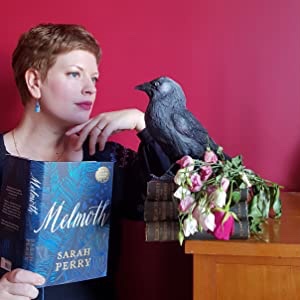
This week for Throwback Thursday – which has rolled onto Friday since I’m in a remote part of Wales with poor internet access – I’m going to take a spooky turn and tell you about one of the most terrifying and gloriously gothic novels I have ever read. Melmoth the Witness is a figure from mythology, or is she? Known as one of the woman who witnessed the tomb on the morning that Christ resurrected, she is now an eternal traveller. Wandering the centuries she lures people into following her, whereupon they too become damned to an eternity of itinerant, solitary wandering.
Set in the beautifully, atmospheric city of Prague we meet a woman called Helen who finds a manuscript. It tells of a winter in Prague, with all the darkly gothic details of cobbled streets, shadowy corners, and jackdaws patrolling the city walls. One winter night in Prague, Helen Franklin meets her friend Karel on the street. Agitated and enthralled, he tells her he has come into possession of a mysterious old manuscript, filled with personal testimonies that take them from 17th-century England to wartime Czechoslovakia, the tropical streets of Manila, and 1920s Turkey. All of them tell of being followed by a tall, silent woman in black, bearing an unforgettable message. Helen reads its contents with intrigue and some scepticism, but everything in her life is about to change. We follow Helen’s story, but within it are all the other stories and lives, creating a Russian doll style tale, but where each incarnation has the same sense of menace and impending doom.
This is based on an 1820 novel by Charles Robert Maturin called Melmoth the Wanderer, that very few people will have read. I studied a wonderful module at university entitled The Gothic, Grotesque and the Monstrous and I know from experience that early gothic novels can be long winded and difficult to read. What was found terrifying in 1820 does not necessarily translate today. In the original novel, Melmoth is a man who makes an almost Faustian pact, in this version she is one of the women who visits Christ’s tomb. She could have borne witness to the resurrection, but lied and is now damned to wander the world forever. She’s like a Sybil, heralding evil and disastrous events, but never listened to and doomed to witness the worst humans can do to each other over and over. I love the ambiguity of her pleas to ‘take her hand and follow her’ because she’s lonely, is she friend or foe? Her pleas are all the more tempting because she’s a woman and we associate that with gentleness, nurturing and perhaps even needing protection. There’s also the element of seduction and persuasion that might make a gentleman take her lonely hand. I think Sarah Perry made this choice because of those qualities. How much more effective could a woman be in gathering souls?
I love how Prague is turned into a haunted city and it’s history certainly might have drawn the wanderer to it’s cobbles. The city is the book’s second biggest character, dark and mysterious with magical landmarks like the astronomical clock. Perry’s descriptions of night in the city are haunting, and if I ever visit the capital I might well look over my shoulder when out in the evening in the same way I do in Venice. It is the perfect backdrop for the modern section of the novel, with every inch of the city steeped in history and the endless pull between light and darkness. Perry brings to life fears we have all had, as Helen draws the curtains at night, because she fears looking up at the window and seeing that lonely, beseeching face. The most terrifying thought is that Melmoth bears witness to anything we have ever done, including those awful things we hope no one witnessed or found out about.
I think an important aspect of the novel for me is something any sort of ‘listener’ has to think about. It’s the toll witnessing takes on a person. This book is brief compared to the original novel, but still takes in the breadth of the horrors experienced in Prague throughout the 20th Century. It made me imagine being present to witness the trenches of WW1, the Holocaust, and so many other atrocities and personal tragedies. I’ve worked in mental health for twenty years and I’m taking a break at the moment to study. I know the emotional toll that listening to people’s stories can take on the listener or observer. For Melmoth, this would be so much worse because she has to sit back and witness all of humanity’s horrors. Even worse, she has no power to change anything, but is doomed merely to witness. No wonder she wants other souls to witness with her, she must feel the weight of the horrors yet to come.
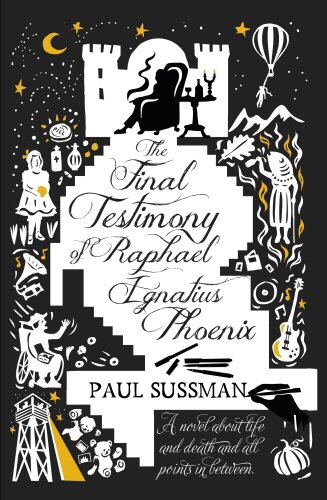
Something very strange happened while I was reading Paul Sussman’s book. I was up at night feeling unwell and made it half way without even taking a break. I had never read any of his books so as far as I knew this could have been a debut novel or one of hundreds. I launch straight into books without reading introductions, forewords or acknowledgements because I don’t like to be swayed by them. I don’t want someone else to tell me how to read a book, or in what context; I like to make up my own mind and read them later. I must admit on this occasion I was drawn in by the cover, but beyond that and the back cover blurb I knew nothing.
I realised half way through that I was reading with a smile on my face, despite feeling physically grotty! It made me smile because of the dark subject matter, the humour and sheer ingenuity of Raphael. I put it to one side and thought ‘I really wish my husband Jez had been around so I could read this to him’. He died 7 years before I found this novel and prior to his death he couldn’t read himself. He couldn’t hold a book and couldn’t see to read for himself. He could get listening books but there were certain, funny, books that we liked to share so we could fall about laughing together. They would usually be ingenious, darkly comic and just a little bit bad – rather like this. This was definitely one of those books. I then turned to the foreword and noticed it was written by Paul Sussman’s wife Alicky. I was so sad to read that she had been through the same loss I had, but amazed by the parallel. I contacted her and she was lovely, sharing about her loss and listening to mine.
The character of Raphael Phoenix is irresistible. A cantankerous old pensioner, living alone in a castle, he decides that 100 years of living is enough. He has a plan and he also has a pill. He has had the pill his whole life since his birthday party with his childhood friend Emily. Emily’s father is a chemist and in his poison cupboard, among the ribbed glass bottles, is an innocuous white pill with a simple nick in one side. It has very particular ingredients that ensure an almost instant and painless death and it is the only thing he wants for his birthday so the pair replace the pill with mint of the very same size, with a nick from the edge to match. Raphael keeps the pill with him through his incredible life either in his pocket, in a gold ring or in more difficult circumstances, sellotaped under his armpit. He trusts his pill and knows that it will deliver the death he wants as he sits in his observatory, with an expensive glass of red wine (over £30 a bottle) watching the millennium fireworks. However, before then he has a story to tell us, several stories in fact, which take us through some of the most important periods of the 20th Century and he has a very peculiar way of splitting these stories into sections. Raphael has had some very singular life experiences, and has a talent for getting into scrapes and challenges. Even more surprising are his ways of getting out of them.
I had no idea what to expect and so I was surprised and charmed by this magical piece of work. It manages to be both, earthy and funny, but also incredibly poignant. The only two things he can depend on through his life are the pill and his friend Emily. Emily isn’t always by his side, but just manages to be there at the right times and seems to set his various destinies in motion. Raphael works backwards with his tales until the reader is desperate to know how all of these incredible twists and turns are set in motion and also whether his trusty pill will work so he gets the end he has been working so hard towards. I would read this if you enjoy dark humour and tall tales and like your narrators to be, ever so slightly, morally ambiguous. It is darkly enchanting and I fell in love with it.
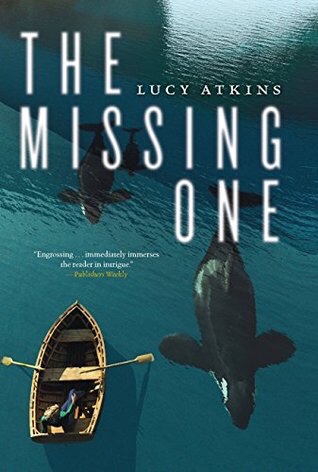
This was the book that first started my love affair with Lucy Atkins’s writing. I remember when I first read this novel for my book club, I was so impatient to find out what happened back in the 1970s to Elena and Susannah. A terrifying and traumatic event has linked these two women for over 30 years and it can’t stay a secret for ever. In the present is Elena’s daughter Kali, who has just lost her mother to breast cancer, a mother she could never make sense of or bond with as she wanted. In the aftermath of Elena’s death, Kali is trying to make sense of that difficult relationship when she finds a hidden pile of postcards from a woman called Susannah in her mother’s things. Thinking she has found the clue to her mother’s past she pursues this woman to find out about events leading up to her birth and a family history that has resolutely stayed hidden.
Driven forward by grief, and the constant worry that her husband is having an affair, Kali takes her son Finn on an odyssey to unearth her mother’s secrets and to find herself. She has many theories about what she might find: maybe her father had an affair; could Susannah have been his lover or her mother’s? Yet, what she finds is something she never suspected. Set against the backdrop of wild North America and Canada we learn about a woman’s quest to understand the Orca. Distressed by witnessing the killer whales at Seaworld in California while doing her PhD, a young Elena leaves everything to record killer whale pods in the, ocean. The Seaworld orca gave birth to a calf that was so disorientated by his tiny tank he kept banging himself against the glass trying to navigate through echolocation. His desperate mother keeps pushing him away from the sides to protect him from damage, but in her efforts to protect she forgets to nurture and the calf dies because she has forgotten to feed him. Kali was similarly starved of nurturing by her mother because she was so intent instead on protecting her from this awful secret.
The novel is an incredible insight into relations between mothers and daughters. Kali’s sister Alice has a great relationship with her mother that seems easy, whereas Kali and Elena clash over everything. Kali sees that her mother finds her hard to nurture and believes it is her fault. It takes putting herself in danger to find out why and in finding out she also discovers that essential piece of the jigsaw that tells her who she is and grounds her in a history. The novel shows how when you become a mother it becomes more importantu cc than ever to know where you are from and how you belong. It also shows how the secrets of one generation have a huge impact on the next, even if the secret is kept with the best of intentions. The book cleverly shows the difference between generations since we have now moved into a world where we put our own lives on show for fun. In a world where counselling and therapy are becoming the norm it is no longer seen as acceptable to keep such huge secrets and we know as post-Freudians what effect those early years of parenting have on the adult we become.
Aside from the complex human relationships are the family ties within the Orca families. We see how there are resident pods and transient pods with different feeding habits and rules to abide by. It is also clear that parallels can be drawn between the whale relationships and the human ones. Elena is so moved by their mothering instincts and the possibilities to map their language and understand their emotions. She gives up everything to spend as much time with them as she possibly can even going to sleep on her floathouse with the sounds of whales drifting up from a microphone in the water. I learned so much about these incredible creatures without losing the majesty of them and the awe a human being feels when a huge tail rises up out of the water next to their boat.
The book reads as a dissection of family relationships, a thriller, a study of whales and a study of grief. Grief causes Elena to suffer with depression throughout her life, grief traumatises Susannah to the extent that she is unbalanced by the things she has witnessed and it is grief that compels Kali to jump on a plane to Vancouver with nothing but a few postcards and the internet to go on. I struggled to put the novel down because of the thriller element. Like a good crime novel, you desperately want to know the truth of who- dunnit. Yet it is those final chapters I like best, after everything is resolved and each character is living in the aftermath of exposed secrets and recovery from physical and mental injury. The novel could have ended there and I am glad that it went further, back into Elena’s past so that we can see her happy on her floathouse making coffee and then hearing those whales come to greet her.
She would go back to that throughout her life, right to the very end. But the last time, when the world had shrunken to the contours of her skin and she leaned over the railings, it wasn’t the whales that she saw in the water. And so she jumped.
Meet The Author
Lucy Atkins is an award-winning British author and journalist. Her most recent novel, Magpie Lane, is a literary thriller set in an Oxford college. Her other novels are The Night Visitor (which has been optioned for TV), The Missing One, and The Other Child.
Lucy is a book critic for The Sunday Times and has written features for UK newspapers including The Guardian, The Telegraph, The Times, and many magazines. She was a Costa Novel Award judge in 2017, and teaches creative writing to Masters students at Oxford University.
She is mother of three and has also written several non-fiction books including the Amazon #1 parenting guide, First Time Parent (Collins). She has lived in Philadelphia, Boston and Seattle and now lives in Oxford, UK.
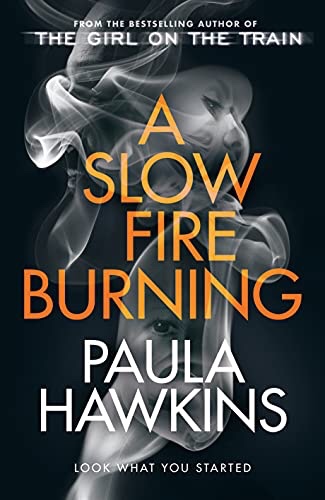
I’m a big fan of this author’s previous novels Into The Water and TheGirl on the Train. Incidentally, I didn’t like the latter’s film relocation to upstate New York, because I didn’t feel it had the necessary grit of the book’s London location and lost something in translation. I’ve been looking forward to her new novel and I spent the weekend on my chaise longue reading it with a bar of Green and Blacks Sea Salt. Pure bliss! The novel is set in London, on a stretch of the Regent’s Canal between Bethnal Green and Islington. We open with a body being found on one of the canals, the deceased is a young man his neighbour only knows as Daniel. When she boards his boat and finds his body covered in blood she knows she must ring the police. However, in typical Hawkins fashion, the author wishes to unsettle the reader and leave them unsure of who to trust. So, although his neighbour Miriam looks like a run of the mill, middle aged and overweight woman, used to being ignored, she does something unexpected. She notices a key next to the body, and as it doesn’t belong to the boat she picks it up and pockets it.
Our other characters are members of Daniel’s family, who live within walking distance of each other in this area. Daniel’s mother Angela is an alcoholic, in a very strained relationship with her only child until his death. Then there’s his Aunty Carla and Uncle Theo who live near the boat. Daniel appears to have a closer relationship with his Aunty Carla, than he did with his mother, but is it really what it seems? Miriam has noticed some odd comings and goings from the boat next door. This is a family with secrets, both old ones and current ones. Miriam noticed that the girl who works in the local launderette, Laura, was with Daniel on the night in question and they had a row. Laura could have killed him, but Miriam doesn’t think so. Then there’s Irene, an elderly lady who lives next door to Angela and has also noticed some strange behaviour next door too. She knows the family well although Angela has often been too distracted by her own life to form a friendship. Irene does have a soft spot for Laura who helps her out from time to time, by going shopping or running errands. Like Miriam, Irene is also wondering if everything is what it seems with this murder. Lonely people observe a lot and although the family won’t realise this, she’s in possession of a lot of information. Something seismic happened to this family years before, something that changed the lives of everyone involved. Might that have a bearing on their current loss? Could that be the small flame, burning slowly for many years, before erupting into life and destroying everything?
I absolutely fell in love with Laura. She has a disability that affects her mobility and, along with many other symptoms, she has problems keeping her temper. Her hot-headed temperament has led to a list of dealings with the police. This isn’t her normal character though, this rage seems to come from the accident she had as a child. She was knocked down by a car on a country road while riding her bike and broke her legs, as well as sustaining a head injury which has affected her ability to regulate her emotions. Further psychological trauma was caused when she found out the man who hit her, was not just driving along a country round, but driving quickly away from an illicit encounter. Who told him to drive away and why? Laura feels very betrayed and now when she feels threatened, or let down, that rage bubbles to the surface. She’s her own worst enemy, unable to stop her mouth running away with her, even with the police. She has a heart of gold, but very light fingers. She’s shown deftly whipping a tote bag from the hallway of Angela’s house, but in the next moment trying to help Irene when she can’t get out. I found myself rooting for her, probably because she’s an underdog, like Miriam. Miriam feels that because of her age, looks and influence she is completely invisible. She has been passed over in life so many times, it’s become the norm. However, there is one thing she is still angry about. She wrote a memoir several years ago and showed it to a writer; she believes he stole her story for his next book and she can’t let that go.
I love how the author writes her characters and how we learn a little bit different about them, depending on who they’re interacting with. They’re all interlinked in some way, and their relationships become more complex with time. As with her huge hit The Girl on the Train, the author plays with our perceptions and biases. She doesn’t just plump for one unreliable narrator, every character is flawed in some way and every character is misunderstood. We see that Miriam is not the stereotypical middle-aged woman others might think she is, as soon as she pockets that piece of evidence at the crime scene. Others take longer to unmask themselves, but when they do there’s something strangely satisfying about it. We even slip into the past to deepen our understanding of this complicated group of people, letting us into all their dirty little secrets, even those of our victim Daniel. When I’m counselling, something I’m aware of is that I’m only hearing one person’s perspective of an event. Sometimes, that’s all it needs, some good listening skills and letting the client hear it themselves. Yet, it is only one part of a much bigger story. Occasionally, I do get an inkling of what the other person in the story might have felt and I might ask ‘do you think your wife heard it like that or like this?’ If I say ‘if my partner did or said what you did, I might feel….’ it makes the client think and asks that they communicate more in their relationship. Sometimes the intention behind what we say becomes lost in the telling. That’s how it was reading this book, because we do hear nearly every perspective on an event, but also how each event or interaction affects the others. The tension rises and it was another late night as I had to keep reading to the end. Paula Hawkins has become one of those authors whose book I would pre-order unseen, knowing I’m going to enjoy it. In my eyes this book cements her position as the Duchess of Domestic Noir.
Meet The Author.
PAULA HAWKINS worked as a journalist for fifteen years before turning her hand to fiction. Born and brought up in Zimbabwe, Paula moved to London in 1989 and has lived there ever since. Her first thriller, The Girl on the Train, has been a global phenomenon, selling 23 million copies worldwide. Published in over forty languages, it has been a No.1 bestseller around the world and was a No.1 box office hit film starring Emily Blunt.
Into the Water, her second stand-alone thriller, has also been a global No.1 bestseller, spending twenty weeks in the Sunday Times hardback fiction Top 10 bestseller list, and six weeks at No.1.
A Slow Fire Burning was published on 31st August by Doubleday.
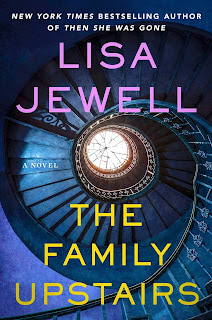
As some of you may know, reviews can get very personal for me. Probably because I’m a therapist and used to lots of self-reflection. When a book hits me emotionally I really think about why and this book had me scurrying to my journal. Lisa Jewell is a master of these domestic thrillers and the psychological suspense created when groups of people are in conflict. Here the conflict is controlled within one house 16 Cheyne Walk in Chelsea, overlooking the river. That is until it’s secrets explode and the truth of the mystery is scattered across the world.
Three narratives weave in and out of each other to tell the story. We meet twenty five year old Libby with her little garden flat and her job at the kitchen design company where she’s worked for five years. Everything about Libby says organised, professional and quiet. That is until a bombshell is dropped on her life. Woven with this is the story of Lucy – if that is her real name. She is living in France but at the moment we meet her is homeless along with her two children and the dog. The family are reduced to sneaking in to the beach club to get showered but that doesn’t happen everyday. Lucy is at rock bottom. She can’t husk for money but needs money to collect her violin. They have nothing left to sell. Does she go and ask her violent but rich ex-husband for help? Or does she let the children stay with their grandparents? Either way she needs her violin and once she sees the date, she develops an urgent need to make her way back to London and a certain house in Chelsea.
Our third narrator is Henry, relating what happened at the house back in the early 1990s. Henry just about remembers family life when things were normal and it was just the four of them: mum, dad, Henry and his sister. He has vivid memories of going to private school in his brown knickerbockers and sitting drinking lemonade while his Dad read the newspaper at his club. The house was filled with curiosities such as animal heads, ceremonial swords and red thrones. It’s so distinctive in style that when the money starts to run out the house is scouted as a location for a music video. The fiddle player in the band is Birdie and she loves the house. So much so that when she needs a roof over their head, she and her partner, Justin, come to stay in the upstairs room. Henry’s father has had a stroke and doesn’t have the same strength and power he used to have. He seems to sit by and watch as Birdie and Justin take up residence. Later another couple join the group. David Thomsen is a man Henry dislikes almost instantly because he seems to sense what his Dad and Justin fail to see. David has charisma and seems to have an effect on every woman in the house. His wife Sally and two children, Phin and Clemency, also join them. It starts to feel like they’re living in a commune but the only consolation is Phin. To Henry, Phin is beautiful with floppy hair, cheekbones and a distinctive style. When Phin takes him shopping, Henry develops a crush and trails after him, wanting to be like him. When it is suddenly announced at the dinner table that David and Birdie are now a couple Henry senses this is the start of something evil. They bring out the worst elements of each other and start to assume a power in the house that goes unchallenged by his parents or the other adults. They are told what they will eat, do and even wear. Henry knows this is out of control and this is only the beginning of the damage this man will inflict in the house. Libby has been set a letter by a group of solicitors telling her she has been left a house. When the solicitor walks her round to the house she realises she is rich. The house is abandoned, but huge and in prime position. It could be worth millions. The solicitor also gives her a newspaper cutting describing the strange events that took place there exactly twenty five years before. Libby has always known she was adopted, but this tells her she was the lone survivor in the house, tucked in her cot with a lucky rabbits foot under the mattress. Downstairs were three people, dressed all in black and dead from poisoning themselves with belladonna. One was David Thomsen. The news story talks of a cult forming within the house and aside from Libby, whose real name is Serenity, all the children living at the house were missing. Libby feels there is more to this story and wants to meet the journalist who wrote the article. What is the answer to how this happened? And who is sneaking in and out of the attic space at the house?
There are so many questions that I won’t answer for fear of ruining the book, but I will tell you about the effect it had on me. When I was 12, the same age as Henry, my parents joined an evangelical church that became all-consuming and took over our lives for a few years. Up until then we’d been part-time Catholic’s and I’d gone to Catholic school for a while through my first confession and communion. These new people felt weird. They were so fervent and all that speaking in tongues was odd. But it got worse. My parents started to have no other social life from church. We were forced into church activities for kids. My dad lit a bonfire and they burned their secular music and all of my mum’s ‘inappropriate ‘ books like the Judith Krantz and Jackie Collins novels. I was scared by this. I started to wonder who my parents were as I was more restricted on what I wore, listened to and read. I couldn’t go to anything where there was a sniff of boys and from what I could see there was a lot of coercive control over women and girls particularly. I felt Henry’s fear when reading this book. I know what it feels to be a kid, looking at your parents and thinking they’ve been taken in by something dangerous. That beliefs are being forced on you and you can’t live like other kids. To feel like all of your security is being taken away.
Of course my solution wasn’t as dramatic as Henry’s but I did have to create coping mechanisms. There are times now when we can laugh about it, because as my brother and I have grown older we have become one of those families that openly discuss everything. However, I still occasionally have dreams where my parents can’t see or hear me and I think it has also bred a lifelong mistrust of authority. So I can understand the seismic effect the arrival of Dave Thomsen had on these children, with repercussions way into adult life. Whether it’s changing who you are to escape, or bouncing from one failed relationship to another or being unable to move on, even geographically, they are all responses to trauma. With a brief nod to the future at the end of the book the author does leave a tiny seed of hope that in future generations a type of healing can be reached. This is a dark, disturbing, look at how sometimes home is the most dangerous place to be.
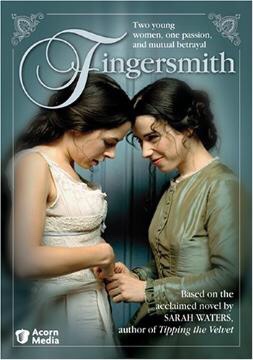
Sarah Waters is one of my favourite writers. Anything she writes is a pre-order in my house, so there may be some bias in my next statement. For me, she is one of the best writers of the 20th Century with, hopefully, more to come. More recently, she has dabbled into the early 20th Century and even WW2 for her novels The Night Watch and The Little Stranger, but she started back in the 19th Century and this is my favourite from that series. Amazon calls her genre Lesbian Victoriana, which made me giggle a little, but I think Waters is doing more than that; she is chronicling women’s experience. She includes lesbian encounters and women falling in love with women, but in this book that’s an aside rather than the main focus of the plot. I think to term these novels as lesbian novels is reductive and has a sense of prurience. I remember the fuss and excitement when Tipping the Velvet was serialised at the BBC, and male journalists practically salivating over Rachel Stirling and Keeley Hawes. I think they’re intended to be read as women’s experiences of living in Victorian England, with the women’s sexual relationships as part of an unspoken subculture only just emerging into the open. She is using the device of ‘writing back’ to the historical period and bringing a group into the limelight who were hidden at the time and never portrayed in fiction. It’s about seeing the Victorian era and women’s lives in totally new eyes, and accepting that the literary canon only shows us a small part of a vibrant and varied world. As with history being written by the victor, literature of the early to mid 19th Century tends to be written by white, straight, middle-class males. Waters is trying to redress the balance and give us a minority viewpoint which I love.
Orphan, Sue Trinder, lives in a family of petty thieves and is trained to become a ‘Fingersmith’. Based in London, the den is run by a motherly woman who has a hard and ruthless side. All the thieves congregate and bring their wares to ready them for sale, while a baby farm is run on the side. It is here that a man called ‘Gentleman’ recruits Sue for a scam to defraud a wealthy heiress. We also meet a young woman called Maud Lily, she’s an orphan too, but with a home in a gloomy mansion as the ward of an odd Uncle. She has a very comfortable life, helping him with his work as some sort of secretary, but his subject matter might raise an eyebrow or two. He is an avid collector of Victorian pornography. This makes Maud very uncomfortable, but it seems an unspoken agreement that her help is in return for his protection. This strange upbringing makes Maud very sheltered and naïve in one respect, but also strangely knowing in others. Gentleman has devised a long con that starts when Sue is placed within the mansion as Maud’s lady’s maid. She will then encounter the Gentleman who will try to court Maud. They hope, that with Sue’s encouragement, Lily will fall for his charms. His long term aim is to marry her, because according to 19th Century marriage law, all of her fortune will then become his property. Then it’s a simple case of claiming she’s mad, and as long as a doctor agrees, a man could sign his wife into an asylum leaving him free to use her money. If she helps, Sue will be entitled to some of the ‘shine’.
As always with Sarah Waters books, the depth of research is obvious and this feels so real. The sense of place is so strong, in the filthy detail of the London terrace streets and the silent unease in the mansion. These two places feel entirely opposite. Where Sue grew up there’s constant noise, people running in and out, babies wailing upstairs and other people’s belongings being appraised and sold on. There’s squalor and poverty, so for her, the change to being a lady’s maid is a massive leap. By contrast the mansion is quiet with the sound of ticking clocks, days without seeing another soul. There’s a feeling of being imprisoned somehow, it’s stifling and the scene where she works in the library with her Uncle feel so uncomfortable. The tension as the con slowly starts to work is terrible. Then, in what is probably my favourite twist in fiction, the pace picks up and the reader is left reeling as everything changes.
In the second section of the book we go back in time a little to Maud’s story, some of this overlaps with the first part and some of it is her history and how she ended up closed away with only a perverted Uncle for company. We follow Sue’s journey as Maud’s lady’s maid and see how a friendship develops between the two young women. Maud is living like a prisoner and has experienced years of coercive control leaving her timid and unsure. The con would only work if Sue stays focused and doesn’t get involved with her new mistress, but their friendship is deepening and Sue is starting to have doubts about the plan. There is an attraction between the two women that was unexpected, but is there anyway to back out of the plan or is it too late? There is something hypnotic about this book. It is a long read, but unlike the Victorian novels it emulates, it didn’t feel long-winded or become boring. I was engaged at every point of the story, absolutely fascinated with the twists and turns of the plot and never quite sure who is telling the truth. I was desperate to find out who has really been conned in the end. This is one book where BBC adaptation is very good too, with great casting and a definite feel of the book.
However, the novel is perfection. It’s a historical thriller, told through unexpected heroines and delving into the more deviant side of Victorian life: pornography, pick-pocketing, theft, fraud, confidence tricksters, and baby selling. Not to mention the lesbian aspects of the storyline that would have been unthinkable in fiction of the time. In fact I clearly remember a tutor at university telling me that all the focus on deviant sexual behaviour was focused on gay men and prostitution – intimating that the thought of two women having a relationship was so taboo that it didn’t even exist in most Victorian minds. I loved that we were seeing a totally different section of Victorian society and it had a voice. There is a feel of Dickens in the poverty and living conditions, and of course he had his own wife detained in an asylum. However, there’s none of that Victorian moralising that comes with fiction of the period. This is the underclass speaking for itself and the character of Maud’s Uncle hits home the idea that even the middle classes were not necessarily as respectable and God-fearing as they seemed. I would recommend this to anyone who enjoys Victorian fiction whether in the form of historical novels or of the period. It’s also a great thriller with enough double-crossing and revelations to keep any reader satisfied. This really is Sarah Waters at the height of her writing powers and should be on your TBR list immediately.
Meet The Author.
Sarah Waters OBE, was born in Wales. She is the author of six novels, Tipping the Velvet, Affinity, Fingersmith, The Night Watch and The Little Stranger, which have been adapted for stage, television and feature film in the UK and US. Her novels have been shortlisted for the Man Booker Prize and the Women’s Prize for Fiction and she has won the Betty Trask Award; the Somerset Maugham Award; The Sunday Times Young Writer of the Year Award; the South Bank Show Award for Literature and the CWA Historical Dagger. Sarah has been named Author of the Year four times: by the British Book Awards, the Booksellers’ Association, Waterstones Booksellers; Stonewall’s Writer of the Decade in 2015; Diva Magazine Author of the Year Award and The Sunday Times Award for Literary Excellence in 2017, which is given in recognition of a writer’s entire body of work. Sarah was awarded an OBE in 2019 for services to literature in the Queen’s Birthday Honours. Sarah Waters lives in London.
She misses him. Fraser. Here in the shrunken hours of the night. She misses him still so much. Who is there to share her thoughts with? They wither inside her. She cannot even write them to him as she used to, can’t take a cup of tea back to bed and sit with a candle in the blackoutand think of him, trying to imagine where he is, what he sees. She cannot imagine where he is, because he is nowhere, he is nothing. All of the many tiny things that he was – the way he turned his head towards her, the slow breaking of his smile, the laughter in him, the roll of his voice; the way that he eased her, eased her – these are all gone. These are all dead.
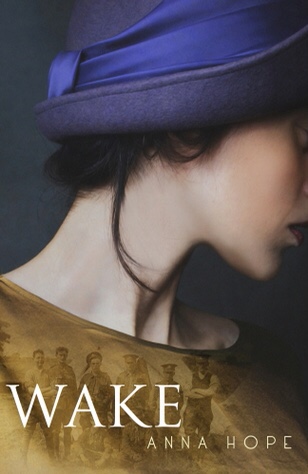
Last year I couldn’t move on Twitter without seeing that someone was reviewing and reading Anna Hope’s Expectation. I’ve had such a ridiculous TBR that my copy is still languishing on the pile, but I wasn’t surprised to see the book become a runaway hit. I’d already fallen in love with her writing in 2014, when I read her novel covering the aftermath of WW1. Wake is a brilliant piece of historical fiction based around the real historical event, the creation of the Tomb of the Unknown Soldier. As he is taken from the fields of France, on his journey towards London, three women are linked by a mystery that is starting to unravel. As the Unknown Soldier is meant to provide closure to the war for the British people, these three women can’t look into the future while they are still inextricably linked to the past. Hetty’s wounded brother won’t speak, Evelyn grieves for her lost lover and Ada waits for confirmation of her son’s death, every day that she doesn’t get a telegram is another day he feels alive. We follow these three women over five days, while the selection of the Unknown Soldier is made and his journey towards Westminster Abbey begins. Slowly, a tragic tale of war’s aftermath emerges and links them all.
Hetty lives with her mother still, and her mute, shell-shocked brother. He can no longer work so Hetty has taken a job as a dance instructor at the Palais. It is there she meets an educated, wealthy, man who she quickly falls for. Every indication she has, makes her think he feels the same. However, there’s something she can’t put her finger on, a distance or sense of being unreachable that he has. Where does he go in his mind, when he seems distracted? Evelyn comes from a wealthier background, but feels equally lost. She’s working at the Pensions Exchange, where men returning from the front pass through, claiming benefit for their physical or mental wounds. Evelyn’s own loss is still raw and she feels detached from her parents who can’t understand her experience. She starts to become closer to her brother instead, because he is of her generation, also altered forever by his experience at the front. Ada is haunted by visions of the son she’s lost. She still sees him on the street and for a few moments she’s convinced he is alive. She also feels like she’s struggling alone, because her husband is grieving in his own way, becoming increasingly withdrawn. A door to door salesman attracts her attention and it’s so clear he has suffered from his war experiences and has struggled to find work. He exhibits some worrying symptoms but Ada recognises shell-shock. During one of his disturbed episodes he says the name of Ada’s son. Can she find out what happened to him? The tension really builds as the public spectacle comes closer, the ceremonial internment of this unknown young man can be a catalyst, allowing people to grieve for those whose bodies are lost forever on the fields of France or Belgium.
This is a very interesting part of history for me, because of the tumultuous social change that took place, especially for women. This period is where we saw huge adjustments and change within the aristocratic class. Some families had lost two generations, father and son or the ‘heir and spare’. This led to an estate crippled by death duties and having to be sold, or the new heir forced into reducing costs and servants, or searching for a more advantageous match – marrying American heiresses was sometimes the answer. These changes often brought less formality to the family. Women had worked throughout the war, in jobs usually done by men. There was tension on their return to the workforce, some women didn’t want to return to the home and men who couldn’t find work were reduced to begging or selling door to door. Crime was on the up and families were coming apart at the seams. There was a sense of the old order being overturned and old values like manners, morality and knowing your place being lost.
Finally I loved the significance of the title ‘Wake’ and it’s several meanings: to rouse from sleep; a ritual for the dead; the consequence or aftermath. All of these meanings are apt to the women in the book and their circumstances. This is the moment that the 20th Century finally dawned on people, and society woke from the Victorian era. Victoria’s reign had been so long that some people had never known another monarch, now there would be change from that Victorian order. The ritual refers to the Unknown Soldier, a representative of every man lost, but also representative of that death of the old order, and it’s sensibilities. The consequences of WWI were seismic, we had just fought the first mechanised war and it was hell on earth. Society did not know how to cope with the wounded who returned, whether the ranks of the physically disabled using wooden legs or metal masks to cover burns, or the shell-shocked, constantly trembling and lashing out when feeling threatened. Many ended up in institutions, because they were constant reminders of something younger people wanted to forget. The following few generations would be changed, with the war hanging over them like a giant monolith casting a long shadow. Why couldn’t people be allowed to forget? As the Unknown Soldier passes by someone comments ‘is this supposed to make it all okay?’ This is such a moving read and captures it’s era so perfectly it felt like being there, which isn’t an easy thing to achieve. I felt for each woman, but Evelyn particularly moved me. This is an exceptional piece of writing and a great introduction to this author’s work.
‘I’ll remember you he thinks, and as the gun carriage with it’s coffin and it’s dented helmet passes him by, he closes his eyes. Nothing will bring them back. Not the words of comfortable men. Not the words of politicians. Or the platitudes of paid poets.’
Meet The Author.
ANNA HOPE studied at Oxford University and RADA. She is the internationally prizewinning and bestselling author of Wake and The Ballroom. Her contemporary fiction debut, Expectation, explores themes of love, lust, motherhood, and feminism, while asking the greater question of what defines a generation. She lives in Sussex with her husband and young daughter.
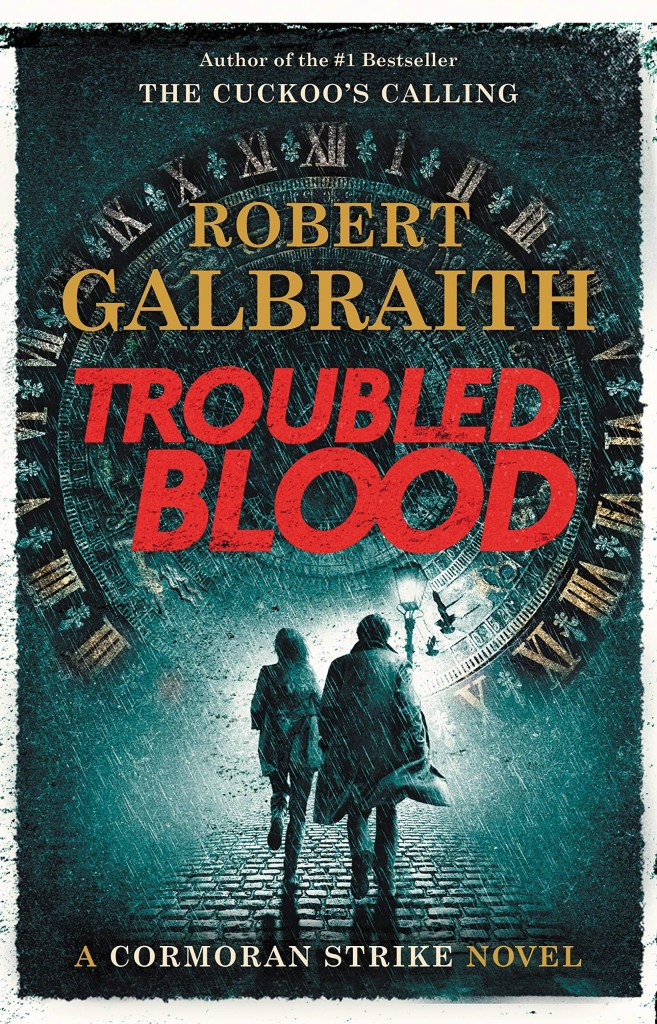
While I’ve been taking time to deal with some family issues, I’ve been reading my own personal choices rather than to a schedule. This has given me the chance to pick up this rather weighty hardback from J.K. Rowling writing as Robert Galbraith. In fact this book was so weighty that my chiropractor had to put my thumb back into place this afternoon. I’d resorted to nestling the book into a soft cushion on my lap so I could finish it. My partner has never seen me so quiet, as I shunned TV and conversation because I was totally engrossed in this novel. Troubled Blood is the fifth book in the Cormoran Strike series and I must admit to being a little in love with the tall, dark, private investigator. I love the author’s slightly shabby descriptions of him with his unkempt curly hair, awkward gait from his prosthetic leg and his broken nose. However. I’m also incredibly fond of his business partner Robin and the obvious love that flows between them, despite both of them denying it, even to themselves.
We meet the pair with Strike’s agency in a good place – there’s a waiting list for clients, three new members of staff and Robin is now a full partner in the business. Some things stay the same though -Robin still drives the Land Rover, Strike is still smoking and living in the attic above the office, and there is still that unresolved tension around how Robin and Strike really feel about each other. Strike is in Cornwall, visiting his aunt and uncle, the closest people he has to parents. Strike’s father is Johnny Rokeby, rock musician and tabloid fodder. Strike’s mother was a beautiful, bohemian groupie who never had an idea of how to be a mum and abandoned Strike to his Aunt Joan in his primary school years. Joan is possibly, after Robin, the most important person in his world and she’s had a diagnosis of terminal cancer. While drinking with best mate Davey at the local pub, Strike is approached by two women. Anna tells Strike the story of her mother’s disappearance over forty years ago. She was working as a GP in London and saw a last minute patient, before leaving to meet a friend in a nearby pub. She never arrived. Despite extensive investigations she appears to have vanished into thin air. They make an agreement with Strike that he will look into it for a year. With several investigations ongoing and a long waiting list, this looks like the busiest the agency has ever been, but how will Strike manage his workload and spend time with Joan when he needs to?
Robin is happy to pick up some of Strike’s workload in London, such as the staff rota and catch up meetings. However, she does struggle to get one of the new staff members to take her seriously as an equal partner in the agency. She’s balancing this problem, her increasingly contentious divorce, important news about ex-husband Matthew, and supporting Strike as much as she can. This means pulling long shifts of surveillance after a day in the office. She loves her job as much as she did at the beginning but she is struggling with panic attacks related to an incident at university and a case where she was attacked with a knife. Anyone trying to push their way into her space, whether by sending inappropriate pictures or brushing up against her in the office, will come off worst from the encounter. She is doing a lot of soul searching in this instalment of the series, as her friendship with Strike deepens she asks herself a lot of questions.
The main case was very satisfying, with lots of clues, red herrings and bizarre twists and turns. The investigating officer at the time of Margaret’s disappearance appears to have had an obsession with Aleister Crowley and astrology. His notebook is a very odd mix of drawings, notes on the main people suspected and the record of a gradual descent into madness. He was sectioned after seeing a horned goat demon. Robin finds more meaning in it than Strike, and it does yield some clues, but it’s clear the original investigation was inadequate. By chance, a serial killer was prowling the very same area and the police’s official line is that she was possibly taken by him but it can’t be proved. I found the case mentally challenging and full of fascinating characters too. The psychological aspects of the interviews was really intriguing, showing that even in a small 1960s doctors surgery there can be a lot of secrets buried. It was interesting to see more of Robin working on her own and how far she’s come since the first book. As the case gathered momentum I found myself gripped and I kept wanting to pick the book up again to read more, even though it was looking likely that the author was going to keep the case unresolved.
Make no mistake, this book was huge. I always reserve the right to DNF a book if I’m not feeling it by a certain point in the story. Like Bradley Cooper’s character in Silver Linings Playbook, I’ll happily throw a book out of the window if it’s not grabbing me or is overlong. I never felt that with this novel, besides I wouldn’t have dared throw this out of the window for fear of killing someone! I never felt a lull in the story, so it kept me engaged all the way through. This wasn’t just down to the cases, in fact I’d worked out one of them almost immediately – men visiting a woman’s house for a period of time where there are large deliveries of nappies – for which I blame a misspent youth watching every fetish going on C4’s Eurotrash. It was the themes running through the novel that kept me reading too. Absent parents loomed large: for their client Anna who having lost her Mum, had to watch her Dad marry the nanny; for Strike whose half-siblings are pestering him moook for a catch up with their rock star Dad, much to his disgust; even Robin feels dislocated from her family, who can’t understand her choice of career brought into stark relief as her ex-husband is about to become a father. We can see what a beautiful, but absent mother has done to Strike as he keeps Robin as his very best friend and struggles to keep ex-girlfriend Charlotte at a distance. Charlotte is the beautiful damsel in distress who will always pull him towards her when she’s vulnerable, only to withdraw as soon as she is back on her feet. It will take Strike to cut their line of communication but will he be able to do it. The stress of losing his aunt, Charlotte’s pestering and his father applying pressure, results in Strike choosing to drink too much and pushing those who love him most away.
I also enjoyed the ongoing development of Robin and the themes around female power and agency. Being Strike’s partner and his absences in Cornwall, mean she’s the boss. Trying to get all of their staff to accept that is difficult for one of their contractors who tries flirting and sexting, goes around her to get Strike’s approval and doesn’t take her seriously at all. She has to really assert her authority, it isn’t comfortable for her but she’s scared of enough in life without having to be wary at work. When she fights back and Strike finds out the true extent of the matter, his instinct is to physically defend her, but Robin doesn’t want to be rescued. She knows logically that her size and strength leave her slightly vulnerable while working in the same environment as the men. However, in terms of management and investigation skills she really does want to be Strike’s equal. I loved the way these themes were echoed in the case, with the missing woman being assertive, well-informed and educated around women’s rights and health. Some of the possible suspects are in the frame, because she was seen to interfere, to get mixed up in domestic violence cases or unwanted pregnancies and find solutions for those women.
I’m aware of there being controversy around the representation of a possible transgender character. I think this aspect of the book could have been handled better. An emergency patient turned up at the surgery just as Margaret was going to leave, and she agreed to see her. In all the accounts of witnesses they describe a woman with some very masculine characteristics and jump to the conclusion that it’s a man dressed as a woman. This then becomes confused with the passing serial killer who is thought to dress as a woman when approaching victims so they are less wary. One character even makes a comment about other serial killers who liked to dress in women’s clothing. I felt this was quite sloppily done and seems to be saying there’s a link between criminality, violence and men who wear women’s clothes or who are transgender. There should have been more emphasis placed on the fact that these men are not transgender, but are dressing as women for the purpose of disarming victims and luring them into a van or an alleyway. It’s purely a disguise for the purposes of murder, rather than a sign that transgender people are all deviant. This is something editors should be more aware of in the 21st Century and it was a shame to see it in a book I otherwise loved.
This latest instalment in the Strike series is a cracking read and keeps you gripped, despite the fact it’s huge! Every case is interesting, but the main story is such a puzzle and each time there’s a revelation it’s like peeling another layer off an onion. I never suspected the person responsible and that says a lot about my prejudices and bias, as well as societal expectations. There’s a real streak of social justice running through this novel with certain characters and from my work within the mental health system I did recognise the worry that people are falling through the net and being let down as government funding is withdrawn due to austerity. I recognised the practice of ‘cuckooing’ where a vulnerable person’s home is taken over for criminal purposes such as storing stolen goods, dealing drugs, or hiding body parts. I find it amazing that the author can bring so many strands together, while fully occupying her characters and showing us their inner worlds. I loved my time with Strike and Robin, and I thought the ending was lovely. This was a gripping, multi-layered and intelligent thriller with a simmering attraction between our two main characters that will have you rooting for them.
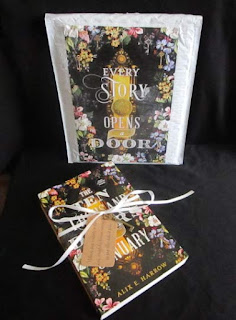
January is a young girl with a great imagination. She lives with her guardian Mr Locke and her nurse/governess Mrs Wilde, while her father travels the world. Her father is an adventurer, travelling far and wide to find treasures for Mr. Locke’s collection. She misses him and sits in her room wrapped in the pink and gold bedspread he sent her from India. January is just becoming a teenager and starts to learn that her freedom and imagination are a threat. One day she writes about a door to another world and soon after she discovers the very door she has written. Stepping through, she sees a different land with a white shimmering city in the distance. She now sees she can have her own adventures without ever leaving the hall and the protection of Mr Locke. But her creativity is not seemly for young ladies and Mr Locke determines she is overstimulated and needs the rest cure. This involves lying in a plain room with nothing to occupy her mind. At first she runs wild and tears the curtains and bedspread in defiance, but then realises this simply plays into Mr Locke’s hands. Instead she chooses to comply on the surface and become the nice young lady he wants. Yet, all the time a sense of adventures grows within and we realise January is not going to be a nice young lady for long.
Harrow intersperses January’s story with a different narrative from a book that comes from her father. The story tells of a young girl named Adelaide or Ade to her family and the age old tale of a haunted house that all the local children stay away from because of the ‘boo hags’. Ade is more curious than she is scared, but in the cornfield outside meets a type of boy she has never seen before, called Yule Ian.We don’t know where these people fit into January’s story but their story hints at worlds as yet unseen and legends from every country in the world. It’s as if January’s restrictions of Victorian womanhood is the smallest Russian doll in a set, she is enclosed by bigger worlds than her own. Her existence is restricted by our modern standards, but what if our own existence is similarly restricted? I started to think of other worlds beyond this one where the rules of existence are totally different or without limit.
I truly loved this wonderful book. It took a few chapters for everything to click into place, but I was intrigued enough to keep going till the story made sense. January is a great central character and her need to break free from the constraints placed upon her by Mr Locke would be understood by every teenage girl. I think this is partly the novels success – Harrow has taken a familiar feeling from any teenage girl, but placed it within a magical world where there are no limits to existence. When January realises she can write doors into other worlds and follow them, more freedom than she ever imagined is hers for the taking. However, this freedom depends entirely on pleasing Mr. Locke and we learn later in the book that his guardianship of January is even more far reaching than even she thought. He has schooled and packaged January in a way that is acceptable to Victorian society. He has polished and locked her away like one of the many treasures in his collection.
The novel is full of characters who move beyond their bounds in one world, while finding themselves completely at home in another. Jane is sent as a companion for January, paid for by her traveller father who comes and goes plundering worlds for Mr Locke’s collections. Jane finds that in one world her fearlessness and hunting skills are integral to her culture and survival, but in January’s world she is expected to keep her eyes down and not challenge people who are her betters. In this world Jane is problematic because she is a woman with no breeding or class and because she is black. January’s friend Samuel has slightly more freedom than Jane because he is a man even though his class and skin colour are the same. Just as Locke categorises and catalogues his collections, it seems there is an unspoken taxonomy of people. January has side-stepped disapproval, despite being poor and mixed race, thanks to Locke’s fortune which keeps her in dresses, pearls and first- class travel. January is kept in a gilded cage, but it is still a cage. I couldn’t see at first where Ade and Yule Ian fit into the narrative, but soon I realised how crucial they both are to January and the world she sees as she discovers her writing power. It takes huge courage to use that power, but increasingly January finds it is the only way she can protect herself and the freedoms she believes in. She wants to find her father or at least the last place connected to him and she will keep wrenching doors open until she finds the right one. A shadowy organisation is not far behind her though, run by The Founder. They want this world to stay on one course; a rigid world following a set pattern of Empire, industrial revolution and exploitation of other country’s resources. The magical worlds January visits are too unpredictable, because they signify endless change. What will The Founder do to keep the doors closed and how can January throw them wide open again in order to see her family?
For me this novel is so successful because even when we are in the most alien of worlds the author never forgets this is a human story. The family bonds and the aching loss of bereavement feel real and honest. These may be extraordinary characters but their emotions are very human and relatable. I found myself aching for January to be reconciled with her father and for his heartbreak to heal. The novel also has something important to say about love: it’s many forms from familial to friendship and romantic love; the compromises of successful relationships and the need to give the one we love freedom and space to grow. I was so sad to finish this story and almost resented the next book I picked up. It is inventive, extraordinary and touching in equal measure. It is my book of the year so far and I’m now ordering my hardback copy to keep.
Meet The Author
Alix E. Harrow has been a student and a teacher, a farm-worker and a cashier, an ice-cream-scooper and a 9-to-5 office-dweller. She’s lived in tents and cars, cramped city apartments and lonely cabins, and spent a summer in a really sweet ’79 VW Vanagon. She has library cards in at least five states.
Now she’s a full-time writer living in with her husband and two semi-feral kids in Kentucky. Her short fiction has appeared in Shimmer, Strange Horizons, Tor.com, Apex, and other venues, and The Ten Thousand Doors of January is her debut novel. Find her wasting time and having opinions at @AlixEHarrow on Twitter.
“I write this sitting in the kitchen sink. That is, my feet are in it. The rest of me is on the draining board, which I have padded with our dog’s blanket and the tea-cosy.”
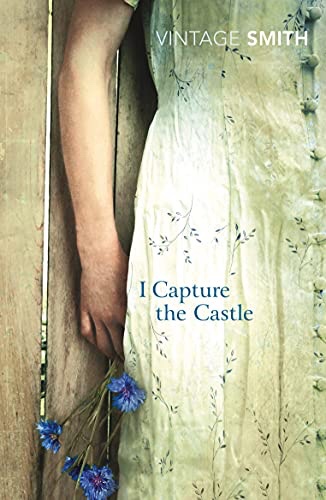
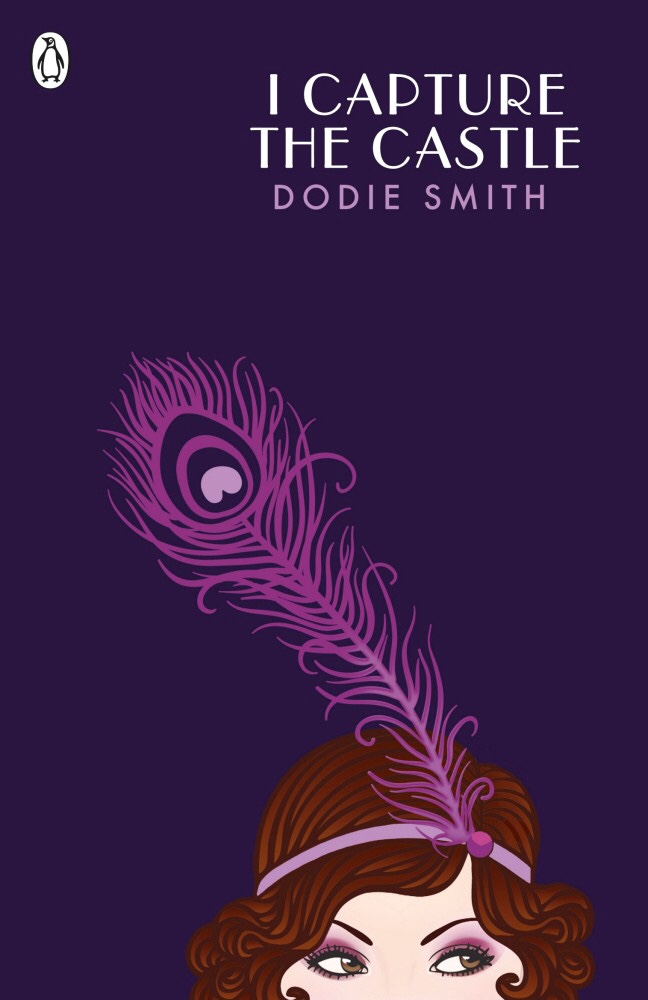
I’m going a long way back in time for Throwback Thursday this week. I read this book in my early teens, but still hold it close to my heart. I’d read 101 Dalmations much earlier and hadn’t realised that the author had written anything other than children’s books. The truth is I’d been waiting my whole life for a heroine like Cassandra Mortmain. There are a lot of different influences to blame for turning me into the adolescent I was. Years trawling round stately homes had given me a yearning for a house I could hide in. We lived in a 1960’s bungalow with just enough rooms to live in, but I longed to hear lines like ‘ Hayley? No I haven’t seen her since breakfast. Could she be in the pink drawing room?’ Period dramas, particularly 1970s productions of D.H. Lawrence novels and L.P. Hartley’s TheGo-Between , both loved by my mum, had left me hankering after a wardrobe of full, floaty skirts and the sort of accessories that looked out of place. Like tramping down to the village shop wearing a feather boa, ten layers of petticoats, whilst dragging a grumpy spaniel. I would constantly imagine I was in a book or a film, walking the poor dog’s legs off while hoping to meet a man who looked like Mr. Rochester and lived in a Gothic mansion, minus the mad wife.
I also developed a fascination with Edith Holden thanks to the TV series of Country Diary of an Edwardian Lady and I even wrote off for a pack about the series. We already had the book, so I bought a sketchbook and some watercolour pencils with my pocket money. My brother and I would go out early, him with his fishing gear, and me with my books and paints. There was an old track down to the woods with a drainage dyke running alongside. About halfway down there were two willow trees that had bent so far over the water it was possible to climb up and lay down along the trunk. My brother would fish from his tree, and in mine I would paint flowers and butterflies and read my book. It was the closest thing I had to room of my own. So, in finding Cassandra Mortmain I felt like I’d found exactly who I was supposed to be. I wasn’t meant to be Hayley Baxter, lives in a sixties bungalow, with a working class family and no money. I was meant to be the broken down castle, bohemian sort of poor. Where parents were trying to make money from art, roof leaks dripped into buckets instead of being fixed and they were invited to tea by the landed gentry or their new American millionaire estate owners.
I loved Cassandra Mortmain’s confidence. She was determined she was going to be a writer and nobody told her she couldn’t be, so she was always curled up in some unlikely place, writing in her journal. If I said I wanted to write novels, my close family were supportive – my mum had always wanted to write. Wider family and friends would say ‘well, as long as you do well at school and have something to fall back on.’ There were aunts and uncles who would have been bemused if I walked constantly around with a journal and pen. Writing was seen as something you had to do – you wrote a letter, or a postcard – but not something pleasurable that you devote time to. That came much later, when I had my own home and my own wardrobe of floaty skirts. When I first read her story I was much like Cassandra herself, there were parts of life that she was recording without really knowing their importance or meaning. Although she narrates her own story, as an older reader there were things I understood that Cassandra didn’t as yet. This is a story of growing up and leaving some of that innocence of youth behind.
I thought on first reading that her sister Rose was incredibly beautiful, but grumpy and not very nice to be around. However, reading her years later I could see that because Rose was older, she understood more about the realities of life. For her, the broken roof and the lack of income were not romantic, but a real problem that needed fixing. Their father’s only published book can’t keep them forever and his writer’s block makes him a very difficult man to live with. Rather comically the women lock him in his study, in the hope that inspiration will strike when he’s forced to stare at his typewriter. It’s very clear to Rose that they are in dire financial straits. This is where the book takes on some Austen-like romantic tropes, as the Cotton family come to visit the estate where they are the rightful heirs and the Mortmains are their tenants. Mrs Cotton brings her two sons, the eldest Simon being the rightful heir, and Neil, the younger son. Simon is ‘detestably bearded’ but the most eligible and able to rescue the Mortmains from their current circumstances. Cassandra’s father and stepmother Topaz are seen as delightfully eccentric by the Cottons and the whole family are invited for dinner. This is where the romantic problems begin, as Simon is besotted with the beautiful Rose, and as Cassandra develops a crush on Simon, she is in turn adored by the Mortmain’s servant and helper, Stephen. Stephen is incredible handsome, but the Mortmain girls are about to find out that the heart is an unruly organ and wants what it wants. Despite this, it isn’t long before Rose announces her engagement to Simon. This solves so many of the Mortmain’s problems – it’s as if one of the Bennett sisters actually accepted Mr Collins. As the preparations for the wedding gather pace, Rose and Cassandra spend more time with the Cotton brothers.
Simon finds that he gets on well with Cassandra. He is the more cerebral of the brothers and while Rose is beautiful, she is not blessed with brains. Yet, Cassandra is too young for romance, and a very touching friendship starts to develop. The younger brother, Neil, is more stereotypically American, loud, brash and very active. He and Rose are usually swimming or messing around in boats, with Neil often play fighting or indulging in horse play. Cassandra has never seen her sister so lively, actually forgetting to be lady like and being in the moment. Everyone is touched to see Rose so happy, and assume it is her approaching wedding. To an adult reader the attraction between these two beautiful people is obvious, but Cassandra is stunned to find out they have run away together. If we hark back to Austen, her sister has turned out to be more of a Lydia than a Jane. How can the Mortmain’s fortunes be improved by their daughter’s marriage to the second son?
This is a novel drenched in charm and nostalgia. Interestingly, it was written by Smith when she was living in America, and that may explain it’s rose-spectacled view of England. There is something slightly melancholy in that we’re watching a young girl lose the charming innocence that makes her narration a delight to read. She falls in love, but not with the person who adores her and sees the devastation that can be caused by betrayal and jealousy. We realise, as Cassandra grows up in front of us, the chaos of a household run by adults who have no money and no rules, the embarrassment of having a stepmother who will happily walk around in the nude and that moment when you find your own sister inexplicable, because you understand storybook romance, but not adult desire. Cassandra is mostly in love with life. One character describes her as ‘the insidious type–Jane Eyre with of touch of Becky Sharp. A thoroughly dangerous girl.” Her narration makes even minor characters jump off the page and straight into your heart. Finally, I loved how Cassandra leaves us with an open ending. We shouldn’t be surprised that some loose ends are left dangling, because she has told us how much she hates ‘a brick wall happy ending.’ I think it’s true to say that in me, she found a reader as romantic about life as she is. This is one of those books I’ll re-read again and again, so I’m on the look-out for a very special copy to put on my forever shelves.