Posted in Throwback Thursday

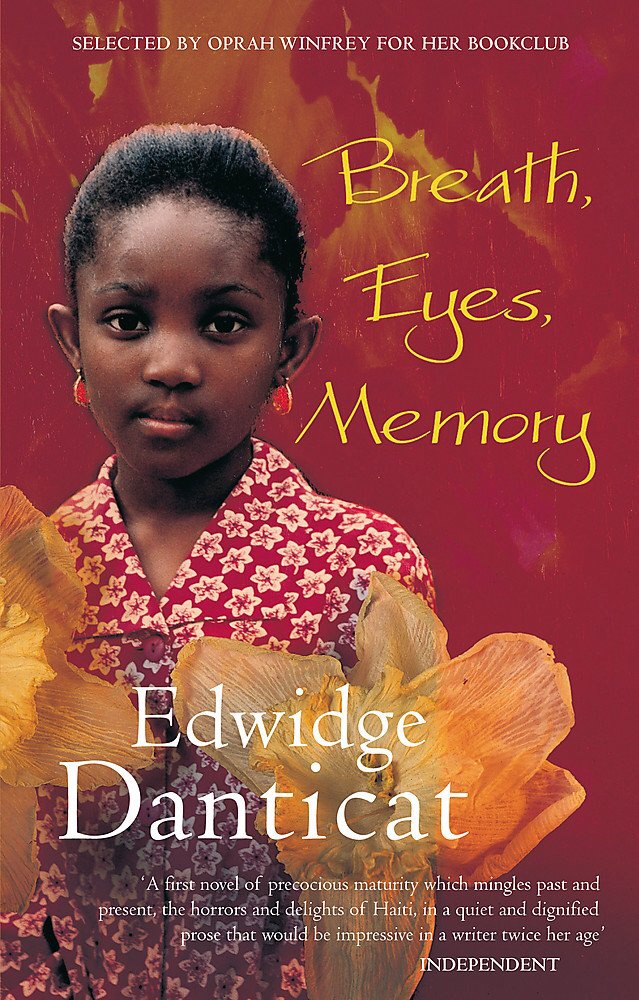
Throwback Thursday! Breath, Eyes, Memory from Edwidge Danticat


At the age of twelve, Sophie Caco is sent from her impoverished Haitian village to New York to be reunited with a mother she barely remembers. There she discovers secrets that no child shouldever know, and a legacy of shame that can be healed only when she returns to Haiti – to the women who first reared her. What ensues is a passionate journey through a landscape charged with the supernatural and scarred by political violence.

In her stunning literary debut, Danticat evokes the wonder, terror, and heartache of her native Haiti – and the enduring strength of Haiti’s women – with vibrant imagery and narrative grace that bear witness to her people’s suffering and courage.

Reading this incredible debut novel at university sparked a lifelong interest in the history of Haiti and its people. The republic shares the island of Hispaniola with the Dominican Republic and despite only occupying three eighths of the island, it has a staggering population of 11.4 million making it the most populated island in the Caribbean Sea. However, there is a huge Haitian diaspora with many residents relocating to the USA, probably due to the fact that Haiti has the lowest Human Development Index in the world. The indigenous Taino people seem to have been the original residents of the island, but the first European settlers landed in the 1400’s claiming the island for Spain and it remained part of the Spanish Empire until the 17th Century. The French then laid claim to the most westerly point of the island and they brought the first slaves to Haiti for labour on their new sugar plantations. It has the incredible honour of being the first island in the Americas to abolish slavery after a successful slave revolt led by Toussaint Louverture and eventually declared sovereignty on Jan 1st 1894 under his successor Dessalines. As the country slowly united there were attempts to declare the whole island as Haiti, but eventually they recognised the Dominican Republic as a separate state. Haiti has been notoriously unstable due to crippling debt owed to France, the dearth of resources left by the French and Spanish, as well as political volatility. The USA took control of the island in the early twentieth century, until Haitian leader Francois ‘Papa Doc’ Duvalier took power in 1956 and it is this period that is explored in the novel. Papa Doc’s reign and the following rule of his son known as ‘Baby Doc’, was characterized by state-sanctioned violence, against any political opposition and it’s own civilians, corruption, and economic stagnation. It was only after 1986 that Haiti began attempting to establish a more democratic political system.

Danticat’s story is about the women of Haiti, particularly the three generations of Sophie’s family, and how this period of history impacted upon the women of Haiti. Sophie has been brought up by her Tante Atie and this is a beautifully warm relationship that really grounds Sophie in her Haitian identity. They are also incredibly close to her Grandma Ifé who tells Sophie stories passed down orally about people who could carry the sky on their heads. Atie is beautifully conveyed as a loving but slightly abrupt woman, conflicted between the needs created by her own motherlessness and her love for this child who has been left behind. Both Sophie and Atie have a void that each other can fill, but Atie is honour bound not to replace Sophie’s mother and to be sure that her mother’s wishes are carried out. This comes to a head one Mother’s Day when Sophie takes a Mother’s Day card home from school clearly wanting to give it to her aunt, not the woman living thousands of miles away who she’s never met. Danticat is very adept at evoking her homeland with recipes and descriptions of mouth watering food. It’s not been a wealthy upbringing, but it is rich in stories, colour, warmth and nourishment. So when Sophie is sent to live with her mother in New York City the contrast is stark and confusing. Whereas Tante Atie seems comfortable in her skin, Sophie’s mother is shown to diet and use skin lightening creams, showing an obvious discomfort about her body and possibly even her identity as a black Haitian woman.

Men are largely absent in this novel, but their impact is enormous. Maxine lives in an apartment with her boyfriend and Sophie hears her mother’s nightmares through the wall. Left alone for long periods, Sophie forms a friendship with a male neighbour in the apartment block. This seems to trigger Maxine and the truth of Sophie’s family starts to come to light, as her mother becomes obsessed with protecting her. She begins the horrific practice of ‘testing’ her daughters virginity – something apparently passed down from her own mother – causing shame, confusion and trauma. Sophie learns she is a child of rape and we travel back to the Haiti of Maxine’s teenage years where she is spotted by one of the ‘Tonton Macoutes’ – Papa Doc’s foot soldiers and the bogeymen of every Haitian child’s nightmares. He drags Maxine into the sugar cane field and assaults her. It will take a return to Haiti, for both Sophie and her Mother, to bring about healing. Danticat beautifully portrays inter generational trauma and the oppression of women that’s caused by the patriarchal system, but enacted by mothers on their daughters. Daughters who were virgins kept their value in the marriage market, just as in other cultures the men want wives who have undergone FGM. It takes rebellion and refusal from the women to create change. Sophie must also face the the ghosts of slavery, represented by the sugar cane her ancestors were brought from Africa to cut. Danticat paints a vivid, colourful but painful picture of a country created by trauma that is still felt many centuries later. She explores how each new generation must find some way to live with that past, whether by leaving the country of their birth for something different or by staying to face the past and break the chain of hurt each generation has passed on to the next. This is an emotional, evocative and difficult read in parts, but is a beautiful debut from an author whose love of her homeland shines through.

This edition published by Abacus 7th March 1996

Meet the Author

Edwidge Danticat picture from Fresh Air Archive

Edwidge Danticat was born in Haiti in 1969 and came to the United States when she was twelve years old. She graduated from Barnard College and received an M.F.A. from Brown University. She made an auspicious debut with her first novel, Breath, Eyes, Memory, and followed it with the story collection Krik? Krak!, whose National Book Award nomination made Danticat the youngest nominee ever. She lives in New York.
Posted in Throwback Thursday

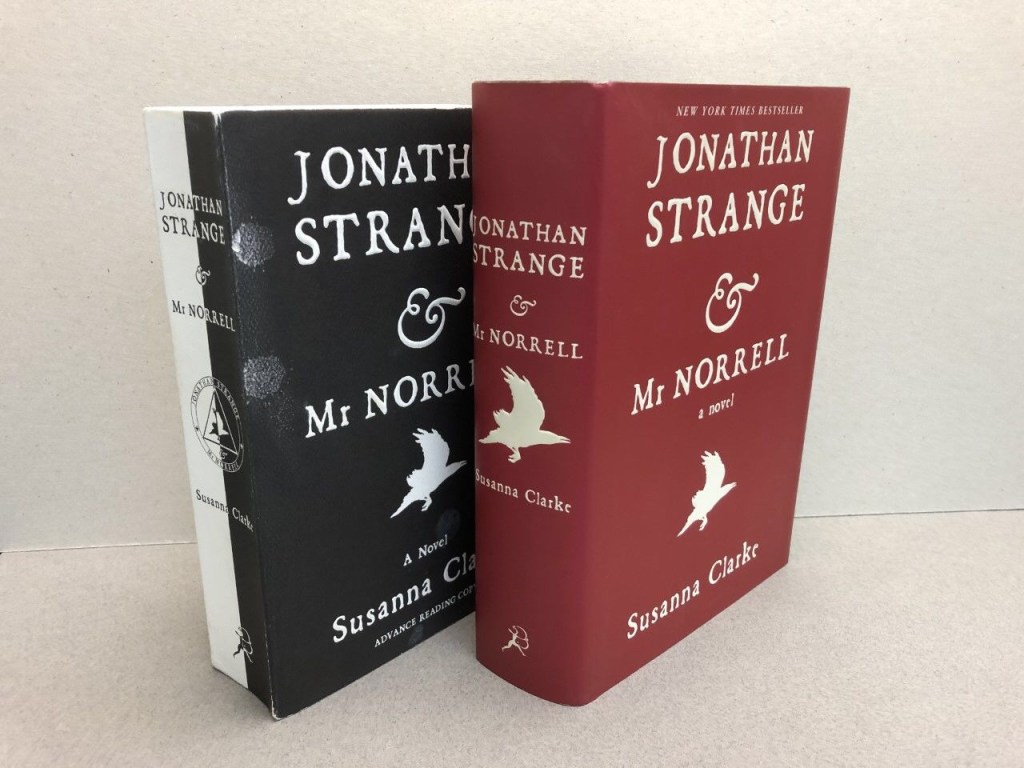
Jonathon Strange and Mr Norrell by Susanna Clarke.

I’ll own up to the fact that this beautiful book remained on my shelves for about five years before I read it. I’d bought it while doing my degree in literature, so I was already reading five books a week and although I loved the blurb I just couldn’t get into such a weighty book. I remember picking it up and reading the opening paragraph, then slotting it back on the shelf a few times too. When I finally did read it I was absolutely enchanted and amazed by the incredibly detailed world the author had created.

The year is 1806. centuries have passed since practical magicians faded into the nation’s past. But scholars of this glorious history discover that one remains: the reclusive Mr Norrell hoards books of magic for his library and can perform incredible and unexpected feats of magic. He is approached by Sir Walter Pole whose wife has died and he begs Norrell to revive her. Despite his scruples about old magic he knows this might be the only way to bring this beautiful young woman back to life. So, he is tempted by a richly dressed gentleman fairy, who agrees to help Norrell on two conditions. First he would like a keepsake of the lady and takes a finger which he keeps in a jewellery box. Secondly, if he is to give life back to her, it seems only fair that he should have half of it. Norrell does a quick calculation and decides it will not matter to have a few years shaved off her life. However, as Mr Norrell himself knows, fairies can be tricky, deceptive little creatures and this one may have ulterior motives. After this amazing feat of magic MrNorrell becomes the talk of London and finds himself working for the government, conjuring illusions to aid England in their war with the French. However, Norrell would still like to keep magic controlled, only performed by serious and studious men. Constantly, at the back of his mind, is the bargain he’s made with the fairy creature. Can he be trusted and will the magic that brought Lady Pole back to life work as planned?

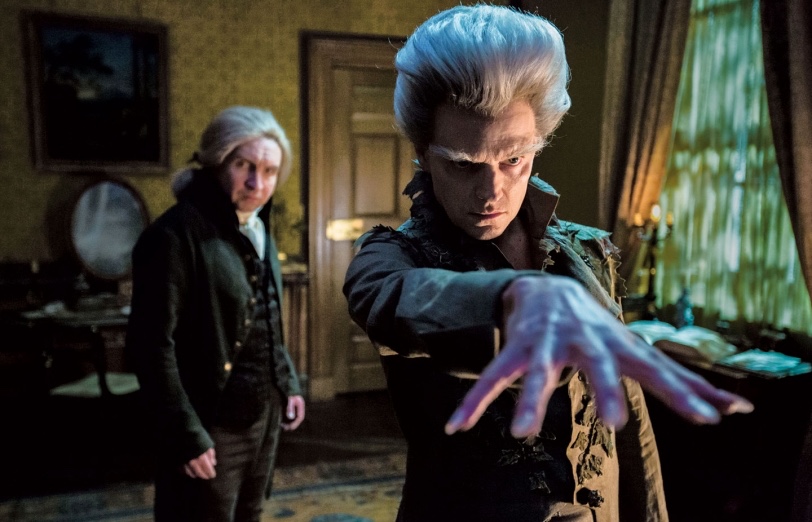
Marc Warren and Eddie Marsan in the BBC adaptation.

Norrell becomes challenged by the emergence of another magician: the brilliant novice Jonathan Strange. Young, handsome and daring, Strange is the very antithesis of Norrell. He only begins to study magic because he is in love and she loves him back, but there is a very stern father in the way, who does not like Jonathon. He thinks he’s an idle layabout with a rich father, but no real prospects. Unless he commits himself to a profession, he will not give permission for Jonathon to marry his daughter. Jonathon Strange finds he is surprisingly good at magic and he’s certainly a showman, enjoying the performance element of magic. As word spreads of this new magician on the block, Mr Norrell becomes concerned. In a bid to contain the situation he asks to meet Jonathon Strange and offers him an apprenticeship. This will control Jonathon’s wild exhibitions of magical power. He sets him to studying, but Jonathon is increasingly frustrated by Norrell’s unwillingness to perform magic. A row erupts and so begins a dangerous battle between these two great men which overwhelms the war between England and France. Each man’s obsessions and secret dabblings with the dark arts are going to cause more trouble than they can imagine, while all the time Norrell’s dabble with the fairy gentleman and old magic is coming back to haunt him.

It’s really hard to explain the richness of the detail in this beautifully written novel. There’s the amazing historical background with 18th Century society vividly brought to life and the rural home of Jonathon Strange contrasting sharply with London society. There’s the city of York, where an incredible scene in the Minster involves Mr Norrell bringing all the statues to life in front of a terrified magician’s society. Of course the illusions are spectacular, but so is the fashion and just wait until you enter the dreams of our poor resurrected Lady Pole! The characterisation is playful and humorous, with both magicians thought of as great men but each ridiculously comical in their own way. Mr Strange is like an overexcited puppy who has just found a tennis ball and might trample the whole garden in his exuberance. Mr Norrell on the other hand, is like a squirrel gathering nuts for winter, collecting all the magic and storing it in a safe place where no one else will find it. He is fussy and persnickety in his manner, but can also be rude and abrupt with people. This is where Mr Strange excels, he is handsome and charming, making his magic appear to be an innate talent rather than the result of studying dusty books. We go from rural England, to London, to France and Venice with every setting evocative and rich. I loved incidental characters like the street magician who plies his trade in a rather tongue in cheek way, using props that Mr Norrell finds deplorable. Mr Norrell’s servant is also a fascinating puzzle. I was truly sucked in by the story of Stephen, a servant in the household where Mr Norrell dabbles in fairy magic. The way he is slowly sucked into something he doesn’t understand is incredibly well done, from the bell ringing that only he can hear and the mysterious guest upstairs who he didn’t see arrive. Stephen serves with pride and is proud of the place he has reached in life as a black man in 18th Century society, but promises of greatness from the new guest appeal to his need to be respected. Why is he offering these opportunities and why is Stephen so incredibly tired all the time? It’s as if he hasn’t slept at all.

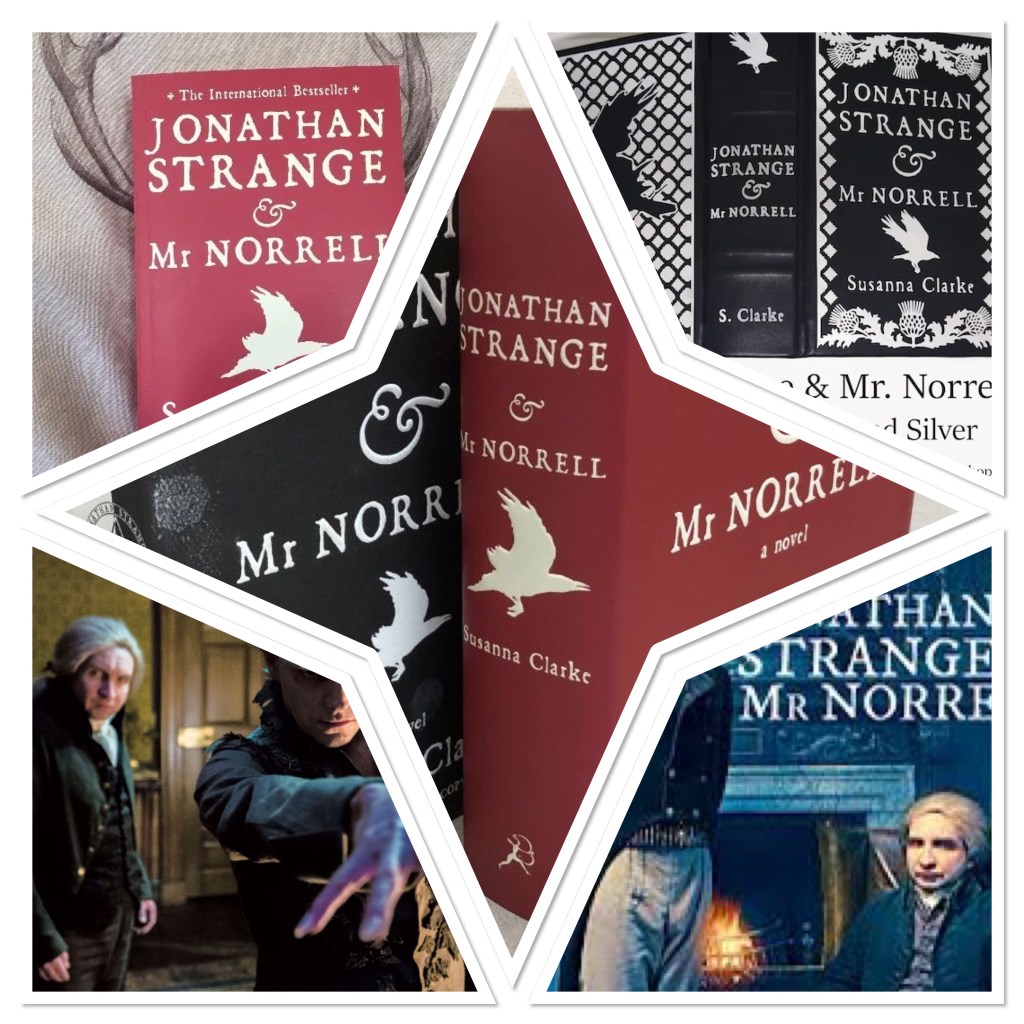
TV Tie-In Edition showing Bertie Carvel and Eddie Marsan as Jonathon Strange and Mr Norrell

The novel explores the 18th Century preoccupations with reason and madness, but also with classification and includes long academic style footnotes referencing an entire fictional body of literature on magic. Last year Collins released her second novel Piranesi, a full seventeen years after Jonathon Strange and Mr Norrell. It had taken her almost ten years in her spare time to write this debut novel, which isn’t surprising given the level of detail. It was revealed recently that she struggles with chronic fatigue syndrome and having experienced this level of fatigue for many years as part of my MS, I can only marvel that she managed to write such a substantial debut. However, if Jonathon Strange and Mr Norrell had been the only novel she wrote in her lifetime, I would still think of her as a genius, because this novel is an absolute masterpiece.

Showing the original editions of the novel

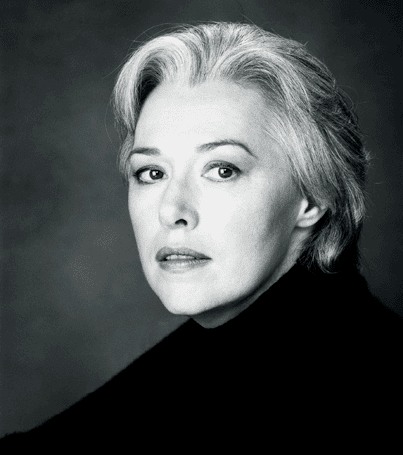
Meet The Author

Susanna Clarke

Susanna Mary Clarke was born 1 November 1959 in Nottingham and is an English author known for her debut novel Jonathon Strange and Mr Norrell (2004), a Hugo award winning historical novel. Clarke began Jonathan Strange in 1993 and worked on it during her spare time. For the next decade, she published short stories from the Strange universe, but it was not until 2003 that Bloomsbury bought her manuscript and began work on its publication. The novel became a best-seller.

Two years later, she published a collection of her short stories The Ladies of Grace Adieu (2006). Both Clarke’s debut novel and her short stories are set in a magical England and are written in a pastiche of the styles of 19th-century writers such as Jane Austen and Charles Dickens. While Strange focuses on the relationship of two men, Jonathan Strange and Gilbert Norrell, the stories in Ladies focus on the power women gain through magic.

Clarke’s second novel, Piranesi was published in September 2020, winning the 2021 Women’s Prize for Fiction.

Posted in Personal Purchase

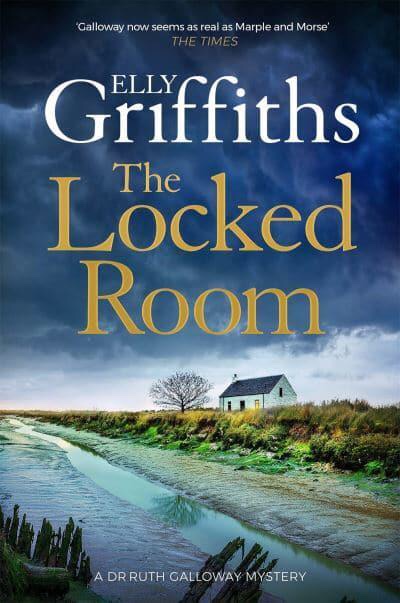
The Locked Room by Elly Griffiths

Ruth Galloway is one of my all-time favourite characters in fiction, because I love her perspective on life, her intelligence and the fact that she doesn’t give in to all those things women are pressured to worry about. So, as I read her latest exploits, imagine my shock when she is lured to a Lean Zone meeting! I was horrified. I can’t cope with a Ruth who avoids cake. Rest assured, our favourite forensic archaeologist isn’t about to become a calorie counter. I gave a huge sigh of relief. When chatting about her decision not to continue at Lean Zone, Ruth tells her neighbour she was only inspired to go because she’d seen a school friend who lost an enormous amount of weight. The neighbour asks ‘and you thought she looked better?’ Ruth considers for a moment and replies ‘no I thought she looked worse.’ This is just one of the reasons I love Ruth and have followed her through 14 novels. How long will it take for someone to turn this into a TV series? There’s so much material to work with and she’s such a relatable character. I’ve entered into debate on Twitter over who should play these characters I love, even with Elly Griffiths herself. I know Ruth Jones was discussed, but I favour Olivia Colman who’s actually from Norfolk. David Tennant was put forward as Cathbad and I’m sure he’d pull it off admirably, although for some reason Rhys Ifans floats into my mind. As for Ruth’s love interest, the slightly ravaged and wonderfully Northern, DI Harry Nelson I’m thinking of either David Morrissey or Phillip Glenister (a little bit worn, but still a certain something that’s attractive).

There are several mysteries in this latest book in Elly Griffith’s Ruth Galloway series, both professional and personal. Ruth is called in to excavate human remains discovered by a roadworks crew, in the evocatively named Tombland area of Norwich. This alerts her to Augustine Seward’s House, close to the cathedral and rumoured home of the Grey Lady – a young girl locked into the house during the plague with her sick parents in order to stop them spreading the virus. Plague sufferers were often barricaded into their homes, but rumours suggest that this young girl was alive long after her parents death and had tried to eat them when she was starving. Another grim discovery is the death of an older woman, found by her cleaner after taking an overdose in her bedroom. A prior case had already caught DI Nelson’s eye because he couldn’t understand why someone suicidal, would put their ready meal in the microwave first. This latest death adds to Nelson’s suspicions, because the cleaner is convinced she had to unlock the room, from the outside. There is also a personal mystery for Ruth, who is clearing out her mother’s things. Her widowed dad has remarried and after several years leaving things as they were, his new wife would like to redecorate their home. It falls to Ruth to sort her clothes and belongings. She finds a box of photographs and is shocked to find a picture of her own cottage – a place her mother never really warmed to. Written on the back is Dawn, 1963, a full four years before Ruth was born. Why would her mother have kept this and why did she never share that she’d been there?

The pandemic is woven so well into the story and Griffiths really captures the disbelief, mental struggles and frustrations of trying to live in this strange time. It was interesting to see characters who are so familiar to us, reacting to something we’ve all lived through. Nelson is sceptical at first, but a few weeks later as wife Michelle ends up locked down with her parents in Blackpool, will he cope with living alone? Ruth takes lockdown in her stride, trying to juggle home schooling, lectures via Zoom and supporting her students. Griffiths weaves in the story of those students who haven’t been able to go home and are isolated in halls of residence, including one young man who is very interested in Dr. Galloway. Judy is as practical as ever, but surely this is the sort of crisis her partner Cathbad is ready for? Druid, wizard and all round mystical being, Cathbad is teaching yoga in the morning and has a pantry ready for any crisis. I felt quite tense though, waiting to see how COVID would affect these characters I love and worrying for them. Nelson’s team are struggling to investigate their case with the restrictions in lockdown, but the case is still fascinating with a lot of red herrings to muddy the waters. I loved how this mystery really looks at mental health and how difficult life events can leave us vulnerable to those who would prey on us. All the possible victims are women, live alone and have faced difficulties in life such as the loss of a partner. It also seems that all have been to weight loss groups, but is that a clue or a sad indication of the modern pressures of being a woman?

The personal mystery of Ruth’s had me hooked even more than the crime this time around. Ruth’s mother had never understood why she wanted to live her life in such an isolated place and there are times during lockdown where Ruth has wondered this herself, especially for Kate who is now 11 and has been totally reliant on the Internet to talk to friends. Ruth’s dad is equally befuddled by the photo she’s found which predates even his relationship with his wife. Ruth keeps wondering why, when she found her cottage, her mother never mentioned seeing it before. Plus, if it wasn’t important, why keep the photo for all these years? Answers come, but they’re unexpected and even life changing. It’s the personal relationships that shine here and the unexpected places and people that bring us comfort. For Judy, used to the ethereal and spiritual Cathbad, it’s her straight talking old sidekick Cloughie who brings the solace she needs from a friend. Ruth is surprised to find she has spent most of her time feeling almost separate from the world. She feels the strangeness of her daily life changes: more time in bed, the different way of working, and the jarring first sight of shoppers queueing outside the supermarket in their masks. Most of her observations are practical changes though and she’s remarkably comfortable, just her, Kate and Flint the cat. In fact the upside has been the lack of other people, the beautiful scenery and wildlife on their doorstep. They even have a new neighbour, who Ruth enjoys getting to know with a socially distanced glass of wine each evening separated by the garden fence. They can walk together on the beach and do Cathbad’s daily yoga, making them feel a connection rather than isolation. Nelson however is completely alone with only his dog Bruno for company. Used to a house run by Michelle and the rough and tumble of young son George he’s strangely lost and finds himself drawn mentally to the cottage on the coast and his other family.

There are little observations that make Griffith’s world feel so real to me. Lured to a small school reunion while staying at her parent’s house in London, Ruth observed how everyone had aged. In fact her school boyfriend Daniel is bald and she observes she wouldn’t have recognised him a line-up. She then does the middle aged calculation that all of us over 45 do in these circumstances; she wonders if she’s looking as old as they are. Then as the pandemic hits, these people she’s not seen for decades, are sending her messages on social media prompted by the ‘strange times’ we’re living through. It’s something I observed over over the last two years, when daily life is put on pause we look for things to ground us or start to re-evaluate our lives. These touches are grounded in that incredible Norfolk setting, fully formed in my brain now I can immediately see inside Ruth’s cottage by the salt marsh. This mysterious and wild space is offset by the city of Norwich and in this case, the setting of Tombland around the cathedral. This spiritual and ghostly space felt unsettling, as friend Janet explains to Ruth about sitings of the Grey Lady who wanders the house with a lit candle, but also walks through the walls where there used to be doors. It’s no surprise that Cathbad has once seen her in this area and the ghost story adds to the confusion of those final chapters as the case builds to a climax. I really loved the theme of the outcast dead, whether they are the undiscovered plague pits that one of Ruth’s students becomes fascinated with or the graves of those who committed suicide. Historically, people who’ve committed suicide are placed outside the boundaries of the graveyard in unconsecrated ground. The idea of punishing someone in so much pain seems archaic now and I loved the idea of a yearly church service to acknowledge all these outcast people. There are interesting elements of coercive control in the investigation and our team have to ask questions about their preconceptions of who commits crime and what criminals look like, never mind how and if they can prosecute. However, my mind was also occupied with worrying over which of my beloved characters might catch COVID and how their loved ones might cope. I’d set aside two days to read this novel on publication and I only needed one, because I had to know all my characters were safe and when I reached it, I was immediately hooked into waiting for my next instalment.

Meet The Author

ELLY GRIFFITHS is the author of the Ruth Galloway and Brighton mystery series, as well as the standalone novel The Stranger Diaries, winner of the Edgar Award for Best Novel, and The Postscript Murders. She is the recipient of the CWA Dagger in the Library Award and the Mary Higgins Clark Award. She has published a children’s book, A Girl Called Justice. She has previously written books under her real name, Domenica de Rosa.

The Ruth books are set in Norfolk, a place she knows well from childhood. It was a chance remark of her husband’s that gave her the idea for the first in the series, The Crossing Places. They were crossing Titchwell Marsh in North Norfolk when he mentioned that prehistoric people thought that marshland was sacred ground. Because it’s neither land nor sea, but something in-between, they saw it as a bridge to the afterlife; neither land nor sea, neither life nor death. In that moment, she saw Dr Ruth Galloway walking towards her out of the mist…

She lives near Brighton with her husband Andy, an archaeologist. She has two grown-up children. She writes in the garden shed accompanied by her cat, Gus.

Posted in Throwback Thursday

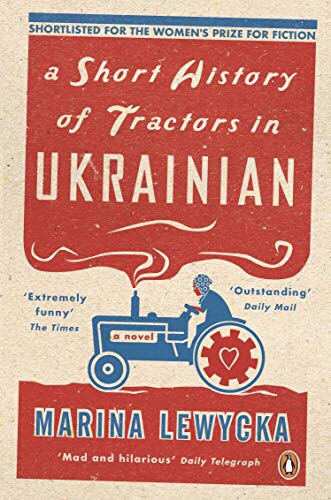
A Short History of Tractors in Ukrainian by Marina Lewycka.

Synopsis

‘Two years after my mother died, my father fell in love with a glamorous blonde Ukrainian divorcee. He was eighty-four and she was thirty-six. She exploded into our lives like a fluffy pink grenade, churning up the murky water, bringing to the surface a sludge of sloughed-off memories, giving the family ghosts a kick up the backside.’ 


Sisters Vera and Nadezhda must aside a lifetime of feuding to save their émigré engineer father from voluptuous gold-digger Valentina. With her proclivity for green satin underwear and boil-in-the-bag cuisine, she will stop at nothing in her pursuit of Western wealth. But the sisters’ campaign to oust Valentina unearths family secrets, uncovers fifty years of Europe’s darkest history and sends them back to roots they’d much rather forget . .

My Thoughts

The second phone call came a few days after the first. ‘Tell me, Nadezhda, do you think it would be possible for a man of eighty-four to father a child?’

I love this unexpected question early on in the novel, coming from Nadezhda’s elderly father out of the blue. It’s not the sort of question I’d expect from my father, but as our narrator Nadezhda points out, her father is always straight to the point and when he’s in the grip of a big idea never bothers with small talk or enquiries about her health. My mum read this first and told me I needed to read it. Within a couple of pages I knew why, Nadezha’s father was an elderly Ukrainian engineer, widowed for several years, with a penchant for tractors and straight talking. I was laughing out loud within pages, I couldn’t believe Marina Lewycka had conjured this man out of her imagination, especially since he was sitting on my sofa reading his daily paper.

My father-in-law came to live with us in Spring 2004. The plan was that he would spend summers with us and winters in New Zealand with his other son and family. My husband’s family were from Poland, relocated as children from Poland to England, his father escaped from a labour camp in Siberia. So, not exactly the same story as Nadezhda’s father, but his speech, mannerisms and preoccupations were eerily similar. I should just say that my father-in-law would have been horrified to be propositioned by a woman thirty years his junior. He wore his wedding ring until the day he died, at least twenty years after his wife was killed in a car accident. We didn’t always see eye to eye. However, some of the things that drove me insane when we lived together, became rather endearing and even downright hilarious with time. Blunt speech was a trademark of his, to the point of seeming rude in some cases. Yet, when told someone was offended by his comment, he would say ‘but it was correct, yes?’

One favourite lunch party dissolved into disbelief and giggles when he addressed his godson’s wife and suggested she might be more comfortable sitting on his chair than the kitchen stool since she had a ‘much larger’ bottom than him. He was bewildered by the reaction, believing he was being chivalrous by offering her the dining chair and because she did, in fact, have a much larger bottom. I realised this was a preoccupation of his when he came to visit us proffering a carefully cut out article from his daily paper for me. The subject was scientific research that found women with larger bottoms had longer lives than apple shaped women who stored fat round their middle. He was very happy with his discovery, humming away to himself in the kitchen, as my father and I shut ourselves in the bathroom laughing uncontrollably so we didn’t offend him. I hadn’t realised he was very appreciative of this body type until he asked me to look up the journalist Victoria Derbyshire. He had been listening to her on the radio for some time, but had never seen her in person and despite his son being the director of the media lab at a university he wasn’t up to speed with using the internet yet. I showed him her photograph and he shrugged his shoulders mournfully saying he’d expected her to be a much rounder woman in general but specifically with a ‘much bigger bottom.’ It dawned on me that he felt this was a compliment, something he thought was vital to his idea of female beauty.

He also had a way of making even the most positive things sound like a problem. At a fancy dress party my husband and I threw at home, he watched me working all day to put together a buffet for the guests. Finally, just before people started arriving, he asked if he could take a picture of the buffet table. My husband seemed to think he was impressed by the spread, but his face seem to suggest he was inwardly struggling with what to say. Finally he sighed deeply and said ‘but so much food, how can one possibly choose?’ Later, I received in the post a printed copy of his photograph of the food, showing me that it was important to him. After learning more about his family struggles during the war, and the death of his brother as they were hiding in the Siberian forests, I understood more deeply his utter disbelief at so much choice when weighed against the constant hunger he remembered feeling. Nadezhda tells us about her father’s specialty of ‘Toshiba’ apples – chopped Bramley apples nuked so thoroughly in the microwave they became apple sauce. This was a speciality of my father-in-law with apples that were so hot, they were still cooking in the desert bowl half an hour later. If he wanted to cool food he had a brilliant idea. My brother-in-law had been living. with his father for many years. He was a tree surgeon and had built what they called ‘the cage’ attached to the back of the house. This was a dog run, padlocked and used as a store for chainsaws and other equipment. Any food that needed to cool was placed in the cage on an upturned tree stump, open to the elements on all sides, but sheltered by a roof and away from foraging animals. This made perfect sense in practice, but always caused questions at the dinner table from guests baffled by the instruction ‘fetch the pie from the cage’.

Nadezhda’s father is proud of his late wife’s ability to forage and preserve food to last into the winter season. There is a pantry of store bought supplies, boxes of preserves and fermenting alcohol under the bed, plus a deep freeze full of vegetables and individually portioned meals. Everything labelled and rotated by date.

The only way to outwit hunger is to save and accumulate, so that there is always something tucked away. […] What she couldn’t make had to be bought second hand. If you had to get it new, it had to be the cheapest money could buy, preferably reduced or a bargain. Fruit that was on the turn, tins that were dented, patterns that were out of date, last year’s style. It didn’t matter, we weren’t proud, we weren’t some foolish types who wasted money for the sake of appearance, Mother said, when every cultured person knows what really matters is what’s inside.’

It took three visits for me to work out that what I thought was a kitchen island, in Aleks’s kitchen, was actually a deep freeze with a loose work top laid over it. When he was out we looked in it to find portioned meals labelled by Jez’s mother who had died ten years previously. I thought it was grief that kept the freezer lid closed and it was in part. It was also a survival instinct of someone who had known hunger and that those closest to you, the people you depend on, could be taken from you without warning. All starting with a terrifying knock on the door. Aleks’s father was in the Polish military, shot by the Russians and his family marched to a Siberian labour camp. By the time they escaped and joined the Resistance in a forest camp there was only Aleks and his mother left alive. Behind the comic elements of her book, the author is telling a similar story of political fanaticism, social upheaval, hunger, displacement and terrible loss. I was more understanding when I he told me about his conversation with my sister -in-law who had just bought a property in New Zealand. Apparently, he was most impressed by how quickly his son had ploughed up the tennis courts and planted potatoes.

The part I find most sad, both in the book and for my father-in-law, is that the homeland they crave and hold in their hearts and minds no longer exists. Alek would have been ten when he left Poland, but the Poland he left isn’t there waiting for him. Nadezhda’s father talks at length about a Ukraine that was forty or even fifty years ago. He wants to save one person from the tyranny of communism and give them the freedom of a life in this country. In his head he imagines tyrannical politicians controlling the people, but also the Pastoral beauty of his home country. He will rescue Valentina and in return she will bring to him the Ukraine of his youth with golden wheat fields, lush forests and flowing rivers. Nadezhda who has visited more recently remembers concrete tower blocks and polluted rivers full of dead fish. She tries to tell him that the people are no longer noble peasants, they are consumers longing for Western designer goods. Within weeks of them marrying Valentina has insisted on her own car – ‘not just any old car either. Must be good car. Must be Mercedes or Jaguar at least.’ She also wants second car, for when she’s in the Ukraine. Then it’s the cooker, three rings are not working, but ‘it must be prestigious cooker, must be gas. Must be brown.’ When Nikolai objects because the brown one isn’t on offer, she won’t let it go. He wants her to have ‘crap cooker’ because he is ‘no good meanie’. In the meantime Nadezhda starts to ask for legal advice on her father’s behalf, because there must be a divorce and they can’t bear the thought of this woman owning half of their mother’s things.

I thank the Lord we never had a Valentina to contend with. We sometimes hoped he would find someone, to ease the loneliness and take his head out of the past. The wardrobes full of his mother’s furs and Hanna’s side of the bed, left as if she’d be coming back any moment. We simply didn’t understand each other. If my friends came round it was my welcome break from the care routine – my husband had MS and he was on palliative care – a space to unload a bit, but I couldn’t do that if my father-in-law was also pulling up a chair and joining in. Although I did have it easier than my sister-in-law who found he was in the room when she was on all fours in labour. We had long conversations on the phone where we would both complain that he found us too loud, too opinionated and in my case, a bit too Northern. She would complain that he never shared any praise or positive thoughts about her and I felt exactly the same. I did realise though that he was telling other people – I would tell Jenny that he was proud of her mothering skills and the way she was bringing up his grandsons. She would tell me that he was amazed at the strength I had to keep going, to look after Jerzy every day and not panic if things went wrong. I found that Alek and I bonded more after my husband died, with a shared grief and on his part an understanding and gratitude for the years I spent nursing ‘his boy’. He would ring me every Sunday morning until his eyesight failed him and I missed those calls so much when they were gone. Even now, when I think of him stroking the back of my head as I told him how his son died, it brings a lump to my throat. Every time I read this book it’s a bittersweet experience. It makes me laugh still. I think of all those funny stories and the times we shared, even the hard parts when we didn’t get along. I would do them all again just to spend time with this incredible man. As for Nadezhda and her father Nikolai, I won’t ruin the ending, but there are more twists and turns along the way. For me, every time I pick this book up, I get to spend a little more time with an incredible man who I miss every day.

Published by Penguin 2nd March 2006.

Posted in Throwback Thursday

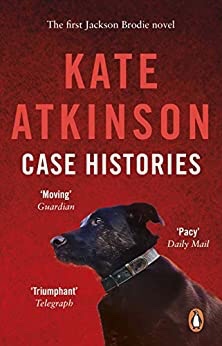
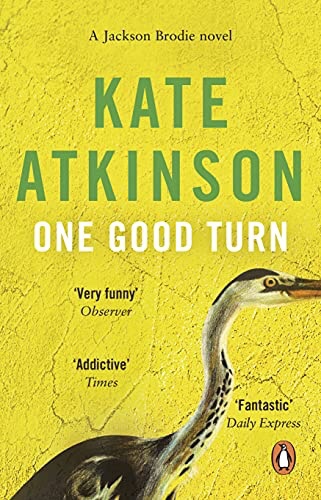
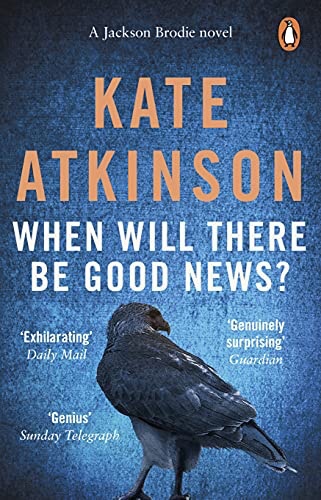
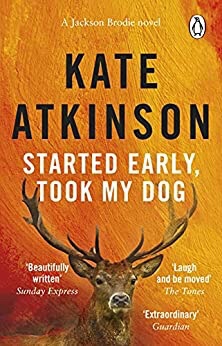
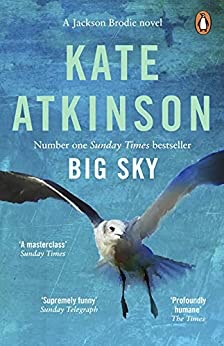
The Jackson Brodie Series by Kate Atkinson.

‘An astonishingly complex and moving literary detective story that made me sob but also snort with laughter. It’s the sort of novel you have to start rereading the minute you’ve finished it’ Guardian

In Case Histories we’re in a Cambridge that’s sweltering, during an unusually hot summer. To Jackson Brodie, former police inspector turned private investigator, the world consists of one accounting sheet – Lost on the left, Found on the right – and the two never seem to balance. Surrounded by death, intrigue and misfortune, his own life haunted by a family tragedy, Jackson attempts to unravel three disparate case histories and begins to realise that in spite of apparent diversity, everything is connected…

The Jackson Brodie novels were the first Kate Atkinson books I bought, one at a time as they were published. I was in love straight away. From the first novel Case Histories to her long awaited fifth in the series Big Sky, we are let into the world of this slightly world weary PI. Each time he collects cases that seem so disparate, but eventually overlap and connect. Atkinson has a unique way of blending very dark subject matter – missing persons, sex trafficking, modern slavery – with a sarcastic sense of humour and love of literature. Of course the investigations are serious and their subject matter is treated with care and diligence. However, some of the scrapes Jackson gets into and his frustrations with the women in his life are funny, acting as light relief. Atkinson has a very clever way of ending her novels without all the loose ends tied up – an issue that mentioned in a negative light in a lot of her reviews. I prefer that. Life isn’t tied up all neatly with a bow on top and I would imagine it’s quite rare when investigating crime. Often what we want to know, and rarely do, is why someone carries out a crime.

It’s maybe in an attempt to answer this question, that the author takes us deeply into the lives of all the characters involved, including their inner worlds. There’s an empathy and humanity to the writing that isn’t always present in crime fiction, in fact it does remind me a little of J.K. Rowling writing as Robert Galbraith for the Cormoran Strike series. There are critics of this style, with reviews commenting that there’s a focus on character above plot. I like that. I want to be invested in a character, otherwise I’m unmoved when things start happening to them. Atkinson also delves into areas of life that I’m interested in. Jackson has a penchant for finding life’s underdogs and more often than not, trying to rescue them. He finds those struggling after divorce, or with massive changes in life, the homeless and the destitute. They’re inbetween people who need help. It could be Jackson’s training as a police officer or his just in his DNA, but he wants to help people.

So If I’m asked what it is that grabbed me at the first novel and still hasn’t let go all these years later? I’d have to say it’s Jackson himself – and that’s before Jason Isaacs was on board for the TV series. Jackson is one of those men that could have the house burning down around him and I’d still feel safe. There’s an honour code about him, almost like a charter of correct behaviour. Yet on the other hand, there are rules he’s willing to break. He almost always gets too close to the client or a witness, showing a dedication to them that might explain his divorced state when we first meet him. There are times when he struggles to let go too, ending up with a dog to mention just one incident. If there’s a rule, such as keeping work and home separate, Jackson will break it for clients. As a result he doesn’t protect his own space, time or even safety. It is that dedication that endears him to me. I understand it, because I’m not great with boundaries myself. I read the book imagining an abrupt manner with a gruff Yorkshire accent. There’s something a bit Sean Bean in his manner. He has an undefinable something, that draws women to him.

The settings are interesting too, with the second novel set during the Edinburgh Festival, the third in Devon and the fourth and fifth in his home county of Yorkshire. Jackson is settled in North Yorkshire in the final novel Big Sky, divorced again but in a routine seeing his teenage son Nathan and their shared Labrador when his ex-wife Julia allows. This is the most settled Jackson has ever been and it’s nice to see him grounded in life. We waited a long time for a continuation in the series and Atkinson didn’t disappoint. In her inimitable style she presents several, seemingly disconnected, characters with various different problems. Jackson meets a man on a cliff top that leads him to a sinister network. He gains a client who claims she’s being watched and followed, which Jackson is starting to think is a paranoid delusion, until he follows her and witnesses her children being abducted. Only Atkinson can bring these strands together, not in a tidy way, but like a rough tapestry overlapping strands to make a beautiful whole.

It was great to see returning characters, like the sparky protégée Reggie who is now a police officer investigating a paedophile ring. I was hoping for DI Louise Munro because I know she and Jackson have unfinished business and lots of chemistry. The whole tale is bookended by a personal mission; Jackson helping his daughter be a runaway bride. It’s good to see a slightly more responsible Jackson, forging relationships with both of his children and staying in one place. I would recommend this series to readers who enjoy a combination of dark secrets and crimes, a wonderfully sardonic sense of humour and characters that get under your skin. I don’t know if there will be another novel in the series, but I do love the existing stories and re-read them from time to time. Atkinson is an incredibly skilled writer and if you pick up her Jackson Brodie series you won’t be disappointed.

Meet the Author

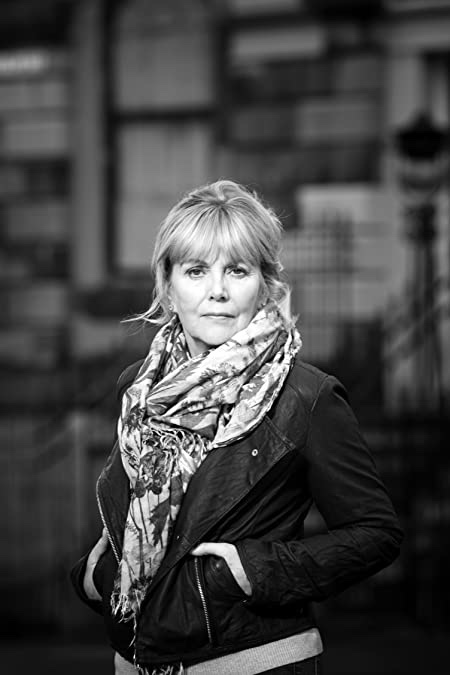
Kate Atkinson is one of the world’s foremost novelists. She won the Costa Book of the Year prize with her first novel, Behind the Scenes at the Museum. Her three critically lauded and prizewinning novels set around World War II are Life After Life, A God in Ruins (both winners of the Costa Novel Award), and Transcription. She was appointed MBE for services to literature in 2011.

Her bestselling literary crime novels featuring former detective Jackson Brodie, Case Histories, One Good Turn, When Will There Be Good News? and Started Early, Took My Dog became a BBC television series starring Jason Isaacs. Jackson Brodie returns in her new novel Big Sky.

Posted in Throwback Thursday

Festive Throwback Thursday! Little Women by Louisa May Alcott

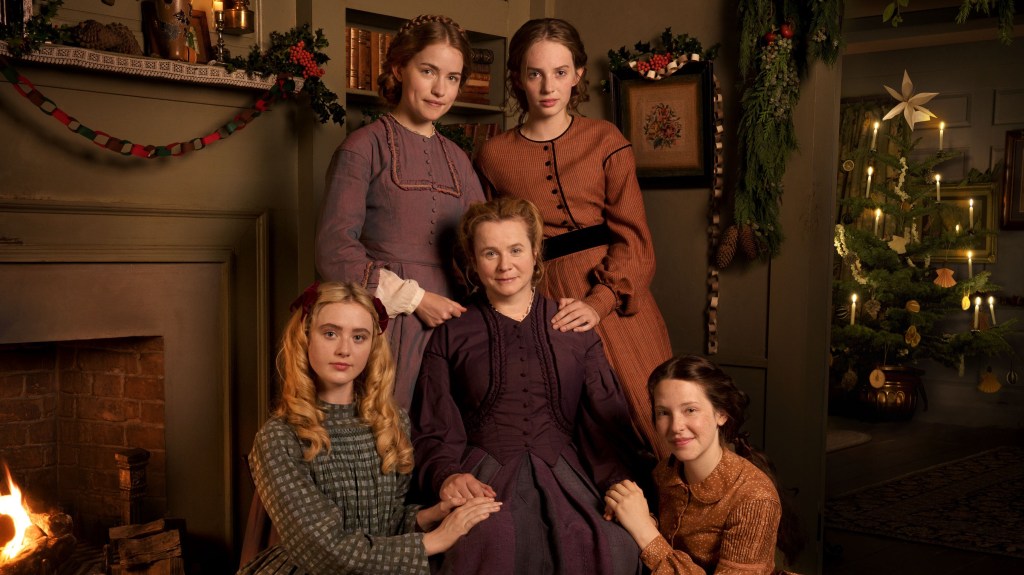
Little Women is one of my all time favourite books and the films, whether the old version Katherine Hepburn or the latest one with Saiorse Ronan, are essential viewing for me and my girls at Christmas. For my throwback posts this month I’m focusing on older books that truly give me those Christmas ‘feels’. That could be because they’re set at Christmas or they might have a special meaning associated with Christmas, such as something we would watch as a family or that I just happened to read at that time of year. As soon as it gets close to Christmas I think of Little Women, and it’s not just that first line of Jo’s; ‘Christmas won’t be Christmas without any presents’. The book begins and ends at Christmas and it highlights the way the family has changed in that time, who is lost and who has joined the March family. I think the fact that most of the film adaptations have that snowy New England appeal and the contrasting warmth of the March family’s home with it’s handmade decorations and open fire. It’s also the way the family celebrate and their values that really shine out to me. They have traditions, like the play they all prepare for in the evening, having so much fun that the lonely boy living next door with only an old Uncle for company yearns to join them. I see so many parallels with my own family in the Marches, even the love and support they offer to people who are struggling reminds me of the values my parents have instilled in me and my brother.

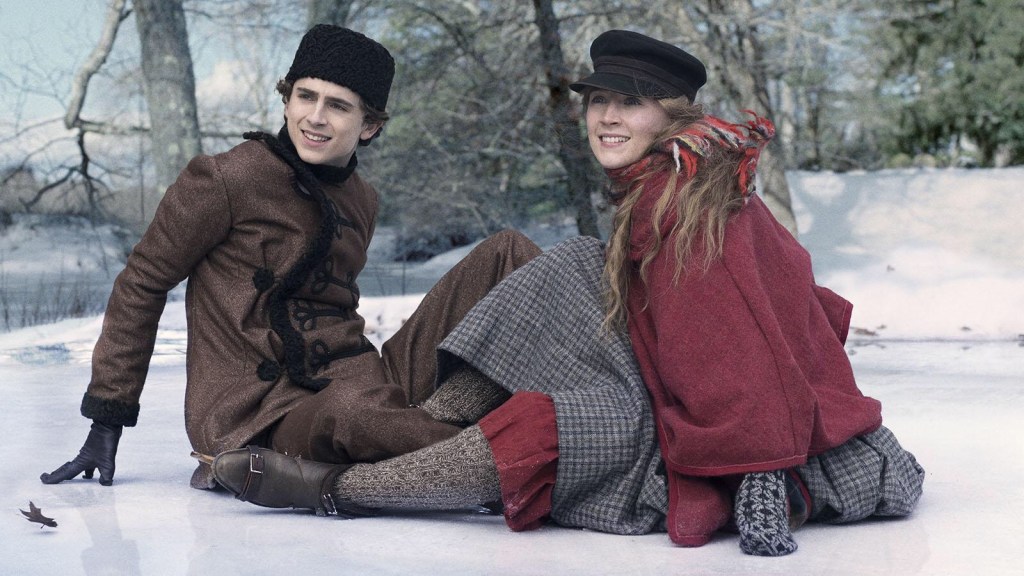
The recent adaptation of Little Women starring Saoirse Ronan and Timothy Chalumet.

Our family traditions are smaller, but important and poignant to us, especially as the years pass and people are missing from those celebrations or new members of the family have come along. Back in the late 1970’s when I was around seven years old, my Mum had a beautiful set of nativity figures and my dad made her a tiny stable complete with wood shavings for straw and a single light over the roof to represent the star. Every year we loved to put the crib up and it was the tradition that the youngest member of the family would place baby Jesus in the manger on Christmas Eve. That was my younger brother Terry and I remember him having to be lifted to reach the crib and my mum would steady his small hand to place him in safely. Now my brother is in his forties and is a grandad too, so his grandson Harvey places Jesus in the crib and soon it might be his younger brother Oakley who helps him. To have so many generations in one family is so lucky, but it’s also poignant when I notice that my dad can’t pick up his great-grandson and his hand isn’t so steady. Similarly, for the Marches there’s that bittersweet feeling within the celebration, the acknowledgement that someone is missing from the table. It’s a feeling I share when we have our Polish Christmas Eve tradition that remembers my late husband’s family, something we do alongside my sister-in-law and nephews over in New Zealand, now that she too is a widow. It gives us an opportunity to raise a glass and talk about our loved ones, to have that Christmas phone call and remember them together.

The March girl’s Christmas Supper from Mr Lawrence.

Charles Dickens set the standard for the typical Victorian Christmas, setting in stone some of the traditions we still keep today. In the same way, Louisa May Alcott defines the ideal New England Christmas of the 1800’s. The Civil War rumbles on quietly in the background, but Marmee and Hannah keep the home fires burning despite having little money, but what little they have they are willing to share. There is a glow of nostalgia around their plans that makes me feel welcomed into their world, but also inspires me to have a more simple Christmas where we make the presents and the emphasis is on time together, rather than money spent. In the end it’s the feelings that make the Christmases of the Little Women so appealing. It’s their simplicity when we look at them against the current onslaught of adverts, consumption and pressure to have the perfect Christmas- especially this year, when we had such a quiet one in 2020. There’s an urge to really overspend that’s all about rescuing the economy rather than true Christmas spirit. We could really learn from the March girls’s generosity in using the one dollar they each receive from Aunt March to make Marmee’s Christmas better. There’s a thoughtfulness in the gifts they give, even Amy who has a last minute change of heart and uses her whole dollar for Marmee’s cologne rather than buying the smaller bottle to save money for some drawing pencils. I like to think about the gifts I send, and I do make when I’m able – I’ve made my step-daughters zombie dolls in the past and this year I’m embroidering denim jackets. I also make Christmas Cakes and biscuits for neighbours, sloe gin and jams, because it feels good to put myself into he gifts and it’s lovely to make them with a friend, listening to Christmas music and enjoying the moment. This year we’re having a biscuit and truffle making day together with my carer’s children. It’s this effort to spend time with people that makes Christmas, because it creates memories. This is no different from the March girls practicing their Christmas play together or singing carols at Beth’s piano. My immediate family are not buying presents this year, because we can’t all afford to do it, so instead we’re having a meal together which we’ll enjoy so much more than stuff. To have a March Christmas we need to adopt a simpler approach, guided by values of generosity, kindness, thankfulness and love.

The March girls listen to a letter from their Father on Christmas Eve.

A poor, bare, miserable room it was, with broken windows, no fire, ragged bedclothes, a sick mother, wailing baby, and a group of pale, hungry children cuddled under one old quilt, trying to keep warm. How the big eyes stared and the blue lips smiled as the girls went in. “Ach, mein Gott! It is good angels come to us!” said the poor woman, crying for joy. “Funny angels in hoods and mittens,” said Jo, and set them to laughing. In a few minutes it really did seem as if kind spirits had been at work there. Hannah, who had carried wood, made a fire, and stopped up the broken panes with old hats and her own cloak. Mrs. March gave the mother the children round the fire, and fed them like so many hungry birds, laughing, talking, and trying to understand the funny broken English. “Das ist gut!” “Die Engel-kinder!” cried the poor things as they ate and warmed their purple hands at the comfortable blaze. The girls had never been called angel children before, and thought it very agreeable, especially Jo, who had been considered a “Sancho” ever since she was born. That was a very happy breakfast, though they didn’t get any of it. And when they went away, leaving comfort behind, I think there were not in all the city four merrier people than the hungry little girls who gave away their breakfasts and contented themselves with bread and milk on Christmas morning. “That’s loving our neighbor better than ourselves, and I like it,” said Meg, as they set out their presents while their mother was upstairs collecting clothes for the poor Hummels. Not a very splendid show, but there was a great deal of love done up in the few little bundles, and the tall vase of red roses, white chrysanthemums, and trailing vines, which stood in the middle, gave quite an elegant air to the table. “She’s coming! Strike up, Beth! Open the door, Amy! Three cheers for Marmee!” cried Jo, prancing about while Meg went to conduct Mother to the seat of honor.

Beth played her gayest march, Amy threw open the door, and Meg enacted escort with great dignity. Mrs. March was both surprised and touched, and smiled with her eyes full as she examined her presents and read the little notes which accompanied them. The slippers went on at once, a new handkerchief was slipped into her pocket, well scented with Amy’s cologne, the rose was fastened in her bosom, and the nice gloves were pronounced a perfect fit. There was a good deal of laughing and kissing and explaining, in the simple, loving fashion which makes these home festivals so pleasant at the time, so sweet to remember long afterward.

Little Women. Louisa May Alcott. Amazon Classics. 29th August 2017.

Posted in Throwback Thursday

Throwback Thursday! Like Water for Chocolate by Laura Esquivel.

Recently I’ve begun to realise that one of the literary devices I love most is magic realism. For those who’ve never come across it before, or didn’t know they had, magic realism is a 20th Century style or genre where a novel’s story is mostly realistic but with magical elements that can sometimes feel out of place in the narrative. I think I became interested in this style of writing, from my favourite teenage author Fay Weldon. The Life and Loves of a She-Devil was dramatised at this point and was widely talked about in the media and at school – where any chance to see clips that would titillate were applauded. How innocent we were that, without the internet, we were reduced to TV dramas for our fix of nudity – now we can see six naked people being visually assessed in their pods at any time of day. Back in the 1990s we had to commit to storyline for a whole episode, just for a glimpse of side boob! I read all Fay Weldon’s back catalogue and became fascinated with the skilful way she mixed realistic settings with sudden supernatural, astrological or magical elements. There was an audacity to it that I loved. So, when I came to reading Like Water for Chocolate I was charmed straight away by the love story and the magical powers that Tita has, especially her ability to bake her emotions into her food.

Movie poster for the 1992 adaptation of the novel

Set in early 20th Century Mexico, we meet Tita, the youngest daughter of the family who is hopelessly in love with Pedro. Sadly, Mexican tradition dictates that older siblings marry to carry on the family name, make connections and ensure their financial future. Younger siblings are destined to be the caregiver in the family, remaining single and close to home to help their parents in their old age. Tita and Pedro are in love and Tita’s mother knows this, so what happens next seems unusually cruel. She leaves older sister Rosauro open to marriage and then schemes behind the scenes, as a result and feeling like he has no realistic chance with Tita, he marries Rosauro because then at least he will be able to stay close to his real love. It is their wedding day where we see the full structure of the novel unfold. Tita’s mother forces her to bake the wedding cake, but as she does Tita begins to cry and somehow her sadness leaches into the cake batter. As they serve the cake at the wedding, much to Tita’s surprise, the guests start to experience their own memories of lost loves. Soon the whole room is reminiscing and weeping. From the extraordinary event onwards the novel is split so that a recipe forms each chapter. We are always waiting to see what emotion will get baked or fried into each incredible Mexican recipe as Pedro and Tita circle each other, forever in unrequited love. Would they ever get a chance to be together?

Cover for the movie tie-in edition

I first read this novel when I was an impressionable twenty year old, still in love with the idea of romantic love. Now if I was asked to give advice to Tita, I’d probably say that life is way too short to spend it in such a torturous situation. Pack a bag and get a bus out of there. Build your own life. It’s not just the idea of her sister marrying Pedro, it’s watching the milestones of their life together. If Rosauro had children with him, Tita would be hurt all over again. Every day there would be a new reason to mourn what she could have had. Her reward for this sacrifice? Looking after a mother who’s becoming more infirm by the day knowing that she was the one who took away Tita’s chance of happiness and gave it to her sister. I remember reading and hoping that Pedro’s love for Tita would remain. I couldn’t bear the thought that Pedro might grow to love Rosauro over the years. I won’t ruin the ending for those who haven’t read this extraordinary book, but I will say that it’s one of the most unusual endings I have ever read. I have been known to recreate a recipe from a book, especially where recipes are an important part of the story. I’ve often done it for my book club, where we’ve eaten: chocolate cream pie while reading Kathryn Stockett’s The Help and honesty cake while reading Alice Hoffman’s The Story Sisters. Yet, I’ve never attempted one of Tita’s family recipes – perhaps because they seem so uniquely hers and enchanted by her particular brand of magic. This is a beautiful novel for those hopeless romantics or if you love to be immersed in the culture of the characters from old customs, to celebrations and their chosen foods for those occasions. This has been a book that has endured for me and still feels uniquely magical.

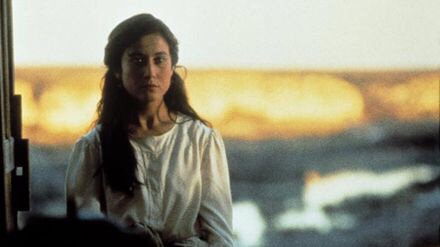
Lumi Cavazos as Tita in the 1992 film

Meet The Author.

Laura Esquivel is the award-winning author of Like Water for Chocolate, which has sold over four and a half million copies around the world in 35 languages, The Law of Love, and most recently, Between Two Fires. She lives in Mexico City.

Posted in Throwback Thursday

Throwback Thursday! The New Woman by Charity Norman.

I’ve been reading Charity Norman for several years and I never tire of the way she builds her characters, full of depth and complexity. She excels at revealing characters slowly, one layer at a time, and putting them in complicated emotional situations. This is one such example and despite being published in 2017 it seems very timely as debate rages about transgender rights on social media and in the news. This is a family drama, where we are brought into the seemingly idyllic life of Luke Livingstone. As we meet Luke, he’s seen as the perfect family man with a beautiful home in rural Oxfordshire and a solid career as a solicitor. He is respected as a pillar of the local community with a long standing marriage, as well as being a good father and grandfather. However, Luke has spent his whole life hiding a secret about who he is and he’s not sure he can keep it under wraps much longer. He has been hiding a truth about his identity and it’s such a fundamental truth that he knows disclosure will rock his business, his standing in the local community and will shock his family. He might become an outcast. Yet, he might have to destroy his image and the way others see him, if he’s to stop the slow destruction of his inner self. He has to become the person, the woman, he knows he truly is, whatever the cost. Luke is focusing on his eventual rise from the ashes and the rebuilding of his life, but first he must face the flames.

As the novel opens, Luke is so desperately unhappy he is considering suicide. Luckily, someone intervenes and sends him on a different path – the possibility of becoming the woman he is inside. He has always kept this feeling under wraps because of his parents and has now followed a very conventional path with his marriage to Eilish, fatherhood and now a grandparent to Nico. Now his parents are gone, he feels more free to pursue his own happiness, but that’s made harder when you know your own happiness will impact on your family. My heart went out to him, but also to Eilish who has loved and lived with this man for most of her life. Luke is a wonderfully sympathetic character and I can’t agree with some reviewers who have referred to him as ‘selfish’ for pursuing his own happiness. Luke was born in a different time, with more pressure to conform to society’s norms and values, as well as parents who were more traditional. As a young teenager, his feelings about his gender were only just growing and without transgender role models, either locally or on television, there’s no template for where to go and who to confide in. It would seem that he genuinely fell in love with his wife, rather than chose her specifically to conceal his true identity, and he still loves her, despite wanting to change gender.

The central dilemma is that in order to successfully birth his female identity, his male identity – the husband and father his family know and love – has to die. This is a slow bereavement process as they hear the news, then see their family member begin to dress as a woman, to take that identity into the world to be seen by work colleagues, family friends and his children’s friends. Just as this process is hard for Luke, it’s equally hard for the family – I loved the inclusion of a politically aware daughter, full of support for causes like equal rights for the LGBTQ+ community, but finding it a very different prospect when the person involved is her own father. She acknowledges her father’s rights in principle, but that doesn’t stop the feelings of hurt and loss she’s suffering. Similarly, I felt deeply for Eilish who is losing the man she loves, but has to ask herself the question of whether she has to lose the person she loves too. I’m not sure about the conclusion to their relationship, and I’d be interested in knowing how common it is in real life.

I thought this book was a fascinating read and really started me thinking about how it must feel to be in the wrong body, in a society that still expects us to conform to the established norm. It really did show what transgender people go through, just to be who they are. For me, Norman’s book avoided all the controversy and cancel culture we see going on in society today, by focusing in on Luke and his family. This is one character’s experience and doesn’t make assumptions or create a stereotypical experience. It isn’t negative about Luke’s experience either, the viewpoints belong to him or his family members and while they may be upset or shocked by his news as individuals, the overall narrative remains positive and non-judgemental which I loved. I know some will ask whether a fictionalised account is appropriate, because such controversial and complex stories are often best told by ‘own voice’ writers. However, I felt that the author had insight, whether that’s through personal experience or research. It is a book that started many conversations at home about the distinction between gender and sexuality, how it would feel to be Luke and the overwhelming fear that has kept him in his male identity in so long, and how it would feel if it was our Mum or Dad. Luke deserves to be who he truly is and in order to keep his family, he must continue to be a parent and grandparent as Lucia. It’s a book that challenges the reader’s own preconceptions and I love it when a book makes me think like this, plus it makes it a great book club choice. This was informative, absorbing, deeply moving and is a story that has stayed with me over the last four years.

Meet The Author.

Charity is the author of six novels. She was born in Uganda, brought up in draughty vicarages in the North of England and met her husband under a truck in the Sahara desert. She worked for some years as a family and criminal barrister in York Chambers, until, realising that her three children barely knew her, she moved with her family to New Zealand where she began to write.

After the Fall was a Richard & Judy and World Book Night title, The New Woman a BBC Radio 2 Book Club choice. See You in September (2017) was shortlisted for best crime novel in the Ngaio Marsh Awards. Her sixth, The Secrets of Strangers, was released on 7th May 2020 and is also a Radio 2 Book Club choice. 

Charity loves hearing from readers. Please visit her on facebook.com/charitynormanauthor or Twitter: @charitynorman1

Posted in Throwback Thursday

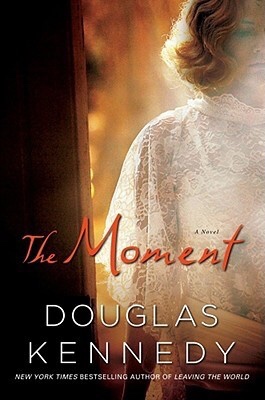
Throwback Thursday! The Moment by Douglas Kennedy.

A secret from the past can change your life for ever. The Moment is a heart-breaking love story set in Cold War Berlin by the author of The Pursuit of Happiness and Five Days.

Thomas Nesbitt is a divorced American writer living a very private life in Maine. Until, one wintry morning, his solitude is disrupted by the arrival of a package postmarked Berlin.

But what is more unsettling is the name accompanying the return address on the package: Petra Dussmann. For she is the woman with whom Thomas had an intense love affair twenty-five years before in a divided Berlin, where people lived fearfully under the shadows of the Cold War.

And so Thomas is forced to grapple with a past he has always kept hidden. For Petra Dussman was a refugee from the police state of East Germany. And her tragic secrets were to re-write both their destinies.

I found myself strangely captivated by this tale of lost love in a divided Germany. I worked my way through all of Douglas Kennedy’s books around five years ago after enjoying A Special Relationship and while they’re all great reads something about this one stayed with me. Perhaps because I’ve lost someone I loved. Or because I once had a short, intense love affair that, given different timing, could have blossomed into a something beautiful. We have probably all had similar experiences, where the timing was just wrong. However, when added to this restrictive Cold War environment, love becomes so precious by contrast. Like a flower blooming through the cracks in a pavement.

This story unfolds like a set of Russian dolls. When the package arrives with Petra’s return address it sends Thomas back to the account he wrote of his time in West Germany. We read his narrative and are drawn into this impossible love story that left him with so many unanswered questions. When he opens the package, he finds Petra’s account of that time and we are lost in the same story, but from a different viewpoint. What he discovers is shocking and illuminating, but will it answer his questions? More importantly, will it confirm and deepen the love he felt for Petra and how will that change his life moving forward? There are so many things I love about Kennedy’s writing and this book showcases them beautifully. The historical research and detail feel genuine. He takes a period of history beyond the facts, to show how this world affected the people who lived through it’s events – not just physically, but emotionally too. The stark, grey, concrete world of East Germany and it’s citizen’s fear of the Stasi, become real through Petra’s story. There is so little to look forward to and an absence of joy here. I remembered back to my younger years and the pictures on the news as the Berlin Wall came down. Now I understood their euphoria and their need to physically take hold of this symbol of oppression and dash it to the ground with their bare hands.

Kennedy also has the uncanny ability to write convincingly from the viewpoint of both men and women. This was a skill first seen in his novel A Special Relationship, where he wrote from the viewpoint of a new mother whose husband thought she was suffering from post-natal depression. Here again he writes from the viewpoint of a woman and mother, torn between romantic and motherly love. Even, as we wonder which of these loves will win out in the end, we realise neither choice can ever truly fulfil Petra without the other. There are no winners, whichever choice is made. The only outcome here is betrayal.

As we come back to Thomas’s current circumstances, further enlightened by the stories we have experienced, we see how the psychological damage of childhood and our youth can colour the rest of our lives. It seems we spend the latter part of our adult lives trying to untangle, then heal these wounds, as we recognise how much damage these traumatic experiences have had on our choices – in Thomas’s case, during his failed relationship with his wife. I also think Kennedy is telling us something very important about stories. Thomas’s story would have made a novel all on it’s own, but by adding Petra’s version we start to see something of the ‘whole’ story. Our version of events, even factual ones, are just that; our version. It’s just one piece of a patchwork quilt of perspectives. Even our own version can change as we get older, gain experience and develop new ways of understanding. This novel is unusual, because it’s a love story for people who don’t read love stories. Or a novel about Cold War Germany, for people who understand the importance of love. For me, it’s that unusual, niche, mixture that made it stay with me.

Meet The Author

Douglas Kennedy is the author of ten novels, including the international bestseller Leaving the World and The Moment. His work has been translated into 22 languages, and in 2007 he received the French decoration of Chevalier de l’Ordre des Arts et des Lettres. Born in Manhattan, he now has homes in London, Paris, and Maine, and has two children.

Posted in Throwback Thursday

Throwback Thursday! Breath, Eyes, Memory by Edwidge Danticat.

I come from a place where breath, eyes and memory are one, a place from which you carry your past like the hair on your head.

I was first introduced to Danticat’s writing by the tutor of my American Literature module at university. This was her debut novel and it sparked a fascination with Haiti, somewhere that always seemed tragic, but also strangely magical. This book took those childhood impressions and put flesh on their bones. It showed the human cost of such a chequered history, particularly for women and it’s characters have stayed with me for a long time. I think it’s also a wonderful depiction of generational trauma, emotional healing and counselling’s place in that difficult process.

We follow a young woman called Sophie Caco, who lives in Haiti as a child with her Tante Attie. Then at the age of twelve is relocated to New York to live with her mother, with whom she needs to forge a relationship. Sophie doesn’t want to go, but has no choice. Up till this point Tante Attie has been the only mother she knows. Her mother left Haiti long ago with the ghosts of the past at her heels. Sophie doesn’t know what life will be like when she gets there, but she is anxious about the journey, immigration and what it will be like going to school with children who speak a different language. Sophie will need to think on her feet and adapt to the new way of life quickly. What she finds though, is that it’s hard to escape Haiti. It does not let go of its daughters and her mother suffers mood swings and nightmares linked to her past there. Generational pain and trauma are played out in this relationship until Sophie realises they must face Haiti together -aunts, mothers and daughters – if they are ever to break the cycle .

I loved Danticat’s way of comparing these two very different places and their contrast with what’s going on deep inside these characters. Haiti is a place of deep sadness, particularly for Sophie’s mum. For those who don’t know it’s political and social history, Haiti covers half of the island it shares with the Dominican Republic. For many years both countries were colonised by the Spanish, but in 1697 after disputing territory the Western side of the island was ceded to the French. However, unlike the Dominican, Haiti was stripped of all it’s natural resources, even down to the island’s trees which were cut down for logging and to make way for planting sugar cane, leaving the island prone to landslides and unprotected against tropical storms. All this left a rather bare country, peopled by slaves, harvesting the cane that would ship to Britain as the final part of the ‘slave triangle’. During the French Revolution, the slaves revolted under the leadership of Toussaint Louverture, and freed themselves. They were the first of the colonies to successfully liberate themselves and become a state on 1st January 1804. Whilst it was always politically turbulent, Haiti entered a reign of terror in 1956 under the autocratic government of Papa ‘Doc’ Duvalier and then his son until 1986; the period was characterized by state-sanctioned violence against the opposition and civilians, corruption, and economic stagnation. After 1986, Haiti began attempting to establish a more democratic political system. Yet the violence of the past thirty years left a legacy of pain in the people of Haiti, especially it’s women, for whom a history of sexual violence carried out by Papa Doc’s henchmen the ‘tonton macoutes’ had left them controlled and terrified.

Such a history leaves a legacy of rage and deep, deep sadness in the people. Yet Danticat depicts a vibrant culture filled colour, music, and incredible food. Tante Attie is an absolute rock of a woman. She’s a storyteller, passing down women’s stories and history to other woman. When we are without power, education and means we have to find other ways of recording our history – in the clothes we wear, the food we cook and the songs we sing. Attie is the keeper of her family’s history, but there are secrets she has kept, only because it is not her story to tell. It takes a departure from all that she knows for Sophie to truly know her family history and a practice past down through the generations which is horrifying to read. When women are mere commodities, to be owned by men, there are certain things that affect their value. Controlling the ways women behave is always set out by men, but often policed by other women.

True healing can only begin when we stop running from our past, instead we must confront it and begin to process any trauma we have experienced. Sophie’s mum must return to Haiti to do this. Meanwhile Sophie’s demons come calling when she gives birth to her daughter and actively chooses change. She must confide in her husband and seeks therapy to come to terms with her trauma. Only then can mother and daughter truly get to know one another. Despite it’s difficult subject matter I always feel that it’s a hopeful book. It seems to explore a psychological outlook I have held for a long time; anyone can create change in their life. Think how powerful and freeing that statement is. It’s up to us. This is a powerful look at a country that’s often seen as unlucky. Here we can see why and how that history has been constructed, largely by men and colonisers. Through this family of women we see a different Haiti. The violence and pain are real, but so is the beauty, the healing and the love.

There is always a place where, if you listen closely in the night, you will hear a mother telling a story and at the end of the tale she will ask you this question: “Ou libéré? Are you free my daughter?” My grandmother quickly pressed her fingers over my lips, “Now” she said “you will know how to answer.”

Meet The Author.

Edwidge Danticat is the author of several books, including Breath, Eyes, Memory, an Oprah Book Club selection, Krik? Krak!, a National Book Award finalist, The Farming of Bones, The Dew Breaker, Create Dangerously, Claire of the Sea Light, and Everything Inside. She is also the editor of The Butterfly’s Way: Voices from the Haitian Dyaspora in the United States, Best American Essays 2011, Haiti Noir and Haiti Noir 2. She has written seven books for children and young adults, Anacaona, Behind the Mountains, Eight Days, The Last Mapou, Mama’s Nightingale, Untwine, My Mommy Medicine, as well as a travel narrative, After the Dance. Her memoir, Brother, I’m Dying, was a 2007 finalist for the National Book Award and a 2008 winner of the National Book Critics Circle Award for autobiography. She is a 2009 MacArthur fellow, a 2018 Ford Foundation “The Art of Change” fellow, and the winner of the 2018 Neustadt International Prize and the 2019 St. Louis Literary Award.