Posted in Uncategorized

Stories of Remembrance WW2

Yesterday, I shared a post about some of the novels I’ve read and enjoyed based during WWI and it’s aftermath. Today I’d like to share with you some of the books that made me think about the experiences of WW2. As I mentioned yesterday, I married into a Polish family in 2001 and this gave me a totally different perspective on the war. My mother-in-law was a child in the Warsaw Ghetto and was sent through the sewer system to escape without either of her parents in the first instance; her father was somewhere fighting and when an opportunity to save her daughter came along, her mother grasped it with both hands. They eventually reunited in England, but didn’t find Hana’s father. Years later they found him; he had ended up in the USA, believing both of them to be dead. Several years after the war he had married again and had another daughter. I couldn’t imagine this type of dislocation; it seems unthinkable that we might not know where our loved ones are or even whether they’re still alive. Yet if we can cast our minds back to a world with nothing but snail mail, where both parties have been taken from their country of origin it’s conceivable that it would take some time and determination to find each other. Hana bore no ill will to her half-sister, they were treated as family and often visited each other, to and fro across the pond. In fact, my late husband was attending a family wedding with them in Cape Cod when 9/11 happened.

My father-in-law’s story was just as terrible and it still breaks my heart to think of them both going through so much at such a young age. When war broke out my father-in-law Aleks and his younger brother were living in Krakow with their mother. Their father was an officer in the army and believing the family to be a danger, Aleks was detained with his brother and mum. Eventually they were taken to a camp in Siberia by the Russians, where his younger brother sadly died. Somehow, Aleks escaped with his mother to join a group of Polish resistance living in the forest. Once the war was over, they were refugees and slowly made their way to England. I never met my mother-in-law, she died in a car accident in the 1990s. My husband died in 2007, followed by his father in 2016 and finally my brother-in-law Jan a year later. I have felt like the holder of these stories, because I don’t think they were written down anywhere. Eventually as the wider family is lost, these incredible lives will be undocumented. In reading the following novels I have gained more understanding about their experiences and feel closer to them. Reading has allowed me to put myself in their shoes, through the different characters and aspects of the story. Reading has made my in- law’s personal histories all the more extraordinary. Again this list of novels is not an exhaustive list of WWII fiction. They are just some of the books I’ve read that touched me in some way and opened up the experiences of those times. Although Remembrance Sunday is for our servicemen and women – made all the more important as I’m now marrying a RAF veteran – it tends to take my mind back to all those who have sacrificed something, especially in our two world wars. Whether it’s from the military point of view, or that of a widow, resistance fighter, or Holocaust survivor, it is so important to value and share these histories and make sure that we never forget them.
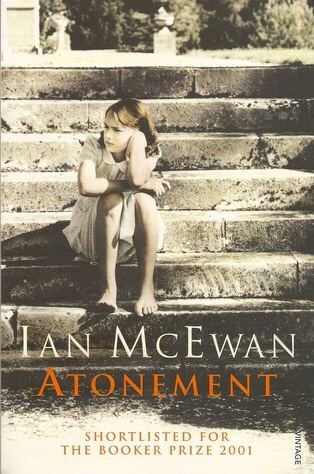
Atonement by Ian McEwan – Ian McEwan is such an incredible writer and this novel will always stay with me. I read the book before I saw the film and it was one of the few times where I haven’t been disappointed with the adaptation. Although the crucial events that send Robbie and Cecilia apart are before the war breaks out, the events that follow capture perfectly that sense of loved ones being torn apart by war. Robbie is the gardener’s son and has grown up in a cottage on the estate of the Tallis family. When his father dies Robbie and his mother stay on, and the family support Robbie to go to university at the same time as their eldest daughter Cecilia. We join the family in the heat of summer 1935 and watch events through the eyes of the much neglected younger sister Briony. Briony is a precocious child who wants to be a writer, creating plays to fill her time but also to control an environment where both her parents are so distant. Crucially, she seems to understand human behaviour, but is not emotionally mature enough to understand what really happens over one afternoon and evening that summer. She witnesses an exchange between Robbie and Cecilia, that is a moment of desire and flirtation. We realise this is a liaison that has grown at university; when away from the house Robbie has not been the gardener’s boy, but a contemporary of Cecilia’s. When later that evening a young guest at the house is attacked in the grounds by a man, Briony jumps to a terrible conclusion and names Robbie as the possible attacker. Accused of a crime he hasn’t committed Robbie faces a choice as war breaks out; prison or conscription into the army. He chooses to enlist, while Cecilia goes to London to train as a nurse. They are now parted, with just one last meeting where Cecilia begs him to come back to her. The novel is so evocative of the period, from the rather enclosed and privileged world of a landed estate to a completely changed landscape of war torn France for Robbie and a sandbagged, under attack London for Cecilia. The book is encased within a present day narrative where an older Briony now an author, is trying to unravel and understand the events of that summer and it’s aftermath through writing. We realise the story we are reading is her narrative, but will she finally write the truth and consequences of what she’s or will she write a fiction? The sections where Robbie is trudging through France, trying to get the coast where they will be evacuated is particularly poignant. Holed up in a bombed out house on the coast, we do not know if he will survive and come back for Cecilia. We need Briony to finish her narrative. A haunting, heartbreaking, piece of meta fiction from McEwan that really captures its period through a young generation who might lose everything they love to serve their country.

When We Fall by Carolyn Kirby – this book helped me to understand aspects of my father-in-law’s story that I’d only been able to guess at before. We follow Polish pilot Stefan through the eyes of two brave women helping the cause as best they can: Vee is a pilot with the ATS who moved military aircraft around the country to different bases; Ewa is Stefan’s sweetheart from his home town of Poznań and helps her father run their guest house while secretly running messages for the Polish resistance. Captured by the Russians, Stefan is witness to the Katyn massacre, an atrocity supposedly carried out by German forces. He then spends the rest of the war working trying to expose the truth of the massacre, dragging both women into his acts of espionage. Vee is very taken with the handsome and mysterious Polish pilot, but does he return her feelings or is she simply a means to an end? This book is beautifully researched and immersed me completely into these women’s lives. I love the way this book highlights women’s roles in the war and cleverly saves Stefan’s recollection of the massacre to the end, a device that makes sense of his actions and is truly devastating all at the same time.

A God In Ruins by Kate Atkinson – this novel is the follow up to Atkinson incredible novel Life After Life which tells the story of the 20th Century through the life of a young girl called Ursula Todd. This companion novel follows the life of her younger brother Ted and hops about from present day York where Ted is an old man, across the 20th Century to WWII and the how it affects the years that follow. Using her incredible skill with time slip we keep going back to his war as a bomber pilot, where missions started against strategic resources but then moved on to civilian targets. We see his regard for every single life lost summed up as Aunt Izzy consumes a skylark. For Ted it isn’t just one skylark, but the next generation of skylarks and on into the future where a huge flock is now silenced. He must ponder on the many generations he snuffed out in those later bombing raids. However, I also found it very moving that Atkinson beautifully illustrates how the generations scarred by war passed that trauma on to their children. I’ve read psychological research that posits the theory of WWI veterans passing trauma to their children, who then experienced WWII. The aftermath being the following generations mental ill health. While a ‘stiff upper lip’ may be vital in wartime, it can feel confining or even be dangerous to young people in peacetime. That 1960s exploration of feelings and pacifism was antithesis to parents who’d known the rigours of military training and the hardship of battle. Similarly, we see that Ted has not been happy in his marriage but stayed with his wife, apart from one war time indiscretion full of the feeling missing from his marriage. He wonders at his daughter’s ability to accept relationship breakdown solely for reasons of personal happiness. The main difficulty of living through the 20th Century for Ted is that he has done so, while others didn’t. I won’t reveal the end, but I was dreading Ted’s death because I’d become so fond of him. Atkinson plays with her characters though, and a big reveal towards the end reduced me to tears. Exceptional.

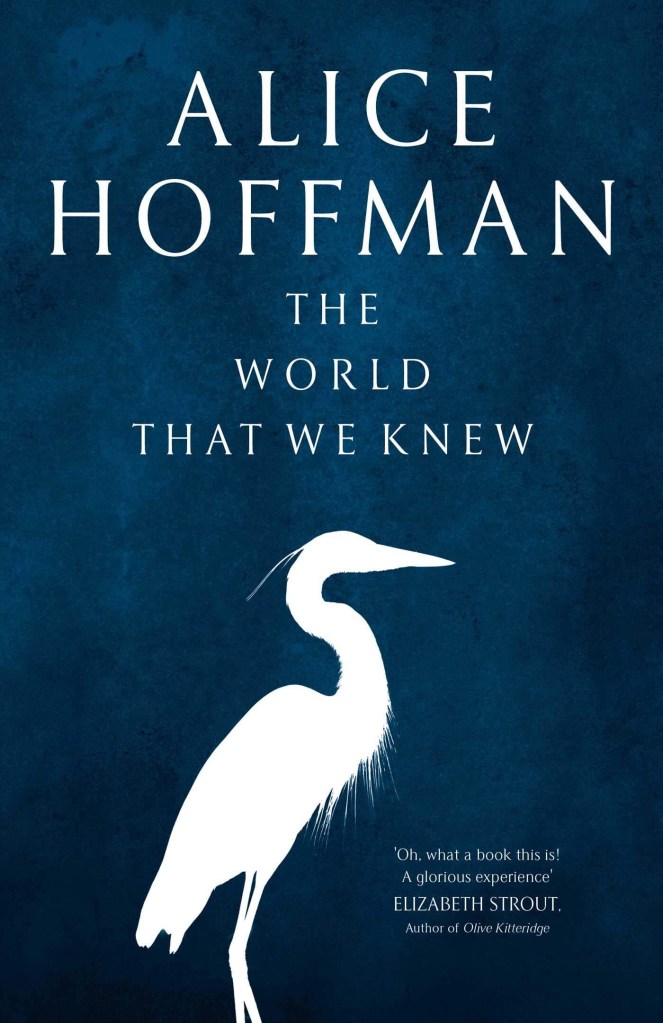
The World That We Knew by Alice Hoffman – This book probably isn’t thought of as a traditional war novel, but despite its supernatural elements it has a moving depiction of war and how the Holocaust affected Jewish communities across Europe.
We join Hanni Kohn and her daughter Lea in Berlin at the beginning of WWII.The verbal propaganda against German Jews is now turning into action and after Lea is attacked by a soldier on her way home, Hanni intervenes with terrible consequences. Now Hanni knows she must get Lea out of Berlin, but how can they both leave when Hanni is looking after her elderly mother. Desperately looking for some way of protecting Lea, Hanni falls on the idea of a Golem – a mythical Jewish creature animated from clay. Hoffman’s story blends historical fact, outlining the fate of Jews in Berlin and France while the world claimed ignorance, with the story of the four girls. One is lost before they leave the country leaving behind a loved one intent on getting their revenge. There are other characters in the novel bringing their own past and perspective to the story. Despite having their own narrative Hoffman cleverly weaves their stories together and they all encounter each other at some time during the war. On Lea and Ava’s travels in France we meet Julien, his brother Victor and their parents. As a Jewish family resident in Paris their parents imagine themselves safe from the fate of Jewish refugees like Lea and Ava. At huge personal risk they let Lea and Ava join the household as their servant Marianne has left that morning. Ava takes to kitchen work while Lea forms a friendship with Juliet. Victor is mourning Marianne who we follow back to her father’s farm in the mountains bordering Switzerland. Victor decides to leave soon after, but his travels take him into the Resistance first where he meets a certain young woman hellbent on revenge. Julien is left behind, when Ava and Lea leave, and he watches as his parent’s assumptions of safety are all proved wrong and they are lead to a stadium in burning heat. They are stripped of their jewellery and other valuables and kept without sanitation or food until they can be transported to the death camps, bewildered and broken. Julien hatches a last minute plan and manages to slip out of the stadium and into the labyrinth of streets until a special messenger gives him an idea of where Lea might be. This book is a story of finding ways to survive, whether that be fighting, hiding, building a supernatural protector or falling in love.

The Storyteller by Jodi Picoult – For me this beautiful novel is Jodi Picoult’s best. It weaves three different narratives. In the present day Sage Singer is a baker, seemingly hiding by taking a night shift at a local bakery and cafe, and taking care of her Grandma in the day. She has no friends and hides her face with a hoodie at all times. Sage feels a massive guilt about something and her face is hidden due to a large scar. One day as she’s late leaving the bakery, she meets an elderly customer Josef Weber and they make a connection. They become unlikely friends but each has a scar they are hiding – Josef discloses to Sage a secret about his past, one that will call her own identity into question and challenge their newfound friendship forever. He asks a favour of Sage, who agonises over whether she can grant his wish. Woven with this is a very dark fairytale, set in an Eastern-European forest where a young girl is part of a baking family. We learn that this strange tale is told by Sage’s grandmother. As Sage wrestles with Josef’s disclosure about the war, she starts to hear her grandmother’s incredible story. Minka went to Auschwitz where her knowledge of German brings her to the attention of the treasurer of the camp, and he makes her his assistant. He tells her he is a good man, who was forced to serve his country this way. He has a much more brutal brother at the camp and sets himself apart from his atrocities. Minke is sickened by the work they do gathering and valuing prisoner’s belongings once they are sent to the chambers, but she knows it is the only thing keeping her alive. That, and her strange ‘upior’ story which fascinates the treasurer. When Sage takes the step of contacting Leo, a lawyer for a commission hunting Nazi’s who escaped justice she reports Josef as an officer in a concentration camp. Now she must struggle with a complex set of moral choices; does her Jewish background mean she must implicate Josef? As she ponders whether she can betray her friend, Sage must confront her own guilt and the end of her grandmother’s story. The final reveal is heart wrenching.
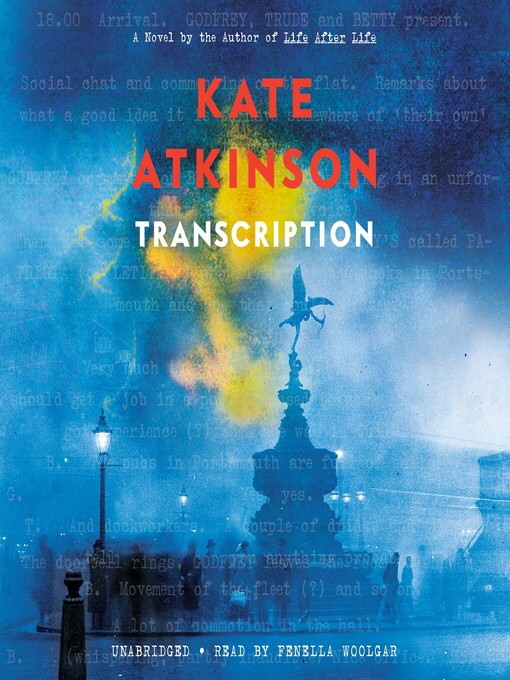
Transcription by Kate Atkinson

The second Kate Atkinson book in my selection is set in 1940s London and a tale of wartime espionage. Juliet Armstrong is only 18 when she is recruited to an obscure department of MI5. Far from exciting, she finds the job of tracking and translating the comings and going’s of Nazis and their sympathisers by turns terrifying and boring. When the war is over, she imagines those days far behind her but ten years later, when Juliet is working at the BBC she is confronted by figures from her wartime past. She was monitoring British Nationalists such as those who rose up with Oswald Moseley and warns the reader not to confuse patriotism with nationalism. Nationalism is only a step away from fascism. I loved that there were parts of the novel that resonate into current politics and struggles for equality. Juliet is a naive girl in a very male environment and soon finds herself pursued by a superior. He tells her not to worry about the more serious people she’s monitoring. He tells her to watch out for clowns; clowns are dangerous and then no one’s laughing. I loved Juliet, she’s such an intelligent and incisive operative, with flashes of humour. She observes that the Russians had been their enemies, then allies and now enemies again. The Germans were enemies and now allies. On and on it would go forever, she muses in later life and I could imagine her adding ‘in the hands of men’. This is not as emotive as other books on the list, but the war wasn’t just won on the battlefield, it was also won by intelligence gatherers in dusty offices in London.
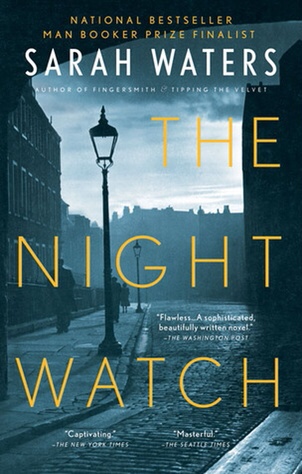
The Nightwatch by Sarah Waters – I loved Sarah Water’s’ Victorian fiction so took a while to start this novel set in the Blitz. I was wrong to wait because this book is a masterpiece. It tells the story of four Londoners – three women and one man – during 1940/41. Kay has been given space during the war to work out who she is. She’s an ambulance driver, and is at full throttle most of the time, but lately she’s been wearing masculine clothes and feels a restless energy inside her. Helen is sweet and much loved by her family, but holds a secret deep within. Viv is the glamour girl, she is fiercely loyal to her soldier lover but is that loyalty misplaced? Then there’s Duncan who is fighting demons from his war experience. All of their lives intersect, sometimes in surprising ways and tragic circumstances. What I love about this novel is its structure. Instead of meeting our characters and moving forwards with them, we work backwards and gradually questions are answered and behaviour is explained. I fell in love with the character of Viv, who is larger than life, but so open and easy to hurt. Her descriptions of London in the Blitz are so vivid and terrifying. The thought that my home, my haven and place where all my favourite things and people are could be wiped out in a second while I’m at work was so scary. I could imagine that level of threat and insecurity every day would wear you down over time and leave a long term scar. This had a brilliant sense of time and place, a London we would recognise, but made utterly foreign.

Other recommendations…

The Women at Hitler’s Table by Rosella Postorino – the story of Rosa, one of ten women chosen to taste Hitler’s food for poison. She does this to survive but knows that every bite may be her last.

All The Light We Cannot See by Anthony Doerr – a beautiful story of a blind French girl and a young German boy in occupied France. Marie-Laure and her father have fled to St Malo, hiding a precious jewel from the museum where he works. Werner has learned to fix and use radios to the extent that he becomes useful to the German cause. This book is about two people meeting and trying to be good to each other in terrible circumstances.

The Book Thief by Markus Zuzak – this is an incredible novel weaving stories of book thief Liesel, Death himself, and the Jewish man Leisel’s family hide in their basement. Definitely lives up the hype.

I want to make honourable mention of the very recent book A Girl Made of Air by Nydia Hetherington. Not a war novel, but there is a section where our lead character is given a letter after her mother’s death. They have a difficult relationship, and when her mother relates her wartime experience we understand why this woman could not love her daughter. The letter is beautifully written, told without pity or sentiment, and is utterly devastating.

https://www.britishlegion.org.uk/get-involved/ways-to-give/donate
Posted in Random Things Tours

When The Music Stops by Joe Heap.

Published: 29th October 2020

Publisher: Harper Collins

This was one of those novels that came as a complete surprise. I had no idea what to expect as I’d never read Joe Heap’s work before, but what started out adagio builds to an absolute crescendo of emotion and I shed tears over Ella’s story. In the present, we meet Ella as an old lady shipwrecked on a yacht called Mnemosyne with a small baby. She’s struggling physically and seems forgetful, whether through injury or age we don’t know at first. Then we are taken back to different points in her life, significant moments with specific people. Whether with her for a short or long time, these are people she has lost and their presence had a massive impact on her life. Our first flashback takes us to meet Ella when she’s a little girl, living in a Glasgow tenement and spending time after school between her home and that of her friend Rene. Rene has a beautiful guitar, made for her by her father and Ella is quite jealous of it, wishing she had a father who could make such things. One evening, after school Ella wants to avoid going home because she’s been in trouble and keeps Rene out in the cold on a local playground. Rene has severe asthma. The next morning, when Ella wakes she senses something wrong and when she goes into the main room where her parents are up and making breakfast she sees Rene’s guitar and knows immediately. Her friend is gone.

This loss when she is so young, sets in motion events that will resonate throughout her life. First, it brings her into contact with Rene’s brother Robert who is a few years older. He brings her a parcel and she expects something terrible, some retribution or punishment for what she sees as her culpability in his sister’s death. What she opens is a block of ‘tablet’ a Scottish fudge-like sweet made by their mother with sugar and condensed milk. This gift cements their friendship, one which will last their entire lives. Secondly, after vowing never to look at Rene’s guitar and stuffing it under the bed, she decides to learn and her father takes her to a music shop for a beginner’s guitar book. Yet Ella is drawn to something different. She picks up a book of seven guitar exercises featuring songs that encompass stages of life, from the child to the crone. Called The Songs of the Dead, the shop owner is unsure whether it’s suitable for a child but Ella is sure. It is each of these exercises that separates the sections of the book. The structure is incredibly effective, it feels natural and organic rather than a forced device. Each section comprises the song, the memory and then Ella’s present situation with an unusual element – each person she has lost returns from the past with her.

It is never explained whether these visitations are supernatural in nature, whether Ella is hallucinating these characters or whether they’re a way of expressing how she remembers these people’s contribution to her life. Each one brings something to the present, whether it is the mechanical expertise needed to pump out the water in the hold, or a philosophical context to Ella’s experience. I loved how her friend Sandy describes life, death and time using the vinyl record as inspiration. He believes that we all still exist in time, even after death. In the same way other music tracks exist on a record, while we’re playing just one. The other tracks are always there, we have the memory of playing them, or anticipate hearing them again. They’re not wiped the moment a needle leaves the groove. There’s also the concept of two types of time; the time measured by clocks, work hours and timetables and a different kind of internal time. It’s something I discovered through meditation, but we all experience it, from time flying when we’re having fun or the perception that summer holidays used to last forever when we were children. Time seems to speed up as we get older, it barely seems like we’ve got one Christmas over before another is round the corner. Ella’s means of discovering slow time is destructive, but there are positive ways to slow down our internal time such as mindfulness. For Ella, time is coming full circle, and she’s slowly revisiting each life that touched hers either for a moment or for a lifetime. Each character is so fully realised. I loved Lester, a one time lover of Ella’s who helps her cope with the baby when he’s ill. Mai was so touching. She’s a young woman who meets Ella briefly in the labour ward as they both give birth to their children. In finding each other again Ella can fill in the gaps in Mai’s knowledge and reacquaint her with a son she never knew. In return Mai can help Ella face a loss she hadn’t fully apprehended. Each person’s story is so emotional and so real. I love that the author doesn’t judge any of the characters we meet, even where their influence on Ella isn’t always a positive one. We see them as fully rounded people and with such fondness, possibly because we’re seeing them through Ella’s lens and her love for them shines through.

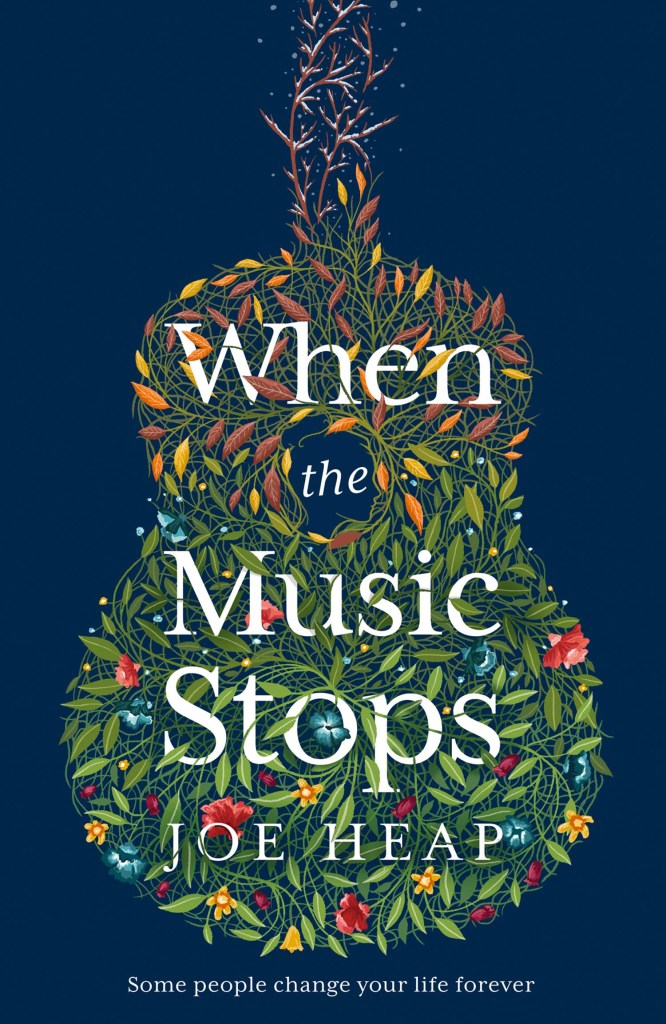
The settings are also vivid. I throughly enjoyed Ella’s period in London, playing as a session guitarist and sharing a flat with Robert. Musicians come and go, and the flat is a whirlwind of jam sessions and parties. The 1960s were equally exciting as Ella becomes very sought after and chance finds her playing on tracks with some famous names. Of course the party can’t last and not all Ella’s experiences are happy ones, but she learns from each one. Her time as a nurse in a burns unit was also well drawn and as anyone who cares for others knows, there are patients who will remember what you did for them and others who get under your skin and stay with you forever. Like every life there are moments of bliss, excitement and love. Similarly there are moments of grief, dislocation and despair. All the time Robert is there, repeating like a musical refrain, rippling quietly under the surface of the music or occasionally becoming the main melody. We all have those people who come and go, who don’t always figure in our everyday lives, but who are constantly there. There were so many points where I thought of my own life. I thought of my friend Elliot who I was close with through school, and after university, and who I see intermittently but think of constantly. My friend Nigel who died only a couple of years ago, we were only friends for a few years but he taught me so much, made me laugh and simply let me sit in his house and relax when I was a full time carer and desperately needed an escape. I am one of those people who fall in love with people I meet regardless of age, gender or situation in life. So, when I’ve worked in care there have been patients who have stayed with me forever, especially a little 90 year old lady called Mary who could sit on her own hair. I would go in on my days off and wash and dry it for her and she often used to sneak up and put her little hand in mine and follow me about while I made beds and doled out biscuits. I’ve often wondered when my time comes who would come to meet me. Finally, a word on that gorgeous cover: where the plants grow from spring freshness to an autumnal hue towards the neck of the guitar signifying the seasons of life. For anyone who has lost someone this story is especially poignant, but somehow it manages to stop short of sentimentality. Instead it feels profound, honest and raw and left me with such a beautiful bittersweet afterglow.

About The Author

Joe Heap was born in 1986 and grew up in Bradford, the son of two teachers. His debut novel The Rules of Seeing won Best Debut at the Romantic Novel of the Year Awards in 2019 and was shortlisted for the Books Are My Bag Reader Awards. Joe lives in London with his girlfriend, their two sons and a cat who wishes they would get out of the house more often. This book is inspired by his mum and dad’s story.

A Note From Joe

At a summer season in Ramsgate, 1959, two ice skaters held a party. My grandfather, a Glaswegian saxophonist who would rather have gone to the pub, was convinced by a comedian on the same bill to come along. My grandmother, another one of the ice skaters, sat down next to him and spilt her drink in his lap. Though she has since denied it, her first words of note to him were ‘Oh no, not another Scot.’
Nobody could have guessed how much would spin off that moment, myself and this book included.

Posted in most Anticipated 2021

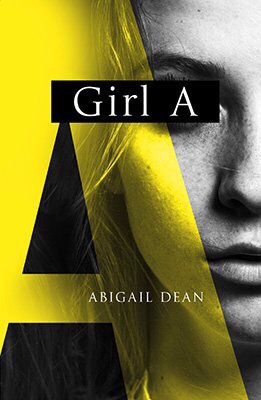
Most Anticipated 2021! Girl A by Abigail Dean.

#GirlA #MostAnticipatedBooks #NewBooks2021

Publisher: Harper Collins

Publication Date: 21st January 2021

ISBN: 0008389055

‘An astonishing achievement.’ JESSIE BURTON

‘Gripping, beautifully written perfection.’ SOPHIE HANNAH

‘A masterpiece.’ LOUISE O’NEILL

‘Girl A,’ she said. ‘The girl who escaped. If anyone was going to make it, it was going to be you.’

Lex Gracie doesn’t want to think about her family. She doesn’t want to think about growing up in her parents’ House of Horrors. And she doesn’t want to think about her identity as Girl A: the girl who escaped. When her mother dies in prison and leaves Lex and her siblings the family home, she can’t run from her past any longer. Together with her sister, Evie, Lex intends to turn the House of Horrors into a force for good. But first she must come to terms with her six siblings – and with the childhood they shared.

Beautifully written and incredibly powerful, Girl A is a story of redemption, of horror, and of love. If you liked Room, My Dark Vanessa and We Need to Talk About Kevin, you will love this book.

Meet The Author

Abigail Dean was born in Manchester, and grew up in the Peak District. She graduated from Cambridge with a Double First in English. Formerly a Waterstones bookseller, she spent five years as a lawyer in London, and took summer 2018 off to work on her debut novel, Girl A, ahead of her thirtieth birthday. She now works as a lawyer for Google, and is currently writing her second novel, The Conspiracies.

Girl A sold in the UK after a 9-way auction, and also sold in auction in the US. The novel has since been acquired in 23 other territories, and television/film rights have sold to Sony. 

Abigail has always loved reading, writing, and talking about books. You can follow her on Twitter and Instagram @AbigailSDean

Posted in Throwback Thursday

The World That We Knew by Alice Hoffman

This was a much anticipated read for me as Alice Hoffman is probably my favourite writer. Most people know her for Practical Magic, but I think her more recent novels have been remarkable. The World That We Knew stands with them. It was sad, unflinchingly honest and strangely magical.


We join Hanni Kohn and her daughter Lea in Berlin at the beginning of WWII.The verbal propaganda against German Jews is now turning into action and after Lea is attacked by a soldier on her way home, Hanni intervenes with terrible consequences. Now Hanni knows she must get Lea out of Berlin, but how can they both leave when Hanni is looking after her elderly mother. Desperately looking for some way of protecting Lea, Hanni falls on the idea of a Golem – a mythical Jewish creature animated from clay. First she approaches the rabbi, who turns her down, but the rabbi’s daughter Ettie is listening and spies a chance to escape home. She assures Hanni she has the necessary power and learning to create such a creature, programmed to protect Lea, but only on the basis that Ettie and her sister can travel with them. They gather river clay, water and blood to create Ava, a strong woman with dark eyes and hair, who will travel as Lea’s cousin. However, all Golems must be destroyed once their purpose is done, so Hanni leaves instructions in Lea’s locket to ensure she can carry this out. Hoffman’s story blends historical fact, outlining the fate of Jews in Berlin and France while the world claimed ignorance, with the fictional story of the four girls. One is lost before they leave the country leaving behind a loved one intent on getting their revenge.

There are other characters in the novel bringing their own story and perspective to the story. Despite having their own narrative Hoffman cleverly weaves their stories together so that they encounter each other at some time during the war. On Lea and Ava’s travels in France we meet Julien, his brother Victor and their parents. As a Jewish family resident in Paris their parents imagine themselves safe from the fate of Jewish refugees like Lea and Ava. At huge personal risk they let Lea and Ava join the household, because their servant Marianne has left that morning. Ava takes to kitchen work while Lea forms a friendship with Juliet. Victor has been mourning for Marianne as we follow her home to her father’s farm in the mountains bordering Switzerland. Victor decides to leave soon after, but his travels take him into the Resistance first where he meets a certain young woman hellbent on revenge. Julien is left behind, when Ava and Lea leave, and he watches as his parent’s assumptions are all proved wrong and they are lead to a stadium in burning heat. They are stripped of their jewellery and other valuables and kept without sanitation or food until they can be transported to the death camps, bewildered and broken. Julien hatches a last minute plan and manages to slip out of the stadium and into the labyrinth of streets until a special messenger gives him an idea of where Lea might be.

We follow these various characters through Germany, to Paris, to a convent where silver roses bloom, and a farm in the mountains where over three thousand Jews are walked to the mountains and freedom. In between the many horrors of war sits the beauty of nature, strangely incongruous and almost mystical in that it carries on without or even in spite of us. I love the audacity of Hoffman’s magic realism in juxtaposing the Holocaust with a mysterious heron who dances in the moonlight, at the river’s edge, with a very unusual woman.
This beautiful novel weaves together the realities of a terrible war, with an element of ancient magic. Hoffman creates a story about the lengths people will go to in order to survive, protect those they love and fight for what they believe in. We also see the amazing healing power of love and forgiveness. Most of all, against a backdrop of the most evil and inhumane act of the 20th century, Hoffman uses the character of Ava to make us truly think about what qualities make us human.

Meet The Author.

Alice Hoffman is the author of thirty works of fiction, including Practical Magic, The Dovekeepers, Magic Lessons, and, most recently, The Book of Magic. She lives in Boston. Visit her website: http://www.alicehoffman.com

The Bookstore Sisters

I usually expect a new Alice Hoffman novel in the autumn as she’s so prolific, but this year it’s a short story to keep us ticking over until her new novel arrives.

Isabel Gibson has all but perfected the art of forgetting. She’s a New Yorker now, with nothing left to tie her to Brinkley’s Island, Maine. Her parents are gone, the family bookstore is all but bankrupt, and her sister, Sophie, will probably never speak to her again. But when a mysterious letter arrives in her mailbox, Isabel feels herself drawn to the past. After years of fighting for her independence, she dreads the thought of going back to the island. What she finds there may forever alter her path—and change everything she thought she knew about her family, her home, and herself. I’m a lover of books about books, and since the words I keep hearing are ‘relationships, charm and magic’ I’m really looking forward to a long bath with this story.

Published by Amazon Original Stories on 1st Nov 2022.

Posted in Random Things Tours

When I Come Home Again by Caroline Scott

Published: 29th October 2020

Publisher: Simon and Schuster

ISBN: 978-1471192173

This was an exquisite, slow-paced, historical novel that moved me so much. It was a window on both individual, and collective, grief. It also explores the psychological rehabilitation process which is my day job, as a counsellor. Regular visitors to my blog will know that I am fascinated with this period of history depicted in novels as varied as Emma Donoghue’s recent novel The Pull of The Stars and in the last few years Sarah Water’s The Paying Guests, Adele Park’s Spare Brides and Kate Atkinson’s Life After Life. All deal with a different aspect of this period of huge social change. The nation is grieving, for lost sons, husbands and brothers but also for a time of innocence now lost to them. Young women struggle to find husbands as the policy of neighbours fighting together meant villages losing whole generations of men. Distinctions between the classes come tumbling down as men from all backgrounds fought together for a common purpose. Many estates were crippled by death duties, often for two generations at once, and men who never expected to shoulder the burden of a family estate were suddenly dukes, but without any means. Institutions like the debs ball seemed trivial and outdated, with many new heirs marrying money from abroad bringing Americans and their new money into the ranks. Others lost their estates altogether and had to consider working for the first time ever. Women who had held the fort, while the men went to Europe to fight, did not want to return to the home and wifely duties. Even men who had jobs held for them, faced a fight to get them back. Women were not the same, they’d been stretched and depended upon in wartime and wanted more equality at home, work and in the political system. The upheaval in our class system, in gender roles and working life is unimaginable. When set against the backdrop of national mourning and a worldwide flu pandemic we can perhaps imagine a little the seismic psychological shifts happening. On the plus side it’s a dynamic time, where the old order is overturned, people born in poverty or the wrong gender could change their lives because of the social mobility created.

We see these issues through the characters in Caroline Scott’s book and understand how some want to recover a lost past however unlikely it is, whereas others want to blank out their experiences and start again without memories or baggage. Scott starts her book with an epigraph from the tomb of the unknown soldier in Westminster Abbey. Also used as a focal point for Anna Hope’s wonderful post WWI novel Wake, the burial of this young man is full of symbolism. One man chosen from the many lost in France, to symbolise both those who died and those who would never be recovered or identified. His burial in the abbey would be broadcasted in cinemas and over 100,000 visited his grave to pay their respects in the next few weeks. In Durham, another anonymous young man is found using chalk to write on the flagstones in the cathedral. He is arrested and taken for treatment with Dr James Haworth who aims to slowly help his patient recall who he is and what has brought him to Durham. Named Adam Galilee by the police who found him, he is subject to many different methods, including covering the walls of his room with mirrors. They spend so much time talking and questioning, gently in case they force him into distressing memories. As Haworth observes ‘something strong within him is resisting recalling the pertinent parts’.

As a counsellor and writer I think a lot about the concept of ‘self’ and how it’s constructed, and I loved how Scott explores this in the chapters marked as belonging to Adam. He talks about how they ask him for a first memory and he knows they’re avoiding more recent times, despite there being a complete void where his time as a soldier is concerned. He knows they’re looking for a beginning to who he is and all he does know is that it doesn’t work like that.

‘It isn’t linear. That’s not the way it works. It doesn’t have momentum, or a narrative arc, and he doesn’t know where it starts. It surprises him, if they are doctors of minds, that they can’t understand that’.

I thought this was so clever, because it questions the very nature of the self. Are we ever one fixed set of characteristics or are we fluid and ever changing? If any of us are asked to describe who we are we tend to come up with a list of things we love to eat, listen to, wear and watch. As if the self can somehow be captured and solidified by these objects. When asked who we are, we refer back. So what happens when we cast our minds back and there is nothing there to hang on to. All Adam can do is ‘be’. To exist, try things and see what sticks. Rebuild from now. Maybe this is preferable to remembering before, the trauma and the hell of the battlefield? It was beautiful to see Adam gain a love of nature, whether rediscovered or a new appreciation it has a healing quality. He also has a talent for sketching and he captures the nature around Fellside, as well as the repeating a young woman’s face, which may be a clue to who he is. Supporting him through this self-discovery is James, himself a lost man due to his war experience and very much a wounded healer in these circumstances. His marriage to Caitlin is struggling under the weight of grief, I wanted him to share his war with his wife, but also understood his need to forget.

Just like the unknown soldier, Adam is a cipher for every young man lost in the war. When James puts his picture in a national newspaper, he hopes that someone will recognise him – what he didn’t expect was that three people claim that Adam is theirs; Mark, Robert or Ellis. Caroline weaves the women’s narratives into this tale so we see what war has done to the women left behind. My heart ached for them all and I wanted Adam to belong to each of them in turn; to be Celia’s son, to smooth away the rough edges of Lucy’s tough existence, to absolve Anna and bring resolution to her life. Of course he can’t be all things to all people. This is an intricate balance of viewpoints and Scott weaves a beautiful tapestry from them. Through these people we see a snapshot of post-WWI Britain that is truthful. Art is able to move beyond the patriotism and glory, to see the real cost of war. This is an incredible piece of work. Haunting and complex, a society laid bare emotionally through the tale of a warrior, unknown by name and rank.

Meet The Author


Caroline completed a PhD in History at the University of Durham. She has a particular interest in the experience of women during the First World War, in the challenges faced by the returning soldier, and in the development of tourism and pilgrimage in the former conflict zones. Caroline is originally from Lancashire, but now lives in south-west France.

Posted in most Anticipated 2021

Most Anticipated Reads! Home Is Not A Country by Safia Elhillo.

#Books2021 #MostAnticipated #HomeIsNotACountry #MakeMeAWorld #BookLove #BookBloggers

Release Date: 2nd March 2021

Publisher: Make Me A World

ISBN: 0593177053

Oh my goodness I can’t stop looking at this gorgeous cover! It is absolutely stunning and stopped me in my tracks as I was scrolling through Twitter. Then, once I read the premise, I knew this had to go on my TBR list for next year.

Nima doesn’t feel understood. By her mother, who grew up far away in a different land. By her suburban town, which makes her feel too much like an outsider to fit in and not enough like an outsider to feel like that she belongs somewhere else. At least she has her childhood friend Haitham, with whom she can let her guard down and be herself.Until she doesn’t. 

As the ground is pulled out from under her, Nima must grapple with the phantom of a life not chosen, the name her parents didn’t give her at birth: Yasmeen. But that other name, that other girl, might just be more real than Nima knows. And more hungry. And the life Nima has, the one she keeps wishing were someone else’s. . .she might have to fight for it with a fierceness she never knew she had.

Early reviews suggest that the author has created an incredible world around her main character, using words like ‘lush’ and ‘magical’. I’m so looking forward to a different reading experience – the book is written in verse. It also has some of my favourite themes, such as how we construct an identity for ourselves, finding our place within a family and a culture. Categorised as YA, I think this is a book that will transcend that label and be read by teens and adults alike.

Meet The Author |

Safia Elhillo is the author of the poetry collection The January Children, which received the the 2016 Sillerman First Book Prize for African Poets and a 2018 Arab American Book Award.

Sudanese by way of Washington, DC, she holds an MFA from The New School, a Cave Canem Fellowship, and a 2018 Ruth Lilly and Dorothy Sargent Rosenberg Fellowship from the Poetry Foundation. Safia is a Pushcart Prize nominee, co-winner of the 2015 Brunel International African Poetry Prize, and listed in Forbes Africa’s 2018 30 Under 30. She is a 2019-2021 Stegner Fellow at Stanford University.

Posted in Personal Purchase

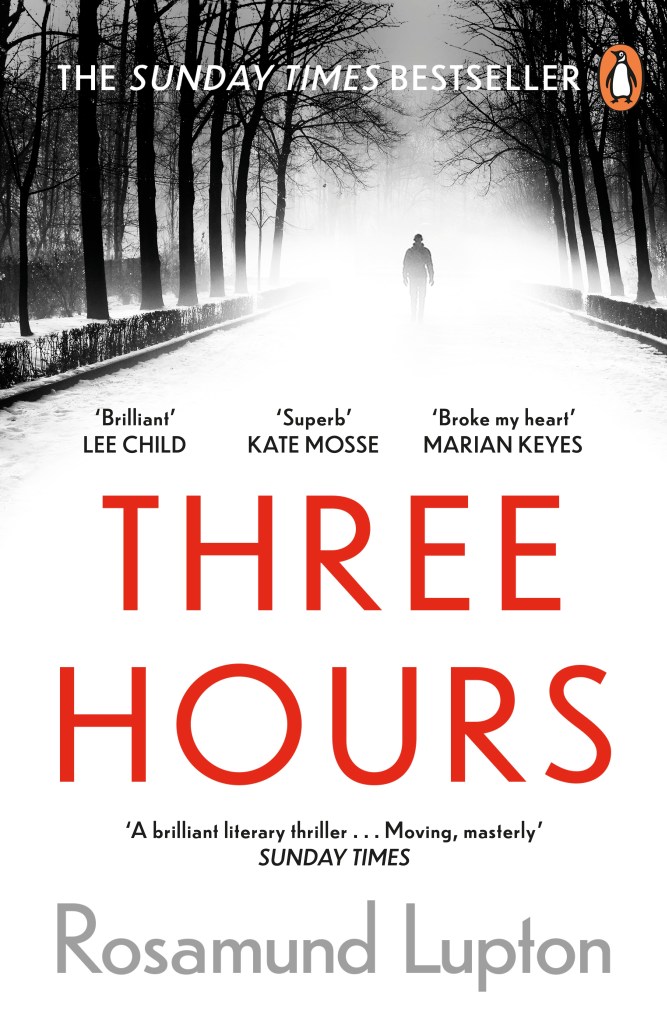
Three Hours by Rosamund Lupton

Publisher: Penguin

Date: 29th October 2020 Paperback

ISBN: 0241374510

Wow! I sat and read this book in two days straight because I had to know what happened to everyone. The book is so relevant to today’s world in terms of politics and is just so gripping. Lupton manages to combine contemporary use of the internet, geographical shifts and the refugee crisis, the phenomenon of High School massacres like Columbine all together in an incredibly humane, but terrifying novel. It poses the question of how we combat terrorism when today’s terrorist looks just like us? In fact, how do we combat terror when we know the terrorist?

In the space of three hours a remote school is thrown into panic and terror. A homemade lunchbox bomb is found in the woods by one of the pupils. It might have been dismissed as a prank by most kids, but Rafi Bukhari escaped Syria with his little brother Basi, and he takes it very seriously. In a matter of half an hour the first police officer on scene is shot at and the site is under siege. In the Old School, Rafi’s girlfriend Hannah is with a group in the library caring for their wounded headmaster. Pottery teacher Camille is stranded in the studio with only a few rows of clay tiles and some glass between a class of seven year olds and an automatic weapon. Further back, a group are rehearsing Macbeth in the woodland theatre and the junior school is being evacuated down to the beach. Rafi settles his brother with the teacher, they both have PTSD and he vowed not to leave him, but at least he knows Basi is safe. Now he needs to get to Hannah. However, Basi has ideas of his own.

I really enjoyed the varied perspectives of this novel from the kids, teachers, police, and even the parents of the shooters. Beth Alton’s train of thought is brilliant, from assurances that her Jamie could not possibly be responsible to the thought that he’s already dead to her, from the minute he picked up the gun. The investigation and drip feed of new information is very well done and it’s obvious the author has researched well. The flashbacks of the Syrian boys are equally well placed and effective. I found the allusions to the kid’s performance of Macbeth great at first – the idea of using Syria as a backdrop and the witches as balaclava clad terrorists is clever. I must admit to being surprised with this aspect of the ending, which I won’t spoil, but suffice to say it had a very fantastical feel. This was an atmospheric, timely and intelligent book, that asked some of the big questions about how the world is now, especially pertinent in a week of terror attacks in France. It is also a great thriller that keeps the reader hooked and doesn’t let go till the final seconds.

Meet The Author

Rosamund Lupton’s debut novel ‘Sister’, was a BBC Radio 4 “Book at Bedtime”, a Sunday Times and New York Times bestseller, winner of the Strand Magazine critics award and the Richard and Judy Bookclub Readers’ Choice Award. Her next two books ‘Afterwards’ and ‘The Quality of Silence’ were Sunday Times bestsellers. Her books have been published in over thirty languages.

Posted in Personal Purchase

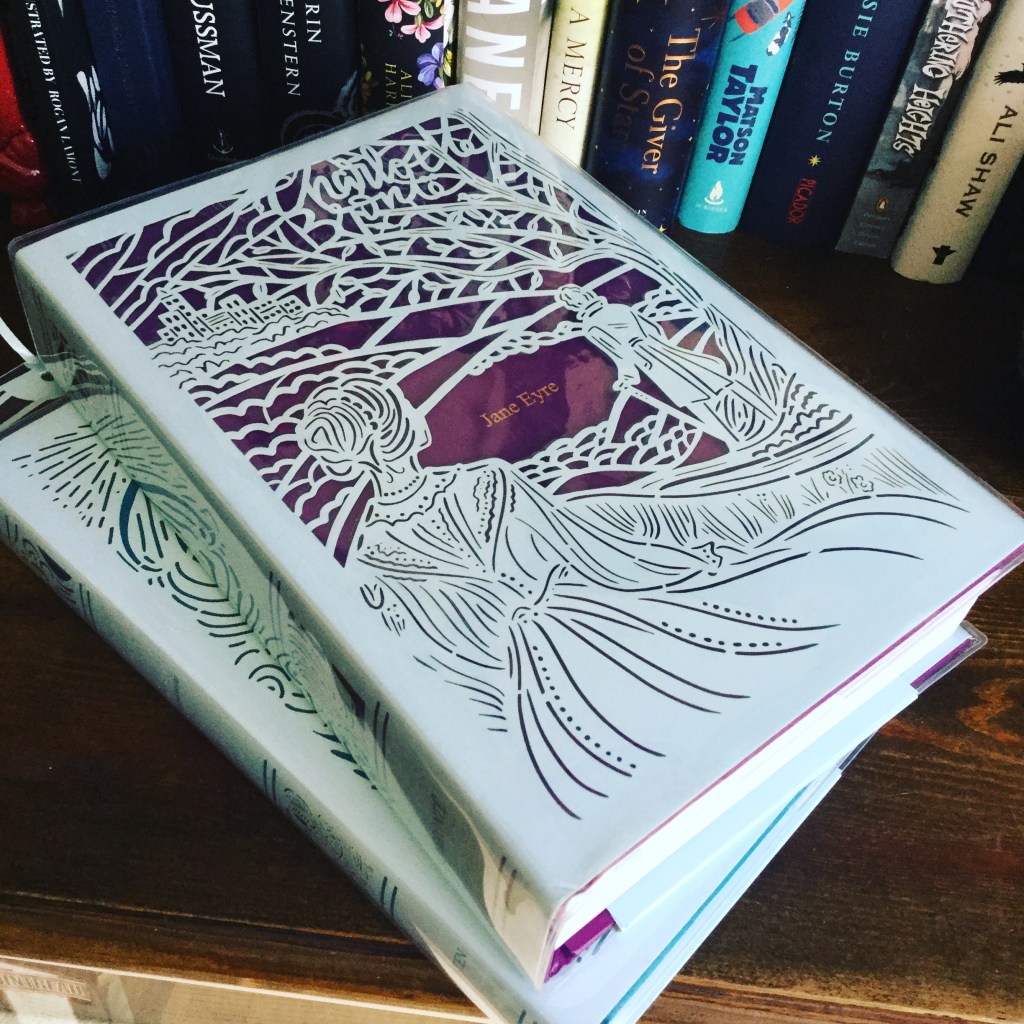
Halloween Reads: The Gothic Romances of the Brontes and Du Maurier

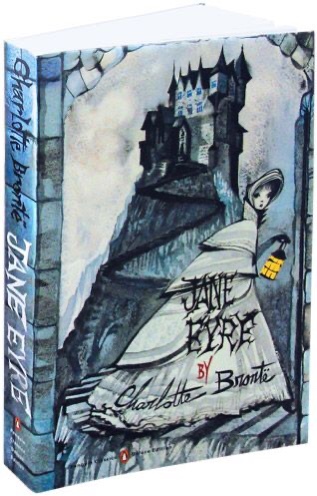
When we talk about classic Halloween reads we tend to think of M.R. James, Dracula or Frankenstein and they’re all brilliant. Most people don’t automatically reach for the Brontes, but for me they were my first scary reads. I was ten when I first read an abridged version of Jane Eyre, closely followed by watching the BBC series with Timothy Dalton as Mr Rochester. In my ten year old mind this wasn’t a love story, or a feminist manifesto but a really spooky ghost story. My abridged version included the supernatural experience Jane has when her guardian Mrs Reed has her locked in the Red Room. Aware of stories about orbs of light fitting around the graveyard at night, Jane bangs on the door desperate to escape. In her state of fear and passion Jane sees a light and feels the presence of her dead Uncle Reed. She tries to beat down the door before falling into a faint.

Thornfield Hall is remote, dark and brooding rather like its owner. Every hint leans towards something spooky going on. Rochester’s first appearance is preceded by a huge black dog appearing from the fog, and Jane thinks it is a supernatural being. Rochester appears on a black horse and soon on his return things start to go bump in the night. Jane hears strange laughter in the night, banging from the door to the attic and one night, smoke is billowing from Rochester’s room. The blame for this attempt to burn Rochester in his bed is laid at the door of Grace Poole, a strange servant who seems to have no purpose in the house. I remember my ten year old self being scared but thrilled by this mystery of who or what exactly occupies upstairs. The scene of the night before Jane and Rochester’s wedding really spooked me. Jane wakes to see a tall, dark haired, woman wearing her wedding veil. She’s looking at her own reflection which is ghastly white. She then slowly moves round to look at Jane in the bed and my heart is speeding up at this moment. I was scared stiff but couldn’t stop reading. Jane recalls a ghastly visage, darkened circles round the eyes, reddened lips. There is definitely something vampiric about her, rather than ghostly. Rochester tries to gaslight Jane into thinking it’s a dream, but she has proof it was something more human than spectre. Her wedding veil is rent in two. Now Rochester says it must have been Grace, but Jane is unsure. This looked like someone completely different and why would Grace tear her wedding veil?

At ten I only thought about the ghostly aspects of this and when the truth was revealed I saw a monster and not a person. Bertha Mason was simply a madwoman foisted upon Rochester, because my focus was on Jane and her love story. Of course with re-readings and a feminist awakening in my teens I could see that this was an awful tragedy for Bertha too. I also loved The Wide Sargasso Sea and understood that in another reading of the story Bertha was born Antoinette and sent into a marriage with Rochester. Due to being passionate and wild natured she is rejected by Rochester who expected a more measured, obedient bride, sexually shy and generally calm and quiet. For being herself she has her name taken away, is removed from the Jamaica she loves and is imprisoned in an attic with only a servant for company. No wonder she’s angry!

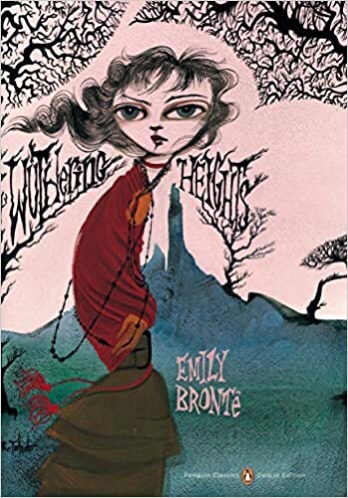
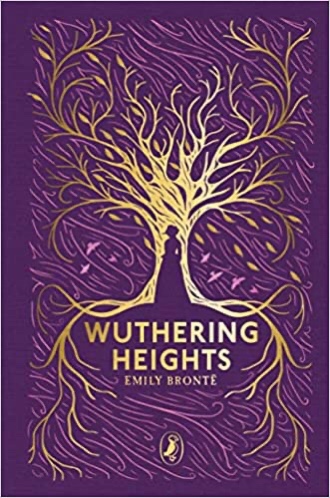
Charlotte’s sister Emily is also adept at creating a gothic atmosphere and there are parts of her novel Wuthering Heights that are downright terrifying. Of course Cathy and Heathcliff’s relationship is dark, dangerous and obsessional. The atmosphere is brilliantly creepy with the bleak moors, driving winds and lowering skies. The house is old and remote, containing many years of unhappiness by the time our first narrator happens upon it in a storm. He desperately needs shelter and although the people of the house seem odd and the master unnecessarily brusque and harsh towards the younger residents, he is grateful of a room for the night. The room he is given contains books with the name Catherine Earnshaw inscribed inside the cover and he wonders idly who she might have been. The wind is wild outside the window and he settles into his bed grateful he has found the place. He is woken by what sounds like tapping at the window and he thinks it must be branches. He opens the sash to grasp the branch and snap it off but the window breaks and he finds himself holding a freezing cold child’s hand. I remember being so scared by the thought of this ghostly child, floating at the window, desperate to be let in. She pleads with Lockwood to let her in. She is so cold. Yet when he tries to let to go, she grasps on tightly. In fear, Lockwood forces the wrist down into the jagged edge of glass left in the window frame. He then pulls it back and forth until blood runs from the white cold wrist. This is pure horror. If we imagine this scene being filmed as it’s written, it really would be scary.

Most adaptations tend to focus on the love story, but this could be a really tense story of ghostly horror. There are ghosts aplenty in this house. Hindley drinks himself to death haunted by the loss of his wife. Heathcliff is so haunted by Cathy he pushes Lockwood aside and tries to call her back from the moors. When she dies he dashes his head violently against a tree till he’s bleeding. He then goes to her grave and tries to dig her up with his bare hands. I watched an enjoyable adaptation, again with Timothy Dalton, where Cathy’s ghost lures him back to Wuthering Heights. Her ghost floats across the moor calling to him and he follows all the way back to the farm where he is shot as an intruder. Then he and Cathy flit out onto the moors together as wandering spirits, reliving their childhood wild days exploring and hiding from the adults. It’s not true to the book, but I loved that it embodies those gothic origins to the tale.

I love that these quiet sisters, living together in a Yorkshire vicarage, came up with these dark obsessional characters and horrific scenes of gothic horror. I believe my early reading choices are what shaped my love of writers like Laura Purcell, Diane Setterfield’s The Thirteenth Tale and last year’s The Lost Ones by Anita Frank. As soon as I start a book like this I smile to myself and I feel something of that magical excitement I used to get when reading a chapter of Wuthering Heights before bed or settling down at Saturday teatime to watch an adaptation of Jane Eyre. Both these Victorian tales create a similar feeling in the reader. It’s the confusing mix of excitement and terror that every good horror story needs, it’s what keeps us reading – as well as being too scared to turn the light off.

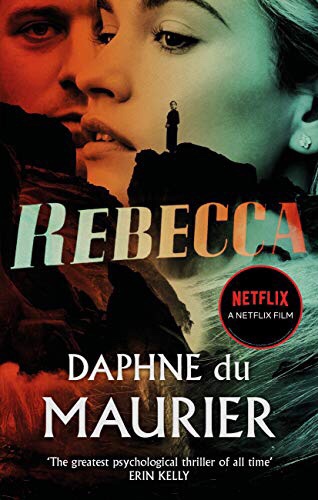
Another writer strongly influenced by Jane Eyre in particular is Daphne Du Maurier. Most readers have come across her short stories thanks to the film versions of The Birds and the brilliantly creepy Don’t Look Now. However, the book in my list of all time favourite reads is a Rebecca. This book is up there with the best psychological thrillers of all time and takes that theme of ‘madwoman in the attic’ and brings it into the 20th Century. It also has one of the scariest gothic creations in housekeeper Mrs Danvers – still hopelessly devoted to her dead mistress, the first Mrs de Winter. In a great first line – ‘ last night I dreamt I went to Manderley again’ – we are introduced to the gothic mansion, the ancestral seat of the de Winter family. Large, foreboding, and clinging to the edge of a cliff in Cornwall. When master of the house, Maxim de Winter brings a young bride home from Europe they are both assailed by memories of his beautiful and brilliant late wife Rebecca, who drowned while out sailing. This haunting is a psychological one and the attic is the mind. The unnamed second wife is plain, young, inexperienced and gauche. She has no idea how to run a house like Manderley and everywhere are signs of her predecessor: the west wing, the embroidered R de W everywhere, her correspondence in the morning room. The staff continue to run the house as before and instead of taking charge she tries to fit in. She lives under the impression that she’s second best and will never measure up.

Many of her qualities echo those of Jane Eyre and there’s a lot to be said about older men wanting more acquiescence and a chance to mould a younger, second wife. While this young woman tortures herself about how much her husband must have loved this brilliant woman, Mrs Danvers starts to turn the screw. Cadaverous in appearance and very severe when communicating, she does everything she can to intimidate her new mistress. She even shows her Rebecca’s lingerie, totally sheer and embroidered with R they conjure up an image of sexual experience, something else this woman doesn’t have. Worst of all, she suggests that copying a portrait of Maxim’s ancestor Lady Caroline de Winter might be a good costume for the ball they’re holding. On the night she appears at the top of the stairs to gasps from the guests and unchecked anger from her husband. Totally bewildered and distraught, her sister in law informs her that Rebecca had done the same thing for the last ball. It was like a ghost appearing at the top of the stairs. Mrs Danvers lures her to the west wing and almost talks her into jumping from the window in a scene of heart-stopping tension. When the truth about Rebecca emerges what will it mean for everyone at Manderley? This book is a romance, but with strong gothic overtones in its setting and although Rebecca does not physically appear as a ghost, she is often more present in this house than anyone else. It is most definitely within the Bronte’s genre of gothic romances and delivers good, old-fashioned, creepiness. Look out for a new adaptation of Rebecca coming soon to Netflix.

Posted in Personal Purchase

Misery by Stephen King.

Each summer, when I was in my teens and early twenties, my friend Cindy and I would pack a case and go up to stay with her Dad in North Yorkshire for a week or two. His wife was a huge horror fan and although I struggle to watch horror films I was quite happy to scare myself silly by reading them. In one of their houses there was a mischievous spirit who would knock on the front door when you least expected it, but every time you answered there was no one there. Sometimes it would even knock when you were stood with the door wide open looking for it! I remember staying up late one night to watch a film and there was a sudden loud knocking sound causing us to levitate off the couch. I often borrowed books to read while on holiday with them, everything from Dean Koontz and James Herbert, but my favourite had to be Stephen King. Misery was a fairly new book and I remember borrowing it from a boy I’d met who worked the bar at the local pub. Sadly for him he never got it back and 27 years later it still sits on my bookshelves, and still has the power to scare the hell out of me.

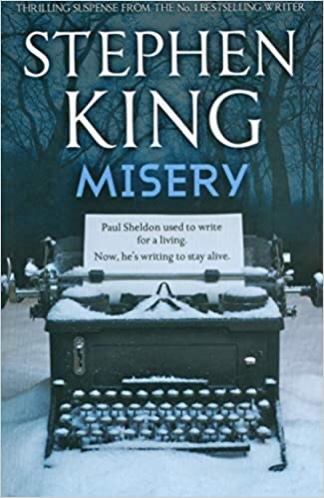
Writer, Paul Sheldon ventures out in his truck despite a huge snowfall to post the manuscript of his latest book to his publisher. Sadly he doesn’t make it as the icy conditions cause a massive accident. Isolated and severely injured it seems very likely that Paul will die. When he wakes he finds himself in a bed, with his legs splinted. Who has saved him and how? Paul can see he isn’t in a hospital, so who would have the skill to do this? Then the thought drops into his head. Why haven’t they taken him to hospital and what does this person want with him?

He soon gets his answer when Annie Wilkes comes into the room. A strange mix of motherly and medic, she feeds and treats Paul with very strong painkillers, trying to heal his shattered legs. At first Paul is just a bundle of basic needs – sleep, food, pain relief. However, when Paul improves he starts to ask those questions that have been muffled by painkillers and sleep. Annie seeks to reassure Paul, she has set his legs as best she can and she will continue to nurse him. She’s been a nurse, so she knows what she’s doing. Besides which, she’s got to look after him. She’s his number one fan. Annie asks Paul if she can read his manuscript, the latest in his series about Misery Chastain. This series has paid the bills for a long time, but Paul has often wanted to branch out and write something different. This latest manuscript will be his last Misery novel because he has killed off his popular heroine. However, Annie doesn’t know this. What will she do when she reads the manuscript and finds out there will be no more misery.

This novel is truly horrific. There is nothing supernatural to the story, this is about the worst things one human being can do to another. The horror comes from Paul’s powerlessness, the visceral detail of his injuries and Annie’s punishments, but also just how unhinged Annie Wilkes is. We don’t need ghosts and witches when characters as crazy as Annie Wilkes exist. She truly is one of King’s best creations. She always gives off a smell of food or is wearing it down her clothing. She is overweight, almost shuffling in and out. Paul feels real disgust when she’s close to him. She is manipulative, quick to anger and even Paul doesn’t realise the extent of her temper until she retaliates against him with fierce strength and savagery. As Paul starts to recover and become bolder with his plans to escape Annie, the tension escalates. Every time Paul creeps out of the room to gather information on his captor, my heart is in my throat. I swear my heart is beating faster as I realise Annie is coming home and he may not get back into the room in time. When she detects he’s sweating, I’m sure she’s going to guess he’s been moving around. Then there’s the scene – readers will know the one I’m talking about – that will stay with me forever. Even the film version isn’t as bad as reading this scene in the book. The visceral way King writes about the destruction of the human body is sickening and made me physically shiver when I first read it in the 1990s. Now I sort of glance over it. It still sickens me twenty years later. There’s also a lawnmower incident that’s fairly grim and still makes me wince. After multiple reads that’s a powerful reaction!

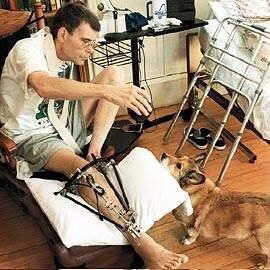
For me, this is one of King’s best novels. The characterisation is excellent. The constant rollercoaster of tension and relief is deftly handled. There is no supernatural element to the horror, simply the horror of a man trapped by his injuries and an unhinged captor. The claustrophobic feelings this conjures up in the reader are incredible. Weirdly, approximately ten years after the publication of Misery, King was walking by the side of the road in Maine when he was hit by a minivan and flung four metres from the pavement. The van was reportedly driving erratically with one witness worrying the van might hit the pedestrian she’d seen. King suffered cuts to his scalp, a collapsed lung, multiple leg fractures and a broken hip. His right leg was so badly damaged it was feared it would have to be amputated, but doctors managed to save it. It left King in a very similar condition to Paul Sheldon, though he didn’t have to recuperate with Annie Wilkes! He spent his recovery on his non-fiction book On Writing, where we talks about the accident, his writing process and other parts of his life. At first he could only sit and type for forty minutes at a time, something that inspired me with my own writing experiences and disability. The fact that this happened after he visited a similar fate to one of his characters is perhaps the spookiest part.

Posted in Random Things Tours

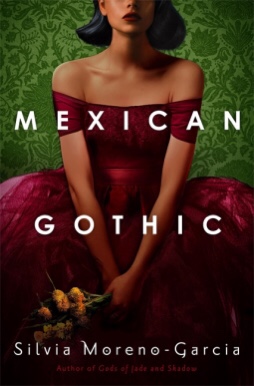
Halloween Reads : Mexican Gothic by Silvia Moreno-Garcia.

Publisher: Jo Fletcher Books

Published: Paperback Edition 30 Jun. 2020

ISBN: 1529402670

Wuthering Heights and Jane Eyre, those were Catalina’s sort of books. Moors and spiderwebs. Castles too, and wicked stepmothers who force princesses to eat poisoned apples, dark fairies cursing maidens and wizards who turn handsome lords into beasts.

I read this earlier in the year for a blog tour, so it is probably the most recent horror that has given me goosebumps and kept me up at night. The only saving grace is that our bedroom doesn’t have wallpaper or I’d have been up all night expecting it to move. When I first started this novel I was a little bit unsure, but I read the above paragraph and trusted it was the book for me. I have a smidgen of Catalina’s gothic, romantic sensibility about me and this book had all the elements I usually enjoy: a plucky heroine, a suitably wealthy but eccentric family, the possibly hysteric friend/family member who needs rescuing, a crumbling gothic mansion. So far, so usual. Then the first dream sequence happened and I sat straight up in bed, wondering what sort of dark, twisted fairytale I’d let myself in for. From that point on I found it curiously addictive – the sort of ‘still reading at 2am addictive’. By the end, I was awake because I was too scared to sleep!

Noemi Tabouda is dispatched by her uncle to High Place, the estate of the wealthy Doyle family. Virgil Doyle is the new husband of Noemi’s cousin and it is Catalina who has written an alarming letter begging to be rescued from a strange supernatural fate. The letter mentions fantastical happenings, such as people in the walls and a spectral voice speaking to her. Noemi wonders if her cousin needs to see a psychiatrist, because even though Catalina has a flair for the dramatic, she has never sounded so scared. The family know very little about the Doyle’s because Catalina and Virgil’s romance was a bit of a whirlwind. In Noemi’s limited time with him, he seemed very charming and had the dark brooding looks of a Byronic hero. This is a good chance to help Catalina get well, but also get to know the Doyle family a little better.

The author has created a brilliant setting in the Doyle family mansion High Place. It has a strange dual effect on Noemi of being luxurious and comfortable, but almost suffocating and overpowering. The past wealth of the family can be seen in every piece of silver, swish of velvet curtain and the eyes of past Doyle’s following her around the room. Noemi’s room is luxurious but shabby, as if the wealth has started to run out. The wallpaper has a curious pattern, but is also decorated with patches of damp. The bath is deep enough for a good soak but the fixtures and fittings are a little rusty. There are servants, but they are strangely silent and don’t even catch Noemi’s eye. The whole regime of the house seems very regimented to Noemi who is an informal, modern woman. Virgil’s father is definitely head of the house, but his sister Florence is the gatekeeper who makes sure his wishes are carried out. Noemi expected to breeze in and immediately pop in on her cousin, but finds she is barred. Apparently, the family doctor has decided she needs rest and a very quiet atmosphere. Noemi is told her cousin has TB, which has never been mentioned before, and doesn’t really account for the strange things Catalina mentioned in her letter.

Noemi is a great central character to follow through the story. She is sassy, intelligent and very determined to bring a little 20th Century thinking into High Place. I love that she isn’t afraid to ask questions, especially of the men who aren’t used to being held to account by women. This is how the author starts to subvert the gothic /fairytale genre – Catalina is the more ‘traditional’ heroine. Noemi brings in the local doctor to give her a second opinion, befriends the younger cousin Francis and enlists his help in understanding the family. She recognises that’s a lot of women have struggled to live with the Doyle’s regime. Howard had two wives, who were sisters and both died at High Place. A cousin, Ruth, took a shotgun to the family leaving Uncle Howard alive but horribly disfigured. From the village Noemi unearths stories of hundreds of silver miners going missing in the Doyle mines. It seems the family consume people, encapsulated by their horrible emblem of a snake eating its own tail.

The incredible nightmare sequences are vivid and visceral. At first I wasn’t sure which was real: was the regimented, almost Puritan, daily order of High Place the reality, or was it a thin veil of decency obscuring something more deadly and decadent. Just as mould was starting to be visible on the wallpaper, Noemi’s nightmares signal something breaking through, threatening to take over. This underlying force seems to understand the very soul of the person it tries to corrupt. In Noemi’s case her modern attitude to dating and female sexuality is used to draw her in against her will. She is a serial dater, choosing short dalliances where no one can get too close. So her nightmares have a strong sexual element, where Virgil Doyle lulls and seduces her, in her bath or in the middle of the night. She questions herself. Virgil repulses her, but does she desire him? Are these dreams conjured from her own subconscious or is something able to infiltrate her sleep and lure her down the corridors in her nightdress?

The truth of High Place and what happens there, when it is revealed, is truly horrific. There was a scene that literally made me gag! This may be one of those occasions when I truly hope they don’t make the book into a film – I wouldn’t be able to watch it! I felt that the author was playing with the reader and our own push and pull between fascination and revulsion. I found this very reminiscent of Dracula. There was an equally interesting tension around social change. The local miners exploited by the Doyle’s are part of the past, along with the family’s rules and position in society and their adherence to the ‘family doctor’. The new is represented by characters like Noemi and the mentions of her wardrobe full of the new styles and the young local doctor who tries to help Catalina. In the town the Doyle family are seen as weird eccentrics, possibly sinister, but no longer able to command respect as they would have a generation before. Their time is waning and these horrific acts are a fight, both for the family and the entity that lives alongside them. The author subverts the fairy tales Catalina loved in her youth and the original Gothic trope of a damsel in distress, rescued by a man. I truly enjoyed this novel, despite the fact it kept me awake at night worried that mushrooms were coming out of the wallpaper. Now, finally, I’d like to go and get some dreamless sleep.

Meet The Author

Silvia Moreno-Garcia (born 25 April 1981) is a Mexican – Canadian author, short story writer, editor, and publisher.

Moreno-Garcia was born April 25, 1981, and raised in Mexico. She moved to Canada in 2004, where she presently lives with her family in Vancouver. She began her career publishing in various fiction magazines and books, and was a finalist for the 2011 Manchester Fiction Prize. Her first short story collection This Strange Way of Dying was published in September 2013 by Exile Editions. Her second collection, Love and Other Potions came out in 2014 from Innsmouth Free Press.Her debut novel Signal To Noise was published in 2015. She serves as publisher of Innsmouth Free Press, an imprint devoted to weird fiction. In 2016, she won a World Fantasy Award for the anthology She Walks in Shadows and a Copper Cylinder Award for her novel Signal to Noise. In February 2020 she was announced as a finalist for the Nebula Award 2019 in the Best Novel category for her book Gods of Jade and Shadow.