Tassie Morris is everyone’s favourite wedding photographer, famous for her photos of offbeat ceremonies and alternative brides. Yet commitment is proving impossible for Tassie herself, who cannot forget her first love.
When she’s sent to photograph a ceremony on Schiehallion – the Fairy Hill of the Scottish Caledonians – she meets Dan, who might be the one to make her forget her past. That is, until a family crisis begins a chain of events that threaten to destroy not only Tassie’s love life, but her entire career.
Set in a colourful world of extraordinary weddings, Shoot the Moon explores the complexities of different kinds of love: romantic love, mother love, friendship. And, ultimately, the importance of loving yourself.
There was an awful lot to admire in this novel about a young woman who makes her living capturing the love of others, while struggling to find the love she needs. I say needs rather than wants, because Tassie doesn’t really know what she wants or even the type of man that’s best for her. Largely this is because she’s stuck on a relationship she had when she was a teenager. I really felt for this woman, because she has so much going for her, but doesn’t realise it. She has had an exciting career in photography across the world, but more recently has worked for a U.K. wedding magazine. Tassie is given a file containing all the details of a wedding that her work colleague and friend has picked for their next real wedding feature. Tassie then travels down to that wedding to photograph it for the magazine. I particularly loved this rock and roll wedding, with the bride in a black dress and the mother of the bride performing the ceremony in her role as vicar. The author captures the beautiful details of the wedding so well I felt I was there. The Scottish wedding is also spectacular, not just the ceremony but the scenery around them. Scotland is the first time I see Tassie truly relax and let go of plans and schedules, leaving her phone to one side. It’s a moment of quiet in an otherwise busy story. In her spare time Tassie is a homebody, either tackling some of the DIY on her flat or tending the well-kept garden where she grows herbs and vegetables. She seems comfortable with who she is.
However, she doesn’t seem to know who she is when it comes to finding a partner. She harks back to her teenage years and the time she spent as Alex’s girlfriend. I love the way the author depicts our formative romantic relationships as something that shapes our love life into the future. Her seemingly perfect relationship with Alex possibly wasn’t that great, but when we put our rose tinted glasses on it can seem. Also, teenage relationships don’t have the pressures that our adult relationships do. They’re intense because it’s a new experience, but also because we don’t have the constraints or worries of work, money, mortgages and children. We have all the time in the world to be in love when we’re younger. Tassie only sees Alex occasionally these days and I wondered how much the relationship really suited his agenda, but left Tassie quite lonely and blocked her from moving on. There was an emotionally intelligent look at how attachment issues affect our relationships too; if we fear abandonment then we might put up with difficult behaviour just to avoid confrontation and potentially being abandoned again. I think Tassie is aware that Alex is not a fulfilling relationship for her, but can she cope with the feelings of being without it? Dan is a fantastic romantic lead character and has a lot of the qualities Tassie values in a man. He seems like someone who is straightforward, honest and loyal. Their personalities fit together well and he seems ready for a serious relationship, but can she take that step with someone she’s just met without fearing abandonment?
The author pulls everything together well as Tassie’s world changes completely when she makes a mistake at work and risks the reputation of the magazine. She has to think quickly because living in a London flat with her lifestyle won’t be financially sustainable. This seems like rock bottom for her, but could it possibly be a blessing in disguise? Could it be the right time to go home to the farm, given that her lifelong issues with her mum are still causing her emotional pain? Maybe it will also give her the opportunity to try something completely new as a career? I was keeping my fingers crossed for her because I wanted her to feel comfortable with who she was and feel whole. She might also be ready for that real, committed relationship to come along – but I didn’t need that for a happy ending. My only criticism of the book is that there were moments I felt like I was reading a different story. At the beginning we learn that Tassie sees a little blonde girl, who could be an imaginary friend, except Tassie continues to see her from time to time. Tassie feels like they’re connected in some way, but doesn’t know how. I found this really interesting and it had a different feel to the rest of the book. It didn’t seem to fit with the lighter tone around the wedding magazine and I had a feeling this could have been the start to quite a different novel. It’s a small thing, and I did like the way it was tied into her childhood anyway. All in all this was a great read for Valentine’s Day, and should suit romance readers as well as those who like their romances to have some emotional depth.
Meet the Author
Bella Cassidy grew up in the West Country – reading contemporary romances, romances, historical novels, literary fiction… just about anything she could lay her hands on. After a few years in London, working as a waitress and in PR and advertising, she went to Sussex to read English – despite admitting in her pre-interview that this rather sociable period in her life had seen her read only one book in six months: a Jilly Cooper. She’s had an eclectic range of jobs: including in the world of finance; social housing fundraising; a stint at the Body Shop – working as Anita Roddick’s assistant; as a secondary school teacher, then teaching babies to swim: all over the world.
She’s done a lot of research for writing a wedding romance, having had two herself. For her first she was eight months pregnant – a whale in bright orange – and was married in a barn with wood fires burning. The second saw her in elegant Edwardian silk, crystals and lace, teamed with yellow wellies and a cardigan. Both were great fun; but it was lovely having her daughter alongside, rather than inside her at the second one.
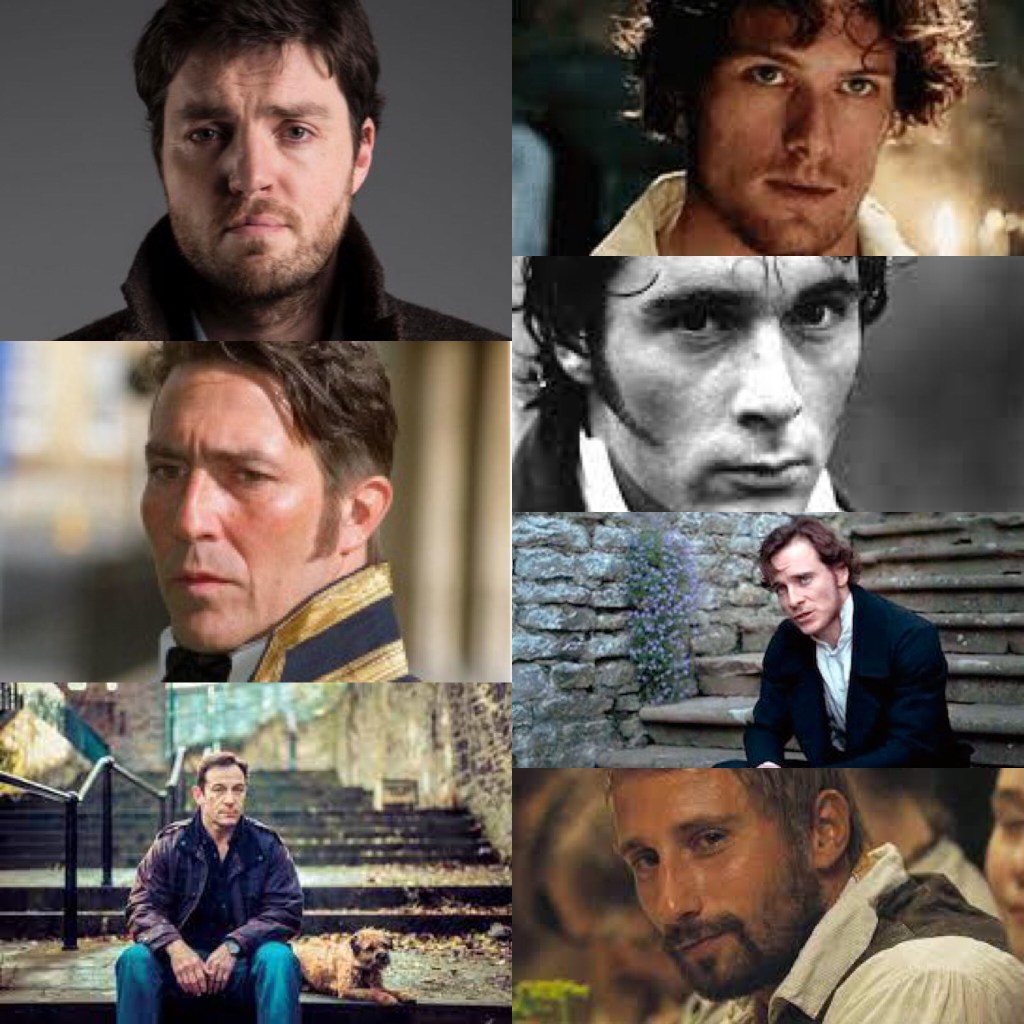
I thought I’d celebrate Valentine’s Day by talking about our literary crushes. Let’s be honest, we all have them. Those literary heroes that draw us in and make us swoon. From a young age there have been literary heroes that have stuck in my mind, and probably informed some ill-advised dating choices over the years. Those formative literary heroes who made my adolescent heart flutter, have changed a lot as years have gone by. Perhaps because what I’ve learned through my real life relationships has started to change the characteristics that attract me in a hero. Those young, dashing, tortured souls don’t seem quite so attractive when you’ve encountered a few in real life. Of course, literary adaptations on film or TV often influence these crushes greatly – remember the endless banging on about a wet Colin Firth striding across the Derbyshire countryside? My mum’s expectation of that scene had obviously been honed by 1970’s literary adaptations like Women in Love where Oliver Reed and Alan Bates famously wrestled naked in front of a roaring fire. She expected Darcy to be wearing less clothes and couldn’t see what all the fuss was about. Anyway, I much preferred a slightly dishevelled Matthew McFadyen Mr Darcy, striding across a field at dawn. However, between the book covers, Mr Darcy simply doesn’t do it for me. Similarly, Mr Thornton from North and South was incredibly sexy when portrayed by the lovely Richard Armitage, but simply fails to light my fire when reading the book. So, with some trepidation, here are my reading crushes. Let me know yours. There’s no judgement here. ❤️❤️
Mr Rochester – Jane Eyre
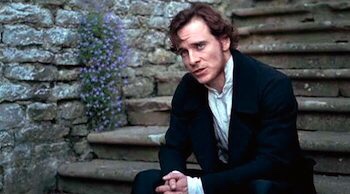
Michael Fassbender as Mr Rochester
“To women who please me only by their faces, I am the very devil when I find out they have neither souls nor hearts…but to the clear eye and eloquent tongue, to the soul made of fire, and the character that bends but does not break—at once supple and stable, tractable and consistent—I am every tender and true.”
Considering they barely left the surroundings of their home at Haworth, those Brontë girls knew how to write the brooding, Byronic, hero. Heathcliff is probably the best example, but I read Wuthering Heights again when I was older, and he was a bit too tortured soul for my liking, plus he hangs a woman’s dog for goodness sake! I first read Jane Eyre when I was ten, in my last year of primary school, and I’ve read it every couple of years since. When younger, I loved the slow burn of their romance. From the moment she saves him from burning in his bed, it’s clear there’s something about Jane that attracts him. For him, she seems like a cool drink on a hot day. Somewhere he can sit and find peace, and let’s face it, he has an awful lot of drama to escape from. Of course when I was young I couldn’t see the feminist or sexual implications of the novel – Bertha upstairs was a bit of a monster to me. She was the gothic, scary bit so I didn’t really think about her as a person or what Rochester had done to her, until I was in my teens. I liked his dark brooding character and when he appears out of the fog on his horse it is still a swoon moment for me. I think I also enjoyed that he loves the plain, poor governess rather than the decorative, but awful Blanche Ingram. I loved their conversations and the way he seems to enjoy that fiery part of Jane. In my teens I used to think she was mad for leaving Rochester, but later I could see why she left and sometimes wondered if it wouldn’t have been better for her to keep her fortune and take off on a trip across the world. At least when she does return to Rochester it’s as an equal, with her own fortune and experience
Willoughby – Sense and Sensibility
Greg Wise as Willoughby
In every meeting of the kind Willoughby was included; and the ease and familiarity which naturally attended these parties were exactly calculated to give increasing intimacy to his acquaintance with the Dashwoods, to afford him opportunity of witnessing the excellencies of Marianne, of marking his animated admiration of her, and of receiving, in her behaviour to himself, the most pointed assurance of her affection.
We’re still in bad boy territory here, with the ultimate cad who breaks Marianne’s heart and reputation in Sense and Sensibility. I have read the book, but I will admit that the Greg Wise version does play a large part in this choice. I loved the romantic way that Willoughby finds Marianne, having sprained her ankle on a hillside. He simply picks her up and carries her home. Factor in some rain, and Greg Wise being all dark and handsome, mastering a huge horse and a literary crush was born. No wonder Emma Thompson wrote in her diary on that particular day that Greg was setting all hearts fluttering as he was drippng wet an
a he loves Marianne, but in need of money he chooses status and an heiress above his heart. There’s no excuse for how he behaves, he’s an absolute rat, but that rush of chemistry can’t be denied. Would we have done any different to Marianne? In the film, when he rides to the hill in order to watch Marianne and Colonel Brandon leaving the church after their wedding, I think he’s truly sad and a little jealous.
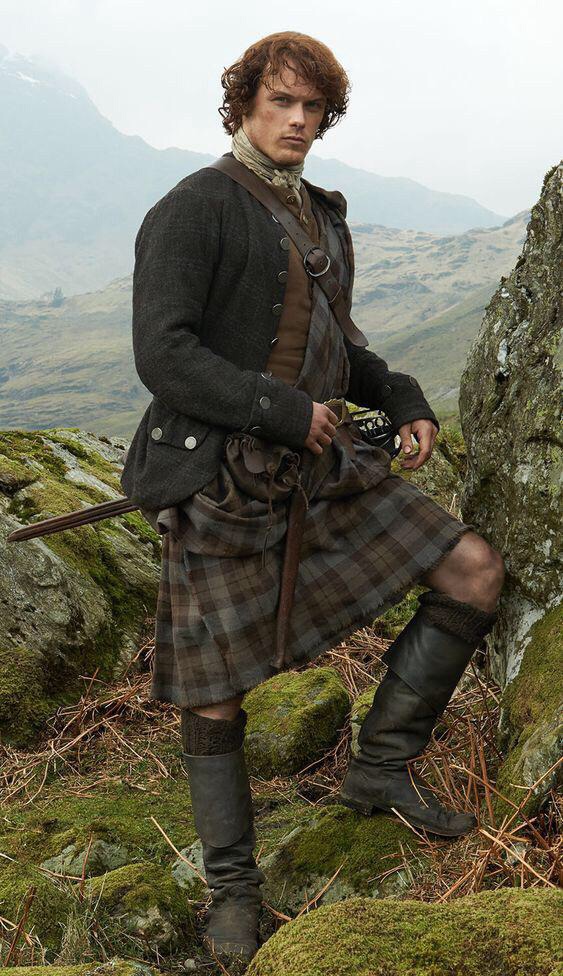
Jamie Fraser – Outlander.
Sam Heughan as Jamie Fraser
“I will find you,” he whispered in my ear. “I promise. If I must endure two hundred years of purgatory, two hundred years without you–then that is my punishment, which I have earned for my crimes. For I have lied, and killed, and stolen; betrayed and broken trust. But there is the one thing that shall lie in the balance. When I shall stand before God, I shall have one thing to say, to weigh against the rest. Lord, ye gave me a rare woman, and God! I loved her well.”
I couldn’t resist the giant photo of Jamie Fraser! I had barely started reading the Outlander series when the TV series started so now the literary character is always going to be linked with the lovely Sam Heughan. He’s a great choice for the character and the chemistry between him and Catriona Balfe as Claire is perfect. What I love about Jamie is the way Diana Gabaldon has written him and it’s something that spills over into the TV series. We as readers are firmly with Claire and everything Jamie does is viewed through the female gaze. Their wedding night sequence is good example. We experience him through Claire and it’s his body we’re undressing and enjoying. I think the allure of Jamie is that heady mix of tough outdoors warrior, with a vulnerability underneath. There’s the way he respects her ideas and opinions, unheard of in most men of Claire’s time, never mind the 18th Century. It’s also his deep loyalty to Claire, not just across the few years they’re together but all those years inbetween when they’re in a different time from each other. There’s nothing more romantic than that.
Cormoran Strike – The Cuckoo’s Calling Series
Tom Burke as Cormoran Strike
‘My best mate . . . ” For a split second he wondered whether he was going to say it, but the whisky had lifted the guard he usually kept upon himself: why not say it, why not let go? ‘. . . is you.”
Robin was so amazed, she couldn’t speak. Never, in four years, had Strike come close to telling her what she was to him. Fondness had had to be deduced from offhand comments, small kindnesses, awkward silences or gestures forced from him under stress. She’d only once before felt as she did now, and the unexpected gift that had engendered the feeling had been a sapphire and diamond ring, which she’d left behind when she walked out on the man who’d given it to her.She wanted to make some kind of return, but for a moment or two, her throat felt too constricted. ‘I . . . well, the feeling’s mutual,” she said, trying not to sound too happy.”
Finally, I actually fancy someone in this century! From the moment I picked up a dog eared copy of The Cuckoo’s Calling in a charity shop I was hooked on private investigator Cormoran Strike. Yes, there’s the old tortured soul aspect to his personality, but it’s not just the high pitched warning alarm of a damaged man that calls out to me. I remember how well the author described him having to care for the stump left when his leg was amputated. It felt realistic to me, because walking and standing a lot was painful for him. If he is tailing someone he would ache and his leg might have chafed against his prosthetic. I appreciated a hero with a disability, his heroism magnified by the fact he was injured in action. He’s a big man, broad and tall, so much so that you’d feel safe with him. He may be vulnerable, but he can handle himself if necessary and that’s a heady combination. He’s a great listener, full of empathy for people in a predicament and for those close to him. He’s deeply loyal to those who he can trust, like his business partner Robin. He’s been messed up by women, from his mother to his long term girlfriend Charlotte. However, he’s a very private about his relationships and seems to have his own code of honour which is very attractive.
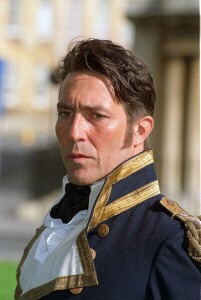
Captain Wentworth – Persuasion
Ciaran Hinds as Captain Wentworth
“I can listen no longer in silence. I must speak to you by such means as are within my reach. You pierce my soul. I am half agony, half hope. Tell me not that I am too late, that such precious feelings are gone for ever. I offer myself to you again with a heart even more your own than when you almost broke it, eight years and a half ago. Dare not say that man forgets sooner than woman, that his love has an earlier death. I have loved none but you.”
Are there any more romantic words in literature? Wentworth’s letter is, for me, the most romantic I’ve read. I’d go as far as saying it’s the best declaration of love in the classics. It’s all the more wonderful because Anne is so unassuming and modest. She has spent months with Wentworth back in her circle, loving him from afar, but never presuming he might feel the same way. In fact she’s so sure he’s moved on from the feelings he had for her when they were younger, she thinks he’s in love with Louisa Musgrove. She has so little confidence that she misses the care and kindness he shows her. After a long walk he makes sure it is Anne who gets the seat on the carriage because he’s thinking of her comfort. She thinks he wants to be alone with Louisa or that he thinks she needs to sit as she’s older. I love Wentworth’s constancy and the passion he has been hiding under that polite exterior. The kiss that follows is wonderful, because we’ve been waiting for it so long.
Jackson Brodie – Case Histories Series
Jason Isaacs as Jackson Brodie
“He was officially a lunatic, she decided. Strangely, that didn’t make him less attractive.”
What is it about Kate Atkinson’s Jackson Brodie? He’s a slightly rumpled, middle-aged, private investigator. He’s been in the military and the police so is probably institutionalised. In fact he’s a bit of a hopeless case, often taking on the lame ducks he finds along the way, whether they’re human or canine. Marriage doesn’t seem to suit him, but he is a very loyal friend. He’s quite grumpy and set in his ways. I’m not really selling him well I know, but there is that indefinable something that’s attractive. Rather like Cormoran Strike, there’s that sense that he’s an honourable man. He’s old-fashioned and would want to make sure you got home ok. In fact he’s one of those men who would walk on the outside on the pavement so you’re safe, away from the traffic and don’t get splashed. I imagine he looks like life has knocked him around a bit, but if someone needs help he would still be the first one there. There are times when he does the right thing, not by the book, but by his own moral code and I love that.
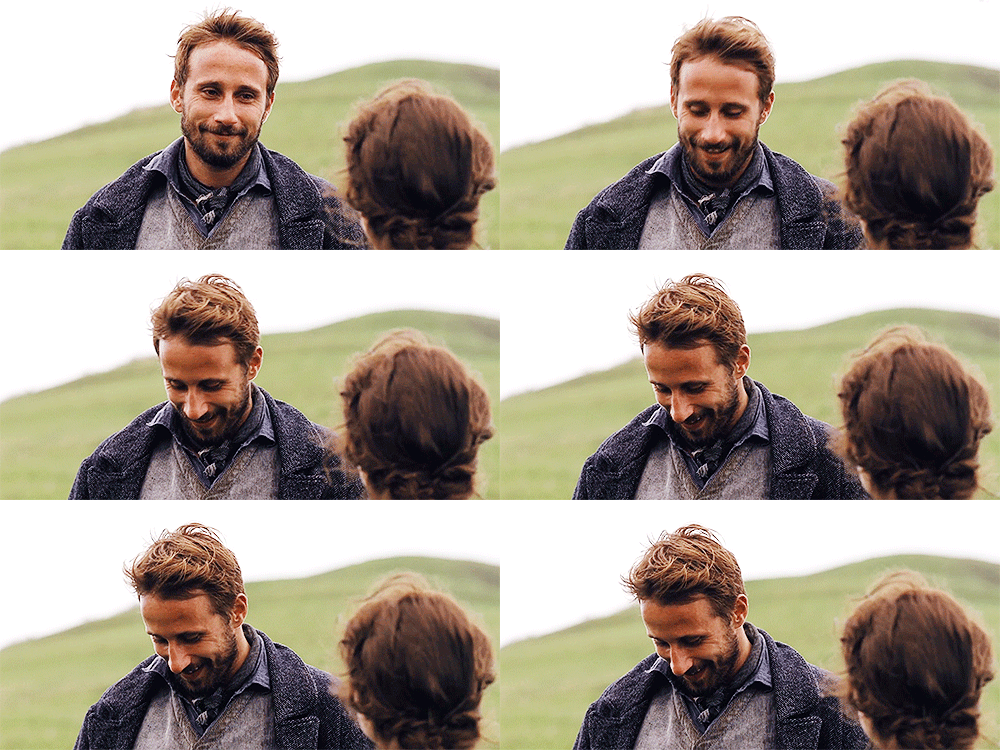
Gabriel Oak – Far From The Madding Crowd.
Matthias Schoenaerts as Gabriel Oak
“And at home by the fire, whenever you look up there I shall be— and whenever I look up, there will be you.”
I haven’t put my crushes in any sort of order, but I’ve definitely saved the best till last. If you ask me, for most of the book, Bathsheba Everdene needs her head examining. Near the beginning of the book, Gabriel visits her. They’ve been neighbours and he comes striding across the fields with a lamb under his arm. It’s an orphan and he thought she might like to feed and take care of him. He then proposes to her and she refuses! If a man brought me a lamb I’d be beside myself with excitement and I’d be saying yes before he’d finished his sentence. How can you turn down a man who brings you your very own lamb? However, their fates are intertwined. After a terrible tragedy where he loses his whole flock, Gabriel is forced to look for a job. It turns out that Bathsheba has become an heiress, inheriting a farm but luckily needing someone to manage it for her.
Gabriel proves himself to be a loyal employee and is constant even when she marries the ridiculous Sergeant Troy. Troy gambles her money and one night gets the whole workforce dangerously drunk. They are celebrating the harvest, but the hay stacks aren’t covered and a storm blows up. Bathsheba finds Gabriel desperately trying to save he harvest for her, while Troy is passed out cold in the barn. Bathsheba grows up a lot in the course of the novel and she starts to see and value the qualities Gabriel has. She has previously overlooked his steadfast loyalty, how hard he will work for her and what an incredible friend he can be. He listens to her and when she is silly enough to lead on Mr Boldwood, an older gentleman who owns the neighbouring land, he speaks to her and warns her that it isn’t fair. Of course, this being Hardy, this flirtation ends in tragedy. Yet Gabriel is still there and when he proposes a second time she’s finally ready for the love he’s offering.
Happy Valentine’s Day! I hope you have a literary crush you enjoy ❤️❤️
I wouldn’t say I’m a fan of romantic novels on the whole, not as a genre anyway. However, I’m also that annoying person who writes outside the boxes on forms, resists the Census and ticks ‘rather not say’ if there’s an option to do so. My objection is to categories and putting things in boxes. I don’t object to a love story, in fact some of my favourite books are love stories. It’s just I don’t like it when love stories are packaged as romantic fiction or women’s fiction, given candy pink or baby blue covers, and characters who have little depth or motivation beyond the ‘meet cute’. I understand that, since Shakespeare, there’s been a set formula to the love story, but this can be taken to extremes. I actively hate simple love stories with manufactured obstacles and I definitely hated Fifty Shades of Grey (which was in no way a love story, but marketed as one). Perhaps my problem isn’t with love, but with romance; a much more contrived hearts, flowers and happy endings sort of place.
I like real obstacles: the terrible coincidence in Rosie Walsh’s The Man Who Didn’t Call; the limits posed by Will’s attitude to his disability in Me Before You; the mad wife in the attic in Jane Eyre; the girlish mistake of refusing a proposal in Persuasion. My favourite romcom is When Harry Met Sally so I do enjoy a ‘friends to lovers’ scenario, but it’s also witty with snappy dialogue and Billy Crystal making a woman miaow in bed. I love stories that are based within a historical or time-slip setting like the Outlander series of novels by Diana Gabaldon. I also like it when characters are so real it’s painful like Sally Rooney’s awkward teenage fumbling in Ordinary People. The characters must have depth, genuine problems or some meaty psychological issues to get my teeth into. I enjoy love stories set in other cultures or those that could be written as forbidden. I loved the viewpoint of a man coming to terms with his homosexuality in A Place Called Winter by Patrick Gale and the transgressive love affair of D.H. Lawrence’s Lady Chatterley’s Lover. I enjoyed how love blossomed from a marriage of convenience during the Windrush era in Andrea Levy’s Small Island. I also loved the bittersweet tale of love gone wrong in David Nicholls’s other novel Us where our protagonist’s marriage breakdown comes into focus on a trip through Europe, interspersed beautifully with scenes from when they fall in love.
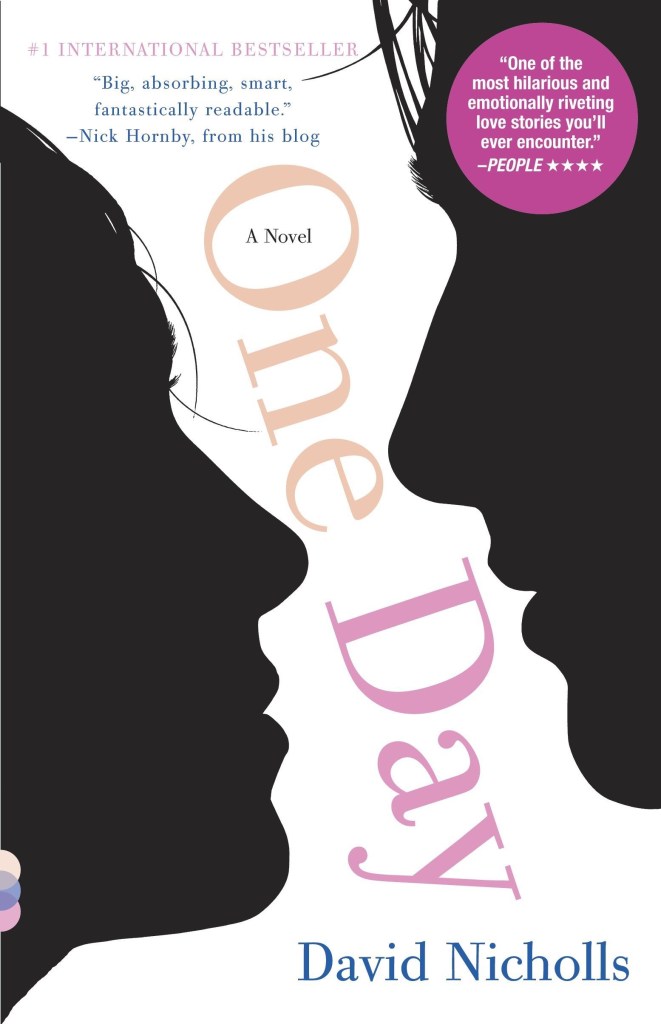
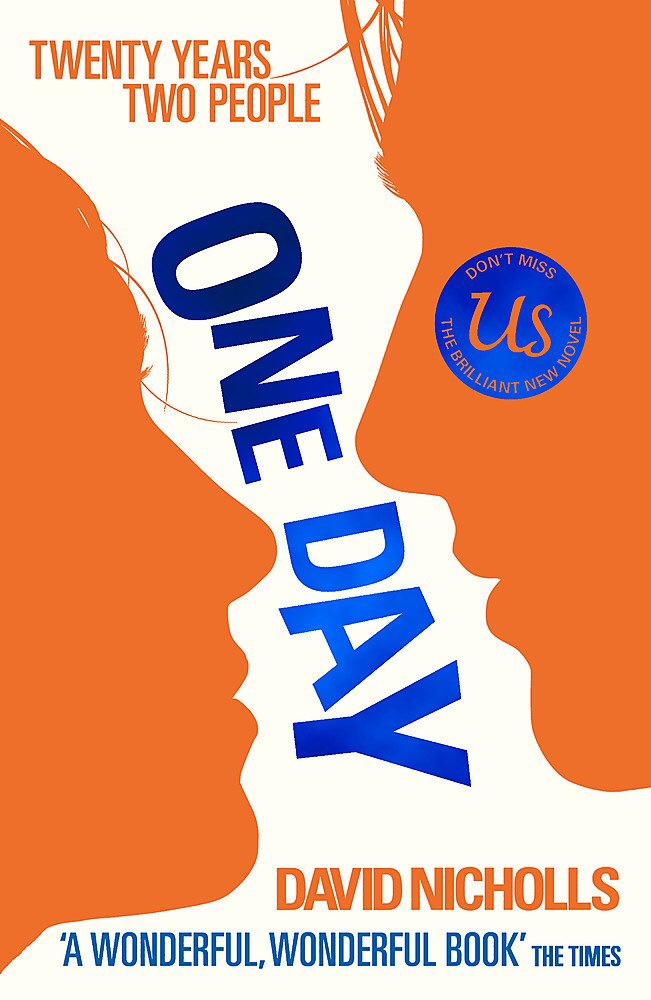
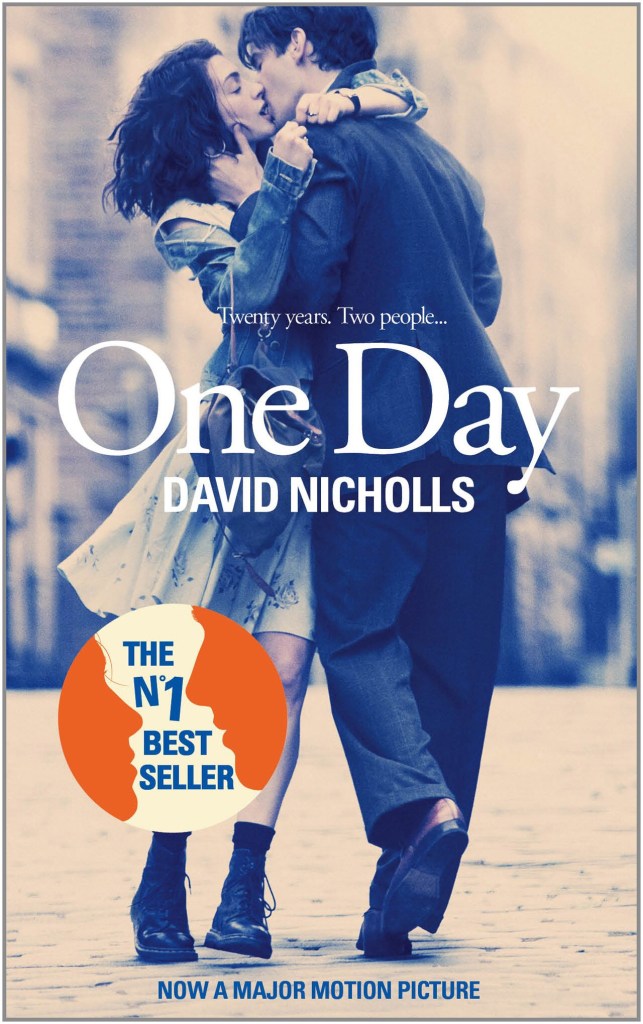
Several years ago, like thousands of others, I was blindsided by One Day. There was a time when you couldn’t move on public transport without knocking into someone reading this book. It’s a simple premise. Dexter and Emma were at Edinburgh University and as they graduate they spend the day together and forge a friendship, they climb Arthur’s Seat in their cap and gowns and talk about what they want for their futures. Dex would like to work in television and Emma would like to be a writer. The book then follows their story on the same day each year, sometimes together and sometimes apart, we see how life has changed them and the circumstances they find themselves in. Of course we know that Emma and Dex should be together, but will they ever find the right time or the courage to try?
I’ll be honest, at first I didn’t feel ‘grabbed’ by their story. My interest was mainly in their individual lives, especially considering that the book is set so that they’re both a similar age to me. I recognised the era, the reference points and also the struggles of life as they go through them. I thought Dex was a bit of a dick to be honest. He’s a player, egotistical and at times downright unpleasant. I really bonded with Emma though. A northern girl, she has a brand of kindness and an ability to see through bullshit that I liked. I saw some of me in her and I have always wanted to be a writer, but also went into teacher training (and didn’t finish). She clearly loves Dex, but will he ever see her? Mostly he sees her as a consolation prize, a shoulder to cry on, an advice giver and sometimes the great big kick up the arse he deserves. I can honestly say I hoped they never got together at several points in the book, because I didn’t think he deserved her. There’s a point where Emma has gone through a really tough time. She breaks off her engagement and goes through moving out and separating from her fiancé emotionally and financially. She goes out to Paris for a while and starts to write a children’s book. She has her hair cut short. She makes friends. I loved this Emma and I thought she’s built a new life from the ground up with no help from anyone. I wanted her to stay there.
As I know all too well, our love lives never simple. Often, where the decisions to be together seem very easy to make, it’s the right person. It’s reciprocal and committed. When we’re younger we’re learning about who we are in a relationship. We don’t know how much to compromise and how much to stick firmly to who we are or what we want for ourselves. We can get tangled up in relationships that are no good for us, are abusive, are with people who cheat, or people who put up obstacles and change their minds. We love people who aren’t ready, or who are too busy adding notches to the bed post. We can be so unsure of ourselves in our teenage years (and beyond) that we accept relationships that aren’t good for us and allow behaviour that’s demeaning or grinds down our self-worth. It’s also hard to love someone who doesn’t love you or who claims they can’t be with you. That great line from Sex and the City springs to mind – ‘he’s just not that into you’ – because when they are into you, they move mountains to be there. I felt that Dex was scared of real love and preferred empty encounters with beautiful women. Emma doesn’t value herself enough to set boundaries or ask for the love she deserves.
Everybody who knows the book will know the line I’m talking about. That one line I read and spontaneously burst into tears. That rarely happens with a book, but it did here. That’s when I knew this book had got me. My emotions were so invested in these characters that I had such a spontaneous response. I’m not sure how David Nicholls managed it, but I’ve spoken to other people who were similarly emotional. I think it’s the way he writes these two characters, they’re real and flawed. They struggle with life. We go through so many highs and lows with them, because even though we meet up with them on one day, we’re drawn in to how they got where they are. They’re not perfect either, far from it. Nichols weaves in addiction problems, affairs, career disasters and the difficulties of being a parent. There’s also huge loss to, and how the characters deal with these setbacks. One Day is a love story. Love is the primary theme of the novel. However, it’s also about being honest with ourself and others about our feelings and about recognising what love actually is. Perhaps I love One Day because it does go beyond the ‘falling in love’ stage, that even after years of yearning and kidding themselves about their feelings, Emma and Dex can still wake up one morning unnecessarily grumpy and tense with one another. Life is full of obstacles and love doesn’t stop them coming. Love isn’t always excitement, flinging your clothes off and swinging from chandeliers. Real love is always about being with your best friend.
Meet The Author
David Alan Nicholls (born 30 November 1966) is an English novelist and screenwriter. Nicholls is the middle of three siblings. He attended Barton Peveril sixth-form college at Eastleigh, Hampshire, from 1983 to 1985 (taking A-levels in Drama and Theatre Studies along with English, Physics and Biology), and playing a wide range of roles in college drama productions. Colin Firth was at the same College and they later collaborated in And When Did You Last See Your Father?. He went to Bristol University in the 1980s (graduating with a BA in Drama and English in 1988) before training as an actor at the American Musical and Dramatic Academy in New York. Throughout his 20s, he worked as a professional actor using the stage name David Holdaway. He played small roles at various theatres, including the West Yorkshire Playhouse and, for a three-year period, at the Royal National Theatre. He struggled as an actor and has said “I’d committed myself to a profession for which I lacked not just talent and charisma, but the most basic of skills. Moving, standing still – things like that.”
Since then, David has turned to writing full-time, and is the author of four novels. ‘One Day’ was an international bestseller and the follow-up, ‘Us’, was long listed for the Man Booker Prize. He’s also a screenwriter and TV dramatist; his credits include adaptations of ‘Far From The Madding Crowd’, ‘Great Expectations’, ‘Tess of the D’Urbervilles’ and feature film version of his own novels. ‘One Day’ and ‘Starter for Ten
On a windswept British coastline the tide bestows an unexpected gift…
It was the cry that she first noticed, the plaintive wail that called to her over the crash of winter waves. Wrapped only in a sealskin, the baby girl looks up at Effie and instantly captures her heart.
Effie has always been an outcast in her village, the only granddaughter of a woman people whisper is a witch, so she’s used to a solitary existence. But when Midsummer arrives so too does a man claiming to be the child’s father. Effie is surprised when he asks her to continue looking after his daughter, mysteriously refusing to explain why. When he returns six months hence she pushes him for answers. And Lachlan tells a story she never anticipated … one of selkies, legend, and the power of the sea…
I’ll be honest up front and say I don’t often read romance novels. I enjoy novels that look at relationships or contain a love story, but I often find novels categorised as ‘romance’ to be far too light or saccharin for my taste. However, this wonderfully romantic story drew me in thanks to the interesting female characters, historical detail and Scottish folklore. For those who do not know their Celtic and Nordic mythology, a Selkie is a seal which when it sheds its skin transforms into a human. For some reason, it’s a piece of folklore that’s always caught my attention, rather like mermaids. I love to imagine the freedom of the endless ocean and having a body that can swim gracefully and effortlessly through the waves. I’ve also thought of the two legs we see as essential for day to day life, being such a restriction to someone used to a powerful, streamlined tail.
I really loved how independent Effie is and the strength she has to stick to her principles, even when they go against those of the rest of her village. She’s very independent and modern in her thinking. She rejects the local church and only goes at Christmas. Her grandmother Alice provides herbal remedies for the people of the village, and this has kept Effie separate from others who think of Alice as a ‘wise woman’. In fact some of the most respectable women in the village rely on Alice for remedies that help with menopause or other hormonal symptoms, but only in private. In public they would deny all knowledge. Effie’s marriage to John, her son Jack’s father, seemed to happen rather quickly and caused gossip in the village too. Her friendship with Walter, who is from a very respectable family, raises the odd eyebrow, but has also helped her in many ways. Without him she might not have gained parish financial support for Morna – the child she finds floating in a wicker basket. It’s possible he expects more than friendship, but would he tolerate Effie’s wilder ways and allow her the freedom she craves? In a world that’s very restrictive for women, Effie’s widowhood and ability to support her children without a man leaves her in quite a lowly place in society, but free to live her own life, at least in the short term.
I was absorbed into this woman’s relationship with her children. Widowed on the same night she finds a baby girl floating in the sea, Effie raises the girl with Jack. She can’t find a name to suit her, but doesn’t worry about that. Jack is not the easiest child, with symptoms that in more modern times might have labelled him with an autistic spectrum disorder. The children get along well and seem to find ways of communicating together, despite Jack’s difficulties with speech. Effie loves both of them fiercely and is haunted by the worry that one day she may have to give up the little girl she rescued as a baby. So, when a mysterious man turns up and claims her, Effie is wary, but finds it hard to deny their likeness especially when they have exactly the same eyes. Lachlan calls his girl Morna and explains something that most women would find hard to accept. He and Morna carry seal skins, but they’re not just to keep them warm. The skin is as much a part of them as their dark, impenetrable eyes. Morna and her father Lachlan are Selkies. They are part human and part seal, from a tribe in Scotland. Effie is relieved to find he isn’t there to take Morna, because he recognises that she and Effie have a bond, but he leaves a perfect pearl to pay for her upkeep and promises to return in six months. However, can this arrangement continue indefinitely?
Even more complicated, is the fascination that Effie starts to feel about this dark eyed, handsome man. As for Lachlan, every time Effie touches seal skin, he feels a corresponding pull in his human body. I must admit I was rather enchanted by this wild, but noble and honourable man. I felt he would accept Effie as she was, rather than try to mould her into a respectability that would leave her so unhappy. To strengthen this romantic tale and give it historical context, there were other strong female characters such as Alice and Effie’s friend Mary. Alice is wise, funny and open to the more magical side of life. Effie is shocked that the very respectable Mary would have her as a friend. In fact she asks if Effie will help her set up a school for some of the poorer girls in the village. She gives Effie solid advice, based on the sensibilities of the time which gives us a contrast to Effie’s life choices – some of which would be seen as scandalous! It’s interesting to think that both Effie’s friends, Walter and Mary, are progressives in their time, whereas now their ideas can seem patronising or even horrifying. I felt that Mary shows us what Effie’s life could be should she decide to choose the life Walter might offer her.
The setting is exceptionally well drawn, capturing a rugged Yorkshire coastline so perfectly that I could imagine standing on a windswept cliff watching Lachlan and Morna slipping through the waves. I found myself browsing for holiday cottages as soon as I’d finished reading, because the author’s description of the sea was so evocative. Her romantic descriptions of eating freshly caught and fried mackerel on the beach, or sailing to a private cove in the sunset enchanted me just as much as any of the relationships. I was hankering after a sunshine stroll through the waves and I would look up from my book and be surprised to find myself in my bedroom looking out at Christmas lights. If you enjoy historical fiction, I highly recommend this book and it’s definitely worth a read if you have an interest in folklore or magic realism. I found myself taking long baths or having a lie-in so I could shut the world out and really relax into the story. I would definitely look at this author’s other work on the basis of this novel and it’s made me have a rethink about the romance genre as a whole. Thank you so much to HarperCollins UK-One More Chapter and Rachel’s Random Resources for giving me the chance to read the book. It’s been a pleasure.
Author Bio – Elisabeth’s writing career began when she finished in third place in Harlequin’s So You Think You Can Write contest in 2013. She was offered a two-book contract and consequently had to admit secret writing was why the house was such a tip. She is the author of numerous historical romances with Harlequin Mills & Boon covering the Medieval period to Victorian England, and a Second World War romantic historical with One More Chapter. She lives in Cheshire because the car broke down there in 1999 and she never left.
Giveaway – Win a signed copy of Daughter of the Sea (UK Only)
*Terms and Conditions –UK entries welcome. Please enter using the Rafflecopter box below. The winner will be selected at random via Rafflecopter from all valid entries and will be notified by Twitter and/or email. If no response is received within 7 days then Rachel’s Random Resources reserves the right to select an alternative winner. Open to all entrants aged 18 or over. Any personal data given as part of the competition entry is used for this purpose only and will not be shared with third parties, with the exception of the winners’ information. This will passed to the giveaway organiser and used only for fulfilment of the prize, after which time Rachel’s Random Resources will delete the data. I am not responsible for despatch or delivery of the prize.
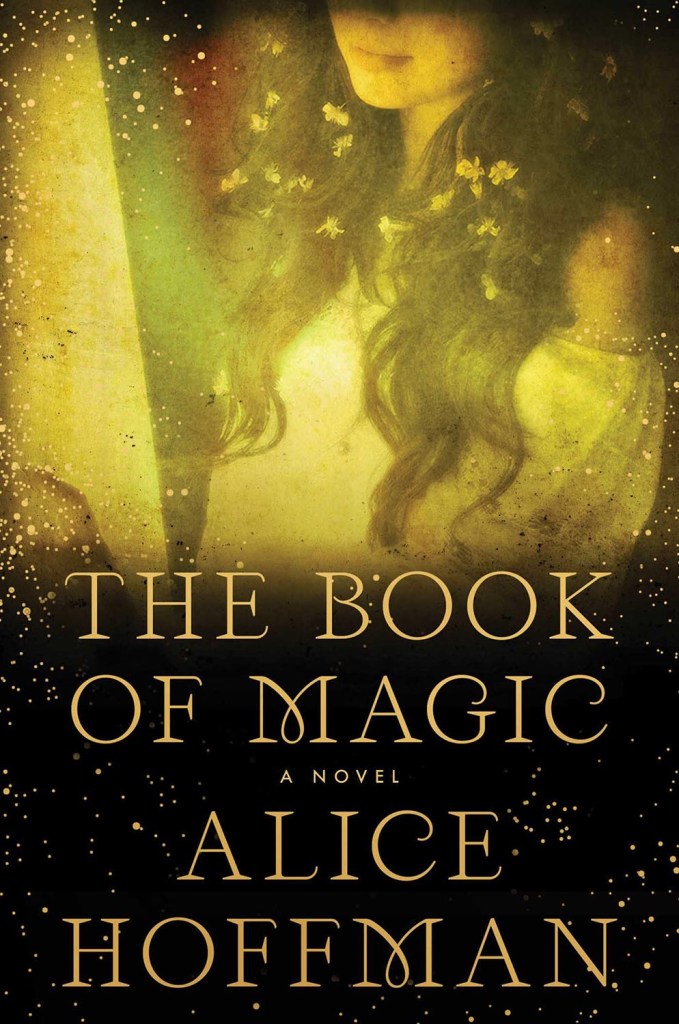
This has been one of my most anticipated novels for this year, then it’s publication date was changed to January 2022 and I was going to have to wait a bit longer. I finally snagged a copy on NetGalley last week, and its no surprise that I started to read it straightaway. Was it worth the wait?
This is the fourth and final book in Hoffman’s Practical Magic series and it really does come full circle. We have three generations of Owen’s sisters in this tale: Franny and Jet, Gillian and Sally, and finally Sally’s daughters Kylie and Antonia. In fact this really does take us full circle, rather like the symbol of the Ourobos, a snake swallowing its own tail which is, rather aptly, the symbol of dark magic. So, here we have those Owenses who have dabbled as practitioners of the dark arts, such as Franny and Jet’s brother Vincent. Could one of the younger members of the family be heading down that dark route and what would call them there?
Regular readers will know that the curse of the Owens family is lodged in the love part of their lives. This was a curse placed by Maria Owens who knew the truth of how women might become undone by men. The various family members have found their own ways of circumventing the worst of the curse, after Jet lost her true love as a teenager. Gillian is married, but she doesn’t live with Ben or wear a wedding ring. Sally has lived with a man but lost him very young and the heartache has closed her to that part of life. Now all she cares for are books. Antonia is married to her work as a doctor, but is having a baby with her gay best friend. However, for their youngest, Kylie, love has been part of her life for a long time. She is inseparable from her best friend Gideon but they have never spoken of their love for each other. Till now. Two losses happen to Kylie at once. The death watch beetle is clacking in the walls of the house on Magnolia Street where Sally, Kylie and both elderly aunts reside still. They have barely said their goodbyes, when Kylie’s Gideon is in a terrible accident and is so badly injured he is in a coma.
Kylie takes matters into her own hands and is drawn to a hidden Grimoire in the Owens Library. A Grimoire is a witches personal journal and book of magic. Kylie believes this book has the answer to ending the Owen’s curse, but the final pages are stuck together and she can’t enact the spell. Kylie returns to where the Owens story starts, in the original Essex county in England. Here she hopes to find the secret to opening the last pages of the book, but there are two warnings attached to her quest. She mustn’t trust the wrong person and if she is the one to overturn the curse, she must be prepared to lose everything. However, when Kylie is in danger, it will take Franny, Sally and her uncle Vincent to join the quest. Which one of them is the key to end the curse? And what price will they need to pay?
I struggled with the first few chapters of the book, but that might have more to do with me trying to read it Christmas week, when having a prolonged time to sit and read is impossible. Once I could spend some time with the story I really started to enjoy it. I welcomed the cross generational aspect to the story, and those reminders of everything that had gone before. From Levi Willard’s teenage love for Jet, Vincent’s years in NYC as a musician and all the way back to Maria Owens and her difficulties accepting the love of Samuel several centuries earlier. There are seeds of hope, as new life comes into the family, as Antonia’s love for Ariel takes her by surprise and new familiars seek out their human counterparts. Sally has always been interesting to me and her continued tightrope walk between the magic that is her birth right and her need to stay under the radar and keep her girl’s safe. The women are always treading a line between the future they are born with, shown on the right palm and the future they choose, shown on the left. I loved how her story ended, it felt satisfying and even full of hope, given the heartache that went before.
What stood out loud and clear was, that despite being cursed in love, the love the women have for each other is a blessing. In particular, Franny and Jet’s love for Sally and Gillian. Brought to the crooked house as small orphans, the aunts loved their nieces as their own and taught them everything they needed to be safe and understand the magic they were born with. Any trouble or danger brought both aunts running to help and protect them, even into their old age and especially in this story. This love stands out stronger than any other in all four books and never dies. Everything I love about Hoffman is there, her wonderful descriptions of nature and the women’s links to the natural world. Her descriptions of spells and their effects are fantastical and so vivid, especially the menacing red rain poisoning a whole community. I love that the books celebrate strong women, who support each other and their right to be individuals. This is a fitting end to a series that begins chronologically with persecution, betrayal and death. It ends with a sense of the Owens family being part of a community, playing a bigger part in the world and learning how to utilise their magic in harmony with the world.
Published by Scribner U.K. 6th Jan 2022.
Meet The Author.
Alice Hoffman is the author of thirty works of fiction, including Practical Magic, The Red Garden, The Dovekeepers and, most recently,The Museum of Extraordinary Things. She lives in Boston. Visit her website: http://www.alicehoffman.com
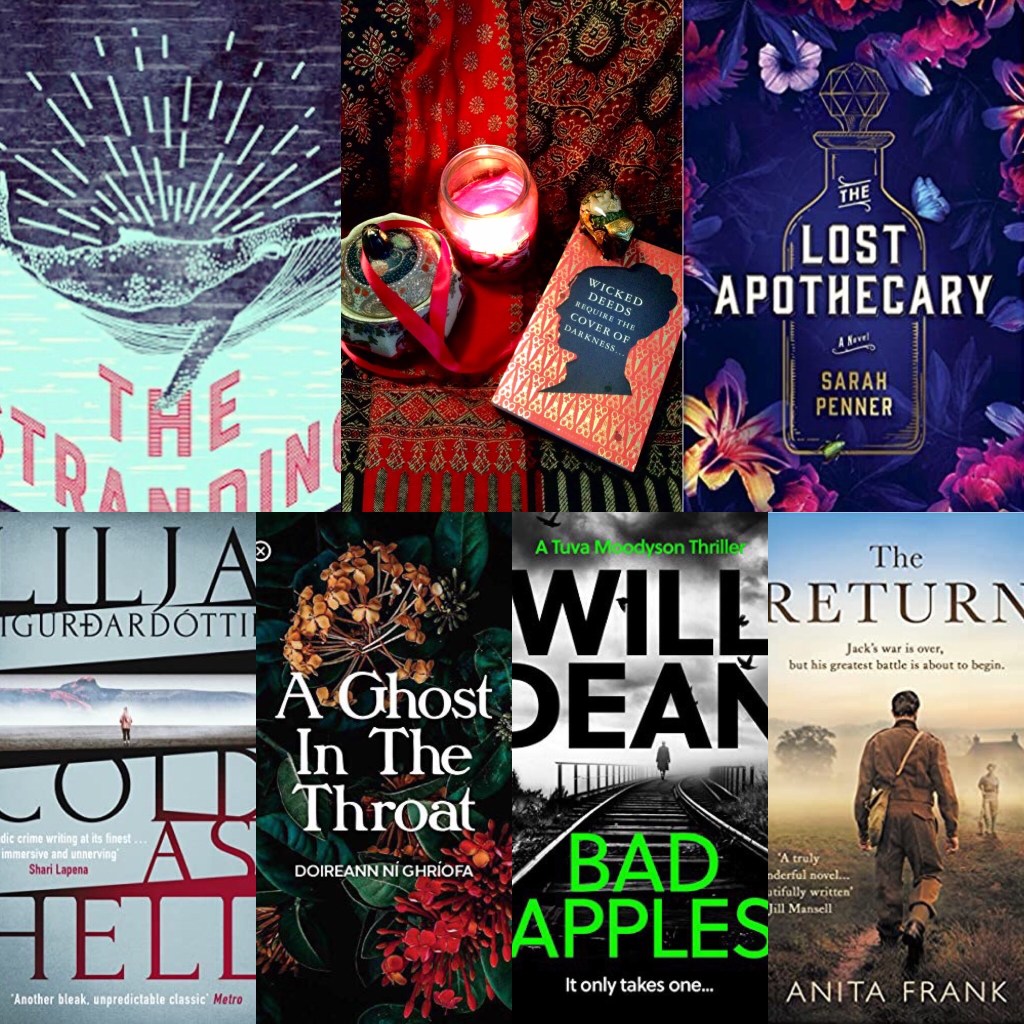
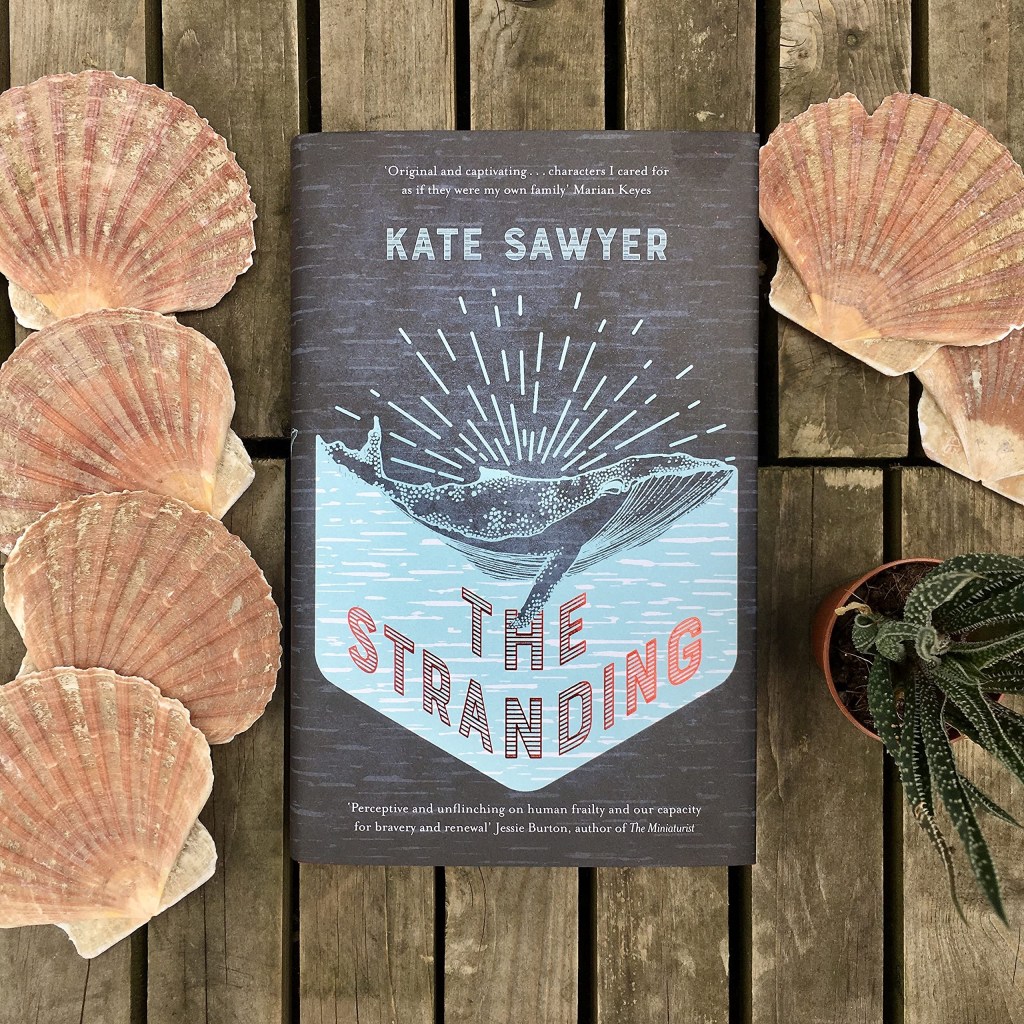
If I had to choose just one book that blew me away this year then it would be The Stranding. I was bewitched by it. It’s just so good it’s hard to believe it’s a debut novel. I know that a book is extraordinary when I finish it and feel changed in some way. I’m never sure what has happened, but there’s a tiny, imperceptible change, to the air around me, how I feel and even the way I perceive the world. The Stranding left me feeling calm, thoughtful and as if a lot of the small things worrying me didn’t really matter in the big scheme of things. I cared deeply for the characters and their grief, and strangely proud of them for what they managed to achieve. The author created an incredible sense of New Zealand and the whale that becomes Ruth’s saviour, and mother – birthing her and Nik into their new world and sustaining them. Her detailed descriptions left me fully immersed in this world, so much so that when I finished reading, it took a while to adjust back to being in Ruth’s ‘before’ and my 21st Century world. It has a unique narrative structure of two timelines: one represents ‘before’ and finishes where Ruth finds the whale; the second is ‘after’ and starts at the whale moving forwards. We don’t know what the apocalyptic event is, but it divides Ruth’s world into before and after. Nik is literally the last man on earth and their teamwork is vital if they are to survive. The Stranding might sound depressing, but it isn’t. It’s a post-apocalyptic landscape but the book celebrates the human spirit, our capacity for change, resilience and even love. It’s an incredible achievement.
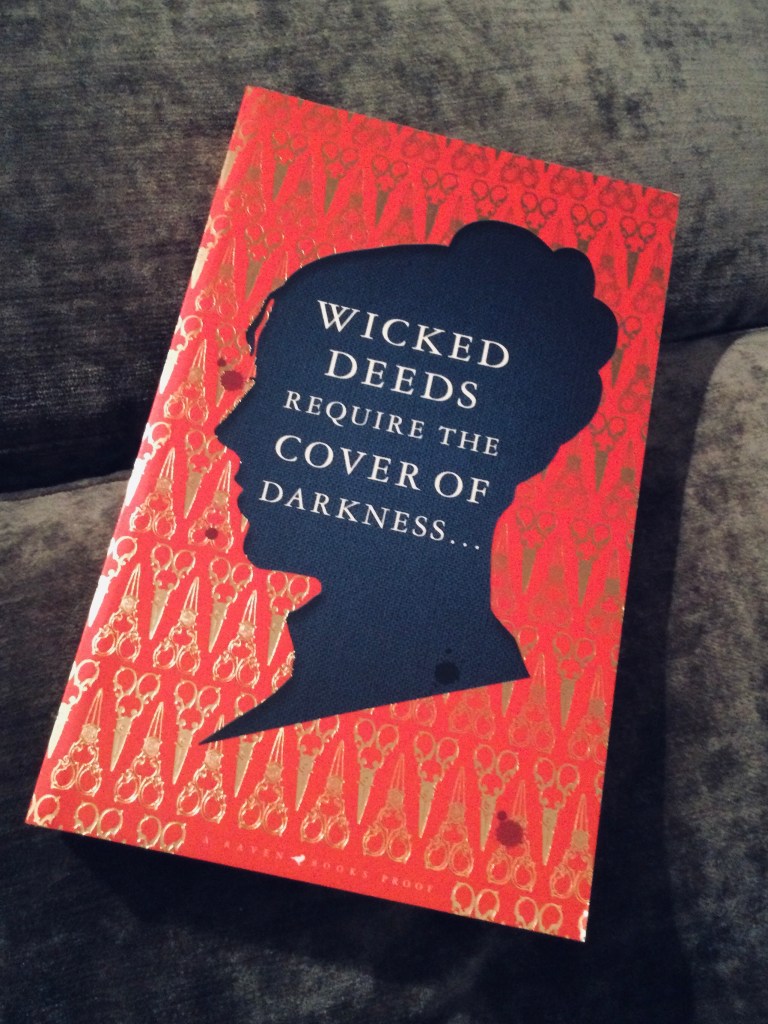
The Shape of Darkness by Laura Purcell.
I was so excited to receive a proof of this latest novel from one of my favourite authors. I love the mix of gothic horror and historical fiction that she excels in. So I came to it full of anticipation. I was hooked by the end of the first chapter and didn’t put it down. Our narrator is Miss Agnes Darken, living in Bath with her invalid mother and nephew Cedric. Agnes earns her money cutting silhouettes or ‘shades’ for people, but her art is put under threat not just by newer inventions, but by a mysterious killer stalking the people who have sat for her. Desperate for answers, Agnes visits a spirit medium – an albino child named Pearl who lives with her sister Miss Myrtle West, and an invalid father. Agnes and Pearl try to conjure the spirit of one of her murdered sitters, so they can find the killer. Unfortunately, they have underestimated the power of what they have unleashed. This is an excellent gothic mystery, that grabbed me from the start and didn’t let go. I thought the characters were well developed and fascinating – even the ones who are no longer there! I liked that were transgressive females who had their own agency and independence. I enjoyed the author’s sense of place, the evil portents like the magpies and the build up of tension. I also liked the contrast between those living in poverty and those with a more middle class lifestyle. The supernatural elements are always spooky with Purcell, so the seances and visitations are unsettling, but so are the real life people. As the mystery deepens you won’t be able to stop reading, because you’ll have to know what’s going on. There’s a saying we use about timid people – afraid of your own shadow – and that’s what this book does, it makes us afraid of what others might see in us, and who we can become in the dark. An utterly brilliant addition to Laura Purcell’s work.
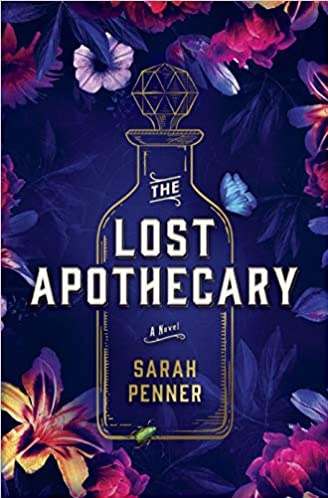
The Lost Apothecary by Sarah Penner.
Nearing her ten-year anniversary, Caroline stumbles on a secret that takes her to London on holiday and to explore. She stumbles across a man who takes tourists out mud larking and joins them, finding wandering the shoreline looking for objects in the mud, strangely relaxing. She follows their guide’s advice that she shouldn’t look for an object, but look at patterns in the mud for an absence of something. Not long after she finds a bottle, an apothecary bottle, with a crude etching of a bear. Our second narrative takes us to the depths of eighteenth-century London, where a secret apothecary shop caters to an unusual kind of clientele. Women across the city whisper of a mysterious figure named Nella who sells well-disguised poisons to use against the oppressive men in their lives. But the apothecary’s fate is jeopardized when her newest patron, a precocious twelve-year-old, makes a fatal mistake, sparking a string of consequences that echo forward through the centuries to Caroline. I thought the author conveyed both 18th and 21st Century London really well. I could imagine myself there with all the sights and smells she conjured up. I loved the description of the apothecary shop, back in its heyday and as it was when Caroline rediscovered it. The ending of Nella and Eliza’s story was unexpected, but showed the strength of female friendship and solidarity. I found myself hoping that Caroline would do the same – choose an unexpected and unknown future of her own making. This was a brilliant read, historical fiction at its best and an incredible debut from an author I’ll be watching in the future.
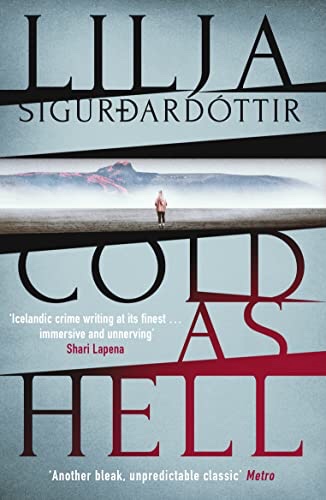
Cold as Hell by Lilja Sigurdardóttir.
I’ve had the pleasure of reading Lilja Sigurdardóttir before and this novel grabbed my attention very early on with it’s reluctant protagonist, quirky characters, and an almost lunar landscape lit up by twenty four hour daylight. Āróra is being pestered by her mother. She hasn’t heard from Āróra’s sister Īsafold for over two weeks now and she’s very worried. She wants Āróra to fly out to Iceland and find out what’s going on from Īsafold’s partner Björn and their family who are still based there. Āróra lives in the north east of England and rarely goes back to Iceland, despite being born there. She mainly travels there when Īsafold needs rescuing from Björn. The whole family have known for some time that she is suffering domestic violence, but despite several attempts to help and convince her to leave, Īsafold always returns to Björn. Āróra has given up trying to help her sister; you can’t help someone who doesn’t want to be helped. I loved the depiction of the relationship between these two sisters: the sibling rivalries; the roles of eldest and youngest; that push and pull between loving and resenting each other. Īsafold is continuously putting herself in the role of victim and even though it’s positive encouragement and support from Āróra, she will still say she’s being pushed and persecuted into leaving. I actually wondered whether this behaviour had lead to her death? Had someone become so tired of helping, only to hear her being beaten again the following week, that they’d snapped? Āróra remembers the last time Īsafold called her and she chose not to come. What if she’d said the right thing this time and her sister chose to return to England, safe and sound? In fearing her loss, Āróra stops seeing a problem and starts seeing her sister. The barrier between them melts away as she lists her regrets and acknowledges she hasn’t been the perfect sister either. But is it too late? This was a fascinating tale, from a clever author whose words can manipulate us into racing through the thrilling twists and turns, then stop us in our tracks with a moving tribute from one sister to another.
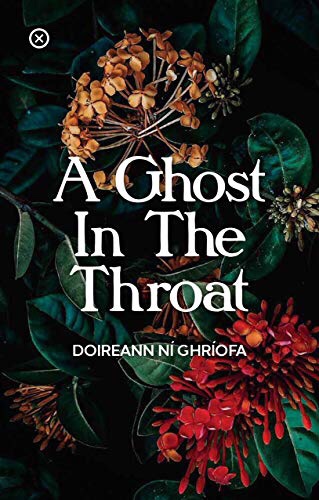
A Ghost in the Throat by Doireann Ní Ghríofa
This novel is exceptional. It’s beautiful, moving and speaks about women’s experience in such a unique, but brutally honest way. It’s an incredible piece of auto-fiction, which is half memoir and half novel but all poetry. Our narrator is a mother of three small children and she has a fascination with the Irish poem ‘Caoineadh Airt Ui Laoghaire’ where an Irish noblewoman laments the death of the her murdered husband. Such is her passionate grief, that on finding his body, she drinks handfuls of his blood and then composes the extraordinary poem. For our narrator, the poem has echoed down the centuries and is her constant companion. As she reads it aloud the poet’s voice comes to life. The author writes her own life to its rhythms and wants to discover the truth of the poem’s story. I loved how her recording of 21st Century motherhood is treated as an epic. I loved consciousness running through the book. As if her words join hundreds and thousands of others in a never ending stream of female consciousness. This isn’t just about putting your experience into the world, it’s about having a source of female wisdom to draw from whenever you need it. This is a female text and in it’s search for the meaning of women’s lives it is reassuring, it lets us know we’re not alone, but it also inspires us all to create meaning. To add our voice to the women’s wisdom, expanding that collective consciousness and making our mark.
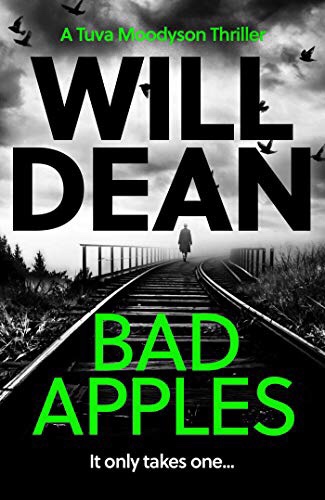
Bad Apples by Will Dean.
Wow! Will Dean does like to put his heroine in some terrifying situations. There is so much about this series that I love, then a good 20% that makes me feel a bit sick or unsettled. In the last book it was snakes that had me a bit on edge. This time? Well it’s saying something when a severed head is the most comfortable thing about one of Tuva’s investigations.We’re back in Gavrik, deep in the northern most part of Sweden and Tuva is back at the local newspaper, but has a more senior role and a new colleague to oversee in the shape of eager young newbie Sebastian. In fact, things are pretty good in Tuva’s world. This book picks you up and takes you on a fascinating and thrilling ride that builds in tension to a terrifying ending that I didn’t see coming at all. I had to stop reading at one point, because I realised I was so tense I was gritting my teeth! I’m sure the author has a hotline to my fears and this ending tapped into them perfectly. Needless to say, if I was Tuva, I’d be packing up the Hilux and leaving the hill folk to murder each other! I think the way the author depicts Tuva’s deafness is interesting. Usually Tuva uses it to her own advantage – taking her hearing aids out when she’s writing a piece means she can focus and taking them out at home means she can’t hear next door. However, it can also leave her vulnerable and the author uses it to intensify the horror element of the book, particularly towards the finale. There’s something about another person touching her hearing aids that feels so personal and also like a violation, depending on who it is. Every time I know a Tuva Moodyson book is coming, the excitement starts to build. By the time it’s in my hands I’m ready to drop all my other reading to dive in. Of course when something is so anticipated there’s also a fear about whether the book will live up to expectations. Bad Apples did not disappoint and is a fabulous addition to this excellent series.
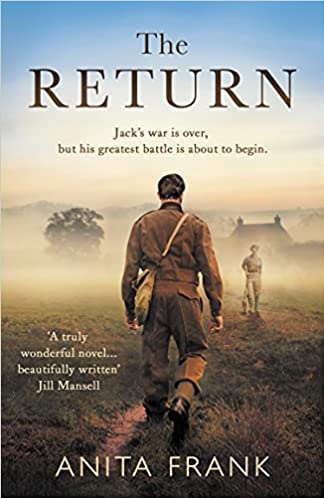
The Return by Anita Frank.
This beautiful historical love story just made it under the wire as I was compiling my Top 21 Books for 2021 and it truly deserves it’s place next to the others on the list. I was gripped by the story of Jack, who makes a very different promise to his new bride Gwen on the eve of WW2. Most soldiers are promising to see them again, to return, but Jack is quite clear. If he should survive the war, he won’t be back this way again. Gwen prays he keeps to his promise, but as they celebrate VE Day she does keep looking over her shoulder. What if he reneges on his promise? War has changed Jack and he is no longer the man who made that bargain. He wants to return and claim Gwen as his bride again, but little does he know that this could set in motion a chain of events that will leave he and Gwen fighting for what they love most. We go back and forth in time throughout the book, but begin with Jack fleeing his Newcastle on the night train, shielded by a friend who works on this south bound train. Jack is a riveter in the shipyards and lives in a terrace house with his Mum and sister Jenny, when a terrible twist of fate leads to a violent act of revenge. Stowing away on the night train, Jack plans to hop off somewhere where he can find work. So, as he walks down a country lane next morning, he finds a young woman who has fallen from her horse, but has her foot trapped in the stirrup. He hurries to help Gwen and takes her home to her family farm where she lives with her father. Jack is in luck, because it’s a busy time on the farm, and when he’s invited to stay for a home cooked meal he meets Gwen’s dad Jim. Jim asks if he would like to stay and work and Jack accepts. As Gwen talks about their daily routine and shows him his bed in the tack room, Jack thinks he may have fallen on his feet for the summer. What he doesn’t know is that Gwen is about to put him in a very difficult position and he won’t want to miss another opportunity to rescue a woman in distress. This book captures early 20th Century farming beautifully and you will be rooting for Jack all the way.
My final seven books of the year are coming on Sunday 19th December.
Recently I’ve begun to realise that one of the literary devices I love most is magic realism. For those who’ve never come across it before, or didn’t know they had, magic realism is a 20th Century style or genre where a novel’s story is mostly realistic but with magical elements that can sometimes feel out of place in the narrative. I think I became interested in this style of writing, from my favourite teenage author Fay Weldon. The Life and Loves of a She-Devil was dramatised at this point and was widely talked about in the media and at school – where any chance to see clips that would titillate were applauded. How innocent we were that, without the internet, we were reduced to TV dramas for our fix of nudity – now we can see six naked people being visually assessed in their pods at any time of day. Back in the 1990s we had to commit to storyline for a whole episode, just for a glimpse of side boob! I read all Fay Weldon’s back catalogue and became fascinated with the skilful way she mixed realistic settings with sudden supernatural, astrological or magical elements. There was an audacity to it that I loved. So, when I came to reading Like Water for Chocolate I was charmed straight away by the love story and the magical powers that Tita has, especially her ability to bake her emotions into her food.
Movie poster for the 1992 adaptation of the novel
Set in early 20th Century Mexico, we meet Tita, the youngest daughter of the family who is hopelessly in love with Pedro. Sadly, Mexican tradition dictates that older siblings marry to carry on the family name, make connections and ensure their financial future. Younger siblings are destined to be the caregiver in the family, remaining single and close to home to help their parents in their old age. Tita and Pedro are in love and Tita’s mother knows this, so what happens next seems unusually cruel. She leaves older sister Rosauro open to marriage and then schemes behind the scenes, as a result and feeling like he has no realistic chance with Tita, he marries Rosauro because then at least he will be able to stay close to his real love. It is their wedding day where we see the full structure of the novel unfold. Tita’s mother forces her to bake the wedding cake, but as she does Tita begins to cry and somehow her sadness leaches into the cake batter. As they serve the cake at the wedding, much to Tita’s surprise, the guests start to experience their own memories of lost loves. Soon the whole room is reminiscing and weeping. From the extraordinary event onwards the novel is split so that a recipe forms each chapter. We are always waiting to see what emotion will get baked or fried into each incredible Mexican recipe as Pedro and Tita circle each other, forever in unrequited love. Would they ever get a chance to be together?
Cover for the movie tie-in edition
I first read this novel when I was an impressionable twenty year old, still in love with the idea of romantic love. Now if I was asked to give advice to Tita, I’d probably say that life is way too short to spend it in such a torturous situation. Pack a bag and get a bus out of there. Build your own life. It’s not just the idea of her sister marrying Pedro, it’s watching the milestones of their life together. If Rosauro had children with him, Tita would be hurt all over again. Every day there would be a new reason to mourn what she could have had. Her reward for this sacrifice? Looking after a mother who’s becoming more infirm by the day knowing that she was the one who took away Tita’s chance of happiness and gave it to her sister. I remember reading and hoping that Pedro’s love for Tita would remain. I couldn’t bear the thought that Pedro might grow to love Rosauro over the years. I won’t ruin the ending for those who haven’t read this extraordinary book, but I will say that it’s one of the most unusual endings I have ever read. I have been known to recreate a recipe from a book, especially where recipes are an important part of the story. I’ve often done it for my book club, where we’ve eaten: chocolate cream pie while reading Kathryn Stockett’s The Help and honesty cake while reading Alice Hoffman’s The Story Sisters. Yet, I’ve never attempted one of Tita’s family recipes – perhaps because they seem so uniquely hers and enchanted by her particular brand of magic. This is a beautiful novel for those hopeless romantics or if you love to be immersed in the culture of the characters from old customs, to celebrations and their chosen foods for those occasions. This has been a book that has endured for me and still feels uniquely magical.
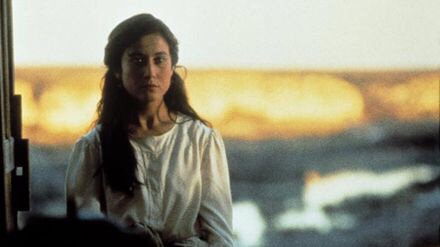
Lumi Cavazos as Tita in the 1992 film
Meet The Author.
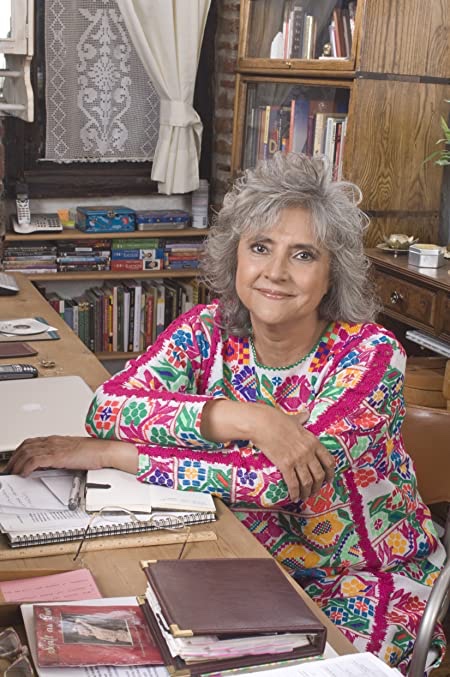
Laura Esquivel is the award-winning author of Like Water for Chocolate, which has sold over four and a half million copies around the world in 35 languages, The Law of Love, and most recently, Between Two Fires. She lives in Mexico City.
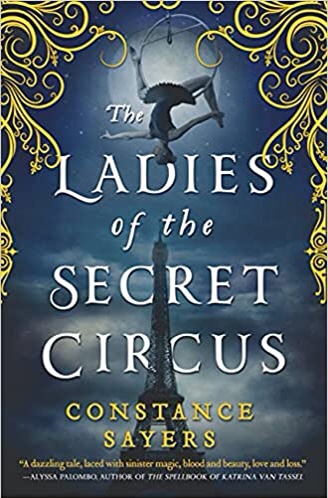
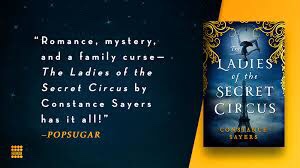
The opening of this book, where Lara enchants her own wedding dress so it’s more to her liking, showed promise for the rest of the novel. Her marriage to Todd is the next morning, but as she’s waiting for her groom some bad news arrives. His best man is local law enforcement officer Ben and he tells her that Todd can’t be found. His car is found abandoned at a bend in the road where thirty years earlier another young man disappeared without a trace. Pete was in a band with Lara’s father, who has always been affected by the loss of his friend. Surely there’s a connection? Lara’s search for answers leads them to a journal written by her great-grandmother and the tale of a secret circus, where they perform using real magic. In Belle Èpoque Paris we follow the story of Cecile Cabot, Lara’s great grandmother, the subject of one in a series of three paintings by artist Émile Giroux. Cecile’s life is bound to the circus as is her sister Esme’s, but why are they cursed in this way and is it a price that the women in the family are still paying to this day?
From Lara’s wedding day onwards, the first section of the book set in idyllic Kerrigan Falls didn’t quite have the spark of that first scene. I worried that the book might be a bit saccharine sweet for my taste. It was typical small town America, but with barely any crime or unpleasantness. Residents seemed to get along easily and everyone cared about the town’s history, it’s beautiful period buildings and stunning setting. Lara bought the local radio station, her love of music coming from her famous musician father. I didn’t quite believe how lovely the place and it’s people were and I suspected there was a darker underbelly. This was hinted at in the the disappearances of these young men, but also the strange happenings in Lara’s life that started when she was a young girl and saw an unusual looking man and woman in their field who disappeared into thin air. Schooled by mum Audrey to keep her powers under wraps, Lara is sad about how her premonitions affect people. When she hears a vaguely familiar song, lurking underneath a track on one of her dad’s albums, she plays it on her guitar. The refrain is like a nagging tooth ache, but when her father hears it he goes white. It was one of Pete’s songs and they never recorded it.
I found it sad that these powerful women were having to hide their real selves to be accepted, especially when it came to love. Audrey’s marriage to Lara’s dad was blighted by Peter’s disappearance and now Todd was gone too. I really enjoyed Lara’s relationship with Ben, who was Todd’s friend and is just as invested in knowing what happened as Lara is. They’ve grown close trying to solve the mystery, but their relationship is full of unspoken feelings and guilt. When Audrey gifts Lara with a painting of her great-grandmother, to put up in her new home, the framer recognises it as a lost painting of Giroux. They then travel to Paris to meet an expert on the painter and have it’s provenance confirmed. It’s here that the story really took off for me, because the sense of place is wonderful and there’s a real momentum in their search for answers. The circus is the perfect antidote to the sweetness of Kerrigan Falls. I won’t ruin your discovery of this world, but it is truly fascinating, macabre, beautiful, magical and horrifying all at the same time. I was hooked by the scene the author was describing and fascinated by Lara’s family history. The small details, such as the circus only appearing to those with a personal invitation which bled if it was torn, were quite disturbing. The magic practiced there had parallels with Lara’s skills – simple tabby cats turned into ferocious big cats. There were surprises I hadn’t expected and Cecile’s final diaries are the vital first hand account of the circus’s history, as well as her own love story. I was immersed in this magical tale and didn’t really want it to end.
Published on 9th November 2021 by Redhook.
Meet The Author.
Constance Sayers is the author of A Witch in Time. A finalist for Alternating Current‘s 2016 Luminaire Award for Best Prose, her short stories have appeared in Souvenir and Amazing Graces: Yet Another Collection of Fiction by Washington Area Women as well as The Sky is a Free Country. Her short fiction has been nominated for the Pushcart Prize and Best of the Net. She received an MA in English from George Mason University. She lives outside of Washington D.C. Like her character in The Ladies of the Secret Circus, for many years, she was the host of a radio show from midnight to six.
This was an incredibly charming book, so hopeful and uplifting. I’d read The Last of the Moon Girls so had some idea what to expect, but I actually preferred this tale of two women crossing paths in Paris. Soline works in the family’s bridal salon where a little bit of magic is sewn into the fabric. This magic gives each bride the promise of a long and happy relationship. However, there have been so many losses in WW2 that Soline’s hope has dampened and she has lost her faith in magic. She packs away her work in boxes, determined to forget the life she once enjoyed. We then join another woman, decades on from WW2. Rory has always wanted to open a gallery and she leases the same building that houses those pre-war wedding memories. Rory is also grieving, and knows the importance of remembrance, so when she finds a box with a vintage wedding dress and a pile of letters inside, she wants to return them to their rightful owner. The wedding dress looks unworn, but so much care and attention has gone into making it, Rory feels that the owner would want it returned. When she finds Soline, an unexpected friendship develops and the two women find a lot of parallels in their life stories. Is it possible that magic is still at work and these two women were destined to meet? Could Rory be the one to clarify and put right something that happened forty years ago?
I never seem to tire of these time slip novels and I really did enjoy this tale, with its little bit of magic thrown in. I am a believer that we shouldn’t fully lose that sense of magic we had as children, especially at this time of year. I think it’s only by keeping that childlike wonder and hope that we get to fully experience life. Here Soline has been closed off to magic, it’s been too painful to hope. However, when she and Rory cross paths and that faith is reignited, she starts to fully participate in life again and enjoy it. It was an easy read from the start so I looked forward to getting a mug of tea and my favourite chocolate slipping into their cozy world, even though there was some sadness in store for the our main characters. Soline and Rory do dominate and they are the most three-dimensional characters- none of the secondary characters have much depth. However, these were very personal stories and I don’t think the book would have felt as intimate if we’d had too many other viewpoints. Soline’s story follows her work in the bridal salon and her love for Anson, who has a difficult relationship with his father. As the Nazi’s start to infiltrate France, Soline escapes to America and it is her belief that Anson has died at their hands which knocks all the hope and joy out of Soline. She can’t continue with her work and watch others in love, fulfilling their destinies with each other.
Rory (short for Aurora) has a boyfriend called Hux. He’s a doctor and goes out to South Sudan to work with Doctors Without Borders, but is unfortunately captured. Rory doesn’t know where he is or even if he’s still alive. This is the experience that Rory and Soline have in common, they’re separated from their loves and have had to face up to the fact they may be dead – that might be preferable to thinking about what they could be going through instead. Both are very strong women, however, Rory is still entwined with her mother in a very unhealthy dynamic. She hasn’t realised she can simply walk away from her. The abuse is psychological and it is devastating to a young woman still growing up and finding out who she is. You might find that, like me, you’ll be mentally yelling at Rory to stand up to her mother. I just knew that if she finally did, it would be epic. It would be the catalyst to change her entire life. Rory might have the key to Soline’s wartime memories, but she has a lot to learn from Soline who has grown wise through loss and age. The book has a dusting of magic, but it’s subtle and more akin to perception than anything else. I often let people know how easy it can be to be manipulated into thinking someone’s a psychic by showing them how much I can intuit from them walking into a room and sitting down. As counsellors we do this all the time, reading people’s subtle cues in their body language and the words they choose to express themselves. It can be quite easy to work out why a client has come for counselling before they even open their mouths. So, the magic here isn’t overdone and is more about the sense of destiny and heightened perception we can get: in a house, when we walk into a party, or seeing a couple arguing in the DIY store. It’s also about that magical coincidence of these two women crossing paths, when they are perhaps the only person who could help and understand the other. I like this message that it’s not just romantic destiny that happens in lives. Soul mates are not always our romantic counterpart and I loved the friendship between these two. I think Soline helps Rory stand up and claim who she is.
Yes the ending is a bit schmaltzy, but I expected that and it didn’t ruin the book as some sugary endings can tip the book into being too saccharin and off-putting, I think this story has enough complication to keep the reader’s interest and something for everyone with the mix of historical period (although the 1980s doesn’t feel like history to me), dual narration, family strife and the mystery to solve. The tone of the novel is so relaxing and gentle, even when dealing with complex emotions. All in all, an intelligent story of love, loss, and friendship that I really enjoyed.
Published by Lake Union Publishing 1st October 2021
Meet the Author.
After twelve years in the jewelry business, Barbara Davis left the corporate world to pursue her lifelong dream of becoming a writer. She was born in Fair Lawn, New Jersey, but grew up and attended school in Florida. When she’s not writing she’s an avid reader, foodie, and lover of music, a rabid football fan, and a devoted Florida Gator. She also likes to travel with her husband/sweetheart, who over the years has learned much more about publishing and the craft of writing than he ever wanted to know.
Her most recent novel, THE KEEPER OF HAPPY ENDINGS, released October 1, 2021. She is currently working on her eighth novel, and professes to be just as delighted with her job as she was when she set her first word on the page!
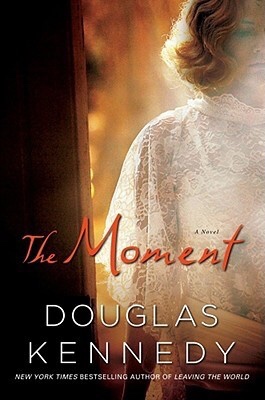
A secret from the past can change your life for ever. The Moment is a heart-breaking love story set in Cold War Berlin by the author of The Pursuit of Happiness and Five Days.
Thomas Nesbitt is a divorced American writer living a very private life in Maine. Until, one wintry morning, his solitude is disrupted by the arrival of a package postmarked Berlin.
But what is more unsettling is the name accompanying the return address on the package: Petra Dussmann. For she is the woman with whom Thomas had an intense love affair twenty-five years before in a divided Berlin, where people lived fearfully under the shadows of the Cold War.
And so Thomas is forced to grapple with a past he has always kept hidden. For Petra Dussman was a refugee from the police state of East Germany. And her tragic secrets were to re-write both their destinies.
I found myself strangely captivated by this tale of lost love in a divided Germany. I worked my way through all of Douglas Kennedy’s books around five years ago after enjoying A Special Relationship and while they’re all great reads something about this one stayed with me. Perhaps because I’ve lost someone I loved. Or because I once had a short, intense love affair that, given different timing, could have blossomed into a something beautiful. We have probably all had similar experiences, where the timing was just wrong. However, when added to this restrictive Cold War environment, love becomes so precious by contrast. Like a flower blooming through the cracks in a pavement.
This story unfolds like a set of Russian dolls. When the package arrives with Petra’s return address it sends Thomas back to the account he wrote of his time in West Germany. We read his narrative and are drawn into this impossible love story that left him with so many unanswered questions. When he opens the package, he finds Petra’s account of that time and we are lost in the same story, but from a different viewpoint. What he discovers is shocking and illuminating, but will it answer his questions? More importantly, will it confirm and deepen the love he felt for Petra and how will that change his life moving forward? There are so many things I love about Kennedy’s writing and this book showcases them beautifully. The historical research and detail feel genuine. He takes a period of history beyond the facts, to show how this world affected the people who lived through it’s events – not just physically, but emotionally too. The stark, grey, concrete world of East Germany and it’s citizen’s fear of the Stasi, become real through Petra’s story. There is so little to look forward to and an absence of joy here. I remembered back to my younger years and the pictures on the news as the Berlin Wall came down. Now I understood their euphoria and their need to physically take hold of this symbol of oppression and dash it to the ground with their bare hands.
Kennedy also has the uncanny ability to write convincingly from the viewpoint of both men and women. This was a skill first seen in his novel A Special Relationship, where he wrote from the viewpoint of a new mother whose husband thought she was suffering from post-natal depression. Here again he writes from the viewpoint of a woman and mother, torn between romantic and motherly love. Even, as we wonder which of these loves will win out in the end, we realise neither choice can ever truly fulfil Petra without the other. There are no winners, whichever choice is made. The only outcome here is betrayal.
As we come back to Thomas’s current circumstances, further enlightened by the stories we have experienced, we see how the psychological damage of childhood and our youth can colour the rest of our lives. It seems we spend the latter part of our adult lives trying to untangle, then heal these wounds, as we recognise how much damage these traumatic experiences have had on our choices – in Thomas’s case, during his failed relationship with his wife. I also think Kennedy is telling us something very important about stories. Thomas’s story would have made a novel all on it’s own, but by adding Petra’s version we start to see something of the ‘whole’ story. Our version of events, even factual ones, are just that; our version. It’s just one piece of a patchwork quilt of perspectives. Even our own version can change as we get older, gain experience and develop new ways of understanding. This novel is unusual, because it’s a love story for people who don’t read love stories. Or a novel about Cold War Germany, for people who understand the importance of love. For me, it’s that unusual, niche, mixture that made it stay with me.
Meet The Author
Douglas Kennedy is the author of ten novels, including the international bestseller Leaving the World and The Moment. His work has been translated into 22 languages, and in 2007 he received the French decoration of Chevalier de l’Ordre des Arts et des Lettres. Born in Manhattan, he now has homes in London, Paris, and Maine, and has two children.