Posted in Books of the Year 2021

My Top 21 Of 2021! Part Three.

Here’s the final instalment of my favourite reads of 2021. As I look back it’s been a brilliant reading year and I always think the past year can’t be topped but I have a huge list of anticipated reads for next year already! I’m spending the next fortnight doing the same things as everyone else – stuffing my face, drinking sherry, seeing family and watching far too much television. However, I’m also doing something that’s probably peculiar to book bloggers. I’m reading what I like for a fortnight. This might not sound like much, but it really is wonderful to read purely for pleasure. I enjoy what I do, but between blog tours and my NetGalley list (I’m greedy with both) I’m often reading to a schedule. So it’s nice to be able to go with my mood or my gut for a little while. I have reached a couple of milestones with the blog: I have reached ten thousand views this year and two hundred subscribers. I never imagined that I would have two readers of my writing, never mind two hundred. It’s amazing what a year’s hard work can do. Over the holiday I hope to evaluate how I’ve been working on the blog, maybe leading to some changes and hopefully time to share my personal writing too. I wish you all a very Happy Christmas with your loved ones and I look forward to writing for you all again in 2022.

The Snow and the Works on the Northern Line by Ruth Thomas.
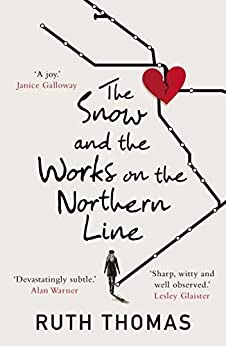
This is what I would call a quiet book; gentle, subtle even, but so charming and witty. I remember posting that only three weeks into January I was already in love with a new literary heroine. I absolutely adored Sybil and felt so at home in her company, that I just kept reading all day. I finished at 11pm and was bereft, because I wouldn’t be with Sybil any more. Yes, this is what happens to avid readers. We fall head over heels with a character, can’t put the book down, then suffer from withdrawal. All day I was grumpy and reluctant to start a new book. Sybil’s life is puttering along nicely. She has a job she enjoys at a London museum – Royal Institute of Prehistoric Studies (RIPS). She has Simon, her boyfriend and ardent baker of bread from obscure grains. Her quiet life is turned upside down when she, quite literally, bumps into an old nemesis from university, Helene Hanson. Sybil and Simon are ice skating, when they first spot Sybil’s old university lecturer. Sybil doesn’t want to say hello, after all Helene stole some ideas from her dissertation, then put them into her own research on the Beaker people. They’re very unsteady on ice and end up careering into Helene’s group, in Sybil’s case ending up in hospital from a head injury. Only weeks later, Helene has stolen Sybil’s boyfriend and taken a huge interest in Sybil’s workplace. Now RIPS will be selling her Beakerware (TM) in the gift shop and welcome her onto their committee. Sybil’s mum suggests a mature exchange of views, but Sybil hates confrontation. She’s not felt herself since her injury and we see how she thinks in the fragmentary structure the author uses. Sybil has to find a way to expose Helene Hanson as a fraud. I felt a deep connection with Sybil. She’s offbeat, quirky and has a dark sense of humour the comes through beautifully into the narration. A simply lovely read that I’ll happily pick up again and again.

Before My Actual Heart Breaks by Tish Delaney

This was one of those novels that didn’t connect with me at first. In fact if it hadn’t been for a blog tour I might have stopped reading. Yet part way in I was suddenly won over by the intelligent, spirited and strangely beautiful Mary Rattigan. She is a character who will stay with me, especially the childhood Mary and her battles with Mammy – a woman who I hated so strongly it was as if she was a real person! Mammy is a hypocrite, playing the perfect Catholic matriarch on the surface – always loving or feeding her sons, cooking perfect chicken roasts and getting out the best china when the priest comes for tea. It broke my heart when she left Mary without tea, then next morning as the boys all lined up for their lunch boxes Mary was given an empty one. I felt so emotional for this girl, who doesn’t expect any better. The Rattigan’s life on her parent’s farm in Ireland is at odds with Mary’s romantic and wild nature. She wants to fly out of her dirty and dangerous surroundings, leaving ‘The Troubles’ behind her. However, life has a way of grounding us and Mary is no exception. In a life punctuated by marriage, five children, bombings, a long peace process and endless cups of tea Mary learns that a ten minute decision can change a whole life. These lessons are hard won and she’s missed a hundred chances to make a change. Can she ever find the courage to ask for the love she deserves, but has never had? Mary’s need to be loved is so raw she can’t even articulate it. How can she understand or recognise love when she’s never felt it? She has been told she’s nothing, so nothing is what she deserves. Delaney writes about love and the realities of marriage with such wisdom and tenderness that I was rooting for Mary Rattigan till the very last page.

Wish You Were Here by Jodi Picoult.
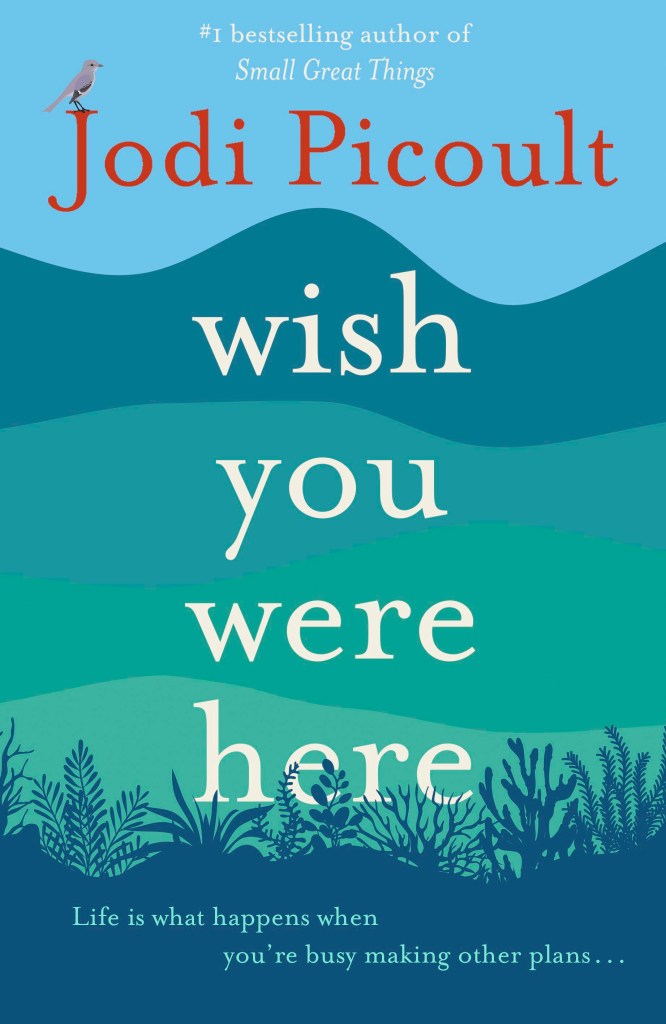
Jodi Picoult has been one of my favourite writers since Plain Truth and I was so happy to see that this was a real return to form and is the first novel addressing the COVID pandemic I’ve read. Diana and her boyfriend Finn live in New York City, he is a doctor and she works at an auction house for fine art, on the verge of promotion to become an Art Specialist at Sotheby’s. She’s trying to acquire a Toulouse Lautrec painting that hangs in the bedroom of a Japanese artist -loosely based on Yoko Ono – when everything changes. Finn and Diana have a very set life plan and part of that was an upcoming visit to the Galápagos Islands. However there are rumours in the medical community of a strange new virus in Wuhan, China. It seems like SARS in that it’s a respiratory virus and requires huge amounts of resources to keep patients alive. Diana’s boyfriend feels torn, as a doctor he’s worried and thinks they should be preparing, but the president is on TV telling everyone it’s no worse than flu. What’s the truth? Finn tells Diana to go on holiday and she gets to the islands just as their borders are closed. She has to throw herself upon the kindness of strangers – a hotel cleaner called Abuela, her granddaughter Beatrice, and Gabriel her tour guide father. He is the perfect person to be stranded with because he knows every corner of the island and has no work, so he can show Diana some of the sights she would never have seen. The seals lazily basking on the jetty, the sea turtles and their nests buried in sand, lush vegetation and lizards lying around intertwined. I could see and taste the salt air. Everything is vivid and almost hyper-real. Then came the twist!! Oh my goodness I did not expect that at all. This was brilliantly done and shocked me. The world Diana has at the beginning, becomes subsumed by the pandemic. It’s a structure that echoes how our own lives have been interrupted and changed forever. There are people who went into the pandemic with a job that no longer exists. People have lost friends, family members and partners. The pandemic has changed people, they are looking at how they live and making changes. I could understand Diana’s decision at the end of the novel. When you’ve been through something momentous you change, and part of that is re-evaluating life and choosing what makes you happy. It’s trying to recapture hope. Why should things ‘go back to normal’; I want this pandemic to mean something and I want things to get better. Diana takes that decision for herself and I found that both brave and uplifting.

The Watchers by A.M. Shine.
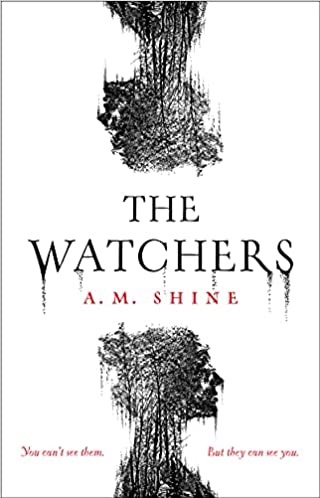
I don’t often read horror novels, mainly sticking to Stephen King and gothic historical fiction, so this is a departure from my usual reading and it was exhilarating. Mina, is a young woman living alone in urban Ireland, and has lost her mother. Now without family – except one sister who appears to phone once a month or so, just to feel disappointed – she is largely a loner. Her loves are sketching, red wine and her friend Peter who is a buyer and seller of various things and often pays Mina cash to deliver his client’s purchases. On this occasion she’s to take a golden parrot to a remote part of Galway. Having broken down on the edge of a forest, Mina realises the likelihood of anyone passing by and helping are probably minimal. So, with the parrot in tow, she sets off walking in the hope of finding a remote farmhouse with a phone that works. Once in the forest Mina realises her mistake, it seems bigger than from outside and the light is fading fast. She feels unnerved, although she can’t say why, then she hears a scream that isn’t human, but isn’t like any animal she’s ever heard either. As the shadows gather she is beginning to panic, when suddenly she sees a woman beckoning her and urging her to hurry. She’s standing by a building and although it seems odd, Mina decides it’s better than staying out here to be found by whatever made that terrible noise. As they hurry inside and the door slams behind them, the screams grow in intensity and volume, almost as if they were right on her heels. As her eyes adjust to the light she finds herself in a room with a bright overhead light. One wall is made entirely of glass, but Mina can’t see beyond it and into the forest because it is now pitch dark. Yet she has the creeping sensation of being watched through the glass, almost like she is the parrot in a glass cage. A younger man and woman are huddled together in one space, so there are now four people in this room, captive and watched by many eyes. Their keepers are the Watchers, dreadful creatures that live in burrows by day, but come out at night to hunt and to watch these captive humans. If caught out after dark, the door will be locked, and you will be the Watcher’s unlucky prey. Who are these creatures and why do they keep watching? This was unsettling, because of the creatures and the dynamics of the small group trying to survive. The author has an uncanny ability to instil dread in his readers, all the way to an incredible and terrifying end.

The Beresford by Will Carver.
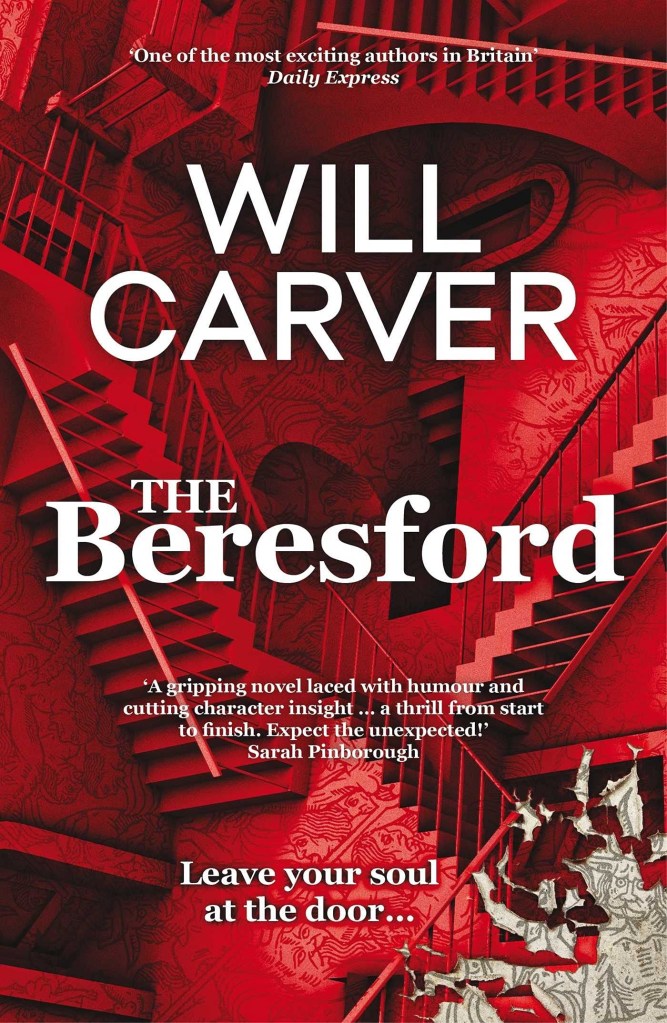
This was a brilliantly funny and clever book that had me smiling from the first page at the audacity of this clever and creative author. This was my very first Will Carver novel and I came away wondering where he’d been my whole life. This novel had such a darkly, delicious opening set at The Beresford, an old forbidding looking building in the city. In my imagination this conjured up the Gothic looking Dakota Building, where John Lennon lived and was killed back in 1981. Inside The Beresford are a number of apartments, bigger and better appointed than you would expect for the money. They even have large roll top baths that are the perfect size to dismember and dissolve a body. Resident Abe finds that as soon as one tenant ‘leaves’ another will ring the doorbell in sixty seconds. The building is presided over by a lovely old lady called Mrs May, who starts every day the same way. By brewing a coffee while the taps run, then enjoying a bath with bubbles, followed by eggs with her cold coffee. She has a routine, and is found at the same time every day pruning the roses in the front garden. As any fan of the film The Ladykiller’s knows, you should never underestimate sweet looking, little old ladies. She knows everything that happens at the Beresford because the same thing happens over again – some people leave and some people just disappear. Occasionally they stay. For a price. I loved the dark humour, the unexpected murders and the characters who pass through – sometimes in seconds! Maybe one day the author will venture further into the other side of The Beresford? The side Abe calls ‘the bad side’. If so, I’ll be waiting – but I’ll probably stick to reading in the daylight hours.

The Spirit Engineer by A.J. West
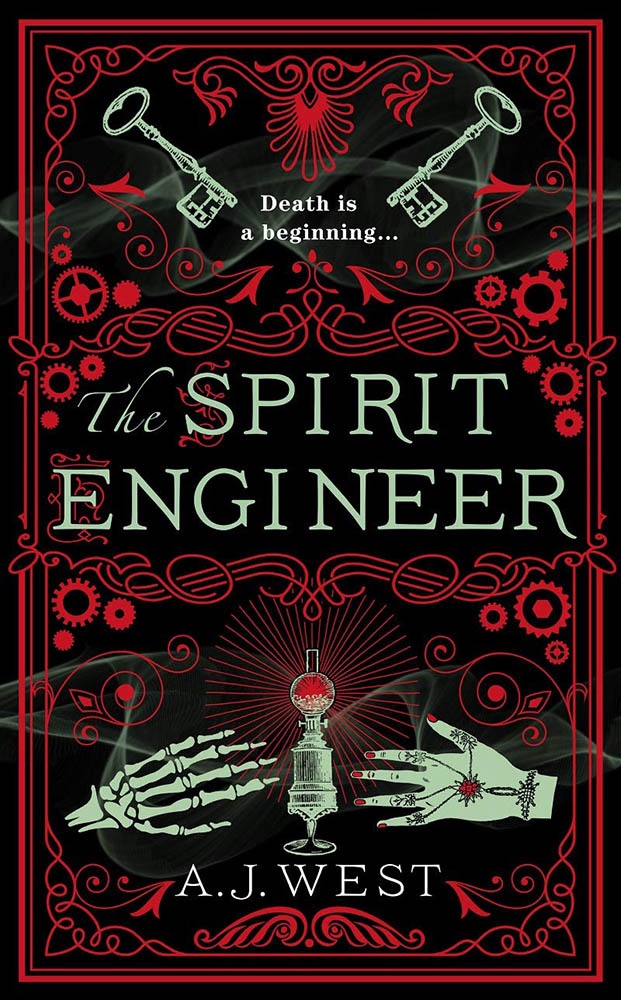
I’d anticipated this book for a couple of months having been told by my Squad Pod ladies that it was going to be a fantastic read. It certainly was, and even more than that, it was surprising too. Our setting is the city of Belfast, the Titanic sinking is still fresh in everyone’s minds. It’s especially fresh at Professor William Crawford’s house since his brother-in-law Arthur was on the ship. Crawford is our narrator and he introduces us to his happy, but chaotic household as the novel opens. He is a man of science, working at an institute both furthering scientific enquiry and teaching the next generation of engineers. He’s a sceptic, so when he finds out that his wife is visiting a medium and has been trying to contact her brother Arthur, he’s shocked and angry. There’s no question that this girl is a fraud, stringing his wife along with a show put on with the help of her shady family. Yet, the couple have lost their son Robert too and Crawford’s grief is overwhelming. So when he hears Robert’s voice calling to him alongside an angry, vengeful Arthur who blames Crawford for his death, a small crack grows in his scepticism. What if he were to apply his scientific rigour to to this girl medium’s powers? If he could prove a link exists between this world and the next he could make a name for himself, not just in Ireland but all over the world. What I loved more than anything was the author’s ability to surprise, because as we neared the end I had no idea how the book and Crawford’s investigations would conclude. The theme of dishonesty is there right from the start, in Arthur’s reasons for being on Titanic, to the hidden note from their old maid who left in a hurry, and Elizabeth’s absence at weekly church meetings. By the end I felt triple bluffed, but couldn’t help smiling at how clever the author had been. As many of our characters find out, when it comes to being dishonest, the person we deceive most often is ourselves.

The Lighthouse Witches by C.J. Cooke
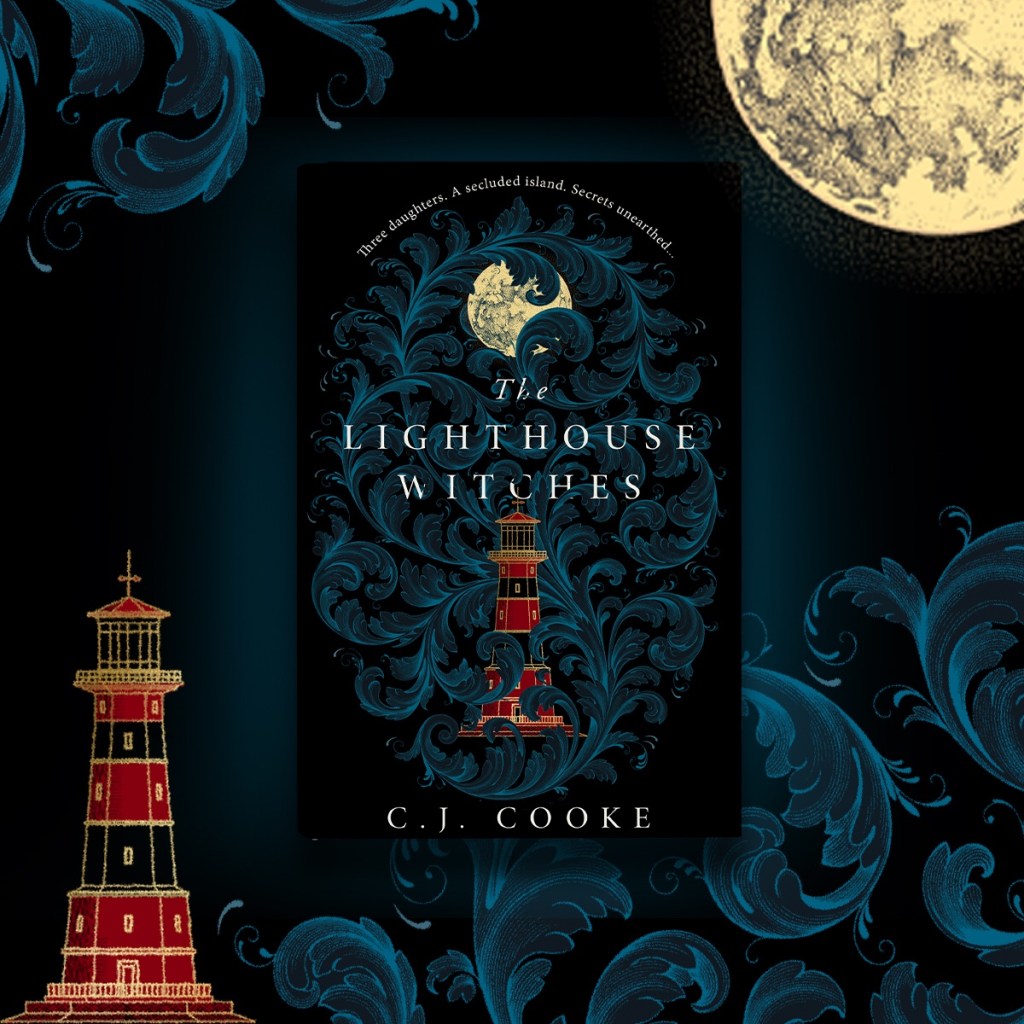
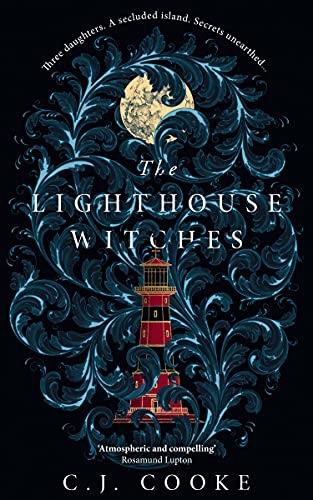
Just look at that stunning cover! Lighthouses have been a recurring motif in this year’s reading and this cover was particularly beautiful. This is a fascinating tale from the writer of last year’s The Nesting. Set on a remote Scottish Island, and with a hint of The Wicker Man about it, Liv and her three daughters arrive at a lighthouse named The Longing. We’re not sure what they’re driving away from, but Liv jumped at an opportunity to paint a mural in the lighthouse. An eccentric millionaire wants to use the lonely spot as a writing retreat. Liv and her three girls set up home in the bothy next door, but then some unusual happenings leave them wondering exactly what’s going on in this isolated place. There are some really unsettling scares for the family: a baby floating in flood water that turns out to be a doll; a child’s skinny arm creeping out from behind Liv’s paint supplies; a near naked and very dirty little boy appearing at the bothy, with no one on the island interested when he disappears again. Liv wonders why the lighthouse is named The Longing and finds a whole history involving the island’s women and the 16th – 17th Century witch hunts sanctioned by King James IV. Throw in some time travel and this is a brilliant combination of the supernatural and the historical. I enjoyed it immensely and would happily read it again.

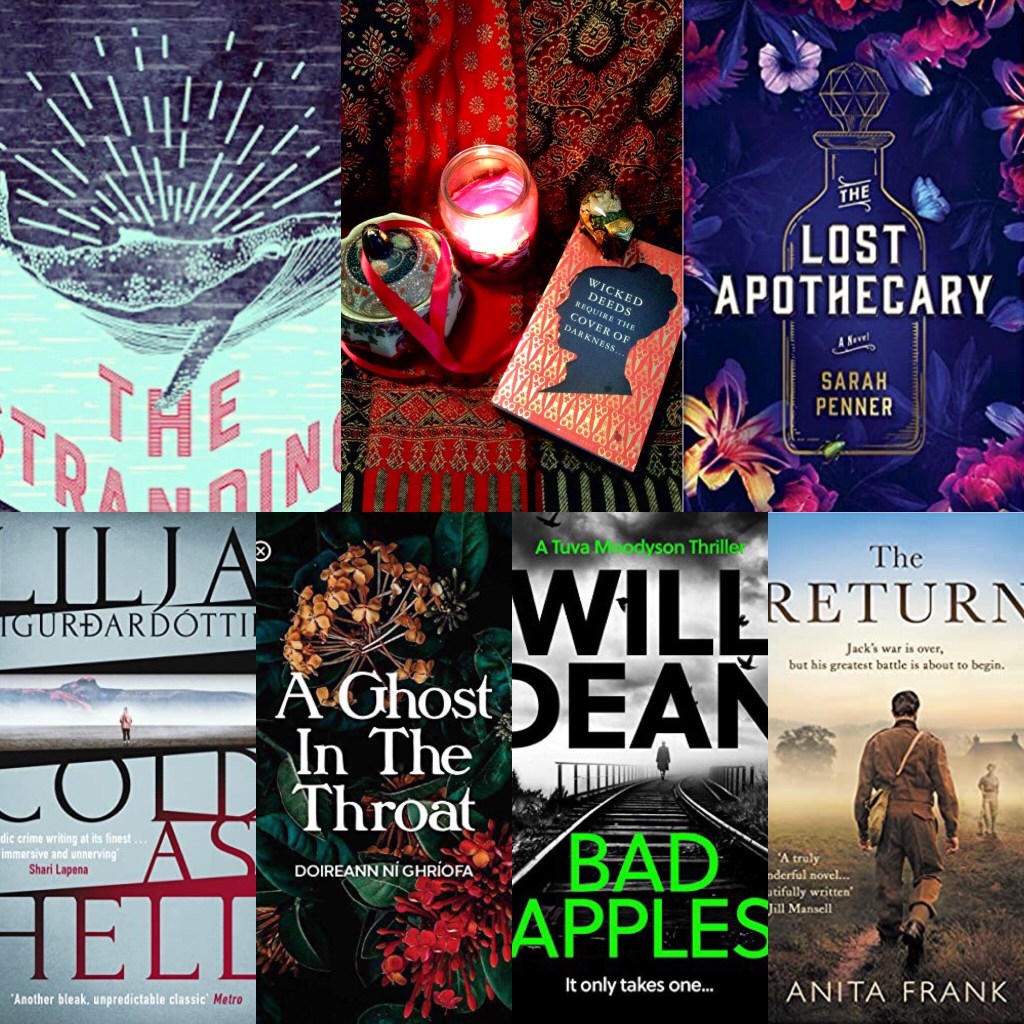
So that’s my 21 favourite books and even now I’m wishing I could add a further three of four to the mix! Keep an eye on the blog over Christmas and New Year for some great recommendations for 2022 which is already looking like a bumper reading year. Happy Christmas and a peaceful, safe New Year. ❤️📚
Posted in Books of the Year 2021

My Top 21 of 2021! Part Two.

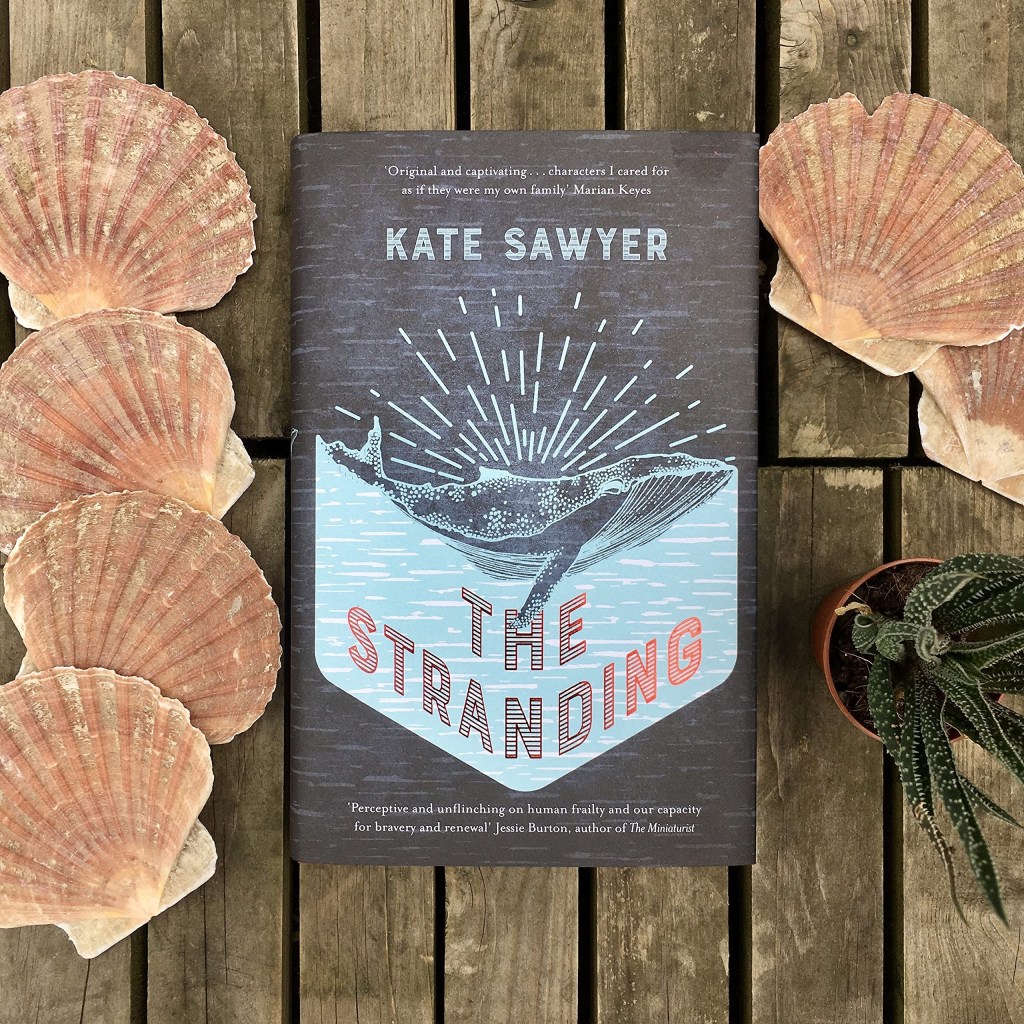
The Stranding by Kate Sawyer.

If I had to choose just one book that blew me away this year then it would be The Stranding. I was bewitched by it. It’s just so good it’s hard to believe it’s a debut novel. I know that a book is extraordinary when I finish it and feel changed in some way. I’m never sure what has happened, but there’s a tiny, imperceptible change, to the air around me, how I feel and even the way I perceive the world. The Stranding left me feeling calm, thoughtful and as if a lot of the small things worrying me didn’t really matter in the big scheme of things. I cared deeply for the characters and their grief, and strangely proud of them for what they managed to achieve. The author created an incredible sense of New Zealand and the whale that becomes Ruth’s saviour, and mother – birthing her and Nik into their new world and sustaining them. Her detailed descriptions left me fully immersed in this world, so much so that when I finished reading, it took a while to adjust back to being in Ruth’s ‘before’ and my 21st Century world. It has a unique narrative structure of two timelines: one represents ‘before’ and finishes where Ruth finds the whale; the second is ‘after’ and starts at the whale moving forwards. We don’t know what the apocalyptic event is, but it divides Ruth’s world into before and after. Nik is literally the last man on earth and their teamwork is vital if they are to survive. The Stranding might sound depressing, but it isn’t. It’s a post-apocalyptic landscape but the book celebrates the human spirit, our capacity for change, resilience and even love. It’s an incredible achievement.

The Shape of Darkness by Laura Purcell.

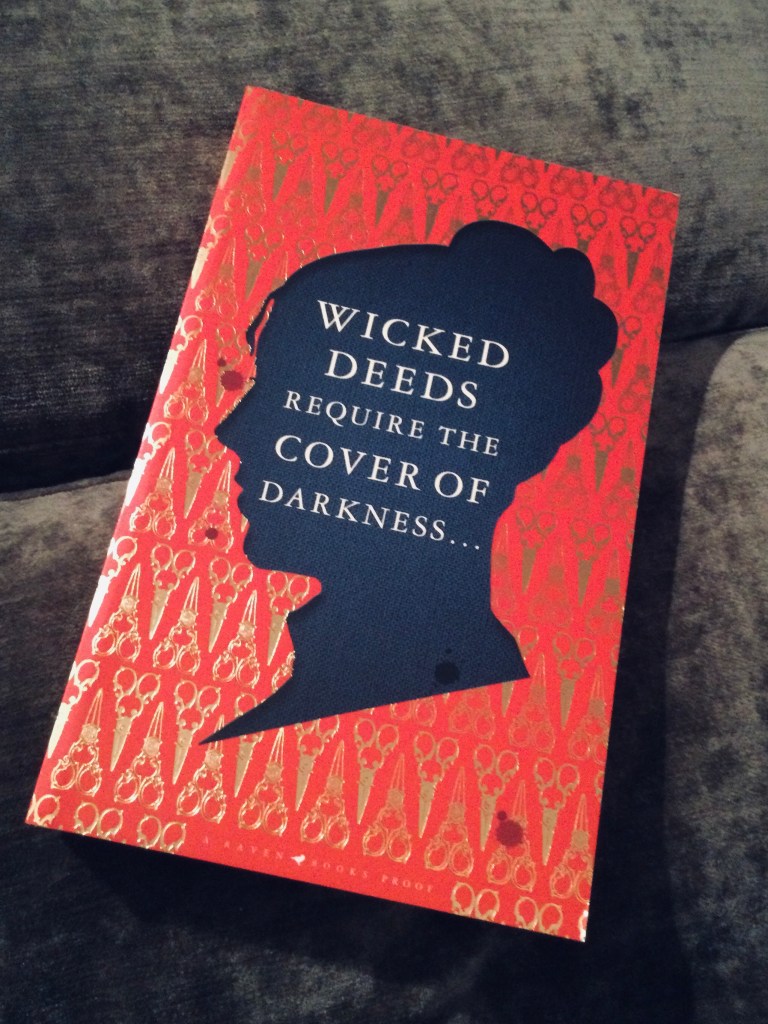
I was so excited to receive a proof of this latest novel from one of my favourite authors. I love the mix of gothic horror and historical fiction that she excels in. So I came to it full of anticipation. I was hooked by the end of the first chapter and didn’t put it down. Our narrator is Miss Agnes Darken, living in Bath with her invalid mother and nephew Cedric. Agnes earns her money cutting silhouettes or ‘shades’ for people, but her art is put under threat not just by newer inventions, but by a mysterious killer stalking the people who have sat for her. Desperate for answers, Agnes visits a spirit medium – an albino child named Pearl who lives with her sister Miss Myrtle West, and an invalid father. Agnes and Pearl try to conjure the spirit of one of her murdered sitters, so they can find the killer. Unfortunately, they have underestimated the power of what they have unleashed. This is an excellent gothic mystery, that grabbed me from the start and didn’t let go. I thought the characters were well developed and fascinating – even the ones who are no longer there! I liked that were transgressive females who had their own agency and independence. I enjoyed the author’s sense of place, the evil portents like the magpies and the build up of tension. I also liked the contrast between those living in poverty and those with a more middle class lifestyle. The supernatural elements are always spooky with Purcell, so the seances and visitations are unsettling, but so are the real life people. As the mystery deepens you won’t be able to stop reading, because you’ll have to know what’s going on. There’s a saying we use about timid people – afraid of your own shadow – and that’s what this book does, it makes us afraid of what others might see in us, and who we can become in the dark. An utterly brilliant addition to Laura Purcell’s work.

The Lost Apothecary by Sarah Penner.

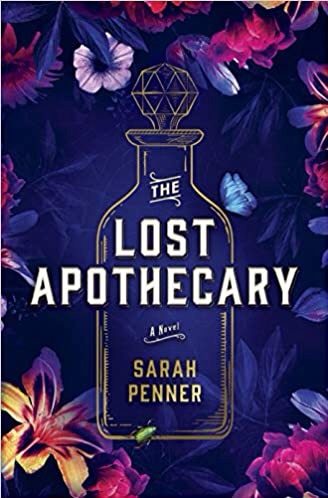
Nearing her ten-year anniversary, Caroline stumbles on a secret that takes her to London on holiday and to explore. She stumbles across a man who takes tourists out mud larking and joins them, finding wandering the shoreline looking for objects in the mud, strangely relaxing. She follows their guide’s advice that she shouldn’t look for an object, but look at patterns in the mud for an absence of something. Not long after she finds a bottle, an apothecary bottle, with a crude etching of a bear. Our second narrative takes us to the depths of eighteenth-century London, where a secret apothecary shop caters to an unusual kind of clientele. Women across the city whisper of a mysterious figure named Nella who sells well-disguised poisons to use against the oppressive men in their lives. But the apothecary’s fate is jeopardized when her newest patron, a precocious twelve-year-old, makes a fatal mistake, sparking a string of consequences that echo forward through the centuries to Caroline. I thought the author conveyed both 18th and 21st Century London really well. I could imagine myself there with all the sights and smells she conjured up. I loved the description of the apothecary shop, back in its heyday and as it was when Caroline rediscovered it. The ending of Nella and Eliza’s story was unexpected, but showed the strength of female friendship and solidarity. I found myself hoping that Caroline would do the same – choose an unexpected and unknown future of her own making. This was a brilliant read, historical fiction at its best and an incredible debut from an author I’ll be watching in the future.

Cold as Hell by Lilja Sigurdardóttir.

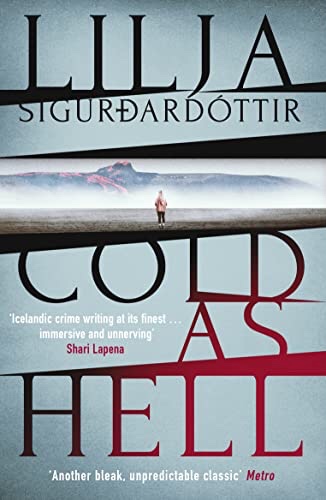
I’ve had the pleasure of reading Lilja Sigurdardóttir before and this novel grabbed my attention very early on with it’s reluctant protagonist, quirky characters, and an almost lunar landscape lit up by twenty four hour daylight. Āróra is being pestered by her mother. She hasn’t heard from Āróra’s sister Īsafold for over two weeks now and she’s very worried. She wants Āróra to fly out to Iceland and find out what’s going on from Īsafold’s partner Björn and their family who are still based there. Āróra lives in the north east of England and rarely goes back to Iceland, despite being born there. She mainly travels there when Īsafold needs rescuing from Björn. The whole family have known for some time that she is suffering domestic violence, but despite several attempts to help and convince her to leave, Īsafold always returns to Björn. Āróra has given up trying to help her sister; you can’t help someone who doesn’t want to be helped. I loved the depiction of the relationship between these two sisters: the sibling rivalries; the roles of eldest and youngest; that push and pull between loving and resenting each other. Īsafold is continuously putting herself in the role of victim and even though it’s positive encouragement and support from Āróra, she will still say she’s being pushed and persecuted into leaving. I actually wondered whether this behaviour had lead to her death? Had someone become so tired of helping, only to hear her being beaten again the following week, that they’d snapped? Āróra remembers the last time Īsafold called her and she chose not to come. What if she’d said the right thing this time and her sister chose to return to England, safe and sound? In fearing her loss, Āróra stops seeing a problem and starts seeing her sister. The barrier between them melts away as she lists her regrets and acknowledges she hasn’t been the perfect sister either. But is it too late? This was a fascinating tale, from a clever author whose words can manipulate us into racing through the thrilling twists and turns, then stop us in our tracks with a moving tribute from one sister to another.

A Ghost in the Throat by Doireann Ní Ghríofa

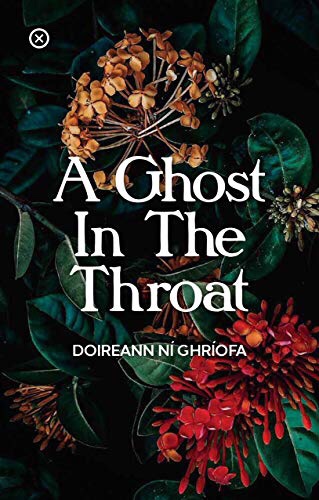
This novel is exceptional. It’s beautiful, moving and speaks about women’s experience in such a unique, but brutally honest way. It’s an incredible piece of auto-fiction, which is half memoir and half novel but all poetry. Our narrator is a mother of three small children and she has a fascination with the Irish poem ‘Caoineadh Airt Ui Laoghaire’ where an Irish noblewoman laments the death of the her murdered husband. Such is her passionate grief, that on finding his body, she drinks handfuls of his blood and then composes the extraordinary poem. For our narrator, the poem has echoed down the centuries and is her constant companion. As she reads it aloud the poet’s voice comes to life. The author writes her own life to its rhythms and wants to discover the truth of the poem’s story. I loved how her recording of 21st Century motherhood is treated as an epic. I loved consciousness running through the book. As if her words join hundreds and thousands of others in a never ending stream of female consciousness. This isn’t just about putting your experience into the world, it’s about having a source of female wisdom to draw from whenever you need it. This is a female text and in it’s search for the meaning of women’s lives it is reassuring, it lets us know we’re not alone, but it also inspires us all to create meaning. To add our voice to the women’s wisdom, expanding that collective consciousness and making our mark.

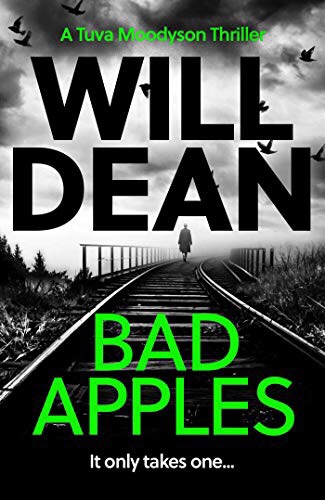
Bad Apples by Will Dean.

Wow! Will Dean does like to put his heroine in some terrifying situations. There is so much about this series that I love, then a good 20% that makes me feel a bit sick or unsettled. In the last book it was snakes that had me a bit on edge. This time? Well it’s saying something when a severed head is the most comfortable thing about one of Tuva’s investigations.We’re back in Gavrik, deep in the northern most part of Sweden and Tuva is back at the local newspaper, but has a more senior role and a new colleague to oversee in the shape of eager young newbie Sebastian. In fact, things are pretty good in Tuva’s world. This book picks you up and takes you on a fascinating and thrilling ride that builds in tension to a terrifying ending that I didn’t see coming at all. I had to stop reading at one point, because I realised I was so tense I was gritting my teeth! I’m sure the author has a hotline to my fears and this ending tapped into them perfectly. Needless to say, if I was Tuva, I’d be packing up the Hilux and leaving the hill folk to murder each other! I think the way the author depicts Tuva’s deafness is interesting. Usually Tuva uses it to her own advantage – taking her hearing aids out when she’s writing a piece means she can focus and taking them out at home means she can’t hear next door. However, it can also leave her vulnerable and the author uses it to intensify the horror element of the book, particularly towards the finale. There’s something about another person touching her hearing aids that feels so personal and also like a violation, depending on who it is. Every time I know a Tuva Moodyson book is coming, the excitement starts to build. By the time it’s in my hands I’m ready to drop all my other reading to dive in. Of course when something is so anticipated there’s also a fear about whether the book will live up to expectations. Bad Apples did not disappoint and is a fabulous addition to this excellent series.

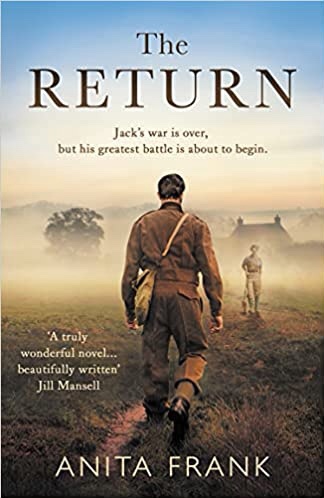
The Return by Anita Frank.

This beautiful historical love story just made it under the wire as I was compiling my Top 21 Books for 2021 and it truly deserves it’s place next to the others on the list. I was gripped by the story of Jack, who makes a very different promise to his new bride Gwen on the eve of WW2. Most soldiers are promising to see them again, to return, but Jack is quite clear. If he should survive the war, he won’t be back this way again. Gwen prays he keeps to his promise, but as they celebrate VE Day she does keep looking over her shoulder. What if he reneges on his promise? War has changed Jack and he is no longer the man who made that bargain. He wants to return and claim Gwen as his bride again, but little does he know that this could set in motion a chain of events that will leave he and Gwen fighting for what they love most. We go back and forth in time throughout the book, but begin with Jack fleeing his Newcastle on the night train, shielded by a friend who works on this south bound train. Jack is a riveter in the shipyards and lives in a terrace house with his Mum and sister Jenny, when a terrible twist of fate leads to a violent act of revenge. Stowing away on the night train, Jack plans to hop off somewhere where he can find work. So, as he walks down a country lane next morning, he finds a young woman who has fallen from her horse, but has her foot trapped in the stirrup. He hurries to help Gwen and takes her home to her family farm where she lives with her father. Jack is in luck, because it’s a busy time on the farm, and when he’s invited to stay for a home cooked meal he meets Gwen’s dad Jim. Jim asks if he would like to stay and work and Jack accepts. As Gwen talks about their daily routine and shows him his bed in the tack room, Jack thinks he may have fallen on his feet for the summer. What he doesn’t know is that Gwen is about to put him in a very difficult position and he won’t want to miss another opportunity to rescue a woman in distress. This book captures early 20th Century farming beautifully and you will be rooting for Jack all the way.

My final seven books of the year are coming on Sunday 19th December.

Posted in Sunday Spotlight

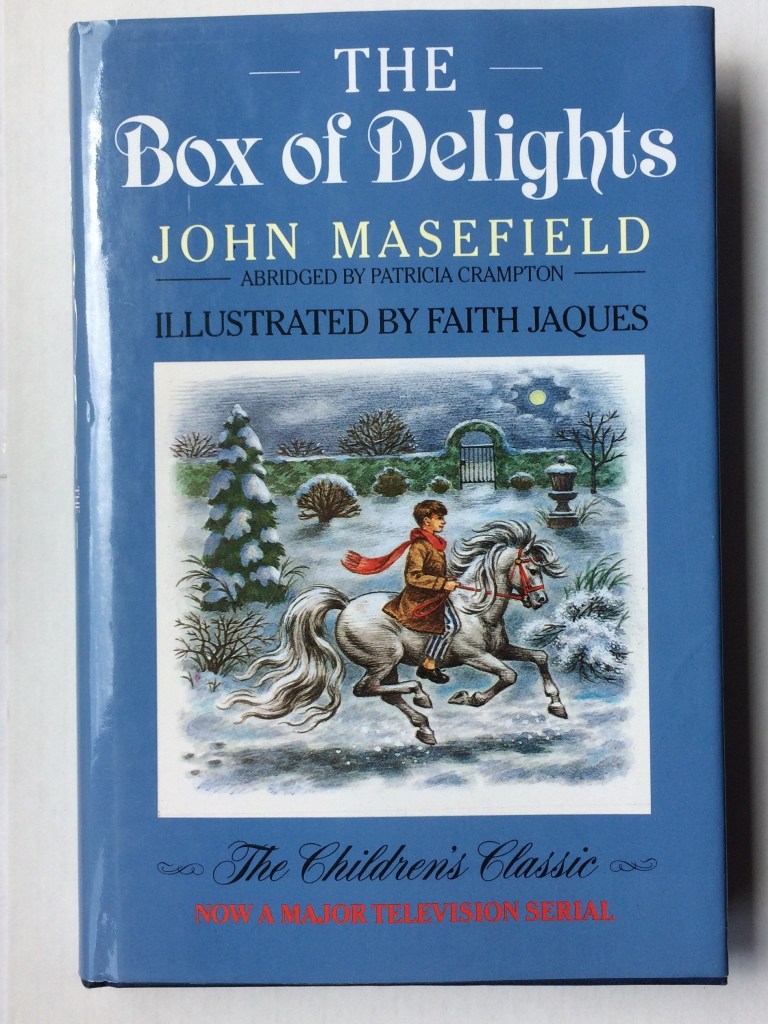
The Box of Delights by John Masefield.

“Christmas ought to be brought up to date, Maria said. It ought to have gangsters, and aeroplanes and a lot of automatic pistols.”
– John Masefield, The Box Of Delights

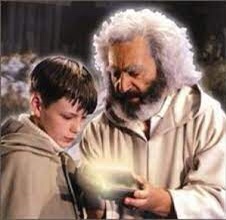
My Christmas fascination with this particular book may owe more to the BBC adaptation, broadcast in the run up to Christmas in the Sunday teatime slot, than it does to the book. Although I do still have a copy, one I bought with a gift token I’d won at school for trying hard, sometime in the mid 1980s. I read the book after the series aired and was captivated by this strange tale of wolves, clergymen, gangsters and Herne the Hunter. I think it captured my imagination because this was Christmas, but not the Christian version of events. This tale owes more to pagan winter festivals, fairy folk and ancient magic. I have always felt there’s something magical and transformative about Christmas Eve. I’ve never celebrated Halloween, we belonged to a restrictive church that frowned upon any sort of occult meddling, so we had to go to ‘Light Night’ instead. Instead of the magical witching hour, I felt that anything could happen on Christmas Eve. Before our swap to a ‘happy clappy church’ I’d been brought up Catholic. For me there was nothing like the excitement of being woken up late at night, bundled into the car and travelling to Midnight Mass in the frosty cold when others were in bed. I felt like a nocturnal creature, up and about just as rabbits and badgers were popping up from their burrows and sniffing the night air. My brother and I would press our faces up against our windows, looking up into the sky as far up as we could, just in case we saw Father Christmas. Miraculously, he would always have been when we arrived home again. We loved seeing everyone’s Christmas lights on and landscapes turned a glittery white with frost. I had a sense that the veil between this world and others was very thin at this time of year. That there was still magic afoot in the world and I might see something mystical and strange, much like Kay does in this novel as he travels home by train for the holidays.

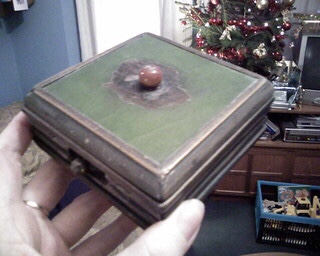
The magic box

In fact Kay’s adventure starts as soon as he sets out on his homeward journey by steam train. Kay thinks he hears wolves, but that’s impossible. He does meet an old Punch and Judy man though, who inevitably draws him into an adventure.

“And now, Master Harker, of Seekings,’ the old man said, ‘now that the Wolves are Running, as you will have seen, perhaps you would do something to stop their Bite?”

The BBC adaptation

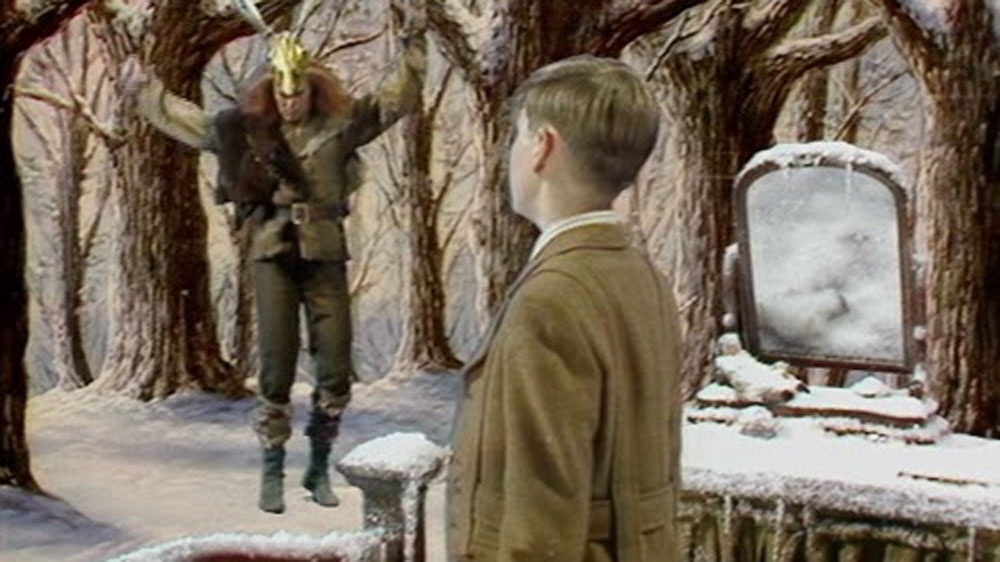
The wolves he speaks of are not the howling ones outside. The wolves are Abner Brown and his dastardly crew of henchmen. They’re after a magic box that the old man uses to go small (shrink) or go swift (travel), and which he now gives to Kay so he can keep it safe. This box sets Kay off on marvellous adventures and although I don’t remember it all, there are parts that have stuck with me. I remembered a mouse who enters Kay’s room via tiny archway in the skirting board. As Kay shrinks to avoid Brown’s henchmen, he finds himself having to navigate the ‘rapids’ in a paper boat and then disappears for a while after finding a fairy door. He’s welcomed into a fairy gathering, attended by the King and Queen of the fairies. He’s not completely alone in his adventures either and new friend Maria is a plucky little character who wants the exciting Christmas quoted above. She’s incredibly posh, cut from the same cloth as the ‘boy’s own’ heroes and has an excellent line in slang.

‘They know better than to try that game on me. I’ve been expelled from three and the headmistresses still swoon when they hear my name breathed. I’m Maria Jones, I am: somewhat talked of in school circles, if you take the trouble to enquire.’

Such intrepid characters are needed to foil the plans of Abner Brown and his men, who seemed truly evil when I first saw them. What I loved though was that sense of ancient magic – ‘I do date from pagan times’ – mixed with the public school language and sensibility. There’s a sense of Kay’s quest turning him into a man or at least trying it on for size. It’s hilarious when he adopts an important tone and asks the family servant if she knows how to make him a posset. There’s also the wonderful vocabulary that sounds like it’s come from a Roald Dahl novel, with words like splendiferous, scrobbled and purple pim. This truly is a little magic box of a novel, with richly painted scenes of nature and fairies as well as unnerving moments like the boy trapped behind a waterfall. The best thing is that every time I think about this book a huge wave of Christmassy nostalgia washes over me.

Kay meeting Herne the Hunter
Posted in Netgalley, Publisher Proof

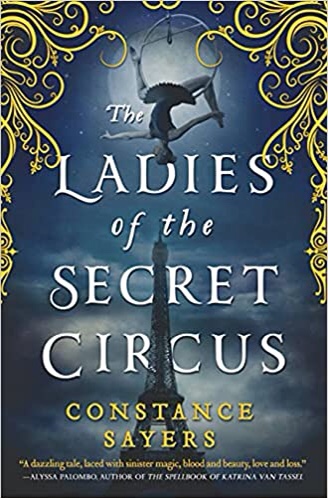
The Ladies of the Secret Circus by Constance Sayers.

The opening of this book, where Lara enchants her own wedding dress so it’s more to her liking, showed promise for the rest of the novel. Her marriage to Todd is the next morning, but as she’s waiting for her groom some bad news arrives. His best man is local law enforcement officer Ben and he tells her that Todd can’t be found. His car is found abandoned at a bend in the road where thirty years earlier another young man disappeared without a trace. Pete was in a band with Lara’s father, who has always been affected by the loss of his friend. Surely there’s a connection? Lara’s search for answers leads them to a journal written by her great-grandmother and the tale of a secret circus, where they perform using real magic. In Belle Èpoque Paris we follow the story of Cecile Cabot, Lara’s great grandmother, the subject of one in a series of three paintings by artist Émile Giroux. Cecile’s life is bound to the circus as is her sister Esme’s, but why are they cursed in this way and is it a price that the women in the family are still paying to this day?

From Lara’s wedding day onwards, the first section of the book set in idyllic Kerrigan Falls didn’t quite have the spark of that first scene. I worried that the book might be a bit saccharine sweet for my taste. It was typical small town America, but with barely any crime or unpleasantness. Residents seemed to get along easily and everyone cared about the town’s history, it’s beautiful period buildings and stunning setting. Lara bought the local radio station, her love of music coming from her famous musician father. I didn’t quite believe how lovely the place and it’s people were and I suspected there was a darker underbelly. This was hinted at in the the disappearances of these young men, but also the strange happenings in Lara’s life that started when she was a young girl and saw an unusual looking man and woman in their field who disappeared into thin air. Schooled by mum Audrey to keep her powers under wraps, Lara is sad about how her premonitions affect people. When she hears a vaguely familiar song, lurking underneath a track on one of her dad’s albums, she plays it on her guitar. The refrain is like a nagging tooth ache, but when her father hears it he goes white. It was one of Pete’s songs and they never recorded it.

I found it sad that these powerful women were having to hide their real selves to be accepted, especially when it came to love. Audrey’s marriage to Lara’s dad was blighted by Peter’s disappearance and now Todd was gone too. I really enjoyed Lara’s relationship with Ben, who was Todd’s friend and is just as invested in knowing what happened as Lara is. They’ve grown close trying to solve the mystery, but their relationship is full of unspoken feelings and guilt. When Audrey gifts Lara with a painting of her great-grandmother, to put up in her new home, the framer recognises it as a lost painting of Giroux. They then travel to Paris to meet an expert on the painter and have it’s provenance confirmed. It’s here that the story really took off for me, because the sense of place is wonderful and there’s a real momentum in their search for answers. The circus is the perfect antidote to the sweetness of Kerrigan Falls. I won’t ruin your discovery of this world, but it is truly fascinating, macabre, beautiful, magical and horrifying all at the same time. I was hooked by the scene the author was describing and fascinated by Lara’s family history. The small details, such as the circus only appearing to those with a personal invitation which bled if it was torn, were quite disturbing. The magic practiced there had parallels with Lara’s skills – simple tabby cats turned into ferocious big cats. There were surprises I hadn’t expected and Cecile’s final diaries are the vital first hand account of the circus’s history, as well as her own love story. I was immersed in this magical tale and didn’t really want it to end.

Published on 9th November 2021 by Redhook.

Meet The Author.

Constance Sayers is the author of A Witch in Time. A finalist for Alternating Current‘s 2016 Luminaire Award for Best Prose, her short stories have appeared in Souvenir and Amazing Graces: Yet Another Collection of Fiction by Washington Area Women as well as The Sky is a Free Country. Her short fiction has been nominated for the Pushcart Prize and Best of the Net. She received an MA in English from George Mason University. She lives outside of Washington D.C. Like her character in The Ladies of the Secret Circus, for many years, she was the host of a radio show from midnight to six.

Posted in Netgalley

The Keeper of Happy Endings by Barbara Davis.

This was an incredibly charming book, so hopeful and uplifting. I’d read The Last of the Moon Girls so had some idea what to expect, but I actually preferred this tale of two women crossing paths in Paris. Soline works in the family’s bridal salon where a little bit of magic is sewn into the fabric. This magic gives each bride the promise of a long and happy relationship. However, there have been so many losses in WW2 that Soline’s hope has dampened and she has lost her faith in magic. She packs away her work in boxes, determined to forget the life she once enjoyed. We then join another woman, decades on from WW2. Rory has always wanted to open a gallery and she leases the same building that houses those pre-war wedding memories. Rory is also grieving, and knows the importance of remembrance, so when she finds a box with a vintage wedding dress and a pile of letters inside, she wants to return them to their rightful owner. The wedding dress looks unworn, but so much care and attention has gone into making it, Rory feels that the owner would want it returned. When she finds Soline, an unexpected friendship develops and the two women find a lot of parallels in their life stories. Is it possible that magic is still at work and these two women were destined to meet? Could Rory be the one to clarify and put right something that happened forty years ago?

I never seem to tire of these time slip novels and I really did enjoy this tale, with its little bit of magic thrown in. I am a believer that we shouldn’t fully lose that sense of magic we had as children, especially at this time of year. I think it’s only by keeping that childlike wonder and hope that we get to fully experience life. Here Soline has been closed off to magic, it’s been too painful to hope. However, when she and Rory cross paths and that faith is reignited, she starts to fully participate in life again and enjoy it. It was an easy read from the start so I looked forward to getting a mug of tea and my favourite chocolate slipping into their cozy world, even though there was some sadness in store for the our main characters. Soline and Rory do dominate and they are the most three-dimensional characters- none of the secondary characters have much depth. However, these were very personal stories and I don’t think the book would have felt as intimate if we’d had too many other viewpoints. Soline’s story follows her work in the bridal salon and her love for Anson, who has a difficult relationship with his father. As the Nazi’s start to infiltrate France, Soline escapes to America and it is her belief that Anson has died at their hands which knocks all the hope and joy out of Soline. She can’t continue with her work and watch others in love, fulfilling their destinies with each other.

Rory (short for Aurora) has a boyfriend called Hux. He’s a doctor and goes out to South Sudan to work with Doctors Without Borders, but is unfortunately captured. Rory doesn’t know where he is or even if he’s still alive. This is the experience that Rory and Soline have in common, they’re separated from their loves and have had to face up to the fact they may be dead – that might be preferable to thinking about what they could be going through instead. Both are very strong women, however, Rory is still entwined with her mother in a very unhealthy dynamic. She hasn’t realised she can simply walk away from her. The abuse is psychological and it is devastating to a young woman still growing up and finding out who she is. You might find that, like me, you’ll be mentally yelling at Rory to stand up to her mother. I just knew that if she finally did, it would be epic. It would be the catalyst to change her entire life. Rory might have the key to Soline’s wartime memories, but she has a lot to learn from Soline who has grown wise through loss and age. The book has a dusting of magic, but it’s subtle and more akin to perception than anything else. I often let people know how easy it can be to be manipulated into thinking someone’s a psychic by showing them how much I can intuit from them walking into a room and sitting down. As counsellors we do this all the time, reading people’s subtle cues in their body language and the words they choose to express themselves. It can be quite easy to work out why a client has come for counselling before they even open their mouths. So, the magic here isn’t overdone and is more about the sense of destiny and heightened perception we can get: in a house, when we walk into a party, or seeing a couple arguing in the DIY store. It’s also about that magical coincidence of these two women crossing paths, when they are perhaps the only person who could help and understand the other. I like this message that it’s not just romantic destiny that happens in lives. Soul mates are not always our romantic counterpart and I loved the friendship between these two. I think Soline helps Rory stand up and claim who she is.

Yes the ending is a bit schmaltzy, but I expected that and it didn’t ruin the book as some sugary endings can tip the book into being too saccharin and off-putting, I think this story has enough complication to keep the reader’s interest and something for everyone with the mix of historical period (although the 1980s doesn’t feel like history to me), dual narration, family strife and the mystery to solve. The tone of the novel is so relaxing and gentle, even when dealing with complex emotions. All in all, an intelligent story of love, loss, and friendship that I really enjoyed.

Published by Lake Union Publishing 1st October 2021

Meet the Author.


After twelve years in the jewelry business, Barbara Davis left the corporate world to pursue her lifelong dream of becoming a writer. She was born in Fair Lawn, New Jersey, but grew up and attended school in Florida. When she’s not writing she’s an avid reader, foodie, and lover of music, a rabid football fan, and a devoted Florida Gator. She also likes to travel with her husband/sweetheart, who over the years has learned much more about publishing and the craft of writing than he ever wanted to know.

Her most recent novel, THE KEEPER OF HAPPY ENDINGS, released October 1, 2021. She is currently working on her eighth novel, and professes to be just as delighted with her job as she was when she set her first word on the page!

For more about Barbara and her books, please visit her website at: http://www.barbaradavis-author.com, or find her on social media: Facebook: https://www.facebook.com/barbaradavisauthor OR on Twitter: @bdavisauthor.

Posted in Rachels Random Resources

The Room in the Attic by Louise Douglas

As we turn into autumn, there’s less lounging in the garden with my book and a cold flask of squash and more snuggling by the log burner with a hot chocolate and a book. For some reason, that cosiness and the darker evenings draw me towards haunted or magical stories. So I was keen to read this time slip story full of ghostly goings on. In 1903 we visit All Hallows’ Asylum on Dartmoor and Nurse Emma Everdene has a new charge to look after, away from the usual inmates in an attic room. A mother and young daughter are found by a fisherman, the woman completely unconscious from a blow to the head. While she is transferred to one of the best private rooms and remains in a coma, her traumatised daughter is left in the care of Nurse Everdene. The little girl is clearly shocked and exhausted, so a room is made up with a single bed and a rocking chair near the fire so she can be monitored. She is completely mute, so the nurse doesn’t pressure her but makes sure she is warm, dry and fed. For comfort she gives her a small toy rabbit that once belonged to her son Herbert, who died when he was small.

In 1993 we meet two boys sent to All Hallows’, which is now a boarding school. Lewis is coping with grief after losing his mother and in an attempt to express himself has started dressing as a Goth. His Dad has quickly married again, and his stepmother clearly wants Lewis out of the way. She reports on how difficult he is and manipulates his father into thinking boarding school is his best option. Once there, Lewis is shorn of his Goth persona and is feeling very vulnerable, especially when he has to share room just under the attic with another boy, Isak. Isak, he finds out, is also an outcast and he gives Lewis some tips on surviving the school. They also share an interest in a nurse who was buried outside the consecrated ground of the churchyard ninety years before. What does this have to do with the abandoned room above them on the attic floor, containing only a rocking chair and a single bed? A rocking chair that the two boys can hear rocking in the middle of the night, thumping against the floorboard, as if someone is sitting in it.

It’s hard not to feel for Lewis, as he ends up with all his armour taken away from him. Without his Goth gear he’s just a boy with ears that stick out a bit too much. Luckily he finds another outsider to be with in Isak, although at first we don’t know why he is so ostracised. Emma Everdene is also fascinating and because I hate the practice of burying people outside of consecrated ground I really wanted to keep reading to find out why. The journey she takes in life is incredible, elevating herself to becoming a nurse, from very little in monetary and status terms. I also found her very resilient, having come through the deaths of both her husband and her son. I liked how her nursing manual showed working women supporting other women in their journey. When it is found in the library in 1993 the dedications show that it was passed from woman to woman, possibly because books were out of reach for women in poverty. The author also makes the point that many women were in the asylum for little more than thinking differently, or being in the way of their husband’s next conquest. Thalia is an example of a woman who has pushed the boundaries for someone of her class and gender. Staff talk about her cutting her hair short like a man and habitually wearing trousers, not to mention being a suffragette.

Emma sniffed. ‘And why shouldn’t she do those things if that’s what she wants to do? Because by doing so she causes embarrassment to her family? Because they’re hoping to marry her off to some chinless wonder with more money than manhood, some… some milksop who would be humiliated to stand beside a woman who shone more brightly than he?’

I found her father’s request that she be punished severely much more chilling than whatever was going on in the room upstairs. Emma talks about the asylum as a last resort for men who want to control and silence their women. The thought of all these people falling victim to early 20th Century asylum ‘treatments’ is terrible. It really hits home when Lewis finds iron fitments on the floor and wall in one of the classrooms in 1993. The manacles may be gone, but it still paints a picture of human misery. When Emma talks to the girl who brings their food, they talk about the treatments that are commonplace in the asylum such as the ice cold baths. Then there’s the less commonplace. When a new doctor arrives and is given the case of Mrs March, mother of Emma’s charge, he wants to try new European treatments. The staff gossip about the time he spends touching her, moving all of her limbs in turn and bending her spine in order to keep the flexibility while she’s in a coma. Emma can see that it would make sense to keep her supple, but when he moves his desk into her room so he can work there and spend more time in her company it starts to feel strangely voyeuristic. Her complete vulnerability becomes worrying.

The supernatural goings on are genuinely scary, Lewis finds the creaking rocking chair a bit unnerving but is able to be in the room and stop it moving. At first he thinks of obvious explanations like a draft setting it off, but after a few weeks he can’t brush it off any longer. The dark presence felt by both Lewis, and Emma ninety years earlier, seems to fill the room with its power. Lewis feels as if something huge is in the room and Emma feels it’s malevolence. The jumpier scares are unexpected and add to the mystery unfolding before the boys. The surrounding isolation creates a claustrophobic atmosphere and as Emma starts to feel more unnerved and more attached to the little girl we now know is called Harriet, I felt I was being rushed towards some terrible event. I thought the way both the asylum and the school were painted as places to dump inconvenient people was very apt. Even some of the techniques they used were the same, such as taking away the patient or pupil’s identity through removing their own clothing and shearing their hair off. There’s a strong feeling of trying to break individuals and make them conform. The author has created an interesting and unnerving tale, that has the tension of a thriller and creates a need to keep reading to find out all the building’s secrets. It has also reignited a childhood terror of looking into the bathroom mirror!

Published by Boldwood Books 12th October 2021.

Meet The Author

Louise Douglas lives in Somerset in South West England & writes contemporary Gothic mysteries mostly set in the countryside close to her home. She has won the RNA Jackie Collins Romantic Thriller award 2021 for The House by the Sea.

When She’s not writing, she loves to spend time with family, friends, and animals – especially dogs, birds and whales. She’s passionate about nature, being outside, drawing wildlife, walking, beaches, fictional drama and books. If you’d like to connect with Louise you can find her on Facebook Louise Amy Douglas or @LouiseDouglas3 on Twitter.

Posted in Random Things Tours

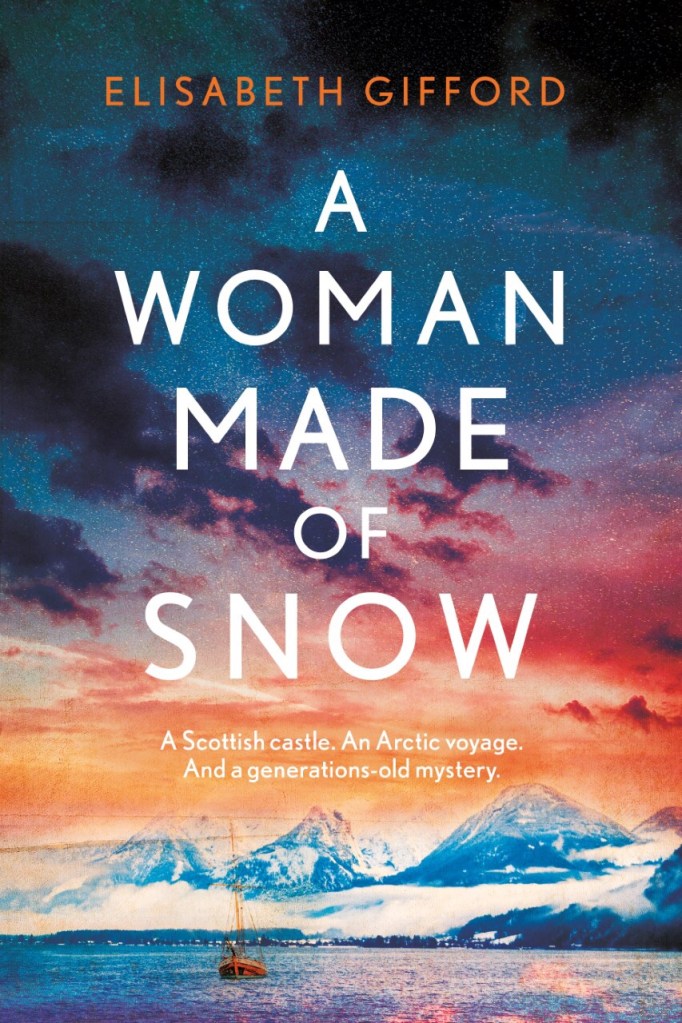
A Woman Made of Snow by Elizabeth Gifford.

I slowly became more and more intrigued by Elizabeth Gifford’s new novel. Even the title whetted my appetite for more of the same beautiful writing that made The Lost Lights of St Kilda such a memorable book. We’re still in Scotland, this is the late 1940’s and our heroine Caro lives with her husband Alasdair and baby Felicity in the Laundry Cottage situated in the grounds of his ancestral home. They met at Cambridge University and married less than six months later much to his mother Martha’s surprise. She was expecting him to marry someone of their class, maybe even their family friend Diana who’s valuing heirlooms at the family’s castle. Caro’s mother-in-law wanted her and Alasdair to live at the castle with her, but Caro wanted a little bit of privacy and distance. At Laundry Cottage she can still be in her dressing down at lunchtime or having a sleep while baby Felicity has a nap. Yet, the past is about to make it’s way into the present both physically and mentally. Caro is asked to research the family archives for a mysterious, missing member of the family. A great-grandmother seems to have been scrubbed from the archives, along with a missing diary from her husband Oliver’s trip to the Arctic. When the Laundry Cottage floods suddenly and workers inspect the Victorian drainage system they find a body of a woman. Could this be the missing bride?

It seems formidable mothers are the norm at Castle Kelly, because when I read the second narrative it took me back to the late Victorian period and tension between Oliver and his mother. From early childhood Louisa and Charlotte Strachan have been summer visitors to the castle and Oliver’s playmates. However, as they get older it’s clear that feelings have developed between Oliver and Louisa. Could she be the missing grandmother from the archives and the body found in the grounds? How come Oliver ended up in the Arctic? What effect will Caro’s findings have on the family and her marriage? With so many questions I was compelled by the story and some of the characters caught up in these dramatic circumstances. Also the historical shifts behind these stories was fascinating too, showing how much the world changed over two world wars.

Caro is such a sympathetic character and I felt immediately on her side in this very difficult situation she finds herself in. She’s an intelligent woman and understands a lot about how the world is changing. Her expectation of life after the war is that she and Alasdair will live in London as lecturers at one of the city’s universities. She didn’t bank on having Felicity so quickly or for Alasdair’s only offer of employment coming from St Andrew’s university. She describes feeling ‘ambushed’ by her own fertility, but she loves Felicity and wants to be a good Mum. I understood her need to be separate from the castle – it’s a compromise between his obligations and the total freedom they expected in London. I also empathised with her feelings of struggling as a new mum and being isolated from everyone and everything she knows. It’s a huge leap from being organised, full of energy, totally independent and career minded, to living in a cottage with a new baby feeling tired and slightly inadequate. She can’t understand why looking after Felicity seems so arduous and exhausting, when she’s always been so lively and alert. She also finds her emotions difficult; she’s struggling to understand why she wants to keep mother-in-law Martha at bay, or why she feels threatened by the presence of Diana. Her interest in the missing grandmother is linked to these emotions, maybe they were both outsiders in this family. It’s painful to her when she hears Martha say she’d hoped Alasdair would marry someone of his own class, surely those barriers don’t exist any more?

When I started to compare it with the 1940’s I could see that there is change, but within the Gillan family it has been minimal compared to the rest of society. Early in the novel Caro remarks that ‘she was secretly rather proud of her ability to make good friends across the classes’ because ‘once the war was over, class was not going to mean anything after all the country had been through together’. This was probably true in more metropolitan areas, but it hasn’t reached the upper class residents of rural Scotland. Martha is trying, but her true feelings are old-fashioned. The mistress of Kelly Castle in the Victorian period is Sylvia and she resents her husband’s adherence to an old obligation. He invites the daughters of old family friends, Charlotte and Louisa Strachan, to the castle every summer. Whereas Louisa tries desperately to fit in, Charlotte is a more fiery and independent character and I fell in love with her. As soon as she cut her own hair off I knew I would enjoy her way of being in the world.

To Sylvia’s disgust, Charlotte brings a young girl called Mary into the children’s circle. They run wild in the grounds and don’t seem to notice the differences between them. This changes as they get older until one summer Mary’s aunt asks Charlotte not to run in and out of Laundry Cottage where they live, tempting Mary to play when this year she had to work. As far as Sylvia’s concerned the girl is lucky to be merely helping her aunt, because the true destiny of the poor girls of Dundee is in the jute mills that pay for Kelly Castle. When Charlotte defies her, bringing Mary along on an outing to see the family’s new whaling ship and dinner in the Castle Hotel. When Sylvia asks Charlotte to remove her beret at dinner, she sees her unseemly cropped hair. Charlotte knows a punishment is coming, but what her aunt does next makes her sick and heartbroken. Without any emotion she tells the driver to take them home via the jute mill. There, she ushers Mary into the office as a new mill girl for the foreman to set to work. Sylvia has wanted Mary in her proper place for some time, but the opportunity to put Charlotte in her place at the same time was too good to miss. Charlotte is devastated. Sylvia now has to find a way of dealing with the Strachan girls, she has her eye on a young lady for Oliver and she doesn’t want her plans scuppered by a crush on someone unsuitable.

I found it interesting how patterns seemed to have formed down the generations. Some brides were suitable to be the next mistress of Kelly Castle, and others were not. Caro’s mother-in-law kept her misgivings and disappointment over her son’s choice to private conversations. Sylvia had been so determined and cruel in her treatment of Charlotte and Louisa that I wondered what fate awaited Oliver’s unsuitable bride, whoever she was. Since there are family rumours surrounding the Arctic voyage with hints of cannibalism, I was worried for this unnamed woman.

This author always creates an incredible sense of place and the beautifully atmospheric opening is reminiscent of Daphne Du Maurier’s Rebecca and the ghostly walk up the drive of Manderley. A woman sees Caro and tries to call out to her from her place beneath the earth.

‘Wrapped in darkness beneath the trees I watch rain falling on the earth where I have slept for so long. Light from the Cottage windows stretches across the lawns, but it does not reach me. Find me, I whisper. Give me my name.’

Her need for Caro to hear her showed a spirit undimmed by death. I was really interested in this and the theme of women being controlled or even erased by forces or expectations beyond their control. As the unnamed woman sits beneath the earth, Caro feels removed from the life she wanted by motherhood. Mary is taken from a carefree childhood to the responsibilities and restrictions of adulthood overnight. It had been hoped that she might be given a maid’s position in the castle, but her destiny is at the jute mill. Charlotte isn’t even allowed to cut her hair, and she hates the prissy dresses she’s expected to wear as a guest of the Gillan family. She doesn’t understand why her friendship with Oliver has to change, just because she’s older.

‘Angry tears pricked her eyes.While they were away at school that year it seemed that someone had decreed that childhood was over, a closing down of what a girl may or may not do – and a forewarning of the hardening of roles to come that she saw in the lives of the adults around her. Well, Charlotte was not going to accept it. She would stay true to herself and true to the things she loved.’

I was sad for her, and her sister Louisa. It’s interesting to see how both girls react to the effects of being from a poorer and lower class background. I was compelled to read on and find out about these girls in adulthood, not just their relationship with Oliver, but how they were making their way in the world. I wanted Charlotte to have retained that fire and attitude and hoped that circumstances hadn’t tamed her. There is just so much to love about this novel: the well written characters; the intriguing mystery of the unnamed woman; the depth of research into the two time periods especially into societal changes, class difference and the lives of women. I heartily recommend it to all lovers of historical fiction, women’s lives and family secrets. This is one of those books that I loved so much, I will be buying a finished copy, despite having the proof. It’s so atmospheric, romantic, and deeply poignant.

Meet The Author.

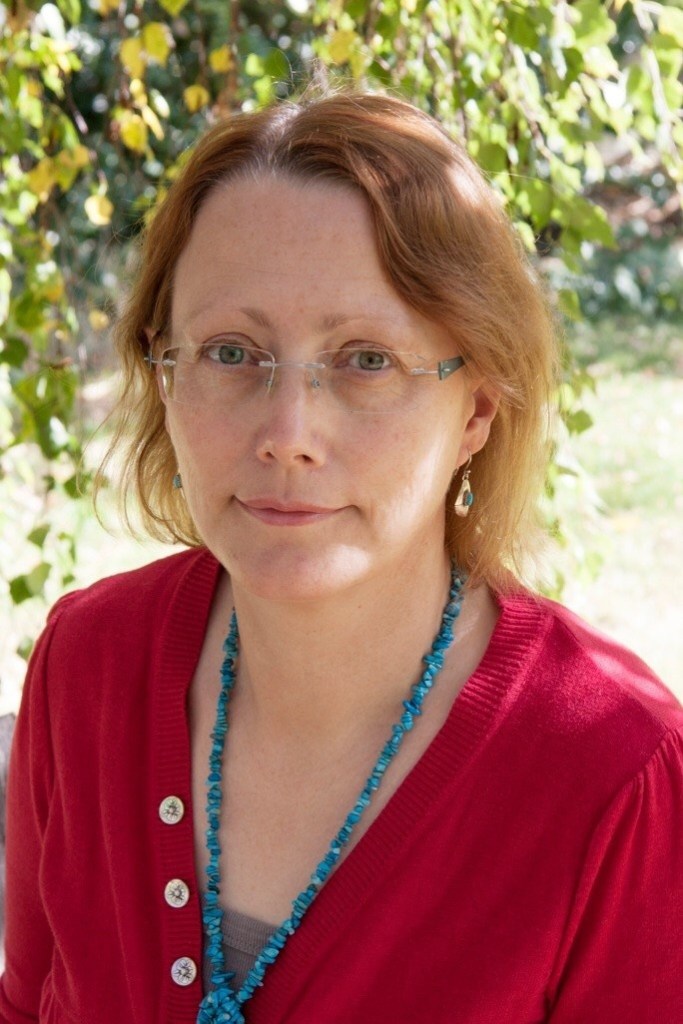
Elisabeth Gifford grew up in a vicarage in the industrial Midlands. She studied French literature and world religions at Leeds University. She has a Diploma in Creative Writing from Oxford OUDCE and an MA in Creative Writing from Royal Holloway. She is married with three children, and lives in Kingston upon Thames. A Woman Made of Snow is her fifth novel.

Posted in Throwback Thursday

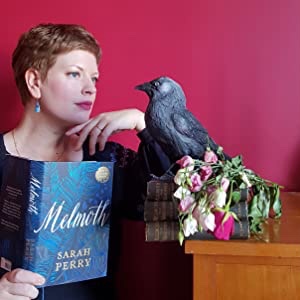
Throwback Thursday! Melmoth by Sarah Perry.

‘Oh my friend, won’t you take my hand – I’ve been so lonely!’

This week for Throwback Thursday – which has rolled onto Friday since I’m in a remote part of Wales with poor internet access – I’m going to take a spooky turn and tell you about one of the most terrifying and gloriously gothic novels I have ever read. Melmoth the Witness is a figure from mythology, or is she? Known as one of the woman who witnessed the tomb on the morning that Christ resurrected, she is now an eternal traveller. Wandering the centuries she lures people into following her, whereupon they too become damned to an eternity of itinerant, solitary wandering.

Set in the beautifully, atmospheric city of Prague we meet a woman called Helen who finds a manuscript. It tells of a winter in Prague, with all the darkly gothic details of cobbled streets, shadowy corners, and jackdaws patrolling the city walls. One winter night in Prague, Helen Franklin meets her friend Karel on the street. Agitated and enthralled, he tells her he has come into possession of a mysterious old manuscript, filled with personal testimonies that take them from 17th-century England to wartime Czechoslovakia, the tropical streets of Manila, and 1920s Turkey. All of them tell of being followed by a tall, silent woman in black, bearing an unforgettable message. Helen reads its contents with intrigue and some scepticism, but everything in her life is about to change. We follow Helen’s story, but within it are all the other stories and lives, creating a Russian doll style tale, but where each incarnation has the same sense of menace and impending doom.

This is based on an 1820 novel by Charles Robert Maturin called Melmoth the Wanderer, that very few people will have read. I studied a wonderful module at university entitled The Gothic, Grotesque and the Monstrous and I know from experience that early gothic novels can be long winded and difficult to read. What was found terrifying in 1820 does not necessarily translate today. In the original novel, Melmoth is a man who makes an almost Faustian pact, in this version she is one of the women who visits Christ’s tomb. She could have borne witness to the resurrection, but lied and is now damned to wander the world forever. She’s like a Sybil, heralding evil and disastrous events, but never listened to and doomed to witness the worst humans can do to each other over and over. I love the ambiguity of her pleas to ‘take her hand and follow her’ because she’s lonely, is she friend or foe? Her pleas are all the more tempting because she’s a woman and we associate that with gentleness, nurturing and perhaps even needing protection. There’s also the element of seduction and persuasion that might make a gentleman take her lonely hand. I think Sarah Perry made this choice because of those qualities. How much more effective could a woman be in gathering souls?

I love how Prague is turned into a haunted city and it’s history certainly might have drawn the wanderer to it’s cobbles. The city is the book’s second biggest character, dark and mysterious with magical landmarks like the astronomical clock. Perry’s descriptions of night in the city are haunting, and if I ever visit the capital I might well look over my shoulder when out in the evening in the same way I do in Venice. It is the perfect backdrop for the modern section of the novel, with every inch of the city steeped in history and the endless pull between light and darkness. Perry brings to life fears we have all had, as Helen draws the curtains at night, because she fears looking up at the window and seeing that lonely, beseeching face. The most terrifying thought is that Melmoth bears witness to anything we have ever done, including those awful things we hope no one witnessed or found out about.

I think an important aspect of the novel for me is something any sort of ‘listener’ has to think about. It’s the toll witnessing takes on a person. This book is brief compared to the original novel, but still takes in the breadth of the horrors experienced in Prague throughout the 20th Century. It made me imagine being present to witness the trenches of WW1, the Holocaust, and so many other atrocities and personal tragedies. I’ve worked in mental health for twenty years and I’m taking a break at the moment to study. I know the emotional toll that listening to people’s stories can take on the listener or observer. For Melmoth, this would be so much worse because she has to sit back and witness all of humanity’s horrors. Even worse, she has no power to change anything, but is doomed merely to witness. No wonder she wants other souls to witness with her, she must feel the weight of the horrors yet to come.

Posted in Netgalley

The Lighthouse Witches by C.J. Cooke

This book has been one of my most anticipated reads of 2021, because I loved the blurb of course, but also because I’ve had a lot of luck this year with fantastic books that have a lighthouse on the cover. The Lighthouse Witches was even darker than I expected and I enjoyed it immensely. In the late 1990s, artist Liv Stay finds herself homeless and without work so travels all the way up to Scotland and an island called Lòn Haven where a friend has recommended her to paint a mural. She travels to the coast, with her three daughters Saffy, Luna and Clover. There she meets Isla, caretaker of the bothy they’ll be staying in next door to the sea lashed lighthouse where she’ll be painting the mural. The mural is planned out on a large roll of paper and Liv is bemused to see a diagram of sorts, full of runic symbols she doesn’t understand. Getting this accurate in a circular building is her first challenge, and the second is to inject some of her own creativity in the design to make it beautiful. The girls are a bit shell-shocked to be brought to this remote and wild place, and there are certainly some unanswered questions as to why and how they ended up somewhere so remote and creepy. Liv carries a huge secret inside her, but the family are about to find out that Lòn Haven holds its share of secrets and ancient beliefs too, causing the whole family to disappear.

The story is told through different characters in three main time zones. Liv narrates the main section in the 1990s, then we meet her grown-up daughter Luna twenty years later, but we also go back into the history of the island and the witch trials of the 17th Century. The grown-up Luna is drawn back to the island when her sister Clover is found. However, to Luna’s shock, her contact Eilidh the social worker takes her to a little girl. Clover should be around thirty years old. Yet, Clover recognises her childhood toy and his name; she immediately squeezes Gianni the Giraffe like an old friend. Luna can’t understand why the social services haven’t noticed the anomaly in Clover’s date of birth, but her instinct is to protect her sister. So when asked, Luna fudges her date of birth and takes Clover away with her to the Air BNB she’s booked. At times, once they’ve settled, Luna does wonder if everything is okay with her sister. There’s the strange marking like a brand on her skin, which has four tiny numbers inscribed. There’s also a look she has, as if she isn’t present in her body and doesn’t recognise Luna. Over a couple of days she also displays some disturbed behaviour. Luna finds Gianni with his insides pulled out and his head cut off and then Clover floods the bathroom on purpose. Luna is desperately trying to find some sort of disease or syndrome that might have regressed her sister’s age. The only other explanation is a supernatural one and Luna isn’t sure she’s ready to accept the the local folklore she heard when she went missing all those years ago. However, she’s pregnant and alone with Clover in the middle of nowhere, so what if she isn’t her sister?

The author creates a brilliant atmosphere across all three time periods, starting with the name of the lighthouse, The Longing. Rather than full on horror, it’s a sense of the uncanny that starts to unsettle the reader. We all know that sense of rising tension when we feel so on edge, that anything would scare us. Here, it’s glimpsing a baby in the water that’s flooding the floor of the lighthouse, when it’s just a doll; a small child’s arm reaching out from behind Liv’s art materials; or opening a door to see your own double standing there. As we delve into the past and the history of The Longing, we are faced with the real-life horror of the 17th Century witch trials encouraged by King James, the first joint King of England and Scotland who ascended the throne after Elizabeth I died without an heir. Women with skills such as herbalism or midwifery could come under suspicion, but more usually local disputes and grudges led to women being branded a witch. In this case the local midwife, her friends and their daughters have all been accused and in matters like this the islanders stick to the rule ‘thou shalt not suffer a witch to live’. Accused women in this time period were often checked for the Devil’s mark – a mole, birthmark or blemish of any kind – had their hair shorn, were stripped, humiliated and then burned. The history of the island shows that a burning happened on the very rock, that now serves as a foundation to The Longing. I wondered how the old beliefs, in the fae or fairies, witches, and strange children called wildlings still held sway in the present day. In the 1990’s narrative there is still a definite undercurrent of ancient beliefs, with their followers having enough reach to influence both the police and the richest man on the island, owner of the bothy and lighthouse. Liv comes up against the reach of these believers when she reports seeing a small boy who looks like he’s been living wild. The police don’t want to know when she reports him missing, and it feels as if they view her as a nuisance, someone who doesn’t understand the island’s ancient way of life. When you visit Lòn Haven, as Luna does years later, there’s a sense of the ancient past existing alongside the present, as if time isn’t linear but looped upon itself.

I did get a little confused at times, especially with the elements of time being manipulated, through the cave known as the Witches Hide. There is old magic here. I was trying to understand the marks and numbers branded on Clover and others, and match them to the different time frames. In the end I gave up and decided to just go with it. I found this quote, in a letter from mother to daughter, very apt:

‘I’m not sure if I’ll make it, Luna. I’m not sure I’ll be able to hang on long enough to see you one last time. I’m going to try. But if not, if I slip away before I get the chance to hold you again, I wanted to write down the story of what really happened on Lòn Haven. As you’ll see, Cause and Effect in this tale do not fit easily together. The pieces are odd and mis-shaped because truth is messy and porous’.

I enjoyed the ending, despite feeling it was untidy. I thought it was a great story of women, and how their power and position changes over time. It also has a lot to say about mothers and daughters, how they communicate and the stories they tell each other to help navigate a world that can be set against women. I felt so much for Saffy, a very confused 15 year old who, in the midst of all the supernatural activity, is dealing with the usual teenage angst. Unsure of herself and this new place, she is lured into sexual activity and sending explicit pictures to one of the local boys. This is a girl who desperately needs her Mum, and isn’t getting any support or advice. There’s one occasion where Liv honestly has no idea where Saffy’s been for the last 24 hours. I wanted to give this girl a massive cuddle and help her set boundaries that she’s comfortable with instead of being coerced. The author mixes the present day perfectly with ancient folklore, supernatural happenings, and time travel, which is not an easy feat. Not to mention the depth of historical research that underpins the more fantastical elements. So, it seems my attraction to books with lighthouses on the cover, has paid off once again.

Meet The Author

C J Cooke (Carolyn Jess-Cooke) lives in Glasgow with her husband and four children. C J Cooke’s works have been published in 23 languages and have won many awards. She holds a PhD in Literature from the Queen’s University of Belfast and is currently Senior Lecturer in Creative Writing at the University of Glasgow, where she researches creative writing interventions for mental health. Two of her books are currently optioned for film. Visit http://www.cjcookeauthor.com

Posted in Throwback Thursday, Uncategorized

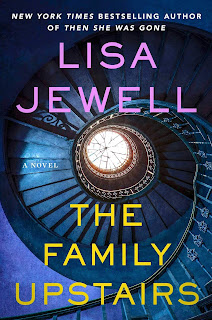
The Family Upstairs by Lisa Jewell.

As some of you may know, reviews can get very personal for me. Probably because I’m a therapist and used to lots of self-reflection. When a book hits me emotionally I really think about why and this book had me scurrying to my journal. Lisa Jewell is a master of these domestic thrillers and the psychological suspense created when groups of people are in conflict. Here the conflict is controlled within one house 16 Cheyne Walk in Chelsea, overlooking the river. That is until it’s secrets explode and the truth of the mystery is scattered across the world.


Three narratives weave in and out of each other to tell the story. We meet twenty five year old Libby with her little garden flat and her job at the kitchen design company where she’s worked for five years. Everything about Libby says organised, professional and quiet. That is until a bombshell is dropped on her life. Woven with this is the story of Lucy – if that is her real name. She is living in France but at the moment we meet her is homeless along with her two children and the dog. The family are reduced to sneaking in to the beach club to get showered but that doesn’t happen everyday. Lucy is at rock bottom. She can’t husk for money but needs money to collect her violin. They have nothing left to sell. Does she go and ask her violent but rich ex-husband for help? Or does she let the children stay with their grandparents? Either way she needs her violin and once she sees the date, she develops an urgent need to make her way back to London and a certain house in Chelsea.

Our third narrator is Henry, relating what happened at the house back in the early 1990s. Henry just about remembers family life when things were normal and it was just the four of them: mum, dad, Henry and his sister. He has vivid memories of going to private school in his brown knickerbockers and sitting drinking lemonade while his Dad read the newspaper at his club. The house was filled with curiosities such as animal heads, ceremonial swords and red thrones. It’s so distinctive in style that when the money starts to run out the house is scouted as a location for a music video. The fiddle player in the band is Birdie and she loves the house. So much so that when she needs a roof over their head, she and her partner, Justin, come to stay in the upstairs room. Henry’s father has had a stroke and doesn’t have the same strength and power he used to have. He seems to sit by and watch as Birdie and Justin take up residence.
Later another couple join the group. David Thomsen is a man Henry dislikes almost instantly because he seems to sense what his Dad and Justin fail to see. David has charisma and seems to have an effect on every woman in the house. His wife Sally and two children, Phin and Clemency, also join them. It starts to feel like they’re living in a commune but the only consolation is Phin. To Henry, Phin is beautiful with floppy hair, cheekbones and a distinctive style. When Phin takes him shopping, Henry develops a crush and trails after him, wanting to be like him. When it is suddenly announced at the dinner table that David and Birdie are now a couple Henry senses this is the start of something evil. They bring out the worst elements of each other and start to assume a power in the house that goes unchallenged by his parents or the other adults. They are told what they will eat, do and even wear. Henry knows this is out of control and this is only the beginning of the damage this man will inflict in the house.
Libby has been set a letter by a group of solicitors telling her she has been left a house. When the solicitor walks her round to the house she realises she is rich. The house is abandoned, but huge and in prime position. It could be worth millions. The solicitor also gives her a newspaper cutting describing the strange events that took place there exactly twenty five years before. Libby has always known she was adopted, but this tells her she was the lone survivor in the house, tucked in her cot with a lucky rabbits foot under the mattress. Downstairs were three people, dressed all in black and dead from poisoning themselves with belladonna. One was David Thomsen. The news story talks of a cult forming within the house and aside from Libby, whose real name is Serenity, all the children living at the house were missing. Libby feels there is more to this story and wants to meet the journalist who wrote the article. What is the answer to how this happened? And who is sneaking in and out of the attic space at the house?


There are so many questions that I won’t answer for fear of ruining the book, but I will tell you about the effect it had on me. When I was 12, the same age as Henry, my parents joined an evangelical church that became all-consuming and took over our lives for a few years. Up until then we’d been part-time Catholic’s and I’d gone to Catholic school for a while through my first confession and communion. These new people felt weird. They were so fervent and all that speaking in tongues was odd. But it got worse. My parents started to have no other social life from church. We were forced into church activities for kids. My dad lit a bonfire and they burned their secular music and all of my mum’s ‘inappropriate ‘ books like the Judith Krantz and Jackie Collins novels. I was scared by this. I started to wonder who my parents were as I was more restricted on what I wore, listened to and read. I couldn’t go to anything where there was a sniff of boys and from what I could see there was a lot of coercive control over women and girls particularly. I felt Henry’s fear when reading this book. I know what it feels to be a kid, looking at your parents and thinking they’ve been taken in by something dangerous. That beliefs are being forced on you and you can’t live like other kids. To feel like all of your security is being taken away.


Of course my solution wasn’t as dramatic as Henry’s but I did have to create coping mechanisms. There are times now when we can laugh about it, because as my brother and I have grown older we have become one of those families that openly discuss everything. However, I still occasionally have dreams where my parents can’t see or hear me and I think it has also bred a lifelong mistrust of authority. So I can understand the seismic effect the arrival of Dave Thomsen had on these children, with repercussions way into adult life. Whether it’s changing who you are to escape, or bouncing from one failed relationship to another or being unable to move on, even geographically, they are all responses to trauma. With a brief nod to the future at the end of the book the author does leave a tiny seed of hope that in future generations a type of healing can be reached. This is a dark, disturbing, look at how sometimes home is the most dangerous place to be.