Posted in Random Things Tours

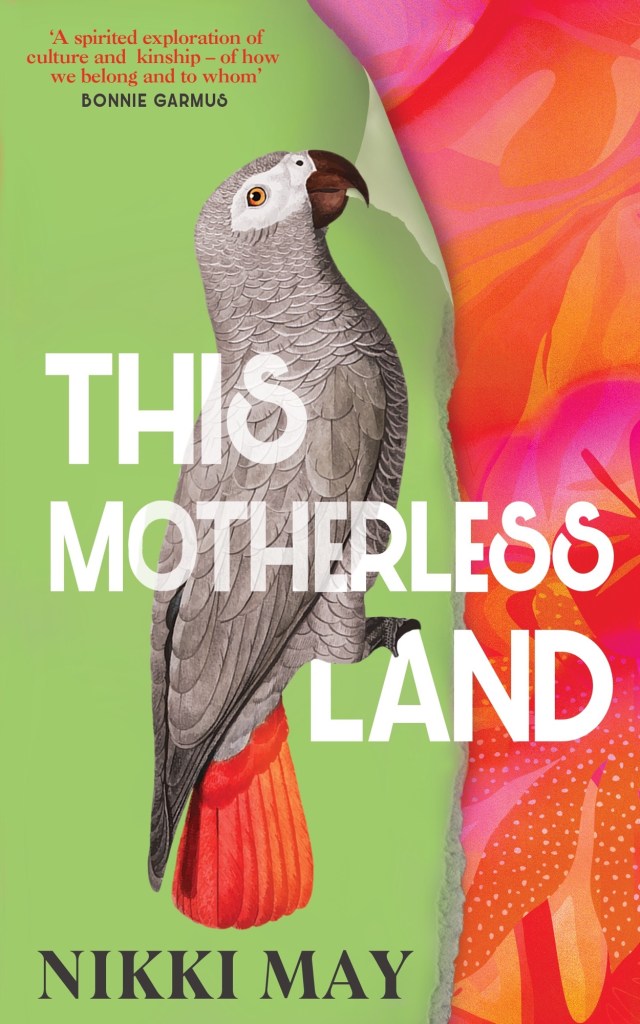
This Motherless Land by Nikki May.

This book was an absolute joy to read, which may sound strange considering the subject matter but somehow it awakened my senses, stirred my emotions and kept me reading. In fact I read it so quickly I was finished in an evening that turned into morning before I knew it. Funke lives in Nigeria with her mother, known as Misses Lissie to most people, her father and brother Femi. Mum is a teacher and Dad works at the university. Their entire world is shattered one morning as they make their normal run to school when their mother’s car fails to stop and ploughs directly under a lorry. The drivers side of the car is destroyed but Funke’s side is left completely unscathed. She loses her mother and brother in a moment. In his grief, her father Babatunde is inconsolable and he takes it out on Funke. How did she get out without a scratch? Encouraged by his superstitious mother, he calls Funke a witch and insists she must be protected by some magical being. Seeing how Funke will be treated by her grandmother, her aunties put their heads together and decide she should be sent for a while to her mother’s family in England. Her white family. Funke is ripped away from everything she knows and sent to The Ring, the mansion where her mother and Aunty Margot grew up. There, although she isn’t being hit or accused of evil spells, she feels the resentment of Aunt Margot and her cousin Dominic. They call her Kate, after all it’s easier than pronouncing Funke isn’t it? There’s no colour, bland food and where she was accused of being white in Nigeria, here she is seen as black – with all the racist connotations that come alongside it. Especially in white, upperclass Britain. England’s only saving grace is her cousin Liv. Liv scoops her up and feeds her comfort food. The problem is it’s not the food or the comfort she’s used to.

This is a book about being in between. Funke’s mother was ostracised by her family for marrying a Nigerian man. Aunt Margot sees Lizzie’s relationship with Babatunde as the reason for her own engagement being called off just before the wedding. In her eyes Lizzie was selfish, pursuing her own feelings at the expense of her family. She feels Lizzie had the looks, the charisma and the man she loved, while Margot was left heartbroken and with parents who seemed to miss Lizzie more than they enjoyed Margot’s presence. She sees Funke as her mother’s daughter and a threat to her own children. Her parents seem to love Kate, as they’ve christened her, and Margot doesn’t want her to take all the attention, the love and their eventual inheritance. She’s a bitter woman who is very hard to like. Sadly for Funke, history repeats itself and on the night of their prom a series of events mean they must drive home early. Liv is drunk and high. Yet even Funke, who is teetotal, feels unwell. Dominic throws caution to the wind and decides to drive them home, despite his own drinking, and a terrible accident occurs. Everyone survives but Liv suffers a bad break to her leg. In the aftermath Dominic asks Funke to admit to driving, which she agrees to, not knowing that covering for her cousins will lead to her life being uprooted for the second time.

Funke feels like she belongs nowhere. In Nigeria when her mother was alive they had a wonderful life, even if children would follow her singing a song about her pale skin. That’s nothing to the blatant racism she faces in England, but she faces it down and it fuels her will to succeed. Then she’s back in Nigeria and is again the odd one out. This time she’s in her dad’s new family and their lifestyle in the village is very different to the childhood she remembers on the university compound. His new wife and their children eat and live in ways her dad would have dismissed as ‘bush’ when Funke was a child. Her small brother and sister are black and fascinated with her pale, mixed race skin. Things are familiar, such as the spicy red stew and the heat, but it’s a changed land without her mother in it. At least in England she didn’t expect her mother to be there. Now she faced with the shock of her absence all over again. Will she ever find home? Meanwhile, back in Britain, when Liv finally comes round from the accident she asks for Kate. What will her mother tell her?

I thought the author brilliantly showed how different people cope with mental pain. Funke takes a bottle top from her mother’s hoard (for craft projects) and holds it in her hand so hard that it cuts into her palm. Liv is horrified that she’s hurt herself like this, but for Funke it’s the only thing that distracts her from the grief of losing her and her brother. Liv also deals with motherly absence, but externalises her feelings in a different way. She has a mother who is present, just not for her. Liv starts to drink excessively, uses marijuana and acid tabs to blank out the feelings that she isn’t loved and therefore isn’t worth anything. When we’re children and we’re rejected by a parent, we never assume it’s the parent’s fault and we don’t stop loving them. Instead we internalise their criticism and think we are the problem. Liv has a lot of casual sex because she thinks it sex is all she really has to offer. Meanwhile Funke struggles to give love and truly trust someone. She is in a relationship with a young man who is keeping his true sexuality under wraps, because it’s not accepted in his family or community. The younger people are aware he’s gay and call Funke his ‘beard’, but how far can she take this relationship? What if he suggests a more permanent arrangement and is Funke willing to give her life away so easily? The the same root cause, a loss of the mother figure they so needed, affects both girls, it just manifests in different ways. With them both on opposite continents, how will they ever find each other again? The spaces between can be painful and isolating places to be and the author depicts that with such tenderness and understanding. However, liminal spaces are also freeing. Being in-between gives us the space to choose, to take bits and pieces from each place, each family and make our own identity. I found the end chapter so uplifting and it gave me hope that we can each forge our own identity, once we’ve explored who we truly are. This is a fascinating, touching story about growing up and how we become who we are. It’s vibrant, atmospheric and an absolute must read.

Meet the Author

Born in Bristol, raised in Lagos, I’m proud to be Anglo-Nigerian. I ran a successful ad agency before turning to writing and now live in Dorset with my husband, two standard schnauzers, and way too many books.

My debut novel WAHALA was inspired by a long (and loud) lunch with friends. It was published around the world in January 2022 and is being adapted into a major BBC TV drama. This Motherless Land is my second novel.

Posted in Netgalley

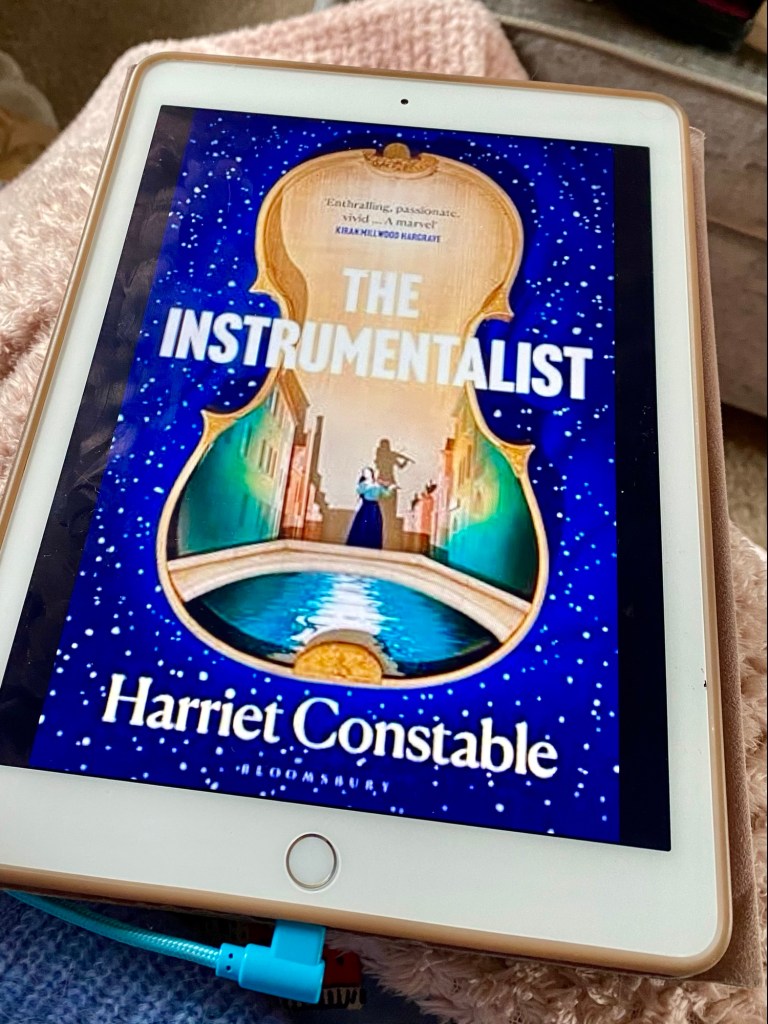
The Instrumentalist by Harriet Constable

Wow! What an incredible debut this is. I absolutely consumed this book and even found myself furtively reading in the middle of the night with a tiny torch. Anna Maria della Piétro is a fascinating heroine and while not always likeable, I found myself rooting for her. Like all the girls at the Piétro, Anna Maria is an orphan, posted through the tiny hatch in the Ospedale Della Pietá often with a note or keepsake from the unlucky girl who had leave her child behind. The author shows us the incredible splendour of Venice, a place I fell completely in love with, contrasted with it’s destitution and desperation. A state that seems more likely for women, especially those from a poorer background. The convent brings up it’s girls very strictly, according to the Catholic faith and the virtues of hard work from scrubbing the floors or working in the nursery. It is also a college of music. Each girl is taught at least one instrument with the best trying out for the orphanage’s orchestra, the figlio. Those chosen will work with the master of music and they will play in the some of the most beautiful basilicas and palazzos in all of Venice. Anna Maria’s great love is the violin and there’s no doubt she will try to become the best.

Anna Maria is a bundle of youthful exuberance, fireworks, talent and ambition. She practically leaps off the page and it seems impossible for her to fail. She starts by aiming to be noticed by the master of music and after that to be the youngest member of the figlio. No sooner is one ambition fulfilled then she’s already thinking of the next. The rewards are also intoxicating – not that Anna Maria cares much for the lace shawls from Burano, but she is partial to the small pastries with candied peel and spices that she loves to share with friends Paulina and ?? Through them we see the girl rather than the musician. They bring out a lightness of spirit, playfulness and a sense of sisterhood. The love she has for her custom made violin is absolutely infectious and when she becomes the favourite of the music master will those girlish aspects of her character remain? Constable shows us a dark underbelly, both to the Ospedale and their music programme. Although the alternatives are even worse. She also shows us huge disparity between the rich and poor in Venice. As visitors we only see the beauty and history of this incredible city, but once I did catch a glimpse of the systems that keep the city going. While waiting on a jetty to catch my water taxi one early morning I met the dustbin men of the city, having to negotiate tiny lanes and creaking jetties to clear up after all the visitors. When Anna Maria gets to play at private palazzos, the grandeur is overpowering. After her performances she is showered with lavish gifts that are at home where she plays but out of place in her bare room. She also notices that those orphans who don’t excel are easy pickings for the rich patrons of the Ospedale. Unsurprisingly, Anna Maria wants to escape the fate of becoming a wife to a much older man and putting aside her talent. As she is taken under the wing of a female patron, Elizabetta ?? She’s impressed by incredible dresses and Elizabetta’s elegant palazzo, but this patron also uses her wealth for good. She shows Anna Maria another fate for the cities’ poor women, by taking her to a brothel where the wealthy woman helps with supplies ensuring these women can make their living in safe and clean surroundings. She points out to Anna the danger in becoming a favourite – there are always people lining up to replace you. When the master is fickle or arrested by a newer, talented young girl what would happen to Anna? It makes her think about the person she replaced for the first time.

I loved the synaesthetic aspect to Anna Maria’s talent because it really added to my understanding of why she loves it so much. I have tastes that are related to colour, so if I see a garden full of beautiful yellow daffodils my mouth begins to water and I get the sensation and taste of lemon sherbet sweets. As Anna Maria plays, colours dance through her and the flurry of colour gives us a sense of how transformative it is for her to play. She is utterly lost in this moments. She’s floating within a rainbow of colour. Even when she begins to compose the written notes on the page are hastily drawn because she’s somewhere else experiencing a unique explosion of sound and colour. Even though she’s not always likeable I was still rooting for her. However some of her tougher decisions are made from within the context of survival. Only by being ruthless and getting to the position of power she craves can she feel safe. Then she can make better, more equitable decisions from a place of safety. This is an incredible story, made all the more powerful because Anna did exist. While this is a novelisation rather than an autobiography she was real and so was her music master . He is a mercurial and sometimes cruel man whose identity remains unspoken – although I did realise who he was part way through. I loved that this is written as a feminist counterpoint to his fame, highlighting a woman of equal talent who is cheated in a creative partnership and ends up with her woke stolen and uncredited. This is an abusive relationship characterised by manipulation, exploitation and a fascination with talented pre-pubescent young girls. Harriet has created a brilliant work of historical fiction that gives voice to one such young woman full of spark, talent and incredible drive to succeed. Her book is totally immersive, plunging us into a world where women were expendable, only there to parrot and enhance a man’s talent. It’s a powerful and compelling tale that I’m sure I’ll still remember when it comes to my end of year favourite books.

Out on 15th August from Bloomsbury

Meet the Author

Harriet Constable is an award-winning journalist and filmmaker living in London. Her work has been featured by the New York Times, the Economist, and the BBC, and she is a grantee of the Pulitzer Center. Raised in a musical family, The Instrumentalist is her first novel. It has been selected as one of the Top 10 Debuts of 2024 by the Guardian.

Posted in Netgalley, Publisher Proof

The Paris Muse by Louisa Treger

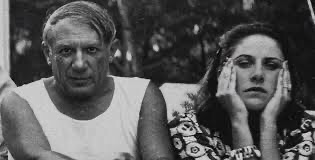
Treger’s latest novel concerns the life, or more accurately the love, of Dora Maar – a photographer and painter who lived in Paris for most of her life and most notably, during the German occupation in WWII. Born Henrietta Theodora Markovitch in 1907, she was known as a surrealist photographer exhibiting alongside Dali and other notable surrealists. She used her photographic art to better represent life through links with ideas, politics and philosophy rather than slavishly photographing what was naturally there. She was exhibited in the Surrealist Exposition in Paris and the International Surrealist Exhibition in London in 1936. In the same year she was exhibited at MOMA in NYC. He first encountered Picasso while taking photos at a film set in 1935, but they were not introduced until a few days later when Paul Elduard introduced them at Cafe des Deux Magots. They met in quite a dramatic way that showed her intent to catch his eye. She sat alone and using a pen knife she drove the blade between her splayed fingers and where she missed blood stained the gloves she wore. The fact that Picasso kept these gloves and packed them away with his treasured mementoes is a metaphor for their entire relationship – he fed from her emotions.

The author allows Dora to tell her own story and we are inside her mind at all times. We could say this is only her viewpoint of their relationship, but in a world where she is most known through her relationship with a man instead of her own work, Treger is simply redressing the balance. Also you’d have to be utterly blind to think there’s any other way of looking at his treatment of her and the other women he was involved with. But the nine years they were together, she was subjected to mental and psychological abuse. She was underestimated as an influence on his work, particularly Guernica and his politics. I feel on reading the book that he was drawn to what he saw as her masochism and drew on the pain he caused her both for his personal satisfaction and his art. He comes across as a narcissist; constantly told he was a genius he believes everything revolves around his needs and his freedom to work. This is seen in The Weeping Woman series of paintings where she’s depicted as a woman who is constantly tortured and distressed.

Picasso ‘The Weeping Woman’.

We can see how their affair had a distinct honeymoon period. The mistake she made was thinking this would be a template for the rest of their affair. She knew he had a wife, Olga, who’d had a nervous breakdown. There was also Marie Therese, who was his mistress and had his son Paulo. It seems Picasso never turned down an offer, having liaisons with many of their friends and group sexual experiences when they were on holiday in the South of France. These encounters caused Dora extreme emotional distress and being in her head was a painful experience. I desperately wanted Dora to walk away, but she wasnt being true to herself in accepting her behaviour. It felt like their relationship moved in a toxic pattern of infidelity, followed by distress and recrimination. The more distressed she became, Picasso would withdraw, telling her theyd made a bargain, that she was free to leave and that her distress was preventing him from working. Consequently we can see her feelings discounted. He gaslights her by saying she doesn’t have to feel the way she does; her feelings were always the problem, never his behaviour. In one scene in the book Dora suspects her mother is unwell after a dropped phone call but it’s after curfew during the German occupation an they can’t leave the house. Although Dora has paper saying she’s Catholic and Aryan, they won’t save her if she’s found out in the middle of the night. I found Picasso terribly cold towards her when they find her mother dead the next day, he doesn’t touch her and seemed more fascinated rigor mortis and the unearthly sheen of her skin, than comforting Dora. There were times when I felt he was doing things to keep Dora in her place, but there were other times when he seemed genuinely unmoved. It was as if once he looked at something with his artist’s eye it became an object.

The Years Lie In Wait For You by Dora Maar

It was no surprise when Dora’s mental health began to decline and being in that space with her felt suffocating and scary. I loved the way the author had missing sections in the text to signify time Dora has lost and where others have to step in. Treger represents Dora’s declining mental health as a direct product of Picasso’s actions. It’s as if he slowly takes her apart until her mind resembles one of his portraits, distorted and unnatural. Dora is a square trying to fit into a round hole. She is in love with Picasso and craves a life with him based on friendship, passion and fidelity. Picasso wants to have everything Dora is offering, but without the fidelity. He can’t understand why she is unhappy at his visits to Marie Therese, because when he’s with Dora he is wholly with her. His assertion that they should both be free almost sounds plausible until you realise that he holds all the power: he sees Dora when it suits him not her; he reserves the right to sleep with her friends even when she’s there; he also gets to decide when she should return to her apartment and let him work. I almost wanted him to have a taste of his own medicine. I wanted Dora to turn him away when she’s working or sleep with one of her male friends while they were on holiday, but she doesn’t get to dictate in the same way. That’s when you realise that his call for freedom in their relationship, means his freedom. I felt sad for Dora, possibly influenced by some of my own experiences. She seemed like a smaller woman at the end with none of her original vitality and flamboyance. I’m so glad to know that her art lives on and is still exhibited as part of the surrealist canon.

Out now from Bloomsbury Publishing

For more on Dora Maar’s work and legacy…

https://www.dazeddigital.com/art-photography/article/46781/1/why-artist-dora-maar-was-much-more-than-picassos-weeping-woman

Meet the Author

Louisa Treger, a classical violinist, studied at the Royal College of Music and the Guildhall School of Music and worked as a freelance orchestral player and teacher.

She subsequently turned to literature, earning a Ph.D. in English at University College London, where she focused on early-twentieth-century women’s writing and was awarded the West Scholarship ‘for distinguished work in the study of English Language and Literature.’

Louisa’s first novel, The Lodger, was published in 2014, and her second novel, The Dragon Lady, was published by Bloomsbury in 2019. She lives in London.

Find out more about Louisa at louisatreger.com or https://www.facebook.com/louisatregerwriter or @louisatreger

Dora and Picasso

With grateful thanks to Louise Treger for my early copy of this novel.

Posted in Squad Pod

For Such A Time As This by Shani Akilah

I don’t often read short stories, because I’ve always got a novel on the go. So if I read them it’s usually in the same way I read poetry – keep them by the bed for when pain and insomnia hit and I want something short, that won’t have me tempted by one more page late at night. Or I carry them in my handbag for when I’m in a waiting room or on the train. I haven’t read a collection in one go since university when my American Fictions module introduced me to Katherine Mansfield, Zelda Fitzgerald and of course, Virginia Woolf. I’m so glad I read this collection in one go, because they are interrelated, but also because each story is like a jigsaw puzzle piece that once put together gives a picture of the lives lived by a group of young Black British Londoners.

Akilah’s writing is immediate: there are small visual chunks of description like Insta posts; short snappy dialogue like Tweets; never a character or a word too much. Yet they’re also incredibly romantic, something I didn’t expect from the Tinder generation. The opening introduction of a girl catching sight of a man on the Tube reading her favourite book is so lovely. She has a yearning to talk to him, but as she plucks up the courage to approach him she’s interrupted by a woman who notices she’s dropped her new bookmark. She’s intrigued by a man who chooses to read fiction and wonders what insights he might have. It’s a tiny moment of connection in an otherwise dislocated existence. Other passengers stay in their own bubble, either keeping their head down studying their phone or cut off by their AirPods. Some just have their eyes closed. There’s something almost intrusive about having to share space with others at this time in the morning, anything that creates some distance will do. I felt the chaos of the city in this opener, probably more pronounced because I’m 50 years old and live in a northern rural village that still has a little red phone box. I can opt out of the world whenever I want and I really felt that gap while reading – these young people have to live in this reality. It took me into a generation for whom life is lived in snippets of information whether it be a tweet, a WhatsApp or SnapChat message. Somehow they flit between them and keep it all in their head. As our narrator says, she can swap between iMessage and work mode with ease knowing that eventually her year will be all parcelled up in a Spotify playlist.

My heart broke for Gabby, in Good, Goodbye. At the age where everyone is getting married she’s always the bridesmaid – six times this year. She’s so obviously single that aunties commiserate with ‘your huzband is coming’. Obviously from the same friend circle, Jonathon is the resident clown, up for dancing, singing and even last minute MC’s duties. He played hard that summer and took so many photos for his Twitter Wedding Enjoyment posts. Yet he freezes at today’s wedding when he sees Gabby looking ‘like a goddess’. Gabby is the one who walked away from him five years ago. She felt like she wasted so much time on him and finally met up with him and drew a definite line under their ‘on again, off again’ relationship. I loved Gabby’s thoughts on the Maya Angelou quote about believing who people are the first time they show you. It’s a quote I kept in my mind in my younger, dating years, but a hard lesson to learn. Yet we also hear Jonathon’s thoughts – that Gabby was the one person who understood him and that actually he knows now she was the making of him. There’s such a gulf between what this young man says and what he deeply feels. He’s hiding behind polite conversation but inside remembers a wedding from years before, when her sister got married and he realised Gabby was the one. I yearned throughout this beautifully romantic story for one of them to tell the truth about their feelings.

We see more of Jonathon in a story called Ghana in December and we see the struggle of being split between London and the place that feels like home. The young men in the story are missing the food and the sun. He thinks about the expectations placed upon him as a young black man, especially once his father’s mental health declined, something he’s always kept to himself. He had to step up at home, be the man of the house and felt so much guilt for wanting to go to university. He tells his friend David that the London life ‘kills us in so many ways’. David gets it. It’s the micro-aggressions that chip away. Jokes passed off as banter. The hostility he felt from white and Caribbean kids. How he was talked down to as if all Africans are primitive and come from mud huts. He could never speak of his brother’s suicide and how returning to Accra brings out that grief. When he smells the food and sees the difference in the light he somehow feels united with him. It’s the place he needs to be in order to feel and allow himself to cry on a friend. I loved how the author shows the depths of these young men’s feelings and how they cope with this split identity. I really came up against my own privilege as the author wove the pandemic into her stories. There was so much able-bodied people took for granted in that period of time, my disability meant I had to shield for a year and become isolated from everyone. Yet black people were four times more likely to die from COVID than white and one story character is keen to set up a work support group for the 33% of employees who are black. She talks about the proportion of black and ethnicity minority people who work on the front line, the financial straits of the pandemic, the higher infection rates and she spends her spare time educating the employer about the disproportionate effect on black employees. Yet afterwards, when she’s encouraged to apply for a senior equalities post it goes to a white man. I could feel her powerlessness and the injustice of this decision. Our character doesn’t want to believe she’s facing racism and I’ve heard excuses made for these types of choices – it’s happened to me and I didn’t want to call it ableist in my younger years, but now I would. It’s a case of calling something what it is. Not letting yourself be gaslit about it.

My joy was unbounded when Gabby and Jonathon appear in the final story, set around a party. I had everything crossed for them, yet the author had other surprise reunions that I hadn’t expected. The stories that follow the pandemic have captured that sense of change. The reminder that we need to wear ‘proper clothes’ again made me smile because I’ve been aware of a big change in my wardrobe towards outfits that are really secret pyjamas. There’s nothing formal anymore, no high heels and certainly no work wear. There’s the strangeness of being with others, whilst knowing more social interaction is probably good for me. The author drops in these little clues and reminders of other places: the kente cloth bookmark; Ghana casually described as ‘home’; music used as a reminder of wider family and celebration. The references ground these stories within the community, the African diaspora in London. Not everything ends how we expect, but that just heightens the sense of realism and authenticity. This is a warm, inviting and illuminating collection that shows the pressures on young, Black British people. It was a different world from my own, a busy, urban city full of these sparky characters whose ambitions and dreams are so admirable, even if they are also tough on the character trying to achieve them. It shows how having your community and friends around you is vital, even if some of their expectations are grounded in a different time and place. Finally, it struck me how important it is to tap back into that home country through family, food, music or traditions because it’s something that keeps them grounded and replenished.

Out now from Magpie Publishing

Meet the Author

Shani Akilah is a Black-British Caribbean writer and screenwriter from South London. She is a book influencer, co-founder of the Nyah Network, a book club for Black women, and was a literary judge for the Nota Bene Prize 2023. Shani has a Masters degree in African Studies from Oxford University. For Such A Time As This is her debut short-story collection. 

Thank you to the author, Magpie publishing and The Squad POD Collective for my copy of this collection.

Posted in Random Things Tours

The Divorce by Moa Herngren

There are two sides to every story…

This is one of those books that needs to be discussed. A perfect book club choice or book you can foist onto a friend because you will want to discuss it. As the cover suggests this is a marriage and a book that splits into two – one of life’s seismic fault lines that has a very definite before and after. Niklas and Bea have been married for over thirty years with two teenage daughters Alexia and Alma. They have what most people would consider the perfect life. They live in a beautiful and sought after area of Stockholm in an apartment that Bea has spent so much time perfecting. They are currently remodelling the kitchen, but it’s bespoke and at huge cost. Niklas is a doctor and has recently taking a job heading up a maternity department. Historically, Bea stayed home with the girls and more recently took a job with the Red Cross. It doesn’t pay a lot but with Niklas’s new wage they don’t need to worry about it. As we meet the family they are preparing to take their annual summer holiday to Holgreps and the home of Niklas’s parents. They go every year at the same time as his brother Henke because this is the only time the cousins get to be together. Niklas has forgotten to book the ferry tickets and Bea is furious. This means spending an extra week in the sweltering heat of the city with no outside space or a long drive to a different ferry crossing. He only has to do one thing, she does everything else and he’s so wrapped up in his new job he can’t do it.

“Bea is busy emptying the dishwasher in the kitchen, but she stops as he comes in. The look on her face is demanding […] Her jaw seems tense, and he can see her chest rising and falling rapidly beneath her blouse. She is disappointed. No, disappointed probably isn’t the right word. She’s angry. Furious. How the hell could you forget to pay the bill? This means we can’t go to Gotland tomorrow, the tickets are all sold out!”

“Niklas feels like shouting back at her, telling her there are worse things. Like being a single mother who has just found out that her newborn son has Down’s syndrome, for example. Or being the man on the ICU ward, watching over his wife as his stillborn daughter is taken down to a cold storage unit two floors below. He feels like roaring that his head is so full there isn’t room for the damn ferry tickets and all the terrible, exhausting planning she has apparently had to do. Niklas wants to shout, but instead he turns and walks away while she is mid-sentence. He can hear Bea’s agitated voice behind him, but to his surprise, he just keeps on walking […] Each step is a relief.”

Bea narrates the first part of the book and we get the sense she feels badly done too. Niklas wouldn’t be where he is without her and she has made sure he lives up to his potential. She talked him into accepting the new job because left to his own devices he would still be pottering along in his paediatrician role at the small local hospital. It’s the same with the apartment, he couldn’t see the problem with the existing kitchen. He’d have made do with it for years, never thinking about what the room could be. Bea looks forward to Hogreps every year, she never really had much of a family herself especially after her brother Jacob died. In the aftermath Niklas had taken her to stay with his parents and on her first mornings there, his mother Lillias took Bea wild swimming. She credits those mornings with saving her sanity, more effective than counselling. Niklas had been Jacob’s friend so they shared their grief and it brought them together. Bea has always thought that anything they do together becomes fun, even if it’s taking items to the recycling tip. So it comes as a huge surprise to her when Niklas sends her a text message to say he isn’t coming home. There’s no further explanation and she doesn’t know if he means he isn’t coming home that afternoon, till tomorrow or at all. Bea’s texts and voicemails are ignored so she tells him that their daughter was expecting him to take her out in the car and she’s upset. She’s still ignored and infuriatingly, when she checks in with their daughter Alma says it’s okay. Her dad has called her and said he’ll take her another time. As one night seems to be extending, Bea is beside herself. Niklas says he wants space, but what from and how long for? Where is he staying? She’s going through that strange feeling that the person you shared space with; the person you could touch whenever you wanted; the person who you spoke to several times a day, is now off limits. It was clear to me that the balance of power had shifted in this relationship but I couldn’t understand why.

“Bea picks up her phone again, staring at the screen as though she an coax Niklas into sending her another message. An explanation of why he is acting so oddly […] but the only messages in their chat thread are Bea’s own attempts to reach him. A long string of questions and exclamation marks. CAPS. Angry emojis. Furious red faces with slanting eyebrows and bubbling volcano heads. Demands for communication”.

“The condescending pat on the head, talking to him as though his choices are reprehensible. As though it’s him who is in the wrong, who is unhinged, when all he is trying to do is be true to himself. The clear subtext is that his feelings don’t matter, and nor do his choices or wishes.”

Halfway through the novel, as Bea sets off with her girls to Hogreps and their stay with the in-laws, Niklas takes over the narration. I’d got used to my narrator at this point and I was feeling some empathy with Bea who is clearly distraught. Yet now I started to hear her husband’s story and his inner world: the pressure he’s under at work; the diagnosis he feels he should have made that changed someone’s outcome; the responsibility of financially supporting his family and keeping up with Bea’s remodelling ambitions. He’s on the proverbial hamster wheel and feels totally trapped. The author puts across his tension and despair so beautifully and I could feel the panic in his mind. I started to feel that Bea’s needs were seen as more important than his, not just in the marriage but with his family too. This is a problem rooted in the way they became a couple, both were grieving for Bea’s brother Jacob but she had the claim of being his sister. He took her to his family as this lonely, wounded little bird and they all took her under their wing. Niklas was effectively pushed to one side, not only negating his grief for his best friend but piling on the pressure. He now feels held to account, forced to swallow his own needs and look after Bea at all costs. It isn’t until he ends up talking to one of their neighbours at a party that he even realises he has a choice. The sense of freedom he gets from someone listening to him is exhilarating. Everyone assumes he’s having a midlife crisis, but is he? As he and Bea go to couple’s therapy can they save their marriage?

‘She knows exactly what song Lillis means. ‘If You Love Somebody Set Them Free’ by Sting. Bea herself has never even a fan. Surely freedom also involves responsibility? Taking responsibility for those you love? She doesn’t have a problem with giving other people space, but leaving your partner in the lurch? That’s just cowardly.”

“She has liberated his mind somehow. Lifted the hundred-kilo weight from his chest. Sometimes he wonders what might have happened if they’d met earlier. Would he have been able to avoid all this? Would he have forgiven himself sooner? Realised that he isn’t responsible for other people – other than his children, of course – or at least not in a way that makes him a slave.

I loved how the author shows us the difference in communication styles between these two characters. Bea is performative and you are never in doubt about how she’s feeling. He anger and distress leap out immediately, even all the way back to the beginning and Jacob’s death. Niklas seems shell-shocked by Jacob’s death and he internalises all of the feelings he has to look after Bea. However, it starts to become clear there are bigger things hidden deep inside this couple than tears. Grief is complicated and Niklas’s feelings have been discounted from the beginning, by his parents Lillis and Tores, by Bea and by himself. He hasn’t allowed himself to process what happened and this becomes his coping style. So, when he finally does start to express his feelings they come as a surprise to Bea and to him. He can’t blame her for not knowing how he’s felt, because he’s never tried to tell her. Or is it more that there’s never been room for anything but Bea’s feelings. As we go back and forth, especially section three which passes between the two of them, secrets come to surface that I really didn’t expect. It’s also interesting to see how the people around the couple adjust and cope with what’s going on, brought into sharp focus by the illness of Tores. I felt so much for Bea because she has a lot of catching up to do, it’s as if the world has moved on without out her suddenly. Then in Niklas’s sections of the story I could feel how free he is, exploring his likes and dislikes, changing long held traditions and doing things he never expected like having a tattoo. They might look like mistakes from the outside, but it’s his exploration and he’s finally finding his authentic self. This novel is so beautifully written and exquisitely structured to have impact on the reader. Reading this felt like a counselling session and I mean that in the best way possible. We delve deeply into these two characters and their shared history, looking for clues and patterns of behaviour till we can understand why they’ve reached this crisis point. The question of whether they can come together again and be a family I will leave you to find out.

“Maybe things are different for Bea and Niklas because their life together began in tragedy, with Jacob’s death. Because that, strangely enough, is what brought them together. Maybe that’s why she knows they can handle anything: because they fell in love at rock bottom. She wouldn’t have survived without Niklas”.

Out Now in hardback from Manila Press

Meet the Author

Moa Herngren is a journalist, former editor-in-chief of Elle Magazine and a highly sought-after manuscript writer. She is also the co-creator and writer on Netflix hit- show Bonus Family.
Alice Menzies is a freelance translator based in London. Her translations include work by Jonas Hassen Khemiri, Fredrik Backman, Tove Alsterdal and Jens Liljestrand.

Posted in Netgalley

Things Don’t Break On Their Own by Sarah Easter Collins.

It seems to be a year of incredible debuts and this one is definitely going to stay with me. We open at a dinner party. Robyn and her wife Cat are hosting an evening for their friends Willa and Jamie, Robyn’s brother Michael and his partner Liv, and Cat’s brother Nat and his new girlfriend Claudette. It’s the first time the group will meet Claudette and Robyn hopes to make it a chilled, relaxed evening. Robyn and Michael grew up in a rambling and ramshackle farm house in the south west of the UK. Their father Chris was a potter and it was a bohemian, relaxed place to grow up. Robyn had a scholarship for a private girl’s school and she ‘buddies’ with Willa who was a new sixth former. They shared a study bedroom and Robyn soon learns that Willa’s life is overshadowed by the disappearance of her sister Laika. Her boyfriend Jamie is a wine merchant who lived in South Africa and his confidence can become overbearing. Michael’s girlfriend Liv is a psychologist and she begins a discussion about implicit and explicit memories. Our explicit memories include times, dates and places and they tend to be formed by older children. Implicit memories are usually from unconscious emotional recollections and can be an amalgamation of several memories, as well as a few bits of what others have told us. These are memories created when we’re very small, usually pre-school age. Jamie isn’t convinced and Liv’s assertions seem to unsettle the party. As Jamie gets louder, Willa tells a memory of being tickled until she wets herself. She has always hated being tickled. However, someone in the party knows this isn’t actually Willa’s memory. It’s her sister Laika’s.

One of Willa’s other memories is that her sister called their dad’s personal assistant his ‘sexetary’ but doesn’t know why. This shows us that we only ever know part of the bigger picture. The author uses several narrators to show us that we can be present at the same event but see it totally differently. Laika had a memory of knocking over a tiered cake full of sugar flowers. In fact she’d stepped into the pantry to pick off the flowers and let them melt on her tongue. Then her dad and his secretary stepped into the cupboard and start to fool around. Laika is horrified and tries to get out, but then her dad notices her and is furious. He grabs her arm and yanks her out from under the shelf with so much force there’s an audible snap as he breaks her arm. Laika is screaming from pain but also because her dad is naked from the waist down. When her mother appears she’s confused by his explanation that her arm just broke; ‘things don’t break on their own’ she replies. Willa is a witness to her father’s abuse of Laika and her mother, but she is his ‘PP’, short for prized possession. I hated this sense of ownership. In her own narrative Laika talks about feeling rage and there were places where I really felt it. On one occasion, when Laika has tried to trim her own fringe, her father pins her down and hacks her hair off with the scissors. The sense of powerlessness that comes across in this scene made me feel physically sick. At a family gathering Laika finds a baby bird and takes it to her parents for advice, but her aunt snatches it from her and throws it into the waiting jaws of her dogs. Willa submits and doesn’t provoke her father, but Laika won’t and this makes his treatment of her even worse. Willa doesn’t even realise they’ve spent their childhood utterly controlled, because she’s never been anywhere else. She thinks all families are the same until she stays with Robyn’s parents in the school holidays. Their easy way of being, the gentle nurturing love and the emphasis on people not things is a revelation to Willa. By contrast her home is a sterile mausoleum to her father’s achievements with pictures of him with important people and shelves of prized Chinese ceramics without a speck of dust.

Another theme in the book is that of kintsugi, a Japanese practice of putting broken pottery back together with glue mixed with liquid gold. The broken pot becomes more beautiful because of it’s cracks. Robyn’s family is like this. They each show each other their broken parts and that familial love, acceptance and non-judgemental compassion is the glue that makes a person whole. By contrast, Willa’s father’s ceramics are distant and pristine, not to be handled. They have the same brittle beautiful exterior he expects from the women in his family, because their behaviour reflects on him. When we move into Laika’s narrative, we see another show of love and what it can do for someone who’s never had it. As she leaves home that morning she hides at a house she’s often seen in passing. It stands alone and is the home of an elderly lady who has many cats. She plans to sneak in and stay just one night to think about her next steps, but ends up staying for a while. The lady, Frieda, has nobody. There’s a carer who’s supposed to stay till lunchtime but only stays half an hour. Laika feeds Frieda properly, cares for her and she also listens. Frieda’s last living relatives are avaricious and only come round to see if they can find the family jewellery. Frieda knows what it is to powerless at the hands of a tyrant. As a German Jew she had to escape to the UK during WW2, but her sister didn’t make it. She knows that people only leave their friends and family if they’re desperate.

At school Willa needed the closeness of another person and enjoyed the physical comfort of sleeping next to Robyn. This blossomed into a relationship. For Robyn this was first love and their break-up just before exams was hard for her. She didn’t get the grades she’d wanted for medicine so instead she studied radiography. As an adult, Robyn has found Cat, a woman she knows she can build a life with and maybe become parents. Willa comes back into her life fifteen years later and has made a website about her sister Laika where people can post any sightings and Willa can write to her. When someone claims to have seen her she comes to Robyn for support and they fly to Thailand at a moment’s notice, much to Cat’s surprise. Cat wants a commitment and not to be second best. So she makes a choice to keep Willa as a friend, but to put Cat and their family first. When the couple visit Willa’s home it’s like an out of body experience. Crammed into a tiny flat in London, the couple are overwhelmed by the scale of the house. The wealth on display is slightly shocking, but the women, including Willa’s mother, have a great time. They read by the pool, visit local landmarks and cruise around in their convertible with George Michael on full blast. When her dad appears unexpectedly, Cat and Robyn look on open mouthed as Willa and her mother run to get changed into flowery dresses and start to wait on his every whim. They have become Stepford wives. We realise that Willa has always conformed, whereas Laika disrupted the picture perfect family. After her visit to Robyn, Willa tries to push her father a little but it takes Frank Zappa at full volume to really get under his skin. It’s clear at the dinner party that Jamie is Willa repeating a pattern. He’s so like her father and the pair get on well, with Willa’s weekends filled with visits home so they can play golf together. In fact Jamie spends more time with her father than he does with Willa. They share so many attributes and behaviours: the drinking and womanising, long trips abroad, strident right wing views, lack of empathy and he breaks things. In fact it’s his assertion ‘it just broke’ that wakes Willa up and makes her realise this is not normal.

The psychological dynamics of the dinner party are explained by the narratives from Robyn, Willa and Laika. This is a thriller, finding out what happened to Laika, complex in its psychology and often philosophical too within it’s twisty thriller structure. We each carry hidden histories within us, some aspects of which are subconscious. There are parts of that history that give us strength and resilience, others that give us an outlook of loving life, and others that help us fulfil our potential. Other parts of our history can unravel us. In counselling there’s a brick wall analogy. Something happens to us that we don’t process or resolve, so it sits there like a faulty brick. We continue to build our wall, but because of that dodgy brick the wall isn’t stable, it wobbles and might even collapse. In order to rebuild a strong wall, we must use the counselling process to slowly take away each brick until we reach the one that’s faulty. Then we remove it and replace it with a much healthier brick that comes from talking therapy, helping the client process trauma so their new wall stands the test of time. I loved the analogy of the natural pool where Robin’s parents take everyone to bathe. It’s a direct contrast to the sterile and man made pool at Willa’s home, that her mother turns into a rose garden. By contrast the natural pool at Robyn’s family home is filled with this self-made family that includes their friends too. Robyn and Michael’s family have so much love that it can easily take in others, old friends and new generations. Their love is like the natural spring that feeds the pool, constantly flowing and endlessly replaced.

‘I think about my duties and obligations […] as a decent human being. The things I have always known and understood , the things I’m prepared to stand up for, put my name to, hold myself accountable for. I think about my beautiful parents and how their love has helped me grow into the person I am.’

Meet the Author


Sarah Easter Collins grew up in Kent and studied at Exeter University before moving to Botswana and later Thailand and Malawi. A mother to a wonderful son, she now lives on Exmoor with her husband and two dogs. She is a graduate of the Curtis Brown Creative novel-writing course and holds a diploma in creative writing from Oxford University. When not writing, she works as an artist.

Posted in Netgalley

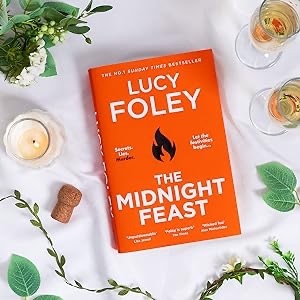
The Midnight Feast by Lucy Foley

I started this book in bed at night, which turned out to be a big mistake because I didn’t want to go to sleep once I’d started. There was a lot of yawning the next day. We’re introduced to the village of Tome (pronounced ‘tomb’ by the locals just to add a sense of foreboding) and the new wellness retreat created there by Francesca Woodland who inherited The Manor and it’s land from her grandfather. Her husband Owen is the architect on the project and has created woodland ‘hutches’ for guests, featuring outdoor showers and luxurious linens. The Manor itself is the central hub where there are classes in meditation and yoga, with a spa that has reiki alongside all the usual treatments. The opening weekend looms and while there’s a hint of anxiety around the late building of the tree houses, Fran is sure she has everything under control. On the final night of the stay she has planned a mini-festival with live music, a meal out in the woods and strange wooden sculptures. Every guest must wear a crown fashioned from twigs creating the look and feel of a pagan celebration. While the music is at it’s loudest she has given Owen the go ahead to start digging the foundations for the tree houses, in the hope the music drowns out the noise. However, that’s not the only problem on the horizon. In order to build the houses, they must take down some of the ancient trees and when Owen arrives the workmen are confused by the new symbols on their bark. They look like seagulls in flight. By the morning there’s a burned effigy and a body on the beach, a wrecked Aston Martin with blood inside and the manor hiss been rased to the ground by a ferocious fire. There’s also an elderly fisherman rambling on about seeing giant birds. It looks like the midnight feast was a rather Bacchanalian event, with discarded drink bottles, feathers and clothes littering the ground, but something went badly awry. Everyone in Tome knows the local saying- ‘Don’t disturb the birds’. Could Francesca’s dream be over when it had only just begun?

The book starts with the aftermath of the festivities, but there are two more timelines: fifteen-twenty years ago when Francesca was a teenager living at the manor with her grandparents and twin brothers and the beginning of the weekend leading up to the feast twenty-four hours later. This multi-layered effect is multiplied with several narrators – Bella who is befriended by a young Francesca and later becomes a mystery guest at The Manor’s opening weekend; Owen who is Francesca’s husband but also hides a secret past; a young man called Eddie who is the retreat’s kitchen help and Francesca, the founder. It seemed like a lot of perspectives and timelines at first but the author is very skilled at creating distinctive characters so I soon got to know them and I didn’t feel lost. Francesca radiates a sense of calm and purity. However, like many people who put up a facade like this, it’s only so long before they blow and I was waiting for that moment. Bella is very secretive, realising she isn’t The Manor’s target demographic she’s worried she might stand out. Owen is very successful architect, wealthy and absolutely in love with Francesca, but seems to know a lot about local folklore and knows his way to a secret beach. Eddie, who I was rather fond of, lives in the shadow of his older brother who went missing years ago after becoming an addict. He lives at home with his parents on the family farm and feels his father’s despair that the son who loved working the farm is gone. Eddie wants something different, but given his parent’s disapproval of the retreat, he hides his job there while hoping to work up the organisation. Finally there’s the DI on the case, who is trying to piece together the night before and recovering a body from the beach, while the only witness to the death is the elderly man who still blaming giant birds.

There’s a sinister ‘them and us’ feel to this novel, a distinction that’s in one way about class and in another way about belonging. Locals are different from tourists and even though Francesca is local because she comes from the big house she can’t be one of them. Bella’s mother scolds her for spending her summer up at the manor and wishes she would make more friends from the village. Those at the big house don’t understand the village ways. When Bella bumps into a good-looking surfer down on the secret beach there’s an instant attraction, but when she takes him to the manor Francesca and her brothers tease him as if he’s a yokel. Bella starts to wonder where she fits in at all. There are those who have transcended where they came from, but the transformation was painful and has left it’s scars. I could sense a lot of references, such as The Wicker Man and Midsommer where a seemingly pastoral and innocent celebration slowly builds towards violence. The note left for Francesca, the marked trees and the chicken nailed to her door could have been someone disgruntled with the retreat, but it felt more personal. Francesca struck me as a powder keg. When younger, she appears to have very little empathy, especially for those she views as beneath her. Her brothers have a similar outlook, convinced they can do whatever they like to the locals and it will be swept up by the family as if it never happened. Francesca was like a cat playing with a mouse and the pleasure she got from hurting others gave the impression of a psychopath in the making. Then at the opening weekend, the local kids make their protest felt by pelting the pool with stones and building fires on the section of the beach reserved for guests only. They have bigger plans too, but they’re saving them all for the night of the Midnight Feast. They want to make clear that Tome’s forest and it’s beaches are for the villagers and not to be fenced off for the use of rich visitors.

Bella wants her revenge to be more permanent than a simple one-off disturbance and she’s determined. With bleached, short hair she’s not easily recognisable as the girl she was and manages to be under the radar. When she first sees Eddie she’s taken aback, he looks so much like someone she used to know. Is she seeing ghosts everywhere? She is psychologically haunted by what happened all those years ago at another midnight feast and she’s appalled by Francesca’s decision to name the event after their final night as friends. Bella wants to make sure that the perfect, pious Sunday supplement Francesca is shown up for who she really is. By this time I was desperate for her to get her comeuppance to as we slowly see the consequences of that night long ago spreading into several local families. Each one has their own grudge: a father who’s been drinking ever since; a baby growing up without it’s mum; a young man with an addiction so strong he’s willing to lie and steal. Yet Francesca and her twin brothers are still rich, successful and as insufferable as ever. So it isn’t just our narrators who have reason to hate The Manor and some of them exact their revenge in amusing ways, while others want to end the retreat and Francesca for good. I loved the folk ritual element, reminiscent of Thomas Tryon’s Harvest Home mixed with a dose of Hitchcock’s killer birds. They are the size of a human, covered in black feathers and under their cloak is the huge beak. The villagers take them seriously, even the contractors who turn up to remove the trees don’t want to mess with those marked by the birds, they’d rather give the money back. Are the birds a simple folk tale that keeps Tome safe or are they real? As we countdown to what happened on the big night, two parties twenty years apart reveal their secrets and the birds will have their final say. The ending is terrifyingly final for some, while others will wake up hungover and wondering what exactly they witnessed. As for me, I devoured this book overnight and the final page reveal really made me smile.

Out now from Harper Collins

Meet the Author

Lucy is the No.1 New York Times and Sunday Times bestselling author of The Hunting Party, The Guest List and most recently The Midnight Feast. It’s set at a luxury new countryside resort built on old secrets beside an ancient wood. The opening weekend takes place during a heatwave (and with a big summer solstice celebration) and temperatures and tensions are rising, the local community is incensed by the influx of wealthy newcomers and some unexpected guests have come to stay. Then a body is found… 

Lucy always knew wanted to work with books somehow, so studied English at university before working in a bookshop, a literary agency and then as a fiction editor at a big publishing house, during which time she realised that every book starts off as a messy first draft full of plot holes and mistakes. She thought she’d have a go at writing herself — the result of which was her first historical fiction novel, The Book of Lost and Found. She wrote two more historicals, The Invitation and Last Letter to Istanbul, before turning to the dark side and writing her first crime thriller, The Hunting Party: her first Sunday Times and New York Times bestseller and Waterstones Book of the Month, set over New Year’s Eve at a remote, snowy spot in the Scottish Highlands. 

Next came The Guest List, a murder mystery set at a wedding on an island off the coast of Ireland, which was a Reese’s Book Club pick, a Goodreads Choice Awards winner, a Waterstones Book of the Month, and has sold over three million copies. Then came The Paris Apartment, which is a number one New York Times bestseller and Sunday Times bestseller. Her books have been translated into over 40 languages and all three murder mysteries are currently being adapted for TV and film. 

She’s also written a short story for the brand new Marple collection, a brand new series of short stories featuring Agatha Christie’s legendary detective Jane Marple, alongside writers such as Val McDermid, Kate Mosse, Alyssa Cole, Ruth Ware and Leigh Bardugo, out September 2022 to coincide with Christie’s birthday! 

If you enjoy her books or want to say hi, she’d love to hear from you: She’s @lucyfoleytweets on Twitter and @lucyfoleyauthor on Instagram, or you can check out her Facebook author page @lucyfoleyauthor

Posted in Netgalley

The End of Summer by Charlotte Philby

Judy left England as a teenager and is lived with her aunt In New York City. Looking for ways to survive she starts scamming and stealing. Judy’s mother drummed it into her that it was wise for a woman to have her own money and never rely solely on a man. This lesson was well learned, but without any real qualifications or means of making money Judy has to be more creative. She’s a grifter, stealing here and scamming there. So when she sees a story in a newspaper about a rich resident of Cape Cod becoming a widower, she decides on her next mark. Judy finds her way to a vineyard in the same area, taking a job there and making herself known until the inevitable happens and she meets Rory. She plays it clever, doesn’t ask for anything and is never pushy or monopolises his time. She’s playing the long game because she wants him to fall for her, hook line and sinker. What she didn’t bank on was falling in love with him. When they marry she has access to some of the wealthiest people in the area so she’s easily sneaking the odd item from their home and from other society people to sell on through a fence. Every summer they spend in their chateau in France and one summer Rory’s asked to hold the local Wine Appreciation Society ball. Judy is left with a dilemma. Her fence in London is blackmailing her, asking her to provide details of the ball including exits and entrances of the chateau and a guest list of who’s attending. She doesn’t want to help, but when he threatens to tell husband Rory about her past she has no choice. As the burglary takes place, Judy is locked in a toilet cubicle listening to the melee. She’s devastated to hear shots and when she runs to look for Rory she finds herself in the aftermath with a man bleeding out on the floor who turns out to be one of the robbers. When he dies she laments that a young man has died because of her and she can’t shake it off. Years later, it’s in her French home that Judy receives the phone call, the one she’s dreaded and expected all at the same time. The police are looking into a murder, but is the victim the man in France?

When Judy’s daughter Francesca gets a visit from the police and journalists it’s like a bolt from the blue. She’s a lawyer, in London and is aghast when police inform her that her mother seems to have fled the country and is wanted for murder. Francesca is left bewildered and unsure what to do. Yet she knows she must protect her mother, after all her mother has always protected her. This is a smart thriller, that doesn’t fall into cliché territory. The two women’s narratives are layered over each other, with some in the present and others set in the past, taking us from the 1960s in Cape Cod, the 1980s in the South of France and the 2000s in Kensington, London. The author is very adept at giving out just enough information, drip feeding little clues here and there that keep you reading and keep you guessing. Then, suddenly, she wrong foots you with a different direction. I found Judy so fascinating that Francesca suffered a bit in comparison. Not only is Judy beautiful, she’s a smart cookie. She can think on her feet and gets out of the tightest spots, her adrenaline running so high that my heart raced on occasions. She’s the female equivalent of the ruggedly handsome rogue, with a habit of stealing from the rich like a modern day Robin Hood. I love that the author gives her this free-spirited autonomy. She wears a mask at times, but after several years with Rory has relaxed a bit, only for a person from the past to find her. There is only one woman who suspects Judy might not be all she seems and she won’t let go of her suspicions, even taking them to the grave. I loved the allusions to Lady Audley’s Secret a Victorian ‘sensation’ novel based around the fact that Lady Audley is living a lie and may be found out. It’s a book I read at university and I was so shocked by how easy to read it was. It wasn’t slow and ponderous like other Victorian novels, it had pace and excitement just like a contemporary thriller. This is in that same tradition, but Judy has more freedom and status in today’s society. There’s less to lose, thanks to never relying solely on a man, but I was pretty sure that Judy would try her hardest to find a way out anyway. Is it wrong that the thought of her getting away with it made me smile?

Out on 20th June from The Borough Press

Meet the Author

Charlotte worked as a newspaper reporter and editor for years before moving into magazines, and then turning her hand to fiction after having her third baby. As a journalist, her work varied from undercover investigations to celebrity interviews – but what really interests her is seemingly ordinary people who do extraordinary things. This is definitely the springboard for the ideas in her novels, which she hopes are as pacey and entertaining as they are transportive. She’s inspired by favourite books including Apple Tree Yard by Louise Doughty, Restless by William Boyd, Alys, Always by Harriet Lane, The Secret History by Donna Tartt and The Constant Gardener by John Le Carre, but she’s also inspired by (and unashamedly addicted to) compelling TV drama, with favourite series including The Night Manager, True Detective, and The Honourable Woman. After spending time exploring the legacy of her grandfather, the double agent Kim Philby, she became interested in spy fiction and decided to write the books she longed to read: female-led stories that are twisty, stylish and multi-layered, tying together global espionage with haunting domestic noir.

Posted in Netgalley

The Cuckoo by Camilla Lackberg

A community torn apart

As a heavy mist rolls into the Swedish coastal town of Fjällbacka, shocking violence shakes the small community to its core. Rolf Stenklo, a famous photographer, is found murdered in his gallery. Two days later, a brutal tragedy on a private island leaves the prestigious Bauer family devastated.

A town full of secrets

With his boss acting strangely, Detective Patrik Hedström is left to lead the investigation. Tensions rise threatening cracks in the team of officers at Tanumshede police station and pressure mounts as the press demand answers.

A reckoning in blood

In pursuit of inspiration for her next true-crime book, Patrik’s wife Erica Falck leaves behind their three children and travels to Stockholm to research the unsolved decades-old murder of a figure from Rolf’s past. As Erica searches for the truth, she realizes that her mystery is connected to Patrik’s case. These threads from the past are woven into the present and old sins leave behind long shadows.

This was my first Camilla Lackberg novel and I thoroughly enjoyed my introduction into the world of Detective Patrik Hedström and his wife Erica. At first it didn’t grab me. I couldn’t remember all of the characters and how they all related to each other at the party. Henning and Elizabeth Bauer are celebrating their wedding anniversary with family and friends, but sprinkled amongst the celebrations the author places little hints of menace or disquiet. As Henning’s son Rikard stands to make a speech we realise all is not well in their relationship. Even worse the couple’s oldest friend Rolf has declined to come, but is over in the gallery organising the photos for his exhibition with an ominous final pair entitled ‘innocence’ and ‘guilt’. Old secrets are stirring and when Rolf is found dead, killed by a nail gun, Patrik has to look at who had something against him. His wife Vivian is shocked and devastated, especially since she was partying the night away. Could there be a link to his exhibition? Or was there something to uncover at Blanche, the club that the friends owned together? Then the next day, when a terrible discovery is made on the Bauer’s private island the pressure mounts on Patrik to find out who could have committed such a sickening crime. Meanwhile his wife Erica has a link to the crime through Louise, Henning’s daughter-in- law. Erica finds herself drawn to a certain aspect of the crimes, through Rolf’s photographs which appear to have featured women in the transgender community. It seems that many years ago the group were linked to another terrible murder.

The author has placed Lola’s narrative in sections throughout the main story. At first I was completely confused as I read about a little girl called P’tite and her daddy Lola. I honestly did look twice to see if it was a mistake, Lola is a woman but her daughter calls her daddy. P’tite isn’t confused or concerned as people might expect, she’s simply accepting of the fact that her daddy is a transgender woman. Lola works in a club at night and there she met Rolf, with whom she built up a friendship. Nights out often ended up at Lola’s flat, with P’tite asleep in bed and the group playing music in the kitchen. Through her narration we know that Lola’s little girl is her absolute world. The only other thing that’s precious to her are her notebooks, that she carries with her and is always writing in any spare moments she gets. I was really interested in Lola’s story, much like Erica, I sensed there was a lot more to her story that would reveal itself. However, we do know that Lola was killed in a fire along with her daughter who was found locked in a trunk. Erica starts to do some research, knowing that she must be careful to stay away from Patrick’s investigation but determined to find out why Lola met such a terrible death. As she starts to ask questions, strange anomalies come to light. The post-mortem shows that Lola had no smoke in her lungs, meaning something or someone killed her before the fire started. Sadly, the child found in the trunk did die of smoke inhalation. However, Erica does uncover something that changes absolutely everything, from the historic crime to Patrik’s investigation. Even worse it might place her in terrible danger.

I thought the author was brilliant in the way she slowly pulled apart this previously solid group of friends and family. There were professional jealousies with Henning about to be announced as the winner of the Nobel Prize for Literature. His sons Peter and Rikard couldn’t be less alike. We hear Rikard discussing with his partner that they’ll be able to get money out of Elizabeth still, despite his father cutting him off. His contempt for his parents is uncomfortable to listen to and it would be easy to imagine him committing the crimes. Peter is more traditional and stands on his own two feet. It hasn’t been easy to be a committed father since the death of his first wife Cecily. Thankfully Louise came along and carefully supported him and the boys. In fact she made herself so indispensable they are now married. The team come across rumours of one of their group, Ole, touching young women inappropriately at Blanche and pay offs having to be made. All the group are well known in their field and one of them sits on the Nobel committee, so one sniff of scandal could completely change their status. With the Bauers wealthy enough for a home on a private island it isn’t just saving their status as artists and writers, it’s preserving their wealth too.

There are very difficult subjects in the novel, dealt with sensitively and with depth. Lola’s experience of transphobia is awful. Her family only see her as Lars and won’t accept Lola at all. In fact her sister visits and makes her position clear, but making the threat that she could let child services know that P’tite lives in such an unconventional situation. This is a rather self-serving threat as she wants the little girl for herself. While Lola is accepted in her group of friends, not everyone feels the same way and the incident with a group of teenage boys outside the club is sickening and terrifying. I wasn’t sure whether she’d been killed in a similar situation or whether her killer was someone closer to home. I felt that Lola had more talent, generosity and integrity than all of her friends put together. Her sections of the book drew me in more than anything else, so I kept reading because I had to find out what happened to her. In this way I felt a kinship with Erica, who’s also compelled to follow Lola’s trail. Probably because I’m an aspiring writer, I was fascinated by her process even though I was scared for her as she started to unravel events. For light relief I loved the sections where Erika’s in-laws decide to redecorate her house while she’s away researching and Patrik is caught up in the investigation. I was inwardly cringing at the archway and the salmon pink kitchen. This is an engaging novel that compels you to keep reading, with a maze of connections and some delicious twists towards the end.

Out on 23rd May from Hemlock Press

Meet the Author

Born in 1974, Camilla Läckberg graduated from Gothenburg University of Economics, before moving to Stockholm where she worked for a few years as an economist. However, a course in creative writing triggered a drastic change of career. Her ten novels all became Swedish No. 1 bestsellers. She lives with her family in Stockholm.

Posted in Random Things Tours

Toxic by Helga Flatland

When Mathilde is forced to leave her teaching job in Oslo after her relationship with eighteen-year-old Jacob is exposed, she flees to the countryside for a more authentic life.

Her new home is a quiet cottage on the outskirts of a dairy farm run by Andres and Johs, whose hobbies include playing the fiddle and telling folktales – many of them about female rebellion and disobedience, and seeking justice, whatever it takes.

Toxic was a perfect read for me because the author creates such psychologically detailed characters and a setting so real I felt like I was there. Helga never underestimates the intelligence of her readers, assuming we’ll make sense of these complex characters and their backgrounds. The story is structured using two narrative voices, that of Mathilde and Johs. Johs’s narrative establishes both his family and the setting of the farm where Mathilde will make her new home. At first the narratives seemed completely divorced from each other; life at the farm is only just starting to undergo change after the rather stifling management of their grandfather Johannes, whereas Mathilde is a city dweller who seems hellbent on pushing boundaries and pursuing freedom. It is that search for freedom, during the COVID pandemic, that starts Mathilde hankering after a more rural life and losing her job is the catalyst for taking action. Quickly I became so drawn in by the two narratives that I stopped worrying about a link and once Johs and Mathilde are on the same farm their differences create a creeping sense of foreboding.

Mathilde is a teacher by profession, teaching students up to the age of 18. She is approached by a student, Jakob, and doesn’t even seem to stop and think about what the consequences of a potential affair might mean either for him or for her job and reputation. I was shocked that when called in by the school’s principle she doesn’t even try to deny it. She rationalises that he’s an adult, over 18, so it isn’t illegal. Everything was consensual and in fact Jakob approached her and she has proof of his pursuit in their messages. She was no longer teaching him directly when their affair began. Yet she doesn’t seem to be defending herself with an underlying awareness that what she’s done is at least unethical and an abuse of power. It’s as if she really can’t see the problem. Mathilde has very few boundaries it seems and allows her wants and needs to become her driving force. She doesn’t seem to recognise that she’s made an active choice, instead assuming their encounters were inevitable or ‘just happened’. Her indifference in the meeting at work, becomes obsession afterwards as she messages Jakob frantically wanting to talk. Jakob isn’t an innocent party in this, to me he seems largely indifferent emotionally even when the relationship is at it’s peak. It’s lust rather than an emotional connection on his part and I even felt there was an element of pride that he’s bedded a teacher. He rather likes the status the conquest gives him amongst his friends. He comes across very cold. I was interested to see if she would hear from him again, once she leaves Oslo.

The farm and it’s family are a world of difference to Mathilde’s city routine. Their life is regimented, ruled by the routine of the dairy cattle and the calendar for their arable crops. Andres is the brother who inherited the farm, but it is a family concern and even their elderly mother has the same hardened attitude and work ethic. Even if Johs has decided to take his day off, he often sees his mother rather pointedly starting tasks she thinks he should be doing. There’s a definite imbalance between the way Johs and Andres are treated by their parents. Johs is often quietly infuriated by his brother, who is paranoid about COVID symptoms and often takes sick days when there’s very little wrong. Yet on those days their mother happily picks up Andres chores without any of the attitude she gives Johs. He sees his mother as a cold woman and I would have to agree. She doesn’t show her love for her husband or Johs and even though she appears to spoil Andres she sometimes barely talks to them, just silently follows the routine the farm has always had probably since she was a little girl. Grandfather Johannes looms like a dark shadow over everything, not just the small house where he lived his final years, but the main house too. Johs feels his presence strongly in the living room, where he spent his final days in a hospital bed largely silent except for sudden, shocking expletives and insults about their grandmother. One evening he suddenly yells that he doesn’t want to spend eternity in the same grave as that ‘whore’. There’s an unspoken code here, one that’s different for men and women.

The author uses local Nordic myths and songs to give us a sense of the history of the area, but also the attitudes towards modernity and women. I found these songs harmless at first, simply an understandable part of a community where families have remained for generations. However, the more I heard, especially with their interpretations from granddad Johannes who performs them on his Hardinger fiddle, the more the content felt controlling and misogynistic. He seems to prefer women who are seen and not heard, who don’t interfere in the business of men but work hard and remain loyal to their husbands. All the songs seem to reference young women who want more than the traditional life, who might fall in love with the wrong man or try to leave. They always end with the woman suitably punished, imprisoned somewhere or even killed. I felt that Johannes actively believed in these values and indoctrinated his family with them. That’s not to say his grandsons had an easy life, because he expected hard work on the farm, excellence on the fiddle (Johs is considered not good enough) and feats of strength and masculinity when out in nature, such as making them dive naked into a high waterfall when they were only boys. Johannes was a bully and I hate people who bully. Johs believes his grandad is responsible for his mother’s coldness, towards him and his father. If you never receive love, how can you give it? While Andres has a wife and child, Johs has remained single and lives alone in the big house. He wants to make changes to modernise how they farm and has succeeded in getting the milking process mechanised. Now he wants to rent their grandparents small house next door to his and this brings Mathilde into their orbit.

This is where the book’s tension starts to build and I couldn’t imagine how Mathilde’s lack of boundaries and open sexuality would fit in here. Johs is drawn to her and watches her from his windows that overlook her garden. He seems to find her differences fascinating, although the more everyday aspects of her character do irritate him. She wants to make changes to the house, which he doesn’t mind, in fact the more she erases the smell of his grandfather the better. It’s her lack of work ethic and her waste that he finds difficult. In the spring she asked to plough up some of the lawn to create a vegetable patch, but then never plants anything. By the autumn it’s a muddy patch of weeds but still she sits by it reading a book with no attempt to clear it. She doesn’t cut the lawn and the property is looking shabby. This brought back a reminder of living with my Polish father-in-law who couldn’t understand why we were remodelling our garden but not planting a single vegetable. I was creating a garden we could sit in, enjoy the fresh air and beautiful flowers. He saw it as a waste of land when we could have been self-sufficient. He loved that his other son had bought a property and immediately ploughed up the tennis courts and planted potatoes. It was simply a different background and life experiences coming up against each other. It’s the same here, two totally different upbringings have created different values and lifestyles. Yet I felt that an antipathy was building towards Mathilde and that one wrong move could cause this tinder box to ignite. With her lack of boundaries, that wrong move seemed very possible. I was surprised by where the ending came, although not shocked. As I took a moment and thought back, every single second we spend with each character is building towards this moment. Utterly brilliant.

Meet the Author

Helga Flatland is one of Norway’s most awarded and widely read authors. Born in Telemark, Norway, in 1984, she made her literary debut in 2010 with the novel Stay If You Can, Leave If You Must, for which she was awarded the Tarjei Vesaas’ First Book Prize. She has written six novels and a children’s book and has won several other literary awards. Her fifth novel, A Modern Family (her first English translation), was published to wide acclaim in Norway in August 2017 and was a number-one bestseller. The rights have subsequently been sold across Europe and the novel has sold more than 100,000 copies. One Last Time was published in 2020 and also topped bestseller lists in Norway. Helga lives in Oslo.

Out on 23rd May from Orenda Books