Posted in Personal Purchase

Throwback Thursday! The Crimson Petal and The White by Michael Faber.

Today is my first Throwback Thursday post where I tell you about a book that’s already in my collection. It can’t always be about brand new books. Especially at a time when people are struggling financially. All of my Thursday books should be available in your local library or might be found in a second hand book or charity shop. Hope you discover something new, but old at the same time 😊😊

Publisher: Canongate Books, 2014 – Paperback Edition

ISBN: 978-1782114413

Watch your step. Keep your wits about you; you will need them. This city I am bringing you to is vast and intricate, and you have not been here before. You may imagine, from other stories you’ve read, that you know it well, but those stories flattered you, welcoming you as a friend, treating you as if you belonged. The truth is that you are an alien from another time and place altogether.

This is a new feature for 2021 where I look back at a book that I’ve already read, possibly years ago, and bring it to reader’s attention. I was more than a little daunted by this brick of a novel by Michael Faber, but such is his incredible characterisation and ability to wrong foot you at every turn, that you’re left wishing you could stay in his world a little longer. This incredible work is the novel Dickens could gave written had not been constrained by the conventions and sensibilities of his age. In fact, this novel portrays a Victorian London slightly after Dickens time, where omnibuses take middle-class ladies to shop for fripperies, such as the soaps our hero William Rackham makes in the family factory. However, despite the period, it is not Rackham who occupies us or draws our attention. It’s the women in this novel who really hold the power. From poor Agnes, the long suffering wife of Rackham diagnosed with hysteria and confined to bed, to the alluring Sugar, a prostitute with a strange skin condition. I think it is Sugar who draws us into this tale, in much the same way she draws a man, the narrator beguilingly addresses us directly – perhaps in a parody of Jane Eyre’s ‘Reader I married him’. She makes it very clear that we may think we know London, we’ve read about it from other authors after all, but what she’s showing us is a London that was always there, but hidden from our eyes.

Sugar is just 19 years old, put on the game at a tender age, she is pale, and not even a beauty really. However, she has a reputation of mythic proportions, praised highly in More Sprees – the catalogue of London whores for those who are keen customers of brothels. Whilst the oft quoted estimate of a police magistrate was 50,000 prostitutes working in London in 1791, it’s likely this figure included unmarried women living with a partner, which was quite common in the working class communities. The British Library suggests a more accurate figure of 20,000, so for Sugar to be one of the best and even well-known is quite an achievement. Her entry in the book suggests that are acts she will perform that others don’t. William Rackham searches her out along with two friends who have the guide, although William seems more interested in drinking. Disillusioned with his job and married life, William has always wanted to be a writer, scribbling away at his desk in the big house, but has never finished anything publishable so his father drafts him in to to run the family business Rackham’s Soaps. His wife, Agnes, is rapidly turning into an invalid – spending much of her time in bed and only visited by the family doctor, convinced that the rest cure and his ‘treatments’ to correct potential hysteria will help. She doesn’t even remember she has a child.

When William does find Sugar, he is enamoured of her paleness, her compliance, and her keen brain. She is like no woman he’s ever met. He can talk about his business and she understands; perhaps the only woman who has truly understood him. However, there is one fly in the ointment. Agnes is still largely in bed, often distressed and resistant to the doctor’s visits, and unaware she is a mother. Their daughter needs to be kept quiet so that she doesn’t disturb her mother or William when he is working. As time goes on and keeping Sugar starts to become expensive, he has an idea. What if he were to move Sugar into the house as his daughter’s governess? There would be an answer to the problems posed by his child, and there would be no barrier to he and Sugar being together – even if he only has a short amount of time to spare. Anyone can see this is a disastrous idea, but ideas have never been William’s strong point. What will happen when every aspect of his life is under one roof?

These characters are so well drawn and our setting so painstakingly rendered with incredible detail, every time you pick up the novel it feels like you are there – with every smell and ribald comment of Sugar’s world. The lynch pin of the novel are the two women; Sugar and Agnes. With the two under one roof, William has the ideal situation for a man with a Madonna/Whore complex – one class of women for marrying and another for sex. Sugar has every sympathy for Agnes and soon has a shrewd idea of what is going on in this outwardly respectable home. Agnes is entirely an innocent, so much so she believes that demons ‘bleed’ her monthly. When she is subjected to sexual assault in the guise of examination by the doctor, Agnes is simply dosed with laudanum to keep her quiet. Every so often, even William visits his wife bed, taking what he can even when his wife is so drugged she can’t possibly consent or participate. For a young woman like Sugar who is used to women of bawdy conversation, who douche with vinegar next to each other and understand the mechanics of sex, Agnes is a complete innocent. In fact when she does see Sugar she thinks she is her Guardian Angel, something that Sugar is happy to cultivate. As William’s interest in Sugar wanes, she becomes furious and plots how she can help Agnes and Sophie. I also love that although William considers himself the literary figure, both women are writing daily. Sugar writes an erotic and bloody revenge novel on the men who have used and abused her. Meanwhile, Agnes keeps a daily diary, explaining what is happening to her and descending further into her ideas of angels and demons. Both women have a strength that William can only dream of.

I won’t ruin the end, because I recommend that you read it, especially those of you who love historical fiction. It’s really a race to find out whether our women will come out on top and how. If you’re used to historical fiction, you might expect things to be tied up neatly with a bow, but since this is a postmodern novel you won’t get that. In fact we !leave these people as abruptly as we came in with our all seeing narrator:

An abrupt parting I know but that’s the way it always is isn’t it?’


BBC Series The Crimson Petal and The White
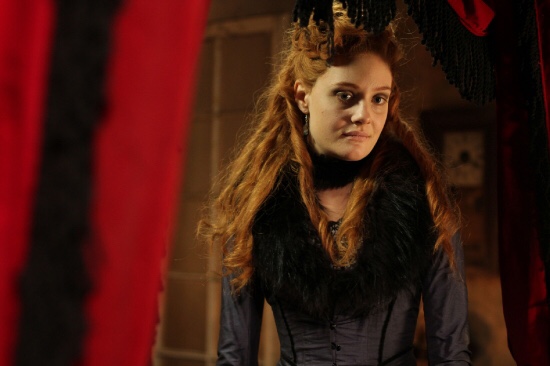
The BBC series The Crimson Petal and the White was just as intriguing as the book and with an excellent cast. Romola Garai played Sugar, Gillian Anderson played her brothel madam and mother, and Chris O’Dowd took on his first drama role as William Rackham. The settings were authentic,the language of Sugar’s world and the lack of modesty in it’s women incredibly authentic. The series stayed very true to the book, was beautiful in terms of costume and sets, and even brought interest to lesser characters in the novel. Aside from the excellent main characters, Shirley Henderson memorably portrayed the religious reformer of prostitutes, Emmeline Fox. I always remember her tiny, hoarse voice and difficulties breathing which were a huge contrast to the conviction and fire within her. This was an excellent series, well worth searching out on DVD.


Posted in Uncategorized

Life in Pieces by Dawn O’Porter

Over New Year I gave myself a short break from fiction because my concentration was poor and I couldn’t take in long, involved storytelling. This was due to a combination of events: I was affected by a mistake with my prescription medication; I was getting ready for Christmas with plans constantly changing; I had two chatty and excited stepdaughters in the house; we’d cancelled our wedding; and we’re mid – moving house. There were days that felt like nothing went right and I simply had no room in my brain or energy in my body. It felt like the ‘perfect storm’ of circumstances. This is the position that writer and broadcaster Dawn O’Porter found herself in last spring – only on a much more devastating scale. Just before the country went into lockdown Dawn received the news that her best friend, the super-talented and funny Caroline Flack, had taken her own life. She received this news out in LA where she now lives with her husband Chris O’Dowd and their two small boys. Shortly afterwards LA went into lockdown, followed by riots protesting the killing of George Floyd. Through all of this she was finding it difficult to write and like many of us decided to write a small blog each week – in Dawn’s case for Patreon subscribers. This book is the result of those blogs.

I love books like this, because they give me short sections to read that don’t require a lot of brain power. Reading like a diary, Dawn goes through the mundane, funny and terribly painful aspects of each day. Determined to keep her grief from her children, and unable to travel until the funeral date was definite, meant having to find ways of coping. Of crying in private, but being able to be mummy at a moment’s notice. She withdrew from social media and, once the funeral had taken place, the home became her whole world. It wasn’t that she could put the loss to one side, she felt Caroline in her head every moment every day. Having been very critical of celebrities who shared Caroline’s last messages after her death, the author manages to tread a fine line by joyfully reminiscing about her friend while not talking about her death and the circumstances surrounding it. This is not a book about Caroline, it is very firmly a book about Dawn and her own experience of the past year. It isn’t just about grief either, it’s about suddenly being a full-time Mum while trying to find space to create, how it feels to be British living in LA, and the huge social upheaval on their doorstep during the riots. Each section is the equivalent of a Polaroid snapshot of this extraordinary time.

Dawn has a such a definite and accessible narrative voice – she is brutally honest about her experiences whether they be physical or whether she’s relaying her complex interior monologue. I had the feeling nothing was censored and I could identify with those chaotic ‘family in lockdown’ moments even if the children in my house are more teenage than toddler. Those dilemmas of whether we bother to dress and groom or not, do we keep a set routine or do as we please, keeping up with exercise and eating well or just eating like it’s Christmas. Sadly, I think I largely failed in these challenges! I understood Dawn’s sense of only dealing with what’s in front of us – even if what’s in front of us is a shitstorm of tearful children, shitting animals, followed by puking animals and the inability to find a food delivery slot anywhere! These are common to everyone’s experience of the year. We’ve spent time with the same people every day, potentially doing the same things over and over. This heightens everything – tensions, emotions, worries. If we’re struggling with difficult emotions it forces us to face them, there’s no escape.

Between stories of disasters with the boys, food adventures and concerns about lockdown drinking, come global concerns. Dawn talks about her wardrobe and since we share a love of vintage this is something I really enjoyed, but it was interesting to think about in terms of the environmental impact of fashion – something I’ve been concerned about for a few years now. Her exploration of the riots in her neighbourhood stood out particularly to me. Again, her worries are at family level. Rioters are directly outside their home, the bins are set alight and she talks of keeping an emergency bag in case they have to leave in a hurry. Yet she is hugely sympathetic to the cause, profoundly moved by the terrible footage of a man begging for his life, and both she and Chris join the protests where they can. She writes eloquently about our white privilege, and how her black friends keep her on track when she’s not understanding something – if more of us admitted not knowing, a better dialogue would emerge. I went from laughing about a household mishap to grab a pen and note down some reading she recommended about white fragility. I think this is what I enjoy most about being in Dawn’s company – there’s room for silliness, raw honesty and emotion, then profound reflections on the bigger problems our society faces. It’s like a long evening with your best friends. My favourite anecdote involved a very famous red haired actress and our British humour about ‘gingers’ really not translating! This was a great read and I was sorry when it ended.

Meet The Author

DAWN O’PORTER lives in Los Angeles with her husband Chris, her two boys Art and Valentine, and her cat Lilu and dog Potato.

Dawn started out in TV production but quickly landed in front of the camera, making numerous documentaries that included immersive investigations of Polygamy, Size Zero, Childbirth, Free Love, Breast Cancer and the movie Dirty Dancing. Further TV work included This Old Thing, a prime-time Channel 4 show celebrating the wonders of vintage clothing. 

Dawn’s journalism has appeared in multiple publications and she was the monthly columnist for Glamour magazine. She is now a full-time writer of six books – although she would probably have written sixteen if it weren’t for her addiction to Instagram Stories. 

Most recently, Dawn has written the script for Especially for You, a jukebox musical using the infamous Stock Aitken and Waterman back catalogue. The show will open with a national tour in early 2020.

http://www.dawnoporter.co.uk
@hotpatooties
/DawnOPorter

Posted in Random Things Tours

The Art of Creativity: Seven Powerful Habits to Unlock Your True Potential by Susie Pearl.

I was so excited to be offered a copy of this book to review because, when I’m not blogging, I’m a counsellor and writing therapist. Trying to unblock people’s potential is exactly what I do. I’m in the middle of an MA in Creative Writing and Well-being, so I’m also discovering the blocks to my own creativity too. I was looking forward to getting stuck into some of the exercises in Susie’s book and I was delighted to find they were more in depth and helpful than expected. They don’t just delve into the psyche, but give solid, practical advice too. This works like a one stop guide to taking risks, ignoring critics, releasing blocks and forming daily creative habits. It looks after the artist physically, mentally and even spiritually. I had expected a simple gift book, but it soon proved this was much more than that.

One exercise involved confronting fear and I decided to try this out because I have a lot of fears around the creative process – mainly lack of confidence in my writing ability, fear of revealing too much, offending someone or just embarrassing myself. Being an artist exposes us, not just to criticism, but to being really seen as we are – good and bad bits. It was interesting to write about things I fear – I have a terrible fear of clowns thanks to Stephen King – but in writing about it I realised it’s not the clown, but the disguise that’s the problem. Any sort of mask, face make-up or disguise had a similar effect. It’s a fear of people not being authentic, not showing me their true selves. So, the very thing I fear in other people, is what I fear in my writing. I had to ask if maybe I was the one wearing the disguise. I was then asked to use a journal to answer questions about the creative process and what scares me about it, and what my inner voice was like. I remembered trying a different handwriting when I was at primary school, only to have my work held up as an example of what not to do with our work. By trying something different I had ruined my work and needed to return to my usual writing. I remembered being so embarrassed. The same teacher used to make us do Mastermind every Friday morning where we would sit in a black chair at the front of the class and he would fire times tables sums at us on the clock. I used to dread Friday mornings and wanted to be ill so I didn’t have to take part. To move forward I need to work out my negative core beliefs about my creativity and then challenge them with positive affirmations.

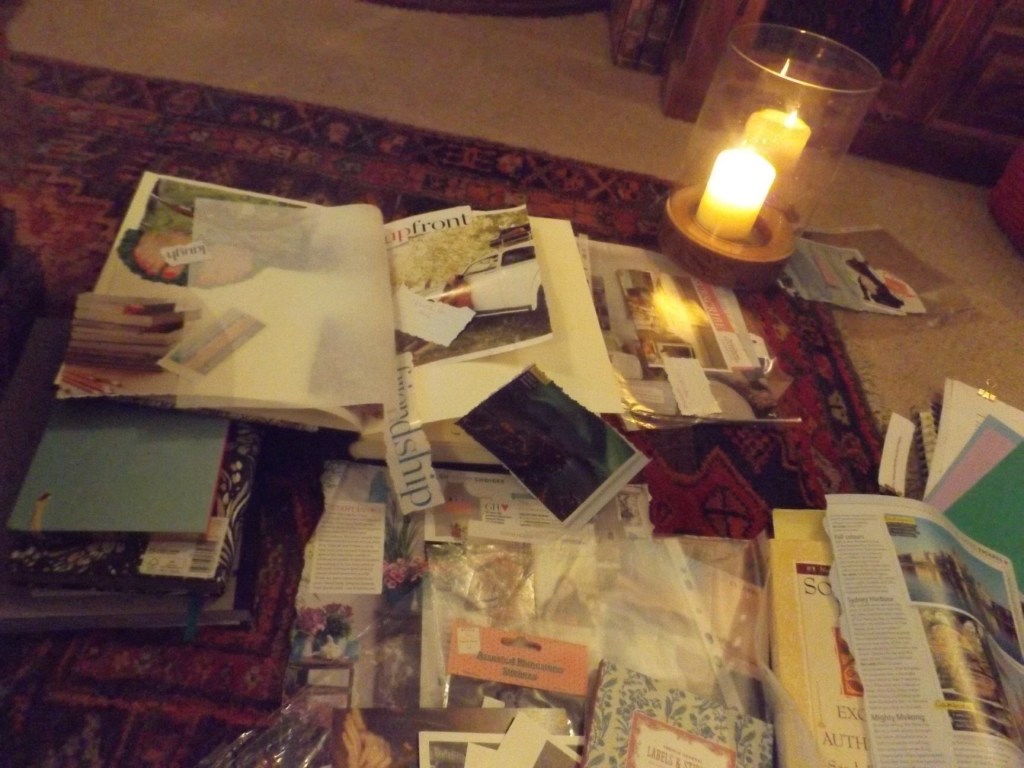
Since encouraging people to journal is a major part of the work I do – in fact I’ve been teaching journaling and scrapbooking for mental health for eight years now – I was pleased to see it here as a cornerstone for creativity. I loved this explanation of why it works:

Allowing ideas and words to flow naturally from your brain to the page, without editing, helps the unconscious mind to swim to the surface and become seen and heard.’

It allows us to explore unfettered, not only the contents of our day and how we’re feeling, but in a creative context to explore what stops us creating. Surely if we can journal, we can write? The author suggests we use lists to determine what creative activity we want to do, list everything we think stops us from carrying this out, whether it’s an internal or external block. Then we can work out and suggest solutions for these blocks – I often find it helps to imagine to blocks and issues belong to someone else because that gives us the right mindset to solve them. If solving our own issues, we can have unconscious blocks that follow us even into our journal. In fact the author herself suggests it can help to imagine we are trying to help a friend rather than answering our own problems.

Scrapbooking on my authentic self

For me, the most useful section on a practical level is the section on mind maps. I am currently writing a series of pieces for my MA that explore my experiences nursing my late husband, but also the dynamics within his family and their flight from Poland during WW2. I hope that this will become a novel, because I have always wanted to be a writer. The author suggests a mind map and I use my scrapbook for these so I can use colour and collage and make it a piece of art in its own right. I want it to inspire me when I’m struggling, so aim to use family photos and pictures of the places I need to research or visit. She suggests using meditation for 15 minutes before starting, something I do in writing workshops because it stops chatter, calms the room and lets people focus on their own intentions. Usefully, she suggests key questions to ask yourself such as key themes, chapters and intention. However, she also suggests including questions about yourself such as – what are my unique credentials for writing this book? Why does it need to be written? What has inspired me to write this book? These are really positive questions because they get us to think positively about our skills and knowledge and can be used as encouragement when we’re feeling like we don’t have the skills, knowledge, or talent to do this! Something all writers feel at times.

At the back there’s a brilliant section on references and further reading that I know are really helpful because they’re all in my reference library at home. I think this is a really useful little book, great to fit in a bag to carry with you and will be useful for the future, not just as you work through it the first time. I’m looking forward to using it alongside my upcoming work, but also adding it to the libraries of other potential creators I know. It delivers much more than it promises as first glance. The most important concept it introduces is that of the ‘flow-state’ – ‘the mental state of being completely immersed in a task’. This stage isn’t just important for people creating a specific piece of work, because it links to that other buzz word for mental well-being- mindfulness. When we become so immersed in a task we lose track of time, we are practising mindfulness because we’re focused on only one thing at a time. We’re not checking the time, or social media and becoming distracted by everyday cares. We are simply being. This is something that everyone can benefit from.

Completed collages

Connect with the author by signing up for a newsletter at:

http://www.susiepearl.com

You can also connect with her at:

@susiepearlwriter

info@susiepearl.com

Posted in Random Things Tours

Winterkill by Ragnar Jonasson (Dark Iceland Book 6).

Publisher: Orenda Books (21 Jan. 2021)

ISBN:1913193446

When given the opportunity to read an Orenda book I rarely pass it up. My only misgiving with this one, was that it was the sixth in a series I didn’t know whether I’d ever be able to catch up and fully understand what was going on. Once I’d done my research and read a few reviews of the Dark Iceland series, I was in! Described as ‘creepy, chilling and perceptive’ by Ian Rankin and full of ‘poetic beauty’ by Peter James, this instalment comes highly recommended. The New York Times review blew me away and made this a must read.

Jónasson’s true gift is for describing the daunting beauty of the fierce setting, lashed by blinding snowstorms that smother the village in a thick, white darkness that is strangely comforting’ New York Times

That image of the setting grabbed me because I’ve lived in some isolated locations here in the U.K. and have written myself about that strange sense of safety a huge snow fall brings. All falls quiet and you are safe, sheltered and warm. The world becomes muffled as you are slowly cut off from civilisation, under a think blanket. I knew I would connect with the setting at least. Of course, I shouldn’t have worried, because this was a great read in its own right and I managed perfectly well without the reading the others first – obviously as soon as I finished this one I ordered them all since so I could have an Orenda Christmas!

The hero of the Dark Iceland series is Ari Thor Arason, the police inspector of a small town in Iceland called Siglufjörður. He is recently separated from his girlfriend, who now lives in Sweden with their three year old son. As Easter approaches Ari Thor is looking forward to spending some time with them both when they come to stay for the weekend. However his plans are thrown into disarray when the body of a young girl turns up to claim his attention. A nineteen year old girl appears to have jumped from the balcony of a building, but seems to have no connection to anyone who lives there. Why would she travel to this particular building to commit suicide? Ari can’t help wondering and his wondering leads him to dig a little deeper and find out whether she was pushed. His suspicions are aroused further when an old flame, now working in a local nursing home, gives him a call because she’s concerned about an elderly resident. She shows Ari the old man’s room, and he’s shocked to see the words ‘she was murdered’ written over and over again. As a huge storm heads towards Siglufjörður, Ari is left pondering whether these two events are connected and also whether he can salvage his family or even reconcile any sort of private life with his job.

Ari Thor isn’t an ‘action man’ type hero, he’s thoughtful, perceptive and investigates gently. The awkwardness of his Easter plans are really painful; he books his ex-partner and son in at the hotel, but is excited when they want to stay at the house. Ari misunderstands and thinks they might all stay together, but he ends up in the hotel. He feels excluded, but also awkward as other guests and staff know him well (this is a small remote town after all). He wonders what they will be thinking about their local detective. He knows that the job he loves has to command all his attention, when an important case comes in and so does his estranged partner. However, there is a large gap between knowing this and the reality of living it. Can he ever promise his family what they need? This conflict becomes ever clearer over the weekend when he is pulled from one place to another as new evidence comes to light.

I loved the atmosphere of this small town, where everyone knows each other. Yet there’s also the uneasy thought that many residents could be in this remote place to disappear and keep secrets. There’s so much going on under that polite layer of familiarity, even where Ari thinks he knows someone well. In one sense Siglufjörður has changed enormously, new road links have made it more accessible so even tourists have started to visit for ski-ing and to stay in new luxury holiday chalets. However, once the blizzard descends it becomes bleak, remote and strangely more beautiful. Ari’s investigation takes him into the even more rural area of Siglunes, where two men live in a small wood cabin inaccessible by road. I found Siglunes quite sinister, but Siglufjörður feels remote too and even claustrophobic as the weather pulls in. The author skilfully ratchets the tension up a notch, just at the same time as the community becomes more isolated. Yet we never feel rushed, Ari Thor does not panic or hurry the investigation- every move is well thought out and measured and he shows great compassion to the bereaved and those involved.

I thought it was so clever that, without knowing it at first, Ari is slowly uncovering more than one crime. We are forced to learn the lesson that people are not always what they seem, as the manager of the nursing home is called on for questioning. Ari Thor would say he knows him, likes him even and there has been no indication that he has been doing anything but noble, humanitarian work for the elderly of the town. However, just under the surface are financial worries, difficulties gaining government funding and enough residents to make the venture pay. If you’re looking for high octane action, or the endless twists and turns of a convoluted plot then this is the wrong book for you. The pace is gentle, the motive uncomplicated, and our detective is a contemplative sort rather than an action hero. What compels here (as it should) is the human tragedy – the loss of a girl on the brink of adult life and full of promise, for her family and the whole town. There is even an element of humanity and complex, conflicting, motives within our criminals too, when they are unmasked. This doesn’t take away from the chilling nature of their crimes though – in fact I find the thought that killers walk among us, with the same worries and preoccupations that we have, even more disturbing than some of the more obvious monsters we see in crime fiction. I would recommend this book and the whole series, as a fabulous introduction to Nordic Noir, and I could easily imagine sitting with my feet up, a glass of whiskey in hand, being compelled by these stories on BBC4. This book was beautifully written, has an evocative setting and a detective I truly enjoyed spending my Christmas with.

Meet The Author

Ragnar Jónasson was born in Reykjavík, Iceland, where he works as a writer and a lawyer and teaches copyright law at Reykjavík University. He has previously worked on radio and television, including as a TV news reporter for the Icelandic National Broadcasting Service, and, from the age of seventeen, has translated fourteen of Agatha Christie’s novels. He is an international Number One bestseller

Posted in Throwback Thursday

Throwback Thursday! Blue Diary by Alice Hoffman.

When Ethan Ford fails to show up for work on a brilliant summer morning, none of his neighbors would guess that for more than thirteen years, he has been running from his past. His true nature has been locked away, as hidden as his real identity. But sometimes locks spring open, and the devastating truths of Ethan Ford’s history shatter the small-town peace of Monroe, affecting family and friends alike.

As regular readers know, Alice Hoffman is one of my favourite authors and while Blue Diary isn’t the first of her books I read, it’s definitely one of the best. Ethan and Jorie are one of those golden couples that probably annoy the hell out of everyone around them. They are a beautiful pair, with a lovely son, Collie. Jorie is the girl next door, the girl you’d ring if you needed advice or a shoulder to cry on, and the parent to ring if you need muffins baking for the school’s Christmas fair. Ethan is the neighbour you ring if you need help putting up a shelf, or if you wake up in the night and think someone is prowling in your garden. They are the cornerstone of this community.

Now, the police are at the door. Ethan Ford’s life as an irreproachable family man and heroic volunteer fireman has come to an end—and Jorie Ford’s life is coming apart. Some of the residents of Monroe are rallying behind Ethan. But others, including his wife and son, are wondering what remains true when so much is shown to be false—and how capable we really are of change.

Hoffman writes small towns and the dynamics of the people in them, so well. If Jorie and Ethan were in the Instagram age every photo would have #relationshipgoals in the replies underneath. Jorie’s world falls apart when Ethan is arrested and she is sure it must be a mistake. She knows this man, down to his bones. Surely she would know if he was hiding a dark secret? The novel invites us to ask the question: how well can we really know the person who’s head is on the pillow next to ours at night? Another thing that occurred to me as I was re-reading the novel, was how much the internet has changed our daily lives, into something we use like a daily diary. Originally published in 2001, when many people I knew didn’t have an internet connection in their home, my re-read of the book made me think about cancel culture and how much of people’s lives are now documented for all to see. Now, a long forgotten tasteless joke, inappropriate comment, or photographed drunken escapade, can be found years after the fact and be commented upon and criticised by millions. Applying the standards of today’s society, no matter how important and hard won they may be, to yesterday’s behaviour can be devastating for the individual involved. Even if their own views have now changed for the better, an individual can lose their livelihood, relationships, and potentially their whole life over one incident. It is an incredible power we hold in our hands when joining an internet ‘pile-on’.

Jorie only experiences this on a small town scale, but it’s effect is no less devastating. As it becomes known that Ethan has been arrested, to be interviewed on charges of the rape and murder of a young girl, neighbours and friends are shocked, but have to consider their response. Obviously the first question on everyone’s lips is whether Ethan is guilty or not, but beyond that: did Jorie know about this? Is she guilty by association? Is this his only crime? Can they still be friends with Jorie? Jorie has so many questions for Ethan, but other issues are swirling around in her mind. How will they cope financially? Will she lose her support network? Most importantly she wonders how to protect Collie from knowing about the accusations. This doesn’t just affect her and Ethan, this could blight Collie’s whole life too. With all this in mind, as well as needing to hear the truth, Jorie is wondering whether her marriage can survive this? Should it? When Ethan confesses to the crime, her world and her trust in her husband is shattered.

Ethan’s only defence is that he had no intention to rape or kill the young girl. His claim is that during consensual sex, he accidentally choked her and then decided to run, worrying that no one would believe his innocence. I wasn’t sure I did. He packed up and set up a new life for himself in Massachusetts where he met Jorie. Even if we believe his story, the injustice that he could choose to rebuild his life while his victim couldn’t really stayed with me. He had covered his tracks very well, until Collie’s 13 year old friend Kat, sees an e-fit of a suspect on television and rings the hotline to turn Ethan in. On one hand she feels it’s the right thing to do, but is sad about the effect this will have on Collie. I found it very surprising how many townsfolk were still willing to support and help Ethan, even after his confession. Jorie becomes more and more conflicted, then makes a decision to gain more information in an attempt to make peace with what has happened. She asks the victim’s brother if she can visit with him in Maryland. She needs to hear the context of the crime and the impact it had on the family involved.

There, Jorie gets a feel for the town and how this terrible act of violence was felt by all the residents. The victim’s name is Rachael and James takes Jorie up to Rachael’s room which has never been changed since her death. With Jorie the reader takes in the cuddly toys, the posters, and the framed photos of Rachael riding and with friends. This is a little girl’s room and when James talks about trying to scrub the bloodstain from the wall behind the bed, Ethan’s crime really comes home to the reader and to Jorie. The break also gives her some much needed breathing space, away from the pressure of the court case and the well-meaning supporters of Ethan, but also from Ethan himself. When she’s near him the love she has felt for him this past 13 years threatens to overwhelm her and the reality of Ethan’s crime. Here she has time to think clearly about what it is she has to forgive, before deciding whether she can. It isn’t just the crime itself, but the years of lies, as well as committing his life to her and starting a family knowing this was lurking in his past. He chose to have Collie with her, knowing that, if exposed, his crime would alter Collie’s life irreparably and leave him without a father. I found myself seeing a selfishness in these acts, but also in accepting help from the town seeking his acquittal and expecting Jorie to stand by him. Could the same selfishness, the wanting something and simply taking it, signal the real motive for his crime?

This is not a book about Ethan, nor is it a crime novel in the sense that we’re waiting for a murderer to be unmasked. This is more about the aftermath of violent crime for the family of the victim and the perpetrator. I think Hoffman does this very well. Her use of the victim’s diary as our way into her character is clever. We feel, alongside Jorie, for this sensitive girl falling in love for the first time. Her innocence in how she thinks of a relationship with Ethan is heartbreaking since we know the outcome. I loved the way Hoffman aligns her innocence with nature and gives us layers of description using flowers, trees, seasons and food to help us understand these characters and embed them within a place. We root for these people, drawn into a web of lies that is still being spun to protect Ethan. When we finally reach the section where the rape and murder takes place, it has a huge impact and made me cry on first reading, for all the victims of this crime. Ultimately, our ending hinges on Jorie’s ability to forgive and even if does, does forgiving mean we have to forget?

Meet The Author


Alice Hoffman is the author of thirty works of fiction, including Practical Magic, The Red Garden, The Dovekeepers and, most recently,The Museum of Extraordinary Things. She lives in Boston. Her latest novel The Book of Magic will be the fourth in the Practical Magic series abs will be released on 5th October 2021. Visit her website: http://www.alicehoffman.com

Posted in Netgalley

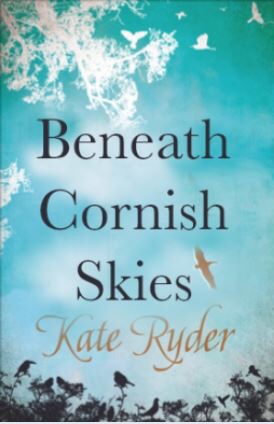
Beneath Cornish Skies by Kate Ryder.

Published: 7th Jan 2021 Aria and Aries ISBN: 978-1800245983

I felt like I’d stepped into a little oasis when I picked up this ARC. I had been reading a very bloody crime novel just before so this was like a balm for the soul! Cassandra appears to have everything she could want in life. She lives in an incredible refurbished farmhouse on the South Downs with attached stables. Her long term partner, David, is a successful businessman who just happens to be charming and good looking. They have money and she can spend her time schooling horses then dressing for dinner from her beautiful walk-in wardrobe. David calls her Sandie and they’ve been together over ten years – in fact ever since she was involved in a car crash that killed both of her parents. David was first on scene and helped her out of the wreckage. They’ve never been apart since. He was attentive in the days following the accident, there for her therapies and as she was wheeled out of the hospital it seemed only sensible to stay with him – there being nowhere else to go. So why is she feeling dissatisfied and as if she’s drifting?

He catalyst comes as she’s out riding one morning and stops for a breather in one of the top fields behind the house. As she looks down to the farmhouse she sees David, who is working from home, and their cleaner Melanie coming to sit outside with a cup of coffee. She wonders to herself about the last time David paused his day to have a moment with her. Then she sees Melanie rest her hand on his arm, in a familiar way and she starts to sense that there’s more going on she realised. The incident brings to the forefront of her mind many things about her life that she’s unhappy with. David is all about appearances, so the house must be kept tidy at all times. She’s almost trained to wash a cup or plate immediately after she’s used it. He likes to come in and find the house immaculate. He calls her Sandie or Sandra when her full name is Cassandra and he likes her to dress well especially if they’re going to a party or function for work. Even then she can’t let loose, no dancing or drinking excessively, nothing that might show him or the business in a bad light. Yet, that very evening at a barbecue, she sees him exiting a private bit of the house, again with Melanie in tow. When she finds an earring in their bedroom, she can’t ignore things any longer. It’s not just the obvious infidelity. She needs something different.

On impulse she picks up The Lady magazine, drawn in by the cover photo of a man walking from a tunnel of trees. The man is a writer, Hunter Harcourt, and his article about ancient byways and the magic they possess. Within the adverts though she finds an advert that catches her eye; a family in a Manor House in Cornwall need help with the stable yard and a growing family for six months. This might be just the breathing space she needs. With David seemingly unrepentant about his affair, Cassandra finally asks him the one thing she has always wanted to know – will he ever be willing to have the children she has always wanted? David is adamant, children are not in his future. So, early one morning Cass hitches the horse box to her Range Rover and takes a leap of faith. She drives to Cornwall, only stopping at Melanie’s home to return the earring. What she finds in Cornwall is space enough to think, but activity enough not to dwell on what has happened. She falls in with the Kinsman family and their gorgeous children very easily. The Manor House and grounds are beautiful and Caspian soon finds his feet with the other horses. Cass finds solace in the rugged Atlantic coastline and the time spent with the children. She is shocked when, on her day off, she is looking for something to fill the hours when she happens on a talk on local history by a local author, Hunter Harcourt, otherwise known as Luke. Their meeting begins a friendship that seems so natural, almost as if they’d met before.

There was so much to like about this book. I love Cornwall and I felt as though I was there, with the descriptions of the villages, the beaches and those ancient places that seem to hold magic. I loved watching Cass unfurl in her new environment as she fits in so beautifully with the Kinsman family, the landscape and the new friends she makes such as surfer Robin. This is about someone awakening and finding their authentic self, something she’s never been able to do before, having been so busy fitting around David’s standards and timetable. Cass went straight from her parent’s household to David’s with no gap between. This is the first time she has stood on her own two feet and her confidence grows. The relationship with Luke seems so predestined that it was a huge disappointment to find out he’s married to the feisty Amanda. We soon see the cracks in their marriage though, not just her infidelity, but their differing views on where to live seem insurmountable. The natural way Luke and Cass seem to fit together seems to be pre-ordained – this is where I felt more could have been made of the supernatural aspect of the story.

Soon after arriving Cass finds that the manor is haunted by several ghosts, but the one she seems to see most is the young girl who had fallen in love with the gamekeeper. Cass feels that, just like the ancient byways, there are spaces within the fabric of time at the manor, where ghosts may appear. Cass has an affinity with the the young woman in her peacock blue dress, but could it be more than that. It felt like the author was flirting with the idea of Cass and Luke being a reincarnation of the couple – the references to her gypsy soul, the sense they have of meeting before, the apparition Cass sees and hears. I think this could have been explored even more than it was. Cass clearly has some psychic ability; she experiences the ghost of a maid, has vivid dreams about places and people from another time, and at one point hears a ghost ship. I found myself wanting more of this and would have loved to know more about the daughter of the house and the gamekeeper, possibly in another time frame. Luke is a dream of a man, gentle, intelligent, loves the outdoors and animals and seems to know himself very well. His marriage seems to be one made when young, when differences in outlook seem to matter less and we think love can overcome anything. Sadly, Luke finds as he gets older, the more he needs the pace of life in the country whereas Amanda is a city girl who needs the bustle and the noise.

Of course I wanted David to get some sort of comeuppance for his awful behaviour. Even in absence he tries to push Cass’s buttons by ordering her home, then pleading that he loves and misses her while mentioning someone he’s having casual sex with in the next breath. He is arrogant, fussy and I couldn’t think of a single reason Cass should return to him at the end – other than habit and conditioning. I won’t ruin the end, but it does keep you hooked to the final pages when a terrible secret emerges. This was a gentle romance, set in a beautiful part of the world and is as much about Cass falling back in love with herself as it is anyone else. It’s a voyage of self-discovery, where slowly she heals and finds her authentic self. I found it thoroughly enjoyable and a little oasis of calm in a busy month.

Meet The Author

Kate Ryder

Kate Ryder is an Amazon Kindle international best seller who writes timeslip and romantic suspense in a ‘true to life’ narrative. On leaving school she studied drama but soon discovered her preference for writing rather than performing. Since then, she has worked in the publishing, tour operating and property industries, and has travelled widely.

A member of the Romantic Novelists’ Association and The Society of Authors, in 2017 Kate signed a 4-book contract with Aria (digital imprint of award-winning independent publisher, Head of Zeus). Originally from the South East of England, today Kate lives on the Cornish side of the beautiful Tamar Valley with her husband and a collection of animals.

Keep in touch with Kate:
http://www.kateryder.me
Twitter: https://twitter.com/KateRyder_Books
Facebook: https://www.facebook.com/kateryder.author
Instagram: @kateryder_author

Posted in Netgalley, Uncategorized

Madam by Phoebe Wynne

Publisher: Quercus (18 Feb. 2021) ISBN: 978-1529408720

Why is it always so hard to write a review when the book is so good? It’s as if I have to wrestle with it for ages, in the hope of doing it justice! All I can do is try and put across all of the reasons I liked it. In fact, I loved everything about this feminist gothic novel from start to finish. First the setting – the eerie, almost otherworldly atmosphere around Caldonbrae School, the strange weather conditions suggesting it’s own micro-climate, and the school’s position as an English outpost (or invader) in Scotland. It’s appearance is like a hulking beast on the coastline, something that shouldn’t be disturbed lest it swallow you up. Secondly, there’s our main character Rose, addressed at all times as ‘Madam’ and finally the dark secret her predecessor tried to uncover at the heart of Caldonbrae, before it was Rose’s turn to fight it’s terrible tradition.

For 150 years, Caldonbrae Hall has sat as a beacon of excellence in the ancestral castle of Lord William Hope. A boarding school for girls, it promises a future where its pupils will emerge ‘resilient and ready to serve society’. Rose Christie, a 26-year-old Classics teacher, is the first new hire for the school in over a decade. At first, Rose feels overwhelmed in the face of this elite establishment, but soon after her arrival she begins to understand that she may have more to fear than her own imposter syndrome. When Rose stumbles across the secret circumstances surrounding the abrupt departure of her predecessor – a woman whose ghost lingers over everything and who no one will discuss – she realises that there is much more to this institution than she has been led to believe. As she uncovers the darkness that beats at the heart of Caldonbrae, Rose becomes embroiled in a battle that will threaten her sanity as well as her safety.

This novel was incredible from start to finish. I loved it. Straight away I noticed echoes of two of my favourite books; Jane Eyre by Charlotte Bronte and Rebecca by Daphne Du Maurier. The younger girls school uniforms reminded me of the aprons of Lowood School. The constant references to the previous classics teacher, and the mystery surrounding what happened to her had definite echoes of Rochester’s wife – hidden from view in the attic for being other than the perfect, meek and gentle wife he wanted. What exactly does this school expect of the teachers and how did Madam fall from grace so spectacularly? The training at the school starts to feel more sinister as time goes on. It begins to feel as if they’re trying to shape young women in a very old fashioned image; teaching them how to stay it in their place and be the 19th Century ideal of the ‘Angel in the House’. Although there’s something a lot more knowing about these girls, they put on this ideal as if its a disguise, designed to please but very aware it’s a conceit sure to reap the rewards of wealth and privilege. The previous ‘Madam’, whose name is Jane, is like the ghostly presence of Rebecca, still holding sway over the girls – especially Bethany who seems to have developed an obsession with her teacher. Jane seems to be everywhere Rose turns, but tantalisingly just out of reach. The author creates an edgy and eerie atmosphere where you feel she might be just ahead of Rose, her gown swishing round the corner.

Rose tries to understand the place she’s come to teach. There is a sense in which this school is a complete culture shock – like a child affected by poverty or a tough inner city environment being expected to thrive at Oxford or Cambridge where there’s an etiquette and language that’s alien to most outsiders. She has to muddle through this aspect of life at Caldonbrae and it makes sense to her if the purpose is to educate and prepare the girls for further education and professions like the law and politics. Yet, alongside this traditional, classical education there are hints of the old ‘finishing school’ where attributes like poise, social etiquette and deportment are deemed equally important. What exactly is she preparing these girls for?

As the secret starts to come to the surface so the tension of the novel rises. Is Rose being trained too? An outsider brought in to see if new teachers can be moulded to the school’s purpose. As Bethany’s attachment to Madam becomes clearer she seems to stalk Rose. and the reader isn’t sure whether she resents Rose being in the place of her former favourite or whether she has simply transferred her affections. When she makes allegations about Rose she threatens her whole future at the school, but is Bethany trying to harm her or warn her? A strange hierarchy operates amongst the girls who know themselves to be the elite performers and those who don’t make the grade are offered inducements to improve, but these inducements can be threats as well as rewards. The horror of a young woman having her head shaved for performing badly is enshrined in patriarchal systems and is designed both to shame the woman and act as a warning to others. Rose guesses what might be happening, before the secret is fully revealed but it’s such an alien and deviant concept in modern society that she can’t believe it could be true. Could she ever be complicit in such a scheme? I found myself wondering how far the girls are ‘groomed’ into accepting this future or how many are knowingly acquiescing to it for the rewards of wealth, status and family honour. Rose is backed into a corner, by fear of what may have happened to her predecessor certainly, but also the knowledge that the school can reward her far beyond what she’s imagined. Her mother, severely disabled by multiple sclerosis, is placed within a state of the art care facility. Can Rose be bought, or will she try and walk away? However, does anyone walk away from Caldonbrae unscathed? Could Rose, as quiet as she seems, finds a way to walk away, but also bring down the whole system in her wake. This was an incredible, unputdownable, novel full of gothic atmosphere, and dark, patriarchal, purpose. However, there is also a feminist heroine ready to shine a light on long held secrets, even at the risk of that light becoming a burning flame.

Posted in Uncategorized

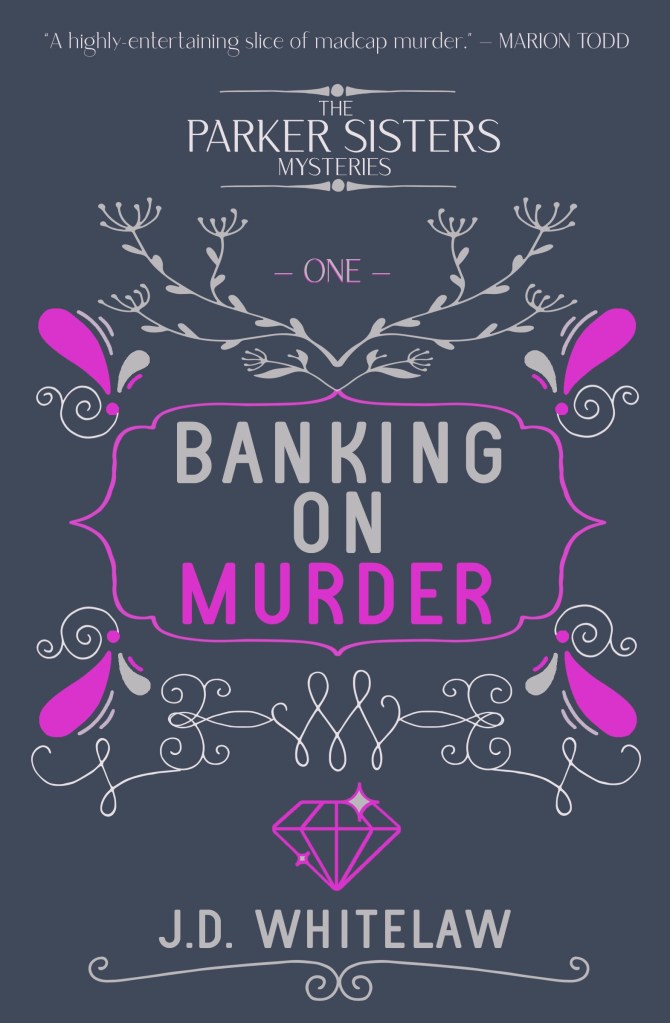
Banking on Murder by J.D.Whitelaw.

Publisher: Red Dog Press (29 Nov. 2020). ISBN: 978-1913331962

Well this book was a great surprise. I absolutely loved it. Three quirky sisters, a detective agency, a troublesome client and the backdrop of Glasgow just to finish it off. What’s not to love? I read it in two days, because it was just so much fun I couldn’t put it down. Now all I need is for someone to turn it into a Sunday evening series starring Kelly McDonald, Laura Fraser and Jessie Buckley and I’ll be content.

Martha is the eldest sister, slightly frumpy and very much a mother figure for her two younger sisters, Helen and Geri. She is dependable and the real business-like sister who keeps the agency ticking over. Helen is more of a mystery, but certainly has brains as the academic of the outfit. It turns out she’s also a very able dancer when she’s had enough to drink. Geri brings youth knowledge to the team as she’s the student of the trio. She may lurch in like she’s had no sleep, but she’s very sharp and knows how to use social media to the agency’s advantage. They’ve been requested at the home of Tracey Coulthard, who lives in a very smart home in a wealthy suburb of Glasgow. They arrive to find a maid, May, who is very worried about her employer who seems to be overwrought. They can hear screams and smashes coming from the bedroom. Mrs Coulthard is in bed crying, naked from the waist up and the fact that people are in her bedroom doesn’t seem to faze her at all. She offers the sisters £20,000 to find out the truth about her husband Gordon and his ‘extracurricular’ activities. This is the Parker sister’s meat and drink, most of their work is detecting whether partners are being unfaithful. However, the level of distress from this particular client is worrying Martha particularly. What might she do if they find out something she doesn’t want to hear? Martha senses a whole lot of trouble packaged alongside that cold hard cash.

The sisters manage to get themselves invited to a party for Gordon Coulthard’s company. Helen throws herself into the fray and Geri starts getting to know Gordon’s right hand man. As usual though, the sister’s don’t investigate quietly. Helen proceeds to get blind drunk and get a little over familiar with guests. In trying to find out more about Gordon, Martha ends up in a brawl with a statuesque blonde called Estelle who seems to be claiming that Gordon is her fiancé. She does indeed have a huge diamond on her finger and Martha is horrified, especially when Estelle starts dragging her round by her hair. As she fends her off, Martha tries to fathom why he would get engaged when he’s still married and be so open about it? This will mean the girls having to break the news to Tracey, setting in motion a chain of events that will end in murder.

I loved how the sisters worked in conflict, but somehow in unison. As Martha feels responsible for Tracey and what’s happened, Helen and Geri point out that they’ve done what they were paid for and can withdraw from what is becoming a media circus. Martha struggles a bit with the physical aspects of the job, leading to some amusingly clumsy moments. When chasing a suspect she falls through the fence they’ve just jumped over and when listening at a skylight she manages to fall straight through! More seriously, she runs up several flights of stairs to Coulthard’s penthouse and ends up in hospital with chest pain. I loved how Martha berates Geri for being ‘friends’ with Gordon’s colleague, but has to take it back when she realises how thoroughly she’s been stalking him on social media. I also enjoyed the introduction of Detective Pope, a stern Glasgow cop whose wheezing can be heard from the next room. Despite the asthma, she’s a tough customer and seems to be the sensible figure, there as a counterpoint to the sister’s madcap romp through this case. Yet, I could see an affinity growing between them, particularly Pope and Martha whose scenes are filled with sarcasm and wit. I’ll be interested to see how this develops.

Despite a few twists and turns, I did solve the case before the end, but I’m not sure it was meant to be a complex puzzle. This was an introduction to the sisters and their dynamic, and I will certainly be looking forward to their next adventure. This was was a wild ride that didn’t let up as the sisters were pulled from one side of Glasgow to the other. There’s no time to breathe, with the wheezing Pope almost collapsing in their wake. There’s just enough of a sprinkle of Christmas in the background too. I think there’s much more to come from Helen, and so much more about the Parker’s lives outside the agency. I thought this was a thoroughly enjoyable read, with incredibly engaging characters and so much promise for the series to come.

Meet The Author

J.D. Whitelaw is an author, journalist and broadcaster. After working on the frontline of Scottish politics, he moved into journalism. Subjects he has covered have varied from breaking news, the arts, culture and sport to fashion, music and even radioactive waste – with everything in between. He’s also a regular reviewer and talking head on shows for the BBC. Banking on Murder is the first of three Parker sister novels. They follow his hugely successful HellCorp series. His debut in 2015 was the critically acclaimed Morbid Relations.

Posted in most Anticipated 2021

Most Anticipated 2021! The Split by Laura Kay.

A brilliant, heart-warming and intensely funny story of love, heartache, friendship and family. Perfect for fans of Marian Keyes and Beth O’Leary.

Brutally dumped by her girlfriend, Ally is homeless, friendless and jobless… but at least she has Malcolm. Wounded and betrayed, Ally has made off with the one thing she thinks might soothe the pain: Emily’s cat. 

After a long train journey she arrives home to her dad in Sheffield, ready to fold herself up in her duvet and remain on the sofa for the foreseeable. Her dad has other ideas. A phone call later, and Ally is reunited with her first ever beard and friend of old, Jeremy. He too is broken-hearted and living at home again. 

In an inspired effort to hold each other up, the pair decide to sign up for the local half marathon in a bid to impress their exes with their commitment and athleticism. 

Given neither of them can run, they enlist the support of athletic, not to mention beautiful, Jo. But will she have them running for the hills… or will their ridiculous plan pay off…?

I’m looking forward to this book so much. Even the proof cover is funny and gives you a good idea of the offbeat humour inside. I also loved that it’s a romantic, comic novel about a same sex relationship – this should just be a norm, but in my reading experience is quite rare. I was also drawn in by the promise of a long train journey with a cat to Sheffield. Sheffield is very local to me, and once on a journey back from Liverpool I was sat on the middle platform at Sheffield station, drinking a chai tea and people watching. On the next platform down was another bench where a young man was desperately trying to get a fighting cat back into a cardboard box. I stood up to help, just as he managed to get it in the box and close the flaps. On the final stretch of my journey I remember wondering what on earth had made the man take a train journey with a cat in a cardboard box? Even more, what had possessed him to take the cat out at a major railway station on the middle platform. I now know that books are borne out of such inspiration!!

Laura Kay wrote the book because she had been fed up of not seeing herself represented in romcoms, and placing a queer character as the heroine, rather than the token funny friend is refreshing. It had always been there in her head. She says she’d been writing the book in snippets and phrases for a long time, but was finally pushed into writing the book because she wanted to read it. She wanted to represent friendship between two queer characters in her depiction of Ally and Jeremy. Most importantly she wanted to write about cake, which is one of my favourite subjects. This book is heartfelt, warm and very funny, plus it addresses that terrible conflict of loving a horrible pet that simply cannot stand you. What more could you want for 2021? Look out for my full review on publication.

Meet The Author

Laura has an MA in American History from the University of Sheffield and works as a writer and editor. She lives in London with her wife and cat. This is her debut novel.

Posted in Random Things Tours

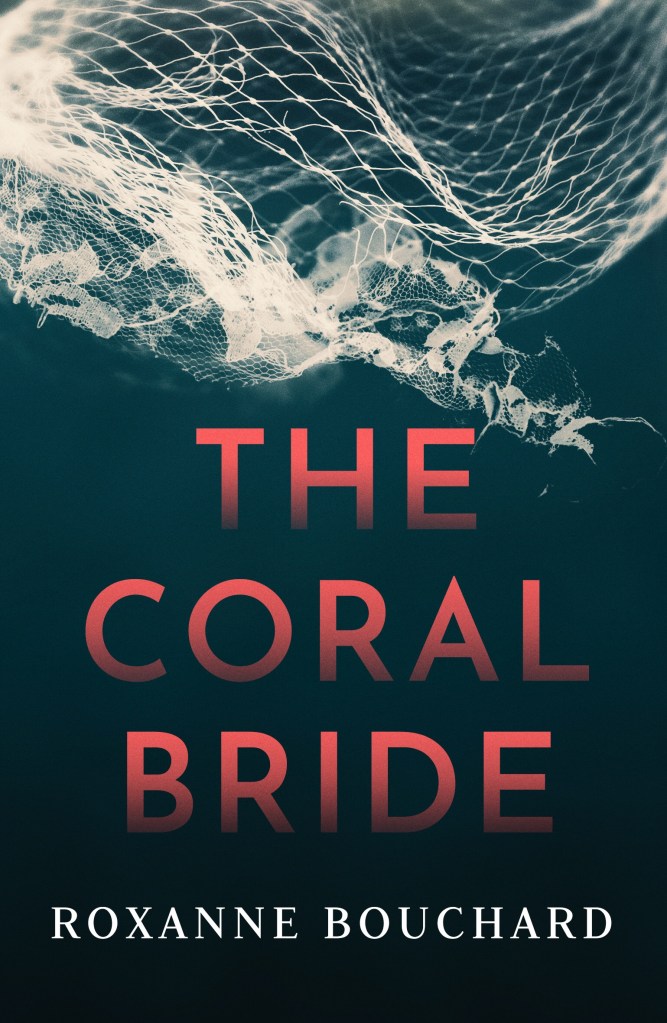
The Coral Bride by Roxanne Bouchard.

Publisher: Orenda

Published:

ISBN:

The Coral Bride is the second novel in Roxanne Bouchard’s D.S Morales series, the first being We Are The Salt Of The Sea. I think this easily read as a stand alone novel, but I enjoyed it so much that I’m going to read the first one. I’m not surprised, because I’ve never met an Orenda book I didn’t like!

The opening to the novel is haunting as a woman lies on the deck of a fishing boat. Somehow she has been rigged up so that she will eventually be dragged from the trawler and under the freezing cold water. She knows these are her final moments. As an opening it is very effective and sets up the main character in the novel: the sea. The sea is the life’s blood of people in this region – a small fishing village in Quebec. Angel Roberts is a very rare thing in this community, a woman with her own trawler who fishes for lobster. She’s named her boat Close Call II showing a good sense of humour too. The sea is her livelihood and there’s definitely an affinity with it. She is treated with suspicion by the rest of the trawlermen, because fishing here has always been a male dominated industry. However, the sea doesn’t just separate, it also brings people together, even Detective Morales and his son Sebastien.

Another recurring character is the moon, depicted as a silvery path reflecting off the water. Angel has always been told the moon is a liar and not to be trusted. However, it seems there may be another character in Angel’s life who isn’t what they seem. Morales finds out that every year Angel and her husband would dress up in their wedding finery and have a celebration on their anniversary. If her husband is to be believed he drove his wife home when she was tired and then returned to the bar. Then after 1am, it seems that Angel drove herself down to the harbour and took the boat out, still in her wedding dress? Detective Morales is a quiet and thoughtful man, who doesn’t jump to conclusions and I loved the way the author let the mystery breathe in the same way. You have chance to really think about peope’s stories alongside Morales, and I liked that the pace seemed to fit with the landscape and community. This is much more than a ‘whodunnit’. It explores the spirit of this community, and I especially enjoyed the loyalty and bravery of the fisherman. They really respect the sea and I respect them because it is such a tough way to earn a living. We get to explore the tribal aspects of this community, how relationships between people develop and change over the years. But as always, where there are old relationships there are old resentments.

Familial relationships are explored too as Morales’ son Sebastien has turned up unexpectedly with his car full of pots and pans. He’s a chef and he’s had a fall out with his girlfriend. I got a sense that Morales doesn’t really know his son, or Sebastien is acting out of character. Sebastien flirts with a female constable on his team; Morales has only seen her buttoned up, but ten minutes in Sebastien’s company and her hair is down and she’s doing salsa. There was sense that Sebastian will bring chaos to his life. Yet they have a shared experience, Morales is currently living alone and away from his wife. Maybe this is where father and son could understand each other better. These relationships gave the book depth and elevated it above the average thriller. I enjoyed the police team, the conflicts and allegiances. I loved the section where Morales was shown to his temporary office and it’s packed to the rafters with files stacked everywhere. It’s like this quiet, thoughtful, man has escaped to an out of the way place and people are challenging him on all sides. The space he has enjoyed is being encroached upon – Sebastien inviting him to salsa and let his hair down, the chaos of police files surrounding him, his son sleeping on his couch. It’s not long before, in his life and the investigation, he feels blocked in on all sides. I found this novel had a great sense of place and a thoughtful, intelligent hero. It was atmospheric, lyrical in parts and emotionally literate. The image of a woman being slowly pulled into the water, with her wedding dress glowing in the moonlight until she is swallowed up by the dark will stay with me for some time.

Meet the Author

Ten years or so ago, Roxanne Bouchard decided it was time she found her sea legs. So she learned to sail, first on the St Lawrence River, before taking to the open waters off the Gaspé Peninsula. The local fishermen soon invited her aboard to reel in their lobster nets, and Roxanne saw for herself that the sunrise over Bonaventure never lies. We Were the Salt of the Sea is her fifth novel, and her first to be translated into English. She lives in Quebec.
Follow Roxanne on Twitter @RBouchard72 and on her website: roxannebouchard.com