Posted in Netgalley

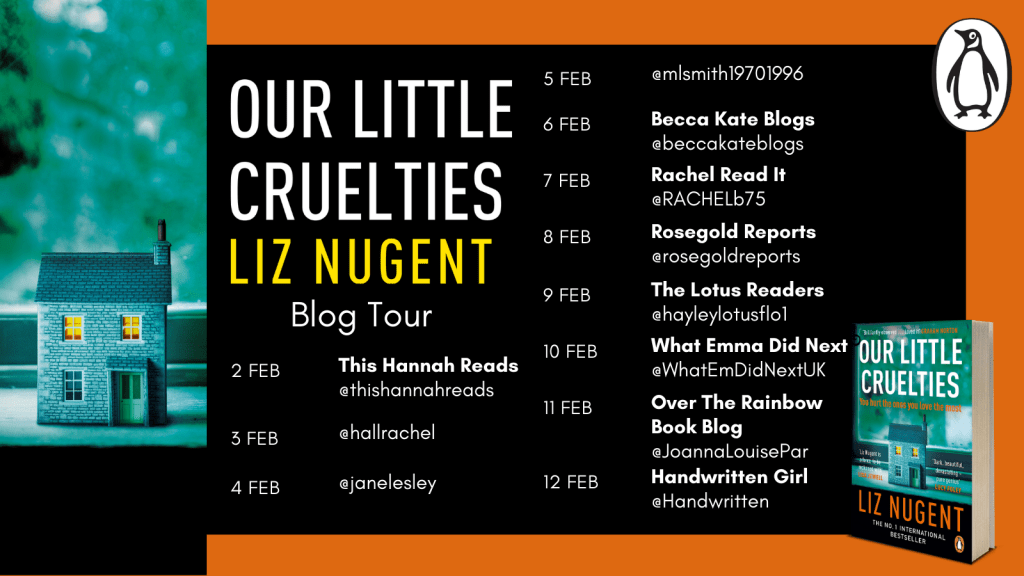
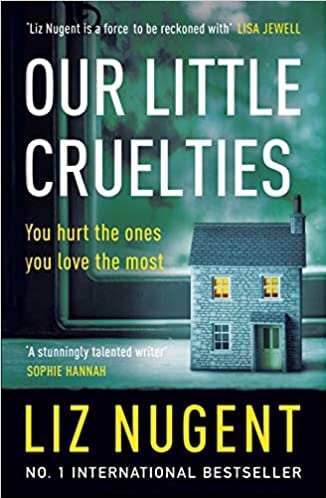
Our Little Cruelties by Liz Nugent

Published: Penguin Paperback Edition 21st Jan 2021

Never have the famous words of Phillip Larkin – ‘they fuck you up your Mum and Dad’ – been so apt. Reading this book was a very interesting experience and patience definitely paid off. Had I given in to my impulses and thrown the book down in frustration during the first part, I would have missed out on a great read. The story of three brothers over their lifetimes is compelling, interesting and a great study in how mental health difficulties can be passed on from one generation to the next.

The structure of the novel is what I had difficulty with at first. The first section was narrated by the eldest brother, Will. Written in short chapters, slipping between decades, we see aspects of his childhood through to the present day where he is a successful movie producer. He meets his wife Kate through his brother Brian,when she’s brought to a family dinner. They have a little girl called Daisy, but Will is much more focused on work than he is his family. We get the sense that Kate is a long suffering woman who gets more support from Brian, who is now Daisy’s godfather as well as her uncle. Brian is there for the birthdays and school concerts and has a great rapport with Daisy. Will is dismissive of Brian and his lack of ambition. He is also dismissive of Luke, despite Luke’s success as a pop star in his late teens. This section was difficult to read because I disliked him from page one. I didn’t think I could stand to listen to his perspective for a whole book. This made me think about my own bias and prejudice – what would I have done if he was a client and I was his counsellor? My main interest was in how close Will was to his Mum and through flashbacks we see she favours him, quite openly.

Luke, by contrast, really gets the brunt of their mother’s moods. He is the youngest, the weakest perhaps, but he is attractive and in his teenage years soon finds real success as a pop star. However, in the later fragments of his life he has times of struggle, where his mental health is poor and he turns to drink or experiments with drugs. He is an unusual child with a religious fixation to the extent where the family priest thinks he has a vocation! The other boys use his goodness against him, he is manipulated by them and by blaming him, they get extra food and attention. Only his Dad seemed wise to this, and just how poisonous the brothers, particularly Will, can be. There are moments where it seems his life is on track and he could be happy, but others where I wondered if he was just not meant for this world.

Finally, there’s Brian the middle brother. If Will is his Mum’s favourite and Luke is doted on by his Dad, who is left for Brian? He does seem mentally torn between both parents, but is without a champion in the same sense his brothers have one. Will is very dismissive of him, even though Brian does so much for his niece. He’s not grateful when Brian stands in for him, but instead is scornful that Brian has nothing more important to do. Will only recognises material success, not the strength or reward of happy relationships. Brian is the one who looks after Luke when his mental health deteriorates, but Will never recognises or appreciates this. In fact Brian’s relationship with Will becomes so destructive that other family members get caught in the crossfire.

The genius of this book is in the knowledge of family dynamics and how destructive they can be, but also in it’s clever structure. As mentioned, during the first part, narrated by Will, I was ready to put the book down. I couldn’t stand him. He was arrogant, self-centred and treats women appallingly. If the whole book had been his viewpoint I might have thrown it out of the window. Just when I was at the point of giving up, I saw Luke’s name across the next section and it was such a relief. As the tale goes back and forth in time and perspective we see a tiny bit more of the whole. At a Bob Dylan concert at a local castle, Will ends up in a fight and is taken to hospital with Dad and Luke following behind. Mum is left behind at the castle and doesn’t arrive at the hospital till late. We think that maybe she’s been caught out here, or that she simply cares more about enjoying herself than her son. But, this is Will’s perspective, for once his Mum has let him down. However, through Luke’s narrative we learn the truth, that something terrible happened to her, something that explains so much about how she behaves. When we finally get Brian’s section we see what a lifetime of being in the middle feels like; he feels overlooked, unconsidered and brushed aside. We find out things we already suspected and other things that surprise and enlighten us. Every single strand of this novel teaches us that we are only ever a small part of the picture and we must step back to see the whole.

This brings me to the second line of Larkin’s poem This Must Be The Verse and easily the best; – ‘they do not mean to but they do’. There are parts of this novel, particularly the way Dad behaves, where genuine mistakes are made and misunderstandings occur in the same way they do with any family. No parent, however hard they try, will get it completely right. However, there are other situations where the mental damage seems deliberate, especially in their mother’s attitude to Luke. Will’s intervention in Luke’s relationship, and the treatment of Will’s daughter Daisy towards the end of the novel are not mistakes. These acts are more than little cruelties. They are deliberately causing lifelong psychological disturbance. This is a complex and interesting novel that deftly moves from one narrow perspective to another, finally giving us all the pieces of the emotional jigsaw puzzle that makes up this family.

Meet The Author

Before becoming a full-time writer, Liz Nugent worked in Irish film, theatre and television. Her three novels – Unravelling Oliver, Lying in Wait and Skin Deep have each been Number One bestsellers in Ireland and she has won four Irish Book Awards (two for Skin Deep). She lives in Dublin with her husband.

Posted in Random Things Tours

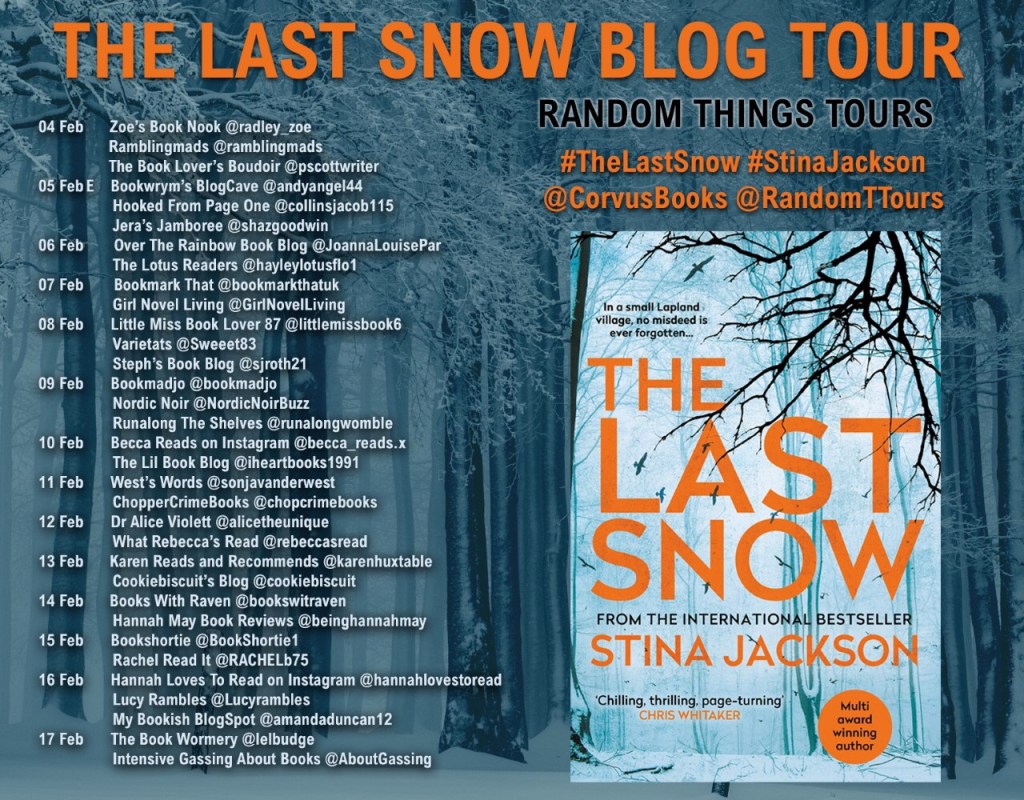
The Last Snow by Stina Jackson.

What secrets are hidden within the walls of a desolate farmhouse in a forgotten corner of Lapland?

I was chilled by this novel from the first page, as a young girl flits through the woods, only visible in flashes of a pale, frosty moon. She is making her way towards an all-night garage and truck stop, one of those places that feel weirdly outside of time. I could already sense the isolation of this part of Sweden, so far north it’s in the region of Lapland. I could also imagine the boredom and recklessness this teenage girl feels, then I worried about the home she is from.

Then we jump to the present day. Early spring has its icy grip on Ödesmark, a small village in northernmost Sweden, abandoned by many of its inhabitants. But Liv Björnlund never left. She lives in a derelict house together with her teenage son, Simon, and her ageing father, Vidar. They make for a peculiar family, and Liv knows that they are cause for gossip among their few remaining neighbours.

Just why has Liv stayed by her domineering father’s side all these years? And is it true that Vidar is sitting on a small fortune? His questionable business decisions have made him many enemies over the years, and in Ödesmark everyone knows everyone, and no one ever forgets.

Now someone wants back what is rightfully theirs. And they will stop at nothing to get it, no matter who stands in their way…

Usually when writing about a thriller I’m talking about the build up of tension, the breakneck pace of the writing as we reach each reveal. Here Stina Jackson has done completely the opposite and it’s so effective. The pace is glacial, quiet and even contemplative. The result is that you become so lost in the pages that you forget you’re supposed to be breathing. The dreamlike quality of those first lines stays as you are introduced to Liv, working her job in a filling station. There’s a sense that time has stood still. As her father draws up in his old car to pick her up, she could still be a teenager at her Saturday job. Then we find out she has a teenage son and realise she’s older, but very little has changed for Liv. I felt that sense of suffocation, as they return to the house that’s barely standing, with no neighbours in sight, and her father ruling the roost. There’s inertia here; Liv hates being here but can’t summon up the energy to leave. She’s beaten down mentally by privation and the harshness of her father and the landscape. This isn’t a formulaic crime novel, this is also about families and all the emotions encompassed in these relationships. There’s jealousy here, hate and resentment, but also love. Yet over all of that there’s that suffocating sense of paralysis. As if nothing will ever change here.

Liv does have an escape. It’s a tried and tested escape she’s used since she was a teenager. At night she makes her way to an old cabin on their land, takes off her clothes and climbs into bed with the tenant. There’s a calm and matter of fact feel to her liaison, she’s clearly been here many times before. Maybe this is the closest she can get to a relationship. It’s a step up from her midnight travels to the truck stop and the cab of any trucker she can find. At least now she’s a woman, her father Vidar doesn’t track her down and drag her home. Vidar is harsh, cold, mean and according to local gossip, sitting on a fortune. They needn’t live the way they do. Our other perspective in the novel is that of local drug dealer, Liam and his brother Gabriel. Liam feels like Liv’s counterpoint in the novel. He wants to change his life, but is controlled by his brother who has heard of Vidar’s supposed fortune. These two families will come together in a violent and brutal way. All of these characters are so well drawn and they come to the reader in the same way people do in life. Some are open from the beginning, like Vidar who doesn’t hide his cruelty and unpleasantness. Others are more quiet and sly, we have to work to get to know them. Between all of these characters though, there’s a volatile mix of bad blood, greed and so much suppressed rage. When this spills over we are left thinking we know who’s to blame, but we don’t.

The story does slip back and forth in time from the opening scenes in 1998 to a later point as the past informs the future and vice versa. It’s important to concentrate in the past sections, because it really does inform people’s motivations and character. It’s a slow burn, but still kept me gripped throughout. Then the ending comes and while it was shocking, it made sense. This felt like some of the best Scandi Noir series I’ve watched – heavy on atmosphere and character, but takes it time unfolding the narrative and showing us where everyone fits, till the final revealing scene.

Meet The Author


Stina Jackson (b. 1983) hails from the northern town of Skellefteå in Sweden. Just over a decade ago she relocated to Denver, Colorado, where she penned her debut novel, the acclaimed The Silver Road. A runaway bestseller, the novel established Jackson as a rising new star within Nordic suspense.

Posted in Netgalley

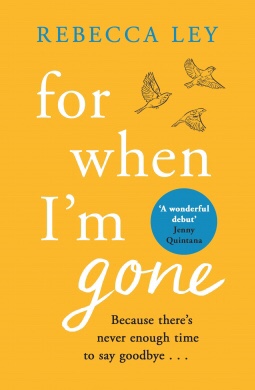
For When I’m Gone by Rebecca Ley.

Publisher: Orion. 3rd September 2020.

There is never enough time. Even when a loved one has been ill for so long and the prognosis is terminal, that moment when they’re gone is seismic. Everything in your world shakes up and resettles around you, but in a totally different shape. When my husband died it had been coming for a long time. He was also suffering. His MS had affected his ability to swallow so he was PEG fed and kept hydrated with a tube directly set into his stomach. He would aspirate saliva, then develop pneumonia in an endless cycle till he decided not to treat it anymore. He’d spent months in hospital, before I received the call from the hospital. Listening to him struggling for breath for 12 hours was torturous. Yet when he took his last breath at 5.15 am, my first thought was ‘no, I wasn’t ready.’

Rebecca Ley’s novel is about a life cut short in this way. Sylvie is given a terminal cancer diagnosis at the age of 38. She and Paul have a marriage that seems perfect. He is a doting husband and father, and loves Sylvie’s intelligence and beauty. There is a certain prickliness to her character, which could make her difficult, but they seem to compliment each other and are great parents to their children Megan and Jude. When Sylvie receives her diagnosis she knows she must help Paul with the aftermath. He needs a manual that helps him deal with a domestic life that’s more complicated than he realises. She also needs to disclose a secret that she’s been keeping for the whole of their married life. As Paul uses her manual to try and negotiate life after Sylvie, he begins to realise just how much she did for them, and how much more indebted he is than he realised. Ley writes about reconciling a life only half lived, but also those compromises made in a marriage and as a mother. This is where he truly gets to know his wife in a way he couldn’t when she was alive.

The book is divided into past and present chapters, so we can be let into Sylvie’s life, but also to form a contrast with after she’s gone. The manual is confessional and written in the first person. Then we have the third person viewpoints of both Paul and Sylvie. Through this we see the beginning of their relationship where everything is romantic to the trickier aspects of their shared life together. I liked that Sylvie isn’t perfect, it’s easy to make a lost loved one into a saint, but Ley avoids that here and it’s all the better for that. Throughout we see that same spiky element to her nature, it’s attractive in a way, but could be seen as hardness or being difficult. As we read through the manual though, after she’s gone, we see a reason for that hardness – Sylvie is this family’s structure, their backbone, and without it what do they have to keep them upright and together?

There is the constant tension of what Sylvie’s long held secret may be, but it wasn’t the thing that kept me reading. It was the slow revelation of her character that held my attention. In Sylvie, Ley has written a truly modern female character who has flaws and makes mistakes, but isn’t cast as a bad person. Often in books about cancer patients, or mothers, there is that temptation to turn them into saints and martyrs. I love that the author made a conscious choice not to do that. Through Sylvie’s choices and her inner monologue as she makes them, we see the complexity of being a woman, a mother and a wife. Sylvie is complicated, sometimes she hurts people and I didn’t always like, or understand her. She is so ‘real’ that I started to think about her in terms of my own friends and family; we don’t always like what they say or do, but we still love them. I felt like I’d got to know a real person and this only added to the devastation when she was gone. I would like to see more women like this in fiction.

The supporting characters were also well written, three dimensional people. I felt particularly for Megan who withdraws as the book goes on. There was also a great contrast between Sylvie and Paul’s mothers, with one very traditional Mum and the other very far from conventional. Ley shows us the chaotic, random and difficult nature of life. This brings home the fact that we never know what’s going to happen next, something people who’ve experienced loss and illness know only too well. I always make sure I tell my new partner and stepdaughters that they should take care and I love them, every time they leave the house. I never want them to wonder how I feel about them, or for something to happen when I haven’t reminded them how much they mean to me. I felt deeply for the family at the heart of this heart-breaking story and it will stay with me for a long time. This extraordinary book is Rebecca Ley’s debut, so I will be following her writing closely to see what’s next.

Meet The Author

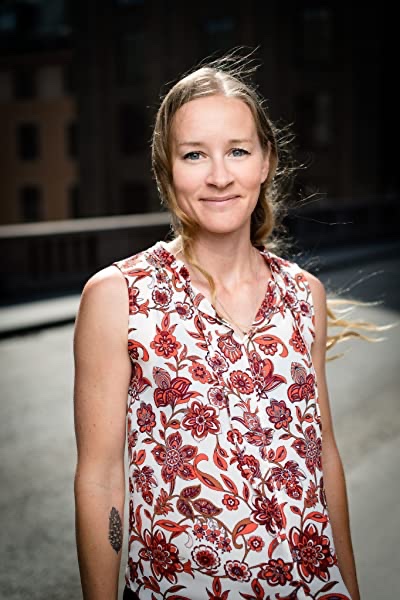
I am new to being an author, but the idea that people might read my work and want to connect with me about it is honestly my biggest dream. I would love to hear what you think of For When I’m Gone. You can find click the ‘follow’ button on Amazon, or find me on Twitter or Instagram, where I share fragments of my life raising three children in Hackney, east London. I grew up by the sea in Cornwall and never expected to be raising a family in the inner city, but here we are! I have spent the last sixteen years working as a journalist. I’ve worked on staff at The Times, Sun and Daily Mail, as well as writing a column in The Guardian about my father’s dementia. I’ve also freelanced for a variety of other papers and magazines, including The Telegraph, Psychologies, Mother and Baby and Grazia. And I write scripts for an animation company too.

Posted in Publisher Proof

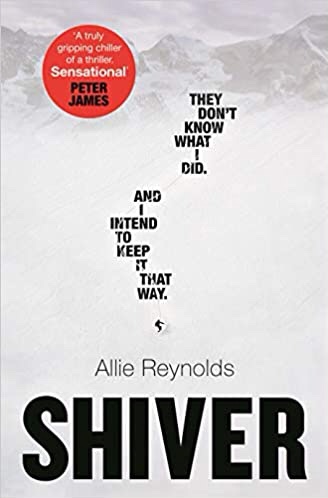
Shiver by Allie Reynolds.

It’s that time of year again. The time the glacier gives up bodies.

The ‘shiver’ in the title of this novel doesn’t just refer to the icy cold, French Alps where it’s set, but also to the uneasy feeling you get while reading it. The author creates an isolated and claustrophobic atmosphere almost immediately as the group arrive to a deserted ski chalet. There’s no one operating the cable car or to greet them as they enter, but there is a warm casserole pot in the kitchen – someone has cooked their dinner. From that evening, everything conspires to keep them there, including the worst weather they have experienced on the glacier. This is off season and the five are stuck together, once the closest friends, but keeping so many secrets from each other. The ‘icebreaker’ exercise waiting for them in the function room, ratchets up the tension by partially exposing these secrets – more than one of them slept with Heather, one of them knows what happened to Saskia and one of them killed her. The group goes from reunion chums to suspicious and paranoid immediately. Milla, our narrator, suspects Curtis as the instigator of the weekend, in a last ditch attempt to find out what happened to his little sister. Yet, there’s also a tiny part of her that thinks the worst – that this is Saskia, still alive and ready to wreak revenge.

In a second timeline Milla takes us back to the peak of her snowboarding career. Firstly, to the season where she met her friends for the first time, and realises she is very definitely the underdog. Milla isn’t from the sort of family who put their kids on skis as soon as they can walk. She’s from a humble background and has to work hard to afford to compete. She only has one board. Saskia is the competition, and she first visited this glacier at the age of three with her two snowboarding parents. She’s unmistakable on the course, her white blonde hair flying behind her as she practises tricks in the half pipe. Milla really needs to land a top three position, if she’s going to carry on competing. If you want sponsorships you have to be visible. The author develops their rivalry straight away, when Saskia invites Milla on a night out. Milla finds out how far Saskia is willing to go in order to win. In the club they join Odette – a French snowboarder – and some of the other athletes. Milla is surprised they’re drinking, but doesn’t want to be a killjoy. However, when she buys a round at the bar it’s really cheap. She’s confused, until Heather the barmaid tells her that only one of the drinks is alcohol. This nasty trick sets in motion a chain of revenge and counter attack, that continues until Saskia disappears.

This group have held on to their secrets and their tormentor seems to know how far they will have to be pushed to give them up. People grow more paranoid, suspecting allegiances and rehashing what happened in the past. Milla has found Curtis the most difficult one to let go of and she’s torn between her old feelings and suspecting him as the organiser of this strange reunion. She has to decide whether to trust him or not. Back then there was an immediate chemistry between them, but Milla was scared of it. He was always very close to his sister and she could never work out whether he was being protective of Saskia or the victims of her tricks and games. As Milla explains, athletes have lots of excess energy, and both Brent and Curtis make an offer to Milla, She can knock on the door, and either of them would be happy to have her as a bedfellow. Despite wanting Curtis more, she chooses to sleep with Brent, because she can’t afford the distraction of a full blown love affair. Now she wonders if Curtis still feels the same way about her as he used to, because now she’s close to him again, she knows her feelings haven’t changed.

I love how the chalet gives up small secrets to set the group on edge. Their phones disappear, items go missing from their bags, but strange things appear too, such as Saskia’s ski pass for the final season and a lock of ice blonde hair. The ice axe goes missing from the wall in the dining area and Milla notices that the eyes of a stag’s head mounted on the wall don’t match; it’s one of many cameras watching their every move. Curtis breaks down some of the locked doors determined to find a control room and hopefully get some clues about their culprit. The author skilfully controls what is revealed until you’re so determined to find out what’s going on you stay up reading till 3am! When it’s people that start to go missing, I realised that their tormentor is looking for the ultimate revenge.

I have to say this tale did keep me guessing, not just about who was responsible, but about the psyche of highly competitive people. There’s a level of narcissism and ruthlessness that’s perfect ground for a thriller like this. I didn’t like Saskia because she comes across as spoilt and amoral, unable to empathise with others or share the limelight – even with those she loves. However, she does leap off the page as a fascinating and ruthless young woman. I found myself wanting to know more about her, her upbringing and the environment that had made her so single minded and dangerous. There’s more than one surprise with this turbulent group and in two different timelines. The author has a skill for writing tense scenes that play on certain phobias. I had suspicions about everyone, even our narrator, who does turn out to have a few secrets of her own. The ‘prank’ that really freaked me out, was when Milla is buried alive. I actually found myself unable to catch a breath, because it is one of my worst fears. When the groups tormentor is finally revealed it was the last person I expected and it did seem a little bit improbable, but that doesn’t detract from the enjoyment of the novel. This is a taut, well-plotted thriller and a great debut for the author. I look forward to seeing what she writes next.

Meet The Author

Born and raised in Lincoln, England, Allie moved to Australia in 2004. She lives on the Gold Coast with her two young boys and a cat who thinks he’s a dog. Many years ago she competed at snowboard halfpipe. She spent five winters in the mountains of France, Switzerland, Austria and Canada. These days she sticks to surfing – water doesn’t hurt as much as ice when you fall on it. Her first ever job was a Saturday job in a bookstore, at age 14. She taught English for many years and became a full-time writer in 2018.

You can find her on:
http://www.twitter.com/AuthorAllieR
http://www.instagram.com/authorallier

Posted in Publisher Proof

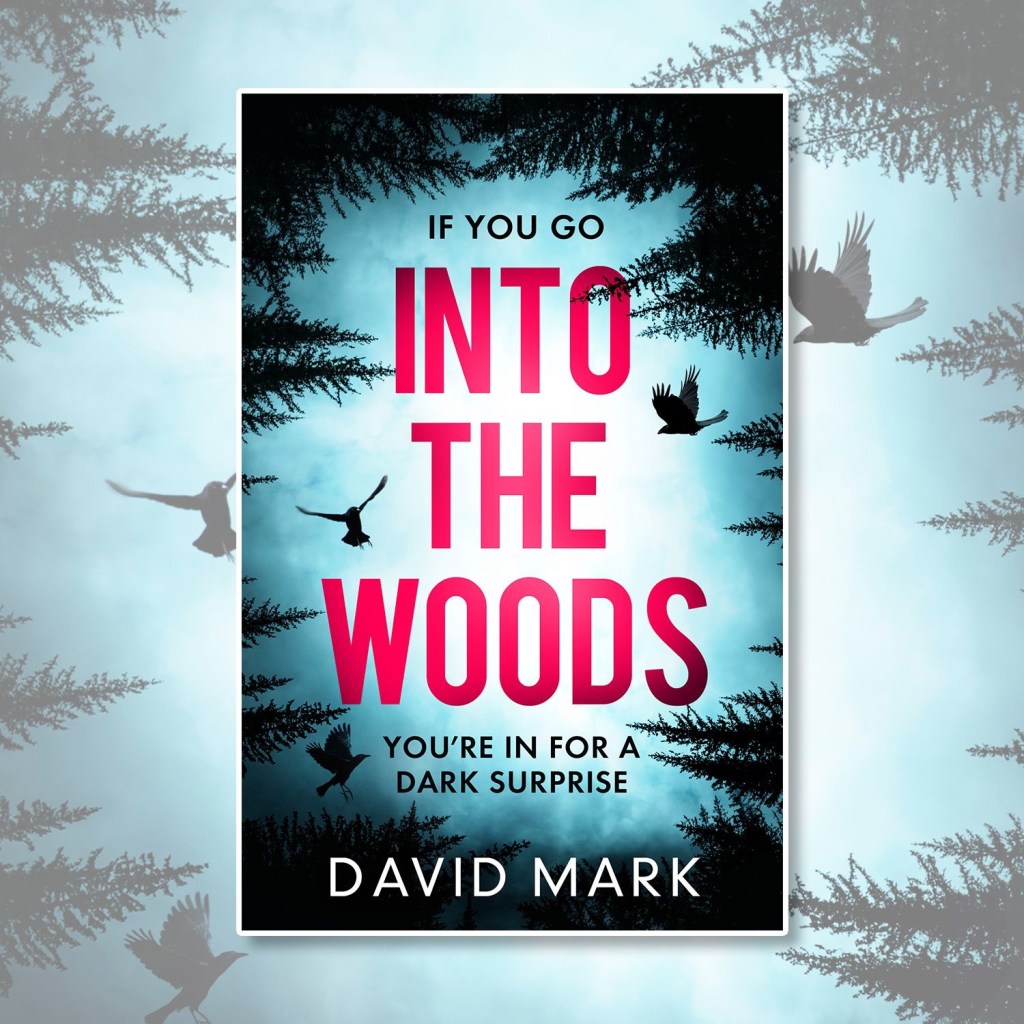
Into The Woods by David Marks.

The Wasdale Valley is the beautiful setting for this unusual crime novel from David Marks, the first in a trilogy set in the Lakes. It is unusual, mainly in its use of language and the mix of crime, social commentary and a touch of the supernatural. My first impression as I started to read was that it reminded me of Tana French’s Dublin Murder Squad novels. The opening is almost hallucinatory as a young girl comes to consciousness:

‘There had been a drink. A cold, brown soup slopped from an earthen bowl. It had plants in. Some wormy tuber had touched her lip as she lapped at the brew like a cat with a saucer. Memory again. Music. A guitar on a strap.’

I had an almost visceral reaction to this first passage, a feeling of disgust. The girl comes to realise her consciousness is inside this meat body described as a ‘pig-fat candle’. The sentences are stilted, only growing longer as she wakes more. It sets the reader on edge because it’s synaesthesic – she can taste and feel the heavy air, see her thoughts, and experiences her body through pain and unpleasant sensations. I had to read this opening a few times to fully understand what was happening, but the horror of the earthy face rushing towards her smelling of bad meat definitely stayed with me.

This is a story of a thirty year old mystery as three girls followed a stranger into the woods and only two returned. There were local whispers of drugs, cults and strange rituals but no one really knows what happened and the two who returned remembered nothing. Their memories are shattered into pieces and thy still suffer traumatic flashbacks and hallucinations. This is just the type of story that investigative journalist Rowan Blake needs to revive his career. He has retreated to the Lake District in order to write. Whatever he unearths in the woods will have stayed buried for thirty years, but when he chooses this mystery is he prepared for the evil that awaits him? Rowan is our narrator in the present day timeline and he starts his investigations by using his local contacts, his sister Serendipity and her daughter Snowdrop. All three girls were at the same private school, the Silver Birch Academy, and there are local stories about the school’s unorthodox teaching methods. The girls are rumoured to have followed a stranger into the woods to visit a Shaman, which could explain the strange hallucinatory drink and amnesia.

Our narrator in the past is Violet, explaining her experiences in such detail with layers and layers of disturbing description. Despite Rowan being our protagonist I did find myself waiting for Violet’s chapters. I was both disgusted and fascinated in equal measure and I felt compelled to keep reading to find out what happened. Violet isn’t the easiest person to empathise with; she’s an angry, tempestuous teenager with a tendency to bully others. The fact that she’s not in the present day narrative, due to being away travelling, is a clever choice. It concentrates the reader on her teenage self, but also reinforces the tension as the reader becomes even more determined to find out her fate. Violet has reportedly been trying to come to terms with her experience of late, whereas best friend Catherine is more reticent. I didn’t feel a bond with Rowan and he too has obvious faults. He’s quite selfish, and isn’t really grateful for the help of his sister, even though she’s bailed him out before. It’s a brave thing to have two narrators without any sympathetic qualities, because it could easily turn the reader off, but here it works. As Rowan uncovers more he starts to worry about Violet. Is she really travelling or has she gone missing again?

This is not the sort of thriller you bolt your way through in an afternoon. It needs a longer time, so you can actually savour the language and the horror of what has happened here. It’s complex and black as night. It’s a reading experience that bears a second or third glance; like viewing a large painting, at first we only see the main subject, but as we look closer there is so much more to take in. Here there are quirky secondary characters to enjoy, a wonderful sense of place and very ominous weather that foreshadows Rowan’s findings. It all adds to the conclusion that nothing good happened here.

If you go into the woods, you’re in for a dark surprise….

Meet The Author

David spent more than fifteen years as a journalist, including seven years as a crime reporter with the Yorkshire Post – walking the Hull streets that would later become the setting for the Detective Sergeant Aector McAvoy novels. His writing is heavily influenced by real life and have been universally praised for their originality, authenticity and heart. Industry bible Kirkus Reviews said that ‘to call David Mark’s novels police procedurals is like calling the Mona Lisa a pretty painting’. He has been championed by such industry luminaries as Val McDermid, Peter James, Mick Herron and Martina Cole. He has written eight novels in the McAvoy series: Dark Winter, Original Skin, Sorrow Bound, Taking Pity, Dead Pretty, Cruel Mercy, Scorched Earth and Cold Bones as well as two McAvoy novellas, A Bad Death and Fire of Lies, which are available as ebooks. His first historical thriller, The Zealot’s Bones, was a Sunday Times Book of the Year. With publishers Severn House, he has written the critically-acclaimed The Mausoleum, A Rush of Blood, Borrowed Time and Suspicious Minds.

Dark Winter was selected for the Harrogate New Blood panel (where he was Reader in Residence) and was a Richard & Judy pick and a Sunday Times bestseller. Dead Pretty was long-listed for the Crime Writers Association Gold Dagger in 2016, as was Cold Bones in 2019. David’s Radio 4 drama, A Marriage of Inconvenience, aired last year. His first novel was adapted for the stage and was twice a sell-out smash in Hull. He has also written for the stage and has contributed articles and reviews to several national and international publications. He is a regular performer at literary festivals and is a sought-after public speaker. He also teaches creative writing.

Posted in Personal Purchase

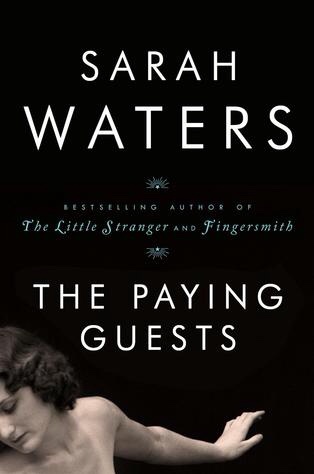
Throwback Thursday! The Paying Guests by Sarah Waters.

It’s been too long since we had a Sarah Waters novel and although I love her Victorian era fiction, this novel really did stay with me. In 1922 a mother and daughter live in a villa in Camberwell. A house once filled with the sounds of men – husbands, brothers and servants – is now largely quiet. Only the widow, Mrs Wray, and her daughter Frances remain. Impoverished by war and a lack of men to bring home the money, they are forced to rent out rooms in their home. Frances is a spinster, resigned to looking after her mother for the rest of her life, but with the arrival of tenants Lillian and Leonard Barber their house routine changes considerably. The couple do not come from the same class as the Wrays, and are the new, upcoming clerk class. However, no one could foresee the profound change their presence will make to Frances’s life as passions and frustrations mount. The Wray’s lives will never be the same again.

As some regular readers will know I love this post WW1 period of history. London is a very tense and unsettled place to live. The war followed by Spanish Flu has left generations in mourning, but has also managed to level out the class system, liberate women. Sadly it has also birthed a whole new dependent generation of people with disabilities and PTSD. Ex-servicemen might find a woman doing their job, who is very reluctant to give it up and return to the home. Or their disability prevents them from working at all, in some cases forcing them to beg on the street. The aristocracy are in decline – often hit by double death duties some are forced to go abroad, particularly the US, to look for a bride with money in order to prop up the estate. Women have moved out of the domestic sphere and have enjoyed the sense of freedom they’ve had. It’s a period of flux in a societal hierarchy that’s been in place for half a century or more. It’s a huge upheaval, but in such upheaval, previously suppressed groups can find their freedom.

I feel so much for Frances. The opportunities war brought to her are gone, but then so is the safety of her pre-war days when her father and brother were there to support and protect the household. Now she looks after her elderly mother alone, and now they can’t afford servants all the household tasks have fallen to her as well. She is sure she will die a spinster. She is also haunted by a lapse in self-control she gave in to during the war, scandalously involving another woman. Frances is haunted by her actions and now she knows how easy it is to lapse, she is even more determined to avoid impropriety. Their income is so depleted that Frances has prepared some of their upstairs rooms for use as a bed sit. They will now have to share their homes with a couple who are of a much lower class. The Barbers are shocking to Frances, and her mother, who are used to an element of deference from the lower classes. They are very direct and unencumbered by the manners and etiquette the Wrays are used to. Frances is desperately embarrassed by her lapse and their weakened circumstances. Taking in lodgers, or ‘paying guests’, is a humiliation for the family but they have no choice. The Barbers will have to be endured.

Sarah Waters cleverly takes a domestic space and uses it to illustrate the greater societal shifts of post-war Britain. Just as the aristocracy are having to relax the rules on who they marry, the Wrays have to get used to people they would never previously have entertained living in their home. Thinking they can remain separate and self-contained is an idea that simply doesn’t work in reality. Once they’ve settled in, the Barbers seem to encroach on the Wray’s private spaces. Their boundaries blur as the couple pass through Frances’s kitchen to get to the outside toilet. They meet each other on the landing in dressing gowns. With every cough or creak of the floorboards, Frances feels her quiet life being impinged upon. She is also finding her sexuality challenged again; she considered her war time experience with a woman a ‘one off’ incident. Now she senses an awakening as she gets to know Lillian. She knows women friends who live openly in London with their same sex partner. They are co-habiting with each other and being discreet, but true to who they are. Frances had chosen to stifle her feelings for fear of falling in love again and instigating her own ruin. The proximity of another woman could be challenging this and her connection to Lillian leads to a terrible act with far reaching consequences.

As usual with Waters, it was the strong characters and sense of place, that I engaged with first. I saw a review that called this crime fiction and of course it is, in that we have a crime and a nail-biting court case. It’s certainly a great addition to the crime genre, but it wasn’t the first things that stood out to me about the book. I love Waters’s women characters – they’re intelligent, complex and trying to be themselves in a world that wants to suppress and control them. Her depth of description makes her chosen historical period burst into life: the fabrics used in clothing, the objects in the Barber’s room, and the touch of forbidden skin. Her characters have rich inner lives and complex psychology. I would recommend this – and her other novels for anyone who loves historical or crime fiction. The court scenes are so tense and I found myself wishing and hoping for a particular outcome. That’s how good this author is, she can make you root for a character like they’re a real person and feel emotion for them. That shows how talented Sarah Waters is and if you’ve only read her Victorian fiction, make room for this on your book shelves.

Publisher: Riverhead Books 16th September 2014

Meet The Author

Sarah Waters was born in Wales in 1966 and lives in London. Author of Tipping the Velvet, Affinity, Fingersmith and The Night Watch, her most recent book is The Little Stranger. All of her books have attracted prizes: she won a Betty Trask Award, the Somerset Maugham Award and was twice shortlisted for the Mail on Sunday/John Llewellyn Rhys Prize. Fingersmith and The Night Watch were both shortlisted for the Man Booker and Orange prizes, and Fingersmith won the CWA Ellis Peters Dagger Award for Historical Crime Fiction and the South Bank Show Award for Literature. Tipping the Velvet, Affinity and Fingersmith have all been adapted for television.

Posted in Random Things Tours

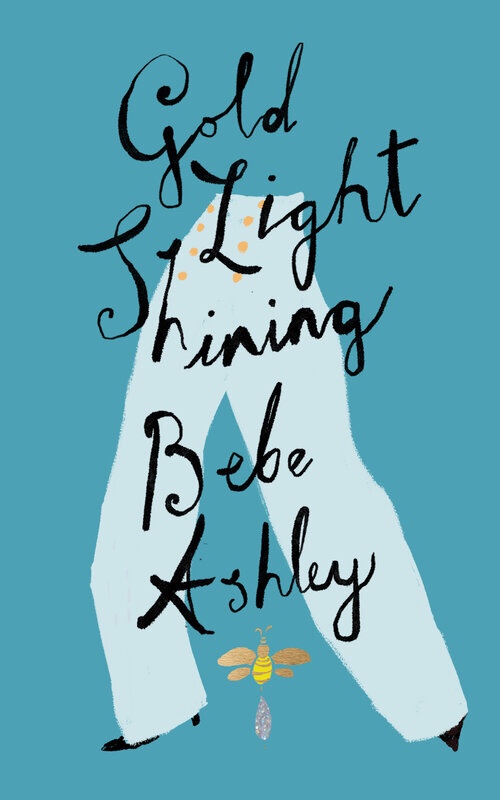
Gold Light Shining by Bebe Ashley.

I would describe Bebe Ashley’s collection as a poetic collage. It ranges across subjects as diverse as fashion, fandom, and families. Ashley elevates the internet into a poetic subject, puncturing the enduring snobbery of high and low culture. She shows us that the internet and some of its subjects are not the cultural wasteland people fear. Rather it is a window on whatever we choose to view from celebrity culture, to youthful yearnings, obsession, awakening sexuality and Harry Styles. The internet can be the cultural rainbow that lights up our grey lives. The focus may well be on our journey into adulthood, but there is another, wiser, voice too. The voice that knows some of this is momentary and that it is in building connections and communities that we find meaning. She also never forgets the meaning in our own families.

I grew up in the eighties, and we had to drive five or six miles to another village to the newsagent who reserved my copy of Look-In magazine, and then Smash Hits. This was my little window into the world and more specifically Adam Ant. My life might have been very different had I been able to access information and my fingertips. I loved the poem ‘Give Pop Music, Give Peace a Chance.’ It’s a grandmother, standing on a hill with her grandchildren reminiscing about this place, the seasons and her awakening to music and celebrity. As she sits in a sunken garden amongst the bluebells a young ranger starts to point out the beauty of the place. She knows. She knew it was beautiful before he was even born. She remembers that age of listening to music and feeling full of potential:

‘’a telegram from John and Yoko/ The thrill of running coloured chalk through the ends of her hair/She remembers sticking her thumb pad against the pin back/of a badge that served as her first concert ticket.’

She includes notes and allusions to Harry Styles, suggesting listening to his music while reading the poetry here. She starts the book with a quote of what looks like song lyrics, where he talks directly to his fans saying that he doesn’t understand or feel exactly what they do, but that he does ‘see’ each and every one of them. This assures the fans that they are noticed, that he appreciates them and this state of ‘fandom’ which is such a strong feeling as a teenage girl. In her poem The Boy Who the narrator gives a brilliant depiction of the chaos of a teenage party. She meets a boy in a Jesus T-shirt who is hiding in the bathroom to get away from people, but to enjoy the music. She lays in the bath and she listens to a tale of finding a friend ‘who he met in a gay club that he definitely didn’t know was a gay club’ and how this friend offered him their couch to sleep on while things were difficult at home.

Although these are longer poems than haiku, it feels like the poet is trying to do the same thing. All of these are brief moments in time, beautifully observed, and structured. The Boy Who is written as a long stream of consciousness with no punctuation or breaths. It’s like a story you’d quickly tell a friend about the party you attended the other night and where you disappeared to. In the final poem she imagines the object of her fandom in Japan, wearing an embroidered hoody and curls that are in need of a cut. The last two lines describe one such moment:

This is the one I’d most like to meet /Of all the moonstruck moments

This is a beautiful collection of poetry that imagines that rush of teenage hormones, burgeoning sexual feelings and the perfect pop star as an object of affection. There is a reverence and respect to how she describes Harry Styles here that I found really endearing. I loved though how the poet describes he importance of music and how we use it to complement or change our emotions. In Breakdown she brilliantly pinpoints the way we might use songs for heartbreak and it reminded me of my friend who was heartbroken and kept playing Coldplay’s The Scientist over and over in the car until me and her other friend stole the CD to break her mood. We were worried that the repetitive playing of it, was hampering her recovery. Here Ashley writes:

‘There was something serendipitous/ About being heartbroken during the release/ Of a heartbreak album, with the postman/ already tired of square sleeved parcels/ And the neighbours already sick of hearing/ Heartbreaker’s twelve songs on repeat.’

Music does affect and influence our emotions profoundly. If I hear certain Snow Patrol songs I’m reminded of a bereavement I had. If I hear ‘Yes’ by McAlmont and Butler it reminds me of feeling positive, hopeful and full of excitement for a new start in my life. Like most of us I even have mood playlists on Spotify for when I need cheering up, motivating or having a good cry. Ashley captures that feeling as well as teenage fandom and the inspiration she gets from Harry Styles’s lyrics. It’s a very readable and relatable collection, that I can tell I’m going to enjoy with further readings.

Meet The Author

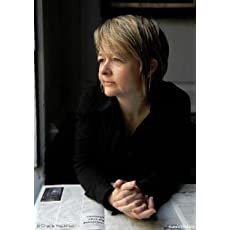
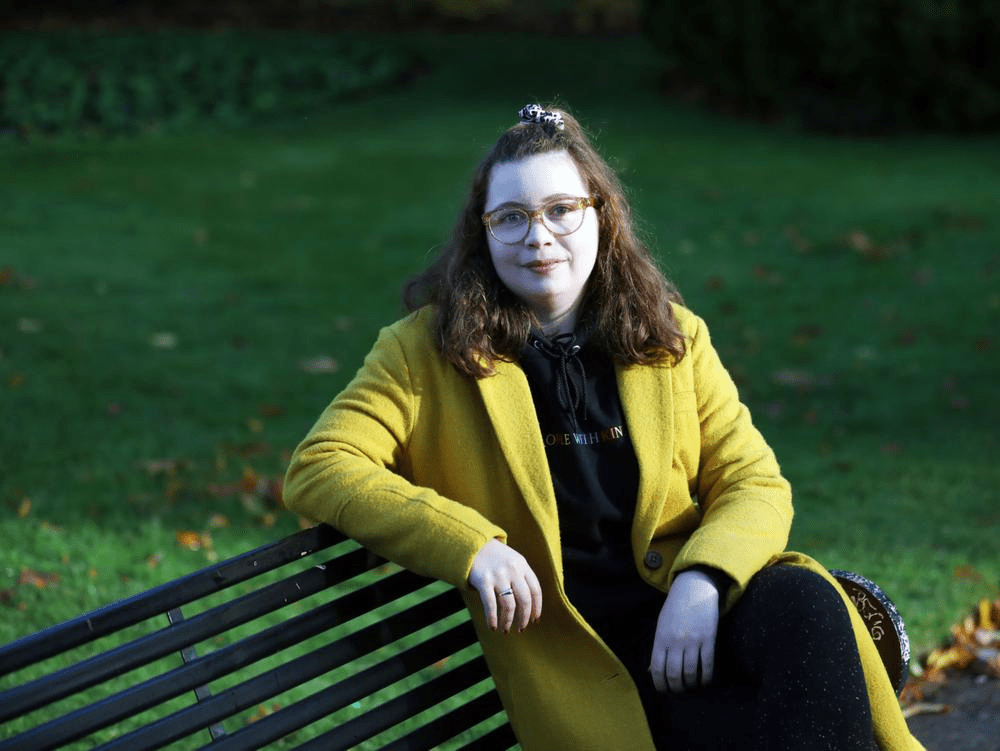
Bebe Ashley lives in Belfast. She is a AHRC – funded PhD candidate at the Seamus Heaney Centre for Poetry. Her work can be found in Poetry Birmingham Library Journal, Poetry Ireland Review and others. When procrastinating from her PhD she takes British Sign Language and Braille classes, and writes pop culture articles for United by Pop, specialising in Harry Styles.

Posted in Random Things Tours

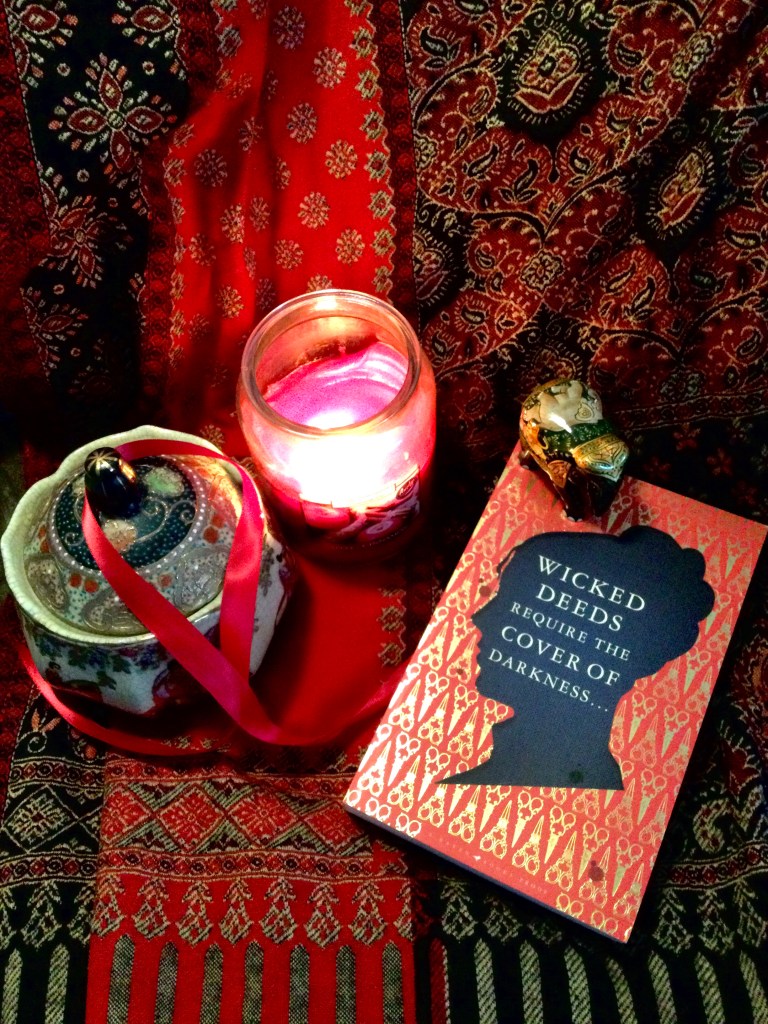
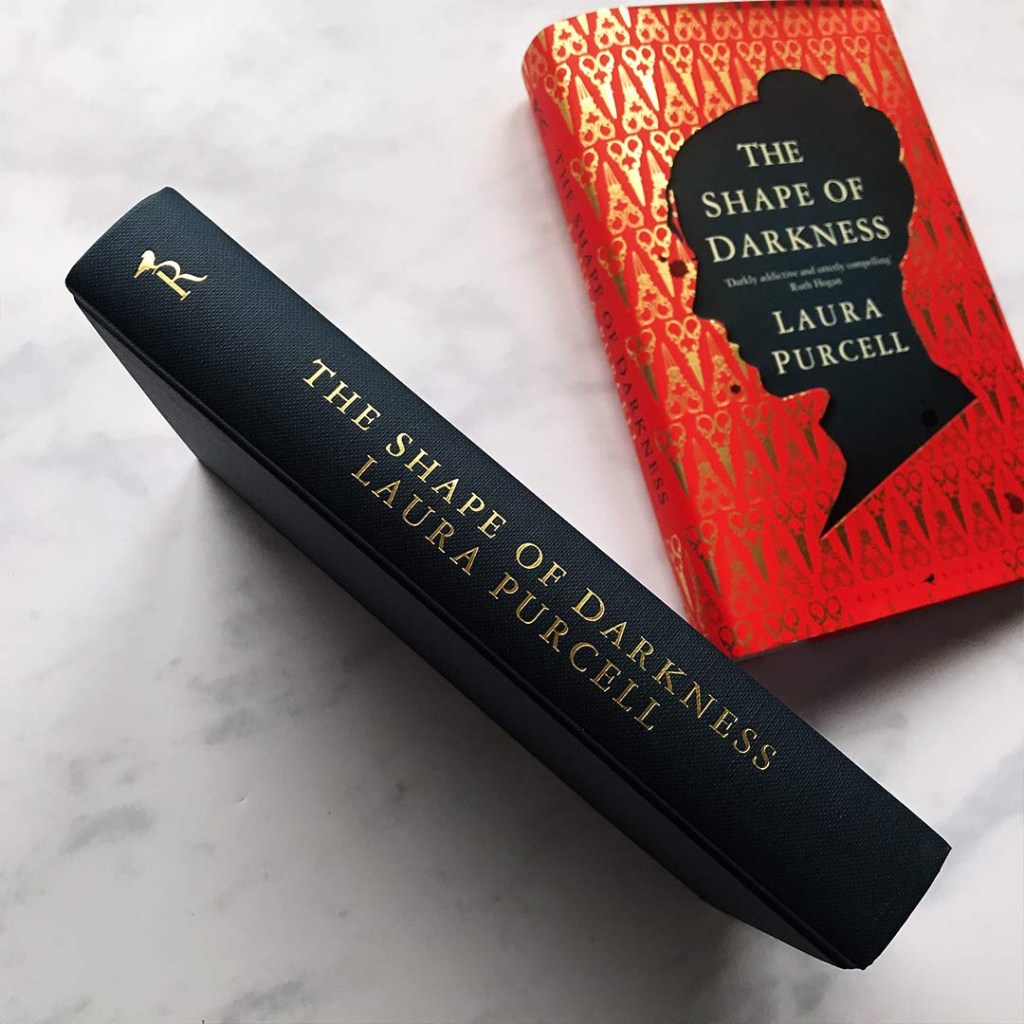
The Shape of Darkness by Laura Purcell.

I must admit to being a bit of a fan girl when it comes to Laura Purcell. The mix of historical and gothic fiction is probably my favourite genre, so I had been impatiently awaiting the publication of her latest novel anyway. I jumped at the chance to join the blog tour, because she’s one of my favourites – in fact I had already pre-ordered a signed edition of this two months ago. So I came to it full of anticipation. I was hooked by the end of the first chapter and didn’t put it down. Our narrator is Miss Agnes Darken, living in Bath with her invalid mother and nephew Cedric. Agnes earns her money cutting silhouettes or ‘shades’ for people, but her art is put under threat not just by newer inventions, but by a mysterious killer stalking the people who have sat for her. Desperate for answers, Agnes visits a spirit medium – an albino child named Pearl who lives with her sister Miss Myrtle West, and an invalid father. Agnes and Pearl try to conjure the spirit of one of her murdered sitters, so they can find the killer. Unfortunately, they have underestimated the power of what they have unleashed.

The story is full of little twists and turns that unsettled me and kept me guessing. When Agnes finds the shade she cut of her first sitter with a squashed face, she ends up with the police on her doorstep. She was his last appointment before he was killed and the murder weapon was a mallet, in fact his face is quite ruined. Agnes is shocked, but could perhaps write this off as a coincidence. Maybe she simply caught the silhouette as she closed the book? I thought the awkward relationship with Simon, who is there when the police come, was really interesting. He is Agnes’s friend, but also a doctor and was married to her sister Constance. Yet it is Agnes and her mother who have Cedric, her sister’s son, living with them. I kept wondering how this had happened and it was these awkward relationships and the whiff of scandal that really caught my attention just as much as the supernatural element. Simon is deeply protective of Agnes and her health since she’d had pneumonia a few years previously. Yet there’s another concern underneath, her mental health and whether certain things are ‘too much’ for her delicate nerves.

The horror in Pearl’s household comes from poverty and working in dangerous environments as much as it does the supernatural. Pearl’s father has worked in a match factory and has succumbed to the horrific disease of ‘phossy jaw’ where the phosphorus used for the match heads, eats into the mouth and slowly poisons the victim. The descriptions of being able to see the workings of his jaw and of Simon trying to clean the area and burst abscesses on the gums is visceral and left me far more horrified than the seances held by Pearl and her half-sister Myrtle. Myrtle has named Pearl The White Sylph, which only adds to the air of mystery created by her snowy white hair and skin and the wispy glow of ectoplasm that can be seen emanating from her body when the lights are off. Pearl is exhausted and drained afterwards, and her fear of the spirits who take control of her is obvious. She fears them sitting in her body or speaking through her mouth. It seems her gift is involuntary and all the more genuine for that. When Agnes visits they have no idea what they may summon up together, whether in terms of the spirits or a plan that may prove even more deadly.

Agnes is haunted by her sister whether she visits Pearl or not, but the pair do have something in common; sisters who try to control their lives. Agnes’s sister Constance has wronged her sister terribly in life, but continues to be there in death. I love the tiniest details that are placed by the author to echo the relationship:

‘Agnes scrubs at her eyes with the handkerchief. She has gone through so many of them lately that she’s been forced to use Constance’s old ones; she has picked the initials out but the ghost of the letter C still marks the corner’.

I saw an echo of Daphne Du Maurier’s Rebecca in this, they way her initials are all over the house, marking everything the new wife has to touch. Here it is a way for Constance to be ever present for Agnes. Constance is like Agnes’s shadow, and just like Myrtle and Pearl there is a yin and yang to these sisterhoods. One sister the innocent and other the dominant, rule breaking force. It’s as if they’re two halves making a whole. I enjoyed the description of Constance’s wardrobe towards the end of the book and the bright colours of her gowns contrast strongly with Agnes’s jet black, almost Puritan style of dress. Agnes is giving off that sense of grief and this uniform of mourning can mask who someone is as effectively as a disguise.

I also loved the period detail in the book, not just the clothing, but the etiquette and position of women. Although Agnes struggles financially she does have some measure of freedom and runs her own household. She has Simon, her brother in law, as her protector and because he is a doctor and a widower there is no impropriety in this. However, she does need him for certain things such as talking to the police and dealing with other men, who simply don’t consider a woman as an equal. I also loved the descriptions of Agnes’s craft, the cutting machine that she barely uses in order to keep cutting by hand alive. There is an alchemy in the descriptions of her work, the magical way she’s able put a person’s character into what seems like a very flat, characterless medium. There is a great description of a session with a young man, who admits he would prefer the new- fangled photograph, but his mother prefers the old ways. Photography is a threat to Agnes’s business, and there’s an interesting thought process around the belief that too many photographs could diminish you as each photograph takes a bit of your soul.

‘Part of your soul would remain forever imprisoned in the glass lens. Sit for too many and you might be depleted. More alive in the photograph than in real life.’

I thought that could be my thought process when I’m worrying about my niece or stepdaughter’s ‘addiction’ to social media. I like to take breaks from social media, but I sometimes worry that they’re so obsessed with their online personas that they miss out on what’s actually happening in real life. Social media is an edited or even purposely cultivated idea of who we are, not our real selves. It’s good to hear that each generations worries about the same things.

This is an excellent gothic mystery, that grabbed me from the start and didn’t let go. I thought the characters were well developed and fascinating – even the ones who are no longer there! I liked that were transgressive females who had their own agency and independence. I enjoyed the author’s sense of place, the evil portents like the magpies and the build up of tension. I also liked the contrast between those living in poverty and those with a more middle class lifestyle. The supernatural elements are always spooky with Purcell, so the seances and visitations are unsettling, but so are the real life people. As the mystery deepens you won’t be able to stop reading, because you’ll have to know what’s going on. There’s a saying we use about timid people – afraid of your own shadow – and that’s what this book does, it makes us afraid of what others might see in us, and who we can become in the dark. An utterly brilliant addition to Laura Purcell’s work.

Why not check out some of the reviews of my fellow bloggers?

Meet The Author

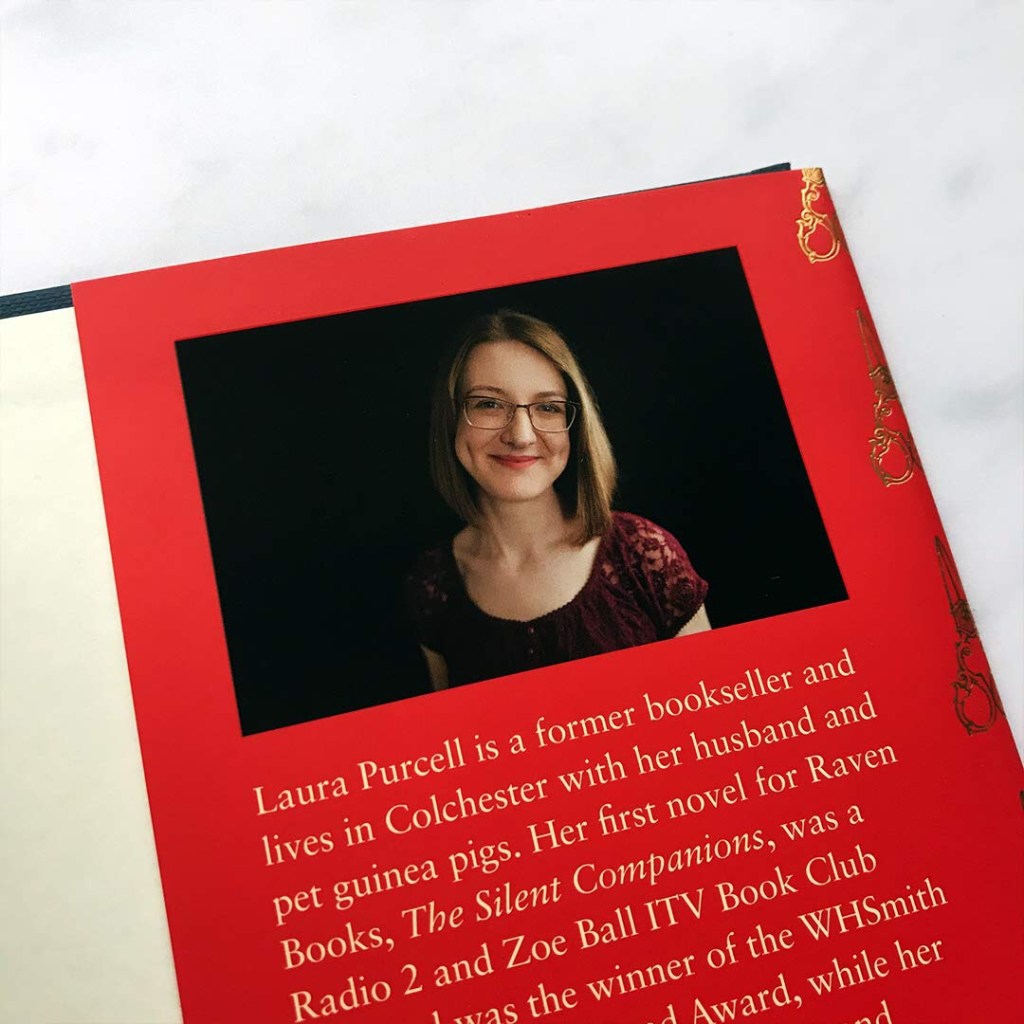
Laura Purcell is a former bookseller. She now lives in Colchester with her husband and their pet guinea pigs. Her first novel for Raven Books, The Silent Companions was a Radio 2 and Zoe Ball ITV book club choice. It was also the winner of the Thumping Good Read award. Her next novels The Corset and Bone China have cemented her reputation as the queen of the spooky but sophisticated page turner.

Posted in Netgalley

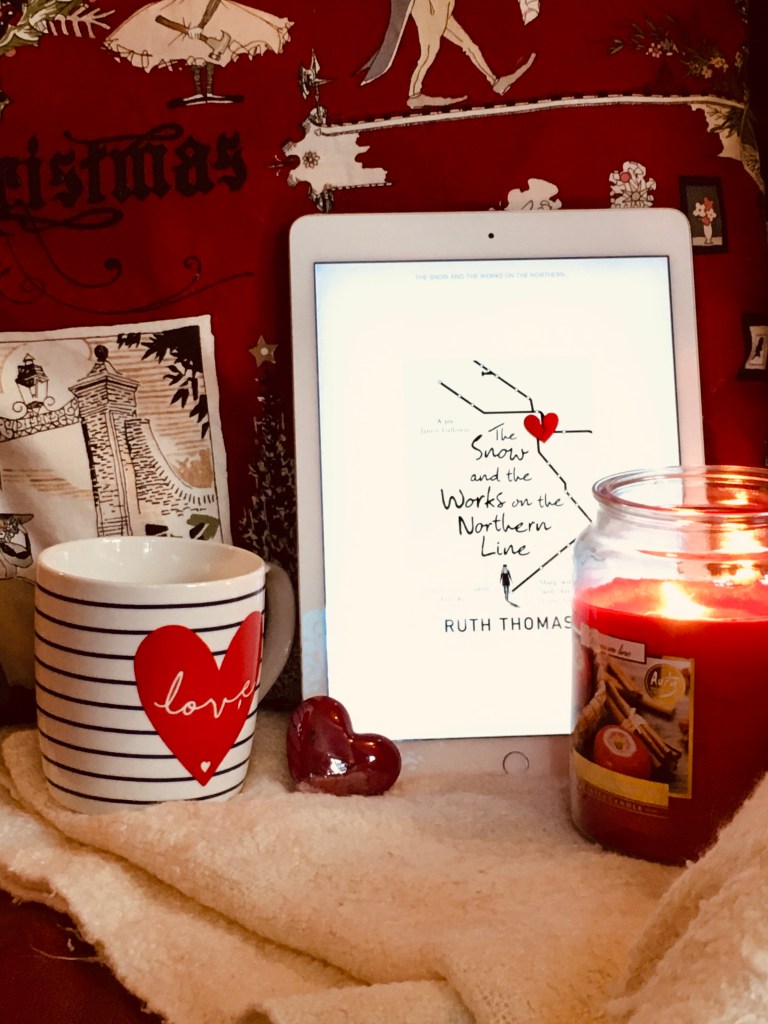
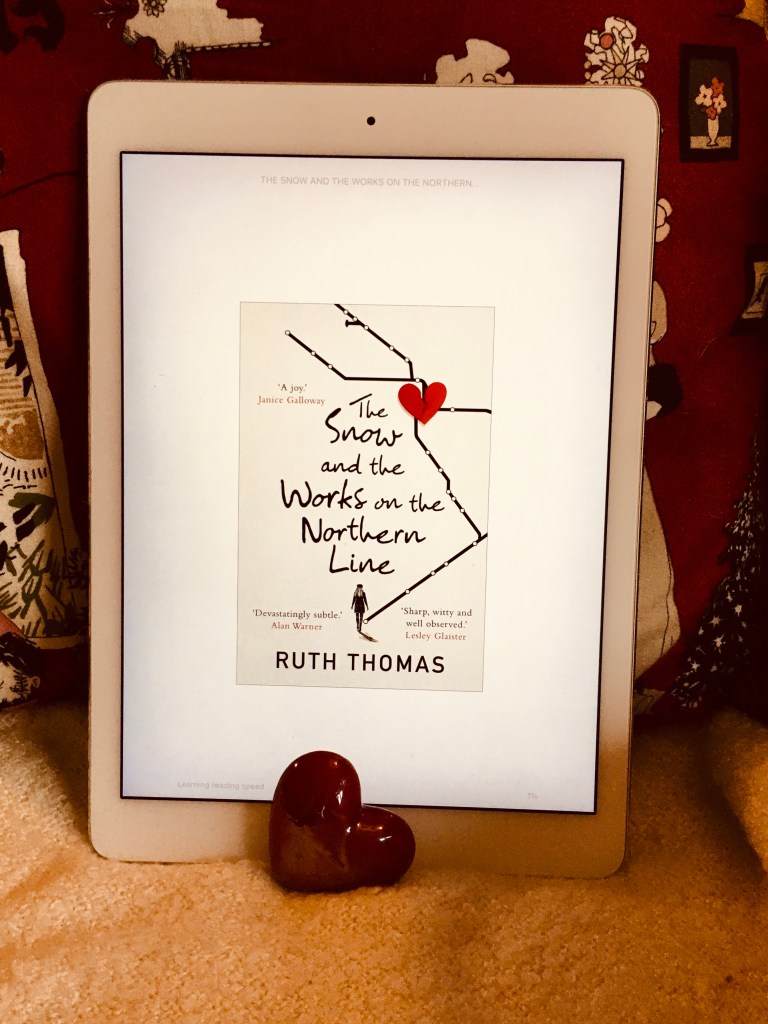
The Snow and the Works on the Northern Line by Ruth Thomas.

What a wonderful surprise this novel was. I’m clearly getting worse, we’re only three weeks into January and I’m already in love with a new literary heroine. I absolutely adored Sybil and felt so at home in her company that I just kept reading all day. I finished at 11pm and was bereft, because I wouldn’t be with Sybil any more. Yes, this is what happens to avid readers. We fall head over heels with a character, can’t put the book down, then suffer from book withdrawal. All day I’ve been grumpy and reluctant to start a new book.

Sybil’s life is puttering along nicely. She has a job she enjoys at a London museum – Royal Institute of Prehistoric Studies (RIPS). There she produces learning materials, proof reads and indexes archaeological publications, and helps people with research enquiries. She has a great boyfriend, Simon, who is a chef and likes to make her bread from obscure grains. Her quiet, settled life is turned upside down when she, quite literally, bumps into an old nemesis from her university days. Sybil and Simon have gone ice skating, where they spot Helene Hanson, Sybil’s old university lecturer. Sybil doesn’t want to say hello, after all Helene stole some ideas from her dissertation and put them into her research on the Beaker people. They make their way over, very unsteadily, and end up careering into Helene’s group and in Sybil’s case banging her head. She has a nasty bang, and from there her life seems to change path completely. Only weeks later, Helene has stolen Sybil’s boyfriend and in her capacity working for a funding body she has taken a huge interest in RIPS who will be selling her Beakerware (TM) in the gift shop and welcome her onto their committee as chair of trustees. Sybil’s mum suggests a mature exchange of views, but Sybil can’t do that. Nothing but all out revenge will satisfy how Sybil feels. She’s just got to think of a way to expose that Helene Hanson is a fraud.

First of all I want to talk about the structure of the novel. As Sybil’s life starts to unravel, so does her narration. A suggestion from a friend leads Sybil to a poetry class at her local library, so prose is broken up with poetry and very minimal notes of what Sybil has seen that she hopes to turn into haiku. This is a Japanese form of poetry with a set structure of thirteen syllables over three lines in the order of 5, then 3, and then 5 syllables. Having lived next to a Japanese meditation garden for several years I started to write and teach haiku as a form of meditation. It’s a form linked to nature and is very much about capturing small moments. So if Sybil sees something that might inspire her, it makes its way into her narration. I loved this, because I enjoy poetry but also because it broke up the prose and showed those quiet still moments where Sybil was just observing. She works with found objects – most notably a little teacup, left on a wall, that has ‘a cup of cheer’ written on the side. There’s a very important reason for the fragmentary narration, that I won’t reveal, but I loved it and thought it was so clever. Many of my regular readers will know why I connected with it though. These changes could just be a visible symptom of the chaos in Sybil’s mind as she goes through a massive shift – physically from one flat to another – but a mental shift towards living alone, to coping with her nemesis constantly popping up at her work space and to experience the heartbreak. We’ve all been there so her situation is easy to relate to.

The characters are brilliantly drawn, funny, eccentric and human. Sybil’s boss Raglan Beveridge – who she observes sounds like a cross between a knitted jumper and a hot drink – is such a lovely man, easily swayed but kind and tries to ensure that Sybil is ok. I enjoyed Bill who she meets several times across the book, in different situations. He’s calm, funny, thoughtful and shows himself to be a good friend to Sybil, even while she’s barely noticing him! Helene seems to hang over everything Sybil does, like an intimidating black cloud promising rain to come. She is a glorious villain in that she has very few redeeming features, and tramples all over Sybil’s world at home and at work. The author cleverly represents this in the very structure of RIPS. Sybil likes her slightly fusty, behind the times little museum. There’s a sense in which it is precious, that the spaces within shelter some eccentric and fragile people. They’re like little orchids, who might not thrive anywhere else.

Helene’s organisation brings much needed funding, but with it comes obligation. As chair of the trustees, she wants to change the structure of the building and all these precious spaces might be sacrificed. Her commercial enterprise, recreating Beakerware (TM) for the museum gift shop, means the shop expanding into other areas. Exhibits that have been on display for years will be moved into storage to make room and Sybil dreads Helene using Simon as the face of the range. Imagine giant posters of your ex greeting you every morning at work. To add insult to injury she inserts herself into Sybil’s everyday job by insisting on adding a section into Raglan’s upcoming book, meaning that Sybil has to index Helene’s writing. Could there be a chance here, for Sybil to gain some satisfaction? As Sybil’s mum hints though, revenge can be more damaging to the person seeking it.

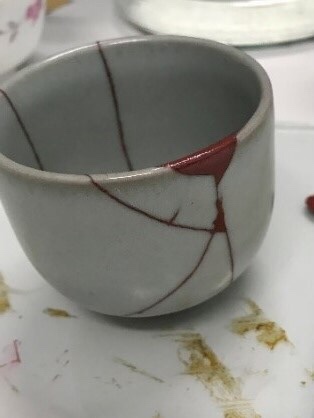
This was a quiet book. As I was reading it, I was engrossed and the outside world was muffled for a while. It reminded me of those mornings after snowfall, when the outside world is silenced. I felt a deep connection with Sybil. She’s offbeat, quirky and has a dark sense of humour. We meet her at her lowest point and we’ve all been heartbroken, but it was much more than that. I’ve been this broken by life, I was a like a vase, smashed into so many pieces I didn’t know if I could pull all those pieces back together. Even if I did, I knew I would never be the same person. My loss felt so huge that it affected my actions – I left doors unlocked when I went out, forgot to pay bills, and started to make mistakes at work. I had always prided myself on being very ‘together’ and here I was falling apart. I discovered Japanese art that healed me in some way – it’s called Kintsugi and it’s the art of repairing broken ceramics with liquid gold or other contrasting metal. It shows the cracks, that the piece has been through something, but it’s still whole. I felt that this applied to Sybil’s journey and the book’s structure too. Sometimes, broken things can be even more beautiful than they were before.

A piece of Japanese kintsugi

Meet The Author


Ruth Thomas is the author of three short story collections and two novels, as well as many short stories anthologised and broadcast on the BBC. Her writing has won and been shortlisted for various prizes, including the John Llewellyn Rhys Award, the Saltire First Book Award, the VS Pritchett Prize and the Frank O’Connor International Short Story Award. She lives in Edinburgh and is currently an Advisory Fellow for the Royal Literary Fund. The Snow and the Works on the Northern Line is her third novel.

Why not go back and check out the other reviews from the blog tour:

Posted in Personal Purchase

Throwback Thursday! The Crimson Petal and The White by Michael Faber.

Today is my first Throwback Thursday post where I tell you about a book that’s already in my collection. It can’t always be about brand new books. Especially at a time when people are struggling financially. All of my Thursday books should be available in your local library or might be found in a second hand book or charity shop. Hope you discover something new, but old at the same time 😊😊

Publisher: Canongate Books, 2014 – Paperback Edition

ISBN: 978-1782114413

Watch your step. Keep your wits about you; you will need them. This city I am bringing you to is vast and intricate, and you have not been here before. You may imagine, from other stories you’ve read, that you know it well, but those stories flattered you, welcoming you as a friend, treating you as if you belonged. The truth is that you are an alien from another time and place altogether.

This is a new feature for 2021 where I look back at a book that I’ve already read, possibly years ago, and bring it to reader’s attention. I was more than a little daunted by this brick of a novel by Michael Faber, but such is his incredible characterisation and ability to wrong foot you at every turn, that you’re left wishing you could stay in his world a little longer. This incredible work is the novel Dickens could gave written had not been constrained by the conventions and sensibilities of his age. In fact, this novel portrays a Victorian London slightly after Dickens time, where omnibuses take middle-class ladies to shop for fripperies, such as the soaps our hero William Rackham makes in the family factory. However, despite the period, it is not Rackham who occupies us or draws our attention. It’s the women in this novel who really hold the power. From poor Agnes, the long suffering wife of Rackham diagnosed with hysteria and confined to bed, to the alluring Sugar, a prostitute with a strange skin condition. I think it is Sugar who draws us into this tale, in much the same way she draws a man, the narrator beguilingly addresses us directly – perhaps in a parody of Jane Eyre’s ‘Reader I married him’. She makes it very clear that we may think we know London, we’ve read about it from other authors after all, but what she’s showing us is a London that was always there, but hidden from our eyes.

Sugar is just 19 years old, put on the game at a tender age, she is pale, and not even a beauty really. However, she has a reputation of mythic proportions, praised highly in More Sprees – the catalogue of London whores for those who are keen customers of brothels. Whilst the oft quoted estimate of a police magistrate was 50,000 prostitutes working in London in 1791, it’s likely this figure included unmarried women living with a partner, which was quite common in the working class communities. The British Library suggests a more accurate figure of 20,000, so for Sugar to be one of the best and even well-known is quite an achievement. Her entry in the book suggests that are acts she will perform that others don’t. William Rackham searches her out along with two friends who have the guide, although William seems more interested in drinking. Disillusioned with his job and married life, William has always wanted to be a writer, scribbling away at his desk in the big house, but has never finished anything publishable so his father drafts him in to to run the family business Rackham’s Soaps. His wife, Agnes, is rapidly turning into an invalid – spending much of her time in bed and only visited by the family doctor, convinced that the rest cure and his ‘treatments’ to correct potential hysteria will help. She doesn’t even remember she has a child.

When William does find Sugar, he is enamoured of her paleness, her compliance, and her keen brain. She is like no woman he’s ever met. He can talk about his business and she understands; perhaps the only woman who has truly understood him. However, there is one fly in the ointment. Agnes is still largely in bed, often distressed and resistant to the doctor’s visits, and unaware she is a mother. Their daughter needs to be kept quiet so that she doesn’t disturb her mother or William when he is working. As time goes on and keeping Sugar starts to become expensive, he has an idea. What if he were to move Sugar into the house as his daughter’s governess? There would be an answer to the problems posed by his child, and there would be no barrier to he and Sugar being together – even if he only has a short amount of time to spare. Anyone can see this is a disastrous idea, but ideas have never been William’s strong point. What will happen when every aspect of his life is under one roof?

These characters are so well drawn and our setting so painstakingly rendered with incredible detail, every time you pick up the novel it feels like you are there – with every smell and ribald comment of Sugar’s world. The lynch pin of the novel are the two women; Sugar and Agnes. With the two under one roof, William has the ideal situation for a man with a Madonna/Whore complex – one class of women for marrying and another for sex. Sugar has every sympathy for Agnes and soon has a shrewd idea of what is going on in this outwardly respectable home. Agnes is entirely an innocent, so much so she believes that demons ‘bleed’ her monthly. When she is subjected to sexual assault in the guise of examination by the doctor, Agnes is simply dosed with laudanum to keep her quiet. Every so often, even William visits his wife bed, taking what he can even when his wife is so drugged she can’t possibly consent or participate. For a young woman like Sugar who is used to women of bawdy conversation, who douche with vinegar next to each other and understand the mechanics of sex, Agnes is a complete innocent. In fact when she does see Sugar she thinks she is her Guardian Angel, something that Sugar is happy to cultivate. As William’s interest in Sugar wanes, she becomes furious and plots how she can help Agnes and Sophie. I also love that although William considers himself the literary figure, both women are writing daily. Sugar writes an erotic and bloody revenge novel on the men who have used and abused her. Meanwhile, Agnes keeps a daily diary, explaining what is happening to her and descending further into her ideas of angels and demons. Both women have a strength that William can only dream of.

I won’t ruin the end, because I recommend that you read it, especially those of you who love historical fiction. It’s really a race to find out whether our women will come out on top and how. If you’re used to historical fiction, you might expect things to be tied up neatly with a bow, but since this is a postmodern novel you won’t get that. In fact we !leave these people as abruptly as we came in with our all seeing narrator:

An abrupt parting I know but that’s the way it always is isn’t it?’


BBC Series The Crimson Petal and The White

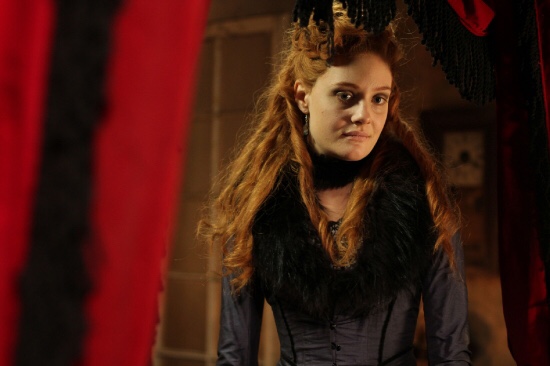
The BBC series The Crimson Petal and the White was just as intriguing as the book and with an excellent cast. Romola Garai played Sugar, Gillian Anderson played her brothel madam and mother, and Chris O’Dowd took on his first drama role as William Rackham. The settings were authentic,the language of Sugar’s world and the lack of modesty in it’s women incredibly authentic. The series stayed very true to the book, was beautiful in terms of costume and sets, and even brought interest to lesser characters in the novel. Aside from the excellent main characters, Shirley Henderson memorably portrayed the religious reformer of prostitutes, Emmeline Fox. I always remember her tiny, hoarse voice and difficulties breathing which were a huge contrast to the conviction and fire within her. This was an excellent series, well worth searching out on DVD.