The ‘Fierce Five’ have always been the best of friends. Gail, Allie, Emily, Stacie and Diana are all different in character, but have complimented each other. Gail is the organised one who tends to get them altogether. Allie is quiet and tends to be more introspective than the others. Emily is the traditional one, with her twins and husband Adam at the centre of everything she does. Stacie has been married twice, someone who is proud of being straight talking, but is still holding a lot inside. Finally there’s Diana who came from a more deprived background than the others and has a more cynical or realist’s perspective on life. They are all invited by Gail to celebrate her 35th birthday at her cabin, an isolated and atmospheric spot in the Scottish Highlands. The girls plan on catching up, having a drink and enjoying the remote location where they’re removed from their everyday lives. However, when a snow storm threatens to cut them off completely, events are set in motion that no one expected.
This was my first book from Carys Jones and she certainly knows how to ratchet up the tension. This wasn’t my first remote chalet thriller this year because there have been a few books with a similar premise such as Catherine Cooper’s The Chalet and Ruth Ware’s One by One. I found this story compulsively readable, with well-drawn characters and a real sense of surprise and menace. The story is told in two timelines, the current stay in the cabin and then back into the girl’s pasts where we could explore their past interactions and the events that shaped who they are. These sections were not necessarily chronological, but each section informed the situation in the present. A third section is written as the transcript of a police interview with an unnamed person of interest. Since one of these transcripts starts the book off, we know how important they are to the story and that something very very wrong has happened on the girl’s weekend.
The storm is menacing and I felt like the author depicted it like a sixth character in the novel. Even though it’s outside, it seems to influence what happens inside, so as the storm builds so do the friend’s emotions. When the storm is at it’s height the secrets, and lies of the book’s title, come to the surface and events take a drastic turn. I loved the way the author depicted this complicated friendship, because it was realistic. Often large friendship groups like this do have factions – two of the group who are closer than the others, another pair keeping a secret from the group or one member feeling isolated from the others. It’s impossible for groups like this to weather the years without changes happening. Individual experiences shape and change us over time and that might mean friendships wax and wane, but in groups like this those changes can cause resentment and jealousy. This happens especially if two people bond over an experience they’ve both had, switching allegiances such as friends who’ve both have children tending to gravitate towards one another. As the secrets come tumbling out and the girls battle to cope with the revelations and the effects of the storm things reach boiling point. Which of the friends will snap? This is an entertaining novel about old friendships that might just put you off your next school reunion. Tense, claustrophobic, and an unexpected ending. I’ve been reading this in a remote cabin in North Wales and it definitely added to the experience!
I’d anticipated this book for a couple of months having been told by my Squad Pod ladies that it was going to be a fantastic read. It certainly was, and even more than that, it was surprising too. Our setting is the city of Belfast, the Titanic sinking is still fresh in everyone’s minds. It’s especially fresh at Professor William Crawford’s house since his brother-in-law Arthur was on the ship. Crawford is our narrator and he introduces us to his happy, but chaotic household as the novel opens. He is a man of science, working at an institute both furthering scientific enquiry and teaching the next generation of engineers. He’s a sceptic, so when he finds out that his wife is visiting a medium and has been trying to contact her brother Arthur, he’s shocked and angry. There’s no question that this girl is a fraud, stringing his wife along with a show put on with the help of her shady family. Yet, the couple have lost their son Robert and Crawford’s grief is overwhelming. So when he hears Robert’s voice calling to him alongside an angry, vengeful Arthur who blames Crawford for his death, a small crack grows in his scepticism. What if he were to apply his scientific rigour to to this girl medium’s powers? If he could prove a link exists between this world and the next he could make a name for himself, not just in Ireland but all over the world.
I found the tone of the book quite unique and fresh. We see Crawford’s world through his eyes and this gives us a chance to really know him. I loved that he had the petty work grievances and rivalries that are familiar to us today. His pomposity and stuffiness could get him into scrapes with other people who don’t understand his Edwardian ‘Sheldon Cooper’ tendencies. At home his need for routine and things done a certain way is met with a certain amount of fond irritation. The children tend to break through the veneer of grumpiness and when a mysterious new maid appears, she seems to know him so well and has what he needs ready before he even misses it. I loved comic little scenes like the undignified moving of naked statues at the institute. When chosen for a special job before an important dinner, Crawford’s self-importance starts to show itself. His disgust when he finds out he’s just a removal man is so funny, a situation that’s made worse when family patron Aunt Adelia accuses him of manhandling a naked woman at an upstairs window. Sometimes it’s the author’s description of a character, as seen by Crawford, that raises a smile. Crawford’s colleague Stoupe is described as:
‘Damn it, there was no escape, and no creature on earth moves so quickly as an irritating man. He danced over the tiles towards me, grinning, all arms and sweat, dressed preposterously in a baggy velvet suit, pursing his lips like a kissing pig. He gave a courtly bow before standing far too near, smelling of lavender, whisky and damp, short tufts of blonde hair.’
There are other sections of the book where his privileged position as a white, middle-class man of some scientific standing, gives him so much power he starts to abuse it. One section that I found really disturbing was his insistence that the medium, Miss Goligher, prove her gift is genuine by submitting to different tests and examinations. He forces Rose, their maid, to cavity search the unfortunate girl in an enormous abuse of power. There is also the burning of his son Robert’s comfort blanket which felt particularly cruel. The seance scenes are intense and confusing. At one point attendees are tied up and blindfolded as per Crawford’s instructions, but he still finds it difficult to understand what exactly is going on. In America, a meeting with Arthur Conan Doyle and Harry Houdini show the circles he’s starting to travel in. They add authenticity to the period and subject matter, because even though William Crawford’s experiences were documented historically, the book fictionalises them. Similarly both Conan Doyle and Houdini were fascinated with phenomena like mesmerism and mediumship. As an aside, Conan Doyle was famously taken in by two small children who claim to have photographed fairies in their garden, so his eagerness to see proof of mediumship and his note of caution feel consistent with his known experiences. What I loved more than anything was the author’s ability to surprise, because as we neared the end I had no idea how the book and Crawford’s investigations would conclude. The theme of dishonesty is there right from the start, in Arthur’s reasons for being on Titanic, to the hidden note from their old maid who left in a hurry, and Elizabeth’s absence at weekly church meetings. By the end I felt triple bluffed, but couldn’t help smiling at how clever the author had been. As many of our characters find out, when it comes to being dishonest, the person we deceive most often is ourselves.
Published on 7th October 2021 by Duckworth Books
Meet The Author
A.J. West grew up in Buckinghamshire, before studying English Literature in Preston. He worked as an award-winning network television and radio news presenter and reporter before appearing on the legendary reality television programme Big Brother, where he became a household name, though the specific household is yet to be identified. He stumbled upon the troubling case of William Jackson Crawford and his paranormal investigations while working for the BBC in Northern Ireland. He has been spellbound ever since.
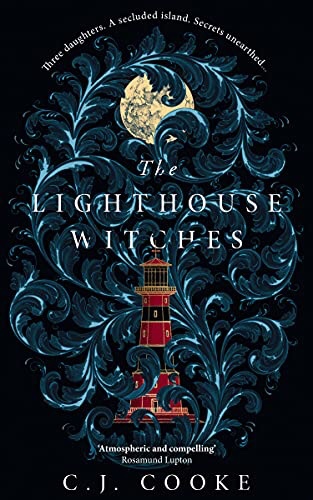
This book has been one of my most anticipated reads of 2021, because I loved the blurb of course, but also because I’ve had a lot of luck this year with fantastic books that have a lighthouse on the cover. The Lighthouse Witches was even darker than I expected and I enjoyed it immensely. In the late 1990s, artist Liv Stay finds herself homeless and without work so travels all the way up to Scotland and an island called Lòn Haven where a friend has recommended her to paint a mural. She travels to the coast, with her three daughters Saffy, Luna and Clover. There she meets Isla, caretaker of the bothy they’ll be staying in next door to the sea lashed lighthouse where she’ll be painting the mural. The mural is planned out on a large roll of paper and Liv is bemused to see a diagram of sorts, full of runic symbols she doesn’t understand. Getting this accurate in a circular building is her first challenge, and the second is to inject some of her own creativity in the design to make it beautiful. The girls are a bit shell-shocked to be brought to this remote and wild place, and there are certainly some unanswered questions as to why and how they ended up somewhere so remote and creepy. Liv carries a huge secret inside her, but the family are about to find out that Lòn Haven holds its share of secrets and ancient beliefs too, causing the whole family to disappear.
The story is told through different characters in three main time zones. Liv narrates the main section in the 1990s, then we meet her grown-up daughter Luna twenty years later, but we also go back into the history of the island and the witch trials of the 17th Century. The grown-up Luna is drawn back to the island when her sister Clover is found. However, to Luna’s shock, her contact Eilidh the social worker takes her to a little girl. Clover should be around thirty years old. Yet, Clover recognises her childhood toy and his name; she immediately squeezes Gianni the Giraffe like an old friend. Luna can’t understand why the social services haven’t noticed the anomaly in Clover’s date of birth, but her instinct is to protect her sister. So when asked, Luna fudges her date of birth and takes Clover away with her to the Air BNB she’s booked. At times, once they’ve settled, Luna does wonder if everything is okay with her sister. There’s the strange marking like a brand on her skin, which has four tiny numbers inscribed. There’s also a look she has, as if she isn’t present in her body and doesn’t recognise Luna. Over a couple of days she also displays some disturbed behaviour. Luna finds Gianni with his insides pulled out and his head cut off and then Clover floods the bathroom on purpose. Luna is desperately trying to find some sort of disease or syndrome that might have regressed her sister’s age. The only other explanation is a supernatural one and Luna isn’t sure she’s ready to accept the the local folklore she heard when she went missing all those years ago. However, she’s pregnant and alone with Clover in the middle of nowhere, so what if she isn’t her sister?
The author creates a brilliant atmosphere across all three time periods, starting with the name of the lighthouse, The Longing. Rather than full on horror, it’s a sense of the uncanny that starts to unsettle the reader. We all know that sense of rising tension when we feel so on edge, that anything would scare us. Here, it’s glimpsing a baby in the water that’s flooding the floor of the lighthouse, when it’s just a doll; a small child’s arm reaching out from behind Liv’s art materials; or opening a door to see your own double standing there. As we delve into the past and the history of The Longing, we are faced with the real-life horror of the 17th Century witch trials encouraged by King James, the first joint King of England and Scotland who ascended the throne after Elizabeth I died without an heir. Women with skills such as herbalism or midwifery could come under suspicion, but more usually local disputes and grudges led to women being branded a witch. In this case the local midwife, her friends and their daughters have all been accused and in matters like this the islanders stick to the rule ‘thou shalt not suffer a witch to live’. Accused women in this time period were often checked for the Devil’s mark – a mole, birthmark or blemish of any kind – had their hair shorn, were stripped, humiliated and then burned. The history of the island shows that a burning happened on the very rock, that now serves as a foundation to The Longing. I wondered how the old beliefs, in the fae or fairies, witches, and strange children called wildlings still held sway in the present day. In the 1990’s narrative there is still a definite undercurrent of ancient beliefs, with their followers having enough reach to influence both the police and the richest man on the island, owner of the bothy and lighthouse. Liv comes up against the reach of these believers when she reports seeing a small boy who looks like he’s been living wild. The police don’t want to know when she reports him missing, and it feels as if they view her as a nuisance, someone who doesn’t understand the island’s ancient way of life. When you visit Lòn Haven, as Luna does years later, there’s a sense of the ancient past existing alongside the present, as if time isn’t linear but looped upon itself.
I did get a little confused at times, especially with the elements of time being manipulated, through the cave known as the Witches Hide. There is old magic here. I was trying to understand the marks and numbers branded on Clover and others, and match them to the different time frames. In the end I gave up and decided to just go with it. I found this quote, in a letter from mother to daughter, very apt:
‘I’m not sure if I’ll make it, Luna. I’m not sure I’ll be able to hang on long enough to see you one last time. I’m going to try. But if not, if I slip away before I get the chance to hold you again, I wanted to write down the story of what really happened on Lòn Haven. As you’ll see, Cause and Effect in this tale do not fit easily together. The pieces are odd and mis-shaped because truth is messy and porous’.
I enjoyed the ending, despite feeling it was untidy. I thought it was a great story of women, and how their power and position changes over time. It also has a lot to say about mothers and daughters, how they communicate and the stories they tell each other to help navigate a world that can be set against women. I felt so much for Saffy, a very confused 15 year old who, in the midst of all the supernatural activity, is dealing with the usual teenage angst. Unsure of herself and this new place, she is lured into sexual activity and sending explicit pictures to one of the local boys. This is a girl who desperately needs her Mum, and isn’t getting any support or advice. There’s one occasion where Liv honestly has no idea where Saffy’s been for the last 24 hours. I wanted to give this girl a massive cuddle and help her set boundaries that she’s comfortable with instead of being coerced. The author mixes the present day perfectly with ancient folklore, supernatural happenings, and time travel, which is not an easy feat. Not to mention the depth of historical research that underpins the more fantastical elements. So, it seems my attraction to books with lighthouses on the cover, has paid off once again.
Meet The Author
C J Cooke (Carolyn Jess-Cooke) lives in Glasgow with her husband and four children. C J Cooke’s works have been published in 23 languages and have won many awards. She holds a PhD in Literature from the Queen’s University of Belfast and is currently Senior Lecturer in Creative Writing at the University of Glasgow, where she researches creative writing interventions for mental health. Two of her books are currently optioned for film. Visit http://www.cjcookeauthor.com
This was a complicated and fascinating book about art, but also how difficult the relationship can be between mothers and daughters.. I really believed in this story and it’s portrayal of the difficulties in making art. I was not surprised to read that the author had been an art writer, because of the detail and truth in the process of creating. Set in the art world of NYC, Lisa is a painter in the Abstract Expressionist era of the 1950s. She starts to be sidelined when she becomes pregnant, but truly believes she can be a mother and still create great art. Studying in NYC is a dream and I think she really felt she’d found her people, her tribe. Fellow artist and lover Hank, goes up against her for an exhibition and is surprised when it’s Lisa’s work that really gets noticed. We then jump to 1966.
When her daughter Rouge was born, Lisa found herself butting up against the male dominated art world, surprised to find it quite conventional after all. I loved the feminist take on what we imagine to be a fairly free and bohemian world. It was an area of life that I’d imagined had less barriers. I really felt for Lisa and understood her disillusionment when her ex-lover is suddenly a new darling of the movement. Especially considering how similar their work is. The psychological effects of this realisation include resentment building between mother and daughter. The resentment is felt, even where it isn’t knowingly expressed or acknowledged. Lisa ends up teaching in college to pay the bills, she also starts to drink more heavily and take risks. Years later, when her daughter Rouge takes an interest in art she chooses photography as her medium. She looks for a mentor and finds Ben Fuller, who happens to be one of Lisa’s old lovers. This acknowledgment, and from a male member of the art world, adds another layer of resentment between mother and daughter. If Rouge’s photography is going to be noticed, how will Lisa cope and what lengths will she go to in order to deal with these negative feelings? Would she consider sabotage?
When she was pregnant Lisa could have chosen another road, she could have walked through a door of her choosing and be living a different life. She hasn’t intentionally made Rouge feel unwanted, but the choice to stop creating art held within it so much self-sacrifice, that it’s some unconscious negativity and even anger has come through to her daughter. Now her daughter is going to take the acclaim that Lisa feels is rightfully hers. However, Rouge is also angry, about the drinking and the revolving door of lovers who come in and out. She is so dismissive of her mother’s choices that she’s very surprised to find one of these lovers had anything useful to teach her. If her photography is good enough, she can imagine doors opening for her. It could be an escape from home and her mother.
I loved that all those elements and difficulties of a woman creating are expressed through Lisa’s world and it’s likely the author has felt similar constraints herself – they haven’t really gone away half a century later. I still feel guilty if I’m writing instead of doing the housework, or doing something for the family. I even find it hard to tell friends I can’t see them because I’m writing. Writing isn’t seen as real work until you’re published, but if you can’t write that never happens. Everyone thinks it can just be moved to tomorrow, and I know I’m not alone in putting it off. Some of that could be imposter syndrome, but it’s also saying it out loud. If I tell people I’m writing, then it’s real with all it’s chance of failure. However, the difference between the 1950s and the 1960s is a huge one culturally, There’s the pill for a start, leaving women in developed countries in charge of their own fertility. Between that and the more permissive attitudes in society it’s clear to see why Lisa would feel there is a huge gap between her generation and her daughter’s. Rouge is free to network and really sell herself. She can curate her own image as an artist, whereas mothers already have one. The author depicts the artistic journey so well – that imposter syndrome, the dreams, the crushing reality and self-sabotage are all seen in these two women. The author shows, quite beautifully, how mothers and daughters misunderstand each other: not knowing the cultural differences between their generations; not even understanding, never mind appreciating, the sacrifices made and the love behind them. This book is about that distance between mothers and daughters, a distance that can only be bridged through openness and honesty, as well as space and time. This was a fascinating and psychologically complex read.
Meet The Author.
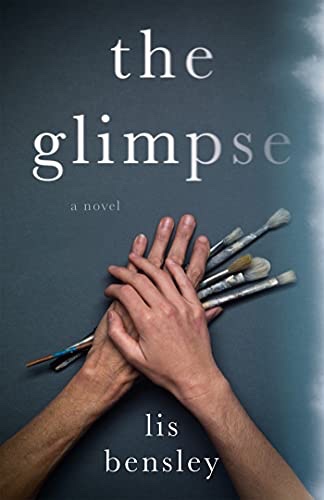
Lis Bensley is a writer living in Santa Cruz, CA. She has worked as a journalist at The New York Times and The International Herald Tribune, when she lived in Paris and studied cooking at the Cordon Bleu. Subsequently she wrote The Women’s Health Cookbook. To entertain her children, she wrote The Adventures of Milo & Flea about the antics of their cat and dog. She is currently hoping to publish her novel The Glimpse and is working on sequels to the Milo and Flea story.
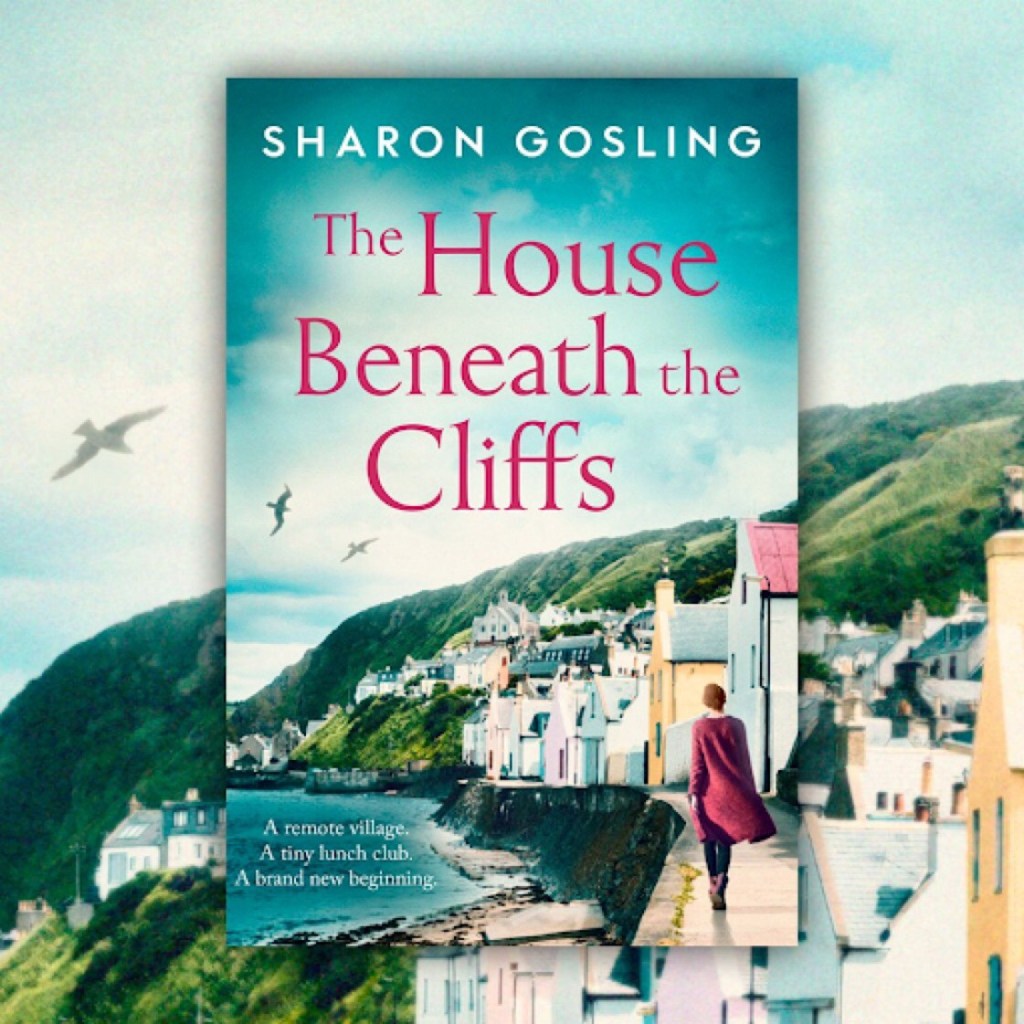
I was drawn to this novel by Sharon Gosling as soon as I read the blurb on NetGalley. I enjoy novels where a character has the bravery to start over, especially if the ‘before’ meant overcoming some sort of adversity. For Anna, a talented chef who decides to move to a tiny village on the coast of Scotland, it’s overcoming years of psychological abuse from her boss and partner, Jeff. They met at catering college and ever since Anna has been working under him in London, helping him to earn several Michelin stars over the years. However, Anna has never really acknowledged or even felt entitled to that success, because Jeff has always told her she needs a strong leader, she’s best in a supporting role; she hasn’t the talent to survive on her own. So, after their split, she moves to the other end of the country and to a bothy in a tiny fishing village on the Moray Firth. Crovie is a village that survives despite everything the sea can throw at it. Under a huge cliff, it has survived storms and landslides in the past. It has the remoteness that Anna is looking for, but as she first sets foot in her new home ‘Fishergirl’s Luck’ she wonders if she can really live in a place like this? However, whether it’s the sea air, the villagers or a blessing from a previous single woman who lived there, Anna soon feels inspired. Could this be the perfect place for a foodie to start a new venture?
The setting was so beautifully rendered throughout the novel. There’s something forbidding about the position of the village, wedged between the cliff and the roaring sea. It’s so vividly portrayed I could almost feel the salt spray on my cheeks and the wind whipping my hair around. Anna’s connection with nature is unexpected and deeply inspiring. She clambers over the rocks, goes out on the boat to see dolphins and collects purslane and razor clams. The sea is both friend and foe, bringer of food and providing work for the fishermen, but also the force that batters the cliffs and erodes the very soil under Crovie. Then in complete contrast we have ‘The Fishergirl’s Luck’ and the way it feels so inhospitable at first, way too small to live in, let alone cook in. Yet, as soon as Anna starts to clean and turn it into a home, something warm and cozy emerges from the dust and grime. Just like the village seems almost pitted against nature, Anna has had to pit herself against the bothy. Now it feels like a shelter, somewhere that will keep her safe.
When she finds previous tenant Brenda’s recipe book and makes her hazelnut and raspberry shortbread, something connects the two women across time. This aspect was interesting because it seems as if Brenda used to receive the similar treatment from the local fishermen, that Anna has received from Jeff. Especially from the irascible Doug McKean who seems to think he was cheated out of the bothy by Brenda and intends to keep the grudge going through Anna’s time there. Brenda wanted to fish in her own right, something the men found ridiculous. She found and fished her own boat, maintained the cottage and named it. Something of Bren’s spirit gets into Anna and it’s like nothing can hold her back – even Jeff turning up all the way to life-changing surprises, she takes them in her stride. She also takes strength from wonderful neighbours like Pat and John, local potter Rhona, fisherman Liam and both young and old Robbie. She meets Liam while looking for fresh fish in hope of reviving her a lunch she’s planning. He brings her a table and bench for the garden that sparks an idea – what if she started a lunch club outside for the summer? Although she thought she’d bought the cottage from an elderly man, Auld Robbie, he turns out to be younger than she expected and a widower with an adorable son. Young Robbie is obsessed with a pod of dolphins in the bay and their welfare is all important to him. Every day he checks them, and asks Anna to join them.
I loved watching her circle widen and her confidence beginning to return. Bren’s notebook is the re-birth of Anna’s love of food and it is her food. Away from any other influence she is now free to experiment and do things her way. I really enjoyed the foraging for ingredients and descriptions of her dishes, which sound delicious rather than fussy or refined. However, I was interested to find out whether she kept her confidence, particularly when old pressures and influences surfaced? There are a lot of books around where a woman makes a new start and often they’re too saccharin or unbelievable. This had it’s predictable moments, but every so often there was enough of a curve ball to to make it feel fresh. The author wasn’t above giving her heroine some mountains to climb here and there, both positive and negative. Anna is a brave woman though and not above taking risks – she’s bought a house without viewing it, started a lunch club in the open air in Scotland, taken on the local misanthrope and accepted the more unexpected surprises life has thrown at her. As a big summer storm approached I wondered whether the luck of the cottage would hold? If not, would Anna take the easy option and leave Crovie or will she keep fighting for what she wants? Blessed with charming locals, stunning scenery and an interesting history, Crovie was a lovely place to spend a few hours.
Meet The Author.
Sharon Gosling lives with her husband in a very remote village in northern Cumbia, where they moved to run a second-hand bookshop, Withnail Books in Penrith. She began her career in entertainment journalism, writing for magazines in the science fiction and fantasy genre, before moving on to write tie-in books for TV shows such as Stargate and the ‘re-imagined’ Battlestar Galactica. She has also written, produced, and directed audio dramas based in the same genre. When she’s not writing, she creates beautiful linocut artwork and is the author of multiple children’s books. The House Beneath the Cliffs is her first adult novel. Follow her at @sharongosling.
I’ve been reading Hill’s Simon Serrailler novels for many years now. I read the very first one, The Various Haunts of Men, when it first came out and every one since. In this 11th outing for the detective he’s investigating a death above a Chinese Medicine shop in the distinctly hippy village of Starly. A strange anomaly in the area, Starly seems to attract shop owners selling incense, tarot cards, and new age paraphernalia. The young man in front of Simon has been dead a few hours and has a needle in the vein of his arm. It seems to be a run of the mill overdose – sadly all too common now that county lines operators had been plying their trade locally for a while. County lines drug dealing bothers Simon and he wants to eradicate it, but catching the person distributing in the village won’t yield any further results. The local man rarely knows the men above him, he just picks up a packet from a given location and gets his on foot distributors to do the next stage. Sadly, those at the bottom of the ladder are often children coerced or groomed into helping out, whether or not they even know what’s in the package they’re carrying. However there’s something about this overdose that doesn’t add up and it is going eat away at Simon until he solves the puzzle.
There are always family issues in Hill’s novels because they are as much about the family as they are the case. I’ve still after all these years, not got to grips with Simon as a character. I know him, but don’t necessarily understand him. I find it easier to understand his sister Cat, and bonded with the character when she lost her husband at a similar time to me. Here Hill concentrates on Cat’s youngest son Sam, who has unexpectedly turned up at home from university. Cat has suspected there have been some issues in his long relationship with girlfriend Rosie, but hasn’t wanted to interfere. Sam was fairly ambivalent about university anyway, so Cat isn’t too surprised when he says he doesn’t want to carry on. He quickly gets his old job back, portering at the hospital, until he decides on something more permanent. Rosie is training to be a doctor and they’re now likely to pass each other every day, but when he first sees her outside the hospital she’s with another man – was this just a hug after a long shift or was there more to it? Other family threads felt a little odd. Kieron is both Cat’s second husband and Simon’s boss, but there’s a strangely detached feeling to his presence. At the farmhouse he disappears into his study to watch TV without interruption, while Simon and Cat share a drink and talk. He doesn’t interact much with the children, particularly Sam. Any interactions he and Simon have at work, are left at work so they don’t chat over old cases or just the difficulties of policing the area. It’s as if he’s absent in his own life and if he walked away he would leave no impression behind.
The chapters that focus on the family or the police station seem to recede into the background, while the intervening chapters are full of life. A young lad called Brookie is the subject of one thread. One of four boys, brought up by Dad, their house is depicted as chaotic and noisy, but seems to be more demonstrative and affectionate than the Serrailler family. Brookie only has a plastic bag for his school books and is the subject of bullying by other kids. One day, as he’s gathering his stuff after it being emptied into a puddle, a stranger appears and starts to help him. They chat and Brookie never expects to see him again, but he drops by the following week with a new rucksack for him. Is this just a Good Samaritan or is something more sinister going on? With Dad working nights as door security on a nightclub the boys have plenty of time on their own and could be easy prey. We also meet a young girl called Olivia, from a more affluent background but her parents have recently divorced. Her father had an affair with a much younger woman and while Olivia’s mum knows that he’s become a dad again in his fifties, she hasn’t told her daughter. So, when Olivia rings her dad for some help, it is a huge shock to be told she has twin half-brothers screaming in the background. Now is not a good time to ask for help. Once a month, a man called Fats gets her to deposit an envelope to a derelict farm while pretending to be out for a run. She hates what she’s doing and it’s only shame and fear of her family finding out that keeps her going. Scared and emotionally manipulated, Olivia is looking for a way out. If her Dad won’t help she’s running out of options.
You always know you are in the hands of a great storyteller here, as it always feels as if the threads come together effortlessly. Of course that takes skill and hard work, but Hill makes it look easy. This is the first time in a while that I’ve felt a restlessness in Serrailler. Usually his large modern flat soothes him, it has the proximity to the cathedral so he also has the incredible views of its architecture. His job can be all encompassing, barely leaving room for other thoughts, never mind people. For some reason he finds himself viewing a large cottage in need of renovating, deep in the countryside. With this case he can feel his patch changing, the tendrils of drugs creeping into smaller towns with criminals who are willing to kill to keep their line of supply running. His behaviour with women has always kept me from truly liking him; he’s a ‘commitmentphobe’ who either never tells the object of his affections what he feels, or who carries on dating someone he has no future with for far too long. It may be something to do with his father’s lack of emotion or the way he has treated women in the past; his second wife had to ask Cat for help when Richard had physically attacked her. However, as a face from the past crosses his path, I did wonder whether this restlessness might mean he’s ready for change? This had that strangely comforting feeling that comes when you know your characters well and can settle into the story. It’s often the same with crime series, that even if your characters are in the midst of a bloody murder investigation, you feel happy to be amongst friends again.
Susan Hill‘s novels and short stories have won the Whitbread Book, Somerset Maugham, and John Llewellyn Rhys awards, received the Yorkshire Post Book of the Year, and have been shortlisted for the Man Booker Prize. The play adapted from her famous ghost novel, The Woman in Black, has been running in the West End since 1989. The eleven books in her Simon Serrailer series are all available from Overlook.
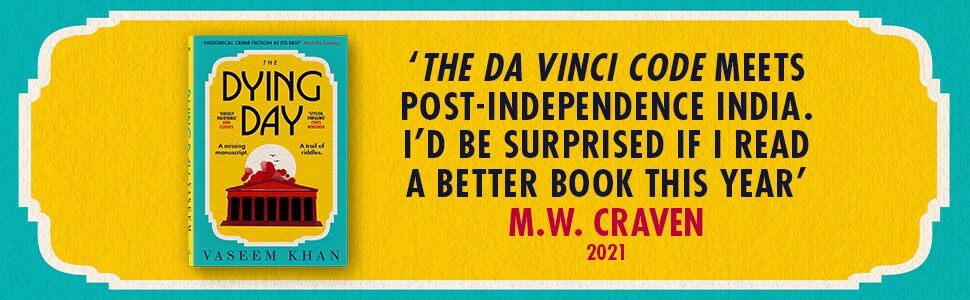
After winning a Twitter competition for a proof copy, I read some of the Inspector Chopra series of books by this author last year and really enjoyed them. This is the second book in a different series by Khan, featuring female police officer, Persis Wadia. Set in post-partition Bombay we get a real sense of the time period and political atmosphere in the background of the novel. I really enjoyed Persis as a character straight away. Her relationship with her family was well written and they were warm and inviting. They felt real, as if I could just walk into a house tomorrow and find them there, eating a meal. I found her relationships with colleagues just as interesting as her family, especially since Persis isn’t always polite or good at small talk. I loved her straight to the point attitude though and think it created a gently humorous exchange here and there.
It must have been very difficult to pitch her character properly, because she’s a police officer at a time and place that’s not the norm. She could have felt too modern for the time period, or too submissive as a woman to feel like a real police officer. I think the author gets this just right, and without her character overshadowing the plot of the mystery she’s investigating. There’s also the attention she receives from the media. As Bombay’s first female police officer she’s something of a trailblazer anyway, but on top of that there’s her notoriety from the last case she investigated (in the novel Midnight at Malabar House). This case dragged her into the spotlight a little, but she’s very unimpressed with fame and media types, plus her personality doesn’t always come across well at first meeting. I found her awkwardness very touching, especially when it extends to her personal life. She seems to have feelings for one colleague, an English forensic scientist called Archie. Of course, if her feelings were reciprocated, there would be the problem of being a mixed race couple. It’s very early in the 1950’s and the country has just gone through the horrors of partition after the British rule ended. Her family think she should steer clear of the controversy that would accompany a relationship with an English colleague, especially since she’s such a high profile police officer.
Her investigation is at the Royal British Asiatic Society where both a manuscript and an employee have gone missing. John Healy is a man traumatised by his experiences as a prisoner of war during WW2. He appears to have left some sort of trail, created in the form of clues and riddles leading to location of his manuscript, but are they genuine and is John even in his right mind? There are also political implications to the case, piling the pressure on Persis to solve the treasure hunt quickly. In the background there’s another case, investigating the murder of a white woman. George Fernandes has been given lead detective on the second case, but Persis is finding it hard to work with him, due to unresolved feelings of betrayal in their last case.
Thanks to Khan’s detailed description of the city I felt fully immersed in the sounds, sights and smells of India in the mid-20th Century. This is an India that’s just learning to stand on its own two feet after years of British rule followed by WW2. Khan evokes a colourful and vibrant, India where the mix of religions and cultural rituals bring the city to life. Persis is an anomaly, the only woman in a man’s world but she is intelligent, focused and up to the job. She does have flaws though, she’s feisty and prickly with others at times and not very good at being a team player. She is a loner, at work and at home. We find out towards the end of the novel that this isolation is something she, and her colleague George, have in common. Of course Persis is in a constant battle with male members of the team, belittling or appropriating her achievements but she handles this well and her results speak for themselves. Just in case any TV executives or producers are reading, this has ‘Sunday night TV drama’ written all over it. I would definitely be tuning in.
Meet The Author.
Vaseem Khan is the author of two crime series set in India, the Baby Ganesh Agency series set in modern Mumbai, and the Malabar House historical crime novels set in 1950s Bombay. His first book, The UNEXPECTED INHERITANCE OF INSPECTOR CHOPRA, was a Times bestseller and an Amazon Best Debut, now translated into 15 languages. The second in the series THE PERPLEXING THEFT OF THE JEWEL IN THE CROWN won the 2017 Shamus Award for Best Original Private Investigator Paperback. The first novel in his new historical crime series, MIDNIGHT AT MALABAR HOUSE, features India’s first female police detective, and is currently longlisted for the Crime Writers’ Association Historical Dagger. The second, THE DYING DAY, is out in July 2021 and follows the theft of a 600-year-old copy of Dante’s The Divine Comedy from Bombay’s Asiatic Society.
Vaseem’s aim with his books is to take readers on a journey to the heart of India, showcasing both the colour and darker aspects of this incredible country. Vaseem was born in England, but spent a decade working in India as a management consultant. When he’s not writing, he works at the Jill Dando Institute of Security and Crime Science at University College London. In 2018, he was awarded the Eastern Eye Arts, Culture and Theatre Award for Literature.
For more information about the world of his books please visit vaseemkhan.com where you can also keep abreast of Vaseem’s latest goings-on, competitions, events, and extracts from upcoming books via his newsletter.
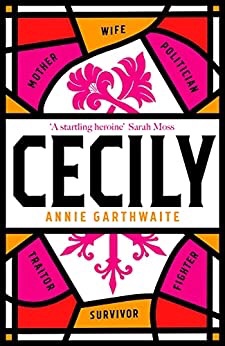
I hadn’t heard of Cecily Neville and wasn’t exactly sure where she was within the characters I already knew in the period just before the cousin’s wars better known as The Wars of the Roses. I was familiar with women like Jacquetta Rivers, Elizabeth Woodville and Warwick, The Kingmaker, from my reading of Philippa Gregory. I was also aware of Anne Neville and Isobel Neville, Warwick’s daughters, who married the Duke of Clarence and Duke of York, later to become Richard III. I hadn’t realised that Cecily Neville was the mother to both those boys and King Edward IV. I was only a few chapters in before I realised that Cecily and I share a grandmother (well to me a great-grandmother goodness knows how many generations ago) Katherine Swynford. In fact Katherine lived around five miles from me, at both Torksey Castle and Kettlethorpe Hall in Lincolnshire. She was mistress, then wife of John of Gaunt and for a short period was Queen of England. One of her daughters, Joan, is the mother of Cecily Neville. The pair, Katherine and Joan, are buried not ten minutes from where I write this, in Lincoln Cathedral. There is something very exciting in reading about your ancestor, so it did change the experience of the book for me.
The opening scene, at the burning of Joan of Arc, is one of the most powerful I have ever read. Cecily narrates in the first person:
‘It’s no easy thing, to watch a woman burn. A young woman, who has seen only three more summers than yourself and claims the voice of God compels her actions. But there it is; the day’s work. And she must harden herself to it.’
It sets the scene for the rest of the novel perfectly, it gives us a jolt and prepares us for how brutal this period of history was. It gives us a sense of how women are treated, especially those who explicitly disdain the rules of society. Joan of Arc didn’t play by the rules. Cecily is determined to shape her own future, but though words and ideas instead of action. Court is a deadly game of chess and Cecily is always on her guard. Make no mistake this is a woman’s side of court life. Where her ideas and beliefs are put across, whether at the King’s council or on the battlefield, only men are present. We hear about battles through messengers, and the men left standing afterwards. We hear about the King meeting his council through Cecily’s husband Richard. Yet the idea starts when both of them talk last thing at night or out hunting, just the two of them so no one else can hear. Cecily campaigns through letters, befriending influential women and petitioning the Queen – although in this case she believes the Queen is truly the one in charge anyway.
Without her husband Richard though, Cecily would have no avenue to pursue her plans. This is an arranged marriage, as we see in the book the family are already marrying off their eldest daughter at the age of 10. After the ceremony, the young bride and groom go back and live with their families until the age of fourteen or fifteen when the bride and groom go to live in their marital home together. So, Cecily would have had the same rules apply to her match. Luckily it appears to have been a good match, in business and pleasure. Most importantly for Cecily, Richard regards her as an equal and listens to her in courtly and political matters. His respect for her, which seems unusual for the time, means that the men of her household and her sons listen to her as well. They value her judgement and her ability read a situation and the people involved. However, being a courtier isn’t an easy life. I won’t reveal the plot, but I will say that when you’re at the beck and call of a King, you have to hope that King is of good judgement and sound mind.
One aspect that really stood out to me, was that all the women are deeply affected by their fertility, or lack of it. Cecily and Richard have been married for eight years at the start of the book, but still haven’t had a living child. In fact by the end of the book, I couldn’t keep up with how many times she had been pregnant. There is a period in the middle of the book where she realises she’s been pregnant for the majority of the last few years. I was also surprised by the breadth of the families, with mothers still being pregnant at the same time as their elder daughters. When any woman in the book delivers a son I could feel their relief. Everything must be inherited by a son, who continues that aristocratic line. These years of wrangling over who has the strongest claim to the throne, as well as the death of his own elder brother, make sense of Henry VIII’s obsession to produce an heir. I think the author captures beautifully the pressure these women feel. Their sense of loss, even though infant mortality rates must have been quite high, runs deep. Giving birth is very much women’s work, and the blame for what they do or don’t produce sits squarely with them. It’s hard to imagine not being able to control your fertility; to decide when to start or when to stop having children.
The story flowed well, and for me could have benefitted from being slightly longer. There were large time jumps in a couple of places and I did have to keep looking people up, checking family trees and names as opposed to titles. That was me trying to make complete sense of it, to fit this piece in to the larger jigsaw I was more familiar with. This was a fascinating piece of history, bringing to life another incredible woman from this time period. She sits with Joan of Arc, and her contemporaries Jacquetta Woodville and Margaret Beaufort, as women who know how to fight a war of words. Like present day spin doctors they weave the tale they want the court and the country to see – Cecily suspects the Queen of weaving the most audacious tale of all. I was left with the sense that courtly life is a living game of chess, with human pieces. Those close to the throne could be lucky enough to remain in favour, but more likely are only two moves away from ruin. As for the ending, those with historical knowledge will be aware that Cecily’s schemes are only successful to a point and there is even more turmoil beyond the book’s final pages.
She is remembered as the mother of two Kings of England and grandmother to a Queen, but the painful truth is she outlived all of her sons. Even worse, she had to witness their treachery and betrayals of each other, including the disappearance of her eldest grandsons (and heirs to the throne) from the Tower of London, never to be found. Six years before Cecily’s death, her granddaughter Elizabeth married Henry VII finally uniting the houses of York and Lancaster. She even lived to see the birth of her great-grandson Henry VIII. Annie Garthwaite has fictionalised the life of a very powerful and intelligent woman, who has a much bigger hand in history and my own ancestry than I’d realised. Her work is well-researched, creating a book that is horrifying in places, but ultimately a compelling piece of historical fiction.
Published by Penguin, 29th July 2021
As part of the blogger group The Squad Pod, Cecily has been our book club choice for August. You can see our read-along chat at @Squadpod3 on Twitter.
Meet The Author
Annie Garthwaite turned to fiction after a 30-year international business career, fulfilling her lifelong ambition to write an account of Cecily Neville, matriarch of the House of York during the Wars of the Roses and mother of Edward IV and Richard III. Her obsession with Cecily and her family began in school and never left her. Setting off in the world of work, she promised herself that, at age 55, she would give up the day job and write. She did just that, completing her novel while studying for a creative writing MA at the University of Warwick. CECILY is her debut novel and, even before it’s publication, was named a ‘top pick’ by The Times and Sunday Times.
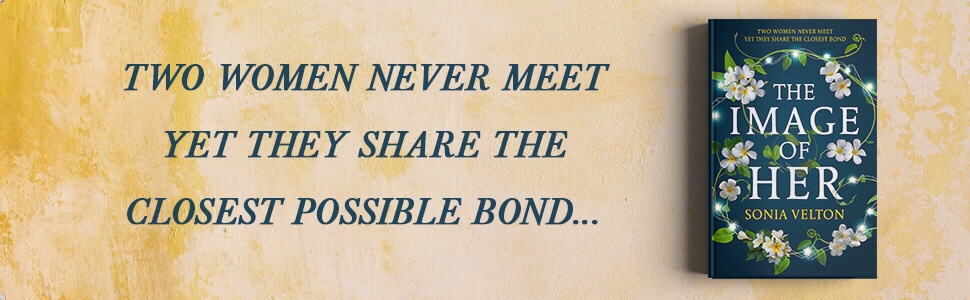
From the author of Blackberry & Wild Rose comes an extraordinary story of two women who never meet and yet share the closest possible bond.
STELLA and CONNIE are strangers, brought together by two traumatic events – cruel twists of fate that happen thousands of miles apart.
Stella lives with her mother, a smothering narcissist. When she succumbs to dementia, the pressures on Stella’s world intensify, culminating in tragedy. As Stella recovers from a near fatal accident, she feels compelled to share her trauma but she finds talking difficult. In her head she confides in Connie because there’s no human being in the world that she feels closer to.
Connie is an expat living in Dubai with her partner, Mark, and their two children. On the face of it she wants for nothing and yet … something about life in this glittering city does not sit well with her. Used to working full time in a career she loves back in England, she struggles to find meaning in the expat life of play-dates and pedicures.
Two women set on a collision course. When they finally link up, it will not be in a way that you, or I, or anyone would ever have expected.
This was an unusual follow up to Sonia Velton’s historical fiction debut Blackberry and Wild Rose, but had the same stunning characterisation and detail that set her writing apart. This was a classy domestic thriller with two characters on such a fascinating journey. Connie and Stella are such complex characters, written with incredible psychological insight, that I felt immediately drawn into their disparate worlds.
Stella’s life has been dominated by her mother, who died after a long struggle with dementia. Stella has been her full-time carer and this would be enough to explain her sense of dislocation from the rest of the world, but their relationship was always difficult anyway. She’s now 39 and as well as feeling burnout from her caring role, she thinks her inability to connect with others has a root in their mother-daughter relationship. Utterly ground down by life, Stella realises that her mother has been psychologically abusive and manipulative her whole life. It felt to me that Stella’s mental health issues were directly related to having a narcissistic parent. It’s clear that Stella’s mother belittled her, knowing exactly which buttons to push to inflict the most pain. There was also an element of gaslighting, where her mother would deny things she’d said or convince Stella she’d misconstrued them. She never validates Stella’s feelings, so instead of acknowledging her words and apologising, she says she’s sorry that Stella felt upset.
Her mother’s love came with conditions, turning Stella into a perfectionist, constantly feeling she has to change or placate the other person to deserve their love. The perfectionism has bled into all areas of Stella’s life. Her mother wanted her to be successful, because it reflected on her own skills as a mother. Stella is very aware of how others might see her, because it was all her mother cared about – the emphasis on how things appear rather than caring how they actually are. If Stella was well-behaved, well turned out and looked pretty it didn’t matter to her mother how she felt. As she wrestles with these issues in later life, Stella doesn’t really have anyone in whom to confide. However, when she’s recovering from a serious accident, she starts a dialogue with a woman called Connie on social media. It may be the safety of not being seen, being able to hide behind the anonymity of the keyboard, but Stella feels this is someone she can trust with even her most private thoughts.
Connie is a stay at home Mum, on a compound of British families in Dubai. Her husband was offered a great job opportunity, but it left her in an unfamiliar place with all her usual support network thousands of miles away. Connie doesn’t find Dubai inspiring and, perhaps because of where they’re living, she doesn’t feel as immersed in local culture as she expected. Dubai is a man made and designed space. Although it existed as a small fishing village as far back as the 18th Century, the current expanded city is very much focused on tourism with sculptured and themed island complexes such as the Palm Jumeirah. This means it is a place that people pass through, rather than stay. Feeling increasingly lonely and isolated, Connie needs something to do outside the home, and her husband Mark has suggested they have a live-in housekeeper. This would free Connie to do other things, but her keen sense of social justice means she finds this a difficult prospect. She finds she can’t ignore the exploitation of local people by the foreign settlers. She simply can’t ignore the inequality in front of her and her marriage starts to feel the strain, not helped by in-laws she doesn’t see eye to eye with. Although this two women are geographically miles away from each other, their overwhelming sense of isolation and loneliness is very similar.
I thought the author was brilliant at letting her characters tell the story. Stella narrates in the first person and I felt completely absorbed in her narrative. Maybe that was because she talks like a client would speak to me in the counselling room. I was soon drawn in to her world and the difficulties she’s having. Connie’s narrative is in the third person, so it didn’t feel quite as immersive as Stella’s, although it did allow for the points of view of other characters like her husband or in-laws. I thought the authors insight into an ex-pat life in the Middle East was brilliant, because it felt raw and honest, and a million miles away from how people often describe Dubai. I really became incensed with the social injustice and know I couldn’t have lived there and let it wash over me, without trying to change things. I also liked her honesty about motherhood – there are no rose- tinted spectacles here.
I thought that this complete change of genre and time period really showed this author’s range as a writer and her incredible skill at creating complex and believable characters. I loved the focus on themes of self- worth and what we draw on to create our identity; is it our inner life or our outer appearance that informs us of who we are? It brought me back to an idea that fascinates me as a therapist that we call congruence. Are we presenting to the world the authentic person we are inside or a constructed identity based on outer appearances? Do our inside and outside selves match up and how does it feel when they don’t? This was a thoroughly enjoyable novel that will be fascinating to anyone interested in character driven narratives, identity and social justice. It will be interesting to see what this talented writer creates next.
Meet The Author
Sonia Velton has been a solicitor in Hong Kong, a Robert Schuman Scholar in Luxembourg and spent eight years being an expat Mum of three in Dubai. She now lives in Kent. Her first novel, BLACKBERRY AND WILD ROSE was short-listed for the Lucy Cavendish Fiction Prize, long-listed for the HWA Debut Crown and has been optioned for film. Her second book, THE IMAGE OF HER, is a literary thriller about two women whose lives come together in a way that is both chilling and awe-inspiring.
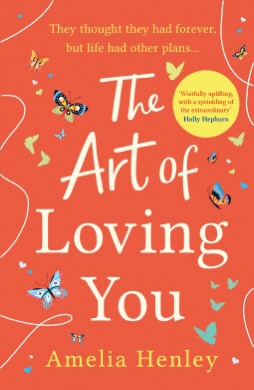
Oh my goodness this beautiful novel really did pull at my heartstrings. It was stunningly romantic and reduced me to a hormonal weeping mess. I just knew something was going to happen to this lovely couple, because everything was perfect in their world and they were embarking on a project to help others. Libby and Jack were bringing to life his dream by developing an arts centre/retreat for underprivileged children. They already had the keys to the property and were ready to go, when a phone call changed everything. Just as I’d fallen in love with this gorgeous couple, the author shatters their lives. I don’t want to ruin the plot for everyone, so I’m not going to talk about what happens, but I am going to talk about the characters.
Libby is our narrator and I really felt for her so much. Her world has been so rocked that she’s struggling to trust anything or anybody. She’s scared of everything, because now she knows that the worst things we imagine can happen. The author cleverly lets Libby drop little hints and ideas about what’s coming next, they work like cliff hangers, so that I kept jumping to the next chapter and reading a bit more. Just a head’s up – can end up half way through without realising!
I loved Sid, just loved him. He has just moved into a care facility, because he needs extra support, and gifted Libby and Jack his house. This is the only way they’re able to realise Jack’s dream of opening the arts centre. Sid is like a surrogate grandfather to the couple, and the way his relationship develops with Libby as the novel progresses was really touching. At a time when she feels hopeless and lost, he is so supportive, positive and uplifting. I wanted my own Sid for his wise advice alone. I would love to read a whole book about Sid’s past, because I want to know how he came about his philosophy on life.
Although the book has an obvious film inspiration, I kept thinking of the moment at the end of the Steve Martin film Parenthood. He’s panicking because he walked out on his job and his wife has just announced she’s pregnant with baby No 4. His grandma starts to talk about the fairground, and while other people like safer rides like the dodgems, she loved the rollercoaster. He doesn’t get it at first, but later at his children’s play when everything starts to go wrong, he realises that instead of panicking, he could just laugh and go with it. Sit back and enjoy the ride. It makes you realise that how you view life is always a choice.
I don’t know much about the author, but I’d hazard a guess that this is someone who’s life experience has informed these characters and their situation. Truth and real pain shines out from these pages. Readers can tell if a person’s writing comes from their heart, and this truly does. It seems easy to dismiss ‘romance’ as something silly and frivolous when it isn’t. Love, real love, changes our lives. We move house for love, we change lifestyle, we make lifelong commitments. If we think about the love we have, from partners, friends, family, it’s without doubt the most uplifting thing in our lives. When we lose someone we love it’s devastating and life altering. Yet, we still love. This inner hope and endless capacity to love, is the most important thing we can write about, because it’s the most important thing in our lives. I felt the writer understood this. The story teaches us not to waste time, to hold on tight to those we love and to love life even when it isn’t ‘all beer and skittles’.
Published21st July 2021 by HQ
Meet The Author
Amelia Henley is a hopeless romantic who has a penchant for exploring the intricacies of relationships through writing heart-breaking, high-concept love stories.
Amelia also writes psychological thrillers under her real name, Louise Jensen. As Louise Jensen she has sold over a million copies of her global number one bestsellers. Her stories have been translated into twenty-five languages and optioned for TV as well as featuring on the USA Today and Wall Street Journal bestsellers list. Louise’s books have been nominated for multiple awards.