Posted in Netgalley, Publisher Proof

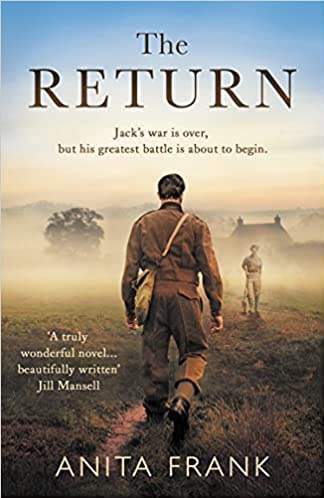
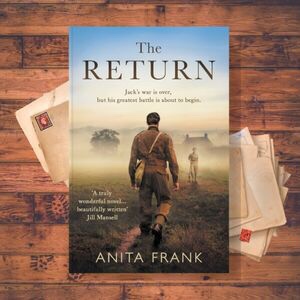
The Return by Anita Frank.

This beautiful story has just made it under the wire as I was compiling my Top 21 Books for 2021 and it truly deserves it’s place next to the others on the list. I was gripped by the story of Jack, who makes a very different promise to his new bride Gwen on the eve of WW2. Most soldiers are promising to see them again, to return, but Jack is quite clear. If he should survive the war, he won’t be back this way again. Gwen prays he keeps to his promise, but as they celebrate VE Day she does keep looking over her shoulder. What if he reneges on his promise? War has changed Jack and he is no longer the man who made that bargain. He wants to return and claim Gwen as his bride again, but little does he know that this could set in motion a chain of events that will leave he and Gwen fighting for what they love most.

We go back and forth in time throughout the book, but begins with Jack fleeing his home city on the night train, shielded by a friend who’s working on this nightly service down south from Newcastle. Jack is like many other young men in Newcastle, he’s a riveter in the shipyards and lives in a terrace house with his Mum and sister Jenny. One moment life is trundling along as normal, then the next a terrible twist of fate leads to a violent act of revenge. Stowing away on the night train, Jack plans to hop off somewhere far away where he can find work. So, as if from nowhere, he appears round the bend of a country lane to find a young woman who has fallen from her horse, but has her foot trapped in the stirrup. He hurries to help Gwen as her skittish horse takes off in the direction of the village. He takes her home to her family farm, where she helps her Dad with the dairy cattle and any other jobs that need doing. Lucky for Jack he’s arrived at a busy time on the farm, so while he stays for a home cooked meal to thank him for his service, Gwen’s dad Jim asked if he would like to stay and work. Jack accepts and as Gwen shows him his bed in the tack room, he thinks he may have fallen on his feet for the summer. What he doesn’t know is that Gwen is about to put him in a very difficult position. As he investigates a noise in the stack yard at night, he finds Gwen trying (and failing miserably) to quietly retrieve a ladder. She can’t pass her father’s door because the floor boards squeak. Reluctantly, he helps her climb up into her room, knowing that she must be meeting someone secretly and is surprised by how that bothers him.

I grew to like Jack, who is a young man of principles, only resorting to violence when someone he loves is hurt. He has an inbuilt moral compass, especially in his dealings with women and is very critical of anyone who doesn’t meet those standards of behaviour. He knows that in circumstances where young men lead women on and make false promises, it is the woman’s life and reputation that is ruined while the man just carries onto the next victim. He is a gentleman in his behaviour, even if he isn’t in position. I loved how he doesn’t have that family structure at home, but finds it with Jim and Gwen, and even housekeeper eventually. I didn’t always understand Gwen, although she is very young at the start of the novel and thanks to Jim’s overprotective nature, she’s quite naive. Something I did understand was her loyalty to the land and farm, it’s a way of life that’s in her blood and she isn’t afraid of hard work. She takes a very active part in the farm, from early morning milking, to driving tractors and locking the livestock up late at night. I thought the differences between gender and class were very pronounced in the novel. The women were far from passive in this rural community, with Gwen and Norah as great examples. It was interesting to see how the women from the hall were very separate from this industriousness – something that works against Gwen when it comes to being a mother.

The author creates a beautiful link between Gwen’s wholesomeness and the countryside – she’s miles away from the girls Jack has encountered in the city. She’s a young girl between places in society, she’s not in the lower classes but she’s not good enough for the landed gentry to consort with. At least not in public anyway. In the wartime sections of the book she’s well contrasted with land girl Norah, who has a cynical and knowing way about her. If they go the pub or an event, she soon disappears into a crowd of enthusiastic young men and seems completely at home flirting and telling stories that make them roar with laughter. Gwen is quieter, worried about how the farm will keep going with just her and Norah, wanting desperately to hold on to her father’s legacy. Besides, she knows the lies young men tell and the damage they can do. In those wartime sections, I felt the land and the countryside around it contrasted with the imagined battlefield far from here and the changes that farming had to come. Land was commandeered by the Ministry of Agriculture and fallow fields ploughed up for crops to feed the country. It was the beginning of the end for that quiet time when two ponies pulled the plough and two workers would weed the crop using a hoe. These passages of man working quietly within the countryside soon gives way to more modern farming methods which feel at odds with nature, rather than being harmonious. The author’s descriptions of animal and bird life are like a hymn to the old ways. I understood Jack’s need to return to this life, to feel at peace within it and allow the noise of battle, lodged in his head, to die down. However, I couldn’t see how he could stay either. I wondered constantly when the past would catch up with him and whether Gwen’s secrets could possibly remain hidden. This was a different slant on WW2, full of beautiful pastoral scenes and a relationship I was wishing would turn to love. A simply gorgeous read.

Meet the Author

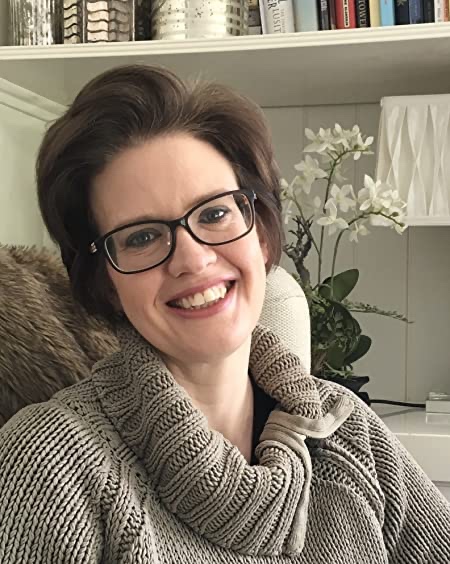
Born in Shropshire, Anita studied English and American History at the University of East Anglia. She now lives in Berkshire with her husband and three children.

Posted in Netgalley, Publisher Proof

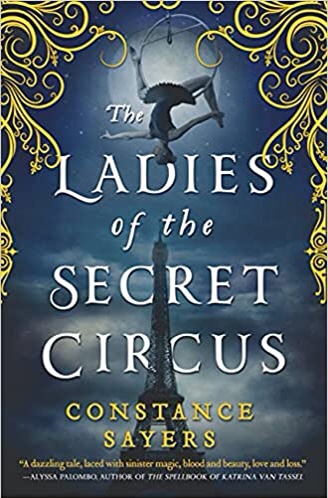
The Ladies of the Secret Circus by Constance Sayers.

The opening of this book, where Lara enchants her own wedding dress so it’s more to her liking, showed promise for the rest of the novel. Her marriage to Todd is the next morning, but as she’s waiting for her groom some bad news arrives. His best man is local law enforcement officer Ben and he tells her that Todd can’t be found. His car is found abandoned at a bend in the road where thirty years earlier another young man disappeared without a trace. Pete was in a band with Lara’s father, who has always been affected by the loss of his friend. Surely there’s a connection? Lara’s search for answers leads them to a journal written by her great-grandmother and the tale of a secret circus, where they perform using real magic. In Belle Èpoque Paris we follow the story of Cecile Cabot, Lara’s great grandmother, the subject of one in a series of three paintings by artist Émile Giroux. Cecile’s life is bound to the circus as is her sister Esme’s, but why are they cursed in this way and is it a price that the women in the family are still paying to this day?

From Lara’s wedding day onwards, the first section of the book set in idyllic Kerrigan Falls didn’t quite have the spark of that first scene. I worried that the book might be a bit saccharine sweet for my taste. It was typical small town America, but with barely any crime or unpleasantness. Residents seemed to get along easily and everyone cared about the town’s history, it’s beautiful period buildings and stunning setting. Lara bought the local radio station, her love of music coming from her famous musician father. I didn’t quite believe how lovely the place and it’s people were and I suspected there was a darker underbelly. This was hinted at in the the disappearances of these young men, but also the strange happenings in Lara’s life that started when she was a young girl and saw an unusual looking man and woman in their field who disappeared into thin air. Schooled by mum Audrey to keep her powers under wraps, Lara is sad about how her premonitions affect people. When she hears a vaguely familiar song, lurking underneath a track on one of her dad’s albums, she plays it on her guitar. The refrain is like a nagging tooth ache, but when her father hears it he goes white. It was one of Pete’s songs and they never recorded it.

I found it sad that these powerful women were having to hide their real selves to be accepted, especially when it came to love. Audrey’s marriage to Lara’s dad was blighted by Peter’s disappearance and now Todd was gone too. I really enjoyed Lara’s relationship with Ben, who was Todd’s friend and is just as invested in knowing what happened as Lara is. They’ve grown close trying to solve the mystery, but their relationship is full of unspoken feelings and guilt. When Audrey gifts Lara with a painting of her great-grandmother, to put up in her new home, the framer recognises it as a lost painting of Giroux. They then travel to Paris to meet an expert on the painter and have it’s provenance confirmed. It’s here that the story really took off for me, because the sense of place is wonderful and there’s a real momentum in their search for answers. The circus is the perfect antidote to the sweetness of Kerrigan Falls. I won’t ruin your discovery of this world, but it is truly fascinating, macabre, beautiful, magical and horrifying all at the same time. I was hooked by the scene the author was describing and fascinated by Lara’s family history. The small details, such as the circus only appearing to those with a personal invitation which bled if it was torn, were quite disturbing. The magic practiced there had parallels with Lara’s skills – simple tabby cats turned into ferocious big cats. There were surprises I hadn’t expected and Cecile’s final diaries are the vital first hand account of the circus’s history, as well as her own love story. I was immersed in this magical tale and didn’t really want it to end.

Published on 9th November 2021 by Redhook.

Meet The Author.

Constance Sayers is the author of A Witch in Time. A finalist for Alternating Current‘s 2016 Luminaire Award for Best Prose, her short stories have appeared in Souvenir and Amazing Graces: Yet Another Collection of Fiction by Washington Area Women as well as The Sky is a Free Country. Her short fiction has been nominated for the Pushcart Prize and Best of the Net. She received an MA in English from George Mason University. She lives outside of Washington D.C. Like her character in The Ladies of the Secret Circus, for many years, she was the host of a radio show from midnight to six.

Posted in Netgalley

The Keeper of Happy Endings by Barbara Davis.

This was an incredibly charming book, so hopeful and uplifting. I’d read The Last of the Moon Girls so had some idea what to expect, but I actually preferred this tale of two women crossing paths in Paris. Soline works in the family’s bridal salon where a little bit of magic is sewn into the fabric. This magic gives each bride the promise of a long and happy relationship. However, there have been so many losses in WW2 that Soline’s hope has dampened and she has lost her faith in magic. She packs away her work in boxes, determined to forget the life she once enjoyed. We then join another woman, decades on from WW2. Rory has always wanted to open a gallery and she leases the same building that houses those pre-war wedding memories. Rory is also grieving, and knows the importance of remembrance, so when she finds a box with a vintage wedding dress and a pile of letters inside, she wants to return them to their rightful owner. The wedding dress looks unworn, but so much care and attention has gone into making it, Rory feels that the owner would want it returned. When she finds Soline, an unexpected friendship develops and the two women find a lot of parallels in their life stories. Is it possible that magic is still at work and these two women were destined to meet? Could Rory be the one to clarify and put right something that happened forty years ago?

I never seem to tire of these time slip novels and I really did enjoy this tale, with its little bit of magic thrown in. I am a believer that we shouldn’t fully lose that sense of magic we had as children, especially at this time of year. I think it’s only by keeping that childlike wonder and hope that we get to fully experience life. Here Soline has been closed off to magic, it’s been too painful to hope. However, when she and Rory cross paths and that faith is reignited, she starts to fully participate in life again and enjoy it. It was an easy read from the start so I looked forward to getting a mug of tea and my favourite chocolate slipping into their cozy world, even though there was some sadness in store for the our main characters. Soline and Rory do dominate and they are the most three-dimensional characters- none of the secondary characters have much depth. However, these were very personal stories and I don’t think the book would have felt as intimate if we’d had too many other viewpoints. Soline’s story follows her work in the bridal salon and her love for Anson, who has a difficult relationship with his father. As the Nazi’s start to infiltrate France, Soline escapes to America and it is her belief that Anson has died at their hands which knocks all the hope and joy out of Soline. She can’t continue with her work and watch others in love, fulfilling their destinies with each other.

Rory (short for Aurora) has a boyfriend called Hux. He’s a doctor and goes out to South Sudan to work with Doctors Without Borders, but is unfortunately captured. Rory doesn’t know where he is or even if he’s still alive. This is the experience that Rory and Soline have in common, they’re separated from their loves and have had to face up to the fact they may be dead – that might be preferable to thinking about what they could be going through instead. Both are very strong women, however, Rory is still entwined with her mother in a very unhealthy dynamic. She hasn’t realised she can simply walk away from her. The abuse is psychological and it is devastating to a young woman still growing up and finding out who she is. You might find that, like me, you’ll be mentally yelling at Rory to stand up to her mother. I just knew that if she finally did, it would be epic. It would be the catalyst to change her entire life. Rory might have the key to Soline’s wartime memories, but she has a lot to learn from Soline who has grown wise through loss and age. The book has a dusting of magic, but it’s subtle and more akin to perception than anything else. I often let people know how easy it can be to be manipulated into thinking someone’s a psychic by showing them how much I can intuit from them walking into a room and sitting down. As counsellors we do this all the time, reading people’s subtle cues in their body language and the words they choose to express themselves. It can be quite easy to work out why a client has come for counselling before they even open their mouths. So, the magic here isn’t overdone and is more about the sense of destiny and heightened perception we can get: in a house, when we walk into a party, or seeing a couple arguing in the DIY store. It’s also about that magical coincidence of these two women crossing paths, when they are perhaps the only person who could help and understand the other. I like this message that it’s not just romantic destiny that happens in lives. Soul mates are not always our romantic counterpart and I loved the friendship between these two. I think Soline helps Rory stand up and claim who she is.

Yes the ending is a bit schmaltzy, but I expected that and it didn’t ruin the book as some sugary endings can tip the book into being too saccharin and off-putting, I think this story has enough complication to keep the reader’s interest and something for everyone with the mix of historical period (although the 1980s doesn’t feel like history to me), dual narration, family strife and the mystery to solve. The tone of the novel is so relaxing and gentle, even when dealing with complex emotions. All in all, an intelligent story of love, loss, and friendship that I really enjoyed.

Published by Lake Union Publishing 1st October 2021

Meet the Author.


After twelve years in the jewelry business, Barbara Davis left the corporate world to pursue her lifelong dream of becoming a writer. She was born in Fair Lawn, New Jersey, but grew up and attended school in Florida. When she’s not writing she’s an avid reader, foodie, and lover of music, a rabid football fan, and a devoted Florida Gator. She also likes to travel with her husband/sweetheart, who over the years has learned much more about publishing and the craft of writing than he ever wanted to know.

Her most recent novel, THE KEEPER OF HAPPY ENDINGS, released October 1, 2021. She is currently working on her eighth novel, and professes to be just as delighted with her job as she was when she set her first word on the page!

For more about Barbara and her books, please visit her website at: http://www.barbaradavis-author.com, or find her on social media: Facebook: https://www.facebook.com/barbaradavisauthor OR on Twitter: @bdavisauthor.

Posted in Netgalley, Publisher Proof

Wish You Were Here by Jodi Picoult

This was my first full on pandemic book. Others have mentioned or touched upon the changes of the last eighteen months, but this was full immersion!

I’ve been disappointed with the last two of Jodi Picoult’s books. They were still well written, but for some reason I felt detached from everyone in A Spark of Light – maybe because in the U.K. abortion isn’t such a contentious issue? The Book of Two Ways felt almost so full of detail that I was reading a textbook and losing interest in the story itself. This was a glorious return of form that I truly loved. Diana and her boyfriend Finn live in New York City, he is a doctor and she works at an auction house for fine art, on the verge of promotion to become an Art Specialist at Sotheby’s. She’s trying to acquire a Toulouse Lautrec painting that hangs in the bedroom of a Japanese artist -loosely based on Yoko Ono. Then, everything changes. Finn and Diana have a very set life plan and part of that was an upcoming visit to the Galápagos Islands. However there are rumours flying around in the medical community of a strange new virus in Wuhan, China. It seems like SARS in that it affects breathing, because it causes pneumonia and requires huge amounts of resources to keep patients alive. Diana’s boyfriend feels torn, as a doctor he’s worried and thinks they should be preparing but the president is on TV telling everyone it’s no worse than flu. What’s the truth?

. She meets Abuela’s granddaughter Beatrice who appears to have secrets and an inner pain that brings out a maternal instinct Diana didn’t know she had. Tour guide and Beatrice’s father, Gabriel, is the perfect person to be stranded with. He knows every corner of the island and has no work, so he can show Diana some of the sights she would never have seen ordinarily. The islands sound miraculous and here Picoult really does create an incredible sense of place. The seals lazily basking on the jetty, the sea turtles and their nests buried in sand, lush vegetation and lizards lying around intertwined. I could see and taste the salt air. I loved the islanders too – their openness to Diana, the bartering market set up when the island quarantined itself from the world. Everything is vivid and almost hyper-real. Then came the twist!! Oh my goodness I did not expect that at all. This was brilliantly done and shocked me. Yet it was all too plausible.

Diana has one link to the world beyond the Galapagos and that’s the occasional email from Finn. In it we see the reality of the COVID-19 epidemic in New York City. They have so many people being admitted and not enough people recovering and moving through rehabilitation. What do you do when the resources simply run out? Finn is exhausted, has permanent bruises on his cheeks, because they have to keep their masks so tight and is struggling mentally. He describes to her the patients lost, ones he can’t forget, because there are too many to remember them all. This was tough reading and I’ll be honest, I learned things about the virus I’d never heard before such as vascular compromise, bowel necrosis and neurological deficit. There were points where I felt a bit breathless and panicky. As someone who had to shelter from the virus, it made me think twice about going out in a couple of places. Anyone who thinks it’s just a ‘bit of flu’ should be locked in a room with the audio book playing on repeat! Please don’t let this put you off though. It’s beautifully written and the insight it gives into how hard things have been for those in the medical profession is priceless. We owe it to them to read such well-researched and thoughtful accounts of the pandemic. The Galapagos sections are like paradise in comparison and this was the space where I could take a long deep breath.

This book is Picoult at her best, in that it has an interesting storyline, and characters as well as an issue she could really get her teeth into. As the book started I was prepared for it to be set within the art world and I was already curious to see her relationship with Kito – the Japanese art collector – because they seemed to be on a similar wavelength. I thought we might end up embroiled in a legal battle over ownership or whether the painting was a forgery. Then everything she’d built at the beginning became subsumed by the pandemic and it became a totally different story. The structure effectively echoes how our lives have been interrupted and changed forever. There are people who went into the pandemic with a job that no longer exists. People have lost friends, family members and partners. The pandemic has changed people, they are looking at how they live and making changes. We moved into the country, and I’m sure others have done similar, focusing on enjoying life and working to live instead of living to work. There are people like me, who were disabled, but felt like part of society still. Gradually, over the last 18 months, I have become a recluse and I’ve felt more and more separated from people. Especially those people who say the vulnerable should be kept inside, so that ‘normal people’ can have their lives back. I’ve felt like an inconvenience, and like we’re holding the rest of the country to ransom. I’m hoping these feelings change with time, but who knows? I could understand Diana’s decision at the end of the novel, it might have seemed illogical but I got it. When you’ve been through something momentous you change, and part of that is re-evaluating life and choosing what makes you happy. It’s trying to recapture hope. I don’t want things to ‘go back to the normal’; I want this pandemic to mean something and I want things to get better. Diana takes that decision for herself and I found that both brave and uplifting.

Meet The Author


Jodi Picoult is the author of twenty five internationally bestselling novels, including MY SISTER’S KEEPER, HOUSE RULES and SMALL GREAT THINGS, and has also co-written two YA books with her daughter Samantha van Leer, BETWEEN THE LINES and OFF THE PAGE. She lives in New Hampshire with her husband and three children. 

Her most recent adult novel, A SPARK OF LIGHT first published in the UK on 30th October 2018, and was a #1 Sunday Times and New York Times bestseller. 

Follow Jodi Picoult on Twitter @JodiPicoult and find out more at http://www.jodipicoult.co.uk or on Facebook/JodiPicoultUK.

Posted in Netgalley, Publisher Proof

My Name is Jensen by Heidi Amsinck

This was a great opener in a new Scandi noir series, that left me looking forward to getting to know these characters a lot better. Jensen is a journalist living in Copenhagen after spending several years in London as the British correspondent for a Danish newspaper. She still hasn’t quite found her feet in the city, and knows that she’s very lucky to still have a job considering the cuts at work. Her editor Margrethe has faith in her ability to sniff out a story and one morning, while cycling to work.Jensen stumbles across the body of a young man with a large placard saying guilty on his chest. His eyes are covered with new fallen snow and it’s clear that he has several stab wounds to the abdomen. He’s also homeless, Jensen calls her ex-lover Detective Henrik Jungerson to report the murder, even though she’s been trying to avoid him since her return. Jensen doesn’t want to exploit such a sad death for newspaper headlines. Nor will she sensationalise it, However as more bodies are found it’s clear a serial killer is on the loose. Why would someone choose the homeless as their victims? Jensen has to investigate further.

I really enjoyed Jensen’s character. She’s rather mysterious and I think the author was clever to drop clues and hints about her in this first book of the series. It left me wanting to discover more and delve into her past, not least her relationship with Henrik. It certainly isn’t over. She’s determined and dogged once the story has piqued her journalistic interest and it’s probably true to use the word ‘obsessed’ when describing how she investigates. She feels very real because of the way she’s written – it’s like slowly getting to know a new acquaintance rather than having a fully formed person. She’s also a bit prickly and is very used to navigating a rather male dominated workplace. Her tension with Henrik leaps off the page and I’m very interested to see where their relationship goes next, as well as unearthing a bit more about their past.

“clues and hints about her in this first book of the series. It left me wanting to discover more and delve into her past, not least her relationship with Henrik. It certainly isn’t over. She’s determined and dogged once the story has piqued her journalistic interest and it’s probably true to use the word ‘obsessed’ when describing how she investigates. She feels very real because of the way she’s written – it’s like slowly getting to know a new acquaintance rather than having a fully formed person. She’s also a bit prickly and is very used to navigating a rather male dominated workplace. Her tension with Henrik leaps off the page and I’m very interested to see where their relationship goes next, as well as unearthing a bit more about their past.

The fact that Jensen focuses on finding out about the killer’s victim rather than the killer suggests a lot of empathy and a keen sense of social justice underneath the spikiness. She leaves Henrik to look for the killer and he’s soon connecting it to a previous suspicious death. They are a good team in this way, each with their own methods, but sharing information along the way. I think the book touches on a lot of current problems in our society, particularly how the world’s economic structure is creating horrendous poverty. Issues such as mental health, drug abuse and of course, homelessness are featured in the book and I thought the author wrote about this with understanding borne out of real life experience and conviction. The story was fast paced and very compulsive reading. There are twists and turns along the way in the investigation and moments where Jensen feels inundated with information, but none of it is making any sense. The tension builds towards the conclusion and these are the really addictive parts that I found myself reading in the car, the hospital waiting room and till 2am while on holiday! This was a fantastic opener to, what is now, a much anticipated series and I have to mention that gorgeous cover. It’s so beautiful I want to put in a frame and hang it on the wall.

Published by Muswell Press 31st August 2021.

Heidi Amsinck, a writer and journalist born in Copenhagen, spent many years covering Britain for the Danish press, including a spell as London Correspondent for the broadsheet daily Jyllands-Posten. She has written numerous short stories for radio, including the three-story sets Danish Noir, Copenhagen Confidential and Copenhagen Curios, all produced by Sweet Talk for BBC Radio 4. A graduate of the MA in Creative Writing at Birkbeck, University of London, Heidi lives in London. She was previously shortlisted for the VS Pritchett Memorial Prize. Last Train to Helsingør is her first published collection of stories. Her crime novel My Name is Jensen, set in Copenhagen, will be published in August 2021

Posted in Netgalley

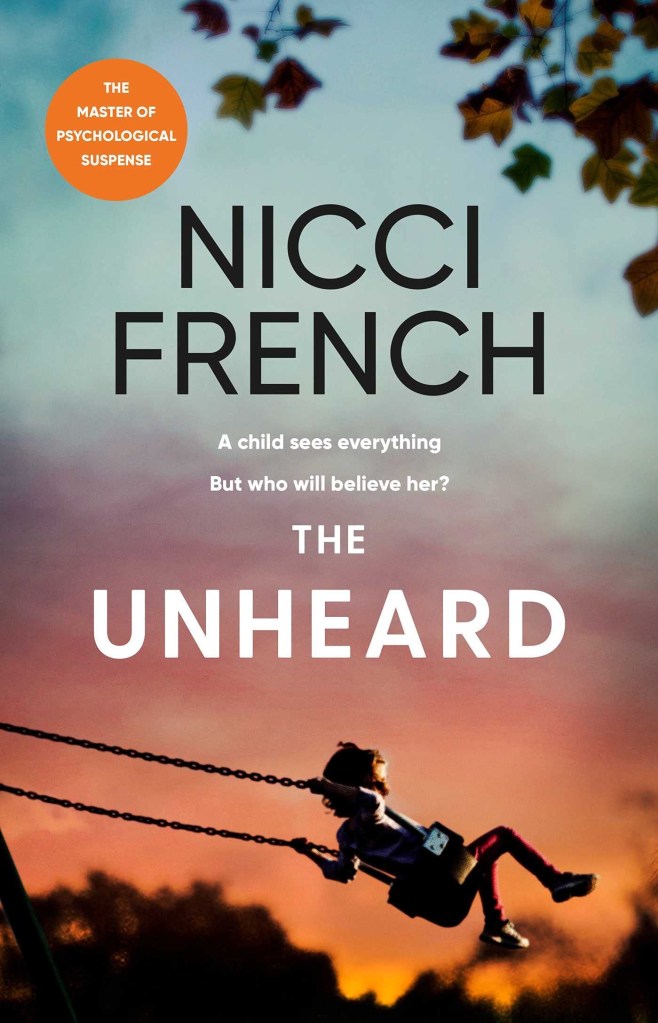
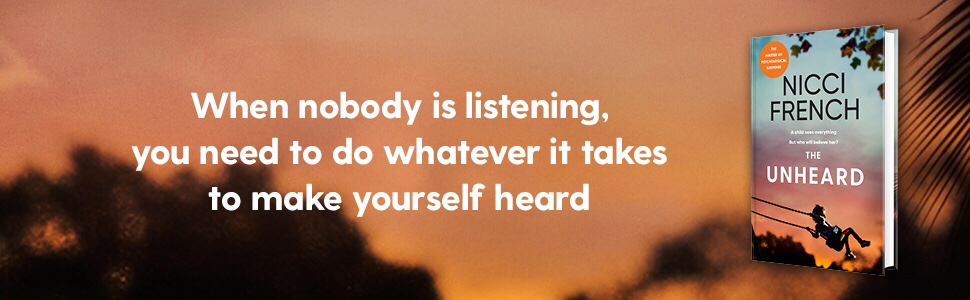
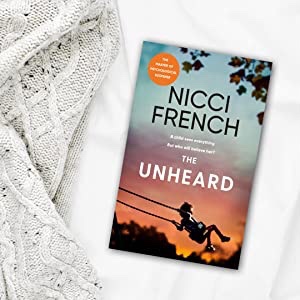
The Unheard by Nicci French.

I read this novel on the four hour drive to North Wales and spent most of the first day of my holiday absolutely enthralled with the story. I was hooked immediately, intrigued by the mystery of what exactly Tess’s daughter Poppy had seen or heard. Tess is starting a new life in a garden flat with her daughter, after a divorce from husband Jason. Having a background as a child of divorce, Tess was determined that Poppy should be their number one priority. No matter how much animosity and hurt they feel, their interaction with each other must be civil and they prioritise time with both parents. Jason is already remarried to Emily, a much younger woman who seems very sweet and tries hard to have a relationship with Poppy. They have set times for Poppy to visit and stay over at her dad’s house and this has been going well, although every time Poppy’s belongings are put in a bag to transfer from one house to the other, Tess hopes she understands what is happening to her. Tess has started seeing a man called Aidan recently and she’s optimistic about their relationship so far. One Saturday, Poppy returns from an overnight at her father’s and displays signs of distress. These were classic symptoms, that any counsellor like me, would be concerned by. She’s clingy, she wets the bed and seems to be having nightmares. Over a week these symptoms worsen: she bites a girl at school, uses foul language to her teacher, and her mother is terrified for her. She has her attention drawn to a picture Poppy has drawn, all in black crayon which is a huge contrast from her normal rainbow creations. The picture shows a tower and a woman falling from the top to the ground below. ‘He killed her’ she tells her Mum ‘and killed and killed and killed’.

I was hooked and my partner claims I barely spoke to him for two days straight because I was so absorbed in Poppy’s world. Tess is scared for her daughter, but what can she actually do without traumatising her further? Jason insists it’s just a drawing and probably doesn’t mean anything. No one seemed as alarmed as Tess, so who can she go to? This sets in motion an enthralling story where my suspicions were first sent in one direction, then another. As well as suspecting every character at different points in the novel, I was also wondering whether it was about Tess. Was she an over concerned mother affected by her divorce and her ex-husband’s sudden remarriage? The writer excels at bringing tiny little clues into the narrative that create a doubt in the reader’s mind. Bernie, the upstairs neighbour, is a little odd and makes a couple of remarks to Tess that concerned me. Was he dangerous or just a little eccentric and inappropriate at times? Weird coincidences cropped up that couldn’t be explained by anything except foul play or malicious intent. However, the more this happened, Tess became even more anxious and started to give the impression of being unhinged. As the police became involved, they suspected an overprotective mother and couldn’t find anything to investigate. This spurred Tess on to carry out her own investigation, searching for women who’d died falling from a building and trying to forge links with people in their circle. One sympathetic officer does try to help, but ends up with a dressing down for wasting her time. It takes a long time, and some near misses, for Tess to sit back and realise what her behaviour must look like from the outside. However, just because someone appears over anxious, doesn’t mean there’s nothing to worry about.

I think one of these author’s many strengths is their ability to conjure up the ordinary everyday moments we all recognise in life, between the tension and scares. It helps the reader identify with these characters, to accept that they’re real and empathise even more with their predicament. I could feel the tension coming off Tess, and the hurt as well, because some of her discoveries are personally painful. Yet she still has to get Poppy up and to school, then go to work and come home to cook tea and do those domestic chores that we all do in a day. The mental load of being a single parent is enough without the extra suspicions about every new person who has come into their circle. Her fear that someone has invaded that safe, domestic space is one all readers can identify with. The tension is almost unbearable towards our final revelation and it wasn’t the ending I was expecting at all. It makes you think about how far you would go to protect your children. This was a fascinating, addictive read with a menacing atmosphere throughout. Be prepared to lose a couple of days if you pick up this book, you won’t regret it.

Published on 16th September 2021 by Simon and Schuster UK


Nicci French is the pseudonym of English husband-and-wife team Nicci Gerrard and Sean French, who write psychological thrillers together.

Posted in Netgalley, Publisher Proof

We Are All Liars by Carys Jones.

The ‘Fierce Five’ have always been the best of friends. Gail, Allie, Emily, Stacie and Diana are all different in character, but have complimented each other. Gail is the organised one who tends to get them altogether. Allie is quiet and tends to be more introspective than the others. Emily is the traditional one, with her twins and husband Adam at the centre of everything she does. Stacie has been married twice, someone who is proud of being straight talking, but is still holding a lot inside. Finally there’s Diana who came from a more deprived background than the others and has a more cynical or realist’s perspective on life. They are all invited by Gail to celebrate her 35th birthday at her cabin, an isolated and atmospheric spot in the Scottish Highlands. The girls plan on catching up, having a drink and enjoying the remote location where they’re removed from their everyday lives. However, when a snow storm threatens to cut them off completely, events are set in motion that no one expected.

This was my first book from Carys Jones and she certainly knows how to ratchet up the tension. This wasn’t my first remote chalet thriller this year because there have been a few books with a similar premise such as Catherine Cooper’s The Chalet and Ruth Ware’s One by One. I found this story compulsively readable, with well-drawn characters and a real sense of surprise and menace. The story is told in two timelines, the current stay in the cabin and then back into the girl’s pasts where we could explore their past interactions and the events that shaped who they are. These sections were not necessarily chronological, but each section informed the situation in the present. A third section is written as the transcript of a police interview with an unnamed person of interest. Since one of these transcripts starts the book off, we know how important they are to the story and that something very very wrong has happened on the girl’s weekend.

The storm is menacing and I felt like the author depicted it like a sixth character in the novel. Even though it’s outside, it seems to influence what happens inside, so as the storm builds so do the friend’s emotions. When the storm is at it’s height the secrets, and lies of the book’s title, come to the surface and events take a drastic turn. I loved the way the author depicted this complicated friendship, because it was realistic. Often large friendship groups like this do have factions – two of the group who are closer than the others, another pair keeping a secret from the group or one member feeling isolated from the others. It’s impossible for groups like this to weather the years without changes happening. Individual experiences shape and change us over time and that might mean friendships wax and wane, but in groups like this those changes can cause resentment and jealousy. This happens especially if two people bond over an experience they’ve both had, switching allegiances such as friends who’ve both have children tending to gravitate towards one another. As the secrets come tumbling out and the girls battle to cope with the revelations and the effects of the storm things reach boiling point. Which of the friends will snap? This is an entertaining novel about old friendships that might just put you off your next school reunion. Tense, claustrophobic, and an unexpected ending. I’ve been reading this in a remote cabin in North Wales and it definitely added to the experience!

Author Carys Jones

Posted in Netgalley

The Spirit Engineer by A.J. West

I’d anticipated this book for a couple of months having been told by my Squad Pod ladies that it was going to be a fantastic read. It certainly was, and even more than that, it was surprising too. Our setting is the city of Belfast, the Titanic sinking is still fresh in everyone’s minds. It’s especially fresh at Professor William Crawford’s house since his brother-in-law Arthur was on the ship. Crawford is our narrator and he introduces us to his happy, but chaotic household as the novel opens. He is a man of science, working at an institute both furthering scientific enquiry and teaching the next generation of engineers. He’s a sceptic, so when he finds out that his wife is visiting a medium and has been trying to contact her brother Arthur, he’s shocked and angry. There’s no question that this girl is a fraud, stringing his wife along with a show put on with the help of her shady family. Yet, the couple have lost their son Robert and Crawford’s grief is overwhelming. So when he hears Robert’s voice calling to him alongside an angry, vengeful Arthur who blames Crawford for his death, a small crack grows in his scepticism. What if he were to apply his scientific rigour to to this girl medium’s powers? If he could prove a link exists between this world and the next he could make a name for himself, not just in Ireland but all over the world.

I found the tone of the book quite unique and fresh. We see Crawford’s world through his eyes and this gives us a chance to really know him. I loved that he had the petty work grievances and rivalries that are familiar to us today. His pomposity and stuffiness could get him into scrapes with other people who don’t understand his Edwardian ‘Sheldon Cooper’ tendencies. At home his need for routine and things done a certain way is met with a certain amount of fond irritation. The children tend to break through the veneer of grumpiness and when a mysterious new maid appears, she seems to know him so well and has what he needs ready before he even misses it. I loved comic little scenes like the undignified moving of naked statues at the institute. When chosen for a special job before an important dinner, Crawford’s self-importance starts to show itself. His disgust when he finds out he’s just a removal man is so funny, a situation that’s made worse when family patron Aunt Adelia accuses him of manhandling a naked woman at an upstairs window. Sometimes it’s the author’s description of a character, as seen by Crawford, that raises a smile. Crawford’s colleague Stoupe is described as:

‘Damn it, there was no escape, and no creature on earth moves so quickly as an irritating man. He danced over the tiles towards me, grinning, all arms and sweat, dressed preposterously in a baggy velvet suit, pursing his lips like a kissing pig. He gave a courtly bow before standing far too near, smelling of lavender, whisky and damp, short tufts of blonde hair.’

There are other sections of the book where his privileged position as a white, middle-class man of some scientific standing, gives him so much power he starts to abuse it. One section that I found really disturbing was his insistence that the medium, Miss Goligher, prove her gift is genuine by submitting to different tests and examinations. He forces Rose, their maid, to cavity search the unfortunate girl in an enormous abuse of power. There is also the burning of his son Robert’s comfort blanket which felt particularly cruel. The seance scenes are intense and confusing. At one point attendees are tied up and blindfolded as per Crawford’s instructions, but he still finds it difficult to understand what exactly is going on. In America, a meeting with Arthur Conan Doyle and Harry Houdini show the circles he’s starting to travel in. They add authenticity to the period and subject matter, because even though William Crawford’s experiences were documented historically, the book fictionalises them. Similarly both Conan Doyle and Houdini were fascinated with phenomena like mesmerism and mediumship. As an aside, Conan Doyle was famously taken in by two small children who claim to have photographed fairies in their garden, so his eagerness to see proof of mediumship and his note of caution feel consistent with his known experiences. What I loved more than anything was the author’s ability to surprise, because as we neared the end I had no idea how the book and Crawford’s investigations would conclude. The theme of dishonesty is there right from the start, in Arthur’s reasons for being on Titanic, to the hidden note from their old maid who left in a hurry, and Elizabeth’s absence at weekly church meetings. By the end I felt triple bluffed, but couldn’t help smiling at how clever the author had been. As many of our characters find out, when it comes to being dishonest, the person we deceive most often is ourselves.

Published on 7th October 2021 by Duckworth Books

Meet The Author


A.J. West grew up in Buckinghamshire, before studying English Literature in Preston. He worked as an award-winning network television and radio news presenter and reporter before appearing on the legendary reality television programme Big Brother, where he became a household name, though the specific household is yet to be identified. He stumbled upon the troubling case of William Jackson Crawford and his paranormal investigations while working for the BBC in Northern Ireland. He has been spellbound ever since.

Posted in Netgalley

The Lighthouse Witches by C.J. Cooke

This book has been one of my most anticipated reads of 2021, because I loved the blurb of course, but also because I’ve had a lot of luck this year with fantastic books that have a lighthouse on the cover. The Lighthouse Witches was even darker than I expected and I enjoyed it immensely. In the late 1990s, artist Liv Stay finds herself homeless and without work so travels all the way up to Scotland and an island called Lòn Haven where a friend has recommended her to paint a mural. She travels to the coast, with her three daughters Saffy, Luna and Clover. There she meets Isla, caretaker of the bothy they’ll be staying in next door to the sea lashed lighthouse where she’ll be painting the mural. The mural is planned out on a large roll of paper and Liv is bemused to see a diagram of sorts, full of runic symbols she doesn’t understand. Getting this accurate in a circular building is her first challenge, and the second is to inject some of her own creativity in the design to make it beautiful. The girls are a bit shell-shocked to be brought to this remote and wild place, and there are certainly some unanswered questions as to why and how they ended up somewhere so remote and creepy. Liv carries a huge secret inside her, but the family are about to find out that Lòn Haven holds its share of secrets and ancient beliefs too, causing the whole family to disappear.

The story is told through different characters in three main time zones. Liv narrates the main section in the 1990s, then we meet her grown-up daughter Luna twenty years later, but we also go back into the history of the island and the witch trials of the 17th Century. The grown-up Luna is drawn back to the island when her sister Clover is found. However, to Luna’s shock, her contact Eilidh the social worker takes her to a little girl. Clover should be around thirty years old. Yet, Clover recognises her childhood toy and his name; she immediately squeezes Gianni the Giraffe like an old friend. Luna can’t understand why the social services haven’t noticed the anomaly in Clover’s date of birth, but her instinct is to protect her sister. So when asked, Luna fudges her date of birth and takes Clover away with her to the Air BNB she’s booked. At times, once they’ve settled, Luna does wonder if everything is okay with her sister. There’s the strange marking like a brand on her skin, which has four tiny numbers inscribed. There’s also a look she has, as if she isn’t present in her body and doesn’t recognise Luna. Over a couple of days she also displays some disturbed behaviour. Luna finds Gianni with his insides pulled out and his head cut off and then Clover floods the bathroom on purpose. Luna is desperately trying to find some sort of disease or syndrome that might have regressed her sister’s age. The only other explanation is a supernatural one and Luna isn’t sure she’s ready to accept the the local folklore she heard when she went missing all those years ago. However, she’s pregnant and alone with Clover in the middle of nowhere, so what if she isn’t her sister?

The author creates a brilliant atmosphere across all three time periods, starting with the name of the lighthouse, The Longing. Rather than full on horror, it’s a sense of the uncanny that starts to unsettle the reader. We all know that sense of rising tension when we feel so on edge, that anything would scare us. Here, it’s glimpsing a baby in the water that’s flooding the floor of the lighthouse, when it’s just a doll; a small child’s arm reaching out from behind Liv’s art materials; or opening a door to see your own double standing there. As we delve into the past and the history of The Longing, we are faced with the real-life horror of the 17th Century witch trials encouraged by King James, the first joint King of England and Scotland who ascended the throne after Elizabeth I died without an heir. Women with skills such as herbalism or midwifery could come under suspicion, but more usually local disputes and grudges led to women being branded a witch. In this case the local midwife, her friends and their daughters have all been accused and in matters like this the islanders stick to the rule ‘thou shalt not suffer a witch to live’. Accused women in this time period were often checked for the Devil’s mark – a mole, birthmark or blemish of any kind – had their hair shorn, were stripped, humiliated and then burned. The history of the island shows that a burning happened on the very rock, that now serves as a foundation to The Longing. I wondered how the old beliefs, in the fae or fairies, witches, and strange children called wildlings still held sway in the present day. In the 1990’s narrative there is still a definite undercurrent of ancient beliefs, with their followers having enough reach to influence both the police and the richest man on the island, owner of the bothy and lighthouse. Liv comes up against the reach of these believers when she reports seeing a small boy who looks like he’s been living wild. The police don’t want to know when she reports him missing, and it feels as if they view her as a nuisance, someone who doesn’t understand the island’s ancient way of life. When you visit Lòn Haven, as Luna does years later, there’s a sense of the ancient past existing alongside the present, as if time isn’t linear but looped upon itself.

I did get a little confused at times, especially with the elements of time being manipulated, through the cave known as the Witches Hide. There is old magic here. I was trying to understand the marks and numbers branded on Clover and others, and match them to the different time frames. In the end I gave up and decided to just go with it. I found this quote, in a letter from mother to daughter, very apt:

‘I’m not sure if I’ll make it, Luna. I’m not sure I’ll be able to hang on long enough to see you one last time. I’m going to try. But if not, if I slip away before I get the chance to hold you again, I wanted to write down the story of what really happened on Lòn Haven. As you’ll see, Cause and Effect in this tale do not fit easily together. The pieces are odd and mis-shaped because truth is messy and porous’.

I enjoyed the ending, despite feeling it was untidy. I thought it was a great story of women, and how their power and position changes over time. It also has a lot to say about mothers and daughters, how they communicate and the stories they tell each other to help navigate a world that can be set against women. I felt so much for Saffy, a very confused 15 year old who, in the midst of all the supernatural activity, is dealing with the usual teenage angst. Unsure of herself and this new place, she is lured into sexual activity and sending explicit pictures to one of the local boys. This is a girl who desperately needs her Mum, and isn’t getting any support or advice. There’s one occasion where Liv honestly has no idea where Saffy’s been for the last 24 hours. I wanted to give this girl a massive cuddle and help her set boundaries that she’s comfortable with instead of being coerced. The author mixes the present day perfectly with ancient folklore, supernatural happenings, and time travel, which is not an easy feat. Not to mention the depth of historical research that underpins the more fantastical elements. So, it seems my attraction to books with lighthouses on the cover, has paid off once again.

Meet The Author

C J Cooke (Carolyn Jess-Cooke) lives in Glasgow with her husband and four children. C J Cooke’s works have been published in 23 languages and have won many awards. She holds a PhD in Literature from the Queen’s University of Belfast and is currently Senior Lecturer in Creative Writing at the University of Glasgow, where she researches creative writing interventions for mental health. Two of her books are currently optioned for film. Visit http://www.cjcookeauthor.com

Posted in Netgalley

The Glimpse by Lis Bensley.

This was a complicated and fascinating book about art, but also how difficult the relationship can be between mothers and daughters.. I really believed in this story and it’s portrayal of the difficulties in making art. I was not surprised to read that the author had been an art writer, because of the detail and truth in the process of creating. Set in the art world of NYC, Lisa is a painter in the Abstract Expressionist era of the 1950s. She starts to be sidelined when she becomes pregnant, but truly believes she can be a mother and still create great art. Studying in NYC is a dream and I think she really felt she’d found her people, her tribe. Fellow artist and lover Hank, goes up against her for an exhibition and is surprised when it’s Lisa’s work that really gets noticed. We then jump to 1966.

When her daughter Rouge was born, Lisa found herself butting up against the male dominated art world, surprised to find it quite conventional after all. I loved the feminist take on what we imagine to be a fairly free and bohemian world. It was an area of life that I’d imagined had less barriers. I really felt for Lisa and understood her disillusionment when her ex-lover is suddenly a new darling of the movement. Especially considering how similar their work is. The psychological effects of this realisation include resentment building between mother and daughter. The resentment is felt, even where it isn’t knowingly expressed or acknowledged. Lisa ends up teaching in college to pay the bills, she also starts to drink more heavily and take risks. Years later, when her daughter Rouge takes an interest in art she chooses photography as her medium. She looks for a mentor and finds Ben Fuller, who happens to be one of Lisa’s old lovers. This acknowledgment, and from a male member of the art world, adds another layer of resentment between mother and daughter. If Rouge’s photography is going to be noticed, how will Lisa cope and what lengths will she go to in order to deal with these negative feelings? Would she consider sabotage?

When she was pregnant Lisa could have chosen another road, she could have walked through a door of her choosing and be living a different life. She hasn’t intentionally made Rouge feel unwanted, but the choice to stop creating art held within it so much self-sacrifice, that it’s some unconscious negativity and even anger has come through to her daughter. Now her daughter is going to take the acclaim that Lisa feels is rightfully hers. However, Rouge is also angry, about the drinking and the revolving door of lovers who come in and out. She is so dismissive of her mother’s choices that she’s very surprised to find one of these lovers had anything useful to teach her. If her photography is good enough, she can imagine doors opening for her. It could be an escape from home and her mother.


I loved that all those elements and difficulties of a woman creating are expressed through Lisa’s world and it’s likely the author has felt similar constraints herself – they haven’t really gone away half a century later. I still feel guilty if I’m writing instead of doing the housework, or doing something for the family. I even find it hard to tell friends I can’t see them because I’m writing. Writing isn’t seen as real work until you’re published, but if you can’t write that never happens. Everyone thinks it can just be moved to tomorrow, and I know I’m not alone in putting it off. Some of that could be imposter syndrome, but it’s also saying it out loud. If I tell people I’m writing, then it’s real with all it’s chance of failure. However, the difference between the 1950s and the 1960s is a huge one culturally, There’s the pill for a start, leaving women in developed countries in charge of their own fertility. Between that and the more permissive attitudes in society it’s clear to see why Lisa would feel there is a huge gap between her generation and her daughter’s. Rouge is free to network and really sell herself. She can curate her own image as an artist, whereas mothers already have one. The author depicts the artistic journey so well – that imposter syndrome, the dreams, the crushing reality and self-sabotage are all seen in these two women. The author shows, quite beautifully, how mothers and daughters misunderstand each other: not knowing the cultural differences between their generations; not even understanding, never mind appreciating, the sacrifices made and the love behind them. This book is about that distance between mothers and daughters, a distance that can only be bridged through openness and honesty, as well as space and time. This was a fascinating and psychologically complex read.

Meet The Author.

Lis Bensley is a writer living in Santa Cruz, CA. She has worked as a journalist at The New York Times and The International Herald Tribune, when she lived in Paris and studied cooking at the Cordon Bleu. Subsequently she wrote The Women’s Health Cookbook. To entertain her children, she wrote The Adventures of Milo & Flea about the antics of their cat and dog. She is currently hoping to publish her novel The Glimpse and is working on sequels to the Milo and Flea story.