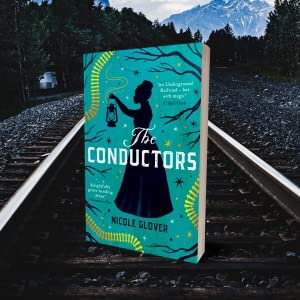
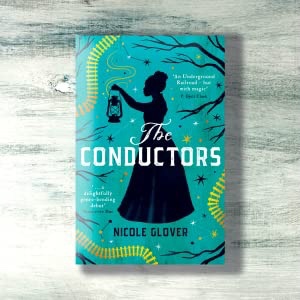
The Conductors is set in post Civil War, Philadelphia and is firmly within a genre of historical fiction that has a whisper of magic. Benjy and Hetty are a married couple, united in their purpose. They are renowned, ten years on from the end of the civil war, as conductors – guides who helped slaves escape the south through the Underground Railroad. Interestingly I had only recently come across the railroad when reading another book about magic set in an historical context – Alix E Harwood’s The Once and Future Witches. Hetty and Benjy used celestial magic to aid their rescues and for this they use sigils, which are usually a pictorial symbol of a god or spirit, but here are a symbol of their desired outcome. Ten years on, they use their magic to solve murders and missing person’s cases, particularly those with black victims where discriminatory authorities may not have investigated properly, even in the more forward thinking Northern US states. Their skills are frequently called upon in their district of Philadelphia but this time is different, this time the murder victim is an old friend and they will have to investigate within their own community.
Trying to investigate and unearth who can’t be trusted amongst their own friends and neighbours is really tough, especially when their suspicions start to take them very close to home. They have to use all their magical powers and experience, because stirring up secrets buried for this long turns out to be very dangerous for the pair. How much do they really know about their friends and neighbours? Trying to bring together historical facts and fiction can be hard enough for a writer, but to stir in fantasy and magic too takes great skill. The author must get us to feel like we’re in the past, but a past that’s brought alive by magic. The balance has to be perfect, or the end result can feel messy and chaotic. Instead this feels fresh and leaps off the page vividly. I was drawn in quite early on, by the characters and the incredible world the author has built – especially the fantasy side. It moves slowly at first, which draws the reader in, but also allows us to settle into these characters and their world before letting the rest unfold. Then when it does, the story is believable, rich and vivid. I believed in this couple’s relationship and I was invested in them as characters. So, when the tension did start to build, I was hooked – hoping they would solve the case and emerge unscathed. I thought the magical explanation for systemic racism was interesting and I would be fascinated to see how that resolves in future novels. This is definitely a writer to watch.
Meet The Author
NICOLE GLOVER works as a UX researcher in Virginia. She believes libraries are magical places and problems seem smaller with a cup of tea in hand. Her life outside of books include bicycles, video games, and baking the perfect banana bread. The Conductors is her debut novel. She can be found at nicole-glover.com
The film rights to this novel have been bought by Queen Latifah.
I think this beautiful novel was sent to me at the right time. Two things have happened lately. I’ve had a relapse of my long term illness Multiple Sclerosis, and it has affected my sight, balance and vertigo. Secondly, I’ve been reading several books where the central theme is that even small lives can be extraordinary or have a huge effect in the world. I think the two things are linked, because I’m a big believer in finding the right book at the right time. When I don’t have a groaning TBR bookcase, I tend to choose my reading very emotionally. What do I feel like reading? I can’t understand readers who are able to read books in chronological order, whatever the subject or however they’re feeling. I really have to be in the mood. It took me several years to read Middlesex by Jeffrey Eugenides, but when I did I absolutely loved it. I think this is the reason many bookworms have buckling shelves – we know we’ll want to read that new book, just not right now. Well, this book was the right one for right now – a look at how the ordinary life of one woman, becomes extraordinary because of the way it is told. A reminder for me that though I may live a quiet and often restricted existence, I can still have an impact on the world.
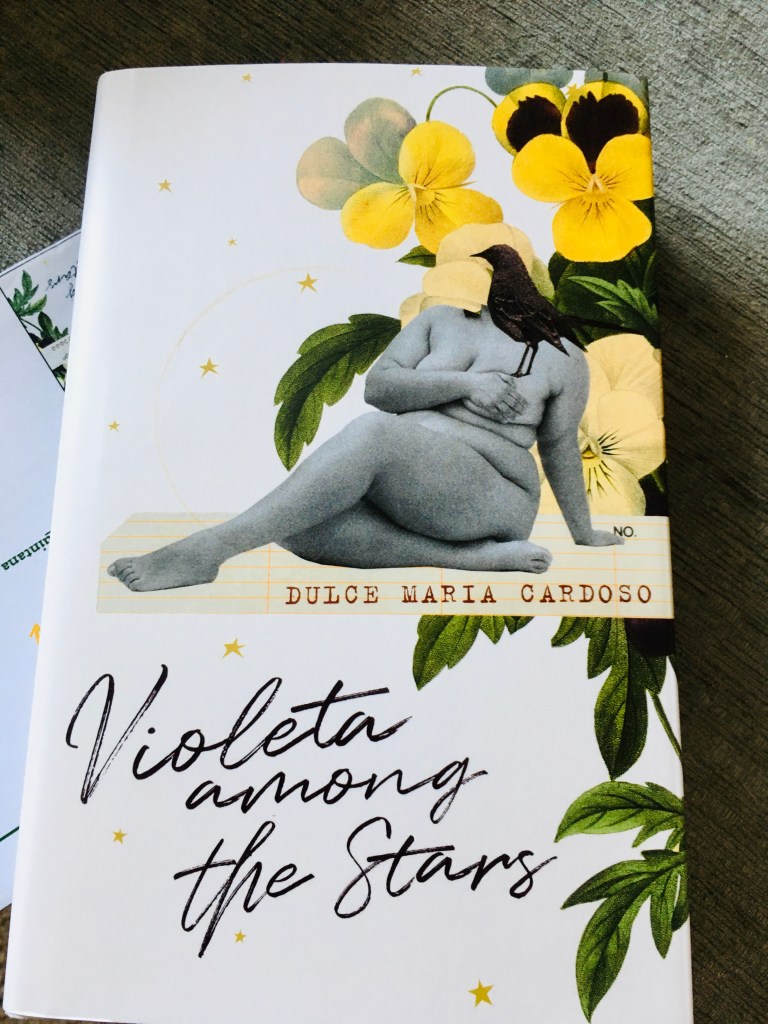
This particular novel is unique, because it carries a whole lifetime suspended in a single moment. Violeta is drunk and in utter despair when she crashes her car. As she’s thrown around in the car, her seat belt locks and she’s left suspended both physically and metaphorically. As she hangs between life and death, memories of her life flash before her all at once and in no particular order. Memories of her distant mother collide with her everyday life on the road selling waxing products. She remembers moments fumbling on toilet floors with truck drivers she barely knows at motorway service stations. A thousand seemingly ordinary encounters pass through her mind and make up a life. Her past comes up for scrutiny, culminating in how she sacrificed the dreams she had for adolescent relationships that simply let her down. Through this poetic meditation, an ordinary life becomes epic.
This whole book is written as a stream of consciousness so don’t expect tidy chronological memories or carefully constructed sentences. This is one, long paragraph without punctuation, cleverly keeping the reader hanging in the same position as the author. This is a raw examination of the ‘self’, how it is constructed and whether it is ever a constant, unchanging thing. Or is it more like Frankenstein’s creature? Hastily stitched from parts of our parents, our experiences, and those things we like and dislike. An ever changing collage rather than a single, fixed identity. Memories weave in and out of each other, past and present collide and sentences drift away unfinished. We are listening in on Violeta’s inner thoughts so they are never censored or tidy. This is a troubled woman. She’s at war with her family, her own body and her own anonymous sexual conquests. Yet, even though there’s no real structure or plot, we start to understand her. She has an incredible sense of humour and there is a feminist element too, particularly the way we wage war on body hair – Violeta sells waxing products. There’s also the open expression of sexuality, when young she would experiment with local boys and age now visits truck stops for anonymous sexual with strangers. What is transgressive about these encounters, is that the narrator’s active sex life should not be available to a fat woman. I’m a bigger woman, we’re not meant to be attractive in our imperfect bodies. Yet, just like Violeta, I’ve never had a problem finding someone to have sex with. Men are not meant to want sex with fat women, but the truth is, they do.
However, it’s not just other people and our identity under scrutiny. The physical world and concept of time also shifts around us; the reader’s perception of this world expands alongside Violeta. She stands beside us. She experiences the world around her as layers of time, shown in time-slip moments such as when she recalls the previous day’s meal at a restaurant, but simultaneously remembers visiting the shop when it was a hair salon, alongside her mother. Places and people exist simultaneously in the past and future, something I can definitely understand as I get older. Violeta awoke a fire in me. I had a few moments full of emotion and kinship for those bigger women who accept being the butt of a joke, feel inadequate or even hate their bodies so much they accept the abuse meted out by others. There are elements of the book that are painful, especially when we read about her childhood. This goes some way to explaining the detachment we see in the interactions with her own daughter, highlighting the concept of inter-generational pain. I’ve never read a book like this one, especially the structure and the leaps from poetry to philosophy. It reminds me of another book I recently read, where the author attempts to grasp what it is to be a human being. A wonderful, occasionally dark, but unusual look at life from the perspective of someone whose life is, quite literally, hanging in the balance.
suddenly I should have stayed at home, I should have stayed at home, I should have stayed at home, for some time, seconds, hours, I can do nothing, suddenly I stop
There’s probably a word in another language that properly describes the weird combination of trepidation and excitement a bookworm feels when they see a second book coming. You see they loved the first one. It was different. With an incredible twist that no one saw coming! It was like seeing The Sixth Sense for the first time, being blown away, then wondering what M. Night Shymalan could possibly do to follow it? If this is what it likes for the reader, imagine the writer’s fear in following such a smash hit as Alex Michaelides’s The Silent Patient. It must have been incredible. So I approached The Maidens as if it was a piñata filled with bees!
The premise sounded interesting. Psychologist Mariana Andros is summoned to Cambridge University by her niece Zoe. It’s a place filled with memories for Mariana, because it’s where she met her late husband Sebastian. For Zoe it is now the place where her best friend Tara has been murdered. Zoe is very special to her aunt, because they are each other’s only family. They have been closer since the death of Sebastian, who drowned on a romantic holiday in the Greek Islands only a year ago. Mariana knows how desperate Zoe must feel, so cancels her group therapy clients and sets off to meet her in Cambridge, where she stays in university lodgings. Here she meets the charismatic and Byronic Professor Fosca who teaches Classical Philology. Mariana is disturbed by him and his habit of gathering together ‘special scholars’ who receive group tuition from him. They are called The Maidens – although whether this is Fosca’s invention or the girls we are never sure and, of course, each one of them is incredibly beautiful, including their missing member, Tara.
Zoe is convinced Fosca is behind the murder, but with no evidence except a strange feeling and dislike of his odd circle of academic groupies, nothing can be done. I had the feeling that this tutor was perhaps a genius in his field, but was socially awkward and unaware of societal norms. Did he think his maidens gave him an air of eccentricity perhaps? However, he was too obvious to be the real villain of the piece. Yet, no matter how hard I tried, I couldn’t guess the answer. Thankfully the book had a great pace and once it had it me hooked, I just couldn’t leave it alone. I read it in my car on the way to our holiday cottage, in the bath, and in the park. However, I still couldn’t possibly have guessed at the incredibly tense showdown at the end.
For me there were some negatives. I had difficulty connecting to the characters emotionally, especially Mariana who never fully came to life for me. The Greek tragedy element was clever, as quotes on postcards sent to the victims felt like clues to the killer’s identity. However, I was taught classics at school so these references were familiar to me and I wondered how this whole theme would be received for someone without any knowledge of Greek myths. I also felt that how Mariana inserted herself into the investigation was highly unlikely. However, I did enjoy the academic setting and I felt the author captured that sense of importance academics can have about their subject area. I thought the he represented academia well, like being in a bubble, living and breathing your passion. The murders punctured their way through this protective layer, bringing the real world into a rarefied way of life. The passing connection to The Silent Patient wasn’t needed, but did add an interesting aspect to the ending; I now have my own epilogue running in my head, following certain characters into that other fictional world.
I was disturbed by the visitation of a swan, described as having black eyes that bored right through Mariana. I wondered what this represented and thought of the famous Greek myth of Leda and the swan – where Zeus disguises himself as a swan in order to rape/seduce Leda who has no knowledge of the swan’s true identity. For me this conjured up ideas around love or infatuation being blind, loving and trusting someone who isn’t what they seem. What I loved most of all though, was perhaps linked to the swan. The author has created a therapist with all the skills of perception and understanding in her toolbox, but an inability to apply them in her own life. She loves those closest to her blindly, never seeing their true nature just as Leda only sees a swan. Swans are also our analogy for someone very serene on the surface, but masking anxiety or the great effort it takes to be present. Swans look beautifully calm and composed above the water and this reminded me of Mariana; the calm and stability is only skin deep. I thought the novel was part psychological suspense, part crime fiction, and part gothic novel, but it was definitely all thriller.
Meet The Author.
Alex Michaelides was born and raised in Cyprus. He has a MA in English Literature from Trinity College, Cambridge University, and a MA in Screenwriting from the American Film Institute in Los Angeles. The Silent Patient was his first novel. It spent over a year on the New York Times bestseller list and sold in a record-breaking 49 countries. He lives in London.
The first daughter is for the throne. The second is for the Wolf.
Every so often I venture into reading fantasy and have been enchanted by some of the books I’ve stumbled upon, often because of their stunning covers in the first instance. When I think of my favourite books – The Night Circus, Ten Thousand Doors of January, Alice Hoffman’s Practical Magic series and Jonathon Strange and Mr Norrell – all come up very high on the list. Yet I certainly don’t think of myself as solely a fantasy blogger, I don’t have enough knowledge of the genre. I love that sense of total escape and I often read with a smile on my face because I’m so charmed by the audacity of these writers and how they bend the rules of our world with some magic realism or create a beautiful wild new world for the reader to explore. I was drawn to this book by a very beautiful cover and the thought that someone would be playing with the boundaries of a well known fairy tale.
Redarys has always known her fate. As the kingdom’s second daughter, she is doomed to become a sacrifice to the wolf who keeps Wilderwood’s gods captive in the forest. Red seems to have acquiesced to this fate and her mother’s cool and distant attitude tells Red that she too has prepared herself for this moment, by never becoming close with her daughter. Red’s sister Neve wants to rage against the kingdom and tempts Red to run away that night, as far as she can. She has even spoken to the man who loves Red and sets up a secret moment where he can declare his plans to help her run away. He is promised to Neve, but vows to help Red escape her fate. But does she want to? Red has a hidden power deep within that scares her, and she never wants to hurt someone she loves again. She feels the woods luring her and her power is exactly what they need. The stories she’s been told from childhood are not the full truth. The spirits have weakened. The wolf is just a man, as pushed into his fate as she is. Can Red use her power for good and set them all free?
From the very first pages I was drawn into this other world by the author’s use of detailed imagery. She builds an incredible new world, from words: the sumptuous clothing and the meaning behind their colours, the rooms of the castle and even the dark woods beyond are all rendered beautifully. As guests gather for a celebration on the eve of the sacrifice, Red has chosen a blood red dress contrasting strongly with her mother and sister’s choices and making it very clear who she is. There’s a certain pride in her, of who she is and the role she’s decided to accept. I enjoyed the sisterly love between Red and Neve. We do have sections narrated by Neve to give some contrast from Red’s point of view. Although they’re quite different Neve and Red are incredibly close, they have each other’s backs and in a difficult situation I have no doubt each would fight for the other. I liked both characters, but Red is definitely the more dominant sister despite their opposing fates. Her bravery in accepting her fate and her sense of duty to the kingdom were very admirable. She has some attitude too and I loved that feistiness in her. She’s also a voracious reader and the magnificent library was like something out of my dreams.
There is romance too, a slow burning attraction between Red and her unusual beau. I liked that it wasn’t overdone or flowery, and that Red didn’t lose any of her feistiness in the relationship. She wants to be loved for the person she is, not to change. I won’t reveal her love interest, but it’s their feeling of being trapped into a life they didn’t choose that brings them together. They are bound by blood and sacrifice. He’s a proper Gothic hero too, just as strong and fierce as Red but with an edge. He’s definitely the boyfriend you wouldn’t take home to Mum. It’s a complete awakening once Red enters the wood and she learns that the myths she’s been told about the world are far from the truth. I really enjoyed my foray into the world of fantasy. We all need a brooding love interest, with dark woods and crumbling castles. This isn’t all romance though, it’s more reminiscent of the original blood thirsty fairy tales where women are willing to saw off their own toes to fit a glass slipper or where an enchantment forces them to dance every night till their feet are bleeding. There is blood, so if you’re thinking of sweet, fluffy, fairy tales it might be better to imagine Disney meets Game of Thrones. This is a well written Gothic fairy tale, with a heroine who can not only save herself, but the world as well.
Meet The Author
Hannah Whitten has been writing to amuse herself since she could hold a pen, and sometime in high school, she figured out that what amused her might also amuse others. When she’s not writing, she’s reading, making music, or attempting to bake. She lives in Tennessee with her husband and children in a house ruled by a temperamental cat.
The Salpêtrière asylum, 1885. All of Paris is in thrall to Doctor Charcot and his displays of hypnotism on women who have been deemed mad or hysterical, outcasts from society. But the truth is much more complicated – for these women are often simply inconvenient, unwanted wives or strong-willed daughters. Once a year a grand ball is held at the hospital. For the Parisian elite, the Mad Women’s Ball is the highlight of the social season; for the women themselves, it is a rare moment of hope.
There are definitely some interesting women living in the asylum at Saltpiétre, under the care of Dr Charcot. We are introduced to Eugénie first, who lives with her parents, brother and grandmother in Paris. While she seems like an archetypal society young lady, there’s something more to Eugénie. Since she was an adolescent she has been seeing and communicating with dead people. This isn’t something she wanted and she’s been keeping it a secret for many years. Not even her brother Théophile or her grandmother know what’s been happening. She finds herself having strange physical symptoms like her limbs feeling heavy, then someone might come to her. One evening while attending to her grandmother before bed, her grandfather appears and starts to tell her that something precious, thought lost forever, is caught under the drawers of her dressing table. Sure enough, as Eugénie takes the drawers out she finds a sentimental piece of jewellery that her grandmother never imagined she’d see again. She trusts her grandmother, so out pours the story that she can communicate with dead people. Eugénie trusts that her secret is safe and never suspects that she could be betrayed by those she loves the most.
This novel’s strength lies in the portrayal of it’s women and the shocking truth of how easy it is for a man to have a woman placed in an asylum. Even more horrifying for me was how the women became objects: a father’s cold decision to choose his reputation and offload her like a defective belonging; a doctor using the women in his performance as an expert in his field; the grotesque spectacle of dressing up the women in costumes to be paraded around in front of Paris society at the ball. The interesting relationship between Geneviève and Eugénie kept me reading, but there was also a fascinating role for the older woman Therése. She seems to be quietly knitting in the corner, but there’s a lot more going on with this woman and she is vital to the smooth running of the ward. This is a fascinating piece of historical fiction, with a feminist perspective and the added bonus of a supernatural element. It questions what makes us ‘mad’ – is someone who believes in spiritualism any more mentally ill than someone who believes in God and the events of the Bible? I definitely recommend this and have to mention the absolutely stunning cover too.
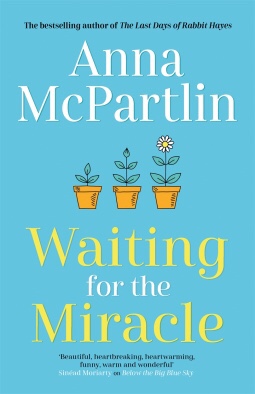
I loved The Last Days of Rabbit Hayes and it’s sequel, both written by this talented author, so I looked forward to starting her new one as soon as NetGalley granted it. As usual for this author it was full of big emotive issues, mixed with the funniest dialogue, strong female characters and an interesting set up. In the narrative from 2010, our four characters meet at an infertility support group. There is a second narrative from 1976 where we meet Catherine, a young girl from Ireland who becomes pregnant as a teenager and is sent to one of the now infamous homes for young mothers, run by the Roman Catholic Church. Coming from a Catholic family myself and finding out I would find it hard to conceive at the age of 25, I was concerned the storyline might be too close to home. I remember being given a list of telephone numbers at the hospital, of women who volunteered for a charity supporting those who had miscarried. I only called one number. Next to the names on the list was a little warning that some of these women had gone on to have healthy pregnancies and there might be children in the house when I called. I knew my outcome would be different by this point. I didn’t have the mental or physical strength to keep getting pregnant, then lose the baby multiple times. I had decided after losing my fourth child that I couldn’t keep going. It was a very hard choice, but the right one for me. I can remember ringing that number for support, only to hear a baby crying in the background. I put the phone down and locked myself in the bathroom so I could grieve in peace. As I read though, I found a kinship with these characters and wished I’d had a group like this to belong to, at a time when my family and friends were supportive, but really didn’t know what it felt like.
Within the group there are women at different stages of this difficult journey. There are so many different reasons for infertility and the author covers most situations within the group: those pursuing IVF; some going through the adoption process; some using donor sperm to have a baby with their same sex partner; women with medical conditions like endometriosis. One has anti-phospho lipid syndrome (often named Hughes Syndrome after the doctor who discovered it) which is my diagnosis and means that it’s possible for patients to get pregnant, but difficult to sustain a pregnancy. Patients with Hughes have sticky blood, making it very difficult to for blood flow to go through the placenta and to the baby. Pregnancies usually fail within the first trimester, my latest miscarriage was at just 12 weeks with twins. As the character in the book relates to the others, often it isn’t detected until the first scan and then an operation must be performed to ‘to remove the products of conception’. As she points out, the medical language may create a distance for the doctor, but for the patient it feels very wrong to see the words ‘termination’ on the consent forms and even harder to sign away the baby you have wanted for so long. The interactions with the NHS were so true to life it felt like the author had popped inside my head and rifled around in my memories. However, there was comfort in knowing this was a shared experience and that other women had been through this feeling exactly the same as I did.
Four women with very different reasons for their fertility problems are drawn together in the group and slowly develop a very strong friendship. A new face in the group sessions seems to bring them together. Ronnie is challenging at first. She seems super confident, asks uncomfortable questions, and invites the others to the pub. She has a strange ability to pull uncomfortable truths and intimate details from those around her, but never seems to disclose much of herself. I found myself starting to question why she was there in the group. Yet as time went on I warmed to her, she seemed feisty and frequently made me smile. Caroline is just about to hit rock bottom in her fertility journey. They have spent a lot of money on medical bills and rounds of IVF, but have never conceived. After discussion with her husband some time ago, they are meant to be never going through it again. Yet Caroline can’t stop yearning for a baby of her own and in her desperation she’s driving her husband away. To make things worse her beloved dog has just died. In a very fragile state she starts to consider just one more round of fertility treatment but her husband isn’t on board. She has to face a very hard decision; is her desire to be a mother, stronger than her love for him? Natalie and her girlfriend have decided to have children using a donor who is very close to home – her girlfriend’s brother. Her girlfriend thinks that if the baby is a blood relative to her, she might be more invested in the idea of becoming parents. Janet’s husband may be having an affair with one of the receptionists from his work place. How can she find out what’s going on? The women are very much a team and support each other, even if one of them is doing something crazy.
Between the present day sections there is the story of a girl called Catherine, back in 1976. Catherine finds herself pregnant after her very first sexual experience with a boy from school. He claims to love her, but she is about to be let down very badly. Catherine’s family are poor, whereas her boyfriend’s family are wealthy and well known in the area. His father is a local magistrate. So when Catherine tells her religious parents what has happened they immediately summon the parish priest and before she knows it Catherine is sitting at the back of his back being shipped off to the nuns at a mother and baby home. We already know the terrible way young girls were treated in these places from films like The Magdalene Laundries and Philomena, but I must admit there were parts of Catherine’s story that genuinely made me cry. I couldn’t believe the casual brutality of these nuns, who are supposed to be women of God. They really made my blood boil. I found it was Catherine’s story that drove the book for me, her plight kept me reading and there were a couple of moments in her story where I was so involved I forgot everything going on around me! The heartbreak, betrayal and psychological abuse this girl goes through is horrendous and her ability to keep going and survive is incredible.
I think that this author enjoys writing about women’s issues and their friendships. She has an awareness, that although we love our partners in life, it is often our female friends that hold us up and keep us going through the worst times. I refer to my best friends as my non-sexual life partners! I had an inkling about the mystery at the centre of the story. What did happen to the baby Catherine had stolen from her at the mother and baby home? I read this in a day, because I was so drawn in by the story and these women who felt completely real to me. Anna McPartlin has such a storytelling skill. She has a way of mining your emotions until you’re sobbing over someone who isn’t even real. For those who’ve been through any of the experiences featured, it might be a difficult read in parts, but I promise you won’t feel let down or misrepresented by the way she depicts your experience. This was sad, funny, warm and poignant. A little bit like life.
Meet The Author.
From Anna’s Amazon Author Page.
Hello reader,
I’m an Irish novelist and a TV scriptwriter. Currently with 7 fiction titles available to buy online and one children’s title under the name Bannie McPartlin. As of August 2019 I’ve just finished writing ‘Under The Big Blue Sky,’ the follow up to international best selling title ‘The Last Days of Rabbit Hayes.’ This title will be published by Bonnier Zaffer and will be available UK &I IRE and amazon Summer 2020.
My previous short incarnation as a stand-up comedian left an indelible mark. I’m described by all who know me as a slave to the joke and my work focuses on humour and humanity in even the darkness situations.
So if you’d like to take a trip to the dark side and if you are a fan of big, bold characters check out my titles and I hope you enjoy.
PS
If you are not a fan of moderate to severe cursing, best to move on. Either way good luck to you.
PPS
I dabble in twitter but often forget it’s there (@annamcpartlin). I’m better on Facebook but not brilliant Anna McPartlin and I really giving it a good old go on instagram #Trying (mcpartlin.anna) and my website is annamcpartlin.com.
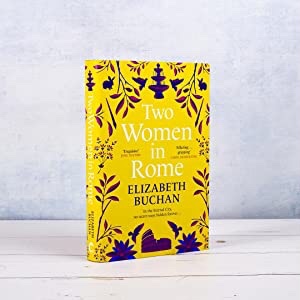
Regular readers may remember how much I loved Elizabeth Buchan’s last novel The Museum of Broken Promises, in fact it was one of my top twenty of the year. So, I was very excited to be approved to read this via NetGalley. The story is split into two timelines and follows the lives of two British women who spend some time living in Rome. Lottie Archer arrives at the Eternal City as a new wife and with a new job as an archivist at the Archivo Espatriati. Her very first task is to archive the papers and journal of a woman called Nina Lawrence who worked as a gardener in Rome in the late 1970s. This was a difficult time for the country socially and politically, known as the ‘Years of Lead’ – a period which stretched from the 1960s to the 1980s and resulted in many incidents of far right and far left terrorism. Nina’s task was to redesign gardens that still lay devastated by WW2, something she was passionate about and very talented. Within her papers, is a large leather journal, rather worse for wear and full of drawings and pressed plants. However, Lottie also finds a painting of the Annunciation – the moment where the Virgin Mary is visited by the angel Gabriel to tell her she will be the mother of Jesus, the son of God. Lottie thinks it may be medieval, due to the colours used and the iconography. This piques her interest and she is disturbed to learn that Nina was murdered in Rome, and that very few people attended her funeral in the Protestant cemetery. Interestingly though, one mourner was a Catholic priest, which strokes Lottie as very unusual. She wants to find out more about the painting, but she also finds herself sucked into the mystery of what happened to Nina, who murdered her and why did she seem so friendless in this beautiful city?
I found the novel a little slow at first. I didn’t click with Lottie straight away, the detail and discussion of medieval art was quite dense (or I was) and the complexity of the political situation wasn’t always easy to follow. I also thought the intricacies and machinations of the Catholic Church might be a little difficult to penetrate for those who don’t know much about Catholicism – luckily I am one, with convent teaching under my belt, so this was not so difficult for me. However, I did like that the author didn’t simplify these areas of the book because in a way they added to the mystery of a city that has an incredibly complicated history. I was drawn in most by the story of Nina, just like Lottie is. I could understand why her story would get under your skin as someone interested in the past and trying to make sense of it. There is a kinship between the two women, even though they can never meet. Lottie is unsure of her position in Rome for several reasons. Firstly, when she arrives to work at the archive, her new role hasn’t quite been vacated. She moves into the apartment that her husband Tom shared with his previous partner Clare, and all around her are memories that don’t belong to her (including an ugly lamp, that should be kept because it works perfectly well, according to their formidable housekeeper). All of this is compounded by an underlying sense of abandonment, formed because she was left by her birth mother. There’s something lost about Nina that she latches onto and the more she finds out, the more she wonders whether Nina was more than a gardener?
Nina is a rather fascinating woman, who shares Lottie’s sense of rootlessness and lack of ties. There is definitely a deeply woven reason for Nina’s death, involving politics, security services, the church and a rather unwise, but beautiful love affair that unfolds in her journal. It is this aspect of her character that really humanises her for me, she becomes a real, living and breathing person and it is then even more tragic when the end comes. One thing both narratives capture beautifully is the city itself. Just like the narrative structure of the book, we get a sense of Rome as place where the past is very closely layered under the present. I thought about the tunnels and cave structures that run under the city’s streets, some still populated with WW2 vehicles, as an embodiment of this feeling. The present is full of tourists, rushing around on their itineraries getting a sense of the past and present city, but not necessarily the world underneath their feet. The author evokes the sights and smells beautifully: describing the less followed paths, the street fountains carved with dolphins and maidens, the detail of the plants so precious to Nina, the smells and sight of the deli counters full of salami, olives and beautifully ripe tomatoes. I found myself craving a trip to Italy all the time while reading!
However, she also shows its impenetrability to outsiders who know nothing of Catholicism, Roman etiquette or it’s slightly corrupt ways of getting business done. This is captured most beautifully in Lottie’s burgeoning relationship with their housekeeper. I also enjoyed her friendship with the book binder, who she asks to authenticate the painting she finds without understanding his significance. The background on medieval painting is vital here, not just to understand the symbolism within the traditional aspects, but to identify those that are far more transgressive and intensely personal. This is a complicated mystery/thriller, mixed with a travelogue of Rome and an intense love story. It asks questions about where we belong and whether our final destinations have been reached by choice, accident or a deep sense of duty to our family, our religion and our country. By the end I realised I’d become so enthralled, I was very sad to leave Rome behind.
Thank you to Atlantic Books for my digital copy via NetGalley.
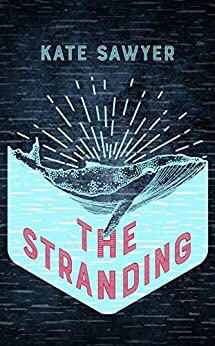
I know that a book is extraordinary when I finish it and feel changed in some way. I’m never sure what has happened, but there’s a tiny, imperceptible change, to the air around me, how I feel and even the way I perceive the world. The Stranding left me feeling calm, thoughtful and as if a lot of the small things worrying me didn’t really matter in the big scheme of things. I cared deeply for the characters and their grief, and strangely proud of them for what they managed to achieve. The author created an incredible sense of New Zealand and the whale that becomes Ruth’s saviour, and mother – birthing her and Nik into their new world and sustaining them. Her detailed descriptions left me fully immersed in this world, so much so that when I finished reading, it took a while to adjust back to being in Ruth’s ‘before’ and my 21st Century world.
Ruth is an endearing character and someone I could relate to enormously, especially when thinking back to my younger self. She makes mistakes and doesn’t fully know herself yet. She’s a primary school teacher and serial monogamist living in London. She has a best friend called Fran and really supportive parents who live a train journey away. However, her love life is complicated with even Fran saying that she needs to spend some time alone between relationships. So, Ruth has kept her current relationship under wraps. She loves Alex, and she’s sure the way she feels is different from her previous relationships, but he comes with complications. He’s married, with two small children. There’s a restlessness about Ruth, something she thinks will disappear if Alex makes a commitment. Then he does and he’s there in her small flat all the time, she’s a ready made step mum and as time goes on, she wonders whether she really wants this version of her life? She struggles to cope with someone so physically close to her, sharing her space.
‘Ruth had noticed a new loo brush beside the toilet. She reddened to realise that Alex had felt the necessity to purchase such an item, and her cheeks burnt even more when she wondered whether it was her or him who had made that requirement apparent. It wasn’t the only scatological matter that raised the colour in Ruth’s cheeks. Alex was opposed to the use of any chemical or aerosol-propelled household products. Over the past week, on several occasions, Ruth had found herself wafting pungent air out of the window and running the tap to foam soap in the hope of masking the smell of her natural functions. Though it was worse when she had walked in and been greeted with air almost warm with the memory of Alex’s recent visit’.
The book is split into before and after – it’s not explicit exactly what has created this apocalyptic world Ruth eventually finds herself in, but it is catastrophic, wiping out Europe before it reaches where she has travelled in New Zealand. The placement of these sections is incredibly clever. Before takes us back to the world as we know it and follows Ruth to the beach and the stranded whale. After starts at the stranded whale and tells the story into the future. So we are brought full circle and can marvel at the change in Ruth and discover whether she has finally found satisfaction in a life stripped of everything. Nik is, quite literally, the last man on earth. The difference in their characters is shown in the way they cope with the stranded whale. Ruth is immediately desperate to do something. To do anything. She rips through her rucksack for a container to hold water, then pours it over the huge creature. She must know rationally that this tiny amount of water will make no difference. She has been interested in whales since being a small girl so she must know this is a losing battle, but the activity is not for the whale. Ruth chooses activity because she can’t accept the inevitable. Nik is straightforward. He reminds her that her efforts are futile. They can’t save the whale, all they can do is be there in it’s final moments. They are forced into an intimacy that Ruth would normally avoid. Every day they choose to be a team, to use their individual skills to support each other and stay alive. Her father once advised her that love, real lasting love, is quiet and surprising. It’s not Anna Karenina or WutheringHeights. It’s not drama and heartbreak and flowery exclamations. He tells her that it’s just going about your day and having a realisation that you can’t live without the other person. There’s telling someone you love them, and there’s showing them.
I loved how the author emphasised the importance of stories in the afterward sections. She realises that children in this new world will never know what it was truly like to live in the before. This wild world of survival is their normal. She tells them stories of how she survived the end of the world. She knows they will never know her joy of reading and she thinks of all the children’s classics she could be reading to them:
‘She watches Frankie exploring every stone and shell she comes across and feels a physical ache in her heart that she will never read a book: the words that constructed the worlds Ruth’s imagination inhabited as a child. Instead Ruth tells her those stories herself. She tells her of the Lion and the Witch that lived through the Wardrobe, and great adventures of princesses and princes. Without the books to restrict her, she often switches the genders of the protagonists, waking sleeping princes from their slumbers and sending young women on adventures in mythical lands. Nik watches as Ruth talks softly to the child on her lap in the light of the fire, retelling the stories they know so well; he raises an eyebrow and forms his crooked smile as he hears her adaptations.’
This is a return to oral storytelling, where the story can change according to the storyteller. I also loved Ruth’s changing of the narratives, creating a more feminist type of fairy tale and shaping girls to be powerful, confident and be the ones doing the rescuing.
I was blown away by the author’s own storytelling, from the beautiful and detailed, such as her incredible description of the skin of the whale.
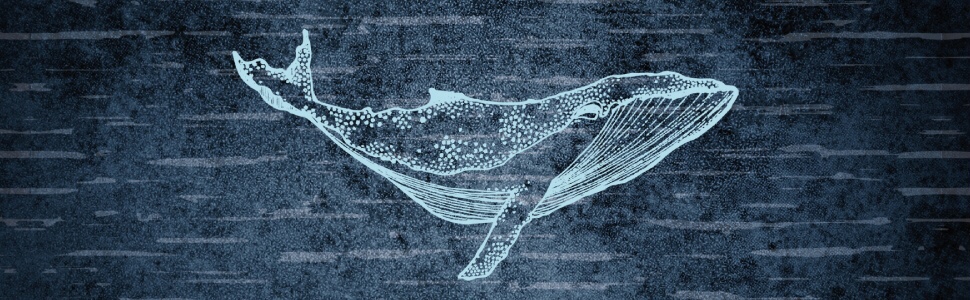
‘The hide of the animal looks like cracked, varnished wood. Like an old piano. A giant grand piano from the ballroom of a wrecked ocean-liner, washed up on the shore. The long white underside of its belly is ridged, like bricks of pale plasticine. The shell-like white, beige, cream skin is flecked with grey, black, coral-orange markings. Around its mouth and eyes the same orange spreads like rust: clumsy make-up that has smudged in the water.’
Yet, it can also be brutal, such as when she’s describing Ruth’s skin in the first few days afterwards. It made me think about the extremes of the world she’s living in, from the quietness and the gradual return of nature to the brutality of the wild dogs and the animalistic aspects of birth. What I was left with though, was something I’ve been thinking about during the pandemic where I’ve been shielding – only seeing my partner and step-daughters. With the pause button pressed on my life, I was able to think about it more clearly. I realised we needed to move house and we are now out in the country, with a garden I can sit in easily and chat to the neighbours over the fence. It made me realise who was important in my life and who wasn’t. I re-evaluated what I wanted to do with my time and decided that now is my time to write. It also made me realise who I am, without people to bounce off, or rushing to different places, or having endless mental stimulation through social media. I was able to apply something I have previously taught in art and writing therapy workshops – the art of being myself. This is Ruth’s journey. With everything removed from her, who exactly is she? There is a time in her life where she would avoid self-examination by jumping to the next thing, the next entertainment, scrolling social media, the next outing, the next man. Afterwards, she is forced to contemplate and to be with the only other person who survived. It is fascinating to watch whether she copes in this situation and whether she can find a way to be happy that eluded her before. This book was incredible, moving, disturbing and deeply philosophical. This is an extraordinary debut and I loved it.
The Stranding is published by Coronet on 24th June 2021
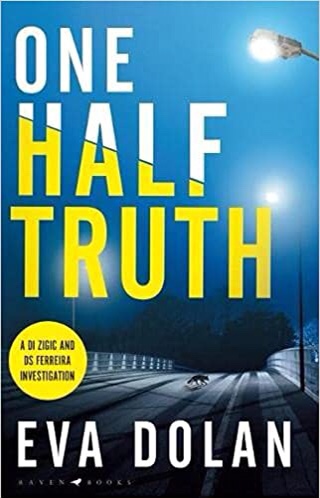
I really enjoyed this police procedural set in Peterborough which is part of a series I’ve often read before. Zigic and Ferreira are the detectives looking for a killer when young student Jordan is shot dead walking home from watching football at a club. The club is for men who worked at Greenaway’s factory, but the factory is long gone and so are the jobs. This left skilled engineers consigned to the scrap heap in their fifties – an age where getting new employment is very difficult. The club lingers on as a reminder and is still frequented by a group of men bonded together due to their shared experience, with a lot of bitterness and anger remaining. So what was a young man like Jordan doing there and how had he ended up shot in the back of the head, execution style, close to the Parkway on his shortcut home?
The story line grabbed me straight away, possibly because my family are working class enough to have experienced what these men have gone through, but in the mining and steel manufacturing industries. I’ve seen what it does to a man to leave him unemployed near retirement age. Jordan really stood out as one of the good guys in life, using his writing to stand up to big business and expose corruption. Of course we only experience him through his deeds and other people’s impressions of him, but that’s enough for me to feel he was ambitious to be a journalist, but also had some integrity. He wanted to do the job to write the big stories, not doorstep celebrities or cover fun days for the local paper. He’d already been published in the Big Issue, the piece that told the stories of the men at the club and the reason he knew and bonded with them. He’d shown how their mental health suffered after redundancy, that many had lost their wives and families too, some had even lost the roof over their heads. The fact that he’d stayed in contact with these men, tells the detectives that the club is the best place to start investigating.
There are three stories that Jordan was working on with the potential to ruffle important feathers. One is about a social care company attached to a woman called Sheila Yule, but she is very wary of even speaking to the police and appears scared. Then there’s the death of the owner of Greenaway’s, in a helicopter crash. It had been ruled an accident but could Jordan have found out otherwise? Finally, he was looking into a housing development on the outskirts of the city, where Ferreira had almost bought a flat. Any one of these stories would have made this an interesting book, so to give us all three was generous and created a few red herrings along the way. There were so many leads to follow that the pace never let up and the story never flagged. All three stories were right up my street politically, so I really enjoyed delving into the detail and the thinking Jordan would have gone through when researching. All the undercurrents of deprivation, corruption, the collusion of big business and local politics couldn’t have been more timely and they fit perfectly with how I see the world.
There were some great bits of character revealed in Ferreira and Zigic’s home lives. Ferreira’s competitive streak comes out when her partner, and fellow police officer, wants to have his hunch on the case confirmed. The next minute they’re bantering about paint colours and wallpaper. The comical scene of Zigic and his wife clearing out his wardrobe was eerily familiar and very funny. These are the lives they go back to after working long hours and it was enjoyable to see those glimpses of their home selves. Both Zigic and Ferreira have a conviction to see justice done and hate being told what they can and can’t investigate from higher up. In this case, high ranking police officers being too cosy with local councillors and big business in the area. Ferreira is slightly more reckless and I love how she takes things into her own hands at the end. I like her fire and her need to get to the truth – whoever is involved. There are twists I didn’t expect, but I was glad of them, because they changed an outcome I was struggling to accept. This was solid, intelligent, crime writing with a lot of heart and a social conscience so I enjoyed it immensely.
Meet The Author
Eva Dolan was shortlisted for the CWA Dagger for unpublished authors when only a teenager. The four novels in her Zigic and Ferreira series have been published to widespread critical acclaim: Tell No Tales and After You Die were shortlisted for the Theakston’s Crime Novel of the Year Award and After You Die was also longlisted for the CWA Gold Dagger. She lives in Cambridge.
The spellbinding novel from the author of the Sunday Times bestselling The Doll Factory. 1866. In a coastal village in southern England, Nell picks violets for a living. Set apart by her community because of the birthmarks that speckle her skin, Nell’s world is her beloved brother and devotion to the sea. But when Jasper Jupiter’s Circus of Wonders arrives in the village, Nell is kidnapped. Her father has sold her, promising Jasper Jupiter his very own leopard girl. It is the greatest betrayal of Nell’s life, but as her fame grows, and she finds friendship with the other performers and Jasper’s gentle brother Toby, she begins to wonder if joining the show is the best thing that has ever happened to her. In London, newspapers describe Nell as the eighth wonder of the world. Figurines are cast in her image, and crowds rush to watch her soar through the air. But who gets to tell Nell’s story? What happens when her fame threatens to eclipse that of the showman who bought her? And as she falls in love with Toby, can he detach himself from his past and the terrible secret that binds him to his brother? Moving from the pleasure gardens of Victorian London to the battle-scarred plains of the Crimea, Circus of Wonders is an astonishing story about power and ownership, fame and the threat of invisibility.
‘Do you like stories?’ Nell asks, and the child nods. She picks up the book of Fairy Tales, weighs it in her hand. She remembers Charlie’s wafting hands, trying to fix her, to make her ordinary. She puts it back, takes a breath. Instead, she tells Pearl about a mermaid with a blue-scaled tail. ‘Her tail was so beautiful,’ she whispers, ‘that if men caught her, they’d dry her out and place her behind a sheet of glass, and thousands of strangers would pay to see her.’ She tells her how the mermaid swam in the deep waters where nobody could find her. ‘A little like you in this wagon,’ she says. Pearl smiles, and Nell carries on, explains how a prince’s ship was blown off course and he fell in love with her. He longed for his own tail so much that he visited a witch who ripped his legs from his body and stitched on fish scales with a sharp needle’.
Those of us who loved Elizabeth MacNeal’s first book The Doll Factory have been waiting impatiently for the next novel to spring from her imagination. The wait was worth it. I am always drawn to books about circuses and freak shows – it follows on from research I did at university in my Gothic, Grotesque and Monstrous module and for my dissertation on disability. However, not all works that feature freak shows, in whatever form, have their research based in disability studies and culture. While The Greatest Showman has Hugh Jackman (swoon) and some incredible songs, it doesn’t really tackle the ethics of such an enterprise as Barnum’s. Yes, the freaks had a great song about being their authentic selves and not being hidden away, but it never tackled that deep inequality in their relationship as showman and exhibit. The act of singing This Is Me, led by the bearded lady, shows their strength and character when Barnum doesn’t allow them to attend the party with dignitaries. However, it doesn’t address the fact that they are getting paid to display themselves as different and whether or not this is a choice. MacNeal uses Barnum as the inspiration to her showman, Jasper Jupiter, but she does see the problems inherent in a concern that displays ‘other’ bodies for entertainment. She then explores the concept of difference using the circus performers, fairy tales and concepts of monstrousness. She manages to do this while writing a story that is thrilling, full of strong characters and told with such vivid description.
Our heroine, and eventual Queen of the Moon and Stars, is Nell. As Jasper Jupiter’s troupe visit the small village where her family farms violets for confectionery, he notices Nell’s wild abandon as she dances with her brother. This is an after show party for the performers, but there are locals too, enjoying the atmosphere and partaking in a lot of alcohol. Nell is usually shy, covered in birth marks head to foot, she tends to stay where she isn’t seen. However, the alcohol she tries removes all the inhibitions she usually hides behind in public. Jasper sees her as a leopard girl, covered in spots, and imagines how she would look in his circus. Eventually though, he settles on Queen of the Moon and Stars; Nellie Moon, with a skin covered in constellations. He approaches Nell’s drunkard of a father and offers him twenty pounds for her. He creates a caravan for her, beautifully decorated and with three well chosen books for her to read. Then with her father’s help, he kidnaps her, locks her in the caravan and trundles off with the rest of the circus into the night. His plan is to make her fly, constructing huge feather wings on a harness and a system of ropes and pulleys to give the impression she is soaring above the crowd. His troupe are ‘performers’ not just exhibits to be wheeled out, poked and prodded. Jasper believes that with Nellie Moon he might start to earn the sort of money that would make a trip to London viable. Maybe in a show tent in one of the pleasure gardens? Most of all he’d like to entice Queen Victoria to see his show, because she is a famous ‘freak fancier’ and what a coup it would be if Jasper’s Circus of Wonders was her first choice of entertainment since Albert died.
I loved the way the author used the books in Nell’s caravan to bring in the idea of fairy tales and how they victimise people who are different. When Nell is reading to Pearl, an albino little girl that Jasper buys, she manages some retelling worthy of Angela Carter – including The Little Mermaid quoted at the beginning of my review. Nell thinks about the book of Hans Christian Andersen tales she would read with her brother Charlie:
‘They read about Hans My Hedgehog, half-boy, half-beast; about the Maiden without Hands; about Beast and his elephant trunk and his body glittering with fish scales. It was the stories’ endings which always silenced her, that made her pull her dress over her fingers. Love altered each character – Hans shucked his hedgehog spines like a suit, the maiden’s hands grew back, Beast became a man – and Nell pored over the woodcuts so carefully, staring at those plain, healed bodies. Would her birthmarks disappear if somebody loved her?’
The thought would make her tearful even then, but she didn’t know why. Stella, the bearded lady, tells Nell that she will find her strength in performing. It’s a way of taking up space in a world that doesn’t see them. She gives voice to the dilemma at the heart of the ‘freak show’; instinctively, it feels wrong to exhibit someone for their difference, but where else would they earn so much money and live so well? Of course in reality there were horror stories and the author does name check some of them in the book. Sara Baartman, a slave from South Africa, known as The Hottentot Venus was exhibited all over the world until her death. She was then bought by naturalist George Cuvier who dissected her, then pickled her genitals and kept them in a jar. Barnum was known to treat animals appallingly, but he also exhibited a freed slave called Joice Heth after removing all her teeth! He did this so he could name her the Oldest Woman in the World. However, for every horror story there were famous ‘freaks’ such as Siamese Twins Chang and Eng who earned so much from being exhibited that they bought a plantation for themselves, and their families. It isn’t just the money though, as Stella explains:
‘There’s power in it,’ Stella says, twisting a curl of her beard around her finger. ‘In what?’ ‘Performing. You control it. How they see you. You choose to be different. Nobody else looks like me, and I’m glad […] I was a hungry gutterling, not worth a gentleman’s spit. And because of this, the source of all my powers—’ she smiles and pulls on her beard – ‘I’ve been to Vienna and Paris and Moscow, and done as I please. I’ve made enough money to make my mother turn in her grave. I could give you a thousand names of wonders whose lives are richer, bigger, brighter, because of shows like this.’
Nell can’t imagine feeling like this. She has always kept her body covered and stayed in the background. She’s used to being called ‘leopard girl’ or being asked if her mother was startled by a leopard during her confinement. She is used to being whispered about and pitied. How will she feel about her body being displayed, flying high above the audience? Being pointed at and talked about, her body on posters, matchboxes and as figurines. Yet, when she gets there, she does feel what Stella is talking about.
‘Someone throws flowers into the sky. A bouquet dips and falls. She watches these people, grown fat on wonder. They have seen a giant juggle, a bearded woman chirrup like a blackbird, a dwarf ride a miniature pony, tumblers and contortionists, fire-eaters and dancing poodles, and she is the finale. They admire her, want to be her. All her life, she has held herself like a bud, so small and tight and voiceless. She has not realised the potential that lies within her, the possibility that she might unfurl, arms thrown wide, and take up space in the world.’
I loved the stance the author takes and I loved this awakening in Nell too, but there’s so much more to the book. The luscious descriptions of costumes and performers made me feel I was there. The heat of the lights, the smell of the animals and gaudy caravans.The sounds and smells of the pleasure gardens were also really vivid, especially the morning after. The flashbacks of Jasper and his brother Toby’s time in the Crimean War were horrific and I loved the interplay of the brother’s roles as watcher and doer. The author plays with the idea that appearances never lie, through Toby’s photography, how he chooses his images and for which audience. Toby was an interesting character who never truly fits anywhere, not even in his natural place as Jasper’s brother. His difference doesn’t show, so when he tries to make his otherness visual will the other performers accept him? Jasper himself is mercurial, full of ideas and with a lot of success, but always reaching for more, to his detriment. I found his relationships to women interesting, he has no lovers and his ties with his friend Dash were the strongest he’s had with another person. He seems to see women as things to display, to possess and assert power over, but not as allies or equals. Yet, in his troupe, he has some of the strongest women you could imagine. There are some parts of the ending that were inevitable and others that were unexpected and left undone, which was perfect. I loved this book so much, I’m going to buy a very special copy of it and keep it forever.
Meet The Author
Elizabeth Macneal was born in Scotland and now lives in East London. She is a writer and potter and works from a small studio at the bottom of her garden. The Doll Factory, Elizabeth’s debut novel, was a Sunday Times bestseller, has been translated into twenty-nine languages and has been optioned for a major television series. It won the Caledonia Novel Award 2018. Circus of Wonders is her second novel.










 The Lotus Readers