Blog Feed

Posted in Publisher Proof

The Setup by Lizzy Dent.

Lizzy’s last novel was a great modern romantic comedy that, thanks to it’s main character, managed to avoid being too schmaltzy and sentimental. It also contained a healthy dose of self-discovery and self-love for a young woman who was low in confidence and used to drifting in life. In The SetUp she’s done it again. Mara is just the sort of quirky and unsure girl that readers fall in love with and I did. Being in my late forties, Mara reminded me of a time I wasn’t sure of myself and I mostly wanted to give her some hope and a big motherly hug. We meet Mara as she’s leaving for a weekend in Prague with her best friend Charlie. This is going to be real quality time for them, something that’s been difficult to get organise since her friend became a Mum. Everything in her friend’s life has changed and while Mara is pleased for her, she can’t help but feel pushed out. Charlie’s going through a whole raft of life experiences that Mara simply can’t identify with or share. The holiday is an attempt to get their friendship back on track so she’s terribly disappointed when Charlie cancels at the last minute. So Mara is in Prague alone and while wandering one day she sees a sign for palmistry and fortune telling. Mara is astrology mad, often reading her daily horoscope first thing in the morning. So on a whim she decides to have her fortune told. There is a change on the horizon, the fortune teller explains, a tall and dark man will literally walk into her life imminently. This is everything Mara has wanted to hear and she’s still digesting the news when the fortune teller explains she has to run, even leaving the keys for Mara to lock up. Within seconds the door opens and in walks a tall, dark and handsome musician called Josef, all set to play cello in the nearby concert hall. He asks for his fortune and who is Mara to object? She wants to get to know him better, because this might be her ‘one’. So she gives him a very specific fortune – when he comes to play in England later that year he will meet a woman called Mara in the pub on the seafront at Broadgate and she is his destiny.

Mara has been drifting through life. After knowing what she wanted to do from an early age and doggedly followed her dream of going to film school. She now has an encyclopaedic knowledge of classic cinema and rom-coms too of course. She even has a little card index of all the films she’s seen, because she loves nothing better than showing one of them to someone who’s never seen it before. She completed almost three years of her degree course, when a lack of confidence and blind love and trust for someone proved to be a toxic combination. She thought that he was the one. He thought he knew more about film than Mara, because he had the more serious taste, for art house cinema. As they worked on their final project together, Mara was envisioning them being a great team and she was proud of her script about a taxi driver falling in love with a passenger. All was well until Mara heard what her boyfriend really thought, both of her and her work. Then to add to her broken heart, he stole her film. Unable to stick up for herself and claim the work as her own, instead she packed her bags and left university for good. Now living in sunny Broadgate, on the south coast, Mara is trying to make friends with her work colleagues at the town’s 1930’s lido. Directly on the sea front, the lido is a great example of Art Deco architecture but isn’t used nearly enough by the people of the town. Mara is full of ideas, but it’s whether her boss will agree to them. Every idea she puts forward seems to be blocked or put on the back burner to think about at a later date. Mara senses there is more to this than mere apathy and starts investigating. To improve her finances she advertises for a new roommate and is gratified to find Ash, a local handyman/ builder who is keen to make friends, but also help her revamp the flat. Finally and to add to her new found enthusiasm for work, she decides on a bold new look at the hair salon too. When Josef arrives in the autumn every aspect of her life is going to be perfect.

I’m guessing that Lizzy Dent is placed within ‘women’s fiction’ or categorised as modern romance, two descriptors that critics can be sniffy and superior about. I think this book is the very best of it’s genre and isn’t simply a romance, at least not the conventional sort. What I enjoyed most about this book was the transformation of Mara, from her new look and the confidence it brings, to the inner growth that becomes wisdom and really transforms her outlook on life. As Mara works on the big anniversary project for the lido she starts to appreciate her new home town and the history of the incredible Art Deco building where she works. The excitement about her work brings her closer to her colleagues and they start to really bond as friends, in fact it is Samira from work who recommends a hairdresser to give Mara’s look an overhaul. She starts to appreciate their quirks and their work skills. In turn they are impressed by Mara’s ideas and enthusiasm and their appreciation gives her confidence professionally. The negative voice that was once a constant narrator in her mind, becomes quieter, allowing a stronger, more nurturing voice to develop. I was desperate for this little team to triumph and save such a unique landmark for their community.

Romantically, Mara isn’t remotely self-aware. She believes in fate, destiny and ‘the one’ – a viewpoint that her new roommate Ash finds hilarious. He doesn’t believe there’s a ‘one’ or a specific destiny awaiting him. I loved his common sense approach to life and love. He tries to get Mara to see that Josef is merely a fantasy and the likelihood of him turning up is very slim. He wants Mara to grab hold of life and to make choices for herself: pursue things that make her happy; wear things that make her confident and comfortable; improve her relationship with the family she seems to have cut out of her life. The author keeps us guessing over what will come next for Mara and I wanted to carry on reading straight through in one sitting to find out. I became so invested in her as a character and Ash is so loveable too, the sort of man I just know gives the best hugs. The depiction of female friendships is so positive and true to life. I haven’t had children and only became a stepmum at the age of 46, so I felt that distance when my friends became mums like Charlie. I had to learn how much they needed new friends who were going through the same thing, but they needed their old friends to hang in there just as much. I loved the last minute twist to the tale that forces Mara to make a choice, between the destiny and romantic fantasy of the old Mara and the more confident and certain Mara, able to make her own choices with conviction rather than leaving the universe to decide on her behalf.

Published by Viking 9th June 2022

Meet The Author

Lizzy Dent (mis)spent her early twenties working in a hotel not unlike the one in her first novel, The Summer Job. Soon to be a TV series! She somehow ended up in a glamorous job travelling the world creating content for various TV companies, including MTV, Channel 4, Cartoon Network, the BBC and ITV. She writes about women who don’t always know where they’re going in life, but who always have fun doing it. The Setup is her second novel.

Posted in Netgalley

The Three Dahlias by Katy Watson

Dahlia Lively is the redoubtable heroine of a long series of books by crime author Lettuce Davenport. Over the years she has been portrayed on the big and small screen by two actresses Rosalind and Caro, both of whom were well loved. Our novel takes place at a Dahlia Lively convention, held at a stately home called Aldemere, the home of the Davenport family for generations. In fact, Lettuce wrote some of her novels in the study. Now it is home to her nephew Hugh Davenport, his wife Isobel and his stepdaughter Juliette. This is the first time the convention has taken place at Aldemere and VIP attendees have paid to stay in the house for the weekend. In an amazing coup for the convention, organiser Marcus has secured all the Dahlias including Hollywood actress Posy Starling who is about to start filming a 21st Century version of the books. Posy was a child star who became the enfant terrible of the tabloids as she grew up in the glare of publicity. With addiction and criminal convictions behind her, she wouldn’t be everyone’s choice for Dahlia – rather like casting Lindsey Lohan in a young Miss Marple series. Posy is hoping this movie will erase her previous bad girl status and industry insiders will start to take her seriously. With Aldemere House needing repair and money running out, Posy isn’t the only person depending on this film. The Davenport family are getting desperate and are selling heirlooms to stay afloat as Aldemere starts to look a little threadbare. Staying at Lettuce Davenport’s home is an immersive experience, so when murder becomes part of their eleven course dinner many people aren’t surprised, but this is no act and that means one of them is a murderer.

There are so many secrets flying around at Aldemere, you’d need a Dahlia Lively to keep track. Luckily we have three. I enjoyed all three characters and we see the action in three separate sections through their eyes. I felt for Posy who has really been thrown in at the deep end this weekend. Dahlia fans are obsessive and know every detail about their favourite literary character and her creator. Posy is coming into this completely blind and has only just starting reading the books. The film makers have given this adaptation a reboot, casting Posy against type and casting Kit, a young Black British actor, as her police sidekick Johnnie. Traditionalist are complaining, but Rosalind and Caro can see that perhaps each generation needs it’s own Dahlia. Besides, keeping the character in the limelight keeps the royalties coming in for them. I thought Posy really thrived as these two strong women believed in her and almost became Dahlia in front of their eyes as the women embark on some amateur sleuthing of their own. Each woman has also received a blackmail note, because each woman has their own secrets. Rosalind was older and wiser than the other two, really able to sit back and sift through the evidence in her mind until a solution presents itself. Rosalind also has the strongest links with the Davenport family, having dated Hugh before he married Isobel. I felt Rosalind’s sadness and loneliness, but also her confusion that he chose to marry someone else after what they felt for each other. It’s a question she’s never been able to ask, but now she might have to. She regrets staying quiet and wishes she’d been more like Caro who set fire to her ex-husband’s tie – while he was still wearing it. Caro is the firecracker and the driving force behind the Dahlia’s investigative efforts. She likes the centre of attention and relishes the role of interrogator so that she can take centre stage at the end and unmasks a murderer. I did feel like she was playing a role though, and aside from knowing she was married to Annie I didn’t feel we got fully under her skin.

The mystery itself is clever and labyrinthine, at times I started to lose my way with who was where and when. That possibly says more about my brain than the plot. There wasn’t just the murder to solve but lots of smaller mysteries like who the blackmailer was, who had stolen Lettuce’s jewelled loupe from the study and who was making the creepy little dolls left behind to signal the next victim. I loved the dolls, but other than that I never felt this was a creepy or violent murder mystery. It’s more of a cosy puzzle and potentially good Sunday evening viewing on TV. I loved the odd couple who had come to the convention for their 25th wedding anniversary and knew everything there was to know about Dahlia. There was something sweet, but slightly obsessive about them that was fun. I loved the quirky elements of the house too – such as Posy’s room, named the ‘China Room’ for it’s very famous blue and white patterned wall paper that featured in one of the books. We never find out exactly what the wall paper does, but that makes it more scary. I also thought the Murder Spiral was incredible, a garden planted with poisonous specimens featured in Lettuce’s writings and giving her the title ‘Princess of Poison’. It feels wrong to say a murder mystery is fun, but this one was. With nostalgia, vintage fashion, a quirky old house and three formidable heroines this was a clever and well-constructed read with an affectionate nod to the golden age of detective fiction.
Published by Constable on 21st July 2022

Meet the Author

Growing up in a family of murder mystery addicts, Katy learned early to look for means, motive and opportunity.

After studying English Literature – with a sideline in crime fiction – at Lancaster University, she set about teaching herself to write her own stories, while also experiencing enough of the world to have things to write about.

Two careers, a lot of airmiles, one husband, two children, three houses and forty five published books for children and adults later, lockdown finally gave her the means, motive and opportunity to create her own murder mystery – with the aid of her scientist husband’s worryingly thorough knowledge of poisons.

The Three Dahlias is the result.

Posted in Random Things Tours

Honor by Thrity Umrigar

In this riveting and immersive novel, bestselling author Thrity Umrigar tells the story of two couples and the sometimes dangerous and heartbreaking challenges of love across a cultural divide.

Indian American journalist Smita has returned to India to cover a story, but reluctantly: long ago she and her family left the country with no intention of ever coming back. As she follows the case of Meena – a Hindu woman attacked by members of her own village and her own family for marrying a Muslim man – Smita comes face to face with a society where tradition carries more weight than one’s own heart, and a story that threatens to unearth the painful secrets of Smita’s own past. While Meena’s fate hangs in the balance, Smita tries in every way she can to right the scales. She also finds herself increasingly drawn to Mohan, an Indian man she meets while on assignment. But the dual love stories of Honor are as different as the cultures of Meena and Smita themselves: Smita realizes she has the freedom to enter into a casual affair, knowing she can decide later how much it means to her.

There were times when this novel became almost too painful to read, but I’m glad I continued until it’s bittersweet conclusion. At home in America, journalist Smita is every inch the modern career woman, living a single and globetrotting life. She has a series of ready packed cases so she can zoom off to the airport at a moment’s notice to cover a story anywhere in the world. There are similar, psychological cases in her mind, packed and closed until she’s called to certain destinations. In fact one hasn’t been opened in years, until she’s called by a journalist friend in India who has ended up in hospital mid-story. On the basis of a misunderstanding, Smita flies out to Mumbai thinking her friend needs personal help and looking after. Yet it’s professional support she would like, needing Smita to travel into a more rural area of India and cover the story she has been engrossed in. A woman called Meena is the story. Along with her sister Radha she defied her brothers to take a job outside the home, in a sewing factory. The brothers run their home along strict rules and the sisters are supposed to stay at home, care for the house and serve the brothers. Meena’s final downfall was love, when at the factory she met a kind, gentle and intelligent man. Meena’s family followed the Hindu religion and her brothers would never let her choose for herself, especially when her choice is a Muslim man. When she defied them a second time she sealed their fate. They are set on fire by her family and their village. Smita is the only one to survive.

Not only did Smita survive, but she escaped to the home of her mother-in-law. Now with a little girl to look after, Smita is recovering from her burns but her injuries are devastating. With the help of a charity she is taking her brothers to court for their actions and the verdict is due this week. Reluctantly, Smita takes on the story and agrees to meet Meena with the help of Shannon’s friend Mohan as driver and translator where required. There isn’t much that shocks me in life, but the terrible cruelty of what’s been done to Meena made me seethe with anger. I simply cannot comprehend how family members could wreak such revenge on their own sister, although sadly I have watched dramas about such murders in this country. Although we have a long way to go in conquering the patriarchy in the UK, we have to remember other countries have their own battle and are often a long way from the comparative equality we enjoy. A recent drama showed how this violent killing is based in culture not religion. It showed a community using it’s young men to watch their women, standing outside taxi firms and take away shops they policed their area and noticed when a girl was starting to wear Western clothing or too much make-up. These communities worked like Meena’s village, curbing bad behaviour before it gets out of hand. They doled out punishments to those girls who transgressed and the families carry them out, so that community members could see how their women respected them. It’s never about men saving the women’s honour; it’s about saving their own.

The author drew me deeply into this novel and complexities of life in India: the stark differences between the more cosmopolitan cities like Mumbai and the rural areas; the intolerance between religions and cultures; the massive contrast between the freedoms a Western Hindu woman like Smita has, compared with Meena. Smita actually embodies all of these differences. In order to make a transition to the rural area they’ll be visiting she asks Mohan to take her to a shop where she can buy more traditional clothes, because she doesn’t have anything suitable and they must be the everyday kind, not those for tourists going to a wedding. Mohan is a world away from Meena’s brothers, but he still has a tendency towards an old-fashioned chivalry, somehow reminding Smita of her father. His need to ‘look after’ the women around him feels like part of the culture she considers outmoded, but it’s only a small part of who he is. He bothers her, because she knows from experience that men who think they need to rescue women can also think they own them. I found the flashback to Smita’s teenage years in Mumbai particularly evocative and shocking. It’s no wonder Smita never stays in one place very long, she knows that even your closest neighbours can turn and betray you in an instant, better to keep moving. Yet this trip may challenge her to put down roots and be part of something; is she ready to confront what happened and make a change? As for Meena, her story left me feeling so sad and angry that such injustices can and do happen. Her life, being worked and insulted by her mother-in-law while constantly living in fear, seemed intolerable to me. I hoped that the brief, but fierce love she had experienced, was enough of a consolation. She must live for her beautiful little girl. I was troubled and engrossed by this novel and I’m still thinking about it several days later. It’s evocative, intelligent and a fascinating insight into the cultural complexity of India.

Meet The Author

Thrity Umrigar is the bestselling author of The Space Between Us, which was a finalist for the PEN/Beyond Margins Award, as well as six other novels, a memoir, and three picture books. Her books have been translated into several languages and published in over fifteen countries. She is the winner of a Lambda Literary Award and the Seth Rosenberg Prize and is a Distinguished Professor of English at Case Western Reserve University.

Posted in Sunday Spotlight

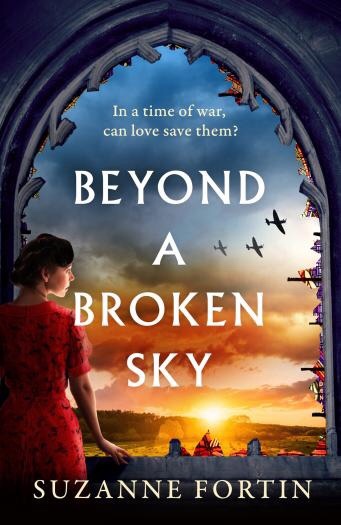
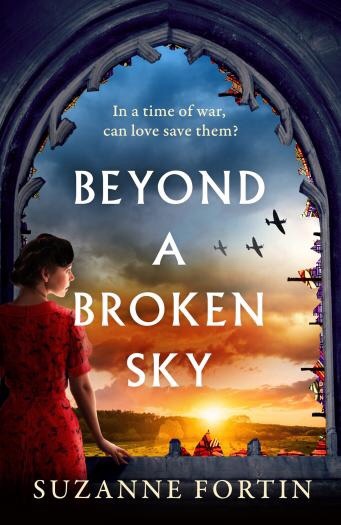
Sunday Spotlight! Beyond A Broken Sky by Suzanne Fortin.

Ever since I had the good fortune to fall upon a blog tour for The Secret Life of Arthur Pettigrew I have looked out for other works by Suzanne Fortin. It was such a well researched and emotional piece of historical fiction, it became one of my books of that year. Since then she has published two more novels, All That We Have Lost and now this novel, another piece of history from WW2 with an emotive dual-timeline story woven throughout. In 2022 we meet Rhoda Sullivan who works as a stained glass expert, called in by museums to value, then oversee and conserve important works in glass. She”s tasked to go to Telton Hall and assess a stained glass window that dates to WW2 and was designed by an Italian POW. There she end up at an impasse when the gates are blocked by an elderly man in a tractor, Jack is the hall’s last inhabitant and he’s lived there all his life. He’s making a final protest about the development at the hall, but his son Nate arrives to help Rhoda gain access. With Nate, Rhoda makes a terrible discovery – a body under the chapel’s flagstones. It has a huge effect on Rhoda who imagines someone missing this person, just as she still misses her twin brother who disappeared before their 18th birthday. A decade on she still looks for him everywhere,

In 1945 we are taken to Somerset and a young woman called Alice Renshaw. Alice is alone and pregnant. Shes been sent to a farm in Somerset where Louise Hartwell is running things with the help of POW’s. As well as the farm work, Louise helps young pregnant women. Alice soon starts to make friends, but not everyone at the hall is happy about this. As peace is declared, the war at Telton Hall is just beginning.

I’ve just started the book and I’m already hooked by Alice’s story and I love how the author pulls us straight back into the 1940’s with only a few lines. I am also fascinated by Rhoda’s job and the making and restoration of stained glass. I heartily recommend this author, even though I’ve only read a few chapters I know I’m in safe hands. If you love historical fiction and haven’t already encountered her work, go grab her first novel. You won’t regret it.

Meet The Author

Suzanne writes historical fiction, predominantly dual timeline and set in France. Her books feature courageous women in extraordinary circumstances with love and family at the heart of all the stories. 

Suzanne also writes mystery and suspense as Sue Fortin where she is a USA Today bestseller and Amazon UK #1 and Amazon US #3 bestseller. She has sold over a million copies of her books and been translated into multiple languages.

Posted in Publisher Proof

Sunday Spotlight! The Daughter of Doctor Moreau.

I have been a fan of Silvia Moreno-Garcia’s writing since I did the blog tour for her novel Mexican Gothic. It was a heady mix of fear, desire, and strange happenings, with a feisty heroine with fabulous dress sense. Of course it also had a gothic mansion, decorated with wallpaper printed with wandering mushrooms. Since then I’ve become less keen on wallpaper and mushrooms! I also went back to her previous novels- one of the greatest pleasures a bookworm like me can have is to find a new author then find they have a long back catalogue of books to get your teeth into. I went back to the incredible Gods of Jade and Shadow and The Beautiful Ones, then was lucky enough to be sent Velvet Was the Night. I love the vivid colours and unusual design of her book covers too and have each one sitting on my shelf in hardback. I’m trying to resist buying the signed edition of The Daughter of Doctor Moreau with the bright pink spredges It’s perhaps no surprise that I love the art of the Mexican painter Frida Kahlo because this cover is very reminiscent of her work. Mainly I love (and envy) Morena-Garcia’s incredible imagination and the way she changes genre with each book.

The Daughter of Doctor Moreau is a feminist retelling of H.G. Wells’s original sci-fi novel. Our main character is not Dr. Moreau, instead it is his 14 year old Carlota Moreau, brought up on an island off Mexico by her scientist father. I love the technique of ‘writing back’, especially with the theme of disability in my case, but there have been a lot of books reframing Greek myths such as Elektra and Ariadne. They bring women into the frame and show events from their perspective, which is often very different from the male ‘heroes’. Carlota has a childhood illness which her father is treating with a drug regime of his own invention. Dr Moreau keeps his daughter close by and she is very naïve about the outside world, but also about her father’s work. With the help of his estate overseer, Montgomery Laughton, Dr. Moreau has created ‘the hybrids’, half human and half animal creatures who blindly obey their creator. Seven years later Eduardo Lizaldi arrives, the son of Dr. Moreau’s patron has come to see his work, but sets in motion the events of the novel. I can’t go into much more without ruining the story, but there is a touch of romance woven into the tale as well.

Silvia Moreno-Garcia talks about the setting and themes of her novel in the afterword, including the ethics of scientific work and the effects of colonialism. As part of her backdrop she addresses the treatment of the Mayan population, as well as the Caste War which raged for years against incomers. There is also a look at the rigidly controlled lives of the 19th Century women. All in all a truly ambitious undertaking, but then I wouldn’t expect any less from this gifted writer.

Meet The Author

Silvia Moreno-Garcia is the author of the novels The Daughter of Doctor Moreau, Velvet Was the Night, Mexican Gothic, and many other books. She has also edited several anthologies, including the World Fantasy Award-winning She Walks in Shadows (a.k.a. Cthulhu’s Daughters).

Posted in Netgalley

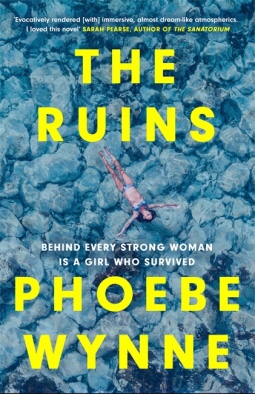
The Ruins by Phoebe Wynne

At about 40% into the kindle version of this book it started to become very uncomfortable reading. I’d no idea where it was going to go and I wasn’t sure if I wanted to be along for the ride. I was glad I stayed with it, because of the truth it shows about the effects of trauma. They are life long. Now I’m finding it very difficult to review in my usual way. It felt like reading a client’s journal work, the sort I might ask them to write as part of their counselling journey. There was something prurient about reading Ruby’s account, because it was so intimate and harrowing who could gain pleasure from reading it? Perhaps this is exactly the effect that Phoebe Wynne was hoping to evoke in the reader? Not all reading is pleasurable, sometimes it has a different purpose. To educate, to shock, to show people they are not alone in their experience. In the author’s first novel Madame we were introduced to some of the same themes: the super rich who are above the law and practice exploitation like a religion; young teenage girls being groomed to become Stepford wives to the millionaire class; a creepy gothic school where the girls are educated; the complicity of women in this continuous cycle. Yet with that book the creepy undertones suggested a supernatural element and the malice of some of the pupils was just enough for dislike to creep in. Both help us look past the true horror of what is going on. Once I’d finished the book I felt like I’d glimpsed behind life’s curtain to see the decadent and corrupt inner workings of society. This book felt different. The girls were younger, the setting perhaps more realistic, so the flashbacks to what should have been a blissful summer for three girls at a French château, felt claustrophobic, exploitative and very dark indeed.

Ruby and her family are spending the summer at their Château in France, as usual they are joined by her father’s two best friends; Harley and Angus, with his daughter Imogen. However, added to their party this year are the Fullers and their daughter Annie, plus a woman called Georgina and her teenage daughter Ned (Edwina). Their normal equilibrium is disturbed immediately when one of the Fullers drives back to the château after a few drinks and hits a child in the village. With their combined power and influence, the men ‘handle’ the problem, but Mrs Fuller is not so easily silenced. Was she driving or is she reacting to her husband’s callous disregard for life? Whatever the reason she returns to the château screaming and crying. She has to be sedated and removed back to England as soon as possible. From there the holiday descends into decadence – heavy drinking becomes the norm, little jibes and full blown arguments ensue.


Make no mistake these men are in charge and however they choose to behave, no one will rebuke them. The author creates a sense of powerlessness in the women of the party, from the hysterical Mrs Fuller to the passivity of Ruby’s mum. Within this patriarchy, women are policing the borders. Whether it’s because they believe in the system or because they are keeping quiet to stay safe, every woman here is reacting to male dominance. Ruby’s mum is a walking list of instructions – keep up your flute practice, stay quiet at the table, don’t ask questions and above all don’t read books. Ruby’s love of Agatha Christie is frowned upon by the men and that disapproval is acted on by her mother who eventually stops her. At first her reading is tolerated and admired by Angus. Harley cruelly ruins the end of Murder on the Orient Express, making the point that reading fiction is not the best use of Ruby’s time. Then a seemingly kind birthday present of Death on the Nile becomes tainted – it’s intentions called into question by later events. Events that suggest someone might have been using her love of reading as a way to groom this young girl. Then eventually, the book becomes part of a terrible traumatic memory. I don’t have any personal experience of what Ruby and Imogen go through that summer, but it’s still shocking to read. It was the neglect that bothered me most, the fact that none of these mothers, except perhaps Ned’s mother Georgina, are on their daughter’s side. Not only do they seem curiously detached from how their husbands behave – until it’s in front of other people – they don’t intervene with their daughters, spend time with them or speak up when they are treated badly. Their silence makes them complicit. As a reader I felt powerless to stop what was happening.

In between the flashes of that summer we follow another trip to France, many years later, with Mrs Cosgrove. She’s come to visit the château that’s for sale along with the coast, the venue of childhood memories and events that still haunt her today. Some locals seem to recognise her but she denies being here before, claiming to be taking a holiday. Yet Mrs Cosgrove is jumpy, looking out for particular cars and appearing frightened when two men appear also claiming a link to the château. Does this place and it’s memories still have power over her? Or is she hoping to finally breathe, so that what happened here is no longer such an influence on her life? She might not be the only one who has ghosts to lay here. I found the mood of these sections very different from the tension and seedy atmosphere of the past. Mrs Cosgrove is tense, but curiously I wasn’t even though her story takes us back into the truth of that summer. Maybe because I knew the worst had already happened. Maybe because the after effects of trauma are something I’m more used to, where I have some power to help. Considering the scandals that haunt the headlines these days, whether it’s Harvey Weinstein, Jimmy Saville, Jeffrey Epstein and Ghislaine Maxwell, no one can be surprised by a constructed reality in which the rich and entitled behave as if anything they want they can take. Perhaps my reluctance to read about it says a lot about why these abusers were free to commit crimes against those less powerful for so long – no one wants to face the reality that people can and do act this way. The men in this novel are grotesque, we want to think of them as monsters in order to distance them from ourselves, but sadly they are not. The author wants us to see and not look away, otherwise we are complicit too. In the blurb, Phoebe Wynne says that very little is made up and with my twenty years experience of working in mental health I sadly confirm that childhood abuse is more common than most realise. Perhaps my struggle with reading it is because I’ve seen what abuse does to people and witnessing the effects of trauma is hard to forget. The author also says she wrote the book so that it might ‘provide some consolation for the darkest moments of female experience’ and I truly hope it does that.

Meet the Author

Phoebe Wynne worked in education for eight years, teaching Classics in the UK and English Language and Literature in Paris. She left the classroom to focus on her writing, and went on to hone her craft in Los Angeles and in London. She is both British and French, and currently spends her time between France and England.‘Madam’ is her debut novel, and ‘The Ruins’ is her second.

Posted in Orenda, Random Things Tours

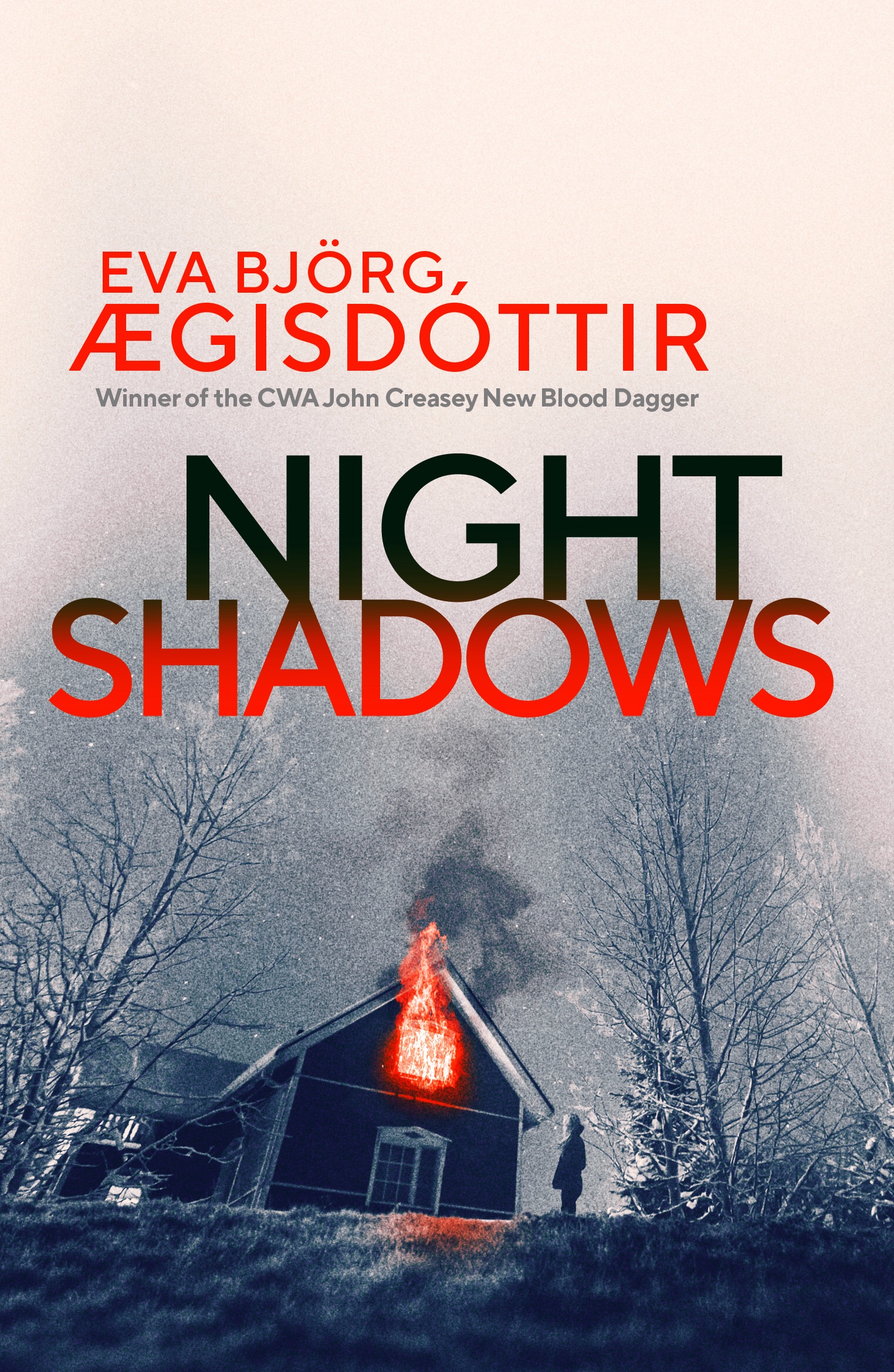
Night Shadows by Eva Björg, Aegisdóttir

The small community of Akranes is devastated when a young man dies in a mysterious house fire, and when Detective Elma and her colleagues from West Iceland CID discover the fire was arson, they become embroiled in an increasingly perplexing case involving multiple suspects. What’s more, the dead man’s final online search raises fears that they could be investigating not one murder, but two. A few months before the fire, a young Dutch woman takes a job as an au pair in Iceland, desperate to make a new life for herself after the death of her father. But the seemingly perfect family who employs her turns out to have problems of its own and she soon discovers she is running out of people to turn to. As the police begin to home in on the truth, Elma, already struggling to come to terms with a life-changing event, finds herself in mortal danger as it becomes clear that someone has secrets they’ll do anything to hide…

I devoured this crime novel in a day while ill in bed. I could barely look up from the book to talk to anyone, because I was so deeply embedded in the cold, bleak Icelandic landscape and the twists and turns of this fascinating story. Having read the previous novels in the Forbidden Iceland series, I was immediately at home with detective Elma and her partner Saever. The investigation starts with a fire in a neighbourhood of Akranes, a small town near Reykjavik. The neighbours hear the smoke alarm and come running to the house to check no one is home. The family are said to be away, but as the fire is put out a body is found in one of the bedrooms and turns out to be the teenage son, Marinó. Elma can’t understand why he is still on the bed, as if asleep. If the neighbours were woken by the fire why wasn’t this boy and why is his the room where the fire started? Soon they get their answers – he is full of sleeping tablets. It seems a party was held at the house that weekend, with a few of the neighbourhood’s teenagers attended. Elma needs to know what went on that night, who was there and where was Marinó when they left. The case becomes complicated when it becomes clear a young woman is missing. Lise was working as an au pair for one of the families living near the fire and was seen at the party. Lise was looking after the daughters of couple Laufey and Unnar, but had decided to leave and had packed everything before the party. She was ready to return to Holland the following morning. Laufey remembers seeing her bags packed that evening and when they were gone the next morning she assumed she’d left for an early flight. But Lise never reached Holland.

I enjoyed reading Elma’s voice in the first novel of this series so it was nice to pick up where we left off. Motherhood is a thread throughout the novel and it was almost as if Elma was learning exactly what being a mum entailed. She is close with her own family, despite sister Dagny getting on her nerves she realises the importance of having them around her and being there for her nieces. Within the teenagers who were present at the weekend party there is a young mother, who is trying everything to keep her relationship with the father going and overlooking a lot too. Laufney is the mum we follow most and she is almost coping as a single mum, with husband Unnar usually out and doing one thing that really infuriates me – referring to ‘babysitting’ his own children. Their own first child is a teenager, living in his own pad in the garage but still enjoying the comforts of home. Laufney is so proud of her son Andri who is soon moving to Sweden to play football at a professional level. Their two daughters are much younger. Klara is ten years old, quiet and slightly reserved, but very talented at drawing. In fact Elma finds her drawing so striking that she notices it pinned on the fridge. With the family in the main house, a girl is drawn up against the window, looking inside. Saever ccomments its like something from a horror film and he’s eerily prescient. It’s Anna the youngest daughter of the family who is sitting on the loo in the middle of the night and notices movement outside. A girl with long hair and a bulky coat is staring into the house. Anna knows it is Lise and shes not scared of Lise who was kind to her, but Lise is dead and dead people don’t come back. She goes to Klara for comfort and she reassures her, she knows she’s seen Lise because a few weeks ago she’d been been in the garden. In one of the scariest scenes Ive read in a while, the girl notices Klara and strides directly over to the window, peering in with both hands resting on the glass. I was sorry that I just happened to be reading that scene at three a.m.

The crime itself and Elma’s personal life is about loyalty and how far we’d go to keep those we love safe and for mothers that’s such a strong instinct. Elma finds these deep instincts at the forefront of her mind throughout, both personally and professionally. One of the biggest question marks I had is over Laufey and Unnar’s marriage. He is very easy to dislike thanks to his habits of sleeping with other women, even those that should be totally off limits. Yet I found myself more horrified by some of the things he did and said around his wife and children. Klara seemed to be on a diet and I was sure this was a result of Unnar’s comments to Anna about Laufey’s weight and how she didn’t want to become fat like Mum. He also makes it clear that he finds her too serious and no fun anymore. These little chips at someone’s confidence are abusive and I didn’t like that the same attitudes were being taught to the girls. I was becoming more and more uncomfortable about him and felt he could be the murderer, then kept looking at the younger generation and kids like Isak who is disrespectful to his girlfriend. It showed how these attitudes are still cross-generational. Could the murderer be one of these youngsters? CCTV showing a slight figure in a down coat near Marinó’s home led me down that path.

I loved how the book addressed Elma’s relationships and how she investigates. Even knowing she has a partner who will back her to the hilt, doesn’t stop her running away with a lead every now and then. As soon as she’s had a hunch, she has to act on it, and that doesn’t usually involve telling someone where she’s going or waiting for back up. This can lead her into danger, something that’s terrifying for those who love her and needs to change. Especially now that life is going to be significantly different. I’m already looking forward to the next chapter for this intelligent and perceptive detective.

Meet the Author

Born in Akranes in 1988, Eva moved to Trondheim, Norway to study her MSc in Globalisation when she was 25. After moving back home having completed her MSc, she knew it was time to start working on her novel. Eva has wanted to write books since she was 15 years old, having won a short story contest in Iceland. Eva worked as a stewardess to make ends meet while she wrote her first novel, The Creak on the Stairs. The book went on to win the CWA Debut Dagger, the Blackbird Award, was shortlisted (twice) for the Capital Crime Readers’ Awards, and became a number one bestseller in Iceland. The critically acclaimed Girls Who Lie (book two in the Forbidden Iceland series) soon followed, with Night Shadows (book three) following suit in July 2022. Eva lives with her husband and three children in Reykjavík.

Posted in Netgalley

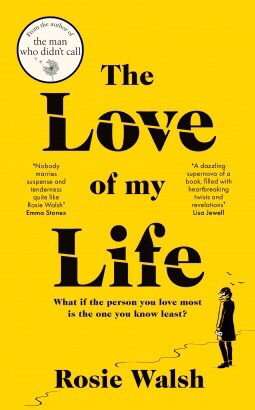
The Love of My Life by Rosie Walsh

This is only Rosie Walsh’s second novel, but she’s established herself as one of those authors. Authors who draw you in, leave you wondering what the hell is going on, then pull the rug from under you by turning everything on it’s head. She’s also brilliant at building complex characters, the sort that stay with you. I know that Emma will stay with me for a long time. Emma is an academic, married to Leo and mum to three year old Ruby. Her field of study is the creatures that are brought in by the tide and then swept out again, her claim to fame was finding a new mutation of a Japanese crab. This took her through her masters and eventually resulted in a TV series. Leo adores Emma and the feeling is mutual, but things have been tough lately as Emma has had cancer. Leo is an obituary writer at a newspaper and because Emma was a TV personality the department was writing a ‘stock’ – an obituary they keep on file just in case. Leo asks if he can add some notes that he’d been writing and it’s here that Leo notices something wrong. Emma didn’t graduate from the university she said she did. It’s a minor thing, but along with a lot of messages from very odd male fans and her ‘disappearing times’ when she takes herself away to get her head straight, Leo’s mind is running through hundreds of scenarios. He can’t believe Emma would have an affair, but it’s the simplest explanation. He keeps digging and will have to confront her with what he’s found. Emma is becoming anxious, especially when he starts asking questions. How can she convince him that the life they’ve had together and the love she has for him is true? When everything else has been a lie.

I don’t know any other author who so beautifully combines a tender love story with aspects of a domestic thriller. Usually doubt is cast on the central relationship to such a degree that the reader stops rooting for them. Here I was really confused, because I believed in Leo and Emma. Each character felt so real and they were easy and comfortable together. When we flashed back to their marriage proposal it was probably the wrong moment, rushed and definitely not Insta-ready, but it was touching and honest. I really felt Emma’s eagerness to be with Leo. I couldn’t believe she would then have an affair, but the evidence did point that way. As the truth started to come out I felt so emotional for this young woman, who really had no one left to help her make good choices once she’d lost both parents. No one is harder on Emma than she is on herself and it was sometimes sad and painful to be in her head. I thought the author used the landscape beautifully and knowing Alnmouth well, I could see how it’s cottages and incredible view of the sea would soothe the mind. Although I’ve also been therein the midst of a storm and as the waves lashed against the rocks and driving rain set in, it was very inhospitable. I think this shows the extremes of Emma’s mood as she’s gone through her life, dealing with very deep lows and then sunny, enthusiastic highs.

Her house in Hampstead Heath, which was her grandmother’s, gives us some indication of how her mind feels. She’s never sorted through her grandmother’s things, so is living a new life cluttered with reminders of the past. She feels safe there, it’s possibly the only place she ever has. Leo is coming from a solid background. I loved his relationship with his brother and it’s likely he’s never felt truly lost and alone. Rosie Walsh has created a very rare novel and engrossing novel. So much so that every time I was away from Leo and Emma’s story I longed to back home with my book. She’s packed her book full of twists and turns, but with so much tenderness and love it never fully veered into domestic noir. Despite her secrets and lies, I never stopped wanting Emma to be with Leo and her little girl. I came away feeling that we never truly know another person’s journey, but we can empathise and try to understand. Emma’s mistake was thinking Leo wouldn’t love her if he knew the truth, but maybe she has underestimated the depth of that love.

Published on 23rd June 2022 by Mantle

Meet The Author

Rosie Walsh is the internationally bestselling author of two novels, the global smash hit THE MAN WHO DIDN’T CALL, and – new for 2022 – THE LOVE OF MY LIFE, a heart-wrenching, keep-you-up-all-night emotional thriller, which was an instant New York Times bestseller and stayed in the German top ten for several weeks. 

Rosie Walsh lives on a medieval farm in Devon, UK, with her partner and two young children, after years living and travelling all over the world as a documentary producer and writer. 

The Man Who Didn’t Call (UK) / Ghosted (US) was her first book under her own name, and was published around the world in 2018, going on to be a multimillion bestseller. 

Prior to writing under her own name she wrote four romantic comedies under the pseudonym Lucy Robinson. When she isn’t parenting or writing, Rosie can be found walking on Dartmoor, growing vegetables and throwing raves for adults and children in leaking barns.

Posted in Publisher Proof

Sunday Spotlight! Whatever Happened to Evie Del Rio by Sarah Watts

Evie Del Rio was the one, as far as Ed Nash was concerned.

Their teenage love was the inspiration for his song ‘Used to Be’ and helped Ed’s indie band, The Mountaineers, to international fame.But when Evie and her family suddenly up sticks and leave their London home without a forwarding address, she leaves a heartbroken Ed behind too.

Over thirty years later, washed up rocker Ed is suddenly back in the limelight when Evie’s love song is used as the theme tune for a new TV drama. Once the song is later featured on TV documentary ‘Musical Muses: The Girl in the Song’ it’s suddenly not just Ed who’s asking…

What happened to Evie Del Rio?

As a child of the 90’s I loved how this book opened with teenager Cassie finding out her mum is the inspiration behind one of the songs of the decade. Thanks to the 90’s becoming all the rage and an inspiration for TV, ‘Mum’s Song’ as Cassie and her brother now call it, is having a resurgence. Written back when her mum and musician Ed Nash were dating in the 1980’s, it wasn’t released until his band The Mountaineers produced their debut album ten years later. Now it’s one of the most downloaded songs of 2018. Cassie thinks the song isn’t bad, but the lyrics that have graced many a wedding become a bit cringe when you realise they’re about your Mum. As a teen I dreamed of meeting Damon Albany, who of course would fall madly in love with me and I would become his muse. So there was an element of nostalgia and wish fulfilment drawing me in from the first page.

Then we see the same situation from Genie’s point of view. Genie is Cassie’s mum and was once Evie Del Rio. Now she’s Genie, mum of two and with ‘a lovely big hunk of a husband’ called Gray. I was intrigued by what had made Evie’s family leave London all those years ago. Along with the change of name, there seemed to be something more going on than avoiding embarrassment over a song and a long ago romance with a rock star. Son Will is really taking the brunt of his mum’s newfound notoriety. Even adults think Genie was some sort of sex kitten and teenage boys don’t hold back. They chant about how many pop stars his mum has shagged on the football field, well they did until he broke someone’s nose. Yet Ed keeps blithely on, talking about his relationship with Evie and the origin of the song. Genie says he’s embellishing, but something about that time clearly gets under her skin. As we travel back and forth to Genie’s teens, when she’s still Evie, we slowly see more of their story revealed and secrets emerge that have been kept for a long time.

I thought this was an interesting idea for a book and as a middle aged stepmum to teenage girls I loved the idea of them getting an insight into the past. Imagine suddenly finding out that the person they see every day was once as exciting and full of promise as they are now. The multiple perspectives kept my interest, because it showed how the situation affects different members of the family. I loved Genie’s husband Gray, a lovely, solid and reliable anchor in a difficult time for his family. There are sensitive issues, but they are handled with care and empathy. I would recommend this nostalgic read, full of endearing characters and with a central mystery that unfolds slowly and with sensitivity.

Published by Cahill Davies 8th July 2022

Meet the Author

I’ve always enjoyed the written word and I have a great passion for music so I decided to put the two together and the result is my debut novel ‘What Happened to Evie Del Rio?’

I like to think I’m enjoying my ‘middle youth’ rather than my ‘middle age’. I’m married and Mum to two sons and a black rescue cat called Hector.

I enjoy going to gigs and discovering new music. I also love reading women’s fiction but I do have a bit of a penchant for crime and psychological thrillers! If I’m not on social media, reading or listening to music then you will probably find me on a football pitch cheering on my youngest son and his team.

Posted in Publisher Proof

The Last Hours in Paris by Ruth Druart.

After Ruth Druart’s previous WW2 novel While Paris Slept I’d been so embedded in the story that I felt emotionally drained from the terror and trauma experienced by her characters. While that novel gave us WW2 from the perspective of a French police officer and a Jewish mother, her latest novel comes from a very interesting and possibly less explored voice of the conflict. Our novel centres around young French woman and a German soldier who cross each other’s paths due to a love of books. We roam from Paris to Brittany and to England, hearing the stories of our main characters from both points of view at different times in their lives. However, the novel starts several years later with Joséphine, a young woman who has just finished her baccalaureate and is looking forward to summer. She wants to visit England because it’s where the Beatles are from, but her mum Élise and the woman they lodge with, Soizcic seem very resistant. It’s the usual teenage argument, made all the more dramatic because the women are carrying a huge secret. One that will be uncovered if Joséphine keeps to her plan to find her birth certificate, so she can obtain a passport. She intends to go with or without her mother’s permission. Élise had always promised herself to tell Joséphine the truth she’s been hiding, but the time never seemed right and besides it was easier to keep the illusion. Élise has always told her daughter that her father’s name was Fredéric and he died in the war. The truth is more complex and shrouded in the secrecy and shame of another time. If Joséphine finds out, will she ever forgive her mother?

Our story moves back in time to the 1940’s when Élise is living in an apartment in occupied Paris with her Mum and younger sister Isabelle. She hates ‘the Boche’ who have taken over her beautiful city and filled it with fear and hatred. Jewish families have disappeared and just as hated as the German occupiers are people who collaborate with the enemy, whether they’re bar owners whose tills ring with German money or the women who serve as their mistresses. Élise has noticed them walking with officers in the gardens, wearing perfume and sporting real stockings rather than a painted and often wobbly line drawn down the back of the legs. Élise has a secret, she has been working at an orphanage and helping Jewish children escape across the border. I loved the bravery of this young woman and her ability to see most people as human beings, at a time when the hatred of others due to their race or religion was at it’s devastating worst. She meets a young German soldier in her friend Monsieur Le Bolzec’s bookshop and at first is horrified that the elderly bookseller is finding sympathy for him. Sébastian may sound German, but his mother was French and his fluency in the language means he’s working in an office translating letters. Élise is cool towards him at first, but then he warns her that she’s in danger. She has been helping Jewish children pass from an orphanage and over the boarder. Sébastian translates a letter denouncing the orphanage, he keeps it and warns Élise, even organising a car to remove the remaining children. This act of service and his willingness to put himself in grave danger brings them closer together, but will anyone accept their feelings for each other.

Ironically it’s the danger of war that brings these two characters together, but the liberation of Paris that will tear them apart. The author’s research is impeccable and I learned things I hadn’t realised about the war and particularly it’s aftermath. I had some idea of the treatment meted out by the French on women thought to be collaborators, but Ruth Druart’s vivid description brought out a huge sense of injustice in me. These women made choices due to their situation: if a German soldier approached me to be his mistress, I might do it if my children were starving or I’d lost my home. There was no mercy or insight into why such a choice might be made. I was also surprised at how long the British kept prisoners of war beyond the ceasing of hostilities. The Geneva Convention states that they should be released immediately, but here we see men kept for three years beyond the war ending. I think the author really captured the chaos of an occupying force retreating and how people have become displaced from their homes, their families and their lovers, especially where the relationship is controversial. People lost each other for decades – my mother-in-law was taken out of the Warsaw Ghetto when she was a child and was taken to England, separated from both parents. Her father looked for her and his wife straight after the war with no luck and eventually settled in America and moved on with his life, coming to terms with the fact they had probably been killed. They were still alive though and his wife was finally reunited with their daughter in England and her father’s other family in America. Druart shows how our links to each other can be lost, but for Élise there are particular betrayals that have kept her apart from Sébastian . Betrayals that are hard to forgive. I found this part of the book so poignant and I loved how Paris needed time to heal, both it’s buildings and it’s people. They had adjusted to occupation and now must rebuild their city, bringing back it’s joi de vive. As Élise observes the difference war has made to her beloved city I could almost hear the oppressive sound of jackboots echoing off the buildings and reminding every citizen they are no longer free.

I was drawn to Sébastian and truly understood his feelings of oppression. He was no more free than Élise, forced to join the Hitler Youth, he was trained as a soldier so had no choice but to serve. It was so moving to see him post-war in an English cinema watching film of what the Allies found when they liberated Auschwitz. He his horrified and is filled with guilt for serving a leader who could do this to others. He knows he is different, but to a Frenchman or an Englishman there is no difference between him and the SS; they are all Nazis and are all responsible. He carries that shame with him into all he does. I also felt for Élise and her loneliness, because despite having Joséphine and their friend Soizcic she has a solitary existence. I hoped for a happy ending for her, but I won’t spoil your reading pleasure by revealing what does happen in Joséphine’s timeline. I urge you to read it, because it has real impact. Hearing the voice of the enemy is unusual and impresses upon us that no matter what side we’re compelled to be on we’re all human. We don’t choose who we fall in love with and that love never dies, no matter how much time has passed or how far apart we are.

Published by Headline 7th June 2022.

Meet the Author

Living in Paris for the last thirty years inspired me to write, and my debut novel, While Paris Slept, came out in 2021, followed by The Last Hours in Paris, to be released in July 2022. Both books are set during the occupation of World War II, a time which intrigued me as I imagined the French having to live and work alongside the occupiers.

I love the power of story, and believe that sharing stories from different perspectives and different backgrounds can help us understand the world better. Having studied psychology at Leicester University, I have always been interested in the workings of the mind, and especially in what motivates people. I find people fascinating and love creating my own characters, each one flawed and touching in their own way. 

I don’t believe in the single story, and in my books I like to present different perspectives, leaving the reader to make up their own mind as the characters face moral dilemmas and difficult choices. I hope you enjoy reading them.