Posted in Throwback Thursday

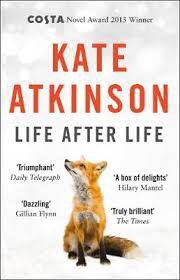
Throwback Thursday! Life After Life by Kate Atkinson.

Have you ever wished that you had a chance to do something all over again? To iron out the mistakes or maybe create a different outcome. To maybe get a second chance at life, right from the start; a life with a blank slate again. What if you had the chance to live your life again and again, until you finally got it right? What if there were second chances? And third chances? In fact an infinite number of chances to live your life? Would you eventually be able to save the world from its own inevitable destiny? And would you even want to?

Life After Life is one of my favourite novels of all time, alongside its sequel A God in Ruins. I loved her Jackson Brodie novels and Behind the Scenes at the Museum, but this novel is something extra special. I’d never read anything like it outside of sci-fi novels.

During a snowstorm in England in 1910, a baby is born and dies before she can take her first breath.

During a snowstorm in England in 1910, the same baby is born and lives to tell the tale.

Life After Life follows Ursula Todd as she lives through the turbulent events of the last century again and again. With wit and compassion, Kate Atkinson finds warmth even in life’s bleakest moments, and shows an extraordinary ability to evoke the past. Here she is at her most profound and inventive, in a novel that celebrates the best and worst of ourselves.

Atkinson does something profoundly special with this novel. It could have been a perfectly acceptable novel if it simply explored this baby girl’s lives from a personal and family perspective. However, Atkinson weaves Ursula’s personal story in with the state of flux in the early Twentieth Century. She takes in the demise of such upper middle class family’s like the Todd’s, from changes to social mobility, women’s roles becoming more prominent, and the loss of male members of the family due to WW1 and WW2. She explores the descent into WW2 and women’s roles in places like the war office and the secret services. In the multiple lives Ursula lives she can explore whether or not war could have been avoided, and what role she could have played in that mission. There’s so much going on that I can understand some reviewers finding it complicated to follow. The trick is to simply go with it. Eventually Ursula has longer lives where these issues can be explored in depth.
I fell in love with the Todd family and their genteel English way of life that can be summed up in a single phrase; ‘one does as one must, and then has tea’. All the female characters, including Sylvie and Pamela, are well fleshed out and it’s interesting to see what different paths their own lives took because of Ursula. I also had an incredible soft spot for Teddy – and loved that he got his own story in her follow up novel A God In Ruins. However, it is Ursula who holds our attention most and the endlessly inventive ways she dies in childbirth, from Spanish Flu, from drowning or by murder. She always has very strong perceptions, and experiences strong episodes of déja vu – although she doesn’t know she’s been here before, it seems she has gained some gifts from her other lives. There must be some residual wisdom from times when she’s been a mother or not, a wife or a mistress, someone who leads a quiet life in the country or goes to Germany and changes the course of history.

Atkinson’s sense of place is incredible. There are the lazy summers at the Todd family home, lounging in the garden or the kids exploring freely, climbing trees in the idyllic countryside. Her scenes in London are incredibly evocative, especially her descriptions based in historical fact. In one section their maid goes to a huge gathering in the capital to celebrate the end of WW1 and brings Spanish Flu back to the house. Her description of the London Blitz brings home how devastating and terrifying it must have been. We have a unique perspective as readers, we have an overview of every life Ursula lives, while she only knows the one she’s living in. Of course there are some events that repeat in every life – her birthday in 1910 is replayed twelve times – but these are important moments, where even the most subtle difference can send Ursula hurtling towards a different path in life. The novel evoked several other novels for me. The scenes at home with family in the early Twentieth Century reminded me of the long, languid summer of L.P.Hartley’s The Go-Between. Scenes in London during WW2, and the concept of written lives versus the truth, reminded me of Atonement by Ian McEwan. I never became bored of going back to the beginning, but the other characters in Ursula’s life are so strong and well-written, it seems odd that once she dies, they no longer exist either. The author explores the dynamics of family, class, and how that changes so much at this point in history. There’s also grief – for other people, a way of life, a loss of innocence – and how that affects characters differently. I think this is an astonishing novel, beautifully written and managing to be both playful in structure but profoundly moving at the same time.

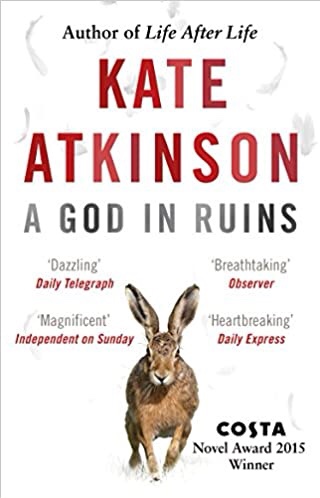
Next week for Throwback Thursday I will be looking at Kate Atkinson’s sequel to Life After Life. A God in Ruins overlaps with Ursula’s story in places, but is more focused on her little brother Teddy.
Meet The Author
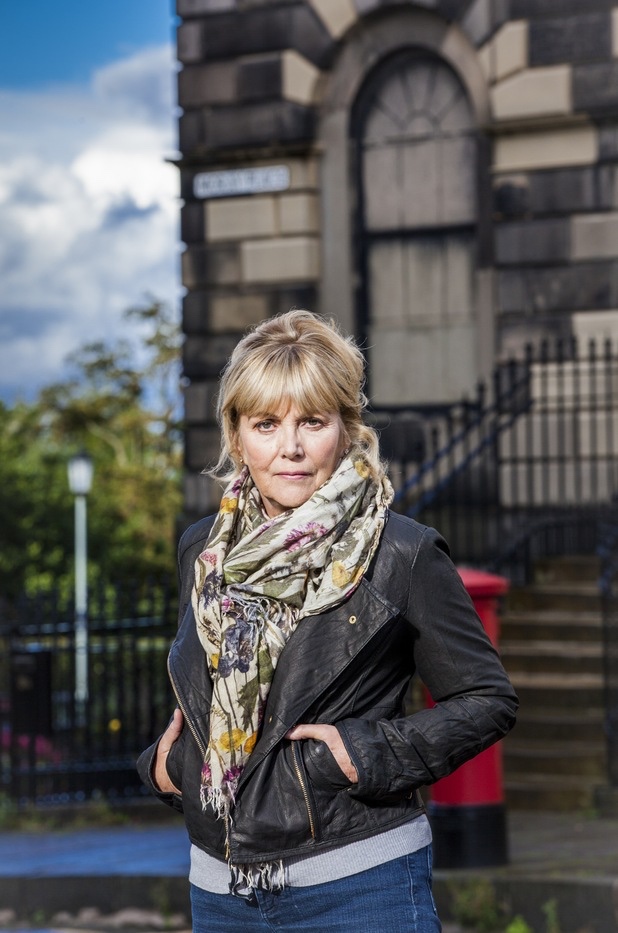
Kate Atkinson won the Whitbread (now Costa) Book of the Year prize with her first novel, Behind the Scenes at the Museum.

Her four bestselling novels featuring former detective Jackson Brodie became the BBC television series Case Histories, starring Jason Isaacs.Her 2013 novel Life After Life won the South Bank Sky Arts Literature Prize, was shortlisted for the Women’s Prize, and voted Book of the Year for the independent booksellers associations on both sides of the Atlantic. It also won the Costa Novel Award, as did her subsequent novel A God in Ruins (2015).

Posted in Publisher Proof

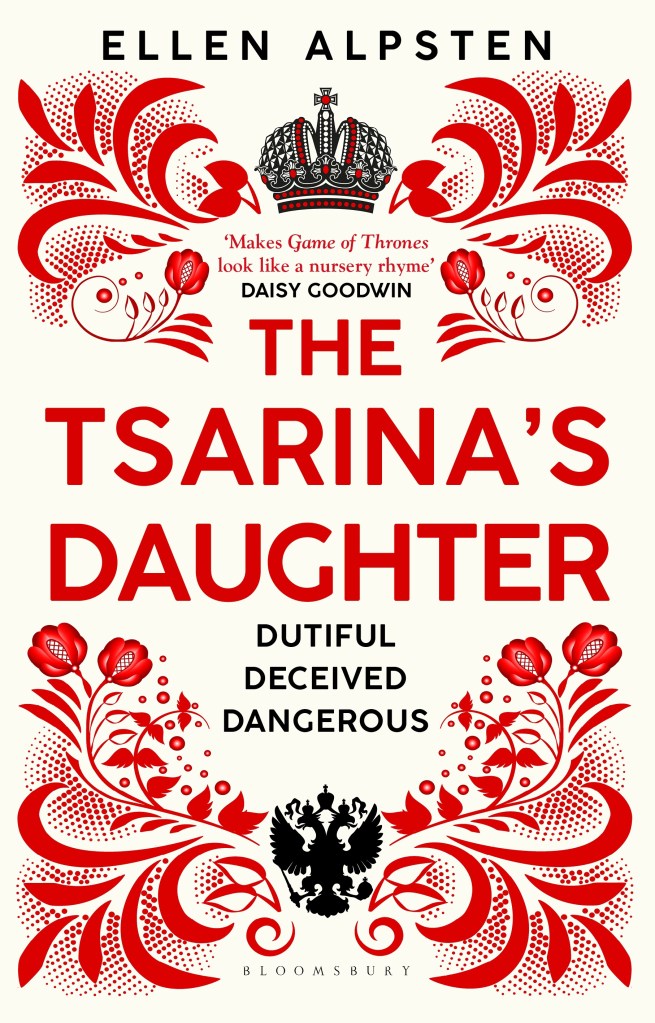
Tsarina’s Daughter by Ellen Alpsten.

Today I get to share with you an extract from this brilliant sequel to Ellen Alpsten’s novel Tsarina.

When they took everything from her, they didn’t count on her fighting to get it back…

Born into the House of Romanov to the all-powerful Peter the Great and Catherine I, beautiful Tsarevna Elizabeth is the world’s loveliest Princess and the envy of the Russian empire. Insulated by luxury and as a woman free from the burden of statecraft, Elizabeth is seemingly born to pursue her passions. 

However, a dark prophecy predicts her fate as inexorably twined with Russia. When her mother dies, Russia is torn, masks fall, and friends become foes. Elizabeth’s idyllic world is upended. By her twenties she is penniless and powerless, living under constant threat. As times change like quicksand, an all-consuming passion emboldens Elizabeth: she must decide whether to take up her role as Russia’s ruler, and what she’s willing to do for her country – and for love.

Prologue


THE TSARINA’S DAUGHTER

In the Winter Palace, St Nicholas’ Day 6 december 1741

My little cousin Ivan is innocent – he is a baby, and as pure as only a one-year-old can be. But tonight, at my order, the infant Tsar will be declared guilty as charged.
I fight the urge to pick him up and kiss him; it would only make things worse. Beyond his nursery door there is a low buzzing sound, like that of angry bees ready to swarm the Winter Palace. Soldiers’ boots scrape and shuffle. Spurs clink like stubby vodka glasses and bayonets are being fixed to muskets. These are the sounds of things to come. The thought spikes my heart with dread.
There is no other choice. It is Ivan or me. Only one of us can rule Russia, the other one condemned to a living death. Reigning Russia is a right that has to be earned as much as inherited: he and my cousin, the Regent, doom the country to an eternity under the foreign yoke. Under their rule the realm will be lost; the invisible holy bond between Tsar and people irretrievably severed.
I, Elizabeth, am the only surviving child of Peter the Great’s fifteen sons and daughters. Tonight, if I hesitate too long, I might become the last of the siblings to die.
Curse the Romanovs! In vain I try to bar from my thoughts the prophecy that has blighted my life. Puddles form on the parquet floor as slush drips from my boots; their worn thigh-high leather is soaked from my dash across St Petersburg.

Despite my being an Imperial Princess – the Tsarevna Elizabeth Petrovna Romanova – no footman had hooked a bearskin across my lap to protect me against the icy wind and driving snow while I sat snug in a sled; I had no muff to raise to my face in that special graceful gesture of the St Petersburg ladies, the damy. My dash towards my date with destiny had been clandestine: snowfall veiled the flickering lights of the lanterns and shrouded the city. Mortal fear drove me on, hurry- ing over bridges, dodging patrolled barriers – the shlagbaumy – and furtively crossing the empty prospects, where my hasty passage left a momentary trace of warmth in the frosty air.
This was a night of momentous decision-making that I would have to live with forever. An anointed and crowned Tsar may not be killed, even once he is deposed, as it sets a dangerous prece- dent. Yet he may not live either – at least not in the minds of the Russian people or according to the diplomatic dispatches sent all over Europe.
What then is to become of the boy?
I feel for Ivan’s limp little hand. I simply cannot resist – never could – nuzzling his chubby, rosy fingers, which are still too small to bear the Imperial seal. We call this game a butterfly’s kiss; it makes him giggle and squeal, and me dissolve with tenderness. I drink in his scent, the talcum powder blended for his sole use in Grasse – vanilla and bergamot, the Tsar’s perfume – carefully recording it to last me a lifetime. The men outside fall quiet. They are waiting for the decision that will both save and damn me. The thought sears my soul.
In Ivan’s nursery, the lined French damask drapes are drawn. Thick, pot-bellied clouds hide the December new moon and stars, giving this hour a dense and dreadful darkness. During the day, the seagulls’ cries freeze on their beaks; the chill of night grates skin raw. Any light is as scarce and dear as everything else in St Petersburg. The candle-sellers’ shops, which smell of beeswax, flax and sulphur, do brisk business with both Yuletide and Epiphany approaching. On the opposite quay, the shutters on the flat façades of the city’s palaces and houses are closed, the windows behind them dark. They are swathed in the same brooding silence as the Winter Palace. I am in my father’s house, but this does not mean that I am safe. Far from it – it means quite the opposite.

The Winter Palace’s myriad corridors, hundreds of rooms and dozens of staircases can be as welcoming as a lover’s embrace or as danger- ous as a snake pit.
It is Ivan or me: fate has mercilessly driven us towards this moment. The courtiers shun me: no one would bet a kopeck on my future. Will I be sent to a remote convent, even though I do not have an ounce of nun’s flesh about me, as the Spanish envoy, the Duke of Liria, so memorably recorded? I had once been forced to see such an unfortunate woman in her cell; as intended, the sight instilled a terror that would last me a lifetime. Her shorn head was covered in chilblains and her eyes shone with madness. A hunchbacked dwarf, whose tongue had been torn out, was her sole companion, both of them shuffling about in rotten straw like pigs in their sties. Or perhaps there is a sled waiting for me, destination Siberia? I know about this voyage of no return; I have heard the cries, seen the dread and smelled the fear of the banished culprits, be they simple peasants or even the Tsar’s best friend. By the first anniversary of their sentence, all had succumbed to the harsh conditions of the East. Maybe a dark cell in the Trubetzkoi Bastion, the place nobody ever leaves in one piece, will swallow me; or things will be simpler, and I am fated to end up face down in the Neva, drifting between the thick floes of ice, my body crushed and shredded by their sheer force.
The soldiers’ impatience is palpable. Just one more breath! Ivan’s wet-nurse is asleep, slumped on her stool, resting amidst his toys: the scattered pieces of a Matryoshka doll, wooden boats, a mechan- ical silver bear that opens its jaws and raises its paws when wound up, and a globe inlaid with Indian ivory and Belgian émaillé. One of the nurse’s pale breasts is still bare from the last feed; she was chosen for her ample alabaster bosom in Moscow’s raucous German Quarter. Ivan is well cared for: Romanov men are of weaker stock than Romanov women, even if no one ever dares to say so. I cele- brated his first year as a time of wonder, offering my little cousin a cross studded with rubies and emeralds for his christening, a gift fit for a Tsar, and put myself in debt to raise an ebony colt in my stables as his Yuletide present.

Ivan’s breathing is growing heavier. The regiment outside his door weighs on his dreams. As I touch his sides, his warmth sends a jolt through my fingers, hitting a Gold in my heart. Oh, to hold him one more time and feel his delightful weight in my arms. I pull my hands back, folding them, though the time for prayers has passed. No pilgrimage can ever absolve me from this sin, even if I slide across the whole of Russia on my knees. Ivan’s lashes flutter, his chin wobbles, he smacks his pink and shiny lips. I cannot bear to see him cry, despite the saying of Russian serfs: ‘Another man’s tears are only water.’
The lightest load will be your greatest burden. The last prophecy is coming to pass. Spare me, I inwardly plead – but I know this is my path, and I will have to walk it to the end, over the pieces of my broken heart. Ivan slides back into slumber; long, dark lashes cast shadows on his round cheeks and his tiny fists open, showing pink, unlined palms. The sight stabs me. Not even the most adept fortune-teller could imagine what the future has in store for Ivan. It is a thought that I refrain from following to its conclusion.
Beyond the door utter silence reigns. Is this the calm before the storm my father taught me to fear when we sailed the slate- coloured waters of the Bay of Finland? His fleet had been rolling at anchor in the far distance, masts rising like a marine forest. ‘This is forever Russia,’ he had proudly announced. ‘No Romanov must ever surrender what has been gained by spilling Russian blood.’ In order to strengthen Russia, Father had spared no one. My elder half-brother Alexey, his son and heir, had paid the ultimate price for doubting Russia’s path to progress.
Steps approach. My time with Ivan, and life as we know it, is over. I wish this were not necessary. There is a knock on the nursery door, a token rasp of knuckles; so light, it belies its true purpose. It is time to act. Russia will tolerate no further excuses. The soldiers’ nerves are as taut as the springs in a bear trap. I have promised them the world: on a night like this, destinies are forged, fortunes made and lost.


‘Elizabeth Petrovna Romanova?’ I hear the captain of the Imperial Preobrazhensky Regiment addressing me. His son is my godchild, but can I trust him completely for all that? I feel as if I am drowning and shield Ivan’s cradle with my body. In the gilt- framed mirrors I see my face floating ghostly pale above the dark green uniform jacket; my ash-blonde curly hair has slid down from beneath a fur cap. On a simple leather thong around my neck hangs the diamond-studded icon of St Nicholas that is priceless to me. They will have to prise it from my dead body to take it from me.
I am almost thirty-two years old. Tonight, I shall not betray my blood.
‘I am ready,’ I say, my voice trembling, bracing myself, as the door bursts open and the soldiers swarm in.
Everything comes at a price.


Meet The Author

Ellen Alpsten was born and raised in the Kenyan highlands, where she dressed up her many pets and forced them to listen to her stories. 

Upon graduating from the ‘Institut d’Etudes Politiques de Paris’, she worked as a news-anchor for Bloomberg TV London. While working gruesome night shifts on breakfast TV, she started to write in earnest, every day, after work, a nap and a run. So much for burning midnight oil! 

Today, Ellen works as an author and as a journalist for international publications such as Vogue, Standpoint, and CN Traveller. She lives in London with her husband, three sons, and a moody fox red Labrador.

Posted in Throwback Thursday

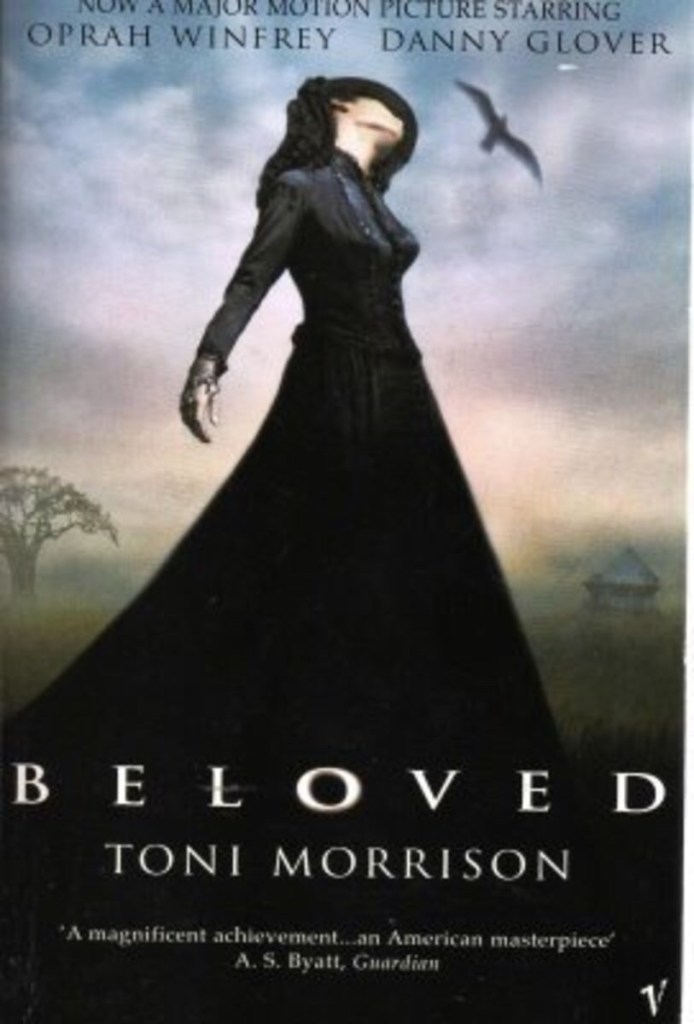
Throwback Thursday! Beloved by Toni Morrison.

Film tie-in paperback.

‘124 was spiteful. Full of a baby’s venom. The women in the house knew it and so did the children. For years each put up with the spite in his own way, but by 1873 Sethe and her daughter Denver were its only victims. The grandmother, Baby Suggs, was dead, and the sons, Howard and Buglar, had run away by the time they were thirteen years old — as soon as merely looking in a mirror shattered it (that was the signal for Buglar); as soon as two tiny hand prints appeared in the cake (that was it for Howard) […] leaving their grandmother, Baby Suggs; Sethe, their mother; and their little sister, Denver, all by themselves in the gray and white house on Bluestone Road’.

Beloved is one of those books that seeps into your soul and never really leaves. In that powerful opening paragraph we see a house full of supernatural activity. A house that men leave. Where only women have the strength to live alongside the demons of the past. The baby ghost who haunts Sethe is full of rage and throws tantrums like a toddler, yet instead of throwing her bottle on the floor she has the power to fling furniture at the wall, even the dog doesn’t escape unscathed. Sethe escaped Sweet Home, the farm where she was enslaved, over eighteen years ago. She has borne such terrible suffering and yet has survived, whole in body and mind. There is just this one thing, the possession of the house by her first daughter, who died when she was a baby. All it says on her grave stone is one word, Beloved. So when a teenage girl turns up at the house claiming to be her daughter, Sethe wants to believe it’s true. If it’s true, maybe what happened back at the farm was just a terrible dream. When Paul D arrives – a freed slave from the same place – his remembrances and ability to look forward instead of over his shoulder, will clash with Sethe who is stuck.

“To Sethe, the future was a matter of keeping the past at bay. The ‘better life’ she believed she and Denver were living was simply not that other one.” […] Yet the morning she woke up next to Paul D, the word her daughter had used a few years ago did cross her mind and she thought… Would it be all right to go ahead and feel? Go ahead and count on something?”

Until now, being in this liminal space is the only way she can be with her other daughter. Neither fully in the past, nor creating a new future, Sethe can’t move on without acknowledging the cost of slavery. At No 124, the ghost of slavery is literal and inescapable. Sethe may no longer be enslaved as the novel opens, but she can never forget what slavery as an institution did to her as a person. When a young woman claiming to be the now-adult Beloved comes to Sethe’s house, Sethe begins to believe that she might avoid facing the truth. Instead she might at last be able to forget: if Beloved is truly alive, then her terrible fate never happened, and so slavery may also be erased, forgotten, papered over. But it rapidly and inexorably becomes clear that forgetting is impossible. This incredible book has the feel of the supernatural, but it’s haunting is one of traumatic memory. Sometimes things happen to us that have to be pushed to the back of our minds. It’s as if we’ve accidentally forgotten, but really it’s a conscious choice to build a mental wall between our psychological ‘self’ and the trauma.

However, Sethe’s trauma is now embodied twice. The scar that covers her back looks like a tree. The lash has broken up and knotted the skin leaving a texture like bark. When Paul D sees her back for the first time, he does not flinch. Instead he traces the lines and kisses the branches, framing the mark of what she’s gone through as a positive thing. The tree could symbolise Sethe’s growth. She stands, a mighty oak of a woman, who doesn’t have to be cowed by her experience. Then Beloved arrives – an angry, spiteful young woman who seems to be very sweet at first, and only wants to be near the mother she’s never had. Denver and Paul D can also see Beloved so she’s not an apparition or figment of Sethe’s imagination. She’s a real woman. In the film, Beloved is played beautifully by Thandie Newton – full of languid grace and always fixing huge pleading eyes on Sethe whether she wants more sugar, more attention, more love. In fact her needs are like those of a baby and must be satisfied. There’s a baby’s narcissism in Beloved and she wants her newly found mother all to herself, trying every means possible to drive a wedge between Sethe and Paul D or her baby sister Denver. She’s not above lying, pleading or even seduction to get her mother to herself.

As Denver and Paul D leave, Beloved is satisfied. However, Sethe is slowly being drained by the girl. She loses energy and isn’t seen in her garden so much. She stops visiting the market for food. The women in the neighbourhood notice and share the strange stories they’ve heard: about a young woman suddenly living at number 124; that Sethe has lost her man; that her daughter Denver left for work in the city; and that Sethe grows thin waiting on her house guest hand and foot, while Beloved grows fatter. The women gather outside 124 in a prayer circle and began to ask God to take back this demon inhabiting Sethe and her home. They don’t believe Beloved exists, not as an actual flesh and blood girl. Can they give Sethe the strength needed to recognise this? Can she own and confront a crucial part of her past?

She will need all of her will for this embodiment of Beloved to leave. She has to recognise that she no longer needs a physical reminder, because instead she needs to integrate a terrible, horrifying act she committed into her psyche. She starts to accept that Beloved’s death was caused by slavery. The descriptions of what happened to Sethe at Sweet Home are truly harrowing and they need to be, so that we as readers understand her actions. Sethe remembers: the lashing that tore her back open; the awful scene in the barn where her husband, hiding in the rafters, is forced to see Sethe pinned down as their master’s sons suckle her baby’s milk away; the horrifying sight of Paul D wearing the ‘bit’ – a terrible metalwork mask that prevents him from speaking. The remarkable thing is that these experiences are not recounted with buckets of emotion. They are merely factual and all the more devastating in their quiet retelling.

In the aftermath of Beloved’s disappearance, Sethe starts to grieve. She acknowledges the beautiful little girl she held in her arms that day. The day that her love for her children was so great, she could not bear to see them taken back to the horror she’d fled. As Paul D tries to comfort her she keeps repeating ‘she was my best thing’.

“He leans over and takes her hand. With the other he touches her face. ‘You your best thing, Sethe. You are.’ His holding fingers are holding hers.”

Now Sethe must learn to put herself first. Not to forget Beloved, her first born who liked to eat the burned edges of bread, but to forgive herself. To place the blame at slavery’s door, rather than her own. Paul D has returned to something for the first time in a life where he’s done nothing but run. He can’t articulate his feelings for Sethe, but when he’s with her he can let the horrors that slavery inflicted on him melt into the background. She has shared his experience and this removes any shame he feels for being collared and yoked like an animal. His memories no longer remove his manhood from him. He encourages Sethe to move forward with him, to start experiencing less yesterdays and more tomorrows. Beloved, in hindsight, becomes an embodiment of their past. Resurrecting the past is always painful, and Beloved is painful, difficult and confusing to encounter. In Beloved, a traumatic history is restored and rescued from years of buried memories and enforced silence.

Posted in Random Things Tours

The Beresford by Will Carver.

This was my first introduction to the work of Will Carver. My fellow bloggers and Squad Pod members kept telling me about how great his writing is, but I’d not taken the plunge till now. I started the book last night and finished at lunchtime today, because I was hooked from the end of the first chapter.

Abe Schwartz lives in a one-bed furnished flat. An apartment building called The Beresford. The bell rings and he’s the one opening the front door to a stranger. Before that, he’s dragging a dead body into his room, mopping up blood and asking himself, What the hell just happened?

Maybe I’m a bit weird, but a cracking beginning like that really is so darkly delicious I can’t help but read on. I was then blown away by the originality and inventiveness of the writer and the explosion of historic and popular culture references the book created in my mind.

The Beresford is an old forbidding looking building in the city. In my imagination this first conjured up the Gothic towers of the Dakota Building, where John Lennon lived and was killed back in 1981. Inside The Beresford are a number of apartments, bigger and better appointed than you would expect for the money. They even have large roll top baths. The perfect size to dismember and dissolve a body. The building is presided over by a lovely old lady called Mrs May, who starts every day the same way. By brewing a coffee while the taps run, then enjoying a bath with bubbles, followed by eggs with her cold coffee. She has a routine, and is found at the same time every day pruning the roses in the front garden. As any fan of the film The Ladykiller’s knows, you should never underestimate sweet looking, little old ladies. Of course she has time to pray each day, but to whom and for what? In fact when I first encountered Mrs May praying, I hoped there would never be a film version of the book. She knows everything that happens at the Beresford because the same thing happens over again – some people leave and some people just disappear. Occasionally they stay. For a price.

The atmosphere is strangely claustrophobic and reminiscent of Rosemary’s Baby. I loved the tone of our narrator, who is quite matter of fact, and cleverly combines both horror and humour. I also loved the sense of history the author creates about this quirky building. These stories and urban myths reminded me of a documentary I’d watched about the Chelsea Hotel, again in New York, showing how each generation of residents impacted on it’s history: from the original collective of 1920’s writers; 1960’s musicians and artists like Janis Joplin and Leonard Cohen; from the death of Dylan Thomas in the 1950’s to Sid Vicious killing Nancy nearly thirty years later. It’s legends are almost bigger than the hotel itself and it’s often claimed as the most haunted hotel in NYC. It’s somehow bigger than just a building, it’s almost an instant portal to the past. The Beresford is described in a similar way is as if it could only belong on old news reels or sepia photographs. Yet there it is, still standing on the sidewalk in the 21st Century. The myths about The Beresford give the place a sense of longevity – it was there before you and sure as hell will be there after you. Sid Vicious told the Associated Press that the Chelsea Hotel “…is a vortex – an artistic tornado of death and destruction and love and broken dreams”. I think second floor Beresford resident Sythe, artistic impressionist and sometime pyromaniac, would probably say the same thing.

Interspersed with the comings, and often darkly humorous, goings of the residents are sections entitled ‘What do you Want?’ We don’t know who the speaker is, although I will admit I imagined a few of these monologues in the voice of Laurence Fishburne as Morpheus from The Matrix. It’s as if we are having our world explained to us, but in a way that lifts the scales from our eyes. This is what’s really going on. These sections address beauty pageants, social media usage and even the way we buy our books. We like to think we ‘discover’ something in a bookshop, but we’re directed to it by placement, marketing, and demographic. Or perhaps by book bloggers? They know so much more about us than we think they do. Ever talked briefly about a subject at home then found an advert for the very same thing on your iPad? It’s listening. In a piece that I loved because it’s unsettling and so close to the truth, our narrator tells us:

You are being told what to watch, who to vote for, which team to support and which God to believe in. You want the truth? All of these things serve to obscure the greatest lie of all. The fruit and vegetables are placed at the front of the supermarket because the colours draw you in. Everything behind is bad for you. But you just see the colours. You buy into them. You believe them. It’s easy to do as you are told.

You are not where you think you are.

Finally, when lovely, peppy, young Christian Blair joins the residents she strikes up a friendship with Abe. Mrs May thought they might get along, just like Mrs May knows a lot of other things. There’s nothing she doesn’t know about the residents of her building. He takes her to the building’s side entrance where they get into the Art Deco lift to access other apartments and convention suites. The side where they live is just two floors with it’s own front entrance, but this is bigger, especially at the top, where apparently a couple fell to their death on the sidewalk. Abe calls this side the ‘bad side’. There’s a man who sees them and calls out. The couple break into a run for the old elevator and hope he doesn’t get there before the slow mechanism starts to move. They then burst out into the street laughing. Maybe one day the author will venture further into the other side of The Beresford? If so, I’ll be waiting – but I’ll probably stick to reading in the daylight hours.

Meet The Author


Will Carver is the bestselling author of the January Series – Girl 4 (2011), The Two (2012), The Killer Inside (2013), Dead Set (2013) – and the critically acclaimed Detective Pace series, which includes Good Samaritans (2018), Nothing Important Happened Today (2019) and Hinton Hollow Death Trip (2020), all of which were selected as books of the year in mainstream international press. The books in this series have also been longlisted/shortlisted for the Amazon Readers Independent Voice Award, Goldsboro Books Glass Bell Award, Not The Booker Prize and the Theakston’s Old Peculiar Crime Novel of the Year Award. Will spent his early years living in Germany, but returned at age eleven. He studied theatre and television at King Alfred’s Winchester, where he set up a successful theatre company. He currently runs his own fitness and nutrition business and lives in Reading with his children.

Posted in Random Things Tours

The Lost Girls by Heather Young.

This slow, but sinister tale concerns three generations of the Evans family. The Evans women that is. In 1935, Emily Evans vanishes from her family’s summer cottage, set by a lake in a Minnesota backwater. The woods are searched, the lake is dredged, but there is no sign of Emily – the child their mother dotes on the most. Unable to leave the place their sister vanished, Lucy and Lilith Evans go through their father’s subsequent suicide and nurse their mother till she too dies,

Sixty years later, Lucy the quiet middle sister, starts to write the story of that summer, when everything changed. She writes for her Great-Niece Justine and hopes she will understand what happened and set things right. She knows Justine will find it, because she chooses to leave her the house in her will and it comes at the right time. Justine has two daughters and lives with her boyfriend Patrick, but of late his behaviour has worried her. Does he just care about where she is and what she’s doing, or is he controlling her? The house on the lake becomes their refuge, their only neighbour is a taciturn old man who lives at the lodge.

The author tells her story through Lucy and Justine, across the two timelines, as the old mystery and the new drama play out. It’s a structure that works because the past always illuminates the present. The story starts out slowly, setting the scene and giving the reader a deep understanding of these characters and their motivations. The early chapters are almost hypnotic, then the pace builds. By the time both stories reached a crescendo, I was completely drawn in and my partner had to keep me supplied with of tea. I simply didn’t want to move till I finished it.

There’s an incredible sense of place in the novel. We see the lake at different times. In 1935 it’s summer and the family are there all week, with their father joining them from town at the weekend. We see the place as a child would see it: pools to swim in, trees to climb, forests to explore and under one of the cottages some kittens to play with. The place has a warmth and benign feel to it on the surface, that is at odds with an undercurrent that keeps bubbling up. Lilith wants to be more grown up than she is, dressing up a little and sitting with the slightly older kids. Lucy’s voice is anxious constantly where her sister’s antics are concerned, but it’s not clear where the fear comes from. Is she just afraid of her older sister leaving her behind or is something more sinister at play? There’s also a definite ‘middle child’ feeling to her observation that Lilith is catching her parent’s attention by pushing their religious boundaries, and baby Emily is never away from their mother’s side. Emily is definitely the favoured child, but again there’s something odd about the way their mother clings to her, sleeps with her every night and becomes hysterical if she slips out of sight.

By comparison, when Justine and her girls arrive at the lake house it is winter. Instead of feeling like a place to holiday, the landscape is bleak and the remoteness feels threatening. There’s constant talk in town of storms to come, people preparing to be snowed in and getting their supplies. Instead of being a welcoming family home, the cottage has definitely seen better days and there is a haunted quality to it. It’s not just the portrait of Emily set above the mantle with two candles under it. It’s not just that Justine feels like the child’s dark eyes follow her round the room, there’s a sadness and a sense that something terrible happened here, like an imprint left on the air. Matthew at the lodge house also seems a little scary on the surface, but he does plough the drive for the girls to get to school and Justine finds he’s left her a brand new snow shovel just before a blizzard hits. It felt like the remaining Evans girls has needed a place to heal together, without a man in tow. However, the place itself needed to heal and only this generation of the Evans girls could do it.

There are clues everywhere, and different characters hold separate parts of the puzzle. Justine doesn’t want to be like her mother is, always running to the next place and never feeling settled and at peace. She doesn’t want it for her girls either. When danger does come to the lake for a second time, will Justine be the Evans girl who makes the right choices? This was a slow burning tale, that crept up on me and drew me into this sixty year old mystery. I was compelled to read to the end and find what secrets were buried at the lake, and what sort of closure the remaining Evans girls could find.

Meet The Author

Heather is the author of two novels. Her debut, The Lost Girls, won the Strand Award for Best First Novel and was nominated for an Edgar Award for Best First Novel. Her second novel, The Distant Dead, was nominated for an Edgar Award for Best Novel and named one of the ten best mystery/suspense books of 2020 by Booklist. A former antitrust and intellectual property litigator, she traded the legal world for the literary one and earned her MFA from the Bennington Writing Seminars in 2011. She lives in Mill Valley, California, where she writes, bikes, hikes, and reads books by other people that she wishes she’d written.

Posted in Random Things Tours

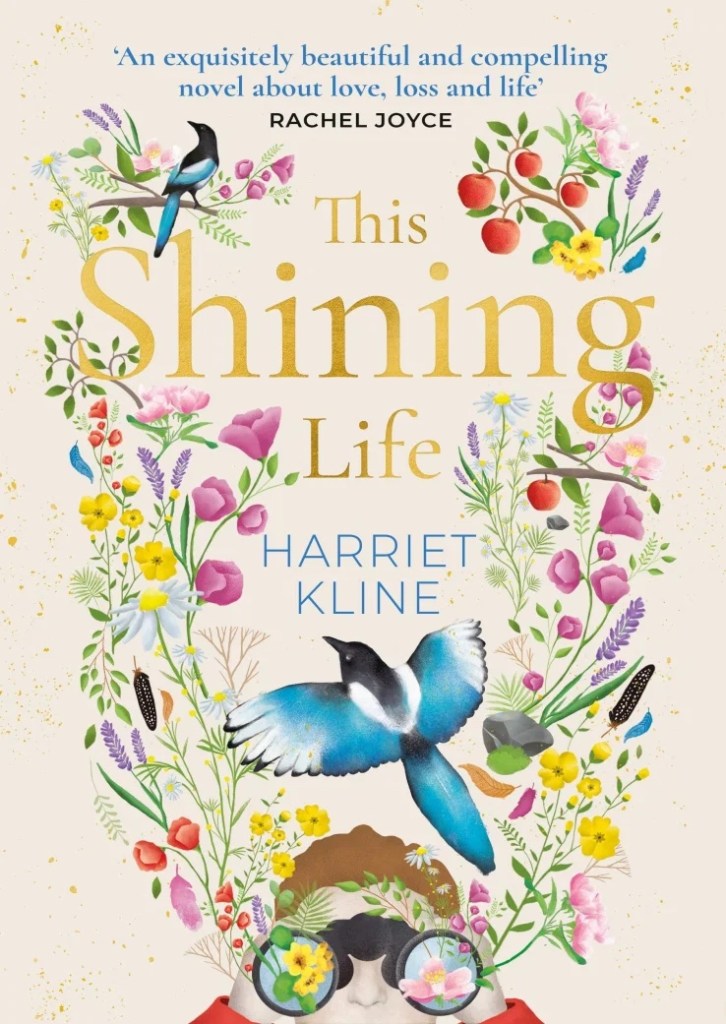
This Shining Life by Harriet Klein

Wow, this is heartbreakingly sad, but so beautiful too. Rich is dying. Funny, charming, Rich has a love of cheese and throwing parties. He has a son called Ollie who is neuro-diverse and a wife called Ruth who is coping with so much anyway, how will she cope with his death? The book covers Rich’s attempts to live, while dying. There’s also the aftermath of his death where Ruth and Ollie have to learn how to cope without the most important person in their life. Ruth finds it very hard to accept that her time with Rich is now limited and she has no idea when he will die. As time passes, Ollie finds it harder too. He doesn’t understand what it means to die. So, Rich devises a plan and involves his son in choosing gifts for those he loves, as something to remember him by. Ollie loves puzzles and he sees the presents as clues – he thinks each gift has a hidden meaning that his Dad chose to teach him the meaning of life.

The story is told through the important people in Rich’s life and it begins with Ollie. Ollie has realised that the gifts went to the wrong people and he must rectify the mistakes, because otherwise he’ll never understand life or death. He is starting to come apart at the seams but has anyone noticed? Ruth is struggling to cope with his obsessive rituals and her grief is all encompassing. In counselling we refer to ‘complicated grief’ – this can happen when a death is: unexpected with things unresolved or left unsaid, a sudden decline or an accident, the result of a crime, long-term health related with caring roles attached, complicated by circumstances such as being out of touch or at odds with each other, or where a disease is hereditary. Here, Ruth and Ollie haven’t really had time to prepare and their lives have had to adapt very quickly. Ruth can’t fall apart because she has to be there for Ollie, but it is wearing her down and she needs to deal with her own feelings too. I liked the way the author brought in other voices, from Ruth’s family to Rich’s own mother and father, each with their own grief and needs.

The author is a great observer of human behaviour and family dynamics. We can see how grief passes through this family, less like ripples on a pond and more like a shockwave passing through everyone in the vicinity. I talk with clients about the circle of grief – this is a series of concentric circles with the person experiencing the bereavement in the centre, next their spouse or partner, then in layers outwards until we get to the wider community. This is a simple tool that works well in the context of working with an individual because in that space, they are the afflicted person. We show how grief is expressed outward – with people in the outer circles expressing grief outward to family, friends, then they go to workmates or the wider community. Then comfort is expressed inwards, with those in outer circle ‘shoring up’ those further in, giving them the strength to support those in the inner circle. People in the outer circles should not be expecting comfort from those in the centre. Yet, grief is rarely so neatly expressed and the circles are often breached. This could be because of narcissism or lack of boundaries. However, more likely, what happens is shown very clearly in this book. Everyone is at the centre of their own circle. Ruth has to show comfort outward to Ollie and to Rich’s parents who are both struggling with their own grief and the added complication of dementia. Some people simply can’t put another’s needs in front of their own.

When we face a huge upheaval or loss in our lives, we experience it through our own filter. Made up of our own experiences, the emotions we find it easy or difficult to express, our own bias or prejudice. The author has written such an authentic story of loss by exploring each character’s filters, their earlier life experiences and the unique relationship they had with Rich. We each grieve in a unique way because of the unique way we connected with that person. In dying, Rich has given them all the secret, of the meaning of life. It’s in the connections we have with another person and in a way Ollie is right – the gifts do hold the secret. Rich has bought each person something he thinks will remind them of him, in the context of the relationship they had. Knowing each person will miss him in a different way. His life was all about encouraging other’s to enjoy everything life offers and all its variety. I thought the book was emotionally intelligent, full of complex and interesting characters and explored beautifully what happens when such a big personality is taken from a family. A final mention must go to that beautiful cover, with Ollie using his binoculars to focus on the beautiful variety of life in the world. Simply stunning.

Meet The Author

Harriet Kline works part time registering births, deaths and marriages and writes for the rest of the week. Her story Ghost won the Hissac Short Story Competition and Chest of Drawers won The London Magazine Short Story Competition. Other short stories have been published online with Litro, For Books’ Sake, and ShortStorySunday, and on BBC Radio 4. She lives in Bristol with her partner and two teenage sons.

Posted in Red Dog Press

Far From The Tree by Rob Parker.

If a man is guilty, the son is often guilty by association. What was that saying? An apple never falls far from the tree. That’s what everyone would think.

This is my first time reading Rob Parker and it definitely won’t be my last. It only took a couple of pages for me to be drawn in to DI Brendan Foley’s complicated world and from a personal perspective I loved that it was partially set in my family’s stomping ground around Liverpool. The fact that I knew every setting as the story unfolded added to the gritty reality of this brilliant crime novel. DI Foley’s life becomes very complicated when a trench containing 27 bodies, in various states of decomposition, turns up in woodland on his Warrington patch. It encroaches on family life immediately as he has to leave his son’s own christening to attend and his wife Mim has to hold the fort. However, things become even more complicated, and terrible, for his family, when one of the 27 turns out to be Brendan’s nephew Connor.

We learn how conflicted the Foley family are as the case develops further. The strength of character it has taken for Brendan to be different shines through. I loved the balance between the family story and the case in hand, and the tension between the two as the answers to one seem a little too close to home. Each character was so well drawn I could imagine them clearly. I loved DS Madison, policewoman and part-time boxer. She’s loyal and disciplined, so when she’s asked to bend the rules she has a hard choice to make – does she stick to the letter of the law or trust her own moral compass? Sometimes the legal route isn’t the ethical one. Hoyt also stood out as a colourful character, combing pomade through his hipster beard while taking phone calls from the public. Every one of them will have their loyalty tested and family is the threat used to change loyalties in ways unthinkable before. Some members of the team have terrible choices to make and will act in ways they never imagined possible to keep their loved ones safe. The tension is these scenes is unbearable, especially the one with a body bag and a child’s toy rabbit.

The action is incredible and the way the author writes is almost filmic in these moments. He has a way of starting these scenes with something unexpected and so startling, you have to go back and read it twice to make sure you did read it – like the man having his nose shot clean off! That set piece as two motorbikes unleash automatic weapons on a van full of men is so fast and slick it could have come from a Christopher Nolan film. As the final showdown approached I couldn’t tear myself away from the novel for a second. As the action bounced between a boxing match, the police station and a house in Huyton (no surprise there!) events left me breathless. It’s amazing what we might do when those we love most are in danger. I love how the author explores what pressure like that can do to someone and how blurred the lines between good and bad really get. There’s no holding back on how bloody and terrible these crimes can be, and it was slightly disorientating to see so much violence in a place I visit for fun. I’ve stayed a few times in the Titanic Hotel and have often wondered what goes on in the tiny industrial units that line the surrounding streets. It made me think what might really be going on behind the facade of an auto spares unit!

This was a great read, engaging from start to finish and with a lead character I was truly rooting for. His wife Mim was clearly a strong woman who could take the helm when necessary but was also able to tell Brendan straight when he wasn’t on the right course. Strangely, it is his dad, with whom he has the most conflict, who tells him where his loyalties should lie. There are times you should be home with your wife and family. The ending wasn’t what I expected, but left me realising there is light and shade in all areas of life. Even with something we imagine is very black and white, like the law, there are always shades of grey. It’s simply a case of how much compromise we can live with and how far the apple really does fall from the tree.

Meet The Author

Rob Parker is a married father of three, who lives in Warrington, UK. The author of the Ben Bracken thrillers, Crook’s Hollow and the Audible bestseller Far From The Tree, he enjoys a rural life, writing horrible things between school runs. Rob writes full time, attends various author events across the UK, and boxes regularly for charity. He spends a lot of time in schools across the North, encouraging literacy, story-telling and creative-writing, and somehow squeezes in time to co-host the For Your Reconsideration film podcast, appear regularly on The Blood Brothers Crime Podcast, and is a member of the Northern Crime Syndicate.

Posted in Cover Reveal

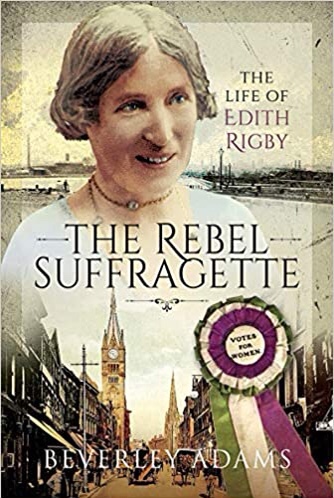
Cover Reveal! The Rebel Suffragette by Beverley Adams.

Today I’m part of the cover reveal for this interesting book about suffragette Edith Rigby. Check out the blurb below.

The Blurb

The suffragette movement swept the country in the late 19th and early 20th centuries. Led by the Pankhursts, the focus of the movement was in London with demonstrations and rallies taking place across the capital. But this was a nationwide movement with a strong northern influence with Edith Rigby being an ardent supporter. Edith was a controversial figure, not only was she was the first woman to own and ride a bicycle in her home town but she was founder of a school for girls and young women. Edith followed the example of Emmeline Pankhurst and her supporters and founded the Preston branch of the Women’s Social and Political Union. She was found guilty of arson and an attempted bomb attack in Liverpool following which she was incarcerated and endured hunger strike forming part of the ‘Cat and Mouse’ system with the government. During a political rally with Winston Churchill Edith threw a black pudding at a MP.

There are many tales to tell in the life of Edith Rigby, she was charismatic, passionate, ruthless and thoroughly unpredictable. She was someone who rejected the accepted notion of what a woman of her class should be the way she dressed and the way she ran her household but she was independent in mind and spirit and always had courage in her own convictions. As a suffragette, she was just as effective and brave as the Pankhurst women. This is the story of a life of a lesser known suffragette. This is Edith’s story.

Look out for the blog tour coming soon.

Posted in Monthly Wrap Up

Books Of The Month! June 2021.

Wow! June has been quite a month when it comes to fiction releases and I’ve had an absolute blast reading them. I think this is the biggest number of five star reads I’ve had in one month – usually I might include a couple of four star books here and there on the list, but not this month. There was a point when I’d read four, 5 ⭐️ novels in a row and was scared to pick up another in case I was disappointed! This is going to be a bumper year and I may have to do a ‘21 of 2021’ to accommodate everything I want to include in December. I’m hoping that my reading luck continues into July. Happy summer reading everyone!

I must give special mention to Karen at Orenda Books who said to me back in March that I needed to read the Jubilant June books they were publishing, particularly Everything Happens For A Reason. She said I would cry and I cried buckets, but I absolutely loved it too. Rachel is struggling to cope with the grief, after her baby son, Luke, is stillborn. Using the type of platitude many people resort to in the face of such terrible loss, she is told that ‘everything happens for a reason’. Unable to cope with the idea that Luke’s death is senseless, Rachel latches on to the idea. She thinks about saving the man who wanted to throw himself onto the train tracks and wonders if it is a coincidence that this was the very same day she found out she was pregnant? Rachel looks for the man she saved, in order to find the meaning in her experience. This is a stunning story of love, loss and hope.

In One Last Time we meet Anne, long term carer for her husband Gustav after a series of strokes. Not long after Gustav is transferred to a nursing home, Anne is diagnosed with cancer. This novel is an exploration of living, while dying. However, it’s also about motherhood and the relationship Anne has with her daughter, which was complicated by her caring role. Daughter Sigrid believes she was neglected by Anne, who chose Gustav’s needs over those of her children, but we also see Sigrid’s mothering skills and how they are interpreted by her daughter. This is a novel about the things we want to say to those we love, how they are meant and how they are received. Brilliantly perceptive, moving, honest and real.

Finally from Orenda is This Is What It Means To Be Human. Veronica lives in Hull with her adult son Sebastian. Sebastian is on the autistic spectrum and in a lot of ways acts the same way he did when he was small, even continuing to attend his childhood swimming club. However, there is one new interest in his life; Sebastian wants to have sex and although he is quite humorous in the way he expresses this, it is a natural urge. Usually Veronica helps with his hobbies, but she doesn’t know what to do with this one. After fruitless visits to their GP and a sexual health clinics, Veronica considers an escort. Could this be the answer to Sebastian’s prayers? This is a brilliantly ground breaking book that shows disabled people do have sex. You will laugh and cry at Sebastian’s quest to find a partner and Veronica’s realisation that her son is becoming a man. This really is am incredible novel from a writer at the peak of her skills.

This is a truly exceptional novel, one I’m sure I’ll read again and again. Ruth is struggling for direction in life and thinks she has chosen a path with Alex – a married man who left his wife and children to live with her in her tiny flat. Yet it doesn’t feel like the right fit. Can Ruth end the relationship knowing the havoc caused to Alex’s family? Yet she can’t remain, knowing this wasn’t what she expected. She takes a drastic decision, to leave London and work in a whale sanctuary in New Zealand. However, during her flight the unthinkable happens, Europe is wiped out in some sort of nuclear event that is also on its way down under. Ruth tries to find her destination and ends up on a beach, with a dying stranded whale and a man called Nik. Miraculously saved by climbing inside the whale, Ruth knows they are possibly the last people on earth. This book is extraordinary, not just the post-apocalypse survival story but the examination of love. Is it flowery exclamations or simply working together every day, them waking up one day with the realisation you’re a team and you couldn’t live without each other. It’s also about our definition of ‘self’ and who we are when everything we know and love is stripped away. I absolutely love this stunning novel and expect it to feature in my best books of 2021.

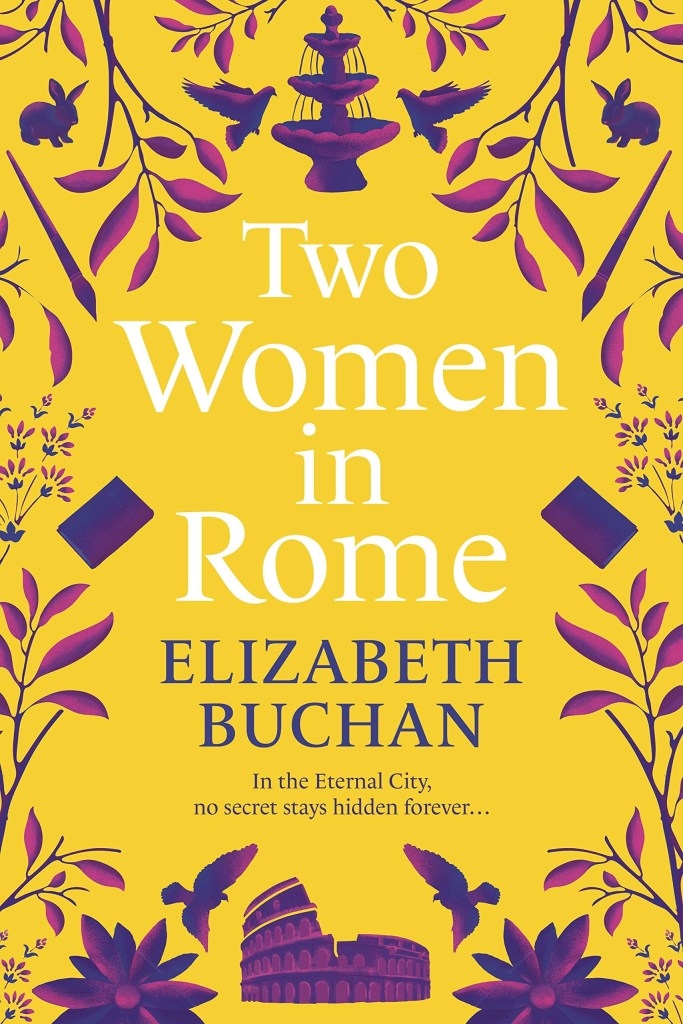
After my love of Elizabeth Buchan’s previous novel The Museum of Broken Promises, I was really excited about reading this on NetGalley. It follows two British women, living and working in Rome; one in the 1970’s as Italy is struggling out of fascism and one in the present day. Lottie has moved to Rome to live with her husband and work at the Archivo Espatriati. Her first job is to catalogue the papers of a woman called Nina Lawrence who worked in Rome in the 1970s as a garden designer, redesigning some of the gardens ruined by war. However, it seems that Nina is a woman of secrets and once Lottie starts to unravel her life and murder, she finds she may be in danger herself, attracting the attention of spies and the Catholic Church alike. The descriptions of Italy, and it’s incredible food, are vividly brought to life by the author and it’s a great chance to enjoy the Eternal City, However, the novel also asks serious questions, about where we belong, whether we drift through life or whether we make decisions based on a deep sense of duty to our religion, our family and our country. I think this novel cements Elizabeth Buchan as a ‘go to’ author for her sense of place, interesting and complicated women, and her wonderful historical detail.

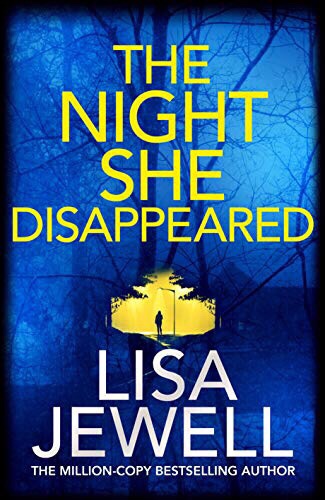
I was absolutely enthralled by this great thriller from one of my favourite authors Lisa Jewell. In fact I read it in a weekend as a treat. Sophie and Shaun haven’t been together very long, but when he gets a teaching job at the exclusive private school Maypole House she decides to move out to the country with him. As a crime writer she can work anywhere, but she soon sniffs out a real-life mystery on her new doorstep. One year ago, in the woods behind their new house, Sophie learns that a young couple disappeared after a party. When she finds a buried box in her garden with the invitation to ‘Dig Here’, she can’t resist and unearths an engagement ring. Now she’s determined to find out what happened to young couple Tallulah and Zach, destined for a night in the pub, only to end up at a party at Dark Place – an historic house, situated in the woods. How did they end up with Scarlett Jacques and her friends when neither of them knew her. Mum Kim knows Tallulah would never have voluntarily left her baby, and neither would Noah. Yet neither of them have ever been found. Rumours abound about secret tunnels in the woods and they’re not the only twists and turns in this great thriller, along with a few red herrings and a totally unexpected ending. This book is ‘stay up till 3am’ sort of addictive.

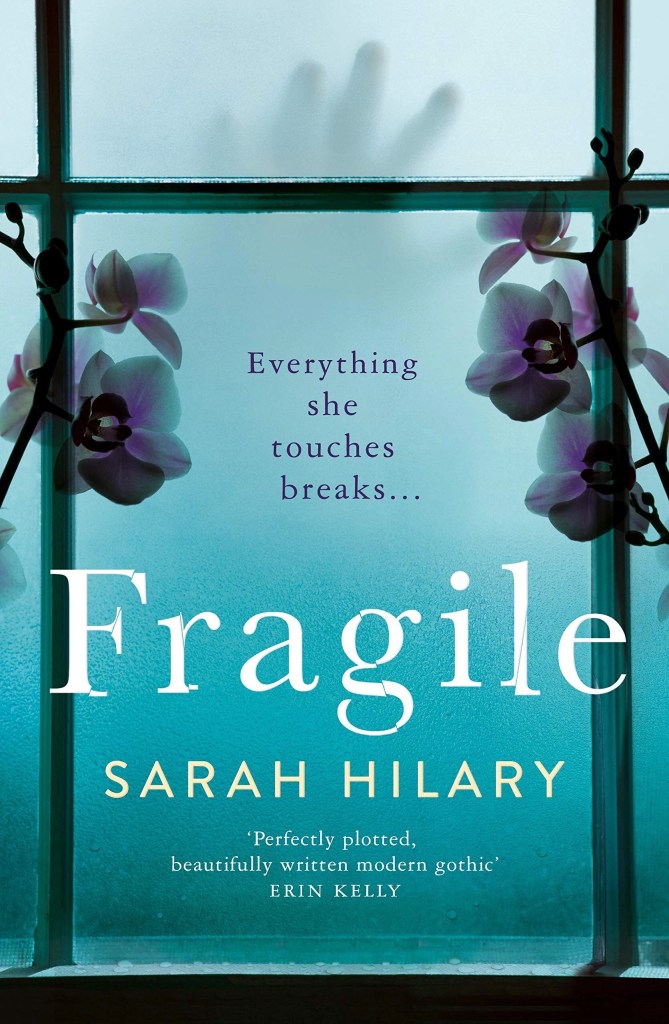
An excellent thriller, filled with childhood trauma, psychological problems and the dynamics between people damaged in this way. Over two timelines we follow Nell in her final year of foster care and in a group home run by foster mum Meagan Flack, then one year later, living on the street in London. There’s a secret, deep down, that Nell can’t share or talk about, but it was the catalyst for her move to London with Joe. However Joe hasn’t weathered a winter on the streets as well as Nell, and when she discovers him entering a house with a blonde woman, she wants to know where he’s been, Nell observes Starling Villas from the coffee shop across the road. She doesn’t see Joe, but notices a young woman leaving the house and heading for a coffee. Thinking on her feet, Nell pretends to be in recruitment and when the girl opens up about the job at the house she concocts a story. Telling the girl her would- be employer is known to sexually harass his staff, she then poses as a potential employee and meets Robin, owner of the house. Now starts a game of cat and mouse, but who is the real predator? This is a great thriller, trying to solve two mysteries – what happened back in Wales a year ago and where are Joe and the blonde woman? Fragile is complex and atmospheric, exploring what happens when psychologically damaged people come together.

This was a book I’d been waiting to read – historical fiction with a focus on the treatment of women and those with mental health issues. Eugénie is the daughter in a middle class Parisian family, who has a very strong affinity with her grandmother. However, Eugénie has been keeping a secret from her whole family; since adolescence she has seen and been able to communicate with the dead. Trusting her grandmother, she confides in her about the presence of her grandfather who wishes to communicate with his wife. Despite seeming calm about Eugénie’s gift, the very next day her father takes her out in the carriage alongside her brother Theo, This is no ordinary outing. As the infamous Saltpétrière Asylum looms into view, she realises her grandmother has betrayed her and that the two men she should be able to trust most in the world are committing her to an asylum. Saltpétrière is run by Dr Charcot who has enthralled Paris society with his use of mesmerism on the women in his care. Coming up is the highlight of Paris’s season – the MadWomen’s Ball – where patients are given costumes to appear in for the amusement and fascination of the Paris elite. This is a book about women and the barbaric ways they could be treated and displayed, at the behest of the men in their family who have found them either mad, too intelligent, too excitable or struck with melancholy. I loved the strong female characters in the asylum, and the complicated relationship between Eugénie and Geneviéve. The novel’s strength is in these fascinating women and the way they defy the rules.

It’s been a very busy reading month with thirteen other books read over the last four weeks! Here are just a few of the books on my TBR in July. I’m hoping to have a quieter August and September so I can catch up on my NetGalley list and some great proof copies sent in the last few weeks. See you in July. Hayley xx

Posted in Throwback Thursday

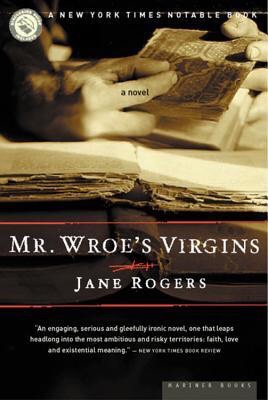
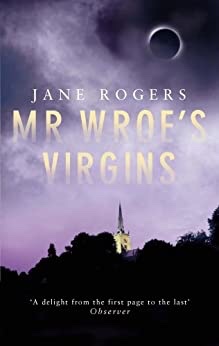
Throwback Thursday! Mr Wroe’s Virgins by Jane Rogers.

‘The Lord has instructed me to take of your number, seven virgins for comfort and succour.

In 1830, as he thought the end of the world approached, the charismatic, hunchbacked prophet of a religious sect settled in Lancashire heeds the biblical injunction and chooses seven virgins ‘for comfort and succour’. Basing her novel on the life of the real John Wroe, a leader of a group called the Christian Israelite Church, Rogers crafts an impeccable narrative, interweaving the diverse mindsets of some of the chosen women and the prophet during the nine months of complex interaction. Part morality tale, part history, packed with accurate details of early 19th century life, the stories of Leah, Joanna, Hannah and Martha unfold as they cope with the hypocrisy, blind beliefs and idealism of the sexually threatening prophet.
Told with humour, irony and a generosity that embraces even the sinister Wroe, this is a compelling story of astonishing depth, elucidating religious idealism, the beginnings of socialism and the ubiquitous position of women as unpaid labourers.

I came across this novel, even before the BBC TV series of the same name. Having seen/read both, I can recommend them equally, although I think the novel is slightly more successful in a few different ways. The way the book is structured into four different narratives allows the women’s characters to develop fully, as over nine months, the story of their lives unfold. Through them we come to experience all seven women: a pious believer; two sisters, still too young to understand their place in the world; a disabled woman; a beautiful, but egotistical woman; a mute and badly beaten woman; a girl donated by her aunt and uncle, who doesn’t believe in the prophet or his religion. It is only through the women that we experience the prophet, a clever reversal of power. In fact these narratives are the only power the women have at first, these are their only words free from restriction or religious dogma. This power shift is especially interesting when it comes to Martha, who is mute. When I first encountered her narrative I thought I’d bought a book with pages missing. However, it’s just Martha trying to express herself the only way she knows – depicted in staccato monosyllabic language, Martha writes about what she knows, eating and sleeping in the first instance. Yet instead of cutting off her narrative, Rogers leaves a blank page. This is the space into which Martha can develop and come to know herself. One of the most powerful parts of the book is watching this transformation.

We hear that Mr Wroe is a powerful speaker, and we can hear his preaching and religious teaching. However, we don’t fully come to know and understand the man. He doesn’t get to construct himself through language. So, we know something of his belief system and his interpretation of the Bible, but nothing personal. This could be because he is a conduit of God, simply meant to deliver God’s teaching. It also leaves him as something of an enigma. Why and when did he become the person he is today? The belief system he has is very selective, patriarchal and seems to benefit him more than his congregation. He sees no problem in allowing Leah to bring her illegitimate child to live with them. He accepts Hannah into the fold despite her lack of faith, and her doubts allow him to admit his own. He uses all the women as unpaid domestic servants and the exploitation doesn’t end there. He seduces the pious Joanna by convincing her that they will beget the new Messiah. For each woman his approach is different, but it works. I found his exploitation of Martha particularly difficult to read and his ability to take Joanna’s faith and use it against her in such a manipulative way is despicable. I don’t want to ruin the ending, so I’ll reserve any more detail, but such an arrangement can’t last and I kept reading hoping for the women’s emancipation.

I have always enjoyed this book and further reading shows it has stood the test of time. The historical detail is so accurate and the scene she sets is vivid – Martha’s time in the pig sty with the animals really sticks in my memory. It may seem hard to believe that any parent would willingly give up their daughters to this man. However, I understand how religious fervour can sweep through a community. Having family on my Dad’s side from the Isle of Axeholme, I know my ancestors would have experienced the Methodist revival started by John Wesley who hailed from Epworth. The real life Mr Wroe’s congregation firmly believed he was a holy man. Maybe they felt that God would look favourably upon them if they supported his vision. There were of course monetary reasons too; offloading a disabled or mute woman who would never earn money or marry could have helped a family who were stretched financially. Also, the stigma of having a disabled daughter, an old maid still living at home or a a girl who has a child out of wedlock could be wiped out by their inclusion in the prophet’s household, This can be a challenging read in parts, but worth the work as you become pulled in by the voices of these women. Little is known about the real ‘virgins’, but here Rogers gives them a voice and a power they clearly didn’t have in life.

Meet The Author

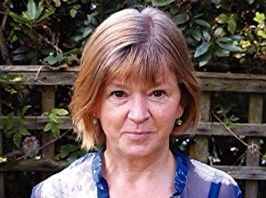
Jane Rogers has written 10 novels ranging from historical to contemporary to sci fi. Books include Mr Wroe’s Virgins (which she dramatised as an award-winning BBC drama serial), Island, and The Testament of Jessie Lamb (ManBooker longlisted, winner of the Arthur C Clarke Award 2012). Her short story collection Hitting Trees with Sticks was shortlisted for the Edgehill Award.
She also writes radio drama and Classic serial adaptations (most recently of John Wyndham and R.L. Stevenson).
Jane has taught writing to a wide variety of students, and is Professor Emerita at Sheffield Hallam University. She’s a Fellow of the Royal Society of Literature. Her latest novel, Body Tourists, is a dystopia set in 2040.