Posted in Netgalley, Publisher Proof

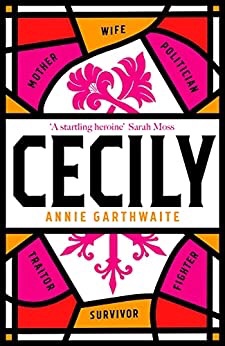
Cecily by Annie Garthwaite

I hadn’t heard of Cecily Neville and wasn’t exactly sure where she was within the characters I already knew in the period just before the cousin’s wars better known as The Wars of the Roses. I was familiar with women like Jacquetta Rivers, Elizabeth Woodville and Warwick, The Kingmaker, from my reading of Philippa Gregory. I was also aware of Anne Neville and Isobel Neville, Warwick’s daughters, who married the Duke of Clarence and Duke of York, later to become Richard III. I hadn’t realised that Cecily Neville was the mother to both those boys and King Edward IV. I was only a few chapters in before I realised that Cecily and I share a grandmother (well to me a great-grandmother goodness knows how many generations ago) Katherine Swynford. In fact Katherine lived around five miles from me, at both Torksey Castle and Kettlethorpe Hall in Lincolnshire. She was mistress, then wife of John of Gaunt and for a short period was Queen of England. One of her daughters, Joan, is the mother of Cecily Neville. The pair, Katherine and Joan, are buried not ten minutes from where I write this, in Lincoln Cathedral. There is something very exciting in reading about your ancestor, so it did change the experience of the book for me.

The opening scene, at the burning of Joan of Arc, is one of the most powerful I have ever read. Cecily narrates in the first person:

‘It’s no easy thing, to watch a woman burn. A young woman, who has seen only three more summers than yourself and claims the voice of God compels her actions. But there it is; the day’s work. And she must harden herself to it.’

It sets the scene for the rest of the novel perfectly, it gives us a jolt and prepares us for how brutal this period of history was. It gives us a sense of how women are treated, especially those who explicitly disdain the rules of society. Joan of Arc didn’t play by the rules. Cecily is determined to shape her own future, but though words and ideas instead of action. Court is a deadly game of chess and Cecily is always on her guard. Make no mistake this is a woman’s side of court life. Where her ideas and beliefs are put across, whether at the King’s council or on the battlefield, only men are present. We hear about battles through messengers, and the men left standing afterwards. We hear about the King meeting his council through Cecily’s husband Richard. Yet the idea starts when both of them talk last thing at night or out hunting, just the two of them so no one else can hear. Cecily campaigns through letters, befriending influential women and petitioning the Queen – although in this case she believes the Queen is truly the one in charge anyway.
Without her husband Richard though, Cecily would have no avenue to pursue her plans. This is an arranged marriage, as we see in the book the family are already marrying off their eldest daughter at the age of 10. After the ceremony, the young bride and groom go back and live with their families until the age of fourteen or fifteen when the bride and groom go to live in their marital home together. So, Cecily would have had the same rules apply to her match. Luckily it appears to have been a good match, in business and pleasure. Most importantly for Cecily, Richard regards her as an equal and listens to her in courtly and political matters. His respect for her, which seems unusual for the time, means that the men of her household and her sons listen to her as well. They value her judgement and her ability read a situation and the people involved. However, being a courtier isn’t an easy life. I won’t reveal the plot, but I will say that when you’re at the beck and call of a King, you have to hope that King is of good judgement and sound mind.

One aspect that really stood out to me, was that all the women are deeply affected by their fertility, or lack of it. Cecily and Richard have been married for eight years at the start of the book, but still haven’t had a living child. In fact by the end of the book, I couldn’t keep up with how many times she had been pregnant. There is a period in the middle of the book where she realises she’s been pregnant for the majority of the last few years. I was also surprised by the breadth of the families, with mothers still being pregnant at the same time as their elder daughters. When any woman in the book delivers a son I could feel their relief. Everything must be inherited by a son, who continues that aristocratic line. These years of wrangling over who has the strongest claim to the throne, as well as the death of his own elder brother, make sense of Henry VIII’s obsession to produce an heir. I think the author captures beautifully the pressure these women feel. Their sense of loss, even though infant mortality rates must have been quite high, runs deep. Giving birth is very much women’s work, and the blame for what they do or don’t produce sits squarely with them. It’s hard to imagine not being able to control your fertility; to decide when to start or when to stop having children.
The story flowed well, and for me could have benefitted from being slightly longer. There were large time jumps in a couple of places and I did have to keep looking people up, checking family trees and names as opposed to titles. That was me trying to make complete sense of it, to fit this piece in to the larger jigsaw I was more familiar with. This was a fascinating piece of history, bringing to life another incredible woman from this time period. She sits with Joan of Arc, and her contemporaries Jacquetta Woodville and Margaret Beaufort, as women who know how to fight a war of words. Like present day spin doctors they weave the tale they want the court and the country to see – Cecily suspects the Queen of weaving the most audacious tale of all. I was left with the sense that courtly life is a living game of chess, with human pieces. Those close to the throne could be lucky enough to remain in favour, but more likely are only two moves away from ruin. As for the ending, those with historical knowledge will be aware that Cecily’s schemes are only successful to a point and there is even more turmoil beyond the book’s final pages.

She is remembered as the mother of two Kings of England and grandmother to a Queen, but the painful truth is she outlived all of her sons. Even worse, she had to witness their treachery and betrayals of each other, including the disappearance of her eldest grandsons (and heirs to the throne) from the Tower of London, never to be found. Six years before Cecily’s death, her granddaughter Elizabeth married Henry VII finally uniting the houses of York and Lancaster. She even lived to see the birth of her great-grandson Henry VIII. Annie Garthwaite has fictionalised the life of a very powerful and intelligent woman, who has a much bigger hand in history and my own ancestry than I’d realised. Her work is well-researched, creating a book that is horrifying in places, but ultimately a compelling piece of historical fiction.
Published by Penguin, 29th July 2021

As part of the blogger group The Squad Pod, Cecily has been our book club choice for August. You can see our read-along chat at @Squadpod3 on Twitter.

Meet The Author
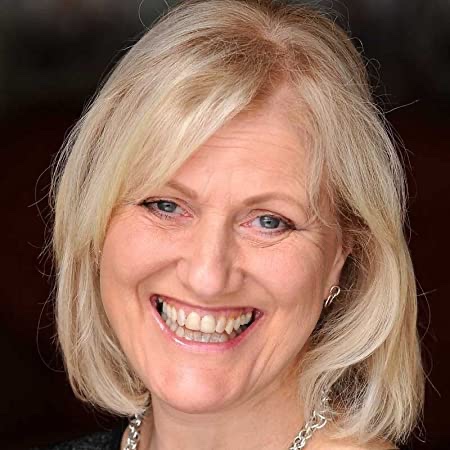
Annie Garthwaite turned to fiction after a 30-year international business career, fulfilling her lifelong ambition to write an account of Cecily Neville, matriarch of the House of York during the Wars of the Roses and mother of Edward IV and Richard III. Her obsession with Cecily and her family began in school and never left her. Setting off in the world of work, she promised herself that, at age 55, she would give up the day job and write. She did just that, completing her novel while studying for a creative writing MA at the University of Warwick. CECILY is her debut novel and, even before it’s publication, was named a ‘top pick’ by The Times and Sunday Times.
http://www.anniegarthwaite.com

Posted in Random Things Tours

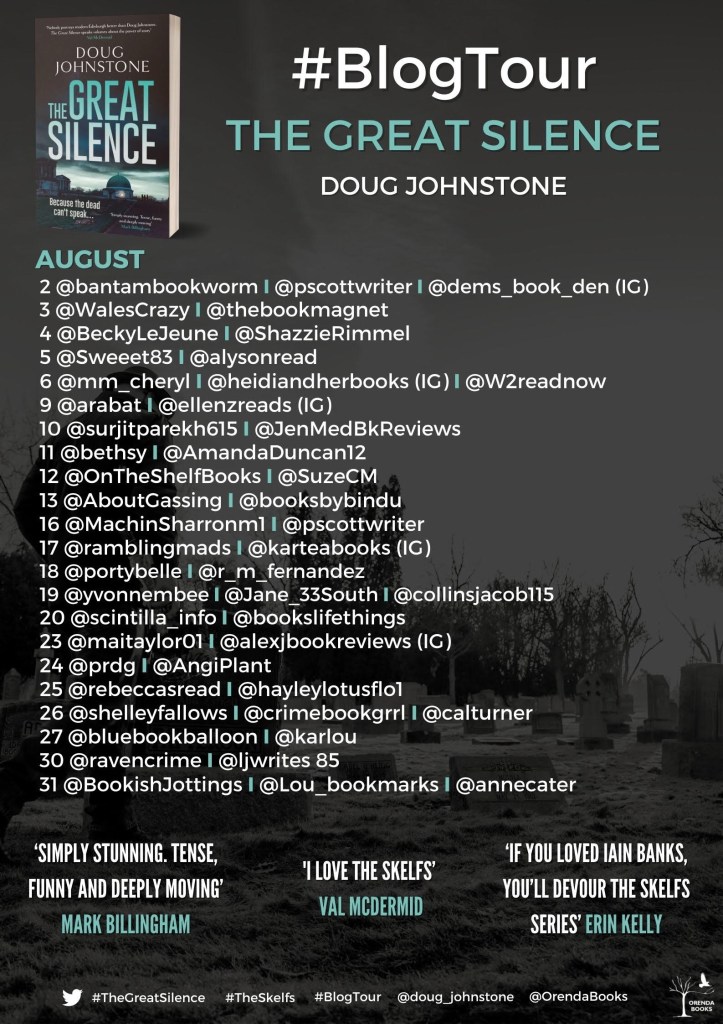
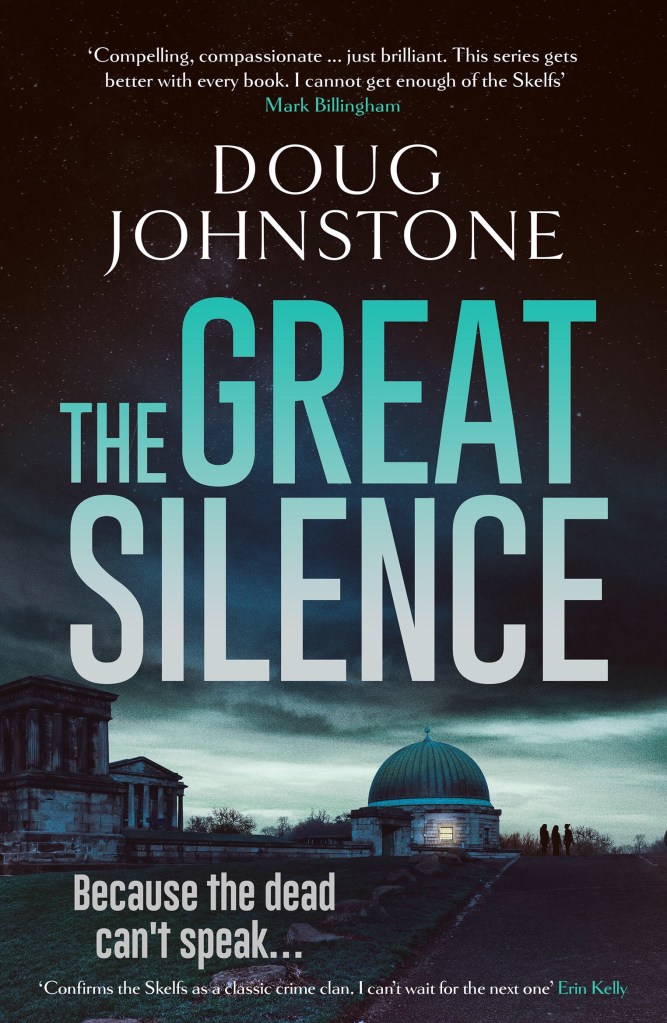
The Great Silence by Doug Johnstone.

Why is it always so difficult to write blog posts for books that I absolutely love?? I have already created two new hashtags for this third novel in the Skelf family series. The first was #bookbereavement, because when I finished it I wanted to turn straight back to the first page and start again. The second was #Skelfaholic and I am a fully paid up member. It is agreed that if this series ends (please no!) then we Skelfaholics will be holding a wake by drinking whiskey in a funeral home, followed by star-gazing at the observatory. It’s hard to put across how much I love the Skelf women, their cases, and the way they manage to conduct their funeral business with such dignity, and their investigation business with more balls than most men. I read this book almost as soon as I received it, and I’ve been sitting on it excitedly ever since, desperately trying not to say anything until the blog tour. Now I can happily say Doug Johnstone has done it again. This is a fantastic read.

For those who are new to the series, the Skelf women are three generations living under the same roof: Dorothy the grandmother, Jenny the mother, and Hannah the granddaughter. They ‘live above the shop’; their businesses being a strange mix of funeral directors and private investigators. Oh and Dorothy is a music teacher too, so there are often teenagers wandering in and out and playing the drums. In fact there are often waifs and strays under the Skelf’s roof. Hannah’s girlfriend Indy was one of their waifs, brought into the fold when her parents died and the Skelfs organised their funeral. She now looks after the funeral business with the same calm and dignity she brings to Hannah’s life. Einstein the dog arrived when a police chase ended with a van crashing nose first into one of their graves, during the funeral. The dog was in the van and with his owner now dead, he became part of the Skelf household and a companion of Schroedinger, the cat. Jenny mainly works on the private investigation side, but has a lot of her time taken up by her ex and Hannah’s father, Craig. He escaped prison and is possibly closer than they think. Finally, there’s Hannah, starting her PhD with the astrophysics department and pondering the question of why other life in the universe has never tried to contact us – the ‘Great Silence’ of the title.

As usual the book begins with a strange event. Dorothy takes Einstein for a walk in the park and he fetches a human foot, even more strange is that it appears to be embalmed. This embroils Dorothy in a very unusual case that could be deadly. Jenny is dealing with the aftermath of her ex-husband’s actions in the last book, she’s still healing emotionally and potentially regretting the end of her relationship with painter, Liam. She misses him, and wonders if perhaps they could rekindle something. Then the other daughter of her ex-husband disappears. Jenny wonders if her life will ever be free of this man, as she joins forces with the other woman in Craig’s life to find her daughter. Finally, Hannah is facing massive changes in her academic and personal life. In a sense she’s being pulled between past and future. Her graduation becomes a double celebration when Indy proposes, but then she’s pulled into the past when their flat is broken into and someone makes it clear they still want to be part of her life. Her academic supervisor José asks her if she’ll look into one of the central questions of astrophysics, if there is extraterrestrial life, why haven’t they replied to our messages? He has had a reply, but doesn’t know where it’s come from. Is it really from another life form or is someone playing game with him?

There’s so much packed into this novel, but Doug Johnstone never loses a thread. Each storyline is given equal time and care. As I was reading the novel and writing this review, my partner saw my search history on my iPad and looked confused. I had tabs open for SETI (an institute set up to search for possible extraterrestrial life), the embalming process, numbers of big cats kept in domestic homes in the U.K, and Hindu funeral rites. Yes, the author does go to all these different places in the novel, not to mention the Italian gigolo and elderly lady, and they all interweave harmoniously. I love the unexpected situations they find themselves in, such as Indy and Hannah taking a walk in the park and encountering a black panther. I also love how these women throw off expectations and be themselves. Dorothy is an elderly lady, but she goes to clubs when one of her students is playing a gig, and has a healthy sex life with her long time friend and police contact, Thomas. She’s investigating the ‘foot’ incident, which becomes more urgent once another foot turns up, this timbelonging to someone different. She’s also investigating the panther incident and visits experts keeping wildcats at their homes. In between she’s supporting Abi, now living with the Skelfs, who gets a huge shock when a man claiming to be her birth father shows up.

Jenny has to face her ex- husband and there is a sense that this might be their final showdown. They had originally thought he’d be far away in another country, but with huge estates covering thousands of acres in Scotland, it’s not inconceivable that he’s been hiding close by all along. The strength of both Hannah and Jenny in facing him again, is amazing. They’re scared – so much so that Hannah and Indy move back in to the family home – but know that the only way to stop this man ruling their lives is to find him and have him locked away again. I felt for Jenny, who had just turned a corner emotionally and was considering her life moving forward, and whether she wanted to remain alone. She’s also investigating on behalf of a brother and sister who are concerned their elderly mother is being misled by an Italian playboy. As usual Jenny is professional with her investigation, but uneasy about her clients and their motives. Meanwhile, behind all these fireworks, the kind and loyal Indy is having a crisis about her grandparents. They are traditional, but to Hannah’s surprise they want to fly over from India for their wedding. They don’t mind their granddaughter marrying a woman it seems, but they do have a huge request relating to the death of Indy’s parents. Leading to some very hard choices for Indy, who I’m especially fond of.

Doug Johnstone is so many things at once: a gritty crime writer; a poet; a philosopher; a lover of the city where he bases this series; and an incredible writer of women. Johnstone writes real women, women who are intelligent, ballsy and true to themselves which is why I love them so much. One philosophical idea that stood out to me was ‘sonder’. It’s a word I’ve become aware of because it’s the title of my work in progress – where there are people in a difficult situation desperately trying to understand each other. Sonder is the sense I often get in a very busy train station when I look around at all the people and realise that every one of them has a complex and unique life just like mine. It’s the name of a cafe that Hannah visits near the university campus and as she sits there after her graduation, with Indy, Jenny and Dorothy she realises something. These three women come into people’s lives at a terrible moment, but have the ability to treat each person’s grief as if it was the most important thing to them. It reminded me of bringing a client into my counselling room, creating a safe space where, for an hour, the most important thing in the room is this person and whatever they bring to talk about. I think this is possibly why I feel such a strong kinship with these women. Jenny will take a drink with a homeless person and pass the time of day and Dorothy will connect with a young person fifty years her junior and make them feel welcome. I hope a little of the Skelfs rubs off on all of us. If you’ve never read the series, then do yourself a favour and buy all three. You won’t regret it. There was something about this book that felt like a finale, but I’m hoping against hope there’s more to come from these characters who I love. I’ll miss them, till next time.

Published by Orenda Books, 19th June 2021

Meet The Author.

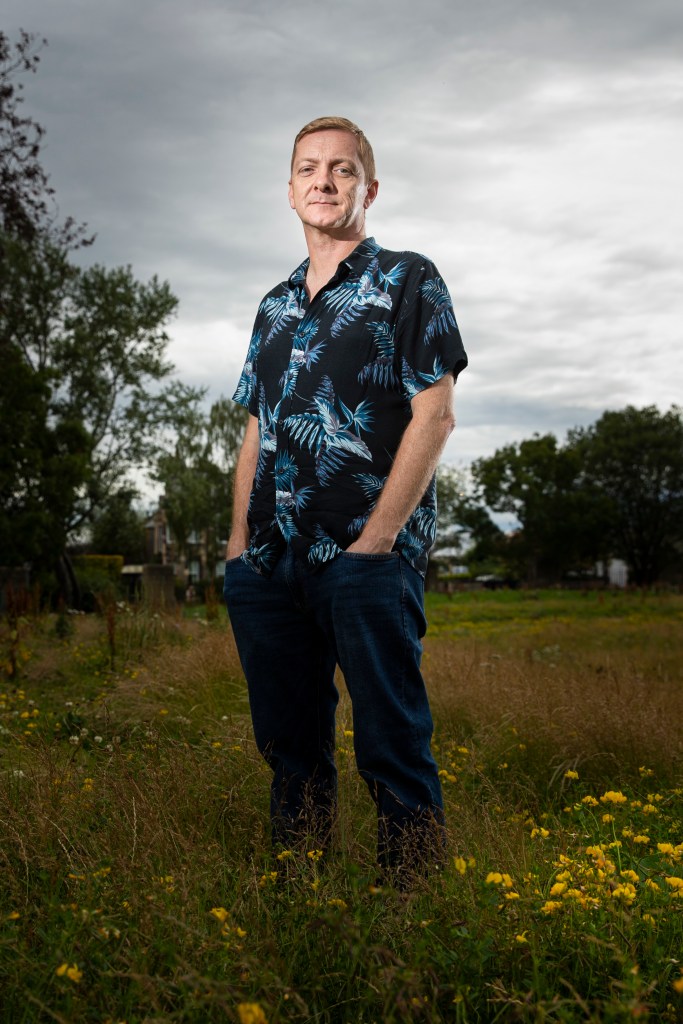
Doug Johnstone is the author of eleven novels, most recently The Big Chill, the second in the Skelfs series, which has just been optioned for TV. In 2020, A Dark Matter, the first in the series, was shortlisted for the McIlvanney Prize for Scottish Crime Novel of the Year and the Capital Crime Amazon Publishing Independent Voice Book of the Year award. In 2019, his thriller Breakers was also shortlisted for the prize. Several of his books have been bestsellers and award winners, and his work has been praised by the likes of Val McDermid, Irvine Welsh and Ian Rankin. He’s taught creative writing and been writer in residence at various institutions, and has been an arts journalist for twenty years. Doug is a songwriter and musician with five albums and three EPs released, and he plays drums for the Fun Lovin’ Crime Writers, a band of crime writers. He’s also player-manager of the Scotland Writers Football Club. He lives in Edinburgh. –This text refers to the paperback edition.

Posted in Netgalley

The Image of Her by Sonia Velton

From the author of Blackberry & Wild Rose comes an extraordinary story of two women who never meet and yet share the closest possible bond.

STELLA and CONNIE are strangers, brought together by two traumatic events – cruel twists of fate that happen thousands of miles apart.

Stella lives with her mother, a smothering narcissist. When she succumbs to dementia, the pressures on Stella’s world intensify, culminating in tragedy. As Stella recovers from a near fatal accident, she feels compelled to share her trauma but she finds talking difficult. In her head she confides in Connie because there’s no human being in the world that she feels closer to.

Connie is an expat living in Dubai with her partner, Mark, and their two children. On the face of it she wants for nothing and yet … something about life in this glittering city does not sit well with her. Used to working full time in a career she loves back in England, she struggles to find meaning in the expat life of play-dates and pedicures.

Two women set on a collision course. When they finally link up, it will not be in a way that you, or I, or anyone would ever have expected.

This was an unusual follow up to Sonia Velton’s historical fiction debut Blackberry and Wild Rose, but had the same stunning characterisation and detail that set her writing apart. This was a classy domestic thriller with two characters on such a fascinating journey. Connie and Stella are such complex characters, written with incredible psychological insight, that I felt immediately drawn into their disparate worlds.

Stella’s life has been dominated by her mother, who died after a long struggle with dementia. Stella has been her full-time carer and this would be enough to explain her sense of dislocation from the rest of the world, but their relationship was always difficult anyway. She’s now 39 and as well as feeling burnout from her caring role, she thinks her inability to connect with others has a root in their mother-daughter relationship. Utterly ground down by life, Stella realises that her mother has been psychologically abusive and manipulative her whole life. It felt to me that Stella’s mental health issues were directly related to having a narcissistic parent. It’s clear that Stella’s mother belittled her, knowing exactly which buttons to push to inflict the most pain. There was also an element of gaslighting, where her mother would deny things she’d said or convince Stella she’d misconstrued them. She never validates Stella’s feelings, so instead of acknowledging her words and apologising, she says she’s sorry that Stella felt upset.

Her mother’s love came with conditions, turning Stella into a perfectionist, constantly feeling she has to change or placate the other person to deserve their love. The perfectionism has bled into all areas of Stella’s life. Her mother wanted her to be successful, because it reflected on her own skills as a mother. Stella is very aware of how others might see her, because it was all her mother cared about – the emphasis on how things appear rather than caring how they actually are. If Stella was well-behaved, well turned out and looked pretty it didn’t matter to her mother how she felt. As she wrestles with these issues in later life, Stella doesn’t really have anyone in whom to confide. However, when she’s recovering from a serious accident, she starts a dialogue with a woman called Connie on social media. It may be the safety of not being seen, being able to hide behind the anonymity of the keyboard, but Stella feels this is someone she can trust with even her most private thoughts.

Connie is a stay at home Mum, on a compound of British families in Dubai. Her husband was offered a great job opportunity, but it left her in an unfamiliar place with all her usual support network thousands of miles away. Connie doesn’t find Dubai inspiring and, perhaps because of where they’re living, she doesn’t feel as immersed in local culture as she expected. Dubai is a man made and designed space. Although it existed as a small fishing village as far back as the 18th Century, the current expanded city is very much focused on tourism with sculptured and themed island complexes such as the Palm Jumeirah. This means it is a place that people pass through, rather than stay. Feeling increasingly lonely and isolated, Connie needs something to do outside the home, and her husband Mark has suggested they have a live-in housekeeper. This would free Connie to do other things, but her keen sense of social justice means she finds this a difficult prospect. She finds she can’t ignore the exploitation of local people by the foreign settlers. She simply can’t ignore the inequality in front of her and her marriage starts to feel the strain, not helped by in-laws she doesn’t see eye to eye with. Although this two women are geographically miles away from each other, their overwhelming sense of isolation and loneliness is very similar.

I thought the author was brilliant at letting her characters tell the story. Stella narrates in the first person and I felt completely absorbed in her narrative. Maybe that was because she talks like a client would speak to me in the counselling room. I was soon drawn in to her world and the difficulties she’s having. Connie’s narrative is in the third person, so it didn’t feel quite as immersive as Stella’s, although it did allow for the points of view of other characters like her husband or in-laws. I thought the authors insight into an ex-pat life in the Middle East was brilliant, because it felt raw and honest, and a million miles away from how people often describe Dubai. I really became incensed with the social injustice and know I couldn’t have lived there and let it wash over me, without trying to change things. I also liked her honesty about motherhood – there are no rose- tinted spectacles here.

I thought that this complete change of genre and time period really showed this author’s range as a writer and her incredible skill at creating complex and believable characters. I loved the focus on themes of self- worth and what we draw on to create our identity; is it our inner life or our outer appearance that informs us of who we are? It brought me back to an idea that fascinates me as a therapist that we call congruence. Are we presenting to the world the authentic person we are inside or a constructed identity based on outer appearances? Do our inside and outside selves match up and how does it feel when they don’t? This was a thoroughly enjoyable novel that will be fascinating to anyone interested in character driven narratives, identity and social justice. It will be interesting to see what this talented writer creates next.

Meet The Author

Sonia Velton has been a solicitor in Hong Kong, a Robert Schuman Scholar in Luxembourg and spent eight years being an expat Mum of three in Dubai. She now lives in Kent. Her first novel, BLACKBERRY AND WILD ROSE was short-listed for the Lucy Cavendish Fiction Prize, long-listed for the HWA Debut Crown and has been optioned for film. Her second book, THE IMAGE OF HER, is a literary thriller about two women whose lives come together in a way that is both chilling and awe-inspiring.

Posted in Publisher Proof

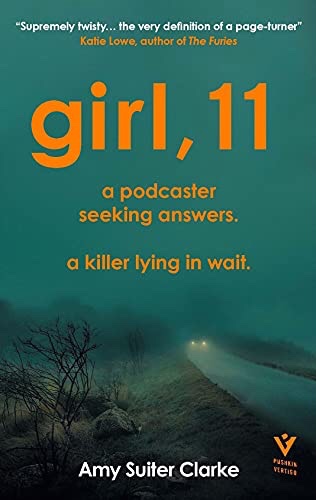
Girl, 11 by Amy Suiter Clarke.

VIGILANTE

True crime podcaster Elle Castillo has long been obsessed with The Countdown Killer.

VICTIMS

Twenty years ago, he went on a killing spree. Each new victim was a year younger than the last.

VENGEANCE

Now, he’s back.

Elle must stop the deadly countdown before the killer can claim his next victim.

Girl 11 is the perfect read for fans of True Crime, whether they’re addicted to Netflix series or listen to podcasts. True crime podcasts have played a part in two other books I’ve read in the past six months, so their popularity has come to the attention of authors wanting to keep their crime fiction as up to the minute as possible. Here, Elle is a podcaster turned sleuth and she is determined she has what it takes to catch the Countdown Killer. We’ve all sat and watched documentaries – I admit an addiction to Forensics: The Real CSI – and considered the evidence, only to find ourselves screaming at the the detectives on screen to go back and look at x or y that didn’t make sense or a witness who seemed a little too interested in the details of the crime. I imagine what it must be like to psychologically profile a suspect, or to come up against them in interview.

Elle takes armchair detecting one step further by carrying out her own investigation into crimes, often involving children. The structure of the book is clever, as a transcript of her podcast is placed between each chapter. This divides the book quite neatly into the detail of Elle’s past research into the crime, and the present day action that drives the story forward. This latest podcast on The Countdown Killer details crimes from twenty-four years ago. The killer abducted and murdered young women according to their age, starting at twenty, but then threatening to count down from there, reducing each victim’s age by one year each time. Then the killer stopped abruptly, leaving most crime enthusiasts thinking he was dead, but Elle isn’t so sure, especially when another child goes missing. When asked by the police to consult on the new case she considers whether it might be the same killer, but her colleagues start to question her judgement. Is she too fixated on the Countdown Killer? Also, is it wrong that every time I read that name I imagined a killer rampaging through the C4 Countdown studio?

I thought the set up of the book was excellent and the first half really grabbed my attention and pulled me into the story. I thought the ritual nature of the original murders and the whole of the cold case, was fascinating and if it was a real podcast I could imagine a lot of people enjoying the content. Yet, having set a brilliant scene and pace, I thought the second half of the book slowed down and didn’t keep me as engaged. I knew what was coming a little too much, and I waited patiently to be disproved or for a huge twist that didn’t come. Having read the Six Stories series of Matt Wesolowski, which also follows a cold case podcast, I felt this wasn’t as inventive as it could have been. I did really enjoy Elle though. She was an interesting and intelligent woman, very good at her job and almost forensic in the detail she brings to her podcasts. I felt there was more than just prurient interest in the crimes she details, she truly wants to solve these cases and get justice for the victims. I enjoyed the interviews she carries out with experts too. I thought her private life could have done with some fleshing out, because I felt I only knew Elle through her work, rather than feeling she was a fully rounded character. This was an interesting debut, and I think the format of the podcasts could work very well as a series going forward and I think there’s much more to come from this author in the future.

Published 26th April 2021 by Pushkin Vertigo.

Meet The Author

Amy Suiter Clarke is the author of GIRL, 11 and is a writer and communications specialist. Originally from a small town in Minnesota, she completed an undergraduate in theater in the Twin Cities. She then moved to London and earned an MFA in Creative Writing with Publishing at Kingston University. She currently works for a university library in Melbourne, Australia.

Posted in Netgalley, Publisher Proof

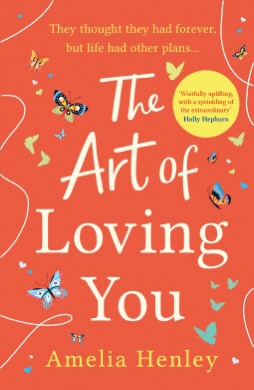
The Art of Loving You by Amelia Henry

Oh my goodness this beautiful novel really did pull at my heartstrings. It was stunningly romantic and reduced me to a hormonal weeping mess. I just knew something was going to happen to this lovely couple, because everything was perfect in their world and they were embarking on a project to help others. Libby and Jack were bringing to life his dream by developing an arts centre/retreat for underprivileged children. They already had the keys to the property and were ready to go, when a phone call changed everything. Just as I’d fallen in love with this gorgeous couple, the author shatters their lives. I don’t want to ruin the plot for everyone, so I’m not going to talk about what happens, but I am going to talk about the characters.

Libby is our narrator and I really felt for her so much. Her world has been so rocked that she’s struggling to trust anything or anybody. She’s scared of everything, because now she knows that the worst things we imagine can happen. The author cleverly lets Libby drop little hints and ideas about what’s coming next, they work like cliff hangers, so that I kept jumping to the next chapter and reading a bit more. Just a head’s up – can end up half way through without realising!

I loved Sid, just loved him. He has just moved into a care facility, because he needs extra support, and gifted Libby and Jack his house. This is the only way they’re able to realise Jack’s dream of opening the arts centre. Sid is like a surrogate grandfather to the couple, and the way his relationship develops with Libby as the novel progresses was really touching. At a time when she feels hopeless and lost, he is so supportive, positive and uplifting. I wanted my own Sid for his wise advice alone. I would love to read a whole book about Sid’s past, because I want to know how he came about his philosophy on life.

Although the book has an obvious film inspiration, I kept thinking of the moment at the end of the Steve Martin film Parenthood. He’s panicking because he walked out on his job and his wife has just announced she’s pregnant with baby No 4. His grandma starts to talk about the fairground, and while other people like safer rides like the dodgems, she loved the rollercoaster. He doesn’t get it at first, but later at his children’s play when everything starts to go wrong, he realises that instead of panicking, he could just laugh and go with it. Sit back and enjoy the ride. It makes you realise that how you view life is always a choice.

I don’t know much about the author, but I’d hazard a guess that this is someone who’s life experience has informed these characters and their situation. Truth and real pain shines out from these pages. Readers can tell if a person’s writing comes from their heart, and this truly does. It seems easy to dismiss ‘romance’ as something silly and frivolous when it isn’t. Love, real love, changes our lives. We move house for love, we change lifestyle, we make lifelong commitments. If we think about the love we have, from partners, friends, family, it’s without doubt the most uplifting thing in our lives. When we lose someone we love it’s devastating and life altering. Yet, we still love. This inner hope and endless capacity to love, is the most important thing we can write about, because it’s the most important thing in our lives. I felt the writer understood this. The story teaches us not to waste time, to hold on tight to those we love and to love life even when it isn’t ‘all beer and skittles’.

Published 21st July 2021 by HQ

Meet The Author

Amelia Henley is a hopeless romantic who has a penchant for exploring the intricacies of relationships through writing heart-breaking, high-concept love stories. 

Amelia also writes psychological thrillers under her real name, Louise Jensen. As Louise Jensen she has sold over a million copies of her global number one bestsellers. Her stories have been translated into twenty-five languages and optioned for TV as well as featuring on the USA Today and Wall Street Journal bestsellers list. Louise’s books have been nominated for multiple awards.

Posted in Throwback Thursday

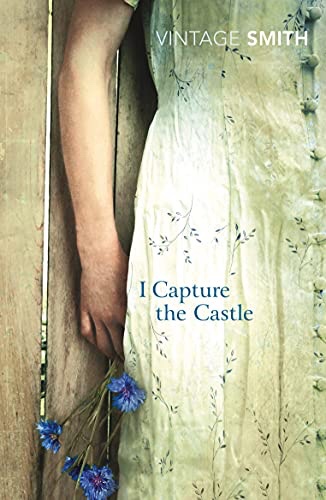
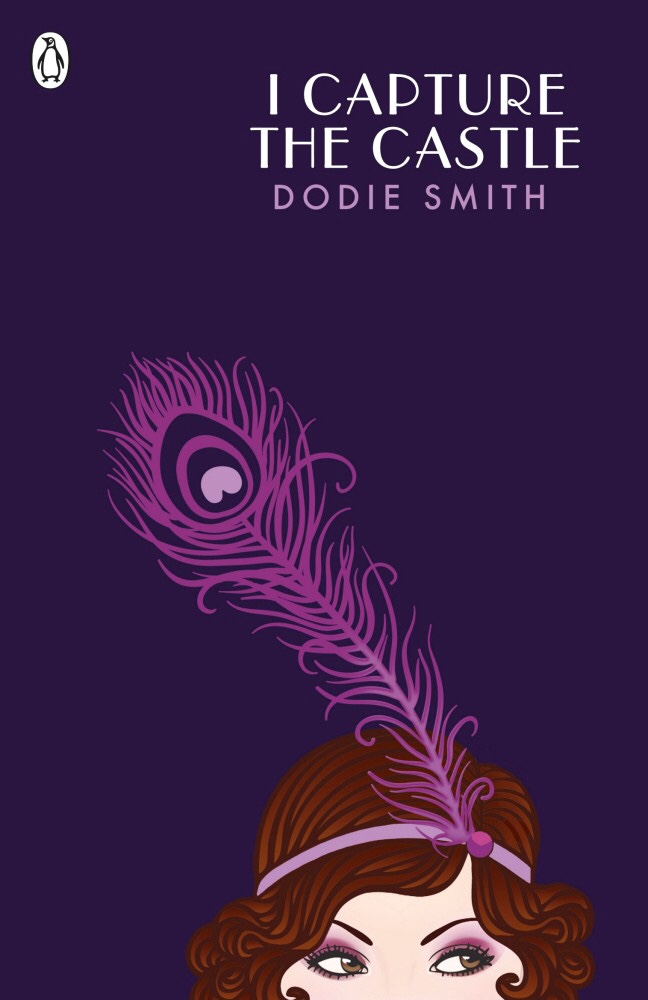
Throwback Thursday! I Capture the Castle by Dodie Smith.

“I write this sitting in the kitchen sink. That is, my feet are in it. The rest of me is on the draining board, which I have padded with our dog’s blanket and the tea-cosy.”

I’m going a long way back in time for Throwback Thursday this week. I read this book in my early teens, but still hold it close to my heart. I’d read 101 Dalmations much earlier and hadn’t realised that the author had written anything other than children’s books. The truth is I’d been waiting my whole life for a heroine like Cassandra Mortmain. There are a lot of different influences to blame for turning me into the adolescent I was. Years trawling round stately homes had given me a yearning for a house I could hide in. We lived in a 1960’s bungalow with just enough rooms to live in, but I longed to hear lines like ‘ Hayley? No I haven’t seen her since breakfast. Could she be in the pink drawing room?’ Period dramas, particularly 1970s productions of D.H. Lawrence novels and L.P. Hartley’s The Go-Between , both loved by my mum, had left me hankering after a wardrobe of full, floaty skirts and the sort of accessories that looked out of place. Like tramping down to the village shop wearing a feather boa, ten layers of petticoats, whilst dragging a grumpy spaniel. I would constantly imagine I was in a book or a film, walking the poor dog’s legs off while hoping to meet a man who looked like Mr. Rochester and lived in a Gothic mansion, minus the mad wife.

I also developed a fascination with Edith Holden thanks to the TV series of Country Diary of an Edwardian Lady and I even wrote off for a pack about the series. We already had the book, so I bought a sketchbook and some watercolour pencils with my pocket money. My brother and I would go out early, him with his fishing gear, and me with my books and paints. There was an old track down to the woods with a drainage dyke running alongside. About halfway down there were two willow trees that had bent so far over the water it was possible to climb up and lay down along the trunk. My brother would fish from his tree, and in mine I would paint flowers and butterflies and read my book. It was the closest thing I had to room of my own. So, in finding Cassandra Mortmain I felt like I’d found exactly who I was supposed to be. I wasn’t meant to be Hayley Baxter, lives in a sixties bungalow, with a working class family and no money. I was meant to be the broken down castle, bohemian sort of poor. Where parents were trying to make money from art, roof leaks dripped into buckets instead of being fixed and they were invited to tea by the landed gentry or their new American millionaire estate owners.

I loved Cassandra Mortmain’s confidence. She was determined she was going to be a writer and nobody told her she couldn’t be, so she was always curled up in some unlikely place, writing in her journal. If I said I wanted to write novels, my close family were supportive – my mum had always wanted to write. Wider family and friends would say ‘well, as long as you do well at school and have something to fall back on.’ There were aunts and uncles who would have been bemused if I walked constantly around with a journal and pen. Writing was seen as something you had to do – you wrote a letter, or a postcard – but not something pleasurable that you devote time to. That came much later, when I had my own home and my own wardrobe of floaty skirts. When I first read her story I was much like Cassandra herself, there were parts of life that she was recording without really knowing their importance or meaning. Although she narrates her own story, as an older reader there were things I understood that Cassandra didn’t as yet. This is a story of growing up and leaving some of that innocence of youth behind.

I thought on first reading that her sister Rose was incredibly beautiful, but grumpy and not very nice to be around. However, reading her years later I could see that because Rose was older, she understood more about the realities of life. For her, the broken roof and the lack of income were not romantic, but a real problem that needed fixing. Their father’s only published book can’t keep them forever and his writer’s block makes him a very difficult man to live with. Rather comically the women lock him in his study, in the hope that inspiration will strike when he’s forced to stare at his typewriter. It’s very clear to Rose that they are in dire financial straits. This is where the book takes on some Austen-like romantic tropes, as the Cotton family come to visit the estate where they are the rightful heirs and the Mortmains are their tenants. Mrs Cotton brings her two sons, the eldest Simon being the rightful heir, and Neil, the younger son. Simon is ‘detestably bearded’ but the most eligible and able to rescue the Mortmains from their current circumstances. Cassandra’s father and stepmother Topaz are seen as delightfully eccentric by the Cottons and the whole family are invited for dinner. This is where the romantic problems begin, as Simon is besotted with the beautiful Rose, and as Cassandra develops a crush on Simon, she is in turn adored by the Mortmain’s servant and helper, Stephen. Stephen is incredible handsome, but the Mortmain girls are about to find out that the heart is an unruly organ and wants what it wants. Despite this, it isn’t long before Rose announces her engagement to Simon. This solves so many of the Mortmain’s problems – it’s as if one of the Bennett sisters actually accepted Mr Collins. As the preparations for the wedding gather pace, Rose and Cassandra spend more time with the Cotton brothers.

Simon finds that he gets on well with Cassandra. He is the more cerebral of the brothers and while Rose is beautiful, she is not blessed with brains. Yet, Cassandra is too young for romance, and a very touching friendship starts to develop. The younger brother, Neil, is more stereotypically American, loud, brash and very active. He and Rose are usually swimming or messing around in boats, with Neil often play fighting or indulging in horse play. Cassandra has never seen her sister so lively, actually forgetting to be lady like and being in the moment. Everyone is touched to see Rose so happy, and assume it is her approaching wedding. To an adult reader the attraction between these two beautiful people is obvious, but Cassandra is stunned to find out they have run away together. If we hark back to Austen, her sister has turned out to be more of a Lydia than a Jane. How can the Mortmain’s fortunes be improved by their daughter’s marriage to the second son?

This is a novel drenched in charm and nostalgia. Interestingly, it was written by Smith when she was living in America, and that may explain it’s rose-spectacled view of England. There is something slightly melancholy in that we’re watching a young girl lose the charming innocence that makes her narration a delight to read. She falls in love, but not with the person who adores her and sees the devastation that can be caused by betrayal and jealousy. We realise, as Cassandra grows up in front of us, the chaos of a household run by adults who have no money and no rules, the embarrassment of having a stepmother who will happily walk around in the nude and that moment when you find your own sister inexplicable, because you understand storybook romance, but not adult desire. Cassandra is mostly in love with life. One character describes her as ‘the insidious type–Jane Eyre with of touch of Becky Sharp. A thoroughly dangerous girl.” Her narration makes even minor characters jump off the page and straight into your heart. Finally, I loved how Cassandra leaves us with an open ending. We shouldn’t be surprised that some loose ends are left dangling, because she has told us how much she hates ‘a brick wall happy ending.’ I think it’s true to say that in me, she found a reader as romantic about life as she is. This is one of those books I’ll re-read again and again, so I’m on the look-out for a very special copy to put on my forever shelves.

Posted in Publisher Proof

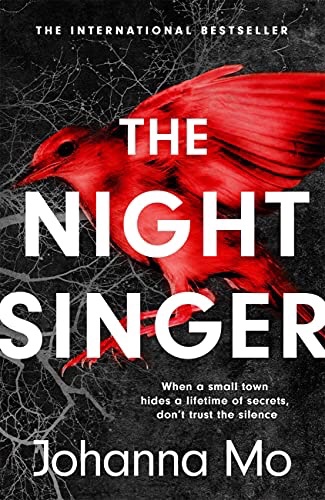
The Night Singer by Johanna Mo.

You’ve got no idea what you’re dredging up. You’re going to ruin everything.

The past is not going to stay buried in this unputdownable crime novel, the first in a series featuring Detective Hanna Duncker. Fans of Ragnar Jonasson and Ann Cleeves will be gripped by this moving and atmospheric crime novel, already a bestseller in Sweden. Hanna Duncker has returned to the remote island she spent her childhood on and to the past that saw her father convicted for murder. In a cruel twist of fate her new boss is the policeman who put him behind bars. On her first day on the job as the new detective, Hanna is called to a crime scene. The fifteen-year-old son of her former best friend has been found dead and Hanna is thrown into a complex investigation set to stir up old ghosts.

Not everyone is happy to have the daughter of Lars Duncker back in town. Hanna soon realises that she will have to watch her back as she turns over every stone to find the person responsible…

I was drawn deeply into Hanna’s world straight away in this brilliant piece of Scandi Noir. This is the first in Johanna Mo’s Island Murders trilogy, and is already a hit in Sweden. Hanna has returned to her home town of Öland for a post in the local police force. She has to hit the ground running though, because instead of quietly getting to know her colleagues, she is straight onto a crime scene. The body of a young 15 year old boy has been found and everything points to murder. Hanna is partnered with Erik and tasked with breaking the news to the boys family, but there’s one problem. The murdered boy’s mother Rebecka, went to school with Hanna and recognises her the minute she opens the door. If she’d hoped to keep her past secret, or at least in the background, this case will blow her identity wide open. Joel’s birth father also went to school with Hanna and has a reputation for being a bully, in fact Rebecka has openly admitted he was violent during their relationship. Could he possibly have killed his own son? It’s clear that Hanna could be very beneficial to the enquiry – Rebecka trusts her instantly and confides in her on their first visit. Yet her ex-husband Axel, now a well-known businessman in Öland, seems antagonised by Hanna’s presence. In his first interview, Axel tries to manipulate and wrong-foot Hanna by bringing up their past, even twisting the truth to hurt her. He even notices her ‘tell’, because when she’s anxious her fingers automatically rub her arm where her nightingale tattoo is.

‘She wanted to tear back the black material covering her tattoo of a nightingale, the bird that would help keep the darkness at bay. After her mother’s death, her grandmother had given her a small wooden nightingale to keep by her bedroom window. She claimed that because nightingales sing at night, it would help Hanna with her nightmares, but her bad dreams hadn’t gone anywhere. When she complained, her grandmother had stroked her cheek and said: I know those dreams are horrible, but they would be even worse without the bird. Those words had taken hold, and Hanna had kept the bird ever since’.

Yet there’s a worse secret in Hanna’s past than anything that happened at school. She is Lars Duncker’s daughter and his conviction for murder 16 years earlier is still fresh in a lot of the local’s minds. Can her past stay where it belongs, enabling Hanna to remain focused on who murdered Joel? Could being the daughter of a murderer actually help her to solve the crime she’s investigating? Or will being Lars Duncker’s daughter draw attention away from the case?

Johanna Mo

I loved the structure of this novel, as one timeline follows the investigation and the other tracks the preceding 24 hours, from Joel’s point of view. I found the second timeline really emotional, because this is Joel unfiltered, as only his closest friend knows him. We learn things about him and his life that his parents don’t know, some of which really hit me in the heart as a step-mum of teenagers.

‘As usual. Mum won’t believe him if he tells her how dark and ugly he is inside. She won’t believe what he is thinking about doing. Everything he has already done. But he’s so tired of acting. Of pretending to be someone he isn’t’.

The thought that they might keep things to themselves, scared of my reaction, made me so sad. Yet, this felt like an honest depiction of teenage life, where our friends rather than our family probably know us best. Where crime fiction is often focused on action, or the thrilling twists and turns, this felt quieter and more real. In fact the reason I originally started to read and watch Scandi Noir was because it depicted how violent crime affected the families and friends involved. This reminded me of a another crime writer I read this month, Eva Björg Aegisdottir, who does this very well in her Forbidden Iceland series. It felt like a more feminine gaze showed the devastation caused emotionally. From Joel’s nuclear family and slowly tracking outwards to friends, teachers, neighbours we see all the victims of a murder. Joel’s story takes centre stage, rather than his killer.

I thought the detail of the case was incredible, with every little lead followed up until the truths of the whole town start to come to light. A murder investigation unearths all kinds of secrets and lies before it can be solved. It was interesting to watch Hanna as she tries to settle back in to her home town, and make friends with her colleagues. The author cleverly shows how both she and Erik could come out of an interaction with very differing ideas about what the other one thinks. Hanna assumes people will be prejudiced against her when they find out whose daughter she is, and some are, because someone is ringing her work phone with silent calls which escalate to sounds of a fire burning and a blood curdling scream. As each narrative came closer to revealing the answers, the tension started to build. I liked that the story dealt with a very timely issue and all aspects of the case felt well resolved. However, when it comes to Hanna’s own story, there were enough loose ends left to explore in more detail over the next couple of books. I would recommend this to all crime lovers, but particularly those who enjoy an intelligent, complex and emotional crime novel that focuses on the victims rather than fetishising the killer.

Published 3rd August 2021 by Headline Review

Check out the rest of the blog tour for more about The Night Singer.

Thanks to Headline Review for inviting me on the blog tour.

Posted in Netgalley

House of Whispers by Anna Kent

Some secrets aren’t meant to be kept…

When Grace returns to Abi’s life, years after they fell out at university, Abi can’t help but feel uneasy. Years ago, Grace’s friendship was all-consuming and exhausting.

Now happily married, Abi’s built a new life for herself and put those days behind her. And yet as Grace slips back into her life with all the lethal charm she had before, Abi finds herself falling back under her spell…

Abi’s husband, Rohan, can’t help but be concerned as his wife’s behaviour changes. As their happy home threatens to fall apart, he realises that there’s something deeply unnerving about Grace. Just what influence does this woman have over his wife, and why has she come back now?

I seem to have read a few books in the last year that focus on the dynamics of female friendship. From the teenage years of Madam, where the school regime pits the girls against each other, to the middle aged years of The Nearest Thing to Crazy where a woman forms a friendship with a newcomer to the village and regrets it bitterly. This seems like a very rich mine for writers to delve into and this is an interesting addition to these psychological thrillers. Our oldest friends, so the saying goes, remain friends because they know where the bodies are buried. Our ‘besties’ are often the closest person to us in life, and in my experience have held me up when times have been too hard to keep going. When these close relationships go wrong, the mental scars can last a lifetime. Abi and Grace’s relationship seemed to become toxic at university, when Abi suspected Grace of trying to control her life. Soon after university Abi married Rohan and now they are renovating a house together. The house was derelict and as they’ve settled into it and started with their plans, Abi feels the years of history in the old house. The creak on the stair created by decades of weary feet. The sense of owners long gone and the weight of their memories.

When Grace writes to say she’s coming to the U.K. after years working abroad, the timing is serendipitous. Rohan has to work in New York for a while. Abi is going to be creating pieces for an art exhibition. Grace needs a place to stay till she finds her feet, and Abi feels enough water has passed under the bridge, maybe it will be fun to reconnect with her old friend? She’s probably changed in the intervening years and a catch up could be just what she needs to inspire her art. Besides it will be nice to have some company while Rohan is away.

It turns out that Abi is right, she does find her house guest inspiring and I was drawn in to the author’s descriptions of her work which were vivid and full of life. Her output soars and she’s making great headway into the pieces needed for her exhibition. I was interested in the psychology of creativity and the author taps into that long term link between artistic success and the deterioration of the mind. As Abi’s art is elevated, the rest of her life is soon suffering. It seems that maybe Grace has not changed after all. Abi can recognise her controlling behaviour and the passive aggressive way she deals with conflict, but wonders if she can handle it until her work is ready. No artist wants to give up their muse and Abi thinks that because she can recognise the behaviour, she won’t be manipulated. It’s like watching a fly edging ever closer to a spider’s web.

We know there has been a traumatic event in Abi’s past because the author drip feeds us little snippets of the past, in order to increase the tension. What this also does is create a bit of suspicion around our narrator. She values honesty in herself and others, even where it might sound harsh, but is she affording us the same honesty? Should we really trust our narrator. I thought the author cleverly linked the state of the house with Abi’s state of mind. She starts to neglect the house, becoming ever more hyper-focused on her paintings. Her life is starting to fall apart. Her in-laws are very concerned, but are struggling to intervene. As Rohan returns he notices a change in his wife, but puts it down to a fierce burst of creativity. However, as time passes he starts to wonder whether this friendship is healthy for his wife and their marriage. Yet, Grace seems to possess an incredible charm. Will she start to manipulate him too? There are interspersed sections that read like formal interviews with Rohan, but we don’t know if they’re with a lawyer, the police, a psychiatrist..? This had the effect of making me race forward with the book, dying to know how it unfolds. In the end though, it was best to just sit back and let the twists and turns reveal themselves. This was a competent and enjoyable thriller, with a fascinating and dangerous female friendship at the centre.

Published HQ 5th August 2021

Anna became a published author after the manuscript for her first novel, ‘Coming Home’, won the Montegrappa Prize for First Fiction at the Emirates Airline Festival of Literature in 2013. The book itself was published in 2015 and, since then, she’s written three more novels in the ‘domestic noir’ genre: ‘The Disappearance’, ‘The One That Got Away’ and ‘I Know You’.

On her Amazon author page she admits that she likes to set things up for her readers so they think they know what’s happening and then, very gently, she starts to pull the carpet out from underneath so that the reader– and often the characters themselves – are never quite sure what’s really going on. Scratch the surface of her characters’ lives and you’ll always find something dark going on. She’s currently working on a fifth book, which will be something slightly different.

She live in Dubai, UAE, with her husband, two children and a little Tonkinese rescue cat. She writes every day while the cat sleeps alongside her on a pile of old manuscripts. Writing isn’t an easy job, but she wouldn’t change it for the world.

Posted in Publisher Proof

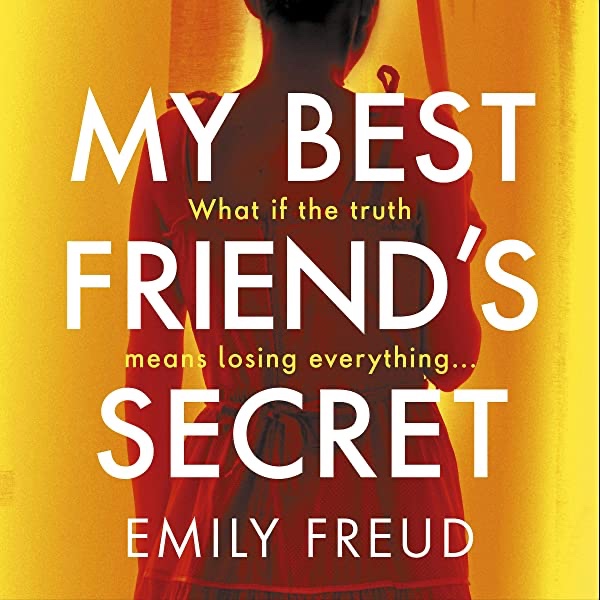
My Best Friend’s Secret by Emily Freud.

Kate Sullivan has a beautiful home, a job she loves and a handsome fiancé: all she’d ever dreamed of since getting sober and painstakingly piecing her life back together.

But a chance encounter with her old best friend Becky threatens Kate’s newfound and fragile happiness. Kate remembers nothing of their last drunken night out, the night Becky broke off their friendship without warning or explanation.

With Becky back in her life, Kate is desperate to make amends for the past. For the closure she craves, Kate needs to know what she did that ruined everything.

But what if the truth is worse than Kate could have imagined?

This novel gripped me from the beginning and I could relate this back to being a young woman, unsure of my place in the world and being uncomfortable in my own skin. It’s depiction of how our fears and demons can shape us if we let them, and the dangers of self-medicating our anxiety and lack of confidence. It was such a thoughtful and honest exploration of female friendship and what can happen when those bonds are broken. As is usually the case in this type of domestic noir when the novel opens Kate appears to have everything. She’s just about to marry her American fiancé Ben, they have a beautiful home and she’s settled into a job she loves as a teacher. However, all of this hasn’t come easily for Kate, because she spent a few of her young adult years totally out of control. Thanks to the 12-step programme she has found a way out of alcoholism, and is on an even keel.

Yet, her past does threaten her perfect future when she meets an old friend by chance. Back in her wilder, drinking, days Becky was a partner in crime. In fact the pair were best friends, until one drunken night out, after which Becky never spoke to Kate again. Kate has no memory of that night. On meeting Becky, she feels the need to make amends for whatever happened that night, even though she doesn’t remember what she’s done wrong.

What distinguished this book from the average thriller was Freud’s compassionate and thorough understanding of alcoholism and the psychological journey individuals take when they embark on their recovery with AA. It was beautifully written, slightly slow in parts, but infused with a creeping unease throughout. I loved the psychological ins and outs of Kate’s journey, because we are inside her mind as she battles her past and tries to hang on to the life she loves. Freud really does nail the complexity of our inner voices and how they can trip us up and knock us off balance. That endless negative chatter that tells us we can’t do this, we’re not worthy and don’t deserve the good things we have in our life. I felt so much empathy for Kate and wanted her to be resilient enough to resist the chatter, and stay on course. I thought the author showed incredible knowledge and compassion for how childhood trauma affects our lives, particularly the struggles to form good, solid relationships. This was a powerfully written thriller, and I will be looking out for whatever the author writes next.

Meet The Author

In her other life, Emily Freud makes TV. She has over ten years experience in development and production and has worked on some of the most loved, talked about and award-winning series in recent years. Credits include: Educating Yorkshire, First Dates, and SAS: Who Dares Wins. This lifelong fixation with story and character is the thread that runs through her work, and ultimately led to the pursuit of a writing career.

‘My Best Friend’s Secret’ is her debut novel, published by Quercus.

Posted in Publisher Proof, Random Things Tours

Girls Who Lie (Forbidden Iceland Vol 2) by Eva Björg Aegisdottir

I was meant to be reading this for the recent Random Things Tour, but have been taking a break for family stuff and my health. However, I did read Vol 1 of this series last year so found it very difficult to see the next novel on my TBR and not dive in. So here are my thoughts, a little late, but surely it’s always good to hear someone praise your work? No matter how late they are.

The author opens the novel on a freezing cold day and a bleak volcanic crime scene, immersing us straight into both the story and the landscape. Two boys, wandering on the local lava fields have found a body in a small cave. They frightened themselves at first into thinking they’d found a black imp, the body was so dark. However, our heroine and police investigator Elma, believes it may be the body of Marianna, a single mum who disappeared from town seven months previously. Thought to have committed suicide, Marianna left a short and cryptic note on the kitchen table for her daughter Hekla, then was never seen again. Now, it’s clear that this is a murder, and as Elma reviews the files from the previous year, when this started as a missing person investigation, she finds the work less than satisfactory. She can see so many unanswered questions to follow up. Hekla is now in foster care, with a couple who have fostered her many times, before when Marianna was struggling or disappeared. Now Elma’s team will have to wade into the previous investigation, social services files and the difficult life of a children whose parent simply struggled to cope.

I loved the complex psychology behind this story of teenage pregnancy, family expectations and how to be a parent. Added to that is othe challenge of preventing emotional pain passing to another generation. Our investigation is interspersed with a narrative of a young teenage girl who tells us about her life as the mother of an unwanted child. Her identity is not revealed and we don’t know this girl’s connection to the main plot, but her narrative is sad and traumatic to read both for her and her baby daughter. Meanwhile Elma is beginning to understand the difficult and disconnected relationships that surrounded Marianna and her daughter. Hekla was first placed with foster parents at the age of three when Marianna left her home alone while she went on a drug binge. Hekla’s foster parents were a wealthy, stable couple who made no attempt to hide how much they would have loved to take Hekla on permanently, but Child Protection Services had a policy of trying to keep children with their birth families as much as possible. Elma can see the theory behind this, but starts to wonder whether it’s a policy that actually fails children in practice. So, Hekla leads a life of moving back and forth between Marianna, who was harsh and belittled her daughter, and a foster mother who wanted to be more than her support family. If Hekla had been given the choice, she would have chosen to stay with her support family, but instead was pulled between them, both literally and emotionally. She describes how she feels:

It’s strange to be six years old and feel as if you’re a black stain on a white sheet. As if the world is in headlong flight and all you can do is grab hold and try not to fall off.’

Trying to act as gently as possible, Elma must speak to both Hekla and her support family about inconsistencies in their stories. She doesn’t want to cause more distress, but Hekla is a girl of secrets and perhaps lies too. There are parts of this story that might be upsetting for someone who has been through the care system or had a dysfunctional parent. Marianna is barely able to cope with her own life, never mind being a parent. I love that we are party to Elma’s thought processes around the case, and on her private life. As she reflects at the end of each day, the author hints strongly at unresolved trauma in Elma’s own past. There’s also the dilemma in her private life, where the loss of her partner to suicide has affected her more than she lets on. She’s not ready to have real, deep feelings for someone, preferring no strings encounters. Yet she does have feelings for someone, and if she doesn’t act on them, will it be too late? The proximity of her family, and the support she receives from them, is both helpful and irritating by turns. This is her home town, so she knows all the allegiances and quirks of the community, something which can have its own problems when investigating such an emotive crime.

The first half is slower and more thoughtful, giving the reader time to soak up the atmosphere and Hekla’s experiences. In the second part, the pace quickens and the past also catches up as our mystery narrator is revealed – a reveal that had me reassessing everything I’d thought before. In a world where every thriller boasts twists and turns galore, this one packed a punch, was truly clever and had played with my misconceptions of who it might be. Another thing that really hit home for me, as the stepmum to two teenage daughters, was just how damaging the constant wrangling between co-parents becomes. I thought the character of Hekla was pitched perfectly, with a deep understanding of being a teenage girl. She showed that need to belong, to be accepted, whilst also feeling complete isolation – that nobody in the world understood her or had felt what was going in on her head. This is an age where being singled out as different is painful, it takes time to work out that your originality is your super power. This was a tense and compelling read, with undercurrents of deep melancholy that seemed to come from Elma and the forbidding landscape. This was a psychologically astute murder mystery, with deep empathy and a strong sense of place. I would recommend it highly.

Meet The Author

Born in Akranes in 1988, Eva moved to Trondheim, Norway to study MSc in Globalisation when she was 25. After moving back home having completed her MSc, she knew it was time to start working on her novel. Eva has wanted to write books since she was 15 years old, having won a short story contest in Iceland. Eva worked as a stewardess to make ends meet while she wrote her first novel, The Creak on the Stairs. The book went on to win the Blackbird Award, was shortlisted (twice) for the Capital Crime Readers’ Awards, and became a number one bestseller in Iceland. Eva lives with her husband and three children in Reykjavík, and she’s currently working on the third book in the Forbidden Iceland series.