WHAT IF TOMORROW WAS ALREADY WRITTEN, BUT YESTERDAY WAS YOURS TO CHANGE?
At an isolated research station in Antarctica, biologist Laurel Salter washes dishes for a living ten hours a day, six days a week. She tells no one why she left her career, or why her marriage ended.
But even in this remote outpost, Laurel can’t outrun her past. When a strange light appears across the ice and draws a group of physicists to McMurdo, her former husband, Eli, won’t be far behind.
Laurel is captivated by the Arc: its surreal glow; the way it seems almost alive. And though Eli is reluctant to test her wildest theory, Laurel is convinced that the Arc leads down a rabbit hole, and into a world they can barely imagine. Can she persuade him to risk everything to fix the burden that hangs between them – to turn back the clock and live their story a second time?
And this time, live it differently.
Once read, never forgotten, Under Story is a genre-defying exploration of the promise of this life, what might lie beyond it, and how far we would go for more time with the people we love.
This is my book of the year so far and I can’t stop talking about it. I’d read it on NetGalley in the spring and I was desperate to review but it felt too early. So when I found out my fellow squadettes were reading this in August I had to join in. I was quite simply blown away by this complex and beautiful story of science, loss and second chances. I still think about it all the time. Our heroine Laurel is a scientist, studying fungus and how it grows but for some reason that isn’t clear at first, she’s on a research station in the Antarctic, away from her former husband Eli and without any fungus in sight. When she develops a fascination in the Arc that appears above the pole she thinks about its significance, but when she becomes aware there is a matching basin underneath the water, her imagination becomes fired. Could this possibly be a portal? A gateway to a different world? She knows Eli won’t be far behind her because she remembers his theory of the ‘duoverse’, the idea that at the moment of the big bang time and space was formed in two directions: our universe, the planets and the development of the world we know and in the other direction it’s complete opposite. I am not a scientist, in fact I barely have GCSE Biology, so I wasn’t aware of any background to this idea so could drift with it and enjoy two incredible minds exploring ideas. I was fascinated with Laurel’s experiments with fungus growing in a maze and whether it moved in a specific direction. She was disappointed to find it tried out all routes then doubled back on itself, but then a second batch made straight for the right route as if it had learned from the previous batch’s mistakes. It felt like a demonstration of Jung’s collective consciousness:
“Ideas spread and somehow we’re all plugged into them.”
I often feel this about ideas, like when several books come out on the same subject at once. It reminded me of something I’ve read before – that ideas are hanging in the air and if we don’t grab them someone else will. As Laurel presents her paper at conference she’s asked some particularly tough questions by one delegate who is unimpressed with her work, claiming she’s applying a human lens to interpret her results. Laurel’s retort is to ask why the delegate is assuming that all intelligence is human? Laurel knows that we like to separate ourselves from animals and plants, safely in our own superior category, but oxygen from our atmosphere is running through our veins and the word human comes from the Latin word ‘humus’ meaning soil. Thinking that we are of the earth is the only thing that comforted Laurel when her dad died. She thinks about how bronchi in our lungs branch like trees and how a ‘neural network in the brain is structured like a galaxy’. I loved reading these aspects of the book and really appreciated how cleverly the author plants these ideas in the first part of the book and they grow in the second part.
Our characters are fascinating, Eli and Laurel are a couple who were made for each other but their relationship is real and they face tough times, particularly devastating events crash into their lives but I never doubted their love for each other. It’s fascinating to watch their characters face the concept of the duoverse, not just whether it is a portal, but if it is what will their relationship look like there and will going backwards fix whatever tore them apart. I felt both were analytical and might even appear cold at times, but in the moments of heightened emotion we really see who these characters are and the deep wells of love they hold. It was two other characters that caught my imagination though: Gloria and Mr Nakamura. I absolutely loved Gloria who is Laurel’s mentor in our universe and her house in San Francisco was so brilliant I wanted to live there:
‘It was an old Arts and Crafts house on Prospect Avenue, dark wood with purple roses growing in the garden and ivy trailing over the windows. Inside was enchantment; half melted candles, cabinets of oddities, a Maine Coon cat the colour of midnight.’
Gloria is intelligent, feisty and an incredible mentor to Laurel and I had a feeling they would meet in any universe. Mr Nakamura is a character from later in the book who is an ‘overtaker’ – a thought I’ll leave with you – who’s incredibly wise and understanding, helping with the difficult parts of life’s journey with dignity. Every character springs to life and has a backstory.
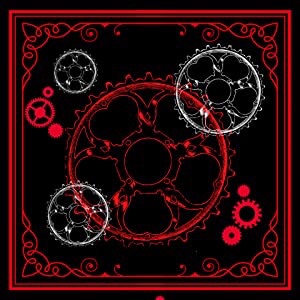
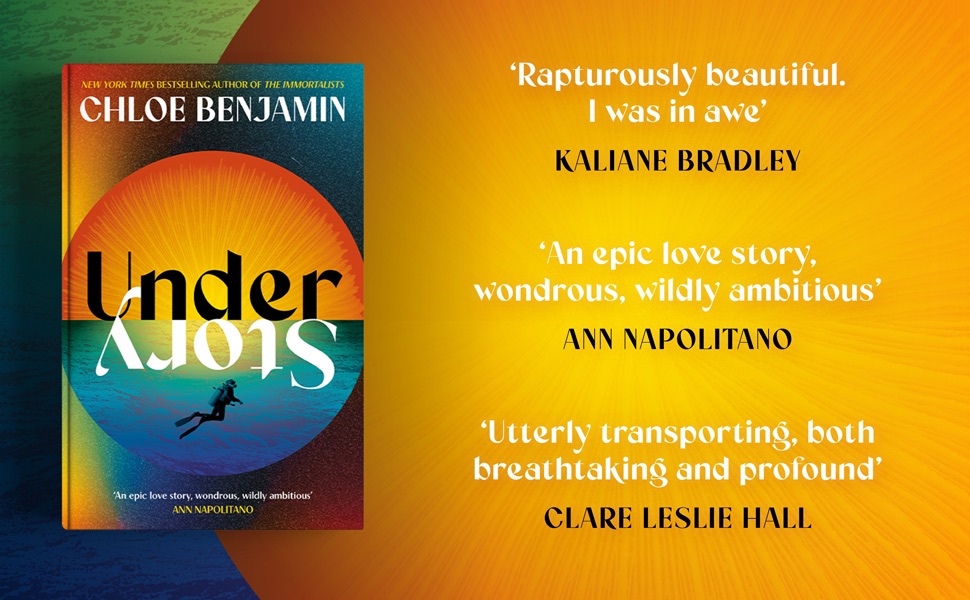
The book’s settings are incredible. First the frozen wasteland of the Antarctic and its different scientific research bases are fascinating. I had no idea how many were there, but McMurdo is like a mini town and it’s the tiny details that give it authenticity. Many of the scientists go home for the winter months when it’s impossible to go outside and cabin fever can really kick in. Some people have an ‘ice-wife’ or husband who they’re in a relationship with in the summer months, then go home to their real spouses in the winter. Bits of the real world come through, such as the disappointment in a second Trump presidency, but it feels like a different world and the perfect place to avoid reality too. Every world the author presents to us feels absolutely real even though some of it seems impossible. I was on tenterhooks wondering about the duoverse under the ice and if Lauren is right whether they’ll ever be able to return? I found myself wondering how this world would look as time scrolled backwards. I was genuinely scared for them but also full of admiration for their bravery. The mirroring is so cleverly done, showing how life always comes full circle and we’re often helpless at the end and the beginning, if we’re lucky enough to lead a full life. As someone who worked in nursing homes in my twenties this really made me think of the role of nostalgia and how often elderly people hanker after experiences from their childhood. Laurel wants her mother’s blueberry pancakes, to watch a film she’s seen a million times and disappear into a favourite book because there’s comfort in it. It might seem like science has sent them on this potential journey, but it isn’t. The totally unscientific emotion of love is what pushes them on, but also guilt, hope and desperation. Loss is a huge theme in the novel, something that always hits me in the heart, and I was deeply moved by how the author dealt with grief across the novel and how the scientific concept of a duoverse changes this experience. This novel was moving, profound, invigorating, deeply intelligent and so full of life. I kept thinking about the symbols of the cover, the circle and the tree, the same under the ground as they are over it. As Laurel observes:
“A line implies before and after; a circle says And then, and then…”
Out 1st September from Tinder Press
Meet the Author

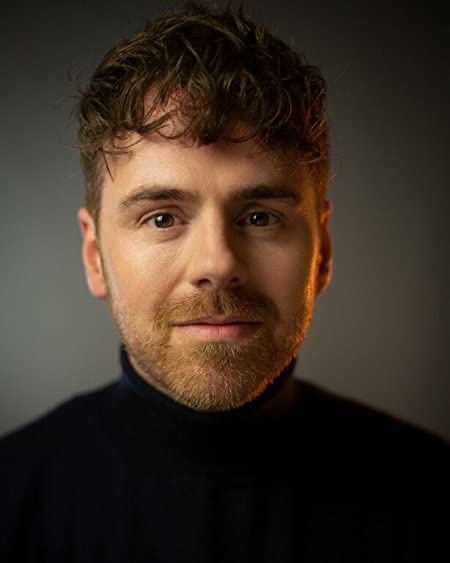
Chloe Benjamin is the author of THE IMMORTALISTS, a New York Times Bestseller, and THE ANATOMY OF DREAMS. Her third novel, UNDER STORY, will be published in September 2026.
A Barnes & Noble Discover Great New Writers selection, LibraryReads favorite, and #1 Indie Next pick, THE IMMORTALISTS was named a best book of 2018 by NPR, The Washington Post, Entertainment Weekly, and others. THE ANATOMY OF DREAMS received the Edna Ferber Fiction Book Award and was long listed for the 2014 Center for Fiction First Novel Prize.
Originally from San Francisco, CA, Benjamin is a graduate of Vassar College and the M.F.A. in fiction at the University of Wisconsin. Her work has been translated into over thirty languages. She lives with her husband in the San Francisco Bay Area.