Posted in Random Things Tours

Winterkill by Ragnar Jonasson (Dark Iceland Book 6).

Publisher: Orenda Books (21 Jan. 2021)

ISBN:1913193446

When given the opportunity to read an Orenda book I rarely pass it up. My only misgiving with this one, was that it was the sixth in a series I didn’t know whether I’d ever be able to catch up and fully understand what was going on. Once I’d done my research and read a few reviews of the Dark Iceland series, I was in! Described as ‘creepy, chilling and perceptive’ by Ian Rankin and full of ‘poetic beauty’ by Peter James, this instalment comes highly recommended. The New York Times review blew me away and made this a must read.

‘Jónasson’s true gift is for describing the daunting beauty of the fierce setting, lashed by blinding snowstorms that smother the village in a thick, white darkness that is strangely comforting’ New York Times

That image of the setting grabbed me because I’ve lived in some isolated locations here in the U.K. and have written myself about that strange sense of safety a huge snow fall brings. All falls quiet and you are safe, sheltered and warm. The world becomes muffled as you are slowly cut off from civilisation, under a think blanket. I knew I would connect with the setting at least. Of course, I shouldn’t have worried, because this was a great read in its own right and I managed perfectly well without the reading the others first – obviously as soon as I finished this one I ordered them all since so I could have an Orenda Christmas!

The hero of the Dark Iceland series is Ari Thor Arason, the police inspector of a small town in Iceland called Siglufjörður. He is recently separated from his girlfriend, who now lives in Sweden with their three year old son. As Easter approaches Ari Thor is looking forward to spending some time with them both when they come to stay for the weekend. However his plans are thrown into disarray when the body of a young girl turns up to claim his attention. A nineteen year old girl appears to have jumped from the balcony of a building, but seems to have no connection to anyone who lives there. Why would she travel to this particular building to commit suicide? Ari can’t help wondering and his wondering leads him to dig a little deeper and find out whether she was pushed. His suspicions are aroused further when an old flame, now working in a local nursing home, gives him a call because she’s concerned about an elderly resident. She shows Ari the old man’s room, and he’s shocked to see the words ‘she was murdered’ written over and over again. As a huge storm heads towards Siglufjörður, Ari is left pondering whether these two events are connected and also whether he can salvage his family or even reconcile any sort of private life with his job.

Ari Thor isn’t an ‘action man’ type hero, he’s thoughtful, perceptive and investigates gently. The awkwardness of his Easter plans are really painful; he books his ex-partner and son in at the hotel, but is excited when they want to stay at the house. Ari misunderstands and thinks they might all stay together, but he ends up in the hotel. He feels excluded, but also awkward as other guests and staff know him well (this is a small remote town after all). He wonders what they will be thinking about their local detective. He knows that the job he loves has to command all his attention, when an important case comes in and so does his estranged partner. However, there is a large gap between knowing this and the reality of living it. Can he ever promise his family what they need? This conflict becomes ever clearer over the weekend when he is pulled from one place to another as new evidence comes to light.

I loved the atmosphere of this small town, where everyone knows each other. Yet there’s also the uneasy thought that many residents could be in this remote place to disappear and keep secrets. There’s so much going on under that polite layer of familiarity, even where Ari thinks he knows someone well. In one sense Siglufjörður has changed enormously, new road links have made it more accessible so even tourists have started to visit for ski-ing and to stay in new luxury holiday chalets. However, once the blizzard descends it becomes bleak, remote and strangely more beautiful. Ari’s investigation takes him into the even more rural area of Siglunes, where two men live in a small wood cabin inaccessible by road. I found Siglunes quite sinister, but Siglufjörður feels remote too and even claustrophobic as the weather pulls in. The author skilfully ratchets the tension up a notch, just at the same time as the community becomes more isolated. Yet we never feel rushed, Ari Thor does not panic or hurry the investigation- every move is well thought out and measured and he shows great compassion to the bereaved and those involved.

I thought it was so clever that, without knowing it at first, Ari is slowly uncovering more than one crime. We are forced to learn the lesson that people are not always what they seem, as the manager of the nursing home is called on for questioning. Ari Thor would say he knows him, likes him even and there has been no indication that he has been doing anything but noble, humanitarian work for the elderly of the town. However, just under the surface are financial worries, difficulties gaining government funding and enough residents to make the venture pay. If you’re looking for high octane action, or the endless twists and turns of a convoluted plot then this is the wrong book for you. The pace is gentle, the motive uncomplicated, and our detective is a contemplative sort rather than an action hero. What compels here (as it should) is the human tragedy – the loss of a girl on the brink of adult life and full of promise, for her family and the whole town. There is even an element of humanity and complex, conflicting, motives within our criminals too, when they are unmasked. This doesn’t take away from the chilling nature of their crimes though – in fact I find the thought that killers walk among us, with the same worries and preoccupations that we have, even more disturbing than some of the more obvious monsters we see in crime fiction. I would recommend this book and the whole series, as a fabulous introduction to Nordic Noir, and I could easily imagine sitting with my feet up, a glass of whiskey in hand, being compelled by these stories on BBC4. This book was beautifully written, has an evocative setting and a detective I truly enjoyed spending my Christmas with.

Meet The Author

Ragnar Jónasson was born in Reykjavík, Iceland, where he works as a writer and a lawyer and teaches copyright law at Reykjavík University. He has previously worked on radio and television, including as a TV news reporter for the Icelandic National Broadcasting Service, and, from the age of seventeen, has translated fourteen of Agatha Christie’s novels. He is an international Number One bestseller

Posted in Random Things Tours

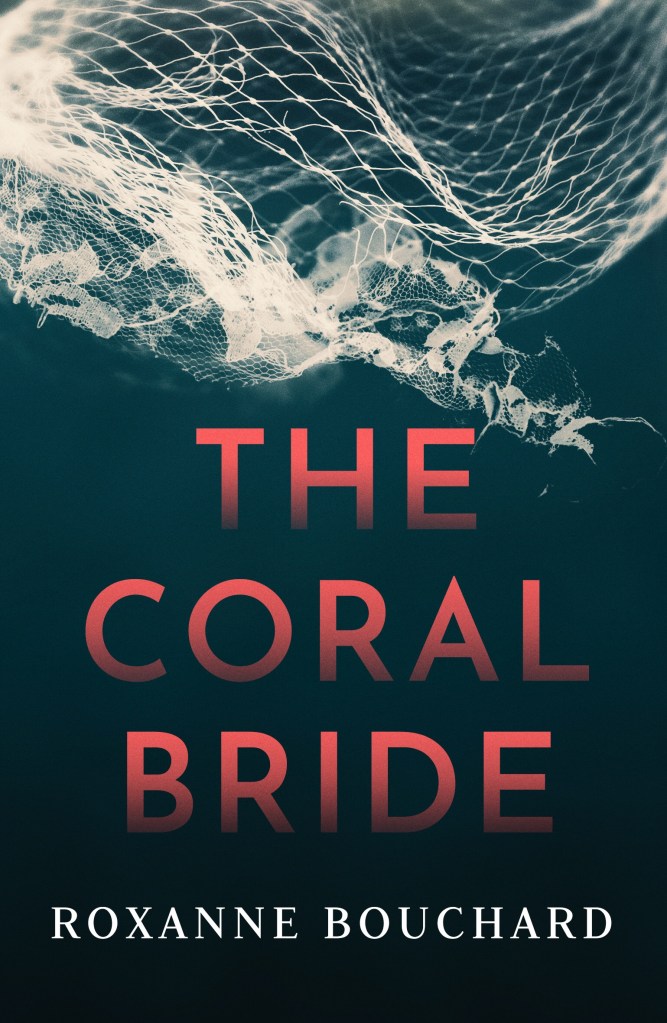
The Coral Bride by Roxanne Bouchard.

Publisher: Orenda

Published:

ISBN:

The Coral Bride is the second novel in Roxanne Bouchard’s D.S Morales series, the first being We Are The Salt Of The Sea. I think this easily read as a stand alone novel, but I enjoyed it so much that I’m going to read the first one. I’m not surprised, because I’ve never met an Orenda book I didn’t like!

The opening to the novel is haunting as a woman lies on the deck of a fishing boat. Somehow she has been rigged up so that she will eventually be dragged from the trawler and under the freezing cold water. She knows these are her final moments. As an opening it is very effective and sets up the main character in the novel: the sea. The sea is the life’s blood of people in this region – a small fishing village in Quebec. Angel Roberts is a very rare thing in this community, a woman with her own trawler who fishes for lobster. She’s named her boat Close Call II showing a good sense of humour too. The sea is her livelihood and there’s definitely an affinity with it. She is treated with suspicion by the rest of the trawlermen, because fishing here has always been a male dominated industry. However, the sea doesn’t just separate, it also brings people together, even Detective Morales and his son Sebastien.

Another recurring character is the moon, depicted as a silvery path reflecting off the water. Angel has always been told the moon is a liar and not to be trusted. However, it seems there may be another character in Angel’s life who isn’t what they seem. Morales finds out that every year Angel and her husband would dress up in their wedding finery and have a celebration on their anniversary. If her husband is to be believed he drove his wife home when she was tired and then returned to the bar. Then after 1am, it seems that Angel drove herself down to the harbour and took the boat out, still in her wedding dress? Detective Morales is a quiet and thoughtful man, who doesn’t jump to conclusions and I loved the way the author let the mystery breathe in the same way. You have chance to really think about peope’s stories alongside Morales, and I liked that the pace seemed to fit with the landscape and community. This is much more than a ‘whodunnit’. It explores the spirit of this community, and I especially enjoyed the loyalty and bravery of the fisherman. They really respect the sea and I respect them because it is such a tough way to earn a living. We get to explore the tribal aspects of this community, how relationships between people develop and change over the years. But as always, where there are old relationships there are old resentments.

Familial relationships are explored too as Morales’ son Sebastien has turned up unexpectedly with his car full of pots and pans. He’s a chef and he’s had a fall out with his girlfriend. I got a sense that Morales doesn’t really know his son, or Sebastien is acting out of character. Sebastien flirts with a female constable on his team; Morales has only seen her buttoned up, but ten minutes in Sebastien’s company and her hair is down and she’s doing salsa. There was sense that Sebastian will bring chaos to his life. Yet they have a shared experience, Morales is currently living alone and away from his wife. Maybe this is where father and son could understand each other better. These relationships gave the book depth and elevated it above the average thriller. I enjoyed the police team, the conflicts and allegiances. I loved the section where Morales was shown to his temporary office and it’s packed to the rafters with files stacked everywhere. It’s like this quiet, thoughtful, man has escaped to an out of the way place and people are challenging him on all sides. The space he has enjoyed is being encroached upon – Sebastien inviting him to salsa and let his hair down, the chaos of police files surrounding him, his son sleeping on his couch. It’s not long before, in his life and the investigation, he feels blocked in on all sides. I found this novel had a great sense of place and a thoughtful, intelligent hero. It was atmospheric, lyrical in parts and emotionally literate. The image of a woman being slowly pulled into the water, with her wedding dress glowing in the moonlight until she is swallowed up by the dark will stay with me for some time.

Meet the Author

Ten years or so ago, Roxanne Bouchard decided it was time she found her sea legs. So she learned to sail, first on the St Lawrence River, before taking to the open waters off the Gaspé Peninsula. The local fishermen soon invited her aboard to reel in their lobster nets, and Roxanne saw for herself that the sunrise over Bonaventure never lies. We Were the Salt of the Sea is her fifth novel, and her first to be translated into English. She lives in Quebec.
Follow Roxanne on Twitter @RBouchard72 and on her website: roxannebouchard.com

Posted in Random Things Tours

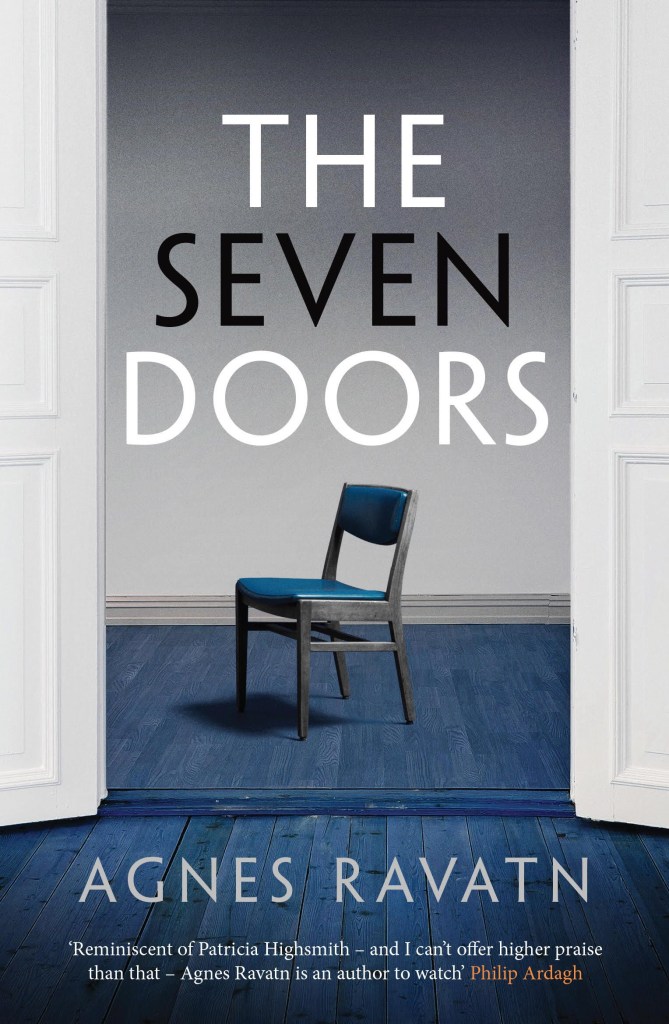
Seven Doors by Agnes Ravatn.

#OrendaBooks. #RandomThingsTours #blogtour #SevenDoors

While reading this book I had one of those odd reading experiences that only happens on Kindle or other e-reader. When I’m reading a proper physical copy of a book, I’m constantly aware of how much book is left. I’m literally holding it in my hand. I read this in one sitting, only realising how quickly time had passed when I stopped to mark a page and saw 93% in the bottom corner! Time really flew because I was so absorbed into Ravatn’s world.

Set in Bergen, Oslo, this is a thriller with so many possible outcomes. Our main character Nina follows a labyrinthine trail to find the killer of a musical prodigy. Nina is a professor of literature and gives a speech at a symposium about the futility of studying literature. Lit students are following their own, selfish lines of academic enquiry she argues, but their study doesn’t help anyone or bring anything important to the world. It doesn’t make a difference, except to the student. She proposes that in order to be useful, literature students make them self available as investigators to the police force. They are trained to analyse documents, to read between the lines, to apply psychoanalytic theory to texts and understand character’s motivations. All skills that might be useful when investigating a crime. Little does she know, she will soon be using those very skills in the real world.

Nina and her husband Mads have an absolutely insufferable daughter Ingeborg. When she announces that her home has silverfish, and she is three months pregnant, she asks Nina to intercede with Mads for an advance on her inheritance. Nina idly observes they have a house in town that belonged to an aunt, but she needs to talk to Mads. They are in their own difficult living situation, as their home is being compulsory purchased to make room for a railway. This is affecting Nina much more than Mads because of the emotional attachment; it was her family home, she grew up there. They are negotiating a settlement with the council, but Nina can’t see any property she would want to purchase. She needs to live in something with soul, not a slick waterfront retirement pad. Ingeborg convinces her mum that they should go and look at the house, but Nina warns that there is a tenant that they shouldn’t disturb. Despite the tenant telling her it’s a bad time, Ingeborg goes bustling in, badgering the tenant about the end of her lease and offering her money to leave as quickly as possible. The tenant, a single mother with a little boy, is blindsided by this forceful woman. Nina feels terrible and makes her apologies, sure that the tenant looks familiar to her.

Later, she realises where she has seen the woman. Their tenant is concert violinist Mari Bull, world renowned and now dropped out of sight. Strangely, she then does the same thing again, exiting the property within a couple of days and leaving no forwarding address. Surely this can’t be solely to do with their visit? Not long after, her disappearance is reported by local then national newspapers. She went to her parents place out on one of the islands, where Nina has a holiday cabin, but left her son and went for a walk, never to return. Nina finds herself intrigued by the case and follows clues, from the opera her ex-husband plays as her requiem to a small notebook with musical terms she finds in a box at the house. Fairytales also play a role in the book and like most literature students I am familiar with the work of Bettelheim quoted by Nina. Using this and Freud’s work on transference Nina starts to construct a theory and follows each clue like the breadcrumb trail of Hansel and Gretel. I liked the play on our usual ideas about fairy tales, which tend to be very Disney-fied, and everything comes to a completed happy ending. The original tales Nina starts to tell her granddaughter Milja are far more dark and bloodthirsty. In fact, the darker they are the sooner Milja will quiet down and go to sleep. They include anxious, suicidal hares and a murderous husband who gaslights his wives then kills them when they find out the truth.

From a psychological perspective there are interesting theories around transference and counter-transference, not just in the therapeutic relationship but in any relationship with a power balance that’s heavily in one person’s favour. I was also interested in the theorising around the Oedipus and Electra complexes. Nina is discussing the theory with her students and they don’t see the point of learning about a concept that started in Ancient Greek theatre and seems to bear no relevance to the present day. Yet, there’s a definite unease in Nina’s own relationship with her daughter – Ingeborg has been more likely to confide in or ask favours from her father. For Mari too there is a complicated mother – daughter relationship in that her parents sacrificed their own relationship to make sure their daughter had opportunities with the best teachers and orchestras. Mari and her father were often away together, touring Europe, leaving her mother at home. There is resentment over this and a definite coolness between mother and daughter.

Ravatn’s writing is spare, it gets to the point quickly and without poetry. She can establish a feeling or setting in just a few words, such as how the light changes when it snows or how it must feel to give ourselves up to the water, like Virginia Woolf with the stones in her pockets. Her characters are well defined and psychologically complex, such as Ingeborg’s narcissism and inability to gauge other’s feelings. I have real worries for her daughter Milja, a future psychopath if ever I met one. As I felt the book build in pace and tension towards the end, I knew Nina was getting close to the answers, but is the answer getting closer to her? The end, when it comes, is satisfyingly unexpected and shocking. I love Nordic Noir and this was a great addition to my collection. This was a clever and psychologically literate thriller. I would love to read more of Nina in the future.